Tuesday, January 11, 2011

Planck's successful hunt probes galaxy clusters on very broad mass range

The first all-sky survey of galaxy clusters detected via the Sunyaev-Zel'dovich effect is amongst the highlights presented by the Planck Collaboration at a conference held from 10 to 14 January 2011 in Paris, France. The survey, which has benefited from a fruitful collaboration with ESA's XMM-Newton observatory, probes a wide range of cluster masses and other properties, which is unprecedented for a Sunyaev-Zel'dovich sample. Along with the first results enabled by the survey, the Early Sunyaev-Zel'dovich Cluster sample is being publicly released, providing the community with a robust data set for further studies and follow-up observations of galaxy clusters.

While mapping the tiny fluctuations in the Cosmic Microwave Background (CMB), which will ultimately expose the early Universe in unprecedented detail, ESA's Planck satellite has been performing the first all-sky survey of galaxy clusters detected with high reliability via the Sunyaev-Zel'dovich effect (SZE). "The survey resulted in the Early Sunyaev-Zel'dovich Cluster sample, a very robust sample of galaxy clusters which is among the first scientific products arising from the Planck mission to be made publicly available," comments Jan Tauber, Planck Project Scientist at ESA.

All-sky distribution of all galaxy clusters and cluster candidates reported in the Early Sunyaev-Zel'dovich sample. Credit: ESA/Planck Collaboration. Hi-Res [jpg]

The SZE is an extremely powerful tool to probe galaxy clusters, the largest gravitationally-bound structures in the Universe which contain, besides galaxies, also large amounts of hot, ionised gas and even larger quantities of dark matter. As the photons of the CMB travel through the hot gas in a galaxy cluster, their interaction with the electrons present in it imprints a distinctive signature on the CMB signal at various frequencies, thus allowing astronomers to spot the presence of the cluster even at high redshifts. With its nine frequency channels, Planck is optimised to hunt, over the entire sky, for these huge structures which conceal a wealth of cosmological information about the evolution of cosmic structure and the expansion of the Universe.
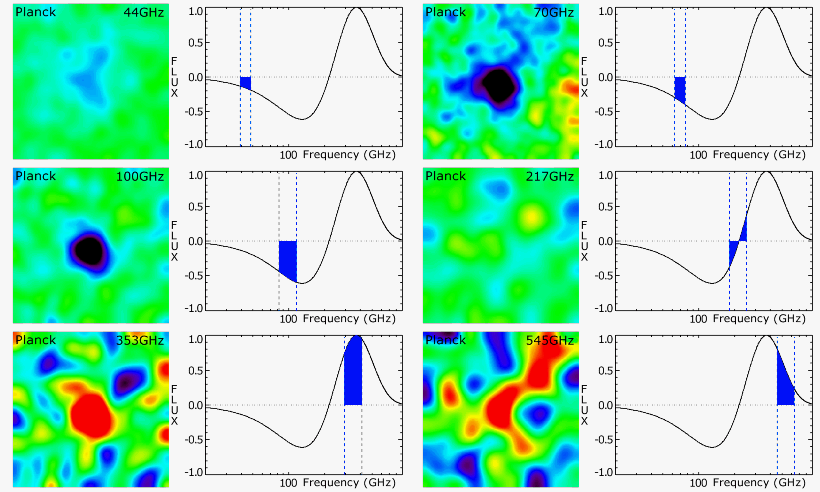
Animation showing how the signal from a galaxy cluster, as observed by Planck via the Sunyaev-Zel'dovich effect, varies with different frequencies. Credit: ESA/Planck Collabration

"Thanks to the excellent data collected by Planck during its first all-sky survey, we have now assembled a unique catalogue of 189 clusters which are spread all over the sky, and span a broad range of masses, up to the highest masses," says Nabila Aghanim of the Institut d'Astrophysique Spatiale in Orsay, France, who coordinates the effort within the Planck Collaboration of identifying the galaxy clusters. The clusters in the early catalogue have masses covering the range 1–15 x 1014 times the mass of the Sun, up to the highest masses and their redshifts vary between 0.01 and 0.55, with the majority of detections corresponding to a redshift of about 0.3. "Among the structures detected by Planck, 169 coincide with already known galaxy clusters and for most of them it is the very first time we measure their SZE signal. This will open new possibilities for multi-frequency studies of clusters. The remaining 20 are brand-new discoveries," she adds. Surveying the whole sky, Planck offers the unique chance of finding the most massive amongst galaxy clusters, which are rare and represent an extremely valuable tool for cosmological studies, as their number is very sensitive to a number of parameters that determine the model used to describe our Universe.

Planck and XMM-Newton images of the newly discovered supercluster PLCK G214.6-37.0, composed of three sub-structures and located at a redshift of z~0.45. Credit: ESA/Planck Collaboration. Hi-Res [jpg]

Observations in X-rays or at other wavelengths can confirm that the newly discovered objects are indeed galaxy clusters and can be used to estimate their redshift. Of the 20 new candidates in the set of 189 pinpointed during Planck's first survey, 11 have already been confirmed thanks to follow-up data gathered by ESA's X-ray observatory, XMM-Newton. Furthermore, an additional batch of ten clusters or super-clusters have also been discovered by Planck and confirmed by XMM-Newton. They will be made public at the same time as the Early Sunyaev-Zel'dovich sample.

"The X-ray data show that most of Planck's new detections are very massive clusters with low luminosity and a disturbed morphology, highlighting that their dynamical state is more complex than that of the galaxy clusters that are customarily detected within X-ray surveys," notes Monique Arnaud from the Service d'Astrophysique, Commissariat à l'Energie Atomique, France, who leads the Planck group following up cluster candidates with XMM-Newton. "The X-ray data revealed that four of the Planck candidates correspond to multiple systems of clusters, including two superclusters consisting of at least three clusters each," she adds.

The excellent data set provided by Planck has also allowed a series of more in-depth studies relying on multi-wavelength observations of galaxy clusters. "By combining the clusters from the Early Sunyaev-Zel'dovich sample with complementary X-ray data from the XMM-Newton archive, we have shown that the properties of clusters, as measured with the SZE, are remarkably consistent with those inferred from X-rays observations," notes Etienne Pointecouteau from the Institut de Recherche en Astrophysique et en Planétologie in Toulouse, France. Another study, following a statistical approach, focussed on seeking the signature, in the Planck maps, of all the previously known X-ray clusters, and has highlighted how the X-ray and SZE views of galaxy clusters are consistent with each other. "The excellent agreement we have found between the actually observed SZE quantities and their predictions based on X-ray data underlines the robustness of our overall empirical view of the properties of the hot ionised gas filling the galaxy clusters," comments Jean-Baptiste Melin from the Service de Physique des Particules, Commissariat à l'Energie Atomique, France. This ensemble of results allows us to answer a long-standing question regarding the consistency between the SZE and X-ray and to show that there are no missing hot baryons.

One of the important results emerging from Planck's first survey is the statistical detection of the SZE signal from very low-mass systems, down to about 5 x 10¹³ times the mass of the Sun. "While Planck is not sensitive enough to detect individual structures with such a low mass, it has been possible to measure this signal using a statistical approach," says Jim Bartlett from the Laboratoire Astroparticule et Cosmologie in Paris, France, and Jet Propulsion Laboratory, California Institute of Technology, USA. Almost 14,000 clusters were selected from an optical catalogue that spans a wide range in mass and their faint SZ signals were integrated in the Planck data at their known locations: the cumulative signal detected by Planck was then binned according to the cluster richness, which is an estimator of mass. This has allowed Planck scientists to see, for the first time, the SZE signal all the way from low-mass structures, namely groups of galaxies and poor clusters, to the most massive and rich clusters. The measured average signal is less strong than it was expected based on models of massive X-ray clusters: the origin of this discrepancy is intriguing and could have important implications for our understanding of how clusters are detected in optical catalogues.

"In spite of it being only an early product of the mission, the cluster sample released this week has already produced a number of very interesting scientific results," comments Tauber. "We have also learned how difficult it is to find these objects using the SZE, and the Planck teams have done an outstanding job of delivering this Early Sunyaev-Zel'dovich Cluster sample so quickly. The full catalogue, which will be released in early 2013, will most likely contain several hundreds of clusters up to redshift z=1 and will allow an even deeper understanding of the physics of galaxy clusters and of the overall process of cosmic structure formation," he concludes.

Notes for editors


ESA's Planck mission maps the sky in nine frequencies using two state-of-the-art instruments, designed to produce high-sensitivity, multi-frequency measurements of the diffuse sky radiation: the High Frequency Instrument (HFI) includes the frequency bands 100 – 857 GHz, and the Low Frequency Instrument (LFI) includes the frequency bands 30-70 GHz.

The Planck Early Release Compact Source Catalogue (ERCSC), including the Early Sunyaev-Zel'dovich Cluster sample, and the first scientific results to emerge from this mission are being presented this week (10-14 January 2011) at the conference "The Millimeter and Submillimeter Sky in the Planck Mission Era" held in Paris, France.

The ERCSC is based on the scans gathered during Planck's first all-sky survey, between 13 August 2009 and 6 June 2010. Planck will continue to gather data at least until the end of 2011, during which time it will have completed over four all-sky scans.

The initial programme of follow-up observations using XMM-Newton, undertaken in Director's Discretionary Time, has the main goal of confirming the nature of a selected set of cluster candidates detected by Planck via the SZE.

The Planck Scientific Collaboration consists of all the scientists who have contributed to the development of the Planck mission, and who participate in the scientific exploitation of the Planck data during the proprietary period, which nominally ends with the release of the scientific products to the community 3.5 yr after launch, i.e. in January 2013. These scientists are members of one or more of four consortia: the LFI Consortium, the HFI Consortium, the DK-Planck Consortium, and ESA's Planck Science Office.

Related publications

Planck Collaboration 2011, "Planck Early Results: The early SZ cluster sample from Planck", submitted to Astronomy & Astrophysics

Planck Collaboration 2011, "Planck Early Results: XMM-Newton follow-up for validation of Planck discovered clusters", submitted to Astronomy & Astrophysics

Planck Collaboration 2011, "Planck Early Results: Statistical analysis of SZ scaling relations for X-ray galaxy clusters", submitted to Astronomy & Astrophysics

Planck Collaboration 2011, "Planck Early Results: Calibration of the local galaxy cluster SZ scaling relations with the Planck survey", submitted to Astronomy & Astrophysics

Planck Collaboration 2011, "Planck Early Results: Cluster SZ-Optical Scaling Relations", submitted to Astronomy & Astrophysics

Contacts

Nabila Aghanim
Institut d'Astrophysique Spatiale
CNRS – Université Paris Sud

Orsay, France

Email:
nabila.aghanim@ias.u-psud.fr
Phone: +33 1 69 85 86 46

Monique Arnaud
CEA Saclay
Service d'Astrophysique France
Email:
Monique.Arnaud@cea.fr
Phone: +33 1 69 08 20 41

Etienne Pointecouteau
Institut de Recherche en Astrophysique et en Planétologie

CNRS - Université de Toulouse Toulouse, France
Email:
Etienne.Pointecouteau@cesr.fr
Phone: +33 (0)5 61 55 81 89

Jean-Baptiste Melin
CEA Saclay
Service de Physique des Particules France
Email:
jean-baptiste.melin@cea.fr
Phone: +33 1 69 08 42 64

James Bartlett
Laboratoire Astroparticule et Cosmologie
Paris, France
and

Jet Propulsion Laboratory, California Institute of Technology
Pasadena, USA
Email:
bartlett@apc.univ-paris7.fr
Phone: +1-818-636-6175

Jan Tauber
ESA Planck Project Scientist
Directorate of Science & Robotic Exploration
ESA, The Netherlands

Email:
jtauber@rssd.esa.int
Phone: +31 71 5655342

Norbert Schartel
ESA XMM-Newton Project Scientist

Directorate of Science and Robotic Exploration

ESA, The Netherlands

Email:
Norbert.Schartel@esa.int
Phone: +34 91 8131 184

Monday, January 10, 2011

Hubble Zooms in on a Space Oddity

Hanny's Voorwerp, IC 2497
Illustration Credit: NASA, ESA, and A. Feild (STScI)
Science Credit: NASA, ESA, W. Keel (University of Alabama),
and the Galaxy Zoo Team

In this image by the NASA/ESA Hubble Space Telescope, an unusual, ghostly green blob of gas appears to float near a normal-looking spiral galaxy. Credit: NASA, ESA, W. Keel (University of Alabama), and the Galaxy Zoo Team

One of the strangest space objects ever seen is being scrutinized by the penetrating vision of NASA's Hubble Space Telescope. A mysterious, glowing green blob of gas is floating in space near a spiral galaxy. Hubble uncovered delicate filaments of gas and a pocket of young star clusters in the giant object, which is the size of our Milky Way galaxy.

The Hubble revelations are the latest finds in an ongoing probe of Hanny's Voorwerp (Hanny's Object in Dutch), named for Hanny van Arkel, the Dutch teacher who discovered the ghostly structure in 2007 while participating in the online Galaxy Zoo project. Galaxy Zoo enlists the public to help classify more than a million galaxies catalogued in the Sloan Digital Sky Survey. The project has expanded to include the Hubble Zoo, in which the public is asked to assess tens of thousands of galaxies in deep imagery from the Hubble Space Telescope.

In the sharpest view yet of Hanny's Voorwerp, Hubble's Wide Field Camera 3 and Advanced Camera for Surveys have uncovered star birth in a region of the green object that faces the spiral galaxy IC 2497, located about 650 million light-years from Earth. Radio observations have shown an outflow of gas arising from the galaxy's core. The new Hubble images reveal that the galaxy's gas is interacting with a small region of Hanny's Voorwerp, which is collapsing and forming stars. The youngest stars are a couple of million years old.

"The star clusters are localized, confined to an area that is over a few thousand light-years wide," explains astronomer William Keel of the University of Alabama in Tuscaloosa, leader of the Hubble study. "The region may have been churning out stars for several million years. They are so dim that they have previously been lost in the brilliant light of the surrounding gas."

Recent X-ray observations have revealed why Hanny's Voorwerp caught the eye of astronomers. The galaxy's rambunctious core produced a quasar, a powerful light beacon powered by a black hole. The quasar shot a broad beam of light in Hanny's Voorwerp's direction, illuminating the gas cloud and making it a space oddity. Its bright green color is from glowing oxygen.

"We just missed catching the quasar, because it turned off no more than 200,000 years ago, so what we're seeing is the afterglow from the quasar," Keel says. "This implies that it might flicker on and off, which is typical of quasars, but we've never seen such a dramatic change happen so rapidly."

The quasar's outburst also may have cast a shadow on the blob. This feature gives the illusion of a gaping hole about 20,000 light-years wide in Hanny's Voorwerp. Hubble reveals sharp edges around the apparent opening, suggesting that an object close to the quasar may have blocked some of the light and projected a shadow on Hanny's Voorwerp. This phenomenon is similar to a fly on a movie projector lens casting a shadow on a movie screen.

Radio studies have revealed that Hanny's Voorwerp is not just an island gas cloud floating in space. The glowing blob is part of a long, twisting rope of gas, or tidal tail, about 300,000 light-years long that wraps around the galaxy. The only optically visible part of the rope is Hanny's Voorwerp. The illuminated object is so huge that it stretches from 44,000 light-years to 136,000 light-years from the galaxy's core.

The quasar, the outflow of gas that instigated the star birth, and the long, gaseous tidal tail point to a rough life for IC 2497.

"The evidence suggests that IC 2497 may have merged with another galaxy about a billion years ago," Keel explains. "The Hubble images show in exquisite detail that the spiral arms are twisted, so the galaxy hasn't completely settled down."

In Keel's scenario, the merger expelled the long streamer of gas from the galaxy and funneled gas and stars into the center, which fed the black hole. The engorged black hole then powered the quasar, which launched two cones of light. One light beam illuminated part of the tidal tail, now called Hanny's Voorwerp.

About a million years ago, shock waves produced glowing gas near the galaxy's core and blasted it outward. The glowing gas is seen only in Hubble images and spectra, Keel says. The outburst may have triggered star formation in Hanny's Voorwerp. Less than 200,000 years ago, the quasar dropped in brightness by 100 times or more, leaving an ordinary-looking core.

New images of the galaxy's dusty core from Hubble's Space Telescope Imaging Spectrograph show an expanding bubble of gas blown out of one side of the core, perhaps evidence of the sputtering quasar's final gasps. The expanding ring of gas is still too small for ground-based telescopes to detect.

"This quasar may have been active for a few million years, which perhaps indicates that quasars blink on and off on timescales of millions of years, not the 100 million years that theory had suggested," Keel says. He added that the quasar could light up again if more material is dumped around the black hole.

Keel is presenting his results on Jan. 10, 2011, at the American Astronomical Society meeting in Seattle, Wash.

Contact

Donna Weaver
Space Telescope Science Institute, Baltimore, Md.
410-338-4493
dweaver@stsci.edu

William Keel
University of Alabama, Tuscaloosa, Ala.
205-348-1641
wkeel@bama.ua.edu

NASA's Kepler Mission Discovers Its First Rocky Planet

Artist concept of Kepler 10b
WASHINGTON -- NASA's Kepler mission confirmed the discovery of its first rocky planet, named Kepler-10b. Measuring 1.4 times the size of Earth, it is the smallest planet ever discovered outside our solar system.

The discovery of this so-called exoplanet is based on more than eight months of data collected by the spacecraft from May 2009 to early January 2010.

"All of Kepler's best capabilities have converged to yield the first solid evidence of a rocky planet orbiting a star other than our sun," said Natalie Batalha, Kepler's deputy science team lead at NASA's Ames Research Center in Moffett Field, Calif., and primary author of a paper on the discovery accepted by the Astrophysical Journal. "The Kepler team made a commitment in 2010 about finding the telltale signatures of small planets in the data, and it's beginning to pay off."

Kepler's ultra-precise photometer measures the tiny decrease in a star's brightness that occurs when a planet crosses in front of it. The size of the planet can be derived from these periodic dips in brightness. The distance between the planet and the star is calculated by measuring the time between successive dips as the planet orbits the star.

Kepler is the first NASA mission capable of finding Earth-size planets in or near the habitable zone, the region in a planetary system where liquid water can exist on the planet's surface. However, since it orbits once every 0.84 days, Kepler-10b is more than 20 times closer to its star than Mercury is to our sun and not in the habitable zone.

Kepler-10 was the first star identified that could potentially harbor a small transiting planet, placing it at the top of the list for ground-based observations with the W.M. Keck Observatory 10-meter telescope in Hawaii.

Scientists waiting for a signal to confirm Kepler-10b as a planet were not disappointed. Keck was able to measure tiny changes in the star's spectrum, called Doppler shifts, caused by the telltale tug exerted by the orbiting planet on the star.

"The discovery of Kepler 10-b is a significant milestone in the search for planets similar to our own," said Douglas Hudgins, Kepler program scientist at NASA Headquarters in Washington. "Although this planet is not in the habitable zone, the exciting find showcases the kinds of discoveries made possible by the mission and the promise of many more to come," he said.

Knowledge of the planet is only as good as the knowledge of the star it orbits. Because Kepler-10 is one of the brighter stars being targeted by Kepler, scientists were able to detect high frequency variations in the star's brightness generated by stellar oscillations, or starquakes. This analysis allowed scientists to pin down Kepler-10b's properties.

There is a clear signal in the data arising from light waves that travel within the interior of the star. Kepler Asteroseismic Science Consortium scientists use the information to better understand the star, just as earthquakes are used to learn about Earth's interior structure. As a result of this analysis, Kepler-10 is one of the most well characterized planet-hosting stars in the universe.

That's good news for the team studying Kepler-10b. Accurate stellar properties yield accurate planet properties. In the case of Kepler-10b, the picture that emerges is of a rocky planet with a mass 4.6 times that of Earth and with an average density of 8.8 grams per cubic centimeter -- similar to that of an iron dumbbell.

Ames manages Kepler's ground system development, mission operations and science data analysis. NASA's Jet Propulsion Laboratory in Pasadena, Calif., managed Kepler mission development.

Ball Aerospace and Technologies Corp. in Boulder, Colo., developed the Kepler flight system and supports mission operations with the Laboratory for Atmospheric and Space Physics at the University of Colorado in Boulder. The Space Telescope Science Institute in Baltimore archives, hosts and distributes the Kepler science data.

Kepler is NASA's 10th Discovery Mission and is funded by NASA's Science Mission Directorate at the agency's headquarters. For more information about the Kepler mission, visit: http://www.nasa.gov/kepler

Contact

Trent J. Perrotto

Headquarters, Washington

202-358-0321

trent.j.perrotto@nasa.gov

Rachel Hoover Ames
Research Center, Moffett Field, Calif.

650-604-0643

rachel.hoover@nasa.gov

NASA's Hubble Finds that Puny Stars Pack a Big Punch

Artist's View of Dwarf Star
Artwork credit: NASA, ESA, and G. Bacon (STScI). Science Credit: NASA, ESA, A. Kowalski (University of Washington), R. Osten and K. Sahu (STScI), and S. Hawley (University of Washington). View this image

This is an artist's concept of a red dwarf star undergoing a powerful eruption, called a stellar flare. A hypothetical planet is in the foreground.

Flares are sudden eruptions of heated plasma that occur when the field lines of powerful magnetic fields in a star's atmosphere "reconnect," snapping like a rubber band and releasing vast amounts of energy equivalent to the power of 100 million atomic bombs exploding simultaneously.

Studying the light from 215,000 older red dwarfs collected in observations by NASA's Hubble Space Telescope, astronomers found 100 stellar flares popping off over the course of a week.

A deep survey of more than 200,000 stars in our Milky Way galaxy has unveiled the sometimes petulant behavior of tiny red dwarf stars. These stars, which are smaller than the Sun, can unleash powerful eruptions called flares that may release the energy of more than 100 million atomic bombs.

Red dwarfs are the most abundant stars in our universe and are presumably hosts to numerous planets. However, their erratic behavior could make life unpleasant, if not impossible, for many alien worlds. Flares are sudden eruptions of heated plasma that occur when powerful magnetic field lines in a star's atmosphere "reconnect," snapping like a rubber band and releasing vast amounts of energy. When they occur, flares would blast any planets orbiting the star with ultraviolet light, bursts of X-rays, and a gush of charged particles called a stellar wind.

Studying the light from 215,000 red dwarfs collected in observations by NASA's Hubble Space Telescope, astronomers found 100 stellar flares. The observations, taken over a seven-day period, constitute the largest continuous monitoring of red dwarf stars ever undertaken.

"We know that hyperactive young stars produce flares, but this study shows that even in fairly old stars that are several billion years old, flares are a fact of life," says astronomer Rachel Osten of the Space Telescope Science Institute in Baltimore, Md., leader of the research team. "Life could be rough for any planets orbiting close enough to these flaring stars. Their heated atmospheres could puff up and might get stripped away."

Osten and her team, including Adam Kowalski of the University of Washington in Seattle, found that the red dwarf stars flared about 15 times less frequently than in previous surveys, which observed younger and less massive stars.

The stars in this study were originally part of a search for planets. Hubble monitored the stars continuously for a week in 2006, looking for the signature of planets passing in front of them. The stars were photographed by Hubble's Advanced Camera for Surveys during the extrasolar-planet survey called the Sagittarius Window Eclipsing Extrasolar Planet Search (SWEEPS).

Osten and Kowalski realized that this powerful census contained important information on the stars themselves, and they took advantage of it. They searched the Hubble data, looking for a slight increase in the brightness of red dwarfs, a signature of flares. Some of the stars grew up to 10 percent brighter over a short period of time, which is actually much brighter than flares on our Sun. The average duration of the flares was 15 minutes. A few stars produced multiple flares.

The astronomers found that stars that periodically oscillate in brightness, called variable stars, were more prone to the short-term outbursts.

"We discovered that variable stars are about a thousand times more likely to flare than non-variable stars," Kowalski says. "The variable stars are rotating fast, which may mean they are in rapidly orbiting binary systems. If the stars possess large star spots, dark regions on a star's surface, that will cause the star's light to vary when the spots rotate in and out of view. Star spots are produced when magnetic field lines poke through the surface. So, if there are big spots, there is a large area covered by strong magnetic fields, and we found that those stars had more flares."

Although red dwarfs are smaller than the Sun, they have a deeper convection zone, where cells of hot gas bubble to the surface, like boiling oatmeal," Osten explains. This zone generates the magnetic field and enables red dwarfs to put out such energetic flares.

"The red dwarfs also have magnetic fields that are stronger than the Sun's," Osten continues. "They cover a much larger area than the Sun. Sunspots cover less than 1 percent of the Sun's surface, while red dwarfs can have star spots that cover half of their surfaces."

Kowalski will present the team's results on Jan. 10, 2011, at the American Astronomical Society meeting in Seattle, Wash.

CONTACT

Donna Weaver
Space Telescope Science Institute, Baltimore, Md.
410-338-4493
dweaver@stsci.edu

Adam Kowalski
University of Washington, Seattle, Wash.
419-704-7509
Kowalski@astro.washington.edu

Rachel Osten
Space Telescope Science Institute, Baltimore, Md.
410-338-4762
osten@stsci.edu

Dying Star Cocooned within its own Gases

NGC 6886
Credit: ESA/Hubble & NASA

Astronomers have used the NASA/ESA Hubble Space Telescope to image the tiny planetary nebula NGC 6886. These celestial objects signal the final death throes of mid-sized stars (up to about eight times the mass of the Sun); when such a star exhausts its supply of hydrogen fuel, the outer layers begin to expand and cool, which creates an envelope of gas and dust that shrouds the dying star. However, the star doesn't go down without a fight, finding alternative ways to prevent it from collapsing under its own gravity and emerging as a white dwarf. In the process, the star's surface temperature increases and it is eventually hot enough to emit strong ultraviolet radiation and make the cocoon of gas glow as a stunning planetary nebula.

Stellar death isn't quick and painless: the planetary nebula stage typically lasts several tens of thousands of years. By studying the elements that are present in the nebula today, astronomers can determine the original chemical make-up of the star. Studies suggest that the star belonging to NGC 6886 may have originally been similar to the Sun, containing similar quantities of carbon, nitrogen and neon, although heavier elements, such as sulphur, were less plentiful.

Keen amateur astronomers with mid-level telescopes will find it a rewarding challenge to track down NGC 6886 in the small constellation of Sagitta. It is tiny, but not particularly faint: high magnification, a good chart, a dark site and averted vision are needed to spot this elusive celestial jewel.

This picture was created by combining images taken using the Wide Field Planetary Camera 2 on Hubble. Filters that let through emission from ionised nitrogen gas (F658N, coloured red), ionised oxygen (F502N, coloured blue) and a broadband yellow filter (F555W, coloured green, and also contributing to the blue) were used. The exposure times were 700 s, 600 s and 320 s respectively. The field of view is merely 30 arcseconds across.

Source: ESA/HUBBLE - Space Telescope

Henize 2-10: A Surprisingly Close Look at the Early Cosmos

Henize 2-10 (labeled)
Credit X-ray (NASA/CXC/Virginia/A.Reines et al);
Radio (NRAO/AUI/NSF); Optical (NASA/STScI)

JPEG (444.1 kb) - Tiff (8.5 MB) - PS (20.8 MB)
High-Quality Prints - More Images


The combined observations from multiple telescopes of Henize 2-10, a dwarf starburst galaxy located about 30 million light years from Earth, has provided astronomers with a detailed new look at how galaxy and black hole formation may have occured in the early Universe. This image shows optical data from the Hubble Space Telescope in red, green and blue, X-ray data from NASA's Chandra X-ray Observatory in purple, and radio data from the National Radio Astronomy Observatory's Very Large Array in yellow. A compact X-ray source at the center of the galaxy coincides with a radio source, giving evidence for an actively growing supermassive black hole with a mass of about one million times that of the Sun (please roll your mouse over the image for the location of the black hole).

Stars are forming in Henize 2-10 at a prodigious rate, giving the star clusters in this galaxy their blue appearance. This combination of a burst of star formation and a massive black hole is analogous to conditions in the early Universe. Since Henize 2-10 does not contain a significant bulge of stars in its center, these results show that supermassive black hole growth may precede the growth of bulges in galaxies. This differs from the relatively nearby Universe where the growth of galaxy bulges and supermassive black holes appears to occur in parallel.

A paper describing these results was published online in Nature on January 9th, 2011 by Amy Reines and Gregory Sivakoff of the University of Virginia, Kelsey Johnson of the University of Virginia and the National Radio Astronomy Observatory (NRAO) in Charlottesville, Virginia and Crystal Brogan also of NRAO in Virgina.

Fast Facts for Henize 2-10:

Scale: Image is 25 arcsec across
Category: Normal Galaxies & Starburst Galaxies, Black Holes
Coordinates: (J2000) RA 08h 36m 15.15s | Dec -26° 24' 34.00''
Constellation: Pyxis
Observation Date: Mar 23, 2001
Observation Time: 5 hours 33 min
Obs. ID: 2075
Color Code: X-ray (Purple); Radio (Yellow); Optical (Red, Green, Blue)
Instrument: ACIS
Distance Estimate: 30 million light years

In Distant Galaxies, New Clues to Century-Old Molecule Mystery

Andromeda, shown here, is one of two distant galaxies where astronomers recently searched for diffuse interstellar bands (DIBs). If DIBs were found when looking in a straight line from Earth to a star in the galaxy, the star is circled. Bigger circles indicate stronger DIBs. An "x" means no DIBS were observed. The colors in the insets correspond to wavelengths of the spectrum: blue for UV, green for visible light, and red for infrared. Credit: M31 image by Bill Schoening, Vanessa Harvey/REU program/NOAO/AURA/NSF. Insets from Ap. J. 726:39, January 1, 2011.

The Triangulum, located nearly 3 million light years from Earth, is another far galaxy where researchers have found diffuse interstellar bands (DIBs). The detailed observations needed to see DIBs along a straight line from Earth to an individual star in such a distant galaxy stretch the limits of even the largest telescopes. Credit: NASA/Swift Science Team/Stefan Immler.

In a study that pushes the limits of observations currently possible from Earth, a team of NASA and European scientists recorded the "fingerprints" of mystery molecules in two distant galaxies, Andromeda and the Triangulum. Astronomers can count on one hand the number of galaxies examined so far for such fingerprints, which are thought to belong to large organic molecules, says the team's leader, Martin Cordiner of the Goddard Center for Astrobiology at NASA's Goddard Space Flight Center in Greenbelt, Md.

Figuring out exactly which molecules are leaving these clues, known as "diffuse interstellar bands" (DIBs), is a puzzle that initially seemed straightforward but has gone unsolved for nearly a hundred years. The answer is expected to help explain how stars, planets and life form, so settling the matter is as important to astronomers who specialize in chemistry and biology as determining the nature of dark matter is to the specialists in physics.

Cordiner is presenting the team's research at the American Astronomical Society meeting in Seattle, Wash., on Jan. 10, 2011, and the results from Andromeda were published in an Astrophysical Journal paper on Jan. 1. The findings provide some evidence against one of the top candidates on the list of suspects: polycyclic aromatic hydrocarbons (PAHs), a group of molecules that is widespread in space. The research also reveals that some of the signatures found in Andromeda and the Triangulum are similar to ones seen in our own Milky Way, despite some big differences between those galaxies and ours.

"We have studied DIBs in incredibly diverse environments. Some have low levels of UV radiation. Some have radiation levels thousands of times higher. Some have different amounts of 'ingredients' available for making stars and planets," Cordiner says. "And throughout all of these, we see DIBs."

Missing in action

Until now, only two galaxies beyond our own have been investigated in detail for DIBs. Those are our nearest neighbors, the Large and Small Magellanic Clouds, which lie 160,000 to 200,000 light years away. (Researchers have conducted selective studies elsewhere, however.)

Andromeda and the Triangulum are located much farther away, at about 2.5 to 3 million light years from Earth. "At those distances, individual stars are so faint that we need to push even the largest telescopes in the world to their limits in order to observe them," Cordiner says.

That statement might seem strange to anyone who has looked into the night sky and seen either of these galaxies with the naked eye. Under favorable conditions, the galaxies appear as smudges in the constellations that bear their respective names.

But to study DIBs, researchers need to do much more than see that the galaxy is there. They have to pick out individual stars within the galaxy, and only a few telescopes worldwide are powerful enough to gather sufficient light for that. (The team used the Gemini Observatory's telescope in Hawaii.) This is why most DIBs found so far have been in the Milky Way.

Whichever galaxy an astronomer chooses, though, it will be made up of tens to hundreds of billions of stars. "The first step is choosing which stars to observe," Cordiner explains.

Cordiner's colleagues at Queen's University in Belfast, U.K., took the lead on finding good targets. They picked blue supergiants—stars that are very large, very hot and very bright. Supergiants also burn very clean: unlike our sun and other cooler stars, they contribute little background clutter to the observations being made.

To look for DIBs, an astronomer points the telescope at a star and scans through a rainbow made up of thousands of wavelengths of light. This rainbow, or spectrum, is extended a bit beyond visible light, into the UV at the blue end and into the infrared at the red end.

DIBs are not defined by what astronomers see while doing this, but by what they don't see. The colors missing from the rainbow, marked by black stripes, are the ones of interest. Each one is a wavelength being absorbed by some kind of atom or molecule.

A DIB is one of these regions where the color is missing. But compared to the nice, neat "absorption lines" that are identified with atoms or simple molecules, a DIB is not well-behaved, which is why it stands out.

"Astronomers were used to seeing quite sharp, narrow bands where typical atoms and molecules absorb," says Cordiner. "But DIBs are broad; that's why they are called 'diffuse.' Some DIBs have simple shapes and are quite smooth, but others have bumps and wiggles and may even be lopsided."

The mystery deepens

Over time, astronomers have been building up catalogs to show exactly which wavelengths are absorbed by all kinds of atoms and molecules. Each molecule has its own unique pattern, which can be used like a fingerprint: if a pattern found during an astronomical observation matches a pattern in one of the catalogs, the molecule can be identified.

It's a pretty straightforward concept. So, early researchers "would surely not have thought that the solution to the diffuse band problem would still be so elusive," wrote Peter Sarre in a 2006 review article about DIBs. Sarre, a professor of chemistry and molecular astrophysics at the University of Nottingham, U.K., supervised Cordiner's graduate-school work on DIBs.

The significance of the first DIBs, recorded in 1922 in Mary Lea Heger's Ph.D. thesis, was not immediately recognized. But once astronomers began systematic studies, starting with a 1934 paper by P. W. Merrill, they had every reason to believe the problem could be solved within a decade or two.

No such luck

More than 400 DIBs have been documented since then. But not one has been identified with enough certainty for astronomers to consider its case closed.

"With this many diffuse bands, you'd think we astronomers would have enough clues to solve this problem," muses Joseph Nuth, a senior scientist with the Goddard Center for Astrobiology who was not involved in this work. "Instead, it's getting more mysterious as more data is gathered."

Detailed analyses of the bumps and wiggles of the DIBs, suggest that the molecules which give rise to DIBs—called "carriers"—are probably large.

But like beauty, "large" is in the eye of the beholder. In this case, it means the molecule has at least 20 atoms or more. This is quite small compared to, say, a protein but huge compared to a molecule of carbon monoxide, a very common molecule in space.

Recently, though, more interest has been focused on at least one small molecule, a chain made from three carbon atoms and two hydrogen atoms (C3H2). This was tentatively identified with a pattern of DIBs.

Tenacious D

On the list of DIB-related suspects, all molecules have one thing in common: they are organic, which means they are built largely from carbon.

Carbon is great for building large numbers of molecules because it is available almost everywhere. In space, only hydrogen, helium and oxygen are more plentiful. Here on Earth, we find carbon in the planet's crust, the oceans, the atmosphere and all forms of life.

Likewise, astronomers "see DIBs pretty much in any direction we look," says Jan Cami, an astronomer at the University of Western Ontario, Canada. He has collaborated with Cordiner before but was not involved in this study. "And we see lots of DIBs."

Carbon is also great for building molecules in all kinds of configurations—millions of carbon compounds have been identified—and especially for building very stable molecules.

DIB carriers also seem to be quite stable. They survive the harsh physical conditions in the interstellar medium—the material found in the space between the stars. They also hang tough in the Large Magellanic Cloud, where radiation levels are thousands of times stronger than in the Milky Way. In fact, says Cordiner, DIB carriers seem comfortable almost everywhere except in the clouds of dense gas where stars are born.

"The carriers are readily formed but not readily destroyed in a wide range of different environments," says Cordiner. "It's remarkable how tenacious these molecules really are."

In short, carriers are thought to be made of carbon, Cami says, "because it's a lot easier to build strong and stable molecules from carbon atoms than from other elements, such as silicon or sulfur. Using those elements rather than carbon would be like building a house from a bucket of sand while there's a huge pile of bricks at the construction site."

The top three carrier candidates are: chain-like molecules, like the one now tentatively associated with a pattern of DIBs; PAHs, which often come up in studies of how planets formed; and compounds related to fullerenes, the soccer-ball-shaped molecules also known as buckyballs.

"This list covers most types of carbon molecules," notes Cami. "Chains are essentially the one-dimensional carbon molecules, PAHs are the two-dimensional ones, and fullerene compounds are the three-dimensional ones."

Present and accounted for

In spite of the challenges of looking for DIBs in other galaxies, it's worth the effort to astronomers because they need to see what DIBs look like under different conditions.

Granted, conditions are not uniform everywhere within a galaxy. Some stars have planets near them; others don't. Between the stars, in the vast tracts of interstellar medium, the relative amounts of gas and dust floating around can be different from one region to the next. And the exact mixture of chemicals can vary a little from place to place.

"But being on Earth and looking at another object in the Milky Way is like being in the crowd at Times Square in New York City on New Year's Eve and trying to find your friend," explains Nuth. "It's much easier to spot the person if you are on a balcony rather than standing in the crowd yourself." Likewise, it's much easier to get a clear overview of a galaxy when you are outside of it.

In some respects, Andromeda and the Triangulum are similar to the Milky Way. All three are spiral galaxies that belong to a collection of more than 30 nearby galaxies called the Local Group. The Milky Way is the largest member of this group. Andromeda is the second-largest, and the Triangulum is third.

Like the Milky Way, Andromeda and the Triangulum are thought to be good places to synthesize large organic molecules, which is what DIBs carriers are thought to be. And yet, says Cordiner, "nobody knew until now whether DIBs actually existed in either galaxy."

The team found that, indeed, DIBs do exist in both places, and they are strong, which implies there are many carriers.

In the Milky Way, when researchers find strong DIBs, they tend to find a lot of dust, too. This makes sense, because whenever there's more raw material available to make DIBs carriers, there's also more available to make dust. The team found the same situation in Andromeda, Cordiner says.

Of greater interest in Andromeda was whether the strength of the DIBs was related to the amount of PAHs, which are high on the list of candidates for carriers. The researchers knew going into the study that PAHs are plentiful in Andromeda, as they are in the Milky Way.

"The details of the PAH population seem to be somewhat different in Andromeda, though," says Cami. "This makes it interesting to try and find out exactly what is different."

But after checking to see if the PAH levels were related to DIBs strength, "we didn't find any correlation between the two," Cordiner says. That finding doesn't rule out a connection, but it might shift more attention to chains of carbon atoms or to fullerene compounds.

The carriers are not pure, isolated fullerenes, says Cami, who led the team that first detected fullerenes in space. More likely, "atoms or molecules are either locked up in fullerene cages or attached to the outside surface, " he explains. "This might even hold for some of the other proposed molecules. For example, you could think of carbon chains dangling from other molecules or even from dust grains."

The more things change . . .

One big difference between the Milky Way and Andromeda is the number of massive young stars. The Milky Way has more than Andromeda. Because those young stars generate a lot of UV radiation, the Milky Way's interstellar medium has higher levels of this radiation than Andromeda's does.

More radiation means a harsher environment, so organic molecules should survive better in an environment with less radiation. In that sense, Andromeda should be more favorable for the carriers of DIBs and, in theory, should be able to boast more of them. But Cordiner and his colleagues found that the DIBs in Andromeda were only slightly stronger than those in the Milky Way, implying that Andromeda can only claim slightly more carriers.

The observations in the Triangulum add even more intrigue. There, the researchers found strong DIBs even though this galaxy differs in its metallicity, which is a measure of the availability of ingredients for making stars and planets.

The consistency from galaxy to galaxy is surprising, given how much the conditions are thought to vary among them. "But there are no detailed studies of Andromeda to tell us everything we want to know about conditions there," says Cordiner. "And even less is known about the Triangulum."

As is usually the case in cutting-edge astronomy, some assumptions had to be made, and a lot depends on how well those assumptions hold up as more information becomes available.

Meanwhile, researchers will try to learn everything they can about DIBs near and far and the organic molecules they represent. "If we're going to understand fully how interstellar chemistry works—how stars and planets form," says Cordiner, "then we need a full understanding of the ingredients they use."

Elizabeth Zubritsky
NASA's Goddard Space Flight Center, Greenbelt, Md.


Wednesday, January 05, 2011

VISTA Stares Deeply into the Blue Lagoon

PR Image eso1101a
VISTA's infrared view of the Lagoon Nebula (Messier 8)

PR Image eso1101b
Infrared/visible light comparison of views of the Lagoon Nebula (Messier 8)

PR Image eso1101c
The star formation region Messier 8 in the constellation of Sagittarius

PR Image eso1101d
VISTA’s infrared view of the Lagoon Nebula (Messier 8)

Zooming in on the VISTA view of the Lagoon Nebula (Messier 8)

IR/visible crossfade of the Lagoon Nebula (Messier 8)

This new infrared image of the Lagoon Nebula was captured as part of a five-year study of the Milky Way using ESO’s VISTA telescope at the Paranal Observatory in Chile. This is a small piece of a much larger image of the region surrounding the nebula, which is, in turn, only one part of a huge survey.

Astronomers are currently using ESO’s Visible and Infrared Survey Telescope for Astronomy (VISTA) to scour the Milky Way’s central regions for variable objects and map its structure in greater detail than ever before. This huge survey is called VISTA Variables in the Via Lactea (VVV) [1]. The new infrared image presented here was taken as part of this survey. It shows the stellar nursery called the Lagoon Nebula (also known as Messier 8, see eso0936), which lies about 4000–5000 light-years away in the constellation of Sagittarius (the Archer).

Infrared observations allow astronomers to peer behind the veil of dust that prevents them from seeing celestial objects in visible light. This is because visible light, which has a wavelength that is about the same size as the dust particles, is strongly scattered, but the longer wavelength infrared light can pass through the dust largely unscathed. VISTA, with its 4.1-metre diameter mirror — the largest survey telescope in the world — is dedicated to surveying large areas of the sky at near-infrared wavelengths deeply and quickly. It is therefore ideally suited to studying star birth.

Stars typically form in large molecular clouds of gas and dust, which collapse under their own weight. The Lagoon Nebula, however, is also home to a number of much more compact regions of collapsing gas and dust, called Bok globules [2]. These dark clouds are so dense that, even in the infrared, they can block the starlight from background stars. But the most famous dark feature in the nebula, for which it is named, is the lagoon-shaped dust lane that winds its way through the glowing cloud of gas.

Hot, young stars, which give off intense ultraviolet light, are responsible for making the nebula glow brightly. But the Lagoon Nebula is also home to much younger stellar infants. Newborn stars have been detected in the nebula that are so young that they are still surrounded by their natal accretion discs. Such new born stars occasionally eject jets of matter from their poles. When this ejected material ploughs into the surrounding gas short-lived bright streaks called Herbig–Haro objects [3] are formed, making the new-borns easy to spot. In the last five years, several Herbig–Haro objects have been detected in the Lagoon Nebula, so the baby boom is clearly still in progress here.

Notes

[1] This survey, one of six VISTA surveys currently in progress, will image the central parts of the Milky Way many times over a period of five years and will detect huge numbers of new variable objects.

[2] Bart Bok was a Dutch-American astronomer who spent most of his long career in the United States and Australia. He first noticed the dark spots that now bear his name, in star formation regions and speculated that they may be associated with the earliest stages of star formation. The hidden baby stars were only observed directly when infrared imaging was possible several decades later.

[3] Although not the first to see such objects, the astronomers George Herbig and Guillermo Haro were the first to study the spectra of these strange objects in detail and realise that they were not just clumps of gas and dust that reflected light, or glowed under the influence of the ultraviolet light from young stars, but were a new class of objects associated with star formation.

More information
The science team for VVV includes Dante Minniti (Universidad Catolica, Chile), Phil Lucas (University of Hertfordshire, UK), Ignacio Toledo (Universidad Catolica) and Maren Hempel (Universidad Catolica). ESO, the European Southern Observatory, is the foremost intergovernmental astronomy organisation in Europe and the world’s most productive astronomical observatory. It is supported by 15 countries: Austria, Belgium, Brazil, the Czech Republic, Denmark, France, Finland, Germany, Italy, the Netherlands, Portugal, Spain, Sweden, Switzerland and the United Kingdom. ESO carries out an ambitious programme focused on the design, construction and operation of powerful ground-based observing facilities enabling astronomers to make important scientific discoveries. ESO also plays a leading role in promoting and organising cooperation in astronomical research. ESO operates three unique world-class observing sites in Chile: La Silla, Paranal and Chajnantor. At Paranal, ESO operates the Very Large Telescope, the world’s most advanced visible-light astronomical observatory and VISTA, the world’s largest survey telescope. ESO is the European partner of a revolutionary astronomical telescope ALMA, the largest astronomical project in existence. ESO is currently planning a 42-metre European Extremely Large optical/near-infrared Telescope, the E-ELT, which will become “the world’s biggest eye on the sky”.

Links:
Photos of VISTA
VVV survey main page

Contacts :
Richard Hook

ESO, La Silla, Paranal, E-ELT and Survey Telescopes Public Information Officer

Garching bei München, Germany

Tel: +49 89 3200 6655

Cell: +49 151 1537 3591

Email:
rhook@eso.org

Identity Parade Clears Cosmic Collisions of the Suspicion of Promoting Black Hole Growth

Selected galaxies from the COSMOS survey

Zoom on the COSMOS field

What happens when galaxies crash together? For years, these cosmic collisions have been blamed for triggering violent outbursts at the hearts of galaxies. Now, a remarkable piece of detective work has given a verdict: galactic mergers do not usually whet the appetite of the black holes that power these active galactic nuclei, meaning other, less dramatic phenomena are responsible.

Most galaxies, including our own, have a huge but well-behaved black hole at their heart, while some have messy eaters that suck in vast amounts of matter which then shines brightly as it falls towards oblivion. This causes the telltale bright spots at the centre of galaxies known as active galactic nuclei (AGN). Why are the two types so different? Until now, the leading theory has been that mergers between galaxies are instrumental in driving matter into the black holes, making them grow.

In a new study, the largest of its kind so far, astronomers set up an identity parade of galaxies to test this theory [1]. Comparing 140 active galaxies with a control group of over 1200 comparable inactive galaxies, they found that there has been no significant link between AGN activity and galactic mergers for at least the past eight billion years [2]. Therefore, other phenomena such as instabilities within galaxies, collisions of molecular clouds or tidal disruption by other galaxies flying by must instead be to blame.

The results will be published in the Astrophysical Journal on 10 January.

The emission of radiation from active galactic nuclei is driven by the behaviour of matter such as gas clouds and even stars as it heats up and falls into the galaxy's supermassive central black hole. But an open question in the physics of active galaxies is precisely how matter crosses the final few hundreds of light-years to reach the immediate neighbourhood of the black hole before being swallowed.

Team leader Mauricio Cisternas from Germany's Max Planck Institute for Astronomy explains: "A study of this scope has become possible only recently, as the large surveys undertaken using the Hubble Space Telescope have become available. These have given us a huge sample of galaxies, both active and inactive, meaning that we can now study many distant galaxies in exquisite detail. Before these surveys, we hadn't examined many active galaxies at large cosmic distances in sufficient detail."

Cisternas and his team chose 140 active galaxies from the COSMOS survey. The COSMOS field is an area of sky roughly 10 times the area covered by the Moon, in the constellation of Sextans (the Sextant), which has been comprehensively mapped by Hubble and other telescopes at different wavelengths. It contains several hundred thousand distant galaxies of all types. The team was able to identify active galaxies from among these using X-ray observations from ESA's XMM-Newton space telescope, and they then studied the more detailed optical images of them taken by the NASA/ESA Hubble Space Telescope.

For each of the active galaxies in the study, they selected nine non-active galaxies at roughly the same distances, and thus roughly in the same stage of cosmic evolution, from the same Hubble images. This gives a grand total of just over 1400 galaxies that the team could then test for the telltale signs of mergers.

"You can usually tell when galaxies have been involved in a merger," explains Knud Jahnke, co-author of the study. "Instead of the neat, geometric spiral or smooth elliptical shapes you usually see in Hubble images, colliding galaxies typically look distorted and warped. We planned to find out whether these misshapen galaxies were more likely than regular ones to host active nuclei."

Identifying whether or not a galaxy is distorted is a matter of judgement for which the expert eye of a trained astronomer is far better than any computerised assessment. To harness this human expertise without introducing the risk of unwitting bias, Cisternas set up a kind of identity parade of galaxies, in which he had modelled and removed the bright spot that reveals the AGN. Ten galaxy experts, based at eight different institutions, independently assessed whether each of the galaxies was distorted or not, without being told which had an AGN.

None of the experts found a significant correlation between a galaxy's activity and its distortion, that is, between its black hole being well-fed and its involvement in a major merger.

While mergers are a common phenomenon, and are thought to play a role at least for some AGN, the study shows that they provide neither a universal nor a dominant mechanism for feeding black holes. By the study's statistics, at least 75%, and possibly all, of AGN activity over the last eight billion years must have a different explanation. Possible ways of transporting matter towards a central black hole include instabilities of structures like a spiral galaxy's bar, the collisions of giant molecular clouds within the galaxy, or the fly-by of another galaxy that does not lead to a merger (known as galactic harassment).

Could there still be a causal connection between mergers and activity in the more distant past? That is the next question the group is gearing up to address. Suitable data is bound to come from two ongoing observational programmes (Multi-Cycle Treasury Programs) with the Hubble Space Telescope, as well as from observations by its successor, the James Webb Space Telescope, which is scheduled for launch after 2014.
Notes

The Hubble Space Telescope is a project of international cooperation between ESA and NASA.

[1] The international team of astronomers in this study consists of Mauricio Cisternas (Max Planck Institute for Astronomy and University of Heidelberg), Knud Jahnke (Max Planck Institute for Astronomy), Katherine J Inskip (Max Planck Institute for Astronomy), Jeyhan Kartaltepe (National Optical Astronomy Observatory), Anton M Koekemoer (Space Telescope Science Institute), Thorsten Lisker (University of Heidelberg), Aday R Robaina (Max Planck Institute for Astronomy), Marco Scodeggio (IASF-INAF), Kartik Sheth (California Institute of Technology and Spitzer Science Center), Jonathan R Trump (University of Arizona), René Andrae (Max Planck Institute for Astronomy), Takamitsu Miyaji (Universidad Nacional Autónoma de Mexico and University of California at San Diego), Elisabeta Lusso (INAF-Osservatorio Astronomico di Bologna), Marcella Brusa (Max Planck Institute for Extraterrestrial Physics), Peter Capak (California Institute of Technology), Nico Cappelluti (Max Planck Institute for Extraterrestrial Physics), Francesca Civano (Harvard Smithsonian Center for Astrophysics), Olivier Ilbert (Laboratoire d'Astrophysique de Marseille) Chris D Impey (Spitzer Science Center), Alexie Leauthaud (LBNL & Berkeley Center for Cosmological Physics), Simon J Lilly (ETH Zurich), Mara Salvato (Max Planck Institute for Plasma Physics), Nick Z Scoville (California Institute of Technology) and Yoshi Taniguchi (Ehime University).

[2] Current theories estimate that the Universe is 13.7 billion years old. The most remote galaxies (and hence the furthest back in time) that Hubble has been able to observe are seen as they were around thirteen billion years ago. The light from the galaxies used in this study has taken up to eight billion years to travel to us, which represents more than half of cosmic history.

Links

Images of Hubble
Paper from the Astrophysical Journal (PDF)
MPIA press release
Max-Planck Institute for Astronomy
Mauricio Cisternas homepage
Knud Jahnke homepage
MPIA research group on coevolution of galaxies and black holes
COSMOS survey

Contacts

Mauricio Cisternas
Max Planck Institute for Astronomy
Heidelberg, Germany
Tel: +49-6221-528-335
Email: cisternas@mpia.de

Knud Jahnke
Max Planck Institute for Astronomy
Heidelberg, Germany
Tel: +49-6221 528-398
Email: jahnke@mpia.de

Oli Usher
Hubble/ESA
Garching, Germany
Tel: +49-89-3200-6855
Email: ousher@eso.org

Markus Pössel
Max Planck Institute for Astronomy Press Office
Heidelberg, Germany
Tel: +49-6221-528-261
Email: poessel@mpia.de

Andromeda Galaxy

The Andromeda Galaxy (aka M31)
Image Credit: ESA/Herschel/SPIRE/PACS/HELGA ;
ESA/XMM/EPIC/OM

Over the Christmas period of 2010, the Herschel and ESA's XMM-Newton satellite took images of our Galaxy’s nearest large neighbour, the Andromeda Galaxy. Galaxies such as our own Milky Way are often described as island Universes, containing hundreds of billions of stars and measuring tens or hundreds of thousands of light years across. But they are rarely completely isolated, and the Milky Way is accompanied by the Andromeda Galaxy. At a relatively close distance of 2.5 million light years, Andromeda is very similar in size to the Milky Way, and provides a way to study star formation on galaxy-wide scales in great detail.

Its proximity makes the Andromeda Galaxy (aka M31) appear very large in the sky, as wide as almost 6 full moons, and on a dark night the bright central core can sometimes even be seen with the naked eye. In optical light, the stars are seen to form spiral arms of stars, separated by dark dust lanes, all slightly tilted over from our point of view. Both the Herschel and XMM-Newton observatories reveal regions of star formation in the Andromeda Galaxy: Herschel observes in the far infrared, while XMM-Newton is sensitive to X-Rays.

While Herschel shows the cool and cold dust that shines because it is heated by the massive young stars that are forming within the dust clouds, XMM-Newton shows the endpoints of stellar evolution: on the one hand shock waves and ejected material in supernovae remnants, and on the other hand massive objects often in close binary systems. Professor Walter Gear, of Cardiff University, said "this image will allow us to study the global star formation in a galaxy remarkably similar to our own, but from the outside rather than with the limited view of our own galaxy we get from the inside".

Galaxies such as our own Milky Way are often described as island Universes, containing hundreds of billions of stars and measuring tens or hundreds of thousands of light years across. But they are rarely completely isolated, and the Milky Way is accompanied by the Andromeda Galaxy. At a relatively close distance of 2.5 million light years, Andromeda is very similar in size to the Milky Way, and provides a way to study star formation on galaxy-wide scales in great detail.

Its proximity makes the Andromeda Galaxy (aka M31) appear very large in the sky, as wide as almost 6 full moons, and on a dark night the bright central core can sometimes even be seen with the naked eye. In optical light, the stars are seen to form spiral arms of stars, separated by dark dust lanes, all slightly tilted over from our point of view. Both the Herschel and XMM-Newton observatories reveal regions of star formation in the Andromeda Galaxy: Herschel observes in the far infrared, while XMM-Newton is sensitive to X-Rays.

While Herschel shows the cool and cold dust that shines because it is heated by the massive young stars that are forming within the dust clouds, XMM-Newton shows the endpoints of stellar evolution: on the one hand shock waves and ejected material in supernovae remnants, and on the other hand massive objects often in close binary systems. Professor Walter Gear, of Cardiff University, said "this image will allow us to study the global star formation in a galaxy remarkably similar to our own, but from the outside rather than with the limited view of our own galaxy we get from the inside".

The Andromeda Galaxy is particularly interesting because, unlike other bright galaxies, it shows a large ring of dust that is about 75,000 light years across around the centre of the galaxy. Some astronomers speculate that this dust ring may have been formed in a recent collision with another galaxy. The Herschel image reveals intricate detail, with several rings of star-forming dust visible. Dr Jacopo Fritz, of Universiteit Ghent, leads the "HELGA" project which is using Herschel to observe the Andromeda Galaxy. He said "combining Herschel's high sensitivity and spatial resolution, together with the huge size of the sky region that we observed (about 50 times the area of the full moon), we will be able, for the first time ever, to dig into the characteristics of such structures at these wavelengths, possibly linking them to the very cold dust in the most remote outskirts of Andromeda".

XMM-Newton shows hundreds of x-ray sources within the galaxy, many of them clustered around the centre, where the stars are densest. The red sources in the x-ray image on the left are low-mass objects that emit only very low energy x-rays. Some of these sources are novae with a white dwarf star that gradually is accreting material from its larger companion. In these systems the white dwarf may eventually grow massive enough to collapse catastrophically and explode as a supernova. In contrast, the brighter, bluer x-ray sources are likely to be binary systems in which a neutron star or a black hole formed by the death of a star many times more massive than our Sun rotates around a normal star. For more composite images of the Andromeda Galaxy, click here or see the "annotated images" links below the main image above.

Using all three wavelength channels observed by the SPIRE instrument on Herschel, the temperature of the dust can be calculated. The dust ring is clearly visible as a bright white ring. The central regions of the galaxy appear bluer, indicating that the dust is slightly warmer, being heated by the intense light from the stars in the central bulge of the galaxy.

Both parts of the spectrum observed by Herschel and XMM-Newton are inaccessible from the ground, due to our atmosphere. Between the two images obtained by these two ESA space observatories we get a unique insight into the history of star formation in our galactic neighbour, from vigorous young stars in the process of formation, through to stars that have died, or are going to die a violent death. Professor Matt Griffin, of Cardiff University, and lead scientist of the SPIRE instrument, said "the superb three-colour SPIRE image shows us the big picture of star formation in spiral galaxies, and its striking combination with the X-ray image demonstrates the scientific power and beauty of space astronomy".

Tuesday, January 04, 2011

Smithsonian Instrument "Fills the Gap," Views Sun's Innermost Corona

This photograph of the Sun, taken by the Atmospheric Imaging Assembly (AIA) instrument on NASA's Solar Dynamics Observatory, shows how image processing techniques developed at SAO can reveal the faint, inner corona. At the Sun's limb, prominences larger than the Earth arc into space. Bright active regions like the one on the Sun's face at lower center are often the source of huge eruptions known as coronal mass ejections. Credit: NASA/LMSAL/SAO

This zoomed-in image shows how the Sun's magnetic field shapes hot coronal plasma. Photos like this highlight the ever-changing connections between gas captured by the Sun's magnetic field and gas escaping into interplanetary space. Credit: NASA/LMSAL/SAO .
High Resolution Image (jpg)

Animation (mov) - (Caution: 740 MB file size)

Cambridge, MA - During a total eclipse of the Sun, skywatchers are awed by the shimmering corona -- a faint glow that surrounds the Sun like gossamer flower petals. This outer layer of the Sun's atmosphere is, paradoxically, hotter than the Sun's surface, but so tenuous that its light is overwhelmed by the much brighter solar disk. The corona becomes visible only when the Sun is blocked, which happens for just a few minutes during an eclipse.

Now, an instrument on board NASA's Solar Dynamics Observatory (SDO), developed by Smithsonian scientists, is giving unprecedented views of the innermost corona 24 hours a day, 7 days a week.

"We can follow the corona all the way down to the Sun's surface," said Leon Golub of the Harvard-Smithsonian Center for Astrophysics (CfA).

Previously, solar astronomers could observe the corona by physically blocking the solar disk with a coronagraph, much like holding your hand in front of your face while driving into the setting Sun. However, a coronagraph also blocks the area immediately surrounding the Sun, leaving only the outer corona visible.

The Atmospheric Imaging Assembly (AIA) instrument on SDO can "fill" this gap, allowing astronomers to study the corona all the way down to the Sun's surface. The resulting images highlight the ever-changing connections between gas captured by the Sun's magnetic field and gas escaping into interplanetary space.

The Sun's magnetic field molds and shapes the corona. Hot solar plasma streams outward in vast loops larger than Earth before plunging back onto the Sun's surface. Some of the loops expand and stretch bigger and bigger until they break, belching plasma outward.

"The AIA solar images, with better-than-HD quality views, show magnetic structures and dynamics that we've never seen before on the Sun," said CfA astronomer Steven Cranmer. "This is a whole new area of study that's just beginning."

Cranmer and CfA colleague Alec Engell developed a computer program for processing the AIA images above the Sun's edge. These processed images imitate the blocking-out of the Sun that occurs during a total solar eclipse, revealing the highly dynamic nature of the inner corona. They will be used to study the initial eruption phase of coronal mass ejections (CMEs) as they leave the Sun and to test theories of solar wind acceleration based on magnetic reconnection.

SDO is the first mission and crown jewel in a fleet of NASA missions to study our sun. The mission is the cornerstone of a NASA science program called Living with a Star, the goal of which is to develop the scientific understanding necessary to address those aspects of the sun-Earth system that directly affect our lives and society. Goddard Space Flight Center built, operates, and manages the SDO spacecraft for NASA's Science Mission Directorate in Washington.Headquartered in Cambridge, Mass., the Harvard-Smithsonian Center for Astrophysics (CfA) is a joint collaboration between the Smithsonian Astrophysical Observatory and the Harvard College Observatory. CfA scientists, organized into six research divisions, study the origin, evolution and ultimate fate of the universe.

For more information, contact:

David A. Aguilar
Director of Public Affairs
Harvard-Smithsonian Center for Astrophysics
617-495-7462
daguilar@cfa.harvard.edu

Christine Pulliam
Public Affairs Specialist
Harvard-Smithsonian Center for Astrophysics
617-495-7463
cpulliam@cfa.harvard.edu

Stellar Powerhouses in the Eagle Nebula

NGC 6611 - The Eagle Nebula
Credit: ESA/Hubble & NASA

A spectacular section of the well-known Eagle Nebula has been targeted by the NASA/ESA Hubble Space Telescope. This collection of dazzling stars is called NGC 6611, an open star cluster that formed about 5.5 million years ago and is found approximately 6500 light-years from the Earth. It is a very young cluster, containing many hot, blue stars, whose fierce ultraviolet glow make the surrounding Eagle Nebula glow brightly. The cluster and the associated nebula together are also known as Messier 16.

Astronomers refer to areas like the Eagle Nebula as HII regions. This is the scientific notation for ionised hydrogen from which the region is largely made. Extrapolating far into the future, this HII region will eventually disperse, helped along by shockwaves from supernova explosions as the more massive young stars end their brief but brilliant lives.

In this image, dark patches can also be spotted, punctuating the stellar landscape. These areas of apparent nothingness are actually very dense regions of gas and dust, which obstruct light from passing through. Many of these may be hiding the sites of the early stages of star formation, before the fledgling stars clear away their surroundings and burst into view. Dark nebulae, large and small, are dotted throughout the Universe. If you look up to the Milky Way with the naked eye from a dark, remote site, you can easily spot some huge dark nebulae blocking the background starlight.

This picture was created from images from Hubble’s Wide Field Channel of the Advanced Camera for Surveys through the unusual combination of two near-infrared filters (F775W, coloured blue, and F850LP, coloured red). The image has also been subtly colourised using a ground-based image taken through more conventional filters. The Hubble exposure times were 2000 s in both cases and the field of view is about 3.2 arcminutes across.

Ten-year-old New Brunswick Girl Discovers Exploding Star

Supernova 2010lt discovered by Kathryn Aurora Gray.
Image credit: Dave Lane.

Toronto, Canada (January 3, 2011) – The Royal Astronomical Society of Canada (RASC) is pleased to announce the discovery of a supernova by a ten-year-old amateur astronomer—the youngest person ever to have made such a discovery.

Ten-year-old Kathryn Aurora Gray of Fredericton, New Brunswick under the watch of astronomers, Paul Gray and David Lane, are pleased to report the discovery of a magnitude 17 supernova in galaxy UGC 3378 in the constellation of Camelopardalis, as reported on IAU Eletronic Telegram 2618. The galaxy was imaged on New Year's Eve 2010, and the supernova was discovered on January 2, 2011 by Kathryn Aurora Gray and Paul Gray.

Supernovas are stellar explosions that signal the violent deaths of stars several times more massive than our sun. Supernovas are interesting to astronomers because they manufacture most of the chemical elements that went into making the earth and other planets, and also because distant supernovas can be used to estimate the size and age of our universe.

Supernovas are rare events. The last one in our galaxy occurred several hundred years ago, before the invention of the telescope. The odds of discovery can be increased by repeatedly checking many other galaxies. A new supernova reveals itself as a bright point of light that wasn't there the last time the galaxy was checked. Since a supernova can outshine millions of ordinary stars it is easy to spot with a modest telescope, even in a distant galaxy like UGC 3378 which is about 240 million light-years away.

The discovery was soon verified by Illinois-based amateur astronomer Brian Tieman and Arizona-based Canadian amateur astronomer Jack Newton. It was then reported to the International Astronomical Union's Central Bureau for Astronomical Telegrams. This is Mr. Lane’s fourth supernova discovery, Mr. Gray's seventh, and Kathryn's first!

Details abut the discovery, and the observatory from which it was made, can be found here:
http://www.davelane.ca/aro/sn/sn2010lt.html

Founded in 1868, the Royal Astronomical Society of Canada is Canada's leading astronomy organization bringing together 4,000+ enthusiastic amateurs, educators and professionals. RASC and its 29 Centres across Canada offer both national and local programming and services. The RASC’s vision is to inspire curiosity in all Canadians about the universe, to share scientific knowledge, and to foster collaboration in astronomical pursuits.

For more information contact:

Deborah Thompson
Royal Astronomical Society of Canada
888-924-7272 thompson@rasc.ca

Saturday, January 01, 2011

First Observational Evidence Other Universes?

The signatures of a bubble collision at various stages in our analysis pipeline. A collision (top left) induces a temperature modulation in the CMB temperature map (top right). The "blob" associated with the collision is identi ed by a large needlet response (bottom left), and the presence of an edge is determined by a large response from the edge detection algorithm (bottom right). (Feeny, et al.)

In the realm of far out ideas in science, the notion of a multiverse is one of the stranger ones. Astronomers and physicists have considered the possibility that our universe may be one of many. The implications of this are somewhat more fuzzy. Nothing in physics prevents the possibilities of outside universes, but neither has it helped to constrain them, leaving scientists free to talk of branes and bubbles. Many of these ideas have been considered untestable, but a paper uploaded to arXiv last month considers the effects of two universes colliding and searches for fingerprints of such a collision of our own universe. Surprisingly, the team reports that they may have detected not one, but four collisional imprints.

The team, led by Stephen Feeney at the University College London, considered a collision between bubble universes. They conducted a simulation based on a formulation of Einstein’s field equation, known as de Sitter space. This solution to Einstein’s equations is essentially a description of how space itself behaves. From interactions between such spaces, they determined a set of observable effects visible in the cosmic microwave background (CMB). Among them, they required that signals have azimuthal symmetry or are mirrored on both sides of the sky. Secondly, the signals should be circular in shape.

Searching the WMAP archives, the team found numerous possible signals, but eventually narrowed it town to four strong candidates.

The authors of the paper are quick to caution that these results are only consistent with the predictions of bubble universes but do not rule out other causes, or even simple blind luck from a large enough data set. To rule out other scenarios, astronomers will need to rely on instruments with higher sensitivity, such as the Planck satellite, launched in 2009, which working on completing a second scan of the entire sky with three times the sensitivity of WMAP.

If these results are confirmed, it would be support for a variation of cosmology known as “eternal inflation”. The title is somewhat misleading as the hypothesis doesn’t describe a single instance of inflation that continues eternally, but rather an eternal time period in which events of inflation, triggered by bubble collisions, can take place. Such collisions cause the rapid expansion of spaces forming universes like our own. Conversely, if a bubble is not found, “the conclusive non-detection of a bubble collision can be used to place constraints on theories giving rise to eternal inflation; however, if a bubble collision is verified by future data, then we will gain an insight not only into our own universe but a multiverse beyond.”

By Jon Voisey