Showing posts with label Planck. Show all posts

Monday, February 13, 2012

Planck All-Sky Images Show Cold Gas and Strange Haze

This all-sky image shows the distribution of carbon monoxide (CO), a molecule used by astronomers to trace molecular clouds across the sky, as seen by Planck. Full image and caption


This all-sky image shows the spatial distribution over the whole sky of the galactic haze at 30 and 44 GHz, extracted from the Planck observations. Credits: ESA/Planck Collaboration. Full image and caption - enlarge image

This all-sky image shows the distribution of the galactic haze seen by ESA's Planck mission at microwave frequencies superimposed over the high-energy sky, as seen by NASA's Fermi Gamma-ray Space Telescope. Credits: ESA/Planck Collaboration (microwave); NASA/DOE/Fermi LAT/D. Finkbeiner et al. (gamma rays) . Full image and caption - enlarge image

New images from the Planck mission show previously undiscovered islands of star formation and a mysterious haze of microwave emissions in our Milky Way galaxy. The views give scientists new treasures to mine and take them closer to understanding the secrets of our galaxy.

Planck is a European Space Agency mission with significant NASA participation.

"The images reveal two exciting aspects of the galaxy in which we live," said Planck scientist Krzysztof M. Gorski from NASA's Jet Propulsion Laboratory in Pasadena, Calif., and Warsaw University Observatory in Poland. "They show a haze around the center of the galaxy, and cold gas where we never saw it before."

The new images show the entire sky, dominated by the murky band of our Milky Way galaxy. One of them shows the unexplained haze of microwave light previously hinted at in measurements by NASA's Wilkinson Microwave Anisotropy Probe (WMAP).

"The haze comes from the region surrounding the center of our galaxy and looks like a form of light energy produced when electrons accelerate through magnetic fields," said Davide Pietrobon, another JPL Planck scientist.

"We're puzzled though, because this haze is brighter at shorter wavelengths than similar light emitted elsewhere in the galaxy," added Gorski.

Several explanations have been proposed for this unusual behaviour.

"Theories include higher numbers of supernovae, galactic winds and even the annihilation of dark-matter particles," said Greg Dobler, a Planck collaborator from the University of California in Santa Barbara, Calif. Dark matter makes up about a quarter of our universe, but scientists don't know exactly what it is.

The second all-sky image is the first map to show carbon monoxide over the whole sky. Cold clouds with forming stars are predominantly made of hydrogen molecules, difficult to detect because they do not readily emit radiation. Carbon monoxide forms under similar conditions, and though it is rarer, the gas emits more light. Astronomers can use carbon monoxide to identify the clouds of hydrogen where stars are born.

Surveys of carbon monoxide undertaken with radio telescopes on the ground are time-consuming, so they are limited to portions of the sky where clouds of molecules are already known or expected to exist. Planck scans the whole sky, allowing astronomers to detect the gas where they weren't expecting to find it.

Planck's primary goal is to observe the Cosmic Microwave Background, the relic radiation from the Big Bang, and to extract its encoded information about what our universe is made of, and the origin of its structure.

This relic radiation can only be reached once all sources of foreground emission, such as the galactic haze and the carbon monoxide signals, have been identified and removed.

"The lengthy and delicate task of foreground removal provides us with prime datasets that are shedding new light on hot topics in galactic and extragalactic astronomy alike," said Jan Tauber, Planck project scientist at the European Space Agency.

Planck's first findings on the Big Bang's relic radiation are expected to be released in 2013. The new results are being presented this week at an international astronomy conference in Bologna, Italy.

NASA's Planck Project Office is based at NASA's Jet Propulsion Laboratory, Pasadena, Calif. JPL contributed mission-enabling technology for both of Planck's science instruments. European, Canadian and U.S. Planck scientists will work together to analyze the Planck data. More information is online at http://www.nasa.gov/planck and http://www.esa.int/planck .

JPL is managed for NASA by the California Institute of Technology in Pasadena.

Whitney Clavin 818-354-4673
Jet Propulsion Laboratory, Pasadena, Calif.
whitney.clavin@jpl.nasa.gov

Markus Bauer +31 71 565 6799
European Space Agency
markus.bauer@esa.int

Wednesday, January 12, 2011

Planck sees new, mysterious components in Milky Way and Magellanic Clouds

Thanks to its broad spectral coverage and very high sensitivity, Planck is peering deep into the interstellar medium of the Milky Way and discovering new components and physical mechanisms taking place therein. The results emerging from Planck's first all-sky survey include strong evidence for the presence of extremely rapidly spinning dust grains, an excess emission explained in terms of a previously poorly quantified 'dark gas' and the characterisation of an excess emission arising from the interstellar medium that permeates the Small Magellanic Cloud, a nearby galaxy orbiting our own Milky Way. These are amongst the highlights presented by the Planck Collaboration at a conference held from 10 to 14 January 2011 in Paris, France.


Map of the galactic distribution of the excess emission, with insets showing anomalous dust emission from the Perseus and Rho Ophiuchus molecular clouds, superimposed on top of the all-sky image of the microwave sky as seen by Planck after its first-year survey. Credit: ESA/Planck Collaboration. Hi-Res [tif] - Hi-Res [jpg] - Wallpaper [jpg]

The interstellar medium (ISM), the mixture of gas and dust that permeates the Milky Way, plays a crucial role in regulating the life cycle of stars in the Galaxy. Although the general picture of its composition and dynamics is fairly well understood, many details are still poorly known. While performing its all-sky observations in the microwave and submillimetre regions of the electromagnetic spectrum, targeting the first light emitted in cosmic history, Planck's detectors also absorb substantial amounts of radiation emitted by the ISM: albeit a nuisance for cosmologists, these data represent a rich reservoir of information for all astrophysicists studying the dust and gas that fill our Galaxy.

The dust component in the ISM is known to shine brightly at far infrared and submillimetre wavelengths, but it is not expected to emit at the longest radio wavelengths. Surprisingly, in the 1990s a significant emission, coming from dust-dominated regions of the Milky Way, was detected in the microwave band of radio waves—this was dubbed the Anomalous Microwave Emission (AME). Several theoretical mechanisms have been developed since then to try and explain this mysterious emission and now, thanks to the broad spectral range of Planck and the excellent quality data collected during its first all-sky survey, astronomers are finally able to shed some light on this highly debated topic.

"We are now becoming rather confident that the emission is due to nano-scale spinning grains of dust, which rotate up to ten thousand million times per second," says Clive Dickinson from the University of Manchester, who led an analysis of the AME using Planck's maps. "These are the smallest dust grains known, comprising only 10 to 50 atoms; spun up by collisions with atoms or photons, they emit radiation at frequencies between 10 and 60 GHz," he explains.

Individual maps and three-colour composite of (left) the Perseus and (right) the Rho Ophiuchus molecular cloud, combining observations at 0.4 GHz, 30 GHz and 857 GHz and highlighting (in red) the anomalous dust emission arising from nano-sized spinning dust grains. Credit: ESA/Planck Collaboration. Perseus - RHo Ophiuchus

The investigation focussed on two, very well studied regions of star formation in the Milky Way, the Perseus and the Rho Ophiuchus molecular clouds. Thanks to Planck's high sensitivity and to its unprecedented spectral coverage, it has been possible to characterise the anomalous emission arising from these two objects in such great detail that many of the alternative theories could be discarded, and to show that at least a significant contribution to the AME, if not the only one, is due to nano-scale spinning dust grains.

The mechanism of spinning dust has also been invoked, in another study, to explain an anomalous emission detected in the Small Magellanic Cloud, one of our two, closest galactic neighbours. "Both Magellanic Clouds are known to exhibit an excess of radiation in the submillimetre range," explains Jean-Philippe Bernard from the Institut de Recherche en Astrophysique et Planétologie (IRAP) in Toulouse, France, who led an analysis of the Magellanic Clouds based on Planck data. "In the case of the Large Magellanic Cloud, we have demonstrated that this excess is due to the cosmic microwave background fluctuations, whereas, for the Small Magellanic Cloud, we have confirmed the previously recorded excess emission. The excess radiation can be explained in terms of a combination of emission from spinning dust grains and from large, amorphous dust grains," he adds.

Planck's first all-sky survey has also allowed astronomers to detect and for the first time quantify accurately on large scales another peculiar component of the ISM which had remained elusive thus far. Apparent as an excess of dust emission, sometimes referred to as 'dark gas', this component is thought to be composed of molecular gas which remained largely unnoticed because it contains too little carbon monoxide (CO), the molecule employed by astronomers to trace the presence and to measure the amount of molecular hydrogen (H2) in the interstellar medium. "We believe that this 'dark gas' may be associated with the periphery of dense molecular clouds, where energetic ultraviolet photons destroy the CO molecules but leave the H2) undisturbed," notes Bernard, who led also the study revealing this previously poorly quantified constituent of the ISM.

Map of the galactic distribution of the excess dust emission, superimposed on top of the all-sky image of the microwave sky as seen by Planck after its first-year survey. Credit: ESA/Planck Collaboration. Hi-Res [tif] - Hi-Res [jpg] - Wallpaper [jpg]

These results highlight the ability of Planck to measure the temperature and the column density of gas in the ISM with such a high accuracy that it has been possible to uncover the presence of components in the ISM which have previously been suspected but not confirmed. "By literally revealing to us what has only been guessed at before, Planck is enabling us to probe new components and physical processes in the ISM, in the process shedding new light on the complex mixture that regulates the evolution of the Milky Way and other galaxies," concludes Jan Tauber, ESA's Planck Project Scientist.

Notes for editors

ESA's Planck mission maps the sky in nine frequencies using two state-of-the-art instruments, designed to produce high-sensitivity, multi-frequency measurements of the diffuse sky radiation: the High Frequency Instrument (HFI) includes the frequency bands 100 – 857 GHz, and the Low Frequency Instrument (LFI) includes the frequency bands 30-70 GHz.

The Planck Early Release Compact Source Catalogue (ERCSC) and the first scientific results to emerge from this mission are being presented this week (10-14 January 2011) at the conference "The Millimeter and Submillimeter Sky in the Planck Mission Era" held in Paris, France.

The Planck Scientific Collaboration consists of all the scientists who have contributed to the development of the Planck mission, and who participate in the scientific exploitation of the Planck data during the proprietary period, which nominally ends with the release of the scientific products to the community 3.5 yr after launch, i.e. in January 2013. These scientists are members of one or more of four consortia: the LFI Consortium, the HFI Consortium, the DK-Planck Consortium, and ESA's Planck Science Office.

Related publications

Planck Collaboration 2011, "Planck Early Results: Origin of the submm excess dust emission in the Magellanic Clouds", submitted to Astronomy & Astrophysics

Planck Collaboration 2011, "Planck Early Results: All sky temperature and dust optical depth from Planck and IRAS: Constraints on the "dark gas" in our galaxy", submitted to Astronomy & Astrophysics

Planck Collaboration 2011,"Early Planck Results: New Light on Anomalous Microwave Emission from Spinning Dust Grains", submitted to Astronomy & Astrophysics

Contacts

Clive Dickinson
Jodrell Bank Centre for Astrophysics
University of Manchester
Manchester, UK
Email: Clive.Dickinson@manchester.ac.uk
Phone: +44 (0)161 275 4232

Jean-Philippe Bernard
Institut de Recherche en Astrophysique et Planétologie (IRAP)
Toulouse, France
Email: Jean-Philippe.Bernard@cesr.fr
Phone: +33 5 61 55 75 38

Jan Tauber
ESA Planck Project Scientist
Directorate of Science & Robotic Exploration
ESA, The Netherlands
Email: jtauber@rssd.esa.int
Phone: +31 71 565 5342

Planck sees traces of early structure formation in the cosmic infrared background

While targeting the Cosmic Microwave Background, Planck has also captured another important diffuse radiation, the Cosmic Infrared Background, which consists of the light emitted by all galaxies since their formation. This signal, detected by Planck at submillimetre wavelengths, exhibits a high degree of structure and enables astronomers to investigate the still unclear link between star-forming galaxies and the underlying distribution of dark matter, up to the earliest phases of the formation of cosmic structure. This result is amongst the highlights presented by the Planck Collaboration at a conference held from 10 to 14 January 2011 in Paris, France.

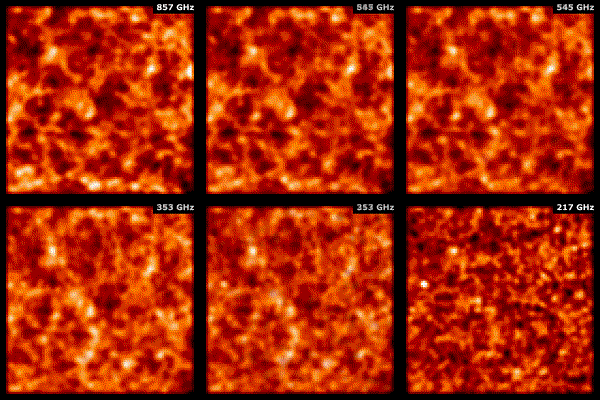
Animation showing the Cosmic Infrared Background fluctuations observed by Planck at various frequencies. Credit: ESA/Planck Collaboration

The main goal of ESA's Planck mission is to map the Cosmic Microwave Background (CMB), the relic radiation of the Big Bang which pervades the entire Universe, and to pinpoint its tiny fluctuations with unprecedented accuracy. In the process, Planck is also sensitive to another, very intriguing background emission which peaks at a different wavelength range, namely the Cosmic Infrared Background (CIB). The CIB, which is about 50 times weaker than the CMB, consists of the cumulative infrared emission from all galaxies throughout cosmic history and, being produced by the dust within such galaxies, it carries a wealth of information about the processes of star formation therein.

Dusty, star-forming galaxies at high redshift are extremely difficult to detect individually because they are so faint and numerous that confusion among sources plagues observations substantially; in addition, the angular resolution achievable in the far-infrared and submillimetre portions of the electromagnetic spectrum—the rather long wavelengths where such objects emit the bulk of their radiation—is not particularly good. In this context, the CIB represents an exceptional tool to study these objects and to trace their overall distribution.

"Thanks to Planck's extensive spectral coverage, we have been able to detect the CIB signal and its fluctuations with great accuracy in the submillimetre range, down to frequencies where it has never been seen before," comments Jean-Loup Puget from the Institut d'Astrophysique Spatiale in Orsay, France, who is principal investigator of the High Frequency Instrument (HFI) on board Planck, the instrument used in this study. "The quality of the data collected by Planck thus far is so good that, at the highest available frequency, it is possible to spot the fluctuations even by eye," he adds.

The fluctuations detected in the CIB trace the large-scale distribution of star-forming galaxies and, to some extent, the underlying distribution of the dark matter halos in which galaxies are believed to reside. "These data allow us to investigate how the processes of star formation taking place in galaxies are related to the dark matter, which constitutes the scaffold where galaxies form and evolve," explains Guilaine Lagache, also from the Institut d'Astrophysique Spatiale, who led this study along with Olivier Doré from the Jet Propulsion Laboratory/Caltech in Pasadena, USA.

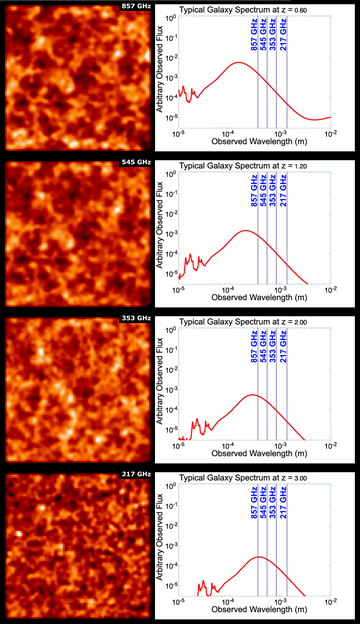
Animation showing the anisotropies in the Cosmic Infrared Background at different frequencies along with the typical spectra of galaxies at the redshifts to which each frequency channel is most sensitive. Credit: ESA/Planck Collaboration

Moving across the various frequencies probed by Planck's HFI, the amount and extent of structure observed are rather different, as a consequence of the fact that each frequency channel is most sensitive to the emission coming from galaxies at a certain redshift (z). Observations at the highest frequency, corresponding to 857 GHz, yield most information about galaxies up to z~1, whereas the lower frequencies offer a chance to peer farther and farther away, out to z~1–4, thus emphasising Planck's ability to track down the early phases of galaxy formation.

"At the moment, we are still learning how to work with these outstanding data. Since the CIB signal is an integrated emission, to which virtually all galaxies contribute, we need to put a lot of effort into properly modelling the data in order to interpret them and extract the wealth of valuable information they contain about the history of cosmic structure," adds Lagache.

The models employed for the data analysis rely on the results of numerical simulations of structure formation as well as on observations of the distribution of galaxies on large scales. "Additional information about the cosmic large-scale structure will also be provided by Planck in the future through the study of secondary anisotropies in the CMB," comments Hervé Dole, also from the Institut d'Astrophysique Spatiale. Secondary anisotropies are those fluctuations imprinted on the CMB as the photons travel throughout the cosmic web—an example is the gravitational lensing of the CMB—and they naturally retain a memory about the large-scale distribution of matter in the Universe. "A combined study of both the CMB and CIB, which will be possible with future Planck data, stands out as a promising tool to explore in even greater detail the connection between dark and luminous matter in the Universe," notes Dole.

The detection of the CIB anisotropies is the result of an extensive work of analysing Planck data, which required the development of a number of new technical tools. "For this study, we developed a specific method to robustly test and quantify all sources of uncertainties that is inherited from techniques usually employed in the analysis of the CMB anisotropies," explains Nicolas Ponthieu from the Institut d'Astrophysique Spatiale. "This project focussing on the CIB is a great example of the cooperation between researchers studying galaxies and those interested in the CMB, since the methods and expertise have been shared between the two groups," adds Doré. This is a notable advantage of the large Planck Collaboration, allowing for a fruitful synergy between many astrophysical communities.

Location on the sky of the first six fields used to detect the Cosmic Infrared Background anisotropies. Credit: ESA/Planck Collaboration. Hi-Res [jpg]

In order to perform these early measurements of the CIB, astronomers from the Planck Collaboration employed only about 2.5 per cent of the entire sky, focussing on a handful of fields located at high galactic latitude, where the foreground contamination due to the Milky Way's diffuse emission is less dramatic. The remarkable results achieved thus far are an exciting hint at the even more precise measurements which will be possible once the study is extended to the full-sky data.

"One of the unique features of Planck is the ability to reveal the fluctuations in the CIB on very large scales, an invaluable source of information in the quest to unravel the complete history of star and structure formation in the Universe," concludes Jan Tauber, Planck Project Scientist at ESA.

Notes for Editors

ESA's Planck mission maps the sky in nine frequencies using two state-of-the-art instruments, designed to produce high-sensitivity, multi-frequency measurements of the diffuse sky radiation: the High Frequency Instrument (HFI) includes the frequency bands 100 – 857 GHz, and the Low Frequency Instrument (LFI) includes the frequency bands 30-70 GHz.

The first scientific results to emerge from the mission, based on the scans gathered during Planck's first all-sky survey, between 13 August 2009 and 6 June 2010, are being presented this week (10-14 January 2011) at the conference "The Millimeter and Submillimeter Sky in the Planck Mission Era" held in Paris, France.

The Planck Scientific Collaboration consists of all the scientists who have contributed to the development of the Planck mission, and who participate in the scientific exploitation of the Planck data during the proprietary period, which nominally ends with the release of the scientific products to the community 3.5 yr after launch, i.e. in January 2013. These scientists are members of one or more of four consortia: the LFI Consortium, the HFI Consortium, the DK-Planck Consortium, and ESA's Planck Science Office.

Related Publication

Planck Collaboration 2011, "Planck Early Results: The Power Spectrum of CIB Anisotropies", submitted to Astronomy & Astrophysics

Contacts

Guilaine Lagache
Institut d'Astrophysique Spatiale, Université Paris-Sud 11 and CNRS,
Orsay, France
Email: guilaine.lagache@ias.u-psud.fr
Phone: +33 1 69 85 85 89

Olivier Doré
Jet Propulsion Laboratory/Caltech
Pasadena, CA, USA
Email: olivier.p.dore@jpl.nasa.gov
Phone: +1 818 354 1004

Jean-Loup Puget
Institut d'Astrophysique Spatiale, Université Paris-Sud 11 and CNRS
Orsay, France
Email: jean-loup.puget@ias.u-psud.fr
Phone: +33 1 69 85 85 08

Hervé Dole
Institut d'Astrophysique Spatiale, Université Paris-Sud 11, CNRS, and IUF,
Orsay, France
Email: Herve.Dole@ias.u-psud.fr
Phone: +33 1 69 85 85 72


Nicolas Ponthieu
Institut d'Astrophysique Spatiale, Université Paris-Sud 11 and CNRS,
Orsay, France
Email: nicolas.ponthieu@ias.u-psud.fr
Phone: +33 1 69 85 86 20

Jan Tauber
ESA Planck Project Scientist
Directorate of Science & Robotic Exploration
ESA, The Netherlands
Email: jtauber@rssd.esa.int
Phone: +31 71 5655342

Tuesday, January 11, 2011

Planck traces the coldest objects in the nearby Universe

With its power to detect cosmic material at unprecedentedly low temperatures, Planck has completed the first unbiased, all-sky survey of compact cold and dusty objects in the Milky Way and, at the same time, the first all-sky survey of cool dust in other galaxies. These extensive data sets allow astronomers to shed new light on the earliest phases of star formation. The public release of the Planck Early Cold Core Catalogue will offer the community a large number of new, cold galactic targets to be studied with other telescopes, including ESA's Herschel Space Observatory. These are amongst the highlights presented by the Planck Collaboration at a conference held from 10 to 14 January 2011 in Paris, France.

The coldest agglomerations of matter found within molecular clouds, both in the Milky Way and in other galaxies, are a key element to understanding the very early stages of stellar formation, as it is from these cold and dense clumps that stars are born. Because of their extremely low temperatures, these still poorly understood objects emit most of their radiation in the sub-millimetre region of the electromagnetic spectrum, and therefore represent an ideal target for ESA's Planck mission.

Catalogue of Planck Objects (C3PO)
Credit: ESA/Planck Collaboration
Hi-Res [tif] - Hi-Res [jpg]

Using observations performed with the three highest frequency channels of the High Frequency Instrument (HFI) on board Planck, astronomers have obtained the first unbiased, all-sky survey of compact cold dust clumps. The full Cold Core Catalogue of Planck Objects (C3PO), assembled using data from Planck's first all-sky survey, contains over 10,000 objects, and the most reliable among those detections, amounting to 915 objects, have been compiled in the Early Cold Core Catalogue (ECC). The ECC is part of the Early Release Compact Source Catalogue (ERCSC), the first scientific product arising from this mission to be made publicly available.

"Thanks to Planck's ability to measure extremely low temperatures with very high accuracy over the entire sky, we have been able to track down the distribution of the coldest dust on very large scales throughout the Milky Way," comments Ludovic Montier from the Institut de Recherche en Astrophysique et Planétologie (IRAP) in Toulouse, France, who led the effort of compiling and analysing the C3PO sample. "Instead of the compact cores that we expected to find, we have detected mainly objects which are rather elongated and have very low temperatures, between 7 and 16 Kelvin. These clumps are not isolated but appear to be all linked to one other, forming huge filamentary structures," he adds.

Most of the cold clumps detected by Planck are located in the solar neighbourhood, but some are more distant, up to 4 kiloparsec away from us. As expected, they tend to be mostly concentrated along the Milky Way's plane, although several have been identified also at high galactic latitudes. "The majority of the cold material detected by Planck is either organised in filaments or located at the illuminated edges of pillars of dense gas," notes Mika Juvela from the University of Helsinki, in Finland, who co-led the investigation along with Ludovic Montier. "In addition, by combining the data with other observations we found that these cold clumps are aligned with hydrogen gas shells and other galactic regions of active star formation, supporting the scenario that the formation of stars might be triggered by earlier stellar populations," he adds.

The low angular resolution of Planck, however, does not allow it to peer into the small cores inside these cold clumps. "This is where Herschel comes into play," explains Isabelle Ristorcelli, also from the Institut de Recherche en Astrophysique et Planétologie (IRAP), who, along with Mika Juvela, led a first study based on follow-up observations of a handful of Planck's detections using ESA's infrared observatory, Herschel. "Thanks to Herschel's higher resolution, we have been able to peer deeply into the clumps detected by Planck and to scrutinise their detailed structure," she adds. The timely release of the Early Cold Core Catalogue provides the community with several hundred objects to follow up and investigate in greater detail, exploiting the unique opportunity of employing Planck and Herschel together in order to achieve a complete view of the distribution and properties of cold dust in the Milky Way on large and small scales alike.

Studying the emission from cold dust in our own Galaxy is also of enormous importance to understand the behaviour of dust and the overall star formation processes in other galaxies. "The data gathered within the Milky Way represent a local guidebook to interpret what we see, with much less detail, in galaxies outside our own," explains Dave Clements from Imperial College London, U.K., who guided a study based on Planck observations of almost 500 nearby galaxies, up to redshift z~0.25. "Understanding the role of cold dust in the local galaxy population is, in turn, extremely useful to calibrate observations of galaxies at much higher redshift, such as those that are currently being performed with Herschel. Together, these two ESA missions will allow us to build a ladder connecting our Milky Way to the faint and distant galaxies and uncovering the evolution of dusty, star forming galaxies throughout cosmic history," he adds.

Providing the first all-sky survey of cool dust in galaxies, Planck has enabled astronomers to see colder dust than has been detected so far, with temperatures as low as about 10 Kelvin, highlighting how this additional component has been missed until now in the observations of local galaxies. "The presence of previously undetected cold dust in these galaxies indicates that they must radiate a significantly larger amount of energy than we thought at far-infrared and sub-millimetre wavelengths," notes Ranga-Ram Chary from the U.S. Planck Data Center in Pasadena, California, U.S.A., who led an analysis of the emission, in these wavelengths, from a large sample of nearby galaxies detected by Planck. "This new evidence suggests that the extrapolations currently used for distant galaxies, which are based on local ones, are incorrect as there appears to be more dust than has been accounted for until now. This calls for a re-evaluation of these galaxies, which are still extreme objects, shining brightly and forming stars at a very high rate, but slightly less extreme than we previously believed," he adds.

Following the trail of cold material throughout the Universe, Planck is tracing cosmic dust down to some of the lowest temperatures measured thus far. "These exciting, first results show how Planck is an excellent machine to trace the densest and coldest regions of the interstellar medium in the Milky Way and, at the same time, to locate the coldest amongst outer galaxies," concludes Jan Tauber, ESA's Planck Project Scientist. "It is in these extremely cold objects that the history of star formation is encoded and, thanks to Planck, we are now starting to disclose the rich reservoir of information they conceal."

Notes for editors

ESA's Planck mission maps the sky in nine frequencies using two state-of-the-art instruments, designed to produce high-sensitivity, multi-frequency measurements of the diffuse sky radiation: the High Frequency Instrument (HFI) includes the frequency bands 100 – 857 GHz, and the Low Frequency Instrument (LFI) includes the frequency bands 30-70 GHz.

The Planck Early Release Compact Source Catalogue (ERCSC), including the Early Cold Core Catalogue, and the first scientific results to emerge from this mission are being presented this week (10-14 January 2011) at the conference "The Millimeter and Submillimeter Sky in the Planck Mission Era" held in Paris, France.

The ERCSC is based on the scans gathered during Planck's first all-sky survey, between 13 August 2009 and 6 June 2010. Planck will continue to gather data at least until the end of 2011, during which time it will have completed over four all-sky scans.

The Planck Scientific Collaboration consists of all the scientists who have contributed to the development of the Planck mission, and who participate in the scientific exploitation of the Planck data during the proprietary period, which nominally ends with the release of the scientific products to the community 3.5 yr after launch, i.e. in January 2013. These scientists are members of one or more of four consortia: the LFI Consortium, the HFI Consortium, the DK-Planck Consortium, and ESA's Planck Science Office.

A follow-up programme of Planck C3PO sources is being undertaken within the Herschel Open Time Key Programme "Galactic Cold Cores: A Herschel survey of the source populations revealed by Planck", PI: Mika Juvela. Some 100-150 separate fields will be mapped with Herschel at five far-infrared/submillimetre frequencies; to date about 15 fields have been observed with the remainder of the observations to be completed in 2011.
Related publications

Planck Collaboration 2011, "Planck Early Results: The Planck view of nearby galaxies", submitted to Astronomy & Astrophysics

Planck Collaboration 2011, "Planck Early Results: The submillimetre properties of a sample of Galactic cold clumps", submitted to Astronomy & Astrophysics
Planck Collaboration 2011, "Planck Early Results: The Galactic Cold Core Population revealed by the Planck first all sky survey", submitted to Astronomy & Astrophysics

Contacts

Ludovic Montier

Institut de Recherche en Astrophysique et Planétologie (IRAP)

Toulouse, France

Email:
montier@cesr.fr
Phone: +33 56 155 6551

Isabelle Ristorcelli
Institut de Recherche en Astrophysique et Planétologie (IRAP)

Toulouse, France
Email:
Isabelle.Ristorcelli@cesr.fr
Phone: +33 56 155 6551

Mika Juvela
Department of Physics University of Helsinki
Helsinki, Finland
Email:
mika.juvela@helsinki.fi
Phone: +358 40 7442367

David Clements

Imperial College London
United Kingdom
Email:
d.clements@imperial.ac.uk
Phone: +44 20 759 47693

Ranga-Ram Chary
U.S. Planck Data Center
Caltech Pasadena, CA, US
Email:
rchary@caltech.edu
Phone: +1-626-395-2693

Jan Tauber
ESA Planck Project Scientist

Directorate of Science & Robotic Exploration
ESA, The Netherlands
Email:
jtauber@rssd.esa.int
Phone: +31 71 5655342

Göran Pilbratt
Herschel Project Scientist
Research and Scientific Support Department
Science and Robotic Exploration Directorate
ESA, The Netherlands
Email:
gpilbratt@rssd.esa.int
Phone: +31 71 565 3621

Planck's successful hunt probes galaxy clusters on very broad mass range

The first all-sky survey of galaxy clusters detected via the Sunyaev-Zel'dovich effect is amongst the highlights presented by the Planck Collaboration at a conference held from 10 to 14 January 2011 in Paris, France. The survey, which has benefited from a fruitful collaboration with ESA's XMM-Newton observatory, probes a wide range of cluster masses and other properties, which is unprecedented for a Sunyaev-Zel'dovich sample. Along with the first results enabled by the survey, the Early Sunyaev-Zel'dovich Cluster sample is being publicly released, providing the community with a robust data set for further studies and follow-up observations of galaxy clusters.

While mapping the tiny fluctuations in the Cosmic Microwave Background (CMB), which will ultimately expose the early Universe in unprecedented detail, ESA's Planck satellite has been performing the first all-sky survey of galaxy clusters detected with high reliability via the Sunyaev-Zel'dovich effect (SZE). "The survey resulted in the Early Sunyaev-Zel'dovich Cluster sample, a very robust sample of galaxy clusters which is among the first scientific products arising from the Planck mission to be made publicly available," comments Jan Tauber, Planck Project Scientist at ESA.

All-sky distribution of all galaxy clusters and cluster candidates reported in the Early Sunyaev-Zel'dovich sample. Credit: ESA/Planck Collaboration. Hi-Res [jpg]

The SZE is an extremely powerful tool to probe galaxy clusters, the largest gravitationally-bound structures in the Universe which contain, besides galaxies, also large amounts of hot, ionised gas and even larger quantities of dark matter. As the photons of the CMB travel through the hot gas in a galaxy cluster, their interaction with the electrons present in it imprints a distinctive signature on the CMB signal at various frequencies, thus allowing astronomers to spot the presence of the cluster even at high redshifts. With its nine frequency channels, Planck is optimised to hunt, over the entire sky, for these huge structures which conceal a wealth of cosmological information about the evolution of cosmic structure and the expansion of the Universe.

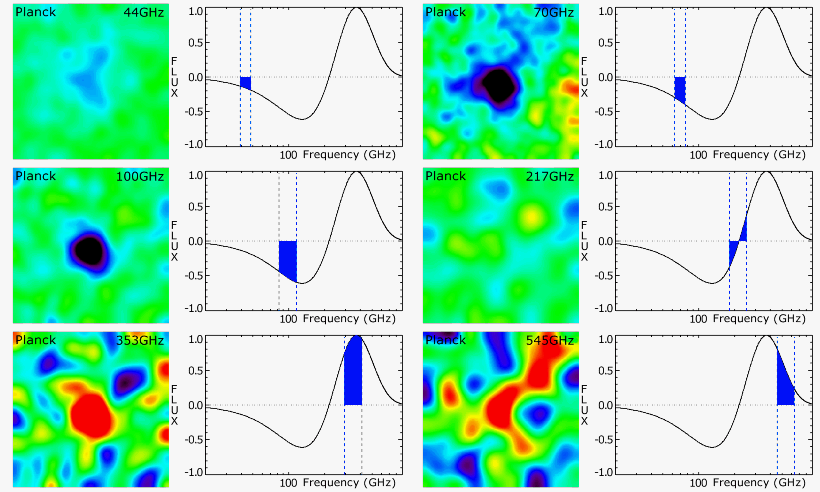
Animation showing how the signal from a galaxy cluster, as observed by Planck via the Sunyaev-Zel'dovich effect, varies with different frequencies. Credit: ESA/Planck Collabration

"Thanks to the excellent data collected by Planck during its first all-sky survey, we have now assembled a unique catalogue of 189 clusters which are spread all over the sky, and span a broad range of masses, up to the highest masses," says Nabila Aghanim of the Institut d'Astrophysique Spatiale in Orsay, France, who coordinates the effort within the Planck Collaboration of identifying the galaxy clusters. The clusters in the early catalogue have masses covering the range 1–15 x 1014 times the mass of the Sun, up to the highest masses and their redshifts vary between 0.01 and 0.55, with the majority of detections corresponding to a redshift of about 0.3. "Among the structures detected by Planck, 169 coincide with already known galaxy clusters and for most of them it is the very first time we measure their SZE signal. This will open new possibilities for multi-frequency studies of clusters. The remaining 20 are brand-new discoveries," she adds. Surveying the whole sky, Planck offers the unique chance of finding the most massive amongst galaxy clusters, which are rare and represent an extremely valuable tool for cosmological studies, as their number is very sensitive to a number of parameters that determine the model used to describe our Universe.

Planck and XMM-Newton images of the newly discovered supercluster PLCK G214.6-37.0, composed of three sub-structures and located at a redshift of z~0.45. Credit: ESA/Planck Collaboration. Hi-Res [jpg]

Observations in X-rays or at other wavelengths can confirm that the newly discovered objects are indeed galaxy clusters and can be used to estimate their redshift. Of the 20 new candidates in the set of 189 pinpointed during Planck's first survey, 11 have already been confirmed thanks to follow-up data gathered by ESA's X-ray observatory, XMM-Newton. Furthermore, an additional batch of ten clusters or super-clusters have also been discovered by Planck and confirmed by XMM-Newton. They will be made public at the same time as the Early Sunyaev-Zel'dovich sample.

"The X-ray data show that most of Planck's new detections are very massive clusters with low luminosity and a disturbed morphology, highlighting that their dynamical state is more complex than that of the galaxy clusters that are customarily detected within X-ray surveys," notes Monique Arnaud from the Service d'Astrophysique, Commissariat à l'Energie Atomique, France, who leads the Planck group following up cluster candidates with XMM-Newton. "The X-ray data revealed that four of the Planck candidates correspond to multiple systems of clusters, including two superclusters consisting of at least three clusters each," she adds.

The excellent data set provided by Planck has also allowed a series of more in-depth studies relying on multi-wavelength observations of galaxy clusters. "By combining the clusters from the Early Sunyaev-Zel'dovich sample with complementary X-ray data from the XMM-Newton archive, we have shown that the properties of clusters, as measured with the SZE, are remarkably consistent with those inferred from X-rays observations," notes Etienne Pointecouteau from the Institut de Recherche en Astrophysique et en Planétologie in Toulouse, France. Another study, following a statistical approach, focussed on seeking the signature, in the Planck maps, of all the previously known X-ray clusters, and has highlighted how the X-ray and SZE views of galaxy clusters are consistent with each other. "The excellent agreement we have found between the actually observed SZE quantities and their predictions based on X-ray data underlines the robustness of our overall empirical view of the properties of the hot ionised gas filling the galaxy clusters," comments Jean-Baptiste Melin from the Service de Physique des Particules, Commissariat à l'Energie Atomique, France. This ensemble of results allows us to answer a long-standing question regarding the consistency between the SZE and X-ray and to show that there are no missing hot baryons.

One of the important results emerging from Planck's first survey is the statistical detection of the SZE signal from very low-mass systems, down to about 5 x 10¹³ times the mass of the Sun. "While Planck is not sensitive enough to detect individual structures with such a low mass, it has been possible to measure this signal using a statistical approach," says Jim Bartlett from the Laboratoire Astroparticule et Cosmologie in Paris, France, and Jet Propulsion Laboratory, California Institute of Technology, USA. Almost 14,000 clusters were selected from an optical catalogue that spans a wide range in mass and their faint SZ signals were integrated in the Planck data at their known locations: the cumulative signal detected by Planck was then binned according to the cluster richness, which is an estimator of mass. This has allowed Planck scientists to see, for the first time, the SZE signal all the way from low-mass structures, namely groups of galaxies and poor clusters, to the most massive and rich clusters. The measured average signal is less strong than it was expected based on models of massive X-ray clusters: the origin of this discrepancy is intriguing and could have important implications for our understanding of how clusters are detected in optical catalogues.

"In spite of it being only an early product of the mission, the cluster sample released this week has already produced a number of very interesting scientific results," comments Tauber. "We have also learned how difficult it is to find these objects using the SZE, and the Planck teams have done an outstanding job of delivering this Early Sunyaev-Zel'dovich Cluster sample so quickly. The full catalogue, which will be released in early 2013, will most likely contain several hundreds of clusters up to redshift z=1 and will allow an even deeper understanding of the physics of galaxy clusters and of the overall process of cosmic structure formation," he concludes.

Notes for editors


ESA's Planck mission maps the sky in nine frequencies using two state-of-the-art instruments, designed to produce high-sensitivity, multi-frequency measurements of the diffuse sky radiation: the High Frequency Instrument (HFI) includes the frequency bands 100 – 857 GHz, and the Low Frequency Instrument (LFI) includes the frequency bands 30-70 GHz.

The Planck Early Release Compact Source Catalogue (ERCSC), including the Early Sunyaev-Zel'dovich Cluster sample, and the first scientific results to emerge from this mission are being presented this week (10-14 January 2011) at the conference "The Millimeter and Submillimeter Sky in the Planck Mission Era" held in Paris, France.

The ERCSC is based on the scans gathered during Planck's first all-sky survey, between 13 August 2009 and 6 June 2010. Planck will continue to gather data at least until the end of 2011, during which time it will have completed over four all-sky scans.

The initial programme of follow-up observations using XMM-Newton, undertaken in Director's Discretionary Time, has the main goal of confirming the nature of a selected set of cluster candidates detected by Planck via the SZE.

The Planck Scientific Collaboration consists of all the scientists who have contributed to the development of the Planck mission, and who participate in the scientific exploitation of the Planck data during the proprietary period, which nominally ends with the release of the scientific products to the community 3.5 yr after launch, i.e. in January 2013. These scientists are members of one or more of four consortia: the LFI Consortium, the HFI Consortium, the DK-Planck Consortium, and ESA's Planck Science Office.

Related publications

Planck Collaboration 2011, "Planck Early Results: The early SZ cluster sample from Planck", submitted to Astronomy & Astrophysics

Planck Collaboration 2011, "Planck Early Results: XMM-Newton follow-up for validation of Planck discovered clusters", submitted to Astronomy & Astrophysics

Planck Collaboration 2011, "Planck Early Results: Statistical analysis of SZ scaling relations for X-ray galaxy clusters", submitted to Astronomy & Astrophysics

Planck Collaboration 2011, "Planck Early Results: Calibration of the local galaxy cluster SZ scaling relations with the Planck survey", submitted to Astronomy & Astrophysics

Planck Collaboration 2011, "Planck Early Results: Cluster SZ-Optical Scaling Relations", submitted to Astronomy & Astrophysics

Contacts

Nabila Aghanim
Institut d'Astrophysique Spatiale
CNRS – Université Paris Sud

Orsay, France

Email:
nabila.aghanim@ias.u-psud.fr
Phone: +33 1 69 85 86 46

Monique Arnaud
CEA Saclay
Service d'Astrophysique France
Email:
Monique.Arnaud@cea.fr
Phone: +33 1 69 08 20 41

Etienne Pointecouteau
Institut de Recherche en Astrophysique et en Planétologie

CNRS - Université de Toulouse Toulouse, France
Email:
Etienne.Pointecouteau@cesr.fr
Phone: +33 (0)5 61 55 81 89

Jean-Baptiste Melin
CEA Saclay
Service de Physique des Particules France
Email:
jean-baptiste.melin@cea.fr
Phone: +33 1 69 08 42 64

James Bartlett
Laboratoire Astroparticule et Cosmologie
Paris, France
and

Jet Propulsion Laboratory, California Institute of Technology
Pasadena, USA
Email:
bartlett@apc.univ-paris7.fr
Phone: +1-818-636-6175

Jan Tauber
ESA Planck Project Scientist
Directorate of Science & Robotic Exploration
ESA, The Netherlands

Email:
jtauber@rssd.esa.int
Phone: +31 71 5655342

Norbert Schartel
ESA XMM-Newton Project Scientist

Directorate of Science and Robotic Exploration

ESA, The Netherlands

Email:
Norbert.Schartel@esa.int
Phone: +34 91 8131 184

Saturday, January 01, 2011

First Observational Evidence Other Universes?

The signatures of a bubble collision at various stages in our analysis pipeline. A collision (top left) induces a temperature modulation in the CMB temperature map (top right). The "blob" associated with the collision is identi ed by a large needlet response (bottom left), and the presence of an edge is determined by a large response from the edge detection algorithm (bottom right). (Feeny, et al.)

In the realm of far out ideas in science, the notion of a multiverse is one of the stranger ones. Astronomers and physicists have considered the possibility that our universe may be one of many. The implications of this are somewhat more fuzzy. Nothing in physics prevents the possibilities of outside universes, but neither has it helped to constrain them, leaving scientists free to talk of branes and bubbles. Many of these ideas have been considered untestable, but a paper uploaded to arXiv last month considers the effects of two universes colliding and searches for fingerprints of such a collision of our own universe. Surprisingly, the team reports that they may have detected not one, but four collisional imprints.

The team, led by Stephen Feeney at the University College London, considered a collision between bubble universes. They conducted a simulation based on a formulation of Einstein’s field equation, known as de Sitter space. This solution to Einstein’s equations is essentially a description of how space itself behaves. From interactions between such spaces, they determined a set of observable effects visible in the cosmic microwave background (CMB). Among them, they required that signals have azimuthal symmetry or are mirrored on both sides of the sky. Secondly, the signals should be circular in shape.

Searching the WMAP archives, the team found numerous possible signals, but eventually narrowed it town to four strong candidates.

The authors of the paper are quick to caution that these results are only consistent with the predictions of bubble universes but do not rule out other causes, or even simple blind luck from a large enough data set. To rule out other scenarios, astronomers will need to rely on instruments with higher sensitivity, such as the Planck satellite, launched in 2009, which working on completing a second scan of the entire sky with three times the sensitivity of WMAP.

If these results are confirmed, it would be support for a variation of cosmology known as “eternal inflation”. The title is somewhat misleading as the hypothesis doesn’t describe a single instance of inflation that continues eternally, but rather an eternal time period in which events of inflation, triggered by bubble collisions, can take place. Such collisions cause the rapid expansion of spaces forming universes like our own. Conversely, if a bubble is not found, “the conclusive non-detection of a bubble collision can be used to place constraints on theories giving rise to eternal inflation; however, if a bubble collision is verified by future data, then we will gain an insight not only into our own universe but a multiverse beyond.”

By Jon Voisey

Tuesday, December 28, 2010

Planck clocks up 500 days of scanning the sky

The whole sky as seen by Planck
Credit: ESA / LFI and HFI Consortia


This week (27th Dec) marks 500 days since Planck started scanning the sky on 14th August 2009. Once every minute, Planck has spun on its axis to map rings around the sky. Now well into its third sky survey, Planck is more than half-way through its mission, and is mapping the sky at nine different wavelengths bands ranging from 0.3mm up to 1cm.

Planck's primary mission is to map the Cosmic Microwave Background, relic radiation from the early Universe, released just 400,000 years after the Big Bang. But the early Universe is not the only object which shines in microwave light. The gas and dust in our own Galaxy glows brightly, clouding the view of the Cosmic Microwave Background. The wide wavelength coverage of Planck is the solution.

By scanning the sky multiple times, Planck is building up a picture of which components of our Galaxy are seen at each wavelength. In July 2010, Planck's first all-sky map was released, showing the power of such wide wavelength coverage. The dust in our Galaxy is shown in blue and white, with gas in pink. This gas and dust is located in the disc of our Galaxy, which is seen edge-on from Earth and makes a band across the centre of this image.

The Cosmic Microwave Background is visible at the top and bottom of the image, looking away from the bright disc of the Galaxy. By comparing the emission seen at all its wavelengths, scientists working on Planck will be able to get a much clearer understanding of the Early Universe. Doing so takes a long time, and these cosmological results are not expected for around two years.

Astronomers are also studying the dust and gas in our own Galaxy, which mark the places where stars are forming. Planck is making maps of the star formation on the largest scales, which can be studied in more detail by other telescopes such as the Herschel Space Observatory.

But our own Galaxy is not the only one seen by Planck. In January 2011, a catalogue of the distant galaxies will be released, as well as very localised regions of star formation in our own galaxy.

Wednesday, September 15, 2010

Planck's first glimpse at galaxy clusters and a new supercluster

Surveying the microwave sky, Planck has obtained its very first images of galaxy clusters, amongst the largest objects in the Universe, by means of the Sunyaev-Zel'dovich effect, a characteristic signature they imprint on the Cosmic Microwave Background. Joining forces in a fruitful collaboration between ESA missions, XMM-Newton followed up Planck's detections and revealed that one of them is a previously unknown supercluster of galaxies.

Matter in the Universe is distributed in a highly clustered fashion; stars congregate in galaxies and galaxies clump together, forming enormous clusters surrounded by vast, empty spaces. Galaxy clusters can host up to a thousand galaxies and they are permeated by hot gas that shines brightly in X-rays; furthermore, most of their mass consists of dark matter. On an even grander scale are the superclusters, large assemblies of galaxy groups and clusters, located at the intersections of sheets and filaments in the wispy cosmic web. As clusters and superclusters trace the distribution of both luminous and dark matter throughout the Universe, their observation is crucial to probe how cosmic structures formed and evolved.

Large-scale structure in the Universe.
Credit: Sloan Digital Sky Survey Team, NASA, NSF, DOE

Planck's primary goal is to capture the most ancient light of the cosmos, the Cosmic Microwave Background (CMB), and for this purpose it boasts a superb set of nine frequency channels, spanning the spectral range from 30 to 857 GHz. Such a broad spectral coverage is not only instrumental in removing all sources of contamination from the CMB, in order to deliver what will be the sharpest image of the early Universe ever achieved - it also makes Planck an excellent hunter of galaxy clusters.

In fact, the nine frequency channels were carefully chosen by the Planck team with a particular phenomenon, known as the Sunyaev-Zel'dovich Effect (SZE), very much in mind. This effect describes the change of energy experienced by CMB photons when they encounter a galaxy cluster as they travel towards us, in the process imprinting a distinctive signature on the CMB itself. Hence, the SZE represents a unique tool to detect galaxy clusters, even at high redshift.

"As the fossil photons from the Big Bang cross the Universe, they interact with the matter that they encounter: when travelling through a galaxy cluster, for example, the CMB photons scatter off free electrons present in the hot gas that fills the cluster," explains Nabila Aghanim of the Institut d'Astrophysique Spatiale in Orsay, France, a leading member of the group of Planck scientists investigating SZE clusters and secondary anisotropies. "These collisions redistribute the frequencies of photons in a particular way that enables us to isolate the intervening cluster from the CMB signal."

Since the hot electrons in the cluster are much more energetic than the CMB photons, interactions between the two species typically result in the photons being scattered to higher energies. This means that, when looking at the CMB in the direction of a galaxy cluster, one observes a deficit, with respect to the average CMB signal, of low-energy photons and a surplus of more energetic ones. The threshold frequency, separating deficit and surplus, corresponds to 217 GHz. Planck's channels probe the spectrum both below and above this threshold, with one of them centred exactly on 217 GHz.

Multi-band observations of the galaxy cluster Abell 2319
Credit: ESA/ LFI & HFI Consortia. Hi-Res [jpg] 1,389.07 kb

"With its unprecedented spectral coverage, Planck can detect both the positive and the negative signal of galaxy clusters, and is thus an exceptional tool to identify the locations of these enormous structures over the entire sky, and to measure their physical characteristics," says Jan Tauber, Planck Project Scientist, commenting on the first observations of the SZE in the Planck frequency bands. These first images include some clusters that are well known to astronomers, such as Coma, a very hot and nearby cluster extending over more than two degrees in the sky, and Abell 2319, another nearby cluster.

The Coma cluster as it appears through the Sunyaev-Zel'dovich Effect (top left) and X-ray emission (top right). The images are superimposed on a wide-field view of the region from the Digitised Sky Survey (lower two panels). Hi-Res [jpg] 695.29 kb

Planck's design, optimised for detecting the SZE signal from clusters scattered throughout the sky, is however not suited for in-depth investigations— its resolution is simply not sufficient to discern much detail for most of them, especially any newly discovered, high-redshift ones. Observations at other wavelengths are necessary to pin down the details of these massive structures. Since the hot gas in galaxy clusters emits copious amounts of X-rays, observations in this spectral band prove particularly useful as they probe the very same component responsible for producing the SZE.

In order to confirm their identity, Planck's cluster candidates are compared with existing catalogues of clusters, like the ROSAT all-sky X-ray catalogue of clusters. When the Planck candidates do not correspond to any known structure, and after careful quality checks of the SZ signal, they may become the target of brand new, follow-up observations with ESA's X-ray observatory, XMM-Newton.

"With its exceptional sensitivity, XMM-Newton is the ideal partner to follow-up the sources detected by Planck via the SZE," says Monique Arnaud, from the Service d'Astrophysique, Commissariat à l'Energie Atomique, France, who leads the Planck group following up sources with XMM-Newton. It is the special synergy between these two ESA missions that has allowed astronomers to use snapshot XMM-Newton observations to confirm that Planck's first detections are indeed clusters, and has revealed an even larger structure: a supercluster of galaxies.

A new supercluster, seen by Planck and XMM-Newton
Credit: Planck image: ESA/LFI & HFI Consortia;
XMM-Newton image: ESA

"The XMM-Newton observations have shown that one of the candidate clusters is in fact a supercluster composed of at least three individual, massive clusters of galaxies, which Planck alone could not have resolved," explains Arnaud.

"The synergy between the two missions has proved extremely successful, and XMM-Newton will continue following up Planck detections in order to confirm the nature of the cluster candidates," says Norbert Schartel, XMM-Newton Project Scientist. In the future, XMM-Newton may conduct further, deeper observations of some of these clusters in order to measure their properties in greater detail.

"This is the first time that a supercluster has been discovered via the SZE," adds Aghanim. "This important discovery opens a brand new window on superclusters, one which complements the observations of the individual galaxies therein."

The SZ signal from the newly discovered supercluster arises from the sum of the signal from the three individual clusters, with a possible additional contribution from an inter-cluster filamentary structure. This provides important clues about the distribution of gas on very large scales which is, in turn, crucial also for tracing the underlying distribution of dark matter.

"These first detections, revealing both previously known clusters and brand new ones, show that Planck is working extremely well," comments Tauber. "Of course, this is only a preview of the numerous discoveries that will surely come along during the lifetime of the mission."

Notes for editors

ESA’s Planck mission maps the sky in nine frequencies using two state-of-the-art instruments, designed to produce high-sensitivity, multi-frequency measurements of the diffuse sky radiation: the High Frequency Instrument (HFI) includes the frequency bands 100 - 857 GHz, and the Low Frequency Instrument (LFI) includes the frequency bands 30 - 70 GHz.

The first Planck all-sky survey began in mid-August 2009 and was completed in June 2010. Planck will continue to gather data until the end of 2011, during which time it will complete over four all-sky scans.

The Planck team is currently analysing the data from the first all-sky survey to identify both known and new galaxy clusters for the early Sunyaev-Zel'dovich catalogue, which will be released in January of 2011 as part of the Early Release Compact Source Catalogue. Companion scientific papers will accompany the catalogue.

The initial programme of follow-up observations using XMM-Newton, undertaken in Director's Discretionary Time, has the main goal of confirming the nature of a selected set of cluster candidates detected by Planck via the SZE.

Contacts

Nabila Aghanim
Institut d'Astrophysique Spatiale
CNRS-Université Paris Sud
Orsay, France
Email:
nabila.aghanim@ias.u-psud.fr
Phone: +33 1 69 85 86 46

Monique Arnaud
CEA Saclay
Service d'Astrophysique
France
Email:
Monique.Arnaud@cea.fr
Phone: +33 1 69 08 20 41

Jan Tauber
ESA Planck Project Scientist
Directorate of Science & Robotic Exploration
ESA, The Netherlands
Email:
jtauberrssd@esa.int
Phone: +31 71 5655342

Norbert Schartel
ESA XMM-Newton Project Scientist
Directorate of Science and Robotic Exploration
ESA, The Netherlands
Email:
Norbert.Schartel@esa.int
Phone: +34 91 8131 184

Monday, July 05, 2010

Planck unveils the Universe - old and young

A false-colour image of the whole sky as seen by Planck. The dust throughout the Galaxy is shown in blue, while hot gas can be seen as red regions across the centre of the image. In the background, the mottled yellow features are relic radiation, called the Cosmic Microwave Background, which contains information about the earliest stages of the Universe. This image is a low-resolution version of the full data set. The areas of sky shown in previous releases are outlines and labelled. Image credit: ESA / LFI and HFI Consortia.

Image credit: ESA / LFI and HFI Consortia

Image credit: ESA / LFI and HFI Consortia

Planck has delivered its first image of the entire sky. By looking at microwave radiation, it not only provides new insight into the way stars and galaxies form, but also tells us how the Universe itself came to life after the Big Bang.

Professor George Efstathiou, at University of Cambridge and the Planck Survey Scientist, said “it has taken sixteen years of hard work by many scientists in Europe, the USA and Canada, to produce this new image of the early Universe. Planck is working brilliantly and we expect to learn a lot about the Big Bang and the creation of our Universe.”

Dr David Parker, Director of Space Science and Exploration for the UK Space Agency, added, “Planck has ‘painted’ us its first spectacular picture of the Universe. This single image captures both our own cosmic backyard – the Milky Way galaxy that we live in – but also the subtle imprint of the Big Bang from which the whole Universe emerged. We’re proud to be supporting this great new discovery machine and look forward to our scientists unravelling the deeper meaning behind the beauty of this first image.”

From the closest portions of the Milky Way to the furthest reaches of space and time, the new all-sky Planck image is an extraordinary treasure chest of new data for astronomers. The main disc of our Galaxy runs across the centre of the image. Immediately striking are the streamers of cold dust reaching above and below the Milky Way. This galactic web is where new stars are being formed, and Planck has found many locations where individual stars are edging toward birth or just beginning their cycle of development.

Less spectacular but perhaps more intriguing is the mottled backdrop at the top and bottom. This is the cosmic microwave background (CMB) radiation. It is the oldest light in the Universe, the remains of the fireball out of which our Universe sprang into existence 13.7 billion years ago.

While the Milky Way shows us what our local neighbourhood looks like now, those microwaves show us what the Universe looked like close to its time of creation, before there were stars or galaxies. The CMB radiation was released as the first atoms were forming, about 400 000 years after the Big Bang, and is at the heart of Planck’s mission to decode what happened in the primordial Universe.

The microwave pattern is the cosmic blueprint from which today’s clusters of galaxies were built. The different colours represent minute differences in the temperature and density of matter across the sky. Through the action of gravity, these small irregularities evolved into denser regions that became the galaxies of today.

The CMB covers the entire sky but most of it is hidden in this image by the Milky Way’s emission, which must be digitally removed from the final data in order to see the microwave background in its entirety. Planck looks at the sky in nine different bands, or colours, of microwave light, which have wavelengths thousands of times that of optical light. These nine different bands, ranging from frequencies of 30 to 850 GHz, are crucial for understanding which parts of the Planck data are from the early Universe, and which are from our own Galaxy. Clive Dickinson, of the University of Manchester, said “Planck has the unique ability to distinguish very cold dust at temperatures of just a few degrees above absolute zero (-273.15oC) from the warmer dust at tens of degrees above absolute zero. These regions of space are likely to be where stars form, and Planck will allow us to study such regions over large regions of sky for the first time.”

A number of UK institutions have been involved in the design and construction of the satellite, and are now working alongside colleagues from around the world to operate the satellite and analyse the data. Dr David Clements, of Imperial College London, said “just looking at the pictures you can tell we're seeing new things about the structure of our galaxy. Once we've done that, and stripped away these foregrounds, then it's on to the Cosmic Microwave Background and the glow of the Big Bang itself!”

The image shown here is constructed from data taken from the first ten months of Planck’s main mission, with observations beginning in August 2009. Planck continues to map the Universe, and by the end of its mission in 2012 it will have imaged the whole sky four times. The first full data release of the CMB is planned for 2012. Before then, a catalogue containing individual objects, both regions in our Galaxy and entire distant galaxies, will be released in January 2011.

Professor Peter Ade, at Cardiff University, has been involved with design, construction and operation of the High Frequency Instrument. He said “at last we can see the realisation of the full potential of Planck, showing in exquisite detail our own Milky Way galaxy superimposed on the relic fireball background. It is a fantastic result for this unique satellite, and demonstrates once again that you can only do pioneering science by using advanced and therefore high risk technologies.”

The Jodrell Bank Centre for Astrophysics at the University of Manchester is involved with the Low Frequency Instrument. Rod Davies, Emeritus Professor at Jodrell, said “it is particularly rewarding for me to see the culmination of a 30-year involvement in Cosmic Microwave Background research beginning with radio telescopes at Jodrell Bank in Cheshire, then under the clear dry skies on the high volcanic slopes of Tenerife and finally with the construction by Jodrell Bank of the radio receivers for Planck’s Low Frequency Instrument.”