Showing posts with label VISTA. Show all posts

Monday, September 23, 2013

New Cool Starlet in Our Backyard

Credit: ESO, and D. Minniti and J. C. Beamín (Pontificia Universidad Católica de Chile)

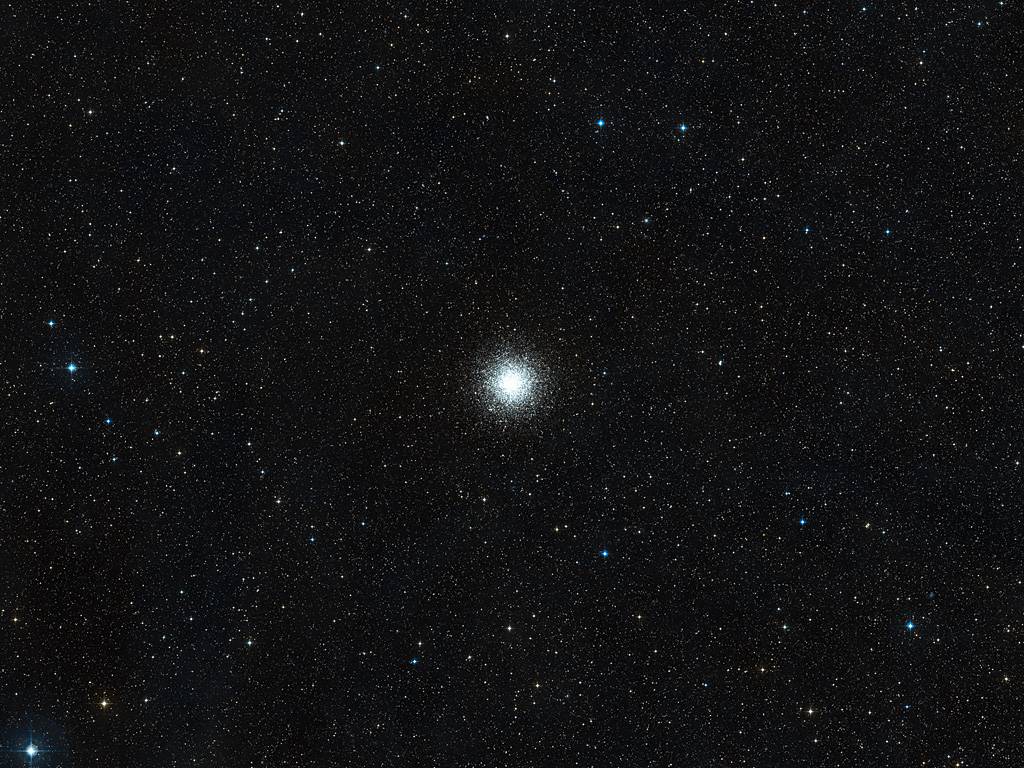
 This new image, from ESO’s VISTA telescope, shows a newly-discovered brown dwarf nicknamed VVV BD001, which is located at the very centre of this zoomable image. It is the first new brown dwarf spotted in our cosmic neighbourhood as part of the VVV Survey. VVV BD001 is located about 55 light-years away from us, towards the very crowded centre of our galaxy.

Brown dwarfs are stars that never quite managed to grow up into a star like our Sun. They are often referred to as “failed stars”; they are larger in size than planets like Jupiter, but smaller than stars.

This dwarf is peculiar in two ways; firstly, it is the first one found towards the centre of our Milky Way, one of the most crowded regions of the sky. Secondly, it belongs to an unusual class of stars known as “unusually blue brown dwarfs” — it is still unclear why these stars are bluer than expected.

Brown dwarfs are born in the same way as stars, but do not have enough mass to trigger the burning of hydrogen to become normal stars. Because of this they are much cooler and produce far less light, making them harder to find. Astronomers generally look for these objects using near and mid-infrared cameras and special telescopes that are sensitive to these very cool objects, but usually avoid looking in very crowded regions of space — such as the central region of our galaxy, for example.

VISTA (the Visible and Infrared Survey Telescope for Astronomy) is the world’s largest survey telescope and is located at ESO’s Paranal Observatory in Chile. It is performing six separate surveys of the sky, and the VVV (VISTA Variables in the Via Lactea) survey is designed to catalogue a billion objects in the centre of our own Milky Way galaxy. VVV BD001 was discovered by chance during this survey.

Scientists have used the VVV catalogue to create a 3 dimensional map of the central bulge of the Milky Way (eso1339). The data have also been used to create a monumental 108 200 by 81 500 pixel colour image containing nearly nine billion pixels (eso1242), one of the biggest astronomical images ever produced.

Links

 
Source: ESO


Thursday, September 12, 2013

The Peanut at the Heart of our Galaxy

Artist's impression of the central bulge of the Milky Way

The Galactic Centre and Bulge above the ESO 3.6-metre telescope 

Part of the VVV view of the bulge of the Milky Way from ESO's VISTA

Hubble view of galaxy NGC 4710 with X-shaped bulge

Artist's impression of the Milky Way (updated - annotated)

Wide Field Imager view of part of the bulge of the Milky Way
 
Artist's impression of the Milky Way 

************************************************************

Videos

Artist's impression of the Milky Way

Simulation of the X-shaped bulge of the Milky Way

ESO telescopes create the best 3D map yet of central bulge of the Milky Way

Two groups of astronomers have used data from ESO telescopes to make the best three-dimensional map yet of the central parts of the Milky Way. They have found that the inner regions take on a peanut-like, or X-shaped, appearance from some angles. This odd shape was mapped by using public data from ESO’s VISTA survey telescope along with measurements of the motions of hundreds of very faint stars in the central bulge.

One of the most important and massive parts of the galaxy is the galactic bulge. This huge central cloud of about 10 000 million stars spans thousands of light-years, but its structure and origin were not well understood.

Unfortunately, from our vantage point from within the galactic disc, the view of this central region — at about 27 000 light-years’ distance — is heavily obscured by dense clouds of gas and dust. Astronomers can only obtain a good view of the bulge by observing longer wavelength light, such as infrared radiation, which can penetrate the dust clouds.

Earlier observations from the 2MASS infrared sky survey had already hinted that the bulge had a mysterious X-shaped structure. Now two groups of scientists have used new observations from several of ESO’s telescopes to get a much clearer view of the bulge’s structure.

The first group, from the Max Planck Institute for Extraterrestrial Physics (MPE) in Garching, Germany, used the VVV near-infrared survey [1] from the VISTA telescope at ESO’s Paranal Observatory in Chile (eso1101, eso1128, eso1141, eso1242, eso1309). This new public survey can pick up stars thirty times fainter than previous bulge surveys. The team identified a total of 22 million stars belonging to a class of red giants whose well-known properties allow their distances to be calculated [2].

“The depth of the VISTA star catalogue far exceeds previous work and we can detect the entire population of these stars in all but the most highly obscured regions,” explains Christopher Wegg (MPE), who is lead author of the first study. “From this star distribution we can then make a three-dimensional map of the galactic bulge.This is the first time that such a map has been made without assuming a model for the bulge’s shape.”

"We find that the inner region of our Galaxy has the shape of a peanut in its shell from the side, and of a highly elongated bar from above", adds Ortwin Gerhard, the coauthor of the first paper and leader of the Dynamics Group at MPE [3].  "It is the first time that we can see this clearly in our own Milky Way, and simulations in our group and by others show that this shape is characteristic of a barred galaxy that started out as a pure disc of stars."

The second international team, led by Chilean PhD student Sergio Vásquez (Pontificia Universidad Católica de Chile, Santiago, Chile and ESO, Santiago, Chile) took a different approach to pin down the structure of the bulge. By comparing images taken eleven years apart with the MPG/ESO 2.2-metre telescope they could measure the tiny shifts due to the motions of the bulge stars across the sky. These were combined with measurements of the motions of the same stars towards or away from the Earth to map out the motions of more than 400 stars in three dimensions [4].

“This is the first time that a large number of velocities in three dimensions for individual stars from both sides of the bulge been obtained,” concludes Vásquez. “The stars we have observed seem to be streaming along the arms of the X-shaped bulge as their orbits take them up and down and out of the plane of the Milky Way. It all fits very well with predictions from state-of-the-art models!”

The astronomers think that the Milky Way was originally a pure disc of stars which formed a flat bar billions of years ago [5]. The inner part of this then buckled to form the three-dimensional peanut shape seen in the new observations.

Notes

[1] VVV stands for VISTA Variables in the Via Lactea Survey. This is one of six large surveys being made by the VISTA telescope. The data from the VVV survey is made publicly available to the international science community through the ESO Science Archive Facility which enabled the study at MPE.

[2] Red clump giant stars were chosen for this study as they can be used as a standard candles: at this stage in the giant stars’ lifetimes their luminosity is approximately independent of their age or composition. The amount of gas and dust obscuring the stars is calculated directly from the observed colours of the red clump stars, so that their brightness distribution without obscuration can be measured. Then, because red clump stars have nearly the same intrinsic brightness, this gives approximate distances to each star. The good spatial coverage of the VVV survey allowed measurements across the whole inner region of the Milky Way, and from these the three-dimensional measurement of the structure of the bulge was constructed.

[3] Similar peanut structures have been observed in the bulges of other galaxies and their formation has been predicted from computer simulations, which show that the peanut shape is formed by stars in orbits that form an X-shaped structure.

[4] The observations of these radial velocities were made using the FLAMES-GIRAFFE spectrograph on ESO’s Very Large Telescope and the IMACS spectrograph at the Las Campanas Observatory.

[5] Many galaxies, including the Milky Way, have long narrow features across their central regions, which are known as bars.

More information

This research was presented in papers entitled “Mapping the three-dimensional density of the Galactic bulge with VVV red clump stars” by C. Wegg et al., to appear in the Monthly Notices of the Royal Astronomical Society, and “3D kinematics through the X-shaped Milky Way bulge”, by S. Vásquez et al., which has been recently published in the journal Astronomy & Astrophysics.

The first team is composed of C. Wegg and O. Gerhard (both Max-Planck-Institut für Extraterrestrische Physik, Garching, Germany).

The second team consists of S. Vásquez (Pontificia Universidad Católica de Chile, Santiago, Chile; ESO, Santiago, Chile), M. Zoccali (Pontificia Universidad Católica de Chile), V. Hill (Université de Nice Sophia-Antipolis, CNRS, Observatoire de la Côte d’Azur, Nice, France), A. Renzini (INAF − Osservatorio Astronomico di Padova, Italy; Observatoire de Paris, France), O. A. González (ESO, Santiago, Chile), E. Gardner (Université de Franche-Comté, Besançon, France), V. P. Debattista (University of Central Lancashire, Preston, UK), A. C. Robin (Université de Franche-Comté), M. Rejkuba (ESO, Garching, Germany), M. Baffico (Pontificia Universidad Católica de Chile), M. Monelli (Instituto de Astrofísica de Canarias & Universidad de La Laguna, La Laguna, Tenerife, Spain), V. Motta (Universidad de Valparaiso, Chile) and D. Minniti (Pontificia Universidad Católica de Chile; Vatican Observatory, Italy).

ESO is the foremost intergovernmental astronomy organisation in Europe and the world’s most productive ground-based astronomical observatory by far. It is supported by 15 countries: Austria, Belgium, Brazil, the Czech Republic, Denmark, France, Finland, Germany, Italy, the Netherlands, Portugal, Spain, Sweden, Switzerland and the United Kingdom. ESO carries out an ambitious programme focused on the design, construction and operation of powerful ground-based observing facilities enabling astronomers to make important scientific discoveries. ESO also plays a leading role in promoting and organising cooperation in astronomical research. ESO operates three unique world-class observing sites in Chile: La Silla, Paranal and Chajnantor. At Paranal, ESO operates the Very Large Telescope, the world’s most advanced visible-light astronomical observatory and two survey telescopes. VISTA works in the infrared and is the world’s largest survey telescope and the VLT Survey Telescope is the largest telescope designed to exclusively survey the skies in visible light. ESO is the European partner of a revolutionary astronomical telescope ALMA, the largest astronomical project in existence. ESO is currently planning the 39-metre European Extremely Large optical/near-infrared Telescope, the E-ELT, which will become “the world’s biggest eye on the sky”.

Links

Contacts

Christopher Wegg
Max-Planck-Institut für Extraterrestrische Physik
Garching bei München, Germany
Tel: +49 89 30000 3715
Email: wegg@mpe.mpg.de

Ortwin Gerhard
Max-Planck-Institut für Extraterrestrische Physik
Garching bei München, Germany
Tel: +49 89 30000 3539
Email: gerhard@mpe.mpg.de

Sergio Vásquez
Instituto de Astrofísica — P. Universidad Católica
Santiago, Chile
Tel: +56 2 2354 4940
Email: svasquez@astro.puc.cl

Manuela Zoccali
Instituto de Astrofísica — P. Universidad Católica
Santiago, Chile
Tel: +56 2 2354 4940
Email: mzoccali@astro.puc.cl

Richard Hook
ESO education and Public Outreach Department
Garching bei München, Germany
Tel: +49 89 3200 6655
Cell: +49 151 1537 3591
Email: rhook@eso.org


Wednesday, July 24, 2013

Starburst to Star Bust

Three-dimensional view of ALMA observations 
of the outflows from NGC 253


The starburst galaxy NGC 253 seen with the VISTA and ALMA

The galaxy NGC 253 in the constellation of Sculptor

Wide-field view of NGC 253 from the VLT Survey Telescope


Videos

Three-dimensional view of ALMA observations of the outflows from NGC 253
Three-dimensional view of ALMA observations  o
f the outflows from NGC 253 

Three-dimensional view of ALMA observations of the outflows from NGC 253
Three-dimensional view of ALMA observations 
of the outflows from NGC 253


ALMA Sheds Light on Mystery of Missing Massive Galaxies


New observations from the ALMA telescope in Chile have given astronomers the best view yet of how vigorous star formation can blast gas out of a galaxy and starve future generations of stars of the fuel they need to form and grow. The dramatic images show enormous outflows of molecular gas ejected by star-forming regions in the nearby Sculptor Galaxy. These new results help to explain the strange paucity of very massive galaxies in the Universe. The study is published in the journal Nature on 25 July 2013.

Galaxies — systems like our own Milky Way that contain up to hundreds of billions of stars — are the basic building blocks of the cosmos. One ambitious goal of contemporary astronomy is to understand the ways in which galaxies grow and evolve, a key question being star formation: what determines the number of new stars that will form in a galaxy?

The Sculptor Galaxy, also known as NGC 253, is a spiral galaxy located in the southern constellation of Sculptor. At a distance of around 11.5 million light-years from our Solar System it is one of our closer intergalactic neighbours, and one of the closest starburst galaxies [1] visible from the southern hemisphere. 

Using the Atacama Large Millimeter/submillimeter Array (ALMA) astronomers have discovered billowing columns of cold, dense gas fleeing from the centre of the galactic disc.

“With ALMA’s superb resolution and sensitivity, we can clearly see for the first time massive concentrations of cold gas being jettisoned by expanding shells of intense pressure created by young stars,” said Alberto Bolatto of the University of Maryland, USA lead author of the paper. “The amount of gas we measure gives us very good evidence that some growing galaxies spew out more gas than they take in. We may be seeing a present-day example of a very common occurrence in the early Universe.”

These results may help to explain why astronomers have found surprisingly few high-mass galaxies throughout the cosmos. Computer models show that older, redder galaxies should have considerably more mass and a larger number of stars than we currently observe. It seems that the galactic winds or outflow of gas are so strong that they deprive the galaxy of the fuel for the formation of the next generation of stars [2].

“These features trace an arc that is almost perfectly aligned with the edges of the previously observed hot, ionised gas outflow,” noted Fabian Walter, a lead investigator at the Max Planck Institute for Astronomy in Heidelberg, Germany, and a co-author of the paper. “We can now see the step-by-step progression of starburst to outflow.”

The researchers determined that vast quantities of molecular gas — nearly ten times the mass of our Sun each year and possibly much more — were being ejected from the galaxy at velocities between 150 000 and almost 1 000 000 kilometres per hour [3]. The total amount of gas ejected would add up to more gas than actually went into forming the galaxy’s stars in the same time. At this rate, the galaxy could run out of gas in as few as 60 million years.

“For me, this is a prime example of how new instruments shape the future of astronomy. We have been studying the starburst region of NGC 253 and other nearby starburst galaxies for almost ten years. But before ALMA, we had no chance to see such details,” says Walter. The study used an early configuration of ALMA with only 16 antennas. “It’s exciting to think what the complete ALMA with 66 antennas will show for this kind of outflow!” Walter adds.

More studies with the full ALMA array will help determine the ultimate fate of the gas carried away by the wind, which will reveal whether the starburst-driven winds are recycling or truly removing star forming material.

Notes

[1] Starburst galaxies are producing stars at an exceptionally high rate. As NGC 253 is one of the closest such extreme objects it is an ideal target to study the effect of such growth frenzy on the galaxy hosting it.

[2] Previous observations had shown hotter, but much less dense, gas streaming away from NGC 253’s star-forming regions, but alone this would have little, if any, impact on the fate of the galaxy and its ability to form future generations of stars. This new ALMA data show the much more dense molecular gas getting its initial “kick” from the formation of new stars and then being swept along with the thin, hot gas on its way to the galactic halo.

[3] Although the velocities are high, they may not be high enough for the gas to be ejected from the galaxy. It would get trapped in the galactic halo for many millions of years, and could eventually rain back on the disk, causing new episodes of star formation.

More information

This research was presented in a paper “The Starburst-Driven Molecular Wind in NGC 253 and the Suppression of Star Formation”, by Alberto D. Bolatto et al., to appear in Nature on 25 July 2013.

The team is composed of A. D. Bolatto (Department of Astronomy, Laboratory for Millimeter-wave Astronomy, and Joint Space Institute, University of Maryland, USA), S. R. Warren (University of Maryland), A. K. Leroy (National Radio Astronomy Observatory, Charlottesville, USA), F. Walter (Max-Planck Institut für Astronomie, Heidelberg, Germany), S. Veilleux (University of Maryland), E. C. Ostriker (Department of Astrophysical Sciences, Princeton University, USA), J. Ott (National Radio Astronomy Observatory, New Mexico, USA), M. Zwaan (European Southern Observatory, Garching, Germany), D. B. Fisher (University of Maryland), A. Weiss (Max-Planck-Institut für Radioastronomie, Bonn, Germany), E. Rosolowsky (Department of Physics, University of Alberta, Canada) and J. Hodge (Max-Planck Institut für Astronomie, Heidelberg, Germany).


ESO is the foremost intergovernmental astronomy organisation in Europe and the world’s most productive ground-based astronomical observatory by far. It is supported by 15 countries: Austria, Belgium, Brazil, the Czech Republic, Denmark, France, Finland, Germany, Italy, the Netherlands, Portugal, Spain, Sweden, Switzerland and the United Kingdom. ESO carries out an ambitious programme focused on the design, construction and operation of powerful ground-based observing facilities enabling astronomers to make important scientific discoveries. ESO also plays a leading role in promoting and organising cooperation in astronomical research. ESO operates three unique world-class observing sites in Chile: La Silla, Paranal and Chajnantor. At Paranal, ESO operates the Very Large Telescope, the world’s most advanced visible-light astronomical observatory and two survey telescopes. VISTA works in the infrared and is the world’s largest survey telescope and the VLT Survey Telescope is the largest telescope designed to exclusively survey the skies in visible light. ESO is the European partner of a revolutionary astronomical telescope ALMA, the largest astronomical project in existence. ESO is currently planning the 39-metre European Extremely Large optical/near-infrared Telescope, the E-ELT, which will become “the world’s biggest eye on the sky”.

Links

Contacts

Alberto Bolatto
University of Maryland
USA
Tel: +49 6221 528 493

Email: bolatto@astro.umd.edu

Martin Zwaan
ESO
Garching bei München, Germany
Tel: +49 89 3200 6834
Email:
mzwaan@eso.org

Fabian Walter
Max-Planck Institut für Astronomie
Heidelberg, Germany
Tel: +49 6221 528 225
Email:
walter@mpia.de

Richard Hook
ESO, Public Information Officer
Garching bei München, Germany
Tel: +49 89 3200 6655
Cell: +49 151 1537 3591
Email:
rhook@eso.org


Thursday, January 10, 2013

A Jumble of Exotic Stars

 PR Image eso1302a
The globular star cluster 47 Tucanae

 PR Image eso1302b
The globular star cluster 47 Tucanae in the constellation of Tucana (The Toucan

PR Image eso1302c
Wide-field view of the sky around the globular cluster 47 Tucanae

 Video

 PR Video eso1302a
A close look at the globular star cluster 47 Tucanae

 New VISTA snap of star cluster 47 Tucanae

This new infrared image from ESO’s VISTA telescope shows the globular cluster 47 Tucanae in striking detail. This cluster contains millions of stars, and there are many nestled at its core that are exotic and display unusual properties. Studying objects within clusters like 47 Tucanae may help us to understand how these oddballs form and interact. This image is very sharp and deep due to the size, sensitivity, and location of VISTA, which is sited at ESO's Paranal Observatory in Chile.

Globular clusters are vast, spherical clouds of old stars bound together by gravity. They are found circling the cores of galaxies, as satellites orbit the Earth. These star clumps contain very little dust and gas — it is thought that most of it has been either blown from the cluster by winds and explosions from the stars within, or stripped away by interstellar gas interacting with the cluster. Any remaining material coalesced to form stars billions of years ago.

These globular clusters spark a considerable amount of interest for astronomers — 47 Tucanae, otherwise known as NGC 104, is a huge, ancient globular cluster about 15 000 light-years away from us, and is known to contain many bizarre and interesting stars and systems.

Located in the southern constellation of Tucana (The Toucan), 47 Tucanae orbits our Milky Way. At about 120 light-years across it is so large that, despite its distance, it looks about as big as the full Moon. Hosting millions of stars, it is one of the brightest and most massive globular clusters known and is visible to the naked eye [1]. In amongst the swirling mass of stars at its heart lie many intriguing systems, including X-ray sources, variable stars, vampire stars, unexpectedly bright “normal” stars known as blue stragglers (eso1243), and tiny objects known as millisecond pulsars, small dead stars that rotate astonishingly quickly [2].

Red giants, stars that have exhausted the fuel in their cores and swollen in size, are scattered across this VISTA image and are easy to pick out, glowing a deep amber against the bright white-yellow background stars. The densely packed core is contrasted against the more sparse outer regions of the cluster, and in the background huge numbers of stars in the Small Magellanic Cloud are visible.

This image was taken using ESO’s VISTA (Visible and Infrared Survey Telescope for Astronomy) as part of a survey of the region of the Magellanic Clouds, two of the closest known galaxies to us. 47 Tucanae, although much closer than the Clouds, by chance lies in the the foreground of the Small Magellanic Cloud (eso1008), and was snapped during the survey.

VISTA is the world’s largest telescope dedicated to mapping the sky. Located at ESO’s Paranal Observatory in Chile, this infrared telescope, with its large mirror, wide field of view and sensitive detectors, is revealing a new view of the southern sky. Using a combination of sharp infrared images — such as the VISTA image above — and visible-light observations allows astronomers to probe the contents and history of objects like 47 Tucanae in great detail.

Notes

[1]
There are over 150 globular clusters orbiting our galaxy. 47 Tucanae is the second most massive after Omega Centauri (eso0844).

[2] Millisecond pulsars are incredibly quickly rotating versions of regular pulsars, highly magnetised, rotating stellar remnants that emit bursts of radiation as they spin. There are 23 known millisecond pulsars in 47 Tucanae — more than in all other globular clusters bar one, Terzan 5 (eso0945).

More information

ESO is the foremost intergovernmental astronomy organisation in Europe and the world’s most productive astronomical observatory. It is supported by 15 countries: Austria, Belgium, Brazil, the Czech Republic, Denmark, France, Finland, Germany, Italy, the Netherlands, Portugal, Spain, Sweden, Switzerland and the United Kingdom. ESO carries out an ambitious programme focused on the design, construction and operation of powerful ground-based observing facilities enabling astronomers to make important scientific discoveries. ESO also plays a leading role in promoting and organising cooperation in astronomical research. ESO operates three unique world-class observing sites in Chile: La Silla, Paranal and Chajnantor. At Paranal, ESO operates the Very Large Telescope, the world’s most advanced visible-light astronomical observatory and two survey telescopes. VISTA works in the infrared and is the world’s largest survey telescope and the VLT Survey Telescope is the largest telescope designed to exclusively survey the skies in visible light. ESO is the European partner of a revolutionary astronomical telescope ALMA, the largest astronomical project in existence. ESO is currently planning the 39-metre European Extremely Large optical/near-infrared Telescope, the E-ELT, which will become “the world’s biggest eye on the sky”.

Links


Contacts

 Richard Hook
 ESO, La Silla, Paranal, E-ELT & Survey Telescopes Press Officer
 Garching bei München, Germany
 Tel: +49 89 3200 6655
 Cell: +49 151 1537 3591
 Email:
rhook@eso.org

Wednesday, October 24, 2012

84 Million Stars and Counting

 PR Image eso1242a
VISTA gigapixel mosaic of the central parts of the Milky Way

PR Image eso1242b
Wide-field view of the Milky Way, showing the extent of a new VISTA gigapixel image

  PR Image eso1242c
Optical/infrared comparison of the central parts of the Milky Way

 PR Image eso1242d
Colour–magnitude diagram of the Galactic bulge

 PR Image eso1242e
Annotated map of VISTA’s view of the centre of the Milky Way

Video

 PR Video eso1242a
Infrared/visible light comparison of VISTA’s gigapixel view of the centre of the Milky Way

 VISTA creates largest ever catalogue of centre of our galaxy

Using a whopping nine-gigapixel image from the VISTA infrared survey telescope at ESO’s Paranal Observatory, an international team of astronomers has created a catalogue of more than 84 million stars in the central parts of the Milky Way. This gigantic dataset contains more than ten times more stars than previous studies and is a major step forward for the understanding of our home galaxy. The image gives viewers an incredible, zoomable view of the central part of our galaxy. It is so large that, if printed with the resolution of a typical book, it would be 9 metres long and 7 metres tall.

“By observing in detail the myriads of stars surrounding the centre of the Milky Way we can learn a lot more about the formation and evolution of not only our galaxy, but also spiral galaxies in general,” explains Roberto Saito (Pontificia Universidad Católica de Chile, Universidad de Valparaíso and The Milky Way Millennium Nucleus, Chile), lead author of the study.

Most spiral galaxies, including our home galaxy the Milky Way, have a large concentration of ancient stars surrounding the centre that astronomers call the bulge. Understanding the formation and evolution of the Milky Way’s bulge is vital for understanding the galaxy as a whole. However, obtaining detailed observations of this region is not an easy task.

“Observations of the bulge of the Milky Way are very hard because it is obscured by dust,” says Dante Minniti (Pontificia Universidad Catolica de Chile, Chile), co-author of the study. “To peer into the heart of the galaxy, we need to observe in infrared light, which is less affected by the dust.”

The large mirror, wide field of view and very sensitive infrared detectors of ESO’s 4.1-metre Visible and Infrared Survey Telescope for Astronomy (VISTA) make it by far the best tool for this job. The team of astronomers is using data from the VISTA Variables in the Via Lactea programme (VVV) [1], one of six public surveys carried out with VISTA. The data have been used to create a monumental 108 200 by 81 500 pixel colour image containing nearly nine billion pixels. This is one of the biggest astronomical images ever produced. The team has now used these data to compile the largest catalogue of the central concentration of stars in the Milky Way ever created [2].

To help analyse this huge catalogue the brightness of each star is plotted against its colour for about 84 million stars to create a colour–magnitude diagram. This plot contains more than ten times more stars than any previous study and it is the first time that this has been done for the entire bulge. Colour–magnitude diagrams are very valuable tools that are often used by astronomers to study the different physical properties of stars such as their temperatures, masses and ages [3].

“Each star occupies a particular spot in this diagram at any moment during its lifetime. Where it falls depends on how bright it is and how hot it is. Since the new data gives us a snapshot of all the stars in one go, we can now make a census of all the stars in this part of the Milky Way,”
explains Dante Minniti.

The new colour–magnitude diagram of the bulge contains a treasure trove of information about the structure and content of the Milky Way. One interesting result revealed in the new data is the large number of faint red dwarf stars. These are prime candidates around which to search for small exoplanets using the transit method [4].

“One of the other great things about the VVV survey is that it’s one of the ESO VISTA public surveys. This means that we’re making all the data publicly available through the ESO data archive, so we expect many other exciting results to come out of this great resource," concludes Roberto Saito.

Notes

[1] The VISTA Variables in the Via Lactea (VVV) survey is an ESO public survey dedicated to scanning the southern plane and bulge of the Milky Way through five near-infrared filters. It started in 2010 and was granted a total of 1929 hours of observing time over a five-year period. Via Lactea is the Latin name for the Milky Way.

[2] The image used in this work covers about 315 square degrees of the sky (a bit less than 1% of the entire sky) and observations were carried out using three different infrared filters. The catalogue lists the positions of the stars along with their measured brightnesses through the different filters. It contains about 173 million objects, of which about 84 million have been confirmed as stars. The other objects were either too faint or blended with their neighbours or affected by other artefacts, so that accurate measurements were not possible. Others were extended objects such as distant galaxies.

The image used here required a huge amount of data processing, which was performed by Ignacio Toledo at the ALMA OSF. It corresponds to a pixel scale of 0.6 arcseconds per pixel, down-sampled from the original pixel scale of 0.34 arcseconds per pixel.

[3] A colour–magnitude diagram is a graph that plots the apparent brightnesses of a set of objects against their colours. The colour is measured by comparing how bright objects look through different filters. It is similar to a Hertzsprung-Russell (HR) diagram but the latter plots luminosity (or absolute magnitude) rather than just apparent brightness and a knowledge of the distances of the stars plotted is also needed.

[4] The transit method for finding planets searches for the small drop in brightness of a star that occurs when a planet passes in front of it and blocks some of its light. The small size of the red dwarf stars, typically with spectral types K and M, gives a greater relative drop in brightness when low-mass planets pass in front of them, making it easier to search for planets around them.

More information

This research was presented in a paper “Milky Way Demographics with the VVV Survey I. The 84 Million Star Colour–Magnitude Diagram of the Galactic Bulge“ by R. K. Saito et al., which was published in the journal Astronomy & Astrophysics (A&A, 544, A147).

The team is composed of R. K. Saito (Pontificia Universidad Católica de Chile, Santiago, Chile; Universidad de Valparaíso, Chile; The Milky Way Millennium Nucleus, Chile), D. Minniti (Pontificia Universidad Católica de Chile; Vatican Observatory), B. Dias (Universidade de São Paulo, Brazil), M. Hempel (Pontificia Universidad Católica de Chile), M. Rejkuba (ESO, Garching, Germany), J. Alonso-García (Pontificia Universidad Católica de Chile), B. Barbuy (Universidade de São Paulo), M. Catelan (Pontificia Universidad Católica de Chile), J. P. Emerson (Queen Mary University of London, United Kingdom), O. A. Gonzalez (ESO, Garching, Germany), P. W. Lucas (University of Hertfordshire, Hatfield, United Kingdom) and M. Zoccali (Pontificia Universidad Católica de Chile).

The year 2012 marks the 50th anniversary of the founding of the European Southern Observatory (ESO). ESO is the foremost intergovernmental astronomy organisation in Europe and the world’s most productive ground-based astronomical observatory by far. It is supported by 15 countries: Austria, Belgium, Brazil, the Czech Republic, Denmark, France, Finland, Germany, Italy, the Netherlands, Portugal, Spain, Sweden, Switzerland and the United Kingdom. ESO carries out an ambitious programme focused on the design, construction and operation of powerful ground-based observing facilities enabling astronomers to make important scientific discoveries. ESO also plays a leading role in promoting and organising cooperation in astronomical research. ESO operates three unique world-class observing sites in Chile: La Silla, Paranal and Chajnantor. At Paranal, ESO operates the Very Large Telescope, the world’s most advanced visible-light astronomical observatory and two survey telescopes. VISTA works in the infrared and is the world’s largest survey telescope and the VLT Survey Telescope is the largest telescope designed to exclusively survey the skies in visible light. ESO is the European partner of a revolutionary astronomical telescope ALMA, the largest astronomical project in existence. ESO is currently planning a 40-metre-class European Extremely Large optical/near-infrared Telescope, the E-ELT, which will become “the world’s biggest eye on the sky”.

Links

Contacts

 Roberto Saito
 Pontificia Universidad Católica de Chile
 Santiago, Chile
 Tel: +56 2 354 5767
 Email:
rsaito@astro.puc.cl

 Dante Minniti
 Pontificia Universidad Católica de Chile
 Santiago, Chile
 Tel: +56 2 463 3267
 Email:
dante@astro.puc.cl

 Richard Hook
 ESO, La Silla, Paranal, E-ELT and Survey Telescopes Public Information Officer
 Garching bei München, Germany
 Tel: +49 89 3200 6655
 Cell: +49 151 1537 3591
 Email:
rhook@eso.org

Wednesday, May 09, 2012

VISTA Views a Vast Ball of Stars

PR Image eso1220a
VISTA infrared image of the globular star cluster Messier 55

PR Image eso1220b
The globular star cluster Messier 55 in the constellation of Sagittarius

Wide-field view of the sky around the globular star cluster Messier 55

Videos

PR Video eso1220a
Zooming in on the globular star cluster Messier 55

PR Video eso1220b
Panning across VISTA’s infrared image of the globular star cluster Messier 55

A new image of Messier 55 from ESO's VISTA infrared survey telescope shows tens of thousands of stars crowded together like a swarm of bees. Besides being packed into a relatively small space, these stars are also among the oldest in the Universe. Astronomers study Messier 55 and other ancient objects like it, called globular clusters, to learn how galaxies evolve and stars age.

Globular clusters are held together in a tight spherical shape by gravity. In Messier 55, the stars certainly do keep close company: approximately one hundred thousand stars are packed within a sphere with a diameter of only about 25 times the distance between the Sun and the nearest star system, Alpha Centauri.

About 160 globular clusters have been spotted encircling our galaxy, the Milky Way, mostly toward its bulging centre. The two latest discoveries, made using VISTA, were recently announced (eso1141). The largest galaxies can have thousands of these rich collections of stars in orbit around them.

Observations of globular clusters' stars reveal that they originated around the same time — more than 10 billion years ago — and from the same cloud of gas. As this formative period was just a few billion years after the Big Bang, nearly all of the gas on hand was the simplest, lightest and most common in the cosmos: hydrogen, along with some helium and much smaller amounts of heavier chemical elements such as oxygen and nitrogen.

Being made mostly from hydrogen distinguishes globular cluster residents from stars born in later eras, like our Sun, that are infused with heavier elements created in earlier generations of stars. The Sun lit up some 4.6 billion years ago, making it only about half as old as the elderly stars in most globular clusters. The chemical makeup of the cloud from which the Sun formed is reflected in the abundances of elements found throughout the Solar System — in asteroids, in the planets and in our own bodies.

Sky watchers can find Messier 55 in the constellation of Sagittarius (The Archer). The notably large cluster appears nearly two-thirds the width of the full Moon, and is not at all difficult to see in a small telescope, even though it is located at a distance of about 17 000 light-years from Earth.

The French astronomer Nicolas Louis de Lacaille first documented the stellar grouping around 1752, and some 26 years later another French astronomer, Charles Messier, included the cluster as the 55th entry in his famous astronomical catalogue. The object is also cross-listed as NGC 6809 in the New General Catalogue, an often-cited and more extensive astronomical catalogue created in the late nineteenth century.

The new image was obtained in infrared light by the 4.1-metre Visible and Infrared Survey Telescope for Astronomy (VISTA, eso0949) at ESO's Paranal Observatory in northern Chile.

As well as the stars of Messier 55, this VISTA image also records many galaxies lying far beyond the cluster. A particularly prominent edge-on spiral galaxy appears to the upper right of the centre of the picture.

More information

The year 2012 marks the 50th anniversary of the founding of the European Southern Observatory (ESO). ESO is the foremost intergovernmental astronomy organisation in Europe and the world’s most productive astronomical observatory. It is supported by 15 countries: Austria, Belgium, Brazil, the Czech Republic, Denmark, France, Finland, Germany, Italy, the Netherlands, Portugal, Spain, Sweden, Switzerland and the United Kingdom. ESO carries out an ambitious programme focused on the design, construction and operation of powerful ground-based observing facilities enabling astronomers to make important scientific discoveries. ESO also plays a leading role in promoting and organising cooperation in astronomical research. ESO operates three unique world-class observing sites in Chile: La Silla, Paranal and Chajnantor. At Paranal, ESO operates the Very Large Telescope, the world’s most advanced visible-light astronomical observatory and two survey telescopes. VISTA works in the infrared and is the world’s largest survey telescope and the VLT Survey Telescope is the largest telescope designed to exclusively survey the skies in visible light. ESO is the European partner of a revolutionary astronomical telescope ALMA, the largest astronomical project in existence. ESO is currently planning a 40-metre-class European Extremely Large optical/near-infrared Telescope, the E-ELT, which will become “the world’s biggest eye on the sky”.

Links

Contacts

Richard Hook
ESO, La Silla, Paranal, E-ELT and Survey Telescopes Public Information Officer
Garching bei München, Germany
Tel: +49 89 3200 6655
Cell: +49 151 1537 3591
Email: rhook@eso.org

Thursday, January 19, 2012

The Helix in New Colours

PR Image eso1205a
VISTA’s look at the Helix Nebula

PR Image eso1205b
The Helix Nebula in the constellation of Aquarius

PR Image eso1205c
Digitized Sky Survey Image of the Helix Nebula

PR Image eso1205d
Infrared/visible light comparison view of the Helix Nebula

PR Video eso1205a
Zooming into the Helix Nebula

PR Video eso1205b
An infrared/visible light comparison of views of the Helix Nebula

ESO’s VISTA telescope, at the Paranal Observatory in Chile, has captured a striking new image of the Helix Nebula. This picture, taken in infrared light, reveals strands of cold nebular gas that are invisible in images taken in visible light, as well as bringing to light a rich background of stars and galaxies.

The Helix Nebula is one of the closest and most remarkable examples of a planetary nebula [1]. It lies in the constellation of Aquarius (The Water Bearer), about 700 light-years away from Earth. This strange object formed when a star like the Sun was in the final stages of its life. Unable to hold onto its outer layers, the star slowly shed shells of gas that became the nebula. It is evolving to become a white dwarf star and appears as the tiny blue dot seen at the centre of the image.

The nebula itself is a complex object composed of dust, ionised material as well as molecular gas, arrayed in a beautiful and intricate flower-like pattern and glowing in the fierce glare of ultraviolet light from the central hot star.

The main ring of the Helix is about two light-years across, roughly half the distance between the Sun and the nearest star. However, material from the nebula spreads out from the star to at least four light-years. This is particularly clear in this infrared view since red molecular gas can be seen across much of the image.

While hard to see visually, the glow from the thinly spread gas is easily captured by VISTA’s special detectors, which are very sensitive to infrared light. The 4.1-metre telescope is also able to detect an impressive array of background stars and galaxies.

The powerful vision of ESO’s VISTA telescope also reveals fine structure in the nebula’s rings. The infrared light picks out how the cooler, molecular gas is organised. The material clumps into filaments that radiate out from the centre and the whole view resembles a celestial firework display.

Even though they look tiny, these strands of molecular hydrogen, known as cometary knots, are about the size of our Solar System. The molecules in them are able to survive the high-energy radiation that emanates from the dying star precisely because they clump into these knots, which in turn are shielded by dust and molecular gas. It is currently unclear how the cometary knots may have originated.

Notes

Please note that this text was modified on 18 January 2012 to correct some minor errors.

[1] Planetary nebulae have nothing to do with planets. This confusing name arose because many of them show small bright discs when observed visually and resemble the outer planets in the Solar System, such as Uranus and Neptune. The Helix Nebula, which also bears the catalogue number NGC 7293, is unusual as it appears very large, but also very faint, when viewed through a small telescope.
More information

The year 2012 marks the 50th anniversary of the founding of the European Southern Observatory (ESO). ESO is the foremost intergovernmental astronomy organisation in Europe and the world's most productive astronomical observatory. It is supported by 15 countries: Austria, Belgium, Brazil, the Czech Republic, Denmark, France, Finland, Germany, Italy, the Netherlands, Portugal, Spain, Sweden, Switzerland and the United Kingdom. ESO carries out an ambitious programme focused on the design, construction and operation of powerful ground-based observing facilities enabling astronomers to make important scientific discoveries. ESO also plays a leading role in promoting and organising cooperation in astronomical research. ESO operates three unique world-class observing sites in Chile: La Silla, Paranal and Chajnantor. At Paranal, ESO operates the Very Large Telescope, the world's most advanced visible-light astronomical observatory and two survey telescopes. VISTA works in the infrared and is the world's largest survey telescope and the VLT Survey Telescope is the largest telescope designed to exclusively survey the skies in visible light. ESO is the European partner of a revolutionary astronomical telescope ALMA, the largest astronomical project in existence. ESO is currently planning a 40-metre-class European Extremely Large optical/near-infrared Telescope, the E-ELT, which will become "the world's biggest eye on the sky".

Links
Photos of VISTA

Contacts

Richard Hook
ESO, La Silla, Paranal, E-ELT and Survey Telescopes Public Information Officer
Garching bei München, Germany
Tel: +49 89 3200 6655
Cell: +49 151 1537 3591
Email: rhook@eso.org

Wednesday, October 19, 2011

VISTA Finds New Globular Star Clusters

PR Image eso1141a
VISTA view of the newly discovered globular cluster VVV CL001 and its brighter companion

VISTA view of the newly discovered globular cluster VVV CL002
close to the centre of the Milky Way

PR Image eso1141c
VISTA view of the newly discovered open star cluster VVV CL003 beyond the galactic centre

PR Image eso1141d
Visible/infrared comparison views of the newly discovered globular cluster VVV CL001

PR Image eso1141e
Wide-field view of the newly discovered globular cluster VVV CL001

PR Video eso1141a
Zooming in on the newly discovered globular star cluster VVV CL001

PR Video eso1141b
Visible/infrared cross-fade of the newly discovered globular star cluster VVV CL001

VISTA Finds New Globular Star Clusters

and sees right through the heart of the Milky Way

Two newly discovered globular clusters have been added to the total of just 158 known globular clusters in our Milky Way. They were found in new images from ESO’s VISTA survey telescope as part of the Via Lactea (VVV) survey. This survey has also turned up the first star cluster that is far beyond the centre of the Milky Way and whose light has had to travel right through the dust and gas in the heart of our galaxy to get to us.

The dazzling globular cluster called UKS 1 dominates the right-hand side of the first of the new infrared images from ESO’s VISTA survey telescope at the Paranal Observatory in Chile. But if you can drag your gaze away, there is a surprise lurking in this very rich star field — a fainter globular cluster that was discovered in the data from one of VISTA’s surveys. You will have to look closely to see the other star cluster, which is called VVV CL001: it is a small collection of stars in the left half of the image.

But VVV CL001 is just the first of VISTA’s globular discoveries. The same team has found a second object, dubbed VVV CL002, which appears in image b [1]. This small and faint grouping may also be the globular cluster that is the closest known to the centre of the Milky Way. The discovery of a new globular cluster in our Milky Way is very rare. The last one was discovered in 2010, and only 158 globular clusters were known in our galaxy before the new discoveries.

These new clusters are early discoveries from the VISTA Variables in the Via Lactea (VVV) survey that is systematically studying the central parts of the Milky Way in infrared light. The VVV team is led by Dante Minniti (Pontificia Universidad Católica de Chile) and Philip Lucas (Centre for Astrophysics Research, University of Hertfordshire, UK).

As well as globular clusters, VISTA is finding many open, or galactic clusters, which generally contain fewer, younger, stars than globular clusters and are far more common (eso1128). Another newly announced cluster, VVV CL003, seems to be an open cluster that lies in the direction of the heart of the Milky Way, but much further away, about 15 000 light-years beyond the centre. This is the first such cluster to be discovered on the far side of the Milky Way.

Given the faintness of the newly found clusters, it is no wonder that they have remained hidden for so long; up until a few years ago, UKS 1 (seen in image a), which easily outshines the newcomers, was actually the dimmest known globular cluster in the Milky Way. Because of the absorption and reddening of starlight by interstellar dust, these objects can only be seen in infrared light and VISTA, the world’s largest survey telescope, is ideally suited to searching for new clusters hidden behind dust in the central parts of the Milky Way [2].

One intriguing possibility is that VVV CL001 is gravitationally bound to UKS 1 — making these two stellar groups the Milky Way’s first binary globular cluster pair. But this could just be a line-of-sight effect with the clusters actually separated by a vast distance.

These VISTA pictures were created from images taken though near-infrared filters J (shown in blue), H (shown in green), and Ks (shown in red). The size of the images show only a small fraction of the full VISTA field of view.

Notes

[1] The discovery of the additional new clusters was just announced in San Juan, Argentina, during the first bi-national meeting of the Argentinian and Chilean astronomical associations.

[2] The tiny dust grains that form huge clouds within galaxies scatter blue light much more strongly than red and infrared light. As a result astronomers can see through the dust much more effectively if they study infrared light rather than the usual visible radiation that our eyes are sensitive to.

More information

ESO, the European Southern Observatory, is the foremost intergovernmental astronomy organisation in Europe and the world’s most productive astronomical observatory. It is supported by 15 countries: Austria, Belgium, Brazil, the Czech Republic, Denmark, France, Finland, Germany, Italy, the Netherlands, Portugal, Spain, Sweden, Switzerland and the United Kingdom. ESO carries out an ambitious programme focused on the design, construction and operation of powerful ground-based observing facilities enabling astronomers to make important scientific discoveries. ESO also plays a leading role in promoting and organising cooperation in astronomical research. ESO operates three unique world-class observing sites in Chile: La Silla, Paranal and Chajnantor. At Paranal, ESO operates the Very Large Telescope, the world’s most advanced visible-light astronomical observatory and two survey telescopes. VISTA works in the infrared and is the world’s largest survey telescope and the VLT Survey Telescope is the largest telescope designed to exclusively survey the skies in visible light. ESO is the European partner of a revolutionary astronomical telescope ALMA, the largest astronomical project in existence. ESO is currently planning a 40-metre-class European Extremely Large optical/near-infrared Telescope, the E-ELT, which will become “the world’s biggest eye on the sky”.

Links
Associated research papers: A&A papers (Minniti et al A&A, 527, 81 & Moni Bidin et al. astro-ph:1109.1854)
Photos of VISTA

Contacts

Dante Minniti
Pontificia Universidad Católica de Chile
Santiago, Chile
Tel: +56 2 463 3267
Email: dante@astro.puc.cl

Maren Hempel
Pontificia Universidad Católica de Chile
Santiago, Chile
Tel: +56 2 354 4945
Email: mhempel@astro.puc.cl

Christian Moni Bidin
Universidad de Concepción
Concepción, Chile
Tel: +56 9 9210 3235
Email: cmbidin@astro-udec.cl

Richard Hook
ESO, La Silla, Paranal, E-ELT and Survey Telescopes Public Information Officer
Garching bei München, Germany
Tel: +49 89 3200 6655
Cell: +49 151 1537 3591
Email: rhook@eso.org