Showing posts with label planetary nebula. Show all posts

Friday, July 17, 2026

VLA Sky Survey Sets New Standard for High-Resolution, Wide-Area Radio Astronomy

Credit: NSF/AUI/NSF NRAO
Hi-Res File

VLASS2.1.se.T28t01.J001924+723000 (0:13:00.8, 72:31:18.7 - Planetary Nebula/Tycho Brahe SN Remnant) (Left) & VLASS2.1.se.T27t08.J122846+673000 (12:33:14.1, 67:07:43.8 - Radio Galaxy) (Right). Credit: NSF/AUI/NSF NRAO/VLASS - Hi-Res File


The U.S. National Science Foundation National Radio Astronomy Observatory (NSF NRAO) has completed observations for the Very Large Array Sky Survey (VLASS), the most detailed radio survey of the sky ever conducted, providing an unprecedented view of the dynamic radio universe.

Scope and Scale of VLASS

Conducted with the U.S. National Science Foundation Very Large Array (NSF VLA), VLASS spans nearly a decade of observations, from September 2017 through February 2026, and represents one of the most ambitious radio surveys ever undertaken. Covering approximately 34,000 square degrees, essentially the entire sky visible to the VLA down to -40 degrees declination, the survey delivers a powerful new resource for astronomers worldwide. The survey produced approximately 0.5 petabytes of raw data, and the total volume of processed data products is expected to reach about 2 petabytes, making it the largest survey the VLA has undertaken in terms of data volume.

“With VLASS, we now have a radio map of the sky that matches the resolution of modern optical and infrared surveys,” said Amy Kimball, VLASS Head of Operations. “This opens the door to truly multiwavelength discoveries at a level of detail that was not previously possible.”

VLASS achieves an angular resolution of about 2.5 arcseconds, making it the highest-resolution full-sky radio survey to date. Observations were carried out across the 2–4 GHz frequency range, enabling astronomers to measure in-band spectral indices, which are key to understanding the physical processes powering radio emission from cosmic sources.

Observing Strategy and Coverage

Over the course of roughly 6,500 observing hours, the NSF VLA repeatedly scanned the sky using an innovative “on-the-fly mosaicking” technique. In this mode, antennas continuously sweep across the sky in a raster pattern while collecting data, maximizing efficiency and uniform coverage. The survey observed the sky three and a half times in total, with half the sky imaged four times and the other half three times, enabling both deep imaging and the detection of variable and transient sources.

VLASS was conducted in full polarization, allowing astronomers to probe cosmic magnetic fields through measurements such as Faraday rotation. These data provide new insights into the structure and evolution of magnetism across the universe. The survey is a cornerstone of NSF NRAO’s Science Ready Data Products initiative, which provides fully calibrated data and high-quality images directly to the scientific community and the public. By lowering technical barriers, VLASS makes cutting-edge radio astronomy accessible to both experts and non-specialists.

VLASS is designed to address four major science themes:
– Hidden Explosions and Transient Events, including supernovae, gamma-ray bursts, and other short-lived phenomena.
– Faraday Tomography of the Magnetic Sky, using polarization data to map magnetic fields across cosmic environments.
– Imaging Galaxies through Time and Space, tracing the evolution of galaxies and active galactic nuclei.
– The New Milky Way, revealing previously unseen structures and sources within our own galaxy.

These themes are described in detail in the survey’s foundational paper (Lacy et al. 2020, PASP, 132, 035001), which outlines the scientific goals and design of VLASS.

A Legacy Dataset for the Future

By combining high resolution, wide sky coverage, spectral information, and time-domain sensitivity, VLASS establishes a new benchmark for radio surveys and provides a legacy dataset that will support discovery for years to come. Processing and imaging of the full dataset will continue over the next several years as these science-ready products are completed and released.

“VLASS is not just a survey, it is a long-term investment in the future of astrophysics,” said Mark Lacy, VLASS Project Director. “Its combination of depth, coverage, and accessibility ensures that it will remain a foundational resource for the community.”

Additional information and access to VLASS data products are available through NRAO here.


About NRAO

The National Radio Astronomy Observatory is a major facility of the U.S. National Science Foundation, operated under cooperative agreement by Associated Universities, Inc.


Sunday, May 24, 2026

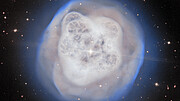
Gaze into the Crystal Ball Nebula and See the Light Emitted by a Dying Star 1500 Years Ago

PR Image noirlab2613a
NGC 1514: The Crystal Ball Nebula

PR Image noirlab2613b
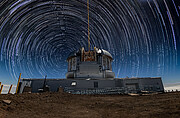
Star Trails Above Gemini North

PR Image noirlab2613c
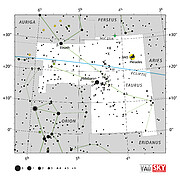
NGC 1514 finder chart


Videos

Pan on NGC 1514
PR Video noirlab2613a
NGC 1514: The Crystal Ball Nebula

Star Trails Above Gemini North
PR Image noirlab2613b
Star Trails Above Gemini North

NGC 1514 finder chart
PR Image noirlab2613c
NGC 1514 finder chart

Cosmoview Episodio 108: Nebulosa Bola de Cristal
PR Video noirlab2613d
Cosmoview Episodio 108: Nebulosa Bola de Cristal >
in English only


The cosmic splendor of NGC 1514 is revealed in this new image from the Gemini North telescope in Hawai‘i

The 8.1-meter Gemini North telescope, located on the summit of Maunakea in Hawai‘i, has captured NGC 1514, nicknamed the Crystal Ball Nebula, in awe-inspiring detail. This nebula, with its mesmerizing glow of gas, harbors hints of a past stellar death, and its asymmetrical shell is now being shaped by the pair of binary stars that lie at its center.

NGC 1514, nicknamed the Crystal Ball Nebula, is showcased in this enchanting image captured by Gemini Multi-Object Spectrograph (GMOS) on the Gemini North telescope, located on Maunakea in Hawai‘i. Gemini North is one half of the International Gemini Observatory, partly funded by the U.S. National Science Foundation (NSF) and operated by NSF NOIRLab.

German–British astronomer William Herschel discovered the Crystal Ball Nebula in 1790. It’s located in the constellation Taurus, near the border of Perseus. While, culturally, crystal balls are known for divining the future, the Crystal Ball Nebula provides us with a snapshot of the final stages of a star’s life from long ago. It sits around 1500 light-years from Earth. This means the light captured in this image left its source around 1500 years ago, traveling across the Universe before finally reaching Gemini North.

The Crystal Ball Nebula is categorized as a planetary nebula, a nomenclature first presented by the nebula’s discoverer, William Herschel. He coined the term in the 1700s after spotting the spherical shape of these objects, which reminded him of planets. In reality, planets and planetary nebulae are unrelated.

Planetary nebulae form when a low- or intermediate-mass star ejects its outer layers near the end of its life, forming a somewhat spherical cloud of gas. They typically have smoother, spherical shapes, making the Crystal Ball Nebula unique for its bumpy shells of gas. As the central star casts away this gas, its inner core is exposed. Radiation from the core energizes the gas, giving it a scorching temperature and chromatic glow. The Crystal Ball Nebula, for example, has an estimated temperature of 15,000 K.

Herschel found this object fascinating, amazed by its faintly illuminated shell. Prior to its discovery, he believed that nebulae were collections of stars that were too far away to individually resolve. The distinct bright point at the heart of the gaseous shell shattered this theory. He wrote in 1791, “Our judgment I may venture to say, will be, that the nebulosity about the star is not of a starry nature.” He believed the illumination of the Crystal Ball Nebula came from a single star, not a far-off grouping.

While it may appear in this image as if there is a single shining light source at the heart of the Crystal Ball Nebula, as Herschel saw, it actually contains two stars. These two stars orbit each other with a period of around nine years — the longest known for any binary pair within a planetary nebula. Scientists believe that one of these stars, which was once several times more massive than our Sun, released its outer layers while in the throes of death. As the progenitor star and its binary companion orbit each other, they mold the expanding shell of gas with their strong, asymmetrical winds, forming the lumpy layers we see today.


More information

This image was produced by NSF NOIRLab’s Communication, Education & Engagement team, as part of the NOIRLab Legacy Imaging Program.

NSF NOIRLab, the U.S. National Science Foundation center for ground-based optical-infrared astronomy, operates the International Gemini Observatory (a facility of NSF, NRC–Canada, ANID–Chile, MCTIC–Brazil, MINCyT–Argentina, and KASI–Republic of Korea), NSF Kitt Peak National Observatory (KPNO), NSF Cerro Tololo Inter-American Observatory (CTIO), the Community Science and Data Center (CSDC), and NSF–DOE Vera C. Rubin Observatory (in cooperation with DOE’s SLAC National Accelerator Laboratory). It is managed by the Association of Universities for Research in Astronomy (AURA) under a cooperative agreement with NSF and is headquartered in Tucson, Arizona. 

The scientific community is honored to have the opportunity to conduct astronomical research on I’oligam Du’ag (Kitt Peak) in Arizona, on Maunakea in Hawai‘i, and on Cerro Tololo and Cerro Pachón in Chile. We recognize and acknowledge the very significant cultural role and reverence of I’oligam Du’ag to the Tohono O’odham Nation, and Maunakea to the Kanaka Maoli (Native Hawaiians) community.


Links


Contacts:

Josie Fenske
Public Information Officer
NSF NOIRLab
Email:
josie.fenske@noirlab.edu


Thursday, February 12, 2026

NASA’s Hubble Captures Light Show Around Rapidly Dying Sta

NASA’s Hubble Space Telescope reveals the clearest view yet of the Egg Nebula. This structure of gas and dust was created by a dying, Sun-like star. These newest observations were taken with Hubble’s Wide Field Camera 3. Credit Image: NASA, ESA, Bruce Balick (UWashington)

This image of the Egg Nebula was captured by the Hubble Space Telescope’s WFC3 (Wide Field Camera 3). The image shows a scale bar, compass arrows, and color key for reference.Credit Image: NASA, ESA, Bruce Balick (UWashington)

This visualization examines the Hubble Space Telescope image of the Egg Nebula and showcases the shape and development of its three-dimensional components. The dying star has repeatedly ejected thin shells of gas and dust over the last 5,000 years. During the last 400 years, bipolar lobes have burst forth. This central activity is hidden behind a dense dusty disk. The light from the star, blocked by the disk and lobes, escapes toward the poles and creates a twin searchlight appearance. Credit Visualization: NASA, ESA, STScI, Christian Nieves (STScI), Frank Summers (STScI); Narration: Frank Summers (STScI); Script Writer: Frank Summers (STScI); Audio: Danielle Kirshenblat (STScI); Music: Christian Nieves (STScI)


This stunning image from NASA’s Hubble Space Telescope reveals a dramatic interplay of light and shadow in the Egg Nebula, sculpted by freshly ejected stardust. Located approximately 1,000 light-years away in the constellation Cygnus, the Egg Nebula features a central star obscured by a dense cloud of dust — like a “yolk” nestled within a dark, opaque “egg white.” Only Hubble’s sharpness can unveil the intricate details that hint at the processes shaping this enigmatic structure.

It is the first, youngest, and closest pre-planetary nebula ever discovered. (A pre-planetary nebula is a precursor stage of a planetary nebula, which is a structure of gas and dust formed from the ejected layers of a dying, Sun-like star. The term is a misnomer, as planetary nebulae are not related to planets.)

The Egg Nebula offers a rare opportunity to test theories of late-stage stellar evolution. At this early phase, the nebula shines by reflecting light from its central star, which escapes through a polar “eye” in the surrounding dust. This light emerges from a dusty disk expelled from the star’s surface just a few hundred years ago.

Twin beams from the dying star illuminate fast-moving polar lobes that pierce a slower, older series of concentric arcs. Their shapes and motions suggest gravitational interactions with one or more hidden companion stars, all buried deep within the thick disk of stardust.
Stars like our Sun shed their outer layers as they exhaust their hydrogen and helium fuel. The exposed core becomes so hot that it ionizes surrounding gas, creating the glowing shells seen in planetary nebulae such as the Helix, Stingray, and Butterfly nebulae. However, the compact Egg Nebula is still in a brief transitional phase — known as the pre-planetary stage — that lasts only a few thousand years. This makes it an ideal time to study the ejection process while the forensic evidence remains fresh.

The symmetrical patterns captured by Hubble are too orderly to result from a violent explosion like a supernova. Instead, the arcs, lobes, and central dust cloud likely stem from a coordinated series of poorly understood sputtering events in the carbon-enriched core of the dying star. Aged stars like these forged and released the dust that eventually seeded future star systems, such as our own solar system, which coalesced into Earth and other rocky planets 4.5 billion years ago.

Hubble has turned its gaze towards the Egg Nebula before. A first visible-light image from the telescope's WFPC2 (Wide Field and Planetary Camera 2) was complemented in 1997 by a near-infrared NICMOS (Near Infrared Camera and Multi-Object Spectrometer) image, giving a closer look at the light given off by the nebula. In 2003, Hubble's ACS (Advanced Camera for Surveys) yielded a new view of the Egg, showing the full extent of the ripples of dust around it. A further image from WFC3 (Wide Field Camera 3) in 2012 zoomed in on the central dust cloud and dramatic gas outflows. This new image combines the data used to create the 2012 image with additional observations from the same program to deliver the clearest look yet at this intricate cosmic egg.

The Hubble Space Telescope has been operating for over three decades and continues to make ground-breaking discoveries that shape our fundamental understanding of the universe. Hubble is a projnewsect of international cooperation between NASA and ESA (European Space Agency). NASA’s Goddard Space Flight Center in Greenbelt, Maryland, manages the telescope and mission operations. Lockheed Martin Space, based in Denver, also supports mission operations at Goddard. The Space Telescope Science Institute in Baltimore, which is operated by the Association of Universities for Research in Astronomy, conducts Hubble science operations for NASA.

Monday, December 01, 2025

Gemini South Celebrates 25th Anniversary With Stunning Snapshot of the Butterfly Nebula

PR Image noirlab2530a
Gemini South Images the Butterfly Nebula


Videos

Pan on the Butterfly Nebula
PR Video noirlab2530a
Pan on the Butterfly Nebula

Zooming into the Butterfly Nebula
PR Video noirlab2530b
Zooming into the Butterfly Nebula


NGC 6302 is captured in exquisite detail by the Gemini South telescope in Chile, revealing dynamic gaseous outflows driven by an extremely hot star

To celebrate 25 years since the completion of the International Gemini Observatory, students in Chile voted for the Gemini South telescope to image NGC 6302 — a billowing planetary nebula that resembles a cosmic butterfly. The International Gemini Observatory is partly funded by the U.S. National Science Foundation (NSF) and operated by NSF NOIRLab.

The glowing ‘wings’ of the Butterfly Nebula appear to be bursting out of the interstellar medium in this image captured by the Gemini South telescope, one half of the International Gemini Observatory, located on Cerro Pachón in Chile. This picturesque object was chosen as a target for the 8.1-meter telescope by students in Chile as part of the Gemini First Light Anniversary Image Contest. The contest engaged students in the host locations of the Gemini telescopes to celebrate the legacy that the International Gemini Observatory has built since its completion, marked by Gemini South’s First Light in November 2000.

NGC 6302 is a bipolar planetary nebula that lies between 2500 and 3800 light-years away in the constellation Scorpius. Sources report various dates of discovery, but credit typically goes to a 1907 study by American astronomer Edward E. Barnard, though Scottish astronomer James Dunlop may have discovered it in 1826. Its official name is NGC 6302, but it is also referred to as the Butterfly Nebula, Bug Nebula, or Caldwell 69.

A planetary nebula is a type of emission nebula consisting of a massive star near the end of its life that is expelling material, surrounded by an expanding, glowing shell of ionized gas. Typically, these mesmerizing structures have a planet-like round shape, which is why they were named ‘planetary nebulae’ by the early astronomers who observed them through their telescopes.

You may notice, though, that the Butterfly Nebula does not resemble a round planet, but instead a winged creature caught mid-flight. The formation of this unique structure is driven by a star at the nebula’s center that is casting off layers of gas and dust as it nears the end of its life.

In 2009, the Wide Field Camera 3 on board the Hubble Space Telescope (HST) identified the central star as a white dwarf — the dense remnant of a Sun-like star — that expelled its outer layers over 2000 years ago and is now around two-thirds the mass of our Sun. It is one of the hottest stars known, with a surface temperature in excess of 250,000 degrees Celsius (450,000 degrees Fahrenheit), implying the star from which it formed must have been very large.Sun-like star

Studies of NGC 6302 have revealed a dramatic formation history. Before becoming a white dwarf, the star was a red giant with a diameter about 1000 times that of the Sun. The massive star shed its outer layers of gas, which traveled outward from the equator at a relatively slow speed to form the dark, doughnut-shaped band still visible around the star. Other gas was expelled perpendicular to the band, which restricted the outflows and created the bipolar structure seen today.

As the star continued evolving, it unleashed a powerful gust of stellar wind that tore through the ‘wings’ at more than three million kilometers per hour (1.8 million miles per hour). Interactions between slow- and fast-moving gas further texturized the ‘wings’ into expansive landscapes of cloudy ridges and pillars.

Now, as a white dwarf, the star is emitting intense radiation that is heating the ‘wings’ of NGC 6302 to more than 20,000 degrees Celsius (around 35,000 degrees Fahrenheit) and causing the gas to glow. The rich red in the image traces areas of energized hydrogen gas, while the stark blue traces areas of energized oxygen gas. This material, in addition to the other elements scientists have found in NGC 6302, such as nitrogen, sulfur, and iron, will go on to help form the next generation of stars and planets.

This image was taken as part of the NOIRLab Legacy Imaging Program — a continuation of the program started at the International Gemini Observatory in 2002, called the Gemini Legacy Imaging Program. It aims to use observing time on NOIRLab telescopes that is dedicated to acquiring data specifically for color images to share with the public.


More information

NSF NOIRLab, the U.S. National Science Foundation center for ground-based optical-infrared astronomy, operates the International Gemini Observatory (a facility of NSF, NRC–Canada, ANID–Chile, MCTIC–Brazil, MINCyT–Argentina, and KASI–Republic of Korea), NSF Kitt Peak National Observatory (KPNO), NSF Cerro Tololo Inter-American Observatory (CTIO), the Community Science and Data Center (CSDC), and NSF–DOE Vera C. Rubin Observatory (in cooperation with DOE’s SLAC National Accelerator Laboratory). It is managed by the Association of Universities for Research in Astronomy (AURA) under a cooperative agreement with NSF and is headquartered in Tucson, Arizona.

The scientific community is honored to have the opportunity to conduct astronomical research on I’oligam Du’ag (Kitt Peak) in Arizona, on Maunakea in Hawai‘i, and on Cerro Tololo and Cerro Pachón in Chile. We recognize and acknowledge the very significant cultural role and reverence of I’oligam Du’ag to the Tohono O’odham Nation, and Maunakea to the Kanaka Maoli (Native Hawaiians) community.


Links


Contacts:

Josie Fenske
Public Information Office
NSF NOIRLab
Email:
josie.fenske@noirlab.edu


Friday, October 31, 2025

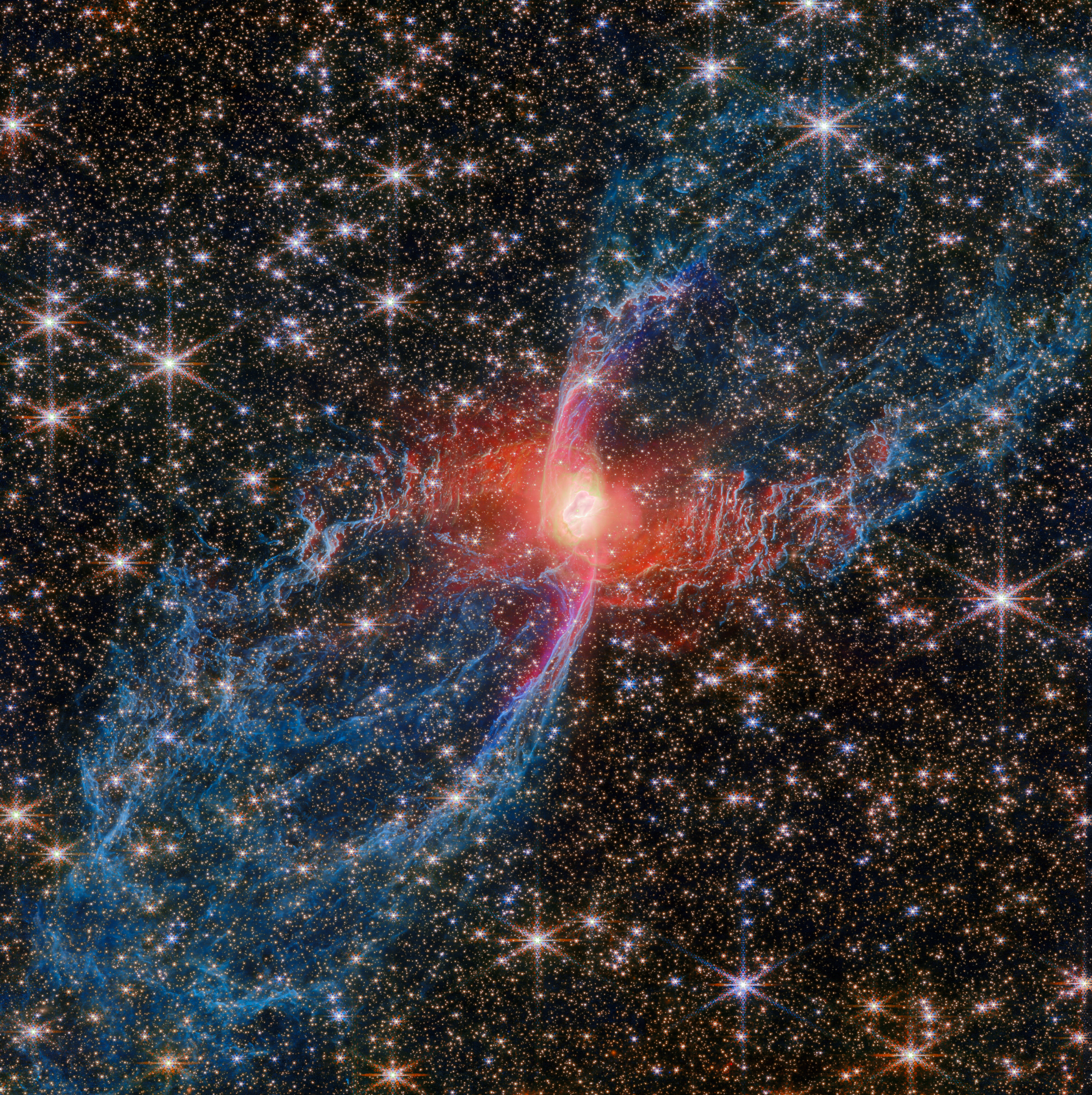
The Red Spider Nebula, caught by Webb

NGC 6537/Red Spider Nebula
Credit: ESA/Webb, NASA & CSA, J. H. Kastner (Rochester Institute of Technology)


This new NASA/ESA/CSA James Webb Space Telescope Picture of the Month features a cosmic creepy-crawly called NGC 6537 — the Red Spider Nebula. Using its Near-InfraRed Camera (NIRCam), Webb has revealed never-before-seen details in this picturesque planetary nebula with a rich backdrop of thousands of stars.

Planetary nebulae like the Red Spider Nebula form when ordinary stars like the Sun reach the end of their lives. After ballooning into cool red giants, these stars shed their outer layers and cast them into space, exposing their white-hot cores. Ultraviolet light from the central star ionises the cast-off material, causing it to glow. The planetary nebula phase of a star’s life is as fleeting as it is beautiful, lasting only a few tens of thousands of years.

The central star of the Red Spider Nebula is visible in this image, glowing just brighter than the webs of dusty gas that surround it. The surprising nature of the nebula’s tremendously hot and luminous central star has been revealed by Webb’s NIRCam. In optical-wavelength images, such as from the NASA/ESA Hubble Space Telescope, the star appears faint and blue. But in the NIRCam images, it shows up as red: thanks to its sensitive near-infrared capabilities, Webb has revealed a shroud of hot dust surrounding the central star. This hot dust likely orbits the central star, in a disc structure.

Though only a single star is visible in the Red Spider’s heart, a hidden companion star may lurk there as well. A stellar companion could explain the nebula’s shape, including its characteristic narrow waist and wide outflows. This hourglass shape is seen in other planetary nebulae such as the Butterfly Nebula, which Webb also recently observed.

Webb’s new view of the Red Spider Nebula reveals for the first time the full extent of the nebula’s outstretched lobes, which form the ‘legs’ of the spider. These lobes, shown in blue, are traced by light emitted from H2 molecules, which contain two hydrogen atoms bonded together. Stretching over the entirety of NIRCam’s field of view, these lobes are shown to be closed, bubble-like structures that each extend about 3 light-years. Outflowing gas from the centre of the nebula has inflated these massive bubbles over thousands of years.

Gas is also actively jetting out from the nebula’s centre, as these new Webb observations show. An elongated purple ‘S’ shape centred on the heart of the nebula follows the light from ionised iron atoms. This feature marks where a fast-moving jet has emerged from near the nebula’s central star and collided with material that was previously cast away by the star, sculpting the rippling structure of the nebula seen today.

The observations used to create this image come from Webb GO programme #4571 (PI: J. Kastner) as part of a joint Chandra-JWST observing programme, which aims to understand how bipolar planetary nebulae like the Red Spider Nebula are shaped by the outflows and jets that emerge from the stars at their cores.


Links


Saturday, June 07, 2025

JWST Examines the Ring Nebula


The iconic and widely photographed Ring Nebula is one of the most recognizable planetary nebulae: short-lived, often brilliantly colored nebulae that form when low- to intermediate-mass stars shed their outer layers. The three images above show the central region of the Ring Nebula through the eyes of JWST’s Mid Infrared Instrument. The leftmost image clearly shows the Ring Nebula’s central star: a hot, crystallized stellar core called a white dwarf. In a recent research article, Raghvendra Sahai (Jet Propulsion Laboratory) and collaborators analyzed these JWST observations, leading to the discovery of a dusty disk around the Ring Nebula’s central star. This is just the second time that a resolved disk has been discovered around the central star of a planetary nebula. Disks with radii from 0.01 to 1,000 au have been found around evolved stars in the asymptotic giant branch phase through the planetary nebula phase, but it’s not yet clear how these disks form and how long they last. Most intriguingly, the presence of disks around highly evolved stars raises the possibility of a second phase of planet formation. To learn more about the JWST observations of the Ring Nebula, and what they tell us about the properties of the central star and its disk, be sure to check out the full research article linked below.<;div>

By Kerry Hensley

Citation

“JWST Observations of the Ring Nebula (NGC 6720). III. A Dusty Disk Around Its Central Star,” Raghvendra Sahai et al 2025 ApJ 985 101. doi:10.3847/1538-4357/adc91c


Saturday, April 26, 2025

Circinus West: A Dark Nebula Harboring a Nest of Newly Formed Stars

PR Image noirlab2515a
Dark Energy Camera Captures Circinus West Molecular Cloud

PR Image noirlab2515b
Cosmic Gems in Circinus West

PR Image noirlab2515c
Herbig-Haro Objects 76 and 77

PR Image noirlab2515d
Planetary Nebula G317.0-04.0

PR Image noirlab2515e
Herbig-Haro Objects 140–143

PR Image noirlab2515f
Herbig-Haro Object 139


Videos

Pan on Circinus West
PR Video noirlab2515a
Pan on Circinus West

Zooming into Circinus West
PR Video noirlab2515b
Zooming into Circinus West


Department of Energy-fabricated Dark Energy Camera spots a puddle of cosmic ink staining the starry night sky

A celestial shadow known as the Circinus West molecular cloud creeps across this image captured from Chile with the 570-megapixel Department of Energy-fabricated Dark Energy Camera — one of the most powerful digital cameras in the world. Within this stellar nursery's opaque boundaries, infant stars ignite within cold, dense gas and dust, while outflows hurtle leftover material into space.

This winding, shadowy form, accentuated by a densely-packed starry background, is the Circinus West molecular cloud — a region rich in gas and dust and known for its host of newly formed stars. Molecular Clouds, the cradles of star formation, are interstellar clouds that are so dense and cold that atoms within them bond with each other to form molecules. Some, such as Circinus West, are so dense that light cannot pass through, giving them a dark, mottled appearance and earning them the name dark nebulae. The cloud’s flourishing population of young stars has offered astronomers a wealth of insight into the processes driving star formation and molecular cloud evolution.

This image was captured with the Department of Energy-fabricated Dark Energy Camera (DECam), mounted on the U.S. National Science Foundation Víctor M. Blanco 4-meter telescope at Cerro Tololo Inter-American Observatory in Chile, a Program of NSF NOIRLab. It showcases the western portion of the larger Circinus molecular cloud, an impressive celestial object located about 2500 light-years from Earth in the constellation Circinus. It stretches 180 light-years across and boasts a mass 250,000 times that of the Sun.

Circinus West is known for harboring dozens of young stellar objects — stars that are in their early stages of development. Despite being shrouded in dense gas and dust, these infant stars make themselves known. Zooming in, various clues to their presence can be seen dotted throughout Circinus West’s snaking tendrils.

One indication of newly formed stars are the sparse pockets of light seen bursting through the murky clouds. This light is emanating from actively forming stars, and the cavities around them have been carved out by molecular outflows — powerful jets ejected from protostars as a way to release gas and momentum that built up during formation. These energetic outflows are much easier for astronomers to find than the embedded stars themselves and are a powerful tool for studying stellar nurseries.

Many of the bright spots seen throughout the dark clouds indicate the positions of young stars that have ejected the material around them. Multiple outflow sources can be seen within Circinus West’s central black plume, an area known as the Cir-MMS region that loosely resembles a downward-stretched hand with long, shadowy fingers. Near the center of this region the radiation from a newborn star is carving out a cavity from within the opaque cloud. And at the extreme bottom left of the central cloud another announces its birth with an explosion of light.

Another signpost of star formation, of which there is no shortage of in Circinus West, is the presence of Herbig-Haro (HH) objects. HH objects are glowing red patches of nebulosity commonly found near newborn stars. They form when fast-moving gas thrown out by stars smashes into slower-moving gas in the surrounding molecular cloud or interstellar medium. Visually scanning Circinus West will reveal countless HH objects. To the left of Cir-MMS, three recently discovered HH objects can be seen fluttering across the face of the dark clouds.

Studying the outflows in Circinus West may offer valuable clues into the star formation process and also reveal how young stars impact their environment. With such a variety of outflows, it serves as a natural laboratory for studying not just the life cycles of stars but also the dynamics of molecular clouds and the mechanisms governing the evolution of galaxies. The massive outflows occurring there may even resemble the conditions under which our Solar System formed, providing us a glimpse into the processes that led to our own emergence in the Universe.

Source: NSF’s National Optical-Infrared Astronomy Research Laboratory (NOIRLab)/News


More information

NSF NOIRLab, the U.S. National Science Foundation center for ground-based optical-infrared astronomy, operates the International Gemini Observatory (a facility of NSF, NRC–Canada, ANID–Chile, MCTIC–Brazil, MINCyT–Argentina, and KASI–Republic of Korea), NSF Kitt Peak National Observatory (KPNO), NSF Cerro Tololo Inter-American Observatory (CTIO), the Community Science and Data Center (CSDC), and NSF–DOE Vera C. Rubin Observatory (in cooperation with DOE’s SLAC National Accelerator Laboratory). It is managed by the Association of Universities for Research in Astronomy (AURA) under a cooperative agreement with NSF and is headquartered in Tucson, Arizona.

The scientific community is honored to have the opportunity to conduct astronomical research on I’oligam Du’ag (Kitt Peak) in Arizona, on Maunakea in Hawai‘i, and on Cerro Tololo and Cerro Pachón in Chile. We recognize and acknowledge the very significant cultural role and reverence of I’oligam Du’ag to the Tohono O’odham Nation, and Maunakea to the Kanaka Maoli (Native Hawaiians) community.


Links


Contacts

Josie Fenske
Jr. Public Information Officer
NSF NOIRLab
Email:
josie.fenske@noirlab.edu 


Thursday, April 24, 2025

Eye on Infinity: NASA Celebrates Hubble’s 35th Year in Orbit

A selection of photogenic space targets to celebrate the 35th anniversary of NASA's Hubble Space Telescope. Upper left: Mars. Upper right: planetary nebula NGC 2899. Lower left: a small portion of the Rosette Nebula. Lower right: barred spiral galaxy NGC 5 planetary nebula335. Image: NASA, ESA, STScI; Image Processing: Joseph DePasquale (STScI), Alyssa Pagan (STScI)


In celebration of the Hubble Space Telescope’s 35 years in Earth orbit, NASA is releasing an assortment of compelling images recently taken by Hubble, stretching from the planet Mars to star-forming regions, and a neighboring galaxy.

After more than three decades of perusing the universe, Hubble remains a household name — the most well-recognized and scientifically productive telescope in history. The Hubble mission is a glowing success story of America’s technological prowess, unyielding scientific curiosity, and a reiteration of our nation’s pioneering spirit.

“Hubble opened a new window to the universe when it launched 35 years ago. Its stunning imagery inspired people across the globe, and the data behind those images revealed surprises about everything from early galaxies to planets in our own solar system,” said Shawn Domagal-Goldman, acting director of the Astrophysics Division at NASA Headquarters in Washington. “The fact that it is still operating today is a testament to the value of our flagship observatories, and provides critical lessons for the Habitable Worlds Observatory, which we plan to be serviceable in the spirit of Hubble.”

Perched above Earth’s blurry atmosphere, Hubble’s crystal-clear views have been nothing less than transformative for the public’s perception of the cosmos. Through its evocative imagery, Hubble has made astronomy very relevant, engaging, and accessible for people of all ages. Hubble snapshots can portray the universe as awesome, mysterious, and beautiful — and at the same time chaotic, overwhelming, and foreboding.

A selection of photogenic space targets to celebrate the 35th anniversary of NASA's Hubble Space Telescope. Upper left: Mars. Upper right: planetary nebula NGC 2899. Lower left: a small portion of the Rosette Nebula. Lower right: barred spiral galaxy NGC 5335. Image: NASA, ESA, STScI; Image Processing: Joseph DePasquale (STScI), Alyssa Pagan (STScI)

The 24,000-pound observatory was tucked away inside the space shuttle Discovery’s cargo bay and lofted into low Earth orbit on April 24, 1990. As the shuttle Discovery thundered skyward, the NASA commentator described Hubble as a “new window on the universe.” The telescope turned out to be exactly as promised, and more.

More scientific papers than ever are based on Hubble data, thanks to the dedication, perseverance, and skills of engineers, scientists, and mission operators. Astronauts chased and rendezvoused with Hubble on five servicing missions in which they upgraded Hubble’s cameras, computers, and other support systems. The servicing missions took place from 1993 to 2009.

The telescope’s mission got off to a shaky start in 1990 when an unexpected flaw was found in the observatory’s nearly eight-foot diameter primary mirror. Astronauts gallantly came to the rescue on the first shuttle servicing mission in December 1993 to improve Hubble’s sharpness with corrective optics.

To date, Hubble has made nearly 1.7 million observations, looking at approximately 55,000 astronomical targets. Hubble discoveries have resulted in over 22,000 papers and over 1.3 million citations as of February 2025. All the data collected by Hubble is archived and currently adds up to over 400 terabytes, representing the biggest dataset for a NASA astrophysics mission besides the James Webb Space Telescope.

Hubble’s long operational life has allowed astronomers to return to the same cosmic scenes multiple times to observe changes that happened during more than three decades: seasonal variability on the planets in our solar system, black hole jets travelling at nearly the speed of light, stellar convulsions, asteroid collisions, expanding supernova bubbles, and much more.

Hubble’s Senior Project Scientist, Dr. Jennifer Wiseman, takes you on a tour of all four Hubble 35th anniversary images. Credit: NASA's Goddard Space Flight Center; Lead Producer: Paul Morris; Narrator: Dr. Jennifer Wiseman

Before 1990, powerful optical telescopes on Earth could see only halfway across the cosmos. Estimates for the age of the universe disagreed by a big margin. Supermassive black holes were only suspected to be the powerhouses behind a rare zoo of energetic phenomena. Not a single planet had been seen around another star.

Among its long list of breakthroughs: Hubble’s deep field images unveiled myriad galaxies dating back to the early universe. The telescope also allowed scientists to precisely measure the universe’s expansion, find that supermassive black holes are common among galaxies, and make the first measurement of the atmospheres of exoplanets. Hubble also contributed to the discovery of dark energy, the mysterious phenomenon accelerating the expansion of universe, leading to the 2011 Nobel Prize in Physics. 

The relentless pace of Hubble’s trailblazing discoveries kick-started a new generation of space telescopes for the 21st century. Hubble provided the first observational evidence that there were myriad distant galaxies for Webb to pursue in infrared wavelengths that reach even farther beyond Hubble’s gaze. Now, Hubble and Webb are often being used in complement to study everything from exoplanets to galaxy evolution.

Hubble’s planned successor, the Habitable Worlds Observatory, will have a significantly larger mirror than Hubble’s to study the universe in visible and ultraviolet light. It will be significantly sharper than Hubble and up to 100 times more sensitive to starlight. The Habitable Worlds Observatory will advance science across all of astrophysics, as Hubble has done for over three decades. A major goal of the future mission is to identify terrestrial planets around neighboring stars that might be habitable.

The Hubble Space Telescope continues to make ground-breaking discoveries that shape our fundamental understanding of the universe. Hubble is a project of international cooperation between NASA and ESA (European Space Agency). NASA’s Goddard Space Flight Center in Greenbelt, Maryland, manages the telescope and mission operations. Lockheed Martin Space, based in Denver, also supports mission operations at Goddard. The Space Telescope Science Institute in Baltimore, which is operated by the Association of Universities for Research in Astronomy, conducts Hubble science operations for NASA.


Wednesday, April 16, 2025

With NASA's Webb, Dying Star's Energetic Display Comes Into Full Focus

NASA’s James Webb Space Telescope has taken the most detailed image of planetary nebula NGC 1514 to date thanks to its unique mid-infrared observations. Webb shows its rings as intricate clumps of dust. It’s also easier to see holes punched through the bright pink central region. Credits/Image: NASA, ESA, CSA, STScI, Michael Ressler (NASA-JPL), Dave Jones (IAC)

Two infrared views of NGC 1514. At left is an observation from NASA’s Wide-field Infrared Survey Explorer (WISE). At right is a more refined image from NASA's James Webb Space Telescope.Credits/Image: NASA, ESA, CSA, STScI, NASA-JPL, Caltech, UCLA, Michael Ressler (NASA-JPL), Dave Jones (IAC)

This image of planetary nebula NGC 1514, captured by the James Webb Space Telescope’s MIRI (Mid-Infrared Instrument), shows compass arrows, scale bar, and color key for reference.

The north and east compass arrows show the orientation of the image on the sky. Note that the relationship between north and east on the sky (as seen from below) is flipped relative to direction arrows on a map of the ground (as seen from above).

The scale bar is labeled in light-years, which is the distance that light travels in one Earth-year. (It takes 0.6 years for light to travel a distance equal to the length of the scale bar.) One light-year is equal to about 5.88 trillion miles or 9.46 trillion kilometers.

This image shows invisible mid-infrared wavelengths of light that have been translated into visible-light colors. The color key shows which MIRI filters were used when collecting the light. The color of each filter name is the visible light color used to represent the infrared light that passes through that filter.Credits/Image: NASA, ESA, CSA, STScI, Michael Ressler (NASA-JPL), Dave Jones (IAC). Read a
full description of the image.


Gas and dust ejected by a dying star at the heart of NGC 1514 came into complete focus thanks to mid-infrared data from NASA’s James Webb Space Telescope. Its rings, which are only detected in infrared light, now look like “fuzzy” clumps arranged in tangled patterns, and a network of clearer holes close to the central stars shows where faster material punched through.

“Before Webb, we weren’t able to detect most of this material, let alone observe it so clearly,” said Mike Ressler, a researcher and project scientist for Webb’s MIRI (Mid-Infrared Instrument) at NASA’s Jet Propulsion Laboratory in southern California. He discovered the rings around NGC 1514 in 2010 when he examined the image (at left) from NASA’s Wide-field Infrared Survey Explorer (WISE). “With MIRI’s data, we can now comprehensively examine the turbulent nature of this nebula,” he said.

This scene has been forming for at least 4,000 years — and will continue to change over many more millennia. At the center are two stars that appear as one in Webb’s observation, and are set off with brilliant diffraction spikes. The stars follow a tight, elongated nine-year orbit and are draped in an arc of dust represented in orange.

One of these stars, which used to be several times more massive than our Sun, took the lead role in producing this scene. “As it evolved, it puffed up, throwing off layers of gas and dust in in a very slow, dense stellar wind,” said David Jones, a senior scientist at the Institute of Astrophysics on the Canary Islands, who proved there is a binary star system at the center in 2017.

Once the star’s outer layers were expelled, only its hot, compact core remained. As a white dwarf star, its winds both sped up and weakened, which might have swept up material into thin shells.

Its Hourglass Shape

Webb’s observations show the nebula is tilted at a 60-degree angle, which makes it look like a can is being poured, but it’s far more likely that NGC 1514 takes the shape of an hourglass with the ends lopped off. Look for hints of its pinched waist near top left and bottom right, where the dust is orange and drifts into shallow V-shapes.

What might explain these contours? “When this star was at its peak of losing material, the companion could have gotten very, very close,” Jones said. “That interaction can lead to shapes that you wouldn’t expect. Instead of producing a sphere, this interaction might have formed these rings.”

Though the outline of NGC 1514 is clearest, the hourglass also has “sides” that are part of its three-dimensional shape. Look for the dim, semi-transparent orange clouds between its rings that give the nebula body.

A Network of Dappled Structures

The nebula’s two rings are unevenly illuminated in Webb’s observations, appearing more diffuse at bottom left and top right. They also look fuzzy, or textured. “We think the rings are primarily made up of very small dust grains,” Ressler said. “When those grains are hit by ultraviolet light from the white dwarf star, they heat up ever so slightly, which we think makes them just warm enough to be detected by Webb in mid-infrared light.”

In addition to dust, the telescope also revealed oxygen in its clumpy pink center, particularly at the edges of the bubbles or holes.

NGC 1514 is also notable for what is absent. Carbon and more complex versions of it, smoke-like material known as polycyclic aromatic hydrocarbons, are common in planetary nebulae (expanding shells of glowing gas expelled by stars late in their lives). Neither were detected in NGC 1514. More complex molecules might not have had time to form due to the orbit of the two central stars, which mixed up the ejected material. A simpler composition also means that the light from both stars reaches much farther, which is why we see the faint, cloud-like rings.

What about the bright blue star to the lower left with slightly smaller diffraction spikes than the central stars? It’s not part of this nebula. In fact, this star lies closer to us.

This planetary nebula has been studied by astronomers since the late 1700s. Astronomer William Herschel noted in 1790 that NGC 1514 was the first deep sky object to appear genuinely cloudy — he could not resolve what he saw into individual stars within a cluster, like other objects he cataloged. With Webb, our view is considerably clearer.

NGC 1514 lies in the Taurus constellation approximately 1,500 light-years from Earth.

The James Webb Space Telescope is the world’s premier space science observatory. Webb will solve mysteries in our solar system, look beyond to distant worlds around other stars, and probe the mysterious structures and origins of our universe and our place in it. Webb is an international program led by NASA with its partners, ESA (European Space Agency) and the Canadian Space Agency.


About This Release

Credits:

Media Contact:

Claire Blome
Space Telescope Science Institute, Baltimore, Maryland

Christine Pulliam
Space Telescope Science Institute, Baltimore, Maryland

Science Advisor: Michael Ressler (NASA-JPL)

Permissions: Content Use Policy

Contact Us: Direct inquiries to the News Team.


Monday, April 07, 2025

Swan song for stars and cameras
PN K 4-55 (Kohoutek 4-55)
A planetary nebula, a glowing shell of material thrown off by a star. A small central region of greenish clouds is encircled by a glowing, jagged ring, like a hole torn in fabric. A band of silvery-blue clouds outside this is again encircled by a larger, fainter yellow ring of gas. Puffy, smoky clouds of orange and red gas billow out from there into a large oval nebula, fading into the dark background of space. Credit: ESA/Hubble & NASA, K. Noll
Planetary nebulae are the spectacular final display at the end of a giant star’s life. Once a red giant star has exhausted its available fuel and shed its last layers of gas, its compact core will contract further, enabling a final burst of nuclear fusion. The exposed core reaches extremely hot temperatures, radiating very energetic ultraviolet light that energises the enormous clouds of cast-off gas. Molecules in the gas are ionised and glow brightly; here, red and orange indicate nitrogen molecules, green is hydrogen and blue shows oxygen in the nebula. Kohoutek 4-55 has an uncommon, multi-layered form: a bright inner ring is surrounded by a fainter layer of gas, all wrapped in a broad halo of ionised nitrogen. The spectacle is bittersweet, as the brief phase of fusion in the core will end after mere tens of thousands of years, leaving a white dwarf that will never illuminate the clouds around it again.

This image itself is also a swan song, the final work of one of Hubble’s instruments: the Wide Field and Planetary Camera 2 (WFPC2). Installed in 1993 to replace the original Wide Field and Planetary Camera, WFPC2 was responsible for some of Hubble’s most enduring images and fascinating discoveries. It in turn was replaced by the Wide Field Camera 3 in 2009, during Hubble’s final servicing mission. The data for this image were taken a mere ten days before the instrument was removed from the telescope, as a fitting send-off for WFPC2 after 16 years’ work. The latest and most advanced processing techniques have been used to bring the data to life one more time, producing this breathtaking new view of Kohoutek 4-55.


Saturday, March 08, 2025

X-ray Signal Points to Destroyed Planet, Chandra Finds

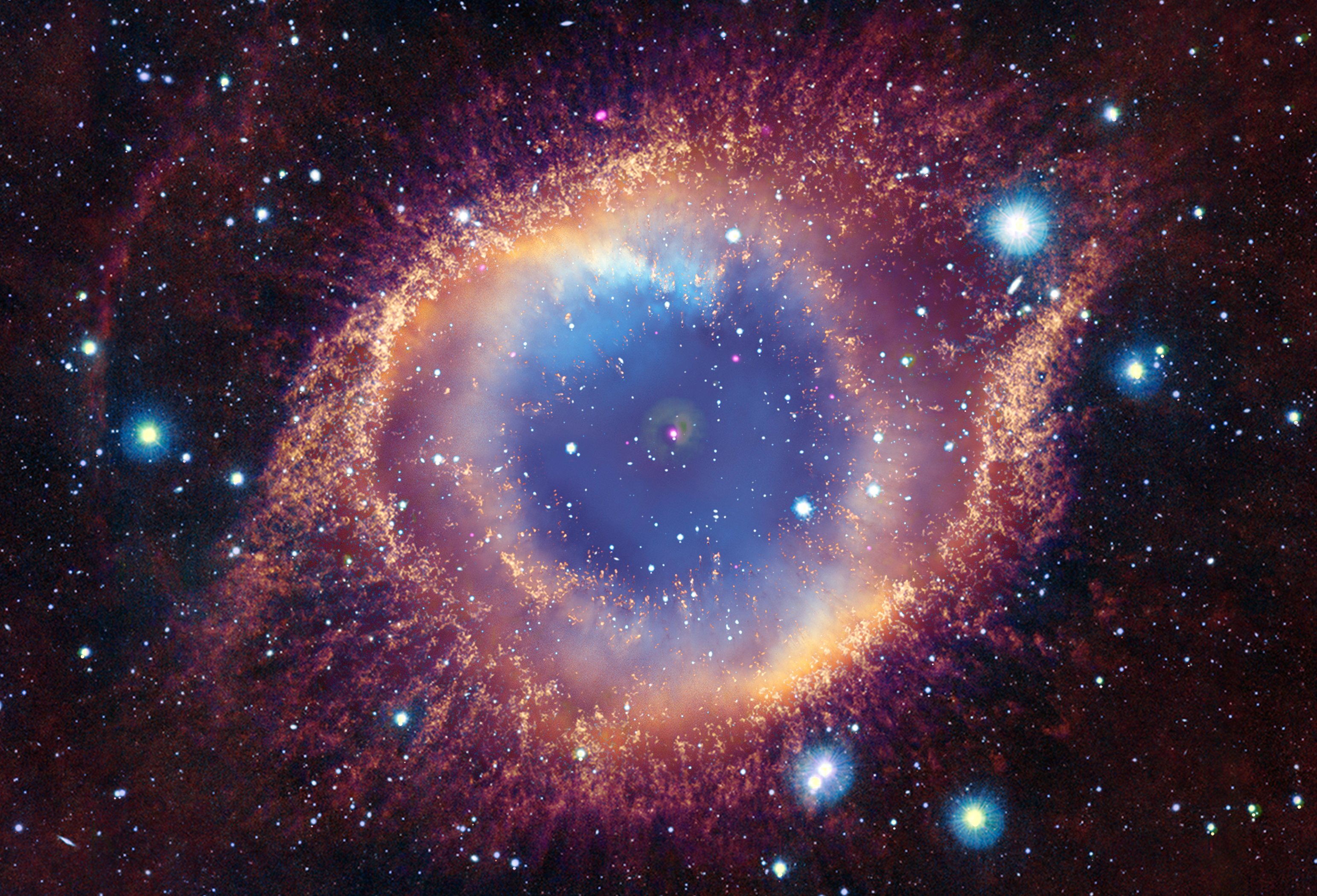
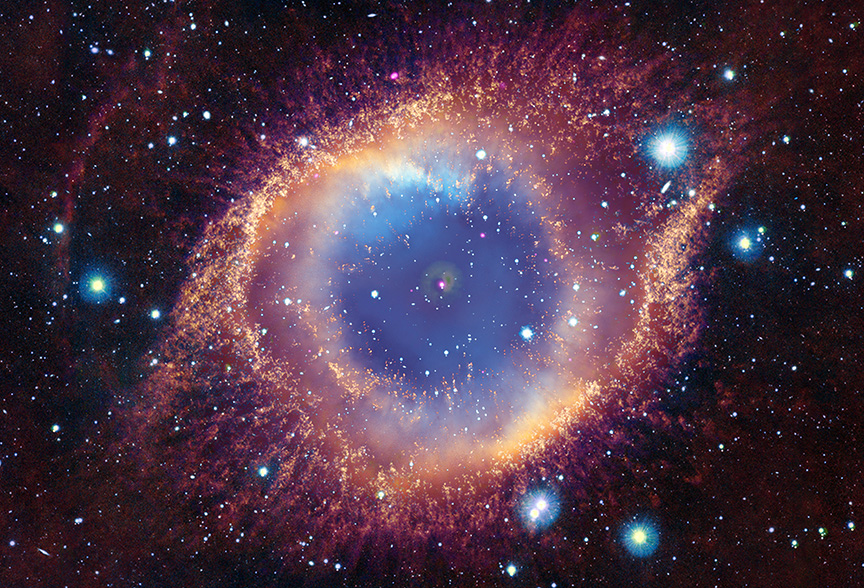
Helix Nebula
Credit: X-ray: NASA/CXC/SAO/Univ Mexico/S. Estrada-Dorado et al.; Ultraviolet: NASA/JPL; Optical: NASA/ESA/STScI (M. Meixner)/NRAO (T.A. Rector); Infrared: ESO/VISTA/J. Emerson; Image Processing: NASA/CXC/SAO/K. Arcand; Illustration: NASA/CXC/SAO/M. Weiss


A planet may have been destroyed by a white dwarf at the center of a planetary nebula — the first time this has been seen. As described in our latest press release, this would explain a mysterious X-ray signal that astronomers have detected from the Helix Nebula for over 40 years. The Helix is a planetary nebula, a late-stage star like our Sun that has shed its outer layers leaving a small dim star at its center called a white dwarf.

This composite image contains X-rays from Chandra (magenta), optical light data from Hubble (orange, light blue), infrared data from ESO (gold, dark blue), and ultraviolet data from GALEX (purple) of the Helix Nebula. Data from Chandra indicates that this white dwarf has destroyed a very closely orbiting planet.

Illustration of WD 2226-210:
This artist's impression shows a planet (left) that has approached too close to a white dwarf (right) and been torn apart by tidal forces from the star. The white dwarf is in the center of a planetary nebula depicted by the blue gas in the background. The planet is part of a planetary system, which includes one planet in the upper left and another in the lower right. The besieged planet could have initially been a considerable distance from the white dwarf but then migrated inwards by interacting with the gravity of other planets in the system. Credit:NASA/CXC/SAO/M. Weiss

An artist’s concept shows a planet (left) that has approached too close to a white dwarf (right) and is being torn apart by tidal forces from the star. The white dwarf is in the center of a planetary nebula depicted by the blue gas in the background. The planet is part of a planetary system, which includes one planet in the upper left and another in the lower right. The besieged planet could have initially been a considerable distance from the white dwarf but then migrated inwards by interacting with the gravity of the other planets in the system.

Eventually debris from the planet will form a disk around the white dwarf and fall onto the star’s surface, creating the mysterious signal in X-rays that astronomers have detected for decades.

Dating back to 1980, X-ray missions, such as the Einstein Observatory and ROSAT telescope, have picked up an unusual reading from the center of the Helix Nebula. They detected highly energetic X-rays coming from the white dwarf at the center of the Helix Nebula named WD 2226-210, located only 650 light-years from Earth. White dwarfs like WD 2226-210 do not typically give off strong X-rays.

WD 2226-210 and the Helix Nebula (Labeled):
In about 5 billion years, our Sun will run out of fuel and expand, possibly engulfing Earth. These end stages of a star’s life can be utterly beautiful as is the case with this planetary nebula called the Helix Nebula. Credit: X-ray: NASA/CXC/SAO/Univ Mexico/S. Estrada-Dorado et al.; Ultraviolet: NASA/JPL; Optical: NASA/ESA/STScI (M. Meixner)/NRAO (T.A. Rector); Infrared: ESO/VISTA/J. Emerson; Image Processing: NASA/CXC/SAO/K. Arcand


A new study featuring the data from Chandra and XMM-Newton may finally have settled the question of what is causing these X-rays from WD 2226-210: this X-ray signal could be the debris from a destroyed planet being pulled onto the white dwarf. If confirmed, this would be the first case of a planet seen to be destroyed by the central star in a planetary nebula.

Observations by ROSAT, Chandra, and XMM-Newton between 1992 and 2002 show that the X-ray signal from the white dwarf has remained approximately constant in brightness during that time. The data, however, suggest there may be a subtle, regular change in the X-ray signal every 2.9 hours, providing evidence for the remains of a planet exceptionally close to the white dwarf.

Previously scientists determined that a Neptune-sized planet is in a very close orbit around the white dwarf — completing one revolution in less than three days. The researchers in this latest study conclude that there could have been a planet like Jupiter even closer to the star. The besieged planet could have initially been a considerable distance from the white dwarf but then migrated inwards by interacting with the gravity of other planets in the system. Once it approached close enough to the white dwarf the gravity of the star would have partially or completely torn the planet apart.

WD 2226-210 has some similarities in X-ray behavior to two other white dwarfs that are not inside planetary nebulas. One is possibly pulling material away from a planet companion, but in a more sedate fashion without the planet being quickly destroyed. The other white dwarf is likely dragging material from the vestiges of a planet onto its surface. These three white dwarfs may constitute a new class of variable, or changing, object.

A paper describing these results appears in The Monthly Notices of the Royal Astronomical Society and is available online. The authors of the paper are Sandino Estrada-Dorado (National Autonomous University of Mexico), Martin Guerrero (The Institute of Astrophysics of Andalusia in Spain), Jesús Toala (National Autonomous University of Mexico), Ricardo Maldonado (National Autonomous University of Mexico), Veronica Lora (National Autonomous University of Mexico), Diego Alejandro Vasquez-Torres (National Autonomous University of Mexico), and You-Hua Chu (Academia Sinica in Taiwan).

NASA's Marshall Space Flight Center manages the Chandra program. The Smithsonian Astrophysical Observatory's Chandra X-ray Center controls science operations from Cambridge, Massachusetts, and flight operations from Burlington, Massachusetts.


Visual Description:

This release features two images; a composite image of the Helix Nebula, and an artist's rendering of a planet's destruction, which may be occurring in the nebula's core.

The Helix Nebula is a cloud of gas ejected by a dying star, known as a white dwarf. In the composite image, the cloud of gas strongly resembles a creature's eye. Here, a hazy blue cloud is surrounded by misty, concentric rings of pale yellow, rose pink, and blood orange. Each ring appears dusted with flecks of gold, particularly the outer edges of the eye-shape.

The entire image is speckled with glowing dots in blues, whites, yellows, and purples. At the center of the hazy blue gas cloud, a box has been drawn around some of these dots including a bright white dot with a pink outer ring, and a smaller white dot. The scene which may be unfolding inside this box has been magnified in the artist's rendering.

The artist's digital rendering shows a possible cause of the large white dot with the pink outer ring. A brilliant white circle near our upper right shows a white dwarf, the ember of a dying star. At our lower left, in the relative foreground of the rendering, is what remains of a planet. Here, the planet resembles a giant boulder shedding thousands of smaller rocks. These rocks flow off the planet's surface, pulled back toward the white dwarf in a long, swooping tail. Glowing orange fault lines mar the surface of the crumbling planet. In our upper left and lower right, inside the hazy blue clouds which blanket the rendering, are two other, more distant planets. After the rocks from the planet start striking the surface of the white dwarf, X-rays should be produced.


Fast Facts for WD 2226-210, the central star in the Helix Nebula:

Scale: Image is about 25 arcmin (4.7 light-years) across.
Category: White Dwarfs & Planetary Nebulas
Coordinates (J2000): RA 22h 29m 38.6s | Dec -20° 50´ 13.6"
Constellation: Aquarius
Observation Dates: 2 observations Nov 17-18, 1999
Observation Time: 13 hours 15 minutes
Obs. ID: 631, 1480
Instrument: ACIS
References: S. Estrada-Dorado et al., 2025, MNRAS, 536, 2477; doi:10.1093/mnras/stae2733
Color Code: X-ray: magenta-purple; Ultraviolet: periwinkle-purple; Optical: orange and light blue; Infrared: yellow-gold and dark blue
Distance Estimate: About 650 light-years