Showing posts with label Circumstellar Material. Show all posts

Thursday, January 15, 2026

Astronomers surprised by mysterious shock wave around dead star


PR Image eso2601a
VLT image of a dead star creating a shock wave as it moves through space

PR Image eso2601b
VLT image of a dead star creating a shock wave as it moves through space

PR Image eso2601c
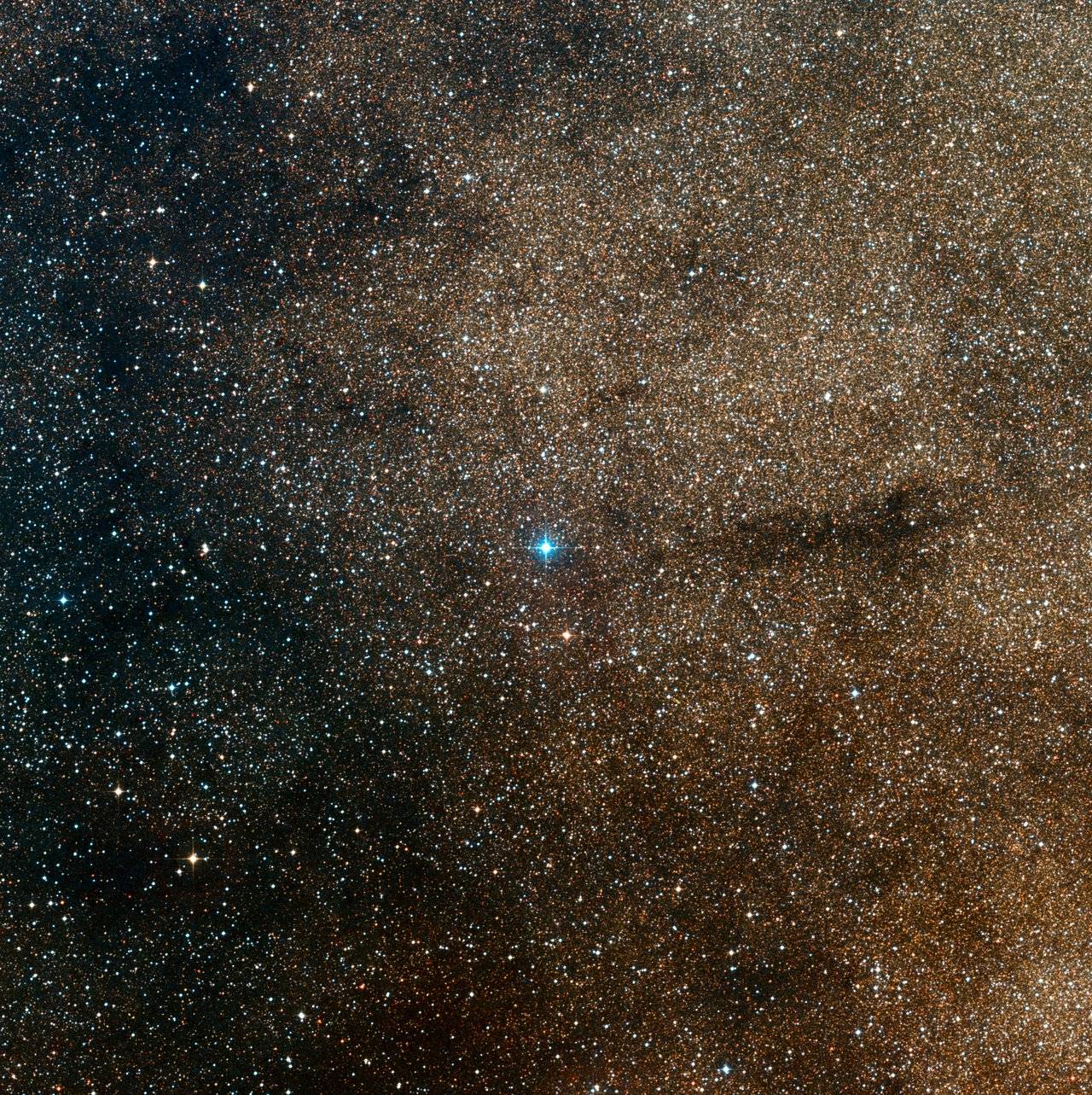
Wide-field view (DSS) of the area of the sky around the star RXJ0528+2838

PR Image eso2601d
Wide-field view (PanSTARRS) of the area of the sky around the star RXJ0528+2838


Videos

An unexpected shock wave | ESO News
PR Video eso2601a
An unexpected shock wave | ESO News
Zooming on a dead star with a strange shock wave around it
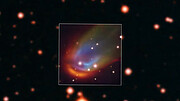
PR Video eso2601b
Zooming on a dead star with a strange shock wave around it

The star RXJ0528+2838 moving through space
PR Video eso2601c
The star RXJ0528+2838 moving through space


Gas and dust flowing from stars can, under the right conditions, clash with a star’s surroundings and create a shock wave. Now, astronomers using the European Southern Observatory’s Very Large Telescope (ESO’s VLT) have imaged a beautiful shock wave around a dead star — a discovery that has left them puzzled. According to all known mechanisms, the small, dead star RXJ0528+2838 should not have such structure around it. This discovery, as enigmatic as it’s stunning, challenges our understanding of how dead stars interact with their surroundings.

“We found something never seen before and, more importantly, entirely unexpected,” says Simone Scaringi, associate professor at Durham University, UK and co-lead author of the study published today in Nature Astronomy. “Our observations reveal a powerful outflow that, according to our current understanding, shouldn’t be there,” says Krystian Iłkiewicz, a postdoctoral researcher at the Nicolaus Copernicus AstronomicalCenter in Warsaw, Poland and study co-lead. ‘Outflow’ is the term used by astronomers to describe the material that is ejected from celestial objects.

The star RXJ0528+2838 islocated 730 light-years away and, like the Sun and other stars, it rotates around our galaxy’s centre. As it moves, it interacts with the gas that permeates the space between stars, creating a type of shock wave called a bow shock, “a curved arc of material, similar to the wave that builds up in front of a ship,” explains Noel Castro Segura, research fellow at the University of Warwick in the UK and collaborator in this study. These bow shocks are usually created by material outflowing from the central star, but in the case of RXJ0528+2838, none of the known mechanisms can fully explain the observations

RXJ0528+2838 is a white dwarf — the left-over core of a dying low-mass star — and has a Sun-like companion orbiting it. In such binary systems, the material from the companion star is transferred to the white dwarf, often forming a disc around it. While the disc fuels the dead star, some of the material also gets ejected into space, creating powerful outflows. But RXJ0528+2838 shows no signs of a disc, making the origin of the outflow and resulting nebula around the star a mystery.

The surprise that supposedly quiet, discless system could drive such a spectacular nebula was one of those rare ‘wow’ moments,” says Scaringi.

The team first spotted a strange nebulosity around RXJ0528+2838 on images from the Isaac Newton Telescope in Spain. Noticing its unusual shape, they observed ;it in more detail with the MUSE instrument on ESO’s VLT. “Observations with the ESO MUSE instrument allowed us to map the bow shock in detail and analyse its composition. This was crucial to confirm that the structure really originates from the binary system and not from an unrelated nebula or interstellar cloud,”Iłkiewic explains.

The shape and size of the bow shock imply that the white dwarf has been expelling a powerful outflow for at least 1000 years. Scientists don’t know exactly how a dead star without a disc can power such a long-lasting outflow — but they do have a uess.

This white dwarf is known to host a strong magnetic field, which has been confirmed by the MUSE data. This field channels the material stolen from the companion star directly onto the white dwarf, without forming a disc around it. “Our finding shows that even without a disc, these systems can drive powerful outflows, revealing a mechanism we do not yet understand. This discovery challenges the standard picture of how matter moves and interacts in these extreme binary systems,” Iłkiewicz explains.

The results hint at a hidden energy source, likely the strong magnetic field, but this ‘mystery engine’, as Scaringi puts it, still needs to be investigated. The data show that the current magnetic field is only strong enough to power a bow shock lasting for a few hundred years, so it only partly explains what the astronomers are seeing.

To better understand the nature of such discless outflows, many more binary systems need to be studied. ESO’s upcoming Extremely Large Telescope (ELT) will help astronomers“to map more of these systems as well as fainter ones and detect similar systems in detail, ultimately helping in understanding the mysterious energy source that remains une/xplained,” as Scaringi foresees.

Source: ESO/News


More information

This research was presented in a paper titled “A persistent bow shock in a diskless magnetised accreting white dwarf” to appear in Nature Astronomy (doi: 10.1038/s41550-025-02748-8).

The team is composed of Krystian Iłkiewicz (Nicolaus Copernicus Astronomical Center, Polish Academy of Sciences, Warsaw, Poland and Centre for Extragalactic Astronomy, Department of Physics, Durham University, Durham, UK [CEA Durham]), Simone Scaringi (CEA Durham and INAF-Osservatorio Astronomico di Capodimonte, Naples, Italy [Capodimonte]), Domitilla de Martino (Capodimonte), Christian Knigge (Department of Physics & Astronomy, University of Southampton, Southampton, UK), Sara E. Motta (Istituto Nazionale di Astrofisica, Osservatorio Astronomico di Brera, Merate, Italy and University of Oxford, Department of Physics, Oxford, UK [Oxford]), Nanda Rea (Institute of Space Sciences (ICE, CSIC), Barcelona, Spain and Institut d’Estudis Espacials de Catalunya (IEEC), Castelldefels, Spain), David Buckley (South African Astronomical Observatory, South Africa [SAAO] and Department of Astronomy & IDIA, University of Cape Town, Rondebosh, South Africa [Cape Town] and Department of Physics, University of the Free State, Bloemfontein, South Africa), Noel Castro Segura (Department of Physics, University of Warwick, Coventry, UK), Paul J. Groot (SAAO and Cape Town and Department of Astrophysics/IMAPP, Radboud University, Nijmegen, The Netherlands), Anna F. McLeod (CEA Durham and Institute for Computational Cosmology, Department of Physics, University of Durham, Durham UK), Luke T. Parker (Oxford), and Martina Veresvarska (CEA Durham).

The European Southern Observatory (ESO) enables scientists worldwide to discover the secrets of the Universe for the benefit of all. We design, build and operate world-class observatories on the ground — which astronomers use to tackle exciting questions and spread the fascination of astronomy — and promote international collaboration for astronomy. Established as an intergovernmental organisation in 1962, today ESO is supported by 16 Member States (Austria, Belgium, Czechia, Denmark, France, Finland, Germany, Ireland, Italy, the Netherlands, Poland, Portugal, Spain, Sweden, Switzerland and the United Kingdom), along with the host state of Chile and with Australia as a Strategic Partner. ESO’s headquarters and its visitor centre and planetarium, the ESO Supernova, are located close to Munich in Germany, while the Chilean Atacama Desert, a marvellous place with unique conditions to observe the sky, hosts our telescopes. ESO operates three observing sites: La Silla, Paranal and Chajnantor. At Paranal, ESO operates the Very Large Telescope and its Very Large Telescope Interferometer, as well as survey telescopes such as VISTA. Also at Paranal, ESO will host and operate the south array of the Cherenkov Telescope Array Observatory, the world’s largest and most sensitive gamma-ray observatory. Together with international partners, ESO operates ALMA on Chajnantor, a facility that observes the skies in the millimetre and submillimetre range. At Cerro Armazones, near Paranal, we are building “the world’s biggest eye on the sky” — ESO’s Extremely Large Telescope. From our offices in Santiago, Chile we support our operations in the country and engage with Chilean partners and society.


Links


Contacts:

Krystian Iłkiewicz
Nicolaus Copernicus Astronomical Center
Warsaw, Poland
Tel: +48 223296134
Email:
ilkiewicz@camk.edu.pl

Simone Scaringi
Centre for Extragalactic Astronomy, Department of Physics, Durham University
Durham, UK
Cell: +44 7737 980235
Email:
simone.scaringi@durham.ac.uk

Noel Castro Segura
Department of Physics, University of Warwick
Coventry, UK
Tel: +44 7859 761377
Email:
noel.castro-segura@warwick.ac.uk

Bárbara Ferreira
ESO Media Manager
Garching bei München, Germany
Tel: +49 89 3200 6670
Cell: +49 151 241 664 00
Email:
press@eso.org


Wednesday, June 13, 2018

ALMA Discovers Trio of Infant Planets around Newborn Star

ALMA Discovers Trio of Infant Planets

Planets in the making 

The young star HD 163296 in the constellation of Sagittarius

Surroundings of the young star HD 163296

ALMA Discovers Trio of Infant Planets


Videos

ESOcast 164 Light: ALMA Discovers Trio of Infant Planets (4K UHD)

Zooming in on the young star HD 163296


Two independent teams of astronomers have used ALMA to uncover convincing evidence that three young planets are in orbit around the infant star HD 163296. Using a novel planet-finding technique, the astronomers identified three disturbances in the gas-filled disc around the young star: the strongest evidence yet that newly formed planets are in orbit there. These are considered the first planets to be discovered with ALMA.

The Atacama Large Millimeter/submillimeter Array (ALMA) has transformed our understanding of protoplanetary discs — the gas- and dust-filled planet factories that encircle young stars. The rings and gaps in these discs provide intriguing circumstantial evidence for the presence of protoplanets [1]. Other phenomena, however, could also account for these tantalising features.

But now, using a novel planet-hunting technique that identifies unusual patterns in the flow of gas within a planet-forming disc around a young star, two teams of astronomers have each confirmed distinct, telltale hallmarks of newly formed planets orbiting an infant star [2].

“Measuring the flow of gas within a protoplanetary disc gives us much more certainty that planets are present around a young star,” said Christophe Pinte of Monash University in Australia and Institut de Planétologie et d'Astrophysique de Grenoble (Université de Grenoble-Alpes/CNRS) in France, and lead author on one of the two papers. “This technique offers a promising new direction to understand how planetary systems form.”

To make their respective discoveries, each team analysed ALMA observations of HD 163296, a young star about 330 light-years from Earth in the constellation of Sagittarius (The Archer) [3]. This star is about twice the mass of the Sun but is just four million years old — just a thousandth of the age of the Sun.

“We looked at the localised, small-scale motion of gas in the star’s protoplanetary disc. This entirely new approach could uncover some of the youngest planets in our galaxy, all thanks to the high-resolution images from ALMA,” said Richard Teague, an astronomer at the University of Michigan and principal author on the other paper.

Rather than focusing on the dust within the disc, which was clearly imaged in earlier ALMA observations, the astronomers instead studied carbon monoxide (CO) gas spread throughout the disc. Molecules of CO emit a very distinctive millimetre-wavelength light that ALMA can observe in great detail. Subtle changes in the wavelength of this light due to the Doppler effect reveal the motions of the gas in the disc.

The team led by Teague identified two planets located approximately 12 billion and 21 billion kilometres from the star. The other team, led by Pinte, identified a planet at about 39 billion kilometres from the star [4].

The two teams used variations on the same technique, which looks for anomalies in the flow of gas — as evidenced by the shifting wavelengths of the CO emission — that indicate the gas is interacting with a massive object [5].

The technique used by Teague, which derived averaged variations in the flow of the gas as small as a few percent, revealed the impact of multiple planets on the gas motions nearer to the star. The technique used by Pinte, which more directly measured the flow of the gas, is better suited to studying the outer portion of the disc. It allowed the authors to more accurately locate the third planet, but is restricted to larger deviations of the flow, greater than about 10%.

In both cases, the researchers identified areas where the flow of the gas did not match its surroundings — a bit like eddies around a rock in a river. By carefully analysing this motion, they could clearly see the influence of planetary bodies similar in mass to Jupiter.

This new technique allows astronomers to more precisely estimate protoplanetary masses and is less likely to produce false positives. “We are now bringing ALMA front and centre into the realm of planet detection,” said coauthor Ted Bergin of the University of Michigan.
Both teams will continue refining this method and will apply it to other discs, where they hope to better understand how atmospheres are formed and which elements and molecules are delivered to a planet at its birth.


Notes

[1] Although thousands of exoplanets have been discovered in the last two decades, detecting protoplanets remains at the cutting edge of science and there have been no unambiguous detections before now. The techniques currently used for finding exoplanets in fully formed planetary systems — such as measuring the wobble of a star or the dimming of starlight due to a transiting planet — do not lend themselves to detecting protoplanets.

[2] The motion of gas around a star in the absence of planets has a very simple, predictable pattern (Keplerian rotation) that is nearly impossible to alter both coherently and locally, so that only the presence of a relatively massive object can create such disturbances.

[3] ALMA’s stunning images of HD 163296 and other similar systems have revealed intriguing patterns of concentric rings and gaps within protoplanetary discs. These gaps may be evidence that protoplanets are ploughing the dust and gas away from their orbits, incorporating some of it into their own atmospheres. A previous study of this particular star’s disc shows that the gaps in the dust and gas overlap, suggesting that at least two planets have formed there.

These initial observations, however, merely provided circumstantial evidence and could not be used to accurately estimate the masses of the planets.

[4] These correspond to 80, 140 and 260 times the distance from the Earth to the Sun.

[5] This technique is similar to the one that led to the discovery of the planet Neptune in the nineteenth century. In that case anomalies in the motion of the planet Uranus were traced to the gravitational effect of an unknown body, which was subsequently discovered visually in 1846 and found to be the eighth planet in the Solar System.


More Information

This research was presented in two papers to appear in the same edition of the Astrophysical Journal Letters. The first is entitled “Kinematic evidence for an embedded protoplanet in a circumstellar disc”, by C. Pinte et al. and the second “A Kinematic Detection of Two Unseen Jupiter Mass Embedded Protoplanets”, by R. Teague et al.

The Pinte team is composed of: C. Pinte (Monash University, Clayton, Victoria, Australia; Univ. Grenoble Alpes, CNRS, IPAG, Grenoble, France), D. J. Price (Monash University, Clayton, Victoria, Australia), F. Ménard (Univ. Grenoble Alpes, CNRS, IPAG, Grenoble, France), G. Duchêne (University of California, Berkeley California, USA; Univ. Grenoble Alpes, CNRS, IPAG, Grenoble, France), W.R.F. Dent (Joint ALMA Observatory, Santiago, Chile), T. Hill (Joint ALMA Observatory, Santiago, Chile), I. de Gregorio-Monsalvo (Joint ALMA Observatory, Santiago, Chile), A. Hales (Joint ALMA Observatory, Santiago, Chile; National Radio Astronomy Observatory, Charlottesville, Virginia, USA) and D. Mentiplay (Monash University, Clayton, Victoria, Australia).

The Teague team is composed of: Richard D. Teague (University of Michigan, Ann Arbor, Michigan, USA), Jaehan Bae (Department of Terrestrial Magnetism, Carnegie Institution for Science, Washington, DC, USA), Edwin A. Bergin (University of Michigan, Ann Arbor, Michigan, USA), Tilman Birnstiel (University Observatory, Ludwig-Maximilians-Universität München, Munich, Germany) and Daniel Foreman- Mackey (Center for Computational Astrophysics, Flatiron Institute, New York, USA).

The Atacama Large Millimeter/submillimeter Array (ALMA), an international astronomy facility, is a partnership of ESO, the U.S. National Science Foundation (NSF) and the National Institutes of Natural Sciences (NINS) of Japan in cooperation with the Republic of Chile. ALMA is funded by ESO on behalf of its Member States, by NSF in cooperation with the National Research Council of Canada (NRC) and the National Science Council of Taiwan (NSC) and by NINS in cooperation with the Academia Sinica (AS) in Taiwan and the Korea Astronomy and Space Science Institute (KASI). ALMA construction and operations are led by ESO on behalf of its Member States; by the National Radio Astronomy Observatory (NRAO), managed by Associated Universities, Inc. (AUI), on behalf of North America; and by the National Astronomical Observatory of Japan (NAOJ) on behalf of East Asia. The Joint ALMA Observatory (JAO) provides the unified leadership and management of the construction, commissioning and operation of ALMA. ESO is the foremost intergovernmental astronomy organisation in Europe and the world’s most productive ground-based astronomical observatory by far. It has 15 Member States: Austria, Belgium, the Czech Republic, Denmark, France, Finland, Germany, Italy, the Netherlands, Poland, Portugal, Spain, Sweden, Switzerland and the United Kingdom, along with the host state of Chile and with Australia as a strategic partner. ESO carries out an ambitious programme focused on the design, construction and operation of powerful ground-based observing facilities enabling astronomers to make important scientific discoveries. ESO also plays a leading role in promoting and organising cooperation in astronomical research. ESO operates three unique world-class observing sites in Chile: La Silla, Paranal and Chajnantor. At Paranal, ESO operates the Very Large Telescope and its world-leading Very Large Telescope Interferometer as well as two survey telescopes, VISTA working in the infrared and the visible-light VLT Survey Telescope. ESO is also a major partner in two facilities on Chajnantor, APEX and ALMA, the largest astronomical project in existence. And on Cerro Armazones, close to Paranal, ESO is building the 39-metre Extremely Large Telescope, the ELT, which will become “the world’s biggest eye on the sky”.


Links


Contacts

Christophe Pinte
Monash University
Clayton, Victoria, Australia
Tel: +61 4 90 30 24 18
Email:
christophe.pinte@univ-grenoble-alpes.fr

Richard Teague
University of Michigan
Ann Arbor, Michigan, USA
Tel: +1 734 764 3440
Email:
rteague@umich.edu

Calum Turner
ESO Assistant Public Information Officer
Garching bei München, Germany
Tel: +49 89 3200 6670
Email: calum.turner@eso.org

Source: ESO/News

Thursday, July 18, 2013

Snow in an Infant Planetary System

Artist’s impression of snow lines around TW Hydrae
ALMA image of the carbon monoxide snow line
Snow line distance compared to the Solar System

A frosty landmark for planet and comet formation

 
A snow line has been imaged in a far-off infant planetary system for the very first time. The snow line, located in the disc around the Sun-like star TW Hydrae, promises to tell us more about the formation of planets and comets, the factors that decide their composition, and the history of the Solar System. The results are published today in Science Express.

Astronomers using the Atacama Large Millimeter/submillimeter Array (ALMA) have taken the first ever image of the snow line in an infant planetary system. On Earth, snow lines form at high altitudes where falling temperatures turn the moisture in the air into snow. This line is clearly visible on a mountain, where the snow-capped summit ends and the rocky face begins.

The snow lines around young stars form in a similar way, in the distant, colder reaches of the dusty discs from which planetary systems form. Starting from the star and moving outwards, water (H2O) is the first to freeze, forming the first snow line. Further out from the star, as temperatures drop, more exotic molecules can freeze and turn to snow, such as carbon dioxide (CO2), methane (CH4), and carbon monoxide (CO). These different snows give the dust grains a sticky outer coating and play an essential role in helping the grains to overcome their usual tendency to break up in collisions, allowing them to become the crucial building blocks of planets and comets. The snow also increases how much solid matter is available and may dramatically speed up the planetary formation process.

Each of these different snow lines — for water, carbon dioxide, methane and carbon monoxide — may be linked to the formation of particular kinds of planets [1]. Around a Sun-like star in a planetary system like our own, the water snow line would correspond to a distance between the orbits of Mars and Jupiter, and the carbon monoxide snow line would correspond to the orbit of Neptune.

The snow line spotted by ALMA is the first glimpse of the carbon monoxide snow line, around TW Hydrae, a young star 175 light-years away from Earth. Astronomers believe this budding planetary system shares many of the same characteristics of the Solar System when it was just a few million years old.

“ALMA has given us the first real picture of a snow line around a young star, which is extremely exciting because of what it tells us about the very early period in the history of the Solar System,” said Chunhua “Charlie” Qi (Harvard-Smithsonian Center for Astrophysics, Cambridge, USA) one of the two lead authors of the paper. “We can now see previously hidden details about the frozen outer reaches of another planetary system similar to our own.”

But the presence of a carbon monoxide snow line could have greater consequences than just the formation of planets. Carbon monoxide ice is needed to form methanol, which is a building block of the more complex organic molecules that are essential for life. If comets ferried these molecules to newly forming Earth-like planets, these planets would then be equipped with the ingredients necessary for life.

Before now, snow lines had never been imaged directly because they always form in the relatively narrow central plane of a protoplanetary disc, so their precise location and extent could not be determined. Above and below the narrow region where snow lines exist, the star’s radiation prevents ice formation. The dust and gas concentration in the central plane is necessary to insulate the area from the radiation so that carbon monoxide and other gases can cool and freeze.

This team of astronomers succeeded in peering inside this disc to where the snow has formed with the help of a clever trick. Instead of looking for the snow — as it cannot be observed directly — they searched for a molecule known as diazenylium (N2H+), which shines brightly in the millimetre portion of the spectrum, and so is a perfect target for a telescope such as ALMA. The fragile molecule is easily destroyed in the presence of carbon monoxide gas, so would only appear in detectable amounts in regions where carbon monoxide had become snow and could no longer destroy it. In essence, the key to finding carbon monoxide snow lies in finding diazenylium.

ALMA's unique sensitivity and resolution has allowed the astronomers to trace the presence and distribution of diazenylium and find a clearly defined boundary approximately 30 astronomical units from the star (30 times the distance between the Earth and the Sun). This gives, in effect, a negative image of the carbon monoxide snow in the disc surrounding TW Hydrae, which can be used to see the carbon monoxide snow line precisely where theory predicts it should be — the inner rim of the diazenylium ring.

"For these observations we used only 26 of ALMA's eventual full complement of 66 antennas. Indications of snow lines around other stars are already showing up in other ALMA observations, and we are convinced that future observations with the full array will reveal many more of these and provide further, exciting insights into the formation and evolution of planets. Just wait and see,” concludes Michiel Hogerheijde from Leiden Observatory, the Netherlands.

Notes

[1] For instance dry rocky planets form on the inner side of the water snow line (nearest the star), where only dust can exist. At the other extreme are the icy giant planets which form beyond the carbon monoxide snow line.

More information

The Atacama Large Millimeter/submillimeter Array (ALMA), an international astronomy facility, is a partnership of Europe, North America and East Asia in cooperation with the Republic of Chile. ALMA is funded in Europe by the European Southern Observatory (ESO), in North America by the U.S. National Science Foundation (NSF) in cooperation with the National Research Council of Canada (NRC) and the National Science Council of Taiwan (NSC) and in East Asia by the National Institutes of Natural Sciences (NINS) of Japan in cooperation with the Academia Sinica (AS) in Taiwan. ALMA construction and operations are led on behalf of Europe by ESO, on behalf of North America by the National Radio Astronomy Observatory (NRAO), which is managed by Associated Universities, Inc. (AUI) and on behalf of East Asia by the National Astronomical Observatory of Japan (NAOJ). The Joint ALMA Observatory (JAO) provides the unified leadership and management of the construction, commissioning and operation of ALMA.

This research was presented in a paper appearing in the 18 July 2013 issue of Science Express.
The team is composed of C. Qi (Harvard-Smithsonian Center for Astrophysics, USA), K. I. Öberg (Departments of Chemistry and Astronomy, University of Virginia, USA), D. J. Wilner (Harvard-Smithsonian Center for Astrophysics, USA), P. d’Alessio (Centro de Radioastronomía y Astrofisica, Universidad Nacional Autónoma de Mexico, Mexico), E. Bergin (Department of Astronomy, University of Michigan, USA), S. M. Andrews (Harvard-Smithsonian Center for Astrophysics, USA), G. A. Blake (Division of Geological and Planetary Sciences, California Institute of Technology, USA), M. R. Hogerheijde (Leiden Observatory, Leiden University, Netherlands) and E. F. van Dishoeck (Max Planck Institute for Extraterrestrial Physics, Germany).

Qi and Öberg were joint lead authors of this work.

ESO is the foremost intergovernmental astronomy organisation in Europe and the world’s most productive ground-based astronomical observatory by far. It is supported by 15 countries: Austria, Belgium, Brazil, the Czech Republic, Denmark, France, Finland, Germany, Italy, the Netherlands, Portugal, Spain, Sweden, Switzerland and the United Kingdom. ESO carries out an ambitious programme focused on the design, construction and operation of powerful ground-based observing facilities enabling astronomers to make important scientific discoveries. ESO also plays a leading role in promoting and organising cooperation in astronomical research. ESO operates three unique world-class observing sites in Chile: La Silla, Paranal and Chajnantor. At Paranal, ESO operates the Very Large Telescope, the world’s most advanced visible-light astronomical observatory and two survey telescopes. VISTA works in the infrared and is the world’s largest survey telescope and the VLT Survey Telescope is the largest telescope designed to exclusively survey the skies in visible light. ESO is the European partner of a revolutionary astronomical telescope ALMA, the largest astronomical project in existence. ESO is currently planning the 39-metre European Extremely Large optical/near-infrared Telescope, the E-ELT, which will become “the world’s biggest eye on the sky”.

Links

Contacts

Chunhua Qi
Harvard-Smithsonian Center for Astrophysics
Cambridge, Mass., USA
Tel: +1 617 495 7087
Email:
cqi@cfa.harvard.edu

Michiel Hogerheijde
Leiden Observatory
Leiden, The Netherlands
Tel: +31 6 4308 3291
Email:
michiel@strw.leidenuniv.nl

Richard Hook
ESO, Public Information Officer
Garching bei München, Germany
Tel: +49 89 3200 6655
Cell: +49 151 1537 3591
Email:
rhook@eso.org


Wednesday, October 10, 2012

Surprising Spiral Structure Spotted by ALMA

Curious spiral spotted by ALMA around red giant star R Sculptoris 
(data visualisation)

The red giant star R Sculptoris in the constellation of Sculptor (The Sculptor)

Wide-field view of the sky around the red giant star R Sculptoris

Videos

Slicing through a 3D ALMA view of the material around the red giant star R Sculptoris

Slicing through a 3D model of the material around the red giant star R Sculptoris

  PR Video eso1239c
Zooming into the red giant star R Sculptoris

   PR Video eso1239d
Model of the evolution of the material around the old star R Sculptoris over 2000 years

 New observations reveal the secrets of a dying star

Astronomers using the Atacama Large Millimeter/submillimeter Array (ALMA) have discovered a totally unexpected spiral structure in the material around the old star R Sculptoris. This is the first time that such a structure, along with an outer spherical shell, has been found around a red giant star. It is also the first time that astronomers could get full three-dimensional information about such a spiral. The strange shape was probably created by a hidden companion star orbiting the red giant. This work is one of the first ALMA early science results to be published and it appears in the journal Nature this week.

A team using the Atacama Large Millimeter/submillimeter Array (ALMA), the most powerful millimetre/submillimetre telescope in the world, has discovered a surprising spiral structure in the gas around the red giant star R Sculptoris [1][2][3]. This means that there is probably a previously unseen companion star orbiting the star [4]. The astronomers were also surprised to find that far more material than expected had been ejected by the red giant.

“We’ve seen shells around this kind of star before, but this is the first time we’ve ever seen a spiral of material coming out from a star, together with a surrounding shell,”
says the lead author on the paper presenting the results, Matthias Maercker (ESO and Argelander Institute for Astronomy, University of Bonn, Germany).

Because they blow out large amounts of material, red giants like R Sculptoris are major contributors to the dust and gas that provide the bulk of the raw materials for the formation of future generations of stars, planetary systems and subsequently for life.

Even in the Early Science phase, when the new observations were made, ALMA greatly outperformed other submillimetre observatories. Earlier observations had clearly shown a spherical shell around R Sculptoris, but neither the spiral structure nor a companion was found.

"When we observed the star with ALMA, not even half its antennas were in place. It's really exciting to imagine what the full ALMA array will be able to do once it's completed in 2013," adds Wouter Vlemmings (Chalmers University of Technology, Sweden), a co-author of the study.

Late in their lives, stars with masses up to eight times that of the Sun become red giants and lose a large amount of their mass in a dense stellar wind. During the red giant stage stars also periodically undergo thermal pulses. These are short-lived phases of explosive helium burning in a shell around the stellar core. A thermal pulse leads to material being blown off the surface of the star at a much higher rate, resulting in the formation of a large shell of dust and gas around the star. After the pulse the rate at which the star loses mass falls again to its normal value.

Thermal pulses occur approximately every 10 000 to 50 000 years, and last only a few hundred years. The new observations of R Sculptoris show that it suffered a thermal pulse event about 1800 years ago that lasted for about 200 years. The companion star shaped the wind from R Sculptoris into a spiral structure.

“By taking advantage of the power of ALMA to see fine details, we can understand much better what happens to the star before, during and after the thermal pulse, by studying how the shell and the spiral structure are shaped,” says Maercker. “We always expected ALMA to provide us with a new view of the Universe, but to be discovering unexpected new things already, with one of the first sets of observations is truly exciting.” 
In order to describe the observed structure around R Sculptoris, the team of astronomers has also performed computer simulations to follow the evolution of a binary system [5]. These models fit the new ALMA observations very well.

"It’s a real challenge to describe theoretically all the observed details coming from ALMA, but our computer models show that we really are on the right track. ALMA is giving us new insight into what's happening in these stars and what might happen to the Sun in a few billion years from now,"
says Shazrene Mohamed (Argelander Institute for Astronomy, Bonn, Germany and South African Astronomical Observatory), a co-author of the study.

“In the near future, observations of stars like R Sculptoris with ALMA will help us to understand how the elements we are made up of reached places like the Earth. They also give us a hint of what our own star's far future might be like,” concludes Matthias Maercker.

Notes

[1] R Sculptoris is an example of an asymptotic giant branch (AGB) star. These are stars with initial masses between 0.8 and 8 solar masses in the late stages of their lives. They are cool, red giants with large mass loss in the form of strong stellar winds, and are typically long-period variables. Their structure consists of a tiny central core of carbon and oxygen surrounded by a helium and hydrogen burning shell, and then an enormous convective envelope. The Sun will eventually evolve into an AGB star.

[2] The ejected shell formed around AGB stars is composed of gas and dust grains. The dust grains can be spotted by looking for thermal emission extending from the far infrared through millimetre wavelengths. At millimetre wavelengths emission from the CO molecule allows astronomers to obtain high-resolution maps of the gas emission from the strong stellar wind generated by the AGB stars. These observations are also excellent tracers of the gas distribution around these objects. The high sensitivity of ALMA makes it possible to directly image the dust condensation zone and the structure of the material around AGB stars, showing details smaller than 0.1 arcsecond.

[3] A similar spiral, but without a surrounding shell, has been seen in NASA/ESA Hubble Space Telescope observations of the star LL Pegasi. But, unlike the new ALMA observations, these data did not allow the full three-dimensional structure to be studied. The Hubble observations detect the dust and ALMA the molecular emission.

[4] Unseen binaries have also been suggested as an explanation for the odd shapes seen in related objects, planetary nebulae. After the AGB phase, intermediate and low-mass stars (0.8–8 solar masses) will end their lives by forming a planetary nebula. These are the glowing remains of the stellar envelope of gas ejected during the AGB phase, which is ionised by ultraviolet radiation emitted by the central star. Many planetary nebulae have extremely complex and varied morphologies. Binary central stars, stellar discs and magnetic fields have been suggested as the mechanism that produces such a variety of shapes.

[5] The system modelled here consists of a primary AGB star going through a thermal pulse and a small companion star. The separation between the stars used in the simulation is 60 astronomical units with a total mass of the system of two solar masses. The orbital period is 350 years.
More information

This research was presented in a paper, “Unexpectedly large mass loss during the thermal pulse cycle of the red giant star R Sculptoris”, by Maercker et al. to appear in the journal Nature.

The team is composed of M. Maercker (ESO; Argelander Institute for Astronomy, University of Bonn, Germany), S. Mohamed (Argelander Institute for Astronomy; South African Astronomical Observatory, South Africa), W. H. T. Vlemmings (Onsala Space Observatory, Chalmers University of Technology, Onsala, Sweden), S. Ramstedt (Argelander Institute for Astronomy, University of Bonn; Uppsala University), M. A. T. Groenewegen (Royal Observatory of Belgium, Brussels, Belgium), E. Humphreys (ESO), F. Kerschbaum (Department of Astronomy, University of Vienna, Austria), M. Lindqvist (Onsala Space Observatory), H. Olofsson (Onsala Space Observatory), C. Paladini (Department of Astronomy, University of Vienna, Austria), M. Wittkowski (ESO), I. de Gregorio-Monsalvo (Joint ALMA Observatory, Chile) and L. A. Nyman (Joint ALMA Observatory).

The year 2012 marks the 50th anniversary of the founding of the European Southern Observatory (ESO). ESO is the foremost intergovernmental astronomy organisation in Europe and the world’s most productive ground-based astronomical observatory by far. It is supported by 15 countries: Austria, Belgium, Brazil, the Czech Republic, Denmark, France, Finland, Germany, Italy, the Netherlands, Portugal, Spain, Sweden, Switzerland and the United Kingdom. ESO carries out an ambitious programme focused on the design, construction and operation of powerful ground-based observing facilities enabling astronomers to make important scientific discoveries. ESO also plays a leading role in promoting and organising cooperation in astronomical research. ESO operates three unique world-class observing sites in Chile: La Silla, Paranal and Chajnantor. At Paranal, ESO operates the Very Large Telescope, the world’s most advanced visible-light astronomical observatory and two survey telescopes. VISTA works in the infrared and is the world’s largest survey telescope and the VLT Survey Telescope is the largest telescope designed to exclusively survey the skies in visible light. ESO is the European partner of a revolutionary astronomical telescope ALMA, the largest astronomical project in existence. ESO is currently planning the 39-metre European Extremely Large optical/near-infrared Telescope, the E-ELT, which will become “the world’s biggest eye on the sky”.

The Atacama Large Millimeter/submillimeter Array (ALMA), an international astronomy facility, is a partnership of Europe, North America and East Asia in cooperation with the Republic of Chile. ALMA is funded in Europe by the European Southern Observatory (ESO), in North America by the U.S. National Science Foundation (NSF) in cooperation with the National Research Council of Canada (NRC) and the National Science Council of Taiwan (NSC) and in East Asia by the National Institutes of Natural Sciences (NINS) of Japan in cooperation with the Academia Sinica (AS) in Taiwan. ALMA construction and operations are led on behalf of Europe by ESO, on behalf of North America by the National Radio Astronomy Observatory (NRAO), which is managed by Associated Universities, Inc. (AUI) and on behalf of East Asia by the National Astronomical Observatory of Japan (NAOJ). The Joint ALMA Observatory (JAO) provides the unified leadership and management of the construction, commissioning and operation of ALMA.

The ALMA Observatory will be inaugurated on 13 March 2013.

Links


Contacts

 Matthias Maercker
 ESO ALMA Cofund Fellow
 Argelander Institute for Astronomy, University of Bonn, Germany
 Tel: +49 228 735768
 Cell: +49 176 706 21 632
 Email:
maercker@astro.uni-bonn.de

 Wouter Vlemmings
 Onsala Space Observatory
 Chalmers University of Technology, Sweden
 Tel: +46 31 772 5509
 Cell: +46 733 544 667
 Email:
wouter.vlemmings@chalmers.se

 Shazrene S. Mohamed
 Postdoctoral Research Fellow
 South African Astronomical Observatory, Cape Town, South Africa
 Tel: +27 21 447 0025 ext 7025
 Cell: +27 729 661 707
 Email:
shazrene@saao.ac.za

 Douglas Pierce-Price
 Public Information Officer, ESO
 Garching bei München, Germany
 Tel: +49 89 3200 6759
 Email:
dpiercep@eso.org