Showing posts with label Fast radio bursts (FRBs). Show all posts

Saturday, February 21, 2026

NuSTAR Observes a Transient Magnetar


During the past week, NuSTAR observed the transient magnetar 1E 1547.0-5408, a highly magnetized neutron star that previously exhibited Fast Radio Bursts (FRBs) accompanied by X-ray burst activity. Earlier joint NuSTAR and NICER ToO observations revealed a dynamic outburst of this magnetar in 2022, including a forest of short X-ray bursts and a pair of rotational glitches occurring before and after the FRB emission. The association of magnetars with FRBs represents a major breakthrough in understanding these mysterious powerful millisecond radio flashes. Yet, the exact mechanism that powers FRBs in magnetars remains an open question. X-ray monitoring of outbursts through this week’s and upcoming NuSTAR DDT observations aims to further probe the FRB-magnetar connection, including potential trigger mechanisms, and search for similar burst and glitch behavior. Coordinated observations with NASA’s Imaging X-ray Polarimetry Explorer (IXPE) are also planned, promising unique insights into magnetar outbursts and FRBs through spectro-polarimetry. This may also reveal signatures of physics in extreme magnetic fields, including potential quantum electrodynamic (QED) effects in the magnetar environment. Download Image

Author: Demet Kirmizibayrak (Caltech, Postdoctoral Scholar Research Associate)


Sunday, August 24, 2025

Brightest Ever Fast Radio Burst Allows Researchers To Identify Its Origin

Artist’s rendition of CHIME/FRB and its Outriggers localizing FRB 20250316A (RBFLOAT.) Inset: The host galaxy (NGC 4141) as imaged by the MMT Observatory (PI: Yuxin (Vic) Dong), illustrates the location of the FRB within a spiral arm of NGC 4141. Credit: Daniëlle Futselaar/MMT Observatory


Astronomers use newly deployed telescopes and deep-space imaging to challenge long-held assumptions about what causes these mysterious cosmic signals

An international team of astronomers have observed one of the brightest fast radio bursts (FRBs) ever detected—and pinpointed its location in a nearby galaxy (NGC 4141). FRB 20250316A has been nicknamed RBFLOAT, which stands for Radio Brightest FLash Of All Time. The finding and the discovery of the location surprised the team and revealed new insight into FRBs, which are one of astrophysics’ biggest mysteries.

FRBs are powerful, millisecond-long flashes of radio waves from space. Researchers suspect that they are the result of extreme cosmic events but have, so far, been unable to determine their exact origin. FRBs are notoriously difficult to study because they vanish in the blink of an eye.

This discovery was made using the Canadian Hydrogen Intensity Mapping Experiment (CHIME), one of the premier instruments used to study FRBs, along with data from NASA’s JWST. One of CHIME’s telescopes (also called outriggers) is located in the National Radio Quiet Zone on the campus of the U.S. National Science Foundation Green Bank Observatory. This outrigger is one of several CHIME telescopes distributed across North America, which also includes locations in British Columbia and California, designed to work together for very long baseline interferometry (VLBI). A co-author on the paper, Fengqiu Adam Dong, is a Jansky Fellow based at the NSF Green Bank Observatory.

The Green Bank Outrigger, combined with the rest of the array, allowed researchers to triangulate RBFLOAT’s position with extremely high spatial resolution, down to tens of milliarcseconds, which corresponds to approximately 13 parsecs (or 45 light-years) at the FRB’s distance.

Read More

This news was adapted from press releases from several institutions involved with this research, including McGill University and the Center for Astrophysics | Harvard & Smithsonian.


Tuesday, June 24, 2025

A New GPS for the Intergalactic Medium: Astronomers Have Found the Home Address for Universe's "Missing" Matter

A landmark study led by the Center for Astrophysics | Harvard & Smithsonian (CfA) has pinpointed the Universe’s “missing” matter using Fast Radio Bursts (FRBs)— brief, bright radio signals from distant galaxies— as a guide. This artist’s conception depicts a bright pulse of radio waves (the FRB) on its journey through the fog between galaxies, known as the intergalactic medium. Long wavelengths, shown in red, are slowed down compared to shorter, bluer wavelengths, allowing astronomers to “weigh” the otherwise invisible ordinary matter. Credit: Melissa Weiss/CfA


Cambridge, MA— A new landmark study has pinpointed the location of the Universe's "missing" matter, and detected the most distant fast radio burst (FRB) on record. Using FRBs as a guide, astronomers at the Center for Astrophysics | Harvard & Smithsonian (CfA) and Caltech have shown that more than three-quarters of the Universe's ordinary matter has been hiding in the thin gas between galaxies, marking a major step forward in understanding how matter interacts and behaves in the Universe. They’ve used the new data to make the first detailed measurement of ordinary matter distribution across the cosmic web.

For decades, scientists have known that at least half of the Universe's ordinary, or baryonic matter—composed primarily of protons—was unaccounted for. Previously, astronomers have used techniques including X-ray emission and ultraviolet observations of distant quasars to find hints of vast amounts of this missing mass in the form of very thin, warm gas in between galaxies. Because that matter exists as hot, low-density gas, it was largely invisible to most telescopes, leaving scientists to estimate but not confirm its amount or location.

Enter FRBs— brief, br ight radio signals from distant galaxies that scientists only recently showed could measure baryonic matter in the Universe, but until now could not find its location. In the new study, researchers analyzed 60 FRBs, ranging from ~11.74 million light years away—FRB20200120E in galaxy M81—to ~9.1 billion light years away—FRB 20230521B, the most distant FRB on record. This allowed them to pin down the missing matter to the space between galaxies, or the intergalactic medium (IGM).

"The decades-old 'missing baryon problem' was never about whether the matter existed," said Liam Connor, CfA astronomer and lead author of the new study. "It was always: Where is it? Now, thanks to FRBs, we know: three-quarters of it is floating between galaxies in the cosmic web." In other words, scientists now know the home address of the “missing” matter.

By measuring how much each FRB signal was slowed down as it passed through space, Connor and his team tracked the gas along its journey. "FRBs act as cosmic flashlights," Connor, who is also an assistant professor of astronomy at Harvard, said. "They shine through the fog of the intergalactic medium, and by precisely measuring how the light slows down, we can weigh that fog, even when it's too faint to see."

The results were clear: Approximately 76% of the Universe's baryonic matter lies in the IGM. About 15% resides in galaxy halos, and a small fraction is burrowed in stars or amid cold galactic gas.

This distribution lines up with predictions from advanced cosmological simulations, but has never been directly confirmed until now.

"It's a triumph of modern astronomy," said Vikram Ravi, an assistant professor of astronomy at Caltech and co-author of the paper. "We're beginning to see the Universe's structure and composition in a whole new light, thanks to FRBs. These brief flashes allow us to trace the otherwise invisible matter that fills the vast spaces between galaxies."

Finding the missing baryons isn’t just an exercise in building an address book or taking a census. Their distribution holds the key to unlocking deep mysteries about how galaxies form, how matter clumps in the Universe, and how light travels across billions of light-years.

"Baryons are pulled into galaxies by gravity, but supermassive black holes and exploding stars can blow them back out—like a cosmic thermostat cooling things down if the temperature gets too high," said Connor. "Our results show this feedback must be efficient, blasting gas out of galaxies and into the IGM."

And this is just the beginning for FRB cosmology. "We're entering a golden age," said Ravi, who also serves as the co-PI of Caltech’s Deep Synoptic Array-110 (DSA-110). "Next-generation radio telescopes like the DSA-2000 and the Canadian Hydrogen Observatory and Radio-transient Detector will detect thousands of FRBs, allowing us to map the cosmic web in incredible detail."/div>
The study is published today in Nature Astronomy.


Reference

Connor, L., et al. (2025). A gas-rich cosmic web revealed by the partitioning of the missing baryons. Nature Astronomy. doi:10.1038/s41550-025-02566-y


About the Center for Astrophysics | Harvard & Smithsonian

The Center for Astrophysics | Harvard & Smithsonian is a collaboration between Harvard and the Smithsonian designed to ask—and ultimately answer—humanity's greatest unresolved questions about the nature of the universe. The Center for Astrophysics is headquartered in Cambridge, MA, with research facilities across the U.S. and around the world.


Thursday, April 17, 2025

NASA's Hubble Tracks a Roaming Magnetar of Unknown Origin

This is an artist’s impression of a magnetar, which is a special type of neutron star with an incredibly strong magnetic field. Neutron stars are some of the most compact and extreme objects in the universe. These stars typically pack more than the mass of the Sun into a sphere of neutrons about 12 miles across. The neutron star is depicted as a white-blueish sphere. The magnetic field is shown as filaments streaming out from its polar regions. Illustration: ESA.
Download image


Researchers using NASA’s Hubble Space Telescope have discovered the magnetar called SGR 0501+4516 is traversing our galaxy from an unknown place of origin. Researchers say that this runaway magnetar is the likeliest candidate in our Milky Way galaxy for a magnetar that was not born in a supernova explosion as initially predicted. It is so strange it might even offer clues to the mechanism behind events known as fast radio bursts.

“Magnetars are neutron stars — the dead remnants of stars — composed entirely of neutrons. What makes magnetars unique is their extreme magnetic fields,” said Ashley Chrimes, lead author of the discovery paper published in the April 15 journal Astronomy & Astrophysics. Chrimes is a European Space Agency Research Fellow at the European Space Research and Technology Center in the Netherlands.

Magnetars have comic-book-hero superpowers. A magnetar has a magnetic field about a trillion times more powerful than Earth’s magnetosphere. If a magnetar flew by Earth at half the Moon’s distance, its intense field would wipe out every credit card on our planet. If a human got within 600 miles, the magnetar would become a proverbial sci-fi death-ray, ripping apart every atom inside the body.

>The magnetar’s strangeness was identified with the help of Hubble’s sensitive instruments as well as precise benchmarks from ESA's (European Space Agency) Gaia spacecraft.

Initially, the mysterious magnetar was discovered in 2008 when NASA’s Swift Observatory spotted brief, intense flashes of gamma rays from the outskirts of the Milky Way. The source, which turned out to be one of only about 30 known magnetars in the Milky Way, was dubbed SGR 0501+4516.

Because magnetars are neutron stars, the natural explanation for their formation is that they are born in supernovae, when a star explodes and can collapse down to an ultra-dense neutron star. This appeared to be the case for SGR 0501+4516, which is located close to a supernova remnant called HB9. The separation between the magnetar and the center of the supernova remnant on the sky is just 80 arcminutes, or slightly wider than your pinky finger when viewed at the end of your outstretched arm.

But a decade-long study with Hubble cast doubt on the magnetar’s birthplace. After initial observations with ground-based telescopes shortly after SGR 0501+4516’s discovery, researchers used Hubble’s exquisite sensitivity and steady pointing to spot the magnetar’s faint infrared glow in 2010, 2012, and 2020. Each of these images was aligned to a reference frame defined by observations from the Gaia spacecraft, which has crafted an extraordinarily precise three-dimensional map of nearly two billion stars in the Milky Way. This method revealed the subtle motion of the magnetar as it traversed the sky.

“All of this movement we measure is smaller than a single pixel of a Hubble image,” said co-investigator Joe Lyman of the University of Warwick, United Kingdom. “Being able to robustly perform such measurements really is a testament to the long-term stability of Hubble.”

By tracking the magnetar’s position, the team was able to measure the object’s apparent motion across the sky. Both the speed and direction of SGR 0501+4516’s movement showed that the magnetar could not be associated with the nearby supernova remnant. Tracing the magnetar’s trajectory thousands of years into the past showed that there were no other supernova remnants or massive star clusters with which it could be associated.

If SGR 0501+4516 was not born in a supernova, the magnetar must either be older than its estimated 20,000-year age, or it may have formed in another way. Magnetars may also be able to form through the merger of two lower-mass neutron stars or through a process called accretion-induced collapse. Accretion-induced collapse requires a binary star system containing a white dwarf: the core of a dead Sun-like star. If the white dwarf pulls in gas from its companion, it can grow too massive to support itself, leading to an explosion — or possibly the creation of a magnetar.

“Normally, this scenario leads to the ignition of nuclear reactions, and the white dwarf exploding, leaving nothing behind. But it has been theorized that under certain conditions, the white dwarf can instead collapse into a neutron star. We think this might be how SGR 0501 was born,” added Andrew Levan of Radboud University in the Netherlands and the University of Warwick in the United Kingdom.

Understanding Fast Radio Bursts

SGR 0501+4516 is currently the best candidate for a magnetar in our galaxy that may have formed through a merger or accretion-induced collapse. Magnetars that form through accretion-induced collapse could provide an explanation for some of the mysterious fast radio bursts, which are brief but powerful flashes of radio waves. In particular, this scenario may explain the origin of fast radio bursts that emerge from stellar populations too ancient to have recently birthed stars massive enough to explode as supernovae.

“Magnetar birth rates and formation scenarios are among the most pressing questions in high-energy astrophysics, with implications for many of the universe’s most powerful transient events, such as gamma-ray bursts, super-luminous supernovae, and fast radio bursts,” said Nanda Rea of the Institute of Space Sciences in Barcelona, Spain. The research team has further Hubble observations planned to study the origins of other magnetars in the Milky Way, helping to understand how these extreme magnetic objects form.

The Hubble Space Telescope has been operating for over three decades and continues to make ground-breaking discoveries that shape our fundamental understanding of the universe. Hubble is a project of international cooperation between NASA and ESA (European Space Agency). NASA's Goddard Space Flight Center in Greenbelt, Maryland, manages the telescope and mission operations. Lockheed Martin Space, based in Denver, also supports mission operations at Goddard. The Space Telescope Science Institute in Baltimore, which is operated by the Association of Universities for Research in Astronomy, conducts Hubble science operations for NASA.


Andrea Gianopoulos
NASA Goddard Space Flight Center

Contact Media:

Claire Andreoli
NASA’s Goddard Space Flight Center
Greenbelt, Maryland

claire.andreoli@nasa.gov

Bethany Downer
ESA/Hubble

bethany.downer@esahubble.org
Garching, Germany

Ray Villard
Space Telescope Science Institute
Baltimore, Maryland


Science:

Ashley Chrimes
ESA-ESTEC/Radboud University


Friday, February 07, 2025

Australian innovation ‘sifts’ space for mysteries

Example of a galaxy (main image) hosting a fast radio burst (inset) identified by the CRACO system
Credit: Andy Wang and the CRAFT Collaboration

Wajarri artist, Judith Anaru, painted a fast radio burst as part of a series commissioned by CSIRO to celebrate the research being undertaken with CSIRO’s ASKAP radio telescope on Wajarri Country. Credit: Judith Anaru, CRAFT, 2019

CSIRO’s ASKAP radio telescope is made up of 36 dishes spread out across 6km on Wajarri Country
Credit: Alex Cherney/CSIRO

Andy Wang on 'sifting' space for mysteries with CRACO (video link)


The first trial of an Australian-developed technology has detected mysterious objects by sifting through signals from space like sand on a beach.

Astronomers and engineers at CSIRO, Australia’s national science agency, developed the specialised system, CRACO, for their ASKAP radio telescope to rapidly detect mysterious fast radio bursts and other space phenomena.

The new technology has now been put to the test by researchers led by the Curtin University node of the International Centre for Radio Astronomy (ICRAR) in Western Australia.

Results published today in Publications of the Astronomical Society of Australia present the discovery of two fast radio bursts and two sporadically-emitting neutron stars, and improved location data of four pulsars, enabled by the new technology. They have since gone on to find more than twenty fast radio bursts.

Dr Andy Wang from ICRAR, who led the research group and tested CRACO, said the team had found more astronomical objects than expected.

“We were focused on finding fast radio bursts, a mysterious phenomenon that has opened up a new field of research in astronomy.

“CRACO is enabling us to find these bursts better than ever before. We have been searching for bursts 100 times per second and in the future we expect this will increase to 1,000 times per second,” Dr Wang said.

CSIRO astronomer and engineer Dr Keith Bannister who, along with his team, developed the instrument, says the scale of observation enabled by the new technology is enormous.

“CRACO taps into ASKAP’s ‘live’ view of the sky in search of fast radio bursts.

“To do this, it scans through huge volumes of data – processing 100 billion pixels per second – to detect and identify the location of bursts.

“That’s the equivalent of sifting through a whole beach of sand to look for a single five-cent coin every minute,” Dr Bannister said.

CRACO is made up of a cluster of computers and accelerators connected to the ASKAP radio telescope at Inyarrimanha Ilgari Bundara, the CSIRO Murchison Radio-astronomy Observatory on Wajarri Yamaji Country. Development of this technology reinforces Australia’s international reputation as a leader in radio astronomy engineering and research.

“Once at full capacity, CRACO will be a game changer for international astronomy,” Dr Wang said.

CRACO has been engineered to sift through the trillions of pixels received by the telescope to find anomalies, alerting researchers the moment it spots something out of the ordinary, allowing them to quickly follow up to obtain more data and complete their own analysis.

Dr Wang and his team increasingly expanded CRACO’s research targets to find more exotic sources.

“We’re also detecting long-period transients, which remain mysterious objects within our galaxy. Both fast radio bursts and these transients were first discovered in Australia, so it is great that we’re continuing the path of discovery with this impressive technology,” Dr Wang said.

CRACO will soon be made available to astronomers all over the world as part of CSIRO’s Australia Telescope National Facility, a suite of national research infrastructure which includes Murriyang, CSIRO’s Parkes radio telescope.

The CRACO system was developed through collaboration between CSIRO and Australian and international researchers and was partially funded through an Australian Research Council grant.

We acknowledge the Wajarri Yamaji as the Traditional Owners and Native Title Holders of Inyarrimanha Ilgari Bundara, the CSIRO Murchison Radio-astronomy Observatory site, where CRACO is located.


Journal Paper

The CRAFT Coherent (CRACO) upgrade I: System Description and Results of the 110-ms Radio Transient Pilot Survey” was published today in Publications of the Astronomical Society of Australia.


Multimedia

Multimedia assets are available for use by media outlets, with attribution:

Download


Media Contacts:

Charlene D’Monte
ICRAR Media Contact | +61 468 579 311| +61 8 6488 7758

charlene.dmonte@icrar.org

Rachel Rayner
CSIRO Media Contact | +61 499 781 216 | +61 2 9372 4172

rachel.rayner@csiro.au

Lucien Wilkinson
Curtin University Media Contact | +61 401 103 683 | +61 8 9266 9185

lucien.wilkinson@curtin.edu.au


Thursday, August 08, 2024

Plasma Bubbles and the “Engine” of Fast Radio Bursts


Credit: S. Dagnello, NSF/AUI/NRAO


Unveiled Origins of Persistent Emissions in Fast Radio Bursts

Socorro, NM – The US National Science Foundation (NSF) National Radio Astronomy Observatory (NRAO) and the Karl G. Jansky Very Large Array (VLA) have played a pivotal role in uncovering the origins of persistent emissions observed in some fast radio bursts (FRBs). An international team of astronomers has demonstrated that this persistent radiation originates from a plasma bubble, shedding new light on the enigmatic sources powering these cosmic phenomena. The groundbreaking results are published today in the journal Nature.

Fast radio bursts, first discovered just over a decade ago, are one of the most powerful and mysterious events in the universe, releasing vast amounts of energy within milliseconds. Despite extensive research, the precise mechanisms driving these bursts remain unclear. However, in a few instances, the brief flash of an FRB is accompanied by a weaker, persistent radio emission.

A new study, led by researchers from the Italian National Institute for Astrophysics (INAF) and involving collaborators from institutions worldwide, focused on FRB20201124A. You can read their full press release here (link). This particular burst, located approximately 1.3 billion light-years from Earth, provided the team with unprecedented data, thanks to the VLA, currently the most sensitive radio telescope in the world. Observations from the VLA enabled the team to verify that a plasma bubble was responsible for the persistent emission observed in conjunction with FRBs. This supports the theoretical model predicting such an origin. The data suggest that the engine driving these FRBs could be a magnetar (a highly magnetized neutron star) or a high-accretion x-ray binary system, where intense winds from the magnetar or the binary system’s accretion process create this plasma bubble. The persistent emission associated with FRB20201124A is the weakest ever detected for an FRB, expanding the known range of these emissions by two orders of magnitude.

Gabriele Bruni, INAF researcher and lead author of the paper, explains, “Our observations confirm that the persistent radio emissions from FRBs behave as expected from the nebular emission model, indicating a bubble of ionized gas surrounding the central engine. This allows us to better understand the physical relationship between the engine of FRBs and the surrounding nebula.”

Luigi Piro, INAF researcher and co-author of the study, adds, “This research campaign, conducted at higher spatial resolution with the VLA, combined with observations in different bands from the NOEMA interferometer and the Gran Telescopio Canarias, has allowed us to reconstruct a comprehensive picture of the host galaxy and confirm the presence of a compact radio source— the FRB plasma bubble—within a star-forming region.”

The VLA’s advanced capabilities were crucial in distinguishing the weak, compact emission from the surrounding diffuse emission, providing insights that previous studies could not achieve.


About NRAO

The National Radio Astronomy Observatory (NRAO) is a facility of the U.S. National Science Foundation, operated under cooperative agreement by Associated Universities, Inc.


Friday, February 02, 2024

NASA Telescopes Find New Clues About Mysterious Deep Space Signals

In an ejection that would have caused its rotation to slow, a magnetar is depicted losing material into space in this artist’s concept. The magnetar’s strong, twisted magnetic field lines (shown in green) can influence the flow of electrically charged material from the object, which is a type of neutron star. NASA/JPL-Caltech

Using two of the agency’s X-ray telescopes, researchers were able to zoom in on a dead star’s erratic behavior as it released a bright, brief burst of radio waves.

What’s causing mysterious bursts of radio waves from deep space? Astronomers may be a step closer to providing one answer to that question. Two NASA X-ray telescopes recently observed one such event – known as a fast radio burst – mere minutes before and after it occurred. This unprecedented view sets scientists on a path to better understand these extreme radio events.

While they only last for a fraction of a second, fast radio bursts can release about as much energy as the Sun does in a year. Their light also forms a laserlike beam, setting them apart from more chaotic cosmic explosions.

Because the bursts are so brief, it’s often hard to pinpoint where they come from. Prior to 2020, those that were traced to their source originated outside our own galaxy – too far away for astronomers to see what created them. Then a fast radio burst erupted in Earth’s home galaxy, originating from an extremely dense object called a magnetar – the collapsed remains of an exploded star.

In October 2022, the same magnetar – called SGR 1935+2154 – produced another fast radio burst, this one studied in detail by NASA’s NICER (Neutron Star Interior Composition Explorer) on the International Space Station and NuSTAR (Nuclear Spectroscopic Telescope Array) in low Earth orbit. The telescopes observed the magnetar for hours, catching a glimpse of what happened on the surface of the source object and in its immediate surroundings, before and after the fast radio burst. The results, described in a new study published Feb. 14 in the journal Nature, are an example of how NASA telescopes can work together to observe and follow up on short-lived events in the cosmos.

The burst occurred between two “glitches,” when the magnetar suddenly started spinning faster. SGR 1935+2154 is estimated to be about 12 miles (20 kilometers) across and spinning about 3.2 times per second, meaning its surface was moving at about 7,000 mph (11,000 kph). Slowing it down or speeding it up would require a significant amount of energy. That’s why study authors were surprised to see that in between glitches, the magnetar slowed down to less than its pre-glitch speed in just nine hours, or about 100 times more rapidly than has ever been observed in a magnetar.

“Typically, when glitches happen, it takes the magnetar weeks or months to get back to its normal speed,” said Chin-Ping Hu, an astrophysicist at National Changhua University of Education in Taiwan and the lead author of the new study. “So clearly things are happening with these objects on much shorter time scales than we previously thought, and that might be related to how fast radio bursts are generated.”

Spin Cycle

When trying to piece together exactly how magnetars produce fast radio bursts, scientists have a lot of variables to consider.

For example, magnetars (which are a type of neutron star) are so dense that a teaspoon of their material would weigh about a billion tons on Earth. Such a high density also means a strong gravitational pull: A marshmallow falling onto a typical neutron star would impact with the force of an early atomic bomb.

The strong gravity means the surface of a magnetar is a volatile place, regularly releasing bursts of X-rays and higher-energy light. Before the fast radio burst that occurred in 2022, the magnetar started releasing eruptions of X-rays and gamma rays (even more energetic wavelengths of light) that were observed in the peripheral vision of high-energy space telescopes. This increase in activity prompted mission operators to point NICER and NuSTAR directly at the magnetar.

“All those X-ray bursts that happened before this glitch would have had, in principle, enough energy to create a fast radio burst, but they didn’t,” said study co-author Zorawar Wadiasingh, a research scientist at the University of Maryland, College Park and NASA’s Goddard Space Flight Center. “So it seems like something changed during the slowdown period, creating the right set of conditions.”

What else might have happened with SGR 1935+2154 to produce a fast radio burst? One factor might be that the exterior of a magnetar is solid, and the high density crushes the interior into a state called a superfluid. Occasionally, the two can get out of sync, like water sloshing around inside a spinning fishbowl. When this happens, the fluid can deliver energy to the crust. The paper authors think this is likely what caused both glitches that bookended the fast radio burst.

If the initial glitch caused a crack in the magnetar’s surface, it might have released material from the star’s interior into space like a volcanic eruption. Losing mass causes spinning objects to slow down, so the researchers think this could explain the magnetar’s rapid deceleration.

But having observed only one of these events in real time, the team still can’t say for sure which of these factors (or others, such as the magnetar’s powerful magnetic field) might lead to the production of a fast radio burst. Some might not be connected to the burst at all.

“We’ve unquestionably observed something important for our understanding of fast radio bursts,” said George Younes, a researcher at Goddard and a member of the NICER science team specializing in magnetars. “But I think we still need a lot more data to complete the mystery.”


More About the Mission

A Small Explorer mission led by Caltech and managed by NASA’s Jet Propulsion Laboratory in Southern California for the agency’s Science Mission Directorate in Washington, NuSTAR was developed in partnership with the Danish Technical University and the Italian Space Agency (ASI). The spacecraft was built by Orbital Sciences Corp. in Dulles, Virginia. NuSTAR’s mission operations center is at the University of California, Berkeley, and the official data archive is at NASA’s High Energy Astrophysics Science Archive Research Center at NASA’s Goddard Space Flight Center. ASI provides the mission’s ground station and a mirror data archive. Caltech manages JPL for NASA.

For more information about the NuSTAR mission, visit: https://www.nustar.caltech.edu/

NICER, an Astrophysics Explorer Mission of Opportunity, is an external payload on the International Space Station. NICER is managed by and operated at NASA’s Goddard Space Flight Center; its data is archived at NASA’s HEASARC. NASA’s Explorers program provides frequent flight opportunities for world-class scientific investigations from space utilizing innovative, streamlined, and efficient management approaches within the heliophysics and astrophysics science areas.

For more information about the NICER mission, visit: https://www.nasa.gov/nicer


News Media Contact

Calla Cofield
Jet Propulsion Laboratory, Pasadena, Calif.
626-808-2469

calla.e.cofield@jpl.nasa.gov


Tuesday, January 16, 2024

Hubble Finds Weird Home of Farthest Fast Radio Burst

FRB 20220610A
This image from the Hubble Space Telescope shows a field of blue, red, orange, yellow and white distant galaxies against the black backdrop of space. At image center, a white inset box labeled “Host galaxy of FRB 20220610A” zooms in on a tight group of several galaxies of various elliptical shapes (to the far right). The white arrow inside the inset box points to the host galaxy of the exceptionally powerful fast radio burst 20220610A detected inside this galaxy group. Credits: Science: NASA, ESA, STScI, Alexa Gordon (Northwestern)


Astronomers using NASA's Hubble Space Telescope have found a rare event in an oddball place.

It's called a fast radio burst (FRB), a fleeting blast of energy that can – for a few milliseconds – outshine an entire galaxy. Hundreds of FRBs have been detected over the past few years. They pop off all over the sky like camera flashes at a stadium event, but the sources behind these intense bursts of radiation remain uncertain.

This new FRB is particularly weird because it erupted halfway across the universe, making it the farthest and most powerful example detected to date.

And if that's not strange enough, it just got weirder based on the follow-up Hubble observations made after its discovery. The FRB flashed in what seems like an unlikely place: a collection of galaxies that existed when the universe was only 5 billion years old. The large majority of previous FRBs have been found in isolated galaxies.

FRB 20220610A was first detected on June 10, 2022, by the Australian Square Kilometer Array Pathfinder (ASKAP ) radio telescope in Western Australia. The European Southern Observatory's Very Large Telescope in Chile confirmed that the FRB came from a distant place. The FRB was four times more energetic than closer FRBs.

"It required Hubble's keen sharpness and sensitivity to pinpoint exactly where the FRB came from," said lead author Alexa Gordon of Northwestern University in Evanston, Illinois. "Without Hubble's imaging, it would still remain a mystery as to whether this was originating from one monolithic galaxy or from some type of interacting system. It's these types of environments – these weird ones – that are driving us toward better understanding the mystery of FRBs."

Hubble's crisp images suggest this FRB originated in an environment where there may be as many as seven galaxies on a possible path to merging, which would also be very significant, researchers say.

"We are ultimately trying to answer the questions: What causes them? What are their progenitors and what are their origins? The Hubble observations provide a spectacular view of the surprising types of environments that give rise to these mysterious events," said co-investigator Wen-fai Fong, also of Northwestern University.

Though astronomers do not have a consensus on the possible mechanism behind this extraordinary phenomenon, it's generally thought that FRBs must involve some sort of compact object, like a black hole or neutron star. One extreme type of neutron star is called a magnetar – the most intensely magnetic type of neutron star in the universe. It has a magnetic field that is so strong that, if a magnetar were located halfway between Earth and the Moon, it would erase the magnetic strip on everyone's credit card in the world. Much worse yet, if an astronaut traveled within a few hundred miles of the magnetar, they would effectively be dissolved, because every atom in their body would be disrupted.

Possible mechanisms involve some kind of jarring starquake, or alternatively, an explosion caused when a magnetar's twisting magnetic field lines snap and reconnect. A similar phenomenon happens on the Sun, causing solar flares, but a magnetar's field is a trillion times stronger than the Sun's magnetosphere. The snapping would generate an FRB's flash, or might make a shock wave that incinerates surrounding dust and heats gas into a plasma.

There could be several flavors of magnetars. In one case, it could be an exploding object orbiting a black hole surrounded by a disk of material. Another alternative is a pair of orbiting neutron stars whose magnetospheres periodically interact, creating a cavity where eruptions can take place. It's estimated that magnetars are active for about 10,000 years before settling down, so they would be expected to be found where a firestorm of star birth is taking place. But this doesn't seem to be the case for all magnetars.

In the near future, FRB experiments will increase their sensitivity, leading to an unprecedented rate in the number of FRBs detected at these distances. Hubble will play a crucial role in characterizing the environments in which these FRBs occur. Astronomers will soon learn just how special the environment of this FRB was.

"We just need to keep finding more of these FRBs, both nearby and far away, and in all these different types of environments," said Gordon.

The results are being presented at the 243rd meeting of the American Astronomical Society in New Orleans, Louisiana.

The Hubble Space Telescope is a project of international cooperation between NASA and ESA. NASA's Goddard Space Flight Center in Greenbelt, Maryland, manages the telescope. The Space Telescope Science Institute (STScI) in Baltimore, Maryland, conducts Hubble and Webb science operations. STScI is operated for NASA by the Association of Universities for Research in Astronomy, in Washington, D.C.


About This Release

Credits:

Media Contact:

Ray Villard
Space Telescope Science Institute, Baltimore, Maryland

Science Contact:

Alexa Gordon
Northwestern University, Evanston, Illinois


Permissions: Content Use Policy

Contact Us: Direct inquiries to the News Team.

Related Links and Documents


Tuesday, December 26, 2023

Never-before-seen Fast Radio Burst sheds new light on deep space signals


Dynamic spectra (or “waterfall” plots) for all the bursts from FRB 20220912A detected using the Allen Telescope Array, the frequency-averaged pulse profiles, and the time-averaged spectra. Credit: Sofia Z. Sheikh et al., SETI Institute
Licence type: Attribution (CC BY 4.0)


Animation of discovery plots for the 35 FRBs, shown in chronological order. Credit: Sofia Z. Sheikh et al., SETI Institute
Licence type:
Attribution (CC BY 4.0)


Astronomers are continuing to unravel the mystery of deep space signals after discovering a never-before-seen quirk in a newly-detected Fast Radio Burst (FRB).

FRBs are millisecond-long, extremely bright flashes of radio light that generally come from outside our Milky Way galaxy. Most happen only once but some “repeaters” send out follow-up signals, adding to the intrigue surrounding their origin.

A new study published in the Monthly Notices of the Royal Astronomical Society has now shed new light on them, after spotting a “highly active” repeating FRB signal that is behaving differently to anything ever detected before.

Scientists at the SETI Institute in California recorded 35 FRBs from one source, FRB 20220912A, over a period of two months and found that a fascinating pattern emerged.


Like most repeating FRBs, each burst drifted from higher to lower frequencies over time.

But with FRB 20220912A there was also a never-before-seen drop in the centre frequency of the bursts, revealing what sounds like a cosmic slide-whistle when converted into a sonification using notes on a xylophone.

In it, most of the highest notes can be heard in the first few seconds and the majority of the lowest ones in the final seconds, as if the xylophone player is repeatedly hitting the lowest available bar on the instrument.

Astronomers think at least some FRBs are generated by a type of neutron star known as a magnetar – the highly magnetized cores of dead stars – while other theories point the finger at colliding neutron star binaries or merging white dwarfs.

“This work is exciting because it provides both confirmation of known FRB properties and the discovery of some new ones,” said lead author Dr Sofia Sheikh, of the SETI Institute.

“We’re narrowing down the source of FRBs, for example, to extreme objects such as magnetars, but no existing model can explain all of the properties that have been observed so far.”

The researchers made their discovery after carrying out 541 hours of observations using the SETI Institute’s Allen Telescope Array (ATA).

They also tried to identify a pattern in the timings between the bursts but none was found, further illustrating the unpredictable and mystifying nature of these intense blasts of radio waves.

Nevertheless, the latest research is another step forward in the quest to unlock the secrets of FRBs, which generate as much energy in a thousandth of a second as our Sun does in an entire year.

“It has been wonderful to be part of the first FRB study done with the Allen Telescope Array (ATA) – this work proves that new telescopes with unique capabilities, like the ATA, can provide a new angle on outstanding mysteries in FRB science,” Dr Sheikh added.


Media contacts:

Rebecca McDonald
Director of Communications
SETI Institute

rmcdonald@seti.org

Robert Massey
Royal Astronomical Society
Mob: +44 (0)7802 877699

press@ras.ac.uk

Sam Tonkin
Royal Astronomical Society
Mob: +44 (0)7802 877700

press@ras.ac.uk

Science contacts:

Dr Sofia Sheikh, Postdoctoral Fellow at the SETI Institute

ssheikh@seti.org


Multimedia and captions

Supplied animated gif:
https://ras.ac.uk/media/1478

Animation of discovery plots for the 35 FRBs, shown in chronological order. The gradual shift towards the bottom of the observing window can be seen in the dedispersed frequency vs. time plot (top reddish subplot).

Sonification: https://ras.ac.uk/media/1481

This sound bite is a data sonification of the 101 sub-bursts observed with the ATA and analysed in this work. The centre frequency of each sub-burst is mapped to a xylophone note [in a one-octave A Lydian scale]. There is a lot of scatter in the notes, but most of the highest notes appear in the first few seconds, and most of the lowest notes appear in the last few seconds, as if the xylophone player is hitting the lowest available bar on the instrument repeatedly. We use statistical methods to verify that this trend from high to low is significant, and would likely continue if the ATA could observe at even lower frequency ranges (equivalent to ‘adding more notes’ at the bottom of the xylophone).


Further information

The new work appears in “Characterization of the Repeating FRB 20220912A with the Allen Telescope Array”, Sofia Z. Sheikh et al., Monthly Notices of the Royal Astronomical Society, in press.

A pre-print paper is available on arXiv at https://arxiv.org/pdf/2312.07756


Notes for editors

The Royal Astronomical Society (RAS), founded in 1820, encourages and promotes the study of astronomy, solar-system science, geophysics and closely related branches of science. The RAS organises scientific meetings, publishes international research and review journals, recognises outstanding achievements by the award of medals and prizes, maintains an extensive library, supports education through grants and outreach activities and represents UK astronomy nationally and internationally. Its more than 4,000 members (Fellows), a third based overseas, include scientific researchers in universities, observatories and laboratories as well as historians of astronomy and others.

The RAS accepts papers for its journals based on the principle of peer review, in which fellow experts on the editorial boards accept the paper as worth considering. The Society issues press releases based on a similar principle, but the organisations and scientists concerned have overall responsibility for their content.

Keep up with the RAS on X, Facebook, Instagram, LinkedIn and YouTube.

Download the RAS Supermassive podcast
Submitted by Sam Tonkin on Tue, 12/12/2023 - 16:09


Wednesday, November 29, 2023

Extreme stars share unique properties that may provide a link to mysterious sources


Fig. 1: Artistic impression of a magnetar, where a neutron star emits radio light powered by the energy stored in the ultra-strong magnetic field, causing outburst which are among the most powerful events observed in the Universe. © Michael Kramer / MPIfR 
 
A universal relation for pulsars, magnetars and potentially fast radio bursts

An international research team led by Michael Kramer and Kuo Liu from the Max Planck Institute for Radio Astronomy in Bonn, Germany, have studied a rare species of ultra-dense stars, so called magnetars, to uncover an underlying law that appears to apply universally to a range of objects known as neutron stars. This law gives insight into how these sources produce radio emission and it may provide a link to the mysterious flashes of radio light, Fast Radio Bursts, that originate from the distant cosmos. The results are published in this week’s issue of Nature Astronomy.

Neutron stars are the collapsed cores of massive stars, concentrating up to twice the mass of the sun in a sphere of less than 25 km diameter. As a result, the matter there is the most densely packed one in the observable Universe, squeezing electrons and protons into neutrons, hence the name. More than 3000 neutron stars can be observed as radio pulsars, when they emit a radio beam that is visible as a pulsating signal from Earth, when the rotating pulsar shines its light towards our telescopes.

The magnetic field of pulsars is already a thousand billion times stronger than the magnetic field of the Earth, but there is a small group of neutron stars that have magnetic fields even 1000 times stronger still! These are the so called magnetars. Of the about 30 magnetars known, six have also been detected to emit radio emission, at least occasionally. Extragalactic magnetars have been suggested to be the origin of the Fast Radio Bursts (FRBs), and in order to study this link, researchers from the Max Planck Institute for Radio Astronomy (MPIfR) with help from colleagues at the University of Manchester, have inspected the individual pulses of magnetars in details and detected sub-structure in those. It turns out that similar pulse structure was also seen in pulsars, the fast-rotating millisecond pulsars, and in other neutron star sources known as Rotating Radio Transients.

To their surprise, the researchers found that the timescale of magnetars and that of the other types of neutron stars all follow the same universal relationship, scaling exactly with the rotation period. The fact that a neutron star with a rotation period of less than a few milliseconds and one with a period of nearly 100 seconds behave like magnetars suggests that the intrinsic origin of the subpulse structure must be the same for all radio-loud neutron stars. It reveals information about the plasma process responsible for the radio emission itself, and it offers a change to interpret similar structure seen in FRBs as the result of a corresponding rotational period.

“When we set out to compare magnetar emission with that of FRBs, we expected similarities,” recalls Michael Kramer, first author of the paper and Director at MPIfR. “What we didn’t expect is that all radio-loud neutron stars share this universal scaling.”

“We expect magnetars to be powered by magnetic field energy, while the others are powered by their rotational energy,” complements Kuo Liu. “Some are very old, some are very young, and yet all seem to follow this law.”

Gregory Desvignes describes the experiment: “We observed the magnetars with the 100-m radio telescope in Effelsberg and compared our result also to archival data, since magnetars do not emit radio emission all the time.” “Since magnetar radio emission is not always present, one needs to be flexible and react quickly, which is possible with telescopes like the one in Effelsberg,” confirms Ramesh Karuppusamy.

For Ben Stappers, co-author of the study, the most exciting aspect of the result is the possible connection to FRBs: “If at least some FRBs originate from magnetars, the timescale of the substructure in the burst might then tell us the rotation period of the underlying magnetar source. If we find this periodicity in the data, this would be a milestone in explaining this type of FRB as radio sources.”

“With this information, the search is on!”, concludes Michael Kramer.


Additional Information

Magnetars are among the most energetic neutron stars attributed to their extremely high magnetic fields. Out of the above thirty magnetars discovered so far, only six are known to exhibit radio emission. Recently, research interest in their properties has drastically increased due to their possible link to fast radio bursts (FRBs). FRBs are millisecond-long bursts of radio emission generated by extra-galactic sources. Though the origin of these radio bursts has not been understood, magnetars are speculated to be one of the possible FRB sources.

Sub-structure with short-duration, concentrated emission was detected in the radio signal of pulsars soon after their first discovery. Typically, the sub-structure has a characteristic quasi-periodicity and width, both of which have been found to scale with the rotational period of the pulsar. This relation has been established in canonical pulsars for decades, and expanded to the millisecond pulsar population in recent years. Very recently, the same type of short-duration ‘micro-pulse’ has also been seen in some FRBs, indicating the presence of a similar underlying emission process in both scenarios.

The research used observations of all six radio-loud magnetars which were carried out by the Effelsberg 100-m telescope at CX band (4-8 GHz) and a few other 100-m class radio telescopes around the globe.


Contact:

Prof. Dr. Michael Kramer
Director and Head of „Fundamental Physics in Radio Astronomy“ Research Dept.
tel:+49 228 525-299

mkramer@mpifr-bonn.mpg.de
Max Planck Institute for Radio Astronomy, Bonn

Dr. Kuo Liu
tel:+49 228 525-324

kliu@mpifr-bonn.mpg.de
Max Planck Institute for Radio Astronomy, Bonn

Dr. Norbert Junkes
Press and Public Outreach
tel:+49 228 525-399
njunkes@mpifr-bonn.mpg.de
Max Planck Institute for Radio Astronomy, Bonn

Original Paper

Quasi-periodic sub-pulse structure as a unifying feature for radio-emitting neutron stars
M. Kramer et al., in Nature Astronomy, 23 November 2023

Links

Fundamental Physics in Radio Astronomy
Research Department at MPIfR

Radio Telescope Effelsberg
Effelsberg 100-m Radio Telescope


Saturday, September 23, 2023

A Fast Radio Burst Reveals Foreground Galaxy Clusters


Artist's impression of a fast radio burst traveling from its source in a distant galaxy to an observed on Earth. Along this path, the burst passes through the halo of another galaxy, which affects the radio signal. Credit
: ESO/M. Kornmesser; CC BY 4.0

The repeating fast radio burst FRB 20190520B traveled through an unusually large amount of matter on its journey to Earth. Could unidentified galaxy clusters in the billions of light-years that separate us from the burst’s source explain why?


The signal from the first fast radio burst ever detected. The highest frequencies arrive first, and the lower frequencies follow. Credit
: Wikipedia user Psr1909; CC BY-SA 4.0

An Astrophysical Mystery

Fast radio bursts are among the most mysterious events in the universe. Most of these powerful, milliseconds-long radio blips occur just once, each burst an astronomical flash in the pan that leaves researchers puzzling over its origin. In rare cases, fast radio bursts repeat, giving us a clue that at least some sources of these mysterious bursts survive the event.


Snapshot of an interactive figure showing the locations of the newly identified galaxy clusters relative to FRB 20190520B’s location.
  You can interact with this figure here. Credit: Lee et al. 2023

Surveying a Superlative Burst

The dispersion measure of the repeating fast radio burst FRB 20190520B is more than twice as large as expected given its distance. This unusually high value caught the attention of a team led by Khee-Gan Lee (Kavli Institute for the Physics and Mathematics of the Universe), which is carrying out the Fast Radio Burst (FRB) Line-of-sight Ionization Measurement From Lightcone AAOmega Mapping survey, or FLIMFLAM. This survey aims to map the distribution of luminous matter in the universe by searching for galaxy groups that are revealed by fast radio bursts.

The team spectroscopically determined the distances to galaxies in the field of view surrounding FRB 20190520B’s location and used a group-finding algorithm to identify galaxy groups and clusters. They found multiple galaxy groups in the field of view, including two galaxy clusters that lie directly between us and FRB 20190520B. By using models to estimate the masses of these galaxies and their halos, Lee’s team determined how much these intervening galaxy clusters contributed to the burst’s dispersion measure.

A Revised Estimate

Based on FRB 20190520B’s extremely high dispersion measure, previous research estimated its host galaxy’s dispersion to be the highest of any known fast radio burst, a fact that has been difficult to reconcile with other observations of the galaxy. Now, with the new estimate of the foreground galaxies’ contribution, FRB 20190520B’s host galaxy has been assigned a more moderate value that aligns with its observational properties. This study demonstrates that even when focusing closely on a single fast radio burst, it’s still important to zoom out and consider the big picture!

Citation

“The FRB 20190520B Sight Line Intersects Foreground Galaxy Clusters,” Khee-Gan Lee et al 2023 ApJL 954 L7. doi:10.3847/2041-8213/acefb5


By Kerry Hensley

Wednesday, January 11, 2023

Cosmic Burst Probes Milky Way's Halo

Artist's depiction of our Milky Way galaxy and its small galaxy companions surrounded by a giant halo of million-degree gas.
Credit: NASA/CXC/M.Weiss/Ohio State/A Gupta et al

The Deep Synoptic Array (DSA) at Caltech's Owens Valley Radio Observatory (OVRO).

Vikram Ravi


Astronomers have used an intense burst of radio waves originating from a nearby galaxy to inspect the halo of gas cocooning our own Milky Way galaxy. The scientists studied the way that the light of the so-called fast radio burst, or FRB, was dispersed as it traveled from deep space and into our galaxy as a means to estimate how much matter resides in the galaxy's halo. This is a bit like shining a flashlight through fog to see how thick the cloud is; the more matter there is, the more the light will disperse.

The results show that our galaxy has significantly less "regular," or baryonic, matter (the same type of matter that makes up stars, planets, and living beings) than expected. This, in turn, supports theories that say matter is regularly flung out of galaxies by powerful stellar winds, exploding stars, and actively feeding, or accreting, supermassive black holes.

"These results strongly support scenarios predicted by galaxy-formation simulations where feedback processes expel matter from the halos of galaxies, says Vikram Ravi, assistant professor of astronomy at Caltech, who presented the results on January 9 at the 241st meeting of the American Astronomical Society (AAS) in Seattle. "This is fundamental to galaxy formation, whereby matter is funneled in and blown out of galaxies in cycles," Ravi says.

The latest findings, submitted to The Astrophysical Journal, are part of a bevy of new results from Caltech's Deep Synoptic Array (DSA), a National Science Foundation (NSF)-funded collection of radio dishes located in the high desert at Owens Valley Radio Observatory, east of California's Sierra Nevada mountains. The purpose of the DSA is to discover and study FRBs—mysterious flashes of radio waves that typically originate from deep in the cosmos. The first FRB was discovered in 2007, and hundreds are now being observed each year.

One of the challenges in studying FRBs lies in identifying their place of origin. Knowing where the FRBs originate helps astronomers determine what may be triggering the intense cosmic flashes. Identifying their locations is also essential for using FRBs to study how baryonic matter is distributed across the universe. Of the several hundreds of FRBs discovered to date, only 21 have been pinpointed to known galaxies. The DSA, which began commissioning in February 2022, has already discovered and pinpointed the locations of 30 new FRBs.

"We were puzzled at first about why we were discovering so many FRBs," says Ravi, who is a co-investigator on DSA. "But it comes down to careful engineering of the antennas and receivers, and the software pipelines. We now rarely miss a thing."

In addition to finding less matter than expected in our Milky Way galaxy, other early results from the telescope array have led to new questions about the leading candidate for the cause of FRBs. Previous findings have indicated that recently deceased stars with extreme magnetization, called magnetars, may be the source of FRBs. For instance, in 2020, several telescopes, including Caltech's STARE2 (Survey for Transient Astronomical Radio Emission 2) caught a magnetar red-handed as it shot out an intense FRB in our own galaxy. New observations from DSA, however, show that FRBs originate from a diverse assortment of galaxies, including from older galaxies within rich galaxy clusters. These results suggest that if FRBs are emitted by magnetars, they are formed through multiple potentially unknown pathways.

"Magnetars like those in the Milky Way are formed during episodes of intense star formation," Ravi says. "To find FRBs from galaxies that have mostly stopped forming stars was surprising."

Ravi says that the DSA will become even more powerful as the team brings additional radio dishes online. So far, only 63 out of a total of 110 planned dishes are in operation.

"The DSA gathers and processes enormous amounts of data all the time," says Ravi. "The data rate is equivalent to watching 28,000 Netflix movies at once."

In the future, Caltech astronomers, together with collaborators, plan to build an even bigger array, called the DSA-2000, a network of 2,000 radio dishes that would be the most powerful radio survey telescope ever built. The project, which is funded by Schmidt Futures, would process a data rate equivalent to 20 percent of today's global internet traffic and detect a billion new radio sources, which is 100 times more than we know of today. This would include 40,000 new FRBs.

"The DSA-2000 will build upon progress with the DSA and revolutionize radio astronomy," says Gregg Hallinan, professor of astronomy at Caltech, director of the Owens Valley Radio Observatory, and principal investigator of DSA-2000.

More information about both DSA projects can be found online.

Written by Whitney Clavin

Contact:

Whitney Clavin
(626) 395‑1944

wclavin@caltech.edu

Source: Caltech/News


Thursday, June 09, 2022

Strange Radio Burst Raises New Questions


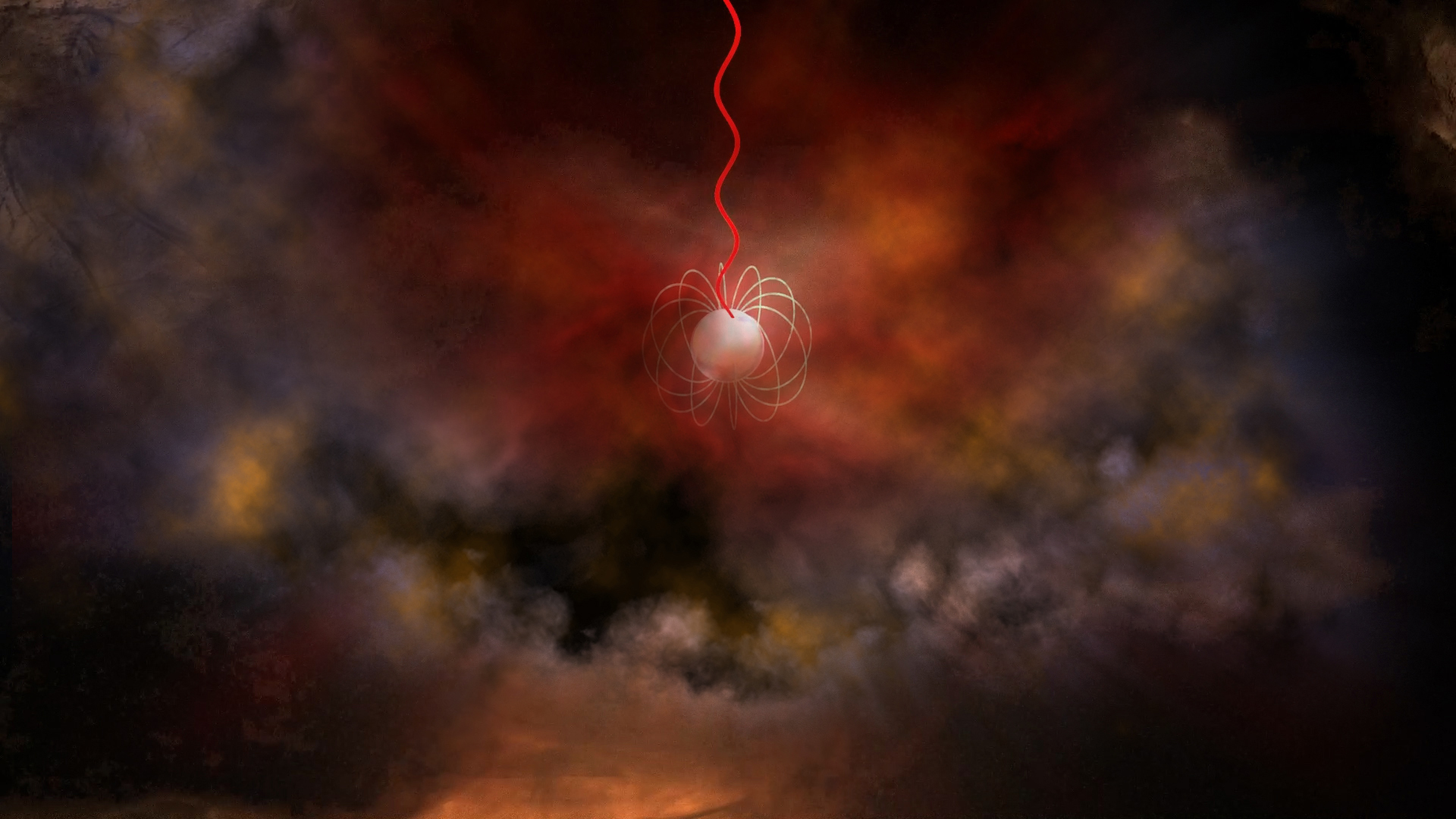
Artist's conception of a neutron star with an ultra-strong magnetic field, called a magnetar, emitting radio waves (red). Magnetars are a leading candidate for what generates Fast Radio Bursts. Credit: Bill Saxton, NRAO/AUI/NSF.Hi-Res File

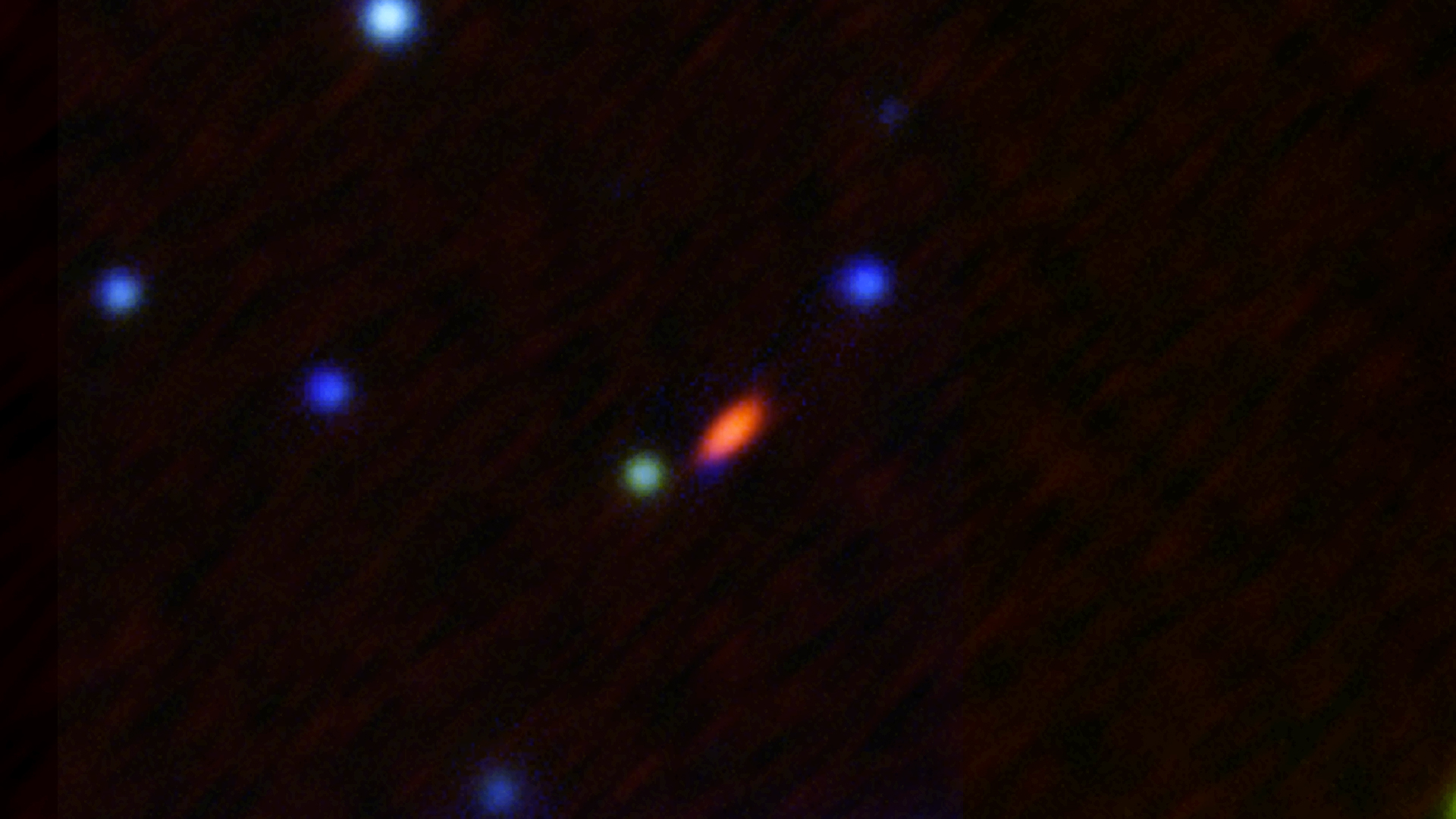
VLA image of Fast Radio Burst FRB 190520 (red), combined with optical image, when the FRB is bursting.
Credit: Niu, et al.; Bill Saxton, NRAO/AUI/NSF; CFHT.
Hi-Res File


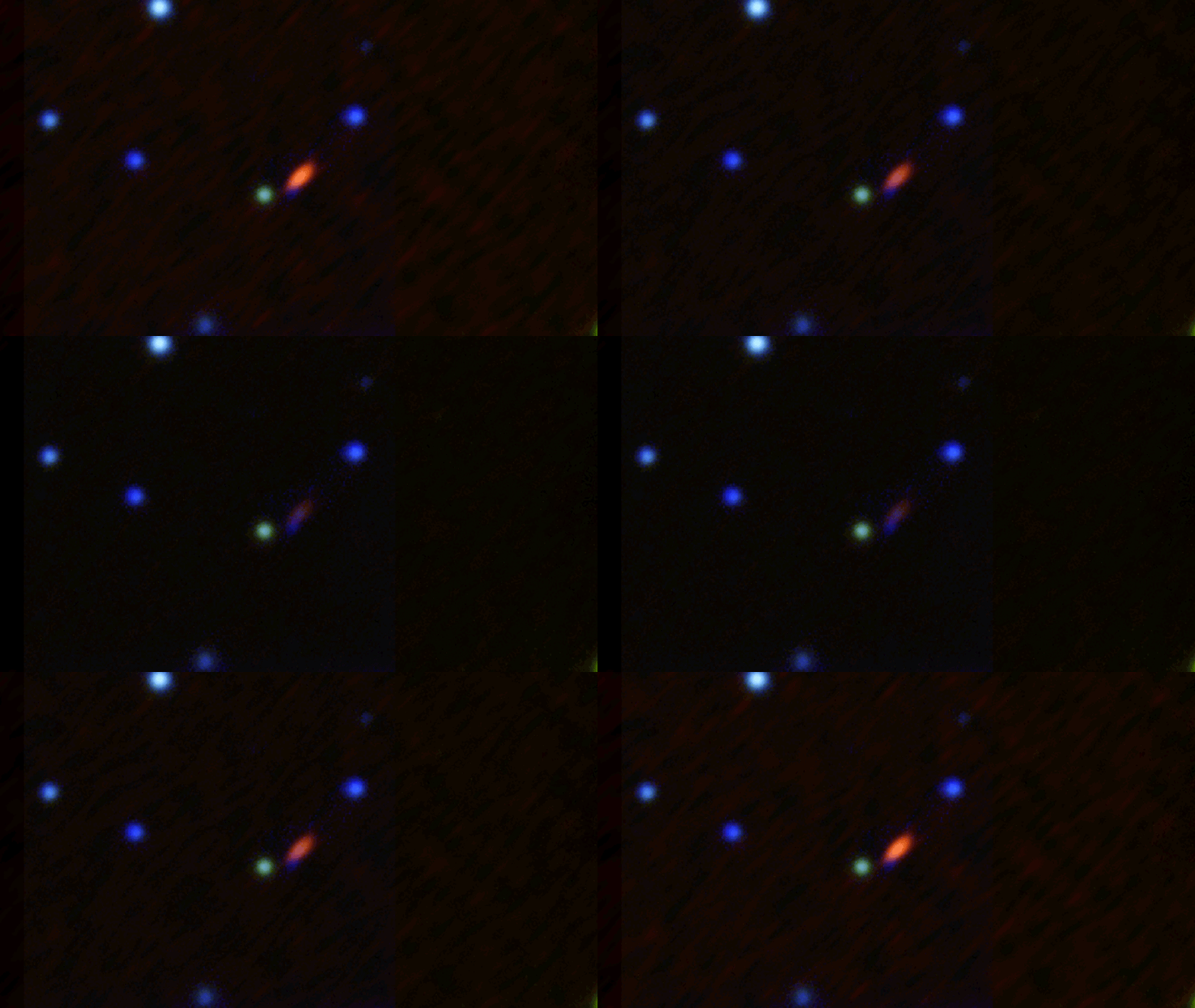
The region of FRB 190520, seen in visible light, with VLA image of the Fast Radio Burst alternating between the object bursting and not bursting. Credit: Niu, et al.; Bill Saxton, NRAO/AUI/NSF; CFHT.
Hi-Res File

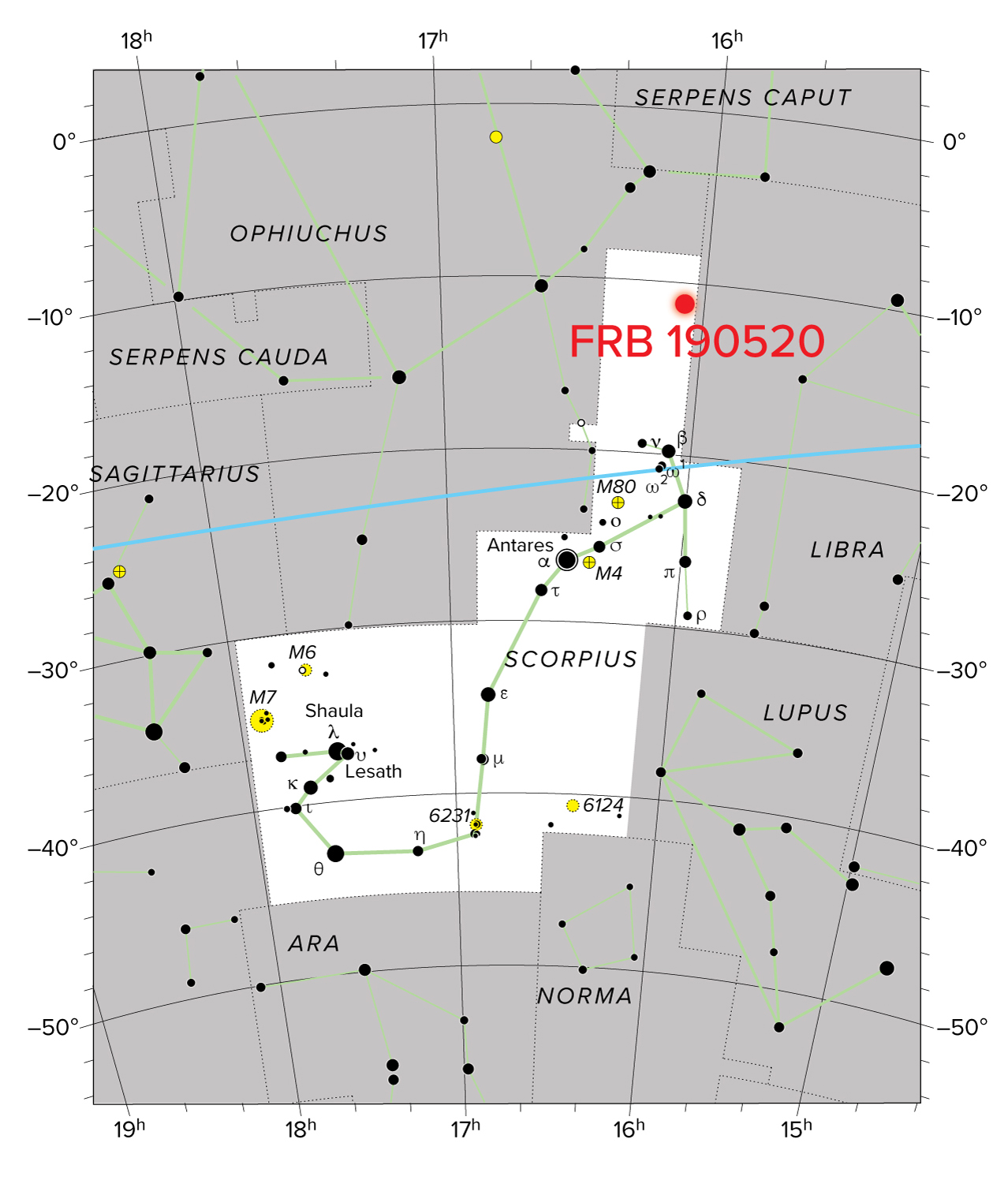
Location of FRB 190520 in the sky.
Credit: Bill Saxton, NRAO/AUI/NSF
. Hi-Res File


Animation of the sequence of events producing the fast radio burst.
Credit: Bill Saxton, NRAO/AUI/NSF


Astronomers have found only the second example of a highly active, repeating Fast Radio Burst (FRB) with a compact source of weaker but persistent radio emission between bursts. The discovery raises new questions about the nature of these mysterious objects and also about their usefulness as tools for studying the nature of intergalactic space. The scientists used the National Science Foundation’s Karl G. Jansky Very Large Array (VLA) and other telescopes to study the object, first discovered in 2019.

The object, called FRB 190520, was found by the Five-hundred-meter Aperture Spherical radio Telescope (FAST) in China. A burst from the object occurred on May 20, 2019, and was found in data from that telescope in November of that year. Follow-up observations with FAST showed that, unlike many other FRBs, it emits frequent, repeating bursts of radio waves.

Observations with the VLA in 2020 pinpointed the object’s location, and that allowed visible-light observations with the Subaru telescope in Hawaii to show that it is in the outskirts of a dwarf galaxy nearly 3 billion light-years from Earth. The VLA observations also found that the object constantly emits weaker radio waves between bursts.

“These characteristics make this one look a lot like the very first FRB whose position was determined — also by the VLA — back in 2016,” said Casey Law, of Caltech. That development was a major breakthrough, providing the first information about the environment and distance of an FRB. However, its combination of repeating bursts and persistent radio emission between bursts, coming from a compact region, set the 2016 object, called FRB 121102, apart from all other known FRBs, until now.

“Now we have two like this, and that brings up some important questions,” Law said. Law is part of an international team of astronomers reporting their findings in the journal Nature.

The differences between FRB 190520 and FRB 121102 and all the others strengthen a possibility suggested earlier that there may be two different kinds of FRBs.

“Are those that repeat different from those that don’t? What about the persistent radio emission — is that common?” said Kshitij Aggarwal, a graduate student at West Virginia University (WVU).

The astronomers suggest that there may be either two different mechanisms producing FRBs or that the objects producing them may act differently at different stages of their evolution. Leading candidates for the sources of FRBs are the superdense neutron stars left over after a massive star explodes as a supernova, or neutron stars with ultra-strong magnetic fields, called magnetars.

One characteristic of FRB 190520 calls into question the usefulness of FRBs as tools for studying the material between them and Earth. Astronomers often analyze the effects of intervening material on the radio waves emitted by distant objects to learn about that tenuous material itself. One such effect occurs when radio waves pass through space that contains free electrons. In that case, higher-frequency waves travel more quickly than lower-frequency waves.

This effect, called dispersion, can be measured to determine the density of electrons in the space between the object and Earth, or, if the electron density is known or assumed, provide a rough estimate of the distance to the object. The effect often is used to make distance estimates to pulsars.

That didn’t work for FRB 190520. An independent measurement of the distance based on the Doppler shift of the galaxy’s light caused by the expansion of the Universe placed the galaxy at nearly 3 billion light-years from Earth. However, the burst’s signal shows an amount of dispersion that ordinarily would indicate a distance of roughly 8 to 9.5 billion light-years.

“This means that there is a lot of material near the FRB that would confuse any attempt to use it to measure the gas between galaxies,” Aggarwal said. “If that’s the case with others, then we can’t count on using FRBs as cosmic yardsticks,” he added.

The astronomers speculated that FRB 190520 may be a “newborn,” still surrounded by dense material ejected by the supernova explosion that left behind the neutron star. As that material eventually dissipates, the dispersion of the burst signals also would decline. Under the “newborn” scenario, they said, the repeating bursts also might be a characteristic of younger FRBs and dwindle with age.

“The FRB field is moving very fast right now and new discoveries are coming out monthly. However, big questions still remain, and this object is giving us challenging clues about those questions,” said Sarah Burke-Spolaor, of WVU.

The National Radio Astronomy Observatory is a facility of the National Science Foundation, operated under cooperative agreement by Associated Universities, Inc.

Media Contact:

Dave Finley, Public Information Officer
(505) 241-9210

dfinley@nrao.edu