Showing posts with label Mars. Show all posts

Monday, August 31, 2026

Thermal Anomaly Discovered Below Mars's South Pole

Artist concept of Mars's warm southern interior
Credit: Artist concept: NASA / Theophilus Britt Griswold


Researchers have discovered a thermal asymmetry deep beneath the surface throughout Mars's southern hemisphere.

Based on gravitational measurements that give clues to the Red Planet's interior structure, Mars's interior southern hemisphere is around 200 to 400 degrees Celsius warmer than the northern half of the planet and partially molten. The surprising finding adds additional context to Martian history and the periods of time in which it may have hosted conditions favorable for life.

The research was led by Caltech alumnus Alexander Berne (PhD '26), who is now a postdoctoral associate at the University of Arizona. The findings are reported in a paper appearing in the journal Nature on August 27.

During his graduate studies at Caltech, Berne developed a model that uses variations in gravitational data to infer the structure of a planetary body's interior. Berne and his collaborators then aimed to apply his model to understanding Mars's interior. Using data collected over decades from three different Mars missions—Mars Global Surveyor, Mars Odyssey, and Mars Reconnaissance Orbiter—the team measured tiny variations in these spacecrafts' velocities and used them to reconstruct the gravitational field around Mars. The gravitational forces exerted by the Sun on Mars vary over seasonal timescales as a result of Mars's slightly elliptical orbit and its tilted rotation axis. A technique called tidal tomography measures how those gravitational signatures vary over time and results in a model of the planet's interior.

"Scientists usually assume that the interiors of planetary bodies are generally spherically symmetric, but this is not necessarily true," Berne says. "As we get more gravity data, we can determine the three-dimensional intricacies of a planet's interior structure. These inferences in turn give us a blueprint for designing future missions and scientific exploration of these worlds. Understanding the interior structure of planetary bodies helps us unravel the processes that shaped their formation and evolution."

On the surface, Mars is a geologically asymmetrical planet: Its southern hemisphere contains towering mountains and deep craters, whereas the northern hemisphere is composed of low flat lands. In the new study, the team was surprised to discover that Mars's interior is also thermally asymmetric—the southern hemisphere is hundreds of degrees hotter than the north.

The new observation also happens to suggest explanations for other phenomena observed on Mars, such as magnetic anomalies found in iron minerals in the south. A thermal anomaly in the southern mantle could mean that a magnetic field existed strong enough to cause magnetic differences between the north and south. Additionally, NASA's InSight mission had previously discovered that seismic waves dissipate more quickly in the south, which could be explained if the region were hotter.

"The dichotomy that we see between north and south is important to understand because it gives information about processes that may have influenced the hydrology of Mars, including the formation of basins that may have held water," says Amirhossein Bagheri, a postdoctoral scholar at Caltech and co-author on the paper. Bagheri is also a former member of the InSight team.

It is still unclear what created the thermal anomaly, and there are several hypotheses for its origins, including a giant impact releasing heat from the north, past spontaneous convection in the Martian southern mantle, and thick geological features trapping excess heat from escaping.

The paper is titled "Tidal Tomography Reveals a Thermal Anomaly Beneath Mars's Crustal Dichotomy." In addition to Berne and Bagheri, co-authors are Nicholas Wagner and Harriet Lau of Brown University, Isamu Matsuyama and Angela Marusiak of the University of Arizona, Sander Goossens of NASA Goddard Space Flight Center, Karwai Cheng of the Institute of Astronomy and Astrophysics at Academia Sinica in Taiwan, Antonio Genova of the University of Rome in Italy, Marc Rovira-Navarro of the Delft University of Technology in the Netherlands, Chuan Qin of UCLA, Douglas Hemingway of the University of Texas at Austin, Shijie Zhong of the University of Colorado Boulder, and Francis Nimmo of UC Santa Cruz. Funding was provided by NASA.

Source: Caltech/News


Contact:

Caltech Media Relations

mr@caltech.edu


Wednesday, March 11, 2026

ESA’s Mars orbiters watch solar superstorm hit the Red Planet

How charged solar particles, blasted out on 20 May 2024, spread through the Solar System and reached planets including Mars.


What happens when a solar superstorm hits Mars? Thanks to the European Space Agency’s Mars orbiters, we now know: glitching spacecraft and a supercharged upper atmosphere.

In May 2024, Earth was hit by the biggest solar storm recorded in over 20 years. It sent our planet’s atmosphere into overdrive, triggering shimmering auroras that were seen as far south as Mexico.

This storm also hit Mars. Fortunately, ESA’s two Mars Orbiters – Mars Express and ExoMars Trace Gas Orbiter (TGO) – were in the right place at the right time, with a radiation monitor aboard TGO picking up a dose equivalent to 200 ‘normal’ days in just 64 hours.

A new study published today in Nature Communications now reveals in greater depth how this intense, stormy activity affected the Red Planet.

“The impact was remarkable: Mars’s upper atmosphere was flooded by electrons,” says ESA Research Fellow Jacob Parrott, lead author of the study. “It was the biggest response to a solar storm we’ve ever seen at Mars.”

The superstorm caused a dramatic increase in electrons in two distinct layers of Mars’s atmosphere at altitudes of around 110 and 130 km, with numbers rising by 45% and a whopping 278%, respectively. This is the most electrons we’ve ever seen in this layer of martian atmosphere.

“The storm also caused computer errors for both orbiters – a typical peril of space weather, as the particles involved are so energetic and hard to predict,” adds Jacob. “Luckily, the spacecraft were designed with this in mind, and built with radiation-resistant components and specific systems for detecting and fixing these errors. They recovered fast.”

Pioneering a new technique

To investigate the superstorm’s impact on Mars, Jacob and colleagues used a technique currently being pioneered by ESA known as radio occultation.


First, Mars Express beamed a radio signal to TGO at the very moment it was disappearing over the martian horizon. As TGO vanished, the radio signal was bent (‘refracted’) by the various layers of Mars’s atmosphere before being picked up by the orbiter, allowing scientists to glean more about each layer. The researchers also used observations from NASA’s MAVEN mission to confirm the electron densities.

“This technique has actually been used for decades to explore the Solar System, but using signals beamed from a spacecraft to Earth,” says Colin Wilson, ESA project scientist for Mars Express and TGO, and co-author of the study. “It’s only in the past five years or so that we’ve started using it at Mars between two spacecraft, such as Mars Express and TGO, which usually use those radios to beam data between orbiters and rovers. It’s great to see it in actio.”

ESA uses orbiter-to-orbiter radio occultation routinely at Earth, and plans to use it more regularly in future planetary missions.

Different worlds, different weather

The superstorm was experienced very differently at Earth and Mars, highlighting the differences between the two worlds.

At Earth, the response of the upper atmosphere was more muted, thanks to the shielding effect of Earth’s magnetic field. As well as deflecting a lot of solar storm particles away from Earth, the magnetic field also diverted some towards Earth’s poles, where they caused the sky to light up with auroras.

“This technique has actually been used for decades to explore the Solar System, but using signals beamed from a spacecraft to Earth,” says Colin Wilson, ESA project scientist for Mars Express and TGO, and co-author of the study. “It’s only in the past five years or so that we’ve started using it at Mars between two spacecraft, such as Mars Express and TGO, which usually use those radios to beam data between orbiters and rovers. It’s great to see it in action.”

ESA uses orbiter-to-orbiter radio occultation routinely at Earth, and plans to use it more regularly in future planetary missions.

Different worlds, different weather

The superstorm was experienced very differently at Earth and Mars, highlighting the differences between the two worlds.

At Earth, the response of the upper atmosphere was more muted, thanks to the shielding effect of Earth’s magnetic field. As well as deflecting a lot of solar storm particles away from Earth, the magnetic field also diverted some towards Earth’s poles, where they caused the sky to light up with auroras.


While their differences can make it tricky to compare planets directly, understanding how solar activity impacts the residents of the Solar System – in other words, space weather forecasting – is hugely important. At Earth, solar storms can be dangerous and damaging for astronauts and equipment up in space, and can disrupt our satellites and systems (power, radio, navigation) further down.

However, studying space weather is difficult as the Sun throws out radiation and material erratically, making targeted measurements largely opportunistic. “Fortunately, we were able to use this new technique with Mars Express and TGO just 10 minutes after a large solar flare hit Mars. Currently we’re only performing two observations per week at Mars, so the timing was extremely lucky,” adds Jacob.

Jacob and colleagues captured the aftermath of three solar events – all part of the same storm, but different in terms of what they throw out into space, and how they do it: one flare of radiation, one burst of high-energy particles, and an eruption of material known as a coronal mass ejection (CME).

Together, these events sent fast-moving, energetic, magnetised plasma and X-rays flooding towards Mars. When this barrage of material hit the planet’s upper atmosphere it collided with neutral atoms and stripped away their electrons, causing the region to fill up with electrons and charged particles.

SOHO’s view of the 11 May 2024 solar storm
Access the video

“The results improve our understanding of Mars by revealing how solar storms deposit energy and particles into Mars’s atmosphere – important as we know the planet has lost both huge amounts of water and most of its atmosphere to space, most likely driven by the continual ;wind of particles streaming out from the Sun,” says Colin.

“But there’s another side to it: the structure and contents of a planet’s atmosphere influence how radio signals travel through space. If Mars’s upper atmosphere is packed full of electrons, this could block the signals we use to explore the planet’s surface via radar, making it a key consideration in our mission planning – and impacting our ability to investigate other worlds.”


Notes for editors

Martian ionospheric response during the May 2024 solar superstorm’ by J. Parrott et al. is published today in Nature Communications. DOI: 10.1038/s41467-026-69468-z

Jacob Parrott began this work as an ESA Young Graduate Trainee, continued it as a postgraduate student at Imperial College London, and is now a Research Fellow at ESA’s European Space Research and Technology Centre (ESTEC) in the Netherlands.

The May 2024 solar storm was monitored and observed after it struck Earth by numerous ESA missions and covered in a number of subsequent web stories, including:

Several ESA missions are either currently or soon-to-be keeping an eye on our star. ESA’s Solar Orbiter is continuously observing the Sun up close and tracking its activity (including the May 2024 superstorm). Solar Orbiter will soon be joined by Smile, a mission to understand how Earth’s magnetic field responds to the solar wind scheduled to launch in spring 2026, and later by Vigil (2031), which will spot potentially hazardous solar activity in near-real-time.

. The initial dose of radiation delivered to Mars orbit by the solar storm, measured by TGO in May 2025, was,hr reported in Semkova et al.:
doi.org/10.1016/j.lssr.2025.02.010


For more information please contact:

ESA Media Relations

media@esa.int


Thursday, April 24, 2025

Eye on Infinity: NASA Celebrates Hubble’s 35th Year in Orbit

A selection of photogenic space targets to celebrate the 35th anniversary of NASA's Hubble Space Telescope. Upper left: Mars. Upper right: planetary nebula NGC 2899. Lower left: a small portion of the Rosette Nebula. Lower right: barred spiral galaxy NGC 5 planetary nebula335. Image: NASA, ESA, STScI; Image Processing: Joseph DePasquale (STScI), Alyssa Pagan (STScI)


In celebration of the Hubble Space Telescope’s 35 years in Earth orbit, NASA is releasing an assortment of compelling images recently taken by Hubble, stretching from the planet Mars to star-forming regions, and a neighboring galaxy.

After more than three decades of perusing the universe, Hubble remains a household name — the most well-recognized and scientifically productive telescope in history. The Hubble mission is a glowing success story of America’s technological prowess, unyielding scientific curiosity, and a reiteration of our nation’s pioneering spirit.

“Hubble opened a new window to the universe when it launched 35 years ago. Its stunning imagery inspired people across the globe, and the data behind those images revealed surprises about everything from early galaxies to planets in our own solar system,” said Shawn Domagal-Goldman, acting director of the Astrophysics Division at NASA Headquarters in Washington. “The fact that it is still operating today is a testament to the value of our flagship observatories, and provides critical lessons for the Habitable Worlds Observatory, which we plan to be serviceable in the spirit of Hubble.”

Perched above Earth’s blurry atmosphere, Hubble’s crystal-clear views have been nothing less than transformative for the public’s perception of the cosmos. Through its evocative imagery, Hubble has made astronomy very relevant, engaging, and accessible for people of all ages. Hubble snapshots can portray the universe as awesome, mysterious, and beautiful — and at the same time chaotic, overwhelming, and foreboding.

A selection of photogenic space targets to celebrate the 35th anniversary of NASA's Hubble Space Telescope. Upper left: Mars. Upper right: planetary nebula NGC 2899. Lower left: a small portion of the Rosette Nebula. Lower right: barred spiral galaxy NGC 5335. Image: NASA, ESA, STScI; Image Processing: Joseph DePasquale (STScI), Alyssa Pagan (STScI)

The 24,000-pound observatory was tucked away inside the space shuttle Discovery’s cargo bay and lofted into low Earth orbit on April 24, 1990. As the shuttle Discovery thundered skyward, the NASA commentator described Hubble as a “new window on the universe.” The telescope turned out to be exactly as promised, and more.

More scientific papers than ever are based on Hubble data, thanks to the dedication, perseverance, and skills of engineers, scientists, and mission operators. Astronauts chased and rendezvoused with Hubble on five servicing missions in which they upgraded Hubble’s cameras, computers, and other support systems. The servicing missions took place from 1993 to 2009.

The telescope’s mission got off to a shaky start in 1990 when an unexpected flaw was found in the observatory’s nearly eight-foot diameter primary mirror. Astronauts gallantly came to the rescue on the first shuttle servicing mission in December 1993 to improve Hubble’s sharpness with corrective optics.

To date, Hubble has made nearly 1.7 million observations, looking at approximately 55,000 astronomical targets. Hubble discoveries have resulted in over 22,000 papers and over 1.3 million citations as of February 2025. All the data collected by Hubble is archived and currently adds up to over 400 terabytes, representing the biggest dataset for a NASA astrophysics mission besides the James Webb Space Telescope.

Hubble’s long operational life has allowed astronomers to return to the same cosmic scenes multiple times to observe changes that happened during more than three decades: seasonal variability on the planets in our solar system, black hole jets travelling at nearly the speed of light, stellar convulsions, asteroid collisions, expanding supernova bubbles, and much more.

Hubble’s Senior Project Scientist, Dr. Jennifer Wiseman, takes you on a tour of all four Hubble 35th anniversary images. Credit: NASA's Goddard Space Flight Center; Lead Producer: Paul Morris; Narrator: Dr. Jennifer Wiseman

Before 1990, powerful optical telescopes on Earth could see only halfway across the cosmos. Estimates for the age of the universe disagreed by a big margin. Supermassive black holes were only suspected to be the powerhouses behind a rare zoo of energetic phenomena. Not a single planet had been seen around another star.

Among its long list of breakthroughs: Hubble’s deep field images unveiled myriad galaxies dating back to the early universe. The telescope also allowed scientists to precisely measure the universe’s expansion, find that supermassive black holes are common among galaxies, and make the first measurement of the atmospheres of exoplanets. Hubble also contributed to the discovery of dark energy, the mysterious phenomenon accelerating the expansion of universe, leading to the 2011 Nobel Prize in Physics. 

The relentless pace of Hubble’s trailblazing discoveries kick-started a new generation of space telescopes for the 21st century. Hubble provided the first observational evidence that there were myriad distant galaxies for Webb to pursue in infrared wavelengths that reach even farther beyond Hubble’s gaze. Now, Hubble and Webb are often being used in complement to study everything from exoplanets to galaxy evolution.

Hubble’s planned successor, the Habitable Worlds Observatory, will have a significantly larger mirror than Hubble’s to study the universe in visible and ultraviolet light. It will be significantly sharper than Hubble and up to 100 times more sensitive to starlight. The Habitable Worlds Observatory will advance science across all of astrophysics, as Hubble has done for over three decades. A major goal of the future mission is to identify terrestrial planets around neighboring stars that might be habitable.

The Hubble Space Telescope continues to make ground-breaking discoveries that shape our fundamental understanding of the universe. Hubble is a project of international cooperation between NASA and ESA (European Space Agency). NASA’s Goddard Space Flight Center in Greenbelt, Maryland, manages the telescope and mission operations. Lockheed Martin Space, based in Denver, also supports mission operations at Goddard. The Space Telescope Science Institute in Baltimore, which is operated by the Association of Universities for Research in Astronomy, conducts Hubble science operations for NASA.


Sunday, March 02, 2025

Have we been wrong about why Mars is red?

Global Mars in colour
Credit: ESA/DLR/FU Berlin/G. Michael
Licence: CC BY-SA 3.0 IGO or ESA Standard Licence
(content can be used under either licence)

How Mars turned red
Credit: ESA
Acknownledgements: ATG Europe, based on Valantinas et al (2025)
Licence: CC BY-SA 3.0 IGO or ESA Standard Licence

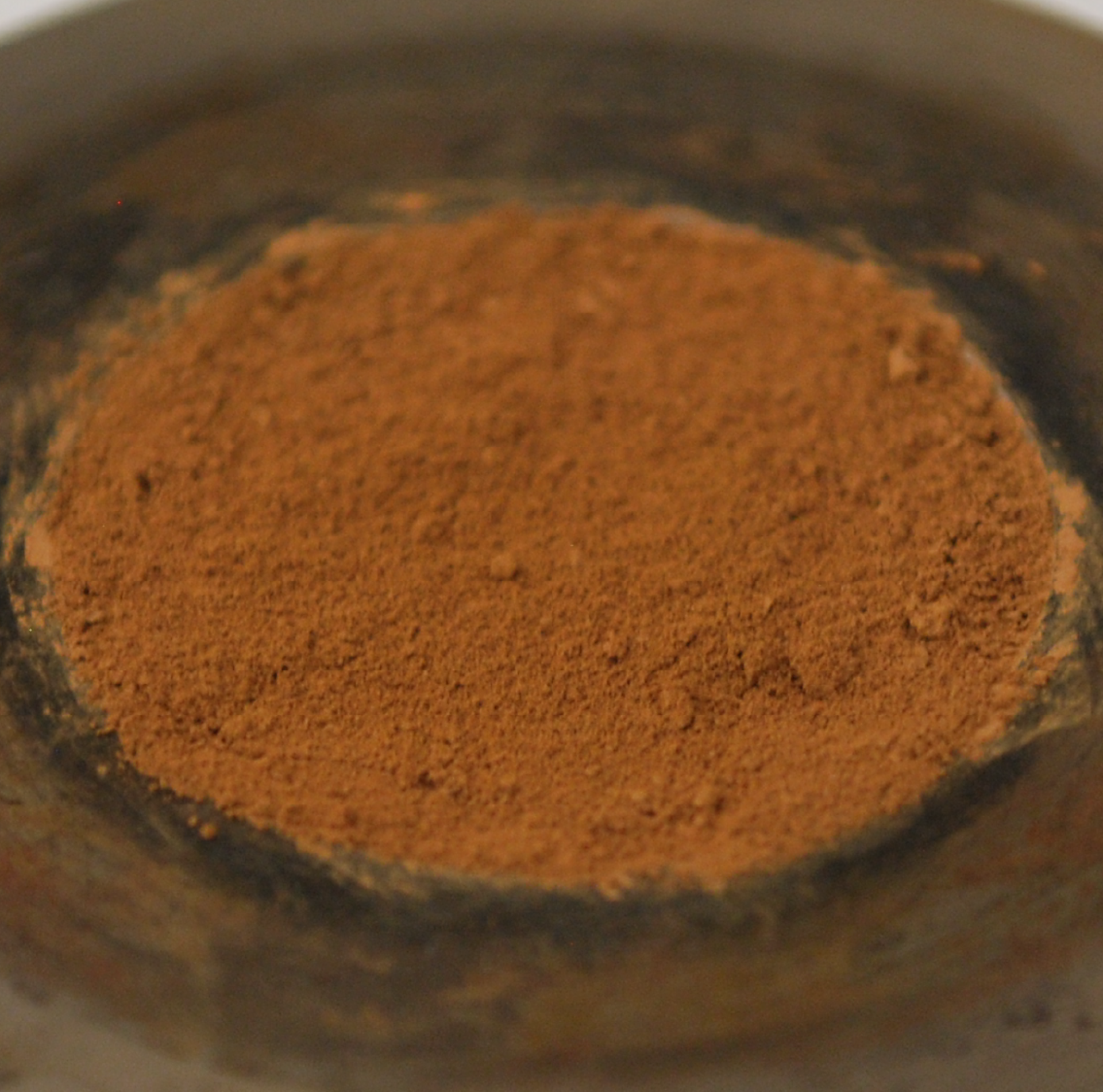
Lab-made ‘martian dust’
Credit: A.Valantinas
Licence: No ESA licences available


The Red Planet’s iconic rusty dust has a much wetter history than previously assumed, find scientists combining European Space Agency (ESA) and NASA spacecraft data with new laboratory experiments on replica Mars dust. The results suggest that Mars rusted early in the planet’s ancient past, when liquid water was more widespread.

Mars is easily identifiable in the night sky by its prominent red hue. Thanks to the fleet of spacecraft that have studied the planet over the last decades, we know that this red colour is due to rusted iron minerals in the dust. That is, iron bound up in Mars’s rocks has at some point reacted with liquid water, or water and oxygen in the air, similar to how rust forms on Earth.

Over billions of years this rusty material – iron oxide – has been broken down into dust and spread all around the planet by winds, a process that continues today.

But iron oxides come in many flavours, and the exact chemistry of martian rust has been intensely debated because how it formed is a window into the planet’s environmental conditions at the time. And closely linked to that is the question of whether Mars has ever been habitable.

Previous studies of the iron oxide component of the martian dust based on spacecraft observations alone did not find evidence of water contained within it. Researchers had therefore concluded that this particular type of iron oxide must be hematite, formed under dry surface conditions through reactions with the martian atmosphere over billions of years – after Mars’s early wet period.

However, new analysis of spacecraft observations in combination with novel laboratory techniques shows that Mars’s red colour is better matched by iron oxides containing water, known as ferrihydrite. Ferrihydrite typically forms quickly in the presence of cool water, and so must have formed when Mars still had water on its surface. The ferrihydrite has kept its watery signature to the present day, despite being ground down and spread around the planet since its formation.

“We were trying to create a replica martian dust in the laboratory using different types of iron oxide. We found that ferrihydrite mixed with basalt, a volcanic rock, best fits the minerals seen by spacecraft at Mars,” says lead author Adomas Valantinas, a postdoc at Brown University in the US, formerly at the University of Bern in Switzerland where he started his work with ESA’s Trace Gas Orbiter (TGO) data.

“Mars is still the Red Planet. It’s just that our understanding of why Mars is red has been transformed. The major implication is that because ferrihydrite could only have formed when water was still present on the surface, Mars rusted earlier than we previously thought. Moreover, the ferrihydrite remains stable under present-day conditions on Mars.”

Other studies have also suggested ferrihydrite might be present in martian dust, but Adomas and colleagues have provided the first comprehensive proof through the unique combination of space mission data and novel laboratory experiments.

They created the replica martian dust using an advanced grinder machine to achieve the realistic dust grain size equivalent to 1/100th of a human hair. They then analysed their samples using the same techniques as orbiting spacecraft in order to make a direct comparison, finally identifying ferrihydrite as the best match.

Data from NASA’s Mars Reconnaissance Orbiter, together with ground-based measurements from NASA Mars rovers Curiosity, Pathfinder and Opportunity, also helped make the case for ferrihydrite.

“We eagerly await the results from upcoming missions like ESA’s Rosalind Franklin rover and the NASA-ESA Mars Sample Return, which will allow us to probe deeper into what makes Mars red,” adds Colin.

“Some of the samples already collected by NASA’s Perseverance rover and awaiting return to Earth include dust; once we get these precious samples into the lab, we’ll be able to measure exactly how much ferrihydrite the dust contains, and what this means for our understanding of the history of water – and the possibility for life – on Mars.”

For a little while longer, though, Mars’s red hue will continue to be admired and puzzled over from afar.


Notes for editors

‘Detection of ferrihydrite in Martian red dust records ancient cold and wet conditions on Mars’ by A. Valantinas et al is published today in Nature Communications.


For more information please contact:

ESA Media Relations


media@esa.int


Saturday, September 07, 2024

NASA's Hubble, MAVEN Help Solve the Mystery of Mars' Escaping Water

These are far-ultraviolet Hubble images of Mars near its farthest point from the Sun, called aphelion, on December 31, 2017 (top), and near its closest approach to the Sun, called perihelion, on December 19, 2016 (bottom). The atmosphere is clearly brighter and more extended when Mars is close to the Sun.

Reflected sunlight from Mars at these wavelengths shows scattering by atmospheric molecules and haze, while the polar ice caps and some surface features are also visible. Hubble and MAVEN showed that Martian atmospheric conditions change very quickly. When Mars is close to the Sun, water molecules rise very rapidly through the atmosphere, breaking apart and releasing atoms at high altitudes. Credits: Science: NASA, ESA, STScI, John T. Clarke (Boston University) - Image Processing: Joseph DePasquale (STScI)


Mars was once a very wet planet as is evident in its surface geological features. Scientists know that over the last 3 billion years, at least some water went deep underground, but what happened to the rest? Now, NASA's Hubble Space Telescope and MAVEN (Mars Atmosphere and Volatile Evolution) mission are helping unlock that mystery.

"There are only two places water can go. It can freeze into the ground, or the water molecule can break into atoms, and the atoms can escape from the top of the atmosphere into space," explained study leader John Clarke of the Center for Space Physics at Boston University in Massachusetts. "To understand how much water there was and what happened to it, we need to understand how the atoms escape into space."

Clarke and his team combined data from Hubble and MAVEN to measure the number and current escape rate of the hydrogen atoms escaping into space. This information allowed them to extrapolate the escape rate backwards through time to understand the history of water on the Red Planet.

Escaping Hydrogen and "Heavy Hydrogen"

Water molecules in the Martian atmosphere are broken apart by sunlight into hydrogen and oxygen atoms. Specifically, the team measured hydrogen and deuterium, which is a hydrogen atom with a neutron in its nucleus. This neutron gives deuterium twice the mass of hydrogen. Because its mass is higher, deuterium escapes into space much more slowly than regular hydrogen.

Over time, as more hydrogen was lost than deuterium, the ratio of deuterium to hydrogen built up in the atmosphere. Measuring the ratio today gives scientists a clue to how much water was present during the warm, wet period on Mars. By studying how these atoms currently escape, they can understand the processes that determined the escape rates over the last four billion years and thereby extrapolate back in time.

Although most of the study's data comes from the MAVEN spacecraft, MAVEN is not sensitive enough to see the deuterium emission at all times of the Martian year. Unlike the Earth, Mars swings far from the Sun in its elliptical orbit during the long Martian winter, and the deuterium emissions become faint. Clarke and his team needed the Hubble data to "fill in the blanks" and complete an annual cycle for three Martian years (each of which is 687 Earth days). Hubble also provided additional data going back to 1991 – prior to MAVEN's arrival at Mars in 2014.

The combination of data between these missions provided the first holistic view of hydrogen atoms escaping Mars into space.

A Dynamic and Turbulent Martian Atmosphere

"In recent years scientists have found that Mars has an annual cycle that is much more dynamic than people expected 10 or 15 years ago," explained Clarke. "The whole atmosphere is very turbulent, heating up and cooling down on short timescales, even down to hours. The atmosphere expands and contracts as the brightness of the Sun at Mars varies by 40 percent over the course of a Martian year."

The team discovered that the escape rates of hydrogen and deuterium change rapidly when Mars is close to the Sun. In the classical picture that scientists previously had, these atoms were thought to slowly diffuse upward through the atmosphere to a height where they could escape.

But that picture no longer accurately reflects the whole story, because now scientists know that atmospheric conditions change very quickly. When Mars is close to the Sun, the water molecules, which are the source of the hydrogen and deuterium, rise through the atmosphere very rapidly releasing atoms at high altitudes.

The second finding is that the changes in hydrogen and deuterium are so rapid that the atomic escape needs added energy to explain them. At the temperature of the upper atmosphere only a small fraction of the atoms have enough speed to escape the gravity of Mars. Faster (super-thermal) atoms are produced when something gives the atom a kick of extra energy. These events include collisions from solar wind protons entering the atmosphere or sunlight that drives chemical reactions in the upper atmosphere.

Serving as a Proxy

Studying the history of water on Mars is fundamental not only to understanding planets in our own solar system but also the evolution of Earth-size planets around other stars. Astronomers are finding more and more of these planets, but they’re difficult to study in detail. Mars, Earth and Venus all sit in or near our solar system's habitable zone, the region around a star where liquid water could pool on a rocky planet; yet all three planets have dramatically different present-day conditions. Along with its sister planets, Mars can help scientists grasp the nature of far-flung worlds across our galaxy.

These results appear in the July 26 edition of Science Advances, published by the American Association for the Advancement of Science.

About the Missions

The Hubble Space Telescope has been operating for over three decades and continues to make ground-breaking discoveries that shape our fundamental understanding of the universe. Hubble is a project of international cooperation between NASA and ESA (European Space Agency). NASA’s Goddard Space Flight Center in Greenbelt, Maryland, manages the telescope and mission operations. Lockheed Martin Space, based in Denver, Colorado, also supports mission operations at Goddard. The Space Telescope Science Institute (STScI) in Baltimore, Maryland, which is operated by the Association of Universities for Research in Astronomy, conducts Hubble science operations for NASA.

MAVEN’s principal investigator is based at the Laboratory for Atmospheric and Space Physics (LASP) at the University of Colorado Boulder. LASP is also responsible for managing science operations and public outreach and communications. NASA’s Goddard Space Flight Center in Greenbelt, Maryland, manages the MAVEN mission. Lockheed Martin Space built the spacecraft and is responsible for MAVEN mission operations at Goddard. NASA’s Jet Propulsion Laboratory in Southern California provides navigation and Deep Space Network support. The MAVEN team is preparing to celebrate the spacecraft’s 10th year at Mars in September 2024
.


About This Release

Credits:

Media Contact:

Ann Jenkins
Space Telescope Science Institute, Baltimore, Maryland

Ray Villard
Space Telescope Science Institute, Baltimore, Maryland

Science Contact:

John T. Clarke
Boston University, Boston, Massachusetts

Permissions: Content Use Policy

Contact Us: Direct inquiries to the News Team.

Related Links and Documents


Thursday, September 07, 2023

Sandy, Briny Water on Mars Has a Better Chance of Remaining Liquid


The "dragon scale" texture seen in this Mars Reconnaissance Orbiter image of Mars's surface is the result of water interacting with bedrock, forming clay-containing rock. Credit:
NASA/JPL-Caltech/UArizona

New laboratory experiments suggest that salty water mixed with Martian surface material can remain a liquid under colder and drier conditions than water alone. This means that liquid water might be found over a larger area of Mars’s surface than previously thought, as well as throughout more of the Martian year, with important implications for habitability and exploration.


Warm temperatures on Mars are associated with the appearance of dark streaks on sloping terrain. On Earth, these streaks are caused by water, but on Mars they may be caused by shifting sand grains instead. Credit:
NASA/JPL-Caltech/UA/USGS

The Search for Water on Mars

Mars’s sinuous riverbeds and dry lake basins tell a tale of a planet once awash with water, but what about today? Proving the presence of liquid water on Mars’s surface has been tricky, and claims of evidence for modern-day liquid water often find themselves rebutted; for example, the dark streaks thought to indicate subsurface water seeping through the sand were reinterpreted as sand sliding down steep slopes (say that five times fast

But the search continues, with evidence mounting that liquid water might exist in the form of brine: a concentrated mixture of water and salt. Martian brine can form in several ways including by water vapor collecting on the surface of salt crystals. In the lab, researchers have tested the conditions under which brine remains a liquid, rather than freezing or evaporating in Mars’s cold, dry climate. But brine on Mars doesn’t exist in isolation. Instead, it’s muddled together with regolith: the loose mixture of rocks, sand, and dust that coats the planet’s surface. Could the mashup of these two materials help water remain a liquid on Mars’s surface?


An image of Martian soil scooped up by the Phoenix Mars Lander. For this study, the team used simulated Martian soil made from volcanic rocks in the Mojave Desert. Credit:
NASA/JPL-Caltech/University of Arizona/Max Planck Institute

Throwing Regolith into the Mix

To explore this question, Andrew Shumway (University of Washington) and collaborators measured the properties of regolith–brine mixtures in a lab. Since we don’t yet have actual Martian regolith to experiment on, Shumway’s team used a simulated regolith that was originally developed to help NASA scientists test the navigation and sample-collecting skills of the Mars rovers. For their Martian brine, the team swirled together water and a salt called magnesium perchlorate (magnesium and perchlorate are common components of Mars’s surface material).

The team measured two key factors for each of their regolith–brine samples: 1) the freezing point, which partly determines where on the planet’s surface the mixture can remain a liquid, and 2) the amount of water that’s available to participate in chemical reactions and other processes important for life.


Melting temperature of frozen regolith–brine samples. Samples with a lower melting temperature also freeze at lower temperatures, making them remain liquid under colder conditions. Credit: Shumway et al. 2023

Briny Findings

Shumway’s team found that mixtures of brine and regolith have more water available and freeze at a lower temperature than brine alone, and water can persist when the ambient air is drier, as well. This means that liquid water might be found across more of the Martian surface and during more of the Martian year than previously thought. While this is exciting news for the prospect of finding life on Mars, it also means that we’ll need to be even more careful not to spread earthly microbes to the Martian surface, as water helps to support Earth life as well!

By Kerry Hensley

Citation:

“Regolith Inhibits Salt and Ice Crystallization in Mg(ClO4)2 Brine, Implying More Persistent and Potentially Habitable Brines on Mars,” Andrew O. Shumway et al 2023 Planet. Sci. J. 4 143. doi:10.3847/PSJ/ace891


Monday, October 29, 2018

Mars Express keeps an eye on curious cloud

Credit: ESA/GCP/ UPV/EHU Bilbao, CC BY-SA 3.0 IGO

Cloud formation near Arsia Mons
Copyright: ESA/GCP/UPV/EHU Bilbao, CC BY-SA 3.0 IGO 


Credit: ESA/DLR/FU Berlin, CC BY-SA 3.0 IGO

Cloud on 17 September 2018
Credit: ESA/CNES/CNRS/IAS

Since 13 September, ESA's Mars Express has been observing the evolution of an elongated cloud formation hovering in the vicinity of the 20 km-high Arsia Mons volcano, close to the planet's equator.

In spite of its location, this atmospheric feature is not linked to volcanic activity but is rather a water ice cloud driven by the influence of the volcano's leeward slope on the air flow – something that scientists call an orographic or lee cloud – and a regular phenomenon in this region.

The cloud can be seen in this view taken on 10 October by the Visual Monitoring Camera (VMC) on Mars Express – which has imaged it hundreds of times over the past few weeks – as the white, elongated feature extending 1500 km westward of Arsia Mons. As a comparison, the cone-shaped volcano has a diameter of about 250 km; a view of the region with labels is provided here.

Mars just experienced its northern hemisphere winter solstice on 16 October. In the months leading up to the solstice, most cloud activity disappears over big volcanoes like Arsia Mons; its summit is covered with clouds throughout the rest of the martian year.

However, a seasonally recurrent water ice cloud, like the one shown in this image, is known to form along the southwest flank of this volcano – it was previously observed by Mars Express and other missions in 2009, 2012 and 2015.

The cloud's appearance varies throughout the martian day, growing in length during local morning downwind of the volcano, almost parallel to the equator, and reaching such an impressive size that could make it visible even to telescopes on Earth.

The formation of water ice clouds is sensitive to the amount of dust present in the atmosphere. These images, obtained after the major dust storm that engulfed the entire planet in June and July, will provide important information on the effect of dust on the cloud development and on its variability throughout the year.

The elongated cloud hovering near Arsia Mons this year was also observed with the visible and near-infrared mapping spectrometer, OMEGA, and the High Resolution Stereo Camera (HRSC) on Mars Express, providing scientists with a variety of different data to study this phenomenon.

Follow the development of this cloud via the daily images sent by the VMC: https://www.flickr.com/photos/esa_marswebcam/

 
For more information, please contact:

Agustin Sánchez-Lavega
University of the Basque Country, Bilbao, Spain
Email: agustin.sanchez@ehu.eus

Daniela Tirsch
DLR, Berlin, Germany
Email: daniela.tirsch@dlr.de

Brigitte Gondet
IAS, Orsay, France
Email: brigitte.gondet@ias.u-psud.fr

Dmitri Titov
ESA Mars Express project scientist
Email: dmitri.titov@esa.int

Markus Bauer
ESA Science and Robotic Exploration Communication Officer
Tel: +31 71 565 6799
Mob: +31 61 594 3 954
Email: markus.bauer@esa.int


Saturday, July 28, 2018

New family photos of Mars and Saturn from Hubble

Mars and Saturn close to opposition

PR Image heic1814b
Saturn and its rings in 2018

PR Image heic1814c
Stormy Mars in opposition in 2018

PR Image heic1814d
The moons of Saturn

PR Image heic1814e
The moons of Saturn (annotated)

PR Image heic1814f
Mars in opposition in 2018 (annotated)

PR Image heic1814g
Mars 2016/2018 side-by-side


Videos

Hubblecast 112 Light: Mars and Saturn

Zoom on rotating Saturn

Saturn and its orbiting moons

The surface and the moons of Mars

Animation of difference in Mars orientation, 2016 and 2018


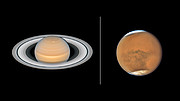
In summer 2018 the planets Mars and Saturn are, one after the other, in opposition to Earth. During this event the planets are relatively close to Earth, allowing astronomers to observe them in greater detail. Hubble took advantage of this preferred configuration and imaged both planets to continue its long-standing observation of the outer planets in the Solar System.

Since the NASA/ESA Hubble Space Telescope was launched, its goal has always been to study not only distant astronomical objects, but also the planets within our Solar System. Hubble’s high-resolution images of our planetary neighbours can only be surpassed by pictures taken from spacecraft that actually visit these bodies. However, Hubble has one advantage over space probes: it can look at these objects periodically and observe them over much longer periods than any passing probe could.

In the last months the planets Mars and Saturn have each been in opposition to Earth — Saturn on 27 June and Mars on 27 July. An opposition occurs when the Sun, Earth and an outer planet are lined up, with Earth sitting in between the Sun and the outer planet. During an opposition, a planet is fully lit by the Sun as seen from Earth, and it also marks the time when the planet is closest to Earth, allowing astronomers to see features on the planet’s surface in greater detail [1].

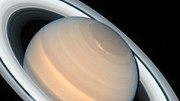
A month before Saturn’s opposition — on 6 June — Hubble was used to observe the ringed planet [2]. At this time Saturn was approximately 1.4 billion kilometres from Earth. The taken images show Saturn’s magnificent ring system near its maximum tilt toward Earth, allowing a spectacular view of the rings and the gaps between them. Though all of the gas giants boast rings, Saturn’s are the largest and most spectacular, stretching out to eight times the radius of the planet.

Alongside a beautiful view of the ring system, Hubble’s new image reveals a hexagonal pattern around the north pole — a stable and persistent wind feature discovered during the flyby of the Voyager 1 space probe in 1981. To the south of this feature a string of bright clouds is visible: remnants of a disintegrating storm.

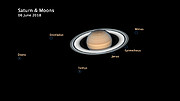
While observing the planet Hubble also managed to capture images of six of Saturn’s 62 currently known moons: Dione, Enceladus, Tethys, Janus, Epimetheus, and Mimas. Scientists hypothesise that a small, wayward moon like one of these disintegrated 200 million years ago to form Saturn’s ring system.

Hubble shot the second portrait, of the planet Mars, on 18 July, just 13 days before Mars reached its closest approach to Earth. This year Mars will get as close as 57.6 million kilometres from Earth. This makes it the closest approach since 2003, when the red planet made its way closer to us than at any other time in almost 60 000 years (opo0322).

While previous images showed detailed surface features of the planet, this new image is dominated by a gigantic sandstorm enshrouding the entire planet. Still visible are the white polar caps, Terra Meridiani, the Schiaparelli Crater, and Hellas Basin — but all of these features are slightly blurred by the dust in the atmosphere.

Comparing these new images of Mars and Saturn with older data gathered by Hubble, other telescopes and even space probes allows astronomers to study how cloud patterns and large-scale structures on other planets in our Solar System change over time.


Notes

[1] The dates of opposition and closest approach differ slightly. This difference is caused by the elliptical orbit of the planets and the fact that the orbits are not in exactly the same plane.

[2] The observations of Saturn were made as part of the Outer Planet Atmospheres Legacy (OPAL) project. OPAL is helping astronomers understand the atmospheric dynamics and evolution of the gas giant planets in our Solar System. Jupiter, Uranus and Neptune have already been observed several times as part of this project, but this is the first time Saturn was observed as part of OPAL.


More Information

The Hubble Space Telescope is a project of international cooperation between ESA and NASA.

Image credit: NASA, ESA, STScI, M. Mutchler (STScI), A. Simon (GSFC) and the OPAL Team, J. DePasquale (STScI)


Links


Contacts

Mathias Jäger

ESA/Hubble, Public Information Officer
Garching, Germany
Tel: +49 176 62397500
Email:
mjaeger@partner.eso.org


Wednesday, July 25, 2018

Mars Express detects liquid water hidden under planet's south pole

Radar detection of water under the south pole of Mars
Credit: ESA/NASA/JPL/ASI/Univ. Rome

Water detection under the south pole of Mars
Credit: Context map: NASA/Viking; THEMIS background: NASA/JPL-Caltech/Arizona State University; 
MARSIS data: ESA/NASA/JPL/ASI/Univ. Rome; R. Orosei et al 2018.


Radar data collected by ESA's Mars Express point to a pond of liquid water buried under layers of ice and dust in the south polar region of Mars.

Evidence for the Red Planet's watery past is prevalent across its surface in the form of vast dried-out river valley networks and gigantic outflow channels clearly imaged by orbiting spacecraft. Orbiters, together with landers and rovers exploring the martian surface, also discovered minerals that can only form in the presence of liquid water.

But the climate has changed significantly over the course of the planet's 4.6 billion year history and liquid water cannot exist on the surface today, so scientists are looking underground. Early results from the 15-year old Mars Express spacecraft already found that water-ice exists at the planet's poles and is also buried in layers interspersed with dust.

The presence of liquid water at the base of the polar ice caps has long been suspected; after all, from studies on Earth, it is well known that the melting point of water decreases under the pressure of an overlying glacier. Moreover, the presence of salts on Mars could further reduce the melting point of water and keep the water liquid even at below-freezing temperatures.

But until now evidence from the Mars Advanced Radar for Subsurface and Ionosphere Sounding instrument, MARSIS, the first radar sounder ever to orbit another planet, remained inconclusive.

It has taken the persistence of scientists working with this subsurface-probing instrument to develop new techniques in order to collect as much high-resolution data as possible to confirm their exciting conclusion.

Ground-penetrating radar uses the method of sending radar pulses towards the surface and timing how long it takes for them to be reflected back to the spacecraft, and with what strength. The properties of the material that lies between influences the returned signal, which can be used to map the subsurface topography.

The radar investigation shows that south polar region of Mars is made of many layers of ice and dust down to a depth of about 1.5 km in the 200 km-wide area analysed in this study. A particularly bright radar reflection underneath the layered deposits is identified within a 20 km-wide zone.

Analysing the properties of the reflected radar signals and considering the composition of the layered deposits and expected temperature profile below the surface, the scientists interpret the bright feature as an interface between the ice and a stable body of liquid water, which could be laden with salty, saturated sediments. For MARSIS to be able to detect such a patch of water, it would need to be at least several tens of centimetres thick.

"This subsurface anomaly on Mars has radar properties matching water or water-rich sediments," says Roberto Orosei, principal investigator of the MARSIS experiment and lead author of the paper published in the journal Science today.

"This is just one small study area; it is an exciting prospect to think there could be more of these underground pockets of water elsewhere, yet to be discovered."

"We'd seen hints of interesting subsurface features for years but we couldn't reproduce the result from orbit to orbit, because the sampling rates and resolution of our data was previously too low," adds Andrea Cicchetti, MARSIS operations manager and a co-author on the new paper.

"We had to come up with a new operating mode to bypass some onboard processing and trigger a higher sampling rate and thus improve the resolution of the footprint of our dataset: now we see things that simply were not possible before."

The finding is somewhat reminiscent of Lake Vostok, discovered some 4 km below the ice in Antarctica on Earth. Some forms of microbial life are known to thrive in Earth's subglacial environments, but could underground pockets of salty, sediment-rich liquid water on Mars also provide a suitable habitat, either now or in the past? Whether life has ever existed on Mars remains an open question, and is one that Mars missions, including the current European-Russian ExoMars orbiter and future rover, will continue to explore.

"The long duration of Mars Express, and the exhausting effort made by the radar team to overcome many analytical challenges, enabled this much-awaited result, demonstrating that the mission and its payload still have a great science potential," says Dmitri Titov, ESA's Mars Express project scientist.

"This thrilling discovery is a highlight for planetary science and will contribute to our understanding of the evolution of Mars, the history of water on our neighbour planet and its habitability."

Mars Express launched 2 June 2003 and celebrates 15 years in orbit on 25 December this year.


Notes for editors

"Radar evidence of subglacial liquid water on Mars" by R. Orosei et al is published in the journal Science.

The MARSIS instrument was funded by the Italian Space Agency (ASI) and NASA and developed by the University of Rome, Italy, in partnership with NASA's Jet Propulsion Laboratory.


For more information please contact:

Roberto Orosei
MARSIS Principal Investigator
Istituto Nazionale di Astrofisica, Bologna, Italy
Email: roberto.orosei@inaf.it

Andrea Cicchetti
MARSIS Operations Manager
Istituto Nazionale di Astrofisica, Roma, Italy
Email: andrea.cicchetti@iaps.inaf.it

Dmitri Titov
ESA Mars Express Project Scientist
Email: dmitri.titov@esa.int

Markus Bauer
ESA Science Communication Officer
Tel: +31 71 565 6799
Mob: +31 61 594 3 954

Email: markus.bauer@esa.int