Showing posts with label GRB 250702B. Show all posts

Thursday, January 29, 2026

The Day the Sky Wouldn’t Stop Exploding: the Mystery of the Ultra-Long Gamma-Ray Burst

Artist’s impression of one possible explanation for the ultra-long gamma-ray burst GRB 250702B, showing the moment of explosion as a stellar-mass black hole merges with the massive star it is tearing apart and blasts a powerful jet into space. Image credit: NASA/LSU/Brian Monroe. Download Image


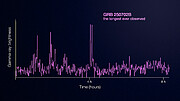
On July 2, 2025, space telescopes monitoring the sky for brief, one-and-done flashes of high-energy light saw something that nobody expected: a gamma-ray burst (GRB) that came back again and again, stretching what is usually a single “burst” lasting seconds to minutes into an all-day event. NASA’s Fermi spacecraft triggered on multiple gamma-ray episodes from the same patch of sky over several hours, and other satellites soon reported compatible detections. Compared to the known population of GRBs that have been studied for decades, this was an outlier beast of a different species.

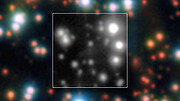
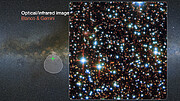
At first, the event’s location near the crowded plane of the Milky Way made it tempting to suspect something closer to home, located in our own Galaxy. But follow-up imaging overturned that assumption. Observations with the Very Large Telescope (VLT) in Chile narrowed down the position and, together with Hubble and JWST, revealed that the transient was coincident with a dusty, irregular host galaxy. The distance is extreme: the light from the explosion began its journey roughly 8 billion years ago. In other words, whatever happened was not a local flare—it was a truly cosmic-scale detonation, or, rather, a string of detonations.

The duration of this event was not the only weird thing about it. Archival data showed that low-energy X-rays were already present almost a day before the main gamma-ray fireworks—an “X-ray precursor” that is hard to reconcile with standard models of GRBs. Meanwhile, the gamma-ray behavior itself looked like a stuttering engine. Fermi detected a sequence of short flares separated by long gaps, collectively implying multi-hour activity from a central engine rather than the single, clean explosion typical of such events.

So, what could power an event that (1) repeats, (2) lasts for hours to a day, and (3) shows X-rays both before and after the gamma-ray fireworks? Two families of ideas have dominated the discussion. One idea keeps it in the GRB family but pushes the engine to extremes. Typical GRBs arise from the death, or collapse, of massive stars, which can produce a narrow, relativistic jet that emits gamma rays. Perhaps some aspect of the collapse, either the stellar type or the nature of the compact remnant(s) left behind could produce a central power source that simply refuses to shut off on normal timescales. The other main idea is an event completely unlike traditional GRBs and instead invokes a star wandering too close to a black hole, being torn apart, and feeding a jet aimed toward Earth. Such phenomena, known as tidal disruption events, were first predicted in the mid-1970s, but only detected twenty-five years later. Currently, we find a handful of these energetic shredding events each month, but what would make this tidal disruption event so different from the previously observed examples? The catch is that each scenario explains part of the puzzle and strains against the rest, leaving GRB 250702B as a genuine classification stress-test for high-energy astrophysics.

NuSTAR catches the engine in the act, days later

NuSTAR is built to detect high-energy X-rays, and in this event, it provided an important piece of forensic evidence. The system stayed restless well after the headline gamma-ray activity. A comprehensive X-ray campaign led by Brendan O’Connor (Instituto de Radioastronomía y Astrofísica, Mexico) combining data from the NuSTAR, Swift, and Chandra satellites found that the X-ray emission faded steeply overall. But, crucially, Swift and NuSTAR continued to detect rapid X-ray flares out to about two days after discovery. That short-timescale variability is difficult to attribute to a simple, smoothly decaying afterglow alone; instead, it points to ongoing, intermittent activity from the central engine long after standard GRB models would expect the fireworks to be over.

NuSTAR’s high-energy X-ray spectrum also helped connect competing interpretations to actual physical constraints. In the analysis jointly led by Gor Oganesyan and Annarita Ierardi (GSSI, Italy), and Elias Kammoun (Caltech, USA), the Swift lower-energy X-ray decline is shown to be extremely rapid over the first days but also shows persistent flaring activity. The NuSTAR high-energy X-ray measurement (taken about ten days after the trigger) is consistent with that same rapid fade. One idea is that this event could be associated with a "micro-tidal disruption event" in which a star was torn apart by a stellar-mass black hole, i.e., a black hole with a mass approximately ten times that of the Sun, rather than traditional tidal disruption events that involve black holes with masses thousands to millions of times that of the Sun. In short, NuSTAR did not just add data to the pot—it anchored the high-energy X-ray behavior that makes the event so hard to explain simply as a standard GRB or a standard tidal disruption event.

Where things stand now is both satisfying and unsettling. GRB 250702B is almost certainly extragalactic, almost certainly powered by a jet, and almost certainly driven by an engine that stays active far longer than a canonical GRB. But whether that engine was a star being shredded by a black hole or an unprecedented variant of a GRB progenitor remains an unanswered question, precisely because the observations pull in both directions. Resolving the origin may require what high-energy astronomers love most: the next strange event, caught early, followed deeply, and watched closely until the power source finally, and unambiguously, goes dark.

Author: Elias Kammoun (Postdoctoral Researcher, Caltech)

Full animation on NASA SVS: https://svs.gsfc.nasa.gov/14916


Wednesday, December 10, 2025

Gemini and Blanco Telescopes Unlock Clues to Origin of Longest Gamma-ray Burst Ever Observed

PR Image noirlab2531a
Artist’s illustration of GRB 250702B

PR Image noirlab2531b
GRB 250702B collage

PR Image noirlab2531c
Field around GRB 250702B

PR Image noirlab2531d
GRB 250702B host galaxy


Videos

Zooming in on GRB 250702B
PR Video GRB-zoom
Zooming in on GRB 250702B

Localizing GRB250802B
PR Video noirlab2531a
Localizing GRB250802B

GRB250802B timescale
PR Video noirlab2531b
GRB250802B timescale


Data acquired with multiple NSF NOIRLab facilities indicate gamma-ray burst lasting over seven hours resides in a massive, extremely dusty galaxy

Astronomers have observed the longest-ever gamma-ray burst — a powerful, extragalactic explosion that lasted over seven hours. Rapid follow-up observations with the U.S. Department of Energy-fabricated Dark Energy Camera and the International Gemini Observatory, funded in part by the U.S. National Science Foundation and operated by NSF NOIRLab, provided crucial information about the possible origin of this extraordinary event and the galaxy that hosts it.

Gamma-ray bursts (GRBs) are among the most powerful explosions in the Universe, second only to the Big Bang. The majority of these bursts are observed to flash and fade within a few seconds to minutes. But on 2 July 2025, astronomers were alerted to a GRB source that was exhibiting repeating bursts and would end up lasting over seven hours. This event, dubbed GRB 250702B, is the longest gamma-ray burst humans have ever witnessed.

GRB 250702B was first identified by NASA’s Fermi Gamma-ray Space Telescope (Fermi). Shortly after space-based telescopes detected the initial bursts in gamma-rays and pinpointed its on-sky location in X-rays, astronomers around the world launched campaigns to observe the event in additional wavelengths of light.

One of the first revelations about this event came when infrared observations acquired by ESO's Very Large Telescope (VLT) established that the source of GRB 250702B is located in a galaxy outside of ours, which until then had remained a question.

Following this, a team of astronomers led by Jonathan Carney, graduate student at the University of North Carolina at Chapel Hill, set out to capture the event’s evolving afterglow, or the fading light emissions that follow the initial, extremely bright flash of gamma-rays. The properties of these emissions can provide clues about the type of event that caused the GRB.

To better understand the nature of this record-breaking event, the team used three of the world’s most powerful ground-based telescopes: the NSF Víctor M. Blanco 4-meter Telescope and the twin 8.1-meter International Gemini Observatory telescopes [1]. This trio observed GRB 250702B starting roughly 15 hours after the first detection until about 18 days later. The team presents their findings in a paper published on 26 November in The Astrophysical Journal Letters.

The Blanco telescope is located in Chile at NSF Cerro Tololo Inter-American Observatory (CTIO), a Program of NSF NOIRLab. The International Gemini Observatory consists of the Gemini North telescope in Hawai‘i and the Gemini South telescope in Chile. It is partly funded by NSF and operated by NSF NOIRLab.

“The ability to rapidly point the Blanco and Gemini telescopes on short notice is crucial to capturing transient events such as gamma-ray bursts,” says Carney. “Without this ability, we would be limited in our understanding of distant events in the dynamic night sky.”

The team used a suite of instruments for their investigation: the NEWFIRM wide-field infrared imager and the 570-megapixel DOE-fabricated Dark Energy Camera (DECam), both mounted on the Blanco telescope, and the Gemini Multi-Object Spectrographs (GMOS) mounted on Gemini North and Gemini South.

Analysis of the observations revealed that GRB 250702B could not be seen in visible light, partly due to interstellar dust in our own Milky Way Galaxy, but more so due to dust in the GRB’s host galaxy. In fact, Gemini North, which provided the only close-to-visible-wavelength detection of the host galaxy, required nearly two hours of observations to capture the faint signal from beneath the swaths of dust.

Carney and his team then combined these data with new observations taken with the Keck I Telescope at W. M. Keck Observatory, the Magellan Baade Telescope, and the Fraunhofer Telescope at Wendelstein Observatory, as well as publicly available data from VLT, NASA’s Hubble Space Telescope (HST), and X-ray and radio observatories. They then compared this robust dataset with theoretical models, which are frameworks that explain the behavior of astronomical phenomena. Models can be used to make predictions that can then be tested against observational data to refine scientists' understanding.

The team’s analysis established that the initial gamma-ray signal likely came from a narrow, high-speed jet of material crashing into the surrounding material, known as a relativistic jet. The analysis also helped characterize the environment around the GRB and the host galaxy overall. They found that there is a large amount of dust surrounding the location of the burst, and that the host galaxy is extremely massive compared to most GRB hosts. The data support a picture in which the GRB source resides in a dense, dusty environment, possibly a thick lane of dust present in the host galaxy along the line-of-sight between Earth and the GRB source. These details about the environment of GRB 250702B provide important constraints on the system that produced the initial outburst of gamma-rays.

Of the roughly 15,000 GRBs observed since the phenomenon was first recognized in 1973, only a half dozen come close to the length of GRB 250702B. Their proposed origins range from the collapse of a blue supergiant star, a tidal disruption event, or a newborn magnetar. GRB 250702B, however, doesn’t fit neatly into any known category.

From the data obtained so far, scientists have a few ideas of possible origin scenarios: (1) a black hole falling into a star that’s been stripped of its hydrogen and is now almost purely helium, (2) a star (or sub-stellar object such as a planet or brown dwarf) being disrupted during a close encounter with a stellar compact object, such as a stellar black hole or a neutron star, in what is known as a micro-tidal disruption event, (3) a star being torn apart as it falls into an intermediate-mass black hole — a type of black hole with a mass ranging from one hundred to one hundred thousand times the mass of our Sun that is believed to exist in abundance, but has so far been very difficult to find. If it is the latter scenario, this would be the first time in history that humans have witnessed a relativistic jet from an intermediate mass black hole in the act of consuming a star.

While more observations are needed to conclusively determine the cause of GRB 250702B, the data acquired so far remain consistent with these novel explanations.

“This work presents a fascinating cosmic archaeology problem in which we’re reconstructing the details of an event that occurred billions of light-years away,” says Carney. “The uncovering of these cosmic mysteries demonstrates how much we are still learning about the Universe's most extreme events and reminds us to keep imagining what might be happening out there.”


Notes

[1] This study uses data obtained from several sources, including:


More information

This research was presented in a paper titled “Optical/infrared observations of the extraordinary GRB 250702B: a highly obscured afterglow in a massive galaxy consistent with multiple possible progenitors” to appear in The Astrophysical Journal Letters. DOI: 10.3847/2041-8213/ae1d67

The team is composed of J. Carney (University of North Carolina at Chapel Hill, USA), I. Andreoni (University of North Carolina at Chapel Hill, USA), B. O'Connor (Carnegie Mellon University, USA), J. Freeburn (University of North Carolina at Chapel Hill, USA), H. Skobe (Carnegie Mellon University, USA), L. Westcott (University of Manchester, UK), M. Busmann (Ludwig Maximilian University of Munich, Germany), A. Palmese (Carnegie Mellon University, USA), X. J. Hall (Carnegie Mellon University, USA), R. Gill (National Autonomous University of Mexico, Mexico/The Open University of Israel, Israel), P. Beniamini (The Open University of Israel, Israel/The George Washington University, USA), E. R. Coughlin (Syracuse University, USA), C. D. Kilpatrick (Northwestern University, USA), A. Anumarlapudi (University of North Carolina at Chapel Hill, USA), N. M. Law (University of North Carolina at Chapel Hill, USA), H. Corbett (University of North Carolina at Chapel Hill, USA), T. Ahumada (California Institute of Technology, USA), P. Chen (Zhejiang University, China), C. Conselice (University of Manchester, UK), G. Damke (NSF NOIRLab, USA), K. K. Das (California Institute of Technology, USA), A. Gal-Yam (Weizmann Institute of Science, Israel), D. Gruen (Ludwig Maximilian University of Munich, Germany/Excellence Cluster ORIGINS, Germany), S. Heathcote (NSF NOIRLab, USA), L. Hu (Carnegie Mellon University, USA), V. Karambelkar (California Institute of Technology, USA), M. Kasliwal (California Institute of Technology, USA), K. Labrie (NSF NOIRLab, USA), D. Pasham (Eureka Scientific, USA/The George Washington University, USA), A. Riffeser, M. Schmidt, K. Sharma, S. Wilke (Ludwig Maximilian University of Munich, Germany), & W. Zang (Center for Astrophysics | Harvard & Smithsonian, USA).

NSF NOIRLab, the U.S. National Science Foundation center for ground-based optical-infrared astronomy, operates the International Gemini Observatory (a facility of NSF, NRC–Canada, ANID–Chile, MCTIC–Brazil, MINCyT–Argentina, and KASI–Republic of Korea), NSF Kitt Peak National Observatory (KPNO), NSF Cerro Tololo Inter-American Observatory (CTIO), the Community Science and Data Center (CSDC), and NSF–DOE Vera C. Rubin Observatory (in cooperation with DOE’s SLAC National Accelerator Laboratory). It is managed by the Association of Universities for Research in Astronomy (AURA) under a cooperative agreement with NSF and is headquartered in Tucson, Arizona.

The scientific community is honored to have the opportunity to conduct astronomical research on I’oligam Du’ag (Kitt Peak) in Arizona, on Maunakea in Hawai‘i, and on Cerro Tololo and Cerro Pachón in Chile. We recognize and acknowledge the very significant cultural role and reverence of I’oligam Du’ag to the Tohono O’odham Nation, and Maunakea to the Kanaka Maoli (Native Hawaiians) community.

The Dark Energy Camera was designed specifically for the Dark Energy Survey (DES). It was funded by the U.S. Department of Energy (DOE) and was built and tested at DOE's Fermilab.


Links


Contacts:

Jonathan Carney
Graduate Student
University of North Carolina at Chapel Hill
Email:
jcarney@unc.edu

Josie Fenske
Public Information Officer
NSF NOIRLab
Email:
josie.fenske@noirlab.edu


Thursday, September 11, 2025

Astronomers spot mysterious gamma-ray explosion, unlike any detected before

PR Image eso2514a
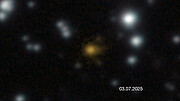
GRB 250702B, an unusually long and repeating gamma-ray burst

PR Image eso2514b
Wider view of the area around the gamma-ray burst GRB 250702B

PR Image eso2514c
Evolution of the gamma-ray burst GRB 250702B


Videos

Zooming into an unusually long and repeating explosion
PR Video eso2514a
Zooming into an unusually long and repeating explosion

Time-lapse of the gamma-ray burst GRB 250702B
PR Video eso2514b
Time-lapse of the gamma-ray burst GRB 250702B


Astronomers have detected an explosion of gamma rays that repeated several times over the course of a day, an event unlike anything ever witnessed before. The source of the powerful radiation was discovered to be outside our galaxy, its location pinpointed by the European Southern Observatory’s Very Large Telescope (VLT). Gamma-ray bursts (GRBs) are the most powerful explosions in the Universe, normally caused by the catastrophic destruction of stars. But no known scenario can completely explain this new GRB, whose true nature remains a mystery.

This GRB is “unlike any other seen in 50-years of GRB observations,” according to Antonio Martin-Carrillo, astronomer at University College Dublin, Ireland, and co-lead author of a study on this signal recently published in The Astrophysical Journal Letters.

GRBs are the most energetic explosions in the Universe. They are produced in catastrophic events like massive stars dying in powerful blasts or being ripped apart by black holes, among other events. They usually last milliseconds to minutes, but this signal — GRB 250702B [1] — lasted about a day. "This is 100-1000 times longer than most GRBs,” says Andrew Levan, astronomer at Radboud University, The Netherlands, and co-lead author of the study.

More importantly, gamma-ray bursts never repeat since the event that produces them is catastrophic,” says Martin-Carrillo. The initial alert about this GRB came on 2 July from NASA’s Fermi Gamma-ray Space Telescope. Fermi detected not one but three bursts from this source over the course of several hours. Retrospectively, it was also discovered that the source had been active almost a day earlier, as seen by the Einstein Probe, an X-ray space telescope mission by the Chinese Academy of Sciences with the European Space Agency (ESA) and the Max Planck Institute for Extraterrestrial Physics. Such a long and repeating GRB has never been seen before

These observations only provided an approximate location for the GRB, which was towards the plane of our galaxy, crowded with stars. Therefore, the team turned to ESO’s VLT to pinpoint the actual source within this area. “Before these observations, the general feeling in the community was that this GRB must have originated from within our galaxy. The VLT fundamentally changed that paradigm,” says Levan, who is also affiliated with the University of Warwick, UK.

Using the VLT’s HAWK-I camera, they found evidence that the source may actually reside in another galaxy. This was later confirmed by the NASA/ESA Hubble Space Telescope. “What we found was considerably more exciting: the fact that this object is extragalactic means that it is considerably more powerful,” says Martin-Carrillo. The size and brightness of the host galaxy suggest it may be located a few billion light-years away, but more data are needed to refine this distance.

The nature of the event that caused this GRB is still unknown. One possible scenario is a massive star collapsing onto itself, releasing vast amounts of energy in the process. “If this is a massive star, it is a collapse unlike anything we have ever witnessed before,” says Levan, as in that case the GRB would have lasted just a few seconds. Alternatively, a star being ripped apart by a black hole could produce a day-long GRB, but to explain other properties of the explosion would require an unusual star being destroyed by an even more unusual black hole. [2]

To learn more about this GRB, the team has been monitoring the aftermath of the explosion with different telescopes and instruments, including the VLT’s X-shooter spectrograph and the James Webb Space Telescope, a joint project of NASA, ESA and the Canadian Space Agency. Finding that this explosion took place in another galaxy will be key to deciphering what caused it. “We are still not sure what produced this, but with this research we have made a huge step forward towards understanding this extremely unusual and exciting object,” says Martin-Carrillo.

Source: ESO/News


Notes

[1] Also known as GRB 250702BDE. GRBs are named with a number denoting the date when they were detected, followed by a letter if more than one burst was found that day. Bursts B, D and E are all linked to the same object.

[2] The authors favour a scenario in which a white dwarf was shredded by a so-called intermediate-mass black hole. A white dwarf is the small, slowly-cooling core that is left behind after a star like our Sun dies. Intermediate-mass black holes are between 100 and 100 000 times more massive than the Sun. Most known black holes have masses significantly greater or lower than that, and intermediate-mass black holes remain a poorly understood type of object.


More information

This research was presented in the paper "The day long, repeating GRB 250702B: A unique extragalactic transient" (doi: https://doi.org/10.3847/2041-8213/adf8e1) published in The Astrophysical Journal Letters.

The team is composed of A. J. Levan (Department of Astrophysics/IMAPP, Radboud University, The Netherlands [Radboud]), A. Martin-Carrillo (School of Physics and Centre for Space Research, University College Dublin, Ireland [UCD]), T. Laskar (Department of Physics & Astronomy, University of Utah, USA), R. A. J. Eyles-Ferris (School of Physics and Astronomy, University of Leicester, UK [Leicester]), A. Sneppen (Niels Bohr Institute, University of Copenhagen [NBI] and The Cosmic Dawn Centre [DAWN], Denmark), M. E. Ravasio (Radboud and INAF-Osservatorio Astronomico di Brera, Italy [INAF-Brera]), J. C. Rastinejad (Center for Interdisciplinary Exploration and Research in Astrophysics [CIERA] and Department of Physics and Astronomy, Northwestern University, USA), J. S. Bright (Astrophysics, Department of Physics, University of Oxford, UK), F. Carotenuto (INAF-Osservatorio Astronomico di Roma, Italy [INAF-Roma]), A. A. Chrimes (European Space Agency [ESA], European Space Research and Technology Centre [ESTEC], The Netherlands, and Radboud), G. Corcoran (UCD), B. P. Gompertz (School of Physics and Astronomy and Institute for Gravitational Wave Astronomy, University of Birmingham, UK [UBham]), P. G. Jonker (Radboud), G. P. Lamb (Astrophysics Research Institute, Liverpool John Moores University, UK), D. B. Malesani (NBI and DAWN), A. Saccardi (Université Paris-Saclay, Université Paris Cité, CEA, CNRS, France), J. Sánchez-Sierras (Radboud), B. Schneider (Aix Marseille Univ., CNRS, CNES, LAM, France [amU]), S. Schulze (CIERA), N. R. Tanvir (Leicester), S. D. Vergani (LUX, Observatoire de Paris, Université PSL, CNRS, Sorbonne Université, France), D. Watson (NIB and DAWN), J. An (National Astronomical Observatories, Chinese Academy of Sciences [NAOC] and School of Astronomy and Space Science, University of Chinese Academy of Sciences, Chinese Academy of Sciences, China), F. E. Bauer (Instituto de Alta Investigación, Universidad de Tarapacá, Chile), S. Campana (INAF-Brera), L. Cotter (UCD), J. N. D. van Dalen (Radboud), V. D’Elia (Space Science Data Center - Agenzia Spaziale Italiana, Italy), M. De Pasquale (MIFT Department, University of Messina, Italy), A. de Ugarte Postigo (amU), Dimple (UBham), D. H. Hartmann (Clemson University, Department of Physics and Astronomy, USA), J. Hjorth (DARK, NIB), L. Izzo (INAF, Osservatorio Astronomico di Capodimonte, Italy and DARK, NIB), P. Jakobsson (Centre for Astrophysics and Cosmology, Science Institute, University of Iceland, Iceland), A. Kumar (Department of Physics, Royal Holloway - University of London, UK), A. Melandri (INAF-Roma), P. O’Brien (Leicester), S. Piranomonte (INAF-Roma), G. Pugliese (Anton Pannekoek Institute of Astronomy, University of Amsterdam, The Netherlands), J. Quirola-Vásquez (Radboud), R. Starling (Leicester), G. Tagliaferri (INAF-Brera), D. Xu (NAOC) and M. E. Wortley (UBham).

The European Southern Observatory (ESO) enables scientists worldwide to discover the secrets of the Universe for the benefit of all. We design, build and operate world-class observatories on the ground — which astronomers use to tackle exciting questions and spread the fascination of astronomy — and promote international collaboration for astronomy. Established as an intergovernmental organisation in 1962, today ESO is supported by 16 Member States (Austria, Belgium, Czechia, Denmark, France, Finland, Germany, Ireland, Italy, the Netherlands, Poland, Portugal, Spain, Sweden, Switzerland and the United Kingdom), along with the host state of Chile and with Australia as a Strategic Partner. ESO’s headquarters and its visitor centre and planetarium, the ESO Supernova, are located close to Munich in Germany, while the Chilean Atacama Desert, a marvellous place with unique conditions to observe the sky, hosts our telescopes. ESO operates three observing sites: La Silla, Paranal and Chajnantor. At Paranal, ESO operates the Very Large Telescope and its Very Large Telescope Interferometer, as well as survey telescopes such as VISTA. Also at Paranal, ESO will host and operate the south array of the Cherenkov Telescope Array Observatory, the world’s largest and most sensitive gamma-ray observatory. Together with international partners, ESO operates ALMA on Chajnantor, a facility that observes the skies in the millimetre and submillimetre range. At Cerro Armazones, near Paranal, we are building “the world’s biggest eye on the sky” — ESO’s Extremely Large Telescope. From our offices in Santiago, Chile we support our operations in the country and engage with Chilean partners and society.


Links


Contacts:

Andrew Levan
Department of Astrophysics, Radboud University
Nijmegen, The Netherlands
Email:
a.levan@astro.ru.nl

Antonio Martin-Carrillo
School of Physics and Centre for Space Research, University College Dublin
Dublin, Ireland
Email:
antonio.martin-carrillo@ucd.ie

Bárbara Ferreira
ESO Media Manager
Garching bei München, Germany
Tel: +49 89 3200 6670
Cell: +49 151 241 664 00
Email:
press@eso.org