Showing posts with label FRB 121102. Show all posts

Thursday, June 09, 2022

Strange Radio Burst Raises New Questions


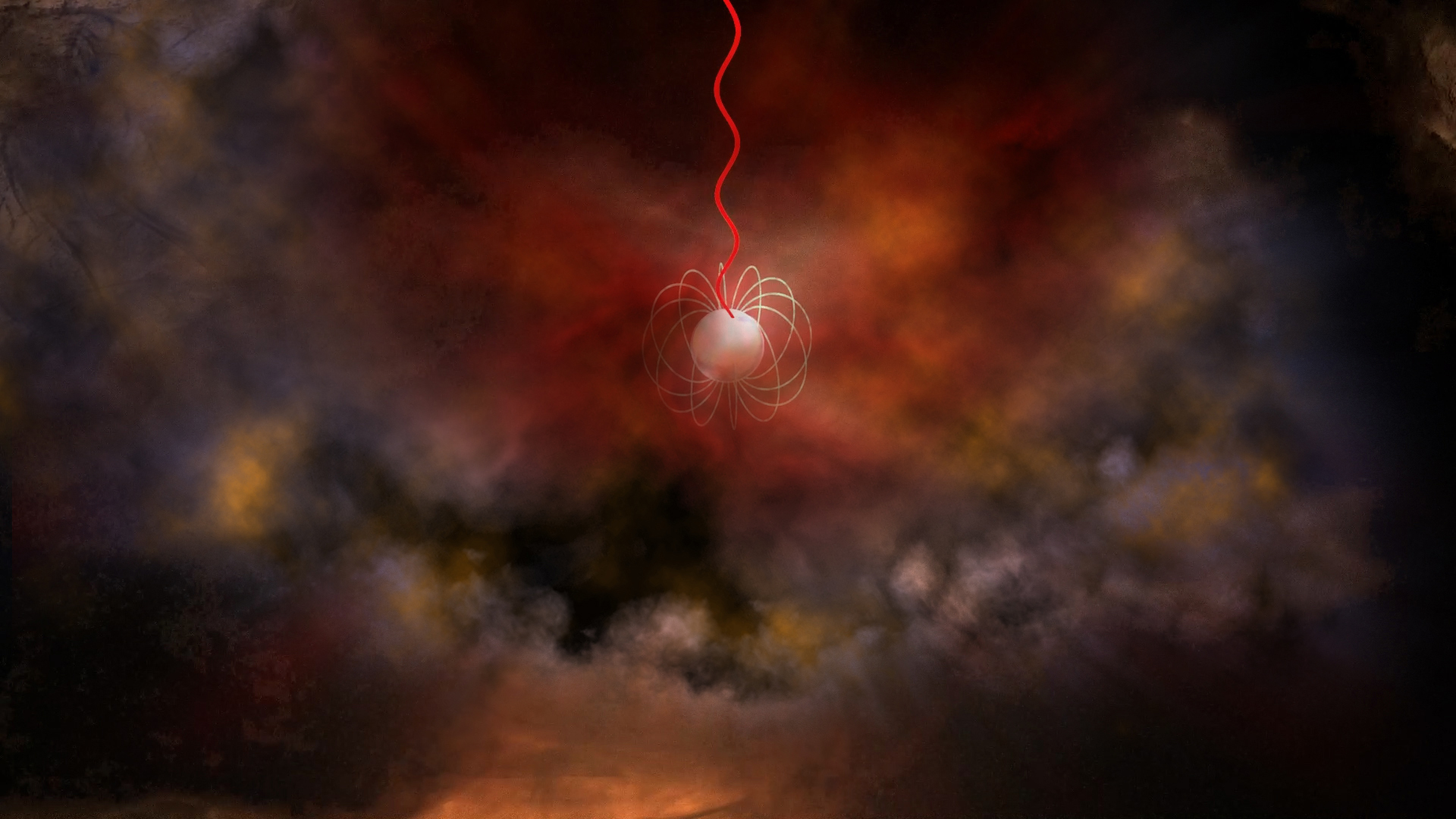
Artist's conception of a neutron star with an ultra-strong magnetic field, called a magnetar, emitting radio waves (red). Magnetars are a leading candidate for what generates Fast Radio Bursts. Credit: Bill Saxton, NRAO/AUI/NSF.Hi-Res File

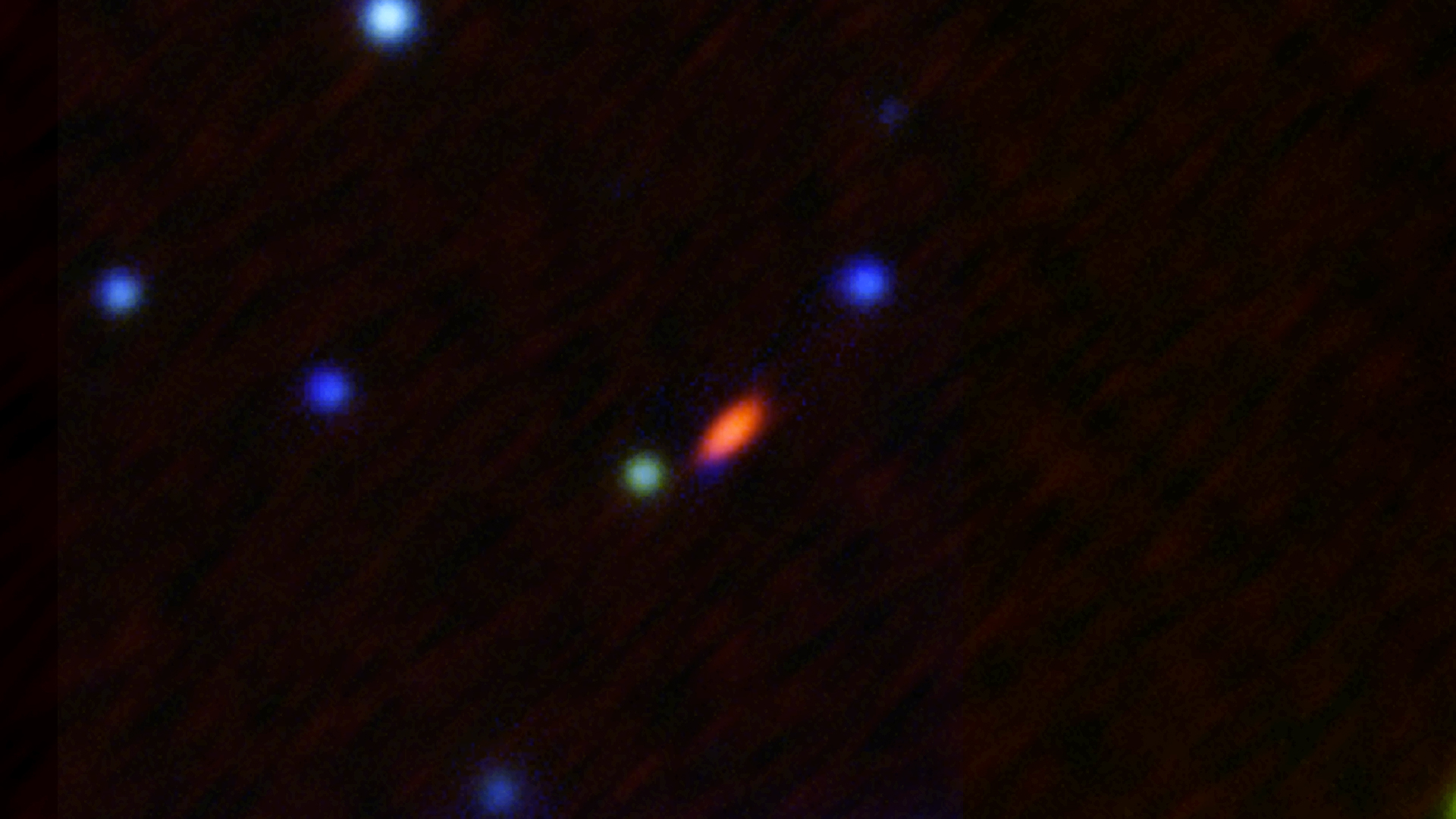
VLA image of Fast Radio Burst FRB 190520 (red), combined with optical image, when the FRB is bursting.
Credit: Niu, et al.; Bill Saxton, NRAO/AUI/NSF; CFHT.
Hi-Res File


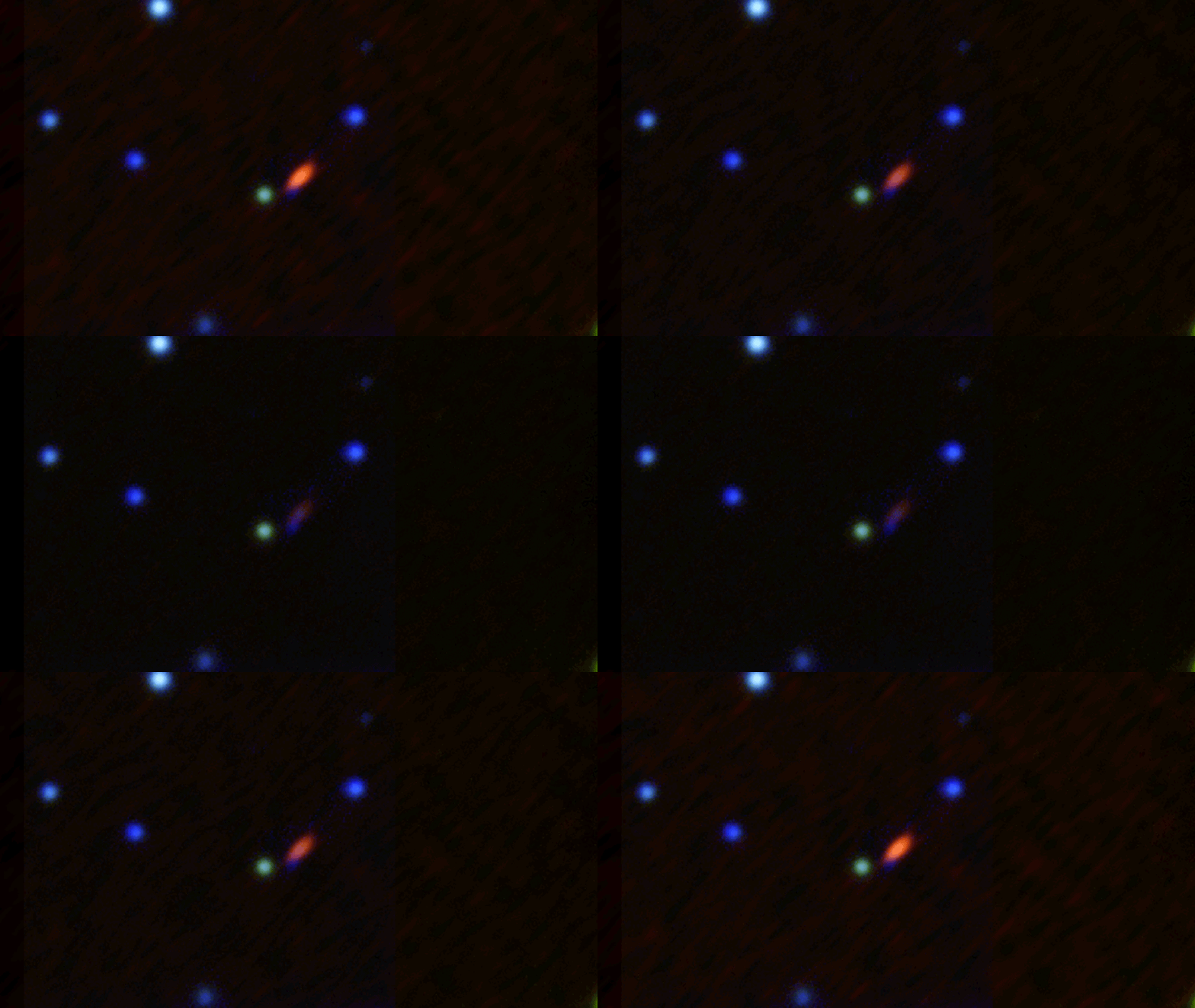
The region of FRB 190520, seen in visible light, with VLA image of the Fast Radio Burst alternating between the object bursting and not bursting. Credit: Niu, et al.; Bill Saxton, NRAO/AUI/NSF; CFHT.
Hi-Res File

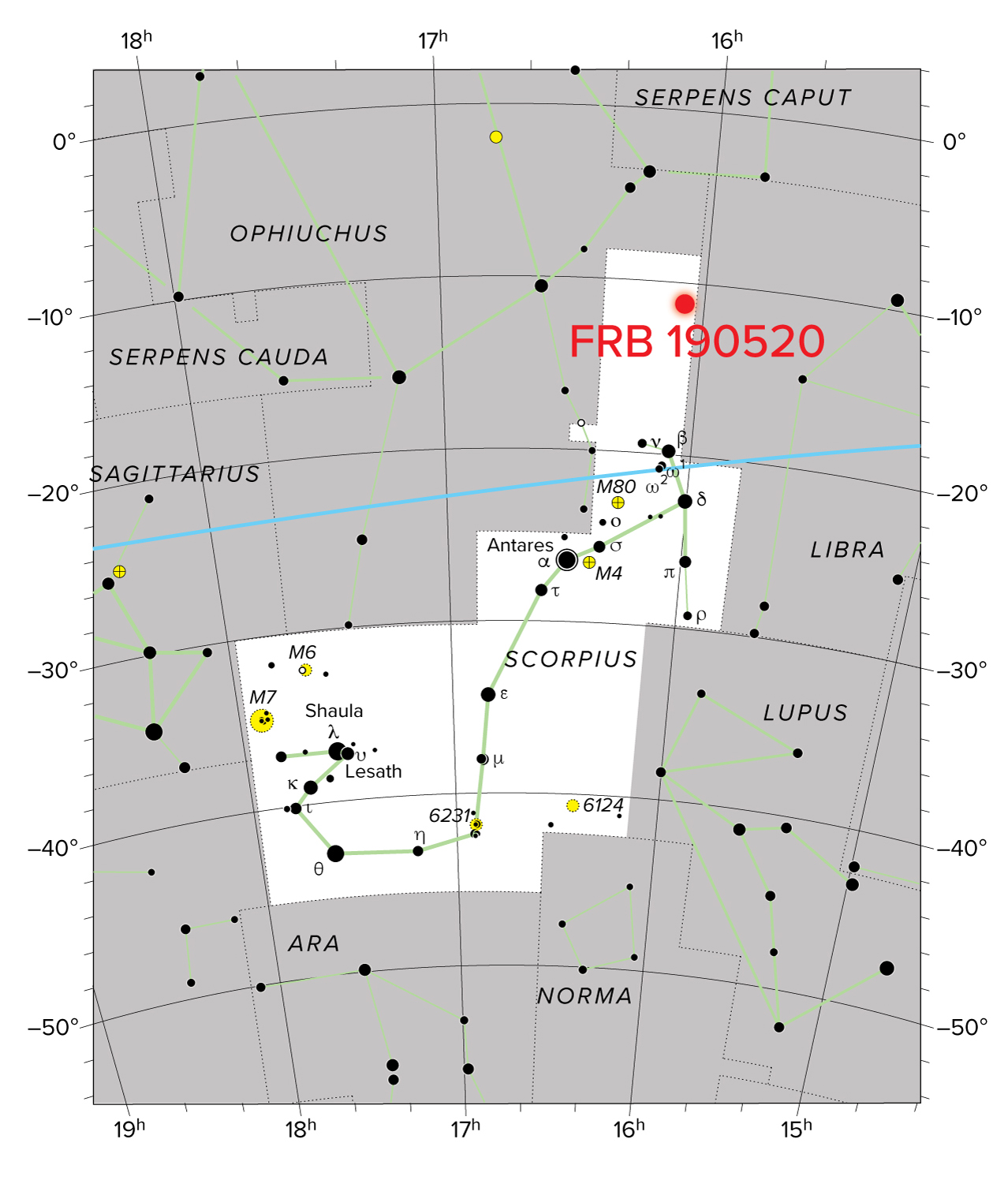
Location of FRB 190520 in the sky.
Credit: Bill Saxton, NRAO/AUI/NSF
. Hi-Res File


Animation of the sequence of events producing the fast radio burst.
Credit: Bill Saxton, NRAO/AUI/NSF


Astronomers have found only the second example of a highly active, repeating Fast Radio Burst (FRB) with a compact source of weaker but persistent radio emission between bursts. The discovery raises new questions about the nature of these mysterious objects and also about their usefulness as tools for studying the nature of intergalactic space. The scientists used the National Science Foundation’s Karl G. Jansky Very Large Array (VLA) and other telescopes to study the object, first discovered in 2019.

The object, called FRB 190520, was found by the Five-hundred-meter Aperture Spherical radio Telescope (FAST) in China. A burst from the object occurred on May 20, 2019, and was found in data from that telescope in November of that year. Follow-up observations with FAST showed that, unlike many other FRBs, it emits frequent, repeating bursts of radio waves.

Observations with the VLA in 2020 pinpointed the object’s location, and that allowed visible-light observations with the Subaru telescope in Hawaii to show that it is in the outskirts of a dwarf galaxy nearly 3 billion light-years from Earth. The VLA observations also found that the object constantly emits weaker radio waves between bursts.

“These characteristics make this one look a lot like the very first FRB whose position was determined — also by the VLA — back in 2016,” said Casey Law, of Caltech. That development was a major breakthrough, providing the first information about the environment and distance of an FRB. However, its combination of repeating bursts and persistent radio emission between bursts, coming from a compact region, set the 2016 object, called FRB 121102, apart from all other known FRBs, until now.

“Now we have two like this, and that brings up some important questions,” Law said. Law is part of an international team of astronomers reporting their findings in the journal Nature.

The differences between FRB 190520 and FRB 121102 and all the others strengthen a possibility suggested earlier that there may be two different kinds of FRBs.

“Are those that repeat different from those that don’t? What about the persistent radio emission — is that common?” said Kshitij Aggarwal, a graduate student at West Virginia University (WVU).

The astronomers suggest that there may be either two different mechanisms producing FRBs or that the objects producing them may act differently at different stages of their evolution. Leading candidates for the sources of FRBs are the superdense neutron stars left over after a massive star explodes as a supernova, or neutron stars with ultra-strong magnetic fields, called magnetars.

One characteristic of FRB 190520 calls into question the usefulness of FRBs as tools for studying the material between them and Earth. Astronomers often analyze the effects of intervening material on the radio waves emitted by distant objects to learn about that tenuous material itself. One such effect occurs when radio waves pass through space that contains free electrons. In that case, higher-frequency waves travel more quickly than lower-frequency waves.

This effect, called dispersion, can be measured to determine the density of electrons in the space between the object and Earth, or, if the electron density is known or assumed, provide a rough estimate of the distance to the object. The effect often is used to make distance estimates to pulsars.

That didn’t work for FRB 190520. An independent measurement of the distance based on the Doppler shift of the galaxy’s light caused by the expansion of the Universe placed the galaxy at nearly 3 billion light-years from Earth. However, the burst’s signal shows an amount of dispersion that ordinarily would indicate a distance of roughly 8 to 9.5 billion light-years.

“This means that there is a lot of material near the FRB that would confuse any attempt to use it to measure the gas between galaxies,” Aggarwal said. “If that’s the case with others, then we can’t count on using FRBs as cosmic yardsticks,” he added.

The astronomers speculated that FRB 190520 may be a “newborn,” still surrounded by dense material ejected by the supernova explosion that left behind the neutron star. As that material eventually dissipates, the dispersion of the burst signals also would decline. Under the “newborn” scenario, they said, the repeating bursts also might be a characteristic of younger FRBs and dwindle with age.

“The FRB field is moving very fast right now and new discoveries are coming out monthly. However, big questions still remain, and this object is giving us challenging clues about those questions,” said Sarah Burke-Spolaor, of WVU.

The National Radio Astronomy Observatory is a facility of the National Science Foundation, operated under cooperative agreement by Associated Universities, Inc.

Media Contact:

Dave Finley, Public Information Officer
(505) 241-9210

dfinley@nrao.edu

Monday, May 02, 2022

A Possible Optical Counterpart to FRB 180916B?


Artist's impression of a fast radio burst from an extremely magnetized stellar remnant — one possible progenitor for these mysterious flashes.  Credit: Sophia Dagnello, NRAO/AUI/NSF


What’s the mechanism behind millisecond-duration bursts of radio energy coming from outer space? A team of astronomers performed a systematic search of optical transients to see if they could match one radio burst with another object, which would help constrain where these bursts come from.

Fantastic, Radiant, Baffling

Fast radio bursts (FRBs) are energetic pulses of radio waves that burst onto the scene in 2007. Their origin is one of the biggest recent mysteries in astronomy. As new telescopes such as the Canadian Hydrogen Intensity Mapping Experiment (CHIME) Telescope in Canada have come online, more FRBs have been found, but even with all of these new sources, we don’t yet know with certainty what causes them. Some FRBs repeat, some have been localized, and a few are accompanied by persistent radio emission. One of the most promising theories is that FRBs are caused by bursts from magnetars — super dense neutron stars that have extremely high magnetic fields — but no one is quite sure.


The distribution of FRBs (orange circles) and astronomical transients (blue circles) in the sky with the position of FRB 180916B and AT2020hur denoted with a red circle.  Credit: Li et al. 2022

Searching for Signals of a Coincident Companion

Though some models predict multiwavelength counterparts to FRBs, only a few have been found. This may be because these counterparts are very faint, have very short durations, or there’s too much of a delay between the FRB and the counterpart for them both to be detected in one observation. Two FRBs have been found to be accompanied by persistent radio emission — FRB 190520B and FRB 121102 (which is located near radio emission consistent with a superluminous supernova) — while FRB 200428 is located coincident with an X-ray burst. These detections of multiwavelength counterparts led to the theory that there may be some connection between FRBs and other transient sources. A team led by Long Li (Nanjing University) decided to see if there are any optical transients that coincide with FRB 180916B, the only known FRB to repeat at regular intervals. What they found may help shed light on the origin of these bursts.

To see if any astronomical transients are coincident with FRB 180916B, the team searched through transients contained in the Open Supernova Catalog (OSC) and the Transient Name Server (TNS), both of which contain supernovae, unidentified transients, and some gamma-ray bursts. They discovered that one unidentified source, AT2020hur, seemed to line up with the location of FRB 180916B. The authors calculate that the probability that the sources are connected is 99.96%, meaning the alignment most likely didn’t happen by chance.

The radio light curves for the FRB and counterpart. Circles represent detections and triangles represent upper limits.
Credit: Li et al. 2022


Mysterious Magnetars or Fantastic Flares?

So what does mean for the origin of FRB 180916B? The authors postulate that the FRB could be caused by a flaring magnetar, while the optical counterpart comes from the afterglow of one or more giant flares emitted by that magnetar. However, the authors find this scenario unlikely because the energy of the flares would have to be much larger than what is typical for giant flares. In addition, there’s a lot of fine-tuning and coincidences required for this model to work. Another possibility is that the optical counterpart could come from two or more optical flares that originated from the source of the FRB, which would make sense because the transient is detected during one of the emission windows of FRB 180916B.

Though the possibility of FRBs having optical counterparts is exciting and could help us solve the mystery of these bursts, more observations of FRBs and their optical counterparts are needed to better understand what processes may be at work in these systems.

Citation

“AT2020hur: A Possible Optical Counterpart of FRB 180916B,” Long Li et al 2022 ApJ 929 139. doi:10.3847/1538-4357/ac5d5a

Wednesday, February 10, 2021

Discovery of a Single Fast Radio Burst’s Home Galaxy Wins Prestigious Award

The milky way galaxy stretches above the core group of csiro’s australian square kilometre array pathfinder (askap) radio telescope  Credit: csiro/alex cherney 

Maunakea, Hawaii – A historic feat in successfully zeroing in on the precise location of a non-repeating fast radio burst has earned the highest recognition from the American Association for the Advancement of Science (AAAS).

The international team that made the breakthrough discovery has won the prestigious 2020 AAAS Newcomb Cleveland Prize, which goes to the most impactful research paper published in the journal Science.

“Given the robust research AAAS publishes across a variety of scientific fields, it’s a great honor to have this work selected for the Newcomb Cleveland Prize,” says W. M. Keck Observatory Chief Scientist John O’Meara, a co-author of the study. “There was a global team of astronomers involved in this work, and it’s wonderful to see such a large collaboration earn this distinction for an exciting science result.”

AAAS made the announcement today at its 187th AAAS Annual Meeting; authors will receive the award tomorrow, February 10, 2021, during a virtual ceremony.

The winning paper, “A single fast radio burst localized to a massive galaxy at cosmological distance,” was published in Science on August 9, 2019 and includes key data obtained using Keck Observatory on Maunakea in Hawaiʻi.

“Keck’s world-leading instrument and the nimbleness of its Target of Opportunity program let us measure the galaxy’s distance within hours after the fast radio burst was localized,” says co-author J. Xavier Prochaska of University of California, Santa Cruz, who coordinated the team that used the Keck Cosmic Web Imager on the Keck II telescope to measure the distance of the FRB’s home.

M. Keck Observatory Chief Scientist John O’Meara (left) and Professor J. Xavier Prochaska of UC Santa Cruz (right) are among the authors awarded the prestigious 2020 AAAS Newcomb Cleveland Prize.

They traced it back to a galaxy called DES J214425.25−405400.81, located 3.6 billion light-years away from Earth.

FRBs are extremely bright, powerful flashes of radio waves that disappear in the blink of an eye, lasting less than a millisecond. This makes it a challenge detecting these signals, let alone pinpointing their source to then accurately measure their distance.

To catch one, the team, led by Keith Bannister of the Commonwealth Scientific and Industrial Research Organization (CSIRO), developed a new detection method using the Australian Square Kilometre Array Pathfinder (ASKAP) radio telescope, which consists of an array of 36 dish antennas. Because they’re spread across about 4,000 square meters, FRB 180924’s radio waves traveled to each antenna at very slightly different times, just a fraction of a billionth of a second. Bannister’s team was able to replay the data from each dish and triangulate the FRBs source. Follow-up observations using Keck Observatory as well as the Very Large Telescope (VLT) and Gemini South, both in Chile, then revealed the burst’s birthplace.

Astronomers can now further probe and characterize its host galaxy to investigate what might have generated the intensely energetic FRB.

The cause of these objects has been a mystery since they were first discovered in 2007. The origin of one other FRB – named FRB 121102 – was discovered in 2017; that event was a repeating burst, flashing intermittently in the same spot in the sky.

Bannister and his team’s award-winning discovery is the first one-and-done deep-space radio signal to have its location characterized; the success of their technique paves the way for finding more non-repeating FRBs, and perhaps lead to an explanation as to what exactly powers these brilliant radio flare-ups.

Artist’s impression of CSIRO’s Australian Square Kilometre Array Pathfinder (ASKAP) radio telescope finding a fast radio burst and determining its precise location. The W. M. Keck Observatory, Very Large Telescope, and Gemini South telescopes joined ASKAP with follow-up optical observations to image the host galaxy. Credit: CSIRO/Andrew Howells

“Fast radio bursts are extremely short extragalactic events — that is, they originate in a galaxy far, far away — and identifying the exact signal source of one is like looking for the proverbial needle in a haystack,” said Holden Thorp, editor-in-chief of Science and chair of the Newcomb Cleveland Prize Selection Committee. “The methods outlined in this study will allow other teams to determine the astronomical origins of more FRBs and in turn, perhaps the elusive nature of their sources.”

The paper was chosen out of 687 papers published in the Research Articles or Reports sections of Science between June 2019 and May 2020. The AAAS has been awarding the Newcomb Cleveland Prize annually since 1923; winners receive a medal and a $25,000 prize.


About KCWI

The Keck Cosmic Web Imager (KCWI) is designed to provide visible band, integral field spectroscopy with moderate to high spectral resolution formats and excellent sky-subtraction. The astronomical seeing and large aperture of the telescope will enable studies of the connection between galaxies and the gas in their dark matter halos, stellar relics, star clusters, and lensed galaxies. Support for this project was provided by The Heising-Simons Foundation, Gordon and Betty Moore Foundation, Mt. Cuba Astronomical Foundation, and other Friends of Keck Observatory.


About W. M. Keck Observatory

The W. M. Keck Observatory telescopes are among the most scientifically productive on Earth. The two 10-meter optical/infrared telescopes on the summit of Maunakea on the Island of Hawaii feature a suite of advanced instruments including imagers, multi-object spectrographs, high-resolution spectrographs, integral-field spectrometers, and world-leading laser guide star adaptive optics systems. Some of the data presented herein were obtained at Keck Observatory, which is a private 501(c) 3 non-profit organization operated as a scientific partnership among the California Institute of Technology, the University of California, and the National Aeronautics and Space Administration. The Observatory was made possible by the generous financial support of the W. M. Keck Foundation.The authors wish to recognize and acknowledge the very significant cultural role and reverence that the summit of Maunakea has always had within the Native Hawaiian community. We are most fortunate to have the opportunity to conduct observations from this mountain.


Thursday, July 04, 2019

Fast Radio Burst Pinpointed to Distant Galaxy

Owens Valley Radio Observatory, together with w. m. keck observatory, is providing new clues in an ongoing cosmic mystery. Credit: Caltech/Ovro/G. Hallinan

Maunakea, Hawaii – Fast radio bursts (FRBs) are among the most enigmatic and powerful events in the cosmos. Around 80 of these events—intensely bright millisecond-long bursts of radio waves coming from beyond our galaxy—have been witnessed so far but their causes remain unknown.
In a rare feat, researchers at Caltech’s Owens Valley Radio Observatory (OVRO) have now caught a new burst, called FRB 190523, and, together with the W. M. Keck Observatory in Hawaii, have pinpointed its origins to a galaxy 7.9 billion light-years away. Identifying the galaxies from which these radio bursts erupt is a critical step toward solving the mystery of what triggers them.

Finding the host galaxies of FRBs is not easy. Before this new discovery, only one other burst, called FRB 121102, had been localized to a host galaxy. FRB 121102 was reported in 2014 and then later, in 2017, was pinpointed to a galaxy lying 3 billion light-years away. Recently, a second localized FRB was announced on June 27, 2019. Called FRB 180924, this burst was discovered by a team using the Australian Square Kilometer Array Pathfinder and traced to a galaxy about 4 billion light-years away.
FRB 121102 was easiest to find because it continues to burst every few weeks. Most FRBs, however—including the Australian and OVRO finds—just go off once, making the job of finding their host galaxies harder.

“Finding the locations of the one-off FRBs is challenging because it requires a radio telescope that can both discover these extremely short events and locate them with the resolving power of a mile-wide radio dish,” says Vikram Ravi, a new assistant professor of astronomy at Caltech who works with the radio telescopes at OVRO, which is situated east of the Sierra Nevada mountains in California.

The team then conducted follow-up observations using Keck Observatory’s Low Resolution Imaging Spectrometer (LRIS) to determine the properties of FRB 190523’s host galaxy.

The LRIS data revealed that the host galaxy for FRB 190523 is similar to our Milky Way. This is a surprise because the previously located FRB 121102 originates from a dwarf galaxy that is forming stars more than a hundred times faster than the Milky Way.

“This finding tells us that every galaxy, even a run-of-the-mill galaxy like our Milky Way, can generate an FRB,” says Ravi.

The discovery also suggests that a leading theory for what causes FRBs—the eruption of plasma from young, highly magnetic neutron stars, or magnetars—may need to be rethought.

“The theory that FRBs come from magnetars was developed in part because the earlier FRB 121102 came from an active star-forming environment, where young magnetars can be formed in the supernovae of massive stars,” says Ravi. “But the host galaxy of FRB 190523 is more mellow in comparison. “

The Deep Synoptic Array ten-antenna prototype (DSA-10) searches for fast radio bursts within a sky-area the size of 150 full moons (left). Within this area, the DSA-10 can locate these bursts with immense resolving power, isolating them to regions containing just one galaxy (middle). This feat was achieved for the fast radio burst called FRB 190523, detected by DSA-10 on May 23, 2019. The right panel shows the time profile of the burst above its radio spectrum. Credit: Caltech/OVRO/V. Ravi 

Ultimately, to solve the mystery of FRBs, astronomers hope to uncover more examples of their host galaxies.  

“With the full Deep Synoptic Array, we are going to find and localize FRBs every few days,” says Gregg Hallinan, the director of OVRO and a professor of astronomy at Caltech. “This is an exciting time for FRB discoveries.”

“We’re very excited about the new capabilities to find these enigmatic bursts and we look forward to continuing to provide the critical follow-up data that tell us how distant these objects are and what environments they live in,” says John O’Meara, chief scientist at Keck Observatory.

The researchers also say that FRBs can be used to study the amount and distribution of matter in our universe, which will tell us more about the environments in which galaxies form and evolve. As radio waves from FRBs head toward Earth, intervening matter causes some of the wavelengths to travel faster than others; the wavelengths become dispersed in the same way that a prism spreads apart light into a rainbow. The amount of dispersion tells astronomers exactly how much matter there is between the FRB sources and Earth. 

“Most matter in the universe is diffuse, hot, and outside of galaxies,” says Ravi. “This state of matter, although not ‘dark,’ is difficult to observe directly. However, its effects are clearly imprinted on every FRB, including the one we detected at such a great distance.” 

The Nature study, titled, “A fast radio burst localized to a massive galaxy,” was funded by NSF and Caltech. Other Caltech authors include: Morgan Catha, electronics engineer at OVRO; Larry D’Addario, system engineer; George Djorgovski, professor of astronomy; Richard Hobbs, software developer at OVRO; Jonathon Kocz, digital research engineer; Shri Kulkarni, the George Ellery Hale Professor of Astronomy and Planetary Science; Jun Shi, postdoctoral scholar; Harish Vedantham, a former postdoctoral scholar now at ASTRON, the Netherlands Institute for Radio Astronomy; Sandy Weinreb, visiting associate in astronomy; and David Woody, assistant director of OVRO.


About LRIS

The Low Resolution Imaging Spectrometer (LRIS) is a very versatile visible-wavelength imaging and spectroscopy instrument commissioned in 1993 and operating at the Cassegrain focus of Keck I. Since it has been commissioned it has seen two major upgrades to further enhance its capabilities: addition of a second, blue arm optimized for shorter wavelengths of light; and the installation of detectors that are much more sensitive at the longest (red)wavelengths. Each arm is optimized for the wavelengths it covers. This large range of wavelength coverage, combined with the instrument’s high sensitivity, allows the study of everything from comets (which have interesting features in the ultraviolet part of the spectrum), to the blue light from star formation, to the red light of very distant objects. LRIS also records the spectra of up to 50 objects simultaneously, especially useful for studies of clusters of galaxies in the most distant reaches, and earliest times, of the universe.  LRIS was used in observing distant supernovae by astronomers who received the Nobel Prize in Physics in2011 for research determining that the universe was speeding up in its expansion.


About W.M. Keck Observatory

The W. M. Keck Observatory telescopes are the most scientifically productive on Earth. The two, 10-meter optical/infrared telescopes atop Maunakea on the Island of Hawaii feature a suite of advanced instruments including imagers, multi-object spectrographs, high-resolution spectrographs, integral-field spectrometers, and world-leading laser guide star adaptive optics systems. The data presented herein were obtained at the W. M. Keck Observatory, which is operated as a scientific partnership among the California Institute of Technology, the University of California, and the National Aeronautics and Space Administration. The Observatory was made possible by the generous financial support of the W. M. Keck Foundation. The authors recognize and acknowledge the very significant cultural role that the summit of Maunakea has always had within the Native Hawaiian community. We are most fortunate to have the opportunity to conduct observations from this mountain.


Thursday, January 12, 2017

Exploring a fast radio burst in three dimensions

Gemini composite image of the field around FRB 121102 (indicated). The dwarf host galaxy was imaged, and spectroscopy performed, using the Gemini Multi-Object Spectrograph (GMOS) on the Gemini North telescope on Maunakea in Hawai'i. Data was obtained on October 24-25 and November 2, 2016. Image Credit: Gemini Observatory/AURA/NSF/NRC. Full resolution TIFF/JPEG

Video animation (zoom-in) featuring Gemini Observatory optical imaging of FRB 121102 and surrounding field, ending with a radio flash based on NRAO radio data. Credit: Gemini Observatory/AURA/NRC/NSF/NRAO.  Download Video: Low Res MP4 (6.4mb) | High Res MP4 (58.1 MB) 


Gemini Probes Distant Host of Enigmatic Radio Bursts

Gemini Observatory provides critical rapid follow up observations of a Fast Radio Burst – one of modern astronomy's greatest enigmas. These observations provide the first details on a burst's distant extragalactic host. 

Fast Radio Bursts (FRBs), sudden rapid explosions of energy from space, have challenged astronomers since their discovery in 2007. Typically lasting only a few milliseconds, many questions remain, including what powers these bursts, their distance beyond our galaxy, and what their host galaxies might look like. 

"Now, thanks to deep Gemini observations, we know that at least one of these FRBs originated in a discrete source within a distant dwarf galaxy located some three billion light-years beyond our Milky Way Galaxy," said Shriharsh Tendulkar of McGill University in Montreal, Canada. 

Tendulkar and an international team of astronomers presented the results today at the 229th meeting of the American Astronomical Society in Grapevine, Texas. The characterization of the host galaxy was published in The Astrophysical Journal Letters, and accompanied the research team’s results on a campaign to precisely locate the FRB, published in the journal Nature. 

The story began with the detection of a burst denoted FRB 121102 which was discovered in November of 2012 at the Arecibo Observatory in Puerto Rico. However, unlike the other 17 known FRBs, this one repeated itself and allowed astronomers to watch for it using the National Science Foundation's Karl G. Jansky Very Large Array (VLA). The VLA radio telescope, composed of 27 antennas in New Mexico, has the ability to see the fine detail necessary to precisely determine the object's location in the sky. 

In 83 hours of observing time over six months in 2016, the VLA detected nine bursts from FRB 121102. "For a long time, we came up empty, then got a string of bursts that gave us exactly what we needed," said Casey Law, of the University of California at Berkeley. 

"The VLA data allowed us to narrow down the position very accurately," said Sarah Burke-Spolaor, of the National Radio Astronomy Observatory (NRAO) and West Virginia University. 

"Once we were able to accurately pinpoint the burst’s location in the two-dimensional sky we enlisted the 8-meter Gemini North telescope on Maunakea in Hawai‘i to characterize the corresponding host galaxy," said Paul Scholz formerly of McGill University and now with the National Research Council of Canada (NRC). "The Gemini observations did that, and for the first time with an FRB, left no doubt about its origin." 

"The host galaxy for this FRB appears to be a very humble and unassuming dwarf galaxy, which is only about 1% of the mass or our Milky Way Galaxy," said Tendulkar, who adds that Gemini not only imaged the galaxy, but obtained a spectrum which characterized the galaxy and provided an estimate of its redshift (velocity away from us due to the expansion of the Universe) and thus its distance. "This really gave us a three dimensional lock on the home of this FRB." 

"It is surprising that the host would be a dwarf galaxy," adds Tendulkar. "One would generally expect most FRBs to come from large galaxies which have the largest numbers of stars and neutron stars. Neutron stars – remnants of massive stars – are among the top candidates to explain FRBs. 

Tendulkar notes that this dwarf galaxy has fewer stars, but is forming them at a high rate, which may suggest that FRBs are linked to younger neutron stars. Two other classes of extreme events – long duration gamma-ray bursts and superluminous supernovae – frequently occur in dwarf galaxies, as well. "This discovery may hint at links between FRBs and those two kinds of events," suggests Tendulkar. 

"The collaboration of Gemini working with radio telescopes around the world, each looking at the Universe in such different ways, is what allowed us to make this breakthrough," said Shami Chatterjee, of Cornell University. "The simple fact that we have uncovered an extragalactic host for a fast radio burst is a huge advance in our understanding," he added. 

"This impressive result shows the power of several telescopes working in concert – first detecting the radio burst and then precisely locating and beginning to characterize the emitting source," said Phil Puxley, a program director at the National Science Foundation that funds the VLA, Very Long Baseline Array (VLBA), Gemini and Arecibo observatories. "It will be exciting to collect more data and better understand the nature of these radio bursts." 

"FRBs are an exciting new area in astrophysics and the CHIME telescope at DRAO is ideal for detecting large numbers of them across the whole sky," says Sean Dougherty, Director of the National Research Council of Canada (NRC) Dominion Radio Astrophysical Observatory (DRAO). In addition to funding a significant portion of Gemini, NRC hosts the Canadian Hydrogen Intensity Mapping Experiment (CHIME) which is an interferometric radio telescope under construction at DRAO in British Columbia. CHIME will survey half the sky each day in search of radio transients.


Contacts:

  • Peter Michaud
    Gemini Observatory
    Hilo, Hawai‘i
    Email:
    pmichaud@gemini.edu
    Cell: (808) 936-6643

Thursday, January 05, 2017

Home Galaxy of a Fast Radio Burst Identified

A number of radio telescopes weere used within the European VLBI Network (EVN) to observe FRB 121102 (Artist’s impression).


 For the first time astronomers have exactly pinpointed the location of a "fast radio burst" - a type of short-duration radio flash of unknown astrophysical origin - and have used this to identify its home galaxy. The galaxy, located over 3 billion light years away, is small, a so-called dwarf galaxy, and very different to our own Milky Way. Also, a persistent, compact radio source is close to the source of the bursts, which provides important insights into its astrophysical origin. The results from an international team, including Laura Spitler from the Max-Planck-Institute for Radio Astronomy in Bonn, Germany, appear today in three publications in Nature and the Astrophysical Journal Letters.

Fast Radio Bursts (FRBs) are visible for only a fraction of a second, and have puzzled astronomers since their discovery a decade ago. Precise localization of an FRB requires radio telescopes separated by large distances, which allow high resolution images to be made when these telescopes are used in combination with each other. Such follow-up observations were made possible with the first discovery of a repeating source of fast radio bursts, FRB 121102, using the 305-m Arecibo Radio Telescope in Puerto Rico, USA.

Prior to this discovery, astronomers had only indirect evidence that fast radio bursts come from far outside our Milky Way galaxy, because poor localization has prevented them from uniquely identifying their galaxy of origin. The new finding is critical because it has also allowed astronomers to precisely measure the distance to the source, and hence how much energy it is producing.

The Very Large Array in New Mexico, USA detected a total of nine radio bursts from FRB 121102. This determined its sky position to a fraction of an arc second, over 200 times more precise than previous measurements. “Near this position, astronomers found both steady radio and optical sources, which pointed the way to the galaxy hosting the FRB,” says Shami Chatterjee from Cornell University, the first author of the paper in “Nature”.

The team was able to zoom-in on the radio sources with a factor of 10 more precision using the Arecibo Radio Telescope and the European VLBI Network (EVN), which links telescopes spread across the world. "With a bit of luck, we were able to detect bursts from FRB 121102 with the EVN and now we know that the origin of the bursts is right on top of the persistent radio source", says Benito Marcote from JIVE in the Netherlands. The 100-m radio telescope in Effelsberg, Germany, is the largest and most sensitive member of the EVN. "Bursts from this source are faint, and Effelsberg played a key role in making this discovery possible," says Laura Spitler, postdoctoral researcher at the Max-Planck-Institute for Radio Astronomy (MPIfR), who discovered FRB 121102.

The team used one of the world's largest optical telescopes, the 8-m Gemini North on Mauna Kea in Hawaii, to discover that the bursts originate from a host galaxy, and use its measured spectrum to obtain a redshift value which places the source at a whopping distance of over 3 billion light-years. "This gives us incontrovertible confirmation that this FRB originates very deep in extragalactic space,” says co-author Cees Bassa (ASTRON). Though the mystery of the FRB’s distance is now solved, astronomers have a new puzzle on their hands. The galaxy hosting the FRB is surprisingly small - a so-called dwarf galaxy.

The fact that FRB 121102 is hosted by a dwarf galaxy may be a vital clue to its physical nature. Such galaxies contain gas that is relatively pristine compared to that found in the Milky Way. "The conditions in this dwarf galaxy are such that it may be possible to form much more massive stars than in the Milky Way, and perhaps the source of the FRB bursts is from the collapsed remnant of such a star," suggests co-author Jason Hessels (ASTRON, University of Amsterdam).

Alternatively, astronomers are considering a very different hypothesis in which the FRB bursts are generated in the vicinity of a massive black hole that is swallowing surrounding gas, a so-called active galactic nucleus.

To try and differentiate between these two scenarios, astronomers are continuing to study FRB 121102 using the world's premier radio, optical, X-ray and gamma-ray telescopes. "For example, if we can find a periodicity to the arrival of the bursts, then we will have strong evidence that it originates from a rotating neutron star", says Laura Spitler.

Deciphering the origin of the FRBs will also depend on localizing more such sources, and astronomers are debating whether all FRBs detected to date are of a similar physical origin or whether there are multiple classes of this new cosmic phenomenon.


The 100-m Effelsberg Radio Telescope of the Max Planck Institute for Radio Astronomy is located in a valley approximately 40 kilometers southwest of Bonn, Germany.

The European VLBI Network (EVN) is a collaboration of the major radio astronomical institutes in Europe, Asia and South Africa and performs high angular resolution observations of cosmic radio sources.

The 305-m William E. Gordon Telescope of the Arecibo Observatory is located close to Arecibo in Puerto Rico, USA.

The Karl G. Jansky Very Large Array consists of 27 radio antennas in a Y-shaped configuration on the Plains of San Agustin fifty miles west of Socorro, New Mexico, USA. Each antenna is 25 meters (82 feet) in diameter.


Local Contact

Dr. Laura Spitler
Phone:+48 228 525-314
Email: lspitler@mpifr-bonn.mpg.de
Max-Planck-Institut für Radioastronomie, Bonn

Prof. Dr. Michael Kramer
Direktor und Leiter der Forschungsabteilung "Radioastronomische Fundamentalphysik"
Phone:+49 228 525-278
Email: mkramer@mpifr-bonn.mpg.de
Max-Planck-Institut für Radioastronomie, Bonn

Dr. Norbert Junkes
Press and Public Outreach
Phone:+49 228 525-399
Email: njunkes@mpifr-bonn.mpg.de

Max-Planck-Institut für Radioastronomie, Bonn


Original Paper  

A direct localization of a fast radio burst and its host
S. Chatterjee et al., Nature, 05 January 2017.

The host galaxy and redshift of the repeating fast radio burst 121102
S. P. Tendulkar et al., The Astrophysical Journal Letters, Volume 834, Number 2 (January 04, 2017)

The repeating fast radio burst 121102 as seen on milliarcsecond angular scales
B. Marcote et al., The Astrophysical Journal Letters, Volume 834, Number 2 (January 04, 2017)


Links

Mysterious Cosmic Radio Bursts found to Repeat
MPIfR Press Release, March 02, 2016 (Spitler et al. 2016, Nature 531, 202-205)

Radio-burst discovery deepens astrophysics mystery
MPIfR Press Release, July 10, 2014 (Spitler et al. 2014, ApJ 790, 101)

Radioastro­nomische Fundamental­physik
Research Department "Fundamental Physics in Radio Astronomy" at MPIfR, Bonn, Germany

Radio Telescope Effelsberg
Effelsberg Radio Telescope

EVN
European VLBI Network

Arecibo
Arecibo Radio Observatory

VLA
Karl G. Jansky Very Large Array (VLA)

ASTRON
Netherlands Institute for Radio Astronomy (ASTRON), Dwingeloo, The Netherlands

JIVE
Joint Institute for VLBI in Europe (JIVE)

GEMINI
GEMINI Observatory, Hawaii & Chile


Tuesday, July 15, 2014

Radio-burst discovery deepens astrophysics mystery

 
Optical sky image of the area in the constellation Auriga where the fast radio burst FRB 121102 has been detected. The position of the burst, between the old supernova remnant S147 (left) and the star formation region IC 410 (right) is marked with a green circle. The burst appears to originate from much deeper in space, far beyond our galaxy. © Rogelio Bernal Andreo (DeepSkyColors.com)

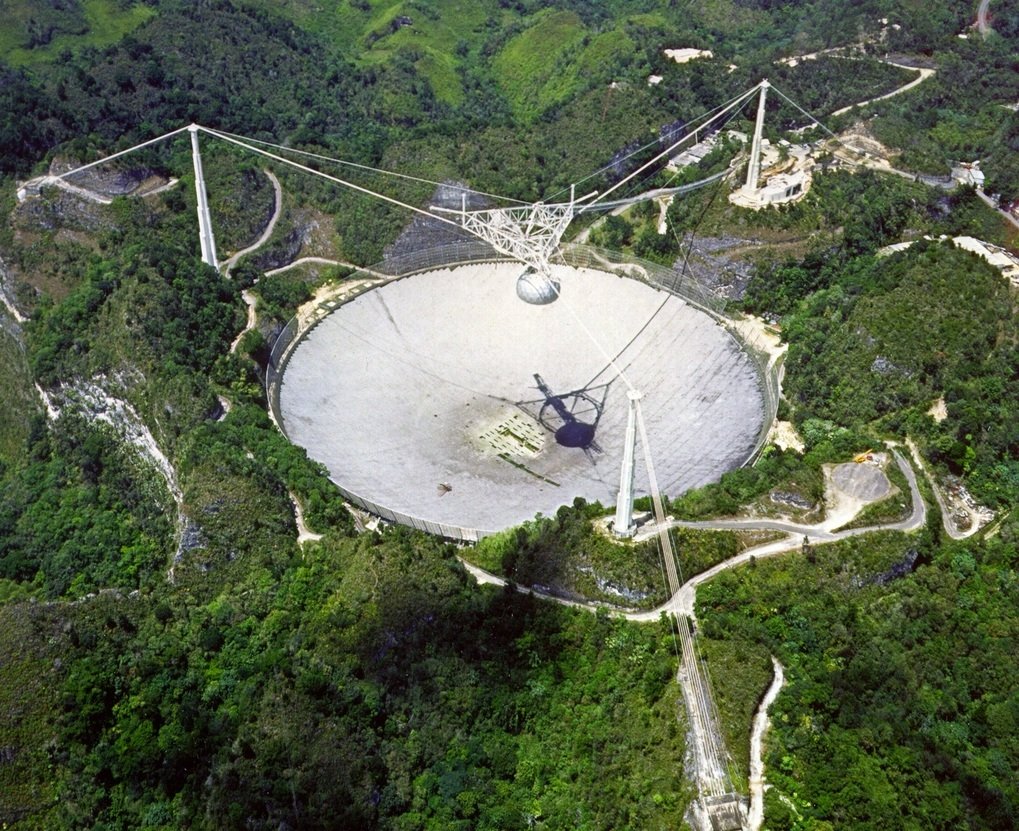
Arecibo 305 m radio telescope, located in a natural valley in Puerto Rico. © NAIC

Newly detected short radio pulse appears to come from far beyond our galaxy

The discovery of a split-second burst of radio waves using the Arecibo radio telescope in Puerto Rico provides important new evidence of mysterious pulses that appear to come from deep in outer space.
The findings by an international team of astronomers led by Laura Spitler from the Max Planck Institute for Radio Astronomy in Bonn, Germany are published on July 10 in the online issue of The Astrophysical Journal. They mark the first time that a so-called "fast radio burst" has been detected in the Northern hemisphere of the sky

Fast radio bursts (FRBs) are bright flashes of radio waves that last only a few thousandths of a second. Scientists using the Parkes Observatory in Australia have recorded such events for the first time, but the lack of any similar findings by other facilities led to speculation that the Australian instrument might have been picking up signals originating from sources on or near Earth. The discovery at Arecibo is the first detection of a fast radio burst using an instrument other than the Parkes radio telescope. The position of the radio burst is in the direction of the constellation Auriga in the Northern sky.

"There are only seven bursts every minute somewhere in the sky on average, so you have to be pretty lucky to have your telescope pointed in the right place at the right time", says Laura Spitler from Max Planck Institute for Radio Astronomy (MPIfR) in Bonn, the lead author of the paper. "The characteristics of the burst seen by the Arecibo telescope, as well as how often we expect to catch one, are consistent with the characteristics of the previously observed bursts from Parkes."

"Our result is important because it eliminates any doubt that these radio bursts are truly of cosmic origin," continues Victoria Kaspi, an astrophysics professor at McGill University in Montreal and Principal Investigator for the pulsar-survey project that detected this fast radio burst. "The radio waves show every sign of having come from far outside our galaxy – a really exciting prospect."

Exactly what may be causing such radio bursts represents a major new enigma for astrophysicists.  Possibilities include a range of exotic astrophysical objects, such as evaporating black holes, mergers of neutron stars, or flares from magnetars — a type of neutron star with extremely powerful magnetic fields.

"Another possibility is that they are bursts much brighter than the giant pulses seen from some pulsars," notes James Cordes, a professor of astronomy at Cornell University and co-author of the new study.
The unusual pulse was detected on November 02, 2012, at the Arecibo Observatory with the world’s largest and most sensitive single-dish radio telescope, with a radio-mirror  spanning 305 metres and covering about 20 acres.

While fast radio bursts last just a few thousandths of a second and have rarely been detected, the new result confirms previous estimates that these strange cosmic bursts occur roughly 10,000 times a day over the whole sky. This astonishingly large number is inferred by calculating how much sky was observed, and for how long, in order to make the few detections that have so far been reported.

The bursts appear to be coming from beyond the Milky Way galaxy based on measurements of an effect known as plasma dispersion. Pulses that travel through the cosmos are  distinguished from man-made interference by the effect of interstellar electrons, which cause radio waves to travel more slowly at lower radio frequencies. The burst detected by the Arecibo telescope has three times the maximum dispersion measurement that would be expected from a source within the galaxy, the scientists report.

The discovery was made as part of the Pulsar Arecibo L-Band Feed Array (PALFA) survey, which aims to find a large sample of pulsars and to discover rare objects useful for probing fundamental aspects of neutron star physics and testing theories of gravitational physics.

Background Information

The research was supported by grants from the European Research Council, the National Science Foundation, the Natural Sciences and Engineering Research Council of Canada, the Fonds de recherche du Québec - Nature et technologies, and the Canadian Institute for Advanced Research, among others.

The Arecibo Observatory is operated by SRI International in alliance with Ana G. Méndez-Universidad Metropolitana and the Universities Space Research Association, under a cooperative agreement with the National Science Foundation (AST-1100968).

The data were processed on the ATLAS cluster of the Max Planck Institute for Gravitational Physics/Albert Einstein Institute, Hannover, Germany.

Local Contacts


Dr. Laura Spitler
Phone:+48 228 525-108
Max-Planck-Institut für Radioastronomie, Bonn

Dr. Paulo Freire
Phone:+49 228 525-396
Max-Planck-Institut für Radioastronomie, Bonn

Dr. Norbert Junkes
Presse- und Öffentlichkeitsarbeit
Phone:+49 228 525-399
Max-Planck-Institut für Radioastronomie, Bonn

Original Paper

Earlier Press Release


Further Information