Showing posts with label Barnard’s Star. Show all posts

Monday, March 17, 2025

Planetary System Found Around Nearest Single Star

PR Image noirlab2510a
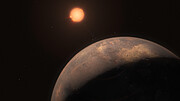
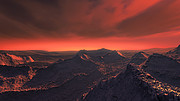
Artist’s Illustration of Exoplanets Orbiting Barnard’s Star

PR Image noirlab2510b
MAROON-X at Gemini North

PR Image noirlab2510c
MAROON-X at Gemini North

PR Image noirlab2510d
Andreas Seifahrt and Jacob Bean Unpack MAROON-X


Videos

Exoplanets Orbiting Barnard’s Star Animation
PR Video noirlab2510a
Exoplanets Orbiting Barnard’s Star Animation


Using in part the Gemini North telescope, one half of the International Gemini Observatory, partly funded by the U.S. National Science Foundation and operated by NSF NOIRLab, astronomers have discovered four sub-Earth exoplanets orbiting Barnard’s Star, the nearest single star system to Earth. One of the planets is the least massive exoplanet ever discovered using the radial velocity technique, indicating a new benchmark for discovering smaller planets around nearby stars.

For a century, astronomers have been studying Barnard’s Star in the hope of finding planets around it. First discovered by E. E. Barnard at Yerkes Observatory in 1916, it is the nearest single star system to Earth [1]. Barnard’s Star is classified as a red dwarf — low-mass stars that often host closely-packed planetary systems, often with multiple rocky planets. Red dwarfs are extremely numerous in the Universe, so scientists are interested in understanding the environments of the planets they host.

One such effort was led by Jacob Bean from the University of Chicago, whose team created an instrument called MAROON-X, which is designed specifically to search for distant planets around red dwarf stars. MAROON-X is mounted on the Gemini North telescope, one half of the International Gemini Observatory, funded in part by the U.S. National Science Foundation and operated by NSF NOIRLab.

MAROON-X hunts for exoplanets using the radial velocity technique, meaning it detects the subtle back and forth wobble of a star as its exoplanets gravitationally tug on it, which causes the light emitted by the star to shift ever so slightly in wavelength. The powerful instrument measures these small shifts in light so precisely that it can even tease apart the number and masses of the planets that must be circling the star to have the observed effect.

After rigorously calibrating and analyzing data taken during 112 nights over a period of three years, the team found solid evidence for three exoplanets around Barnard’s Star, two of which were previously classified as candidates. The team also combined data from MAROON-X with data from a 2024 study done with the ESPRESSO instrument at the European Southern Observatory’s Very Large Telescope in Chile to confirm the existence of a fourth planet, elevating it as well from candidate to bona fide exoplanet.

“It’s a really exciting find — Barnard’s Star is our cosmic neighbor, and yet we know so little about it,” says Ritvik Basant, PhD student at the University of Chicago and first author of the paper appearing in The Astrophysical Journal Letters. “It’s signaling a breakthrough with the precision of these new instruments from previous generations.”

The newly discovered planets are most likely rocky planets, rather than gas planets like Jupiter. However, this will be difficult to pin down with certainty since, because of the angle we observe them from Earth, the planets do not cross in front of their star, which is the usual method for determining a planet’s composition. But with information from similar planets around other stars, the team will be able to make better estimates of their makeup.

They were, however, able to rule out with a fair degree of certainty the existence of other exoplanets with masses comparable to Earth in Barnard Star’s habitable zone — the region of space around a star that is just right to allow liquid water on an orbiting planet’s surface.

Barnard’s Star has been called the “great white whale” for planet hunters; several times over the past century, groups have announced evidence that suggested planets around Barnard’s Star, only for them to be subsequently disproved. But these latest findings give a much larger degree of confidence than any previous result.

“We observed at different times of night on different days. They’re in Chile; we’re in Hawai‘i. Our teams didn’t coordinate with each other at all,” says Basant. “That gives us a lot of assurance that these aren’t phantoms in the data.”

The four planets, each only about 20 to 30% the mass of Earth, are so close to their home star that they zip all the way around it in a matter of days. The fourth planet is the least massive planet discovered to date using the radial velocity technique. The team hopes this will spark a new era of finding more and more sub-Earth exoplanets in the Universe.

Most rocky planets found so far are much larger than Earth, and they appear to be fairly similar throughout the Milky Way Galaxy. But there are reasons to think that smaller exoplanets have more widely varied compositions. As scientists find more of them, they can begin to tease out more information about how these planets form and what makes them likely to have habitable conditions.

“The U.S. National Science Foundation is collaborating with the astronomy community on an adventure to look deeper into the Universe to detect planets with environments that might resemble Earth's,” says Martin Still, NSF program director for the International Gemini Observatory. “The planet discoveries provided by MAROON-X mounted on Gemini North provide a significant step along that journey.”

MAROON-X is still a visiting instrument at Gemini North. Given its outstanding performance and popularity with the user community, it is in the process of being converted to a permanent facility instrument..

“This result demonstrates the competitive, state-of-the-art capabilities that Gemini offers its user community. The observatory is in the middle of rejuvenating its instrumentation portfolio and MAROON-X is part of the first wave of new instruments, alongside GHOST on Gemini South and IGRINS-2 on Gemini North,” says Andreas Seifahrt, Associate Director of Development for the International Gemini Observatory, co-author of the paper, and member of the team who designed and built MAROON-X.


Notes

[1] The nearest star system to us, Proxima Centauri, has three stars circling each other, which changes the dynamics of planet formation and orbits.


More information

This research was presented in a paper titled “Four sub-Earth planets orbiting Barnard’s Star from MAROON-X and ESPRESSO” to appear in The Astrophysical Journal Letters. DOI: 10.3847/2041-8213/adb8d5

The team is composed of Ritvik Basant (University of Chicago), Rafael Luque (University of Chicago, NHFP Sagan Fellow), Jacob L. Bean (University of Chicago), Andreas Seifahrt (International Gemini Observatory/NSF NOIRLab), Madison Brady (University of Chicago), Lily L. Zhao (University of Chicago, NHFP Sagan Fellow), Nina Brown (University of Chicago), Tanya Das (University of Chicago), Julian Stürmer (Heidelberg University), David Kasper (University of Chicago), Rohan Gupta (University of Chicago), and Guðmundur Stefánsson (University of Amsterdam).

NSF NOIRLab, the U.S. National Science Foundation center for ground-based optical-infrared astronomy, operates the International Gemini Observatory (a facility of NSF, NRC–Canada, ANID–Chile, MCTIC–Brazil, MINCyT–Argentina, and KASI–Republic of Korea), NSF Kitt Peak National Observatory (KPNO), NSF Cerro Tololo Inter-American Observatory (CTIO), the Community Science and Data Center (CSDC), and NSF–DOE Vera C. Rubin Observatory (in cooperation with DOE’s SLAC National Accelerator Laboratory). It is managed by the Association of Universities for Research in Astronomy (AURA) under a cooperative agreement with NSF and is headquartered in Tucson, Arizona.

The scientific community is honored to have the opportunity to conduct astronomical research on I’oligam Du’ag (Kitt Peak) in Arizona, on Maunakea in Hawai‘i, and on Cerro Tololo and Cerro Pachón in Chile. We recognize and acknowledge the very significant cultural role and reverence of I’oligam Du’ag to the Tohono O’odham Nation, and Maunakea to the Kanaka Maoli (Native Hawaiians) community.


Links


Contacts:

Ritvik Basant
Graduate Student, Department of Astronomy and Astrophysics
University of Chicago
Email:
rbasant@uchicago.edu

Jacob Bean
Professor, Department of Astronomy and Astrophysics
University of Chicago
Email:
jacobbean@uchicago.edu

Andreas Seifahrt
Associate Director of Development
International Gemini Observatory/NSF NOIRLab
Email:
andreas.seifahrt@noirlab.edu

Josie Fenske
Jr. Public Information Officer
NSF NOIRLab
Email:
josie.fenske@noirlab.edu

Louise Lerner
Physical Sciences News Officer
University of Chicago
Email:
  louise@uchicago.edu


Friday, October 04, 2024

Scientists discover planet orbiting closest single star to our Sun

PR Image eso2414a
Artist’s impression of a sub-Earth-mass planet orbiting Barnard’s star

PR Image eso2414b
The nearest stars to the Sun (infographic)

PR Image eso2414c
Barnard’s Star in the constellation Ophiuchus

PR Image eso2414d
Widefield image of the sky around Barnard’s Star showing its motion


Videos

New planet discovered orbiting closest single star to our Sun | ESO News
PR Video eso2414a
New planet discovered orbiting closest single star to our Sun | ESO News

Animation of a sub-Earth-mass planet orbiting Barnard’s star
PR Video eso2414b
Animation of a sub-Earth-mass planet orbiting Barnard’s star

Animation of a sub-Earth-mass planet orbiting Barnard’s star
PR Video eso2414c
Animation of a sub-Earth-mass planet orbiting Barnard’s star

Barnard’s Star in the Solar neighborhood
PR Video eso2414d
Barnard’s Star in the Solar neighborhood

The radial velocity method for finding exoplanets
PR Video eso2414e
The radial velocity method for finding exoplanets


Using the European Southern Observatory’s Very Large Telescope (ESO’s VLT), astronomers have discovered an exoplanet orbiting Barnard’s star, the closest single star to our Sun. On this newly discovered exoplanet, which has at least half the mass of Venus, a year lasts just over three Earth days. The team’s observations also hint at the existence of three more exoplanet candidates, in various orbits around the star.

Located just six light-years away, Barnard’s star is the second-closest stellar system — after Alpha Centauri’s three-star group — and the closest individual star to us. Owing to its proximity, it is a primary target in the search for Earth-like exoplanets. Despite a promising detection back in 2018, no planet orbiting Barnard's star had been confirmed until now.

The discovery of this new exoplanet — announced in a paper published today in the journal Astronomy & Astrophysics — is the result of observations made over the last five years with ESO’s VLT, located at Paranal Observatory in Chile. “Even if it took a long time, we were always confident that we could find something,” says Jonay González Hernández, a researcher at the Instituto de Astrofísica de Canarias in Spain, and lead author of the paper. The team were looking for signals from possible exoplanets within the habitable or temperate zone of Barnard’s star — the range where liquid water can exist on the planet’s surface. Red dwarfs like Barnard’s star are often targeted by astronomers since low-mass rocky planets are easier to detect there than around larger Sun-like stars. [1]

Barnard b [2], as the newly discovered exoplanet is called, is twenty times closer to Barnard’s star than Mercury is to the Sun. It orbits its star in 3.15 Earth days and has a surface temperature around 125 °C. “Barnard b is one of the lowest-mass exoplanets known and one of the few known with a mass less than that of Earth. But the planet is too close to the host star, closer than the habitable zone,” explains González Hernández. “Even if the star is about 2500 degrees cooler than our Sun, it is too hot there to maintain liquid water on the surface.”

For their observations, the team used ESPRESSO, a highly precise instrument designed to measure the wobble of a star caused by the gravitational pull of one or more orbiting planets. The results obtained from these observations were confirmed by data from other instruments also specialised in exoplanet hunting: HARPS at ESO’s La Silla Observatory, HARPS-N and CARMENES. The new data do not, however, support the existence of the exoplanet reported in 2018. 

In addition to the confirmed planet, the international team also found hints of three more exoplanet candidates orbiting the same star. These candidates, however, will require additional observations with ESPRESSO to be confirmed. “We now need to continue observing this star to confirm the other candidate signals,” says Alejandro Suárez Mascareño, a researcher also at the Instituto de Astrofísica de Canarias and co-author of the study. “But the discovery of this planet, along with other previous discoveries such as Proxima b and d, shows that our cosmic backyard is full of low-mass planets.”

ESO’s Extremely Large Telescope (ELT), currently under construction, is set to transform the field of exoplanet research. The ELT’s ANDES instrument will allow researchers to detect more of these small, rocky planets in the temperate zone around nearby stars, beyond the reach of current telescopes, and enable them to study the composition of their atmospheres.

Source: ESO/News


Notes

[1] Astronomers target cool stars, like red dwarfs, because their temperate zone is much closer to the star than that of hotter stars, like the Sun. This means that the planets orbiting within their temperate zone have shorter orbital periods, allowing astronomers to monitor them over several days or weeks, rather than years. In addition, red dwarfs are much less massive than the Sun, so they are more easily disturbed by the gravitational pull of the planets around them and thus they wobble more strongly.

[2] It’s common practice in science to name exoplanets by the name of their host star with a lowercase letter added to it, ‘b’ indicating the first known planet, ’c’ the next one, and so on. The name Barnard b was therefore also given to a previously suspected planet candidate around Barnard's star, which scientists were unable to confirm.


More information

This research was presented in the paper “A sub-Earth-mass planet orbiting Barnard’s star” to appear in Astronomy & Astrophysics. (https://www.aanda.org/10.1051/0004-6361/202451311)

The team is composed of J. I. González Hernández (Instituto de Astrofísica de Canarias, Spain [IAC] and Departamento de Astrofísica, Universidad de La Laguna, Spain [IAC-ULL]), A. Suárez Mascareño (IAC and IAC-ULL), A. M. Silva (Instituto de Astrofísica e Ciências do Espaço, Universidade do Porto, Portugal [IA-CAUP] and Departamento de Física e Astronomia Faculdade de Ciências, Universidade do Porto, Portugal [FCUP]), A. K. Stefanov (IAC and IAC-ULL), J. P. Faria (Observatoire de Genève, Université de Genève, Switzerland [UNIGE]; IA-CAUP and FCUP), H. M. Tabernero (Departamento de Física de la Tierra y Astrofísica & Instituto de Física de Partículas y del Cosmos, Universidad Complutense de Madrid, Spain), A. Sozzetti (INAF - Osservatorio Astrofisico di Torino [INAF-OATo] and Istituto Nazionale di Astrofisica, Torino, Italy), R. Rebolo (IAC; IAC-ULL and Consejo Superior de Investigaciones Científicas, Spain [CSIC]), F. Pepe (UNIGE), N. C. Santos (IA-CAUP; FCUP), S. Cristiani (INAF - Osservatorio Astronomico di Trieste, Italy [INAF-OAT] and Institute for Fundamental Physics of the Universe, Trieste, Italy [IFPU]), C. Lovis (UNIGE), X. Dumusque (UNIGE), P. Figueira (UNIGE and IA-CAUP), J. Lillo-Box (Centro de Astrobiología, CSIC-INTA, Madrid, Spain [CAB]), N. Nari (IAC; Light Bridges S. L., Canarias, Spain and IAC-ULL), S. Benatti (INAF - Osservatorio Astronomico di Palermo, Italy [INAF-OAPa]), M. J. Hobson (UNIGE), A. Castro-González (CAB), R. Allart (Institut Trottier de Recherche sur les Exoplanètes, Université de Montréal, Canada and UNIGE), V. M. Passegger (National Astronomical Observatory of Japan, Hilo, USA; IAC; IAC-ULL and Hamburger Sternwarte, Hamburg, Germany), M.-R. Zapatero Osorio (CAB), V. Adibekyan (IA-CAUP and FCUP), Y. Alibert (Center for Space and Habitability, University of Bern, Switzerland and Weltraumforschung und Planetologie, Physikalisches Institut, University of Bern, Switzerland), C. Allende Prieto (IAC and IAC-ULL), F. Bouchy (UNIGE), M. Damasso (INAF-OATo), V. D’Odorico (INAF-OAT and IFPU), P. Di Marcantonio (INAF-OAT), D. Ehrenreich (UNIGE), G. Lo Curto (European Southern Observatory, Santiago, Chile [ESO Chile]), R. Génova Santos (IAC and IAC-ULL), C. J. A. P. Martins (IA-CAUP and Centro de Astrofísica da Universidade do Porto, Portugal), A. Mehner (ESO Chile), G. Micela (INAF-OAPa), P. Molaro (INAF-OAT), N. Nunes (Instituto de Astrofísica e Ciências do Espaço, Universidade de Lisboa), E. Palle (IAC and IAC-ULL), S. G. Sousa (IA-CAUP and FCUP), and S. Udry (UNIGE).

The European Southern Observatory (ESO) enables scientists worldwide to discover the secrets of the Universe for the benefit of all. We design, build and operate world-class observatories on the ground — which astronomers use to tackle exciting questions and spread the fascination of astronomy — and promote international collaboration for astronomy. Established as an intergovernmental organisation in 1962, today ESO is supported by 16 Member States (Austria, Belgium, Czechia, Denmark, France, Finland, Germany, Ireland, Italy, the Netherlands, Poland, Portugal, Spain, Sweden, Switzerland and the United Kingdom), along with the host state of Chile and with Australia as a Strategic Partner. ESO’s headquarters and its visitor centre and planetarium, the ESO Supernova, are located close to Munich in Germany, while the Chilean Atacama Desert, a marvellous place with unique conditions to observe the sky, hosts our telescopes. ESO operates three observing sites: La Silla, Paranal and Chajnantor. At Paranal, ESO operates the Very Large Telescope and its Very Large Telescope Interferometer, as well as survey telescopes such as VISTA. Also at Paranal ESO will host and operate the Cherenkov Telescope Array South, the world’s largest and most sensitive gamma-ray observatory. Together with international partners, ESO operates ALMA on Chajnantor, a facility that observes the skies in the millimetre and submillimetre range. At Cerro Armazones, near Paranal, we are building “the world’s biggest eye on the sky” — ESO’s Extremely Large Telescope. From our offices in Santiago, Chile we support our operations in the country and engage with Chilean partners and society.


Links


Contacts:

Jonay I. González Hernández
Instituto de Astrofísica de Canarias
Tenerife, Spain
Tel: +34 922 605 751 or +34 922 605 200
Email:
jonay.gonzalez@iac.es Alejandro Suárez Mascareño
Instituto de Astrofísica de Canarias
Tenerife, Spain
Tel: +34 658 778 954
Email:
alejandro.suarez.mascareno@iac.es

Serena Benatti
INAF - Osservatorio Astronomico di Palermo
Palermo, Italy
Tel: +39 091 233270
Email:
serena.benatti@inaf.it

João Faria
Département d’astronomie de l’Université de Genève
Geneve, Switzerland
Tel: +41 22 379 22 76
Email:
joao.faria@unige.ch

André M. Silva
Instituto de Astrofísica e Ciências do Espaço, Universidade do Porto
Porto, Portugal
Tel: +351 226 089 830
Email:
Andre.Silva@astro.up.pt

Bárbara Ferreira
ESO Media Manager
Garching bei München, Germany
Tel: +49 89 3200 6670
Cell: +49 151 241 664 00
Email:
press@eso.org


Friday, October 30, 2020

Assessing The Habitability of Planets Around Old Red Dwarfs

GJ 699 (Barnard's Star)
Credit: X-ray light curve: NASA/CXC/University of Colorado/K. France et al.; 
Illustration: NASA/CXC/ M. Weiss)

JPEG (516.4 kb)  - Large JPEG (9.9 MB) - Tiff (105 MB) - More Images

Tour: Einstein's Theory of Relativity, Critical for GPS, Seen in Distant Stars -  More Animations


A new study using data from NASA's Chandra X-ray Observatory and Hubble Space Telescope gives new insight into an important question: how habitable are planets that orbit the most common type of stars in the Galaxy? The target of the new study, as reported in our press release, is Barnard's Star, which is one of the closest stars to Earth at a distance of just 6 light years. Barnard's Star is a red dwarf, a small star that slowly burns through its fuel supply and can last much longer than medium-sized stars like our Sun. It is about 10 billion years old, making it twice the age of the Sun.

The authors used Barnard's Star as a case study to learn how flares from an old red dwarf might affect any planets orbiting it. This artist's illustration depicts an old red dwarf like Barnard's Star (right) and an orbiting, rocky planet (left).

The research team's Chandra observations of Barnard's Star taken in June 2019 uncovered one X-ray flare (shown in the inset box) and their Hubble observations taken in March 2019 revealed two ultraviolet high-energy flares (shown in an additional graphic). Both observations were about seven hours long and both plots show X-ray or ultraviolet brightness extending down to zero. Based on the length of the flares and of the observations, the authors concluded that Barnard's Star unleashes potentially destructive flares about 25% of the time.   

Credit: X-ray light curve: NASA/CXC/University of Colorado/K. France et al.; UV light curve: NASA/STScI;

The team then studied what these results mean for rocky planets orbiting in the habitable zone — where liquid water could exist on their surface — around an old red dwarf like Barnard's Star. Any atmosphere formed early in the life of a habitable-zone planet was likely to have been eroded away by high-energy radiation from the star during its volatile youth. Later on, however, planet atmospheres might regenerate as the star becomes less active with age. This regeneration process may occur by gases released by impacts of solid material or gases being released by volcanic processes.

However, the onslaught of powerful flares like those reported here, repeatedly occurring over hundreds of millions of years, may erode any regenerated atmospheres on rocky planets in the habitable zone. The illustration shows the atmosphere of the rocky planet being swept away to the left by energetic radiation from flares produced by the red dwarf. This would reduce the chance of these worlds supporting life. The team is currently studying high-energy radiation from many more red dwarfs to determine whether Barnard's Star is typical.

A paper describing these results, led by Kevin France of the University of Colorado at Boulder, appears in the October 30, 2020 issue of The Astronomical Journal and is available online. NASA's Marshall Space Flight Center manages the Chandra program. The Smithsonian Astrophysical Observatory's Chandra X-ray Center controls science and flight operations from Cambridge and Burlington, Massachusetts.


Fast Facts for GJ 699 (Barnard's Star):


Category: Normal Stars & Star Clusters
Coordinates (J2000):
RA 17h 57m 48.5s | Dec +04° 41´ 36.1"
Constellation:
Ophiuchus
Observation Date: June 17, 2019
Observation Time: 7 hours 25 minutes
Obs. ID: 20619
Instrument:
ACIS
References: France, K, et al., 2020, AJ, 160, 237; arXiv:2009.01259
Distance Estimate: About 5.97 light years


Thursday, November 15, 2018

Super-Earth Orbiting Barnard’s Star

Artist’s impression of the surface of a super-Earth orbiting Barnard’s Star

Artist’s impression of super-Earth orbiting Barnard’s Star

Barnard’s Star in the constellation Ophiuchus

Widefield image of the sky around Barnard’s Star showing its motion


Videos

ESOcast 184 Light: Super-Earth Orbiting Barnard’s Star (4K UHD)

Artist’s impression of Barnard’s Star and its super-Earth

Exploring the surface of a super-Earth orbiting Barnard’s Star (Artist’s impression)

Barnard’s Star in the Solar neighborhood


Red Dots campaign uncovers compelling evidence of exoplanet around closest single star to Sun

The nearest single star to the Sun hosts an exoplanet at least 3.2 times as massive as Earth — a so-called super-Earth. One of the largest observing campaigns to date using data from a world-wide array of telescopes, including ESO’s planet-hunting HARPS instrument, have revealed this frozen, dimly lit world. The newly discovered planet is the second-closest known exoplanet to the Earth. Barnard’s star is the fastest moving star in the night sky.

A planet has been detected orbiting Barnard’s Star, a mere 6 light-years away. This breakthrough — announced in a paper published today in the journal Nature — is a result of the Red Dots and CARMENES projects, whose search for local rocky planets has already uncovered a new world orbiting our nearest neighbour, Proxima Centauri.

The planet, designated Barnard's Star b, now steps in as the second-closest known exoplanet to Earth [1]. The gathered data indicate that the planet could be a super-Earth, having a mass at least 3.2 times that of the Earth, which orbits its host star in roughly 233 days. Barnard’s Star, the planet’s host star, is a red dwarf, a cool, low-mass star, which only dimly illuminates this newly-discovered world. Light from Barnard’s Star provides its planet with only 2% of the energy the Earth receives from the Sun.

Despite being relatively close to its parent star — at a distance only 0.4 times that between Earth and the Sun — the exoplanet lies close to the snow line, the region where volatile compounds such as water can condense into solid ice. This freezing, shadowy world could have a temperature of –170 ℃, making it inhospitable for life as we know it.

Named for astronomer E. E. Barnard, Barnard’s Star is the closest single star to the Sun. While the star itself is ancient — probably twice the age of our Sun — and relatively inactive, it also has the fastest apparent motion of any star in the night sky [2]. Super-Earths are the most common type of planet to form around low-mass stars such as Barnard’s Star, lending credibility to this newly discovered planetary candidate. Furthermore, current theories of planetary formation predict that the snow line is the ideal location for such planets to form.

Previous searches for a planet around Barnard’s Star have had disappointing results — this recent breakthrough was possible only by combining measurements from several high-precision instruments mounted on telescopes all over the world [3].

“After a very careful analysis, we are 99% confident that the planet is there,” stated the team’s lead scientist, Ignasi Ribas (Institute of Space Studies of Catalonia and the Institute of Space Sciences, CSIC in Spain). “However, we’ll continue to observe this fast-moving star to exclude possible, but improbable, natural variations of the stellar brightness which could masquerade as a planet.”

Among the instruments used were ESO’s famous planet-hunting HARPS and UVES spectrographs. “HARPS played a vital part in this project. We combined archival data from other teams with new, overlapping, measurements of Barnard’s star from different facilities,” commented Guillem Anglada Escudé (Queen Mary University of London), co-lead scientist of the team behind this result [4]. “The combination of instruments was key to allowing us to cross-check our result.”

The astronomers used the Doppler effect to find the exoplanet candidate. While the planet orbits the star, its gravitational pull causes the star to wobble. When the star moves away from the Earth, its spectrum redshifts; that is, it moves towards longer wavelengths. Similarly, starlight is shifted towards shorter, bluer, wavelengths when the star moves towards Earth.

Astronomers take advantage of this effect to measure the changes in a star’s velocity due to an orbiting exoplanet — with astounding accuracy. HARPS can detect changes in the star’s velocity as small as 3.5 km/h — about walking pace. This approach to exoplanet hunting is known as the radial velocity method, and has never before been used to detect a similar super-Earth type exoplanet in such a large orbit around its star.

“We used observations from seven different instruments, spanning 20 years of measurements, making this one of the largest and most extensive datasets ever used for precise radial velocity studies.” explained Ribas. ”The combination of all data led to a total of 771 measurements — a huge amount of information!”

“We have all worked very hard on this breakthrough,” concluded Anglada-Escudé. “This discovery is the result of a large collaboration organised in the context of the Red Dots project, that included contributions from teams all over the world.


Notes

[1] The only stars closer to the Sun make up the triple star system Alpha Centauri. In 2016, astronomers using ESO telescopes and other facilities found clear evidence of a planet orbiting the closest star to Earth in this system, Proxima Centauri. That planet lies just over 4 light-years from Earth, and was discovered by a team led by Guillem Anglada Escudé.

[2] The total velocity of Barnard’s Star with respect to the Sun is about 500 000 km/h. Despite this blistering pace, it is not the fastest known star. What makes the star’s motion noteworthy is how fast it appears to move across the night sky as seen from the Earth, known as its apparent motion. Barnard’s Star travels a distance equivalent to the Moon's diameter across the sky every 180 years — while this may not seem like much, it is by far the fastest apparent motion of any star.

[3] The facilities used in this research were: HARPS at the ESO 3.6-metre telescope; UVES at the ESO VLT; HARPS-N at the Telescopio Nazionale Galileo; HIRES at the Keck 10-metre telescope; PFS at the Carnegie’s Magellan 6.5-m telescope; APF at the 2.4-m telescope at Lick Observatory; and CARMENES at the Calar Alto Observatory. Additionally, observations were made with the 90-cm telescope at the Sierra Nevada Observatory, the 40-cm robotic telescope at the SPACEOBS observatory, and the 80-cm Joan Oró Telescope of the Montsec Astronomical Observatory (OAdM).

[4] The story behind this discovery will be explored in more detail in this week’s ESOBlog.


More Information

This research was presented in the paper A super-Earth planet candidate orbiting at the snow-line of Barnard’s star published in the journal Nature on 15 November.

The team was composed of I. Ribas (Institut de Ciències de l’Espai, Spain & Institut d’Estudis Espacials de Catalunya, Spain), M. Tuomi (Centre for Astrophysics Research, University of Hertfordshire, United Kingdom), A. Reiners (Institut für Astrophysik Göttingen, Germany), R. P. Butler (Department of Terrestrial Magnetism, Carnegie Institution for Science, USA), J. C. Morales (Institut de Ciències de l’Espai, Spain & Institut d’Estudis Espacials de Catalunya, Spain), M. Perger (Institut de Ciències de l’Espai, Spain & Institut d’Estudis Espacials de Catalunya, Spain), S. Dreizler (Institut für Astrophysik Göttingen, Germany), C. Rodríguez-López (Instituto de Astrofísica de Andalucía, Spain), J. I. González Hernández (Instituto de Astrofísica de Canarias Spain & Universidad de La Laguna, Spain), A. Rosich (Institut de Ciències de l’Espai, Spain & Institut d’Estudis Espacials de Catalunya, Spain), F. Feng (Centre for Astrophysics Research, University of Hertfordshire, United Kingdom), T. Trifonov (Max-Planck-Institut für Astronomie, Germany), S. S. Vogt (Lick Observatory, University of California, USA), J. A. Caballero (Centro de Astrobiología, CSIC-INTA, Spain), A. Hatzes (Thüringer Landessternwarte, Germany), E. Herrero (Institut de Ciències de l’Espai, Spain & Institut d’Estudis Espacials de Catalunya, Spain), S. V. Jeffers (Institut für Astrophysik Göttingen, Germany), M. Lafarga (Institut de Ciències de l’Espai, Spain & Institut d’Estudis Espacials de Catalunya, Spain), F. Murgas (Instituto de Astrofísica de Canarias, Spain & Universidad de La Laguna, Spain), R. P. Nelson (School of Physics and Astronomy, Queen Mary University of London, United Kingdom), E. Rodríguez (Instituto de Astrofísica de Andalucía, Spain), J. B. P. Strachan (School of Physics and Astronomy, Queen Mary University of London, United Kingdom), L. Tal-Or (Institut für Astrophysik Göttingen, Germany & School of Geosciences, Tel-Aviv University, Israel), J. Teske (Department of Terrestrial Magnetism, Carnegie Institution for Science, USA & Hubble Fellow), B. Toledo-Padrón (Instituto de Astrofísica de Canarias, Spain & Universidad de La Laguna, Spain), M. Zechmeister (Institut für Astrophysik Göttingen, Germany), A. Quirrenbach (Landessternwarte, Universität Heidelberg, Germany), P. J. Amado (Instituto de Astrofísica de Andalucía, Spain), M. Azzaro (Centro Astronómico Hispano-Alemán, Spain), V. J. S. Béjar (Instituto de Astrofísica de Canarias, Spain & Universidad de La Laguna, Spain), J. R. Barnes (School of Physical Sciences, The Open University, United Kingdom), Z. M. Berdiñas (Departamento de Astronomía, Universidad de Chile), J. Burt (Kavli Institute, Massachusetts Institute of Technology, USA), G. Coleman (Physikalisches Institut, Universität Bern, Switzerland), M. Cortés-Contreras (Centro de Astrobiología, CSIC-INTA, Spain), J. Crane (The Observatories, Carnegie Institution for Science, USA), S. G. Engle (Department of Astrophysics & Planetary Science, Villanova University, USA), E. F. Guinan (Department of Astrophysics & Planetary Science, Villanova University, USA), C. A. Haswell (School of Physical Sciences, The Open University, United Kingdom), Th. Henning (Max-Planck-Institut für Astronomie, Germany), B. Holden (Lick Observatory, University of California, USA), J. Jenkins (Departamento de Astronomía, Universidad de Chile), H. R. A. Jones (Centre for Astrophysics Research, University of Hertfordshire, United Kingdom), A. Kaminski (Landessternwarte, Universität Heidelberg, Germany), M. Kiraga (Warsaw University Observatory, Poland), M. Kürster (Max-Planck-Institut für Astronomie, Germany), M. H. Lee (Department of Earth Sciences and Department of Physics, The University of Hong Kong), M. J. López-González (Instituto de Astrofísica de Andalucía, Spain), D. Montes (Dep. de Física de la Tierra Astronomía y Astrofísica & Unidad de Física de Partículas y del Cosmos de la Universidad Complutense de Madrid, Spain), J. Morin (Laboratoire Univers et Particules de Montpellier, Université de Montpellier, France), A. Ofir (Department of Earth and Planetary Sciences, Weizmann Institute of Science. Israel), E. Pallé (Instituto de Astrofísica de Canarias, Spain & Universidad de La Laguna, Spain), R. Rebolo (Instituto de Astrofísica de Canarias, Spain, & Consejo Superior de Investigaciones Científicas & Universidad de La Laguna, Spain), S. Reffert (Landessternwarte, Universität Heidelberg, Germany), A. Schweitzer (Hamburger Sternwarte, Universität Hamburg, Germany), W. Seifert (Landessternwarte, Universität Heidelberg, Germany), S. A. Shectman (The Observatories, Carnegie Institution for Science, USA), D. Staab (School of Physical Sciences, The Open University, United Kingdom), R. A. Street (Las Cumbres Observatory Global Telescope Network, USA), A. Suárez Mascareño (Observatoire Astronomique de l'Université de Genève, Switzerland & Instituto de Astrofísica de Canarias Spain), Y. Tsapras (Zentrum für Astronomie der Universität Heidelberg, Germany), S. X. Wang (Department of Terrestrial Magnetism, Carnegie Institution for Science, USA), and G. Anglada-Escudé (School of Physics and Astronomy, Queen Mary University of London, United Kingdom & Instituto de Astrofísica de Andalucía, Spain).

ESO is the foremost intergovernmental astronomy organisation in Europe and the world’s most productive ground-based astronomical observatory by far. It has 16 Member States: Austria, Belgium, the Czech Republic, Denmark, France, Finland, Germany, Ireland, Italy, the Netherlands, Poland, Portugal, Spain, Sweden, Switzerland and the United Kingdom, along with the host state of Chile and with Australia as a Strategic Partner. ESO carries out an ambitious programme focused on the design, construction and operation of powerful ground-based observing facilities enabling astronomers to make important scientific discoveries. ESO also plays a leading role in promoting and organising cooperation in astronomical research. ESO operates three unique world-class observing sites in Chile: La Silla, Paranal and Chajnantor. At Paranal, ESO operates the Very Large Telescope and its world-leading Very Large Telescope Interferometer as well as two survey telescopes, VISTA working in the infrared and the visible-light VLT Survey Telescope. ESO is also a major partner in two facilities on Chajnantor, APEX and ALMA, the largest astronomical project in existence. And on Cerro Armazones, close to Paranal, ESO is building the 39-metre Extremely Large Telescope, the ELT, which will become “the world’s biggest eye on the sky”.


Links


Contact

Ignasi Ribas (Lead Scientist)
Institut d’Estudis Espacials de Catalunya and the Institute of Space Sciences, CSIC
Barcelona, Spain
Tel: +34 93 737 97 88 (ext 933027)
Email: iribas@ice.cat

Guillem Anglada-Escudé
Queen Mary University of London
London, United Kingdom
Tel: +44 (0)20 7882 3002
Email: g.anglada@qmul.ac.uk

Calum Turner
ESO Public Information Officer
Garching bei München, Germany
Tel: +49 89 3200 6670
Cell: +49 151 1537 3591
Email: pio@eso.org

Source: ESO/News


Tuesday, September 12, 2017

Do-it-yourself Science — is Proxima c hiding in this graph?


Credit: O/G. Anglada-Escudé


This unusual Picture of the Week showcases the latest data gathered by ESO’s exoplanet hunter, the High Accuracy Radial velocity Planet Searcher (HARPS), during the ongoing Red Dots campaign, a search for terrestrial planets around our nearest three red dwarf stars: Proxima Centauri, Barnard’s Star, and Ross 154. The campaign was launched earlier in 2017 to build on the 2016 discovery of Proxima b around our nearest stellar neighbour, Proxima Centauri. Red Dots is designed as an open notebook science experiment, meaning the public has access to the data and can even contribute observations. Can you see a new exoplanet in these data of Proxima Centauri?

By carefully tracing the movement of a star over time, graphs like these can reveal the presence of exoplanets. Just as a star pulls on its orbiting planets using gravity, planets pull on the star, causing the star to wobble and shift the wavelength of its light by a small but measureable amount. By analysing the predictable, repeating changes, astronomers can infer the presence of a planet. The top left graph displays the 2016 data that confirmed the existence of Proxima b, showing how the planet is causing its parent star, Proxima Centauri, to move towards and away from Earth over time. The curved line represents the wobbling signal of the star, with the regular pattern of changing radial velocities (RV) repeating every 11.2 days.

The top right graph shows new measurements made with HARPS during the Red Dots campaign. The new data once again confirms Proxima b’s signal (in yellow), but also includes additional data patterns — visible here as a downward slope in both the 2016 and 2017 data points — hinting that there may be more to be discovered. To make a firmer statement on what is causing these patterns, astronomers need to use quantitative mathematical tools.

One such mathematical tool is called a periodogram, which searches for repeating signals in the data — displayed here as prominent peaks — that indicate the presence of a planet. The graph on the bottom panel shows the periodogram for the new data. The first signal (in white) corresponds to Proxima b. The second set of possible periods (in red), of around 200 days, are produced from patterns seen in the top panels. The presence of multiple peaks of similar heights means a signal cannot be precisely pinpointed and that its origin remains unclear.

The project will continue acquiring measurements until the end of September this year. You can follow along as the Red Dots campaign unfolds and even contribute observations via the Red Dots website, Facebook, or Twitter accounts.


Friday, June 09, 2017

Waltzing dwarfs

Credit: ESA/Hubble & NASA, L. Bedin et al.


This seemingly unspectacular series of dots with varying distances between them actually shows the slow waltz of two brown dwarfs. The image is a stack of 12 images made over the course of three years with the NASA/ESA Hubble Space Telescope. Using high-precision astrometry, an Italian-led team of astronomers tracked the two components of the system as they moved both across the sky and around each other.

The observed system, Luhman 16AB, is only about six light-years away and is the third closest stellar system to Earth — after the triple star system Alpha Centauri and Barnard’s Star. Despite its proximity, Luhman 16AB was only discovered in 2013 by the astronomer Kevin Luhman. The two brown dwarfs that make up the system, Luhman 16A and Luhman 16B, orbit each other at a distance of only three times the distance between the Earth and the Sun, and so these observations are a showcase for Hubble’s precision and high resolution.

The astronomers using Hubble to study Luhman 16AB were not only interested in the waltz of the two brown dwarfs, but were also searching for a third, invisible, dancing partner. Earlier observations with ESO’s Very Large Telescope indicated the presence of an exoplanet in the system. The team wanted to verify this claim by analysing the movement of the brown dwarfs in great detail over a long period of time, but the Hubble data showed that the two dwarfs are indeed dancing alone, unperturbed by a massive planetary companion.

Links