Showing posts with label brown dwarfs. Show all posts

Wednesday, August 20, 2025

Rare quadruple star system could unlock mystery of brown dwarfs

An artist's impression of the UPM J1040−3551 system against the backdrop of the Milky Way as observed by Gaia. On the left, UPM J1040−3551 Aa & Ab appears as a distant bright orange dot, with an inset revealing these two M-type stars in orbit. On the right, in the foreground, a pair of cold brown dwarfs – UPM J1040−3551 Ba & Bb – orbit each other for a period of decades while collectively circling UPM J1040−3551 Aab in a vast orbit that takes over 100,000 years to complete. Credit: Jiaxin Zhong/Zenghua Zhang
Licence type: Attribution (CC BY 4.0)

The "exciting" discovery of an extremely rare quadruple star system could significantly advance our understanding of brown dwarfs, astronomers say.

These mysterious objects are too big to be considered a planet but also too small to be a star because they lack the mass to keep fusing atoms and blossom into fully-fledged suns.

In a new breakthrough published in the Monthly Notices of the Royal Astronomical Society (MNRAS), astronomers have now identified an extremely rare hierarchical quadruple star system consisting of a pair of cold brown dwarfs orbiting a pair of young red dwarf stars, located 82 light-years from Earth in the constellation Antlia.

The system, named UPM J1040−3551 AabBab, was identified by an international research team led by Professor Zenghua Zhang, of Nanjing University.

The researchers made their discovery using common angular velocity measured by the European Space Agency’s Gaia astrometric satellite and NASA\s Wide-field Infrared Survey Explorer (WISE), followed by comprehensive spectroscopic observations and analysis.

That’s because this wide binary pair need more than 100,000 years to complete one orbit around each other, so their orbital motion cannot be seen in years. Researchers therefore had to analyse how they are moving towards the same direction with the same angular velocity.

In this system, Aab refers to the brighter stellar pair Aa and Ab, while Bab refers to the fainter substellar pair Ba and Bb.

"What makes this discovery particularly exciting is the hierarchical nature of the system, which is required for its orbit to remain stable over a long time period," said Professor Zhang.

"These two pairs of objects are orbiting each other separately for periods of decades, while the pairs are also orbiting a common centre of mass over a period of more than 100,000 years."

The two pairs are separated by 1,656 astronomical units (au), where 1 au equals the Earth-Sun distance. The brighter pair, UPM J1040−3551 Aab, consists of two nearly equal-mass red dwarf stars, which appear orange in colour when observed in visible wavelengths.

With a visual magnitude of 14.6, this pair is approximately 100,000 times fainter than Polaris (the North Star) in visible wavelengths. In fact, no red dwarf star is bright enough to be seen with the naked eye – not even Proxima Centauri, our closest stellar neighbour at 4.2 light-years away. To make UPM J1040−3551 Aab visible without optical aid, this binary pair would need to be brought to within 1.5 light-years of Earth, placing it closer than any star in our current cosmic neighbourhood.

The fainter pair, UPM J1040−3551 Bab, comprises two much cooler brown dwarfs that emit virtually no visible light and appear roughly 1,000 times dimmer than the Aab pair when observed in near-infrared wavelengths, where they are most easily detected.

The close binary nature of UPM J1040−3551 Aab was initially suspected due to its wobbling photocentre during Gaia's observations and confirmed by its unusual brightness – approximately 0.7 magnitude brighter than a single star with the same temperature at the same distance, as the combined light from the nearly equal-mass pair effectively doubles the output.

Similarly, UPM J1040−3551 Bab was identified as another close binary through its abnormally bright infrared measurements compared to typical brown dwarfs of its spectral type. Spectral fitting analysis strongly supported this conclusion, with binary templates providing a significantly better match than single-object templates.

Dr Felipe Navarete, of the Brazilian National Astrophysics Laboratory, led the critical spectroscopic observations that helped characterise the system components.

Using the Goodman spectrograph on the Southern Astrophysical Research (SOAR) Telescope at Cerro Tololo Inter-American Observatory in Chile, a Program of NSF NOIRLab, Dr Navarete obtained optical spectra of the brighter pair, while also capturing near-infrared spectra of the fainter pair with SOAR's TripleSpec instrument.

"These observations were challenging due to the faintness of the brown dwarfs," said Dr Navarete, "but the capabilities of SOAR allowed us to collect the crucial spectroscopic data needed to understand the nature of these objects."

Their analysis revealed that both components of the brighter pair are M-type red dwarfs with temperatures of approximately 3,200 Kelvin (about 2,900°C) and masses of about 17 per cent that of the Sun.

The fainter pair are more exotic objects: two T-type brown dwarfs with temperatures of 820 Kelvin (550°C) and 690 Kelvin (420°C), respectively.

Brown dwarfs are small and dense low-mass objects, with the brown dwarfs in this system having sizes similar to the planet Jupiter but masses estimated to be 10-30 times greater. Indeed, at the low end of this range these objects could be considered "planetary mass" objects.

"This is the first quadruple system ever discovered with a pair of T-type brown dwarfs orbiting two stars," said Dr MariCruz Gálvez-Ortiz of the Center for Astrobiology in Spain, a co-author of the research paper.

"The discovery provides a unique cosmic laboratory for studying these mysterious objects."

Unlike stars, brown dwarfs continuously cool throughout their lifetime, which changes their observable properties such as temperature, luminosity, and spectral features.

This cooling process creates a fundamental challenge in brown dwarf research known as the "age-mass degeneracy problem".

An isolated brown dwarf with a certain temperature could be a younger, less massive object or an older, more massive one – astronomers cannot distinguish between these possibilities without additional information.

"Brown dwarfs with wide stellar companions whose ages can be determined independently are invaluable at breaking this degeneracy as age benchmarks," explained Professor Hugh Jones, of the University of Hertfordshire, a co-author of the research paper.

"UPM J1040−3551 is particularly valuable because H-alpha emission from the brighter pair indicates the system is relatively young, between 300 million and 2 billion years old."

The team believes the brown dwarf pair (UPM J1040−3551 Bab) could potentially be resolved with high-resolution imaging techniques in the future, enabling precise measurements of their orbital motion and dynamical masses.

"This system offers a dual benefit for brown dwarf science," said co-researcher Professor Adam Burgasser, of the University of California San Diego.

"It can serve as an age benchmark to calibrate low-temperature atmosphere models, and as a mass benchmark to test evolutionary models if we can resolve the brown dwarf binary and track its orbit."

The discovery of the UPM J1040−3551 system represents a significant advancement in he understanding of these elusive objects and the diverse formation paths for stellar systems in the neighbourhood of the Sun.


Media contacts:

Sam Tonkin (Submitted by)
Royal Astronomical Society
Mob: +44 (0)7802 877 700

press@ras.ac.uk

Science contacts:

Professor Zenghua Zhang
Nanjing University

zz@nju.edu.cn


Further information

The paper ‘Benchmark brown dwarfs – I. A blue M2 + T5 wide binary and a probable young M4 + [T7 + T8] hierarchical triple’ by Zenghua, Zhang et al. has been published in Monthly Notices of the Royal Astronomical Society. DOI:10.1093/mnras/staf895.


Notes for editors

About the Royal Astronomical Society

The Royal Astronomical Society (RAS), founded in 1820, encourages and promotes the study of astronomy, solar-system science, geophysics and closely related branches of science.

The RAS organises scientific meetings, publishes international research and review journals, recognises outstanding achievements by the award of medals and prizes, maintains an extensive library, supports education through grants and outreach activities and represents UK astronomy nationally and internationally. Its more than 4,000 members (Fellows), a third based overseas, include scientific researchers in universities, observatories and laboratories as well as historians of astronomy and others.

The RAS accepts papers for its journals based on the principle of peer review, in which fellow experts on the editorial boards accept the paper as worth considering. The Society issues press releases based on a similar principle, but the organisations and scientists concerned have overall responsibility for their content.

Keep up with the RAS on
 Instagram, Bluesky, LinkedIn, Facebook and YouTube.

Thursday, December 14, 2023

NASA's Webb Identifies Tiniest Free-Floating Brown Dwarf

IC 348 (NIRCam Image)
Credits: Image: NASA, ESA, CSA, STScI, Kevin Luhman (PSU), Catarina Alves de Oliveira (ESA)

Brown Dwarfs in IC 348 (NIRCam Image)
Credits: Image: NASA, ESA, CSA, STScI, Kevin Luhman (PSU), Catarina Alves de Oliveira (ESA)


Brown dwarfs are objects that straddle the dividing line between stars and planets. They form like stars, growing dense enough to collapse under their own gravity, but they never become dense and hot enough to begin fusing hydrogen and turn into a star. At the low end of the scale, some brown dwarfs are comparable with giant planets, weighing just a few times the mass of Jupiter.

Astronomers are trying to determine the smallest object that can form in a star-like manner. A team using NASA’s James Webb Space Telescope has identified the new record-holder: a tiny, free-floating brown dwarf with only three to four times the mass of Jupiter.

“One basic question you’ll find in every astronomy textbook is, what are the smallest stars? That’s what we’re trying to answer,” explained lead author Kevin Luhman of The Pennsylvania State University.

Search Strategy

To locate this newfound brown dwarf, Luhman and his colleague, Catarina Alves de Oliveira, chose to study the star cluster IC 348, located about 1,000 light-years away in the Perseus star-forming region. This cluster is young, only about 5 million years old. As a result, any brown dwarfs would still be relatively bright in infrared light, glowing from the heat of their formation.

The team first imaged the center of the cluster using Webb’s NIRCam (Near-Infrared Camera) to identify brown dwarf candidates from their brightness and colors. They followed up on the most promising targets using Webb’s NIRSpec (Near-Infrared Spectrograph) microshutter array.

Webb’s infrared sensitivity was crucial, allowing the team to detect fainter objects than ground-based telescopes. In addition, Webb’s sharp vision enabled them to determine which red objects were pinpoint brown dwarfs and which were blobby background galaxies.

This winnowing process led to three intriguing targets weighing three to eight Jupiter masses, with surface temperatures ranging from 1,500 to 2,800 degrees Fahrenheit (830 to 1,500 degrees Celsius). The smallest of these weighs just three to four times Jupiter, according to computer models.

Explaining how such a small brown dwarf could form is theoretically challenging. A heavy and dense cloud of gas has plenty of gravity to collapse and form a star. However, because of its weaker gravity, it should be more difficult for a small cloud to collapse to form a brown dwarf, and that is especially true for brown dwarfs with the masses of giant planets.

“It’s pretty easy for current models to make giant planets in a disk around a star,” said Catarina Alves de Oliveira of ESA (European Space Agency), principal investigator on the observing program. “But in this cluster, it would be unlikely this object formed in a disk, instead forming like a star, and three Jupiter masses is 300 times smaller than our Sun. So we have to ask, how does the star formation process operate at such very, very small masses?”

A Mystery Molecule

In addition to giving clues about the star-formation process, tiny brown dwarfs also can help astronomers better understand exoplanets. The least massive brown dwarfs overlap with the largest exoplanets; therefore, they would be expected to have some similar properties. However, a free-floating brown dwarf is easier to study than a giant exoplanet since the latter is hidden within the glare of its host star.

Two of the brown dwarfs identified in this survey show the spectral signature of an unidentified hydrocarbon, or molecule containing both hydrogen and carbon atoms. The same infrared signature was detected by NASA’s Cassini mission in the atmospheres of Saturn and its moon Titan. It has also been seen in the interstellar medium, or gas between stars.

“This is the first time we’ve detected this molecule in the atmosphere of an object outside our solar system,” explained Alves de Oliveira. “Models for brown dwarf atmospheres don’t predict its existence. We’re looking at objects with younger ages and lower masses than we ever have before, and we’re seeing something new and unexpected.”

Brown Dwarf or Rogue Planet? Since the objects are well within the mass range of giant planets, it raises the question of whether they are actually brown dwarfs, or if they’re really rogue planets that were ejected from planetary systems. While the team can’t rule out the latter, they argue that they are far more likely to be a brown dwarf than an ejected planet.

An ejected giant planet is unlikely for two reasons. First, such planets are uncommon in general compared to planets with smaller masses. Second, most stars are low-mass stars, and giant planets are especially rare among those stars. As a result, it’s unlikely that most of the stars in IC 348 (which are low-mass stars) are capable of producing such massive planets. In addition, since the cluster is only 5 million years old, there probably hasn’t been enough time for giant planets to form and then be ejected from their systems.

The discovery of more such objects will help clarify their status. Theories suggest that rogue planets are more likely to be found in the outskirts of a star cluster, so expanding the search area may identify them if they exist within IC 348.

Future work may also include longer surveys that can detect fainter, smaller objects. The short survey conducted by the team was expected to detect objects as small as twice the mass of Jupiter. Longer surveys could easily reach one Jupiter mass.

These observations were taken as part of Guaranteed Time Observation program 1229. The results were published in the Astronomical Journal.

The James Webb Space Telescope is the world’s premier space science observatory. Webb is solving mysteries in our solar system, looking beyond to distant worlds around other stars, and probing the mysterious structures and origins of our universe and our place in it. Webb is an international program led by NASA with its partners, ESA (European Space Agency) and the Canadian Space Agency.


About This Release

Credits:

Media Contact:

Christine Pulliam
Space Telescope Science Institute, Baltimore, Maryland

Science: Kevin Luhman (PSU), Catarina Alves de Oliveira (ESA)

Permissions: Content Use Policy

Contact Us: Direct inquiries to the News Team.

Related Links and Documents

The science paper by K. Luhman et al.


Wednesday, March 22, 2023

NASA’s Webb Spots Swirling, Gritty Clouds on Remote Planet

VHS 1256
Credit: Illustration: NASA, ESA, CSA, Joseph Olmsted (STScI)

Exoplanet VHS 1256 b (NIRSpec and MIRI Emission Spectrum)
Credits: Image: NASA, ESA, CSA, Joseph Olmsted (STScI)
Science: Brittany Miles (University of Arizona), Sasha Hinkley (University of Exeter), Beth Biller (University of Edinburgh), Andrew Skemer (UC Santa Cruz)


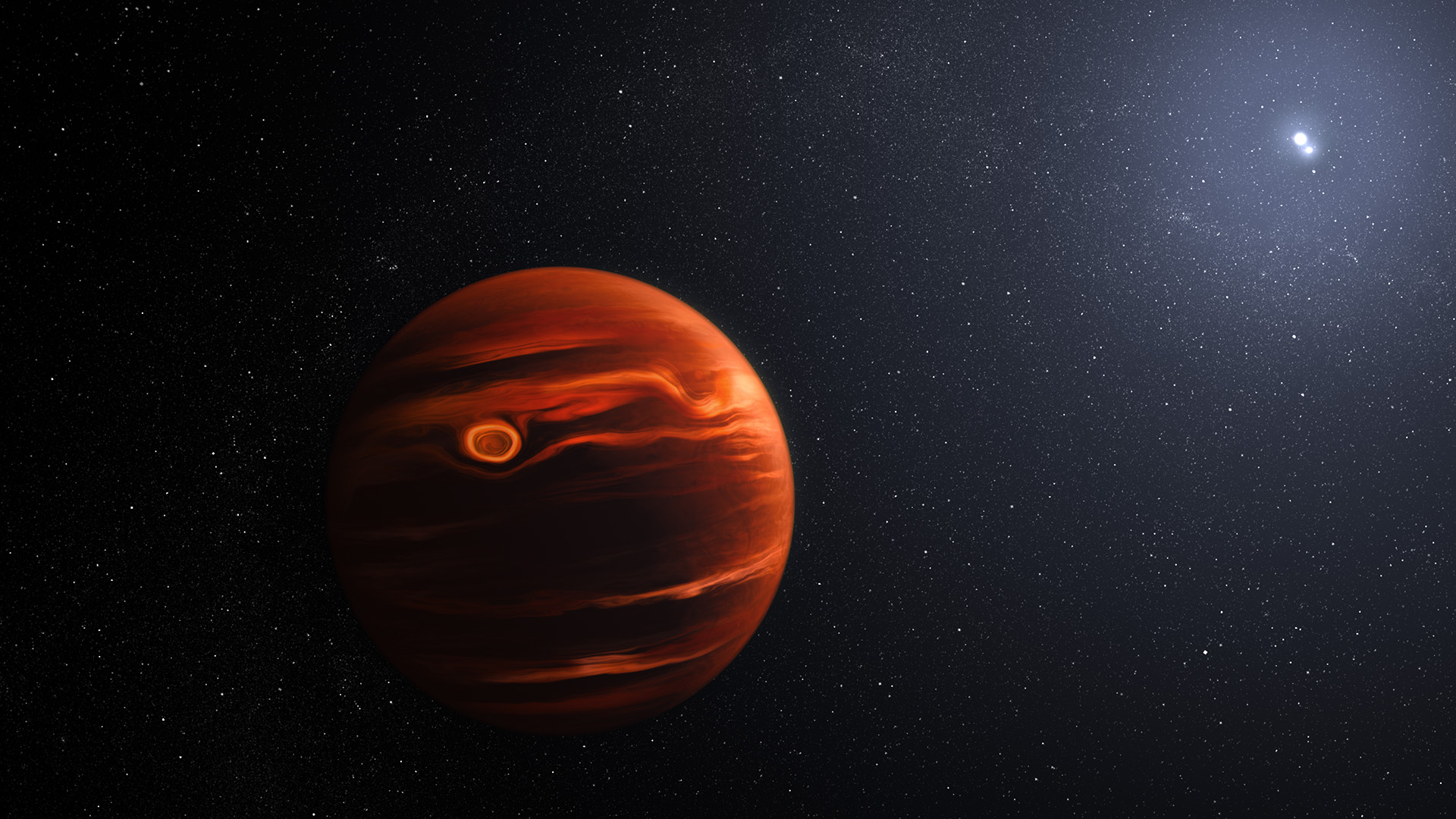
Researchers observing with NASA’s James Webb Space Telescope have pinpointed silicate cloud features in a distant planet’s atmosphere. The atmosphere is constantly rising, mixing, and moving during its 22-hour day, bringing hotter material up and pushing colder material down. The resulting brightness changes are so dramatic that it is the most variable planetary-mass object known to date. The team, led by Brittany Miles of the University of Arizona, also made extraordinarily clear detections of water, methane and carbon monoxide with Webb’s data, and found evidence of carbon dioxide. This is the largest number of molecules ever identified all at once on a planet outside our solar system.

Cataloged as VHS 1256 b, the planet is about 40 light-years away and orbits not one, but two stars over a 10,000-year period. “VHS 1256 b is about four times farther from its stars than Pluto is from our Sun, which makes it a great target for Webb,” Miles said. “That means the planet’s light is not mixed with light from its stars.” Higher up in its atmosphere, where the silicate clouds are churning, temperatures reach a scorching 1,500 degrees Fahrenheit (830 degrees Celsius).

Within those clouds, Webb detected both larger and smaller silicate dust grains, which are shown on a spectrum. “The finer silicate grains in its atmosphere may be more like tiny particles in smoke,” noted co-author Beth Biller of the University of Edinburgh in Scotland. “The larger grains might be more like very hot, very small sand particles.”

VHS 1256 b has low gravity compared to more massive brown dwarfs, which means that its silicate clouds can appear and remain higher in its atmosphere where Webb can detect them. Another reason its skies are so turbulent is the planet’s age. In astronomical terms, it’s quite young. Only 150 million years have passed since it formed – and it will continue to change and cool over billions of years.

In many ways, the team considers these findings to be the first “coins” pulled out of a spectrum that researchers view as a treasure chest of data. In many ways, they’ve only begun identifying its contents. “We’ve identified silicates, but better understanding which grain sizes and shapes match specific types of clouds is going to take a lot of additional work,” Miles said. “This is not the final word on this planet – it is the beginning of a large-scale modeling effort to fit Webb’s complex data.”

Although all of the features the team observed have been spotted on other planets elsewhere in the Milky Way by other telescopes, other research teams typically identified only one at a time. “No other telescope has identified so many features at once for a single target,” said co-author Andrew Skemer of the University of California, Santa Cruz. “We’re seeing a lot of molecules in a single spectrum from Webb that detail the planet’s dynamic cloud and weather systems.”

The team came to these conclusions by analyzing data known as spectra gathered by two instruments aboard Webb, the Near-Infrared Spectrograph (NIRSpec) and the Mid-Infrared Instrument (MIRI). Since the planet orbits at such a great distance from its stars, the researchers were able to observe it directly, rather than using the transit technique or a coronagraph to take these data.

There will be plenty more to learn about VHS 1256 b in the months and years to come as this team – and others – continue to sift through Webb’s high-resolution infrared data. “There’s a huge return on a very modest amount of telescope time,” Biller added. “With only a few hours of observations, we have what feels like unending potential for additional discoveries.”

What might become of this planet billions of years from now? Since it’s so far from its stars, it will become colder over time, and its skies may transition from cloudy to clear.

The researchers observed VHS 1256 b as part of Webb’s Early Release Science program , which is designed to help transform the astronomical community’s ability to characterize planets and the disks where they form.

The team's paper, entitled “The JWST Early Release Science Program for Direct Observations of Exoplanetary Systems II: A 1 to 20 Micron Spectrum of the Planetary-Mass Companion VHS 1256-1257 b,” will be published in The Astrophysical Journal Letters on March 22.

The James Webb Space Telescope is the world’s premier space science observatory. Webb will solve mysteries in our solar system, look beyond to distant worlds around other stars, and probe the mysterious structures and origins of our universe and our place in it. Webb is an international program led by NASA with its partners, ESA (European Space Agency) and the Canadian Space Agency.


About This Release

Credits:

Media Contact:

Claire Blome
Space Telescope Science Institute, Baltimore, Maryland

Christine Pulliam
Space Telescope Science Institute, Baltimore, Maryland

Permissions: Content Use Policy

Contact Us: Direct inquiries to the News Team.

Related Links and Documents:


Wednesday, August 31, 2022

An Accidental Discovery Hints at a Hidden Population of Cosmic Objects

This mosaic shows the entire sky imaged by the Wide-field Infrared Survey Explorer (WISE). Infrared light refers to wavelengths that are longer than those visible to the human eye. Many cosmic objects radiate infrared, including gas and dust clouds where stars form, and brown dwarfs. Credit: NASA/JPL-Caltech/UCLA 

new studyoffers a tantalizing explanation for how a peculiar cosmic object called WISEA J153429.75-104303.3 – nicknamed “The Accident” – came to be. The Accident is a brown dwarf. Though they form like stars, these objects don’t have enough mass to kickstart nuclear fusion, the process that causes stars to shine. And while brown dwarfs sometimes defy characterization, astronomers have a good grasp on their general characteristics.

Or they did, until they found this one.

The Accident got its name after being discovered by sheer luck. It slipped past normal searches because it doesn’t resemble any of the just over 2,000 brown dwarfs that have been found in our galaxy so far.

Can you see the dark spot moving in the bottom left corner of the screen? It’s a brown dwarf nicknamed “The Accident,” which was discovered by citizen scientist Dan Caselden. It had slipped past typical searches because it doesn’t look like any other known brown dwarfs. Credit: NASA/JPL-Caltech/Dan Caselden. Images

As brown dwarfs age, they cool off, and their brightness in different wavelengths of light changes. It’s not unlike how some metals, when heated, go from bright white to deep red as they cool. The Accident confused scientists because it was faint in some key wavelengths, suggesting it was very cold (and old), but bright in others, indicating a higher temperature.

“This object defied all our expectations,” said Davy Kirkpatrick, an astrophysicist at IPAC at Caltech in Pasadena, California. He and his co-authors posit in their new study, appearing in the Astrophysical Journal Letters, that The Accident might be 10 billion to 13 billion years old – at least double the median age of other known brown dwarfs. That means it would have formed when our galaxy was much younger and had a different chemical makeup. If that’s the case, there are likely many more of these ancient brown dwarfs lurking in our galactic neighborhood.

A Peculiar Profile

The Accident was first spotted by NASA’s Near-Earth Object Wide-Field Infrared Survey Explorer (NEOWISE), launched in 2009 under the moniker WISE and managed by NASA’s Jet Propulsion Laboratory in Southern California. Because brown dwarfs are relatively cool objects, they radiate mostly infrared light, or wavelengths longer than what the human eye can see.

Brown dwarfs share certain characteristics with both stars and planets. Generally, they are less massive than stars and more massive than planets. A brown dwarf becomes a star if its core pressure gets high enough to start nuclear fusion, the process that causes stars to shine. Credit: NASA/JPL-Caltech

To figure out how The Accident could have such seemingly contradictory properties – some suggesting it is very cold, others indicating it is much warmer – the scientists needed more information. So they observed it in additional infrared wavelengths with a ground-based telescope at the W. M. Keck Observatory in Hawaii. But the brown dwarf appeared so faint in those wavelengths, they couldn’t detect it at all, apparently confirming their suggestion that it was very cold.

They next set out to determine if the dimness resulted from The Accident being farther than expected from Earth. But that wasn’t the case, according to precise distance measurements by NASA’s Hubble and Spitzer Space Telescopes. Having determined the object’s distance – about 50 light-years from Earth – the team realized that it is moving fast – about half a million miles per hour (800,000 kph). That’s much faster than all other brown dwarfs known to be at this distance from Earth, which means it has probably been careening around the galaxy for a long time, encountering massive objects that accelerate it with their gravity.

With a mound of evidence suggesting The Accident is extremely old, the researchers propose that its strange properties aren’t strange at all and that they may be a clue to its age.

When the Milky Way formed about 13.6 billion years ago, it was composed almost entirely of hydrogen and helium. Other elements, like carbon, formed inside stars; when the most massive stars exploded as supernovae, they scattered the elements throughout the galaxy.

Methane, composed of hydrogen and carbon, is common in most brown dwarfs that have a temperature similar to The Accident. But The Accident’s light profile suggests it contains very little methane. Like all molecules, methane absorbs specific wavelengths of light, so a methane-rich brown dwarf would be dim in those wavelengths. The Accident, by contrast, is bright in those wavelengths, which could indicate low levels of methane.

Thus, the light profile of The Accident could match that of a very old brown dwarf that formed when the galaxy was still carbon poor; very little carbon at formation means very little methane in its atmosphere today.

“It’s not a surprise to find a brown dwarf this old, but it is a surprise to find one in our backyard,” said Federico Marocco, an astrophysicist at IPAC at Caltech who led the new observations using the Keck and Hubble telescopes. “We expected that brown dwarfs this old exist, but we also expected them to be incredibly rare. The chance of finding one so close to the solar system could be a lucky coincidence, or it tells us that they’re more common than we thought.”

This artist’s illustration shows a dim, cold brown dwarf in space. Brown dwarfs form like stars, but do not have enough mass to ignite nuclear fusion in their cores – the process that causes stars to burn. As a result they share some physical characteristics with massive planets, like Jupiter. Credit: IPAC/Caltech

A Lucky Accident

To find more ancient brown dwarfs like The Accident – if they’re out there – researchers might have to change how they search for these objects.

The Accident was discovered by citizen scientist Dan Caselden, who was using an online program he built to find brown dwarfs in NEOWISE data. The sky is full of objects that radiate infrared light; by and large, these objects appear to remain fixed in the sky, due to their great distance from Earth. But because brown dwarfs are so faint, they are visible only when they’re relatively close to Earth, and that means scientists can observe them moving across the sky over months or years. (NEOWISE maps the entire sky about once every six months.)

Caselden’s program attempted to remove the stationary infrared objects (like distant stars) from the NEOWISE maps and highlight moving objects that had similar characteristics to known brown dwarfs. He was looking at one such brown dwarf candidate when he spotted another, much fainter object moving quickly across the screen. This would turn out to be WISEA J153429.75-104303.3, which hadn’t been highlighted because it did not match the program’s profile of a brown dwarf. Caselden caught it by accident.

“This discovery is telling us that there’s more variety in brown dwarf compositions than we’ve seen so far,” said Kirkpatrick. “There are likely more weird ones out there, and we need to think about how to look for them.”

Source:  Spitzer Space Telescope/News


More About the Missions

Launched in 2009, the WISE spacecraft was placed into hibernation in 2011 after completing its primary mission. In September 2013, NASA reactivated the spacecraft with the primary goal of scanning for near-Earth objects, or NEOs, and the mission and spacecraft were renamed NEOWISE. JPL, a division of Caltech, managed and operated WISE for NASA’s Science Mission Directorate (SMD). The mission was selected competitively under NASA’s Explorers Program managed by the agency’s Goddard Space Flight Center in Greenbelt, Maryland. NEOWISE is a project of JPL, a division of Caltech, and the University of Arizona, supported by NASA’s Planetary Defense Coordination Office.

For more information about WISE, go to: https://www.nasa.gov/mission_pages/WISE/main/index.html

JPL managed Spitzer mission operations for NASA’s SMD until the spacecraft was retired in 2020. Science operations were conducted at the Spitzer Science Center at IPAC at Caltech. Spacecraft operations were based at Lockheed Martin Space in Littleton, Colorado. The Spitzer data archive is housed at the Infrared Science Archive at IPAC at Caltech.

For more information about NASA’s Spitzer mission, go to:

https://www.nasa.gov/mission_pages/spitzer/main/index.html  /  https://www.ipac.caltech.edu/project/spitzer

The Hubble Space Telescope is a project of international cooperation between NASA and ESA (European Space Agency). NASA’s Goddard Space Flight Center in Greenbelt, Maryland, manages the telescope. The Space Telescope Science Institute (STScI) in Baltimore, Maryland, conducts Hubble science operations. STScI is operated for NASA by the Association of Universities for Research in Astronomy in Washington.

For more information about NASA’s Hubble, go to:https://www.nasa.gov/mission_pages/hubble/main/index.html

For more opportunities to participate in NASA Citizen Science Projects, go to: https://science.nasa.gov/citizenscience


News Media Contact

Calla Cofield

Jet Propulsion Laboratory, Pasadena, Calif.

626-808-2469

calla.e.cofield@jpl.nasa.gov


Friday, July 15, 2022

Citizen Scientist Leads Discovery of 34 Ultracool Dwarf Binaries Using Archive at NSF’s NOIRLab

Illustration of an ultracool dwarf with a companion white dwarf


Videos

Cosmoview Episode 47: Citizen Scientist Leads Discovery of 34 Ultracool Dwarf Binaries Using Archive at NSF’s NOIRLab
Cosmoview Episode 47: Citizen Scientist Leads Discovery of 34 Ultracool Dwarf Binaries Using Archive at NSF’s NOIRLab 
 
CosmoView Episodio 47: Científico ciudadano lidera descubrimiento de 34 sistemas solares binarios enanos


Amateur astronomer delves into archival data at the Community Science and Data Center to discover 34 ultracool dwarfs accompanying low-mass stars or white dwarfs

How often do stars live alone? For brown dwarfs — objects that straddle the boundary between the most massive planets and the smallest stars — astronomers need to uncover more examples of their companions to find out. Ace citizen scientist Frank Kiwy has done just that by using the Astro Data Lab science platform at NSF’s NOIRLab to discover 34 new ultracool dwarf binary systems in the Sun's neighborhood, nearly doubling the number of such systems known.

A citizen scientist has searched NSF's NOIRLab’s catalog of 4 billion celestial objects, known as NOIRLab Source Catalog DR2, to reveal brown dwarfs with companions. His intensive investigation led to the discovery of 34 ultracool dwarf binary systems, nearly doubling previously known samples [1].

Brown dwarfs lie somewhere between the most massive planets and the smallest stars. Lacking the mass needed to sustain nuclear reactions in their core, brown dwarfs loosely resemble cooling embers on a huge scale. Their faintness and relatively small sizes make them difficult to identify. Data from sensitive telescopes have enabled the discovery of several thousand objects but just a small subset have been identified as binaries. The difficulty in observing these faint embers also means that astronomers are still unsure how often brown dwarfs have companions.

To help find brown dwarfs, the astronomers of the Backyard Worlds: Planet 9 citizen science project have previously turned to a worldwide network of more than 100,000 volunteer citizen scientists who scrutinized telescope images to identify the subtle motion of brown dwarfs against background stars. Despite the abilities of machine learning and supercomputers, the human eye is still a unique resource when it comes to scouring telescope images for moving objects.

The Backyard Worlds project has fostered a diverse community of talented volunteers,” commented Aaron Meisner, an astronomer at NSF’s NOIRLab and co-founder of Backyard Worlds. “150,000 volunteers across the globe have participated in Backyard Worlds, among which a few hundred ‘super users’ perform ambitious self-directed research projects.

One such ‘super sleuth — citizen scientist Frank Kiwy — embarked on a research project involving the NOIRLab Source Catalog DR2, a catalog of nearly 4 billion unique celestial objects that contains all of the public imaging data in NOIRLab's Astro Data Archive. By searching the data for objects with the color of brown dwarfs, Kiwy was able to find more than 2500 potential ultracool dwarfs lurking in the archive. These were then scrutinized for hints of comoving companions, yielding a total of 34 systems comprising a white dwarf or low-mass star with an ultracool dwarf companion [2]. Kiwy then led a team of professional astrophysicists in publishing these discoveries in a scientific paper.

I love the Backyard Worlds: Planet 9 project! Once you master the regular workflow you can dive much deeper into the subject,” commented Kiwy. “If you're a person who is curious and not afraid to learn something new, this might be the right thing for you.” “This amazing result clearly demonstrates that NOIRLab’s data archive has a reach far beyond that of professional astronomers,” notes Chris Davis, NSF’s Program Director for NOIRLab. “Keen members of the public can also participate in cutting-edge research and directly share in the joy of cosmic discovery!

As well as being an inspiring story of citizen science, these discoveries could help astronomers determine if brown dwarfs are more akin to oversized planets or undersized stars, as well as providing insights into how star systems evolve over time. It also demonstrates the continued exceptional contribution to astronomy made by scientists using astronomical archives and science platforms such as NOIRLab’s Astro Data Archive and Astro Data Lab at the Community Science and Data Center (CSDC).

These discoveries were made by an amateur astronomer who conquered astronomical big data,” concluded Aaron Meisner. “Modern astronomy archives contain an immense treasure trove of data and often harbor major discoveries just waiting to be noticed.


Notes

[1] Previous samples include white dwarf plus ultracool dwarf (L dwarf) pairs separated by more than 150 astronomical units (au), and red dwarf plus L dwarf pairs with separations between 700 and 1800 au. An astronomical unit (au) is a unit used by astronomers that was originally chosen to represent the average distance between the Earth and the Sun: roughly 150 million kilometers or 93 million miles.

[2] The closest-together pair of dwarfs had a physical separation of only ~170 au, and the furthest apart were about 8500 au from one another.


More Information

This research was presented in the paper “Discovery of 34 low-mass comoving systems using NOIRLab Source Catalog DR2” to appear in The Astronomical Journal.

The team is composed of Frank Kiwy (Backyard Worlds: Planet 9), Jacqueline K. Faherty (Department of Astrophysics, American Museum of Natural History), Aaron Meisner (NSF’s NOIRLab), Adam C. Schneider, (United States Naval Observatory and Department of Physics and Astronomy, George Mason University), J. Davy Kirkpatrick (IPAC, Caltech), Marc J. Kuchner (NASA Goddard Space Flight Center, Exoplanets and Stellar Astrophysics Laboratory), Adam J. Burgasser (Center for Astrophysics and Space Science, University of California San Diego), Sarah Casewell (School of Physics and Astronomy, University of Leicester), Rocio Kiman (Kavli Institute for Theoretical Physics, University of California Santa Barbara), Emily Calamari (Department of Physics, Barnard College, Columbia University), Christian Aganze (Department of Physics, University of California San Diego), Chih-Chun Hsu (Department of Physics, University of California San Diego), Arttu Sainio (Backyard Worlds: Planet 9), Vinod Thakur (Backyard Worlds: Planet 9), and The Backyard Worlds: Planet 9 Collaboration.

NSF’s NOIRLab (National Optical-Infrared Astronomy Research Laboratory), the US center for ground-based optical-infrared astronomy, operates the international Gemini Observatory (a facility of NSF, NRC–Canada, ANID–Chile, MCTIC–Brazil, MINCyT–Argentina, and KASI–Republic of Korea), Kitt Peak National Observatory (KPNO), Cerro Tololo Inter-American Observatory (CTIO), the Community Science and Data Center (CSDC), and Vera C. Rubin Observatory (operated in cooperation with the Department of Energy’s SLAC National Accelerator Laboratory). It is managed by the Association of Universities for Research in Astronomy (AURA) under a cooperative agreement with NSF and is headquartered in Tucson, Arizona. The astronomical community is honored to have the opportunity to conduct astronomical research on Iolkam Du’ag (Kitt Peak) in Arizona, on Maunakea in Hawai‘i, and on Cerro Tololo and Cerro Pachón in Chile. We recognize and acknowledge the very significant cultural role and reverence that these sites have to the Tohono O'odham Nation, to the Native Hawaiian community, and to the local communities in Chile, respectively.


Contacts:

Aaron Meisner
Astronomer
NSF’s NOIRLab
Cell: +1 650 714 8643
Email:
aaron.meisner@noirlab.edu

Amanda Kocz
Communications Manager
NSF’s NOIRLab
Tel: +1 520 318 8591
Email:
amanda.kocz@noirlab.edu

Monday, August 30, 2021

Unravelling the mystery of brown dwarfs

Artist’s illustration showing the five brown dwarfs (TOIs) as well as the Sun, Jupiter and a low mass star for reference
Credit: Thibaut Roger

Brown dwarfs are astronomical objects with masses between those of planets and stars. The question of where exactly the limits of their mass lie remains a matter of debate, especially since their constitution is very similar to that of low-mass stars. So how do we know whether we are dealing with a brown dwarf or a very low mass star? An international team, led by scientists from the University of Geneva (UNIGE) and the Swiss National Centre of Competence in Research (NCCR) PlanetS, in collaboration with the University of Bern, has identified five objects that have masses near the border separating stars and brown dwarfs that could help scientists understand the nature of these mysterious objects. The results can be found in the journal Astronomy & Astrophysics.

Like Jupiter and other giant gas planets, stars are mainly made of hydrogen and helium. But unlike gas planets, stars are so massive and their gravitational force so powerful that hydrogen atoms fuse to produce helium, releasing huge amounts of energy and light.

Nolan Grieves is a post-doctoral researcher at the University of Geneva and an associate member of the NCCR PlanetS.

‘Failed stars’

Brown dwarfs, on the other hand, are not massive enough to fuse hydrogen and therefore cannot produce the enormous amount of light and heat of stars. Instead, they fuse relatively small stores of a heavier atomic version of hydrogen: deuterium. This process is less efficient and the light from brown dwarfs is much weaker than that from stars. This is why scientists often refer to them as ‘failed stars’.

“However, we still do not know exactly where the mass limits of brown dwarfs lie, limits that allow them to be distinguished from low-mass stars that can burn hydrogen for many billions of years, whereas a brown dwarf will have a short burning stage and then a colder life” points out Nolan Grieves, a researcher in the Department of Astronomy at the UNIGE’s Faculty of Science, a member of the NCCR PlanetS and the study’s first author. “These limits vary depending on the chemical composition of the brown dwarf, for example, or the way it formed, as well as its initial radius,” he explains. To get a better idea of what these mysterious objects are, we need to study examples in detail. But it turns out that they are rather rare. “So far, we have only accurately characterised about 30 brown dwarfs,” says the Geneva-based researcher. Compared to the hundreds of planets that astronomers know in detail, this is very few. All the more so if one considers that their larger size makes brown dwarfs easier to detect than planets.

Monika Lendl is a professor of astrophysics at the University of Geneva and member of the NCCR PlanetS


François Bouchy is a professor of astrophysics at the University of Geneva and a member of the NCCR PlanetS

New pieces to the puzzle

Today, the international team characterized five companions that were originally identified with the Transiting Exoplanet Survey Satellite (TESS) as TESS objects of interest (TOI) – TOI-148, TOI-587, TOI-681, TOI-746 and TOI-1213. These are called ‘companions’ because they orbit their respective host stars. They do so with periods of 5 to 27 days, have radii between 0.81 and 1.66 times that of Jupiter and are between 77 and 98 times more massive. This places them on the borderline between brown dwarfs and stars.

These five new objects therefore contain valuable information. “Each new discovery reveals additional clues about the nature of brown dwarfs and gives us a better understanding of how they form and why they are so rare,” says Monika Lendl, a researcher in the Department of Astronomy at the UNIGE and a member of the NCCR PlanetS.

One of the clues the scientists found to show these objects are brown dwarfs is the relationship between their size and age, as explained by François Bouchy, professor at UNIGE and member of the NCCR PlanetS: “Brown dwarfs are supposed to shrink over time as they burn up their deuterium reserves and cool down. Here we found that the two oldest objects, TOI 148 and 746, have a smaller radius, while the two younger companions have larger radii.”

Yet these objects are so close to the limit that they could just as easily be very low-mass stars, and astronomers are still unsure whether they are brown dwarfs. “Even with these additional objects, we still lack the numbers to draw definitive conclusions about the differences between brown dwarfs and low-mass stars. Further studies are needed to find out more,” concludes Grieves.

Publication details: Grieves et al., Populating the brown dwarf and stellar boundary: Five stars with transiting companions near the hydrogen-burning mass limit, Astronomy & Astrophysics, 2021, DOI: 10.1051/0004-6361/202141145


Friday, April 09, 2021

Caught Speeding: Clocking the Fastest-Spinning Brown Dwarfs

Brown Dwarf Illustration


Videos

CosmoView Episode 25: Caught Speeding: Clocking the Fastest-Spinning Brown Dwarfs
CosmoView Episode 25: Caught Speeding: Clocking the Fastest-Spinning Brown Dwarfs 
 
Animation Comparing Rotation Rates of Jupiter, Saturn, and Brown Dwarf 2MASS J0348-6022
Animation Comparing Rotation Rates of Jupiter, Saturn, and Brown Dwarf 2MASS J0348-6022 
 
CosmoView Episodio 25: Astrónomos descubren rotaciones extremas en Enanas Marrones


Gemini North observations help set rotational speed limit for brown dwarfs
 

Astronomers at Western University have discovered the most rapidly rotating brown dwarfs known. They found three brown dwarfs that each complete a full rotation roughly once every hour. That rate is so extreme that if these “failed stars” rotated any faster, they could come close to tearing themselves apart. Identified by NASA’s Spitzer Space Telescope, the brown dwarfs were then studied by ground-based telescopes including Gemini North, which confirmed their surprisingly speedy rotation.

Three brown dwarfs have been discovered spinning faster than any other found before. Astronomers at Western University in Canada first measured the rotation speeds of these brown dwarfs using NASA’s Spitzer Space Telescope and confirmed them with follow-up observations with the Gemini North telescope on Maunakea in Hawai‘i and the Carnegie Institution for Science’s Magellan Baade telescope in Chile. Gemini North is one of the pair of telescopes that make up the international Gemini Observatory, a Program of NSF’s NOIRLab.

We seem to have come across a speed limit on the rotation of brown dwarfs,” said Megan Tannock, the Western University physics and astronomy graduate student who led the discovery. “Despite extensive searches, by our own team and others, no brown dwarfs have been found to rotate any faster. In fact, faster spins may lead to a brown dwarf tearing itself apart.

Brown dwarfs are, simply put, failed stars. They form like stars but are less massive and more like giant planets [1].

Tannock and Western University astronomer Stanimir Metchev worked with international collaborators to find three rapidly rotating brown dwarfs spinning around their axes once every hour. This is approximately 10 times faster than normal [2], and about 30 percent faster than the most rapid rotations previously measured in such objects.

The astronomers used large ground-based telescopes, Gemini North in Hawai‘i and Magellan Baade in Chile, to confirm the rapid rotations. They did this by measuring alterations in the brown dwarfs’ light caused by the Doppler effect and using a computer model to match those alterations to spin rates [3]. The researchers found that these brown dwarfs spin with speeds of about 350,000 kilometers per hour (around 220,000 miles per hour) at their equator, which is 10 times faster than Jupiter. 

These unusual brown dwarfs are spinning at dizzying speeds,” said Sandy Leggett, an astronomer at Gemini North who studies brown dwarfs. “At about 350,000 kilometers per hour, the relatively weak gravity of the brown dwarfs is barely holding them together. This exciting discovery by the Tannock team has identified rotational limits beyond which these objects may not exist.

The team first identified the rapid rotation rates by using NASA’s Spitzer Space Telescope to measure how quickly the brightness of the objects varied. “Brown dwarfs, like planets with atmospheres, can have large weather storms that affect their visible brightness,” explained Metchev. “The observed brightness variations show how frequently the same storms are seen as the object spins, which reveals the brown dwarf’s spin period.”  

The team’s results will appear in an upcoming issue of The Astronomical Journal.


Notes

[1] There are four known giant planets in the Solar System: Jupiter, Saturn, Uranus, and Neptune.

[2] Stars, brown dwarfs, and planets generally spin around their axis once every 10 hours or more slowly. For example, Earth spins around its axis once every 24 hours while Jupiter and Saturn take about 10 hours. The Sun spins around its axis on average every 27 days. The Sun’s rotation rate varies with latitude, with its equatorial regions completing a rotation in about 25 days and the polar regions rotating once in approximately 35 days.

[3] As each brown dwarf rotates, light from the hemisphere turning toward us appears blueshifted while light from the hemisphere turning away from us appears redshifted because of the Doppler effect. This causes absorption lines in the brown dwarf’s spectrum to appear broadened (stretched both toward the red end of the spectrum and the blue end of the spectrum). By matching this broadening to a computer model, the astronomers determined how fast each brown dwarf is spinning.


More Information

This research will be presented in the paper Weather on Other Worlds. V. The Three Most Rapidly Rotating Ultra-Cool Dwarfs, to appear in The Astronomical Journal.

The team is composed of Megan Tannock (Western University), Stanimir Metchev (Western University and American Museum of Natural History), Aren Heinze (University of Hawai‘i), Paulo A. Miles-Páez (European Southern Observatory), Jonathan Gagné (Planétarium Rio Tinto Alcan and Université de Montréal), Adam Burgasser (University of California, San Diego), Mark S. Marley (NASA Ames Research Center), Dániel Apai (University of Arizona), Genaro Suárez (Western University), and Peter Plavchan (George Mason University).

NSF’s NOIRLab (National Optical-Infrared Astronomy Research Laboratory), the US center for ground-based optical-infrared astronomy, operates the international Gemini Observatory (a facility of NSF, NRC–Canada, ANID–Chile, MCTIC–Brazil, MINCyT–Argentina, and KASI–Republic of Korea), Kitt Peak National Observatory (KPNO), Cerro Tololo Inter-American Observatory (CTIO), the Community Science and Data Center (CSDC), and Vera C. Rubin Observatory (in cooperation with DOE’s SLAC National Accelerator Laboratory). It is managed by the Association of Universities for Research in Astronomy (AURA) under a cooperative agreement with NSF and is headquartered in Tucson, Arizona. The astronomical community is honored to have the opportunity to conduct astronomical research on Iolkam Du’ag (Kitt Peak) in Arizona, on Maunakea in Hawaiʻi, and on Cerro Tololo and Cerro Pachón in Chile. We recognize and acknowledge the very significant cultural role and reverence that these sites have to the Tohono O'odham Nation, to the Native Hawaiian community, and to the local communities in Chile, respectively.


Links

Megan Tannock
Western University
Email:
mtannock@uwo.ca

Stanimir Metchev
Canada Research Chair in Extrasolar Planets
Institute for Earth and Space Exploration, Western University
Email:
smetchev@uwo.ca

Amanda Kocz
Press and Internal Communications Officer
NSF’s NOIRLab
Cell: +1 626 524 5884
Email:
amanda.kocz@noirlab.edu

Monday, July 13, 2020

Two Bizarre Brown Dwarfs Found With Citizen Scientists’ Help

This is an illustration of a brown dwarf. Despite their name, brown dwarfs would appear magenta or orange-red to the human eye if seen close up. Credits: Image courtesy of William Pendrill

WISE images of the newly discovered brown dwarf WISE 1810 as seen with the WiseView tool. Two indicators reveal the object to be a brown dwarf. The first is the object’s orange hue in these false-color images. The second is its changed position, which shows it moved between 2010 (left) and 2016 (right).
Credits: Schneider et al. 2020

With the help of citizen scientists, astronomers have discovered two highly unusual brown dwarfs, balls of gas that are not massive enough to power themselves the way stars do.

Participants in the NASA-funded Backyard Worlds: Planet 9 project helped lead scientists to these bizarre objects, using data from NASA’s Near-Earth Object Wide-Field Infrared Survey Explorer (NEOWISE) satellite along with all-sky observations collected between 2009 and 2011 under its previous moniker, WISE. Backyard Worlds: Planet 9 is an example of “citizen science,” a collaboration between professional scientists and members of the public. 

Scientists call the newly discovered objects “the first extreme T-type subdwarfs.” They weigh about 75 times the mass of Jupiter and clock in at roughly 10 billion years old. These two objects are the most planet-like brown dwarfs yet seen among the Milky Way’s oldest population of stars.

Astronomers hope to use these brown dwarfs to learn more about exoplanets, which are planets outside of our solar system. The same physical processes may form both planets and brown dwarfs.

“These surprising, weird brown dwarfs resemble ancient exoplanets closely enough that they will help us understand the physics of the exoplanets,” said astrophysicist Marc Kuchner, the principal investigator of Backyard Worlds: Planet 9 and the Citizen Science Officer for NASA's Science Mission Directorate. Kuchner is also an astrophysicist at NASA's Goddard Space Flight Center in Greenbelt, Maryland.

These two special brown dwarfs have highly unusual compositions. When viewed in particular wavelengths of infrared light, they look like other brown dwarfs, but at others they do not resemble any other stars or planets that have been observed so far.

Scientists were surprised to see they have very little iron, meaning that, like ancient stars, they have not incorporated iron from star births and deaths in their environments. A typical brown dwarf would have as much as 30 times more iron and other metals than these newly discovered objects. One of these brown dwarfs seems to have only about 3% as much iron as our Sun. Scientists expect very old exoplanets would have a low metal content, too.

“A central question in the study of brown dwarfs and exoplanets is how much does planet formation depend on the presence of metals like iron and other elements formed by multiple earlier generations of stars,” Kuchner said. “The fact that these brown dwarfs seem to have formed with such low metal abundances suggests that maybe we should be searching harder for ancient, metal-poor exoplanets, or exoplanets orbiting ancient metal-poor stars.”

A study in The Astrophysical Journal details these discoveries and the potential implications. Six citizen scientists are listed as co-authors of the study.

How volunteers found these extreme brown dwarfs

The study’s lead author, Adam Schneider of Arizona State University’s School of Earth and Space Exploration in Tempe, first noticed one of the unusual brown dwarfs, called WISE 1810, in 2016, but it was in a crowded area of the sky and was difficult to confirm.

With the help of a tool called WiseView, created by Backyard Worlds: Planet 9 citizen scientist Dan Caselden, Schneider confirmed that the object he had seen years earlier was moving quickly, which is a good indication that an object is a nearby celestial body like a planet or brown dwarf.

“WiseView scrolls through data like a short movie,” Schneider said, “so you can see more easily see if something is moving or not.”

The second unusual brown dwarf, WISE 0414, was discovered by a group of citizen scientists including Backyard Worlds participants Paul Beaulieu, Sam Goodman, William Pendrill, Austin Rothermich, and Arttu Sainio.

The citizen scientists who found WISE 0414 combed through hundreds of images taken by WISE looking for moving objects, which are best detected with the human eye.

“The discovery of these two brown dwarfs shows that science enthusiasts can contribute to the scientific process,” Schneider said. “Through Backyard Worlds, thousands of people can work together to find unusual objects in the solar neighborhood.”

Astronomers followed up to determine their physical properties and confirm that they are indeed brown dwarfs. The discovery of these two unusual brown dwarfs suggests astronomers may be able to find more of these objects in the future.

About Backyard Worlds: Planet 9

The ongoing Backyard Worlds: Planet 9 project lets anyone join the quest to find more mysterious objects in spacecraft data. Citizen scientists using this project have discovered a wealth of astronomical treasures, including more than 1,600 brown dwarfs and the oldest, coldest white dwarf surrounded by a disk of debris.

About 150,000 people have participated so far. Check it out at backyardworlds.org.

About WISE and NEOWISE

The WISE spacecraft was placed in hibernation in February 2011 after completing its primary astrophysics mission, but in late 2013, the spacecraft was reactivated, renamed NEOWISE, and assigned a second mission dedicated to identifying and characterizing the population of near-Earth objects while also providing information about the size and composition of more distant asteroids and comets.

NASA's Jet Propulsion Laboratory in Pasadena, California, manages and operates the NEOWISE mission for NASA's Planetary Defense Coordination Office within the Science Mission Directorate in Washington. The principal investigator, Amy Mainzer, is at the University of Arizona. The Space Dynamics Laboratory in Logan, Utah, built the science instrument. Ball Aerospace & Technologies Corp. of Boulder, Colorado, built the spacecraft. Science data processing takes place at IPAC at Caltech in Pasadena. Caltech manages JPL for NASA.

JPL managed and operated WISE for NASA's Science Mission Directorate. Edward Wright at UCLA was the principal investigator. The mission was selected competitively under NASA's Explorers Program managed by the agency's Goddard Space Flight Center in Greenbelt, Maryland.

For more information about NEOWISE, visit:  https://www.nasa.gov/neowise - http://neowise.ipac.caltech.edu/

For more information about WISE, visit: http://www.nasa.gov/wise - https://www.jpl.nasa.gov/wise/

Elizabeth Landau
NASA Headquarters
elandau@nasa.gov
202-923-0167

Karin Valentine
Media Relations
School of Earth and Space Exploration

Arizona State University
karin.valentine@asu.edu
480-965-9345

Editor: Jeannette Kazmierczak

Tuesday, May 05, 2020

Astronomer find Jupiter-like cloud bands on closest brown dwarf

Luhman 16A
Credit: Caltech/R. Hurt (IPAC)

A team of astronomers has discovered that the closest known brown dwarf, Luhman 16A, shows signs of cloud bands similar to those seen on Jupiter and Saturn. This is the first time scientists have used the technique of polarimetry to determine the properties of atmospheric clouds outside of the solar system, or exoclouds.

Brown dwarfs are objects heavier than planets but lighter than stars, and typically have 13 to 80 times the mass of Jupiter. Luhman 16A is part of a binary system containing a second brown dwarf, Luhman 16B. At a distance of 6.5 light-years, it’s the third closest system to our Sun after Alpha Centauri and Barnard’s Star. Both brown dwarfs weigh about 30 times as much as Jupiter.

Despite the fact that Luhman 16A and 16B have similar masses and temperatures (about 1,900° F or 1,000° C), and presumably formed at the same time, they show markedly different weather. Luhman 16B shows no sign of stationary cloud bands, instead exhibiting evidence of more irregular, patchy clouds. Luhman 16B therefore has noticeable brightness variations as a result of its cloudy features, unlike Luhman 16A.

“Like Earth and Venus, these objects are twins with very different weather,” said Julien Girard of the Space Telescope Science Institute in Baltimore, Maryland, a member of the discovery team. “It can rain things like silicates or ammonia. It’s pretty awful weather, actually.”

The researchers used an instrument on the Very Large Telescope in Chile to study polarized light from the Luhman 16 system. Polarization is a property of light that represents the direction that the light wave oscillates. Polarized sunglasses block out one direction of polarization to reduce glare and improve contrast.

“Instead of trying to block out that glare, we’re trying to measure it,” explained lead author Max Millar-Blanchaer of the California Institute of Technology (Caltech) in Pasadena, California.

When light is reflected off of particles, such as cloud droplets, it can favor a certain angle of polarization. By measuring the preferred polarization of light from a distant system, astronomers can deduce the presence of clouds without directly resolving either brown dwarf’s cloud structure.

“Even from light-years away, we can use polarization to determine what the light encountered along its path,” added Girard.

“To determine what the light encountered on its way we compared observations against models with different properties: brown dwarf atmospheres with solid cloud decks, striped cloud bands, and even brown dwarfs that are oblate due to their fast rotation. We found that only models of atmospheres with cloud bands could match our observations of Luhman 16A,” explained Theodora Karalidi of the University of Central Florida in Orlando, Florida, a member of the discovery team.

The polarimetry technique isn’t limited to brown dwarfs. It can also be applied to exoplanets orbiting distant stars. The atmospheres of hot, gas giant exoplanets are similar to those of brown dwarfs. Although measuring a polarization signal from exoplanets will be more challenging, due to their relative faintness and proximity to their star, the information gained from brown dwarfs can potentially inform those future studies.

NASA’s upcoming James Webb Space Telescope would be able to study systems like Luhman 16 to look for signs of brightness variations in infrared light that are indicative of cloud features. NASA’s Wide Field Infrared Survey Telescope (WFIRST) will be equipped with a coronagraph instrument that can conduct polarimetry, and may be able to detect giant exoplanets in reflected light and eventual signs of clouds in their atmospheres.

This study has been accepted for publication in The Astrophysical Journal.

The Space Telescope Science Institute is expanding the frontiers of space astronomy by hosting the science operations center of the Hubble Space Telescope, the science and operations center for the James Webb Space Telescope, and the science operations center for the future Wide Field Infrared Survey Telescope (WFIRST). STScI also houses the Mikulski Archive for Space Telescopes (MAST) which is a NASA-funded project to support and provide to the astronomical community a variety of astronomical data archives, and is the data repository for the Hubble, Webb, Kepler, K2, TESS missions and more.


Contact:

Media Contact:
Christine Pulliam
Space Telescope Science Institute, Baltimore, Maryland
410-338-4366
cpulliam@stsci.edu

Science Contact:

Julien Girard
Space Telescope Science Institute, Baltimore, Md.
jgirard@stsci.edu


Links