Thursday, September 17, 2020

Unraveling a Spiral Stream of Dusty Embers from a Massive Binary Stellar Forge

A thermal-infrared image of wr 112 captured with keck observatory's lws instrument in august 2004.
Credit: R. Lau et al./ISAS/JAXA/W. M. Keck Observatory

Maunakea, Hawaii – Astronomers using three Maunakea Observatories have discovered one of the most prolific dust-making Wolf-Rayet star systems known, remarkably producing an entire Earth mass of dust every year.

With nearly two decades of images from the world’s largest observatories – including W. M. Keck Observatory, Subaru Telescope, and Gemini Observatory in Hawaii – a research team led by Ryan Lau of Honolulu, Hawaii, an ʻIolani School alumnus and astronomer with the Japan Aerospace Exploration Agency (JAXA) at the Institute of Space and Astronautical Science (ISAS), has captured the beautiful, spiral motion of newly-formed dust streaming from a massive binary star system called Wolf-Rayet (WR) 112.

“WR 112 is incredibly hot and luminous with fast stellar winds ejecting material at high velocities – over thousands of kilometers per second,” said Lau, lead author of the study. “We’d expect dust to incinerate from the intense radiation of heat and violent winds. The fact that we see dust survive in this extreme environment is what makes WR 112 so mysterious and unusual.”

The study published today in The Astrophysical Journal.

Wolf-Rayet stars are one of the most extreme stars known; they are over 20 times more massive and millions of times brighter than the Sun. Because they are in the very late stage of stellar evolution, losing a large amount of mass, Wolf-Rayet stars have short lives and therefore are extremely rare.

WR 112 is composed of a Wolf-Rayet star and a companion star that’s also much more massive than the Sun. A sequence of images taken since 2001, including observations using Keck Observatory’s Long Wavelength Spectrometer (LWS), shows this system moving over time, with the two stars orbiting around each other at timescales of about 20 years, thus causing the appearance of a spiral rotation.

“Keck Observatory’s LWS was one of the few instruments capable of capturing high-resolution thermal-infrared images and Maunakea is an exceptional site for such observations,” said Lau. “These combined capabilities allowed us to trace the decades-long evolution of the dusty nebula around WR 112.” 

Sequence of 7 mid-infrared (~10 micrometers) images of WR 112 taken between 2001 – 2019 by Gemini North, Gemini South, Keck Observatory, the Very Large Telescope (VLT), and Subaru Telescope. The length of the white line on each image corresponds to about 6800 astronomical units. “Spurs” are the structures formed in the past 20 years showing variations between observations. “Nested shells” are expanding structures formed previously. The X-like signature in the Subaru Telescope image is an artifact due to property of the instrument. Credit: R. Lau et al./ISAS/JAXA

The team determined dust forms in the region where stellar winds from these two stars interact.

“When the two winds collide, all hell breaks loose, including the release of copious shocked-gas X-rays, but also the (at first blush surprising) creation of copious amounts of carbon-based aerosol dust particles in those binaries where one of the stars has evolved to helium-burning, which produces 40% of carbon in their winds,” said co-author Anthony Moffat, emeritus professor of astronomy at the University of Montreal.

This binary dust formation phenomenon has been revealed in other systems such as WR 104 by co-author Peter Tuthill, professor of physics at the University of Sydney. WR 104, in particular, reveals an elegant trail of dust resembling a ‘pinwheel’ that traces the orbital motion of the central binary star system.

However, the dusty nebula around WR 112 is far more complex than a simple pinwheel pattern. Decades of multi-wavelength observations presented conflicting interpretations of its dusty outflow and orbital motion. After almost 20 years uncertainty on WR 112, images from Subaru Telescope’s COMICS instrument taken in Oct 2019 provided the final—and unexpected—piece to the puzzle.

“We published a study in 2017 on WR 112 suggesting the dusty nebula was not moving at all, so I thought our COMICS observation would confirm this,” said Lau. “To my surprise, the COMICS image revealed the dusty shell had definitely moved since the last image we took with the Very Large Telescope in 2016. It confused me so much that I couldn’t sleep after the observing run—I kept flipping through the images until it finally registered in my head that the spiral looked like it was tumbling towards us.”

Lau collaborated with researchers at the University of Sydney, including Tuthill and undergraduate student Yinuo Han, who are experts at modeling and interpreting the motion of the dusty spirals from binary systems like WR 112.

“I shared the images of WR 112 with Peter and Yinuo and they were able to produce an amazing preliminary model that confirmed the dusty spiral stream is in fact revolving in our direction along our line of sight,” said Lau.

With the revised picture of WR 112, the research team was able to deduce how much dust this binary system is forming. To their surprise, the team found WR 112’s dust output rate of 3×10⁻⁶ solar mass per year was unusual given its 20-year orbital period—the most efficient dust producers in this type of WR binary star system tend to have shorter orbital periods of less than a year, like WR 104 with its 220-day period.

WR 112 therefore demonstrates the diversity of WR binary systems capable of being highly-efficient dust factories and highlights their potential role as significant sources of dust not only in the Milky Way, but galaxies beyond our own.

Massive binary star systems like WR 112, as well as supernova explosions, are regarded as sources of dust in the early universe, but the process of dust production and the amount of the ejected dust are still open questions. With the discovery of WR 112, astronomers now have new insight into the origin of dust in the young universe.

Wolf-Rayet 112 from Keck Observatory on Vimeo.

Above: animated model of the spiral dust nebula around WR 112 (left) and the actual corresponding observations (right).  The φ symbol on the model animation indicates the orbital phase of the central binary, where φ = 0 is at the beginning of its 20-yr orbit, and φ = 1 is at the end of its orbit. The animation pauses at each phase that is displayed in the real observations. Credit: R. Lau et al./ISAS/JAXA 

Related Links

 About W. M. Keck Observatory

The W. M. Keck Observatory telescopes are among the most scientifically productive on Earth. The two 10-meter optical/infrared telescopes on the summit of Maunakea on the Island of Hawaii feature a suite of advanced instruments including imagers, multi-object spectrographs, high-resolution spectrographs, integral-field spectrometers, and world-leading laser guide star adaptive optics systems. 

Some of the data presented herein were obtained at Keck Observatory, which is a private 501(c) 3 non-profit organization operated as a scientific partnership among the California Institute of Technology, the University of California, and the National Aeronautics and Space Administration. The Observatory was made possible by the generous financial support of the W. M. Keck Foundation.

The authors wish to recognize and acknowledge the very significant cultural role and reverence that the summit of Maunakea has always had within the Native Hawaiian community. We are most fortunate to have the opportunity to conduct observations from this mountain.

Source: W. M. Keck Obsertory


Wednesday, September 16, 2020

Simulating the Birth of a Close Binary


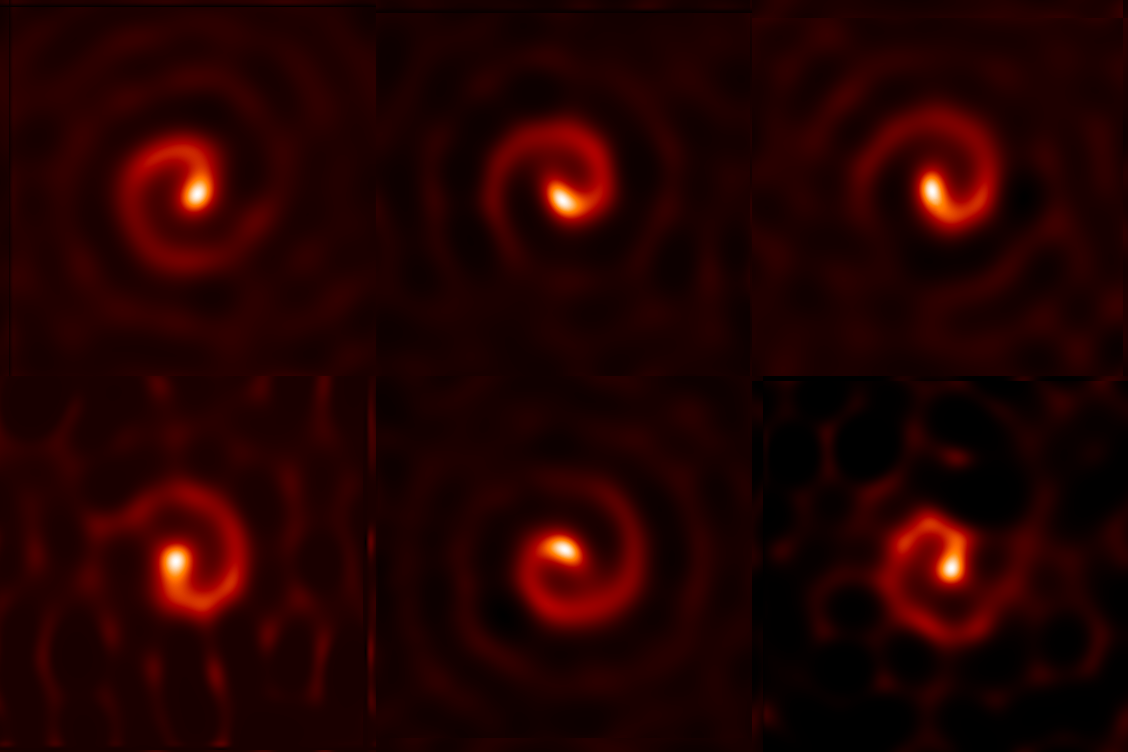
The stills above (click for the full view!) represent different time stages in the formation of a close stellar binary from a collapsing cloud of gas. In a recent study, two researchers from Kyushu University in Japan, Yu Saiki and Masahiro Machida, conduct numerical simulations to track the complicated process of a binary’s formation and evolution over ~400 years. In the above frames, the top left panel shows the fragmentation of the gas cloud into two cores roughly 9,000 years after the cloud initially begins to collapse. The succeeding panels show how the separation between these two protostars shrinks over the next several hundred years and disks of gas form around each star and around the binary pair. Saiki and Machida’s simulations also show the high-velocity jets driven from each protostar in the process (see the video below), and how the twin jets tangle on large scales as the stars orbit one another. The characteristics revealed in these simulations neatly reproduce our observations of protobinary systems. For more information, check out the original article linked below the video.

s

Citation

“Twin Jets and Close Binary Formation,” Yu Saiki and Masahiro N. Machida 2020 ApJL 897 L22. doi:10.3847/2041-8213/ab9d86

By Susanna Kohler 


Tuesday, September 15, 2020

An international research team analysis rules out dark matter destruction as origin of extra radiation in galaxy center

Image caption 1: An artist’s interpretation of the Milky Way shows the “boxy” distribution of stars in the Ga-lactic Center. A research team of physicists said in a newly published study that this shape leaves very little room for excess radiation from the destruction of dark matter par-ticles. (Credit: Oscar Macias)


Image caption 2: This representation of data from the Fermi Gamma-ray Space Telescope after its launch in 2008 shows an excess of high-energy radiation in the Milky Way’s Galactic Center. Many physicists attributed this to the annihilation of weakly interacting dark matter parti-cles, but a research team study has excluded this possibility through a range of particle masses. (Credit: Oscar Macias)


The detection more than a decade ago by the Fermi Gamma-ray Space Telescope of an excess of high-energy radiation in the center of the Milky Way convinced some physicists that they were seeing evidence of the annihilation of dark matter particles, but a team led by a researcher at the Kavli Institute for the Physics and Mathematics of the Universe (Kavli IPMU) has ruled out that interpretation.

In a paper published recently in the journal Physical Review D, the Kavli IPMU Project Researcher Oscar Macias and colleagues at other institutions report that—through an analysis of the Fermi data and an exhaustive series of modelling exercises—they were able to determine that the observed gamma rays could not have been produced by what are called weakly interacting massive particles (WIMPS), most popularly theorized as the stuff of dark matter.

“The crucial point of our recent paper is that, our approach covers the wide range of astro-physical background models that have been used to infer the existence of the Galactic Center excess, and goes beyond them. So, using any of our state-of-the-art background models, we find no need for a dark matter component to be included in our model for this sky region. This allows us to impose very stringent constraints on particle dark matter models,” said Macias.

By eliminating these particles, the destruction of which could generate energies of up to 300 giga-electron volts, the paper’s authors say, they have put the strongest constraints yet on dark matter properties.

“For 40 years or so, the leading candidate for dark matter among particle physicists was a thermal, weakly interacting and weak-scale particle, and this result for the first time rules out that candidate up to very high-mass particles,” said co-author Kevork Abazajian, pro-fessor of physics and astronomy at the University of California, Irvine (UCI).

“In many models, this particle ranges from 10 to 1,000 times the mass of a proton, with more massive particles being less attractive theoretically as a dark matter particle,” add-ed co-author Manoj Kaplinghat, also a UCI professor of physics and astronomy. “In this paper, we’re eliminating dark matter candidates over the favored range, which is a huge improvement in the constraints we put on the possibilities that these are representative of dark matter.” Abazajian said that dark matter signals could be crowded out by other astrophysical phenomena in the Galactic Center—such as star formation, cosmic ray deflection off mo-lecular gas and, most notably, neutron stars and millisecond pulsars—as sources of ex-cess gamma rays detected by the Fermi space telescope.

“We looked at all of the different modelling that goes on in the Galactic Center, including molecular gas, stellar emissions and high-energy electrons that scatter low-energy pho-tons,” said Kavli IPMU’s Macias. “We took over three years to pull all of these new, better models together and examine the emissions, finding that there is little room left for dark matter.”

Macias, who is also a postdoctoral researcher with the GRAPPA Centre at the University of Amsterdam, added that this result would not have been possible without data and software provided by the Fermi Large Area Telescope collaboration.

The group tested all classes of models used in the Galactic Center region for excess emission analyses, and its conclusions remained unchanged. “One would have to craft a diffuse emission model that leaves a big ‘hole’ in them to relax our constraints, and sci-ence doesn’t work that way,” Macias said.

Kaplinghat noted that physicists have predicted that radiation from dark matter annihila-tion would be represented in a neat spherical or elliptical shape emanating from the Galactic Center, but the gamma ray excess detected by the Fermi space telescope after its June 2008 deployment shows up as a triaxial, bar-like structure.

“If you peer at the Galactic Center, you see that the stars are distributed in a boxy way,” he said. “There’s a disk of stars, and right in the center, there’s a bulge that’s about 10 degrees on the sky, and it’s actually a very specific shape—sort of an asymmetric box—and this shape leaves very little room for additional dark matter.”

Does this research rule out the existence of dark matter in the galaxy? “No,” Kaplinghat said. “Our study constrains the kind of particle that dark matter could be. The multiple lines of evidence for dark matter in the galaxy are robust and unaffected by our work.”

Far from considering the team’s findings to be discouraging, Abazajian said they should encourage physicists to focus on concepts other than the most popular ones.

“There are a lot of alternative dark matter candidates out there,” he said. “The search is going to be more like a fishing expedition where you don’t already know where the fish are.”

This project was made possible via funding from the World Premiere International Center Initiative (WPI), an initiative of the Ministry of Education, Culture, Sport, Science and Technology to create world-leading research centres in Japan; the National Science Foundation, and the U.S. Department of Energy Office of Science.

Paper details

Journal: Physical Review D
Title: Strong constraints on thermal relic dark matter from Fermi-LAT observations of the Galactic Center
Authors: Kevork N. Abazajian (1), Shunsaku Horiuchi (2), Manoj Kaplinghat (1), Ryan E. Keeley (1,3), and Oscar Macias (4,5)


Author affiliations:

1. Center for Cosmology, Department of Physics and Astronomy, University of California, Irvine, California 92697, USA
2. Center for Neutrino Physics, Department of Physics, Virginia Tech, Blacksburg, Virgin-ia 24061, USA
3. Korea Astronomy and Space Science Institute, Daejeon 34055, Korea
4. Kavli Institute for the Physics and Mathematics of the Universe (Kavli IPMU, WPI), Uni-versity of Tokyo, Kashiwa, Chiba, 277-8583, Japan 
5. GRAPPA Institute, University of Amsterdam, 1098 XH Amsterdam, Netherlands

DOI: https://doi.org/10.1103/PhysRevD.102.043012  (Published August 20, 2020)
Paper abstract (Physical Review D)
Preprint (arXiv.org) 

Research contact:

Oscar Macias
Project Researcher
Kavli Institute for the Physics and Mathematics of the Universe
The University of Tokyo
E-mail:
oscar.macias@ipmu.jp
TEL: +31 (0)20 525 6316

Media contact:

John Amari
Press officer 
Kavli Institute for the Physics and Mathematics of the Universe
The University of Tokyo
E-mail:
press@ipmu.jp
TEL: 080-4056-2767

Related links:
University of California, Irvine: press release
Femi LAT—Fermi Large Area Telescope collaboration: homepage

Source: Kavli Institute for the Physics and Mathematics of the Universe (Kavli IPMU)


Monday, September 14, 2020

Possible Marker of Life Spotted on Venus

Phosphine detected in Venus's atmosphere 
 
PR Image eso2015b
Venus as seen by ALMA 
 
PR Image eso2015c
Artistic impression of Venus 
 
PR Image eso2015d
Artistic impression of the Venusian surface and atmosphere 
 
PR Image eso2015e
Artistic impression of the Venusian surface and atmosphere (without annotations) 
 
PR Image eso2015f
Phosphine signature in Venus’s spectrum


Videos
 
ESOcast 230 Light: Possible Marker of Life Spotted on Venus
ESOcast 230 Light: Possible Marker of Life Spotted on Venus 
 
Animation: zooming in on Venus
Animation: zooming in on Venus 
 
Animation: a fly-to Venus
 

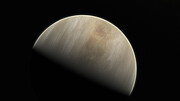
An international team of astronomers today announced the discovery of a rare molecule — phosphine — in the clouds of Venus. On Earth, this gas is only made industrially or by microbes that thrive in oxygen-free environments. Astronomers have speculated for decades that high clouds on Venus could offer a home for microbes — floating free of the scorching surface but needing to tolerate very high acidity. The detection of phosphine could point to such extra-terrestrial “aerial” life.

When we got the first hints of phosphine in Venus’s spectrum, it was a shock!”, says team leader Jane Greaves of Cardiff University in the UK, who first spotted signs of phosphine in observations from the James Clerk Maxwell Telescope (JCMT), operated by the East Asian Observatory, in Hawaiʻi. Confirming their discovery required using 45 antennas of the Atacama Large Millimeter/submillimeter Array (ALMA) in Chile, a more sensitive telescope in which the European Southern Observatory (ESO) is a partner. Both facilities observed Venus at a wavelength of about 1 millimetre, much longer than the human eye can see — only telescopes at high altitude can detect it effectively. 

The international team, which includes researchers from the UK, US and Japan, estimates that phosphine exists in Venus’s clouds at a small concentration, only about twenty molecules in every billion. Following their observations, they ran calculations to see whether these amounts could come from natural non-biological processes on the planet. Some ideas included sunlight, minerals blown upwards from the surface, volcanoes, or lightning, but none of these could make anywhere near enough of it. These non-biological sources were found to make at most one ten thousandth of the amount of phosphine that the telescopes saw.

To create the observed quantity of phosphine (which consists of hydrogen and phosphorus) on Venus, terrestrial organisms would only need to work at about 10% of their maximum productivity, according to the team. Earth bacteria are known to make phosphine: they take up phosphate from minerals or biological material, add hydrogen, and ultimately expel phosphine. Any organisms on Venus will probably be very different to their Earth cousins, but they too could be the source of phosphine in the atmosphere.

While the discovery of phosphine in Venus’s clouds came as a surprise, the researchers are confident in their detection. “To our great relief, the conditions were good at ALMA for follow-up observations while Venus was at a suitable angle to Earth. Processing the data was tricky, though, as ALMA isn’t usually looking for very subtle effects in very bright objects like Venus,” says team member Anita Richards of the UK ALMA Regional Centre and the University of Manchester. “In the end, we found that both observatories had seen the same thing — faint absorption at the right wavelength to be phosphine gas, where the molecules are backlit by the warmer clouds below,” adds Greaves, who led the study published today in Nature Astronomy.

Another team member, Clara Sousa Silva of the Massachusetts Institute of Technology in the US, has investigated phosphine as a “biosignature” gas of non-oxygen-using life on planets around other stars, because normal chemistry makes so little of it. She comments: “Finding phosphine on Venus was an unexpected bonus! The discovery raises many questions, such as how any organisms could survive. On Earth, some microbes can cope with up to about 5% of acid in their environment — but the clouds of Venus are almost entirely made of acid.

The team believes their discovery is significant because they can rule out many alternative ways to make phosphine, but they acknowledge that confirming the presence of “life” needs a lot more work. Although the high clouds of Venus have temperatures up to a pleasant 30 degrees Celsius, they are incredibly acidic — around 90% sulphuric acid — posing major issues for any microbes trying to survive there.

ESO astronomer and ALMA European Operations Manager Leonardo Testi, who did not participate in the new study, says: “The non-biological production of phosphine on Venus is excluded by our current understanding of phosphine chemistry in rocky planets' atmospheres. Confirming the existence of life on Venus's atmosphere would be a major breakthrough for astrobiology; thus, it is essential to follow-up on this exciting result with theoretical and observational studies to exclude the possibility that phosphine on rocky planets may also have a chemical origin different than on Earth.” 

More observations of Venus and of rocky planets outside our Solar System, including with ESO’s forthcoming Extremely Large Telescope, may help gather clues on how phosphine can originate on them and contribute to the search for signs of life beyond Earth.


More Information

This research was presented in the paper “Phosphine Gas in the Cloud Decks of Venus” to appear in Nature Astronomy.

The team is composed of Jane S. Greaves (School of Physics & Astronomy, Cardiff University, UK [Cardiff]), Anita M. S. Richards (Jodrell Bank Centre for Astrophysics, The University of Manchester, UK), William Bains (Department of Earth, Atmospheric, and Planetary Sciences, Massachusetts Institute of Technology, USA [MIT]), Paul Rimmer (Department of Earth Sciences and Cavendish Astrophysics, University of Cambridge and MRC Laboratory of Molecular Biology, Cambridge, UK), Hideo Sagawa (Department of Astrophysics and Atmospheric Science, Kyoto Sangyo University, Japan), David L. Clements (Department of Physics, Imperial College London, UK [Imperial]), Sara Seager (MIT), Janusz J. Petkowski (MIT), Clara Sousa-Silva (MIT), Sukrit Ranjan (MIT), Emily Drabek-Maunder (Cardiff and Royal Observatory Greenwich, London, UK), Helen J. Fraser (School of Physical Sciences, The Open University, Milton Keynes, UK), Annabel Cartwright (Cardiff), Ingo Mueller-Wodarg (Imperial), Zhuchang Zhan (MIT), Per Friberg (EAO/JCMT), Iain Coulson (EAO/JCMT), E’lisa Lee (EAO/JCMT) and Jim Hoge (EAO/JCMT).

An accompanying paper by some of team members, titled “The Venusian Lower Atmosphere Haze as a Depot for Desiccated Microbial Life: A Proposed Life Cycle for Persistence of the Venusian Aerial Biosphere”, was published in Astrobiology in August 2020. Another related study by some of the same authors, "Phosphine as a Biosignature Gas in Exoplanet Atmospheres", was published in Astrobiology in January 2020.

The European Southern Observatory (ESO) is the foremost intergovernmental astronomy organisation in Europe and the world’s most productive ground-based astronomical observatory by far. It has 16 Member States: Austria, Belgium, the Czech Republic, Denmark, France, Finland, Germany, Ireland, Italy, the Netherlands, Poland, Portugal, Spain, Sweden, Switzerland and the United Kingdom, along with the host state of Chile and with Australia as a Strategic Partner. ESO carries out an ambitious programme focused on the design, construction and operation of powerful ground-based observing facilities enabling astronomers to make important scientific discoveries. ESO also plays a leading role in promoting and organising cooperation in astronomical research. ESO operates three unique world-class observing sites in Chile: La Silla, Paranal and Chajnantor. At Paranal, ESO operates the Very Large Telescope and its world-leading Very Large Telescope Interferometer as well as two survey telescopes, VISTA working in the infrared and the visible-light VLT Survey Telescope. Also at Paranal ESO will host and operate the Cherenkov Telescope Array South, the world’s largest and most sensitive gamma-ray observatory. ESO is also a major partner in two facilities on Chajnantor, APEX and ALMA, the largest astronomical project in existence. And on Cerro Armazones, close to Paranal, ESO is building the 39-metre Extremely Large Telescope, the ELT, which will become “the world’s biggest eye on the sky”. 

The Atacama Large Millimeter/submillimeter Array (ALMA), an international astronomy facility, is a partnership of ESO, the U.S. National Science Foundation (NSF) and the National Institutes of Natural Sciences (NINS) of Japan in cooperation with the Republic of Chile. ALMA is funded by ESO on behalf of its Member States, by NSF in cooperation with the National Research Council of Canada (NRC) and the Ministry of Science and Technology (MOST) and by NINS in cooperation with the Academia Sinica (AS) in Taiwan and the Korea Astronomy and Space Science Institute (KASI). ALMA construction and operations are led by ESO on behalf of its Member States; by the National Radio Astronomy Observatory (NRAO), managed by Associated Universities, Inc. (AUI), on behalf of North America; and by the National Astronomical Observatory of Japan (NAOJ) on behalf of East Asia. The Joint ALMA Observatory (JAO) provides the unified leadership and management of the construction, commissioning and operation of ALMA. 

With a diameter of 15m (50 feet) the James Clerk Maxwell Telescope (JCMT) is the largest single dish astronomical telescope in the world designed specifically to operate in the submillimetre wavelength region of the electromagnetic spectrum. The JCMT is used to study our Solar System, interstellar and circumstellar dust and gas, evolved stars, and distant galaxies. It is situated in the science reserve of Maunakea, Hawaiʻi, at an altitude of 4092m (13 425 feet). The JCMT is operated by the East Asian Observatory on behalf of NAOJ; ASIAA; KASI; CAMS as well as the National Key R&D Program of China. Additional funding support is provided by the STFC and participating universities in the UK and Canada.


Links


Contacts

Jane Greaves (study author)
Cardiff University
Cardiff, UK
Email:
GreavesJ1@cardiff.ac.uk

Anita Richards (study author)
UK ALMA Regional Centre and University of Manchester
Manchester, UK
Email:
a.m.s.richards@manchester.ac.uk

Clara Sousa Silva (study author)
Massachusetts Institute of Technology
Cambridge, USA
Tel: +1 617 253 6283
Email:
cssilva@mit.edu

Leonardo Testi (contact for independent comment on the study)
European Southern Observatory
Garching bei München, Germany
Tel: +49 89 3200 6541
Email:
ltesti@eso.org

Dave Clements (study author)
Imperial College
London, UK
Email:
d.clements@imperial.ac.uk

Paul Rimmer (study author)
University of Cambridge
Cambridge, UK
Email:
pbr27@cam.ac.uk

William Bains (study author)
Massachusetts Institute of Technology
Cambridge, USA
Email:
bains@mit.edu

Bárbara Ferreira
ESO Public Information Officer
Garching bei München, Germany
Tel: +49 89 3200 6670
Cell: +49 151 241 664 00
Email:
pio@eso.org

Source: ESO/News


Friday, September 11, 2020

Galactic Census Reveals Origin of Most "Extreme" Galaxies

A wide field view of the central region of the Virgo Cluster, measuring 4.4 million light years on each side, from the Sloan Digital Sky Survey. Some of Virgo's brightest member galaxies are labeled, including Messier 87, or M87, which is located close to the cluster center. Insets show deep images of two structurally extreme galaxies, taken with the MegaCam instrument on CFHT as part of the Next Generation Virgo Cluster Survey. An ultra-compact dwarf is within the crosshairs in the lower inset, while an ultra-diffuse galaxy is featured in the upper inset. These galaxies are nearly a thousand times fainter than the bright galaxies visible on this image. Although the compact and diffuse galaxies contain roughly the same number of stars, and their total brightness is similar, they differ in area by a factor of more than 20,000. The scale bars in each inset represent a distance of 10,000 light years. Image credits: Sloan Digital Sky Survey, Canada-France-Hawaii Telescope and the NGVS team.

Astronomers have found that the key to understanding galaxies with "extreme" sizes, either small or large, may lie in their surroundings. In two related studies, an international team found that galaxies that are either "ultra-compact" or "ultra-diffuse" relative to normal galaxies of comparable brightness appear to reside in dense environments, i.e., regions that contain large numbers of galaxies. This has led the team to speculate that these "extreme" objects could have started out resembling normal galaxies, but then evolved to have unusual sizes through interactions with other galaxies.

The team identified both ultra-compact and ultra-diffuse galaxies as part of an unprecedented census of galaxies residing in the nearby Virgo cluster. The investigation used data from the Next Generation Virgo Cluster Survey (NGVS) obtained at the Canada-France-Hawaii Telescope (CFHT) using MegaCam, a wide-field, optical camera. At a distance of 50 million light years, Virgo is the galaxy cluster nearest to the Milky Way, and contains several thousand member galaxies, the majority of which are revealed, for the first time, in the NGVS data.

Astronomers discovered ultra-compact dwarf galaxies (UCDs) a quarter century ago, and they are the densest known galaxies in the Universe. Competing theories describe UCDs as either large star clusters, or as the remnants of larger galaxies that have been stripped of their stellar envelopes.

"We found hundreds of UCDs in the nearby Virgo galaxy cluster, and at least some of them appear to have started their lives as larger galaxies," said Dr. Chengze Liu of Shanghai Jiao Tong University, lead author of the first study.

While UCDs are similar in appearance to a large star cluster, a number of UCDs in this study were found with faint stellar envelopes surrounding the central, compact core. These envelopes could be the last remnants of a galaxy that has gradually been stripped away by gravitational tidal forces from neighboring galaxies. Additionally, UCDs were found to inhabit preferentially the regions of the Virgo cluster with the highest galaxy densities. Together, these pieces of evidence point to an environmentally-induced transformation as being responsible for producing some UCDs.

Ultra-diffuse galaxies (UDGs) are a mystery at the other end of the size spectrum. They are much larger, and more diffuse, than typical galaxies with similar brightness. Some theories suggest that UDGs are massive galaxies whose gas --- the fuel for their star formation --- was removed before many stars could form. Others suggest that they were once normal galaxies that have been made more diffuse through mergers and interactions.

"We found that the ultra-diffuse galaxies in the Virgo cluster are more concentrated toward the dense cluster core, indicating that a dense environment may be important for their formation," said Dr. Sungsoon Lim of the University of Tampa, and the lead author of the second study. "The diversity in their properties indicate that while no single process has given rise to all objects within the UDG class, at least some UDGs have appearances suggesting their diffuse nature is due to tidal interactions or to the merger of low-mass galaxies."

Another mystery is that some ultra-diffuse galaxies were found to contain significant populations of globular star clusters. "The intense star-forming events needed to make globular clusters generally make a galaxy less, rather than more diffuse, so understanding how we get globular clusters in ultra-diffuse galaxies is an interesting challenge," said Prof. Eric Peng of Peking University's Kavli Institute for Astronomy and Astrophysics, and co-author on both studies.

"To find galaxies that are truly unusual, you first need to understand the properties of so-called normal galaxies," said Dr. Patrick Côté of the National Research Council of Canada’s Herzberg Astronomy and Astrophysics Research Center, and an author on both studies. "NGVS provides the deepest, most complete look at the entirety of the Virgo cluster galaxy population, allowing us to find the most compact and most diffuse galaxies, advancing our understanding of how they fit into the general picture of galaxy formation."

These research results have been presented in two papers that were published recently in the Astrophysical Journal ( Lim et al. 2020; Liu et al. 2020).

NGVS is based on observations obtained with MegaPrime/MegaCam, a joint project of the Canada-France-Hawaii Telescope and CEA/DAPNIA, and on data produced and hosted at the Canadian Astronomy Data Centre. CFHT is operated by the National Research Council of Canada, the Institute National des Sciences de l'Universe of the Centre National de la Recherche Scientifique of France, and the University of Hawai’i.laychak@cfht.hawaii.edu


Contacts

Dr. Eric Peng
Department of Astronomy
Kavli Institute for Astronomy and Astrophysics
Peking University, Beijing, China
peng@pku.edu.cn

Dr. Patrick Côté
Herzberg Astronomy and Astrophysics Research Center
National Research Council of Canada
Victoria, BC, Canada
patrick.cote@nrc-cnrc.gc.ca

Dr. Chengze Liu
Department of Astronomy
School of Physics and Astronomy
Shanghai Jiao Tong University
Shanghai, China
czliu@sjtu.edu.cn

Dr. Sungsoon Lim
University of Tampa
Tampa, FL, USA
slim@ut.edu

Media Contact

Mary Beth Laychak
Canada-France-Hawaii Telescope
laychak@cfht.hawaii.edu


Thursday, September 10, 2020

New Hubble Data Suggests There is an Ingredient Missing from Current Dark Matter Theories

Hubble Sheds Light on Small-Scale Concentrations of Dark Matter (Artist’s Impression)
 
Hubble Examines the Galaxy Cluster MACSJ 1206
 
Small-Scale Concentrations of Dark Matter (Artist’s Impression)
 
Hubble image of galaxy cluster MACS J0416.1–2403
 
Hubble image of Abell S1063


Videos

Hubble Sheds Light on Small-Scale Concentrations of Dark Matter
Hubble Sheds Light on Small-Scale Concentrations of Dark Matter 
 
Animation of gravitational lensing (artist’s impression)


Observations by the NASA/ESA Hubble Space Telescope and the European Southern Observatory’s Very Large Telescope (VLT) in Chile have found that something may be missing from the theories of how dark matter behaves. This missing ingredient may explain why researchers have uncovered an unexpected discrepancy between observations of the dark matter concentrations in a sample of massive galaxy clusters and theoretical computer simulations of how dark matter should be distributed in clusters. The new findings indicate that some small-scale concentrations of dark matter produce lensing effects that are 10 times stronger than expected.

Dark matter is the invisible glue that keeps stars, dust, and gas together in a galaxy. This mysterious substance makes up the bulk of a galaxy's mass and forms the foundation of our Universe's large-scale structure. Because dark matter does not emit, absorb, or reflect light, its presence is only known through its gravitational pull on visible matter in space. Astronomers and physicists are still trying to pin down what it is.

Galaxy clusters, the most massive and recently assembled structures in the Universe, are also the largest repositories of dark matter. Clusters are composed of individual member galaxies that are held together largely by the gravity of dark matter.

"Galaxy clusters are ideal laboratories in which to study whether the numerical simulations of the Universe that are currently available reproduce well what we can infer from gravitational lensing," said Massimo Meneghetti of the INAF-Observatory of Astrophysics and Space Science of Bologna in Italy, the study's lead author [1].

"We have done a lot of testing of the data in this study, and we are sure that this mismatch indicates that some physical ingredient is missing either from the simulations or from our understanding of the nature of dark matter," added Meneghetti.

"There's a feature of the real Universe that we are simply not capturing in our current theoretical models," added Priyamvada Natarajan of Yale University in Connecticut, USA, one of the senior theorists on the team. "This could signal a gap in our current understanding of the nature of dark matter and its properties, as these exquisite data have permitted us to probe the detailed distribution of dark matter on the smallest scales."

The distribution of dark matter in clusters is mapped by measuring the bending of light — the gravitational lensing effect — that they produce. The gravity of dark matter concentrated in clusters magnifies and warps light from distant background objects. This effect produces distortions in the shapes of background galaxies which appear in images of the clusters. Gravitational lensing can often also produce multiple images of the same distant galaxy.

The higher the concentration of dark matter in a cluster, the more dramatic its light-bending effect. The presence of smaller-scale clumps of dark matter associated with individual cluster galaxies enhances the level of distortions. In some sense, the galaxy cluster acts as a large-scale lens that has many smaller lenses embedded within it.

Hubble's crisp images were taken by the telescope's Wide Field Camera 3 and Advanced Camera for Surveys. Coupled with spectra from the European Southern Observatory's Very Large Telescope (VLT), the team produced an accurate, high-fidelity, dark-matter map. By measuring the lensing distortions astronomers could trace out the amount and distribution of dark matter. The three key galaxy clusters, MACS J1206.2-0847, MACS J0416.1-2403, and Abell S1063, were part of two Hubble surveys: The Frontier Fields and the Cluster Lensing And Supernova survey with Hubble (CLASH) programs.

To the team's surprise, in addition to the dramatic arcs and elongated features of distant galaxies produced by each cluster's gravitational lensing, the Hubble images also revealed an unexpected number of smaller-scale arcs and distorted images nested near each cluster's core, where the most massive galaxies reside. The researchers believe the nested lenses are produced by the gravity of dense concentrations of matter inside the individual cluster galaxies. Follow-up spectroscopic observations measured the velocity of the stars orbiting inside several of the cluster galaxies to therby pin down their masses.

"The data from Hubble and the VLT provided excellent synergy," shared team member Piero Rosati of the Università degli Studi di Ferrara in Italy, who led the spectroscopic campaign. "We were able to associate the galaxies with each cluster and estimate their distances."

"The speed of the stars gave us an estimate of each individual galaxy's mass, including the amount of dark matter," added team member Pietro Bergamini of the INAF-Observatory of Astrophysics and Space Science in Bologna, Italy.

By combining Hubble imaging and VLT spectroscopy, the astronomers were able to identify dozens of multiply imaged, lensed, background galaxies. This allowed them to assemble a well-calibrated, high-resolution map of the mass distribution of dark matter in each cluster.

The team compared the dark-matter maps with samples of simulated galaxy clusters with similar masses, located at roughly the same distances. The clusters in the computer model did not show any of the same level of dark-matter concentration on the smallest scales — the scales associated with individual cluster galaxies.

"The results of these analyses further demonstrate how observations and numerical simulations go hand in hand", said team member Elena Rasia of the INAF-Astronomical Observatory of Trieste, Italy.

"With advanced cosmological simulations, we can match the quality of observations analysed in our paper, permitting detailed comparisons like never before," added Stefano Borgani of the Università degli Studi di Trieste, Italy.

Astronomers, including those of this team, look forward to continuing to probe dark matter and its mysteries in order to finally pin down its nature.


Notes

[1] The team’s paper will appear in the 11 September 2020 issue of the journal Science.


More information

The Hubble Space Telescope is a project of international cooperation between ESA and NASA.

The international team of astronomers in this study consists of M. Meneghetti, G. Davoli, P. Bergamini, P. Rosati, P. Natarajan, C. Giocoli, G. B. Caminha, R. B. Metcalf, E. Rasia, S. Borgani, F. Calura, C. Grillo, A. Mercurio, and E. Vanzella. 

Image credit: NASA, ESA, G. Caminha (University of Groningen), M. Meneghetti (Observatory of Astrophysics and Space Science of Bologna), P. Natarajan (Yale University), the CLASH team, and M. Kornmesser (ESA/Hubble)


Links


Contacts

Massimo Meneghetti
INAF-Osservatorio di Astrofisica e Scienza dello Spazio di Bologna
Bologna, Italy
Email:
Massimo.Meneghetti@inaf.it

Priyamvada Natarajan
Department of Astronomy & Physics, Yale University
Connecticut, USA
Email:
Priyamvada.Natarajan@yale.edu

Bethany Downer
ESA/Hubble, Public Information Officer
Garching, Germany
Email:
Bethany.Downer@partner.eso.org


Wednesday, September 09, 2020

A Pocketful of Stars

Credit:  ESA/Hubble & NASA, J. Kalirai

Many colourful stars are packed close together in this image of the globular cluster NGC 1805, taken by the NASA/ESA Hubble Space Telescope. This tight grouping of thousands of stars is located near the edge of the Large Magellanic Cloud, a satellite galaxy of our own Milky Way. The stars orbit closely to one another, like bees swarming around a hive. In the dense centre of one of these clusters, stars are 100 to 1000 times closer together than the nearest stars are to our Sun, making planetary systems around them unlikely.

The striking difference in star colours is illustrated beautifully in this image, which combines two different  types of light: blue stars, shining brightest in near-ultraviolet light, and red stars, illuminated in red and near-infrared. Space telescopes like Hubble can observe in the ultraviolet because they are positioned above Earth’s atmosphere, which absorbs most of this wavelength, making it inaccessible to ground-based facilities.

This young globular cluster can be seen from the southern hemisphere, in the Dorado constellation, which is Portugese for dolphinfish. Usually, globular clusters contain stars which are born at the same time; however, NGC 1805 is unusual as it appears to host two different populations  of stars with ages millions of years apart. Observing such clusters of stars can help astronomers understand how stars evolve, and what factors determine whether they end their lives as white dwarfs, or explode as supernovae.

Source: ESA/Hubbles/News


Tuesday, September 08, 2020

The Orbital Planes of "Young Planets" Are Not Inclined? : New Knowledge About the Evolution of Planetary Systems

Figure 1: Conceptual illustration of a young planetary system orbiting near a star other than the Sun Credit: Astrobiology Center

Figure 2: Illustrations of planetary systems. (a) represents a case where the rotation axis of a star (red line) is aligned with the orbital axis of a planet (green line), while (b) represents a case where the orbital axis of a planet is misaligned with the stellar rotation. Theories of evolution of planetary systems predict that a misalignment like (b) results from gravitational interactions between planets and tidal interactions with the star. Therefore, it is observationally important to observe the evolution of the misalignment between the planetary orbit and the star's rotation as a function of the ages of the planetary systems. (Credit: Astrobiology Center)

Researchers from Tokyo Institute of Technology, the Astrobiology Center of the National Institutes of Natural Sciences, and the University of Hawaii performed spectroscopic observation of two recently-discovered young planetary systems by using the new infrared spectrograph IRD mounted on the Subaru Telescope, and they determined that the orbital axis of the planet and the axis of rotation of the star were virtually aligned in both of these young planetary systems. This is the first time in the world that orbital inclination has been obtained about a young planet with an age of around 20 million years; this is extremely important data for understanding the evolution of planetary systems.

The search for planets orbiting stars other than the Sun (exoplanets) has focused on main sequence stars that are similar to the Sun. One of the reasons for this is that these types of stars have low levels of surface activities, such as flares and starspots, which makes it easier to find planets. Thanks to improvements in observational techniques in recent years, however, exoplanets orbiting near young stars immediately after formation have begun to be discovered.

Since it is thought that primordial information related to the formation of planets is still relatively unchanged in the case of young planets, they are valuable observation targets for investigating the origins of planetary systems. In particular, theories suggest that the orbital inclination of a planet (the angle between the orbital axis of the planet and the axis of rotation of the star, Figure 2) changes over time due to gravitational interactions between planets and tidal interactions with the star. While the orbital inclinations of over 100 planetary systems have already been investigated, all but one of these observations were of main sequence planetary systems with an age of 1 billion years or greater (as of the release date of this article). It is necessary to examine the orbital inclination of young planetary systems in order to determine the kinds of orbits that planets have when they are first formed.

A team of researchers, consisting of members from the Tokyo Institute of Technology, the Astrobiology Center (ABC), and the University of Hawaii focused on two young stars with recently-discovered planets, "AU Microscopii" (AU Mic) and "K2-25." AU Mic and K2-25 belong to young stellar groups, the Beta Pictoris Moving Group (age around 23 million years) and the Hyades Star Cluster (age around 600 million years), respectively (see Note 1). A transiting planet (see Note 2) about the size of Neptune has been found around each star. Although the two target stars are dim and hard to observe in the visible light range because of their low surface temperatures, they are bright and easily observable in the infrared region. Furthermore, it is also expected that the surface activities in young stars have less effect in the infrared region. The research team therefore carried out observations using the new infrared spectrograph IRD (Infrared Doppler) of the Subaru Telescope.

Using the Doppler shadow technique (see Note 3), in which the motion of the shadow of a transiting planet in the stellar spectrum is examined while taking the Doppler effect into account, the team determined that the orbital axis of the planet and the axis of rotation of the star are well aligned in both cases. In particular, planet around AU Mic (AU Mic b), whose age is estimated to be around 20 million years, has become the youngest planet whose orbital alignment is known.

The fact that the orbital planes of these young planets are not inclined has important implications for the interpretation of previous observation results. Although the orbital plane of the planets in the Solar System is not significantly inclined, it is known that about one-third of systems where the orbital inclination of planets has been measured have large inclinations. The mechanism behind this phenomenon and its timing have been under research for a long time. In the present study, the fact that the orbital planes of these young planets were not inclined suggests that the orbits of planets are not inclined immediately after formation, and that instead, in some systems, the orbital plane becomes inclined after some time has passed after formation. However, observation of young planetary systems has only just begun, and it is expected that the origin of inclined planets will be further clarified by performing similar observations of more young planetary systems in the future.

These research results were published as "Limits on the Spin–Orbit Angle and Atmospheric Escape for the 22 Myr Old Planet AU Mic b" by T. Hirano et al. in The Astrophysical Journal Letters (August 7, 2020), and "Zodiacal Exoplanets in Time. XI. The Orbit and Radiation Environment of the Young M Dwarf-Hosted Planet K2-25b" by E. Gaidos et al. in The Monthly Notices of the Royal Astronomical Society Letters (August 14, 2020).


Note 1: While it is difficult to determine the age of a star, especially for a young star, the ages of the two planetary systems are assumed to be virtually the same as that of the stellar groups to which they belong.

Note 2: Exoplanetary systems where a portion of the surface of the star is obscured periodically by the transit of the planet in front of the star are known as "transiting planetary systems." Transits can be observed if the orbital plane of a planet is nearly aligned with the line of sight of the observer.

Note 3: "Doppler shadow" is a way to analyze the shadow of a planet in the absorption lines of the host star’s spectrum. The stellar absorption lines are broadened due to the Doppler effect of the stellar rotation. When a transiting planet blocks a small portion of the stellar surface, the shadow of the planet appears in the broadened stellar absorption lines. The orbital axis of the planet can be determined by analyzing the time variation of the planet's shadow. Because the "Rossiter-McLaughlin effect" represents a phenomenon where the shapes of the absorption lines are modified or stellar radial velocity appears to be changed by the planet's shadow, the Doppler shadow can be described as a way to capture the Rossiter-McLaughlin effect.

Relevant Links

Source: Subaru Telescope


Friday, September 04, 2020

A Tilted Wonder

NGC 2188
Credit: ESA/Hubble & NASA, R. TullyNGC 2188

The blue and orange stars of the faint galaxy named NGC 2188 sparkle in this image taken with the NASA/ESA Hubble Space Telescope. Although NGC 2188 appears at first glance to consist solely of a narrow band of stars, it is classified by astronomers as a barred-spiral galaxy. It appears this way from our viewpoint on Earth as the centre and spiral arms of the galaxy are tilted away from us, with only the very narrow outer edge of the galaxy’s disc visible to us. Astronomers liken this occurrence to turning a dinner plate in your hands so you see only its outer edge. The true shape of the galaxy was identified by studying the distribution of the stars in the inner central bulge and outer disc and by observing the stars’ colours.

NGC 2188 is estimated to be just half the size of our Milky Way, at 50 000 light-years across, and it is situated in the constellation of Columba (The Dove). Named in the late 1500s after Noah’s dove in biblical stories, the small constellation consists of many faint yet beautiful stars and astronomical objects.

Source: ESA/Hubble/News


Thursday, September 03, 2020

New Observations Show Planet-forming Disc Torn Apart by its Three Central Stars

 
The inner ring of GW Orionis: model and SPHERE observations 
 
The inner ring of GW Orionis: model and SPHERE observations 
 
ALMA and SPHERE view of GW Orionis (superimposed) 
 
GW Orionis in the constellation of Orion 
 

 Videos

ESOcast 229 Light: Planet-forming Disc Torn Apart by its Three Central Stars
ESOcast 229 Light: Planet-forming Disc Torn Apart by its Three Central Stars 
 
Artistic animation of the warped and torn apart disc of GW Orionis
Artistic animation of the warped and torn apart disc of GW Orionis 
 
Artistic animation of the stellar movements in GW Orionis
Artistic animation of the stellar movements in GW Orionis 
 
How GW Orionis got its ring (computer simulation)


A team of astronomers have identified the first direct evidence that groups of stars can tear apart their planet-forming disc, leaving it warped and with tilted rings. This new research suggests exotic planets, not unlike Tatooine in Star Wars, may form in inclined rings in bent discs around multiple stars. The results were made possible thanks to observations with the European Southern Observatory’s Very Large Telescope (ESO’s VLT) and the Atacama Large Millimeter/submillimeter Array (ALMA).

Our Solar System is remarkably flat, with the planets all orbiting in the same plane. But this is not always the case, especially for planet-forming discs around multiple stars, like the object of the new study: GW Orionis. This system, located just over 1300 light-years away in the constellation of Orion, has three stars and a deformed, broken-apart disc surrounding them.

Our images reveal an extreme case where the disc is not flat at all, but is warped and has a misaligned ring that has broken away from the disc,” says Stefan Kraus, a professor of astrophysics at the University of Exeter in the UK who led the research published today in the journal Science. The misaligned ring is located in the inner part of the disc, close to the three stars.

The new research also reveals that this inner ring contains 30 Earth-masses of dust, which could be enough to form planets. “Any planets formed within the misaligned ring will orbit the star on highly oblique orbits and we predict that many planets on oblique, wide-separation orbits will be discovered in future planet imaging campaigns, for instance with the ELT,” says team member Alexander Kreplin of the University of Exeter, referring to ESO’s Extremely Large Telescope, which is planned to start operating later this decade. Since more than half the stars in the sky are born with one or more companions, this raises an exciting prospect: there could be an unknown population of exoplanets that orbit their stars on very inclined and distant orbits.

To reach these conclusions, the team observed GW Orionis for over 11 years. Starting in 2008, they used the AMBER and later the GRAVITY instruments on ESO’s VLT Interferometer in Chile, which combines the light from different VLT telescopes, to study the gravitational dance of the three stars in the system and map their orbits. “We found that the three stars do not orbit in the same plane, but their orbits are misaligned with respect to each other and with respect to the disc,” says Alison Young of the Universities of Exeter and Leicester and a member of the team.

They also observed the system with the SPHERE instrument on ESO’s VLT and with ALMA, in which ESO is a partner, and were able to image the inner ring and confirm its misalignment. ESO’s SPHERE also allowed them to see, for the first time, the shadow that this ring casts on the rest of the disc. This helped them figure out the 3D shape of the ring and the overall disc.

The international team, which includes researchers from the UK, Belgium, Chile, France and the US, then combined their exhaustive observations with computer simulations to understand what had happened to the system. For the first time, they were able to clearly link the observed misalignments to the theoretical “disc-tearing effect”, which suggests that the conflicting gravitational pull of stars in different planes can warp and break their discs.

Their simulations showed that the misalignment in the orbits of the three stars could cause the disc around them to break into distinct rings, which is exactly what they see in their observations. The observed shape of the inner ring also matches predictions from numerical simulations on how the disc would tear.

Interestingly, another team who studied the same system using ALMA believe another ingredient is needed to understand the system. “We think that the presence of a planet between these rings is needed to explain why the disc tore apart,” says Jiaqing Bi of the University of Victoria in Canada who led a study of GW Orionis published in The Astrophysical Journal Letters in May this year. His team identified three dust rings in the ALMA observations, with the outermost ring being the largest ever observed in planet-forming discs.

Future observations with ESO’s ELT and other telescopes may help astronomers fully unravel the nature of GW Orionis and reveal young planets forming around its three stars.


More Information

This research was presented in the paper “A triple star system with a misaligned and warped circumstellar disk shaped by disk tearing” to appear in Science (doi: 10.1126/science.aba4633).

The team is composed of Stefan Kraus (University of Exeter, School of Physics & Astronomy, UK [Exeter]) Alexander Kreplin (Exeter), Alison K. Young (Exeter and School of Physics and Astronomy, University of Leicester, UK), Matthew R. Bate (Exeter), John D. Monnier (University of Michigan, USA [Michigan]), Tim J. Harries (Exeter), Henning Avenhaus (Max Planck Institute for Astronomy, Heidelberg, Germany), Jacques Kluska (Exeter and Instituut voor Sterrenkunde, KU Leuven, Belgium [KU Leuven]), Anna S. E. Laws (Exeter), Evan A. Rich (Michigan), Matthew Willson (Exeter and Georgia State University, USA), Alicia N. Aarnio (University of North Carolina Greensboro, USA), Fred C. Adams (Michigan), Sean M. Andrews (Center for Astrophysics | Harvard & Smithsonian, USA [CfA]), Narsireddy Anugu (Exeter, Michigan and Steward Observatory, University of Arizona, USA), Jaehan Bae (Michigan and Carnegie Institution for Science, Washington, USA), Theo ten Brummelaar (The CHARA Array of Georgia State University, California, USA), Nuria Calvet (Michigan), Michel Cure (Instituto de Fisica y Astronomia, Universidad de Valparaiso, Chile), Claire L. Davies (Exeter), Jacob Ennis (Michigan), Catherine Espaillat (Michigan and Boston University, USA), Tyler Gardner (Michigan), Lee Hartmann (Michigan), Sasha Hinkley (Exeter), Aaron Labdon (Exeter), Cyprien Lanthermann (KU Leuven), Jean-Baptiste LeBouquin (Michigan and Universite Grenoble Alpes, CNRS, IPAG, France), Gail H. Schaefer (CHARA), Benjamin R. Setterholm (Michigan), David Wilner (CfA), and Zhaohuan Zhu (University of Nevada, USA).

ESO is the foremost intergovernmental astronomy organisation in Europe and the world’s most productive ground-based astronomical observatory by far. It has 16 Member States: Austria, Belgium, the Czech Republic, Denmark, France, Finland, Germany, Ireland, Italy, the Netherlands, Poland, Portugal, Spain, Sweden, Switzerland and the United Kingdom, along with the host state of Chile and with Australia as a Strategic Partner. ESO carries out an ambitious programme focused on the design, construction and operation of powerful ground-based observing facilities enabling astronomers to make important scientific discoveries. ESO also plays a leading role in promoting and organising cooperation in astronomical research. ESO operates three unique world-class observing sites in Chile: La Silla, Paranal and Chajnantor. At Paranal, ESO operates the Very Large Telescope and its world-leading Very Large Telescope Interferometer as well as two survey telescopes, VISTA working in the infrared and the visible-light VLT Survey Telescope. Also at Paranal ESO will host and operate the Cherenkov Telescope Array South, the world’s largest and most sensitive gamma-ray observatory. ESO is also a major partner in two facilities on Chajnantor, APEX and ALMA, the largest astronomical project in existence. And on Cerro Armazones, close to Paranal, ESO is building the 39-metre Extremely Large Telescope, the ELT, which will become “the world’s biggest eye on the sky”. 

The Atacama Large Millimeter/submillimeter Array (ALMA), an international astronomy facility, is a partnership of ESO, the U.S. National Science Foundation (NSF) and the National Institutes of Natural Sciences (NINS) of Japan in cooperation with the Republic of Chile. ALMA is funded by ESO on behalf of its Member States, by NSF in cooperation with the National Research Council of Canada (NRC) and the National Science Council of Taiwan (NSC) and by NINS in cooperation with the Academia Sinica (AS) in Taiwan and the Korea Astronomy and Space Science Institute (KASI). ALMA construction and operations are led by ESO on behalf of its Member States; by the National Radio Astronomy Observatory (NRAO), managed by Associated Universities, Inc. (AUI), on behalf of North America; and by the National Astronomical Observatory of Japan (NAOJ) on behalf of East Asia. The Joint ALMA Observatory (JAO) provides the unified leadership and management of the construction, commissioning and operation of ALMA.


Links


Contacts

Stefan Kraus
Associate Professor in Astrophysics, University of Exeter
Exeter, UK
Tel: +44 1392 724125
Email: S.Kraus@exeter.ac.uk

Alexander Kreplin
Postdoctoral Research Fellow, University of Exeter
Exeter, UK
Tel: +44 1392 725571
Email: A.Kreplin@exeter.ac.uk

Alison Young
Postdoctoral Research Associate, University of Leicester
Leicester, UK
Tel: +44 116 3736281
Email: alison.young@leicester.ac.uk

Bárbara Ferreira
ESO Public Information Officer
Garching bei München, Germany
Tel: +49 89 3200 6670
Cell: +49 151 241 664 00
Email: pio@eso.org 

Source: ESO/News