Wednesday, July 09, 2014

VLT Clears Up Dusty Mystery

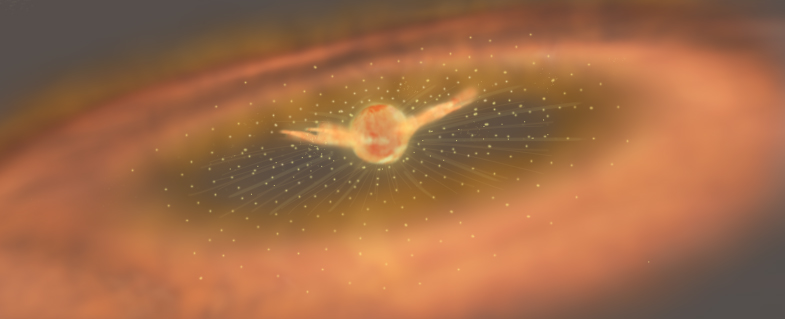
Artist’s impression of dust formation around a supernova explosion

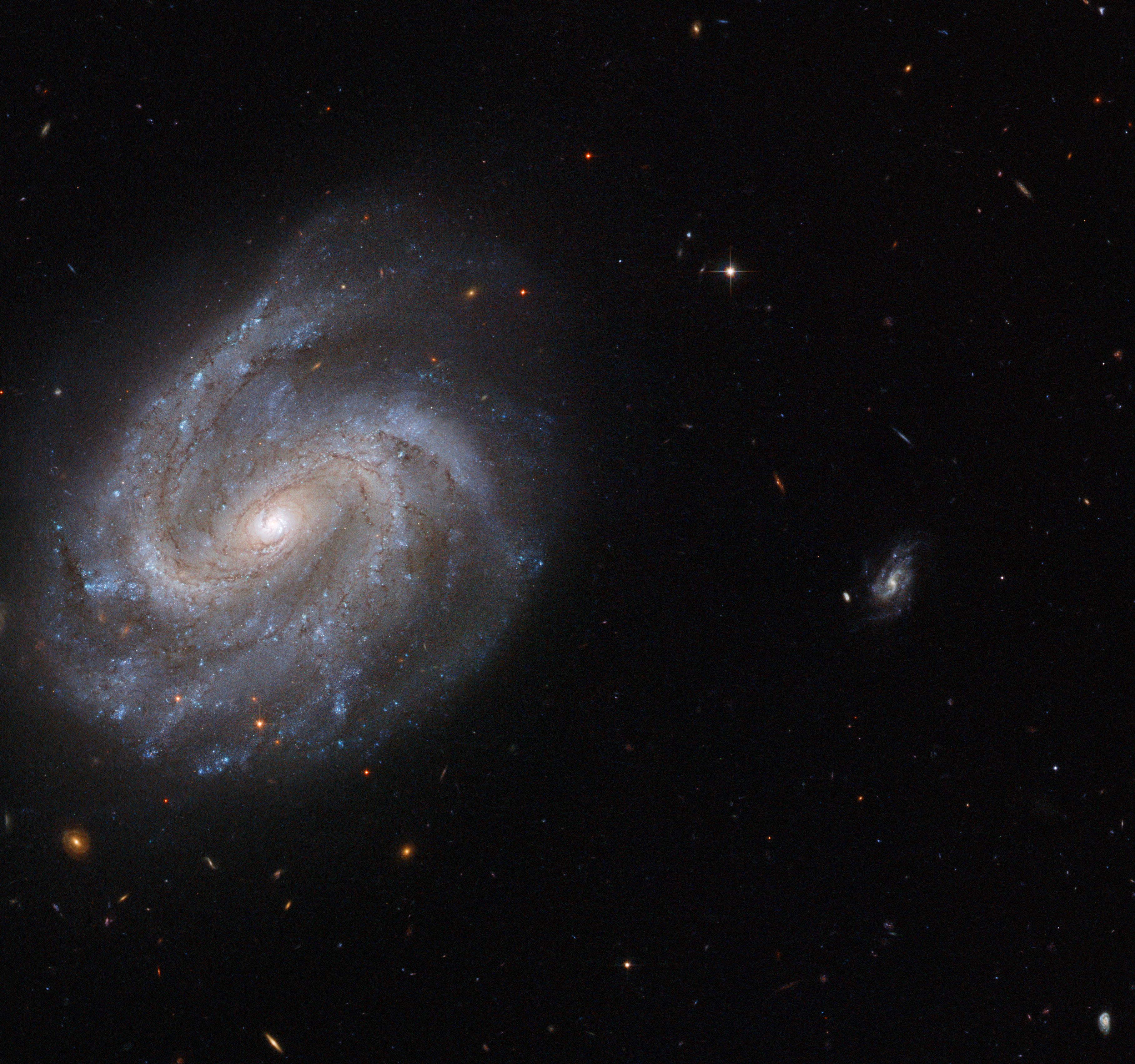
The dwarf galaxy UGC 5189A, site of the supernova SN 2010jl

The dwarf galaxy UGC 5189A, site of the supernova SN 2010jl (annotated)


New observations reveal how stardust forms around a supernova

A group of astronomers has been able to follow stardust being made in real time — during the aftermath of a supernova explosion. For the first time they show that these cosmic dust factories make their grains in a two-stage process, starting soon after the explosion, but continuing for years afterwards. The team used ESO's Very Large Telescope (VLT) in northern Chile to analyse the light from the supernova SN2010jl as it slowly faded. The new results are published online in the journal Nature on 9 July 2014.

The origin of cosmic dust in galaxies is still a mystery [1]. Astronomers know that supernovae may be the primary source of dust, especially in the early Universe, but it is still unclear how and where dust grains condense and grow. It is also unclear how they avoid destruction in the harsh environment of a star-forming galaxy. But now, observations using ESO’s VLT at the Paranal Observatory in northern Chile are lifting the veil for the first time.

An international team used the X-shooter spectrograph to observe a supernova — known as SN2010jl — nine times in the months following the explosion, and for a tenth time 2.5 years after the explosion, at both visible and near-infrared wavelengths [2]. This unusually bright supernova, the result of the death of a massive star, exploded in the small galaxy UGC 5189A.

By combining the data from the nine early sets of observations we were able to make the first direct measurements of how the dust around a supernova absorbs the different colours of light,” said lead author Christa Gall from Aarhus University, Denmark. “This allowed us to find out more about the dust than had been possible before.

The team found that dust formation starts soon after the explosion and continues over a long time period. The new measurements also revealed how big the dust grains are and what they are made of. These discoveries are a step beyond recent results obtained using the Atacama Large Millimeter/submillimeter Array (ALMA), which first detected the remains of a recent supernova brimming with freshly formed dust from the famous supernova 1987A (SN 1987A; eso1401).

The team found that dust grains larger than one thousandth of a millimetre in diameter formed rapidly in the dense material surrounding the star. Although still tiny by human standards, this is large for a grain of cosmic dust and the surprisingly large size makes them resistant to destructive processes. How dust grains could survive the violent and destructive environment found in the remnants of supernovae was one of the main open questions of the ALMA paper, which this result has now answered — the grains are larger than expected.

Our detection of large grains soon after the supernova explosion means that there must be a fast and efficient way to create them,” said co-author Jens Hjorth from the Niels Bohr Institute of the University of Copenhagen, Denmark, and continued: “We really don’t know exactly how this happens.

But the astronomers think they know where the new dust must have formed: in material that the star shed out into space even before it exploded. As the supernova's shockwave expanded outwards, it created a cool, dense shell of gas — just the sort of environment where dust grains could seed and grow.

Results from the observations indicate that in a second stage — after several hundred days — an accelerated dust formation process occurs involving ejected material from the supernova. If the dust production in SN2010jl continues to follow the observed trend, by 25 years after the supernova, the total mass of dust will be about half the mass of the Sun; similar to the dust mass observed in other supernovae such as SN 1987A.

Previously astronomers have seen plenty of dust in supernova remnants left over after the explosions. But they also only found evidence for small amounts of dust actually being created in the supernova explosions. These remarkable new observations explain how this apparent contradiction can be resolved,” concludes Christa Gall.

Notes

[1] Cosmic dust consists of silicate and amorphous carbon grains — minerals also abundant on Earth. The soot from a candle is very similar to cosmic carbon dust, although the size of the grains in the soot are ten or more times bigger than typical grain sizes for cosmic grains.

[2] Light from this supernova was first seen in 2010, as is reflected in the name, SN 2010jl. It is classed as a Type IIn supernova. Supernovae classified as Type II result from the violent explosion of a massive star with at least eight times the mass of the Sun. The subtype of a Type IIn supernova — “n” denotes narrow — shows narrow hydrogen lines in its spectra. These lines result from the interaction between the material ejected by the supernova and the material already surrounding the star.

More information

This research was presented in a paper “Rapid formation of large dust grains in the luminous supernova SN 2010jl”, by C. Gall et al., to appear online in the journal Nature on 9 July 2014.

The team is composed of Christa Gall (Department of Physics and Astronomy, Aarhus University, Denmark; Dark Cosmology Centre, Niels Bohr Institute, University of Copenhagen, Denmark; Observational Cosmology Lab, NASA Goddard Space Flight Center, USA), Jens Hjorth (Dark Cosmology Centre, Niels Bohr Institute, University of Copenhagen, Denmark), Darach Watson (Dark Cosmology Centre, Niels Bohr Institute, University of Copenhagen, Denmark), Eli Dwek (Observational Cosmology Lab, NASA Goddard Space Flight Center, USA), Justyn R. Maund (Astrophysics Research Centre School of Mathematics and Physics Queen’s University Belfast, UK; Dark Cosmology Centre, Niels Bohr Institute, University of Copenhagen, Denmark; Department of Physics and Astronomy, University of Sheffield, UK), Ori Fox (Department of Astronomy, University of California, Berkeley, USA), Giorgos Leloudas (The Oskar Klein Centre, Department of Physics, Stockholm University, Sweden; Dark Cosmology Centre, Niels Bohr Institute, University of Copenhagen, Denmark), Daniele Malesani (Dark Cosmology Centre, Niels Bohr Institute, University of Copenhagen, Denmark) and Avril C. Day-Jones (Departamento de Astronomia, Universidad de Chile, Chile).

ESO is the foremost intergovernmental astronomy organisation in Europe and the world’s most productive ground-based astronomical observatory by far. It is supported by 15 countries: Austria, Belgium, Brazil, the Czech Republic, Denmark, France, Finland, Germany, Italy, the Netherlands, Portugal, Spain, Sweden, Switzerland and the United Kingdom. ESO carries out an ambitious programme focused on the design, construction and operation of powerful ground-based observing facilities enabling astronomers to make important scientific discoveries. ESO also plays a leading role in promoting and organising cooperation in astronomical research. ESO operates three unique world-class observing sites in Chile: La Silla, Paranal and Chajnantor. At Paranal, ESO operates the Very Large Telescope, the world’s most advanced visible-light astronomical observatory and two survey telescopes. VISTA works in the infrared and is the world’s largest survey telescope and the VLT Survey Telescope is the largest telescope designed to exclusively survey the skies in visible light. ESO is the European partner of a revolutionary astronomical telescope ALMA, the largest astronomical project in existence. ESO is currently planning the 39-metre European Extremely Large optical/near-infrared Telescope, the E-ELT, which will become “the world’s biggest eye on the sky”.

Links

Contacts

Christa Gall
Aarhus University
Denmark
Cell: +45 53 66 20 18
Email:
cgall@phys.au.dk

Jens Hjorth
Dark Cosmology Centre, Niels Bohr Institute, University of Copenhagen
Copenhagen, Denmark
Email:
jens@dark-cosmology.dk

Richard Hook
ESO education and Public Outreach Department
Garching bei München, Germany

Tel: +49 89 3200 6655
Email:
rhook@eso.org

Source: ESO


Cosmic Accounting Reveals Missing Light Crisis

Computer simulations of intergalactic hydrogen in a "dimly lit" universe (left) and a "brightly lit" universe (right) that has five times more of the energetic photons that destroy neutral hydrogen atoms. Hubble Space Telescope observations of hydrogen absorption match the picture on the right, but using only the known astronomical sources of ultraviolet light produces the much thicker structures on the left, and a severe mismatch with the observations. Image is credited to Ben Oppenheimer and Juna Kollmeier. A larger version is available here

Pasadena, CA—Something is amiss in the Universe. There appears to be an enormous deficit of ultraviolet light in the cosmic budget.

The vast reaches of empty space between galaxies are bridged by tendrils of hydrogen and helium, which can be used as a precise “light meter.” In a recent study published in The Astrophysical Journal Letters, a team of scientists finds that the light from known populations of galaxies and quasars is not nearly enough to explain observations of intergalactic hydrogen. The difference is a stunning 400 percent.

"It's as if you're in a big, brightly-lit room, but you look around and see only a few 40-watt lightbulbs," noted Carnegie’s Juna Kollmeier, lead author of the study. "Where is all that light coming from? It’s missing from our census."

Strangely, this mismatch only appears in the nearby, relatively well-studied cosmos. When telescopes focus on galaxies billions of light years away (and therefore are viewing the universe billions of years in its past), everything seems to add up. The fact that this accounting works in the early universe but falls apart locally has scientists puzzled.

The light in question consists of highly energetic ultraviolet photons that are able to convert electrically neutral hydrogen atoms into electrically charged ions. The two known sources for such ionizing photons are quasars—powered by hot gas falling onto supermassive black holes over a million times the mass of the sun—and the hottest young stars.

Observations indicate that the ionizing photons from young stars are almost always absorbed by gas in their host galaxy, so they never escape to affect intergalactic hydrogen. But the number of known quasars is far lower than needed to produce the required light.

“Either our accounting of the light from galaxies and quasars is very far off, or there’s some other major source of ionizing photons that we’ve never recognized,” Kollmeier said. “We are calling this missing light the photon underproduction crisis. But it’s the astronomers who are in crisis—somehow or other, the universe is getting along just fine.”

The mismatch emerged from comparing supercomputer simulations of intergalactic gas to the most recent analysis of observations from Hubble Space Telescope’s Cosmic Origins Spectrograph. “The simulations fit the data beautifully in the early universe, and they fit the local data beautifully if we’re allowed to assume that this extra light is really there,” explained Ben Oppenheimer a co-author from the University of Colorado. “It's possible the simulations do not reflect reality, which by itself would be a surprise, because intergalactic hydrogen is the component of the Universe that we think we understand the best.”

“The most exciting possibility is that the missing photons are coming from some exotic new source, not galaxies or quasars at all,” said Neal Katz a co-author from the University of Massachusetts at Amherst.

For example, the mysterious dark matter, which holds galaxies together but has never been seen directly, could itself decay and ultimately be responsible for this extra light.

"You know it's a crisis when you start seriously talking about decaying dark matter!" Katz remarked.

“The great thing about a 400% discrepancy is that you know something is really wrong,” commented co-author David Weinberg of The Ohio State University. “We still don't know for sure what it is, but at least one thing we thought we knew about the present day universe isn't true.”

Whether the explanation is exotic or not, astronomers will be working hard to shed light on the mystery.

Other co-authors on the study are Francesco Haardt of the Università dell’Insubria, Romeel Davé of the University of the Western Cape, Mark Fardal of University of Massachusetts Amherst, Piero Madau of University of California Santa Cruz, Charles Danforth of the University of Colorado, Amanda Ford of University of Arizona, Molly Peeples of the Space Telescope Science Institute, and Joseph McEwen of The Ohio State University.


Tuesday, July 08, 2014

New light on the origin of the Galactic ridge X-ray emission

Fig. 1: Components of the GRXE on the plane of the Galaxy in the 3-10keV range. The scattered GRXE component is shown separately for two types of XBs, low-mass XBs (LMXBs) and high-mass XBs (HMXBs). The labels indicate the names of the individual sources giving rise to the peaks in the scattered GRXE profile. 

Fig. 2: Map of the scattered GRXE emission on the sky. The emission is expected to closely follow the distribution of interstellar gas: indeed, the map shows that the intensity tends to be stronger on the plane of the Galaxy, where most of the interstellar gas is concentrated. Very dense regions of gas, such as dense molecular clouds, are also clearly visible as prominent bright features in the map. 

Fig. 3: Latitude profiles for the scattered GRXE for two models of X-ray binary populations in the Galaxy, motivated by observations in our own Galaxy ("scattered XBs", red crosses) and in other galaxies ("scattered Monte Carlo XBs", black crosses). Both profiles follow the gas distribution, while the stellar distribution (blue stars) is much broader. Both models are consistent with the limits of 10-20% on unresolved GRXE from Revnivtsev et al 2009 in the region shown by the vertical bars. 

Fig. 4: Heating of the interstellar gas per hydrogen atom on the Galactic plane, resulting from the absorption of X-rays from XBs, plotted in the vertical direction and in color scale for the case of a simulated XBs population. X-rays may be an especially important source of heating in the central part of the Galaxy. 

While previous studies found that most of the apparently diffuse galactic X-ray emission is actually due to point sources, researchers at the Max Planck Institute for Astrophysics have now predicted that on the Galactic plane 10-30% of this radiation should be truly diffuse. This diffuse component should originate from the interstellar gas, where X-ray radiation produced by luminous X-ray binary sources is being reprocessed. Studies of this component could provide valuable information on Galactic X-ray binaries and the history of the X-ray activity in our Milky Way.

The Galactic disk of the Milky Way can be seen from Earth as a band of stars across the night sky interrupted by narrow dark 'dust lanes'. There the dust in the gaseous disk blocks the visible light of the background stars. Thus, many of the most interesting features of our Milky Way can only be observed in X-rays. Along with the point X-ray sources which populate the Milky Way, we observe an apparently diffuse X-ray emission concentrated in the Galactic plane, known as the Galactic Ridge X-ray emission (GRXE). 

The origin of this emission has puzzled astrophysicists ever since it was first identified by Diana Worrall and collaborators in 1982. Because of the difficulty in resolving the GRXE into point sources, it was initially believed that its nature might be truly diffuse, and that its origin might actually be a Galactic plasma rather than discrete stellar sources. 

It was soon realised, however, that the temperature of the gas producing such an emission would have to be close to tens of millions of degrees - a temperature far too high for the gas to be gravitationally bound to the Galaxy. It was therefore suggested that the GRXE might be composed of a large number of stars fainter in X-rays than accreting black holes and neutron stars (but still more luminous than our Sun). Although it was not possible to actually see them at the time, the hope was that with the increasing sensitivity of new X-ray satellites, one day a multitude of faint X-ray sources could be fully resolved. 

For decades, attempts were made to resolve this emission, yet most of it still appeared to be diffuse. Finally in 2009, Revnivtsev, Sazonov and collaborators pointed the Chandra X-ray observatory towards a very small region of the sky near the Galactic centre for 12 entire days and could resolve over 80% of the emission in this region. Along with this direct observation of the sources, other indirect probes have strengthened the case for a discrete origin of the GRXE in the last few years. In particular, the large-scale morphology of the emission closely follows that of the Galactic stellar population, and the GRXE spectrum shows good agreement with the combined spectra of the sources expected to directly contribute to the emission. 

Thus it seemed that a general consensus on the discrete nature of the emission had been reached, and that the mystery of the origin of the GRXE had been conclusively solved. 

This, however, may not be the whole story. Recent work by researchers at the Max Planck Institute for Astrophysics suggests that the GRXE might have an additional, truly diffuse component after all. This would arise not from the thermal emission of a very hot plasma but rather from the reprocessing by the interstellar gas of the X-ray radiation produced by luminous X-ray binary sources located in the Galaxy. 

X-ray binaries are the most luminous sources of X-rays in galaxies such as the Milky Way. These binary systems emit X-ray radiation when material from a so-called donor star falls into the strong gravitational field of a compact object, such as a neutron star or a black hole. This X-ray radiation illuminates the atoms and molecules in the Galactic interstellar gas, which then scatter the incoming photons in different directions and at different energies. Thanks to this reprocessing of the original radiation, the resulting emission appears truly diffuse to the observer. 

The contribution of this component would closely follow the distribution of the gas in the Galaxy. Therefore the large-scale morphology of the diffuse component should be characteristically different from that of the stellar component. In particular, the diffuse component would be 'thin' compared to the stellar one, since the gas distribution does not reach as far out of the Galactic plane as does the stellar population. Additionally, very dense regions of gas such as molecular clouds would produce very prominent features in the scattered GRXE component. If a high enough angular resolution is available, variations in the strength of the GRXE emission will then be observable close to these regions. 

It was found that on the Galactic plane, where most of the interstellar gas is concentrated, the scattered GRXE can contribute at least 10-30%. The interest in studying the diffuse component of the GRXE however goes beyond the sole purpose of determining its origin. This radiation also tells us about the distribution and luminosity of the X-ray binaries themselves. 

Direct, exhaustive studies of the Galactic X-ray binary population are extremely diffcult even if one considers only the recent history. This is due to two main effects: on the one hand, severe uncertainties in determining the distance to these systems and instrumental flux limitations limit our view of this population beyond the Galactic centre; on the other hand, these sources are transient. This means that any time only a few of these sources are active and visible. Nevertheless, if we directly compare the fraction of the unresolved emission observed in different regions of the sky with the scattered component obtained from observed or simulated Galactic X-ray binary populations, we will be able to indirectly obtain constraints on the properties of the population of X-ray sources in the Galaxy. 

Because the scattered light travels a longer path to reach the observer compared to light directly contributed by point sources, the scattered GRXE component also depends on the overall X-ray activity of the Galaxy in the past 10,000 to 30,000 years. Studies of the relative contribution of the scattered component to the GRXE therefore will allow us to look back at the history of the Galactic X-ray output over this period of time. 

This research therefore highlights a new way in which the GRXE, whose origin might be even more diverse than initially thought, can provide us with a wealth of information on the X-ray sources, both faint and luminous, which populate our galaxy. 

Radiation produced by X-ray binaries is of course not only scattered, but also absorbed by atoms and molecules, and therefore contributes to the heating of the interstellar gas. 

The lower energy ultra-violet photons are usually the dominant source of heating in diffuse interstellar clouds. The X-ray photons can however penetrate deep inside the dense molecular clouds where the ultra-violet photons cannot reach, since they are absorbed by the outer layers. 

The contribution of the X-ray binary sources to the heating rate in the interstellar medium was in fact found to be significant, suggesting that these sources may play a crucial role in determining the multiphase structure of the interstellar medium.

Margherita Molaro, Rishi Khatri, Rashid Sunyaev

References:

1) Revnivtsev, M., Sazonov, S., Churazov, E., Forman, W., Vikhlinin, A., Sunyaev, R., "Discrete sources as the origin of the Galactic X-ray ridge emission", Nature, 458, 7242, pp.1142-1144,2009

2) Molaro, M., Khatri, R., Sunyaev, R., "A thin diffuse component of the Galactic ridge X-ray emission and heating of the interstellar medium contributed by the radiation of Galactic X-ray binaries", Astronomy & Astrophysics, 564, A107, 2014


A young star's age can be gleamed from nothing but sound waves

Ultrasound monitors the 'heartbeats' of baby stars 

Determining the age of stars has long been a challenge for astronomers. In experiments published in the journal Science, researchers at KU Leuven's Institute for Astronomy show that 'baby' stars can be distinguished from 'adolescent' stars by measuring the acoustic waves they emit.

Stars are often born in clusters, the result of contracting molecular clouds of gas and dust particles. As a star evolves from infant to adolescent, gravitational pull causes it to contract. It gets smaller in size and hotter until the core temperature is sufficient to start thermonuclear fusion. At this point, the star stabilizes and becomes an 'adult'. It stays this way for vast tracts of time.
Determining the age of a young star is far from simple, and knowing which molecular cloud a star comes from gives only a vague idea of its age. But researchers have come up with a way to determine the age of stars by measuring their acoustic vibrations using ultrasound technology similar to that used in the field of medicine.

Ultrasound

“Think of it as ultrasound of stellar embryos,” explains Professor Jaymie Matthews, a co-author of the study from the University of British Colombia. “Stars can vibrate due to sound waves bouncing inside. We detect the sound vibrations across the vacuum of space by the subtle changes in stellar brightness. Then we translate the frequencies of those vibrations into models of the structures of those stars’ hidden interiors.”

First author Konstanze Zwintz, a postdoctoral researcher at KU Leuven's Institute for Astronomy, and her colleagues studied the vibrations of 34 stars aged under 10 million years and sized between one and four times the mass of our sun.

"Our data shows that the youngest stars vibrate slower while the stars nearer to adulthood vibrate faster. A star's mass has a major impact on its development: stars with a smaller mass evolve slower. Heavy stars grow faster and age more quickly," says Dr. Zwintz.

While theoretical physicists have posited before that young stars vibrate differently than older stars, Zwintz' study is the first to confirm these predications using concrete data from outer space.

"We now have a model that more precisely measures the age of young stars," says Zwintz. "And we are now also able to subdivide young stars according to their various life phases."

The researchers studied the nebula known commonly as the Christmas Tree Cluster. Their data was obtained from the Canadian MOST satellite and the European CoRoT satellite as well as from ground-based facilities such as the European Southern Observatory (ESO) in Chile.

A composite image detailing the pre-life story of a star like the Sun, spanning about 10 million years from conception to birth. | © Pieter Degroote (KU Leuven) / background image © ESO

Contact

Newsroom
Phone: +32 16 32 40 15

news@kuleuven.be


Monday, July 07, 2014

Comet Pan-STARRS Marches Across the Sky

NASA's NEOWISE mission captured a series of infrared images of comet C/2012 K1 -- also referred to as comet Pan-STARRS -- as it swept across our skies in May 2014.  Full image and caption

 
NEOWISE Spies Comet Pan-STARRS Against Galaxy Backdrop

NASA's NEOWISE mission captured a series of pictures of comet C/2012 K1 -- also known as comet Pan-STARRS -- as it swept across our skies in May 2014.

The comet is named after the astronomical survey project called the Panoramic Survey Telescope and Rapid Response System in Hawaii, which discovered the icy visitor in May 2012. 

Comet Pan-STARRS hails from the outer fringes of our solar system, from a vast and distant reservoir of comets called the Oort cloud. 

The comet is relatively close to us -- it was only about 143 million miles (230 million kilometers) from Earth when this picture was taken. It is seen passing a much more distant spiral galaxy, called NGC 3726, which is about 55 million light-years from Earth, or 2 trillion times farther away than the comet.

Two tails can be seen lagging behind the head of the comet. The bigger tail is easy to see and is comprised of gas and smaller particles. A fainter, more southern tail, which is hard to spot in this image, may be comprised of larger, more dispersed grains of dust.

Comet Pan-STARRS is on its way around the sun, with its closest approach to the sun occurring in late August. It was visible to viewers in the northern hemisphere through most of June. In the fall, after the comet swings back around the sun, it may be visible to southern hemisphere viewers using small telescopes.

The image was made from data collected by the two infrared channels on board the NEOWISE spacecraft, with the longer-wavelength channel (centered at 4.5 microns) mapped to red and the shorter-wavelength channel (3.4 microns) mapped to cyan. The comet appears brighter in the longer wavelength band, suggesting that the comet may be producing significant quantities of carbon monoxide or carbon dioxide.

Originally called the Wide-field Infrared Survey Explorer (WISE), the NEOWISE spacecraft was put into hibernation in 2011 after its primary mission was completed. In September 2013, it was reactivated, renamed NEOWISE and assigned a new mission to assist NASA's efforts to identify the population of potentially hazardous near-Earth objects. NEOWISE is also characterizing previously known asteroids and comets to better understand their sizes and compositions.

NASA's Jet Propulsion Laboratory, Pasadena, California, manages the NEOWISE mission for NASA's Near-Earth Object Observation Program of its Planetary Science Division in Washington. The Space Dynamics Laboratory in Logan, Utah, built the science instrument. Ball Aerospace & Technologies Corp. of Boulder, Colorado, built the spacecraft. Science operations and data processing take place at the Infrared Processing and Analysis Center at the California Institute of Technology in Pasadena. Caltech manages JPL for NASA.

More information on NEOWISE is online at: http://www.nasa.gov/wise and http://www.jpl.nasa.gov/wise/

Whitney Clavin
Jet Propulsion Laboratory, Pasadena, Calif.
818-354-4673

whitney.clavin@jpl.nasa.gov


Source: JPL-Caltech


Sunday, July 06, 2014

A fossil in the making

 
Credit: ESA/Hubble & NASA
Acknowledgement: Luca Limatola

Discovered by astronomer William Herschel in the late 1700s, NGC 201 is a barred spiral galaxy similar to our own galaxy, the Milky Way. It lies 200 million light-years from Earth in the constellation of Cetus (The Sea Monster), and is invisible to the naked eye.

This new NASA/ESA Hubble Space Telescope image of NGC 201 shows the galaxy in striking detail, capturing the bright centre and the barred spiral arms — arms that do not start directly from the galactic centre, but instead seem to be offset and stem from a "bar" of stars cutting through the middle of the galaxy.

Along with three of its closest galactic neighbours (outside the frame), NGC 201 belongs to a group known as the HCG 7 compact galactic group. Hickson Compact Groups (HCG) are relatively small and isolated systems containing a handful of bright, compact galaxies that lie close to one another. As the galaxies within these groups move closer together they interact strongly, dragging galactic material out into space and distorting the structure of the other group members.
Eventually, all the galaxies within one HCG will merge t
ogether. Simulations have shown that within a billion years, the galaxies within one HCG have merged to form a giant fossil galaxy. It is possible that this is the final fate of all galactic groups.

A version of this image was submitted to the Hubble's Hidden Treasures image processing competition by contestant Luca Limatola.

Source: ESA/Hubble - Space Telescope

Friday, July 04, 2014

Ocean on Saturn Moon Could be as Salty as the Dead Sea

Researchers found that Titan's ice shell, which overlies a very salty ocean, varies in thickness around the moon, suggesting the crust is in the process of becoming rigid. Image credit: NASA/JPL -Caltech/SSI/Univ. of Arizona/G. Mitri/University of NantesLarger image

Scientists analyzing data from NASA's Cassini mission have firm evidence the ocean inside Saturn's largest moon, Titan, might be as salty as Earth's Dead Sea.

The new results come from a study of gravity and topography data collected during Cassini's repeated flybys of Titan during the past 10 years. Using the Cassini data, researchers presented a model structure for Titan, resulting in an improved understanding of the structure of the moon's outer ice shell. The findings are published in this week's edition of the journal Icarus.

"Titan continues to prove itself as an endlessly fascinating world, and with our long-lived Cassini spacecraft, we're unlocking new mysteries as fast as we solve old ones," said Linda Spilker, Cassini project scientist at NASA's Jet Propulsion Laboratory in Pasadena, California, who was not involved in the study. 

Additional findings support previous indications the moon's icy shell is rigid and in the process of freezing solid. Researchers found that a relatively high density was required for Titan's ocean in order to explain the gravity data. This indicates the ocean is probably an extremely salty brine of water mixed with dissolved salts likely composed of sulfur, sodium and potassium. The density indicated for this brine would give the ocean a salt content roughly equal to the saltiest bodies of water on Earth.

"This is an extremely salty ocean by Earth standards," said the paper's lead author, Giuseppe Mitri of the University of Nantes in France. "Knowing this may change the way we view this ocean as a possible abode for present-day life, but conditions might have been very different there in the past."

Cassini data also indicate the thickness of Titan's ice crust varies slightly from place to place. The researchers said this can best be explained if the moon's outer shell is stiff, as would be the case if the ocean were slowly crystalizing and turning to ice. Otherwise, the moon's shape would tend to even itself out over time, like warm candle wax. This freezing process would have important implications for the habitability of Titan's ocean, as it would limit the ability of materials to exchange between the surface and the ocean.

A further consequence of a rigid ice shell, according to the study, is any outgassing of methane into Titan's atmosphere must happen at scattered "hot spots" -- like the hot spot on Earth that gave rise to the Hawaiian Island chain. Titan's methane does not appear to result from convection or plate tectonics recycling its ice shell.
How methane gets into the moon's atmosphere has long been of great interest to researchers, as molecules of this gas are broken apart by sunlight on short geological timescales. Titan's present atmosphere contains about five percent methane. This means some process, thought to be geological in nature, must be replenishing the gas. The study indicates that whatever process is responsible, the restoration of Titan's methane is localized and intermittent.

"Our work suggests looking for signs of methane outgassing will be difficult with Cassini, and may require a future mission that can find localized methane sources," said Jonathan Lunine, a scientist on the Cassini mission at Cornell University, Ithaca, New York, and one of the paper's co-authors. "As on Mars, this is a challenging task."

The Cassini-Huygens mission is a cooperative project of NASA, the European Space Agency and the Italian Space Agency. JPL manages the mission for NASA's Science Mission Directorate in Washington.

For more information about Cassini, visit: http://www.nasa.gov/cassini and http://saturn.jpl.nasa.gov

Preston Dyches
Jet Propulsion Laboratory, Pasadena, Calif.
818-354-7013

preston.dyches@jpl.nasa.gov

Dwayne Brown
Headquarters, Washington
202-354-1726

dwayne.c.brown@nasa.gov

Source: JPL-Caltech


Thursday, July 03, 2014

Black Hole Fireworks in Nearby Galaxy

A galaxy about 23 million light-years away is the site of impressive, ongoing, fireworks. Rather than paper, powder, and fire, this galactic light show involves a giant black hole, shock waves, and vast reservoirs of gas. Image Credit: NASA/CXC/JPL-Caltech/STScI/NSF/NRAO/VLA.  Full image and caption 

A composite image of the spiral galaxy NGC 4258 showing X-ray emission observed with NASA's Chandra X-ray Observatory (blue) and infrared emission observed with NASA's Spitzer Space Telescope (red and green).Image Credit: X-ray: NASA/CXC/NASA/JPL-Caltech.  Full image and caption - enlarge image
 
Celebrants this Fourth of July will enjoy the dazzling lights and booming shock waves from the explosions of fireworks. A similarly styled event is taking place in the galaxy Messier 106, as seen by NASA's Spitzer Space Telescope, Chandra X-ray Observatory and the Herschel Space Observatory. Herschel is a European Space Agency mission with important NASA contributions.

Energetic jets, which blast from Messier 106's central black hole, are heating up material in the galaxy and thus making it glow, like the ingredients in a firework. The jets also power shock waves that are driving gases out of the galaxy's interior. 

Those gases constitute the fuel for churning out new stars. A new study estimates the shock waves have already warmed and ejected two-thirds of the gas from the center of Messier 106. With a reduced ability to birth new stars, Messier 106 appears to be transitioning into a barren, so-called lenticular galaxy full of old, red stars. Lenticular galaxies are flat disks without prominent spiral arms.

"Jets from the supermassive black hole at the center of Messier 106 are having a profound influence on the available gas for making stars in this galaxy," said Patrick Ogle, an astrophysicist at the Infrared Processing and Analysis Center at the California Institute of Technology in Pasadena, and lead author of a new paper describing the results. "This process may eventually transform the spiral galaxy Messier 106 into a lenticular galaxy, depriving it of the raw material to form stars." 

Many galaxies contain a central black hole that actively "feeds" upon nearby gas. Some of the material, as it draws toward the black hole, dramatically speeds up and violently spews out as twin jets near the black hole's poles. As one of the Milky Way's closest galactic neighbors, Messier 106 offers a great opportunity for investigating these high-powered jets. Messier 106 -- also known as NGC 4258 -- is 23.5 million light-years distant, and visible with binoculars in the constellation Canes Venatici. 

For the new study, researchers used data obtained with the Spitzer infrared telescope before the observatory ran out of coolant in 2009, as planned. The data amount to a map of the infrared light emitted by heated-up hydrogen molecules in Messier 106. The warmed hydrogen is a signature of the jet from the central black hole energizing the surrounding disk of the galaxy.

Specifically, Spitzer saw warmed hydrogen in the two mysterious spiral arms for which Messier 106 is famous. These arms are not like the usual, star-filled spiral arms found in spiral galaxies, such as our Milky Way. In previous research with Spitzer and Chandra, researchers discovered that twin jets from the black hole spawned the anomalous arms, which contain gas heated to millions of degrees that shines in X-rays, detected by Chandra.

In the inner portions of the anomalous spiral arms, the Spitzer infrared images have revealed the equivalent of 10 million times the mass of the sun of molecular hydrogen heated to between about minus 20 and 1,400 degrees Fahrenheit (minus 28 and 760 degrees Celsius) by the shock waves. Without the shock waves, this gas would be colder, likely a few hundred degrees below zero, Fahrenheit. 

From a direct comparison of the Chandra and Spitzer images, Ogle and colleagues saw that there is a close connection between the gas that is shocked to millions of degrees, seen by Chandra, and the bulk of denser hydrogen gas heated to hundreds of degrees, seen by Spitzer. The jet is surrounded by a cocoon of superhot gas, which drives shock waves into the surrounding molecular hydrogen gas, like a firework popping off. The molecular hydrogen then heats up, emits infrared light that Spitzer records, and is cast out of the galaxy's gas-strewn interior.

The Herschel observations, meanwhile, pinned down the heat radiating from dust grains that are mixed in with the galaxy's shock-heated gas. "A relatively large amount of molecular gas emission compared to dust emission confirms that shock-driven turbulence from the black hole jets is heating the molecular gas," said paper co-author Philip Appleton of the NASA Herschel Science Center at Caltech. 

Spitzer and Herschel were also able to gauge the level of star-making activity in Messier 106's central region. The little gas left there supports a paltry star-formation rate of only 0.08 solar, or sun-equivalent, masses per year (a robust pace runs to about three solar masses per year). The star-formation rate in Messier 106's inner quarters will continue to decline until the jets have ejected all of the gas from the center of the galaxy, turning Messier 106 into an over-the-hill lenticular galaxy. 

"Our results demonstrate that these black hole jets can have a significant impact on the evolution of their host galaxies, eventually sterilizing them and making them bereft of the gas needed to form new stars," said Ogle.
NASA's Jet Propulsion Laboratory, Pasadena, California, manages the Spitzer Space Telescope mission for NASA's Science Mission Directorate, Washington. In 2009, the telescope began its "warm" mission, which takes advantage of the still-working, shortest-wavelength infrared channels on the observatory. Science operations are conducted at the Spitzer Science Center at Caltech. Spacecraft operations are based at Lockheed Martin Space Systems Company, Littleton, Colorado. Data are archived at the Infrared Science Archive housed at the Infrared Processing and Analysis Center at Caltech. Caltech manages JPL for NASA.

Herschel is a European Space Agency mission, with science instruments provided by consortia of European institutes and with important participation by NASA. While the observatory stopped making science observations in April 2013, after running out of liquid coolant, as expected, scientists continue to analyze its data. NASA's Herschel Project Office is based at JPL. JPL contributed mission-enabling technology for two of Herschel's three science instruments. The NASA Herschel Science Center, part of the Infrared Processing and Analysis Center at Caltech, supports the U.S. astronomical community. Caltech manages JPL for NASA. 

NASA's Marshall Space Flight Center in Huntsville, Ala., manages the Chandra program for NASA's Science Mission Directorate in Washington. The Smithsonian Astrophysical Observatory in Cambridge, Mass., controls Chandra's science and flight operations.

More information is online at:

Whitney Clavin 818-354-4673
Jet Propulsion Laboratory, Pasadena, Calif.

whitney.clavin@jpl.nasa.gov

Source: JPL-Caltech


Merging Galaxies Illuminate the Cosmic Food Chain

The Umbrella Galaxy takes its name from a mysterious feature seen on the left here, that is now found to be debris from a tiny galaxy, only a 50th its size, shredded apart by gravity. The image is a combination of data from the 0.5-meter BlackBird Remote Observatory Telescope and Suprime-Cam on the 8-meter Subaru Telescope. The inset shows a small cluster of stars embedded in the stream, which marks the center of the disrupted galaxy. Credit: R. Jay GaBany.

In this three-dimensional, rotating computer model of the Umbrella galaxy, the disk of the main galaxy is shown by blue circles. The path of the dwarf galaxy through space is shown by a green curve. The white dots show stars that once belonged to the dwarf galaxy but have now been ripped off by tidal forces into a long stream of stars.Credit: N. Singh/UCSC

MAUNA KEA, HAWAII – Scientists studying a ‘twin’ of the Milky Way have used the W. M. Keck Observatory and Subaru Observatory to accurately model how it is swallowing another, smaller galaxy. Their findings have opened the way to a better understanding of how structure forms in the universe and are being published in the Monthly Notices of the Royal Astronomical Society this week.

The work, led by Caroline Foster of the Australian Astronomical Observatory, has used the Umbrella (NGC 4651) galaxy to reveal insights in galactic behavior.

The Umbrella lies 62 million light-years away, in the northern constellation of Coma Berenices. Its faint parasol is composed of a stellar stream, thought to be the remnants of a smaller galaxy being pulled apart by the large galaxy’s intense gravitational field. The Umbrella will eventually absorb this small galaxy completely.
The merging of small galaxies into larger ones is common throughout the universe, but because the shredded galaxies are so faint it has been hard to extract details in three-dimensions about how such mergers proceed. 

Using the most powerful optical facilities in the world, the twin, 10-meter Keck Observatory and the 8-meter Subaru Telescope, near the summit of Mauna Kea, Foster and her collaborators have determined enough about the character of the merger to provide a detailed model of how and when it occurred.

After taking panoramic images of the Umbrella with Suprime-Cam on Subaru, the scientists used the DEIMOS instrument, installed on the Keck II telescope, to map out the motions of the stream and hence determine how the galaxy is being shredded.

The stars in the stream are incredibly faint, so it was necessary to use a proxy technique to measure the speeds of brighter tracer objects moving along with the stream stars. These bright tracers include globular star clusters, planetary nebulae (dying stars that glow like neon lights), and patches of glowing hydrogen gas.
“This is important because our whole concept about what galaxies are and how they grow has not been fully verified,” said co-author Aaron Romanowsky, an astronomer at both San José State University and University of California Observatories. “We think they are constantly consuming smaller galaxies as part of a cosmic food chain, all pulled together by a mysterious form of invisible ‘dark matter’. When a galaxy is torn apart, we sometimes get a glimpse of the hidden vista because the stripping process lights it up. That’s what occurred here.”

“Through new techniques we have been able to measure the movements of the stars in the very distant, very faint, stellar stream in the Umbrella,” Foster said. “This allows us, for the first time, to reconstruct the history of the system.”

"Being able to study streams this far away means that we can reconstruct the assembly histories of many more galaxies," Romanowsky said. “In turn that means we can get a handle on how often these ‘minor mergers’ — thought to be an important way that galaxies grow — actually occur. We can also map out the orbits of the stellar streams to test the pull of gravity for exotic effects, much like the Moon going around the Earth but without having to wait 300 million years for the orbit to complete.”

The present work is a follow-up to a 2010 study, led by Dr. David Martínez-Delgado (University of Heidelberg), which used small robotic telescopes to image eight isolated spiral galaxies, and found the signs of mergers — shells, clouds and arcs of tidal debris — in six of them.

The W. M. Keck Observatory operates the largest, most scientifically productive telescopes on Earth. The two, 10-meter optical/infrared telescopes on the summit of Mauna Kea on the Island of Hawaii feature a suite of advanced instruments including imagers, multi-object spectrographs, high-resolution spectrographs, integral-field spectroscopy and world-leading laser guide star adaptive optics systems. 

DEIMOS (the DEep Imaging and Multi-Object Spectrograph) boasts the largest field of view (16.7 arcmin by 5 arcmin) of any of the Keck instruments, and the largest number of pixels (64 Mpix). It is used primarily in its multi-object mode, obtaining simultaneous spectra of up to 130 galaxies or stars. Astronomers study fields of distant galaxies with DEIMOS, efficiently probing the most distant corners of the universe with high sensitivity.

Keck Observatory is a private 501(c)3 non-profit organization and a scientific partnership of the California Institute of Technology, the University of California and NASA.

Media

Steve Jefferson
Communications Officer
W. M. Keck Observatory
(808)881-3827

sjefferson@keck.hawai.edu


Wednesday, July 02, 2014

A Stellar Womb Shaped and Destroyed by its Ungrateful Offspring

The Gum 15 star formation region

Gum 15 in the constellation of Vela

A wide-field view of the Gum 15 star formation region

******************************

Videos

Zooming in on Gum 15

Panning across the star formation region Gum 15

The little-known cloud of cosmic gas and dust called Gum 15 is the birthplace and home of hot young stars. Beautiful and deadly, these stars mould the appearance of their mother nebula and, as they progress into adulthood, will eventually also be the death of her.

This image was taken as part of  the ESO Cosmic Gems programme [1] using the Wide Field Imager on the MPG/ESO 2.2-metre telescope at the La Silla Observatory in Chile. It shows Gum 15, located in the constellation of Vela (The Sails), some 3000 light-years from Earth [2]. This glowing cloud is a striking example of an HII region [3]. Such clouds form some of the most spectacular astronomical objects we can see; for example the Eagle Nebula (which includes the feature nicknamed “The Pillars of Creation”), the great Orion Nebula, and this less famous example, Gum 15.

Hydrogen (H) is the most common element in the Universe, and can be found in virtually every environment investigated by astronomers. HII regions are different because they contain substantial amounts of ionised hydrogen — hydrogen atoms that have been stripped of their electrons through high energy interactions with ultraviolet photons — particles of light. As the ionised hydrogen nuclei recapture electrons they release light at different characteristic wavelengths. It is one of these that gives nebulae such as Gum 15 their reddish glow — a glow which astronomers call hydrogen alpha (Hα).

In HII regions the ionising photons come from the young hot stars within the region, and Gum 15 is no exception. At the centre of this image you can see one of the culprits: the star HD 74804, the brightest member of a cluster of stars known as Collinder 197.

The clumpy, irregular appearance that enhances this nebula’s beauty is not unusual for a HII region and is again a result of the stars within. HII regions have diverse shapes because the distribution of stars and gas inside them is so irregular. Adding to Gum 15’s interesting shape are the forked dark patch of obscuring dust visible in the centre of this image and some dim blue reflection structures crossing it. This dust feature makes the nebula resemble a larger and fainter version of the better known Trifid Nebula (Messier 20), although in this case the name Bifid Nebula might be more apposite.

An HII region like this one might give birth to thousands of stars over a period of several million years. Some of these stars cause it to glow and sculpt its shape, and it is these stars that will eventually destroy it. Once the newly minted stars have passed through their infant stages, strong winds of particles will stream away from these large stars, sculpting and dispersing the gases around them, and when the most massive of these stars begin to die, Gum 15 will die with them. Some stars are so large that they will go out with a bang, exploding as supernovae and dispersing the regions last traces of HII, leaving behind just a cluster of infant stars.

Notes

[1] The ESO Cosmic Gems programme is an initiative to produce images of interesting, intriguing or visually attractive objects using ESO telescopes, for the purposes of education and public outreach. The programme makes use of telescope time that cannot be used for science observations. All data collected may also be suitable for scientific purposes, and are made available to astronomers through ESO’s science archive.

[2] The name of this object comes from the Australian astronomer Colin Gum, who published a catalogue of HII regions in 1955.

[3] HII regions (pronounded “aitch-two”) are large clouds of gas and dust that are host to bursts of star formation and homes to infant stars.

More information

ESO is the foremost intergovernmental astronomy organisation in Europe and the world’s most productive ground-based astronomical observatory by far. It is supported by 15 countries: Austria, Belgium, Brazil, the Czech Republic, Denmark, France, Finland, Germany, Italy, the Netherlands, Portugal, Spain, Sweden, Switzerland and the United Kingdom. ESO carries out an ambitious programme focused on the design, construction and operation of powerful ground-based observing facilities enabling astronomers to make important scientific discoveries. ESO also plays a leading role in promoting and organising cooperation in astronomical research. ESO operates three unique world-class observing sites in Chile: La Silla, Paranal and Chajnantor. At Paranal, ESO operates the Very Large Telescope, the world’s most advanced visible-light astronomical observatory and two survey telescopes. VISTA works in the infrared and is the world’s largest survey telescope and the VLT Survey Telescope is the largest telescope designed to exclusively survey the skies in visible light. ESO is the European partner of a revolutionary astronomical telescope ALMA, the largest astronomical project in existence. ESO is currently planning the 39-metre European Extremely Large optical/near-infrared Telescope, the E-ELT, which will become “the world’s biggest eye on the sky”.

Links

Contacts

Richard Hook
ESO, Public Information Officer
Garching bei München, Germany
Tel: +49 89 3200 6655
Cell: +49 151 1537 3591
Email: rhook@eso.org

Source: ESO

Hubble to Proceed with Full Search for New Horizons Targets

Kuiper Belt object (KBO)
Credit: NASA, ESA, SwRI, JHU/APL, and the New Horizons KBO Search Team
NASA's Hubble Space Telescope has been given the go-ahead to conduct an intensive search for a suitable outer solar system object that the New Horizons (NH) spacecraft could visit after the probe streaks though the Pluto system in July 2015.

Hubble observations will begin in July and are expected to conclude in August.

Assuming a suitable target is found at the completion of the survey and some follow-up observations are made later in the year, if NASA approves, the New Horizon's trajectory can be modified in the fall of 2015 to rendezvous with the target Kuiper Belt object (KBO) three to four years later.

The Kuiper Belt is a debris field of icy bodies left over from the solar system's formation 4.6 billion years ago. Though the belt was hypothesized in a 1951 science paper by astronomer Gerard Kuiper, no Kuiper Belt objects were found until the early 1990s. So far over 1,000 KBOs have been cataloged, though it's hypothesized many more KBOs exist.

The approval for additional observing time for the needle-in-a-haystack search is based on the analysis of a set of pilot observations obtained with the Space Telescope Science Institute (STScI) director's discretionary time on Hubble. After a swift and intensive data analysis of approximately 200 Hubble images, the NH team met the pilot program criterion of finding a minimum of two KBOs.

"Once again the Hubble Space Telescope has demonstrated the ability to explore the universe in new and unexpected ways," said John Grunsfeld, associate administrator for the Science Mission Directorate at NASA Headquarters in Washington, D.C. "Hubble science is at its best when it works in concert with other NASA missions and ground-based observatories."

It will be many weeks before the team can establish whether either of these pilot-program KBOs is a suitable target for New Horizons to visit, but their discovery provides sufficient evidence that a wider search to be executed with Hubble will find an optimum object.

"I am delighted that our initial investment of Hubble time paid off. We are looking forward see if the team can find a suitable KBO that New Horizons might be able to visit after its fly-by of Pluto," said STScI director Matt Mountain.

In early June, Hubble's Time Allocation Committee awarded time for a full search with the requirement that its implementation be contingent on the success of the pilot survey.

From June 16 to June 26, the New Horizons team used Hubble to perform a preliminary search to see how abundant small Kuiper Belt objects are in the vast outer rim of our solar system.

Hubble looked at 20 areas of the sky to identify any small KBOs. The team analyzed each of pilot program images with software tools that sped up the KBO identification process. Hubble's sharp vision and unique sensitivity allowed very faint KBOs to be identified as they drifted against the far more distant background stars, objects that had previously eluded searches by some of the world's largest ground-based telescopes.

CONTACT

Ray Villard
Space Telescope Science Institute, Baltimore, Md.
410-338-4514

villard@stsci.edu

J.D. Harrington
NASA Headquarters, Washington, D.C.
202-358-5241
j.d.harrington@nasa.gov

Source: HubbleSite


Tuesday, July 01, 2014

Young sun's violent history solves meteorite mystery

Violent wind gusting around protostar in Orion - (Hi-Res JPG)
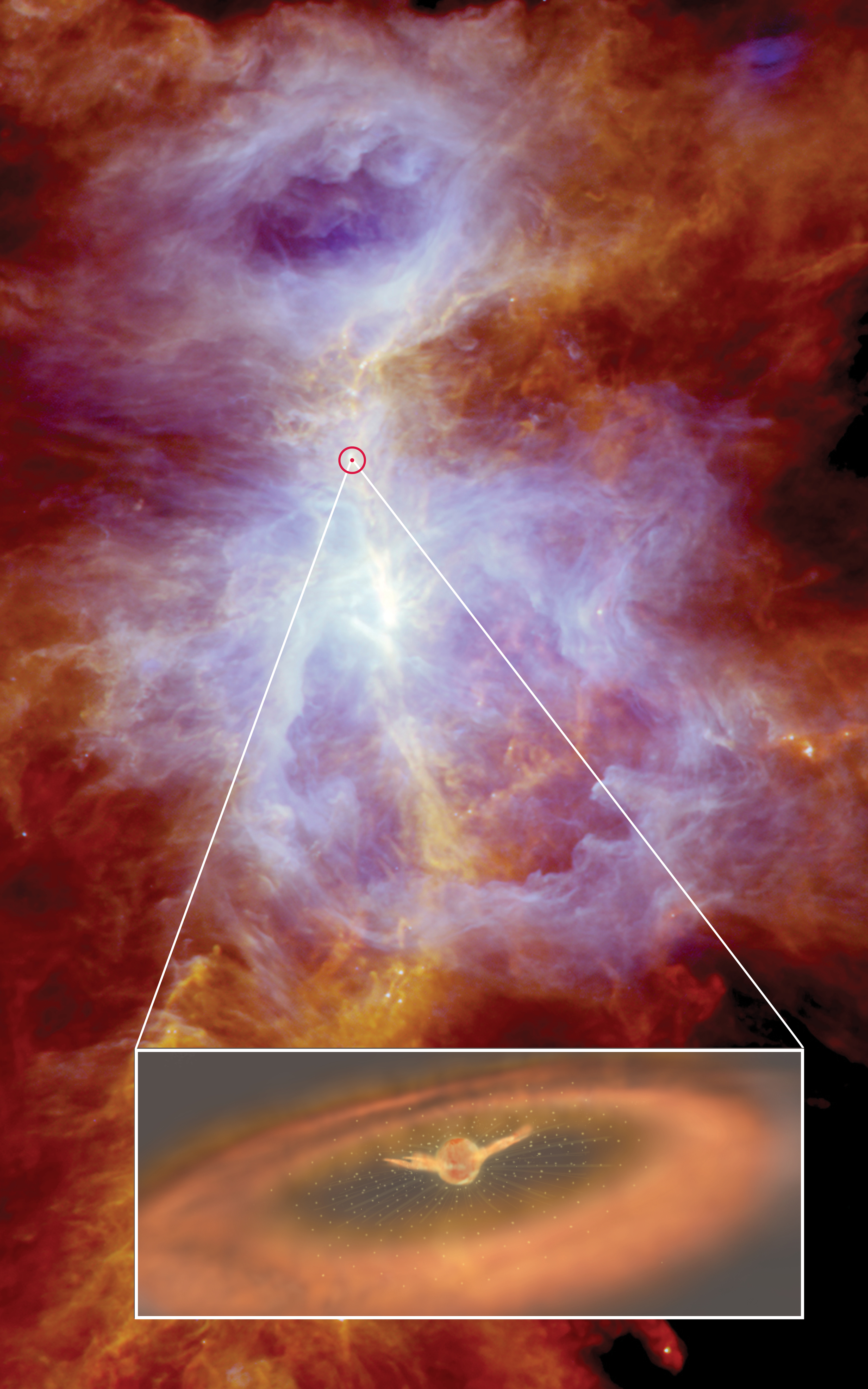
Orion A, a star-forming nebula lying about 1500 light-years from Earth, as viewed by ESA’s Herschel space observatory. Orion A is located within the ‘sword of Orion’ – below the three main stars that form the belt of the Orion constellation.

Embedded in the gaseous and dusty environment of this molecular cloud is the prolific stellar nursery called OMC2 FIR4 (highlighted with a red circle).

Astronomers studying OMC2 FIR4 with Herschel have discovered that at least one of the embryo stars that are taking shape in this protostellar cocoon is gusting a powerful wind of very energetic particles.
The inset shows an illustration of the wind blown by this newborn star. When the energetic particles hit the surrounding material, they may collide with atoms that are present in the star's environment, break them apart and produce new elements.

Our Sun likely gusted a similar wind of particles in its early days; this could explain the origin of a puzzling isotope of beryllium, whose traces are found in meteorites. Copyright: Herschel image: ESA/Herschel/Ph. André, D. Polychroni, A. Roy, V. Könyves, N. Schneider for the Gould Belt survey Key Programme; inset and layout: ESA/ATG medialab

Violent wind gusting around protostar
An illustration of the wind blown by a newborn star. When the energetic particles hit the surrounding material, they may collide with atoms that are present in the star's environment, break them apart and produce new elements. Copyright: ESA/ATG medialab

 
Astronomers using ESA’s Herschel space observatory to probe the turbulent beginnings of a Sun-like star have found evidence of mighty stellar winds that could solve a puzzling meteorite mystery in our own back yard. 

In spite of their tranquil appearance in the night sky, stars are scorching furnaces that spring to life through tumultuous processes – and our 4.5 billion-year-old Sun is no exception. To glimpse its harsh early days, astronomers gather clues not only in the Solar System but also by studying young stars elsewhere in our Galaxy. 

Using Herschel to survey the chemical composition of regions where stars are being born today, a team of astronomers has noticed that one object in particular is different. 

The unusual source is a prolific stellar nursery called OMC2 FIR4, a clump of new stars embedded in a gaseous and dusty cloud near to the famous Orion Nebula. 

“To our great surprise, we found that the proportion of two chemical species, one based on carbon and oxygen and the other on nitrogen, is much smaller in this object than in any other protostar we know,” says Dr Cecilia Ceccarelli, of the Institute de Planétologie et d’Astrophysique de Grenoble, France, who lead the study with Dr Carsten Dominik of the University of Amsterdam in the Netherlands. 

In an extremely cold environment, the measured proportion could arise by one of the two compounds freezing onto dust grains and becoming undetectable. However, at the relatively ‘high’ temperature of about –200°C found in star-forming regions like OMC2 FIR4, this should not occur. 

“The most likely cause in this environment is a violent wind of very energetic particles, released by at least one of the embryonic stars taking shape in this proto-stellar cocoon,” Dr Ceccarelli adds. 

The most abundant molecule in star-forming clouds, hydrogen, can be broken apart by cosmic rays, energetic particles that permeate the entire Galaxy. The hydrogen ions then combine with other elements that are present – albeit only in trace amounts – in these clouds: carbon and oxygen, or nitrogen. 

Normally, the nitrogen compound is also quickly destroyed, yielding more hydrogen for the carbon and oxygen compound. As a result, the latter is far more abundant in all known stellar nurseries. 

Strangely enough, though, this was not the case for OMC2 FIR4, suggesting that an additional wind of energetic particles is destroying both chemical species, keeping their abundances more similar. 

Astronomers think that a similarly violent wind of particles also gusted through the early Solar System, and this discovery might finally point to an explanation for the origin of a particular chemical element seen in meteorites. 

Meteorites are the remains of interplanetary debris that survived the trip through our planet’s atmosphere. These cosmic messengers are one of the few tools we have to directly probe the elements in our Solar System. 

“Some elements detected in meteorites reveal that, long ago, these rocks contained a form of beryllium: this is quite puzzling, as we can’t quite understand how it got there,” explains Dr Dominik. 

The formation of this isotope – beryllium-10 – in the Universe is an intricate puzzle of its own. Astronomers know that it is not produced in the interior of stars, like some other elements, nor in the supernova explosion that happens at the end of a massive star’s life. 

The majority of beryllium-10 was formed in collisions of very energetic particles with heavier elements like oxygen. But since this isotope decays very quickly into other elements, it must have been produced just before it was incorporated in the rocks that would later appear on Earth as meteorites. 

In order to trigger these reactions and produce an amount of beryllium matching that recorded in meteorites, our own Sun must have blown a violent wind in its youth. 

These new observations of OMC2 FIR4 give a very strong hint that it is possible for a young star to do this.
“Observing star-forming regions with Herschel not only provides us with a view on what happens beyond our cosmic neighbourhood, but it’s also a crucial way to piece together the past of our own Sun and Solar System,” says Göran Pilbratt, ESA’s Herschel project scientist. 

More information
 
“Herschel finds evidence for stellar wind particles in a protostellar envelope: is this what happened to the young Sun?” by C. Ceccarelli et al. is published in The Astrophysical Journal Letters, July 2014. 

The study is based on observations performed with the Heterodyne Instrument for the Far-Infrared (HIFI) on Herschel, as part of the Herschel Guaranteed Time Key Programme Chemical HErschel Surveys of Star forming regions (CHESS).
 
For further information, please contact:
 
Markus Bauer
ESA Science and Robotic Exploration Communication Officer
Tel: +31 71 565 6799
Mob: +31 61 594 3 954
Email:
markus.bauer@esa.int

Cecilia Ceccarelli
Institute de Planétologie et  d’Astrophysique de Grenoble
Grenoble, France
Tel: +33 476 514 201
Email:
Cecilia.Ceccarelli@obs.ujf-grenoble.fr

Carsten Dominik
Astronomical Institute “Anton Pannekoek”, University of Amsterdam
Amsterdam, The Netherlands
Tel: +31 6 43 710 210
Email:
dominik@uva.nl

Göran Pilbratt
Herschel Project Scientist
Tel: +31 71 565 3621
Email:
gpilbratt@cosmos.esa.int

 Source: ESA


Saturn’s shadows

 
Saturn’s shadows
Copyright: NASA/JPL/Space Science Institute

It may seem odd to think of planets casting shadows out in the inky blackness of space, but it is a common phenomenon. Earth’s shadow obscures the Moon during a lunar eclipse, and Jupiter’s moons cast small shadows onto their parent planet.  

One of the best places in our Solar System to spot intriguing and beautiful celestial shadows is at Saturn. On 1 July, the international Cassini mission celebrates 10 years of exploring Saturn, its rings and its moons, an endeavour that has produced invaluable science but also stunning images like this.

Drifting along in the foreground, small and serene, is Saturn’s icy moon Mimas. The blue backdrop may at first appear to be the gas giant’s famous and impressive set of rings, with pale and dark regions separated by long inky black slashes, but it is actually the northern hemisphere of Saturn itself. The dark lines slicing across the frame are shadows cast by the rings onto the planet.

Although we may not associate the colour blue with Saturn, when Cassini arrived at the planet the northernmost regions displayed the delicate blue palette shown in this image. As this region of Saturn is generally quite free of cloud, scattering by molecules in the atmosphere causes sunlight to take a longer path through the atmosphere. The light is scattered predominantly at shorter – bluer – wavelengths. This is similar to why the sky on Earth appears blue to our eyes.

Seasonal changes over the years since this photo was taken have turned the blue into Saturn's more familiar golden hue. The reverse is occurring in the south, which is slowly becoming bluer.

This image is composed of infrared, optical and ultraviolet observations from Cassini’s narrow-angle camera on 18 January 2005. The colours closely match what the scene would look like in true colour.

The Cassini–Huygens mission is a cooperative project of NASA, ESA and Italy’s ASI space agency.
This image was first published on the NASA Cassini website, in 2005.

Source: ESA