Wednesday, October 27, 2010

Space Buckyballs Thrive, Finds NASA Spitzer Telescope

An infrared photo of the Small Magellanic Cloud taken by Spitzer is shown here in this artist's illustration, with two callouts. The middle callout shows a magnified view of an example of a planetary nebula, and the right callout shows an even further magnified depiction of buckyballs, which consist of 60 carbon atoms arranged like soccer balls. Image credit: NASA/JPL-Caltech. Full image and caption

PASADENA, Calif. -- Astronomers have discovered bucket loads of buckyballs in space. They used NASA's Spitzer Space Telescope to find the little carbon spheres throughout our Milky Way galaxy -- in the space between stars and around three dying stars. What's more, Spitzer detected buckyballs around a fourth dying star in a nearby galaxy in staggering quantities -- the equivalent in mass to about 15 of our moons.

Buckyballs, also known as fullerenes, are soccer-ball-shaped molecules consisting of 60 linked carbon atoms. They are named for their resemblance to the architect Buckminster Fuller's geodesic domes, an example of which is found at the entrance to Disney's Epcot theme park in Orlando, Fla. The miniature spheres were first discovered in a lab on Earth 25 years ago, but it wasn't until this past July that Spitzer was able to provide the first confirmed proof of their existence in space. At that time, scientists weren't sure if they had been lucky to find a rare supply, or if perhaps the cosmic balls were all around.

"It turns out that buckyballs are much more common and abundant in the universe than initially thought," said astronomer Letizia Stanghellini of the National Optical Astronomy Observatory in Tucson, Ariz. "Spitzer had recently found them in one specific location, but now we see them in other environments. This has implications for the chemistry of life. It's possible that buckyballs from outer space provided seeds for life on Earth."

Stanghellini is co-author of a new study appearing online Oct. 28 in the Astrophysical Journal Letters. Anibal García-Hernández of the Instituto de Astrofísica de Canarias, Spain, is the lead author of the paper. Another Spitzer study about the discovery of buckyballs in space was also recently published in the Astrophysical Journal Letters. It was led by Kris Sellgren of Ohio State University, Columbus.

The García-Hernández team found the buckyballs around three dying sun-like stars, called planetary nebulae, in our own Milky Way galaxy. These cloudy objects, made up of material shed from the dying stars, are similar to the one where Spitzer found the first evidence for their existence.

The new research shows that all the planetary nebulae in which buckyballs have been detected are rich in hydrogen. This goes against what researchers thought for decades -- they had assumed that, as is the case with making buckyballs in the lab, hydrogen could not be present. The hydrogen, they theorized, would contaminate the carbon, causing it to form chains and other structures rather than the spheres, which contain no hydrogen at all. "We now know that fullerenes and hydrogen coexist in planetary nebulae, which is really important for telling us how they form in space," said García-Hernández.

García-Hernández and his colleagues also located buckyballs in a planetary nebula within a nearby galaxy called the Small Magellanic Cloud. This was particularly exciting to the researchers, because, in contrast to the planetary nebulae in the Milky Way, the distance to this galaxy is known. Knowing the distance to the source of the buckyballs meant that the astronomers could calculate their quantity -- two percent of Earth's mass, or the mass of 15 of our moons.

The other new study, from Sellgren and her team, demonstrates that buckyballs are also present in the space between stars, but not too far away from young solar systems. The cosmic balls may have been formed in a planetary nebula, or perhaps between stars. A feature story about this research is online at http://www.spitzer.caltech.edu/news/1212-feature10-18 .

"It’s exciting to find buckyballs in between stars that are still forming their solar systems, just a comet’s throw away," Sellgren said. "This could be the link between fullerenes in space and fullerenes in meteorites."

The implications are far-reaching. Scientists have speculated in the past that buckyballs, which can act like cages for other molecules and atoms, might have carried substances to Earth that kick-started life. Evidence for this theory comes from the fact that buckyballs have been found in meteorites carrying extraterrestial gases.

"Buckyballs are sort of like diamonds with holes in the middle," said Stanghellini. "They are incredibly stable molecules that are hard to destroy, and they could carry other interesting molecules inside them. We hope to learn more about the important role they likely play in the death and birth of stars and planets, and maybe even life itself."

The little carbon balls are important in technology research too. They have potential applications in superconducting materials, optical devices, medicines, water purification, armor and more.

Other authors of the García-Hernández study are Arturo Manchado, the Instituto de Astrofísica de Canarias; Pedro García-Lario, European Space Agency Centre, Spain; Eva Villaver, Universidad Autónoma de Madrid, Spain; Richard Shaw, National Optical Astronomy Observatory; Ryszard Szczerba, Nicolaus Copernicus Astronomical Center, Poland; and José V. Perea-Calderon, European Space Astronomy Centre, Ingeniería y Servicios Aerospaciales, Spain.

Other authors of the Sellgren study are Michael Werner, Spitzer project scientist, NASA's Jet Propulsion Laboratory, Pasadena, Calif.; James Ingalls, NASA's Spitzer Science Center at the California Institute of Technology in Pasadena.; J.D.T. Smith, University of Toledo, Ohio; T.M. Carleton, University of Arizona, Tucson; and Christine Joblin, Université de Toulouse, France.

The Spitzer observations were made before it ran out of its liquid coolant in May 2009 and began its warm mission. JPL manages the Spitzer mission for NASA's Science Mission Directorate, Washington. Science operations are conducted at the Spitzer Science Center. Caltech manages JPL for NASA. For more information about Spitzer, visit http://spitzer.caltech.edu/ and http://www.nasa.gov/spitzer .

Whitney Clavin 818-354-4673
Jet Propulsion Laboratory, Pasadena, Calif.
whitney.clavin@jpl.nasa.gov

Spiral Galaxies Stripped Bare

PR Image eso1042a
A gallery of spiral galaxies pictured in infrared light by HAWK-I
(annotated version)

PR Image eso1042h
A gallery of spiral galaxies pictured in infrared light by HAWK-I
(unannotated version)

PR Image eso1042b
HAWK-I image of NGC 5247

HAWK-I image of Messier 100

HAWK-I image of NGC 1300

HAWK-I image of NGC 4030

HAWK-I image of NGC 2997

HAWK-I image of NGC 1232

Six spectacular spiral galaxies are seen in a clear new light in images from ESO’s Very Large Telescope (VLT) at the Paranal Observatory in Chile. The pictures were taken in infrared light, using the impressive power of the HAWK-I camera, and will help astronomers understand how the remarkable spiral patterns in galaxies form and evolve.

HAWK-I [1] is one of the newest and most powerful cameras on ESO’s Very Large Telescope (VLT). It is sensitive to infrared light, which means that much of the obscuring dust in the galaxies’ spiral arms becomes transparent to its detectors. Compared to the earlier, and still much-used, VLT infrared camera ISAAC, HAWK-I has sixteen times as many pixels to cover a much larger area of sky in one shot and, by using newer technology than ISAAC, it has a greater sensitivity to faint infrared radiation [2]. Because HAWK-I can study galaxies stripped bare of the confusing effects of dust and glowing gas it is ideal for studying the vast numbers of stars that make up spiral arms.

The six galaxies are part of a study of spiral structure led by Preben Grosbøl at ESO. These data were acquired to help understand the complex and subtle ways in which the stars in these systems form into such perfect spiral patterns.

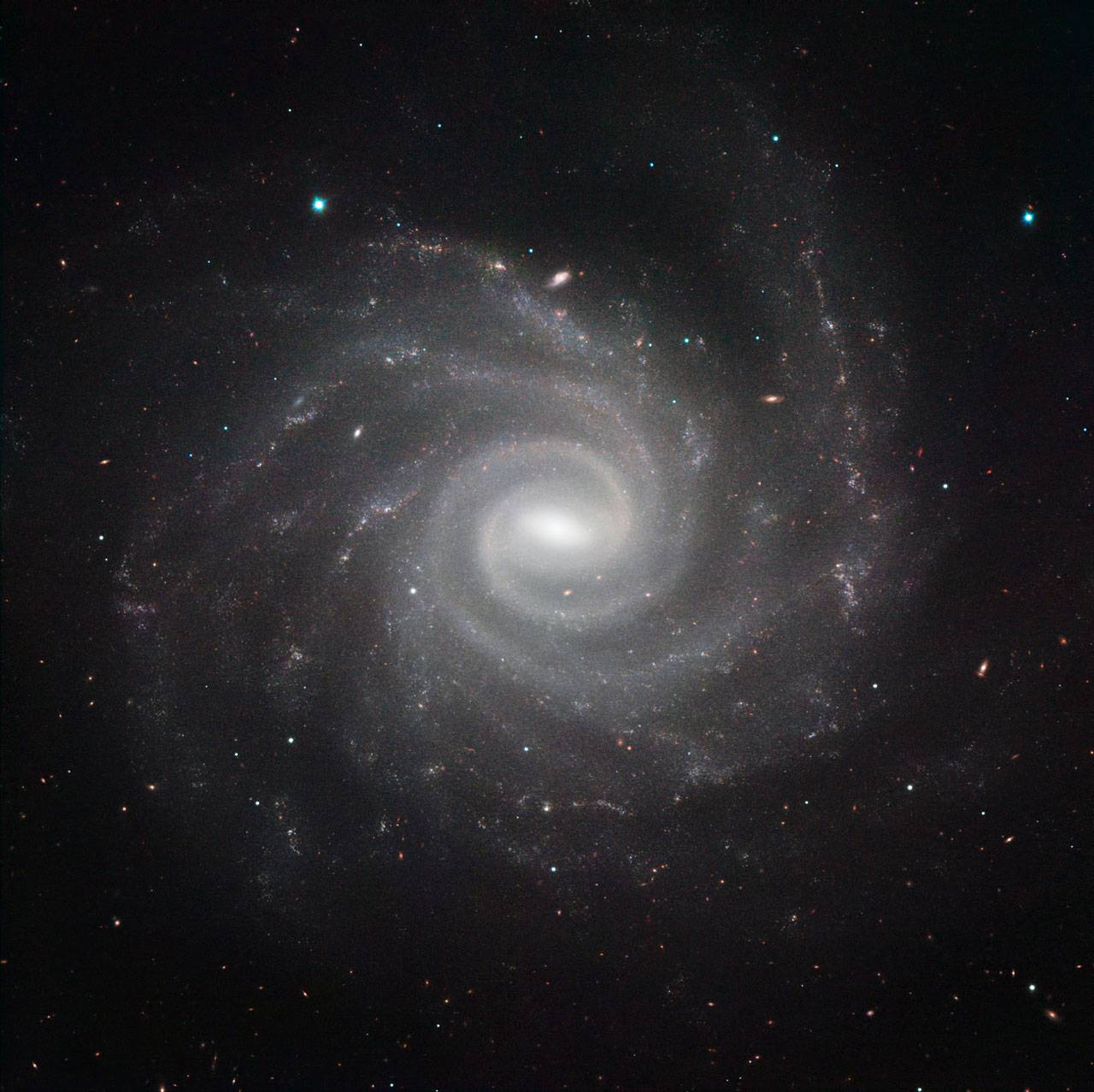
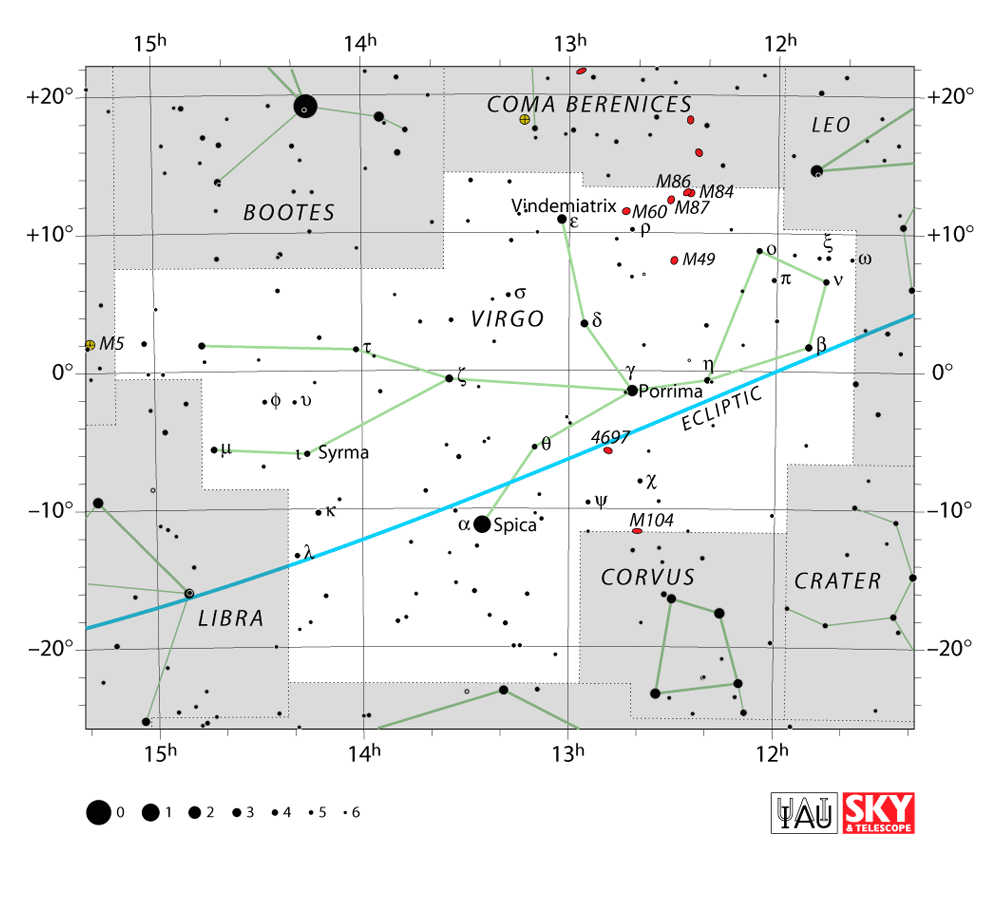
The first image shows NGC 5247, a spiral galaxy dominated by two huge arms, located 60–70 million light-years away. The galaxy lies face-on towards Earth, thus providing an excellent view of its pinwheel structure. It lies in the zodiacal constellation of Virgo (the Maiden).

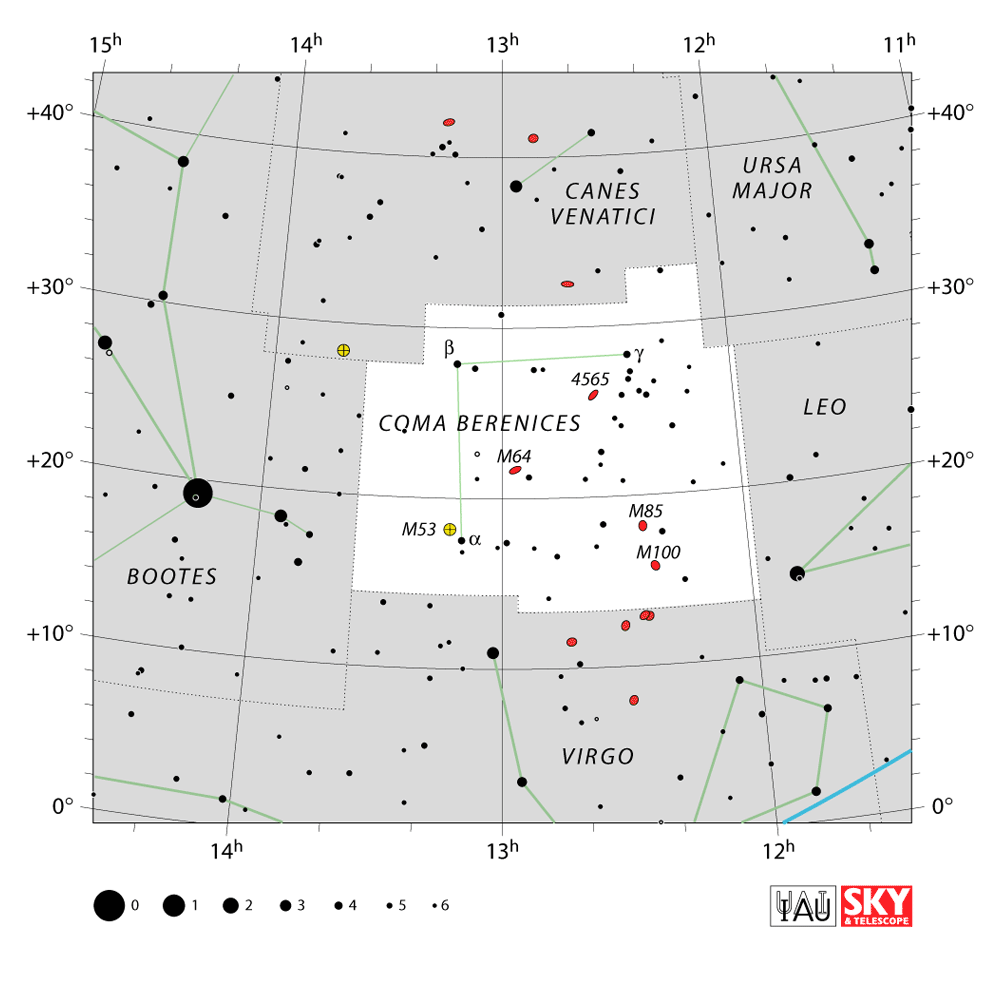
The galaxy in the second image is Messier 100, also known as NGC 4321, which was discovered in the 18th century. It is a fine example of a “grand design” spiral galaxy — a class of galaxies with very prominent and well-defined spiral arms. About 55 million light-years from Earth, Messier 100 is part of the Virgo Cluster of galaxies and lies in the constellation of Coma Berenices (Berenice’s Hair, named after the ancient Egyptian queen Berenice II).

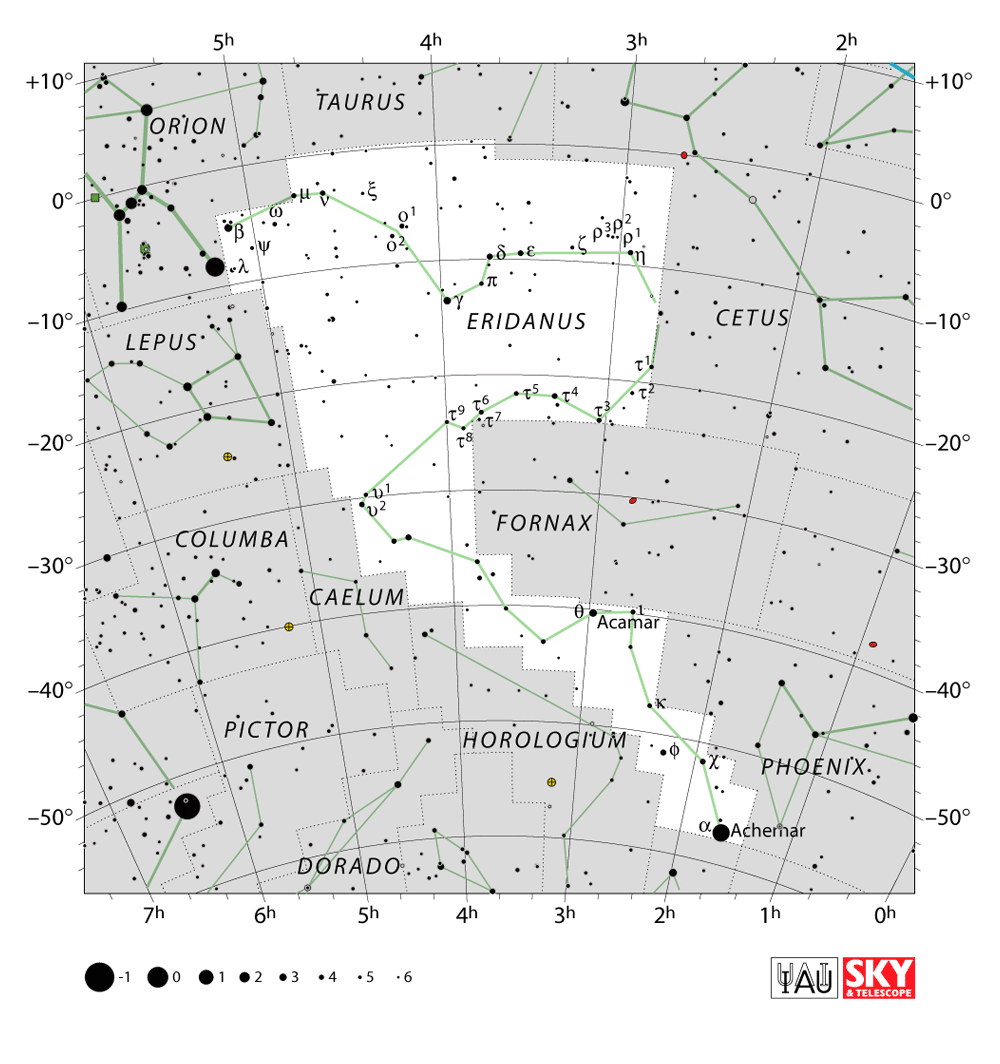
The third image is of NGC 1300, a spiral galaxy with arms extending from the ends of a spectacularly prominent central bar. It is considered a prototypical example of barred spiral galaxies and lies at a distance of about 65 million light-years, in the constellation of Eridanus (the River).

The spiral galaxy in the fourth image, NGC 4030, lies about 75 million light-years from Earth, in the constellation of Virgo. In 2007 Takao Doi, a Japanese astronaut who doubles as an amateur astronomer, spotted a supernova — a stellar explosion that is briefly almost as bright as its host galaxy — going off in this galaxy.

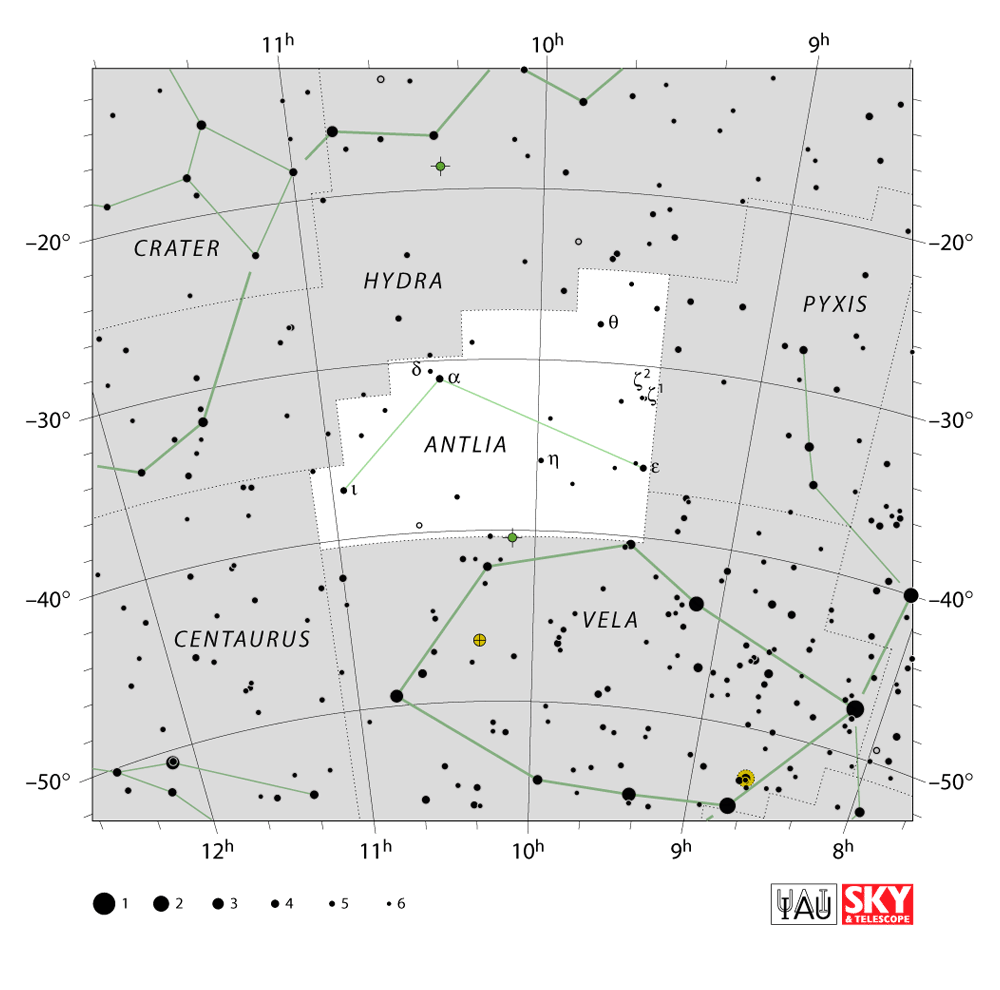
The fifth image, NGC 2997, is a spiral galaxy roughly 30 million light-years away in the constellation of Antlia (the Air Pump). NGC 2997 is the brightest member of a group of galaxies of the same name in the Local Supercluster of galaxies. Our own Local Group, of which the Milky Way is a member, is itself also part of the Local Supercluster.

Last but not least, NGC 1232 is a beautiful galaxy some 65 million light-years away in the constellation of Eridanus (the River). The galaxy is classified as an intermediate spiral galaxy — somewhere between a barred and an unbarred spiral galaxy. An image of this galaxy and its small companion galaxy NGC 1232A in visible light was one of the first produced by the VLT (eso9845). HAWK-I has now returned to NGC 1232 to show a different view of it at near-infrared wavelengths.

As this galactic gallery makes clear, HAWK-I lets us see the spiral structures in these six bright galaxies in exquisite detail and with a clarity that is only made possible by observing in the infrared.

Notes

[1] HAWK-I stands for High-Acuity Wide-field K-band Imager. More technical details about the camera can be found in an earlier press release (eso0736).

[2] More information about the VLT instruments can be found at: http://www.eso.org/public/teles-instr/vlt/vlt-instr.html.

More information


ESO, the European Southern Observatory, is the foremost intergovernmental astronomy organisation in Europe and the world’s most productive astronomical observatory. It is supported by 14 countries: Austria, Belgium, the Czech Republic, Denmark, France, Finland, Germany, Italy, the Netherlands, Portugal, Spain, Sweden, Switzerland and the United Kingdom. ESO carries out an ambitious programme focused on the design, construction and operation of powerful ground-based observing facilities enabling astronomers to make important scientific discoveries. ESO also plays a leading role in promoting and organising cooperation in astronomical research. ESO operates three unique world-class observing sites in Chile: La Silla, Paranal and Chajnantor. At Paranal, ESO operates the Very Large Telescope, the world’s most advanced visible-light astronomical observatory and VISTA, the world’s largest survey telescope. ESO is the European partner of a revolutionary astronomical telescope ALMA, the largest astronomical project in existence. ESO is currently planning a 42-metre European Extremely Large optical/near-infrared Telescope, the E-ELT, which will become “the world’s biggest eye on the sky”.

Contacts

Richard Hook
ESO, La Silla, Paranal, E-ELT and Survey telescopes Public Information Officer
Garching, Germany
Tel: +49 89 3200 6655
Cell: +49 151 1537 3591
Email: rhook@eso.org

Tuesday, October 26, 2010

3C186: Precocious Galaxy Cluster Identified by Chandra

Galaxy Cluster 3C 186
Credit X-ray: NASA/CXC/SAO/A.Siemiginowska et al,
Optical: AURA/Gemini Obs.


NASA's Chandra X-ray Observatory has observed an unusual galaxy cluster that contains a bright core of relatively cool gas surrounding a quasar called 3C 186. This is the most distant object yet observed, and could provide insight into the triggering of quasars and the growth of galaxy clusters.

This composite image of the cluster surrounding 3C 186 includes a new, deep image from Chandra (blue) showing emission from gas surrounding the point-like quasar near the center of the cluster. Chandra X-ray spectra show that the temperature of the gas drops from 80 million degrees on the outskirts of the cluster down to 30 million in the core. This drop in temperature occurs because intense X-ray emission from the gas cools it. Optical data from the Gemini telescope in yellow show the stars and galaxies in the field of view.

What makes this particular galaxy cluster and its strong cooling core interesting is its age. 3C 186 is about 8 billion light years away from Earth, making it the most distant known galaxy cluster to contain a prominent cooling core. Because of its large distance the cluster is being seen when the Universe is relatively young, at less than half its current age.

Previous observations have revealed large numbers of clusters with strong cooling cores at smaller distances from the Earth, less than about 6 billion light years. Far fewer, however, have been found at larger distances between 6 and 8 billion light years. Considering its young age this "precocious" galaxy cluster around 3C 186 appears to be surprisingly well formed.

One explanation why fewer cooling cores are seen at larger distances is that these younger clusters experience higher rates of merging with other clusters or galaxies. These mergers would destroy the cooling cores. When coupled with the fact that it takes cooling cores a long time to form, this would make them rare in the earlier stages of the Universe.

Since this cluster was only found serendipitously through a Chandra survey of a small sample of radio sources, it is possible that many more similar objects exist at large distances. If these are discovered, it may revise our understanding of how galaxy clusters developed during this period of the Universe's history.

This galaxy cluster is also the most distant ever seen to contain a quasar. Only one other galaxy cluster containing a bright quasar has had a detailed study of its X-ray emitting gas, and this is located much closer to the Earth than 3C 186. In principle, the cooling gas near 3C 186 can provide enough fuel to support the growth of the supermassive black hole, the power source for the quasar.

This object also provides an interesting chance to study the effects of a quasar within a galaxy cluster environment. The energy generated by the black hole can be released into the cluster not just via mechanical power in a jet, but also by radiation from the bright quasar. This might result in a powerful wind that heats the surrounding gas and prevents further cooling.

The cluster is likely to be an ancestor of well-known nearby clusters such as Perseus and MS 0735.6+7421, where jets powered by the central black hole are boring out cavities in the cluster gas. It is much more distant and younger than these other two clusters and the radio source associated with 3C 186 is smaller and younger than in Perseus and MS 0735.6+7421.

The paper describing these results is published in the October 10th issue of the Astrophysical Journal. The list of authors is Aneta Siemiginowska, Douglas Burke and Thomas Aldcroft from the Harvard Smithsonian Center for Astrophysics, Diana Worrall from the University of Bristol, UK, Steve Allen from the Kavli Institute for Particle Astrophysics and Cosmology at Stanford University, Jill Bechtold from the University of Arizona, and Tracy Clarke and Teddy Cheung from the Naval Research Laboratory.

Fast Facts for 3C186:

Scale: Image is 4.6 by 3.4 arcmin (10.7 by 7.9 million light years).
Category: Groups & Clusters of Galaxies
Coordinates: (J2000) RA 07h 44m 17.4s | Dec +37° 53' 17.1''
Constellation: Lynx
Observation Date: 4 pointings between Dec 3-8, 2007
Observation Time: 55 hours (2 days 7 hours 33 min)
Obs. ID: 9407-9408, 9774-9775
Color Code: X-ray (Blue), Optical (Red, Green)
Instrument: ACIS
References: Siemiginowska, A, et al, 2010, ApJ 722:102-111
Distance Estimate: 7.99 billion light years (z=1.067)

Hubble Data Used to Look 10,000 Years into the Future

Globular Star Cluster Omega Centauri
Illustration Credit:
NASA, ESA, and G. Bacon (STScI)
Science Credit: NASA, ESA, and J. Anderson and R. van der Marel (STScI)

The globular star cluster Omega Centauri has caught the attention of sky watchers ever since the ancient astronomer Ptolemy first catalogued it 2,000 years ago. Ptolemy, however, thought Omega Centauri was a single star. He didn't know that the "star" was actually a beehive swarm of nearly 10 million stars, all orbiting a common center of gravity.

The stars are so tightly crammed together that astronomers had to wait for the powerful vision of NASA's Hubble Space Telescope to peer deep into the core of the "beehive" and resolve individual stars. Hubble's vision is so sharp it can even measure the motion of many of these stars, and over a relatively short span of time.

A precise measurement of star motions in giant clusters can yield insights into how stellar groupings formed in the early universe, and whether an "intermediate mass" black hole, one roughly 10,000 times as massive as our Sun, might be lurking among the stars.

Analyzing archived images taken over a four-year period by Hubble's Advanced Camera for Surveys, astronomers have made the most accurate measurements yet of the motions of more than 100,000 cluster inhabitants, the largest survey to date to study the movement of stars in any cluster.

"It takes high-speed, sophisticated computer programs to measure the tiny shifts in the positions of the stars that occur in only four years' time," says astronomer Jay Anderson of the Space Telescope Science Institute in Baltimore, Md., who conducted the study with fellow Institute astronomer Roeland van der Marel. "Ultimately, though, it is Hubble's razor-sharp vision that is the key to our ability to measure stellar motions in this cluster."

Adds van der Marel: "With Hubble, you can wait three or four years and detect the motions of the stars more accurately than if you had waited 50 years on a ground-based telescope."

The astronomers used the Hubble images, which were taken in 2002 and 2006, to make a movie simulation of the frenzied motion of the cluster's stars. The movie shows the stars' projected migration over the next 10,000 years.

Identified as a globular star cluster in 1867, Omega Centauri is one of roughly 150 such clusters in our Milky Way Galaxy. The behemoth stellar grouping is the biggest and brightest globular cluster in the Milky Way, and one of the few that can be seen by the unaided eye. Located in the constellation Centaurus, Omega Centauri is viewable in the southern skies.

CONTACT

Donna Weaver
Space Telescope Science Institute, Baltimore, Md.
410-338-4493
dweaver@stsci.edu

Jay Anderson/Roeland van der Marel
Space Telescope Science Institute, Baltimore, Md.
jayander@stsci.edu / marel@stsci.edu
410-338-4982 / 410-338-4931

Friday, October 22, 2010

Discovery of New X-ray Celestial Body in Centaurs by Monitor of All-sky X-ray Image (MAXI)

Images of areas of 10 degrees in radius around the nova MAXI J1409-619. A celestial body that was not observed on Oct. 12 shone bright on the 17th. Right ascension 14 hr. 09 min. 2 sec., Declination -61 deg. 57 min.

The detailed X-ray image shot by the Swift satellite. An unknown bright new celestial body was seen in the brighter part (0.2 degrees in radius) observed by the MAXI

The MAXI Mission Team found a new X-ray celestial body by the Monitor of All-sky X-ray Image (MAXI) installed on the Exposed Facility of the Japanese Experiment Module "Kibo" on October 17 (Sun.) This is the second nova discovery by the MAXI following the finding of MAXI J1659-152 on September 25 (Sat.).

The nova emerged in Centaurs became brighter around October 17, but, as it was still dark, we took a few days to analyze observation data, then reported its location information to the world at around 8:00 p.m. on Oct. 20 (Wed., Japan Standard Time) through the Astronomer's Telegram (ATel No.2959.) Upon receiving this report, NASA's astronomical satellite "Swift" (*1) conducted an urgent tracking and observation from midnight October 21 (JST.)

As a result, the nova was confirmed to be a unprecedented bright X-ray source. It is predicted to be highly possible that the nova is either a neutron star with a companion star of a massive star which exists extremely far away, over several ten thousands light-years, in the Galaxy, or a black hole.

With the discovery this time, the MAXI proved its capability of discovering a X-ray nova existing far away in the Galaxy.

The MAXI team will continue its observations in cooperation with the Swift satellite to elucidate more details of this nova. It is named "MAXI J1409-619."

*1 Gamma-ray burst observation satellite launched on Nov. 20, 2004.

The MAXI team itself is a Japanese team consisting of researchers from JAXA, RIKEN, and domestic universities, but we have very close ties with the Swift team, which is mainly composed of American, Britain and Italian researchers, for observations.
This discovery was mainly conducted by Assistant Professor Kazutaka Yamaoka of Aoyama Gakuin University (also a member of the MAXI team) and Dr. Jamie A. Kennea of Penn State University.

Mission website:


http://kibo.jaxa.jp/en/experiment/ef/maxi/ (MAXI mission site)
http://iss.jaxa.jp/en/ (International Space Station/Kibo Information Center)
http://maxi.riken.jp/top/ (Riken MAXI site)

Subaru Telescope photographed 103P/Hartley

Image of 103P/Hartley obtained with the Suprime-Cam on Subatru Telescope

Subaru Telescope photographed the comet 103P/Hartley
approaching to the Earth


Scientists used Suprime-Cam at Subaru Telescope to catch the comet 103P/Hartley after long shut down of the telescope. This summer Subaru Telescope underwent primary mirror recoating, modification to its top, overhauling of many actuators, and so on. Since the distance to the comet from the Earth is small and the apparent movement of the comet on the sky is large, non-sidereal tracking was used during this observation based on the orbital parameters of the comet. This image is composed from the dataset of three different filters; g'-band (480nm), r'-band (620nm), and z'-band (900nm), and color coding is allotted for blue, green, and red, respectively. Since the comet was moving from the lower right to the upper left compared with the background stars, each background star appears as triple points with three colors along the direction of the comet movement.

Shouts of joy arose from the observers as well as the night crews on site when the telescope slew to the calculated position and the comet's tail appeared on a monitor. The observation crew is looking forward to obtaining even more striking results with an innovative instrument that will be installed on Subaru Telescope in near future. What is that instrument? Stay tuned.

Information on the picture obtained with Subaru Telescope is as follows.

Instrument: Suprime-Cam
Date of Observations: September 17, 2010 (HST)
Exposure Time: 20 seconds for g'-band, 10 seconds for r'- and z'-bands
Observers: Mr. Yousuke Utsumi (GUAS), Dr. Daigo Tomono, Dr. Fumiaki Nakata (Subaru Telescope)

When is a comet not a comet? Rosetta finds out

ESA's Rosetta sees the debris trail left by asteroid P/2010 A2 with its OSIRIS camera system. The picture was taken in March 2010. Credits: ESA / MPS for OSIRIS Team MPS/UPD/LAM/IAA/RSSD/INTA/UPM/DASP/IDA. HI-RES PNG (Size: 429 kb)

It was a case of celestial hit and run. Two asteroids, both in the wrong place at the wrong time. The result: one big trail of debris and a case of mistaken identity. Now, however, ESA’s comet-chaser Rosetta has unravelled the truth.

Using its OSIRIS camera, Rosetta made the breakthrough because it is far from Earth and so it could look at mystery object ‘P/2010 A2’ from a unique perspective. This showed that instead of being a comet, as first suspected, we are seeing the debris from a pair of colliding asteroids.

An automated survey telescope on Earth discovered P/2010 A2 in January 2010. It was immediately designated a comet because it has a tail – but calling it a comet never felt comfortable. It was located in the inner asteroid belt on a nearly circular orbit, whereas most comets move on giant elliptical paths that sweep them from the outer reaches of the Solar System down towards the Sun and out again.

Asteroid P/2010 A2 as seen by the camera system OSIRIS on ESA’s space probe Rosetta. The picture was taken in March 2010. Credits: ESA / MPS for OSIRIS Team MPS/UPD/LAM/IAA/RSSD/INTA/UPM/DASP/IDA. HI-RES JPEG (Size: 1337 kb)

Also, P/2010 A2 did not appear to possess a central condensation from which the tail grew – it was just a tail.

“We knew that we needed to look at P/2010 A2 from a different angle and Rosetta provided exactly that,” says Colin Snodgrass of the Max Planck Institute for Solar System Research in Germany.

Comparing the Rosetta images with those taken from Earth, computer modelling has now shown that the tail is not a continuous stream of ejected material, as would be the case for a comet. Instead, it was thrown into space in a single eruption.

The most likely cause would be a collision between two asteroids. If so, when did it happen?

Dr Snodgrass and colleagues found that the shape and size of the trail, as seen more clearly by Rosetta, allowed them to make a remarkably precise estimate for when the collision must have occurred.

They nailed down the date of the impact to within a ten-day window, centred around 10 February 2009, almost a year before its discovery.

“We are really quite confident about that date because of the quality of the data we used,” says Dr Snodgrass.

An international team, including Jessica Agarwal, a former ESA research fellow used the Hubble Space Telescope to resolve a single remaining asteroid, about 120 m across, at the head of the trail.

Using this in their computer modelling of the collision, Dr Snodgrass and colleagues found that the other asteroid was probably tiny, originally just a few metres across, and so was destroyed in the event.

“It is truly exciting to see an object that has been in a collision so recently,” says Rita Schulz, ESA Rosetta Project Scientist.

Such impacts are estimated to take place just once every billion years for each asteroid. But, as there are so many asteroids, there is likely to be a collision of this type every dozen years or so throughout the asteroid belt.

As technology improves, so surveys become more sensitive, and Dr Snodgrass expects the next generation of sky surveys to pick up collisions between even smaller asteroids every year.

“Asteroid P/2010 A2 could be a taste of things to come,” he says.

Artist's impression of the Rosetta Spacecraft
Credits: ESA - C. Carreau

Wednesday, October 20, 2010

Clearing the Cosmic Fog

Galaxies during the era of reionisation in the early Universe (simulation)

Hubble image of the distance-record galaxy UDFy-38135539

PR Video eso1041a
ESOcast 22: The most distant galaxy ever measured

Video News Release: The most distant galaxy ever measured

PR Video eso1041c
Zooming in on the most distant galaxy ever measured

The era of reionisation (simulation)

PR Video eso1041e
The era of reionisation (artist’s impression)

PR Video eso1041f
The era of reionisation (artist’s impression)

The Most Distant Galaxy Ever Measured

A European team of astronomers using ESO’s Very Large Telescope (VLT) has measured the distance to the most remote galaxy so far. By carefully analysing the very faint glow of the galaxy they have found that they are seeing it when the Universe was only about 600 million years old (a redshift of 8.6). These are the first confirmed observations of a galaxy whose light is clearing the opaque hydrogen fog that filled the cosmos at this early time. The results were presented at an online press conference with the scientists on 19 October 2010, and will appear in the 21 October issue of the journal Nature.

“Using the ESO Very Large Telescope we have confirmed that a galaxy spotted earlier using Hubble is the most remote object identified so far in the Universe” [1], says Matt Lehnert (Observatoire de Paris) who is lead author of the paper reporting the results. “The power of the VLT and its SINFONI spectrograph allows us to actually measure the distance to this very faint galaxy and we find that we are seeing it when the Universe was less than 600 million years old.”

Studying these first galaxies is extremely difficult. By the time that their initially brilliant light gets to Earth they appear very faint and small. Furthermore, this dim light falls mostly in the infrared part of the spectrum because its wavelength has been stretched by the expansion of the Universe — an effect known as redshift. To make matters worse, at this early time, less than a billion years after the Big Bang, the Universe was not fully transparent and much of it was filled with a hydrogen fog that absorbed the fierce ultraviolet light from young galaxies. The period when the fog was still being cleared by this ultraviolet light is known as the era of reionisation [2]. Despite these challenges the new Wide Field Camera 3 on the NASA/ESA Hubble Space Telescope discovered several robust candidate objects in 2009 [3] that were thought to be galaxies shining in the era of reionisation. Confirming the distances to such faint and remote objects is an enormous challenge and can only reliably be done using spectroscopy from very large ground-based telescopes [4], by measuring the redshift of the galaxy’s light.

Matt Lehnert takes up the story: “After the announcement of the candidate galaxies from Hubble we did a quick calculation and were excited to find that the immense light collecting power of the VLT, when combined with the sensitivity of the infrared spectroscopic instrument, SINFONI, and a very long exposure time might just allow us to detect the extremely faint glow from one of these remote galaxies and to measure its distance.”

On special request to ESO’s Director General they obtained telescope time on the VLT and observed a candidate galaxy called UDFy-38135539 [5] for 16 hours. After two months of very careful analysis and testing of their results, the team found that they had clearly detected the very faint glow from hydrogen at a redshift of 8.6, which makes this galaxy the most distant object ever confirmed by spectroscopy. A redshift of 8.6 corresponds to a galaxy seen just 600 million years after the Big Bang.

Co-author Nicole Nesvadba (Institut d’Astrophysique Spatiale) sums up this work, “Measuring the redshift of the most distant galaxy so far is very exciting in itself, but the astrophysical implications of this detection are even more important. This is the first time we know for sure that we are looking at one of the galaxies that cleared out the fog which had filled the very early Universe.”

One of the surprising things about this discovery is that the glow from UDFy-38135539 seems not to be strong enough on its own to clear out the hydrogen fog. “There must be other galaxies, probably fainter and less massive nearby companions of UDFy-38135539, which also helped make the space around the galaxy transparent. Without this additional help the light from the galaxy, no matter how brilliant, would have been trapped in the surrounding hydrogen fog and we would not have been able to detect it”, explains co-author Mark Swinbank (Durham University).

Co-author Jean-Gabriel Cuby (Laboratoire d’Astrophysique de Marseille) remarks: “Studying the era of reionisation and galaxy formation is pushing the capability of current telescopes and instruments to the limit, but this is just the type of science that will be routine when ESO’s European Extremely Large Telescope — which will be the biggest optical and near infrared telescope in the world — becomes operational.”

Notes

[1] An earlier ESO result (eso0405) reported an object at a larger distance (a redshift of 10). However, further work failed to find an object of similar brightness at this position, and more recent observations with the NASA/Hubble Space Telescope have been inconclusive. The identification of this object with a galaxy at very high redshift is no longer considered to be valid by most astronomers.

[2] When the Universe cooled down after the Big Bang, about 13.7 billion years ago, electrons and protons combined to form hydrogen gas. This cool dark gas was the main constituent of the Universe during the so-called Dark Ages, when there were no luminous objects. This phase eventually ended when the first stars formed and their intense ultraviolet radiation slowly made the hydrogen fog transparent again by splitting the hydrogen atoms back into electrons and protons, a process known as reionisation. This epoch in the Universe’s early history lasted from about 150 million to 800 million years after the Big Bang. Understanding how reionisation happened and how the first galaxies formed and evolved is one of the major challenges of modern cosmology.

[3] These Hubble observations are described at:
http://www.spacetelescope.org/news/heic1001/

[4] Astronomers have two main ways of finding and measuring the distances to the earliest galaxies. They can take very deep images through differently coloured filters and measure the brightness of many objects at different wavelengths. They can then compare these with what is expected of galaxies of different types at different times in the Universe’s history. This is the only way currently available to discover these very faint galaxies and is the technique employed by the Hubble team. But this technique is not always reliable. For example, what may seem to be a faint, very distant galaxy can sometimes turn out to be a mundane, cool star in our Milky Way.

Once candidate objects are found more reliable estimates of the distance (measured as the redshift) can be obtained by splitting the light from a candidate object up into its component colours and looking for the telltale signs of emission from hydrogen or other elements in the galaxy. This spectroscopic approach is the only means by which astronomers can obtain the most reliable and accurate measurements of distance.

[5] The strange name indicates that it was found in the Ultra Deep Field search area and the number gives its precise position on the sky.

More information

An online press conference to announce the new results and offer journalists the opportunity for discussion with the scientists will be held at 16:00 CEST on Tuesday, 19 October 2010. To participate in the teleconference, bona-fide members of the media must get accredited by contacting Douglas Pierce-Price by email (dpiercep@eso.org). Reporters will need access to a computer with a recent version of Adobe Flash Player installed and a broadband internet connection.

This research was presented in a paper, Spectroscopic confirmation of a galaxy at redshift z=8.6, Lehnert et al., to appear in Nature on 21 October 2010.

The team is composed of M. D. Lehnert (Observatoire de Paris – Laboratoire GEPI / CNRS-INSU / Université Paris Diderot, France), N. P. H. Nesvadba (Institut d’Astrophysique Spatiale / CNRS-INSU / Université Paris-Sud, France), J.-G.Cuby (Laboratoire d’Astrophysique de Marseille / CNRS-INSU / Université de Provence, France), A. M. Swinbank (Durham University, UK), S. Morris (Durham University, UK), B. Clément (Laboratoire d’Astrophysique de Marseille / CNRS-INSU / Université de Provence, France), C. J. Evans (UK Astronomy Technology Centre, Edinburgh, UK), M. N. Bremer (University of Bristol, UK) and S. Basa (Laboratoire d’Astrophysique de Marseille / CNRS-INSU / Université de Provence, France).

ESO, the European Southern Observatory, is the foremost intergovernmental astronomy organisation in Europe and the world’s most productive astronomical observatory. It is supported by 14 countries: Austria, Belgium, the Czech Republic, Denmark, France, Finland, Germany, Italy, the Netherlands, Portugal, Spain, Sweden, Switzerland and the United Kingdom. ESO carries out an ambitious programme focused on the design, construction and operation of powerful ground-based observing facilities enabling astronomers to make important scientific discoveries. ESO also plays a leading role in promoting and organising cooperation in astronomical research. ESO operates three unique world-class observing sites in Chile: La Silla, Paranal and Chajnantor. At Paranal, ESO operates the Very Large Telescope, the world’s most advanced visible-light astronomical observatory and VISTA, the world’s largest survey telescope. ESO is the European partner of a revolutionary astronomical telescope ALMA, the largest astronomical project in existence. ESO is currently planning a 42-metre European Extremely Large optical/near-infrared Telescope, the E-ELT, which will become “the world’s biggest eye on the sky”.

Links

Research paper: Nature paper
More info about reionisaton
Marcelo Alvarez’ simulations of reionisation

Contacts

Matthew Lehnert
Observatoire de Paris
France
Tel: +33 1 45 07 76 11
Email: matthew.lehnert@obspm.fr

Nicole Nesvadba
Institut d'Astrophysique Spatiale
Tel: +33 1 69 15 36 54
Cell: +33 6 28 28 14 26
Email: nicole.nesvadba@ias.u-psud.fr

Mark Swinbank
Durham University
United Kingdom
Tel: +44 191 334 3786
Cell: +44 7920 727 126
Email: a.m.swinbank@durham.ac.uk

Douglas Pierce-Price
ESO Public Information Officer
Garching, Germany
Tel: +49 89 3200 6759
Email: dpiercep@eso.org

Tuesday, October 19, 2010

The Comet Cometh: Hartley 2 Visible in Night Sky

This image of comet Hartley 2 was captured by amateur astronomer Byron Bergert on Oct. 6 in Gainesville, Florida using a 106 mm Takahashi astrograph. Image credit: Byron Berger. Larger image

The animation shows Comet Hartley 2 moving through the night sky on Oct. 1, 2010 as captured by amateur astronomer Patrick Wiggins of Utah. The animated gif consists of a series of 13 ten-second exposures of the comet each spaced five minutes apart between 0901 and 1004 UTC. Wiggins, who is also a NASA/JPL Solar System Ambassador, used a 35cm Celestron C-14 operating at f/5.5. Image Credit: Patrick Wiggins, NASA/JPL Solar System Ambassador

Backyard stargazers with a telescope or binoculars and a clear night's sky can now inspect the comet that in a little over two weeks will become only the fifth in history to be imaged close up. Comet Hartley 2 will come within 17.7 million kilometers (11 million miles) of Earth this Wed., Oct. 20 at noon PDT (3 p.m. EDT). NASA's EPOXI mission will come within 700 kilometers (435 miles) of Hartley 2 on Nov. 4.

"On October 20, the comet will be the closest it has ever been since it was discovered in 1986 by Australian astronomer Malcolm Hartley," said Don Yeomans, head of NASA's Near-Earth Object Office at the Jet Propulsion Laboratory in Pasadena, Calif. and a member of the EPOXI science team. "It's unusual for a comet to approach this close. It is nice of Mother Nature to give us a preview before we see Hartley 2 in all its cometary glory with some great close-up images less than two weeks later."

Comet Hartley 2, also known as 103P/Hartley 2, is a relatively small, but very active periodic comet that orbits the sun once every 6.5 years. From dark, pristine skies in the Northern Hemisphere, the comet should be visible with binoculars as a fuzzy object in the constellation Auriga, passing south of the bright star Capella. Viewing of Hartley 2 from high ambient light locations including urban areas may be more difficult.

In the early morning hours of Oct. 20, the optimal dark sky window for mid-latitude northern observers is under two hours in length. This dark interval will occur between the time when the nearly-full moon sets at about 4:50 a.m. (local time) and when the morning twilight begins at about 6:35 a.m.

By October 22, the comet will have passed through the constellation Auriga. It will continue its journey across the night sky in the direction of the constellation Gemini.

EPOXI is an extended mission that utilizes the already "in-flight" Deep Impact spacecraft to explore distinct celestial targets of opportunity. The name EPOXI itself is a combination of the names for the two extended mission components: the extrasolar planet observations, called Extrasolar Planet Observations and Characterization (EPOCh), and the flyby of comet Hartley 2, called the Deep Impact Extended Investigation (DIXI). The spacecraft will continue to be referred to as "Deep Impact."

JPL manages the EPOXI mission for NASA's Science Mission Directorate, Washington. The University of Maryland, College Park, is home to the mission's principal investigator, Michael A'Hearn. Drake Deming of NASA's Goddard Space Flight Center, Greenbelt, Md., is the science lead for the mission's extrasolar planet observations. The spacecraft was built for NASA by Ball Aerospace & Technologies Corp., Boulder, Colo.

Images and videos of comet Hartley 2 from both amateur observers and major observatories are online at: http://aop.astro.umd.edu/gallery/hartley.shtml

For more information about EPOXI visit http://epoxi.umd.edu/

DC Agle 818-393-9011
Jet Propulsion Laboratory, Pasadena, Calif.
agle@jpl.nasa.gov

Astronomers Find Weird, Warm Spot on an Exoplanet

NASA's Spitzer Space Telescope has found that the hottest part of a distant planet, named upsilon Andromedae b, is not under the glare of its host star as might be expected. Image credit: NASA/JPL-Caltech. Full image and caption

PASADENA, Calif. -- Observations from NASA's Spitzer Space Telescope reveal a distant planet with a warm spot in the wrong place.

The gas-giant planet, named upsilon Andromedae b, orbits tightly around its star, with one face perpetually boiling under the star's heat. It belongs to a class of planets termed hot Jupiters, so called for their scorching temperatures and large, gaseous constitutions.

One might think the hottest part of these planets would be directly under the sun-facing side, but previous observations have shown that their hot spots may be shifted slightly away from this point. Astronomers thought that fierce winds might be pushing hot, gaseous material around.

But the new finding may throw this theory into question. Using Spitzer, an infrared observatory, astronomers found that upsilon Andromedae b's hot spot is offset by a whopping 80 degrees. Basically, the hot spot is over to the side of the planet instead of directly under the glare of the sun.

"We really didn't expect to find a hot spot with such a large offset," said Ian Crossfield, lead author of a new paper about the discovery appearing in an upcoming issue of Astrophysical Journal. "It's clear that we understand even less about the atmospheric energetics of hot Jupiters than we thought we did."

The results are part of a growing field of exoplanet atmospheric science, pioneered by Spitzer in 2005, when it became the first telescope to directly detect photons from an exoplanet, or a planet orbiting a star other than our sun. Since then, Spitzer, along with NASA's Hubble Space Telescope, has studied the atmospheres of several hot Jupiters, finding water, methane, carbon dioxide and carbon monoxide.

In the new study, astronomers report observations of upsilon Andromedae b taken across five days in February of 2009. This planet whips around its star every 4.6 days, as measured using the "wobble," or radial velocity technique, with telescopes on the ground. It does not transit, or cross in front of, its star as many other hot Jupiters studied by Spitzer do.

Spitzer measured the total combined light from the star and planet, as the planet orbited around. The telescope can't see the planet directly, but it can detect variations in the total infrared light from the system that arise as the hot side of the planet comes into Earth's field of view. The hottest part of the planet will give off the most infrared light.

One might think the system would appear brightest when the planet was directly behind the star, thus showing its full sun-facing side. Likewise, one might think the system would appear darkest when the planet swings around toward Earth, showing its backside. But the system was the brightest when the planet was to the side of the star, with its side facing Earth. This means that the hottest part of the planet is not under its star. It's sort of like going to the beach at sunset to feel the most heat. The researchers aren't sure how this could be.

They've guessed at some possibilities, including supersonic winds triggering shock waves that heat material up, and star-planet magnetic interactions. But these are just speculation. As more hot Jupiters are examined, astronomers will test new theories.

"This is a very unexpected result," said Michael Werner, the Spitzer project scientist at NASA's Jet Propulsion Laboratory, Pasadena, Calif., who was not a part of the study. "Spitzer is showing us that we are a long way from understanding these alien worlds."

The Spitzer observations were made before it ran out of its liquid coolant in May 2009, officially beginning its warm mission.

Other authors of the study are Brad Hansen of UCLA; Joseph Harrington at the University of Central Florida, Orlando; James Y-K. Cho of Queen Mary, University of London, United Kingdom; Drake Deming of NASA's Goddard Space Flight Center, Greenbelt, Md.; Kristen Menou of Columbia University, New York, N.Y.; and Sara Seager of the Massachusetts Institute of Technology, Boston.

JPL manages the Spitzer Space Telescope mission for NASA's Science Mission Directorate, Washington. Science operations are conducted at the Spitzer Science Center at the California Institute of Technology, also in Pasadena. Caltech manages JPL for NASA. For more information about Spitzer, visit http://spitzer.caltech.edu/ and http://www.nasa.gov/spitzer .

Whitney Clavin 818-354-4673
Jet Propulsion Laboratory, Pasadena, Calif.
whitney.clavin@jpl.nasa.gov

Pinwheel of Star Birth

Face-on Spiral Galaxy NGC 3982
Credit: NASA, ESA, and the Hubble Heritage Team (STScI/AURA)
Acknowledgment: A. Riess (STScI)

This face-on spiral galaxy, called NGC 3982, is striking for its rich tapestry of star birth, along with its winding arms. The arms are lined with pink star-forming regions of glowing hydrogen, newborn blue star clusters, and obscuring dust lanes that provide the raw material for future generations of stars. The bright nucleus is home to an older population of stars, which grow ever more densely packed toward the center.

NGC 3982 is located about 68 million light-years away in the constellation Ursa Major. The galaxy spans about 30,000 light-years, one-third of the size of our Milky Way galaxy. This color image is composed of exposures taken by the Hubble Space Telescope's Wide Field Camera 3 (WFC3), the Advanced Camera for Surveys (ACS), and the Wide Field Planetary Camera 2 (WFPC2). The observations were taken between March 2000 and August 2009.

Friday, October 15, 2010

NASA Spacecraft Hurtles Toward Active Comet Hartley 2

NASA's Deep Impact/EPOXI spacecraft is hurtling toward Comet Hartley 2 for a breathtaking 435-mile flyby on Nov. 4th. Mission scientists say all systems are go for a close encounter with one of the smallest yet most active comets they've seen.

"There are billions of comets in the solar system, but this will be only the fifth time a spacecraft has flown close enough to one to snap pictures of its nucleus," says Lori Feaga of the EPOXI science team. "This one should put on quite a show!"

Cometary orbits tend to be highly elongated; they travel far from the sun and then swing much closer. At encounter time, Hartley 2 will be nearing the sun and warming up after its cold, deep space sojourn. The ices in its nucleus will be vaporizing furiously – spitting dust and spouting gaseous jets.

"Hartley 2's nucleus is small, less than a mile in diameter," says Feaga. "But its surface offgasses at a higher rate than nuclei we've seen before. We expect more jets and outbursts from this one."

Artist's concept of the spacecraft's previous encounter with Comet Tempel 1

EPOXI will swoop down into the comet's bright coma – the sparkling aura of debris, illuminated by the sun – shrouding the nucleus. The spacecraft's cameras, taking high-resolution (7 meters per pixel at closest approach) pictures all the while, will reveal this new world in all its fizzy glory.

"We hope to see features of the comet's scarred face: craters, fractures, vents," says Sebastien Besse of the science team. "We may even be able to tell which features are spewing jets!"

The spacecraft's instruments are already trained on their speeding target.

"We're still pretty far out, so we don't yet see a nucleus," explains Besse. "But our daily observations with the spectrometer and cameras are already helping us identify the species and amounts of gases in the coma and learn how they evolve over time as we approach."

Comet Hartley 2, photographed on Oct. 13 by Science@NASA reader Nick Howes using the 2-meter Faulkes North Telescope in Hawaii. Hi-Res

"These flybys help us figure out what happened 4 1/2 billion years ago," says Feaga. "So far we've only seen four nucleii. We need to study more comets to learn how they differ and how they are the same. This visit will help, especially since Hartley 2 is in many ways unlike the others we've seen."

EPOXI will provide not only a birds-eye view of a new world but the best extended view of a comet in history.

"This spacecraft is built for close encounters. Its instruments and our planned observations are optimized for this kind of mission. When, as Deep Impact, it flew by Tempel 1, it turned its instruments away from the nucleus to protect them from debris blasted up by the impactor. This time we won't turn away."

The aim of the mission is to gather details about what the nucleus is made of and compare it to other comets. Because comets spend much of their time far from the sun, the cold preserves their composition – and that composition tells a great story.

"Comets are left-overs from the 'construction' of our solar system," explains Besse. "When the planets formed out of the 'stuff' in the solar nebula spinning around the sun, comets weren't drawn in."

Researchers study these pristine specimens of the primal solar system to learn something about how it formed, and how it birthed a life-bearing planet like Earth.

The EPOXI team will be waiting at NASA's Jet Propulsion Laboratory.

"We'll start diving into the data as soon as we receive it," says Feaga. "We'll work round the clock, on our toes the whole time, waiting for the next thing to come down."

Sounds like it could be intense.

"It's already intense," says Besse. "We're getting more and more data, but at encounter we'll be flooded!"

And that will be only the beginning.

Author: Dauna Coulter | Editor: Dr. Tony Phillips | Credit: Science@NASA

How to Weigh a Star Using a Moon

Artist’s concept of an exoplanet and its moon transiting a sun-like star. Such a system could be used to directly weigh the star. Credit: David A. Aguilar (CfA). High Resolution Image (jpg)

Cambridge, MA - How do astronomers weigh a star that's trillions of miles away and way too big to fit on a bathroom scale? In most cases they can't, although they can get a best estimate using computer models of stellar structure.

New work by astrophysicist David Kipping says that in special cases, we can weigh a star directly. If the star has a planet, and that planet has a moon, and both of them cross in front of their star, then we can measure their sizes and orbits to learn about the star.

"I often get asked how astronomers weigh stars. We've just added a new technique to our toolbox for that purpose," said Kipping, a predoctoral fellow at the Harvard-Smithsonian Center for Astrophysics.

Astronomers have found more than 90 planets that cross in front of, or transit, their stars. By measuring the amount of starlight that's blocked, they can calculate how big the planet is relative to the star. But they can't know exactly how big the planet is unless they know the actual size of the star. Computer models give a very good estimate but in science, real measurements are best.

Kipping realized that if a transiting planet has a moon big enough for us to see (by also blocking starlight), then the planet-moon-star system could be measured in a way that lets us calculate exactly how large and massive all three bodies are.

"Basically, we measure the orbits of the planet around the star and the moon around the planet. Then through Kepler's Laws of Motion, it's possible to calculate the mass of the star," explained Kipping.

The process isn't easy and requires several steps. By measuring how the star's light dims when planet and moon transit, astronomers learn three key numbers: 1) the orbital periods of the moon and planet, 2) the size of their orbits relative to the star, and 3) the size of planet and moon relative to the star.

Plugging those numbers into Kepler's Third Law yields the density of the star and planet. Since density is mass divided by volume, the relative densities and relative sizes gives the relative masses. Finally, scientists measure the star's wobble due to the planet's gravitational tug, known as the radial velocity. Combining the measured velocity with the relative masses, they can calculate the mass of the star directly.

"If there was no moon, this whole exercise would be impossible," stated Kipping. "No moon means we can't work out the density of the planet, so the whole thing grinds to a halt."

Kipping hasn't put his method into practice yet, since no star is known to have both a planet and moon that transit. However, NASA's Kepler spacecraft should discover several such systems.

"When they're found, we'll be ready to weigh them," said Kipping.

This research will appear in the Monthly Notices of the Royal Astronomical Society. Headquartered in Cambridge, Mass., the Harvard-Smithsonian Center for Astrophysics (CfA) is a joint collaboration between the Smithsonian Astrophysical Observatory and the Harvard College Observatory. CfA scientists, organized into six research divisions, study the origin, evolution and ultimate fate of the universe.

For more information, contact: David A. Aguilar Director of Public Affairs Harvard-Smithsonian Center for Astrophysics 617-495-7462
daguilar@cfa.harvard.edu

Christine Pulliam Public Affairs Specialist Harvard-Smithsonian Center for Astrophysics 617-495-7463
cpulliam@cfa.harvard.edu

Thursday, October 14, 2010

SGR 0418+5729: What Lies Beneath? Magnetar Enigma Deepens

SGR 0418+5729
Credit: Illustration: NASA/CXC/M.Weiss
Observations with NASA's Chandra, Swift, and Rossi X-ray observatories, Fermi Gamma-ray Space Telescope, and ESA's XMM-Newton have revealed that a slowly rotating neutron star with an ordinary surface magnetic field is giving off bursts of X-rays and gamma rays. This discovery may indicate the presence of an internal magnetic field much more intense than the surface magnetic field, with implications for how the most powerful magnets in the cosmos evolve.

The neutron star, SGR 0418+5729, was discovered on June 5, 2009 when the Fermi Gamma-ray Space Telescope detected bursts of gamma-rays from this object. Follow-up observations four days later with the Rossi X-Ray Timing Explorer (RXTE) showed that, in addition to sporadic X-ray bursts, the neutron star exhibits persistent X-ray emission with regular pulsations that indicate that the star has a rotational period of 9.1 seconds. RXTE was able to monitor this activity for about 100 days. This behavior is similar to a class of neutron stars called magnetars, which have strong to extreme magnetic fields 20 to 1000 times above the average of the galactic radio pulsars.

As neutron stars rotate, the radiation of low frequency electromagnetic waves or winds of high-energy particles carry energy away from the star, causing the rotation rate of the star to gradually decrease. Careful monitoring of SGR 0418 was possible because Chandra and XMM-Newton were able to measure its pulsation period even though it faded by a factor of 10 after the initial detection. What sets SGR 0418 apart from other magnetars is that careful monitoring over a span of 490 days has revealed no detectable decrease in its rotation rate.

The lack of rotational slowing implies that the radiation of low frequency waves must be weak, and hence the surface magnetic field must be much weaker than normal. But this raises another question: where does the energy come from to power bursts and the persistent X-ray emission from the source?

The generally accepted answer for magnetars is that the energy to power the X- and gamma-ray emission comes from an internal magnetic field that has been twisted and amplified in the turbulent interior of the neutron star, as depicted in the illustration above. Theoretical studies indicate that if the internal field becomes about ten or more times stronger than the surface field, the decay or untwisting of the field can lead to the production of steady and bursting X-ray emission through the heating of the neutron star crust or the acceleration of particles.

A crucial question is how large an imbalance can be maintained between the surface and interior fields. SGR 0418 represents an important test case. The observations already imply an imbalance of between 50 and 100. If further observations by Chandra push the surface magnetic field limit lower, then theorists may have to dig deeper for an explanation of this enigmatic object.

This discovery is the result of an international teamwork from CSIC-IEEC, INAF, University of Padua, MSSL-UCL, CEA-Saclay, Sabanci University and NASA's Marshall Space Flight Center (MSFC). These results appear in the October 14th issue of Science Express, which provides electronic publication of selected Science papers in advance of print. NASA's MSFC in Huntsville, Ala., manages the Chandra program for NASA's Science Mission Directorate in Washington. The Smithsonian Astrophysical Observatory controls Chandra's science and flight operations from Cambridge, Mass.

Fast Facts for SGR 0418+5729:

Category: Neutron Stars/X-ray Binaries
Coordinates: (J2000) RA 04h 18m 33.90s | Dec +57° 32' 22.90''
Constellation: Camelopardalis
Observation Dates: Jul 23, 2010
Observation Time: 6 hours 56 min
Obs. IDs: 12312
Instrument: ACIS
References: Rea, N, et al, 2010, in press
Distance Estimate: 6500 light years