Showing posts with label IRAS 16293-2422. Show all posts

Wednesday, June 10, 2020

Close-up view reveals binary proto-stars in the process of assemblage

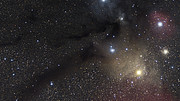
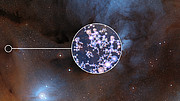
Zoom into the Ophiuchus molecular cloud, highlighting the star forming system IRAS 16293-2422 with the proto-star B in the upper right corner and the now clearly identified binary proto-stars A1 and A2 on the bottom left. The binary system is shown also in a further zoom-in panel. © MPE; background: ESO/Digitized Sky Survey 2; Davide De Martin)

Detailed view of the binary proto-star system with a size comparison to our solar system. The separation between the sources A1 and A2 is roughly the diameter of the Pluto orbit. The size of the disk around A1 (unresolved) is about the diameter of the asteroid belt. The size of the disk around A2 is about the diameter of the Saturn orbit. © MPE

Relative motion of A1 (blue) with respect to A2 (red) overlaid on the ALMA continuum observation. The visual impression that A1 orbits around A2 is confirmed through a detailed analysis of the motion of the proto-stars over a 30-year period. © MPE

High-resolution observations of a young star forming system clearly unveil a pair of proto-stars at their earliest stages of evolution deeply embedded within the source IRAS 16293-2422 in the Ophiuchus molecular cloud. The team led by the Max Planck Institute for Extraterrestrial Physics used the ALMA interferometer not only to pin down the source configuration, but also to measure the gas and stellar kinematics, determining the mass of the young binary. The two close proto-stars are somewhat heavier than previously thought and they revolve around each other once in about 400 years.

The system called IRAS 16293-2422 is one of the brightest star-forming regions in our neighborhood. It is located in the Ophiuchus molecular cloud at a distance of about 460 light-years and has been widely studied, also because it shows strong emission of numerous complex organic molecules, building blocks of pre-biotic species. However, until now the detailed configuration of the region was unclear, with observations at different wavelengths showing multiple compact sources at slightly different locations. This confusion was due to the large amount of material in front of the nascent proto-stars, expected at these earliest stages of formation.

An international team of astronomers led by the Max Planck Institute for Extraterrestrial Physics (MPE) has now obtained high-resolution radio observations with the ALMA interferometer, which clearly reveals two compact sources A1 and A2 in addition to the well-known proto-star B (see Fig. 1). “Our observations confirm the location of the two close proto-stars and reveal that each is surrounded by a very small dust disk. Both, in turn, are in turn embedded in a large amount of material showing complex patterns” remarks María José Maureira from MPE, the lead author of the study.

The source A1 has a mass of a bit less than 1 solar mass and is embedded in a small dust disk about the size of the asteroid belt; the source A2 has a mass of about 1.4 solar masses and is embedded in a somewhat larger disk (see Fig. 2). Interestingly, this disk around A2 also appears at an angle compared to the overall orientation of the larger cloud structure, while the disk around the source B – at a much larger distance – is seen face-on, indicating a rather chaotic formation history.

In addition to direct imaging of the dust emission, the team also obtained information on the motion of the gas around the stars through observations of spectral lines of organic molecules, which well trace the high-density region surrounding the discovered binary system. This allowed them to get an independent mass measurement and to confirm that A1 and A2 form a bound pair.

Combining their latest observations with data collected over the past 30 years, the team found that the two stars orbit each other once every 360 years at a distance similar to the extent of Pluto’s orbit, where the orbit is tilted by about 60° (see Fig. 3).  “This is the first time that we were able to derive the full orbital parameters of a binary system at this early stage of star formation,” points out Jaime Pineda from MPE, who contributed to the modelling.

“With these results we are finally able to dive into one of the most embedded and youngest proto-stellar systems, unveiling its dynamical structure and complex morphology, where we clearly see filamentary material connecting the circumstellar disks to the surrounding region and likely to the cirbumbinary disk. The small disks are probably still being fed and growing!” emphasizes Paola Caselli, director at MPE and head of the Center for Astrochemical Studies. “This was only possible thanks to the great sensitivity of ALMA and the observations of molecules which uniquely trace these dense regions. Molecules send us signals at very specific frequencies, and, following changes of such frequencies across the region (due to internal motions) one can reconstruct the complex kinematics of the system. This is the power of astrochemistry.”

Source: Max Planck Institute for Extraterrestrial Physics (MPE)


Original publication

1. Maria Jose Maureira, Jaime E. Pineda, Dominique M. Segura-Cox, Paola Caselli, Leonardo Testi, Giuseppe Lodato, Laurent Loinard, Antonio Hernandez-Gomez
Orbital and mass constraints of the young binary system IRAS 16293-2422 A
Accepted for publication in ApJ

Source


Contacts

Dr. Maria Jose Maureira
postdoc
Tel +49 (0)89 30000-3863
+49 (0)89 30000-3569

Dr. Jaime Pineda Fornerod
Pineda Fornerod, Jaime
postdoc
Tel +49 (0)89 30000-3610
Tel +49 173 3517084
+49 (0)89 30000-3950

Prof. Dr. Paola Caselli
acting director
Tel +49 (0)89 30000-3400
+49 (0)89 30000-3950


Tuesday, October 03, 2017

ALMA and Rosetta Detect Freon-40 in Space

ALMA and Rosetta Detect Freon-40 in Space

ROSINA on Rosetta finds Freon-40 at Comet 67P/Churyumov–Gerasimenko

IRAS 16293-2422 in the constellation of Ophiuchus

The Rho Ophiuchi star formation region in the constellation of Ophiuchus

ALMA and Rosetta Detect Freon-40 in Space


Videos
 
Zooming in on the Rho Ophiuchi star formation region


 Dashing Hopes that Molecule May be Marker of Life

Observations made with the Atacama Large Millimeter/submillimeter Array (ALMA) and ESA’s Rosetta mission, have revealed the presence of the organohalogen Freon-40 in gas around both an infant star and a comet. Organohalogens are formed by organic processes on Earth, but this is the first ever detection of them in interstellar space. This discovery suggests that organohalogens may not be as good markers of life as had been hoped, but that they may be significant components of the material from which planets form. This result, which appears in the journal Nature Astronomy, underscores the challenge of finding molecules that could indicate the presence of life beyond Earth.

Using data captured by ALMA in Chile and from the ROSINA instrument on ESA’s Rosetta mission, a team of astronomers has found faint traces of the chemical compound Freon-40 (CH3Cl), also known as methyl chloride and chloromethane, around both the infant star system IRAS 16293-2422 [1], about 400 light-years away, and the famous comet 67P/Churyumov-Gerasimenko (67P/C-G) in our own Solar System. The new ALMA observation is the first detection ever of a stable organohalogen in interstellar space [2].

Organohalogens consist of halogens, such as chlorine and fluorine, bonded with carbon and sometimes other elements. On Earth, these compounds are created by some biological processes — in organisms ranging from humans to fungi —  as well as by industrial processes such as the production of dyes and medical drugs [3].

This new discovery of one of these compounds, Freon-40, in places that must predate the origin of life, can be seen as a disappointment, as earlier research had suggested that these molecules could indicate the presence of life.

“Finding the organohalogen Freon-40 near these young, Sun-like stars was surprising,” said Edith Fayolle, a researcher with the Harvard-Smithsonian Center for Astrophysics in Cambridge, Massachusetts in the USA, and lead author of the new paper. “We simply didn't predict its formation and were surprised to find it in such significant concentrations. It’s clear now that these molecules form readily in stellar nurseries, providing insights into the chemical evolution of planetary systems, including our own.”

Exoplanet research has gone beyond the point of finding planets — more than 3000 exoplanets are now known — to looking for chemical markers that might indicate the potential presence of life. A vital step is determining which molecules could indicate life, but establishing reliable markers remains a tricky process.

“ALMA’s discovery of organohalogens in the interstellar medium also tells us something about the starting conditions for organic chemistry on planets. Such chemistry is an important step toward the origins of life,” adds Karin Öberg, a co-author on the study. “Based on our discovery, organohalogens are likely to be a constituent of the so-called ‘primordial soup’, both on the young Earth and on nascent rocky exoplanets.”

This suggests that astronomers may have had things around the wrong way; rather than indicating the presence of existing life, organohalogens may be an important element in the little-understood chemistry involved in the origin of life.

Co-author Jes Jørgensen from the Niels Bohr Institute at University of Copenhagen adds: "This result shows the power of ALMA to detect molecules of astrobiological interest toward young stars on scales where planets may be forming. Using ALMA we have previously found precursors to sugars and amino acids around different stars. The additional discovery of Freon-40 around Comet 67P/C-G strengthens the links between the pre-biological chemistry of distant protostars and our own Solar System."

The astronomers also compared the relative amounts of Freon-40 that contain different isotopes of chlorine in the infant star system and the comet — and found similar abundances. This supports the idea that a young planetary system can inherit the chemical composition of its parent star-forming cloud and opens up the possibility that organohalogens could arrive on planets in young systems during planet formation or via comet impacts.

“Our results shows that we still have more to learn about the formation of organohalogens,” concludes Fayolle. “Additional searches for organohalogens around other protostars and comets need to be undertaken to help find the answer.”


Notes


[1] This protostar is a binary star system surrounded by a molecular cloud in the Rho Ophiuchi star-forming region, which makes it an excellent target for ALMA’s millimetre/submillimetre view.

[2] The data used were from the ALMA Protostellar Interferometric Line Survey (PILS). The aim of this survey is to chart the chemical complexity of IRAS 16293-2422 by imaging the full wavelength range covered by ALMA in the 0.8-millimetre atmospheric window on very small scales, equivalent to the size of the Solar System.

The species CF+, which could be considered as an organohalogen, had already been detected, but is not stable.

[3] Freons were widely used as a refrigerants (hence the name) but are now banned as they have a destructive effect on the Earth’s protective ozone layer.


More Information

This research was presented in a paper “Protostellar and Cometary Detections of Organohalogens” by E. Fayolle et al., to appear in Nature Astronomy on 2 October 2017.


The team is composed of Edith C. Fayolle (Harvard-Smithsonian Center for Astrophysics, USA), Karin I. Öberg (Harvard-Smithsonian Center for Astrophysics, USA),  Jes K. Jørgensen (University of Copenhagen, Denmark), Kathrin Altwegg (University of Bern, Switzerland),  Hannah Calcutt (University of Copenhagen, Denmark), Holger S. P. Müller (Universität zu Köln, Germany), Martin Rubin (University of Bern, Switzerland), Matthijs H. D. van der Wiel (The Netherlands Institute for Radio Astronomy, The Netherlands), Per Bjerkeli (Onsala Space Observatory, Sweden), Tyler L. Bourke (Jodrell Bank Observatory, UK), Audrey Coutens (University College London, UK), Ewine F. van Dishoeck (Leiden University, The Netherlands; Max-Planck-Institut für extraterrestrische Physik, Germany), Maria N. Drozdovskaya (University of Bern, Switzerland), Robin T. Garrod (University of Virginia, USA), Niels F. W. Ligterink (Leiden University, The Netherlands), Magnus V. Persson (Onsala Space Observatory, Sweden), Susanne F. Wampfler (University of Bern, Switzerland) and the ROSINA team.


The Atacama Large Millimeter/submillimeter Array (ALMA), an international astronomy facility, is a partnership of ESO, the U.S. National Science Foundation (NSF) and the National Institutes of Natural Sciences (NINS) of Japan in cooperation with the Republic of Chile. ALMA is funded by ESO on behalf of its Member States, by NSF in cooperation with the National Research Council of Canada (NRC) and the National Science Council of Taiwan (NSC) and by NINS in cooperation with the Academia Sinica (AS) in Taiwan and the Korea Astronomy and Space Science Institute (KASI).


ALMA construction and operations are led by ESO on behalf of its Member States; by the National Radio Astronomy Observatory (NRAO), managed by Associated Universities, Inc. (AUI), on behalf of North America; and by the National Astronomical Observatory of Japan (NAOJ) on behalf of East Asia. The Joint ALMA Observatory (JAO) provides the unified leadership and management of the construction, commissioning and operation of ALMA.


ESO is the foremost intergovernmental astronomy organisation in Europe and the world’s most productive ground-based astronomical observatory by far. It is supported by 16 countries: Austria, Belgium, Brazil, the Czech Republic, Denmark, France, Finland, Germany, Italy, the Netherlands, Poland, Portugal, Spain, Sweden, Switzerland and the United Kingdom, along with the host state of Chile. ESO carries out an ambitious programme focused on the design, construction and operation of powerful ground-based observing facilities enabling astronomers to make important scientific discoveries. ESO also plays a leading role in promoting and organising cooperation in astronomical research. ESO operates three unique world-class observing sites in Chile: La Silla, Paranal and Chajnantor. At Paranal, ESO operates the Very Large Telescope and its world-leading Very Large Telescope Interferometer as well as two survey telescopes, VISTA working in the infrared and the visible-light VLT Survey Telescope. ESO is also a major partner in two facilities on Chajnantor, APEX and ALMA, the largest astronomical project in existence. And on Cerro Armazones, close to Paranal, ESO is building the 39-metre Extremely Large Telescope, the ELT, which will become “the world’s biggest eye on the sky”.


Links


Contacts

Edith Fayolle
Harvard-Smithsonian Center for Astrophysics
Cambridge, Massachusetts, USA
Email: fayolle@cfa.harvard.edu

Jes K. Jørgensen
Niels Bohr Institute, University of Copenhagen
Copenhagen, Denmark
Tel: +45 4250 9970
Email: jeskj@nbi.dk

Ewine van Dishoeck
Leiden Observatory
Leiden, Netherlands
Tel: +31 71 5275814
Email: ewine@strw.leidenuniv.nl

Richard Hook
ESO Public Information Officer
Garching bei München, Germany
Tel: +49 89 3200 6655
Cell: +49 151 1537 3591
Email: rhook@eso.org


Source: ESO/News

Thursday, June 08, 2017

ALMA Finds Ingredient of Life Around Infant Sun-like Stars

ALMA detects methyl isocyanate around young Sun-like stars

ALMA detects methyl isocyanate around young Sun-like stars (artist's impression)
 
IRAS 16293-2422 in the constellation of Ophiuchus

The Rho Ophiuchi star formation region in the constellation of Ophiuchus


Videos
 
ESOcast 110 Light: Ingredient for life found around infant stars (4K UHD)

ALMA detects ingredient of life around young Sun-like stars
ALMA detects ingredient of life around young Sun-like stars 


ALMA has observed stars like the Sun at a very early stage in their formation and found traces of methyl isocyanate — a chemical building block of life. This is the first ever detection of this prebiotic molecule towards solar-type protostars, the sort from which our Solar System evolved. The discovery could help astronomers understand how life arose on Earth.

Two teams of astronomers have harnessed the power of the Atacama Large Millimeter/submillimeter Array (ALMA) in Chile to detect the prebiotic complex organic molecule methyl isocyanate [1] in the multiple star system IRAS 16293-2422. One team was co-led by Rafael Martín-Doménech at the Centro de Astrobiología in Madrid, Spain, and Víctor M. Rivilla, at the INAF-Osservatorio Astrofisico di Arcetri in Florence, Italy; and the other by Niels Ligterink at the Leiden Observatory in the Netherlands and Audrey Coutens at University College London, United Kingdom.

“This star system seems to keep on giving! Following the discovery of sugars, we’ve now found methyl isocyanate. This family of organic molecules is involved in the synthesis of peptides and amino acids, which, in the form of proteins, are the biological basis for life as we know it,” explain Niels Ligterink and Audrey Coutens [2].

ALMA’s capabilities allowed both teams to observe the molecule at several different and characteristic wavelengths across the radio spectrum [3]. They found the unique chemical fingerprints located in the warm, dense inner regions of the cocoon of dust and gas surrounding young stars in their earliest stages of evolution. Each team identified and isolated the signatures of the complex organic molecule methyl isocyanate [4]. They then followed this up with computer chemical modelling and laboratory experiments to refine our understanding of the molecule’s origin [5].

IRAS 16293-2422 is a multiple system of very young stars, around 400 light-years away in a large star-forming region called Rho Ophiuchi in the constellation of Ophiuchus (The Serpent Bearer). The new results from ALMA show that methyl isocyanate gas surrounds each of these young stars

Earth and the other planets in our Solar System formed from the material left over after the formation of the Sun. Studying solar-type protostars can therefore open a window to the past for astronomers and allow them to observe conditions similar to those that led to the formation of our Solar System over 4.5 billion years ago.

Rafael Martín-Doménech and Víctor M. Rivilla, lead authors of one of the papers, comment: “We are particularly excited about the result because these protostars are very similar to the Sun at the beginning of its lifetime, with the sort of conditions that are well suited for Earth-sized planets to form. By finding prebiotic molecules in this study, we may now have another piece of the puzzle in understanding how life came about on our planet.”

Niels Ligterink is delighted with the supporting laboratory results: "Besides detecting molecules we also want to understand how they are formed. Our laboratory experiments show that methyl isocyanate can indeed be produced on icy particles under very cold conditions that are similar to those in interstellar space This implies that this molecule — and thus the basis for peptide bonds — is indeed likely to be present near most new young solar-type stars."


Notes

[1] A complex organic molecule is defined in astrochemistry as consisting of six or more atoms, where at least one of the atoms is carbon. Methyl isocyanate contains carbon, hydrogen, nitrogen and oxygen atoms in the chemical configuration CH3NCO. This very toxic substance was the main cause of death following the tragic Bhopal industrial accident in 1984.

[2]  The system was previously studied by ALMA in 2012 and found to contain molecules of the simple sugar glycolaldehyde, another ingredient for life.

[3] The team led by Rafael Martín-Doménech used new and archive data of the protostar taken across a large range of wavelengths across ALMA’s receiver Bands 3, 4 and 6. Niels Ligterink and his colleagues used data from the ALMA Protostellar Interferometric Line Survey (PILS), which aims to chart the chemical complexity of IRAS 16293-2422 by imaging the full wavelength range covered by ALMA's Band 7 on very small scales, equivalent to the size of our Solar System.

[4] The teams carried out spectrographic analysis of the protostar’s light to determine the chemical constituents. The amount of methyl isocyanate they detected — the abundance — with respect to molecular hydrogen and other tracers is comparable to previous detections around two high-mass protostars (i.e. within the massive hot molecular cores of Orion KL and Sagittarius B2 North).

[5] Martín-Doménech’s team chemically modelled gas-grain formation of methyl isocyanate. The observed amount of the molecule could be explained by chemistry on the surface of dust grains in space, followed by chemical reactions in the gas phase. Moreover, Ligterink's team demonstrated that the molecule can be formed at extremely cold interstellar temperatures, down to 15 Kelvin (–258 degrees Celsius), using cryogenic ultra-high-vacuum experiments in their laboratory in Leiden.


More Information

This research was presented in two papers: “First Detection of Methyl Isocyanate (CH3NCO) in a solar-type Protostar” by R. Martín-Doménech et al. and “The ALMA-PILS survey: Detection of CH3NCO toward the low-mass protostar IRAS 16293-2422 and laboratory constraints on its formation”, by N. F. W. Ligterink et al.. Both papers will appear in the same issue of the Monthly Notices of the Royal Astronomical Society.

One team is composed of: R. Martín-Doménech (Centro de Astrobiología, Spain), V. M. Rivilla (INAF-Osservatorio Astrofisico di Arcetri, Italy), I. Jiménez-Serra (Queen Mary University of London, UK), D. Quénard (Queen Mary University of London, UK), L. Testi (INAF-Osservatorio Astrofisico di Arcetri, Italy; ESO, Garching, Germany; Excellence Cluster “Universe”, Germany) and J. Martín-Pintado (Centro de Astrobiología, Spain).

The other team is composed of: N. F. W. Ligterink (Sackler Laboratory for Astrophysics, Leiden Observatory, the Netherlands), A. Coutens (University College London, UK), V. Kofman (Sackler Laboratory for Astrophysics, The Netherlands), H. S. P. Müller (Universität zu Köln, Germany), R. T. Garrod (University of Virginia, USA), H. Calcutt (Niels Bohr Institute & Natural History Museum, Denmark), S. F. Wampfler (Center for Space and Habitability, Switzerland), J. K. Jørgensen (Niels Bohr Institute & Natural History Museum, Denmark), H. Linnartz (Sackler Laboratory for Astrophysics, The Netherlands) and E. F. van Dishoeck (Leiden Observatory, The Netherlands; Max-Planck-Institut für Extraterrestrische Physik, Germany).

The Atacama Large Millimeter/submillimeter Array (ALMA), an international astronomy facility, is a partnership of ESO, the U.S. National Science Foundation (NSF) and the National Institutes of Natural Sciences (NINS) of Japan in cooperation with the Republic of Chile. ALMA is funded by ESO on behalf of its Member States, by NSF in cooperation with the National Research Council of Canada (NRC) and the National Science Council of Taiwan (NSC) and by NINS in cooperation with the Academia Sinica (AS) in Taiwan and the Korea Astronomy and Space Science Institute (KASI).
ALMA construction and operations are led by ESO on behalf of its Member States; by the National Radio Astronomy Observatory (NRAO), managed by Associated Universities, Inc. (AUI), on behalf of North America; and by the National Astronomical Observatory of Japan (NAOJ) on behalf of East Asia. The Joint ALMA Observatory (JAO) provides the unified leadership and management of the construction, commissioning and operation of ALMA.

ESO is the foremost intergovernmental astronomy organisation in Europe and the world’s most productive ground-based astronomical observatory by far. It is supported by 16 countries: Austria, Belgium, Brazil, the Czech Republic, Denmark, France, Finland, Germany, Italy, the Netherlands, Poland, Portugal, Spain, Sweden, Switzerland and the United Kingdom, along with the host state of Chile. ESO carries out an ambitious programme focused on the design, construction and operation of powerful ground-based observing facilities enabling astronomers to make important scientific discoveries. ESO also plays a leading role in promoting and organising cooperation in astronomical research. ESO operates three unique world-class observing sites in Chile: La Silla, Paranal and Chajnantor. At Paranal, ESO operates the Very Large Telescope and its world-leading Very Large Telescope Interferometer as well as two survey telescopes, VISTA working in the infrared and the visible-light VLT Survey Telescope. ESO is also a major partner in two facilities on Chajnantor, APEX and ALMA, the largest astronomical project in existence. And on Cerro Armazones, close to Paranal, ESO is building the 39-metre Extremely Large Telescope, the ELT, which will become “the world’s biggest eye on the sky”.


Links


Contacts

Rafael Martín-Doménech
Centro de Astrobiología
Madrid, Spain
Email:
rmartin@cab.inta-csic.es

Victor Rivilla
INAF-Osservatorio Astrofisico di Arcetri
Italy
Email:
rivilla@arcetri.astro.it

Audrey Coutens
Laboratoire d’Astrophysique de Bordeaux
France
Email:
audrey.coutens@u-bordeaux.fr

Niels Ligterink
Sackler Laboratory for Astrophysics, Leiden Observatory
Netherlands
Tel: +31 (0) 71 527 5844
Email:
ligterink@strw.leidenuniv.nl

Richard Hook
ESO Public Information Officer
Garching bei München, Germany
Tel: +49 89 3200 6655
Cell: +49 151 1537 3591
Email:
rhook@eso.org


Source: ESO/News

Wednesday, August 29, 2012

Sweet Result from ALMA

PR Image eso1234a
Sugar molecules in the gas surrounding a young Sun-like star

PR Image eso1234b
Artist’s impression of glycolaldehyde molecules

PR Image eso1234c
Infrared view of the Rho Ophiuchi star-forming region

PR Image eso1234d
IRAS 16293-2422 in the constellation of Ophiuchus

Videos

PR Video eso1234a
Sugar molecules in the gas surrounding a young Sun-like star (zoom)

PR Video eso1234b
Artist’s impression of glycolaldehyde molecules

Building blocks of life found around young star

A team of astronomers using the Atacama Large Millimeter/submillimeter Array (ALMA) has spotted sugar molecules in the gas surrounding a young Sun-like star. This is the first time sugar been found in space around such a star, and the discovery shows that the building blocks of life are in the right place, at the right time, to be included in planets forming around the star
.

The astronomers found molecules of glycolaldehyde — a simple form of sugar [1] — in the gas surrounding a young binary star, with similar mass to the Sun, called IRAS 16293-2422. Glycolaldehyde has been seen in interstellar space before [2], but this is the first time it has been found so near to a Sun-like star, at distances comparable to the distance of Uranus from the Sun in the Solar System. This discovery shows that some of the chemical compounds needed for life existed in this system at the time of planet formation [3].

“In the disc of gas and dust surrounding this newly formed star, we found glycolaldehyde, which is a simple form of sugar, not much different to the sugar we put in coffee,” explains Jes Jørgensen (Niels Bohr Institute, Denmark), the lead author of the paper. “This molecule is one of the ingredients in the formation of RNA, which — like DNA, to which it is related — is one of the building blocks of life.”

The high sensitivity of ALMA — even at the technically challenging shortest wavelengths at which it operates — was critical for these observations, which were made with a partial array of antennas during the observatory’s Science Verification phase [4].

“What it is really exciting about our findings is that the ALMA observations reveal that the sugar molecules are falling in towards one of the stars of the system,” says team member Cécile Favre (Aarhus University, Denmark). “The sugar molecules are not only in the right place to find their way onto a planet, but they are also going in the right direction.”

The gas and dust clouds that collapse to form new stars are extremely cold [5] and many gases solidify as ice on the particles of dust where they then bond together and form more complex molecules. But once a star has been formed in the middle of a rotating cloud of gas and dust, it heats the inner parts of the cloud to around room temperature, evaporating the chemically complex molecules, and forming gases that emit their characteristic radiation as radio waves that can be mapped using powerful radio telescopes such as ALMA.

IRAS 16293-2422 is located around 400 light-years away, comparatively close to Earth, which makes it an excellent target for astronomers studying the molecules and chemistry around young stars. By harnessing the power of a new generation of telescopes such as ALMA, astronomers now have the opportunity to study fine details within the gas and dust clouds that are forming planetary systems.

"A big question is: how complex can these molecules become before they are incorporated into new planets? This could tell us something about how life might arise elsewhere, and ALMA observations are going to be vital to unravel this mystery,” concludes Jes Jørgensen.

The work is described in a paper to appear in the journal Astrophysical Journal Letters.

The Atacama Large Millimeter/submillimeter Array (ALMA), an international astronomy facility, is a partnership of Europe, North America and East Asia in cooperation with the Republic of Chile. ALMA is funded in Europe by the European Southern Observatory (ESO), in North America by the U.S. National Science Foundation (NSF) in cooperation with the National Research Council of Canada (NRC) and the National Science Council of Taiwan (NSC) and in East Asia by the National Institutes of Natural Sciences (NINS) of Japan in cooperation with the Academia Sinica (AS) in Taiwan. ALMA construction and operations are led on behalf of Europe by ESO, on behalf of North America by the National Radio Astronomy Observatory (NRAO), which is managed by Associated Universities, Inc. (AUI) and on behalf of East Asia by the National Astronomical Observatory of Japan (NAOJ). The Joint ALMA Observatory (JAO) provides the unified leadership and management of the construction, commissioning and operation of ALMA.

Notes

[1] Sugar is the common name for a range of small carbohydrates (molecules containing carbon, hydrogen and oxygen, typically with a hydrogen:oxygen atomic ratio of 2:1, as in water). Glycolaldehyde has the chemical formula C2H4O2. The sugar commonly used in food and drink is sucrose, which is a larger molecule than glycolaldehyde, and another example of this set of compounds.

[2] Glycolaldehyde has been detected in two places in space so far — first towards the Galactic Centre cloud Sgr B2, using the National Science Foundation's (NSF) 12 Meter Telescope at Kitt Peak (USA) in 2000, and with the NSF's Robert C. Byrd Green Bank Telescope (also USA) in 2004, and in the high-mass hot molecular core G31.41+0.31 using the IRAM Plateau de Bure Interferometer (France) in 2008.

[3] Accurate laboratory measurements of the characteristic wavelengths of radio waves emitted by glycolaldehyde were critical for the team’s identification of the molecule in space. In addition to the glycolaldehyde, IRAS 16293-2422 is also known to harbour a number of other complex organic molecules, including ethylene glycol, methyl formate and ethanol.

[4] Early scientific observations with a partial array of antennas began in 2011 (see eso1137). Both before and after this, a range of Science Verification observations have been performed to demonstrate that ALMA is capable of producing data of the required quality, and the data produced have been made publicly available. The results described here use some of these Science Verification data. Construction of ALMA will be completed in 2013, when 66 high-precision antennas will be fully operational.

[5] They are usually around 10 degrees above absolute zero: about –263 degrees Celsius.

More information

This research was presented in a paper “Detection of the simplest sugar, glycolaldehyde, in a solar-type protostar with ALMA”, by Jørgensen et al., to appear in Astrophysical Journal Letters.

The team is composed of Jes K. Jørgensen (University of Copenhagen, Denmark), Cécile Favre (Aarhus University, Denmark), Suzanne E. Bisschop (University of Copenhagen), Tyler L. Bourke (Harvard-Smithsonian Center for Astrophysics, Cambridge, USA), Ewine F. van Dishoeck (Leiden Observatory, The Netherlands; Max-Planck-Institut für extraterrestrische Physik, Garching, Germany) and Markus Schmalzl (Leiden Observatory).

The year 2012 marks the 50th anniversary of the founding of the European Southern Observatory (ESO). ESO is the foremost intergovernmental astronomy organisation in Europe and the world’s most productive ground-based astronomical observatory by far. It is supported by 15 countries: Austria, Belgium, Brazil, the Czech Republic, Denmark, France, Finland, Germany, Italy, the Netherlands, Portugal, Spain, Sweden, Switzerland and the United Kingdom. ESO carries out an ambitious programme focused on the design, construction and operation of powerful ground-based observing facilities enabling astronomers to make important scientific discoveries. ESO also plays a leading role in promoting and organising cooperation in astronomical research. ESO operates three unique world-class observing sites in Chile: La Silla, Paranal and Chajnantor. At Paranal, ESO operates the Very Large Telescope, the world’s most advanced visible-light astronomical observatory and two survey telescopes. VISTA works in the infrared and is the world’s largest survey telescope and the VLT Survey Telescope is the largest telescope designed to exclusively survey the skies in visible light. ESO is the European partner of a revolutionary astronomical telescope ALMA, the largest astronomical project in existence. ESO is currently planning a 40-metre-class European Extremely Large optical/near-infrared Telescope, the E-ELT, which will become “the world’s biggest eye on the sky”.

Links

Contacts

Jes K. Jørgensen
Niels Bohr Institute, University of Copenhagen
Copenhagen, Denmark
Tel: +45 4250 9970
Email
: jeskj@nbi.dk

Ewine van Dishoeck
Leiden Observatory
Leiden, Netherlands
Tel: +31 71 5275814
Email:
ewine@strw.leidenuniv.nl

Douglas Pierce-Price, Public Information Officer
ESO
Garching bei München, Germany
Tel: +49 89 3200 6759
Email:
dpiercep@eso.org