Wednesday, June 12, 2019

Table Salt Compound Spotted on Europa

Tara regio is the yellowish area to left of center, in this nasa galileo image of europa’s surface. this region of geologic chaos is the area researchers identified an abundance of sodium chloride. Credit: NASA/JPL/University of Arizona

Maunakea, Hawaii – A familiar ingredient has been hiding in plain sight on the surface of Jupiter’s moon Europa. Using the Hubble Space Telescope to conduct a visible-light spectral analysis along with data taken from W. M. Keck Observatory on Maunakea in Hawaii, planetary scientists at Caltech and NASA’s Jet Propulsion Laboratory in Pasadena, California, have discovered that the yellow color visible on portions of the surface of Europa is actually sodium chloride, a compound known on Earth as table salt, which is also the principal component of sea salt.

The discovery suggests that the salty subsurface ocean of Europa may chemically resemble Earth’s oceans more than previously thought, challenging decades of supposition about the composition of those waters. The finding was published by Science Advances on June 12.

Flybys from NASA’s Voyager and Galileo spacecraft have led scientists to conclude that Europa is covered by a layer of salty liquid water encased in an icy shell. Galileo carried an infrared spectrometer, an instrument scientists use to examine the composition of a surface they’re studying. Galileo’s spectrometer found water ice and a substance that appeared to be magnesium sulfate salts (like Epsom salts). Since the icy shell is geologically young and features abundant evidence of past geologic activity, it was suspected that whatever salts exist on the surface may derive from the ocean below.

“People have traditionally assumed that all of the interesting spectroscopy is in the infrared on planetary surfaces, because that’s where most of the molecules that scientists are looking for have their fundamental features,” said Mike Brown, the Richard and Barbara Rosenberg Professor of Planetary Astronomy at Caltech and coauthor of the Science Advances paper.

“No one has taken visible-wavelength spectra of Europa before that had this sort of spatial and spectral resolution. The Galileo spacecraft didn’t have a visible spectrometer. It just had a near-infrared spectrometer, and in the near-infrared, chlorides are featureless,” said Caltech graduate student Samantha Trumbo, lead author of the paper.

That all changed when new, higher spectral resolution data taken with Keck Observatory’s upgraded Near-Infrared Spectrograph (NIRSPEC) suggested that the scientists weren’t actually seeing magnesium sulfates on Europa. Most of the sulfate salts considered previously possess distinct absorptions, which serve as fingerprints for compounds, that should have been visible in the higher-quality Keck data. However, the spectra of regions expected to reflect the internal composition lacked any of the characteristic sulfate absorptions.

“We thought that we might be seeing sodium chlorides, but they are essentially featureless in an infrared spectrum,” Brown said.

Meanwhile, JPL scientist Kevin Hand had used sample ocean salts, bombarded by radiation in a laboratory under Europa-like conditions, and found that several new and distinct features arose in sodium chloride after irradiation. He discovered that they changed colors to the point that they could be identified with an analysis of the visible spectrum. Sodium chloride, for example, turned a shade of yellow similar to that visible in a geologically young area of Europa known as “Tara Regio.”

Europa Lab Turns White Salt Yellow
In a laboratory simulating conditions on Jupiter’s moon Europa at NASA’s Jet Propulsion Laboratory in Pasadena, California, plain white table salt (sodium chloride) turned yellow (visible in a small well at the center of this photograph). The color is significant because scientists can now deduce that the yellow color previously observed on portions of the surface of Europa is actually sodium chloride. The JPL lab experiments matched temperature, pressure and electron radiation conditions at Europa’s surface. Credit: NASA/JPL-Caltech

“Sodium chloride is a bit like invisible ink on Europa’s surface. Before irradiation you can’t tell it’s there, but after irradiation the color jumps right out at you,” said Hand.

By taking a close look with the NASA/ESA Hubble Space Telescope, the research team was able to identify a distinct absorption in the visible spectrum at 450 nanometers, which matched the irradiated salt precisely, confirming that the yellow color of Tara Regio reflected the presence of irradiated sodium chloride on the surface.

“We’ve had the capacity to do this analysis with the Hubble Space Telescope for the past 20 years,” Brown said. “It’s just that nobody thought to look.”

While the finding does not guarantee that this sodium chloride is derived from the subsurface ocean (this could, in fact, simply be evidence of different types of materials stratified in the moon’s icy shell), the study’s authors propose that it warrants a reevaluation of the geochemistry of Europa.

“Magnesium sulfate would simply have leached into the ocean from rocks on the ocean floor, but sodium chloride may indicate the ocean floor is hydrothermally active,” Trumbo said. “That would mean Europa is a more geologically interesting planetary body than previously believed.”

The study is titled “Sodium chloride on the surface of Europa.” This research was supported by the NASA Earth and Space Science Fellowship Program, the Space Telescope Science Institute, and JPL, which is managed by Caltech for NASA.


About NIRSPEC

The Near-Infrared Spectrograph (NIRSPEC) is a unique, cross-dispersed echelle spectrograph that captures spectra of objects over a large range of infrared wavelengths at high spectral resolution. Built at the UCLA Infrared Laboratory by a team led by Prof. Ian McLean, the instrument is used for radial velocity studies of cool stars, abundance measurements of stars and their environs, planetary science, and many other scientific programs. A second mode provides low spectral resolution but high sensitivity and is popular for studies of distant galaxies and very cool low-mass stars. NIRSPEC can also be used with Keck II’s adaptive optics (AO)system to combine the powers of the high spatial resolution of AO with the high spectral resolution of NIRSPEC. Support for this project was provided by the Heising-Simons Foundation. Learn more at www.heisingsimons.org.


About W.M. Keck Observatory

The W. M. Keck Observatory telescopes are the most scientifically productive on Earth. The two, 10-meter optical/infrared telescopes atop Maunakea on the Island of Hawaii feature a suite of advanced instruments including imagers, multi-object spectrographs, high-resolution spectrographs, integral-field spectrometers, and world-leading laser guide star adaptive optics systems. The data presented herein were obtained at Keck Observatory, which is a private 501(c) 3 non-profit organization operated as a scientific partnership among the California Institute of Technology, the University of California, and the National Aeronautics and Space Administration. The Observatory was made possible by the generous financial support of the W. M. Keck Foundation. The authors recognize and acknowledge the very significant cultural role and reverence that the summit of Maunakea has always had within the Native Hawaiian community. We are most fortunate to have the opportunity to conduct observations from this mountain.


Tuesday, June 11, 2019

Gemini Focuses on a Mid-sized Galactic Black Hole June 6, 2019

Light echo measured from the central black hole in a dwarf galaxy NGC 4395. The time delay between the continuum from the black hole’s accretion disk (blue light curve) and the hydrogen emission from orbiting gas clouds (red light curve) is measured as ~80 min., providing the light travel time from the black hole to the gas emission region. Credit for NGC 4395 image: Adam Block/Mount Lemmon SkyCenter/University of Arizona. Credit for accretion disk illustration: NASA/Chandra X-ray Observatory/M. Weiss.

An international team of researchers led by astronomer Jong-Hak Woo obtained deep spectroscopy from Gemini, combined with light echo measurements from multiple observatories, to confirm a black hole “missing link.”

A team led by astronomer Jong-Hak Woo of Seoul National University have found strong evidence for an elusive intermediate mass black hole at the core of a small (dwarf) galaxy. The groundbreaking work is published on June 10 on Nature Astronomy. The preprint is available here.

Astronomers have long debated the existence of intermediate mass black holes with masses between those of individual giant stars and the supermassive black holes found at the cores of larger galaxies. Supermassive black holes can have masses with millions, or even billions, of solar masses.

The team used light echoes, or light that bounces off material surrounding the galaxy’s nucleus, to make the determination. “We have measured the shortest delay time for any echo ever observed in the light coming from the material falling into a black hole at the center of a galaxy,” said Woo. “When we combine that with the deep spectroscopic observations from Gemini, our team determined that this black hole has a mass of about 10,000 times the mass of our Sun.”

According to Woo, the Gemini observations were critical in determining the velocity of gases swirling around the black hole. “These velocities, which are over 400 kilometers per second, when combined with our light echo measurements, provide a solid basis for estimating the mass of the galaxy’s central black hole,” adds Woo.

To determine the black hole’s mass, Woo and his team measured the velocity of gas clouds orbiting around the black hole (using the Gemini spectroscopic observations) and the distance of the gas clouds from the black hole (using the echo delay observations). Based on these two measurements (velocity and distance), the mass of the black hole can be calculated using the basic physics of Newton’s Laws.

The galaxy targeted by the team is a dwarf galaxy and goes by the designation NGC 4395. Careful observations of the varying intensity of the light emitted from the center of the galaxy confirmed that the additional “travel time” for the echoes of the emissions from gasses swirling around the black hole is on the order of 80 minutes. This sets critical limits on the size of the black hole’s influence and thus its mass.

A team led by astronomer Jong-Hak Woo of Seoul National University have found strong evidence for an elusive intermediate mass black hole at the core of a small (dwarf) galaxy. The groundbreaking work is published on June 10 on Nature Astronomy. The preprint is available here.

Astronomers have long debated the existence of intermediate mass black holes with masses between those of individual giant stars and the supermassive black holes found at the cores of larger galaxies. Supermassive black holes can have masses with millions, or even billions, of solar masses.
The team used light echoes, or light that bounces off material surrounding the galaxy’s nucleus, to make the determination. “We have measured the shortest delay time for any echo ever observed in the light coming from the material falling into a black hole at the center of a galaxy,” said Woo. “When we combine that with the deep spectroscopic observations from Gemini, our team determined that this black hole has a mass of about 10,000 times the mass of our Sun.”
According to Woo, the Gemini observations were critical in determining the velocity of gases swirling around the black hole. “These velocities, which are over 400 kilometers per second, when combined with our light echo measurements, provide a solid basis for estimating the mass of the galaxy’s central black hole,” adds Woo.

To determine the black hole’s mass, Woo and his team measured the velocity of gas clouds orbiting around the black hole (using the Gemini spectroscopic observations) and the distance of the gas clouds from the black hole (using the echo delay observations). Based on these two measurements (velocity and distance), the mass of the black hole can be calculated using the basic physics of Newton’s Laws.

The galaxy targeted by the team is a dwarf galaxy and goes by the designation NGC 4395. Careful observations of the varying intensity of the light emitted from the center of the galaxy confirmed that the additional “travel time” for the echoes of the emissions from gasses swirling around the black hole is on the order of 80 minutes. This sets critical limits on the size of the black hole’s influence and thus its mass.

At a distance of 14 million light years, the center of the dwarf galaxy NGC 4395 has been the subject of extensive studies in the past. The brightness of its nucleus signals the presence of an actively accreting black hole at its center but nailing down its mass has been difficult. “We believe we have nailed it this time,” said Woo.

“Korea joined Gemini as an international partner less than a year ago. Clearly, Dr Woo and his colleagues are already making great use of our flagship optical-infrared observatory to contribute to Gemini science advances,” said Chris Davis of the National Science Foundation (NSF).

In addition to the Gemini observations, which used the Gemini Multi-Object Spectrograph (GMOS) on the Gemini North telescope on Hawaii’s Maunakea, multiple observatories provided the data used to measure the light echo delays. The light echo measurements utilized the MDM Hiltner 2.4-meter telescope, the 1-meter Lemmonsan Optical Astronomy Observatory (LOAO), and the 1-meter Mt. Laguna Observatory (MLO).
At a distance of 14 million light years, the center of the dwarf galaxy NGC 4395 has been the subject of extensive studies in the past. The brightness of its nucleus signals the presence of an actively accreting black hole at its center but nailing down its mass has been difficult. “We believe we have nailed it this time,” said Woo.

“Korea joined Gemini as an international partner less than a year ago. Clearly, Dr Woo and his colleagues are already making great use of our flagship optical-infrared observatory to contribute to Gemini science advances,” said Chris Davis of the National Science Foundation (NSF).

In addition to the Gemini observations, which used the Gemini Multi-Object Spectrograph (GMOS) on the Gemini North telescope on Hawaii’s Maunakea, multiple observatories provided the data used to measure the light echo delays. The light echo measurements utilized the MDM Hiltner 2.4-meter telescope, the 1-meter Lemmonsan Optical Astronomy Observatory (LOAO), and the 1-meter Mt. Laguna Observatory (MLO).


Science Contact:
  • Jong-Hak Woo
    Professor, Physics and Astronomy
    Seoul National University
    Email:
    woo@astro.snu.ac.kr
    Desk phone: +82-2-880-4231
    Cell Phone: +82-10-7125-4231
Media Contact:
  • Peter Michaud
    Gemini Observatory, PIO Manager
    Email:
    pmichaud@gemini.edu
    Desk phone: 808-974-2510
    Cell phone: 808-936-6643


Friday, June 07, 2019

Cool, Nebulous Ring around Milky Way’s Supermassive Black Hole

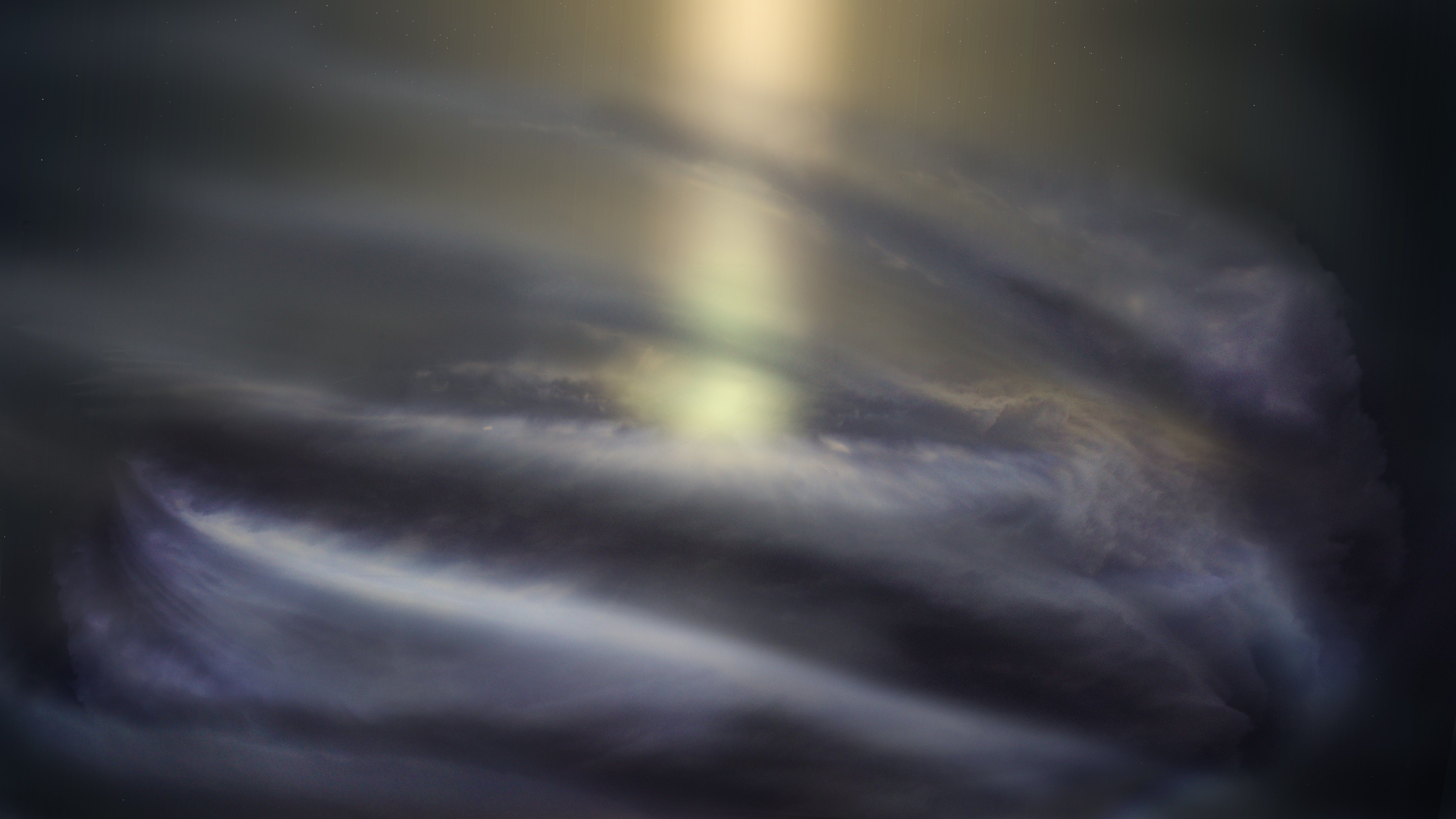
Artist impression of ring of cool, interstellar gas surrounding the supermassive black hole at the center of the Milky Way. New ALMA observations reveal this structure for the first time. Credit: NRAO/AUI/NSF; S. Dagnello. Hi-res image

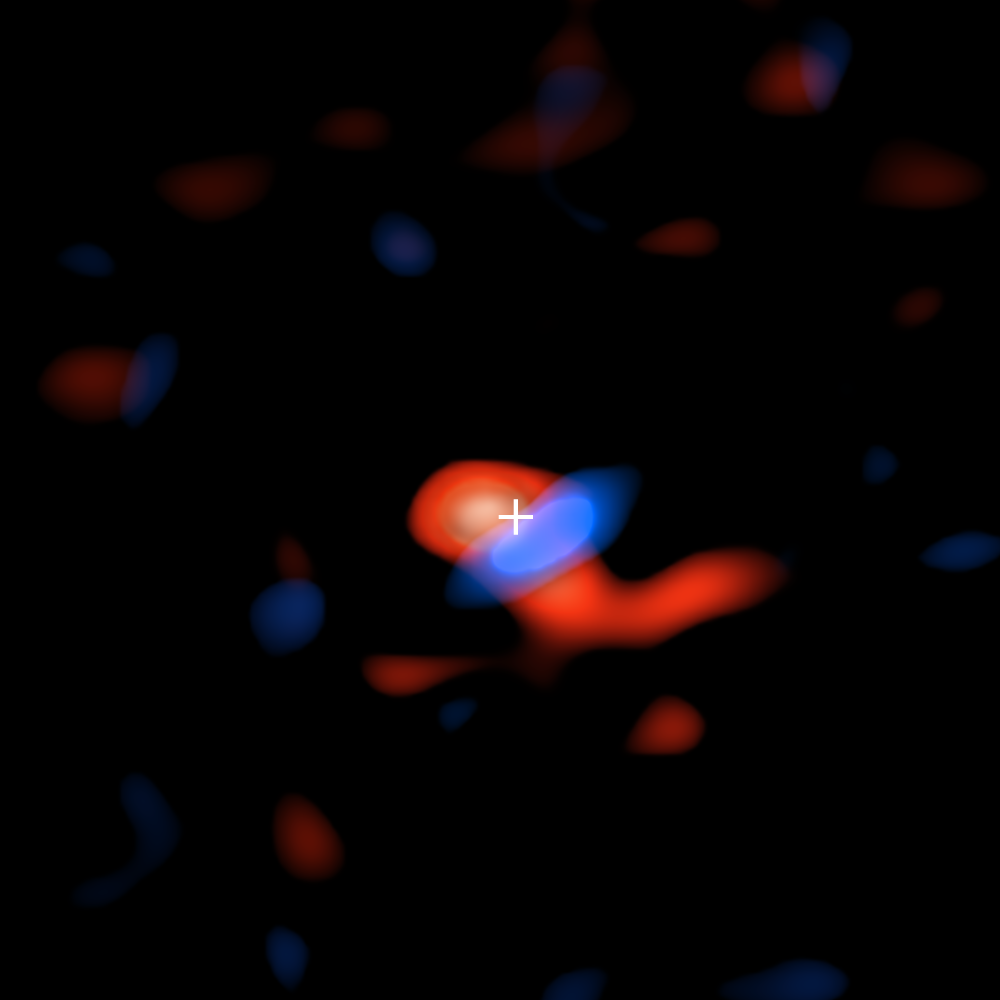
ALMA image of the disk of cool hydrogen gas flowing around the supermassive black hole at the center of our galaxy. The colors represent the motion of the gas relative to Earth: the red portion is moving away, so the radio waves detected by ALMA are slightly stretched, or shifted, to the "redder" portion of the spectrum; the blue color represents gas moving toward Earth, so the radio waves are slightly scrunched, or shifted, to the "bluer" portion of the spectrum. Crosshairs indicate location of black hole. Credit: ALMA (ESO/NAOJ/NRAO), E.M. Murchikova; NRAO/AUI/NSF, S. Dagnello. Hi-res image 

Through decades of study, astronomers have developed a clearer picture of the chaotic and crowded neighborhood surrounding the supermassive black hole at the center of the Milky Way. Our galactic center is approximately 26,000 light-years from Earth and the supermassive black hole there, known as Sagittarius A* (A “star”), is 4 million times the mass of our Sun.
We now know that this region is brimming with roving stars, interstellar dust clouds, and a large reservoir of both phenomenally hot and comparatively colder gases. These gases are expected to orbit the black hole in a vast accretion disk that extends a few tenths of a light-year from the black hole’s event horizon. 

Until now, however, astronomers have been able to image only the tenuous, hot portion of this flow of accreting gas, which forms a roughly spherical flow and showed no obvious rotation. Its temperature is estimated to be a blistering 10 million degrees Celsius (18 million degrees Fahrenheit), or about two-thirds the temperature found at the core of our Sun. At this temperature, the gas glows fiercely in X-ray light, allowing it to be studied by space-based X-ray telescopes, down to scale of about a tenth of a light-year from the black hole.

In addition to this hot, glowing gas, previous observations with millimeter-wavelength telescopes have detected a vast store of comparatively cooler hydrogen gas (about 10 thousand degrees Celsius, or 18,000 degrees Fahrenheit) within a few light-years of the black hole. The contribution of this cooler gas to the accretion flow onto the black hole was previously unknown.

Although our galactic center black hole is relatively quiet, the radiation around it is strong enough to cause hydrogen atoms to continually lose and recombine with their electrons. This recombination produces a distinctive millimeter-wavelength signal, which is capable of reaching Earth with very little losses along the way.

With its remarkable sensitivity and powerful ability to see fine details, the Atacama Large Millimeter/submillimeter Array (ALMA) was able to detect this faint radio signal and produce the first-ever image of the cooler gas disk at only about a hundredth of a light-year away (or about 1000 times the distance from the Earth to the Sun) from the supermassive black hole. These observations enabled the astronomers both to map the location and trace the motion of this gas. The researchers estimate that the amount of hydrogen in this cool disk is about one tenth the mass of Jupiter, or one ten-thousandth of the mass of the Sun.

By mapping the shifts in wavelengths of this radio light due to the Doppler effect (light from objects moving toward the Earth is slightly shifted to the “bluer” portion of the spectrum while light from objects moving away is slightly shifted to the “redder” portion), the astronomers could clearly see that the gas is rotating around the black hole. This information will provide new insights into the ways that black holes devour matter and the complex interplay between a black hole and its galactic neighborhood.

“We were the first to image this elusive disk and study its rotation,” said Elena Murchikova, a member in astrophysics at the Institute for Advanced Study in Princeton, New Jersey, and lead author on the paper. “We are also probing accretion onto the black hole. This is important because this is our closest supermassive black hole. Even so, we still have no good understanding of how its accretion works. We hope these new ALMA observations will help the black hole give up some of its secrets.”
The National Radio Astronomy Observatory is a facility of the National Science Foundation, operated under cooperative agreement by Associated Universities, Inc.


Contact:

Charles E. Blue
Public Information Officer
cblue@nrao.edu; 434-296-0314


Reference: 

E.M. Murchikova, et al., “A cool accretion disk around the Galactic Center black hole,” Nature, 06 June 2019


The Atacama Large Millimeter/submillimeter Array (ALMA), an international astronomy facility, is a partnership of the European Organisation for Astronomical Research in the Southern Hemisphere (ESO), the U.S. National Science Foundation (NSF) and the National Institutes of Natural Sciences (NINS) of Japan in cooperation with the Republic of Chile. ALMA is funded by ESO on behalf of its Member States, by NSF in cooperation with the National Research Council of Canada (NRC) and the Ministry of Science and Technology (MOST) and by NINS in cooperation with the Academia Sinica (AS) in Taiwan and the Korea Astronomy and Space Science Institute (KASI).

ALMA construction and operations are led by ESO on behalf of its Member States; by the National Radio Astronomy Observatory (NRAO), managed by Associated Universities, Inc. (AUI), on behalf of North America; and by the National Astronomical Observatory of Japan (NAOJ) on behalf of East Asia. The Joint ALMA Observatory (JAO) provides the unified leadership and management of the construction, commissioning and operation of ALMA.


Thursday, June 06, 2019

A Pair of Fledgling Planets Directly Seen Growing Around a Young Star

Credits:J. Olmsted (STScI)
 
Credits:  ESO and S. Haffert (Leiden Observatory)

Astronomers have directly imaged two exoplanets that are gravitationally carving out a wide gap within a planet-forming disk surrounding a young star. While over a dozen exoplanets have been directly imaged, this is only the second multi-planet system to be photographed. (The first was a four-planet system orbiting the star HR 8799.) Unlike HR 8799, though, the planets in this system are still growing by accreting material from the disk.

“This is the first unambiguous detection of a two-planet system carving a disk gap,” said Julien Girard of the Space Telescope Science Institute in Baltimore, Maryland.

The host star, known as PDS 70, is located about 370 light-years from Earth. The young 6-million-year-old star is slightly smaller and less massive than our Sun, and is still accreting gas. It is surrounded by a disk of gas and dust that has a large gap extending from about 1.9 to 3.8 billion miles.
PDS 70 b, the innermost known planet, is located within the disk gap at a distance of about 2 billion miles from its star, similar to the orbit of Uranus in our solar system. The team estimates that it weighs anywhere from 4 to 17 times as much as Jupiter. It was first detected in 2018.

PDS 70 c, the newly discovered planet, is located near the outer edge of the disk gap at about 3.3 billion miles from the star, similar to Neptune’s distance from our Sun. It is less massive than planet b, weighing between 1 and 10 times as much as Jupiter. The two planetary orbits are near a 2-to-1 resonance, meaning that the inner planet circles the star twice in the time it takes the outer planet to go around once.

The discovery of these two worlds is significant because it provides direct evidence that forming planets can sweep enough material out of a protoplanetary disk to create an observable gap.

“With facilities like ALMA, Hubble, or large ground-based optical telescopes with adaptive optics we see disks with rings and gaps all over. The open question has been, are there planets there? In this case, the answer is yes,” explained Girard.

The team detected PDS 70 c from the ground, using the MUSE spectrograph on the European Southern Observatory’s Very Large Telescope (VLT). Their new technique relied on the combination of the high spatial resolution provided by the 8-meter telescope equipped with four lasers and the instrument’s medium spectral resolution that allows it to “lock onto” light emitted by hydrogen, which is a sign of gas accretion.

“This new observing mode was developed to study galaxies and star clusters at higher spatial resolution. But this new mode also makes it suitable for exoplanet imaging, which was not the original science driver for the MUSE instrument,” said Sebastiaan Haffert of Leiden Observatory, lead author on the paper.

“We were very surprised when we found the second planet,” Haffert added.

In the future, NASA’s James Webb Space Telescope may be able to study this system and other planet nurseries using a similar spectral technique to narrow in on various wavelengths of light from hydrogen. This would allow scientists to measure the temperature and density of gas within the disk, which would help our understanding of the growth of gas giant planets. The system might also be targeted by the WFIRST mission, which will carry a high-performance coronagraph technology demonstration that can block out the star’s light to reveal fainter light from the surrounding disk and companion planets.

These results were published in the June 3 issue of Nature Astronomy.

Source:  HubbleSite/News


Wednesday, June 05, 2019

Heart of Lonesome Galaxy is Brimming with Dark Matter

Markarian 121
Credit: X-ray: NASA/CXC/Univ. of CA Irvine/D. Buote; Optical: NASA/STScI 


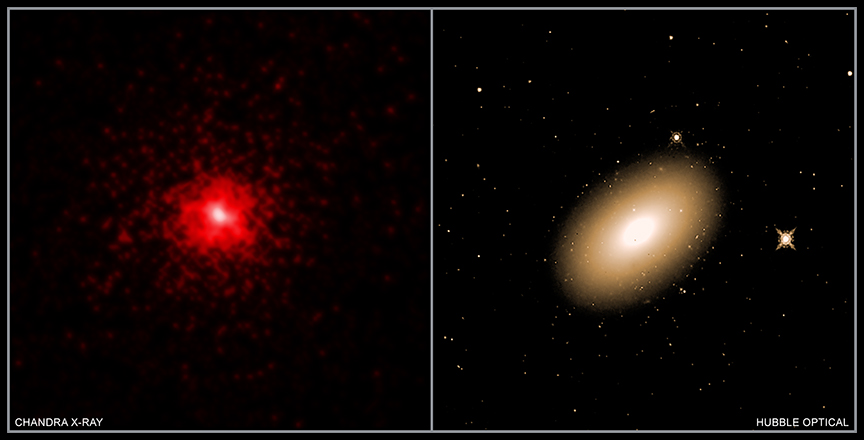
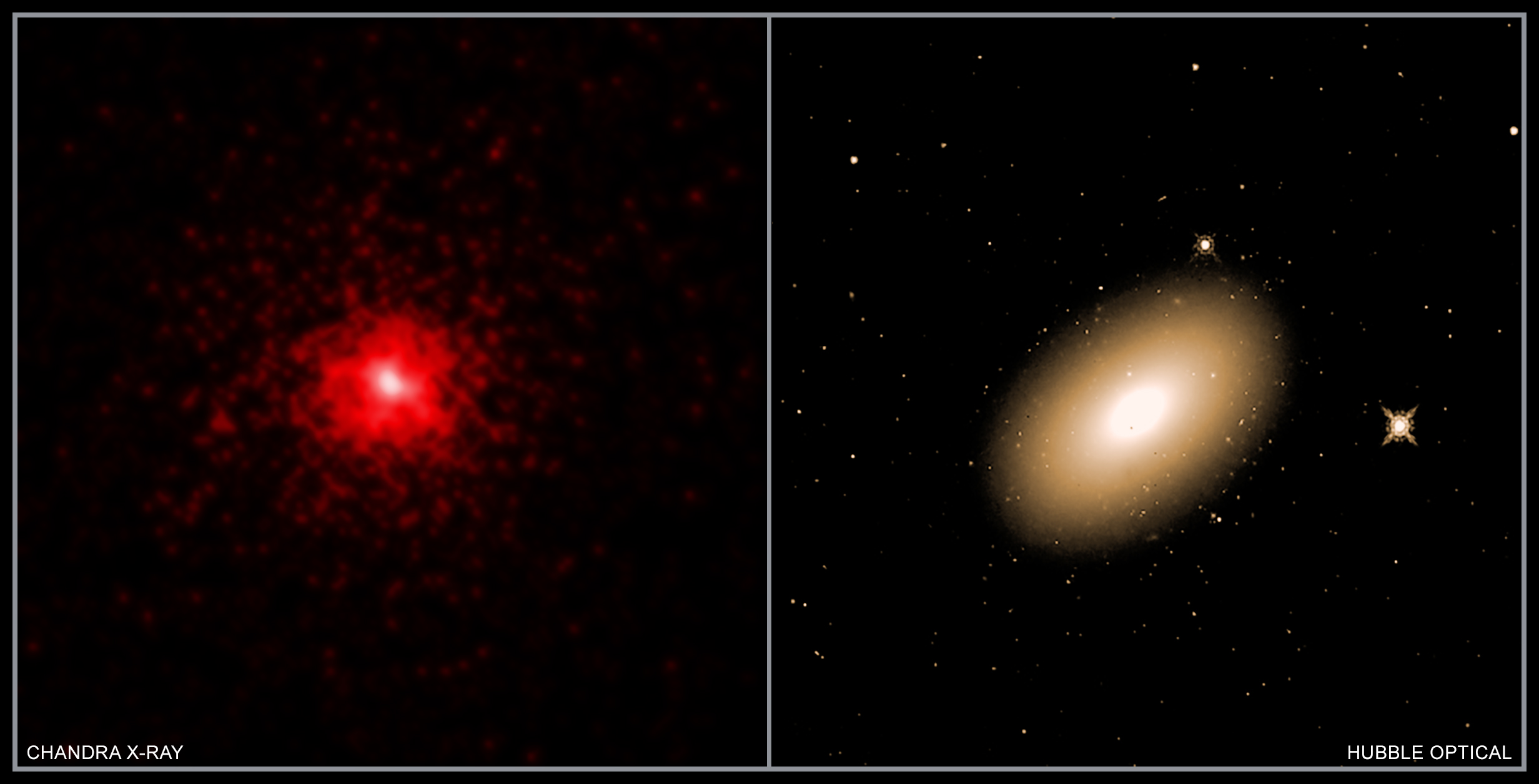
Data from NASA's Chandra X-ray Observatory (left) have helped astronomers reveal that a galaxy has more dark matter packed into its core than expected after being isolated for billions of years, as reported in our press release. The image on the right shows the galaxy called Markarian 1216 (abbreviated as Mrk 1216) in visible light from NASA's Hubble Space Telescope over the same field of view.

Mrk 1216 belongs to a family of elliptically shaped galaxies that are more densely packed with stars in their centers than most other galaxies. Astronomers think they have descended from red, compact galaxies called "red nuggets" that formed about a billion years after the Big Bang, but then stalled in their growth about 10 billion years ago.

If this evolution is correct, then the dark matter in Mrk 1216 and its galactic cousins should also be tightly packed. To test this idea for the first time, a pair of astronomers studied the X-ray brightness and temperature of hot gas at different distances from Mrk 1216's center, so they could "weigh" how much dark matter exists in the middle of the galaxy. The brighter colors at the center of the Chandra image represent the increased density of hot gas in the galaxy's core.

According to the new study, a halo, or fuzzy sphere, of dark matter formed around the stars in the center of Mrk 1216 about 3 or 4 billion years after the Big Bang. The formation of such a red nugget was typical for a wide range of elliptical galaxies seen today. However, unlike Mrk 1216, most giant elliptical galaxies continued to gradually grow in size when smaller galaxies merged with them over cosmic time.

Previously, astronomers estimated that the supermassive black hole in Mrk 1216 is more massive than expected for a galaxy of its mass. This most recent study, however, concluded that the black hole mass is likely to be less than about four billion times the mass of the Sun, which means it may not be unusually massive for a galaxy as large as Mrk 1216.

Researchers also searched for signs of outbursts from the supermassive black hole in the center of the galaxy. They saw hints of cavities in the hot gas similar to those observed in other massive galaxies and galaxy clusters like Perseus, but more data are needed to confirm their presence.

A paper by David Buote and Aaron Barth (both of the University of California at Irvine) describing these results appeared in the June 1st issue of The Astrophysical Journal and is available online.

NASA's Marshall Space Flight Center in Huntsville, Alabama, manages the Chandra program for NASA's Science Mission Directorate in Washington. The Smithsonian Astrophysical Observatory in Cambridge, Massachusetts, controls Chandra's science and flight operations.


Fast Facts for Mrk 1216:

Scale: Image is 1 arcmin (about 85,000 light years) across.
Category: Cosmology/Deep Fields/X-ray Background, Normal Galaxies & Starburst Galaxies
Coordinates (J2000): RA 8h 26m 19.8s | Dec -06° 46´ 23.0"
Constellation: Hydra
Observation Date: June 12, 2015 and Jan 9-14, 2018
Observation Time: 116 hours 7 minutes (4 days 20 hours 7 minutes )
Obs. ID: 17061, 20342, 20924, 20925, 20926
Instrument: ACIS
References: Buote, D.A and Barth A.J., 2019, ApJ; arXiv:1902.02938
Color Code: X-ray: red; Optical: yellow
Distance Estimate: About 295 million light years (z=0.0213)


Tuesday, June 04, 2019

Heat conduction in the Interstellar Medium

Figure 1: Column density of neutral hydrogen with (top) and without (bottom) thermal conduction for a patch of the SN-driven ISM. In both cases the hot phase is dominating the volume with higher fractions for the simulations with thermal conduction. © MPA 

A team of researchers from the Max Planck Institute for Astrophysics, the University Observatory Munich, and collaborators have investigated the effect of heat conduction on the evolution of supernova blast waves and the structure of the supernova-driven interstellar medium (ISM). They find that thermal conduction has a strong impact on the volume filling fractions of cold, warm and hot gas. Thermal conduction also plays an important role for an accurate description of the hot ISM phase structure and the chemical composition of the cold phase of the turbulent ISM.

Thermal conduction is a fundamental physical process describing heat transport along a temperature gradient. The impact of this effect is measured by the conductivity constant. For every material on Earth the conductivity constant describes how efficiently it transports thermal energy. Iron, for example, has a very high conductivity and is very efficient in transporting heat since the electrons can move freely through the whole domain with only minimal losses due to interactions with atoms.

However, the situation in the ISM is very different. It is composed of very cold and dense regions with a lot of mass but covering little volume. The majority of the volume of the ISM is in the warm and hot phases at lower densities. The conductivity depends on the temperature itself and changes significantly over several orders of magnitude within the ISM. In the absence of any other process, however, thermal conduction alone can change the ISM structure, for example by evaporating cold clouds embedded in a hot medium.

A team of researchers from the Max Planck Institute for Astrophysics, the University Observatory in Munich, the University of Cologne and the Center for Computational Astrophysics in New York has investigated how heat conduction can change the properties of the supernova-driven ISM. Supernova explosions at the end of the life of massive stars are one of the most important feedback processes in the ISM driving turbulence and restoring the hot phase of the ISM.

The team has performed detailed resolution tests of individual supernovae exploding at various ambient densities, simultaneously following the chemical evolution and non-equilibrium low temperature cooling. Based on these results, the impact of thermal conduction on the structure of the ISM has been simulated in high-resolution, periodic ISM boxes with solar neighborhood conditions and supernova rates. A multi-phase ISM is developing rapidly in all cases. However, the total volume filled by the hot phase changes strongly from 30 to 40 per cent in the absence of thermal conduction to 70 – 80 per cent in the presence of thermal conduction, also resulting in a differently structured morphology (Fig. 1).

Figure 2: Phase Diagram of temperature and density for the turbulent box simulations shown in Fig. 1. The colorbar shows the particle count. The top plot shows the run without conduction, the bottom plot with conduction. Thermal conduction results in more gas at high temperatures as well as very low temperatures and high densities. © MPA

Why is the impact so strong? Thermal conduction is a physical process, which can redistribute thermal energy within the ISM from hot to colder gas. Due to the conservation of energy this leads to a mass flux from colder to warmer gas, which increases the mass of the hot phase and also its volume.

Heat conduction not only influences the hot phase of the ISM, it also changes the physical properties of the cold phase. The conductivity constant is smaller at lower temperatures and the cooling times in this regime are much shorter (a few hundred to thousand years).There is still energy transport from the warm phase towards the cold regime but due to the short cooling times it is directly ‘cooled’ away and the mass flux from the cold to the warm phase is suppressed. Therefore, the researchers find less mass in the warm phase of the ISM and more in the cold phase in the runs with thermal conduction (Fig. 2). Thermal conduction leads to an extended high-density tail with maximum densities that can be a factor of 10 higher compared to the simulations without thermal conduction. As a result, the fraction of molecular hydrogen, which forms at low temperatures and high densities, can increase by up to a factor of four in the presence of thermal conduction.

The results highlight that thermal conduction has to be taken into account for an accurate model of the multi-phase ISM.


Author

Ulrich Steinwandel, Ben Moster & Thorsten Naab


Original publication

1. Steinwandel, Moster, Naab, Walch & Hu

Supernova explosions in the galactic multi-phase ISM: resolution requirements, chemical evolution and thermal conduction

in preparation


Monday, June 03, 2019

ESO contributes to protecting Earth from dangerous asteroids

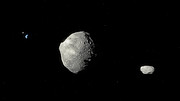
Side by side observation and artist's impression of Asteroid 1999 KW4

Minimum Separation of Asteroid 1999 KW4 and Earth

Artist’s Impression of Asteroid 1999 KW4


Videos

ESOcast 202 Light: ESO helps protect Earth from dangerous asteroids

Artist’s Impression of Asteroid 1999 KW4


VLT observes a passing double asteroid hurtling by Earth at 70000 km/h

The unique capabilities of the SPHERE instrument on ESO’s Very Large Telescope have enabled it to obtain the sharpest images of a double asteroid as it flew by Earth on 25 May. While this double asteroid was not itself a threatening object, scientists used the opportunity to rehearse the response to a hazardous Near-Earth Object (NEO), proving that ESO’s front-line technology could be critical in planetary defence.

The International Asteroid Warning Network (IAWN) coordinated a cross-organisational observing campaign of the asteroid 1999 KW4 as it flew by Earth, reaching a minimum distance of 5.2 million km [1] on 25 May 2019. 1999 KW4 is about 1.3 km wide, and does not pose any risk to Earth. Since its orbit is well known, scientists were able to predict this fly-by and prepare the observing campaign.
ESO joined the campaign with its flagship facility, the Very Large Telescope (VLT). The VLT is equipped with SPHERE — one of the very few instruments in the world capable of obtaining images sharp enough to distinguish the two components of the asteroid, which are separated by around 2.6 km.

SPHERE was designed to observe exoplanets; its state-of-the-art adaptive optics (AO) system corrects for the turbulence of the atmosphere, delivering images as sharp as if the telescope were in space. It is also equipped with coronagraphs to dim the glare of bright stars, exposing faint orbiting exoplanets.

Taking a break from its usual night job hunting exoplanets, SPHERE data helped astronomers characterise the double asteroid. In particular, it is now possible to measure whether the smaller satellite has the same composition as the larger object.  

These data, combined with all those that are obtained on other telescopes through the IAWN campaign, will be essential for evaluating effective deflection strategies in the event that an asteroid was found to be on a collision course with Earth,” explained ESO astronomer Olivier Hainaut. “In the worst possible case, this knowledge is also essential to predict how an asteroid could interact with the atmosphere and Earth’s surface, allowing us to mitigate damage in the event of a collision.

The double asteroid was hurtling by the Earth at more than 70 000 km/h, making observing it with the VLT challenging,” said Diego Parraguez, who was piloting the telescope. He had to use all his expertise to lock on to the fast asteroid and capture it with SPHERE.

Bin Yang, VLT astronomer, declared “When we saw the satellite in the AO-corrected images, we were extremely thrilled. At that moment, we felt that all the pain, all the efforts were worth it.” Mathias Jones, another VLT astronomer involved in these observations, elaborated on the difficulties. “During the observations the atmospheric conditions were a bit unstable. In addition, the asteroid was relatively faint and moving very fast in the sky, making these observations particularly challenging, and causing the AO system to crash several times. It was great to see our hard work pay off despite the difficulties!”

While 1999 KW4 is not an impact threat, it bears a striking resemblance to another binary asteroid system called Didymos which could pose a threat to Earth sometime in the distant future.

Didymos and its companion called “Didymoon” are the target of a future pioneering planetary defence experiment. NASA’s DART spacecraft will impact Didymoon in an attempt to change its orbit around its larger twin, in a test of the feasibility of deflecting asteroids. After the impact, ESA’s Hera mission will survey the Didymos asteroids in 2026 to gather key information, including Didymoon’s mass, its surface properties and the shape of the DART crater.

The success of such missions depends on collaborations between organisations, and tracking Near-Earth Objects is a major focus for the collaboration between ESO and ESA. This cooperative effort has been ongoing since their first successful tracking of a potentially hazardous NEO in early 2014.

We are delighted to be playing a role in keeping Earth safe from asteroids,” said Xavier Barcons, ESO’s Director General. “As well as employing the sophisticated capabilities of the VLT, we are working with ESA to create prototypes for a large network to take asteroid detection, tracking and characterization to the next level.

This recent close encounter with 1999 KW4 comes just a month before Asteroid Day, an official United Nations day of education and awareness about asteroids, to be celebrated on 30 June. Events will be held on five continents, and ESO will be among the major astronomical organisations taking part. The ESO Supernova Planetarium & Visitor Centre will host a range of activities on the theme of asteroids on the day, and members of the public are invited to join in the celebrations.


Notes

[1] This distance is about 14 times the distance to the Moon — close enough to study, but not close enough to be threatening! Many small asteroids fly past the Earth much closer than 1999 KW4, occasionally closer than the Moon. Earth’s most recent encounter with an asteroid took place on 15 February 2013, when a previously unknown asteroid 18 metres across exploded as it entered Earth's atmosphere over the Russian city of Chelyabinsk. The damage produced by the subsequent shockwave caused injuries to about 1,500 people.


More Information

ESO is the foremost intergovernmental astronomy organisation in Europe and the world’s most productive ground-based astronomical observatory by far. It has 16 Member States: Austria, Belgium, the Czech Republic, Denmark, France, Finland, Germany, Ireland, Italy, the Netherlands, Poland, Portugal, Spain, Sweden, Switzerland and the United Kingdom, along with the host state of Chile and with Australia as a Strategic Partner. ESO carries out an ambitious programme focused on the design, construction and operation of powerful ground-based observing facilities enabling astronomers to make important scientific discoveries. ESO also plays a leading role in promoting and organising cooperation in astronomical research. ESO operates three unique world-class observing sites in Chile: La Silla, Paranal and Chajnantor. At Paranal, ESO operates the Very Large Telescope and its world-leading Very Large Telescope Interferometer as well as two survey telescopes, VISTA working in the infrared and the visible-light VLT Survey Telescope. Also at Paranal ESO will host and operate the Cherenkov Telescope Array South, the world’s largest and most sensitive gamma-ray observatory. ESO is also a major partner in two facilities on Chajnantor, APEX and ALMA, the largest astronomical project in existence. And on Cerro Armazones, close to Paranal, ESO is building the 39-metre Extremely Large Telescope, the ELT, which will become “the world’s biggest eye on the sky”.


Links


Contacts 

Calum Turner
ESO Public Information Officer
Garching bei München, Germany
Tel: +49 89 3200 6670
Email:
pio@eso.org

Source: ESO/News 


Sunday, June 02, 2019

A Giant Stellar Eruption Detected for the First Time

HR 9024
Credit: NASA/CXC/INAF/Argiroffi, C. et al. Illustration: NASA/GSFC/S. Wiessinger 


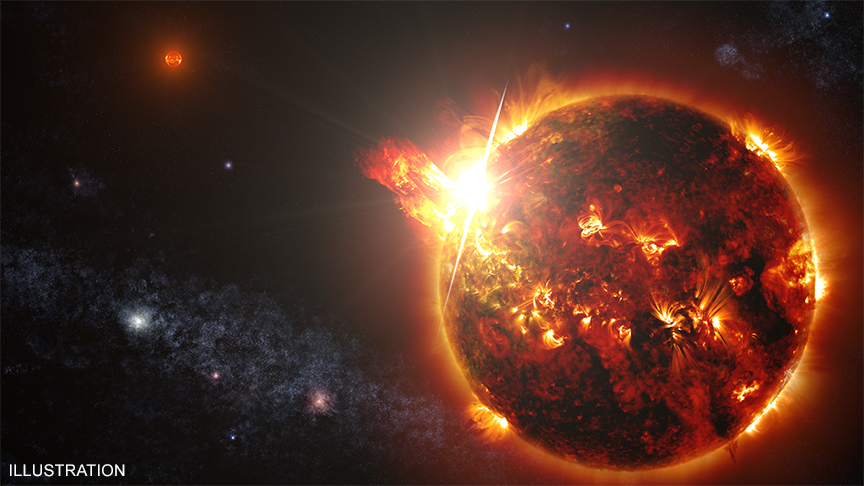
This artist's illustration depicts a coronal mass ejection, or CME, from a star. These events involve a large-scale expulsion of material, and have frequently been observed on the Sun. A new study using NASA's Chandra X-ray Observatory has detected a CME from a different star, as reported in a new press release, providing a novel insight into these powerful phenomena. As the name implies these events occur in the corona, which is the outer atmosphere of a star.

This "extrasolar" CME was seen from a star called HR 9024, which is located about 450 light years from Earth. This represents the first time that researchers have thoroughly identified and characterized a CME from a star other than the Sun. This event was marked by an intense flash of X-rays followed by the emission of a giant bubble of plasma, i.e., hot gas containing charged particles.

The results confirm that CMEs are produced in magnetically active stars, and they also open the opportunity to systematically study such dramatic events in stars other than the Sun.

The High-Energy Transmission Grating Spectrometer, or HETGS, aboard Chandra is the only instrument that allows measurements of the motions of coronal plasmas with speeds of just a few tens of thousands of miles per hour, like those observed in HR 9024. During the flare, the Chandra observations clearly detected very hot material (between 18 to 45 million degrees Fahrenheit) that first rises and then drops with speeds between 225,000 to 900,000 miles per hour. This is in excellent agreement with the expected behavior for material linked to the stellar flare.

A coronal mass ejection (CME) of our Sun as observed by NASA's Solar Dynamics Observatory on August 31, 2012.
A paper describing this study appeared in the May 27, 2019 issue of Nature Astronomy and a preprint is available here. The lead author is Costanza Argiroffi of University of Palermo in Italy and the National Institute for Astrophysics (INAF) in Italy. NASA's Marshall Space Flight Center in Huntsville, Alabama, manages the Chandra program for NASA's Science Mission Directorate in Washington. The Smithsonian Astrophysical Observatory in Cambridge, Massachusetts, controls Chandra's science and flight operations.


Fast Facts for HR 9024:

Category: Normal Stars & Star Clusters
Coordinates (J2000): RA 23h 49m 40.80s | Dec 36° 25´ 31.00"
Constellation: Andromeda
Observation Date: August 2001
Observation Time: 27 hours 13 minutes
Obs. ID: 1892
Instrument: HETG
References: Argiroffi, C. et al, 2019, Nature Astronomy, arXiv:1905.11325
Distance Estimate: About 450 light years


Saturday, June 01, 2019

NASA's Spitzer Captures Stellar Family Portrait

Cepheus B • Cepheus C • V374 Ceph
 Credit: NASA/JPL-Caltech

This image was compiled using data from NASA's Spitzer Space Telescope using the Infrared Array Camera (IRAC) and the Multiband Imaging Photometer (MIPS) during Spitzer's "cold" mission, before the spacecraft's liquid helium coolant ran out in 2009. The colors correspond with IRAC wavelengths of 3.6 microns (blue), 4.5 microns (cyan) and 8 microns (green), and 24 microns (red) from the MIPS instrument.

The green-and-orange delta filling most of this image is a nebula, or a cloud of gas and dust. This region formed from a much larger cloud of gas and dust that has been carved away by radiation from stars.

The bright region at the tip of the nebula is dust that has been heated by the stars' radiation, which creates the surrounding red glow. The white color is the combination of four colors (blue, green, orange and red), each representing a different wavelength of infrared light, which is invisible to human eyes.

The massive stars illuminating this region belong to a star cluster that extends above the white spot.

On the left side of this image, a dark filament runs horizontally through the green cloud. A smattering of baby stars (the red and yellow dots) appear inside it. Known as Cepheus C, the area is a particularly dense concentration of gas and dust where infant stars form. This region is called Cepheus C because it lies in the constellation Cepheus, which can be found near the constellation Cassiopeia. Cepheus-C is about 6 light-years long, and lies about 40 light-years from the bright spot at the tip of the nebula.

The small, red hourglass shape just below Cepheus C is V374 Ceph. Astronomers studying this massive star have speculated that it might be surrounded by a nearly edge-on disk of dark, dusty material. The dark cones extending to the right and left of the star are a shadow of that disk.

The smaller nebula on the right side of the image includes a blue star crowned by a small, red arc of light. This "runaway star" is plowing through the gas and dust at a rapid clip, creating a shock wave or "bow shock" in front of itself.

Some features identified in the annotated image are more visible in the IRAC data alone.

The Jet Propulsion Laboratory in Pasadena, California, manages the Spitzer Space Telescope mission for NASA's Science Mission Directorate in Washington. Science operations are conducted at the Spitzer Science Center at Caltech in Pasadena. Space operations are based at Lockheed Martin Space Systems in Littleton, Colorado. Data are archived at the Infrared Science Archive housed at IPAC at Caltech. Caltech manages JPL for NASA.


Friday, May 31, 2019

NICER’s Night Moves Trace the X-ray Sky

Credits: NASA/NICER.

In this image, numerous sweeping arcs seem to congregate at various bright regions. You may wonder: What is being shown? Air traffic routes? Information moving around the global internet? Magnetic fields looping across active areas on the Sun?

In fact, this is a map of the entire sky in X-rays recorded by NASA’s Neutron star Interior Composition Explorer (NICER), a payload on the International Space Station. NICER’s primary science goals require that it target and track cosmic sources as the station orbits Earth every 93 minutes. But when the Sun sets and night falls on the orbital outpost, the NICER team keeps its detectors active while the payload slews from one target to another, which can occur up to eight times each orbit.

The map includes data from the first 22 months of NICER’s science operations. Each arc traces X-rays, as well as occasional strikes from energetic particles, captured during NICER’s night moves. The brightness of each point in the image is a result of these contributions as well as the time NICER has spent looking in that direction. A diffuse glow permeates the X-ray sky even far from bright sources.

This image of the whole sky shows 22 months of X-ray data recorded by NASA's Neutron star Interior Composition Explorer (NICER) payload aboard the International Space Station during its nighttime slews between targets. NICER frequently observes targets best suited to its core mission (“mass-radius” pulsars) and those whose regular pulses are ideal for the Station Explorer for X-ray Timing and Navigation Technology (SEXTANT) experiment. One day they could form the basis of a GPS-like system for navigating the solar system.  Credits: NASA/NICER. Download full-resolution images from NASA Goddard’s Scientific Visualization Studio 

The prominent arcs form because NICER often follows the same paths between targets. The arcs converge on bright spots representing NICER’s most popular destinations — the locations of important X-ray sources the mission regularly monitors.

“Even with minimal processing, this image reveals the Cygnus Loop, a supernova remnant about 90 light-years across and thought to be 5,000 to 8,000 years old,” said Keith Gendreau, the mission’s principal investigator at NASA’s Goddard Space Flight Center in Greenbelt, Maryland. “We’re gradually building up a new X-ray image of the whole sky, and it’s possible NICER’s nighttime sweeps will uncover previously unknown sources.”

NICER’s primary mission is to determine the size of dense remains of dead stars called neutron stars — some of which we see as pulsars — to a precision of 5%. These measurements will finally allow physicists to solve the mystery of what form of matter exists in their incredibly compressed cores. 
Pulsars, rapidly spinning neutron stars that appear to “pulse” bright light, are ideally suited to this “mass-radius” research and are some of NICER’s regular targets.

Other frequently visited pulsars are studied as part of NICER's Station Explorer for X-ray Timing and Navigation Technology (SEXTANT) experiment, which uses the precise timing of pulsar X-ray pulses to autonomously determine NICER’s position and speed in space. It’s essentially a galactic GPS system. When mature, this technology will enable spacecraft to navigate themselves throughout the solar system — and beyond.


By Francis Reddy
NASA's Goddard Space Flight Center, Greenbelt, Md.


Media contact:  

Claire Andreoli
NASA's Goddard Space Flight Center, Greenbelt, Md.


Editor: Rob Garner

Source: NASA/NICER


Thursday, May 30, 2019

Subaru Telescope Captures 1800 Exploding Stars

Figure 1: Some supernovae discovered in this study. There are three images for each supernova for before it exploded (left), after it exploded (middle), and supernovae itself (difference of the first two images). (Credit: N. Yasuda et al.)  All images of supernovae discovered in this paper can be viewed here (Cooperated by Dr. Michitaro Koike of NAOJ).

Astronomers using the Subaru Telescope identified about 1800 new supernovae in the distant Universe, including 58 Type Ia supernovae over 8 billion light-years away. These findings will help elucidate the expansion of the Universe.

A supernova is the name given to an exploding star that has reached the end of its life. The star often becomes as bright as its host galaxy, shining one billion times brighter than the Sun for anytime between a month to six months before dimming down. Supernova classed as Type Ia are useful because their constant maximum brightness allows researchers to calculate how far the star is from Earth. This is particularly useful for researchers who want to measure the expansion of the Universe.

In recent years, researchers began reporting a new type of supernovae five to ten times brighter than Type Ia supernovae. Named Super Luminous Supernovae, many have been trying to learn more about these stars. Their unusual brightness enables researchers to spot stars in the farthest parts of the Universe usually too faint to observe. Since distant Universe means the early Universe, studying this kind of star could reveal characteristics about the first, massive stars created after the Big Bang.

But supernovae are rare events, and there are only a handful of telescopes in the world capable of capturing sharp images of distant stars. In order to maximize the chances of observing a supernova, a team led by Kavli Institute for the Physics and Mathematics of the Universe (Kavli IPMU) Professor Naoki Yasuda, and researchers from Tohoku University, Konan University, the National Astronomical Observatory of Japan, School of Science, the University of Tokyo, and Kyoto University, used the Subaru Telescope.

This telescope is capable of generating shape stellar images, and the Hyper Suprime-Cam, an 870 mega-pixel digital camera attached at its top, captures a very wide area of the night sky in one shot.

By taking repeated images of the same area of night sky over a six month period, the researchers could identify new supernovae by looking for stars that suddenly appeared brighter before gradually fading out.

As a result, the team identified 5 super luminous supernovae, and about 400 Type Ia supernovae. Fifty-eight of these Type Ia supernovae were located more than 8 billion light years away from Earth. In comparison, it took researchers using the Hubble Space Telescope about 10 years to discover a total of 50 supernovae located more than 8 billion light years away from Earth.

Figure 2: A map showing all of the supernovae (in red) discovered in this study. The blue circles indicate the areas Hyper Suprime-Cam was able to capture in one shot. The background is an image taken by the Sloan Digital Sky Survey. An image of the moon has been added to understand the area of night sky Hyper Suprime-Cam can capture. (Credit: Kavli IPMU, Partial data supplied by: SDSS)

"The Subaru Telescope and Hyper Suprime-Cam have already helped researchers create a 3D map of dark matter, and observation of primordial black holes, but now this result proves that this instrument has a very high capability finding supernovae very, very far away from Earth. I want to thank all of my collaborators for their time and effort, and look forward to analyzing our data to see what kind of picture of the Universe it holds," said Yasuda.

The next step will be to use the data to calculate a more accurate expansion of the Universe, and to study how dark energy has changed over time.

These results were published in Publications of the Astronomical Society of Japan (Yasuda et al., "The Hyper Suprime-Cam SSP Transient Survey in COSMOS: Overview"). A preprint is available here.

Links:

 Source: Subaru Telescope


Wednesday, May 29, 2019

A New View of Exoplanets With NASA’s Upcoming Webb Telescope

This illustration shows an exoplanet orbiting its much brighter star. With its onboard coronagraphs, Webb will allow scientists to view exoplanets at infrared wavelengths they’ve never seen them in before. Credits: NASA, ESA, and G. Bacon (STScI). Hi-res image

While we now know of thousands of exoplanets — planets around other stars — the vast majority of our knowledge is indirect. That is, scientists have not actually taken many pictures of exoplanets, and because of the limits of current technology, we can only see these worlds as points of light. However, the number of exoplanets that have been directly imaged is growing over time. When NASA’s James Webb Space Telescope launches in 2021, it will open a new window on these exoplanets, observing them in wavelengths at which they have never been seen before and gaining new insights about their nature.

Exoplanets are close to much brighter stars, so their light is generally overwhelmed by the light of the host stars. Astronomers usually find an exoplanet by inferring its presence based on the dimming of its host star’s light as the planet passes in front of the star – an event called a “transit.” Sometimes a planet tugs on its star, causing the star to wobble slightly.

Webb’s Unique Capabilities

Coronagraphs have something important in common with eclipses. During an eclipse, the Moon blocks the light of the Sun, allowing us to view stars that would normally be overwhelmed by the Sun’s glare. Astronomers took advantage of this during the 1919 eclipse, 100 years ago on May 29, in order to test Albert Einstein’s theory of general relativity. Similarly, a coronagraph acts as an “artificial eclipse” to block the light from a star, allowing planets that would otherwise be lost in the star’s glare to be seen.

“Most of the planets that we have detected so far are roughly 10,000 to 1 million times fainter than their host star,” explained Sasha Hinkley of the University of Exeter. Hinkley is the principal investigator on one of Webb’s first observation programs to study exoplanets and exoplanetary systems.

“There is, no doubt, a population of planets that are fainter than that, that have higher contrast ratios, and are possibly farther out from their stars,” Hinkley said. “With Webb, we will be able to see planets that are more like 10 million, or optimistically, 100 million times fainter.” To observe their targets, the team will use high-contrast imaging, which discerns this large difference in brightness between the planet and the star.

One of the targets Webb will study is the well-known, giant ring of dust and planetesimals orbiting a young star called HR 4796A. This Hubble Space Telescope photo shows a vast, complex dust structure, about 150 billion miles across, enveloping the young star HR 4796A. (The light from HR 4796A and its binary companion, HR 4796B, have been blocked to reveal the much dimmer dust structure.) A bright, narrow inner ring of dust encircling the star may have been corralled by the gravitational pull of an unseen giant planet. Credits: NASA, ESA, and G. Schneider (University of Arizona). Hi-res image

Webb will have the capability of observing its targets in the mid-infrared, which is invisible to the human eye, but with sensitivity that is vastly superior to any other observatory ever built. This means that Webb will be sensitive to a class of planet not yet detected. Specifically, Saturn-like planets at very wide orbital separations from their host star may be within reach of Webb.

“Our program is looking at young, newly formed planets and the systems they inhabit,” explained co-principal investigator Beth Biller of the University of Edinburgh. “Webb is going to allow us to do this in much more detail and at wavelengths we’ve never explored before. So it’s going to be vital for understanding how these objects form, and what these systems are like.”

Testing the Waters

The team’s observations will be part of the Director's Discretionary-Early Release Science program, which provides time to selected projects early in the telescope's mission. This program allows the astronomical community to quickly learn how best to use Webb's capabilities, while also yielding robust science.

“With our ERS program, we will really be ‘testing the waters’ to get an understanding of how Webb performs,” said Hinkley. “We really need the best understanding of the instruments, of the stability, of the most effective way to post-process the data. Our observations are going to tell our community the most efficient way to use Webb.”

This video illustrates the different methods scientists use to find exoplanets, or planets orbiting distant stars. 
Credits: NASA, ESA, and J. Olmsted (STScI)

The Targets

Hinkley’s team will use all four of Webb’s instruments to observe three targets: A recently discovered exoplanet; an object that is either an exoplanet or a brown dwarf; and a well-studied ring of dust and planetesimals orbiting a young star.

Exoplanet HIP 65426b: This newly discovered, directly imaged exoplanet has a mass between six and 12 times that of Jupiter and is orbiting a star that is hotter than and about twice as massive as our Sun. The exoplanet is roughly 92 times farther from its star than Earth is from the Sun. The wide separation of this young planet from its star means that the team’s observations will be much less affected by the bright glare of the host star. Hinkley and his team plan to use Webb’s full suite of coronagraphs to view this target.

Planetary-mass companion VHS 1256b: An object somewhere around the planet/brown dwarf boundary, VHS 1256b also is widely separated from its red dwarf host star—about 100 times the distance that the Earth is from the Sun. Because of its wide separation, observations of this object are much less likely to be affected by unwanted light from the host star. In addition to high-contrast imaging, the team expects to get one of the first "uncorrupted" spectra of a planet-like body at wavelengths where these objects have never before been studied.

Circumstellar debris disk: For more than 20 years, scientists have been studying a ring of dust and planetesimals orbiting a young star called HR 4796A, which is about twice as massive as our own Sun. Astronomers think that most planetary systems probably looked a lot like HR 4796A and its debris ring at their earliest ages, making this a particularly interesting target to study. The team will use the high-contrast imaging of Webb’s coronagraphs to view the disk in different wavelengths. Their goal is to see if the structures of the disk look different from wavelength to wavelength.


During an eclipse, the Moon blocks the light of the Sun, allowing us to view stars that would normally be overwhelmed by the Sun’s glare. Similarly, a coronagraph acts as an “artificial eclipse” to block the light from a star, allowing planets that would otherwise be lost in the star’s glare to be seen. Credits: NASA, ESA, and L. Hustak (STScI)

Planning the Program

To plan this Early Release Science program, Hinkley asked as many members of the astronomical community as possible the simple question: If you want to plan a survey to search for exoplanets, what are the questions that you need the answers to for planning your surveys?

“What we came up with was a set of observations that we think is going [to] answer those questions. We are going to tell the community that this is the way Webb performs in this mode, this is the kind of sensitivity we get, and this is the kind of contrast we achieve. And we need to rapidly turn that around and inform the community so that they can prepare their proposals really, really quickly.”

The team is excited to view their targets in wavelengths never before detected, and to share their knowledge. According to Biller, “We could see years ago that for some of the planets we’ve already discovered, Webb would be really transformational.” The James Webb Space Telescope will be the world’s premier space science observatory when it launches in 2021. Webb will solve mysteries in our solar system, look beyond to distant worlds around other stars, and probe the mysterious structures and origins of our universe and our place in it. Webb is an international program led by NASA with its partners, ESA (European Space Agency) and the Canadian Space Agency.

For more information about Webb, visit:  www.nasa.gov/webb.

By Ann Jenkins
Space Telescope Science Institute, Baltimore Md.

Editor: Lynn Jenner