Monday, February 18, 2019

Liberal Sprinkling of Salt Discovered around a Young Star

Artist impression of Orion Source I, a young, massive star about 1,500 light-years away. New ALMA observations detected a ring of salt -- sodium chloride, ordinary table salt -- surrounding the star. This is the first detection of salts of any kind associated with a young star. The blue region (about 1/3 the way out from the center of the disk) represents the region where ALMA detected the millimeter-wavelength "glow" from the salts. Credit: NRAO/AUI/NSF; S. Dagnello. Hi-res image

ALMA image of the salty disk surrounding the young, massive star Orion Source I (blue ring). It is shown in relation to the Orion Molecular Cloud 1, a region of explosive starbirth. The background near infrared image was taken with the Gemini Observatory. Credit: ALMA (NRAO/ESO/NAOJ); NRAO/AUI/NSF; Gemini Observatory/AURA. Hi-res image


New ALMA observations show there is ordinary table salt in a not-so-ordinary location: 1,500 light-years from Earth in the disk surrounding a massive young star. Credit: ALMA (NRAO/ESO/NAOJ); NRAO/AUI/NSF; Gemini Observatory/AURA


New ALMA observations show there is ordinary table salt in a not-so-ordinary location: 1,500 light-years from Earth in the disk surrounding a massive young star. Though salts have been found in the atmospheres of old, dying stars, this is the first time they have been seen around young stars in stellar nurseries. The detection of this salt-encrusted disk may help astronomers study the chemistry of star formation as well as identify other similar protostars hidden inside dense cocoons of dust and gas.

A team of astronomers and chemists using the Atacama Large Millimeter/submillimeter Array (ALMA)has detected the chemical fingerprints of sodium chloride (NaCl) and other similar salty compounds emanating from the dusty disk surrounding Orion Source I, a massive, young star in a dusty cloud behind the Orion Nebula.

“It’s amazing we’re seeing these molecules at all,” said Adam Ginsburg, a Jansky Fellow of the National Radio Astronomy Observatory (NRAO) in Socorro, New Mexico, and lead author of a paper accepted for publication in the Astrophysical Journal. “Since we’ve only ever seen these compounds in the sloughed-off outer layers of dying stars, we don’t fully know what our new discovery means. The nature of the detection, however, shows that the environment around this star is very unusual.”

To detect molecules in space, astronomers use radio telescopes to search for their chemical signatures – telltale spikes in the spread-out spectra of radio and millimeter-wavelength light. Atoms and molecules emit these signals in several ways, depending on the temperature of their environments.

The new ALMA observations contain a bristling array of spectral signatures – or transitions, as astronomers refer to them – of the same molecules. To create such strong and varied molecular fingerprints, the temperature differences where the molecules reside must be extreme, ranging anywhere from 100 kelvin to 4,000 kelvin (about -175 Celsius to 3700 Celsius). An in-depth study of these spectral spikes could provide insights about how the star is heating the disk, which would also be a useful measure of the luminosity of the star.

“When we look at the information ALMA has provided, we see about 60 different transitions – or unique fingerprints – of molecules like sodium chloride and potassium chloride coming from the disk. That is both shocking and exciting,” said Brett McGuire, a chemist at the NRAO in Charlottesville, Virginia, and co-author on the paper.

The researchers speculate that these salts come from dust grains that collided and spilled their contents into the surrounding disk. Their observations confirm that the salty regions trace the location of the circumstellar disk.

“Usually when we study protostars in this manner, the signals from the disk and the outflow from the star get muddled, making it difficult to distinguish one from the other,” said Ginsburg. “Since we can now isolate just the disk, we can learn how it is moving and how much mass it contains. It also may tell us new things about the star.”

The detection of salts around a young star is also of interest to astronomers and astrochemists because some of constituent atoms of salts are metals – sodium and potassium. This suggests there may be other metal-containing molecules in this environment. If so, it may be possible to use similar observations to measure the amount of metals in star-forming regions. “This type of study is not available to us at all presently. Free-floating metallic compounds are generally invisible to radio astronomy,” noted McGuire.

The salty signatures were found about 30 to 60 astronomical units (AU, or the average distance between the Earth and the Sun) from the host stars. Based on their observations, the astronomers infer that there may be as much as one sextillion (a one with 21 zeros after it) kilograms of salt in this region, which is roughly equivalent to the entire mass of Earth’s oceans.

“Our next step in this research is to look for salts and metallic molecules in other regions. This will help us understand if these chemical fingerprints are a powerful tool to study a wide range of protoplanetary disks, or if this detection is unique to this source,” said Ginsburg. “In looking to the future, the planned Next Generation VLA would have the right mix of sensitivity and wavelength coverage to study these molecules and perhaps use them as tracers for planet-forming disks.”

Orion Source I formed in the Orion Molecular Cloud I, a region of explosive starbirth previously observed with ALMA. [And here.] “This star was ejected from its parent cloud with a speed of about 10 kilometers per second around 550 years ago ,”** said John Bally, an astronomer at the University of Colorado and co-author on the paper. “It is possible that solid grains of salt were vaporized by shock waves as the star and its disk were abruptly accelerated by a close encounter or collision with another star. It remains to be seen if salt vapor is present in all disks surrounding massive protostars, or if such vapor traces violent events like the one we observed with ALMA.”

The National Radio Astronomy Observatory is a facility of the National Science Foundation, operated under cooperative agreement by Associated Universities, Inc.


Contact:

Charles Blue, 
Public Information Officer
(434) 296-0314; 
cblue@nrao.edu


Reference:

“Orion SrcI’s disk is salty,” A. Ginsburg, et al., scheduled for publication on 2019 Feb. 11, Astrophysical Journal [https://doi.org/10.3847/1538-4357/aafb71] Preprint [https://arxiv.org/abs/1901.04489]

** Light from this object took about 1,500 years to reach Earth. Astronomers are seeing it as if looking through that window of time, which reveals how it looked 550 years after it was ejected from its stellar nursery.


A journey to the Orion Molecular Cloud 1 can be seen via the World Wide Telescope here.


The Atacama Large Millimeter/submillimeter Array (ALMA), an international astronomy facility, is a partnership of the European Southern Observatory (ESO), the U.S. National Science Foundation (NSF) and the National Institutes of Natural Sciences (NINS) of Japan in cooperation with the Republic of Chile. ALMA is funded by ESO on behalf of its Member States, by NSF in cooperation with the National Research Council of Canada (NRC) and the Ministry of Science and Technology (MOST) in Taiwan and by NINS in cooperation with the Academia Sinica (AS) in Taiwan and the Korea Astronomy and Space Science Institute (KASI).

ALMA construction and operations are led by ESO on behalf of its Member States; by the National Radio Astronomy Observatory (NRAO), managed by Associated Universities, Inc. (AUI), on behalf of North America; and by the National Astronomical Observatory of Japan (NAOJ) on behalf of East Asia. The Joint ALMA Observatory (JAO) provides the unified leadership and management of the construction, commissioning and operation of ALMA.


Thursday, February 14, 2019

Where is the Universe Hiding its Missing Mass?

 H1821+643
 Credit  Illustration: Springel et al. (2005); Spectrum: NASA/CXC/CfA/Kovács et al. 


New results from NASA's Chandra X-ray Observatory may have helped solve the Universe's "missing mass" problem, as reported in our latest press release. Astronomers cannot account for about a third of the normal matter — that is, hydrogen, helium, and other elements — that were created in the first billion years or so after the Big Bang.

Scientists have proposed that the missing mass could be hidden in gigantic strands or filaments of warm (temperature less than 100,000 Kelvin) and hot (temperature greater than 100,000 K) gas in intergalactic space. These filaments are known by astronomers as the "warm-hot intergalactic medium" or WHIM. They are invisible to optical light telescopes, but some of the warm gas in filaments has been detected in ultraviolet light. The main part of this graphic is from the Millenium simulation, which uses supercomputers to formulate how the key components of the Universe, including the WHIM, would have evolved over cosmic time.

If these filaments exist, they could absorb certain types of light such as X-rays that pass through them. The inset in this graphic represents some of the X-ray data collected by Chandra from a distant, rapidly-growing supermassive black hole known as a quasar. The plot is a spectrum — the amount of X-rays over a range of wavelengths — from a new study of the quasar H1821+643 that is located about 3.4 billion light years from Earth. 

The latest result uses a new technique that both hones the search for the WHIM carefully and boosts the relatively weak absorption signature by combining different parts of the spectrum to find a valid signal. With this technique, researchers identified 17 possible filaments lying between the quasar and Earth, and obtained their distances.

Light Path 
Credit: NASA/CXC/K. Williamson, Springel et al.

For each filament the spectrum was shifted in wavelength to remove the effects of cosmic expansion, and then the spectra of all the filaments were added together so that the resulting spectrum has a much stronger signal from absorption by the WHIM than in the individual spectra.

Indeed, the team did not find absorption in the individual spectra. But by adding them together, they turned a 5.5-day-long observation into the equivalent of almost 100 days' worth (about 8 million seconds) of data. This revealed an absorption line from oxygen expected to be present in a gas with a temperature of about one million Kelvin.

By extrapolating from these observations of oxygen to the full set of elements, and from the observed region to the local Universe, the researchers report they can account for the complete amount of missing matter. 

A paper describing these results was published in The Astrophysical Journal on February 13, 2019, and is available online at https://arxiv.org/abs/1812.04625. The authors of the paper are Orsolya Kovács, Akos Bogdan, Randall Smith, Ralph Kraft, and William Forman all from the Center for Astrophysics | Harvard & Smithsonian in Cambridge, Mass.

NASA's Marshall Space Flight Center in Huntsville, Alabama, manages the Chandra program for NASA's Science Mission Directorate in Washington. The Smithsonian Astrophysical Observatory in Cambridge, Massachusetts, controls Chandra's science and flight operations.


Fast Facts for WHIM: H1821+643:

Category: Quasars & Active Galaxies, Cosmology/Deep Fields/X-ray Background
Constellation: Draco
Observation Date: 4 observations during Jan 17-24, 2001
Observation Time: 130 hours 33 minutes (5 days 10 hours 33 minutes )
Obs. ID: 2186, 2310, 2311, 2418
Instrument: ACIS
References: Kovács O. et al., 2019, ApJ (in press); arXiv:1812.04625
Distance Estimate: About 3.4 billion light years


Worlds with many suns

Credit: ALMA (ESO/NAOJ/NRAO), S. Andrews et al.; NRAO/AUI/NSF, S. Dagnello


This week’s Picture of the Week highlights another of the 20 images to come out of ALMA’s first Large Program, the Disk Substructures at High Angular Resolution Project (DSHARP). DSHARP explored a number of nearby protoplanetary discs to learn more about the earliest stages of planet formation, and a staggering quantity of data from the project has just been released.

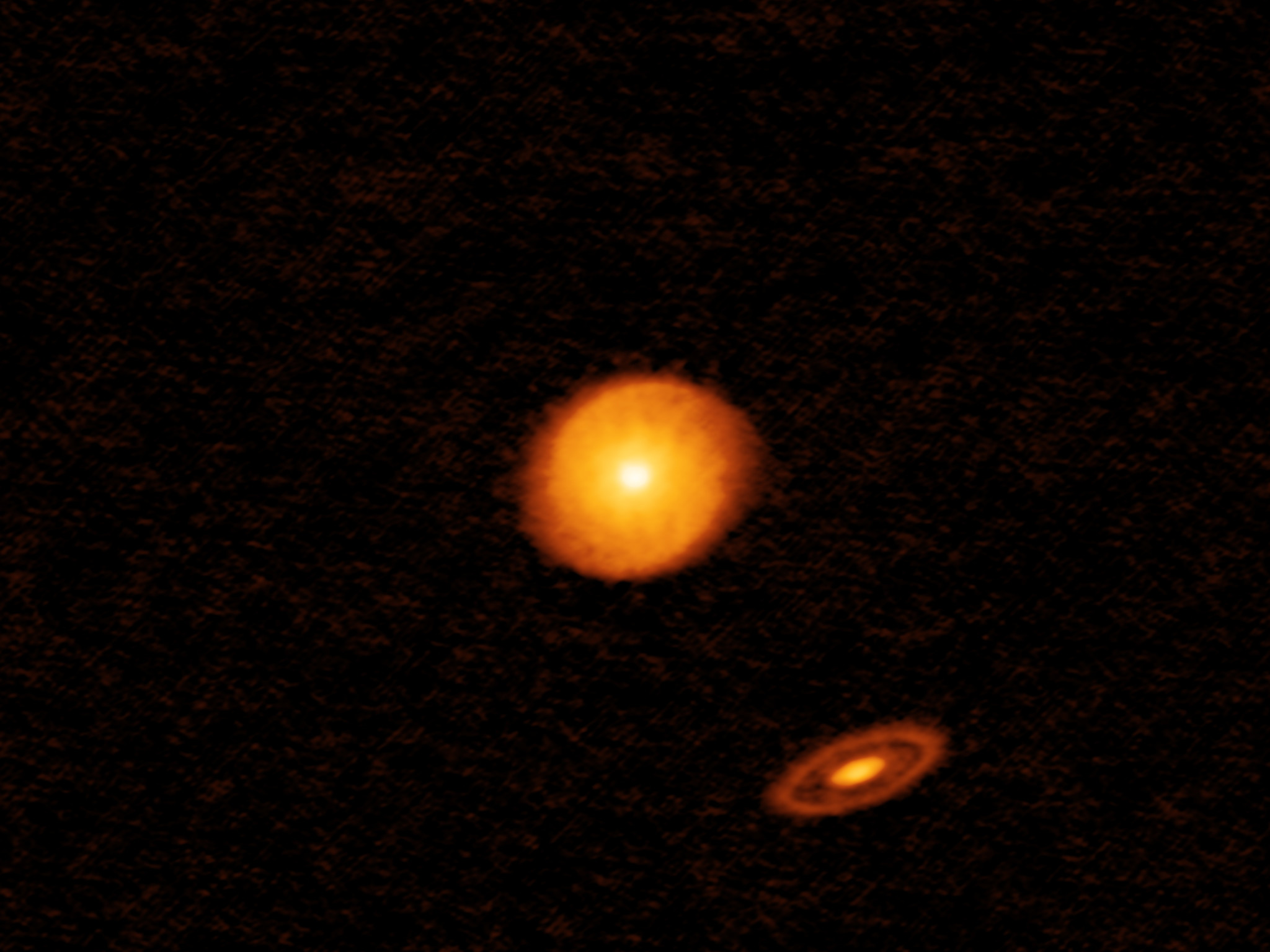
This object, called AS 205, is notable for being a multiple star system, one of two such systems imaged by DSHARP (the other being HT Lup). While two discs are discernible here, the lower right disc is in fact shared by two stars in a binary system, so we are actually looking at a system of three fledgling stars.

Although most high-resolution studies have so far focused on single stars, multiple systems are far from uncommon in the Universe. It is thought that over half of all stars may exist in multiple systems, an estimate that may be even higher for young stars. The presence of companion stars is likely to have complex implications for a disc and its substructures. This is due to as the gravitational influence of a stellar neighbour, which may distort and redistribute the material within the disc. Data from AS 205 and HT Lup indicate that stars and their neighbouring discs interact strongly.

Despite their unsettled birth environments, planets have been detected in multiple stellar systems — some orbiting just one of the stars, others orbiting the entire system. The latter are more likely to have stable orbits than the former, which get caught up in volatile interstellar dynamics.


Source: ESO/Potw


Wednesday, February 13, 2019

Safe havens for young planets

Credit: ALMA (ESO/NAOJ/NRAO), S. Andrews et al.; NRAO/AUI/NSF, S. Dagnello


This week’s Picture of the Week focuses on one of twenty protoplanetary discs explored and imaged by ALMA’s first Large Program, known as the Disk Substructures at High Angular Resolution Project (DSHARP). The disc is called AS 209, and its substructures are particularly pronounced thanks to its thin, high-contrast rings and almost face-on orientation towards us.

Though concentric rings — shown here in particularly beautiful clarity — are a common substructure among such discs, their widths, separations, and number can vary greatly. It’s still unclear how these substructures form, and how planets emerge from them. Quantifying and studying these similarities and differences was a motivator for constructing ALMA, and was the main objective of DSHARP. These details may hold clues to the type of planetary system that will eventually emerge.

One interpretation is that there may be a rapid and complex interplay between young protoplanets and the disc itself far earlier in the evolution of the planetary system than previously thought. A leading theory of planet formation requires dust within these discs to clump into grains, then pebbles, and eventually planetesimals. This theory has always been stumped, however, by the fact that once an object reaches a certain mass, the dynamics of these discs would cause it to be sucked into the host star at the centre, thus halting its growth into a true planet. The results from the DSHARP program suggest that disc substructures may perturb these dynamics and provide safe havens where young planetesimals can continue growing — making the substructures observed here crucial to our own existence.

Next week’s picture will be the final instalment in the DSHARP series, and will showcase another of the twenty images: this time a multiple star system.

Source: ESO/Potw


Tuesday, February 12, 2019

SOFIA finds dust survives obliteration of Supernova 1987A

Artist's concept illustrating Supernova 1987A as the powerful blast wave passes through its outer ring and destroys most of its dust, before the dust re-forms or grows rapidly. SOFIA observations reveal that this dust — a building block of stars and planets — can re-form or grow immediately after the catastrophic damage caused by the supernova’s blast wave. Image credits: NASA/SOFIA/Symbolic Pictures/ The Casadonte Group.


Columbia, MD--Febriuary 11,2019. : Researchers using NASA’s SOFIA airborne telescope have found that cosmic dust, a building block of planets, forms in the wake of a supernova blast wave.

Cosmic dust, a building block of stars and planets, can form in the wake of a violent stellar explosion called a supernova, according to a new study using the Stratospheric Observatory for Infrared Astronomy, SOFIA. These surprising findings provide clues to an astronomical mystery surrounding cosmic dust.

Dust particles form as dying red giant stars throw off material and become part of interstellar clouds of various sizes, densities and temperatures. This cosmic dust is then destroyed by supernova blast waves, which propagate through space at more than 6,000 miles per second (10,000 km/sec)!

Supernova explosions are among the most powerful events in the universe, with a peak brightness equivalent to the light from billions of individual stars. The explosion also produces a blast wave that destroys almost everything in its path, including dust in the surrounding interstellar medium, the space between the stars. Current theories predict when a supernova blast sweeps through a region of space, much of the dust would be destroyed, so there should be little dust left.

Observations with SOFIA, however, tell a different, mysterious story — revealing more than 10 times the dust expected. This suggests that dust is much more abundant in the wake of a blast wave than theories estimate.

The new study is based on observations of a nearby supernova explosion, called Supernova 1987A. When it was discovered in 1987, it was one of the brightest supernovae seen in 400 years! Due to its close proximity, astronomers have been able to monitor its impact on the surrounding environment continuously for the past 30 years.

SOFIA’s observations of the iconic supernova suggest dust may actually be forming in the wake of the powerful blast wave. These results are helping astronomers solve the mystery surrounding the abundance of dust in our galaxy.

“We already knew about the slow-moving dust in the heart of 1987A,” said Mikako Matsuura, a senior lecturer at Cardiff University, in the United Kingdom, and the lead author on the paper. “It formed from the heavy elements created in the core of the dead star. But the SOFIA observations tell us something new about a completely unexpected dust population.”


Supernova 1987A has a distinctive set of rings that are part of a cavity created in an earlier, pre-explosion phase of the star’s evolution. The fast-expanding blast wave has passed through these ring structures. Astronomers thought that any dust particles in these rings would have been destroyed, but recent observations from SOFIA show emission consistent with a growing population of dust in the rings. The results indicate that dust particles can re-form or grow rapidly, even after the catastrophic damage caused during the passage of the blast wave, suggesting that although this might be the end of a chapter in the life cycle of dust, it does not appear to be the end of the story.

The dust detected by SOFIA could result from either significant growth of the existing dust particles or the formation of a new dust population. These new observations compel astronomers to consider the possibility that the post-blast environment might be ready to form or re-form dust immediately after the blast wave passes — a new clue that may be pivotal in resolving the discrepancy between dust destruction models and observations.

From ground-based telescopes on Earth, observing cosmic dust particles in the infrared is difficult — or impossible — due to strong absorption, primarily from water and carbon dioxide in the Earth’s atmosphere. By flying above most of the obscuring molecules, the airborne observatory SOFIA provides access to portions of the infrared spectrum not available from the ground. In particular, SOFIA’s Faint Object infraRed CAmera for the SOFIA Telescope (FORCAST) is a powerful instrument for understanding warm dust in particular.

“FORCAST is the only instrument that can observe at these critical wavelengths and detect this newly-forming population of warm dust,” said James De Buizer, the USRA manager for science operations at the SOFIA Science Center and co-author on the study. “We plan to continue monitoring with FORCAST to gain more insight into dust creation and evolution in supernova remnants.”

In the future, NASA’s James Webb Space Telescope will examine this dust in further detail, looking for clues about its origins and composition.

SOFIA is a Boeing 747SP jetliner modified to carry a 106-inch diameter telescope. It is a joint project of NASA and the German Aerospace Center, DLR. NASA’s Ames Research Center in California’s Silicon Valley manages the SOFIA program, science and mission operations in cooperation with the Universities Space Research Association, or USRA, headquartered in Columbia, Maryland, and the German SOFIA Institute (DSI) at the University of Stuttgart. The aircraft is maintained and operated from NASA’s Armstrong Flight Research Center Hangar 703, in Palmdale, California.


Contact:

Suraiya Farukhi
Director, External Communications
sfarukhi@usra.edu
410-740-6224


Monday, February 11, 2019

Gaia clocks new speeds for Milky Way Andromeda collision

Copyright Orbits: E. Patel, G. Besla (University of Arizona), R. van der Marel (STScI);
Images: ESA (Milky Way); ESA/Gaia/DPAC (M31, M33) 

ESA’s Gaia satellite has looked beyond our Galaxy and explored two nearby galaxies to reveal the stellar motions within them and how they will one day interact and collide with the Milky Way – with surprising results. 

Our Milky Way belongs to a large gathering of galaxies known as the Local Group and, along with the Andromeda and Triangulum galaxies – also referred to as M31 and M33, respectively – makes up the majority of the group’s mass. 

Astronomers have long suspected that Andromeda will one day collide with the Milky Way, completely reshaping our cosmic neighbourhood. However, the three-dimensional movements of the Local Group galaxies remained unclear, painting an uncertain picture of the Milky Way’s future.


Copyright: ESA/Gaia/DPAC, CC BY-SA 3.0 IGO
 
“We needed to explore the galaxies’ motions in 3D to uncover how they have grown and evolved, and what creates and influences their features and behaviour,” says lead author Roeland van der Marel of the Space Telescope Science Institute in Baltimore, USA.  

“We were able to do this using the second package of high-quality data released by Gaia.”

Gaia is currently building the most precise 3D map of the stars in the nearby Universe, and is releasing its data in stages. The data from the second release, made in April 2018, was used in this research. 

Previous studies of the Local Group have combined observations from telescopes including the NASA/ESA Hubble Space Telescope and the ground-based Very Long Baseline Array to figure out how the orbits of Andromeda and Triangulum have changed over time. The two disc-shaped spiral galaxies are located between 2.5 and 3 million light-years from us, and are close enough to one another that they may be interacting. 

Two possibilities emerged: either Triangulum is on an incredibly long six-billion-year orbit around Andromeda but has already fallen into it in the past, or it is currently on its very first infall. Each scenario reflects a different orbital path, and thus a different formation history and future for each galaxy.

Copyright: NASA, ESA, and M. Durbin, J. Dalcanton, and B. F. Williams (University of Washington); CC BY 4.0

While Hubble has obtained the sharpest view ever of both Andromeda and Triangulum, Gaia measures the individual position and motion of many of their stars with unprecedented accuracy.
“We combed through the Gaia data to identify thousands of individual stars in both galaxies, and studied how these stars moved within their galactic homes,” adds co-author Mark Fardal, also of Space Telescope Science Institute. 

“While Gaia primarily aims to study the Milky Way, it’s powerful enough to spot especially massive and bright stars within nearby star-forming regions – even in galaxies beyond our own.” 

The stellar motions measured by Gaia not only reveal how each of the galaxies moves through space, but also how each rotates around its own spin axis. 

A century ago, when astronomers were first trying to understand the nature of galaxies, these spin measurements were much sought-after, but could not be successfully completed with the telescopes available at the time.

Copyright: ESA/Gaia (star motions); NASA/Galex (background image); R. van der Marel, M. Fardal, J. Sahlmann (STScI)
“It took an observatory as advanced as Gaia to finally do so,” says Roeland.

“For the first time, we’ve measured how M31 and M33 rotate on the sky. Astronomers used to see galaxies as clustered worlds that couldn’t possibly be separate ‘islands’, but we now know otherwise.
“It has taken 100 years and Gaia to finally measure the true, tiny, rotation rate of our nearest large galactic neighbour, M31. This will help us to understand more about the nature of galaxies.” 

By combining existing observations with the new data release from Gaia, the researchers determined how Andromeda and Triangulum are each moving across the sky, and calculated the orbital path for each galaxy both backwards and forwards in timefor billions of years. 
 
“The velocities we found show that M33 cannot be on a long orbit around M31,” says co-author Ekta Patel of the University of Arizona, USA. “Our models unanimously imply that M33 must be on its first infall into M31.” 

While the Milky Way and Andromeda are still destined to collide and merge, both the timing and destructiveness of the interaction are also likely to be different than expected.  

As Andromeda’s motion differs somewhat from previous estimates, the galaxy is likely to deliver more of a glancing blow to the Milky Way than a head-on collision. This will take place not in 3.9 billion years’ time, but in 4.5 billion – some 600 million years later than anticipated.

Copyright:  NASA, ESA, J. Dalcanton (University of Washington, USA), B. F. Williams (University of Washington, USA), L. C. Johnson (University of Washington, USA), the PHAT team, and R. Gendler.

“This finding is crucial to our understanding of how galaxies evolve and interact,” says Timo Prusti, ESA Gaia Project Scientist.

“We see unusual features in both M31 and M33, such as warped streams and tails of gas and stars. If the galaxies haven’t come together before, these can’t have been created by the forces felt during a merger. Perhaps they formed via interactions with other galaxies, or by gas dynamics within the galaxies themselves. 

“Gaia was designed primarily for mapping stars within the Milky Way — but this new study shows that the satellite is exceeding expectations, and can provide unique insights into the structure and dynamics of galaxies beyond the realm of our own. The longer Gaia watches the tiny movements of these galaxies across the sky, the more precise our measurements will become.”


Notes for Editors

“First Gaia Dynamics of the Andromeda System: DR2 Proper Motions, Orbits, and Rotation of M31 and M33” by R. P. van der Marel et al. is published in Astrophysical Journal. 

ESA’s Gaia satellite was launched in 2013 to create the most precise three-dimensional map of one billion of the stars within the Milky Way. The mission has released two lots of data so far: Gaia Data Release 1 on 14 September 2016, and Gaia Data Release 2 on 25 April 2018 (the latter of which was used in this study). More releases will follow in coming years.


Contacts

Roeland P. van der Marel
Space Telescope Science Institute
Baltimore, USA
Email: marel@stsci.edu

Mark Fardal
Space Telescope Science Institute
Baltimore, USA
Email: fardal@stsci.edu

Ekta Patel
Steward Observatory
University of Arizona, USA
Email: ektapatel@email.arizona.edu

Timo Prusti
ESA Gaia Project Scientist
Email: tprusti@cosmos.esa.int

Markus Bauer
ESA Science Programme Communication Officer
Tel: +31 71 565 6799
Mob: +31 61 594 3 954
Email: markus.bauer@esa.int

Source: ESA/GAIA


Saturday, February 09, 2019

Hubble Reveals Dynamic Atmospheres of Uranus and Neptune

Uranus  and Neptune
Credits: NASA, ESA, A. Simon (NASA Goddard Space Flight Center), 
and M.H. Wong and A. Hsu (University of California, Berkeley)

During its routine yearly monitoring of the weather on our solar system's outer planets, NASA's Hubble Space Telescope has uncovered a new mysterious dark storm on Neptune (right) and provided a fresh look at a long-lived storm circling around the north polar region on Uranus (left).

Like Earth, Uranus and Neptune have seasons, which likely drive some of the features in their atmospheres. But their seasons are much longer than on Earth, spanning decades rather than months.

The new Hubble view of Neptune shows the dark storm, seen at top center. Appearing during the planet's southern summer, the feature is the fourth and latest mysterious dark vortex captured by Hubble since 1993. Two other dark storms were discovered by the Voyager 2 spacecraft in 1989 as it flew by the remote planet. Since then, only Hubble has had the sensitivity in blue light to track these elusive features, which have appeared and faded quickly. A study led by University of California, Berkeley, undergraduate student Andrew Hsu estimated that the dark spots appear every four to six years at different latitudes and disappear after about two years.

Hubble uncovered the latest storm in September 2018 in Neptune's northern hemisphere. The feature is roughly 6,800 miles across.

To the right of the dark feature are bright white "companion clouds." Hubble has observed similar clouds accompanying previous vortices. The bright clouds form when the flow of ambient air is perturbed and diverted upward over the dark vortex, causing gases to freeze into methane ice crystals. These clouds are similar to clouds that appear as pancake-shaped features when air is pushed over mountains on Earth (though Neptune has no solid surface). The long, thin cloud to the left of the dark spot is a transient feature that is not part of the storm system.

It's unclear how these storms form. But like Jupiter's Great Red Spot, the dark vortices swirl in an anti-cyclonic direction and seem to dredge up material from deeper levels in the ice giant's atmosphere.

The Hubble observations show that as early as 2016, increased cloud activity in the region preceded the vortex's appearance. The images indicate that the vortices probably develop deeper in Neptune's atmosphere, becoming visible only when the top of the storm reaches higher altitudes.

The snapshot of Uranus, like the image of Neptune, reveals a dominant feature: a vast bright cloud cap across the north pole.

Scientists believe this feature is a result of Uranus' unique rotation. Unlike every other planet in the solar system, Uranus is tipped over almost onto its side. Because of this extreme tilt, during the planet's summer the Sun shines almost directly onto the north pole and never sets. Uranus is now approaching the middle of its summer season, and the polar-cap region is becoming more prominent. This polar hood may have formed by seasonal changes in atmospheric flow.

Near the edge of the cloud cap is a large, compact methane-ice cloud, which is sometimes bright enough to be photographed by amateur astronomers. A narrow cloud band encircles the planet north of the equator. It is a mystery how bands like these are confined to such narrow widths, because Uranus and Neptune have very broad westward-blowing wind jets.

Both planets are classified as ice giant planets. They have no solid surface but rather mantles of hydrogen and helium surrounding a water-rich interior, itself perhaps wrapped around a rocky core. Atmospheric methane absorbs red light but allows blue-green light to be scattered back into space, giving each planet a cyan hue.

The new Neptune and Uranus images are from the Outer Planet Atmospheres Legacy (OPAL) program, a long-term Hubble project, led by Amy Simon of NASA's Goddard Space Flight Center in Greenbelt, Maryland, that annually captures global maps of our solar system's outer planets when they are closest to Earth in their orbits. OPAL's key goals are to study long-term seasonal changes, as well as capture comparatively transitory events, such as the appearance of Neptune's dark spot. These dark storms may be so fleeting that in the past some of them may have appeared and faded during multi-year gaps in Hubble's observations of Neptune. The OPAL program ensures that astronomers won't miss another one.

These images are part of a scrapbook of Hubble snapshots of Neptune and Uranus that track the weather patterns over time on these distant, cold planets. Just as meteorologists cannot predict the weather on Earth by studying a few snapshots, astronomers cannot track atmospheric trends on solar system planets without regularly-repeated observations. Astronomers hope that Hubble's long-term monitoring of the outer planets will help them unravel the mysteries that still persist about these faraway worlds.

Analyzing the weather on these worlds also will help scientists better understand the diversity and similarities of the atmospheres of solar-system planets, including Earth.


Related Links

This site is not responsible for content found on external links


Contact

Donna Weaver / Ray Villard
Space Telescope Science Institute, Baltimore, Maryland
410-338-4493 / 410-338-4514
dweaver@stsci.edu / villard@stsci.edu

Amy Simon
NASA Goddard Space Flight Center, Greenbelt, Maryland
amy.simon@nasa.gov

Mike Wong
University of California, Berkeley, California
mikewong@astro.berkeley.edu


Friday, February 08, 2019

Bubble Blowing Black Hole Jet’s Impact on Galactic Evolution

Figure 1. The contours in this image show the flux of the molecular (blue) and ionized (green) emission detected by Gemini/NIFS overlaid on the Hubble Space Telescope image. While the ionized emission is centrally concentrated, the molecular emission extends further to the north and south of the nucleus, suggesting it is part of the massive circumnuclear disk.

Figure 2. The paler green region represents low surface-brightness jet plasma filling the jet-driven bubble, which drives a shock into the surrounding gas and causes ionized emission (dark red). Jet plasma also percolates radially through channels in the clumpy circumnuclear disk (blue), driving shocks into neutral gas and causing molecular emission. The pale blue circles represent clouds of neutral gas. The line of sight is indicated by the dashed line; the disk is inclined such that the Western lobe is partially obscured by the disk, whereas the Eastern lobe is completely obscured by the disk.

Astronomers using adaptive optics on the 8-meter Gemini North telescope have resolved, for the first time in near-infrared light, a giant elliptical galaxy with a young radio jet down to unprecedented scales. The observations also show how the jets, emanating from a black hole at the center of this galaxy, are heating the interstellar medium, which may have a significant impact on the evolution of the host galaxy.

Using adaptive optics (AO) and near-infrared imaging on the 8-meter Gemini North telescope in Hawai‘i, a team of astronomers lead by PhD student Henry Zovaro (The Australian National University) report the discovery of shocked molecular and ionized gas resulting from a jet-driven feedback coming from the center of a compact radio galaxy. The discovery offers important information on how such activity can influence the evolution of its host galaxy.

The galaxy, which goes by the name MCG 5-4-18, is a nearby giant elliptical galaxy harboring a young compact radio source, known as 4C 31.04, powered by a supermassive black hole with powerful jets. The radio source has two edge-brightened lobes (separated by about 320 thousand light years) that may only be a few thousand years old. The researchers demonstrate that 4C 31.04 is currently in a early phase of jet evolution, called the “energy-driven bubble” stage, where the jets inflate a bubble that expands out of the plane of the disk and interacts strongly with the galaxy’s interstellar medium.

The relative closeness of 4C 31.04 (about 270 megaparsecs, or 900 million light years) enabled the team to probe the interactions between the radio jet and the surrounding interstellar medium using H- and K-band infrared observations obtained with Gemini’s Near-infrared Integral Field Spectrometer (NIFS). “This is the first time that observations in optical or near-infrared have resolved the host galaxy down to scales comparable to the size of the radio lobes,” Zovaro says.

The shocked gases discovered by the team are important because they serve as tracers of the energetic interactions between the jet and the surrounding material. The study uncovered two different phases of heated gas in the circumnuclear disk: 1) the innermost parts of the disk form a jet-blown bubble of ionized gas 1,300 light years in diameter; and 2) the outer region is comprised of very warm molecular gas, around 1,000 Kelvin, reaching distances greater than 3,000 light years (Figure 1).

Zovaro explains how the two phases are related (Figure 2): “The bubble pushes a forward shock into the interstellar medium, giving rise to the ionized gas. Jet plasma also percolates into the circumnuclear disk, shocking and radially accelerating gas clouds, warming the interstellar medium and giving rise to the molecular emission.” Zovaro suggests that the warm molecular gas is part of the extended structure of the massive circumnuclear disk. Because the molecular gas cools rapidly, he says, this phase is very short-lived, and only represents a very small fraction of the total warm mass.

“All of the images of the radio emission that are currently available only show the jets reaching distances of about 100 parsec from the nucleus, whereas our NIFS data show that, in fact, the jet’s plasma reaches all the way out to approximately one kiloparsec in the disk,” Zovaro says, noting that deeper radio observations would be required to detect the jets at such radii. “This is an important finding,” he adds, “because it shows that we can’t simply ignore the effects of radio jets upon the evolution of their host galaxy, even if the radio source appears to be very small.”

The Gemini observations are featured in the accepted paper in the Monthly Notices of the Royal Astronomical Society.


Thursday, February 07, 2019

Bubbles of Brand New Stars

PR Image eso1903a
Bubbles of Brand New Stars 
 
Jumbo Jets 
 
Digitized Sky Survey image around the HII region LHA 120-N 180B 
 
The HII region LHA 120-N 180B in the constellation Mensa
 
Jet Infographic


Videos

ESOcast 193 Light: Bubbles of Brand New Stars
PR Video eso1903a
ESOcast 193 Light: Bubbles of Brand New Stars 

Zooming in on the HII Region LHA 120-N 180B

Panning across N180
Panning across N180


This dazzling region of newly-forming stars in the Large Magellanic Cloud (LMC) was captured by the Multi Unit Spectroscopic Explorer instrument (MUSE) on ESO’s Very Large Telescope. The relatively small amount of dust in the LMC and MUSE’s acute vision allowed intricate details of the region to be picked out in visible light.

This region of the Large Magellanic Cloud (LMC) glows in striking colours in this image captured by the Multi Unit Spectroscopic Explorer (MUSE) instrument on ESO’s Very Large Telescope (VLT). The region, known as LHA 120-N 180B — N180 B for short — is a type of nebula known as an H II region (pronounced “H two”), and is a fertile source of new stars.

The LMC is a satellite galaxy of the Milky Way, visible mainly from the Southern Hemisphere. At only around 160 000 light-years away from the Earth, it is practically on our doorstep. As well as being close to home, the LMC’s single spiral arm appears nearly face-on, allowing us to inspect regions such as N180 B with ease.

H II regions are interstellar clouds of ionised hydrogen — the bare nuclei of hydrogen atoms. These regions are stellar nurseries — and the newly formed massive stars are responsible for the ionisation of the surrounding gas, which makes for a spectacular sight. N180 B’s distinctive shape is made up of a gargantuan bubble of ionised hydrogen surrounded by four smaller bubbles.

Deep within this glowing cloud, MUSE has spotted a jet emitted by a fledgling star — a massive young stellar object with a mass 12 times greater than our Sun. The jet — named Herbig–Haro 1177, or HH 1177 for short — is shown in detail in this accompanying image. This is the first time such a jet has been observed in visible light outside the Milky Way, as they are usually obscured by their dusty surroundings. However, the relatively dust-free environment of the LMC allows HH 1177 to be observed at visible wavelengths. At nearly 33 light-years in length, it is one of the longest such jets ever observed.

HH 1177 tells us about the early lives of stars. The beam is highly collimated; it barely spreads out as it travels. Jets like this are associated with the accretion discs of their star, and can shed light on how fledgling stars gather matter. Astronomers have found that both high- and low-mass stars launch collimated jets like HH 1177 via similar mechanisms — hinting that massive stars can form in the same way as their low-mass counterparts.

MUSE has recently been vastly improved by the addition of the Adaptive Optics Facility , the Wide Field Mode of which saw first light in 2017. Adaptive optics is the process by which ESO’s telescopes compensate for the blurring effects of the atmosphere — turning twinkling stars into sharp, high-resolution images. Since obtaining these data, the addition of the Narrow Field Mode, has given MUSE vision nearly as sharp as that of the NASA/ESA Hubble Space Telescope — giving it the potential to explore the Universe in greater detail than ever before.


More Information

This research was presented in a paper entitled “An optical parsec-scale jet from a massive young star in the Large Magellanic Cloud” which appeared in the journal Nature.

The research team was composed of A. F. McLeod (who conducted this research while at the University of Canterbury, New Zealand and is now affiliated with the Department of Astronomy, University of California, Berkeley, and the Department of Physics and Astronomy, Texas Tech University, USA), M. Reiter (Department of Astronomy, University of Michigan, Ann Arbor, USA), R. Kuiper (Institute of Astronomy and Astrophysics, University of Tübingen, Germany), P. D. Klaassen (UK Astronomy Technology Centre, Royal Observatory Edinburgh, UK) and C. J, Evans (UK Astronomy Technology Centre, Royal Observatory Edinburgh, UK).

ESO is the foremost intergovernmental astronomy organisation in Europe and the world’s most productive ground-based astronomical observatory by far. It has 16 Member States: Austria, Belgium, the Czech Republic, Denmark, France, Finland, Germany, Ireland, Italy, the Netherlands, Poland, Portugal, Spain, Sweden, Switzerland and the United Kingdom, along with the host state of Chile and with Australia as a Strategic Partner. ESO carries out an ambitious programme focused on the design, construction and operation of powerful ground-based observing facilities enabling astronomers to make important scientific discoveries. ESO also plays a leading role in promoting and organising cooperation in astronomical research. ESO operates three unique world-class observing sites in Chile: La Silla, Paranal and Chajnantor. At Paranal, ESO operates the Very Large Telescope and its world-leading Very Large Telescope Interferometer as well as two survey telescopes, VISTA working in the infrared and the visible-light VLT Survey Telescope. ESO is also a major partner in two facilities on Chajnantor, APEX and ALMA, the largest astronomical project in existence. And on Cerro Armazones, close to Paranal, ESO is building the 39-metre Extremely Large Telescope, the ELT, which will become “the world’s biggest eye on the sky”


Links


Contacts 

Anna McLeod
Postdoctoral Research Fellow — Texas Tech University & University of California Berkeley
Tel: +1 80 6834 2588

Calum Turner
ESO Public Information Officer
Garching bei München, Germany
Tel: +49 89 3200 6670
Email: pio@eso.org


Source: ESO/News


Wednesday, February 06, 2019

Tour Alien Worlds with New Multimedia Treats

This Exoplanet Travel Bureau poster illustration shows futuristic explorers gliding in a protective bubble over the red-hot landscape of the exoplanet 55 Cancri e. Exoplanets are planets outside our solar system. Credit: NASA/JPL-Caltech.  › Download poster

This artist's illustration from the Exoplanet Travel Bureau's 360-degree visualization tool reveals what the surface of exoplanet 55 Cancri e might look like, based on the limited data available. This exoplanet (a planet outside our solar system) is thought to be covered entirely in molten lava. Credit: NASA/JPL-Caltech.  › 360-degree visualization tool

This artist's illustration of a planet in the TRAPPIST-1 system can be found in NASA's Eyes on Exoplanets 2.0. The web-based program lets users virtually fly through the galaxy and visit any of the nearly 4,000 known exoplanets, all visualized in 3-D.Credit: NASA/JPL-Caltech.  › Eyes on Exoplanets

Explore the plethora of planets outside our solar system with new multimedia experiences from NASA's Exoplanet Exploration Program (ExEP). In addition to a new Exoplanet Travel Bureau poster celebrating a molten world called 55 Cancri e, space fans can enjoy a 360-degree visualization of the surface of the same planet, a multimedia journey into the life and death of planetary systems, and a major update to the popular Eyes on Exoplanets app.

Lava Life

Designed in the style of vintage travel posters, ExEP's popular Exoplanet Travel Bureau poster series imagines what it might be like to visit known planets outside our solar system, or exoplanets
.
Focusing on 55 Cancri e, a planet that may be covered in a lava ocean, the newest poster shows futuristic explorers gliding over the red-hot landscape in a protective bubble.

55 Cancri e is also now part of the Exoplanet Travel Bureau's 360-degree visualization tool, which enables you to take a virtual tour of what the planet's surface might look like, based on the limited data available (no photos of the planet exist). Seen as a massive fiery orb on the horizon, the planet's star is 65 times closer to 55 Cancri e than the Sun is to Earth. On the planet's cooler nightside, silicate vapor in the atmosphere may condense into sparkling clouds that reflect the lava below.

All of the 360-degree visualizations are viewable on desktop computers, mobile devices and through virtual reality headsets that work with smartphones.

Life and Death of a Solar System

How did we get here? How do stars and planets come into being, and what fate awaits planets after their stars die? The interactive web feature "Life and Death of a Planetary System" brings readers on an in-depth journey through the formation, evolution and eventual demise of a solar system. This multichapter story offers insight into how the planet we call home formed and what will happen to it when the Sun dies.

Planet Bonanza

Explore thousands of new worlds, both strange and strangely familiar, with NASA's Eyes on Exoplanets 2.0. Users can fly through the galaxy and virtually visit any of the nearly 4,000 known exoplanets, all visualized in 3-D. Interstellar ports of call include the TRAPPIST-1 system of seven Earth-sized planets, the potentially molten-lava-covered 55 Cancri e, the egg-shaped WASP-12b and Kepler-16b, the first world discovered orbiting two stars. 

Among other features, the searchable Eyes on Exoplanets 2.0 lets users compare an exoplanet's size to that of Earth or Jupiter; determine how long it would take to travel to a given planet by car, jet or light-speed starship; and interact with virtual models of NASA space telescopes, such as Hubble, Spitzer, Kepler and the newly launched Transiting Exoplanet Survey Satellite (TESS).

Eyes on Exoplanets 2.0 is powered by data from NASA's Exoplanet Archive, the official database used by scientists researching exoplanets. Available for use on desktop computers as well as most smartphones and tablets, this next-generation, browser-based version of the popular app requires no software download. 

The Exoplanet Travel Bureau was developed by NASA's Exoplanet Exploration Program communications team and program chief scientists. Based at the agency's Jet Propulsion Laboratory in Pasadena, California, which is a division of Caltech, the program leads NASA's search for habitable planets and life beyond our solar system. The program develops technology and mission concepts, maintains exoplanet data archives and conducts ground-based exoplanet science for NASA missions.


News Media Contact

Calla Cofield
Jet Propulsion Laboratory, Pasadena, Calif.
626-808-2469
calla.e.cofield@jpl.nasa.gov

Tuesday, February 05, 2019

Retreating Snow Line Reveals Organic Molecules around Young Star

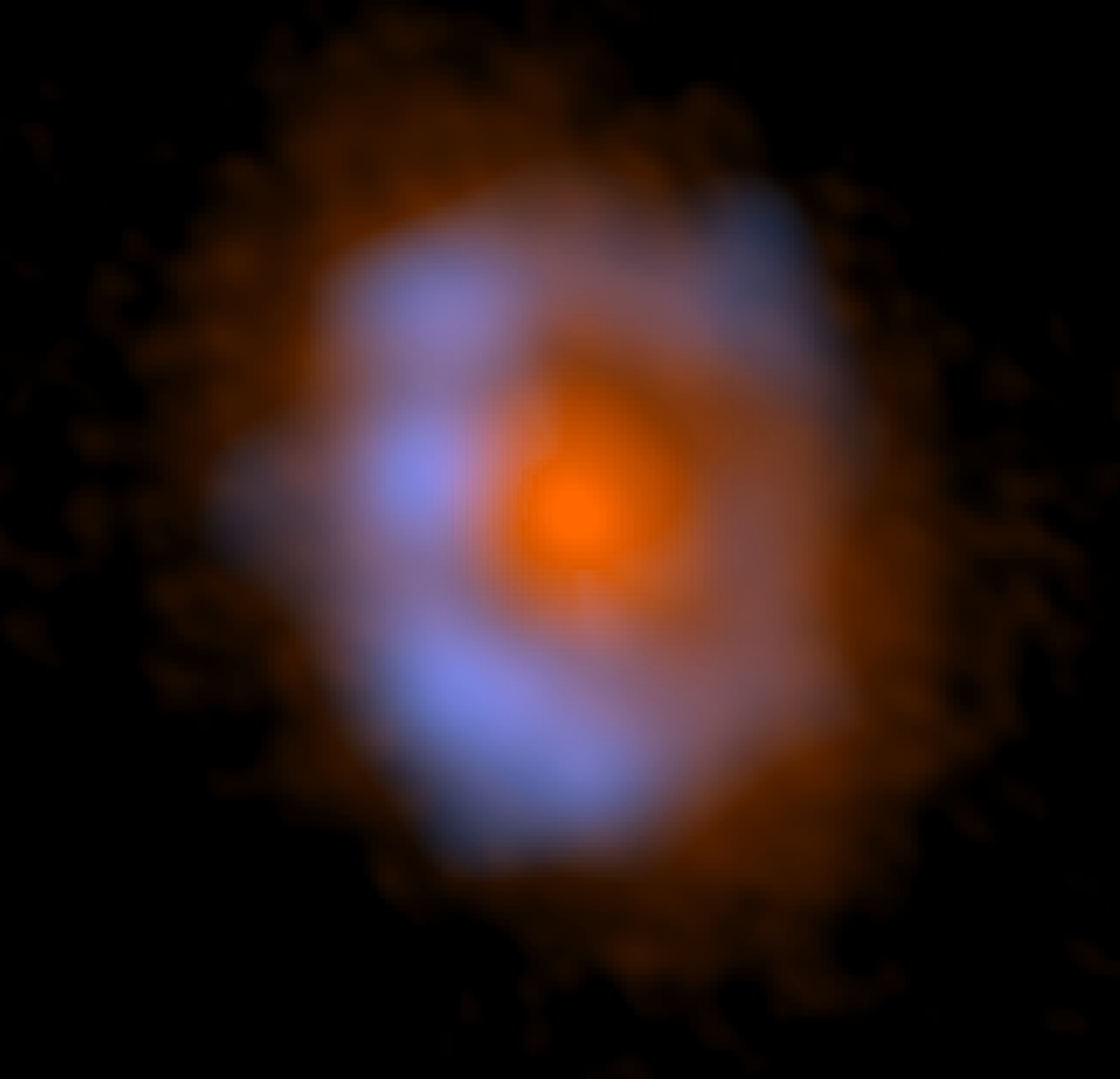
False-color image of V883 Ori taken with ALMA. The distribution of dust is shown in orange and the distribution of methanol, an organic molecule, is shown in blue. Credit: ALMA (ESO/NAOJ/NRAO), Lee et al. Hi-res image
Artist’s impression of the protoplanetary disk around a young star V883 Ori. The outer part of the disk is cold and dust particles are covered with ice. ALMA detected various complex organic molecules around the snow line of water in the disk. Credit: National Astronomical Observatory of Japan. Hi-res image

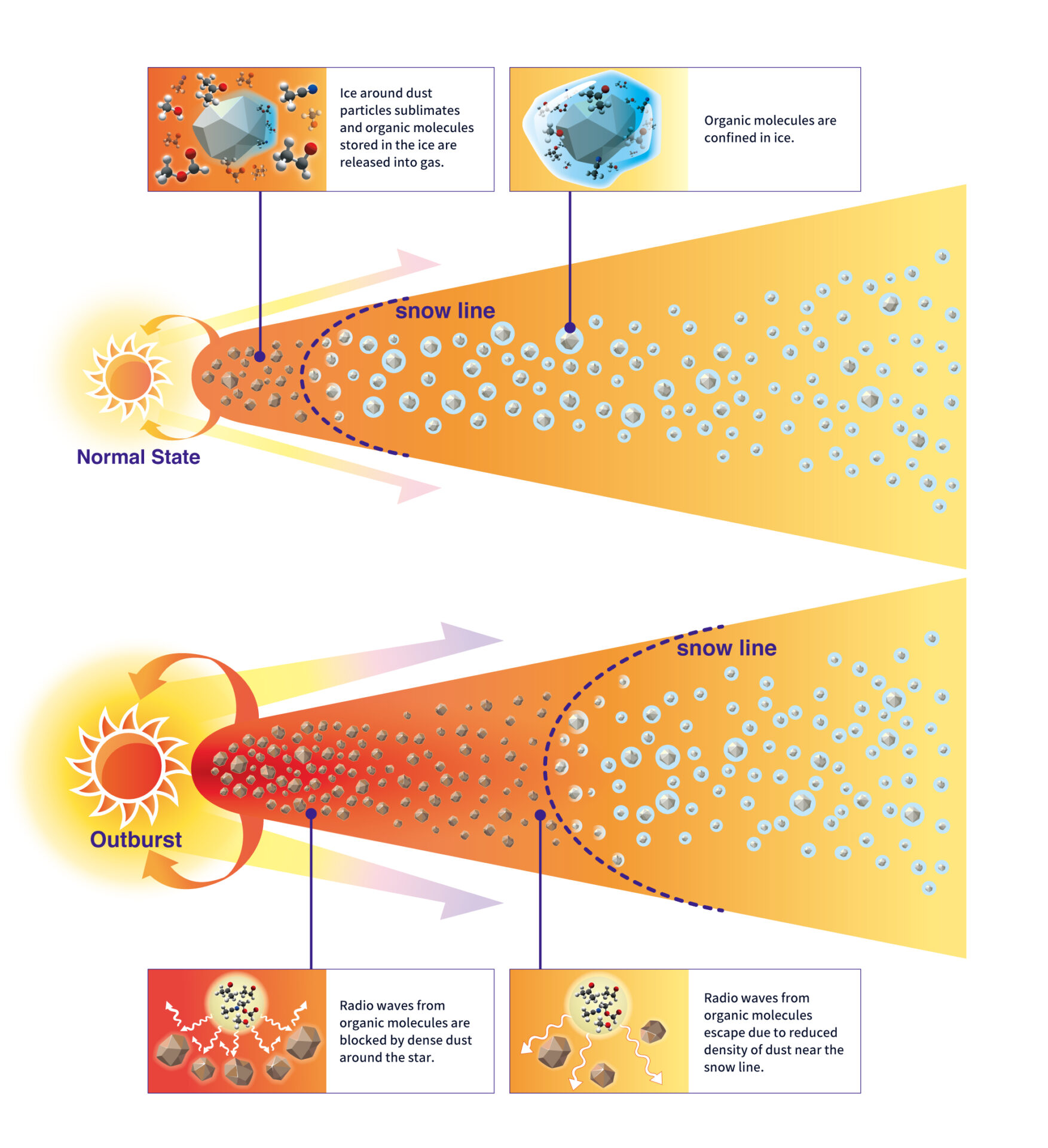
Schematic illustration of the composition of protoplanetary disks in normal state and outburst phase. V883 Ori is experiencing an FU Orionis outburst and the increase in disk temperature pushes the snow line outward, causing various molecules contained in ice to be released into gas. Credit: National Astronomical Observatory of Japan. Hi-res image


Astronomers using ALMA have detected various complex organic molecules around the young star V883 Ori. A sudden outburst from this star is releasing molecules from the icy compounds in the planet forming disk. The chemical composition of the disk is similar to that of comets in the modern Solar System. Sensitive ALMA observations enable astronomers to reconstruct the evolution of organic molecules from the birth of the Solar System to the objects we see today.

The research team led by Jeong-Eun Lee (Kyung Hee University, Korea) used the Atacama Large Millimeter/submillimeter Array (ALMA) to detect complex organic molecules including methanol (CH3OH), acetone (CH3COCH3), acetaldehyde (CH3CHO), methyl formate (CH3OCHO), and acetonitrile (CH3CN). This is the first time that acetone was unambiguously detected in a planet forming region or protoplanetary disk.

Various molecules are frozen in ice around micrometer-sized dust particles in protoplanetary disks. V883 Ori’s sudden flare-up is heating the disk and sublimating the ice, which releases the molecules into gas. The region in a disk where the temperature reaches the sublimation temperature of the molecules is called the “snow line.” The radii of snow lines are about a few astronomical units (au) around normal young stars, however, they are enlarged almost 10 times around bursting stars.

“It is difficult to image a disk on the scale of a few au with current telescopes,” said Lee. “However, around an outburst star, ice melts in a wider area of the disk and it is easier to see the distribution of molecules. We are interested in the distribution of complex organic molecules as the building blocks of life.”

Ice, including frozen organic molecules, could be closely related to the origin of life on planets. In our Solar System, comets are the focus of attention because of their rich icy compounds. For example, the European Space Agency’s legendary comet explorer Rosetta found rich organic chemistry around the comet Churyumov-Gerasimenko. Comets are thought to have been formed in the outer colder region of the proto-Solar System, where the molecules were contained in ice. Probing the chemical composition of ice in protoplanetary disks is directly related to probing the origin of organic molecules in comets, and the origin of the building blocks of life.

Thanks to ALMA’s sharp vision and the enlarged snow line due to the flare-up of the star, the astronomers obtained the spatial distribution of methanol and acetaldehyde. The distribution of these molecules has a ring-like structure with a radius of 60 au, which is twice the size of Neptune’s orbit. The researchers assume that inside of this ring the molecules are invisible because they are obscured by thick dusty material, and are invisible outside of this radius because they are frozen in ice.

“Since rocky and icy planets are made from solid material, the chemical composition of solids in disks is of special importance. An outburst is a unique chance to investigate fresh sublimates, and thus the composition of solids.” says Yuri Aikawa at the University of Tokyo, a member of the research team.

V883 Ori is a young star located at 1300 light-years away from the Earth. This star is experiencing a so-called FU Orionis type outburst, a sudden increase of luminosity due to a bursting torrent of material flowing from the disk to the star. These outbursts last only on the order of 100 years, therefore the chance to observe a burst is rather rare. However, since young stars with a wide range of ages experience FU Ori bursts, astronomers expect to be able to trace the chemical composition of ice throughout the evolution of young stars.

Note: Another ALMA observation (van’t Hoff et al. 2018, ApJL, 864, 23) also detected CH3OH emissions from V883 Ori. However, the sensitivity and resolution of the observations were not enough to resolve the structure inside the water snow line.


Additional Information

These observation results are published as Lee et al. “The ice composition in the disk around V883 Ori revealed by its stellar outburst” in Nature Astronomy on February 4, 2019.

The research team members are:


Jeong-Eun Lee (Kyung Hee University), Seokho Lee (Kyung Hee University), Giseon Baek (Kyung Hee University), Yuri Aikawa (The University of Tokyo), Lucas Cieza (Universidad Diego Prtales), Sung-Yong Yoon (Kyung Hee University), Gregory Herczeg (Peking University), Doug Johnstone (NRC Herzberg Astronomy and Astrophysics), Simon Casassus (Universidad de Chile)

This research was supported by the Basic Science Research Program through the National Research Foundation of Korea (grant No. NRF-2018R1A2B6003423), the Korea Astronomy and Space Science Institute under the R&D program supervised by the Ministry of Science, ICT and Future Planning, JSPS KAKENHI (No. 16K13782 and 18H05222), the general grant (No. 11473005) by the National Science Foundation of China, National Research Council of Canada, and NSERC Discovery Grant.


Contact

Valeria Foncea
Education and Public Outreach Officer
Joint ALMA Observatory Santiago - Chile
Phone: +56 2 2467 6258
Cell phone: +56 9 7587 1963
Email: valeria.foncea@alma.cl

Masaaki Hiramatsu
Education and Public Outreach Officer, NAOJ Chile
Observatory
, Tokyo - Japan
Phone: +81 422 34 3630
Email: hiramatsu.masaaki@nao.ac.jp

Charles E. Blue
Public Information Officer
National Radio Astronomy Observatory Charlottesville, Virginia - USA
Phone: +1 434 296 0314
Cell phone: +1 202 236 6324
Email: cblue@nrao.edu

Calum Turner
ESO Assistant Public Information Officer
Garching bei München, Germany
Phone: +49 89 3200 6670
Email: calum.turner@eso.org