Showing posts with label interstellar dust. Show all posts

Friday, January 26, 2024

Webb shines light on early interstellar grain growth


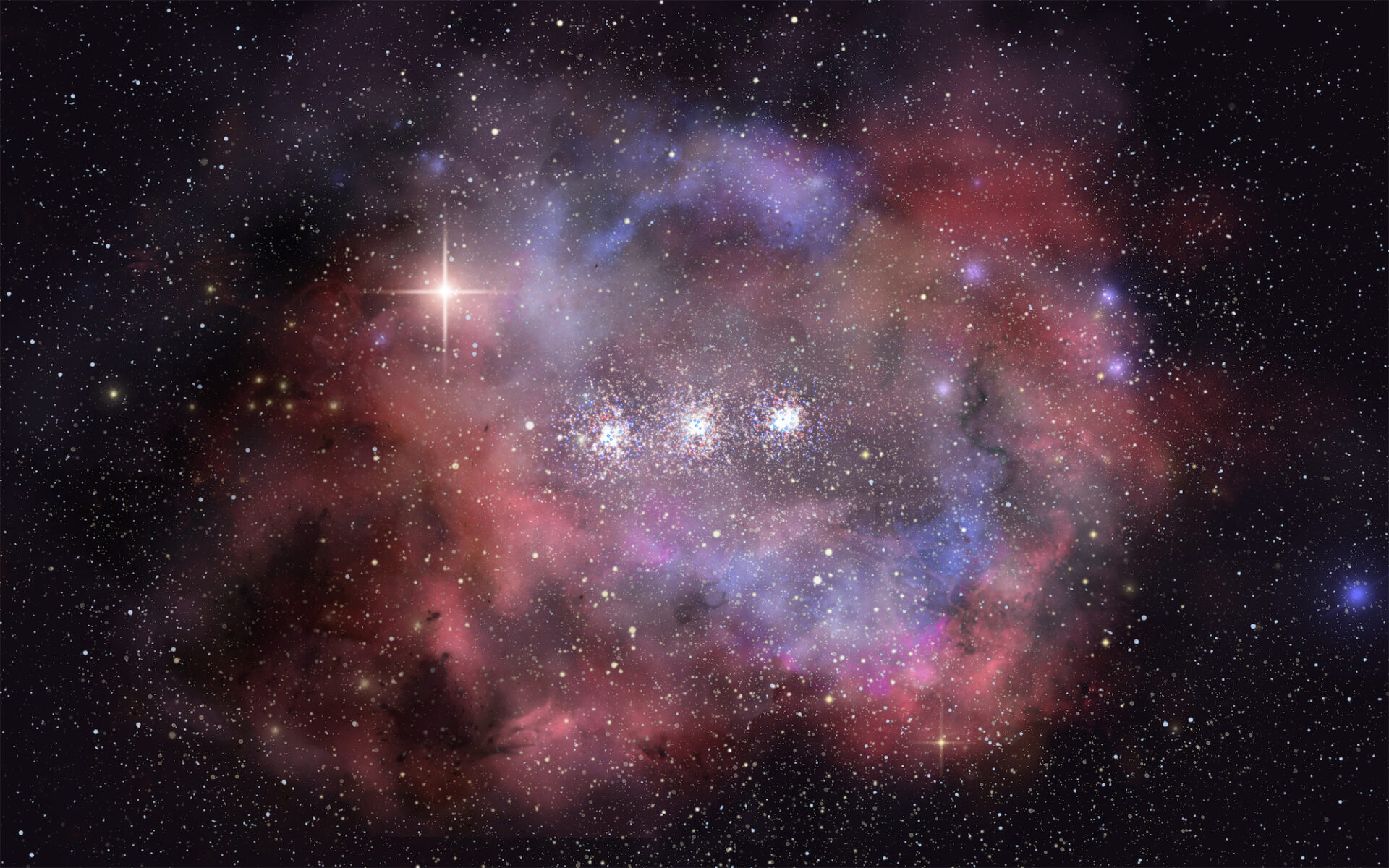
Illustration of the growth of interstellar dust grains, evolving from the ice mantle-free interstellar medium (left), acquiring first ice mantles in the cloud (centre), and increasing in size in the densest cloud phase (right). © Dartois et al. 2024


In a groundbreaking study, the James Webb Space Telescope (JWST) observed the early stages of the growth of dust grains in the dense Chamaeleon I cloud. These cold dust grains have accumulated molecular solids on their surface early in the process leading to star formation, challenging previous assumptions on where and when grain growth occurs. The findings indicate that the growth of these „icy grains” begins even before the protostellar phase. This not only sheds light on the intricacies of grain evolution before the birth of stars and planets but also poses challenges for chemical abundance determination due to the deformation of observed profiles.

When diffuse interstellar grains grow it has a profound impact on how they interact with light, causing them to start scattering light in a significant and wavelength-selective manner. The wide range of wavelengths analysed by JWST makes it an essential tool to detect these changes imprinted upon the spectra and enabling astronomers to size grains in the micron to few microns range.

“It is challenging to interpret these distorted infrared ice feature profiles observed by Webb in such dense cloud regions, requiring an intricate combination of laboratory experiments and mathematical modelling. However, the payoff is unparalleled insights into the grain size distribution” said astronomer Emmanuel Dartois of the Molecular Science Institute of Orsay, in Orsay, France, the member of the international Ice Age team who led the newly published Webb study.

This scattering, altering spectroscopic profiles of ice bands observed in the infrared range, turns them into specific tracers of grain size changes. A detailed analysis of these profiles, conducted by observing the extinction of light from stars behind the dense Chamaeleon cloud, confirms that icy grains reach sizes on the order of microns. “Thanks to the outstanding sensitivity of JWST, we can finally unveil detailed information on dust grains in interstellar clouds where stars and planets form,” says Paola Caselli, co-author and head of the Center for Astrochemical Studies at MPE. “Previously, grain growth has only been roughly inferred, but with these new data and the synergy between experimentalists and theoreticians, we can put stringent limits on the size of dust grains, the building blocks of planets. These dust grains do not just contain material which will coagulate into pebbles and rocks, but also volatiles such as water and organic molecules, the building blocks of prebiotic molecules, possibly representing the first steps toward life.”

We dedicate this article to the memory of Professor Harold Linnartz, our dear friend and colleague, who will be sadly missed by the whole Ice Age team.


Contact:

Paola Caselli
director
+49 89 30000-3400
+49 89 30000-3399
caselli@mpe.mpg.de

Hannelore Hämmerle
press officer
+49 89 30000-3980
+49 89 30000-3569
hanneh@mpe.mpg.de


Original publication

E. Dartois, J. A. Noble, P. Caselli et al.
Spectroscopic sizing of interstellar icy grains with JWST
Nature Astronomy, 9 Jan 2024

DOI


More Information

L'art de mesurer la taille des grains interstellaires : ce que révèle JWST
CNRS Press Release
(in French)


Thursday, October 10, 2019

Milky Way’s Center Will Be Revealed by NASA’s Webb Telescope

The center of our Milky Way galaxy is hidden from the prying eyes of optical telescopes by clouds of obscuring dust and gas. But in this stunning vista, the Spitzer Space Telescope's infrared cameras penetrate much of the dust, revealing the stars of the crowded galactic center region. The upcoming Webb telescope will offer a much-improved infrared view, teasing out fainter stars and sharper details. Credits: NASA, JPL-Caltech, Susan Stolovy (SSC/Caltech) et al.

Infrared observations using the ground-based Keck telescope have allowed astronomers to track individual stars orbiting the black hole at the galactic center. Webb is expected to detect fainter stars than are shown here, providing a more complete census of the stellar population within the galactic core. Credits: Keck/UCLA Galactic Center Group.


Galactic dust hides swarms of stars and black hole’s glowing disk

To understand galaxies throughout the universe, astronomers start by studying our home galaxy, the Milky Way. Observing the Milky Way is harder than it sounds because vast clouds of dust block light in all directions, particularly toward the galactic center. NASA’s upcoming James Webb Space Telescope will gather infrared light from the center of our galaxy that has passed through the dusty veil. It will examine stellar populations to learn how stars can survive that tumultuous region, which is bathed in harsh ultraviolet and X-ray light and wracked with gravitational tides. And if scientists are lucky, they’ll spot the faint, steady glow from matter spiraling around a supermassive black hole.

The center of our galaxy is a crowded place: A black hole weighing 4 million times as much as our Sun is surrounded by millions of stars whipping around it at breakneck speeds. This extreme environment is bathed in intense ultraviolet light and X-ray radiation. Yet much of this activity is hidden from our view, obscured by vast swaths of interstellar dust.

NASA's upcoming James Webb Space Telescope is designed to view the universe in infrared light, which is invisible to the human eye, but is very important for looking at astronomical objects hidden by dust. After its launch, Webb will gather infrared light that has penetrated the dusty veil, revealing the galactic center in unprecedented detail.

“Even one image from Webb will be the highest quality image ever obtained of the galactic center,” said Roeland van der Marel of the Space Telescope Science Institute (STScI), principal investigator on one planned study that will focus on imaging.

Telescopes on the ground and in space have provided tantalizing glimpses of the residents of the galactic center. Astronomers have tracked stars orbiting the black hole, some of which approach close enough to provide a test of Einstein’s general theory of relativity. However, so far, only the brightest stars are detectable.

“We’re only seeing the tip of the iceberg from the ground. Webb will be able to study fainter stars and tell us more about the overall stellar population,” said Torsten Böker of the European Space Agency and STScI, a co-investigator on a second planned study of the galactic center that will focus on spectroscopy.

Scientists already have been surprised to find low-mass infant stars forming close to the supermassive black hole – some within just a few light-years of its grasp. Theoretically, the black hole's immense gravity and harsh radiation environment should disrupt any gas clouds and prevent them from collapsing into stars. Yet these baby stars called protostars have persisted. Webb's observations may reveal additional protostars, and could provide clues to how stars can form in such an unlikely spot.

Black Hole Mysteries

The Milky Way’s supermassive black hole, known to astronomers as Sagittarius A* (pronounced A-star) also will fall under Webb’s gaze. It is surrounded by a disk of gas and dust, some of which will inevitably fall into the black hole. Astronomers have observed flares of light when the black hole gulped a clump of material. However, they have never detected the steady glow from the black hole's disk.

“Detecting the disk around Sagittarius A* with Webb would be a home run,” Böker said.

Data from Webb also could help address broader questions of how galaxies form — such as the longstanding "chicken and egg" problem of which came first, the galaxy or the black hole.

“Does the black hole come first and stars form around it? Do stars gather together and collide to form the black hole? These are questions we want to answer,” said Jay Anderson of STScI, a co-investigator on one of the studies.

Additionally, studies have shown that the mass of a galaxy’s central black hole is related to the total mass of the surrounding stars, but the reasons for this relationship remain unknown.

“Are there any clues to this mass correlation close to the black hole? Or has recent star formation wiped out signs of what might have happened in the past?” added Marcia Rieke of the University of Arizona, principal investigator on Webb’s NIRCam instrument.

Serendipitous Possibilities

Ultimately, the most exciting results from Webb’s observations might be the unexpected. For example, Webb might find stars in unusual orbits. Or, Webb might spot a gas cloud destined to be ripped apart by gravitational forces.

“We would like to see something unusual, like a star being gobbled up,” said van der Marel.

Ideally, these initial studies of the galactic center will inform future Webb observations. By revisiting the galactic center over a period of several years, astronomers can gain a new understanding of this chaotic region of space.

“So many interesting, strange things happen at the centers of galaxies. We want to find out what’s happening in our own,” said Rieke.

The observations described here will be taken as part of Webb’s Guaranteed Time Observation (GTO) program. The GTO program provides dedicated time to the scientists who have worked with NASA to craft the science and instrument capabilities of Webb throughout its development.

The James Webb Space Telescope will be the world's premier space science observatory when it launches in 2021. Webb will solve mysteries of our solar system, look beyond to distant worlds around other stars, and probe the mysterious structures and origins of our universe and our place in it. Webb is an international project led by NASA with its partners, ESA (European Space Agency) and the Canadian Space Agency


Contact:

Christine Pulliam
Space Telescope Science Institute, Baltimore, Maryland
410-338-4366
cpulliam@stsci.edu

Related Links: NASA's Webb Portal


Thursday, March 21, 2019

The Rise and Fall of Ziggy Star Formation and the Rich Dust from Ancient Stars

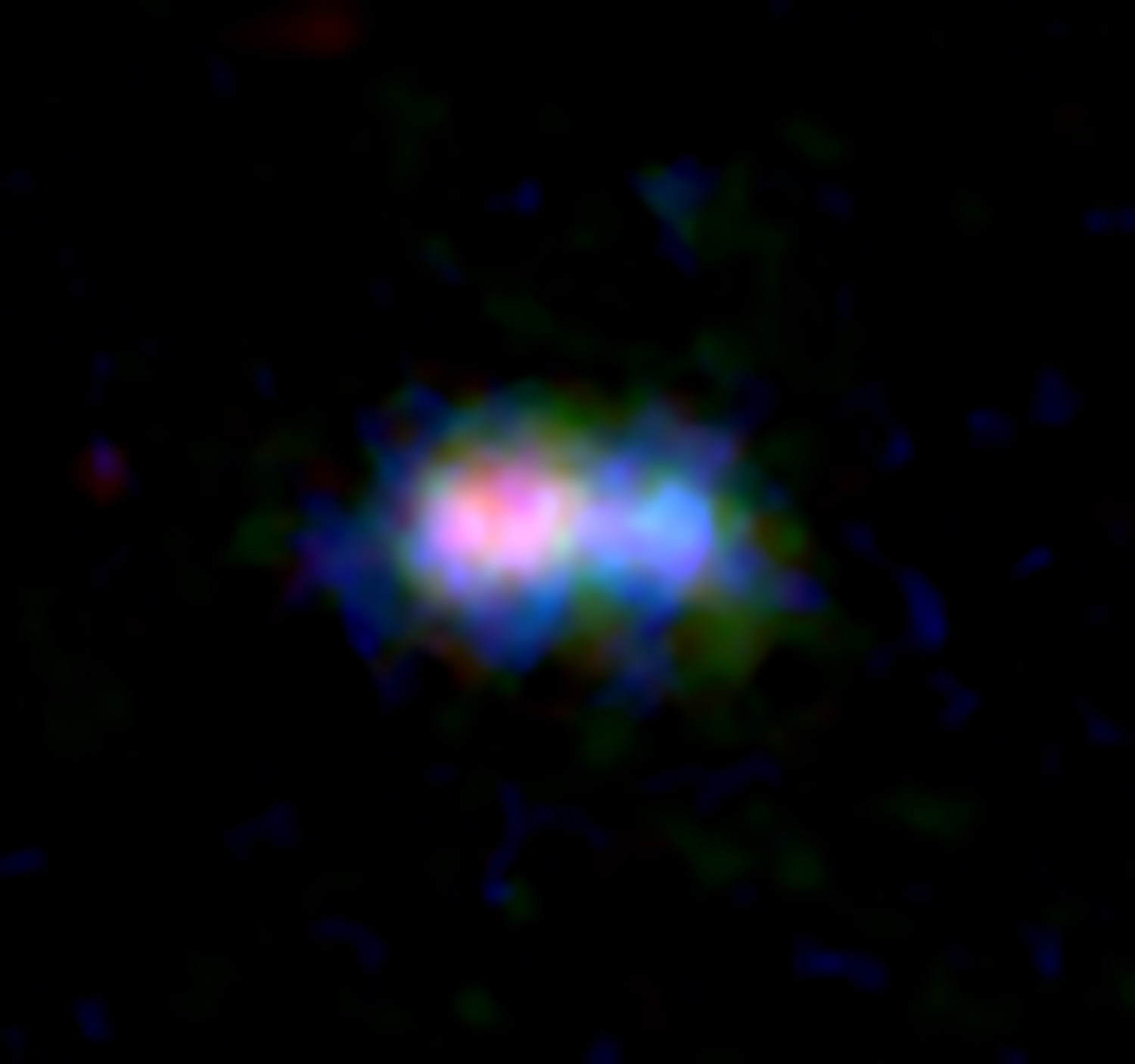
ALMA and Hubble Space Telescope (HST) image of the distant galaxy MACS0416_Y1. Distribution of dust and oxygen gas traced by ALMA are shown in red and green, respectively, while the distribution of stars captured by HST is shown in blue. Credit: ALMA (ESO/NAOJ/NRAO), NASA/ESA Hubble Space Telescope, Tamura, et al.  Hi-res image

Artist’s impression of the distant galaxy MACS0416_Y1. Based on the observations with ALMA and HST, researchers assume that this galaxy contains stellar clusters with a mix of old and young stars. The clouds of gas and dust are illuminated by starlight. Credit: National Astronomical Observatory of Japan. Hi-res image

Researchers have detected a radio signal from abundant interstellar dust in MACS0416_Y1, a galaxy 13.2 billion light-years away in the constellation Eridanus. Standard models can’t explain this much dust in a galaxy this young, forcing us to rethink the history of star formation. Researchers now think MACS0416_Y1 experienced staggered star formation with two intense starburst periods 300 million and 600 million years after the Big Bang with a quiet phase in between. Hi-res image

Stars are the main players in the Universe, but they are supported by the unseen backstage stagehands: stardust and gas. Cosmic clouds of dust and gas are the sites of star formation and masterful storytellers of the cosmic history.

“Dust and relatively heavy elements such as oxygen are disseminated by the deaths of stars,” said Yoichi Tamura, an associate professor at Nagoya University and the lead author of the research paper, “Therefore, a detection of dust at some point in time indicates that a number of stars have already formed and died well before that point.”

Using ALMA (Atacama Large Millimeter/submillimeter Array), Tamura and his team observed the distant galaxy MACS0416_Y1. Because of the finite speed of light, the radio waves we observe from this galaxy today had to travel for 13.2 billion years to reach us. In other words, they provide an image of what the galaxy looked like 13.2 billion years ago, which is only 600 million years after the Big Bang.

The astronomers detected a weak but telltale signal of radio emissions from dust particles in MACS0416_Y1 [1]. The Hubble Space Telescope, the Spitzer Space Telescope, and the European Southern Observatory’s Very Large Telescope have observed the light from stars in the galaxy; and from its color they estimate the stellar age to be 4 million years.

“It ain’t easy,” said Tamura half-lost in a moonage daydream. “The dust is too abundant to have been formed in 4 million years. It is surprising, but we need to hang onto ourselves. Older stars might be hiding in the galaxy, or they may have died out and disappeared already.”

“There have been several ideas proposed to overcome this dust budget crisis,” said Ken Mawatari, a researcher at the University of Tokyo. “However, no one is conclusive. We made a new model which doesn’t need any extreme assumptions diverging far from our knowledge of the life of stars in today’s Universe. The model well explains both the color of the galaxy and the amount of dust.” In this model, the first burst of star formation started at 300 million years and lasted 100 million years. After that, the star formation activity went quiet for a  and then restarted at 600 million years. The researchers think ALMA observed this galaxy at the beginning of its second generation of star formation.

“Dust is a crucial material for planets like Earth,” explains Tamura. “Our result is an important step forward for understanding the early history of the Universe and the origin of dust.”


Notes

[1] ALMA marginally detected dust emissions in a galaxy A2744_YD1 with a similar age MACS0416_Y1. The detection of dust in the present research has a better signal-to-noise ratio.


Additional Information

These observation results were published as Tamura et al. “Detection of the Far-infrared [O III] and Dust Emission in a Galaxy at Redshift 8.312: Early Metal Enrichment in the Heart of the Reionization Era” in the Astrophysical Journal in March 2019.

The research team members are:

Yoichi Tamura (Nagoya University), Ken Mawatari (Osaka Sangyo University/The University of Tokyo), Takuya Hashimoto (Osaka Sangyo University/National Astronomical Observatory of Japan), Akio K. Inoue (Osaka Sangyo University), Erik Zackrisson (Uppsala University), Lise Christensen (University of Copenhagen), Christian Binggeli (University of Copenhagen), Yuichi Matsuda (National Astronomical Observatory of Japan/SOKENDAI), Hiroshi Matsuo (National Astronomical Observatory of Japan/SOKENDAI),Tsutomu T. Takeuchi (Nagoya University), Ryosuke S. Asano (Nagoya University), Kaho Sunaga (Nagoya University), Ikkoh Shimizu (Osaka University), Takashi Okamoto (Hokkaido University), Naoki Yoshida (The University of Tokyo), Minju Lee (Nagoya University/National Astronomical Observatory of Japan), Takatoshi Shibuya (Kitami Institute of Technology), Yoshiaki Taniguchi (The Open University of Japan), Hideki Umehata (The Open University of Japan/RIKEN/The University of Tokyo), Bunyo Hatsukade (The University of Tokyo), Kotaro Kohno (The University of Tokyo), and Kazuaki Ota (University of Cambridge/Kyoto University).

This research was supported by JSPS/MEXT KAKENHI (Nos. 17H06130, 17H04831, 17KK0098, 17H01110, 18H04333, and 17K14252) and the Swedish National Space Board.

The Atacama Large Millimeter/submillimeter Array (ALMA), an international astronomy facility, is a partnership of the European Organisation for Astronomical Research in the Southern Hemisphere (ESO), the U.S. National Science Foundation (NSF) and the National Institutes of Natural Sciences (NINS) of Japan in cooperation with the Republic of Chile. ALMA is funded by ESO on behalf of its Member States, by NSF in cooperation with the National Research Council of Canada (NRC) and the Ministry of Science and Technology (MOST) and by NINS in cooperation with the Academia Sinica (AS) in Taiwan and the Korea Astronomy and Space Science Institute (KASI).

ALMA construction and operations are led by ESO on behalf of its Member States; by the National Radio Astronomy Observatory (NRAO), managed by Associated Universities, Inc. (AUI), on behalf of North America; and by the National Astronomical Observatory of Japan (NAOJ) on behalf of East Asia. The Joint ALMA Observatory (JAO) provides the unified leadership and management of the construction, commissioning and operation of ALMA.


Contacts

Nicolás Lira
Education and Public Outreach Coordinator
Joint ALMA Observatory, Santiago - Chile
Phone: +56 2 2467 6519
Cell phone: +56 9 9445 7726
Email: nicolas.lira@alma.cl

Masaaki Hiramatsu
Education and Public Outreach Officer, NAOJ Chile
Observatory
, Tokyo - Japan
Phone: +81 422 34 3630
Email: hiramatsu.masaaki@nao.ac.jp

Charles E. Blue
Public Information Officer
National Radio Astronomy Observatory Charlottesville, Virginia - USA
Phone: +1 434 296 0314
Cell phone: +1 202 236 6324
Email: cblue@nrao.edu

Calum Turner
ESO Assistant Public Information Officer 
Garching bei München, Germany
Phone: +49 89 3200 6670 
Email: calum.turner@eso.org


Thursday, May 04, 2017

VISTA Peeks Through the Small Magellanic Cloud’s Dusty Veil

 PR Image eso1714a
VISTA’s view of the Small Magellanic Cloud

PR Image eso1714b
Highlights from VISTA's view of the Small Magellanic Cloud

The location of the Small Magellanic Cloud in the constellation of Tucana


Videos

ESOcast 105 Light: Starstruck by the Small Magellanic Cloud (4K UHD)

A close-up look at VISTA's view of the Small Magellanic Cloud

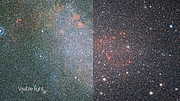
Comparison of the Small Magellanic Cloud in infrared and visible light


The Small Magellanic Cloud galaxy is a striking feature of the southern sky even to the unaided eye. But visible-light telescopes cannot get a really clear view of what is in the galaxy because of obscuring clouds of interstellar dust. VISTA’s infrared capabilities have now allowed astronomers to see the myriad of stars in this neighbouring galaxy much more clearly than ever before. The result is this record-breaking image — the biggest infrared image ever taken of the Small Magellanic Cloud — with the whole frame filled with millions of stars.

The Small Magellanic Cloud (SMC) is a dwarf galaxy, the more petite twin of the Large Magellanic Cloud (LMC). They are two of our closest galaxy neighbours in space — the SMC lies about 200 000 light-years away, just a twelfth of the distance to the more famous Andromeda Galaxy.  Both are also rather peculiarly shaped, as a result of interactions with one another and with the Milky Way itself.

Their relative proximity to Earth makes the Magellanic Clouds ideal candidates for studying how stars form and evolve. However, while the distribution and history of star formation in these dwarf galaxies were known to be complex, one of the biggest obstacles to obtaining clear observations of star formation in galaxies is interstellar dust. Enormous clouds of these tiny grains scatter and absorb some of the radiation emitted from the stars — especially visible light — limiting what can be seen by telescopes here on Earth. This is known as dust extinction.

The SMC is full of dust, and the visible light emitted by its stars suffers significant extinction. Fortunately, not all electromagnetic radiation is equally affected by dust. Infrared radiation passes through interstellar dust much more easily than visible light, so by looking at the infrared light from a galaxy we can learn about the new stars forming within the clouds of dust and gas.

VISTA, the Visible and Infrared Survey Telescope, was designed to image infrared radiation. The VISTA Survey of the Magellanic Clouds (VMC) is focused on mapping the star formation history of the SMC and LMC, as well as mapping their three-dimensional structures. Millions of SMC stars have been imaged in the infrared thanks to the VMC, providing an unparalleled view almost unaffected by dust extinction.

The whole frame of this massive image is filled with stars belonging to the Small Magellanic Cloud. It also includes thousands of background galaxies and several bright star clusters, including 47 Tucanae at the right of the picture, which lies much closer to the Earth than the SMC. The zoomable image will show you the SMC as you have never seen it before!

The wealth of new information in this 1.6 gigapixel image (43 223 x 38 236 pixels) has been analysed by an international team led by Stefano Rubele of the University of Padova. They have used cutting-edge stellar models to yield some surprising results.

The VMC has revealed that most of the stars within the SMC formed far more recently than those in larger neighbouring galaxies. This early result from the survey is just a taster of the new discoveries still to come, as the survey continues to fill in blind spots in our maps of the Magellanic Clouds.


More Information


This research was presented in the paper "The VMC survey – XIV. First results on the look-back time star formation rate tomography of the Small Magellanic Cloud", in the journal Monthly Notices of the Royal Astronomical Society.

ESO is the foremost intergovernmental astronomy organisation in Europe and the world’s most productive ground-based astronomical observatory by far. It is supported by 16 countries: Austria, Belgium, Brazil, the Czech Republic, Denmark, France, Finland, Germany, Italy, the Netherlands, Poland, Portugal, Spain, Sweden, Switzerland and the United Kingdom, along with the host state of Chile. ESO carries out an ambitious programme focused on the design, construction and operation of powerful ground-based observing facilities enabling astronomers to make important scientific discoveries. ESO also plays a leading role in promoting and organising cooperation in astronomical research. ESO operates three unique world-class observing sites in Chile: La Silla, Paranal and Chajnantor. At Paranal, ESO operates the Very Large Telescope, the world’s most advanced visible-light astronomical observatory and two survey telescopes. VISTA works in the infrared and is the world’s largest survey telescope and the VLT Survey Telescope is the largest telescope designed to exclusively survey the skies in visible light. ESO is a major partner in ALMA, the largest astronomical project in existence. And on Cerro Armazones, close to Paranal, ESO is building the 39-metre Extremely Large Telescope, the ELT, which will become “the world’s biggest eye on the sky”.


Links


Contacts

Maria-Rosa Cioni
Leibniz-Institut für Astrophysik Potsdam (AIP)
Potsdam, Germany
Tel: +49 331 7499 651

Richard Hook
ESO Public Information Officer
Garching bei München, Germany
Tel: +49 89 3200 6655
Cell: +49 151 1537 3591


Source: ESO

Saturday, April 16, 2016

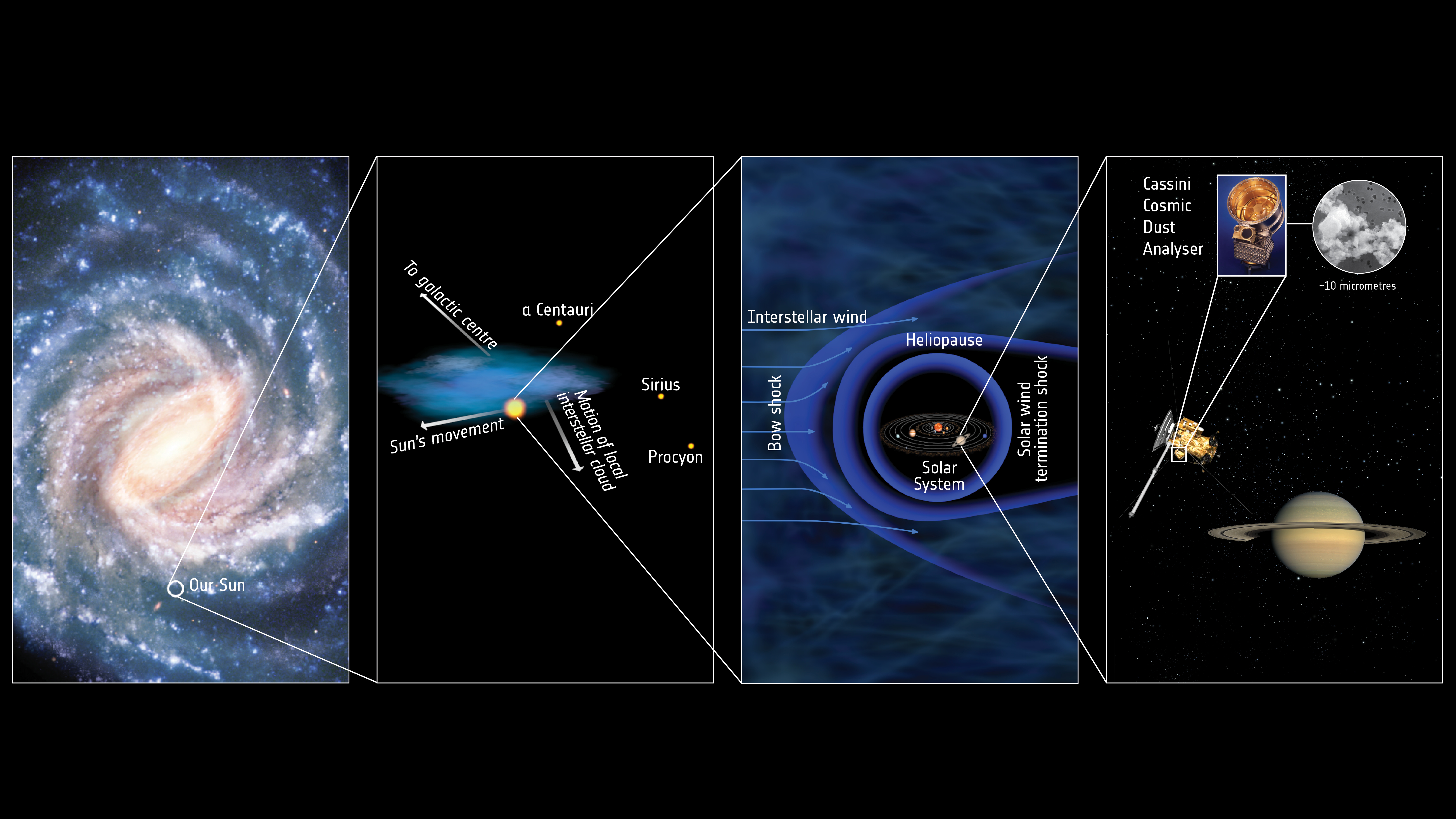
Interstellar dust at Saturn

 Interstellar dust at Saturn
Copyright: ESA; dust grain inset: NASA/JPL; Saturn image: NASA/JPL/Space Science Institute

Local interstellar cloud
The local interstellar cloud is an almost empty bubble of gas and dust that our Solar System is travelling through with a distinct direction and speed.
Copyright: ESA


The international Cassini spacecraft has detected the faint but distinct signature of dust coming from outside our Solar System.

Cassini has been flying around the Saturnian system for 12 years, studying the giant planet and its rings and satellites. It has also found millions of ice-rich dust grains with its Cosmic Dust Analyser, the vast majority of which are from icy satellite Enceladus and which make up one of Saturn’s outer rings.

Amongst the grains detected, 36 stick out from the crowd – and scientists conclude they came from beyond our Solar System.

Alien dust in the Solar System is not entirely unexpected. In the 1990s, the ESA/NASA Ulysses mission made the first in-situ discovery of interstellar dust, later confirmed by NASA’s Galileo spacecraft.
The dust was traced back to the local interstellar cloud: an almost empty bubble of gas and dust we are travelling through with a distinct direction and speed.

“From that discovery, we always hoped we would be able detect these interstellar interlopers at Saturn with Cassini: we knew that if we looked in the right direction, we should find them,” says Nicolas Altobelli, ESA’s Cassini project scientist and lead author of the study reporting the results in Science.

“And indeed, on average, we have captured a few per year, travelling at high speed and on a specific path quite different to that of the usual icy grains we collect around Saturn.”

The tiny dust grains were speeding through at over 72 000 km/h, fast enough to avoid being trapped inside the Solar System by Saturn’s – or even the Sun’s – gravity.

Importantly, unlike Ulysses and Galileo, Cassini analysed the composition of the dust for the first time, showing them to be made of a very specific mixture of minerals, not ice.

They all had a surprisingly similar chemical make-up, containing major rock-forming elements like magnesium, silicon, iron and calcium in average cosmic proportions. Conversely, more reactive elements like sulphur and carbon were found to be less abundant compared to the average.

“Cosmic dust is produced when stars die, but with the vast range of types of stars in the Universe we naturally expected to encounter a huge range of dust types over the long period of our study,” says Frank

Postberg, co-author on the paper and co-investigator of Cassini’s dust analyser, of the University of Heidelberg.

“Surprisingly, the grains we’ve detected aren’t old, pristine and compositionally diverse like the stardust grains we find in ancient meteorites,” says Mario Trieloff, a co-author also at the University of Heidelberg.
“They have apparently been made rather uniform through some repetitive processing in the interstellar medium.”

The team speculate that dust in a star-forming region could be destroyed and recondense multiple times as the shockwaves from dying stars passed through, before the resulting similar grains ended up streaming towards our Solar System.

“The long duration of the Cassini mission has enabled us to use it like a micrometeorite observatory, providing us privileged access to the contribution of dust from outside our Solar System that could not have been obtained in any other way,” adds Nicolas.


Notes for editors 
 
“Flux and composition of interstellar dust at Saturn from Cassini’s Cosmic Dust Analyzer,” by N. Altobelli et al, is published in Science.

The Cassini-Huygens mission is a cooperative project of NASA, ESA and the Italian Space Agency. JPL, a division of the California Institute of Technology in Pasadena, manages the mission for NASA's Science Mission Directorate in Washington.

The Cosmic Dust Analyser is supported by the German Aerospace Center (DLR); the instrument is managed by the University of Stuttgart, Germany.


For more information, please contact:

Nicolas Altobelli


ESA Cassini–Huygens Project Scientist


Tel: +34 91 813 1201


Email: nicolas.altobelli@esa.int 

Frank Postberg
Institut für Geowissenschaften, University of Heidelberg, Germany
Email: Frank.Postberg@geow.uni-heidelberg.de

Mario Trieloff
Institut für Geowissenschaften, University of Heidelberg, Germany
Email: Mario.Trieloff@geow.uni-heidelberg.de

Markus Bauer 


ESA Science Communication Officer


Tel: +31 71 565 6799


Mob: +31 61 594 3 954


Email: markus.bauer@esa.int


Tuesday, June 23, 2015

Neutron star’s echoes give astronomers a new measuring stick

Residing in the plane of the Milky Way, where it cannot be observed by optical telescopes because of obscuring clouds of interstellar dust, Circinus X-1 is the glowing husk of a binary star system that exploded in a supernova event just 2,500 years ago. It consists of a very dense neutron star locked in the orbital embrace of a companion star. Hi-res Image


In late 2013, when the neutron star at the heart of one of our galaxy’s oddest supernovae gave off a massive burst of X-rays, the resulting echoes — created when the X-rays bounced off clouds of dust in interstellar space — yielded a surprising new measuring stick for astronomers.

Circinus X-1 is a freak of the Milky Way. Located in the plane of the galaxy, Circinus X-1 is the glowing husk of a binary star system that exploded a mere 2,500 years ago. The system consists of a nebula and a neutron star, the incredibly dense collapsed core of the exploded star, still in the orbital embrace of its companion star.

The system is called an X-ray binary because it emits X-rays as material from the companion star spirals onto the much denser neutron star and is heated to very high temperatures.

Sebastian Heinz

“In late 2013, the neutron star underwent an enormous outburst for about two months, during which it became one of the brightest sources in the X-ray sky,” explains University of Wisconsin-Madison astronomy Professor Sebastian Heinz. “Then it turned dark again.”

The flicker of X-rays from the odd binary system was monitored by a detector aboard the International Space Station. Heinz and his colleagues quickly mounted a series of follow-up observations with the space-based Chandra and XMM-Newton telescopes to discover four bright rings of X-rays, like ripples in a cosmic pond, all around the neutron star at the heart of Circinus X-1.

Their observations were reported June 23 in The Astrophysical Journal.

The rings are light echoes from Circinus X-1’s X-ray burst. Each of the four rings, says Heinz, indicates a dense cloud of dust between us and the supernova remnant. When X-rays encounter grains of dust in interstellar space they can be deflected, and if the dust clouds are dense they can scatter a noticeable fraction of the X-rays away from their original trajectory, putting them on a triangular path.

That phenomenon, Heinz and his colleagues recognized, could give astronomers an opportunity to use the geometry of the rings and a time delay between deflected and undeflected X-rays to calculate the distance to Circinus X-1, a measurement previously unobtainable because the supernova is hidden in the dust that permeates the plane of our galaxy

We can use the geometry of the rings and the time delay to do X-ray tomography,” Heinz explains. “Because the X-rays have traveled on a triangular path rather than a straight path, they take longer to get to us than the ones that were not scattered.”

Combining those measurements with observations of the dust clouds by Australia’s Mopra radio telescope, Heinz and his colleagues were able to determine which dust clouds were responsible for each of the four light echoes.

“Using this identification, we can determine the distance to the source accurately for the first time,” according to the UW-Madison astronomer. “Distance measurements in astronomy are difficult, especially to sources like Circinus X-1, which are hidden in the plane of the galaxy behind a thick layer of dust — which makes it basically impossible to observe them with optical telescopes.

“In this case, we used the dust that otherwise gets in the way to pioneer a new method of estimating distances to X-ray sources,” Heinz says.

Now astronomers know that Circinus X-1, one of the Milky Way’s most bizarre objects, is 30,700 light-years from Earth.


Wednesday, May 07, 2014

Planck takes magnetic fingerprint of our Galaxy

Milky Way's magnetic fingerprint
Copyright: ESA and the Planck Collaboration
 
Our Galaxy’s magnetic field is revealed in a new image from ESA’s Planck satellite. This image was compiled from the first all-sky observations of ‘polarised’ light emitted by interstellar dust in the Milky Way. 

Light is a very familiar form of energy and yet some of its properties are all but hidden to everyday human experience. One of these – polarisation – carries a wealth of information about what happened along a light ray’s path, and can be exploited by astronomers. 

Light can be described as a series of waves of electric and magnetic fields that vibrate in directions that are at right angles to each other and to their direction of travel. 

Usually, these fields can vibrate at all orientations. However, if they happen to vibrate preferentially in certain directions, we say the light is ‘polarised’. This can happen, for example, when light bounces off a reflective surface like a mirror or the sea. Special filters can be used to absorb this polarised light, which is how polarised sunglasses eliminate glare. 

In space, the light emitted by stars, gas and dust can also be polarised in various ways. By measuring the amount of polarisation in this light, astronomers can study the physical processes that caused the polarisation.
In particular, polarisation may reveal the existence and properties of magnetic fields in the medium light has travelled through. 

The map presented here was obtained using detectors on Planck that acted as the astronomical equivalent of polarised sunglasses. Swirls, loops and arches in this new image trace the structure of the magnetic field in our home galaxy, the Milky Way. 

In addition to its hundreds of billions of stars, our Galaxy is filled with a mixture of gas and dust, the raw material from which stars are born. Even though the tiny dust grains are very cold, they do emit light but at very long wavelengths – from the infrared to the microwave domain. If the grains are not symmetrical, more of that light comes out vibrating parallel to the longest axis of the grain, making the light polarised. 

If the orientations of a whole cloud of dust grains were random, no net polarisation would be seen. However, cosmic dust grains are almost always spinning rapidly, tens of millions of times per second, due to collisions with photons and rapidly moving atoms. 

Then, because interstellar clouds in the Milky Way are threaded by magnetic fields, the spinning dust grains become aligned preferentially with their long axis perpendicular to the direction of the magnetic field. As a result, there is a net polarisation in the emitted light, which can then be measured. 

In this way, astronomers can use polarised light from dust grains to study the structure of the Galactic magnetic field and, in particular, the orientation of the field lines projected on the plane of the sky.

In the new Planck image, darker regions correspond to stronger polarised emission, and the striations indicate the direction of the magnetic field projected on the plane of the sky. Since the magnetic field of the Milky Way has a 3D structure, the net orientation is difficult to interpret if the field lines are highly disorganised along the line of sight, like looking through a tangled ball of string and trying to perceive some net alignment.

However, the Planck image shows that there is large-scale organisation in some parts of the Galactic magnetic field.

The dark band running horizontally across the centre corresponds to the Galactic Plane. Here, the polarisation reveals a regular pattern on large angular scales, which is due to the magnetic field lines being predominantly parallel to the plane of the Milky Way.

The data also reveal variations of the polarisation direction within nearby clouds of gas and dust. This can be seen in the tangled features above and below the plane, where the local magnetic field is particularly disorganised.

Planck’s Galactic polarisation data are analysed in a series of four papers just submitted to the journal Astronomy & Astrophysics, but studying the magnetic field of the Milky Way is not the only reason why Planck scientists are interested in these data. Hidden behind the foreground emission from our Galaxy is the primordial signal from the Cosmic Microwave Background (CMB), the most ancient light in the Universe.
The brightness of the CMB has already been mapped by Planck in unprecedented detail and scientists are now scrutinising the data to measure the polarisation of this light. This is one of the main goals of the Planck mission, because it could provide evidence for gravitational waves generated in the Universe immediately after its birth.

In March 2014, scientists from the BICEP2 collaboration claimed the first detection of such a signal in data collected using a ground-based telescope observing a patch of the sky at a single microwave frequency. Critically, the claim relies on the assumption that foreground polarised emissions are almost negligible in this region.

Later this year, scientists from the Planck collaboration will release data based on Planck’s observations of polarised light covering the entire sky at seven different frequencies. The multiple frequency data should allow astronomers to separate with great confidence any possible foreground contamination from the tenuous primordial polarised signal.

This will enable a much more detailed investigation of the early history of the cosmos, from the accelerated expansion when the Universe was much less than one second old to the period when the first stars were born, several hundred million years later.

This image is based on data from ESA’s Planck satellite that are published in a series of four papers submitted to the journal Astronomy & Astrophysics, where more details on the data analysis and interpretation can be found:
 
About Planck

Launched in 2009, Planck was designed to map the sky in nine frequencies using two state-of-the-art instruments: the Low Frequency Instrument, which includes three frequency bands in the range 30–70 GHz, and the High Frequency Instrument, which includes six frequency bands in the range 100–857 GHz. HFI completed its survey in January 2012, while LFI continued to make science observations until 3 October 2013, before being switched off on 19 October 2013. 

Seven of Planck’s nine frequency channels were equipped with polarisation-sensitive detectors. The image presented here is based on polarisation data collected at a frequency of 353 GHz with HFI. 

The Planck Scientific Collaboration consists of all the scientists who have contributed to the development of the mission, and who participate in the scientific exploitation of the data during the proprietary period. These scientists are members of one or more of four consortia: the LFI Consortium, the HFI Consortium, the DK-Planck Consortium, and ESA’s Planck Science Office. The two European-led Planck Data Processing Centres are located in Paris, France and Trieste, Italy. 

The LFI consortium is led by N. Mandolesi, Agenzia Spaziale Italiana ASI, Italy (deputy PI: M. Bersanelli, Universita’ degli Studi di Milano, Italy), and was responsible for the development and operation of LFI. The HFI consortium is led by J.L. Puget, Institut d’Astrophysique Spatiale in Orsay, France (deputy PI: F. Bouchet, Institut d’Astrophysique de Paris, France), and was responsible for the development and operation of HFI. 

For further information, please contact:
 
Markus Bauer
ESA Science and Robotic Exploration Communication Officer
Tel: +31 71 565 6799
Mob: +31 61 594 3 954
Email:
Markus.Bauer@esa.int

Jan Tauber
ESA Planck Project Scientist
Tel: +31 71 565 5342
Email:
Jan.Tauber@esa.int

Source: ESA
 

Saturday, November 10, 2012

Interstellar Dust and the Sun


An artist’s concept of the heliosphere (seen in blue, including a shocked region). The Earth is at 1 AU, and the two Voyager spacecraft are seen beyond 100 AU (the Cassini spacecraft at Saturn is also shown). A new study investigates what happens to interstellar dust that encounters the solar system and the Sun's heliosphere.  Credit: NASA and JHU/APL.  Low Resolution Image (jpg)


The space between stars is not empty. It contains copious but diffuse amounts of gas and dust; in fact about 5-10% of the total mass of our Milky Way galaxy is in interstellar gas. About 1% of the mass of this interstellar material, quite a lot in astronomical terms, is in the form of tiny dust grains made predominantly of silicates (sand too is made of silicates), though some grains are also composed of carbon and other elements. Dust grains are important. They block visible light while emitting infrared light, and thus help determine what astronomers can see while controlling much of the energy balance in the interstellar medium (ISM) by virtue of the absorption and subsequent re-emission at longer wavelengths of light from stars. Dust is also essential to the chemistry that takes place in the ISM because it provides gas molecules with a surface on which to react with other molecules. Not least, dust contains a large fraction of many important elements in the universe like silicon, carbon, and iron. Moreover, astronomers think that at some stage in the evolution of new stars the dust around them will coagulate into large clumps -- the first step towards forming planets. 

CfA astronomer Jonathan Slavin and a team of six other astronomers wondered what happens to interstellar dust when it wanders into the solar system and gets close enough to the Sun to fall under the influence of its radiation, winds, and gravity. They note that the Sun (and its planets) is moving through a low density cloud of partially ionized gas. This motion, together with the wind of particles that the Sun emits, produces a bow-shaped region called the heliosphere, the bow-shaped end of which is about 100 AU from the Sun (one AU is the average distance of the Earth from the Sun). 

Writing in the latest issues of the Astrophysical Journal, the scientists report on the results of their theoretical models of the behavior of interstellar dust grains as the Sun moves through space. They build on in-situ observations of the heliosphere taken when the Voyager 1 and Voyager 2 spacecraft on their outward journey encountered the edges of the heliosphere, results that constrain its size and shape. Assuming typical grains made of olivine silicates, the team finds that the small grains (less than the wavelength of ultraviolet light) stay far away from the Sun, that gravity helps the large grains collect near the Sun, but that intermediate-sized grains - about the size of the wavelength of optical light - can actually pile up in diffuse structures at the edges of the heliosphere. The new results, besides providing important new information on dust grains in the solar system, suggest that radiation from these intermediate-sized grain structures could contaminate the images of the sky used to measure the cosmic backgrounds.