Showing posts with label Messier 61. Show all posts

Friday, May 02, 2014

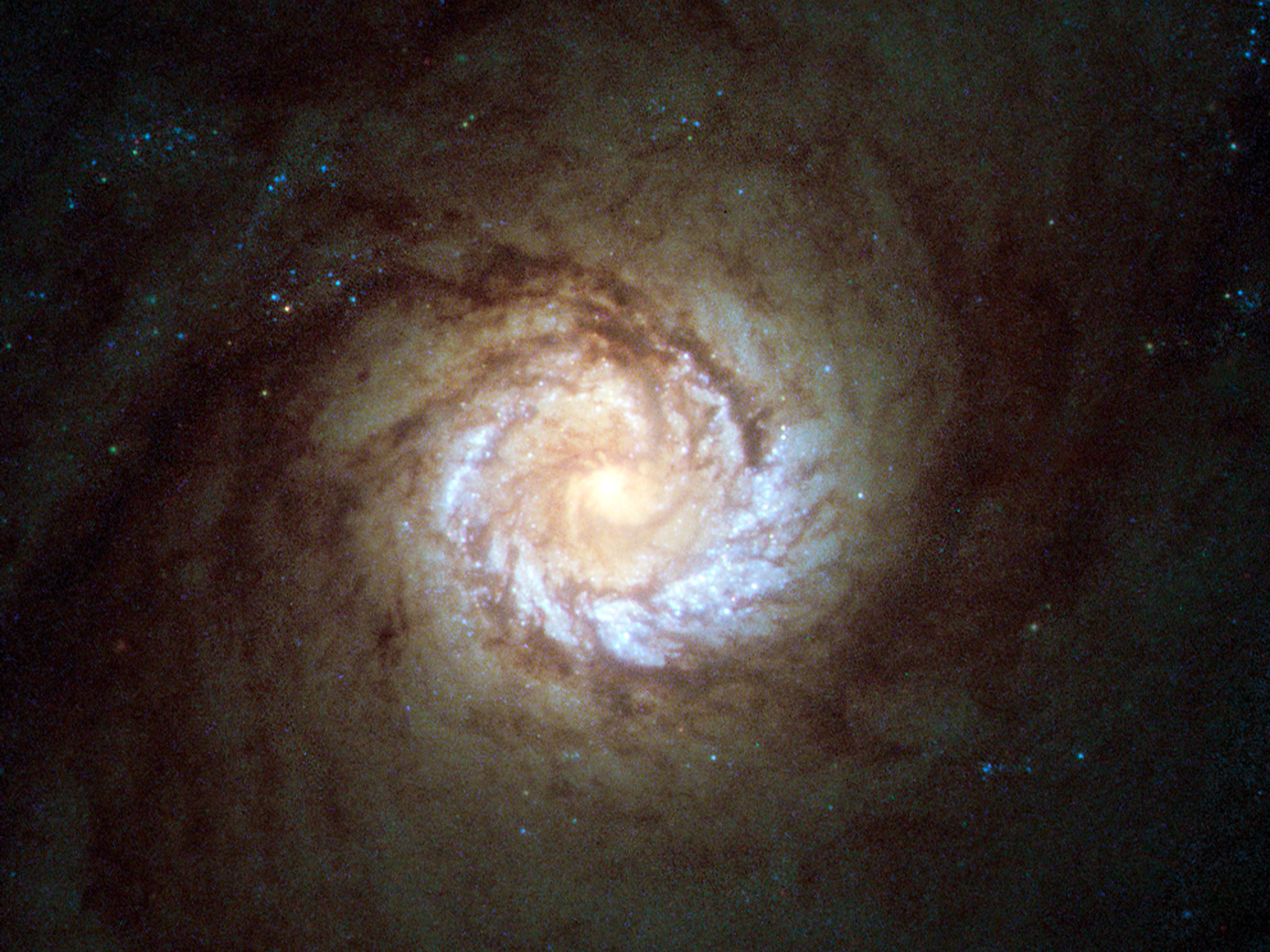
A hungry starburst galaxy

Credit: ESA/Hubble & NASA
Acknowledgement: Det58

 This new Hubble picture is the sharpest ever image of the core of spiral galaxy Messier 61. Taken using the High Resolution Channel of Hubble's Advanced Camera for Surveys, the central part of the galaxy is shown in striking detail.

Also known as NGC 4303, this galaxy is roughly 100 000 light-years across, comparable in size to our galaxy, the Milky Way. Both Messier 61 and our home galaxy belong to a group of galaxies known as the Virgo Supercluster in the constellation of Virgo (The Virgin) — a group of galaxy clusters containing up to 2000 spiral and elliptical galaxies in total.

Messier 61 is a type of galaxy known as a starburst galaxy. Starburst galaxies experience an incredibly high rate of star formation, hungrily using up their reservoir of gas in a very short period of time (in astronomical terms). But this is not the only activity going on within the galaxy; deep at its heart there is thought to be a supermassive black hole that is violently spewing out radiation.

Despite its inclusion in the Messier Catalogue, Messier 61 was actually discovered by Italian astronomer Barnabus Oriani in 1779. Charles Messier also noticed this galaxy on the very same day as Oriani, but mistook it for a passing comet — the comet of 1779.

A version of this image was submitted to the Hubble’s Hidden Treasures image processing competition by Flickr user Det58.


Friday, June 21, 2013

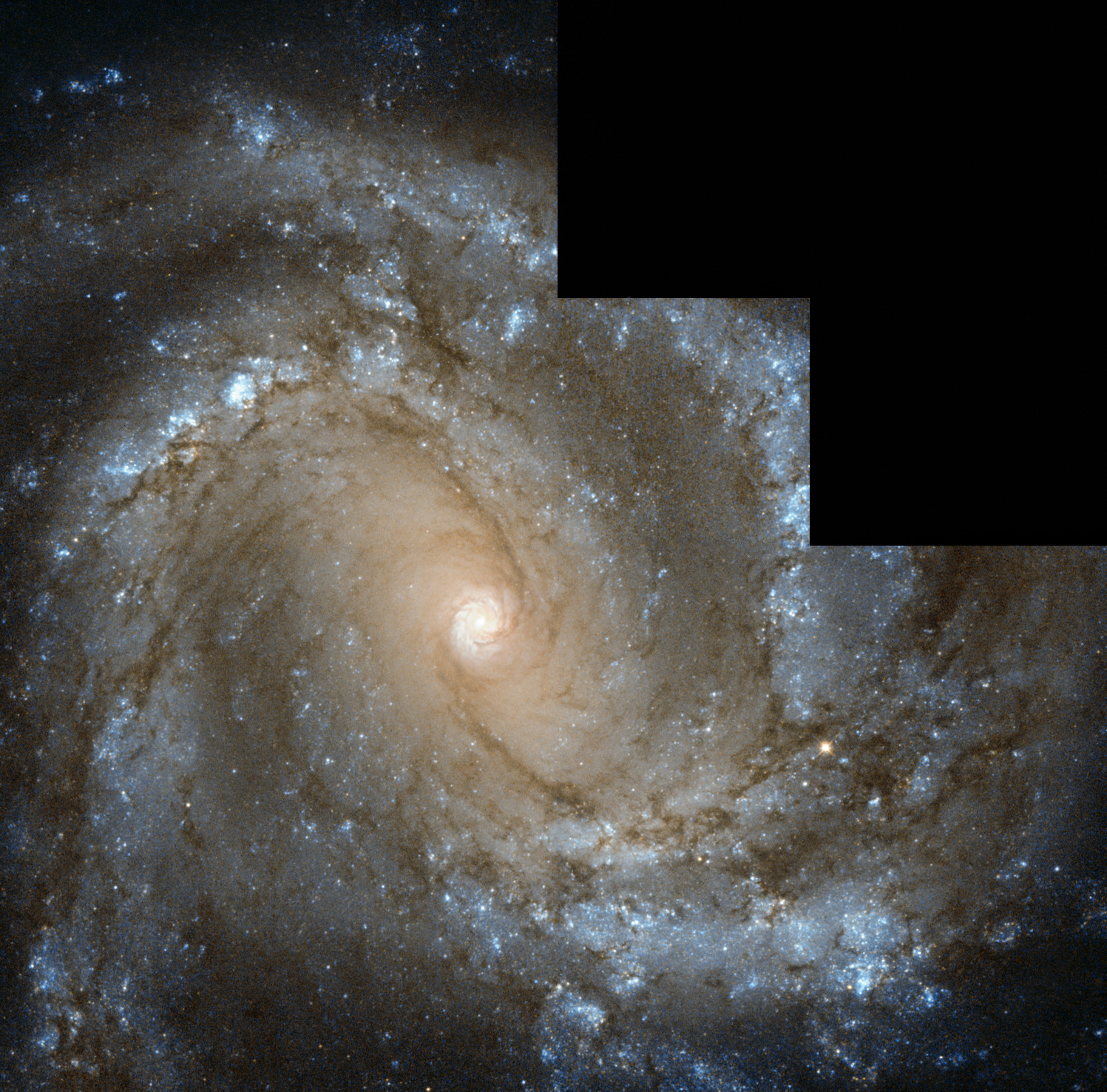
Messier 61 looks straight into the camera

Credit: ESA/Hubble & NASA
Acknowledgements: G. Chapdelaine, L. Limatola, and R. Gendler. 

The NASA/ESA Hubble Space Telescope has captured this image of nearby spiral galaxy Messier 61, also known as NGC 4303. The galaxy, located only 55 million light-years away from Earth, is roughly the size of the Milky Way, with a diameter of around 100 000 light-years. The galaxy is notable for one particular reason — six supernovae have been observed within Messier 61, a total that places it in the top handful of galaxies alongside Messier 83, also with six, and NGC 6946, with a grand total of nine observed supernovae.

In this Hubble image the galaxy is seen face-on as if posing for a photograph, allowing us to study its structure closely. The spiral arms can be seen in stunning detail, swirling inwards to the very centre of the galaxy, where they form a smaller, intensely bright spiral. In the outer regions, these vast arms are sprinkled with bright blue regions where new stars are being formed from hot, dense clouds of gas.

Messier 61 is part of the Virgo Galaxy Cluster, a massive group of galaxies in the constellation of Virgo (the Virgin). Galaxy clusters, or groups of galaxies, are among the biggest structures in the Universe to be held together by gravity alone. The Virgo Cluster contains more than 1300 galaxies and forms the central region of the Local Supercluster, an even bigger gathering of galaxies.

The image was taken using data from Hubble’s Wide Field Camera 2. Different versions of this image were submitted to the Hubble’s Hidden Treasures image processing competition by contestants Gilles Chapdelaine, Luca Limatola, and Robert Gendler.

Links