Wednesday, July 14, 2021

Galactic gamma ray bursts predicted last year show up on schedule


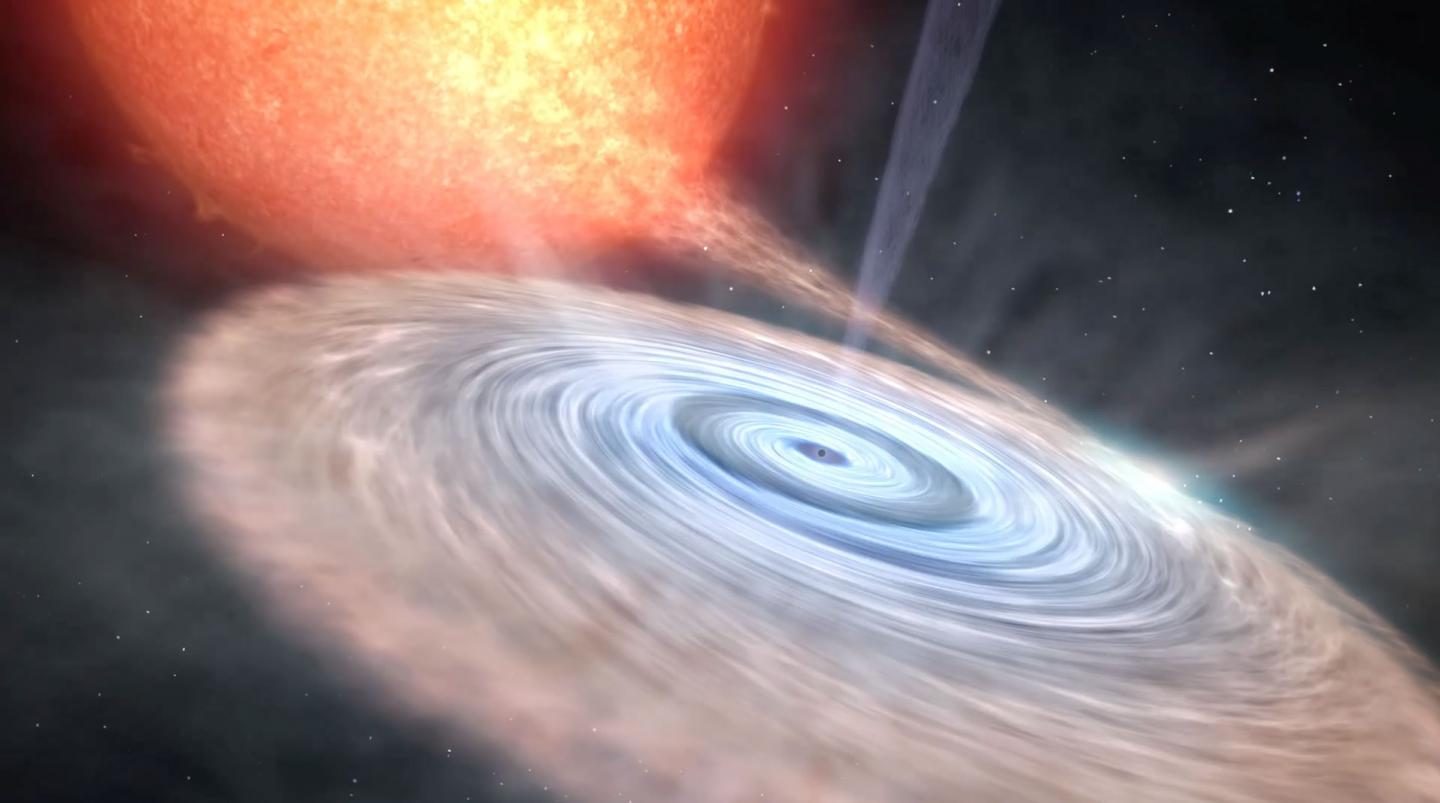
An artist’s depiction of a hiccup in the magnetic field of a magnetar — a highly magnetized neutron star — that produces a powerful gamma ray burst visible from across the galaxy. UC Berkeley physicists have found an unusual pattern to these bursts that could help pin down the precise mechanism triggering the hiccups and generating the soft gamma bursts. (Image courtesy of NASA’s Goddard Space Flight Center/Chris Smith, USRA/GESTAR)

Magnetars are bizarre objects — massive, spinning neutron stars with magnetic fields among the most powerful known, capable of shooting off brief bursts of radio waves so bright they’re visible across the universe.

A team of astrophysicists has now found another peculiarity of magnetars: They can emit bursts of low energy gamma rays in a pattern never before seen in any other astronomical object.

It’s unclear why this should be, but magnetars themselves are poorly understood, with dozens of theories about how they produce radio and gamma ray bursts. The recognition of this unusual pattern of gamma ray activity could help theorists figure out the mechanisms involved.

“Magnetars, which are connected with fast radio bursts and soft gamma repeaters, have something periodic going on, on top of randomness,” said astrophysicist Bruce Grossan, an astrophysicist at the University of California, Berkeley’s Space Sciences Laboratory (SSL). “This is another mystery on top of the mystery of how the bursts are produced.”

The researchers — Grossan and theoretical physicist and cosmologist Eric Linder from SSL and the Berkeley Center for Cosmological Physics and postdoctoral fellow Mikhail Denissenya from Nazarbayev University in Kazakhstan — discovered the pattern last year in bursts from a soft gamma repeater, SGR1935+2154, that is a magnetar, a prolific source of soft or lower energy gamma ray bursts and the only known source of fast radio bursts within our Milky Way galaxy. They found that the object emits bursts randomly, but only within regular four-month windows of time, each active window separated by three months of inactivity.

On March 19, the team uploaded a preprint claiming “periodic windowed behavior” in soft gamma bursts from SGR1935+2154 and predicted that these bursts would start up again after June 1 — following a three month hiatus — and could occur throughout a four-month window ending Oct. 7.

On June 24, three weeks into the window of activity, the first new burst from SGR1935+2154 was observed after the predicted three month gap, and nearly a dozen more bursts have been observed since, including one on July 6, the day the paper was published online in the journal Physical Review D.

“These new bursts within this window means that our prediction is dead on,” said Grossan, who studies high energy astronomical transients. “Probably more important is that no bursts were detected between the windows since we first published our preprint.”

Linder likens the non-detection of bursts in three-month windows to a key clue — the “curious incident” that a guard dog did not bark in the nighttime — that allowed Sherlock Holmes to solve a murder in the short story “The Adventure of Silver Blaze”.

“Missing or occasional data is a nightmare for any scientist,” noted Denissenya, the first author of the paper and a member of the Energetic Cosmos Laboratory at Nazarbayev University that was founded several years ago by Grossan, Linder and UC Berkeley cosmologist and Nobel laureate George Smoot. “In our case, it was crucial to realize that missing bursts or no bursts at all carry information.”

The confirmation of their prediction startled and thrilled the researchers, who think this may be a novel example of a phenomenon — periodic windowed behavior — that could characterize emissions from other astronomical objects.

Mining data from 27-year-old satellite

Within the last year, researchers suggested that the emission of fast radio bursts — which typically last a few thousandths of a second — from distant galaxies might be clustered in a periodic windowed pattern. But the data were intermittent, and the statistical and computational tools to firmly establish such a claim with sparse data were not well developed.


Since 2014, a magnetar in our galaxy (SGR1935+2154) has been emitting bursts of soft gamma rays (black stars). UC Berkeley scientists concluded that they occurred only within certain windows of time (green stripes) but were somehow blocked during intervening windows (red). They used this pattern to predict renewed bursts starting after June 1, 2021 (stripes outlined in blue at right), and since June 24, more than a dozen have been detected (blue stars): right on schedule. (Graphic by Mikhail Denissenya)

Grossan convinced Linder to explore whether advanced techniques and tools could be used to demonstrate that periodically windowed — but random, as well, within an activity window — behavior was present in the soft gamma ray burst data of the SGR1935+2154 magnetar. The Konus instrument aboard the WIND spacecraft, launched in 1994, has recorded soft gamma ray bursts from that object — which also exhibits fast radio bursts — since 2014 and likely never missed a bright one.

Linder, a member of the Supernova Cosmology Project based at Lawrence Berkeley National Laboratory, had used advanced statistical techniques to study the clustering in space of galaxies in the universe, and he and Denissenya adapted these techniques to analyze the clustering of bursts in time. Their analysis, the first to use such techniques for repeated events, showed an unusual windowed periodicity distinct from the very precise repetition produced by bodies rotating or in orbit, which most astronomers think of when they think of periodic behavior.

“So far, we have observed bursts over 10 windowed periods since 2014, and the probability is 3 in 10,000 that while we think it is periodic windowed, it is actually random,” he said, meaning there’s a 99.97% chance they’re right. He noted that a Monte Carlo simulation indicated that the chance they’re seeing a pattern that isn’t really there is likely well under 1 in a billion. The recent observation of five bursts within their predicted window, seen by WIND and other spacecraft monitoring gamma ray bursts, adds to their confidence. However, a single future burst observed outside the window would disprove the whole theory, or cause them to redo their analysis completely.

“The most intriguing and fun part for me was to make predictions that could be tested in the sky. We then ran simulations against real and random patterns and found it really did tell us about the bursts,” Denissenya said.

As for what causes this pattern, Grossan and Linder can only guess. Soft gamma ray bursts from magnetars are thought to involve starquakes, perhaps triggered by interactions between the neutron star’s crust and its intense magnetic field. Magnetars rotate once every few seconds, and if the rotation is accompanied by a precession — a wobble in the rotation — that might make the source of burst emission point to Earth only within a certain window. Another possibility, Grossan said, is that a dense, rotating cloud of obscuring material surrounds the magnetar but has a hole that only periodically allows bursts to come out and reach Earth.

“At this stage of our knowledge of these sources, we can’t really say which it is,” Grossan said. “This is a rich phenomenon that will likely be studied for some time.”

Linder agrees and points out that the advances were made by the cross-pollination of techniques from high energy astrophysics observations and theoretical cosmology.

“UC Berkeley is a great place where diverse scientists can come together,” he said. “They will continue to watch and learn and even ‘listen’ with their instruments for more dogs in the night.”

Robert Sanders, Media relation

Source: University of California - Berkeley/News


Tuesday, July 13, 2021

Science with a Single Merger Event


Artist’s impression of a binary neutron star merger
Credits: National Science Foundation/LIGO/Sonoma State University/A. Simonnet


Images of the galaxy NGC 4993 showing the electromagnetic counterpart to the gravitational wave-event GW170817. The image was taken by the Dark Energy Camera (DECam) on Blanco 4-meter telescope at the Cerro Tololo Inter-American Observatory. Credit: Adapted from M. Soares-Santos et al. 2017


Gravitational-wave events have allowed us to measure distances in space in a way that’s independent of previous techniques. By extension, we can also make independent measurements of the universe’s rate of expansion, expressed as the Hubble constant. Current measurements of the Hubble constant from gravitational-wave events still rely on electromagnetic information, but with new observatories on the horizon, it may be possible to make measurements of the Hubble constant with just a single gravitational-wave event.

Ways to Use Gravitational-Wave Events

The gravitational-wave event GW170817 was the first observation of a binary neutron star merger. With concurrent electromagnetic observations, we were able to use information from GW170817 to make an independent measurement of the Hubble constant. This measurement coupled the distance to the event host galaxy (as determined from the gravitational-wave event) with the redshift of the host galaxy, which is derived from electromagnetic information.

While the uncertainty on this measurement of the Hubble constant is relatively large, higher precision measurements will be possible in the near future with more advanced observatories. However, our interpretation of the gravitational-wave signal in this case is very dependent on the inclination of the merging system and the distance to the merger host galaxy as measured by electromagnetic observations — and we’re currently unable to separate the influence of these two quantities.

But what if we could disentangle these influences with a single gravitational-wave event? A recent study led by Juan Calderón Bustillo (Universidade de Santiago de Compostela, Spain) explores how we could use future observations of neutron star mergers like GW170817 to make higher precision measurements of the Hubble constant.


The spectrum of gravitational-wave signals from face-on and edge-on merging systems, with certain signal components highlighted. The black line shows the sensitivity of the planned Neutron star Extreme Matter Observatory (NEMO). Credits: Adapted from Bustillo et al. 2021


Picking Up Subtle Signals

Like most signals, a gravitational-wave signal can be broken down into multiple simpler signals. In the case of a neutron star merger, the components of a gravitational-wave signal are dependent on properties of the merging system, such as stellar mass and the orientation of the system relative to the observer.

With current observatories, we don’t have the ability to pick up the subtler component signals in a gravitational wave, including those that appear after the merger. But if we did — and we eventually will — Bustillo and collaborators show that we could use those subtle signals to disentangle the influences of system inclination and host galaxy distance. Then, we would also be able to make more precise measurements of the Hubble constant. Most notably, being able to pick up these subtler signals would allow us to make measurements of the Hubble constant with just a single merger event!

Future Prospects

The ability to make measurements of the Hubble constant based on single events enables us to test an interesting hypothesis: what if the universe’s rate of expansion is sensitive to direction? While those particular measurements are still a few decades in the future, Bustillo and collaborators show that their method will eventually be limited by our electromagnetic observing capabilities, rather than our ability to observe gravitational-wave signals!

Citation

“Mapping the Universe Expansion: Enabling Percent-level Measurements of the Hubble Constant with a Single Binary Neutron-star Merger Detection,” Juan Calderón Bustillo et al 2021 ApJL 912 L10. doi:10.3847/2041-8213/abf502


Monday, July 12, 2021

NASA’s TESS Discovers Stellar Siblings Host ‘Teenage’ Exoplanets


Stellar siblings over 130 light-years away host two systems of teenage planets. Watch to learn how NASA’s Transiting Exoplanet Survey Satellite discovered these young worlds and what they might tell us about the evolution of planetary systems everywhere, including our own.Credits: NASA’s Goddard Space Flight Center/Chris Smith (KBRwyle). Download high-resolution video and images from NASA’s Scientific Visualization Studio

Thanks to data from NASA’s Transiting Exoplanet Survey Satellite (TESS), an international collaboration of astronomers has identified four exoplanets, worlds beyond our solar system, orbiting a pair of related young stars called TOI 2076 and TOI 1807.

These worlds may provide scientists with a glimpse of a little-understood stage of planetary evolution.

“The planets in both systems are in a transitional, or teenage, phase of their life cycle,” said Christina Hedges, an astronomer at the Bay Area Environmental Research Institute in Moffett Field and NASA’s Ames Research Center in Silicon Valley, both in California. “They’re not newborns, but they’re also not settled down. Learning more about planets in this teen stage will ultimately help us understand older planets in other systems.”

A paper describing the findings, led by Hedges, was published in The Astronomical Journal.

TOI 2076 and TOI 1807 reside over 130 light-years away with some 30 light-years between them, which places the stars in the northern constellations of Boötes and Canes Venatici, respectively. Both are K-type stars, dwarf stars more orange than our Sun, and around 200 million years old, or less than 5% of the Sun’s age. In 2017, using data from ESA’s (the European Space Agency’s) Gaia satellite, scientists showed that the stars are traveling through space in the same direction.

Astronomers think the stars are too far apart to be orbiting each other, but their shared motion suggests they are related, born from the same cloud of gas.

Both TOI 2076 and TOI 1807 experience stellar flares that are much more energetic and occur much more frequently than those produced by our own Sun.

“The stars produce perhaps 10 times more UV light than they will when they reach the Sun’s age,” said co-author George Zhou, an astrophysicist at the University of Southern Queensland in Australia. “Since the Sun may have been equally as active at one time, these two systems could provide us with a window into the early conditions of the solar system.”

TESS monitors large swaths of the sky for nearly a month at a time. This long gaze allows the satellite to find exoplanets by measuring small dips in stellar brightness caused when a planet crosses in front of, or transits, its star.

Alex Hughes initially brought TOI 2076 to astronomers’ attention after spotting a transit in the TESS data while working on an undergraduate project at Loughborough University in England, and he has since graduated with a bachelor’s degree in physics. Hedges’ team eventually discovered three mini-Neptunes, worlds between the diameters of Earth and Neptune, orbiting the star. Innermost planet TOI 2076 b is about three times Earth’s size and circles its star every 10 days. Outer worlds TOI 2076 c and d are both a little over four times larger than Earth, with orbits exceeding 17 days.

TOI 1807 hosts only one known planet, TOI 1807 b, which is about twice Earth’s size and orbits the star in just 13 hours. Exoplanets with such short orbits are rare. TOI 1807 b is the youngest example yet discovered of one of these so-called ultra-short period planets.

Scientists are currently working to measure the planets’ masses, but interference from the hyperactive young stars could make this challenging.

According to theoretical models, planets initially have thick atmospheres left over from their formation in disks of gas and dust around infant stars. In some cases, planets lose their initial atmospheres due to stellar radiation, leaving behind rocky cores. Some of those worlds go on to develop secondary atmospheres through planetary processes like volcanic activity.

The ages of the TOI 2076 and TOI 1807 systems suggest that their planets may be somewhere in the middle of this atmospheric evolution. TOI 2076 b receives 400 times more UV light from its star than Earth does from the Sun – and TOI 1807 b gets around 22,000 times more.

If scientists can discover the planets’ masses, the information could help them determine if missions like NASA’s Hubble and upcoming James Webb space telescopes can study the planets’ atmospheres – if they have them.

The team is particularly interested in TOI 1807 b because it’s an ultra-short period planet. Theoretical models suggest it should be difficult for worlds to form so close to their stars, but they can form farther out and then migrate inward. Because it would have had to both form and migrate in just 200 million years, TOI 1807 b will help scientists further understand the life cycles of these types of planets. If it doesn’t have a very thick atmosphere and its mass is mostly rock, the planet’s proximity to its star could potentially mean its surface is covered in oceans or lakes of molten lava.

“Many objects we study in astronomy evolve on such long timescales that a human being can’t see changes month to month or year to year,” said co-author Trevor David, a research fellow at the Flatiron Institute’s Center for Computational Astrophysics in New York. “If you want to see how planets evolve, your best bet is to find many planets of different ages and then ask how they’re different. The TESS discovery of the TOI 2076 and TOI 1807 systems advances our understanding of the teenage exoplanet stage.”

TESS is a NASA Astrophysics Explorer mission led and operated by MIT in Cambridge, Massachusetts, and managed by NASA's Goddard Space Flight Center. Additional partners include Northrop Grumman, based in Falls Church, Virginia; NASA’s Ames Research Center in California’s Silicon Valley; the Center for Astrophysics | Harvard & Smithsonian in Cambridge, Massachusetts; MIT’s Lincoln Laboratory; and the Space Telescope Science Institute in Baltimore. More than a dozen universities, research institutes, and observatories worldwide are participants in the mission. 


Editor: Jeanette Kazmierczak
 
Source: NASA/TESS


Friday, July 09, 2021

Connecting the Pieces of a Black Hole Temper Tantrum


Artist’s illustration of a black hole X-ray binary, in which a black hole accretes matter from a companion star.
Credit: Gabriel Pérez, SMM (IAC)


This illustration shows some of the possible transient behavior of the gas flowing onto and away from a black hole in an X-ray binary.  Credit: NASA/JPL-Caltech


An Unsteady Existence

Black hole X-ray binaries (BHXBs) consist of a stellar-mass black hole that siphons material from an ordinary companion star. As this material flows between the objects, it forms an accretion disk around the black hole. BHXBs shine in X-rays from the hot material of this disk, and from a mysterious corona — ultra-hot gas that exists in some unknown form above the disk.

BHXBs may accrete quietly and steadily much of the time, but on occasion, they undergo sudden outbursts, substantially brightening in X-rays. Unlike supermassive black holes, which evolve on extremely long timescales, stellar-mass black holes can change over just days or weeks — short enough for us to watch!

In a new study led by Jingyi Wang (MIT Kavli Institute), a team of scientists presents observations by NICER — an X-ray telescope installed on the International Space Station — of a BHXB throwing such a temper tantrum.

Reflections of a Transition

During an outburst, a BHXB undergoes state transitions, displaying changes in the X-ray luminosities and energies as either the corona or the disk takes over to dominate the emission. In addition to the X-ray changes, persistent radio emission from a slow and steady jet can be suddenly replaced by a short-lived radio flare that then subsides.

Despite many observations, we lack the details of what’s happening on small scales, close around the black hole. What form does the corona take? Does its size or extent change over time? What drives the state transitions? And how are the different components of this system — disk, corona, and jet — related, if at all?

Wang and collaborators used NICER data of the BHXB system MAXI J1820+070 during a 2018 outburst to track the lag caused by light travel time between X-rays that arrived directly from the corona and light from the corona that was reflected by the disk before reaching us. By modeling the changes in this reverberation lag as the system underwent state transitions, the team could infer the geometry on the small scales we can’t observe, helping us to understand the tantrum.


The top plot (a) shows the inferred corona height (black line) over the span of the outburst. The radio emission, including the flare, can be seen in red. The bottom two diagrams show the authors’ picture of the geometry of the black hole, disk, and corona at two points during the state changes: during the rise from quiescence (b), and at the end of the outburst when the jet base is ejected (c).. Credit: Adapted from Wang et al. 2021

A Connected Picture

Wang and collaborators show that the best explanation of NICER’s observations is that the height of the X-ray corona changes during the BHXB’s state transitions. They argue that the corona first contracts, and then rapidly expands during the outburst, preceding a radio flare by ~5 days.

Under the authors’ interpretation, these signs point to a neat picture of BHXB outbursts: a quietly accreting black hole has a disk and a steady jet, and the corona makes up the base of that jet. When the BHXB goes into outburst, it ejects that jet base as a bright knot in its final moments of outburst, before fading back to quiescence.

While this model isn’t yet definitive, this latest evidence points to a clear connection between the disk, jet, and corona of a BHXB. We’re sure to gain more insight ahead!

Citation

“Disk, Corona, Jet Connection in the Intermediate State of MAXI J1820+070 Revealed by NICER Spectral-timing Analysis,” Jingyi Wang et al 2021 ApJL 910 L3. doi:
10.3847/2041-8213/abec79


By Susanna Kohler


Thursday, July 08, 2021

New type of massive explosion explains mystery star


The star SMSS J200322.54-114203.3. (centre, with crosshairs) in the south-eastern corner of the constellation Aquila (the Eagle) close to the border with Capricornus and Sagittarius. Credit: Da Costa/SkyMapper

‘Magneto-rotational hypernova’ soon after the Big Bang fuelled high levels of uranium, zinc in ancient stellar oddity

A massive explosion from a previously unknown source – 10 times more energetic than a supernova – could be the answer to a 13-billion-year-old Milky Way mystery.

Astronomers led by David Yong, Gary Da Costa and Chiaki Kobayashi from Australia’s ARC Centre of Excellence in All Sky Astrophysics in 3 Dimensions (ASTRO 3D) based at the Australian National University (ANU) have potentially discovered the first evidence of the destruction of a collapsed rapidly spinning star – a phenomenon they describe as a “magneto-rotational hypernova”.

The previously unknown type of cataclysm – which occurred barely a billion years after the Big Bang – is the most likely explanation for the presence of unusually high amounts of some elements detected in another extremely ancient and “primitive” Milky Way star.

That star, known as SMSS J200322.54-114203.3, contains larger amounts of metal elements, including zinc, uranium, europium and possibly gold, than others of the same age.

Neutron star mergers – the accepted sources of the material needed to forge them – are not enough to explain their presence.

The astronomers calculate that only the violent collapse of a very early star – amplified by rapid rotation and the presence of a strong magnetic field – can account for the additional neutrons required.

The research is published today in the journal Nature.

“The star we’re looking at has an iron-to-hydrogen ratio about 3000 times lower than the Sun – which means it is a very rare: what we call an extremely metal-poor star,” said Dr Yong, who is based at the ANU.

“However, the fact that it contains much larger than expected amounts of some heavier elements means that it is even rarer – a real needle in a haystack.”

The first stars in the universe were made almost entirely of hydrogen and helium. At length, they collapsed and exploded, turning into neutron stars or black holes, producing heavier elements which became incorporated in tiny amounts into the next generation of stars – the oldest still in existence.

Rates and energies of these star deaths have become well known in recent years, so the amount of heavy elements they produce is well calculated. And, for SMSS J200322.54-114203.3, the sums just don’t add up.

“The extra amounts of these elements had to come from somewhere,” said Associate Professor Chiaki Kobayashi from the University of Hertfordshire, UK.

“We now find the observational evidence for the first time directly indicating that there was a different kind of hypernova producing all stable elements in the periodic table at once — a core-collapse explosion of a fast-spinning strongly-magnetized massive star. It is the only thing that explains the results.”

Hypernovae have been known since the late 1990s. However, this is the first time one combining both rapid rotation and strong magnetism has been detected. “It’s an explosive death for the star,” said Dr Yong. “We calculate that 13 billion-years ago J200322.54-114203.3 formed out of a chemical soup that contained the remains of this type of hypernova. No one’s ever found this phenomenon before.”

J200322.54-114203.3 lies 7500 light-years from the Sun, and orbits in the halo of the Milky Way.

Another co-author, Nobel Laureate and ANU Vice-Chancellor Professor Brian Schmidt, added, “The high zinc abundance is definite marker of a hypernova, a very energetic supernova.”

Head of the First Stars team in ASTRO 3D, Professor Gary Da Costa from ANU, explained that the star was first identified by a project called the SkyMapper survey of the southern sky.

“The star was first identified as extremely metal-poor using SkyMapper and the ANU 2.3m telescope at Siding Spring Observatory in western NSW,” he said. “Detailed observations were then obtained with the European Southern Observatory 8m Very Large Telescope in Chile.”

ASTRO 3D director, Professor Lisa Kewley, commented: “This is an extremely important discovery that reveals a new pathway for the formation of heavy elements in the infant universe.”

Other members of the research team are based at the Massachusetts Institute of Technology in the US, Stockholm University in Sweden, the Max Planck Institute for Astrophysics in Germany, Italy’s Istituto Nazionale di Astrofisica, and Australia’s University of New South Wales.


Contacts

Andrew Masterson
andrew@scienceinpublic.com.au
+61 488 777 179 (UTC +10)


Paper details

Title: Magnetorotational hypernovae are another astronomical r-process site
DOI: 10.1038/s41586-021-03611-2URL
: www.nature.com/articles/s41586-021-03611-2

Authors:

D. Yong1,2*, C. Kobayashi3,2, G. S. Da Costa1,2, M. S. Bessell1, A. Chiti4, A. Frebel4, K. Lind5, A. D. Mackey1,2, T. Nordlander1,2, M. Asplund6, A. R. Casey7,2, A. F. Marino8, S. J. Murphy9,1 & B. P. Schmidt1

Affiliations:

1Research School of Astronomy & Astrophysics, Australian National University, Canberra, ACT 2611, Australia
2ARC Centre of Excellence for All Sky Astrophysics in 3 Dimensions (ASTRO 3D), Australia
3Centre for Astrophysics Research, Department of Physics, Astronomy and Mathematics, University of Hertfordshire, Hatfield, AL10 9AB, UK
4Department of Physics and Kavli Institute for Astrophysics and Space Research, Massachusetts Institute of Technology, Cambridge, MA 02139, USA
5Department of Astronomy, Stockholm University, AlbaNova University Center, 106 91 Stockholm, Sweden
6Max Planck Institute for Astrophysics, Karl-Schwarzschild-Str. 1, D-85741 Garching, Germany
7School of Physics and Astronomy, Monash University, VIC 3800, Australia
8Istituto Nazionale di Astrofisica – Osservatorio Astronomico di Arcetri, Largo Enrico Fermi, 5, 50125, Firenze, Italy
9School of Science, The University of New South Wales, Canberra, ACT 2600, Australia


More about ASTRO 3D: ASTRO 3D is a seven-year $40 million Centre of Excellence project funded by the Australian Government through the Australian Research Council. The Centre began in June 2017 and will end in June 2024. It hosts around 200 investigators and professional staff, mostly based at six nodes: the Australian National University, Curtin University, Swinburne University of Technology, University of Melbourne, University of Sydney, and University of Western Australia. https://astro3d.org.au/

More about SkyMapper: SkyMapper’s Southern Sky Survey is led by the Research School of Astronomy and Astrophysics at the Australian National University, in collaboration with seven Australian universities and the Australian Astronomical Observatory. The goal of the project is to create a deep, multi-epoch, multi-colour digital survey of the entire southern sky. This will facilitate a broad range of exciting science, including discovering the oldest stars in the Galaxy, finding new dwarf galaxies in orbit around the Milky Way, and measuring the effects of Dark Energy on the Universe through nearby supernovae. http://skymapper.anu.edu.au/


Wednesday, July 07, 2021

Let the show begin: APEX’s CONCERTO instrument sees first light

CONCERTO show starts with new view of the Cat’s Paw Nebula 
 
CONCERTO show starts with new view of the Crab Nebula
 
The Cat’s Paw Nebula as seen by CONCERTO 
 
The Crab Nebula as seen by CONCERTO 


CONCERTO being lifted for installation on APEX
 
CONCERTO lifted into place 
 
Engineers getting CONCERTO ready for installation
 
The CONCERTO instrument on APEX 1 
 
The CONCERTO instrument on APEX 2


An exciting new instrument, a spectrometer called CONCERTO, has successfully produced its first observations: test images of the Cat's Paw Nebula and the Crab Nebula. The instrument, installed on the ESO-operated Atacama Pathfinder Experiment (APEX), will help astronomers probe the mysterious, ancient cosmic epoch during which the first stars lit up.

The main goal of CONCERTO, which stands for CarbON CII line in post-rEionisation and ReionisaTiOn epoch, is to study the birth of the first generation of stars. To do so, it will look at cosmic objects that formed between 600 million and 1.2 billion years after the Big Bang. This era, known as cosmic reionisation, is poorly understood yet crucial in the history of the cosmos, as it marks the transition between the “dark ages” — a very obscure period in the life of the Universe in which stars had not formed yet — and the time when the most distant galaxies we see in the Universe today formed. CONCERTO will also map distant galaxy clusters and star-forming regions in our Milky Way.

As an instrument that is able to scan the sky at frequencies between infrared and radio waves, CONCERTO will look at radiation emitted by ionised carbon atoms, one of the most valuable tracers of star formation in the early cosmic ages. “The objective of shedding light on the reionisation period is very hard, as the signal we are searching for is very small,” says CONCERTO’s Principal Investigator Guilaine Lagache from the Laboratoire d’Astrophysique de Marseille, in France. “We will tackle this by using a totally innovative and experimental observing technique, called intensity mapping. CONCERTO will be the first instrument in the world to perform intensity mapping of the primordial carbon radiation on a large field of the sky.”

“CONCERTO is completely unique at APEX,” says ESO Astronomer and APEX Project Scientist Carlos De Breuck. “The other instruments either concentrate on imaging or spectroscopy, but not on both like CONCERTO is doing. And in terms of imaging, with a diameter of about 20 arcminutes on sky, it is by a margin the largest field-of-view ever used at APEX.” The new instrument has replaced the LArge APEX BOlometer CAmera (LABOCA), enabling a four-time improvement in terms of field of view.

CONCERTO’s first light marks the end of its installation process, which started with the delivery of the instrument to the APEX site in the Chanjantor plateau in the Chilean Atacama Desert in late March 2021.

The COVID-19 pandemic posed a considerable challenge to the CONCERTO team, who managed to prepare the instrument for fully remote operations, ship it to Chile, and install it at APEX under strict health and safety conditions. “A large part of this success comes from the team spirit and the fact that we all work with passion and determination,” says CONCERTO’s instrument scientist Alessandro Monfardini from Institut Néel in Grenoble, France. The team is also grateful to the local APEX staff for their dedication and help installing and testing the instrument.


More Information


CONCERTO received funding from the European Research Council under grant agreement No 788212, from the Aix-Marseille Initiative of Excellence (France) and LabEx FOCUS (France). The institutes involved in the CONCERTO consortium are the Laboratoire d’Astrophysique de Marseille (LAM; France), the Institut Néel (France), the Laboratoire de Physique Subatomique et de Cosmologie (LPSC; France), the Institut de Planétologie et d'Astrophysique (IPAG; France) and the Astronomy Instrumentation Group at the University of Cardiff (United Kingdom). The Institut Néel, LPSC and IPAG are laboratories of the Centre National de la Recherche Scientifique (CNRS) and the Université Grenoble Alpes (UGA). LAM is a laboratory of the CNRS and the Aix-Marseille University.

APEX is a collaboration between the Max Planck Institute for Radio Astronomy (MPIfR), the Onsala Space Observatory (OSO) and ESO. Operation of APEX at Chajnantor is entrusted to ESO.


Links


Contacts:

Guilaine Lagache
CONCERTO’s Principal Investigator
Laboratoire d'Astrophysique de Marseille
Marseille, France
Tel: +33 6 50 77 35 45
Email:
guilaine.lagache@lam.fr

Alessandro Monfardini
CONCERTO’s Instrument Scientist
Institut Néel
Grenoble, France
Tel: +33 4 76 88 10 52
Email:
alessandro.monfardini@neel.cnrs.fr

Carlos De Breuck
ESO APEX Project Scientist
Garching bei München, Germany 
Tel: +49 89 3200 6613 -  Email:
cdebreuc@eso.org

Bárbara Ferreira
ESO Media Manager
Garching bei München, Germany
Tel: +49 89 3200 6670
Email:
press@eso.org

Source: ESO/Announcements


Tuesday, July 06, 2021

One of the Greats


Credit: ESA/Hubble & NASA, W. Harris
Acknowledgement: L. Shatz

Two things capture your attention in this spectacular Picture of the Week, which was taken using Hubble’s Wide Field Camera 3 (WFC3): the two enormous galaxies that flank the left and right sides of the image. The galaxy on the left is a lenticular galaxy, which rejoices in the name of 2MASX J03193743+4137580. The side-on spiral galaxy on the right is more simply named UGC 2665. Both galaxies lie approximately 350 million light-years from Earth, and they both form part of the enormous Perseus galaxy cluster.

Perseus is an important figure in Greek mythology, renowned for slaying Medusa the Gorgon — who is herself famous for the unhappy reason that she was cursed to have living snakes for hair. Given Perseus’s impressive credentials, it seems appropriate that the eponymous galaxy cluster is one of the biggest objects in the known Universe, consisting of thousands of galaxies, only a few of which are visible in this image. The wonderful detail in the image is thanks to the WFC3’s powerful resolution and high sensitivity. The WFC3 is sensitive to both visible and infrared light, so those are the wavelengths that are captured in this image. The Perseus supercluster looks very different at other wavelengths. Whilst in this image the spaces between the galaxies appear dark and peaceful, when the X-ray emission is observed the Perseus cluster appears to be burning with bright intense light.


Monday, July 05, 2021

Northern Clump: Galaxy Cluster Travels Down an Intergalactic Highway

NGC 330
Credit X-ray: (Chandra: NASA/CXC/Univ. Bonn/A. Veronica et al; XMM-Newton: ESA/XMM-Newton); 
Optical: DES/DOE/FNAL/DECam/CTIO/NOIRLab/NSF/AURA; Radio: CSIRO/ASKAP/EMU


Researchers have found a galaxy cluster acting like a passenger on what astronomers are calling an "intergalactic highway." The cluster is known as the "Northern Clump" and it is located about 690 million light years from Earth. Previously, scientists discovered an enormous filament, a thin strip of very hot gas that stretched for at least 50 million light years. A new study found evidence that the Northern Clump is traveling along this filament, similar to how a car moves along the interstate.

A composite with ESA's XMM-Newton (blue), Chandra data (purple), optical and infrared data (orange, green, blue), plus radio data from the Evolutionary Map of the Universe survey made by the Australian Square Kilometer Array Pathfinder telescope (red) is shown with an inset with the Chandra data.

Also included is a side-by-side graphic. On the left side of this panel is an optical and infrared image from the Dark Energy Camera in Chile. The right side contains an X-ray image from ESA's XMM-Newton (blue), with high-precision X-ray data from NASA's Chandra X-ray Observatory are in the inset (purple).


Credit: X-ray: (Chandra: NASA/CXC/Univ. Bonn/A. Veronica et al; XMM-Newton: ESA/XMM-Newton); Optical: DES/DOE/FNAL/DECam/CTIO/NOIRLab/NSF/AURA; Radio: CSIRO/ASKAP/EMU

Each telescope gives important information about this system. For example, the optical data provides a view of the galaxies in the cluster, while the XMM-Newton data reveal hot gas in the cluster with temperatures of millions of degrees. The Chandra data show hot gas around a supermassive black hole in the middle of a galaxy in the cluster's center.

Previous observations from the extended ROentgen Survey with an Imaging Telescope Array (eROSITA) have shown that the Northern Clump and a pair of galaxy clusters to the south all lie along an enormous filament of gas. The Northern Clump is moving towards the other clusters and all three will eventually merge with each other. The other two clusters, Abell 3391 and Abell 3395, are not shown in this image.

In the radio data, astronomers found a pair of jets of particles being ejected from regions close to the black hole that point backwards like the braids of a runner. The X-ray shows evidence of a bow shock, like the sonic boom from a supersonic plane, towards the south and a tail of hot gas towards the north that is likely being dragged off the cluster as it moves. The bend in the radio jet and both of these X-ray features are consistent with the cluster traveling south along the filament towards the other two clusters. These results agree with simulations showing that galaxy clusters grow by traveling towards each other along enormous filaments of gas, before colliding and merging.

These results, led by Angie Veronica of the University of Bonn in Germany, were presented at the recent European Astronomical Society meeting. A paper describing this study has been submitted to Astronomy & Astrophysics journal and is available online. NASA's Marshall Space Flight Center manages the Chandra program. The Smithsonian Astrophysical Observatory's Chandra X-ray Center controls science from Cambridge Massachusetts and flight operations from Burlington, Massachusetts.


Fast Facts for Northern Clump:

Scale: Image is about 8.75 arcmin (1.7 million light years) across.
Category:
Groups & Clusters of Galaxies, Black Holes
Coordinates (J2000): RA 06h 21m 43.30s | Dec -52° 41´ 33.3
Constellation:
Carina
Observation Date: 4 observations between Oct 3, 2010 and May 21, 2020
Observation Time: 30 hours 15 minutes (1 day 6 hours and 15 minutes)
Obs. ID: 11499, 22723-22725
Instrument: ACIS
References: Veronica, A., et al, 2021, A&A (submitted); arXiv:2012.08491
Color Code: X-ray: Chandra, purple; XMM-Newton, blue; Radio: red, Optical: orange, green, blue
Distance Estimate: About 690 million light years (z=0.0511) 


Sunday, July 04, 2021

Hubble Sees a Cluster of Red, White, and Blue

NGC 330
Image credit: ESA/Hubble & NASA, J. Kalirai, A. Milone
Text credit: European Space Agency (ESA). Hi-res image

This image taken with the NASA/ESA Hubble Space Telescope depicts the open star cluster NGC 330, which lies around 180,000 light-years away inside the Small Magellanic Cloud. The cluster – which is in the constellation Tucana (the Toucan) – contains a multitude of stars, many of which are scattered across this striking image.

Because star clusters form from a single primordial cloud of gas and dust, all the stars they contain are roughly the same age. This makes them useful natural laboratories for astronomers to learn how stars form and evolve. This image uses observations from Hubble’s Wide Field Camera 3 and incorporates data from two very different astronomical investigations. The first aimed to understand why stars in star clusters appear to evolve differently from stars elsewhere, a peculiarity first observed with Hubble. The second aimed to determine how large stars can be before they become doomed to end their lives in cataclysmic supernova explosions.

Hubble images show us something new about the universe. This image, however, also contains clues about the inner workings of Hubble itself. The crisscross patterns surrounding the stars in this image, known as diffraction spikes, were created when starlight interacted with the four thin vanes supporting Hubble’s secondary mirror.

Media Contact:

Claire Andreoli
NASA's Goddard Space Flight Center
301-286-1940

Editor: Lynn Jenner


Saturday, July 03, 2021

A White Dwarf Living on the Edge


The white dwarf ZTF J1901+1458 is about 2,670 miles across, while the moon is 2,174 miles across. The white dwarf is depicted above the Moon in this artistic representation; in reality, the white dwarf lies 130 light-years away in the constellation of Aquila. Credit: Giuseppe Parisi


Astronomers Have Identified A White Dwarf So Massive That It Might Collapse

Maunakea and Haleakala, Hawaiʻi – Astronomers have discovered the smallest and most massive white dwarf ever seen. The smoldering cinder, which formed when two less massive white dwarfs merged, is heavy, “packing a mass greater than that of our Sun into a body about the size of our Moon,” says Ilaria Caiazzo, the Sherman Fairchild Postdoctoral Scholar Research Associate in Theoretical Astrophysics at Caltech and lead author of the new study appearing in the July 1 issue of the journal Nature. “It may seem counterintuitive, but smaller white dwarfs happen to be more massive. This is due to the fact that white dwarfs lack the nuclear burning that keep up normal stars against their own self gravity, and their size is instead regulated by quantum mechanics.”

The discovery was made by the Zwicky Transient Facility, or ZTF, which operates at Caltech’s Palomar Observatory; two Hawaiʻi telescopes – W. M. Keck Observatory on Maunakea, Hawaiʻi Island and University of Hawaiʻi Institute for Astronomy’s Pan-STARRS (Panoramic Survey Telescope and Rapid Response System) on Haleakala, Maui – helped characterize the dead star, along with the 200-inch Hale Telescope at Palomar, the European Gaia space observatory, and NASA’s Neil Gehrels Swift Observatory.

White dwarfs are the collapsed remnants of stars that were once about eight times the mass of our Sun or lighter. Our Sun, for example, after it first puffs up into a red giant in about 5 billion years, will ultimately slough off its outer layers and shrink down into a compact white dwarf. About 97 percent of all stars become white dwarfs.

While our Sun is alone in space without a stellar partner, many stars orbit around each other in pairs. The stars grow old together, and if they are both less than eight solar-masses, they will both evolve into white dwarfs.

The new discovery provides an example of what can happen after this phase. The pair of white dwarfs, which spiral around each other, lose energy in the form of gravitational waves and ultimately merge. If the dead stars are massive enough, they explode in what is called a type Ia supernova. But if they are below a certain mass threshold, they combine together into a new white dwarf that is heavier than either progenitor star. This process of merging boosts the magnetic field of that star and speeds up its rotation compared to that of the progenitors.

Astronomers say that the newfound tiny white dwarf, named ZTF J1901+1458, took the latter route of evolution; its progenitors merged and produced a white dwarf 1.35 times the mass of our Sun. The white dwarf has an extreme magnetic field almost 1 billion times stronger than our Sun’s and whips around on its axis at a frenzied pace of one revolution every seven minutes (the zippiest white dwarf known, called EPIC 228939929, rotates every 5.3 minutes).

“We caught this very interesting object that wasn’t quite massive enough to explode,” says Caiazzo. “We are truly probing how massive a white dwarf can be.”

What’s more, Caiazzo and her collaborators think that the merged white dwarf may be massive enough to evolve into a neutron-rich dead star, or neutron star, which typically forms when a star much more massive than our Sun explodes in a supernova.

“This is highly speculative, but it’s possible that the white dwarf is massive enough to further collapse into a neutron star,” says Caiazzo. “It is so massive and dense that, in its core, electrons are being captured by protons in nuclei to form neutrons. Because the pressure from electrons pushes against the force of gravity, keeping the star intact, the core collapses when a large enough number of electrons are removed.”

If this neutron star formation hypothesis is correct, it may mean that a significant portion of other neutron stars take shape in this way. The newfound object’s close proximity (about 130 light-years away) and its young age (about 100 million years old or less) indicate that similar objects may occur more commonly in our galaxy.

Magnetic and Fast The white dwarf was first spotted by Caiazzo’s colleague Kevin Burdge, a postdoctoral scholar at Caltech, after searching through all-sky images captured by ZTF. This particular white dwarf, when analyzed in combination with data from Gaia, stood out for being very massive and having a rapid rotation.

“No one has systematically been able to explore short-timescale astronomical phenomena on this kind of scale until now. The results of these efforts are stunning,” says Burdge, who, in 2019, led the team that discovered a pair of white dwarfs zipping around each other every seven minutes.

The team then analyzed the spectrum of the star using Keck Observatory’s Low Resolution Imaging Spectrometer (LRIS), and that is when Caiazzo was struck by the signatures of a very powerful magnetic field and realized that she and her team had found something “very special,” as she says. The strength of the magnetic field together with the seven-minute rotational speed of the object indicated that it was the result of two smaller white dwarfs coalescing into one.

Data from Swift, which observes ultraviolet light, helped nail down the size and mass of the white dwarf. With a diameter of 2,670 miles, ZTF J1901+1458 secures the title for the smallest known white dwarf, edging out previous record holders, RE J0317-853 and WD 1832+089, which each have diameters of about 3,100 miles.

In the future, Caiazzo hopes to use ZTF to find more white dwarfs like this one, and, in general, to study the population as a whole. “There are so many questions to address, such as what is the rate of white dwarf mergers in the galaxy, and is it enough to explain the number of type Ia supernovae? How is a magnetic field generated in these powerful events, and why is there such diversity in magnetic field strengths among white dwarfs? Finding a large population of white dwarfs born from mergers will help us answer all these questions and more.”

The study, titled “A highly magnetised and rapidly rotating white dwarf as small as the Moon,” was funded by the Rose Hills Foundation, the Alfred P. Sloan Foundation, NASA, the Heising–Simons Foundation, the A. F. Morrison Fellowship of the Lick Observatory, the NSF, and the Natural Sciences and Engineering Research Council of Canada.


About LRIS

The Low Resolution Imaging Spectrometer (LRIS) is a very versatile and ultra-sensitive visible-wavelength imager and spectrograph built at the California Institute of Technology by a team led by Prof. Bev Oke and Prof. Judy Cohen and commissioned in 1993. Since then it has seen two major upgrades to further enhance its capabilities: the addition of a second, blue arm optimized for shorter wavelengths of light and the installation of detectors that are much more sensitive at the longest (red) wavelengths. Each arm is optimized for the wavelengths it covers. This large range of wavelength coverage, combined with the instrument’s high sensitivity, allows the study of everything from comets (which have interesting features in the ultraviolet part of the spectrum), to the blue light from star formation, to the red light of very distant objects. LRIS also records the spectra of up to 50 objects simultaneously, especially useful for studies of clusters of galaxies in the most distant reaches, and earliest times, of the universe. LRIS was used in observing distant supernovae by astronomers who received the Nobel Prize in Physics in 2011 for research determining that the universe was speeding up in its expansion.

About W. M. Keck Observatory

The W. M. Keck Observatory telescopes are among the most scientifically productive on Earth. The two 10-meter optical/infrared telescopes atop Maunakea on the Island of Hawaiʻi feature a suite of advanced instruments including imagers, multi-object spectrographs, high-resolution spectrographs, integral-field spectrometers, and world-leading laser guide star adaptive optics systems. Some of the data presented herein were obtained at Keck Observatory, which is a private 501(c) 3 non-profit organization operated as a scientific partnership among the California Institute of Technology, the University of California, and the National Aeronautics and Space Administration. The Observatory was made possible by the generous financial support of the W. M. Keck Foundation. The authors wish to recognize and acknowledge the very significant cultural role and reverence that the summit of Maunakea has always had within the Native Hawaiian community. We are most fortunate to have the opportunity to conduct observations from this mountain.


Friday, July 02, 2021

LIGO and Virgo detect rare mergers of black holes with neutron stars for the first time


Image from a MAYA collaboration numerical relativity simulation of an NSBH binary merger, showing the disruption of the Neutron Star. Credits: Deborah Ferguson (UT Austin), Bhavesh Khamesra (Georgia Tech), and Karan Jani (Vanderbilt)


In a 3Q, Salvatore Vitale describes how gravitational-wave signals suggest black holes completely devoured their companion neutron stars.

Today, an international team of scientists, including researchers at MIT, have announced the detection of a new kind of astrophysical system: a collision between a black hole and a neutron star — two of the densest, most exotic objects in the universe.

Scientists have detected signals of colliding black holes, and colliding neutron stars, but had not confirmed a merging of a black hole with a neutron star until now. In a study appearing today in The Astrophysical Journal Letters, the scientists report observing not just one, but two such rare events, each of which gave off gravitational waves that reverberated across a large swath of the universe before reaching Earth in January 2020, just 10 days apart.

The gravitational waves from both collisions were detected by the National Science Foundation’s Laser Interferometer Gravitational-Wave Observatory (LIGO) in the United States, and by Virgo in Italy. The events are named GW200105 and GW200115, for the date when each gravitational wave was observed. Both signals represent the final moments as a black hole and a neutron star spiraled in and merged together. For GW200105, the black hole is estimated to be about 9 times the mass of the sun, with a companion neutron star of about 1.9 solar masses. The the two objects are estimated to have merged around 900 million years ago. GW200115 is the product of a 6-solar-mass black hole, which collided with a neutron star about 1.5 times the mass of our sun, around 1 billion years ago. In both events, the black holes were large enough that they likely devoured their neutron stars completely, leaving very little to no light in their aftermath.

LIGO team member Salvatore Vitale, MIT assistant professor of physics, and a member of the Kavli Institute for Astrophysics and Space Research, spoke with MIT News about the rarity of both detections, and what the mergers of black holes and neutron stars may reveal about the evolution of stars in the universe.


Q: Tell us about these extreme, elusive systems. In general, what was known about collisions involving black holes and neutron stars prior to these detections?

A: Both neutron stars and black holes are left behind by massive stars once they run out of nuclear fuel. Since a large fraction of the stars in the universe are in binary systems, one would expect the existence of all possible pairwise combinations: two neutron stars, two black holes, or a neutron star and a black hole.

Neutron star binaries have been known for decades, discovered using electromagnetic radiation. Black hole binaries were observed for the first time in 2015, with the gravitational-wave detection GW150914. After that, gravitational-wave detectors such as LIGO and Virgo have discovered tens of binary black holes and two binary neutron stars. However, binaries with one neutron star and one black hole (NSBH) had never been found using electromagnetic radiation, nor with gravitational waves, at least until now.

Q: What can you tell from the signal about the possible scenarios that could have brought these objects together in the first place?

A: Sadly, not very much, at this stage! The most likely scenario is that the two objects in each binary have been together their whole life, as giant stars. As they ran out of fuel, they went through powerful explosions known as supernovae, leaving behind a neutron star and a black hole. The two objects in the binary then got closer and closer, since they lose energy through gravitational-wave emission, until they collide. LIGO and Virgo saw the last few seconds leading to the collision.

Theoretically these mergers could produce light, which is extremely exciting! However, for that to happen, one needs some matter to be left around the system after the collision. Unfortunately, if the black hole is too massive, or if it doesn’t rotate fast enough around its axis, it will entirely swallow the neutron star before this has a chance to get torn apart. When this happens, no matter is left behind, and hence no light. This is what might have happened with both of these gravitational-wave detections.

However, it is also possible that light was, in fact, emitted but was not detected by the telescopes that followed-up these systems. This is because their position in the sky — based on the gravitational-wave data — was rather uncertain, which implies telescopes might not have had a chance to find the electromagnetic counterpart before it faded away.

Q: What is the overall significance of this new detection? And what avenues does this open up in our understanding of the universe?

A: These two systems are important since they are the first clear discovery of neutron star black hole binaries, a type of source that had never been observed, with either electromagnetic or gravitational waves. It tells us that these systems do exist but are more rare than binary neutron stars. With only two sources, the numbers are still very uncertain, but roughly: for every 10 neutron star binaries, there is one NSBH merger.

The merger rate that we have calculated using these two signals, and the properties of the compact objects, will be a tremendous help to astronomers and modelers trying to understand formation and the evolution of NSBHs.

In fact, since none had ever been observed before, there wasn’t a good way to refine theoretical and numerical models. Those models are complicated and depend on many of the physical parameters of the binary system, as well as its history. For example: How violent is the supernova explosion that leaves behind neutron stars and black holes? Is it so powerful that it can destroy the binary system altogether?

Finally having access to NSBH mergers will help refine these models, and hence our understanding of the formation and evolution of compact objects.

Source: Jennifer Chu | MIT News Office


Thursday, July 01, 2021

A new type of supernova illuminates an old mystery


Figure 1: Las Cumbres Observatory and the Hubble Space Telescope color composite of the electron-capture supernova 2018zd (the large white dot on the right) and the host starburst galaxy NGC 2146 (towards the left). (Credit: NASA/STScI/J. DePasquale; Las Cumbres Observatory)


Figure 2: Artist impressions of a super-asymptotic giant branch star (left) and its core (right) made up of oxygen (O), neon (Ne), and magnesium (Mg). A super-asymptotic giant branch star is the end state of stars in a mass range of around 8-10 solar masses, whose core is pressure supported by electrons (e-). When the core becomes dense enough, neon and magnesium start to eat up electrons (so called electron-capture reactions), reducing the core pressure and inducing a core-collapse supernova explosion. (Credit: S. Wilkinson; Las Cumbres Observatory)

A worldwide team of researchers has discovered the first convincing evidence for a new type of stellar explosion, theorized 40 years ago by Kavli Institute for the Physics and Mathematics Senior Scientist Ken’ichi Nomoto; the new study was published in Nature Astronomy on June 28.

Electron-capture supernovae Nomoto theorized in the early 1980s are thought to arise from the explosions of massive super-asymptotic giant branch (SAGB) stars, for which there has also been scant evidence. The new discovery sheds light on the thousand-year mystery of the supernova from 1054AD that was seen all over the world in the daytime, before eventually becoming the Crab Nebula.

"I am very pleased that the electron-capture supernova has finally been discovered, which my colleagues and I predicted to exist, and connected to the Crab Nebula, 40 years ago. I very much appreciate the great efforts of observations that confirmed the old theoretical predictions, which is a wonderful example of the combination between observation and theory," said Nomoto.

Historically, there have been two main supernova types. One is the thermonuclear supernova - the explosion of a white dwarf star that gains matter in a binary system. These white dwarfs are the dense cores of ash that remain after a low-mass star (one up to about 8 times the mass of the Sun) reaches the end of its life. Another main supernova type is a core-collapse supernova where a massive star, one more than about 10 times the mass of the Sun, runs out of nuclear fuel and has its iron core collapse, creating a black hole or neutron star. The electron-capture supernovae are in between these two types of supernovae. They push the boundary of core-collapse supernovae down to about 8 solar masses and explode by a different mechanism.

While gravity is always trying to crush a star, what keeps most stars from collapsing is that you can’t pack the atoms in their cores any tighter. But in an electron-capture supernova, the star is so massive that some of the electrons in atoms in the core get smashed into their atomic nuclei, called an electron capture. This causes the core of the star to buckle under its own weight and collapse, resulting in an electron-capture supernova.

Using recently updated electron-capture rates, Nomoto and collaborators had been able to reconfirm their theoretical predictions.

Over the decades, theorists including Nomoto have formulated predictions of what to look for in an electron-capture supernova and their SAGB star progenitors. The stars should have a lot of mass, lose much of it before exploding, and this mass near the dying star should be on an unusual chemical composition. Then the electron-capture supernova should be weak, have little radioactive fallout, and have neutron-rich elements in the core.

The new study, led by Daichi Hiramatsu, a graduate student at the University of California, Santa Barbara, and Las Cumbres Observatory, and a core member of the Global Supernova Project, a worldwide team of researchers using dozens of telescopes around and above the globe. The team found that the supernova SN 2018zd had many unusual characteristics, some of which were seen for the first time in a supernova.

It helped that the supernova was relativity nearby, only 31 million light-years away, in the galaxy NGC 2146. This allowed the team to examine archival images taken prior to the explosion from the Hubble Space telescope and to detect the likely progenitor star before it exploded. The observations were consistent with another recently identified SAGB star in the Milky Way, but inconsistent with models of the progenitors of normal core-collapse supernovae, red supergiants.

The study looked through all published data on supernovae, and found that while some supernovae had a few of the indicators predicted for electron capture supernovae, only SN 2018zd had all six – an apparent SAGB progenitor, strong pre-supernova mass loss, an unusual stellar chemical composition, a weak explosion, little radioactivity, and a neutron-rich core.

The leader of the study, Daichi Hiramatsu said, “We started by asking ‘what’s this weirdo?’ Then we examined every aspect of SN 2018zd and realized that all of them can be explained in the electron-capture scenario.”

The new discoveries also illuminate some mysteries of the most famous supernova of the past. In 1054 AD a supernova happened in the Milky Way 

Galaxy, and according to Chinese and Japanese records was so bright that it could be seen in the daytime for 23 days, and at night nearly for two years. The resulting remnant, the Crab Nebula, has been studied in great detail. It was previously the best candidate for an electron-capture supernova, but this was uncertain partly because the explosion happened nearly a thousand years ago. The new result increases the confidence that SN 1054 was an electron-capture supernova. It also explains why that supernova was relatively bright compared to the models. Its luminosity was probably artificially enhanced by the supernova ejecta colliding with material cast off by the progenitor star as was seen in SN 2018zd.


Paper details
Journal: Nature Astronomy
Title: The electron-capture origin of supernova 2018zd

Authors: 

Daichi Hiramatsu (1,2), D. Andrew Howell (1,2), Schuyler D. Van Dyk (3), Jared A. Goldberg (2), Keiichi Maeda (4,5), Takashi J. Moriya (6,7), Nozomu Tominaga (8, 5, 6), Ken’ichi Nomoto (5), Griffin Hosseinzadeh (9), Iair Arcavi (10,11), Curtis McCully (1,2), Jamison Burke (1,2), K. Azalee Bostroem (12), Stefano Valenti (12), Yize Dong (12), Peter J. Brown (13), Jennifer E. Andrews (14), Christopher Bilinski (14), G. Grant Williams (14,15), Paul S. Smith (14), Nathan Smith (14), David J. Sand (14), Gagandeep S. Anand (16,17), Chengyuan Xu (18), Alexei V. Filippenko (19,20), Melina C. Bersten (21,22, 5), Gastón Folatelli (21,22, 5), Patrick L. Kelly (23), Toshihide Noguchi (24) and Koichi Itagaki (25)

Author affiliations:

1. Las Cumbres Observatory, Goleta, CA, USA.
2. Department of Physics, University of California, Santa Barbara, CA, USA.
3. Caltech/Spitzer Science Center, Caltech/IPAC, Pasadena, CA, USA.
4. Department of Astronomy, Kyoto University, Kyoto, Japan.
5. Kavli Institute for the Physics and Mathematics of the Universe (WPI), The University of Tokyo Institutes for Advanced Study, The University of Tokyo, Kashiwa, Japan.
6. National Astronomical Observatory of Japan, National Institutes of Natural Sciences, Mitaka, Japan.
7. School of Physics and Astronomy, Faculty of Science, Monash University, Clayton, Victoria, Australia.
8. Department of Physics, Faculty of Science and Engineering, Konan University, Hyogo, Japan.
9. Center for Astrophysics ∣ Harvard & Smithsonian, Cambridge, MA, USA.
10. The School of Physics and Astronomy, Tel Aviv University, Tel Aviv, Israel.
11. CIFAR Azrieli Global Scholars program, CIFAR, Toronto, Ontario, Canada.
12. Department of Physics, University of California, Davis, CA, USA.
13. Mitchell Institute for Fundamental Physics and Astronomy, Texas A&M University, College Station, TX, USA.
14. Steward Observatory, University of Arizona, Tucson, AZ, USA.
15. MMT Observatory, Tucson, AZ, USA.
16. Infrared Processing and Analysis Center, California Institute of Technology, Pasadena, CA, USA.
17. Institute for Astronomy, University of Hawai‘i, Honolulu, HI, USA.
18. Media Arts and Technology, University of California, Santa Barbara, CA, USA.
19. Department of Astronomy, University of California, Berkeley, CA, USA.
20. Miller Institute for Basic Research in Science, University of California, Berkeley, CA, USA.
21. Instituto de Astrofísica de La Plata (IALP), CONICET, Argentina.
22. Facultad de Ciencias Astronómicas y Geofísicas, Universidad Nacional de La Plata, La Plata, Argentina.
23. School of Physics and Astronomy, University of Minnesota, Minneapolis, MN, USA.
24. Noguchi Astronomical Observatory, Katori, Japan.
25. Itagaki Astronomical Observatory, Yamagata, Japan.

DOI: https://doi.org/10.1038/s41550-021-01384-2 (Posted on June 28, 2021)

Preprint (arXiv.org page)
Paper abstract (Nature Astronomy)

Research contact 

Ken’ichi Nomoto 
Senior Scientist
Kavli Institute for the Physics and Mathematics of the Universe, University of Tokyo
E-mail:
nomoto@astron.s.u-tokyo.ac.jp

Media contact

Motoko Kakubayashi
Press officer 
Kavli Institute for the Physics and Mathematics of the Universe, The University of Tokyo
E-mail:
press@ipmu.jp
TEL: 080-4056-2767

 Source:Kavli Institute for the Physics and Mathematics of the Universe (Kavli IPMU)