Saturday, February 13, 2021

Jellyfish Galaxies Swimming Through Clusters

Example of a jellyfish galaxy that's undergoing tidal stripping as it moves through a galaxy cluster.
Credit: ALMA / ESO / NAOJ / NRAO / P. Jachym et al.

Galaxy clusters are the largest gravitationally bound structures in the universe, exceeded in size by only the vast cosmic web in which they are embedded. Clusters contain anything from hundreds to thousands of galaxies, which they accrete due to gravity, and they can reach several megaparsecs in size. However, galaxy clusters are not gentle giants. These huge objects contain extremely hot X-ray-emitting plasma, and they can produce gravitational tidal forces strong enough to tear galaxies apart.

Because of these cluster properties, galaxies in clusters and galaxies elsewhere in the universe (called field galaxies) can differ dramatically. Galaxies that have entered a cluster environment are more often elliptical, have low star formation rates, and contain very little gas (from which new stars are formed). This so-called morphology–density relation has been well-established for decades — and although a whole host of theories exist, the specific causes of it are still unclear.

Enter Cramer et al., the authors of today’s paper.

This work presents observations of ram-pressure stripping, a mechanism that can explain the evolution of galaxies from gas-rich to gas-poor when entering a cluster. A galaxy moving through a medium (in this case, the hot intracluster plasma) can have loosely bound gas removed by drag forces from that medium. Imagine what it would look like if you poured a bag of flour over your head, and then stuck your head out of the window of a fast-moving car (not that I’d recommend this).

Along came a Jellyfish

The authors’ evidence for ram-pressure stripping comes in the form of a jellyfish galaxy. In this case, they examine D100, a barred spiral galaxy close to the centre of the Coma cluster. Jellyfish galaxies represent an extreme example of ram-pressure stripping, where the stripped gas streams out in a long tail behind the galaxy, giving them their distinctive look. Think back to the flour-head-car-window example — you would probably expect to see something similar.

Figure 1: Left: Composite image of D100 galaxy, showing the stripped gas trailing the galaxy disc, which is moving from left to right in this image. Right: A jellyfish, for comparison. [Left: Cramer et al. 2019; right: Alexander Semenov]

Using new Hubble Space Telescope (HST) observations, this work examines both the galaxy and the long tail trailing behind, which contains far fewer stars than the main galactic disc, and so is much fainter. The photo of D100 in Figure 1 is a composite image, combining the HST observations of starlight with observations of the Hα emission line from the Subaru telescope that show the presence of excited hydrogen gas. This Hα emission is shown in bright red, and demonstrates the dramatic effect that the Coma cluster is having on this galaxy.

Hα emission from galaxies is often an indicator of ongoing star formation (although it can have other sources). However, it is the combination of Hα measurements and the powerful HST observations that make this work possible. Thanks to the exceptional resolution of Hubble, and the authors’ multiple observation bands — F814W (red/near-IR wavelengths), F475W (blue) and F275W (near-UV) — Cramer and collaborators are able to study not only how much star formation is taking place, but also where in the tail this is happening.

 A Tail of Three Bands

The authors’ colour analysis shows that star formation stopped long ago in the galaxy outskirts, but has stopped more recently closer to the centre, and it is ongoing in the core. This indicates that the star-forming gas was removed from the galaxy outskirts first, causing outside-in quenching.

Figure 2: HST image of D100. Arrow is pointing to a star-forming clump, embedded in a dark region of dust that is also being stripped. [Adapted from Cramer et al. 2019]

A zoom-in on the HST image (Figure 2) also reveals a small, bright patch, located in a cloud of dust. The colour of this patch, which is bright in the blue and UV bands and fainter in red, indicates that it is a clump of ongoing star formation. In fact, the HST observations find 37 bright patches (shown in Figure 3), and analysis of their colours shows 10 of them to be clumps of star formation, all of which are found in the tail of gas. The 27 other sources are mostly background sources, such as distant galaxies.

Figure 3: Map of 37 bright sources around D100. Those labelled in blue/underlined are star-forming clumps
Credit: Cramer et al. 2019

The main conclusion of the paper is that the stripped gas can form stars outside of the galactic disc, but that it doesn’t form them uniformly throughout the tail. Instead, stars form in these clumps, which are up to 100 parsecs in size. The brightness of these regions is, however, insufficient to produce all of the Hα emission that is observed. This indicates that another mechanism (such as gas shocks) must be responsible for some of this emission, but the precise nature of this mechanism remains, for now, a mystery.

Although this paper is a convincing endorsement of ram-pressure stripping, it is important to note that ram-pressure alone is not enough to explain all of the differences between cluster and field galaxies. For example, it provides no explanation of why disc galaxies are rarer in clusters. A full description of the relationship between galaxies and their environments is likely to be a complex combination of different effects, in which ram-pressure stripping will play a small, but important, role.

Original astrobite edited by Alex Gough and Kate Storey-Fisher.

About the author, Roan Haggar: 

I’m a PhD student at the University of Nottingham, working with hydrodynamical simulations of galaxy clusters to study the evolution of infalling galaxies. I also co-manage a portable planetarium that we take round to schools in the local area. My more terrestrial hobbies include rock climbing and going to music venues that I’ve not been to before.

By


Source: American Astronomical Society (NOVA)


Friday, February 12, 2021

Spectacular ‘honeycomb heart’ revealed in iconic stellar explosion

3D reconstruction of the Crab nebula remnant as seen from Earth (right), and from another point of view showing its heart-shaped morphology (left). Thomas Martin, Danny Milisavljevic and Laurent Drissen. Licence type Attribution (CC BY 4.0)

A unique ‘heart-shape’, with wisps of gas filaments showing an intricate honeycomb-like arrangement, has been discovered at the centre of the iconic supernova remnant, the Crab Nebula. Astronomers have mapped the void in unprecedented detail, creating a realistic three-dimensional reconstruction. The new work is published in Monthly Notices of the Royal Astronomical Society .

The Crab, formally known as Messier 1, exploded as a dramatic supernova in 1054 CE, and was observed over the subsequent months and years by ancient astronomers across the world. The resulting nebula - the remnant of this enormous explosion - has been studied by amateur and professional astronomers for centuries. However, despite this rich history of investigation, many questions remain about what type of star was originally there and how the original explosion took place.

Thomas Martin, the researcher at Université Laval who led the study, hopes to answer these questions using a new 3D reconstruction of the nebula. “Astronomers will now be able to move around and inside the Crab Nebula and study its filaments one by one,” said Martin.

The team used the powerful SITELLE imaging spectrometer on the Canada-Hawaii-France Telescope (CFHT) in Mauna Kea, Hawaii, to compare the 3D shape of the Crab to two other supernova remnants. Remarkably, they found that all three remnants had ejecta arranged in large-scale rings, suggesting a history of turbulent mixing and radioactive plumes expanding from a collapsed iron core.

Co-author Dan Milisavljevic, an assistant professor at Purdue University and supernova expert, concludes that the fascinating morphology of the Crab seems to go against the most popular explanation of the original explosion.

“The Crab is often understood as being the result of an electron-capture supernova triggered by the collapse of an oxygen-neon-magnesium core, but the observed honeycomb structure may not be consistent with this scenario,” Milisavljevic said.

The new reconstruction was made possible by the ground-breaking technology used by SITELLE, which incorporates a Michelson interferometer design allowing scientists to obtain over 300,000 high-resolution spectra of every single point of the nebula.

“SITELLE was designed with objects like the Crab Nebula in mind; but its wide field of view and adaptability make it ideal to study nearby galaxies and even clusters of galaxies at large distances,” said co-author Laurent Drissen.

Supernova explosions are among the most energetic and influential phenomena in the universe. Consequently, Milisavljevic adds: “It is vital that we understand the fundamental processes in supernovae which make life possible. SITELLE will play a new and exciting role in this understanding.”


This 3D reconstruction of the Crab Nebula is made of 406,472 individual points where nebular emission has been detected in SITELLE spectra. The velocity of each element has been translated into a spatial position by assuming an unaccelerated outward motion. The glowing blue sphere at the centre is artificial and simulates the continuum emitted by the pulsar wind nebula. The Milky Way background (credit: NASA / Goddard Space Flight Center Scientific Visualization Studio) simulates the perspective as observed when moving around the nebula. The soundtrack is a sonification of the data set: using the interferograms directly as a sound wave, multiple samples have been mixed and played at different rates. The sound volume is proportional to the distance to the nebula, and the playing speed simulates the Doppler effect.  Credit: Thomas Martin, Danny Milisavljevic and Laurent Drissen.


Source: Royal Astronomical Society (RAS)/News


Media Contacts

Dr Morgan Hollis
Royal Astronomical Society
Mob: +44 (0)7802 877 700

press@ras.ac.uk

Dr Robert Massey
Royal Astronomical Society
Mob: +44 (0)7802 877 699

press@ras.ac.uk

Science Contacts

Dr Thomas Martin
Université Laval
Quebec City
Canada

thomas.martin.1@ulaval.ca

Dr Dan Milisavljevic
Purdue University
Indiana
USA

dmilisav@purdue.edu

Dr Laurent Drissen
Université Laval
Quebec City
Canada

ldrissen@phy.ulaval.ca


Further Information

The new work appears in, “3D mapping of the Crab Nebula with SITELLE. I. Deconvolution and kinematic reconstruction”, T. Martin, L. Drissen, D. Milisavljevic, Monthly Notices of the Royal Astronomical Society (2021), in press (DOI: 10.1093/mnras/staa4046).

The paper is available from: https://doi.org/10.1093/mnras/staa4046

 SITELLE is the result of a joint collaboration between Université Laval, ABB Inc.-Québec, Université de Montréal and the CFHT, under the scientific leadership of co-author Laurent Drissen.

Notes for Editor

The Royal Astronomical Society (RAS), founded in 1820, encourages and promotes the study of astronomy, solar-system science, geophysics and closely related branches of science. The RAS organises scientific meetings, publishes international research and review journals, recognises outstanding achievements by the award of medals and prizes, maintains an extensive library, supports education through grants and outreach activities and represents UK astronomy nationally and internationally. Its more than 4,400 members (Fellows), a third based overseas, include scientific researchers in universities, observatories and laboratories as well as historians of astronomy and others.

The RAS accepts papers for its journals based on the principle of peer review, in which fellow experts on the editorial boards accept the paper as worth considering. The Society issues press releases based on a similar principle, but the organisations and scientists concerned have overall responsibility for their content.


Thursday, February 11, 2021

Super-Earth atmospheres probed at Sandia’s Z machine

An artist’s conception of the magnetic fields of selected super-Earths as the Z machine, pictured at bottom, mimics the gravitational conditions on other planets. Planetary magnetic fields deter cosmic rays from destroying planetary atmospheres, making life more likely to survive. (Artist image by Eric Lundin; Z photo by Randy Montoya) Clickherefor a high-resolution image.

A step in the search for life elsewhere in the galaxy

ALBUQUERQUE, N.M. — The huge forces generated by the Z machine at Sandia National Laboratories are being used to replicate the gravitational pressures on so-called “super-Earths” to determine which might maintain atmospheres that could support life. 

The current work at Z is described in today’s Nature Communications. Researchers in Sandia’s Fundamental Science Program, working with colleagues at the Earth and Planets Laboratory of the Carnegie Institution for Science in Washington, D.C., use the forces available at Sandia’s uniquely powerful Z facility to near-instantly apply the equivalent of huge gravitational pressures to bridgmanite, also known as magnesium-silicate, the most abundant material in solid planets.

The experiments, said Townsend, gave birth to a data-supported table that shows when a planet’s interior would be solid, liquid or gaseous under various pressures, temperatures and densities, and in what predicted time spans. Only a liquid core — with its metals shifting over each other in conditions resembling that of an earthly dynamo — produces the magnetic fields that can shunt destructive solar winds and cosmic rays away from a planet’s atmosphere, allowing life to survive. This critical information about magnetic field strengths produced by the core states of different-sized super-Earths was formerly unavailable: cores are well-hidden by the bulk of the planets surrounding them, and thus not visible by remote viewing. For researchers who preferred earthly experiments rather than long-distance imaging, sufficient pressures weren’t available until Z’s capabilities were enlisted.

Yingwei Fei, the corresponding author of the current study and senior staff scientist at Carnegie’s Earth and Planets Laboratory, is known for his skill in synthesizing large-diameter bridgmanite using multiton presses with sintered diamond anvils.

“Z has provided our collaboration a unique tool that no other technique can match, for us to explore the extreme conditions of super-Earths’ interiors,” he said. “The machine’s unprecedented high-quality data have been critical for advancing our knowledge of super-Earths.”

The Magnificent Seven

Further analysis of the state of gaseous and dense materials on specific super-Earths produced a list of seven planets possibly worthy of further study: 55 Cancri e; Kepler 10b, 36b, 80e, and 93b; CoRoT-7b; and HD-219134b.

Sandia manager Christopher Seagle, who with Fei initially proposed these experiments, said, “These planets, which we found most likely to support life, were selected for further study because they have similar ratios to Earth in their iron, silicates and volatile gasses, in addition to interior temperatures conducive to maintaining magnetic fields for protection against solar wind.”

The focus on supersized, rather than small, planets came about because large gravitational pressures mean atmospheres are more likely to survive over the long haul, said Townsend.

For example, he said, “Because Mars was smaller, it had a weaker gravitational field to begin with. Then as its core quickly cooled, it lost its magnetic field and its atmosphere was subsequently stripped away.”

Z in action

For these experiments, the Z machine, with operating conditions of up to 26 million amps and hundreds of thousands of volts, creates magnetic pulses of enormous power that accelerate credit card-sized pieces of copper and aluminum called flyer-plates. These were propelled much faster than a rifle bullet into samples of bridgmanite, the Earth’s most common mineral. The near-instantaneous pressure of the forceful interaction created longitudinal and transverse sound waves in the material that reveal whether the material remains solid or changes to a liquid or gas, said Sandia researcher and paper author Chad McCoy. With these new results, researchers were supplied with solid data on which to anchor otherwise theoretical planetary models.

The technical paper concludes that the high-precision density data and unprecedently high melting temperatures achieved at the Z machine “provide benchmarks for theoretical calculations under extreme conditions.”

Concluded Fei, “Our collaboration with Sandia scientists has led to results that will encourage more academic exploration of exoplanets, whose discovery has captured the public imagination.”

“This work identifies interesting exoplanet candidates to explore further,” said Seagle. “Z shock compression plus Fei’s unusual capability to synthesize large-diameter bridgmanite lead to an opportunity to obtain data relevant to exoplanets that would not be possible anywhere else.”

The work was supported by the National Science Foundation, the Z Fundamental Science Program and a Carnegie Venture grant.


Sandia National Laboratories is a multimission laboratory operated by National Technology and Engineering Solutions of Sandia LLC, a wholly owned subsidiary of Honeywell International Inc., for the U.S. Department of Energy’s National Nuclear Security Administration. Sandia Labs has major research and development responsibilities in nuclear deterrence, global security, defense, energy technologies and economic competitiveness, with main facilities in Albuquerque, New Mexico, and Livermore, California.

Sandia news media contact: Neal Singer, nsinger@sandia.gov, 505-977-7255


Wednesday, February 10, 2021

Discovery of a Single Fast Radio Burst’s Home Galaxy Wins Prestigious Award

The milky way galaxy stretches above the core group of csiro’s australian square kilometre array pathfinder (askap) radio telescope  Credit: csiro/alex cherney 

Maunakea, Hawaii – A historic feat in successfully zeroing in on the precise location of a non-repeating fast radio burst has earned the highest recognition from the American Association for the Advancement of Science (AAAS).

The international team that made the breakthrough discovery has won the prestigious 2020 AAAS Newcomb Cleveland Prize, which goes to the most impactful research paper published in the journal Science.

“Given the robust research AAAS publishes across a variety of scientific fields, it’s a great honor to have this work selected for the Newcomb Cleveland Prize,” says W. M. Keck Observatory Chief Scientist John O’Meara, a co-author of the study. “There was a global team of astronomers involved in this work, and it’s wonderful to see such a large collaboration earn this distinction for an exciting science result.”

AAAS made the announcement today at its 187th AAAS Annual Meeting; authors will receive the award tomorrow, February 10, 2021, during a virtual ceremony.

The winning paper, “A single fast radio burst localized to a massive galaxy at cosmological distance,” was published in Science on August 9, 2019 and includes key data obtained using Keck Observatory on Maunakea in Hawaiʻi.

“Keck’s world-leading instrument and the nimbleness of its Target of Opportunity program let us measure the galaxy’s distance within hours after the fast radio burst was localized,” says co-author J. Xavier Prochaska of University of California, Santa Cruz, who coordinated the team that used the Keck Cosmic Web Imager on the Keck II telescope to measure the distance of the FRB’s home.

M. Keck Observatory Chief Scientist John O’Meara (left) and Professor J. Xavier Prochaska of UC Santa Cruz (right) are among the authors awarded the prestigious 2020 AAAS Newcomb Cleveland Prize.

They traced it back to a galaxy called DES J214425.25−405400.81, located 3.6 billion light-years away from Earth.

FRBs are extremely bright, powerful flashes of radio waves that disappear in the blink of an eye, lasting less than a millisecond. This makes it a challenge detecting these signals, let alone pinpointing their source to then accurately measure their distance.

To catch one, the team, led by Keith Bannister of the Commonwealth Scientific and Industrial Research Organization (CSIRO), developed a new detection method using the Australian Square Kilometre Array Pathfinder (ASKAP) radio telescope, which consists of an array of 36 dish antennas. Because they’re spread across about 4,000 square meters, FRB 180924’s radio waves traveled to each antenna at very slightly different times, just a fraction of a billionth of a second. Bannister’s team was able to replay the data from each dish and triangulate the FRBs source. Follow-up observations using Keck Observatory as well as the Very Large Telescope (VLT) and Gemini South, both in Chile, then revealed the burst’s birthplace.

Astronomers can now further probe and characterize its host galaxy to investigate what might have generated the intensely energetic FRB.

The cause of these objects has been a mystery since they were first discovered in 2007. The origin of one other FRB – named FRB 121102 – was discovered in 2017; that event was a repeating burst, flashing intermittently in the same spot in the sky.

Bannister and his team’s award-winning discovery is the first one-and-done deep-space radio signal to have its location characterized; the success of their technique paves the way for finding more non-repeating FRBs, and perhaps lead to an explanation as to what exactly powers these brilliant radio flare-ups.

Artist’s impression of CSIRO’s Australian Square Kilometre Array Pathfinder (ASKAP) radio telescope finding a fast radio burst and determining its precise location. The W. M. Keck Observatory, Very Large Telescope, and Gemini South telescopes joined ASKAP with follow-up optical observations to image the host galaxy. Credit: CSIRO/Andrew Howells

“Fast radio bursts are extremely short extragalactic events — that is, they originate in a galaxy far, far away — and identifying the exact signal source of one is like looking for the proverbial needle in a haystack,” said Holden Thorp, editor-in-chief of Science and chair of the Newcomb Cleveland Prize Selection Committee. “The methods outlined in this study will allow other teams to determine the astronomical origins of more FRBs and in turn, perhaps the elusive nature of their sources.”

The paper was chosen out of 687 papers published in the Research Articles or Reports sections of Science between June 2019 and May 2020. The AAAS has been awarding the Newcomb Cleveland Prize annually since 1923; winners receive a medal and a $25,000 prize.


About KCWI

The Keck Cosmic Web Imager (KCWI) is designed to provide visible band, integral field spectroscopy with moderate to high spectral resolution formats and excellent sky-subtraction. The astronomical seeing and large aperture of the telescope will enable studies of the connection between galaxies and the gas in their dark matter halos, stellar relics, star clusters, and lensed galaxies. Support for this project was provided by The Heising-Simons Foundation, Gordon and Betty Moore Foundation, Mt. Cuba Astronomical Foundation, and other Friends of Keck Observatory.


About W. M. Keck Observatory

The W. M. Keck Observatory telescopes are among the most scientifically productive on Earth. The two 10-meter optical/infrared telescopes on the summit of Maunakea on the Island of Hawaii feature a suite of advanced instruments including imagers, multi-object spectrographs, high-resolution spectrographs, integral-field spectrometers, and world-leading laser guide star adaptive optics systems. Some of the data presented herein were obtained at Keck Observatory, which is a private 501(c) 3 non-profit organization operated as a scientific partnership among the California Institute of Technology, the University of California, and the National Aeronautics and Space Administration. The Observatory was made possible by the generous financial support of the W. M. Keck Foundation.The authors wish to recognize and acknowledge the very significant cultural role and reverence that the summit of Maunakea has always had within the Native Hawaiian community. We are most fortunate to have the opportunity to conduct observations from this mountain.


Tuesday, February 09, 2021

Discovery of Interaction between Jet and Disk Wind from a Star-Forming Accretion Disk

Figure 1: (Left) ALMA composite image of dust emission (gray image), SO emission (orange), and SiO emission (green) towards the center of the HH 212 star-forming system. Accretion disk is seen in dust emission, jet is seen in SiO and SO emission along the symmetric axis, bow shocks are seen in SiO emission at large distances from the protostar. Faint wind is seen in SO emission, fanning out from the disk. The shells produced by the jet-wind interaction is also seen in SO emission, connecting to the bow shocks at large distances. Credit: ALMA (ESO/NAOJ/NRAO)/Lee et al.  (Right) An artistic conception showing the disk, jet, wind (greenish), and shells in the system. Credit: Ya-Ling Huang /ASIAA. Hi-res image

Figure 2. Schematic diagram showing the launching of the jet and disk wind from an accretion disk, driving the accretion process for star formation. Credit: Ya-Ling Huang/ASIAA

An international research team, led by Chin-Fei Lee at Academia Sinica Institute of Astronomy and Astrophysics (ASIAA, Taiwan), has spatially resolved a magnetic wind launched from a star-forming accretion disk and discovered the first jet and disk wind interaction in star formation, using the Atacama Large Millimeter/submillimeter Array (ALMA). The finding supports that disk wind and jet can both be present, extracting angular momentum from different parts of the disk, allowing material to transport within the disk from the outer to the inner part and then fall onto the central protostar (baby star), providing a combined solution to the long-standing angular momentum problem in the accretion process for star formation.

 Excitements:

“Thanks to the powerful ALMA, we spatially resolve a previously detected disk wind in the HH 212 star-forming system and confirm it to be a magnetic wind launched from an accretion disk”, says Chin-Fei Lee at ASIAA with excitement. “In addition, we also detect its interaction with the jet, providing the first evidence of jet and disk wind interaction in star formation. A thin shell produced by the interaction can be clearly seen, forming an inner boundary of the disk wind and connecting to the large bow shocks driven by the jet at large distance.”

Benoit Tabone at Leiden Observatory, who provided the theoretical model to this study, said “It is amazing to see how well our magnetic disk wind models can match the observed morphology and kinematics of the HH 212 wind. Our model initially reproduced low spatial resolution ALMA observations, but with these new high angular resolution observations we are able to robustly test the magnetic disk wind models and infer the angular momentum carried away by the wind.”

“The observations and modeling of the jet-wind interaction open an entirely new and promising avenue to constrain the large-scale magnetic field in accretion disks, which can have fundamental impact on the early process of planet formation”, commented also Sylvie Cabrit at Observatoire de Paris.

Properties of the Target:

HH 212 is a nearby star-forming system in Orion at a distance of about 1300 ly. The central protostar (baby star) is very young with an age of only ~ 40,000 yrs (which is about 10 millionth of the age of Our Sun) and a mass of ~ 0.25 Msun. It accretes material actively through an accretion disk. A powerful bipolar jet is ejected from the center of the disk, allowing disk material there to be accreted to the central protostar.

New ALMA observations of the Target:

Previous search in SO molecular emission at a resolution of 60 au detected a disk wind around the jet. Now with a resolution of 13 au (i.e. about 5 times higher resolution) and an unprecedented high sensitivity, ALMA resolved the disk wind and detected its interaction with the jet (see Figure 1). Quantitative modeling indicates (see Figure 2): 

(1) the wind is consistent with an extended magnetic disk wind launched from ≃ 4 to 40 au, extracting angular momentum to drive disk accretion; 

(2) the jet is launched from the dust-free zone of the disk, allowing material there to fall onto the baby star; and 

(3) the jet drives large bow shocks interacting with the disk wind and producing a cavity, with a thin SO shell forming its boundary. This interaction provides unique first clues to the unknown magnetic field strength and distribution in young accretion disks.

More Information

The Atacama Large Millimeter/submillimeter Array (ALMA), an international astronomy facility, is a partnership of the European Organization for Astronomical Research in the Southern Hemisphere (ESO), the U.S. National Science Foundation (NSF) and the National Institutes of Natural Sciences (NINS) of Japan in cooperation with the Republic of Chile. ALMA is funded by ESO on behalf of its Member States, by NSF in cooperation with the National Research Council of Canada (NRC) and the Ministry of Science and Technology (MOST) and by NINS in cooperation with the Academia Sinica (AS) in Taiwan and the Korea Astronomy and Space Science Institute (KASI).

ALMA construction and operations are led by ESO on behalf of its Member States; by the National Radio Astronomy Observatory (NRAO), managed by Associated Universities, Inc. (AUI), on behalf of North America; and by the National Astronomical Observatory of Japan (NAOJ) on behalf of East Asia. The Joint ALMA Observatory (JAO) provides the unified leadership and management of the construction, commissioning and operation of ALMA.

This research was presented in a paper “First Detection of Interaction between a Magnetic Disk Wind and an Episodic Jet in a Protostellar System,” by Lee et al. appeared in the Astrophysical Journal Letters on Feb 2nd, 2021.

The team is composed of Chin-Fei Lee (ASIAA, Taiwan; National Taiwan University, Taiwan), Benoit Tabone (Leiden Observatory, Leiden University, Netherlands; Observatoire de Paris, France), Sylvie Cabrit (Observatoire de Paris, France), Claudio Codella, Linda Podio (INAF, Osservatorio Astrofisico di Arcetri, Italy), Jonathan Ferreira, and Jonatan Jacquemin-Ide (Univ. Grenoble Alpes, CNRS, France)

Media Contact
 
Dr. Chin-Fei Lee
Tel: +886 2 2366 5445 
 

Monday, February 08, 2021

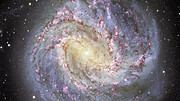
The Spiral of the Southern Pinwheel

Southern Pinwheel Galaxy, Messier 83 


Video

CosmoView Episode 21: The Spiral of the Southern Pinwheel
CosmoView Episode 21: The Spiral of the Southern Pinwheel 
 
Zooming on M83
Zooming on M83


The Dark Energy Camera (DECam), which was originally designed for the Dark Energy Survey, has captured one of the deepest images ever taken of Messier 83, a spiral galaxy playfully known as the Southern Pinwheel. Built by the US Department of Energy, DECam is mounted on the Víctor M. Blanco 4-meter Telescope at the Cerro Tololo Inter-American Observatory (CTIO), a Program of NSF’s NOIRLab.

Astronomy enthusiasts might wonder why a camera called the Dark Energy Camera (DECam) would be used to image a single spiral galaxy. DECam has in fact already finished its main job, as the instrument was used to complete the Dark Energy Survey, which ran from 2013 to 2019. Like many people, rather than enjoying a quiet retirement, DECam is remaining occupied. Members of the astronomical community can apply for time to use it, and the data collected are processed and made publicly available [1], thanks to the Astro Data Archive at the Community Science and Data Center (CSDC) Program at NSF’s NOIRLab. DECam’s continued operation also makes sumptuously detailed images like this one possible.

Messier 83, or the Southern Pinwheel, is located in the southern constellation of Hydra and is an obvious target for a beautiful astronomical image. It is oriented so that it is almost entirely face-on as seen from Earth, meaning that we can observe its spiral structure in fantastic detail. The galaxy lies around 15 million light-years away, which makes it a neighbor in astronomical terms. It has a diameter of around 50,000 light-years, so it is a little diminutive in comparison to our own Milky Way, which has a diameter of 100,000–200,000 light-years. In other ways, however, the Southern Pinwheel probably gives a good approximation of how our Milky Way would look to a distant alien civilization.

Six different filters were used on DECam in order to create this spectacular new view of a classical beauty. Filters allow astronomers to select which wavelengths of light they wish to view the sky in. This is crucial for science observations, when astronomers require very specific information about an object, but it also allows colorful images like this one to be created. Observing celestial objects — such as the Southern Pinwheel — with several different filters means that different details can be picked out. For example, the dark tendrils curling through the galaxy are actually lanes of dust, blocking out light. In contrast, the clustered, bright red spots are caused by glowing, hot hydrogen gas (which identifies these as hubs of star formation). Dusty trails and dynamic ionized gas have different temperatures, and are therefore visible in different wavelengths. Filters allow both to be observed separately, and then combined into one intricate image. In all, 163 DECam exposures, with a total combined exposure time of over 11.3 hours, went into creating this portrait of Messier 83. 

Yet these observations were not just about creating a pretty picture. They are helping to prepare for upcoming observations by Vera C. Rubin Observatory, a future program of NOIRLab. In ten years of operation, starting in 2023, Rubin Observatory will carry out an unprecedented optical survey of the visible sky named the Legacy Survey of Space and Time (LSST). “The Messier 83 observations are part of an ongoing program to produce an atlas of time-varying phenomena in nearby southern galaxies in preparation for Rubin Observatory’s Legacy Survey of Space and Time,” said Monika Soraisam of the University of Illinois, who is the principal investigator for DECam’s observations of Messier 83. “We are generating multi-color light curves of stars in this galaxy, which will be used to tame the onslaught of alerts expected from LSST using state-of-the-art software infrastructure such as NOIRLab's own ANTARES alert-broker.” [2]

Built by the US Department of Energy (DOE), DECam is mounted on the Víctor M. Blanco 4-meter Telescope at CTIO in Chile. DECam is a powerful instrument that uses 74 highly sensitive charge-coupled devices (CCDs) to take images. CCDs are the same devices that are used to take photos in everyday cell phones. Of course, the CCDs in DECam are much larger, and they were specifically designed to collect very faint red light from distant galaxies. This capability was crucial for DECam’s original purpose, the Dark Energy Survey. This ambitious survey probed one of the most fundamental questions of the Universe — why is our Universe not only expanding, but expanding at an accelerating rate? For six years DECam surveyed the skies, imaging the most distant galaxies to collect more data to enable astronomers to further investigate our accelerating Universe. Taking beautiful images such as this one must seem a lot simpler for DECam.

“While DECam has fulfilled its original goal to complete the Dark Energy Survey, it continues to be a valuable resource for the astronomical community, capturing sweeping views of objects like Messier 83 that both delight the senses and advance our understanding of the Universe,” said Chris Davis, Program Director for NOIRLab at the National Science Foundation.


Source: NOIRLab/News


Notes

[1] Data from DECam typically have an 18-month proprietary period to allow the principal investigators who requested the observations time to perform their research before the data are released publicly for anyone to use. 

[2] ANTARES is a software tool built at NOIRLab to process information about changing objects in the night sky and to help distribute that information to the astronomical community.


More Information 

NSF’s NOIRLab (National Optical-Infrared Astronomy Research Laboratory), the US center for ground-based optical-infrared astronomy, operates the international Gemini Observatory (a facility of NSF, NRC–Canada, ANID–Chile, MCTIC–Brazil, MINCyT–Argentina, and KASI–Republic of Korea), Kitt Peak National Observatory (KPNO), Cerro Tololo Inter-American Observatory (CTIO), the Community Science and Data Center (CSDC), and Vera C. Rubin Observatory (in cooperation with DOE’s SLAC National Accelerator Laboratory). It is managed by the Association of Universities for Research in Astronomy (AURA) under a cooperative agreement with NSF and is headquartered in Tucson, Arizona. The astronomical community is honored to have the opportunity to conduct astronomical research on Iolkam Du’ag (Kitt Peak) in Arizona, on Maunakea in Hawai‘i, and on Cerro Tololo and Cerro Pachón in Chile. We recognize and acknowledge the very significant cultural role and reverence that these sites have to the Tohono O'odham Nation, to the Native Hawaiian community, and to the local communities in Chile, respectively.


Links


Contact:

Amanda Kocz
Press and Internal Communications Officer
NSF’s NOIRLab
Cell: +1 626 524 5884
Email:
amanda.kocz@noirlab.edu


Friday, February 05, 2021

New technique used to discover how galaxies grow

Dwarf galaxy UGC 5288 (seen here in pink) is 16 million light-years from Earth. It is surrounded by a huge disk of hydrogen gas (purple) that has not been involved in the galaxy’s star-formation processes and may be primordial material left over from the galaxy’s formation. Credit: B. Saxton from data provided by Van Zee, NOAO, NRAO/AUI/NSF. Download Full Image

For decades, space and ground telescopes have provided us with spectacular images of galaxies. These building blocks of the universe usually contain several million to over a trillion stars and can range in size from a few thousand to several hundred thousand light-years across. What we typically see in an image of a galaxy are the stars, gas and dust that constitute these sprawling systems.

But there is a hidden component of galaxies that does not emit enough visible light for us to see. This component, a gas that holds clues to how galaxies grow in size over time, is the subject of a recent study by a team of researchers including Christopher Dupuis, Assistant Professor Sanchayeeta Borthakur, Mansi Padave and Rolf Jansen of the School of Earth and Space Exploration with Rachael Alexandroff of the University of Toronto and Timothy Heckman of Johns Hopkins University. The results of their study have been recently published in the Astrophysical Journal. 

The gas the team studied is located in the extended disk of galaxies, an area called the “circumgalactic medium,” a large halo around every galaxy that is under its gravitational influence. Galaxies similar to the Milky Way have stellar disks as large as 200,000 light-years across with extended disks that can be over twice that size.

“Extended disks play an important role in how galaxies grow,” explained lead author and graduate student Dupuis. “As the gas travels from the circumgalactic medium into the extended disk, it will eventually be turned into new stars.”

Since this gas does not emit enough visible light for us to see it, detecting it outside of galaxies is difficult. Scientists have traditionally used a bright object, called a quasar, located behind the galaxy being studied. They measure the light of the quasar and then determine how much of it is “lost” (absorbed) due to the gas that is around the galaxy.

In this study, however, the team employed a relatively new technique. Using data from the Hubble Space Telescope and the MMT Observatory, they analyzed the light from a background galaxy (rather than a quasar) to obtain the measurements. This allowed them to make a size estimate for the gas cloud.

“These two datasets enabled us to compare how the gas in the extended disk is moving related to the stars and allowed us to confirm that the gas was in the extended disk of the galaxy,” said Dupuis.

“While we believed that most galaxies in the past should have large gas disks that eventually formed stars like the sun, there was little observational confirmation,” added co-author Borthakur. “This result solidifies our understanding of what fueled the stars that we find today, including our sun.”

This figure shows a two-dimensional spectrum of the gas cloud host galaxy that the team obtained with the MMT Observatory. This portion of the spectrum is what they used to measure how the stars in the galaxy are rotating. Knowing how the stars move allowed the team to confirm the gas they measured using the Hubble data was part of the extended disk of the galaxy. Credit: Dupuis et al./MMT

The research team hopes that future projects will be able to use this new technique to study large numbers of galaxies once the construction of next-generation, ground-based telescopes is complete later this decade. Telescopes like the Giant Magellan Telescope (GMT), of which ASU is a partner, will be able to collect data on dozens of different systems similar to ours, and subsequent studies of extended disks and their properties will aid in our understanding of galaxy growth.

“Using galaxies as background sources will revolutionize our understanding of the large gas reservoirs around galaxies critical for star formation,” said Borthakur. “With a powerful telescope like the GMT, we will be able to get many more lines of sight to map these hidden structures by using plentiful, faint background galaxies rather than just the rare bright quasars as the light sources.”

Karin Valentine
Media Relations & Marketing manager, School of Earth and Space Exploration
480-965-9345


Source: ASU/News


Thursday, February 04, 2021

Study of Supergiant Star Betelgeuse Unveils the Cause of its Pulsations; Recalibrated its Mass, Radius, and Distance

Fig 1: Recent brightness variations of Betelgeuse. Stellar pulsation causes the star’s brightness to vary, but the large dip in brightness in early 2020 is unprecedented. A comparison of direct images of the surface of Betelgeuse between January 2019 and December 2019 show that large portions of the star faded in December 2019, which could indicate a dust cloud appearing in front of it. The images were taken by the European Southern Observatory’s (ESO’s) Very Large Telescope. (Credit: ESO/M. Montargès et al.) For brightness data, see the caption of Fig 2.

Fig 2: Variation in brightness of Betelgeuse over the previous 15 years. Gaps in the data are periods when Betelgeuse is not visible in the night sky each year. The brightness data was collected by the observers of the American Association of Vari-able Star Observers (AAVSO) and the Solar Mass-Ejection Imager instrument in space. Data from the latter was processed by László Molnár from the Konkoly Observatory of CSFK in Budapest, Hungary. (Credit: L. Molnár, AAVSO, UCSD/SMEI, NA-SA/STEREO/HI)

Betelgeuse is normally one of the brightest, most recognizable stars of the winter sky, marking the left shoulder of the constellation Orion. But lately, it has been behaving strangely: an unprecedentedly large drop in its brightness has been observed in early 2020 (Figure 1), which has prompted speculation that Betelgeuse may be about to explode. 

To find out more, an international team of scientists, including Ken'ichi Nomoto at the Kavli Institute for the Physics and Mathematics of the Universe (Kavli IPMU), conducted a rigorous examination of Betelgeuse. They concluded that the star is in the early core helium-burning phase (which is more than 100,000 years before an explosion happens) and has smaller mass and radius—and is closer to Earth—than previously thought. They also showed that smaller brightness variations of Betelgeuse have been driven by stellar pulsations, and suggested that the recent large dimming event involved a dust cloud. 

The research team is led by Dr. Meridith Joyce from the Australian National University (ANU), who was an invited speaker at Kavli IPMU in January 2020, and includes Dr. Shing-Chi Leung, a former Kavli IPMU project researcher and a current postdoctoral scholar at the California Institute of Technology, and Dr. Chiaki Kobayashi, an associate professor at the University of Hertfordshire, who has been an affiliate member of Kavli IPMU. 

The team analyzed the brightness variation of Betelgeuse (Figure 2) by using evolutionary, hydrodynamic and seismic modelling. They achieved a clearer idea than before that Betelgeuse is currently burning helium in its core. They also showed that stellar pulsations driven by the so-called kappa-mechanism is causing the star to continuously brighten or fade with two periods of 185 (±13.5) days and approximately 400 days. But the large dip in brightness in early 2020 is unprecedented, and is likely due to a dust cloud in front of Betelgeuse, as seen in the image (Figure 1).

Their analysis reported a present-day mass of 16.5 to 19 solar mass—which is slightly lower than the most recent estimates. The study also revealed how big Betelgeuse is, as well as its distance from Earth. The star’s actual size has been a bit of a mystery: earlier studies, for instance, suggested it could be bigger than the orbit of Jupiter. However, the team’s results showed Betelgeuse only extends out to two-thirds of that, with a radius 750 times the radius of the sun. Once the physical size of the star is known, it will be possible to determine its distance from Earth. Thus far, the team's results show it is a mere 530 light years from us, or 25 percent closer than previously thought. 

Their results imply that Betelgeuse is not at all close to exploding, and that it is too far from Earth for the eventual explosion to have significant impact here, even though it is still a really big deal when a supernova goes off. And as Betelgeuse is the closest candidate for such an explosion, it gives us a rare opportunity to study what happens to stars like this before they explode.

 Source: Kavli Institute for the Physics and Mathematics of the Universe (Kavli IPMU)


Paper details 

Journal: The Astrophysical Journal
Title: Standing on the Shoulders of Giants: New Mass and Distance Estimates for Betelgeuse through Combined Evolutionary, Asteroseismic, and Hydrodynamic Simulations with MESA

Authors: Meridith Joyce (1,2), Shing-Chi Leung (3), László Molnár (4, 5, 6), Michael Ireland (1), Chiaki Kobayashi (2, 7, 8), Ken’ichi Nomoto (8)

Author affiliation:

1. Research School of Astronomy and Astrophysics, Australian National University (ANU), Canberra, ACT 2611, Australia
2. ARC Center of Excellence for All Sky Astrophysics in 3 Dimensions (ASTRO 3D), Australia
3. TAPIR, Walter Burke Institute for Theoretical Physics, Mailcode 350-17, Caltech, Pasadena, CA 91125, USA
4. Konkoly Observatory, Research Center for Astronomy and Earth Sciences (CSFK), Konkoly-Thege út 15-17, H-1121 Budapest, Hungary
5. MTA CSFK Lendulet Near-Field Cosmology Research Group, Konkoly-Thege út 15-17, H-1121 Budapest, Hungary
6. ELTE Eotvs Loránd University, Institute of Physics, Budapest, 1117, Páz mány Péter sétány 1 / A, Hungary
7. Center for Astrophysics Research, Department of Physics, Astronomy and Mathematics, University of Hertfordshire, College Lane, Hatfield AL10 9AB, UK
8. Kavli Institute for the Physics and Mathematics of the Universe (WPI), The University of Tokyo Institutes for Advanced Study, The University of Tokyo, Kashiwa, Chiba 277-8583, Japan

DOI: https://doi.org/10.3847/1538-4357/abb8db   (Posted on October 13, 2020)
Abstract of the paper: (The Astrophysical Journal)
Pre-print: (arXiv.org page)


Research contact :

Ken’ichi Nomoto
Senior Scientist
Kavli Institute for the Physics and Mathematics of the Universe, University of Tokyo
E-mail: nomoto@astron.s.u-tokyo.ac.jp
TEL: +81-4-7136-5940

Media contact:

John Amari
Press officer
Kavli Institute for the Physics and Mathematics of the Universe, The University of Tokyo
E-mail: press@ipmu.jp
TEL: 080-4056-2767


Related Links:

Click here to view the press release from ANU "Supergiant Betelgeuse smaller, closer than first thought" 

Click here to view the press release from Konkoly Observatory of the Research Centre for Astronomy and Earth Sciences (CSFK) / the web-page of Eötvös Loránd Research Network (ELKH)

"Supergiant star Betelgeuse smaller, closer than first thought"


Wednesday, February 03, 2021

At cosmic noon, puffy galaxies make stars for longer

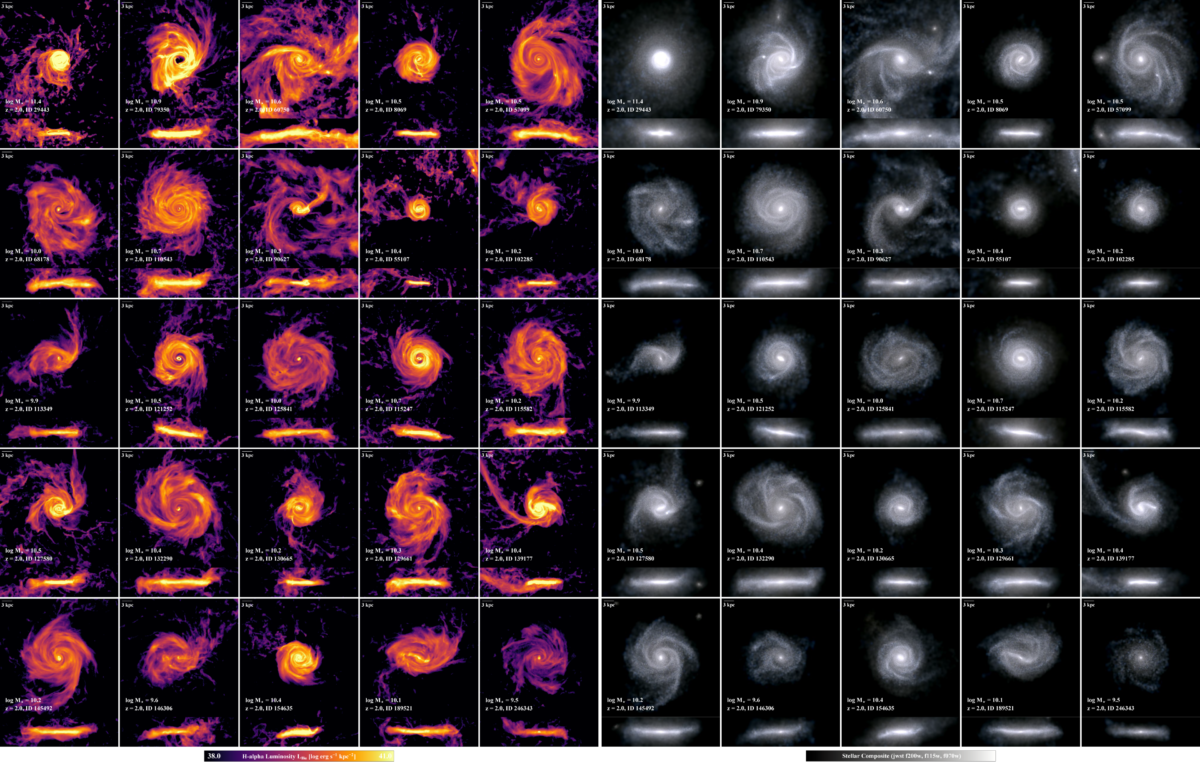
An ensemble of twenty-five disk galaxies. The view on the left shows light emitted in the H-alpha line from interstellar gas as a result of ongoing star-formation, while the panels on the right shows the optical light emitted by a mix of young (bluer) and old (redder) stars. Each galaxy can be seen rotated edge-on below its face-on view. Image Credit: TNG Collaboration. Hi-res imagem


Galaxies with extended disks maintain productivity, research reveals

Massive galaxies with extra-large extended “puffy” disks produced stars for longer than their more compact cousins, new modelling reveals.

In a paper published in the Astrophysical Journal, researchers led by Dr Anshu Gupta and Associate Professor Kim-Vy Tran from Australia’s ARC Centre of Excellence in All Sky Astrophysics in 3 Dimensions (ASTRO 3D), show that the sheer size of a galaxy influences when it stops making new stars.

“There’s a period in the life of the Universe known as the ‘cosmic noon’, which occurred about 10 billion years ago,” said Dr Gupta.

“That was when star formation in massive galaxies was at its peak. After that, gas in most of these galaxies grew hot – in part because of the black holes in the middle of them – and they stopped forming stars.

“In galaxies that are really, really stretched out, however, we found that things didn’t heat up as much and the black holes didn’t exert such a great influence, so stars kept getting made over a longer period.”

Dr Gupta and Dr Tran, both of whom are based at the University of NSW, Sydney, found that they could predict the end of star formation based on the size of a galaxy’s disk – the flat, circular region surrounding its centre, comprising stars, hydrogen gas and dust.

“Where the stars in the disk are widely distributed – you could call it ‘puffy’ – the gas stays cooler, so continues to coalesce under gravity and form new stars,” said Dr Gupta.

“In galaxies with more compact disks, the gas heats up quite quickly and is soon too energetic to mash together, so the formation of stars finishes by just after cosmic noon. Puffy disks keep going much longer, say as far as cosmic afternoon tea.”

To make their findings, the researchers, with colleagues from Melbourne, Germany, Mexico and the United States, used cosmological galaxy formation simulations from an international collaboration known as the IllustrisTNG project.

This was integrated with deep observations from an Australian-led project known as the Multi-Object Spectroscopic Emission Line (MOSEL) Survey.

“The IllustrisTNG simulations required millions of hours of supercomputer time,” said Dr Tran.

“And the MOSEL survey needs both the WM Keck Observatory in Hawai’i and the Hubble Space Telescope.

“The results mean that for the first time we’ve been able to establish a relationship between disk size and star-making. So now astronomers will be able to look at any galaxy in the Universe and accurately predict when it will stop making stars – just after lunch, or later in the cosmic afternoon.”

The Milky Way, incidentally, is a massive galaxy that is still making stars. That’s because it was something of a cosmic late-starter. When cosmic noon arrived it was very small – containing only one-tenth of the star mass it hosts today – and did not attain ‘massive’ status until much, much later.

As a result, the gas and dust within it has not yet warmed up enough to quench the star-making process.

It is not, however, an extended puffy galaxy, so it will quench, relatively speaking, sooner rather than later.

“Cosmic noon was a long time ago,” said Dr Gupta. “I’d say that by now the Universe has reached cosmic evening. It’s not night-time yet, but things have definitely slowed down.”

As well as UNSW, team members hailed from Swinburne University, the Max-Planck-Institut fur Astronomie, the Universidad Nacional Autonoma de Mexico, and the Flatiron Institute and Columbia University, both in New York.


About the Author: Andrew Masterton

Andrew Masterton is Science in Public’s editor-in-chief and an award-winning writer. He writes media releases in conjunction with the researchers for ASTRO 3D. Before joining Science in Public as editor-in-chief, was editor of both the quarterly print and daily online iterations of Cosmos. Prior to that, he was a specialist science feature contributor to a wide range of newspapers and magazines, primarily the former Fairfax titles The Age, Sydney Morning Herald and Australian Financial Review. He also edited the Livewire technology section that appears in the Melbourne and Sydney mastheads, as well as sometimes filling in as acting editor of the television guides for both papers.

Source: Astro 3D


Tuesday, February 02, 2021

“Spidery” pulsars consume their mates

Distributed volunteer computing project finds neutron star rotating 377 times a second in an exotic binary system using data from NASA’s Fermi Space Telescope

An international research team including members from the Max Planck Institute for Gravitational Physics (Albert Einstein Institute; AEI) in Hannover has shown that a rapidly rotating neutron star is at the core of a celestial object now known as PSR J2039−5617. They used novel data analysis methods and the enormous computing power of the citizen science project Einstein@Home to track down the neutron star’s faint gamma-ray pulsations in data from NASA’s Fermi Space Telescope. Their results show that the pulsar is in orbit with a stellar companion about a sixth of the mass of our Sun. The pulsar is slowly but surely evaporating this star. The team also found that the companion’s orbit varies slightly and unpredictably over time. Using their search method, they expect to find more such systems with Einstein@Home in the future.

“It had been suspected for years that there is a pulsar, a rapidly rotating neutron star, at the heart of the source we now know as PSR J2039−5617,” says Lars Nieder, a PhD student at the Max Planck Institute for Gravitational Physics (Albert Einstein Institute; AEI) in Hannover and co-author of the study published today in Monthly Notices of the Royal Astronomical Society. “But it was only possible to lift the veil and discover the gamma-ray pulsations with the computing power donated by tens of thousands of volunteers to Einstein@Home,” he adds.

The celestial object has been known since 2014 as a source of X-rays, gamma rays, and light. All evidence obtained so far pointed at a rapidly rotating neutron star in orbit with a light-weight star being at the heart of the source. But clear proof was missing.

Precision observations with optical telescopes

The first step to solving this riddle were new observations of the stellar companion with optical telescopes. They provided precise knowledge about the binary system without which a gamma-ray pulsar search (even with Einstein@Home’s huge computing power) would be unfeasible.

The system’s brightness varies during an orbital period depending on which side of the neutron star’s companion is facing the Earth. “For J2039-5617, there are two main processes at work,” explains Dr. Colin Clark from Jodrell Bank Centre for Astrophysics, lead author of the study and former PhD student at AEI Hannover. “The pulsar heats up one side of the light-weight companion, which appears brighter and more bluish. Additionally, the companion is distorted by the pulsar’s gravitational pull causing the apparent size of the star to vary over the orbit.” These observations allowed the team to get the most precise measurement possible of the binary star’s 5.5-hour orbital period, as well as other properties of the system.e help of tens of thousands of volunteers

With this information and the precise sky position from Gaia data, the team used the aggregated computing power of the distributed volunteer computing project Einstein@Home for a new search of about 11 years of archival observations of NASA’s Fermi Gamma-ray Space Telescope. Improving on earlier methods they had developed for this purpose, they enlisted the help of tens of thousands of volunteers to search Fermi data for periodic pulsations in the gamma-ray photons registered by the Large Area Telescope onboard the space telescope. The volunteers donated idle compute cycles on their computers’ CPUs and GPUs to Einstein@Home.

Searching with the help of tens of thousands of volunteers

This search required combing very finely through the data in order not to miss any possible signals. The computing power required is enormous. The search would have taken 500 years to complete on a single computer core. By using a part of the Einstein@Home resources it was done in 2 months.

With the computing power donated by the Einstein@Home volunteers, the team discovered gamma-ray pulsations from the rapidly rotating neutron star. This gamma-ray pulsar, now known as J2039−5617, rotates about 377 times each second.

Surprising changes of the orbit

“We found that the companion’s orbital period varies slightly and unpredictably over the 11 years. It only changes by up to about ten milliseconds, but since we know the arrival time of every single gamma photon from the pulsar to microsecond precision, even this little is a lot!” says Nieder. These variations of the orbital period could be linked to tiny changes in the shape of the companion caused by its magnetic activity. Similar to our Sun the companion might be going through activity cycles. The changing magnetic field interacts with the plasma inside the star and deforms it. As the shape of the star varies its gravitational field also changes, which in turn affects the pulsar orbit. This could explain the observed orbital period variations.

“Spidery” pulsars consume their mates

While the light-weight stellar companion is orbiting the pulsar, the strong radiation and particle wind from the pulsar evaporate the companion. “This is the reason that astronomers call systems like this one ‘redbacks’ in reference to the Australian redback spiders whose females consume the males after mating,” explains Nieder. In the case of J2039−5617 the matter ablated from the star forms clouds of charged particles in the binary system that absorb radio waves. This is one of the reasons that previous searches for pulsating radio emission from the neutron star failed. With the precise determination of the orbit from the gamma-ray data, it was also possible to detect radio pulsations and this will be published in a separate paper.

“We know dozens of similar gamma-ray sources found by the Fermi Space Telescope, for which the true identity is still unclear,” says Prof. Dr. Bruce Allen, director at the Max Planck Institute for Gravitational Physics in Hannover and director and founder of Einstein@Home. “Many might be pulsars hidden in binary systems and we will continue to chase after them with Einstein@Home,” he adds.


 Background information

Who made the discovery? The discovery was enabled by tens of thousands of Einstein@Home volunteers who have donated their CPU and GPU time to the project. Without them this study could not have been performed and this discovery could not have been made. The team is especially grateful to those volunteers whose computers discovered the pulsar (where the volunteer’s name is unknown, we give the Einstein@Home username in quotation marks): “Peter”.

Neutron stars are compact remnants from supernova explosions and consist of exotic, extremely dense matter. They measure about 20 kilometers across and weigh more than our Sun. Because of their strong magnetic fields and fast rotation they emit beamed radio waves and energetic gamma rays similar to a cosmic lighthouse. If these beams point towards Earth during the neutron star's rotation, it becomes visible as a pulsating radio or gamma-ray source – a so-called pulsar.

Einstein@Home is a distributed volunteer computing and connects computers and smartphones from the general public from all over the world. The project volunteers donate spare computing time on their devices. Until now more than 480,000 volunteers have contributed useful computing work, making Einstein@Home one of the largest projects of this kind. The current aggregate computing power contributed by about 36,000 computers from 22,000 active volunteers is about 7.2 petaFLOPS.

Since 2005, Einstein@Home has analyzed data from the gravitational wave detectors within the LIGO Scientific and the Virgo Collaborations for gravitational waves from unknown, rapidly rotating neutron stars. As of March 2009, Einstein@Home has also been involved in the search for signals from radio pulsars in observational data from the Arecibo Observatory in Puerto Rico and the Parkes Observatory in Australia. Since the first discovery of a radio pulsar by Einstein@Home in August 2010, the global computer network has discovered 55 new radio pulsars. A search for gamma-ray pulsars in data of the Fermi satellite was added in August 2011. It has discovered 25 new gamma-ray pulsars as of today.

Scientific supporters are the Max Planck Institute for Gravitational Physics (Albert Einstein Institute, Hannover) and the Center for Gravitation and Cosmology at the University of Wisconsin-Milwaukee with financial support from the National Science Foundation and the Max Planck Society.


Media contact

Dr. Benjamin Knispel
Press Officer AEI Hannover
+49 511 762-19104


Science contacts

Dr. Lars Nieder
Junior Scientist/Postdoc
+49 511 762-17491


Prof. Bruce Allen
Director
+49 511 762-17148
+49 511 762-17182


Publications

1. C. J. Clark, L. Nieder et al.
Einstein@Home Discovery of the Gamma-ray Millisecond Pulsar PSR J2039−5617 Confirms Its Predicted Redback Nature

MNRAS Volume 502, Issue 1, March 2021, Pages 915–934 (2021)
 

Source / DOI

2. A. Corongiu et al.

Radio pulsations from the γ-ray millisecond pulsar PSR J2039–5617

MNRAS, Volume 502, Issue 1, March 2021, Pages 935–952 (2021)

Source / DOI


Further information

Einstein@Home
Project website

Einstein@Home project
Twitter feed
@EinsteinAtHome

Visual

Visual material for download in full resolution