Friday, February 14, 2020

ESO Telescope Sees Surface of Dim Betelgeuse

SPHERE’s view of Betelgeuse in December 2019

SPHERE’s view of Betelgeuse in January 2019

Betelgeuse before and after dimming

Betelgeuse’s dust plumes seen by VISIR image

A plume on Betelgeuse (artist’s impression with annotations)

The star Betelgeuse in the constellation of Orion


Videos
ESOcast 217 Light: ESO Telescope Sees Surface of Dim Betelgeuse

Zooming in on Betelgeuse

Betelgeuse before and after dimming (animated)

From Betelgeuse’s surroundings to its surface
PR Video eso2003d
From Betelgeuse’s surroundings to its surface


Using ESO’s Very Large Telescope (VLT), astronomers have captured the unprecedented dimming of Betelgeuse, a red supergiant star in the constellation of Orion. The stunning new images of the star’s surface show not only the fading red supergiant but also how its apparent shape is changing.

Betelgeuse has been a beacon in the night sky for stellar observers but it began to dim late last year. At the time of writing Betelgeuse is at about 36% of its normal brightness, a change noticeable even to the naked eye. Astronomy enthusiasts and scientists alike were excitedly hoping to find out more about this unprecedented dimming.

A team led by Miguel Montargès, an astronomer at KU Leuven in Belgium, has been observing the star with ESO's Very Large Telescope since December, aiming to understand why it’s becoming fainter. Among the first observations to come out of their campaign is a stunning new image of Betelgeuse’s surface, taken late last year with the SPHERE instrument.

The team also happened to observe the star with SPHERE in January 2019, before it began to dim, giving us a before-and-after picture of Betelgeuse. Taken in visible light, the images highlight the changes occurring to the star both in brightness and in apparent shape.

Many astronomy enthusiasts wondered if Betelgeuse’s dimming meant it was about to explode. Like all red supergiants, Betelgeuse will one day go supernova, but astronomers don’t think this is happening now. They have other hypotheses to explain what exactly is causing the shift in shape and brightness seen in the SPHERE images. “The two scenarios we are working on are a cooling of the surface due to exceptional stellar activity or dust ejection towards us,” says Montargès [1]. “Of course, our knowledge of red supergiants remains incomplete, and this is still a work in progress, so a surprise can still happen.”

Montargès and his team needed the VLT at Cerro Paranal in Chile to study the star, which is over 700 light-years away, and gather clues on its dimming. “ESO's Paranal Observatory is one of few facilities capable of imaging the surface of Betelgeuse,” he says. Instruments on ESO’s VLT allow observations from the visible to the mid-infrared, meaning astronomers can see both the surface of Betelgeuse and the material around it. “This is the only way we can understand what is happening to the star.”

Another new image, obtained with the VISIR instrument on the VLT, shows the infrared light being emitted by the dust surrounding Betelgeuse in December 2019. These observations were made by a team led by Pierre Kervella from the Observatory of Paris in France who explained that the wavelength of the image is similar to that detected by heat cameras. The clouds of dust, which resemble flames in the VISIR image, are formed when the star sheds its material back into space.

“The phrase ‘we are all made of stardust’ is one we hear a lot in popular astronomy, but where exactly does this dust come from?” says Emily Cannon, a PhD student at KU Leuven working with SPHERE images of red supergiants. “Over their lifetimes, red supergiants like Betelgeuse create and eject vast amounts of material even before they explode as supernovae. Modern technology has enabled us to study these objects, hundreds of light-years away, in unprecedented detail giving us the opportunity to unravel the mystery of what triggers their mass loss.”

Souce: ESO/News


Notes

[1] Betelgeuse's irregular surface is made up of giant convective cells that move, shrink and swell. The star also pulsates, like a beating heart, periodically changing in brightness. These convection and pulsation changes in Betelgeuse are referred to as stellar activity. 


More Information

The team is composed of Miguel Montargès (Institute of Astronomy, KU Leuven, Belgium), Emily Cannon (Institute of Astronomy, KU Leuven, Belgium), Pierre Kervella (LESIA, Observatoire de Paris - PSL, France), Eric Lagadec (Laboratoire Lagrange, Observatoire de la Côte d'Azur, France), Faustine Cantalloube (Max-Planck-Institut für Astronomie, Heidelberg, Germany), Joel Sánchez Bermúdez (Instituto de Astronomía, Universidad Nacional Autónoma de México, Mexico City, Mexico and Max-Planck-Institut für Astronomie, Heidelberg, Germany), Andrea Dupree (Center for Astrophysics | Harvard & Smithsonian, USA), Elsa Huby (LESIA, Observatoire de Paris - PSL, France), Ryan Norris (Georgia State University, USA), Benjamin Tessore (IPAG, France), Andrea Chiavassa (Laboratoire Lagrange, Observatoire de la Côte d'Azur, France), Claudia Paladini (ESO, Chile), Agnès Lèbre (Université de Montpellier, France), Leen Decin (Institute of Astronomy, KU Leuven, Belgium), Markus Wittkowski (ESO, Germany), Gioia Rau (NASA/GSFC, USA), Arturo López Ariste (IRAP, France), Stephen Ridgway (NSF’s National Optical-Infrared Astronomy Research Laboratory, USA), Guy Perrin (LESIA, Observatoire de Paris - PSL, France), Alex de Koter (Astronomical Institute Anton Pannekoek, Amsterdam University, The Netherlands & Institute of Astronomy, KU Leuven, Belgium), Xavier Haubois (ESO, Chile), Eric Pantin (CEA, France), Ralf Siebenmorgen (ESO, Germany).

The VISIR image was obtained as part of the NEAR science demonstration observations. NEAR (Near Earths in the AlphaCen Region) is an upgrade of VISIR, which was implemented as a time-limited experiment.

ESO is the foremost intergovernmental astronomy organisation in Europe and the world’s most productive ground-based astronomical observatory by far. It has 16 Member States: Austria, Belgium, the Czech Republic, Denmark, France, Finland, Germany, Ireland, Italy, the Netherlands, Poland, Portugal, Spain, Sweden, Switzerland and the United Kingdom, along with the host state of Chile and with Australia as a Strategic Partner. ESO carries out an ambitious programme focused on the design, construction and operation of powerful ground-based observing facilities enabling astronomers to make important scientific discoveries. ESO also plays a leading role in promoting and organising cooperation in astronomical research. ESO operates three unique world-class observing sites in Chile: La Silla, Paranal and Chajnantor. At Paranal, ESO operates the Very Large Telescope and its world-leading Very Large Telescope Interferometer as well as two survey telescopes, VISTA working in the infrared and the visible-light VLT Survey Telescope. Also at Paranal ESO will host and operate the Cherenkov Telescope Array South, the world’s largest and most sensitive gamma-ray observatory. ESO is also a major partner in two facilities on Chajnantor, APEX and ALMA, the largest astronomical project in existence. And on Cerro Armazones, close to Paranal, ESO is building the 39-metre Extremely Large Telescope, the ELT, which will become “the world’s biggest eye on the sky”.</ div>


Links


Contacts

Miguel Montargès
FWO [PEGASUS]² Marie Skłodowska-Curie Fellow / Institute of Astronomy, KU Leuven
Leuven, Belgium
Tel: +32 16 32 74 67
Email: miguel.montarges@kuleuven.be

Emily Cannon
Institute of Astronomy, KU Leuven
Leuven, Belgium
Tel: +32 16 32 88 92
Email: emily.cannon@kuleuven.be

Pierre Kervella
LESIA, Observatoire de Paris - PSL
Paris, France
Tel: +33 0145077966
Email: pierre.kervella@observatoiredeparis.psl.eu

Bárbara Ferreira
ESO Public Information Officer
Garching bei München, Germany
Tel: +49 89 3200 6670
Cell: +49 151 241 664 00
Email: pio@eso.org


Thursday, February 13, 2020

Understanding the Impact of Satellite Constellations on Astronomy

Credit: NSF’s National Optical-Infrared Astronomy Research Laboratory/CTIO/AURA/DELVE

In June 2019, the International Astronomical Union expressed concern about the negative impact that the planned mega-constellations of communication satellites may have on astronomical observations and on the pristine appearance of the night sky when observed from a dark region. We here present a summary of the current understanding of the impact of these satellite constellations.

Following the statement of June 2019, IAU’s Commission B7 Protection of Existing and Potential Observatory Sites and the Executive Committee Working Group Dark and Quiet Sky Protection were asked by the IAU Executive Committee to assess the situation and to start discussions with the companies that are responsible for launching and operating the mega-constellations in order to study measures to mitigate their interference.

Commission B7 has requested the input of astronomers from different organisations (Vera C. Rubin Observatory, U. Michigan, CAHA, ESO and ESA) skilled in modeling the frequency, location and brightness of satellite mega-constellations. Some of those results are presented below. The results of the simulations, given the large number of parameters involved and the associated assumptions and uncertainties, are to be considered preliminary. 

  • While there is large uncertainty about the future number of satellites, some simulations were conducted on the basis of a large sample of over 25 000 satellites from representative satellite constellations from different companies. With this sample, the number of satellites above the horizon at any given time would be between ~1500 and a few thousand, depending on the latitude. Most of these will appear very close to the horizon, only a few of them passing directly overhead; for instance, about 250 to 300 would have an elevation of more than 30 degrees over the horizon (i.e. where the sky is clear from obstructions, and where most of the astronomical observations are performed). The vast majority of these will be too faint to be visible to the naked eye [1] [2] [3].

  • When the Sun is 18 degrees below the horizon (i.e. when the night becomes dark), the number of illuminated satellites above the horizon would be around 1000 (with around 160 at elevations higher than 30 degrees). The numbers decrease further towards the middle of the night, when more satellites are in the Earth's shadow (e.g., no reflected sunlight) [1] [2] [3] .

  • At the moment it is difficult to predict how many of the illuminated satellites will be visible to the naked eye, because of uncertainties in their actual reflectivity (also since experiments are being carried out by SpaceX to reduce the reflectivity of a Starlink satellite by adopting different coatings). The appearance of the pristine night sky, particularly when observed from dark sites, will nevertheless be altered, because the new satellites could be significantly brighter than existing orbiting man-made objects. The interference with the uncontaminated view of the night sky will be particularly important in the regions of the sky close to the horizon and less evident at high elevation [1] [2].

  • The prominent trains of satellites (“strings of pearls”), often seen in images and videos, are significant immediately after launch and during the orbit-raising phase when they are considerably brighter than they are at their operational altitude and orientation. The global effect depends on how long the satellites are in this phase and on the frequency of launches [2].

  • Apart from their naked-eye visibility, it is estimated that the trails of the constellation satellites will be bright enough to saturate modern detectors on large telescopes. Wide-field scientific astronomical observations will therefore be severely affected. For instance, in the case of modern fast wide-field surveys, like the ones to be carried out by the Rubin Observatory (formerly known as LSST), it is estimated that up to 30% of the 30-second images during twilight hours will be affected. Instruments with a smaller field of view would be less affected. In theory, the effects of the new satellites could be mitigated by accurately predicting their orbits and interrupting observations, when necessary, during their passage. Data processing could then be used to further “clean” the resulting images. However, the large number of trails could create significant and complicated overheads to the scheduling and operation of astronomical observations [1] [3].
A summary of the findings and of the actions that have so far been undertaken is presented in a specific IAU Theme.

The focus of this Statement has been on the optical wavelengths. This is not to underplay the effect on the radio and submillimetre wavelength ranges, which is still under investigation. The IAU considers the consequences of satellite constellations worrisome. They will have a negative impact on the progress of ground-based astronomy, radio, optical and infrared, and will require diverting human and financial resources from basic research to studying and implementing mitigating measures.

A great deal of attention is also being given to the protection of the uncontaminated view of the night sky from dark places, which should be considered a non-renounceable world human heritage. This is one of the main messages communicated on the dedicated IAU–UNESCO web site on astronomical heritage.

In order to mitigate the impacts of satellite constellations that may interfere with professional and amateur astronomical observations, the IAU, in close collaboration with the American Astronomical Society (AAS), will continue to initiate discussions with space agencies and private companies that are planning to launch and operate currently planned and future satellite constellations.

The IAU notes that currently there are no internationally agreed rules or guidelines on the brightness of orbiting manmade objects. While until now this was not considered a priority topic, it is now becoming increasingly relevant. Therefore the IAU will regularly present its findings at the meetings of the UN Committee for Peaceful Uses of Outer Space (COPUOS), bringing the attention of the world Government representatives to the threats posed by any new space initiative on astronomy and science in general. In addition, the specific theme of the mega-satellites will be included in the Programme of the IAU/UNOOSA/IAC Conference Dark and Quiet Skies for Science and Society, which will be held in Santa Cruz de La Palma, Canary Islands, Spain, on 5–8 October 2020.

The IAU stresses that technological progress is only made possible by parallel advances in scientific knowledge. Satellites would neither operate nor properly communicate without essential contributions from astronomy and physics. It is in everybody’s interest to preserve and support the progress of fundamental science such as astronomy, celestial mechanics, orbital dynamics and relativity.


Notes

[1] Hainaut, Olivier (ESO), 2020, On the impact of satellite mega-constellations on astronomical observations, submitted for publication in Astronomy & Astrophysics.

[3] Galadí-Enríquez, David (Calar Alto Observatory), 2020, Geometric simulation of the visibility of Starlink satellite constellation from ground-based optical observatories: LSST as a case study, progress report, private communication.


More information

The IAU is the international astronomical organisation that brings together more than 13 500 professional astronomers from more than 100 countries worldwide. Its mission is to promote and safeguard astronomy in all its aspects, including research, communication, education and development, through international cooperation. The IAU also serves as the internationally recognised authority for assigning designations to celestial bodies and the surface features on them. Founded in 1919, the IAU is the world's largest professional body for astronomers.


Contacts

Piero Benvenuti
Advisor, IAU Executive Committee
Email: piero.benvenuti@unipd.it
Connie Walker
President Commission B7
Email: cwalker@noao.edu

Lars Lindberg Christensen
IAU Press Officer
Tucson, USA
Tel: +1 520 318 8590
Cell: +1 520 461 0433
Email: lchristensen@aura-astronomy.org


Tuesday, February 11, 2020

Distant Giant Planets Form Differently Than ‘Failed Stars’

This image of the low-mass brown dwarf gj 504 b was taken by bowler and his team using adaptive optics with the nirc2 camera at keck observatory in hawaii. the image has been processed to remove light from the host star (whose position is marked with an “x”). the companion is located at a separation of about 40 times the earth-sun distance and has an orbital period of about 240 years. by returning to this and other systems year after year, the team is able to slowly trace out part of the companion’s orbit to constrain its shape, which provides clues about its formation and history. Credit: Brendan Bowler (UT-Austin)/W. M. Keck Observatory

Maunakea, Hawaii – A team of astronomers led by Brendan Bowler of The University of Texas at Austin has probed the formation process of giant exoplanets and brown dwarfs, a class of objects that are more massive than giant planets, but not massive enough to ignite nuclear fusion in their cores to shine like true stars.

Using direct imaging with ground-based telescopes in Hawaii – W. M. Keck Observatory and Subaru Telescope on Maunakea – the team studied the orbits of these faint companions orbiting stars in 27 systems. These data, combined with modeling of the orbits, allowed them to determine that the brown dwarfs in these systems formed like stars, but the gas giants formed like planets.

The research is published in the current issue of The Astronomical Journal.

In the last two decades, technological leaps have allowed telescopes to separate the light from a parent star and a much-dimmer orbiting object. In 1995, this new capability produced the first direct images of a brown dwarf orbiting a star. The first direct image of planets orbiting another star followed in 2008.

“Over the past 20 years, we’ve been leaping down and down in mass,” Bowler said of the direct imaging capability, noting that the current limit is about 1 Jupiter mass. As the technology has improved, “One of the big questions that has emerged is ‘What’s the nature of the companions we’re finding?’”

By patiently watching giant planets and brown dwarfs orbit their host stars, Bowler and his team were able to constrain the orbit shapes even though only a small portion of the orbit has been monitored. The longer the time baseline, the smaller the range of possible orbits. These plots show nine of the 27 systems from their study. Credit: Brendan Bowler (UT-Austin) 

Brown dwarfs, as defined by astronomers, have masses between 13 and 75 Jupiter masses. They have characteristics in common with both planets and with stars, and Bowler and his team wanted to settle the question: Are gas giant planets on the outer fringes of planetary systems the tip of the planetary iceberg, or the low-mass end of brown dwarfs? Past research has shown that brown dwarfs orbiting stars likely formed like low-mass stars, but it’s been less clear what is the lowest mass companion this formation mechanism can produce.

“One way to get at this is to study the dynamics of the system — to look at the orbits,” Bowler said. Their orbits today hold the key to unlocking their evolution.

Using Keck Observatory’s adaptive optics (AO) system with the Near-Infrared Camera, second generation (NIRC2) instrument on the Keck II telescope, as well as the Subaru Telescope, Bowler’s team took images of giant planets and brown dwarfs as they orbit their parent stars.

It’s a long process. The gas giants and brown dwarfs they studied are so distant from their parent stars that one orbit may take hundreds of years. To determine even a small percentage of the orbit, “You take an image, you wait a year,” for the faint companion to travel a bit, Bowler said. Then “you take another image, you wait another year.”

This research relied on AO technology, which allows astronomers to correct for distortions caused by the Earth’s atmosphere. As AO instruments have continually improved over the past three decades, more brown dwarfs and giant planets have been directly imaged. But since most of these discoveries have been made over the past decade or two, the team only has images corresponding to a few percent of each object’s total orbit. They combined their new observations of 27 systems with all of the previous observations published by other astronomers or available in telescope archives.

At this point, computer modeling comes in. Coauthors on this paper have helped create an orbit-fitting code called “Orbitize!” which uses Kepler’s laws of planetary motion to identify which types of orbits are consistent with the measured positions, and which are not.

The code generates a set of possible orbits for each companion. The slight motion of each giant planet or brown dwarf forms a “cloud” of possible orbits. The smaller the cloud, the more astronomers are closing in on the companion’s true orbit. And more data points — that is, more direct images of each object as it orbits — will refine the shape of the orbit.

These two curves show the final distribution of orbit shapes for giant planets and brown dwarfs. The orbital eccentricity determines how elongated the ellipse is, with a value of 0.0 corresponding to a circular orbit and a high value near 1.0 being a flattened ellipse. Gas giant planets located at wide separations from their host stars have low eccentricities, but the brown dwarfs have a wide range of eccentricities similar to binary star systems. For reference, the giant planets in our solar system have eccentricities less than 0.1. Credit: Brendan Bowler (UT-Austin)

“Rather than wait decades or centuries for a planet to complete one orbit, we can make up for the shorter time baseline of our data with very accurate position measurements,” said team member Eric Nielsen of Stanford University. “A part of Orbitize! that we developed specifically to fit partial orbits, OFTI [Orbits For The Impatient], allowed us to find orbits even for the longest period companions.”

Finding the shape of the orbit is key: Objects that have more circular orbits probably formed like planets. That is, when a cloud of gas and dust collapsed to form a star, the distant companion (and any other planets) formed out of a flattened disk of gas and dust rotating around that star.

On the other hand, the ones that have more elongated orbits probably formed like stars. In this scenario, a clump of gas and dust was collapsing to form a star, but it fractured into two clumps. Each clump then collapsed, one forming a star, and the other a brown dwarf orbiting around that star. This is essentially a binary star system, albeit containing one real star and one “failed star.”

“Even though these companions are millions of years old, the memory of how they formed is still encoded in their present-day eccentricity,” Nielsen added. Eccentricity is a measure of how circular or elongated an object’s orbit is. The results of the team’s study of 27 distant companions was unambiguous.

“The punchline is, we found that when you divide these objects at this canonical boundary of more than about 15 Jupiter masses, the things that we’ve been calling planets do indeed have more circular orbits, as a population, compared to the rest,” Bowler said. “And the rest look like binary stars.”

The future of this work involves both continuing to monitor these 27 objects, as well as identifying new ones to widen the study. “The sample size is still modest, at the moment,” Bowler said. His team is using the Gaia satellite to look for additional candidates to follow up using direct imaging with even greater sensitivity at the forthcoming Giant Magellan Telescope (GMT) and other facilities. UT-Austin is a founding member of the GMT collaboration.

Bowler’s team’s results reinforce similar conclusions recently reached by the GPIES direct imaging survey with the Gemini Planet Imager, which found evidence for a different formation channel for brown dwarfs and giant planets based on their statistical properties.

This work was supported by a NASA Keck PI Data Award, administered by the NASA Exoplanet Science Institute. The Keck Observatory is managed by Caltech and the University of California.


About NIRC2

The Near-Infrared Camera, second generation (NIRC2) works in combination with the Keck II adaptive optics system to obtain very sharp images at near-infrared wavelengths, achieving spatial resolutions comparable to or better than those achieved by the Hubble Space Telescope at optical wavelengths. NIRC2 is probably best known for helping to provide definitive proof of a central massive black hole at the center of our galaxy. Astronomers also use NIRC2 to map surface features of solar system bodies, detect planets orbiting other stars, and study detailed morphology of distant galaxies.

About Adaptive Optics

W. M. Keck Observatory is a distinguished leader in the field of adaptive optics (AO), a breakthrough technology that removes the distortions caused by the turbulence in the Earth’s atmosphere. Keck Observatory pioneered the astronomical use of both natural guide star (NGS) and laser guide star adaptive optics (LGS AO) and current systems now deliver images three to four times sharper than the Hubble Space Telescope at near-infrared wavelengths. AO has imaged the four massive planets orbiting the star HR8799, measured the mass of the giant black hole at the center of our Milky Way Galaxy, discovered new supernovae in distant galaxies, and identified the specific stars that were their progenitors. Support for this technology was generously provided by the Bob and Renee Parsons Foundation, Change Happens Foundation, Gordon and Betty Moore Foundation, Mt. Cuba Astronomical Foundation, NASA, NSF, and W. M. Keck Foundation.

About W. M. Keck Observatory

The W. M. Keck Observatory telescopes are among the most scientifically productive on Earth. The two, 10-meter optical/infrared telescopes on the summit of Maunakea on the Island of Hawaii feature a suite of advanced instruments including imagers, multi-object spectrographs, high-resolution spectrographs, integral-field spectrometers, and world-leading laser guide star adaptive optics systems.

Some of the data presented herein were obtained at Keck Observatory, which is a private 501(c) 3 non-profit organization operated as a scientific partnership among the California Institute of Technology, the University of California, and the National Aeronautics and Space Administration. The Observatory was made possible by the generous financial support of the W. M. Keck Foundation.

The authors wish to recognize and acknowledge the very significant cultural role and reverence that the summit of Maunakea has always had within the Native Hawaiian community. We are most fortunate to have the opportunity to conduct observations from this mountain.


Saturday, February 08, 2020

NASA's Webb Will Seek Atmospheres around Potentially Habitable Exoplanets

This artist’s concept portrays the seven rocky exoplanets within the Trappist-1 system, located 40 light-years from Earth. Astronomers will observe these worlds with Webb in an effort to detect the first atmosphere of an Earth-sized planet beyond our solar system. Credits: NASA and JPL/Caltec. Release Images

This month marks the third anniversary of the discovery of a remarkable system of seven planets known as TRAPPIST-1. These seven rocky, Earth-size worlds orbit an ultra-cool star 39 light-years from Earth. Three of those planets are in the habitable zone, meaning they are at the right orbital distance to be warm enough for liquid water to exist on their surfaces. After its 2021 launch, NASA’s James Webb Space Telescope will observe those worlds with the goal of making the first detailed near-infrared study of the atmosphere of a habitable-zone planet.

To find signs of an atmosphere, astronomers will use a technique called transmission spectroscopy. They observe the host star while the planet is crossing the face of the star, known as a transit. The light of the star filters through the planet’s atmosphere, which absorbs some of the starlight and leaves telltale fingerprints in the star’s spectrum.

Finding an atmosphere around a rocky exoplanet — the word scientists use for planets beyond our solar system — won’t be easy. Their atmospheres are more compact than those of gas giants, while their smaller size means they intercept less of the star’s light. TRAPPIST-1 is one of the best available targets for Webb since the star itself is also quite small, meaning the planets’ size relative to the star is larger.

“The atmospheres are harder to detect but the reward is higher. It would be very exciting to make the first detection of an atmosphere on an Earth-sized planet,” said David Lafrenière of the University of Montreal, principal investigator on one of the teams examining TRAPPIST-1.

Red dwarf stars like TRAPPIST-1 tend to have violent outbursts that could make the TRAPPIST-1 planets inhospitable. But determining whether they have atmospheres, and if so, what they're made of, is the next step to finding out whether life as we know it could survive on these distant worlds.

A coordinated effort

More than one team of astronomers will study the TRAPPIST-1 system with Webb. They plan to use a variety of instruments and observing modes to tease out as many details as they can for each planet in the system.

“It’s a coordinated effort because no one team could do everything we wanted to do with the TRAPPIST-1 system. The level of cooperation has been really spectacular,” explained Nikole Lewis of Cornell University, the principal investigator on one of the teams.

“With seven planets to choose from, we can each have a piece of the cake,” added Lafrenière.

Lafrenière’s program will target TRAPPIST-1d and -1f in an effort to not only detect an atmosphere but determine its basic composition. They expect to be able to distinguish between an atmosphere dominated by water vapor, or one composed mainly of nitrogen (like Earth) or carbon dioxide (like Mars and Venus).

Lewis’s program will observe TRAPPIST-1e with similar goals. TRAPPIST-1e is one of the planets beyond our solar system that has the most in common with Earth in terms of its density and the amount of radiation that it receives from its star. That makes it a great candidate for habitability — but scientists need to know more to find out.

A broad variety of planets

While the TRAPPIST-1 planets hold particular appeal from a standpoint of potential habitability, Lafrenière’s program will target a variety of planets — from rocky to mini-Neptunes to Jupiter-sized gas giants — at a variety of distances from their stars. The goal is to learn more about how, and where, these planets form.

In particular, astronomers continue to debate how gaseous planets can be found very close to their stars. Most believe that such a planet must have formed farther out in the protoplanetary disk — the disk around a star where planets are born — since more material is available far from the star, and then migrated inward. However, other scientists theorize that even large gas giants can form relatively close to their star.

“Also, maybe they formed farther out, but how much farther out?” asked Lewis.

To help inform the debate, astronomers will look at the ratio of carbon to oxygen in an assortment of exoplanets. This ratio can serve as a tracer of where a planet formed, because it varies with the distance from the star.

Weather maps

In addition to examining planets using transmission spectroscopy, the teams will also employ a technique known as a phase curve. This involves observing a planet over the course of an entire orbit, which is only practical for the hottest worlds with the shortest orbital periods.

A planet circling its star very close becomes tidally locked, meaning that it always shows the same face to the star, as the Moon does to Earth. As a result, distant observers watching the planet will see it go through various phases, since different sides of the planet are visible at different points in its orbit.

By measuring the planet at various times, astronomers can build up a map of the atmospheric temperature as a function of longitude. This technique was pioneered by NASA’s Spitzer Space Telescope, which made the first “weather map” of an exoplanet in 2007.

In addition, by observing the planet’s own heat emission, astronomers can model the atmosphere’s vertical structure.

“With a phase curve, we can build a complete 3D model of a planet’s atmosphere,” explained Lafrenière.

This work is being conducted as part of a Webb Guaranteed Time Observations (GTO) program. This program is designed to reward scientists who helped develop the key hardware and software components or technical and interdisciplinary knowledge for the observatory.

The James Webb Space Telescope will be the world’s premier space science observatory when it launches in 2021. Webb will solve mysteries in our solar system, look beyond to distant worlds around other stars, and probe the mysterious structures and origins of our universe and our place in it. Webb is an international program led by NASA with its partners, ESA (European Space Agency) and the Canadian Space Agency.


Friday, February 07, 2020

One sixth of the sky with the telescope SRG/eROSITA

Current status of the all-sky survey in X-rays by SRG: about 1/6 of the entire sky has already been covered. Due to the survey geometry, the individual scans of the observatory intersect near the ecliptic poles, resulting in increased sensitivity. The inset shows a small region enlarged and a PLANCK map of the same region in comparison. © IKI, MPA

A little more than a month has passed since the beginning of the regular all-sky survey of the SRG observatory, moving on a halo orbit around the Sun-Earth Lagrange point L2. The spacecraft is at a distance of one and a half million kilometers from Earth, rotating around an axis directed towards the Sun. Since the start of the scan, the ART-XC and eROSITA telescopes have already covered more than 1/6 of the entire celestial sphere and demonstrated the excellent capabilities of SRG in mapping the X-ray sky. By mid-June 2020, the scientists will have the first map of the entire sky, and after four years, each part of the sky will be covered 8 times, increasing the sensitivity of the survey by a record 20-30 times compared to the existing one by the ROSAT satellite.

The image shows a map of half the sky in the 0.4–2 keV energy range, obtained by the SRG/eROSITA telescope. The axes of the observatory telescopes draw large circles in the sky passing through the north and south ecliptic poles. The dark band associated with the absorption of soft X-ray radiation by gas and dust in the Galaxy Plane is clearly visible on the map. The bright diffuse region on the right side of the map is the famous North Polar Spur, an area of ​​increased brightness of radio emission in the form of an arc. Another bright area near the Plane of the Galaxy is the most powerful star-forming region in our Galaxy, known as Cygnus X. Outside of these areas, the X-ray radiation is dominated by numerous active galactic nuclei and clusters of galaxies.

The resolution of the map of the whole sky shown in the figure does not allow one to see individual sources, although more than ten thousand of them have already been registered. To illustrate the capabilities of the telescope, the inset shows a small portion of the sky (2x2 degrees) with better resolution. For comparison the PLANCK (ESA) SZ-map of the same region is shown. The place where the inset was taken from is shown in the large image as a small square near the North ecliptic pole. Near the ecliptic poles the individual scans of the observatory intersect.

The Spectrum RG Observatory continues to scan, and every day it adds a 1-degree-wide strip to this map. The images shown here are based on the data from the Russian share of observing time of the SRG/eROSITA telescope.

Contacts

Rashid Sunyaev
Director emeritus
Tel: 2244
rsunyaev@mpa-garching.mpg.de

Eugene Churazov
Scientific Staff
Tel: 2219
echurazov@mpa-garching.mpg.de

Marat Gilfanov
Scientific Staff
Tel: 2227
mgilfanov@mpa-garching.mpg.de


Thursday, February 06, 2020

Fast Radio Burst Observations Deepen Astronomical Mystery

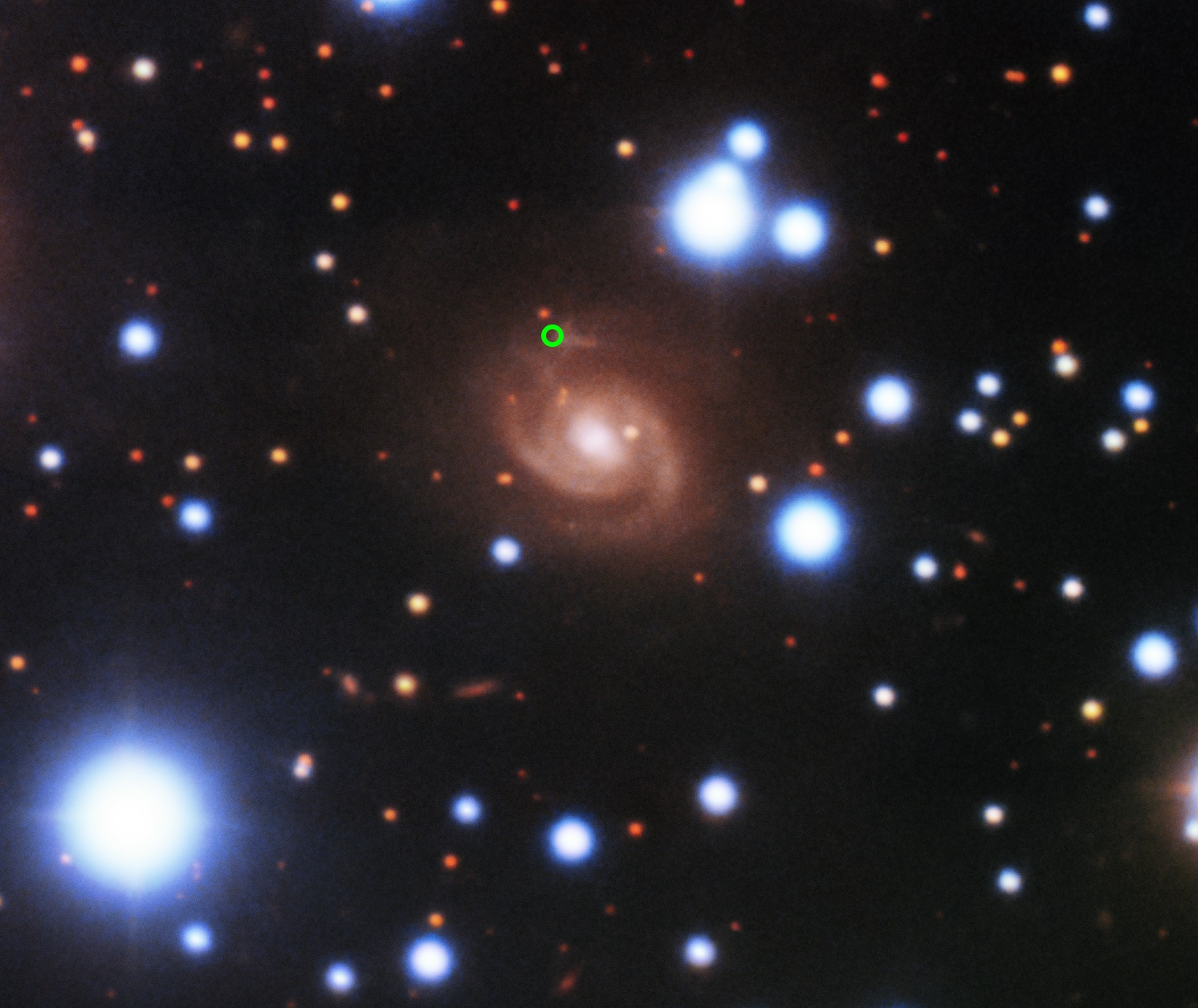
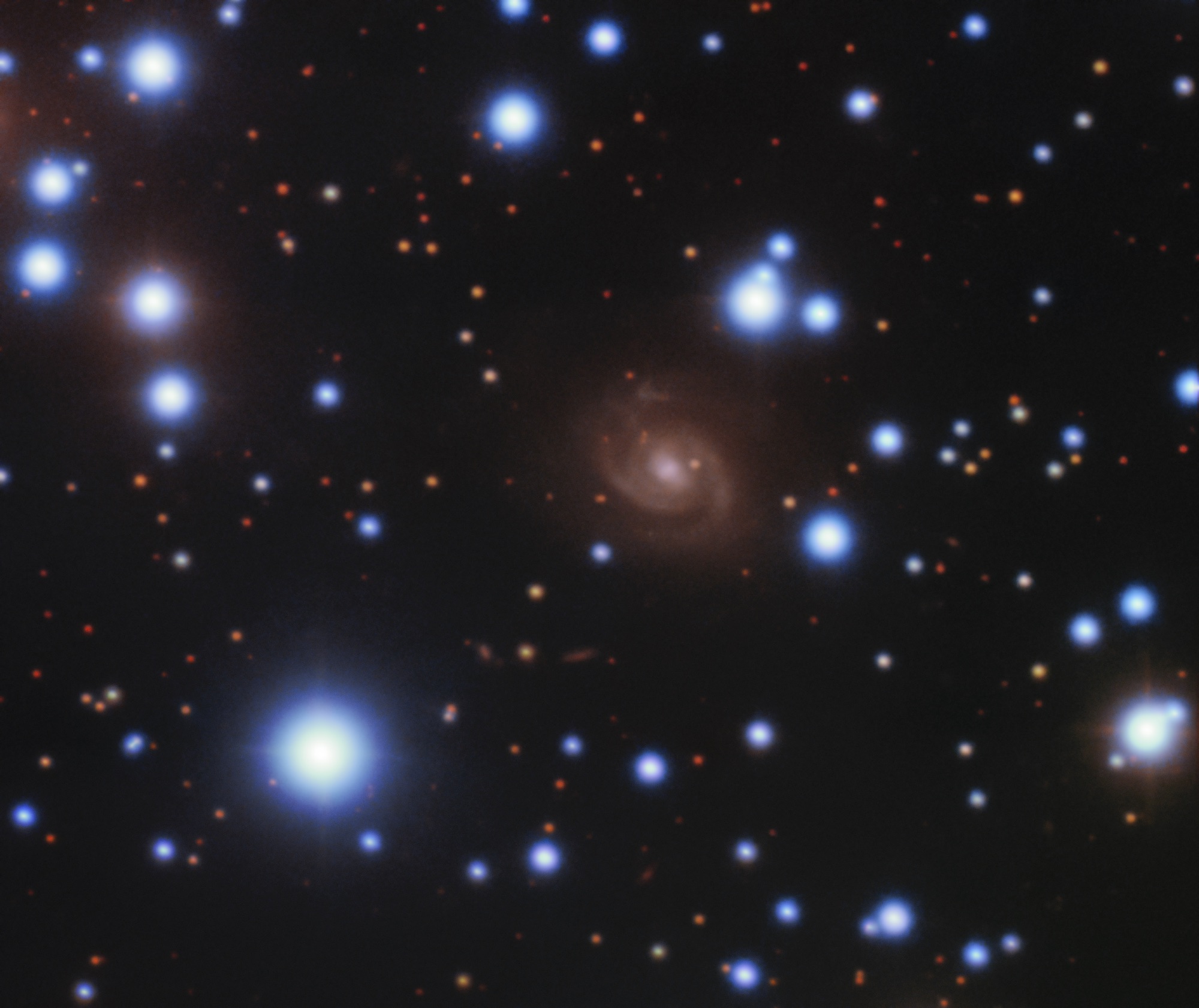
Image of the host galaxy of FRB 180916 (center) acquired on Hawaii’s Maunakea with the 8-meter Gemini North telescope of the international Gemini Observatory (a program of the NSF’s OIR Lab). Images acquired in SDSS g', r', and z' filters are used for the blue, green, and red colors, respectively. The position of the FRB in the spiral arm of the galaxy is marked by a green circle. Credit: Gemini Observatory/NSF’s Optical-Infrared Astronomy Research Laboratory/AURA.  download JPG | TIFF - download unannotated images JPG | TIFF

Observations with the 8-meter Gemini North telescope, a program of the NSF’s National Optical-Infrared Astronomy Research Laboratory, have allowed astronomers to pinpoint the location of a Fast Radio Burst in a nearby galaxy — making it the closest known example to Earth and only the second repeating burst source to have its location pinpointed in the sky. The source of this burst of radio waves is located in an environment radically different from that seen in previous studies. This discovery challenges researchers’ assumptions on the origin of these already enigmatic extragalactic events.

An unsolved mystery in astronomy has become even more puzzling. The source of Fast Radio Bursts (FRBs) — sudden bursts of radio waves lasting a few thousandths of a second — has remained unknown since their discovery in 2007. Research published today in the scientific journal Nature, and presented at the 235th meeting of the American Astronomical Society, has pinpointed the origin of an FRB to an unexpected environment in a nearby spiral galaxy. Observations with the Gemini North telescope of NSF’s Optical-Infrared Astronomy Research Laboratory (OIR Lab) on Maunakea in Hawai‘i, played a vital role in this discovery, which renders the nature of these extragalactic radio pulses even more enigmatic.

The sources of FRBs and their nature are mysterious — many are one-off bursts but very few of them emit repeated flashes. The recently discovered FRB — identified by the unpoetic designation FRB 180916.J0158+65 — is one of only five sources with a precisely known location and only the second such source that shows repeated bursts. Such FRB’s are referred to as localized and can be associated with a particular distant galaxy, allowing astronomers to make additional observations that can provide insights into the origin of the radio pulse.

“This object’s location is radically different from that of not only the previously located repeating FRB, but also all previously studied FRBs,” elaborates Kenzie Nimmo, PhD student at the University of Amsterdam and a fellow lead author of this paper. “This blurs the differences between repeating and non-repeating fast radio bursts. It may be that FRBs are produced in a large zoo of locations across the Universe and just require some specific conditions to be visible.”

Pinpointing the location of FRB 180916.J0158+65 required observations at both radio and optical wavelengths. FRBs can only be detected with radio telescopes, so radio observations are fundamentally necessary to accurately determine the position of an FRB on the sky. This particular FRB was first discovered by the Canadian CHIME radio telescope array in 2018[1]. The new research used the European VLBI Network (EVN)[2] to precisely localize the source, but measuring the precise distance and local environment of the radio source was only possible with follow-up optical observations with the Gemini North telescope. The international Gemini Observatory comprises telescopes in both the northern and southern hemispheres, which together can access the entire night sky.

“We used the cameras and spectrographs on the Gemini North telescope to image the faint structures of the host galaxy where the FRB resides, measure its distance, and analyze its chemical composition,” explains Shriharsh Tendulkar, a postdoctoral fellow at McGill University in Montreal, Canada who led the Gemini observations[3] and subsequent data analysis. “These observations showed that the FRB originates in a spiral arm of the galaxy, in a region which is rapidly forming stars.”

However, the source of FRB 180916.J0158+65 — which lies roughly 500 million light-years from Earth — was unexpected and shows that FRB’s may not be linked to a particular type of galaxy or environment, deepening this astronomical mystery[4].

“This is the closest FRB to Earth ever localised,” explains Benito Marcote, of the Joint Institute for VLBI European Research Infrastructure Consortium and a lead author of the Nature paper. “Surprisingly, it was found in an environment radically different from that of the previous four localised FRBs — an environment that challenges our ideas of what the source of these bursts could be.”

The researchers hope that further studies will reveal the conditions that result in the production of these mysterious transient radio pulses, and address some of the many unanswered questions they pose. Corresponding author Jason Hessels of the Netherlands Institute for Radio Astronomy (ASTRON) and the University of Amsterdam states that “our aim is to precisely localize more FRBs and, ultimately, understand their origin.”

“It’s a pleasure to see different observing facilities complement one another during challenging high-priority investigations such as this,” concludes Luc Simard, Gemini Board member and Director General of NRC-Herzberg, which hosts CHIME, as well as the Canadian Gemini Office. “We are particularly honored to have the opportunity to conduct astronomical observations on Maunakea in Hawai’i. This site’s exceptional observing conditions are vital to making astronomical discoveries such as this.”

Chris Davis, National Science Foundation Program Officer for Gemini adds, “understanding the origin of FRBs will undoubtedly be an exciting challenge for astronomers in the 2020s; we’re confident that Gemini will play an important role, and it seems fitting that Gemini has made these important observations at the dawn of the new decade.”


Notes

[1] The Canadian Hydrogen Intensity Mapping Experiment (CHIME) collaboration operates an innovative radio telescope at the Dominion Radio Astrophysical Observatory in Canada. The CHIME telescope’s novel construction makes it particularly adept at discovering FRBs such as FRB 180916.J0158+65.

[2] Radio observations were made using eight radio telescopes of the European Very Long Baseline Interferometry Network (EVN) following the discovery of FRB 180916.J0158+65 by the CHIME/FRB Collaboration.

[3] The Gemini observations were made between July and September of 2019 using the Gemini Multi-Object Spectrograph (GMOS) on the Gemini North telescope on Hawaii’s Maunakea.

[4] Prior to the observations announced today, the evidence hinted at the possibility that repeating and non-repeating FRBs were formed in very different environments. The only repeating FRB apart from FRB 180916.J0158+65 with a precisely determined location was found to inhabit a region of massive star formation inside a dwarf galaxy. Conversely, the three localized non-repeating FRBs were all found in massive galaxies and appear not to be associated with star-forming regions, leading to speculation that there were two separate types of FRB.


More information

This research was presented in a paper in Nature entitled “A repeating fast radio burst source localized to a nearby spiral galaxy”.

NSF’s National Optical-Infrared Astronomy Research Laboratory, the US center for ground-based optical-infrared astronomy, operates the Gemini Observatory (a facility of NSF, NRC–Canada, CONICYT–Chile, MCTI–Brazil, MCTIP–Argentina, and KASI–Republic of Korea), Kitt Peak National Observatory (KPNO), Cerro Tololo Inter-American Observatory (CTIO), the Community Science and Data Center (CSDC), and the Large Synoptic Survey Telescope (LSST, a facility that will be jointly operated by NSF and DOE). It is managed by the Association of Universities for Research in Astronomy (AURA) under a cooperative agreement with NSF and is headquartered in Tucson, Arizona. The astronomical community is honored to have the opportunity to conduct astronomical research on Iolkam Du’ag (Kitt Peak) in Arizona, on Maunakea in Hawai’i, and on Cerro Tololo and Cerro Pachón in Chile. We recognize and acknowledge the very significant cultural role and reverence that these sites have to the Tohono O’odham Nation, to the Native Hawaiian community, and to the local Communities in Chile, respectively.


Contacts:
 
Peter Michaud
NewsTeam Manager
NSF’s National Optical-Infrared Astronomy Research Laboratory
Gemini Observatory, Hilo HI
Desk:: +1 808-974-2510
Cell: +1 808-936-6643
Email: pmichaud@gemini.edu

Jason Hessels
University of Amsterdam & ASTRON
Email: j.w.t.hessels@uva.nl
Phone: +31 610260062
Shriharsh Tendulkar
McGill University
Email: shriharsh@physics.mcgill.ca


Wednesday, February 05, 2020

ALMA catches beautiful outcome of stellar fight

ALMA image of HD101584 

Location of HD101584 in the constellation of Centaurus 

Wide-field view of the region of the sky where HD101584 is located


Videos
 
ESOcast 216 Light: ALMA Catches Beautiful Outcome of Stellar Fight

Zooming into HD101584


Astronomers using the Atacama Large Millimeter/submillimeter Array (ALMA), in which ESO is a partner, have spotted a peculiar gas cloud that resulted from a confrontation between two stars. One star grew so large it engulfed the other which, in turn, spiralled towards its partner provoking it into shedding its outer layers.

Like humans, stars change with age and ultimately die. For the Sun and stars like it, this change will take it through a phase where, having burned all the hydrogen in its core, it swells up into a large and bright red-giant star. Eventually, the dying Sun will lose its outer layers, leaving behind its core: a hot and dense star called a white dwarf.

“The star system HD101584 is special in the sense that this ‘death process’ was terminated prematurely and dramatically as a nearby low-mass companion star was engulfed by the giant,” said Hans Olofsson of the Chalmers University of Technology, Sweden, who led a recent study, published in Astronomy & Astrophysics, of this intriguing object.

Thanks to new observations with ALMA, complemented by data from the ESO-operated Atacama Pathfinder EXperiment (APEX), Olofsson and his team now know that what happened in the double-star system HD101584 was akin to a stellar fight. As the main star puffed up into a red giant, it grew large enough to swallow its lower-mass partner. In response, the smaller star spiralled in towards the giant’s core but didn’t collide with it. Rather, this manoeuvre triggered the larger star into an outburst, leaving its gas layers dramatically scattered and its core exposed.

The team says the complex structure of the gas in the HD101584 nebula is due to the smaller star’s spiralling towards the red giant, as well as to the jets of gas that formed in this process. As a deadly blow to the already defeated gas layers, these jets blasted through the previously ejected material, forming the rings of gas and the bright bluish and reddish blobs seen in the nebula.

A silver lining of a stellar fight is that it helps astronomers to better understand the final evolution of stars like the Sun. “Currently, we can describe the death processes common to many Sun-like stars, but we cannot explain why or exactly how they happen. HD101584 gives us important clues to solve this puzzle since it is currently in a short transitional phase between better studied evolutionary stages. With detailed images of the environment of HD101584 we can make the connection between the giant star it was before, and the stellar remnant it will soon become,” says co-author Sofia Ramstedt from Uppsala University, Sweden.

Co-author Elizabeth Humphreys from ESO in Chile highlighted that ALMA and APEX, located in the country’s Atacama region, were crucial to enabling the team to probe “both the physics and chemistry in action” in the gas cloud. She added: “This stunning image of the circumstellar environment of HD101584 would not have been possible without the exquisite sensitivity and angular resolution provided by ALMA.

While current telescopes allow astronomers to study the gas around the binary, the two stars at the centre of the complex nebula are too close together and too far away to be resolved. ESO’s Extremely Large Telescope, under construction in Chile’s Atacama Desert, “will provide information on the ‘heart’ of the object,” says Olofsson, allowing astronomers a closer look at the fighting pair.


More Information

This research was presented in a paper published in Astronomy & Astrophysics.

The team is composed of H. Olofsson (Department of Space, Earth and Environment, Chalmers University of Technology, Onsala Space Observatory, Sweden [Chalmers]), T. Khouri (Chalmers), M. Maercker (Chalmers), P. Bergman (Chalmers), L. Doan (Department of Physics and Astronomy, Uppsala University, Sweden [Uppsala]), D. Tafoya (National Astronomical Observatory of Japan), W. H. T. Vlemmings (Chalmers), E. M. L. Humphreys (European Southern Observatory [ESO], Garching, Germany), M. Lindqvist (Chalmers), L. Nyman (ESO, Santiago, Chile), and S. Ramstedt (Uppsala).

The Atacama Large Millimeter/submillimeter Array (ALMA), an international astronomy facility, is a partnership of ESO, the U.S. National Science Foundation (NSF) and the National Institutes of Natural Sciences (NINS) of Japan in cooperation with the Republic of Chile. ALMA is funded by ESO on behalf of its Member States, by NSF in cooperation with the National Research Council of Canada (NRC) and the National Science Council of Taiwan (NSC) and by NINS in cooperation with the Academia Sinica (AS) in Taiwan and the Korea Astronomy and Space Science Institute (KASI). ALMA construction and operations are led by ESO on behalf of its Member States; by the National Radio Astronomy Observatory (NRAO), managed by Associated Universities, Inc. (AUI), on behalf of North America; and by the National Astronomical Observatory of Japan (NAOJ) on behalf of East Asia. The Joint ALMA Observatory (JAO) provides the unified leadership and management of the construction, commissioning and operation of ALMA.

ESO is the foremost intergovernmental astronomy organisation in Europe and the world’s most productive ground-based astronomical observatory by far. It has 16 Member States: Austria, Belgium, the Czech Republic, Denmark, France, Finland, Germany, Ireland, Italy, the Netherlands, Poland, Portugal, Spain, Sweden, Switzerland and the United Kingdom, along with the host state of Chile and with Australia as a Strategic Partner. ESO carries out an ambitious programme focused on the design, construction and operation of powerful ground-based observing facilities enabling astronomers to make important scientific discoveries. ESO also plays a leading role in promoting and organising cooperation in astronomical research. ESO operates three unique world-class observing sites in Chile: La Silla, Paranal and Chajnantor. At Paranal, ESO operates the Very Large Telescope and its world-leading Very Large Telescope Interferometer as well as two survey telescopes, VISTA working in the infrared and the visible-light VLT Survey Telescope. Also at Paranal ESO will host and operate the Cherenkov Telescope Array South, the world’s largest and most sensitive gamma-ray observatory. ESO is also a major partner in two facilities on Chajnantor, APEX and ALMA, the largest astronomical project in existence. And on Cerro Armazones, close to Paranal, ESO is building the 39-metre Extremely Large Telescope, the ELT, which will become “the world’s biggest eye on the sky”.


Links 


Contacts

Hans Olofsson
Chalmers University of Technology
Onsala, Sweden
Tel: +46 31 772 5535
Email: hans.olofsson@chalmers.se

Elizabeth Humphreys
European Southern Observatory (ESO)
Santiago, Chile
Tel: +56 2 2463 6912
Email: ehumphre@eso.org

Sofia Ramstedt
Uppsala University
Uppsala, Sweden
Tel: +46 18 471 5970
Email: sofia.ramstedt@physics.uu.se

Bárbara Ferreira
ESO Public Information Officer
Garching bei München, Germany
Tel: +49 89 3200 6670
Cell: +49 151 241 664 00
Email: pio@eso.org

Source: ESO/News


Tuesday, February 04, 2020

Scientists Complete ELM Survey, Discover 98 Double White Dwarf Stars

Artist's conception of extremely low mass detached double white dwarf binary.
Credit: Melissa Weiss.  High Resolution (jpg)

Cambridge, MA - Scientists at the Center for Astrophysics | Harvard & Smithsonian (CfA) have completed the Extremely Low Mass--also known as ELM--spectroscopic study of white dwarf stars in the Sloan Digital Sky Survey (SDSS). In process for more than a decade, the completed survey discovered 98 detached double white dwarf binaries.

"We targeted candidate low mass white dwarf stars and found that they are all ultra-compact binaries. It makes sense," said Dr. Warren Brown, astronomer at CfA and lead author on the survey. "The stars we studied lost so much of their mass during their evolution that they ended up as a low mass white dwarf."

White dwarf stars are the remnant core of a star, what is left over after the star has burned through its nuclear fuel. The stars catalogued in the ELM survey do not follow the traditional "rules" for the creation of white dwarfs.

"The universe isn't old enough to make such low mass white dwarfs on their own, and yet, here they are. That's because they have companions in close orbits. The universe can't make a low mass white dwarf unless it's part of a compact binary," said Brown. "The completed survey now represents more than half of the known detached double white dwarf binaries. This is a substantive piece of work that offers models for future studies and discoveries.”

The ELM Survey is just the beginning, said Dr. Mukremin Kilic, from the University of Oklahoma, and co-author on the survey. Pulling data from the SDSS and Gaia, paired with followups using the 6.5-m MMT at the Fred Lawrence Whipple Observatory in Amado, Arizona, the survey team was able to collect a well-defined sample of existing binary white dwarf stars. "The models estimate there's an order of a hundred million white dwarf binaries in our galaxy," said Kilic. “We’ve found and confirmed 100 of them. Our observations can anchor the models for future surveys, and allow us to observe a specific subset of white dwarfs and cut through the population."

The clean and complete data set also acts as a precursor to future gravitational wave studies. The LISA (Laser Interferometer Space Antenna) gravitational wave observatory—planned for launch in 2034—will detect MHz gravity-wave sources, and is expected to detect hundreds of thousands of binary white dwarf stars. "There are things you can do if you have sources with both light and gravity waves,” said Brown. "With light we can measure temperature, distance, velocity, but we don’t measure mass directly; gravity-wave measurements measure mass."

As new technology and new methodologies approach reality, scientists are keen to see what the future holds for the stars in the ELM survey. "The traditional response to these binaries was to call them supernova progenitors. Someday they will merge together and become something else, and it's unclear what," said Brown. "If there's one thing we know for certain, it is that the stars we’ve listed in the survey will be great sources for the LISA mission and for future white dwarf star and gravitational wave studies; they are gravity wave sources, they are the signature multi-messenger systems of the future."

The results of the survey are published in The Astrophysical Journal.

About Center for Astrophysics | Harvard & Smithsonian

Headquartered in Cambridge, Mass., the Center for Astrophysics | Harvard & Smithsonian (CfA) is a collaboration between the Smithsonian Astrophysical Observatory and the Harvard College Observatory. CfA scientists, organized into six research divisions, study the origin, evolution and ultimate fate of the universe.

Amy Oliver
Public Affairs
Center for Astrophysics | Harvard & Smithsonian
Fred Lawrence Whipple Observatory
520-879-4402
amy.oliver@cfa.harvard.edu


Monday, February 03, 2020

Astronomers witness the dragging of space-time in stellar cosmic dance

The white dwarf-pulsar binary system PSR J1141-6545 discovered by the CSIRO’s Parkes radio telescope. Credit: Mark Myers, ARC Centre of Excellence for Gravitational Wave Discovery (OzGrav)

After almost 20 years of patient monitoring, an international team of astronomers have witnessed the very fabric of space-time being dragged around a rapidly-rotating exotic star known as a white dwarf. The effect is a consequence of Einstein’s General Theory of Relativity and the result was published today in the prestigious journal, Science.

When massive stars are born, they often are created in pairs, and at the end of their lives they leave behind super-dense cores in the form of a white dwarf, neutron star or black hole. Neutron stars emit regular clock-like pulses that enable astronomers to map their orbits to outstanding precision.

Dr Ramesh Bhat from the Curtin University node of ICRAR has been involved in this study since 2005. “This is an exotic stellar pair in which a tiny, super dense neutron star the size of Perth orbits another compact Earth-sized white dwarf star five times a day; both have masses about the same as our own Sun. It took 20 years of patient monitoring and careful scrutiny of data to figure out what is going on.”

Swinburne University’s Professor Matthew Bailes and his team began to map the orbit in a series of intensive observing campaigns at CSIRO’s Parkes 64-metre radio telescope. Over the course of two decades it became evident that the stars’ motion required Einstein’s General Theory of Relativity to explain their complex dance. Lead author Max Planck Institute for Radio Astronomy’s (MPIfR) Vivek Venkatraman Krishnan (VVK) took up the challenge of untangling the many intertwined Einsteinian effects at play in this naturally-occurring gravitational laboratory during his PhD at Swinburne University of Technology.

VVK explains, “At first the stellar pair appeared to exhibit many of the classic effects that Einstein’s theory predicted. We then noticed a gradual change in the orientation of the plane of the orbit”. MPIfR’s Dr Paulo Freire postulated that this might be, at least in-part, due to the so-called “frame-dragging” that all matter is subject to in the presence of a rotating body as predicted by the Austrian mathematicians Lense and Thirring in 1918.

“In a stellar pair, the first star to collapse is often rapidly rotating due to subsequent mass transfer from its companion”, explains Danish theorist Professor Thomas Tauris (Aarhus University). Tauris’s simulations helped quantify the magnitude of the white dwarf’s spin. “In this system the entire orbit is being dragged around by the white dwarf’s spin, which is misaligned with the orbit”.

“One of the first confirmations of frame-dragging used four gyroscopes in a satellite in orbit around the Earth, but in our system the effects are 100 million times stronger”, explains MPIfR’s Dr Norbert Wex.

ICRAR’s Dr Ramesh Bhat says that the effect makes the pulsar’s orbit tumble in space. “It provides yet another stunning confirmation of Einstein’s theory, which continues to shine in brilliance even after a century of its formulation. I find it truly fascinating.”

The result is especially pleasing for team members Bailes, Willem van Straten (Auckland University of Tech) and Ramesh Bhat (ICRAR-Curtin) who have been trekking out to the Parkes 64m telescope since the early 2000s, patiently mapping the orbit with the ultimate aim of studying Einstein’s Universe. “This makes all the late nights and early mornings worthwhile,” said Bhat.

The white dwarf-pulsar binary system PSR J1141-6545 discovered by the CSIRO’s Parkes radio telescope. The pulsar orbits its white dwarf companion every 4.8 hours. The white dwarf’s rapid rotation drags space-time around it, causing the entire orbit to change its orientation.


Publication:


Contacts:

Tania Ewing – OzGrav/Swinburne University of Technology
Ph: +61 408 378 422
Email: taniaewing@taniaewing.com

Pete Wheeler — Media Contact, ICRAR
Ph: +61 423 982 018
Email: Pete.Wheeler@icrar.org


Saturday, February 01, 2020

Heat wave signals the growth of a stellar embryo

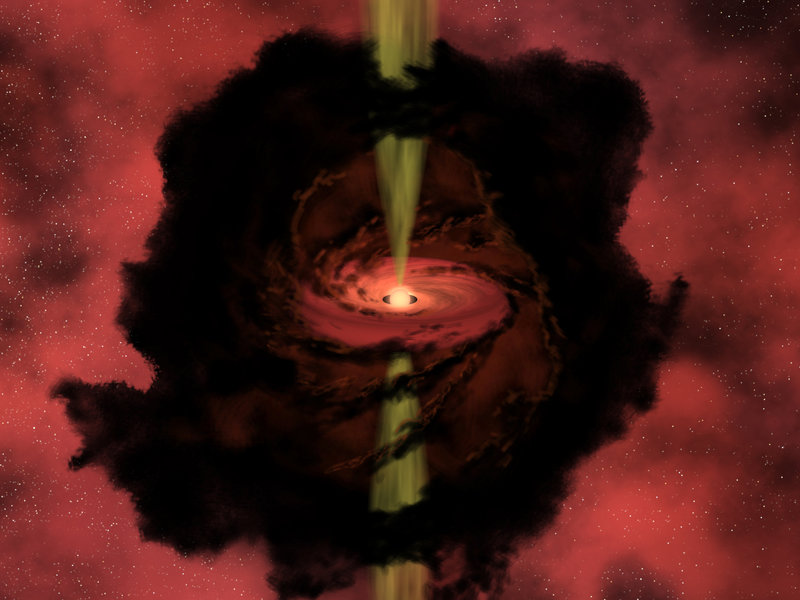
Artistic impression of a protostar that accretes gas from a circumstellar disk and grows. Part of the material is ejected by jets perpendicular to the plane of the disk. Gas continues to fall from the outer shell onto the disk. This can produce instabilities, which occasionally lead to increased infall onto the protostar. Since protostars are deeply embedded in dense clouds, they are difficult to observe directly. Credit: NASA/JPL-Caltech/R. Hurt (SSC)

Measuring natural microwave lasers sharpens research into the formation of massive stars

An international research team with the Max Planck Institute for Astronomy (MPIA) participating has detected a propagating heat wave near a massive protostar. It confirms the scenario that such objects grow in bursts. This wave became visible by observing naturally generated microwave lasers, whose spatial arrangement changed unexpectedly rapid.

Although the basic principles of star formation are generally well understood, the existence of massive stars is still puzzling in some details. Due to the enormous gravitational pressure inside a massive protostar, nuclear fusion starts while it is still growing. Further growth is made more difficult by the radiation pressure of the young star. In order to overcome this resistance, the accretion of material from a circumstellar disk might occur in phases of single large packets. During this process its brightness increases strongly for a short time. However, such fluctuations are difficult to observe because protostars are deeply embedded in dense clouds.

An international network of astronomers, the Maser Monitoring Organisation (M2O), in which the Max Planck Institute for Astronomy (MPIA) is involved, has now detected a heat wave propagating in the vicinity of the massive protostar G358-MM1 through observations with several radio telescopes. Subsequent observations have confirmed that it was caused by a temporary increase in accretion activity.

The heat wave was revealed by the activity of masers. Masers are the equivalent of lasers, which, however, emit microwave radiation - or radio waves - instead of visible light. They occur in massive star formation regions as natural, very bright and compact sources of radiation. Both the comparatively high temperatures and densities as well as the richness of complex chemistry in such environments favour their formation. In the present case, it is methanol (methyl alcohol) that is excited by the intense radiation of the protostar and causes masers.

Illustration of the mechanism by which the propagating heat wave stimulates maser activity in the material surrounding the protostar. The wave locally increases the temperature of the gas for a short time. In this region the characteristic radiation of methanol masers is emitted. As the wave propagates, the positions of the maser emission change. Credit: R. A. Burns/MPIA (cropped)

The scientists, who recorded radio-interferometric data with a high spatial resolution of 0.005 arc seconds (1 angular degree = 3600 arc seconds) at intervals of several weeks, discovered that the masers appeared to propagate outwards. However, the determined velocity of up to 8% of the speed of light was too high to be compatible with the movement of gas. Instead, astronomers concluded that a wave traversing the surrounding medium caused maser activity on its way. This heat wave has its origin in the accretion of gas on the protostar.

"The M2O observations are among the first to provide detailed evidence of the immediate effects of an accretion burst in a massive protostar in sufficient detail to support the episodic accretion theory of massive star formation," explains Ross Burns of the National Astronomical Observatory of Japan, who heads the research group.

Hendrik Linz from MPIA adds: "To observe the actual heat wave directly in the thermal infrared would be very complicated. As strong radiation sources in an easily accessible wavelength range, masers are excellent observation tools for indirectly tracing the passage of such a heat wave on small spatial scales, and thus on short time scales after an outburst".

The partners in the M2O project will continue to monitor masers in many star formation regions to learn more about the growth of massive protostars.


Authors

Dr. Markus Nielbock
Press and public relations officer
Phone:+49 6221 528-134
Email: pr@mpia.de
Max Planck Institute for Astronomy, Heidelberg

Dr. Hendrik Linz
Phone:+49 6221 528-402
Email: linz@mpia.de
Max Planck Institute for Astronomy, Heidelberg


Original Publication

1. R. A. Burns et al. A heatwave of accretion energy traced by masers in the G358-MM1 high-mass protostar 
Nature Astronomy (2020)

Source / DOI


Link 
Maser Monitoring Organisation (M2O)


Collaboration

This study was made possible by a cooperation of the following research institutions:

Mizusawa VLBI Observatory, National Astronomical Observatory of Japan; Korea Astronomy and Space Science Institute; NARIT, Thailand; University of Science and Technology, Korea; Ural Federal University, Russia; Thüringer Landessternwarte, Germany; The University of Western Ontario, Canada; Hartebeesthoek Radio Astronomy Observatory, South Africa; Center for Astronomy, Ibaraki University, Japan; Centre for Astronomy, Nicolaus Copernicus University, Poland; School of Natural Sciences, University of Tasmania, Australia; Xinjiang Astronomical Observatory, Chinese Academy of Sciences, China; Dublin Institute for Advanced Studies, Ireland; NRAO, USA; Australia Telescope National Facility, CSIRO, Australia; Max Planck Institute for Astronomy, Germany; INAF Osservatorio Astronomico di Cagliari, Italy; Space Research Unit, Physics Department, North West University, South Africa; Department of Physics and Astronomy, Faculty of Physical Sciences, University of Nigeria; Institute for Radio Astronomy, The Netherlands; Max Planck Institute for Radioastronomy, Germany