Thursday, November 15, 2018

Super-Earth Orbiting Barnard’s Star

Artist’s impression of the surface of a super-Earth orbiting Barnard’s Star

Artist’s impression of super-Earth orbiting Barnard’s Star

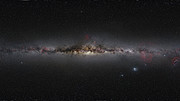
Barnard’s Star in the constellation Ophiuchus

Widefield image of the sky around Barnard’s Star showing its motion


Videos
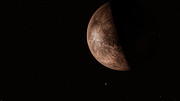
ESOcast 184 Light: Super-Earth Orbiting Barnard’s Star (4K UHD)
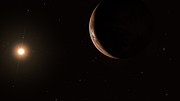

Artist’s impression of Barnard’s Star and its super-Earth
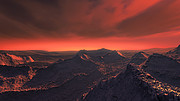

Exploring the surface of a super-Earth orbiting Barnard’s Star (Artist’s impression)
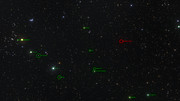

Barnard’s Star in the Solar neighborhood


Red Dots campaign uncovers compelling evidence of exoplanet around closest single star to Sun

The nearest single star to the Sun hosts an exoplanet at least 3.2 times as massive as Earth — a so-called super-Earth. One of the largest observing campaigns to date using data from a world-wide array of telescopes, including ESO’s planet-hunting HARPS instrument, have revealed this frozen, dimly lit world. The newly discovered planet is the second-closest known exoplanet to the Earth. Barnard’s star is the fastest moving star in the night sky.

A planet has been detected orbiting Barnard’s Star, a mere 6 light-years away. This breakthrough — announced in a paper published today in the journal Nature — is a result of the Red Dots and CARMENES projects, whose search for local rocky planets has already uncovered a new world orbiting our nearest neighbour, Proxima Centauri.

The planet, designated Barnard's Star b, now steps in as the second-closest known exoplanet to Earth [1]. The gathered data indicate that the planet could be a super-Earth, having a mass at least 3.2 times that of the Earth, which orbits its host star in roughly 233 days. Barnard’s Star, the planet’s host star, is a red dwarf, a cool, low-mass star, which only dimly illuminates this newly-discovered world. Light from Barnard’s Star provides its planet with only 2% of the energy the Earth receives from the Sun.

Despite being relatively close to its parent star — at a distance only 0.4 times that between Earth and the Sun — the exoplanet lies close to the snow line, the region where volatile compounds such as water can condense into solid ice. This freezing, shadowy world could have a temperature of –170 ℃, making it inhospitable for life as we know it.

Named for astronomer E. E. Barnard, Barnard’s Star is the closest single star to the Sun. While the star itself is ancient — probably twice the age of our Sun — and relatively inactive, it also has the fastest apparent motion of any star in the night sky [2]. Super-Earths are the most common type of planet to form around low-mass stars such as Barnard’s Star, lending credibility to this newly discovered planetary candidate. Furthermore, current theories of planetary formation predict that the snow line is the ideal location for such planets to form.

Previous searches for a planet around Barnard’s Star have had disappointing results — this recent breakthrough was possible only by combining measurements from several high-precision instruments mounted on telescopes all over the world [3].

“After a very careful analysis, we are 99% confident that the planet is there,” stated the team’s lead scientist, Ignasi Ribas (Institute of Space Studies of Catalonia and the Institute of Space Sciences, CSIC in Spain). “However, we’ll continue to observe this fast-moving star to exclude possible, but improbable, natural variations of the stellar brightness which could masquerade as a planet.”

Among the instruments used were ESO’s famous planet-hunting HARPS and UVES spectrographs. “HARPS played a vital part in this project. We combined archival data from other teams with new, overlapping, measurements of Barnard’s star from different facilities,” commented Guillem Anglada Escudé (Queen Mary University of London), co-lead scientist of the team behind this result [4]. “The combination of instruments was key to allowing us to cross-check our result.”

The astronomers used the Doppler effect to find the exoplanet candidate. While the planet orbits the star, its gravitational pull causes the star to wobble. When the star moves away from the Earth, its spectrum redshifts; that is, it moves towards longer wavelengths. Similarly, starlight is shifted towards shorter, bluer, wavelengths when the star moves towards Earth.

Astronomers take advantage of this effect to measure the changes in a star’s velocity due to an orbiting exoplanet — with astounding accuracy. HARPS can detect changes in the star’s velocity as small as 3.5 km/h — about walking pace. This approach to exoplanet hunting is known as the radial velocity method, and has never before been used to detect a similar super-Earth type exoplanet in such a large orbit around its star.

“We used observations from seven different instruments, spanning 20 years of measurements, making this one of the largest and most extensive datasets ever used for precise radial velocity studies.” explained Ribas. ”The combination of all data led to a total of 771 measurements — a huge amount of information!”

“We have all worked very hard on this breakthrough,” concluded Anglada-Escudé. “This discovery is the result of a large collaboration organised in the context of the Red Dots project, that included contributions from teams all over the world.


Notes

[1] The only stars closer to the Sun make up the triple star system Alpha Centauri. In 2016, astronomers using ESO telescopes and other facilities found clear evidence of a planet orbiting the closest star to Earth in this system, Proxima Centauri. That planet lies just over 4 light-years from Earth, and was discovered by a team led by Guillem Anglada Escudé.

[2] The total velocity of Barnard’s Star with respect to the Sun is about 500 000 km/h. Despite this blistering pace, it is not the fastest known star. What makes the star’s motion noteworthy is how fast it appears to move across the night sky as seen from the Earth, known as its apparent motion. Barnard’s Star travels a distance equivalent to the Moon's diameter across the sky every 180 years — while this may not seem like much, it is by far the fastest apparent motion of any star.

[3] The facilities used in this research were: HARPS at the ESO 3.6-metre telescope; UVES at the ESO VLT; HARPS-N at the Telescopio Nazionale Galileo; HIRES at the Keck 10-metre telescope; PFS at the Carnegie’s Magellan 6.5-m telescope; APF at the 2.4-m telescope at Lick Observatory; and CARMENES at the Calar Alto Observatory. Additionally, observations were made with the 90-cm telescope at the Sierra Nevada Observatory, the 40-cm robotic telescope at the SPACEOBS observatory, and the 80-cm Joan Oró Telescope of the Montsec Astronomical Observatory (OAdM).

[4] The story behind this discovery will be explored in more detail in this week’s ESOBlog.


More Information

This research was presented in the paper A super-Earth planet candidate orbiting at the snow-line of Barnard’s star published in the journal Nature on 15 November.

The team was composed of I. Ribas (Institut de Ciències de l’Espai, Spain & Institut d’Estudis Espacials de Catalunya, Spain), M. Tuomi (Centre for Astrophysics Research, University of Hertfordshire, United Kingdom), A. Reiners (Institut für Astrophysik Göttingen, Germany), R. P. Butler (Department of Terrestrial Magnetism, Carnegie Institution for Science, USA), J. C. Morales (Institut de Ciències de l’Espai, Spain & Institut d’Estudis Espacials de Catalunya, Spain), M. Perger (Institut de Ciències de l’Espai, Spain & Institut d’Estudis Espacials de Catalunya, Spain), S. Dreizler (Institut für Astrophysik Göttingen, Germany), C. Rodríguez-López (Instituto de Astrofísica de Andalucía, Spain), J. I. González Hernández (Instituto de Astrofísica de Canarias Spain & Universidad de La Laguna, Spain), A. Rosich (Institut de Ciències de l’Espai, Spain & Institut d’Estudis Espacials de Catalunya, Spain), F. Feng (Centre for Astrophysics Research, University of Hertfordshire, United Kingdom), T. Trifonov (Max-Planck-Institut für Astronomie, Germany), S. S. Vogt (Lick Observatory, University of California, USA), J. A. Caballero (Centro de Astrobiología, CSIC-INTA, Spain), A. Hatzes (Thüringer Landessternwarte, Germany), E. Herrero (Institut de Ciències de l’Espai, Spain & Institut d’Estudis Espacials de Catalunya, Spain), S. V. Jeffers (Institut für Astrophysik Göttingen, Germany), M. Lafarga (Institut de Ciències de l’Espai, Spain & Institut d’Estudis Espacials de Catalunya, Spain), F. Murgas (Instituto de Astrofísica de Canarias, Spain & Universidad de La Laguna, Spain), R. P. Nelson (School of Physics and Astronomy, Queen Mary University of London, United Kingdom), E. Rodríguez (Instituto de Astrofísica de Andalucía, Spain), J. B. P. Strachan (School of Physics and Astronomy, Queen Mary University of London, United Kingdom), L. Tal-Or (Institut für Astrophysik Göttingen, Germany & School of Geosciences, Tel-Aviv University, Israel), J. Teske (Department of Terrestrial Magnetism, Carnegie Institution for Science, USA & Hubble Fellow), B. Toledo-Padrón (Instituto de Astrofísica de Canarias, Spain & Universidad de La Laguna, Spain), M. Zechmeister (Institut für Astrophysik Göttingen, Germany), A. Quirrenbach (Landessternwarte, Universität Heidelberg, Germany), P. J. Amado (Instituto de Astrofísica de Andalucía, Spain), M. Azzaro (Centro Astronómico Hispano-Alemán, Spain), V. J. S. Béjar (Instituto de Astrofísica de Canarias, Spain & Universidad de La Laguna, Spain), J. R. Barnes (School of Physical Sciences, The Open University, United Kingdom), Z. M. Berdiñas (Departamento de Astronomía, Universidad de Chile), J. Burt (Kavli Institute, Massachusetts Institute of Technology, USA), G. Coleman (Physikalisches Institut, Universität Bern, Switzerland), M. Cortés-Contreras (Centro de Astrobiología, CSIC-INTA, Spain), J. Crane (The Observatories, Carnegie Institution for Science, USA), S. G. Engle (Department of Astrophysics & Planetary Science, Villanova University, USA), E. F. Guinan (Department of Astrophysics & Planetary Science, Villanova University, USA), C. A. Haswell (School of Physical Sciences, The Open University, United Kingdom), Th. Henning (Max-Planck-Institut für Astronomie, Germany), B. Holden (Lick Observatory, University of California, USA), J. Jenkins (Departamento de Astronomía, Universidad de Chile), H. R. A. Jones (Centre for Astrophysics Research, University of Hertfordshire, United Kingdom), A. Kaminski (Landessternwarte, Universität Heidelberg, Germany), M. Kiraga (Warsaw University Observatory, Poland), M. Kürster (Max-Planck-Institut für Astronomie, Germany), M. H. Lee (Department of Earth Sciences and Department of Physics, The University of Hong Kong), M. J. López-González (Instituto de Astrofísica de Andalucía, Spain), D. Montes (Dep. de Física de la Tierra Astronomía y Astrofísica & Unidad de Física de Partículas y del Cosmos de la Universidad Complutense de Madrid, Spain), J. Morin (Laboratoire Univers et Particules de Montpellier, Université de Montpellier, France), A. Ofir (Department of Earth and Planetary Sciences, Weizmann Institute of Science. Israel), E. Pallé (Instituto de Astrofísica de Canarias, Spain & Universidad de La Laguna, Spain), R. Rebolo (Instituto de Astrofísica de Canarias, Spain, & Consejo Superior de Investigaciones Científicas & Universidad de La Laguna, Spain), S. Reffert (Landessternwarte, Universität Heidelberg, Germany), A. Schweitzer (Hamburger Sternwarte, Universität Hamburg, Germany), W. Seifert (Landessternwarte, Universität Heidelberg, Germany), S. A. Shectman (The Observatories, Carnegie Institution for Science, USA), D. Staab (School of Physical Sciences, The Open University, United Kingdom), R. A. Street (Las Cumbres Observatory Global Telescope Network, USA), A. Suárez Mascareño (Observatoire Astronomique de l'Université de Genève, Switzerland & Instituto de Astrofísica de Canarias Spain), Y. Tsapras (Zentrum für Astronomie der Universität Heidelberg, Germany), S. X. Wang (Department of Terrestrial Magnetism, Carnegie Institution for Science, USA), and G. Anglada-Escudé (School of Physics and Astronomy, Queen Mary University of London, United Kingdom & Instituto de Astrofísica de Andalucía, Spain).

ESO is the foremost intergovernmental astronomy organisation in Europe and the world’s most productive ground-based astronomical observatory by far. It has 16 Member States: Austria, Belgium, the Czech Republic, Denmark, France, Finland, Germany, Ireland, Italy, the Netherlands, Poland, Portugal, Spain, Sweden, Switzerland and the United Kingdom, along with the host state of Chile and with Australia as a Strategic Partner. ESO carries out an ambitious programme focused on the design, construction and operation of powerful ground-based observing facilities enabling astronomers to make important scientific discoveries. ESO also plays a leading role in promoting and organising cooperation in astronomical research. ESO operates three unique world-class observing sites in Chile: La Silla, Paranal and Chajnantor. At Paranal, ESO operates the Very Large Telescope and its world-leading Very Large Telescope Interferometer as well as two survey telescopes, VISTA working in the infrared and the visible-light VLT Survey Telescope. ESO is also a major partner in two facilities on Chajnantor, APEX and ALMA, the largest astronomical project in existence. And on Cerro Armazones, close to Paranal, ESO is building the 39-metre Extremely Large Telescope, the ELT, which will become “the world’s biggest eye on the sky”.


Links


Contact

Ignasi Ribas (Lead Scientist)
Institut d’Estudis Espacials de Catalunya and the Institute of Space Sciences, CSIC
Barcelona, Spain
Tel: +34 93 737 97 88 (ext 933027)
Email: iribas@ice.cat

Guillem Anglada-Escudé
Queen Mary University of London
London, United Kingdom
Tel: +44 (0)20 7882 3002
Email: g.anglada@qmul.ac.uk

Calum Turner
ESO Public Information Officer
Garching bei München, Germany
Tel: +49 89 3200 6670
Cell: +49 151 1537 3591
Email: pio@eso.org

Source: ESO/News


Wednesday, November 14, 2018

NASA’s Webb Telescope Will Investigate Cosmic Jets From Young Stars

A pair of jets protrude outwards in this infrared image of Herbig-Haro 212 (HH 212), taken by the European Southern Observatory’s Very Large Telescope. Webb’s high resolution and sensitivity will allow astronomers to examine objects like this in greater detail than ever before. Credits: ESO/M. McCaughrean

The formation of a star sounds like a simple process: a cloud of gas collapses in on itself, growing denser and hotter until nuclear fusion ignites and a star begins to shine. The reality is more complex and dramatic.

Swirling gas spins faster and faster, threatening to rip the still-forming star into pieces. Clumps of matter are captured within a tangle of magnetic fields and squirt outward at supersonic speeds. All of it happens within a dusty shroud that blocks visible light. NASA’s James Webb Space Telescope will penetrate that dusty veil and reveal new secrets of star birth.

As an interstellar gas cloud contracts, it spins more rapidly, just as a twirling ice skater does when she draws in her arms. The only way for the gas to continue moving inward is for some of the spin (known as angular momentum) to be removed.

In a process that’s still not fully understood, magnetic fields funnel some of the swirling material into twin jets that shoot outward in opposite directions. These jets travel at speeds of hundreds of miles per second and spread across light-years of space.

“Jets are signposts of star formation,” said Tom Ray, an astronomer at the Dublin Institute for Advanced Studies. Ray and many other scientists are planning to use Webb to study these jets and stellar outflows. Their goals include learning more about how stars form, and how their jets interact with the surrounding interstellar medium of gas and dust.


Over the span of 14 years, the Hubble Space Telescope looked at a bright, clumpy jet known as HH 34 ejected from a young star. Several bright regions in the clumps signify where material is slamming into each other, heating up, and glowing. Credits: NASA, ESA, P. Hartigan (Rice University), and G. Bacon (STScI)

Shock Waves in Space

They will study objects like Herbig-Haro (HH) 212, located about 1,400 light-years away in the constellation Orion. At the center of HH 212 resides a still-forming star or protostar that will eventually grow to become about the mass of our Sun. Jets from the protostar extend across about 5 light-years of space.

The material in those jets is traveling at supersonic speeds. When it slams into surrounding material, it creates a shock wave, much like the “sonic boom” of a supersonic aircraft. The shock heats the interstellar gas, causing it to glow at specific wavelengths of light that depend on the conditions within the shock wave itself.

“With Webb, we’ll be able to dissect the interactions of the protostar with its surroundings that were previously blurred into a single blob,” said Ewine van Dishoeck of Leiden University.

Webb’s exquisite angular resolution will allow it to pick up the tiniest details. This will allow it to see solar-system-scale features at the distance of objects like HH 212. And since the farther along a jet you go from the protostar, the longer the time since the material was ejected, astronomers can probe the history of the star’s matter-gathering or accretion process.

“Webb has higher sensitivity and higher angular resolution at long infrared wavelengths than anything we could do previously. Webb will answer questions we can’t answer from the ground,” said Alberto Noriega-Crespo of the Space Telescope Science Institute.

Webb also will precisely discern different wavelengths of infrared light. This will allow it to detect infrared light from a variety of chemical elements associated with the shock wave, including iron, neon and sulfur.

When a jet of material traveling at supersonic speeds slam into interstellar gas and dust, it creates a shock wave that compresses and heats matter.  Credits: NASA and J. Olmsted (STScI). Hi-res image

A New Star Emerges

HH 212 is about 100,000 years old. Over the course of the next million years, its protostar will gather a sun’s worth of gas. The remainder of the surrounding material will either condense into planets or get swept away by outflows and other processes. Eventually, a fully formed star will emerge.

“By studying HH 212, and objects like it, we want to learn how jets and outflows help the star escape from its cocoon,” said Mark McCaughrean of the European Space Agency.

The observations described here will be taken as part of Webb’s Guaranteed Time Observation (GTO) program. The GTO program provides dedicated time to the scientists who have worked with NASA to craft the science and instrument capabilities of Webb throughout its development.

The James Webb Space Telescope will be the world's premier space science observatory when it launches in 2021. Webb will solve mysteries of our solar system, look beyond to distant worlds around other stars, and probe the mysterious structures and origins of our universe and our place in it. Webb is an international project led by NASA with its partners, the European Space Agency (ESA) and the Canadian Space Agency.

For more information about Webb, visit www.nasa.gov/webb

By Christine Pulliam
Space Telescope Science Institute, Baltimore, Md.

Editor: Lynn Jenner


Friday, November 09, 2018

Tiny Old Star Has Huge Impact

The newly discovered star system orbits the galaxy on a circular orbit that, like the orbit of the Sun, never gets too far from the plane of the galaxy. On the other hand, most ultra metal-poor stars have orbits that take them across the galaxy and far from its plane. Credit: Kevin Schlaufman.

The new discovery is only 14% the size of the Sun and is the new record holder for the star with the smallest complement of heavy elements. It has about the same heavy element proportion as Mercury, the smallest planet in our solar system. Credit: Kevin Schlaufman. Full resolution JPG

Astronomers use the Gemini Observatory to investigate a tiny star that is likely the oldest known star in the disk of our galaxy. The diminutive star could have a disproportionate impact on our understanding of the age and history of our Milky Way Galaxy. It also provides a unique glimpse into the conditions present in the young Universe shortly after the Big Bang.

A tiny star found in our galactic neighborhood is presenting astronomers with a compelling glimpse into the history of our galaxy and the early Universe. The star has some very interesting characteristics: it’s small, it’s old, and most significantly it’s made of material very similar to that spewed by the Big Bang. To host a star like this suggests that the disk of our galaxy could be up to three billion years older than previously thought.

“Our Sun likely descended from thousands of generations of short-lived massive stars that have lived and died since the Big Bang,” said Kevin Schlaufman of Johns Hopkins University, leader of this study published in the November 5th issue of The Astrophysical Journal. “However, what’s most interesting about this star is that it had perhaps only one ancestor separating it and the beginnings of everything,” Schlaufman adds.

The Big Bang theory dates our Universe at about 13.7 billion years and suggests that the first stars were made almost exclusively of hydrogen and helium. As stars die and gradually recycle their materials into new stars, heavier elements formed. Astronomers refer to stars which lack heavier elements as low metallicity stars. “But this one has such low metallicity,” said Schlaufman, “it’s known as an ultra metal poor star – this star may be one in ten million.

” The star, which goes by the designation 2MASS J18082002-5104378 B, also challenges the assumption that the first stars in the Universe were large, exclusively high-mass and short-lived stars. In addition, its location within the usually active and crowded disk of our galaxy is unexpected.

2MASS J18082002–5104378 B is a part of a binary star system. It is the smaller companion to a larger low-metallicity star observed in 2014 and 2015 by the European Southern Observatory's Very Large Telescope UT2. Before the discovery of the tiny star, astronomers mistakenly believed that this binary system might contain a black hole or neutron star. From April 2016 to July 2017, Schlaufman and his team used both the Gemini Multi-Object Spectrograph (GMOS) on the Gemini South telescope in Chile and the Magellan Clay Telescope at Las Campanas Observatory to dissect the star system’s light and measure the object’s relative motions, thus discovering the tiny star by detecting its gravitational tug on its partner.

"Gemini was critical to this discovery, as its flexible observing modes enabled weekly check-ins on the system over six months," Schlaufman confirms.

“Understanding the history of our own galaxy is critical for humanity to understand the broader history of the entire Universe,” said Chris Davis of the United State’s National Science Foundation (NSF). NSF funds the Gemini Observatory on behalf of the United States, additional international partners are listed at the end of this release.

2MASS J18082002–5104378 B has only about 14% the mass of our Sun making it a red dwarf star. While average-sized stars like our Sun live for approximately 10 billion years before extinguishing their nuclear fuel, low-mass stars can burn for trillions of years.

“Diminutive stars like these tend to shine for a very long time,” said Schlaufman. “This star has aged well. It looks exactly the same today as it did when it formed 13.5 billion years ago.”

The discovery of 2MASS J18082002–5104378 B gives astronomers hope for finding more of these old stars which provide a glimpse at the very early Universe. Only about 30 ultra metal poor stars have been identified. “Observations such as these are paving the way to perhaps one day finding that ever elusive first generation star,” concludes Schlaufman.


Johns Hopkins University news release

Media Contacts:

Peter Michaud
Public Information and Outreach manager
Gemini Observatory
Email: pmichaud@gemini.edu
Phone: 808-974-2510
Cell: 808-936-6643

Jill Rosen
Senior Media Relations Representative
Johns Hopkins University
Email: jrosen@jhu.edu
Desk: 443-997-9906
Cell: 443-547-8805

Science Contact:

Kevin Schlaufman
Assistant Professor of Physics and Astronomy
Johns Hopkins University
Email: kschlaufman@jhu.edu
Office Phone: 410-516-3295
Cell Phone: 814-490-9177


Thursday, November 08, 2018

Astronomers Unveil Growing Black Holes in Colliding Galaxies

Galaxy Mergers 
NASA, ESA, and M. Koss (Eureka Scientific, Inc.); Hubble image: NASA, ESA, and M. Koss (Eureka Scientific, Inc.); Keck images: W. M. Keck Observatory and M. Koss (Eureka Scientific, Inc.); Pan-STARRS images: Panoramic Survey Telescope and Rapid Response System and M. Koss (Eureka Scientific, Inc.). Release images


Peering through thick walls of gas and dust surrounding the messy cores of merging galaxies, astronomers are getting their best view yet of close pairs of supermassive black holes as they march toward coalescence into mega black holes.

A team of researchers led by Michael Koss of Eureka Scientific Inc., in Kirkland, Washington, performed the largest survey of the cores of nearby galaxies in near-infrared light, using high-resolution images taken by NASA's Hubble Space Telescope and the W. M. Keck Observatory in Hawaii. The Hubble observations represent over 20 years' worth of snapshots from its vast archive.

"Seeing the pairs of merging galaxy nuclei associated with these huge black holes so close together was pretty amazing," Koss said. "In our study, we see two galaxy nuclei right when the images were taken. You can't argue with it; it's a very 'clean' result, which doesn't rely on interpretation."

The images also provide a close-up preview of a phenomenon that must have been more common in the early universe, when galaxy mergers were more frequent. When galaxies collide, their monster black holes can unleash powerful energy in the form of gravitational waves, the kind of ripples in space-time that were just recently detected by ground-breaking experiments.

The new study also offers a preview of what will likely happen in our own cosmic backyard, in several billion years, when our Milky Way combines with the neighboring Andromeda galaxy and their respective central black holes smash together.

"Computer simulations of galaxy smashups show us that black holes grow fastest during the final stages of mergers, near the time when the black holes interact, and that's what we have found in our survey," said study team member Laura Blecha of the University of Florida, in Gainesville. "The fact that black holes grow faster and faster as mergers progress tells us galaxy encounters are really important for our understanding of how these objects got to be so monstrously big."

A galaxy merger is a slow process lasting more than a billion years as two galaxies, under the inexorable pull of gravity, dance toward each other before finally joining together. Simulations reveal that galaxies kick up plenty of gas and dust as they undergo this slow-motion train wreck.

The ejected material often forms a thick curtain around the centers of the coalescing galaxies, shielding them from view in visible light. Some of the material also falls onto the black holes at the cores of the merging galaxies. The black holes grow at a fast clip as they engorge themselves with their cosmic food, and, being messy eaters, they cause the infalling gas to blaze brightly. This speedy growth occurs during the last 10 million to 20 million years of the union. The Hubble and Keck Observatory images captured close-up views of this final stage, when the bulked-up black holes are only about 3,000 light-years apart — a near-embrace in cosmic terms.

It's not easy to find galaxy nuclei so close together. Most prior observations of colliding galaxies have caught the coalescing black holes at earlier stages when they were about 10 times farther away. The late stage of the merger process is so elusive because the interacting galaxies are encased in dense dust and gas and require high-resolution observations in infrared light that can see through the clouds and pinpoint the locations of the two merging nuclei.

The team first searched for visually obscured, active black holes by sifting through 10 years' worth of X-ray data from the Burst Alert Telescope (BAT) aboard NASA's Neil Gehrels Swift Telescope, a high-energy space observatory. "Gas falling onto the black holes emits X-rays, and the brightness of the X-rays tells you how quickly the black hole is growing," Koss explained. "I didn't know if we would find hidden mergers, but we suspected, based on computer simulations, that they would be in heavily shrouded galaxies.Therefore we tried to peer through the dust with the sharpest images possible, in hopes of finding coalescing black holes."

The researchers combed through the Hubble archive, identifying those merging galaxies they spotted in the X-ray data. They then used the Keck Observatory's super-sharp, near-infrared vision to observe a larger sample of the X-ray-producing black holes not found in the Hubble archive.

"People had conducted studies to look for these close interacting black holes before, but what really enabled this particular study were the X-rays that can break through the cocoon of dust," Koss said. "We also looked a bit farther in the universe so that we could survey a larger volume of space, giving us a greater chance of finding more luminous, rapidly growing black holes."

The team targeted galaxies with an average distance of 330 million light-years from Earth. Many of the galaxies are similar in size to the Milky Way and Andromeda galaxies. The team analyzed 96 galaxies from the Keck Observatory and 385 galaxies from the Hubble archive found in 38 different Hubble observation programs. The sample galaxies are representative of what astronomers would find by conducting an all-sky survey.

To verify their results, Koss's team compared the survey galaxies with 176 other galaxies from the Hubble archive that lack actively growing black holes. The comparison confirmed that the luminous cores found in the researchers' census of dusty interacting galaxies are indeed a signature of rapidly growing black-hole pairs headed for a collision.

When the two supermassive black holes in each of these systems finally come together in millions of years, their encounters will produce strong gravitational waves. Gravitational waves produced by the collision of two stellar-mass black holes have already been detected by the Laser Interferometer Gravitational-Wave Observatory (LIGO). Observatories such as the planned NASA/ESA space-based Laser Interferometer Space Antenna (LISA) will be able to detect the lower-frequency gravitational waves from supermassive black-hole mergers, which are a million times more massive than those detected by LIGO.

Future infrared telescopes, such as NASA's planned James Webb Space Telescope and a new generation of giant ground-based telescopes, will provide an even better probe of dusty galaxy collisions by measuring the masses, growth rate, and dynamics of close black-hole pairs. The Webb telescope may also be able to look in mid-infrared light to uncover more galaxy interactions so encased in thick gas and dust that even near-infrared light cannot penetrate them.

The team's results will appear online in the Nov. 7, 2018, issue of the journal Nature.

The Hubble Space Telescope is a project of international cooperation between NASA and ESA (European Space Agency). NASA's Goddard Space Flight Center in Greenbelt, Maryland, manages the telescope. The Space Telescope Science Institute (STScI) in Baltimore, Maryland, conducts Hubble science operations. STScI is operated for NASA by the Association of Universities for Research in Astronomy in Washington, D.C.


Related Links

This site is not responsible for content found on external links


Contact

Donna Weaver / Ray Villard
Space Telescope Science Institute, Baltimore, Maryland
410-338-4493 / 410-338-4514
dweaver@stsci.edu / villard@stsci.edu

Michael Koss
Eureka Scientific Inc., Kirkland, Washington
Michael.Koss@eurekasci.com


Wednesday, November 07, 2018

Cosmic Collisions: SOFIA Unravels the Mysterious Formation of Star Clusters

Illustration of a star cluster forming from the collision of turbulent molecular clouds, which appear as dark shadows in front of the background galactic star field.Credits: NASA/SOFIA/Lynette Cook. Hi-res image

Illustration of the molecular clouds surrounded by atomic envelopes, in green, which have been detected by SOFIA via emission from ionized carbon. The spatial offset and motions of these envelopes confirm predictions of simulations of cloud collisions.Credits: NASA/SOFIA/Lynette Cook. Hi-res image


The sun, like all stars, was born in a giant cold cloud of molecular gas and dust. It may have had dozens or even hundreds of stellar siblings – a star cluster – but these early companions are now scattered throughout our Milky Way galaxy. Although the remnants of this particular creation event have long since dispersed, the process of star birth continues today within our galaxy and beyond. Star clusters are conceived in the hearts of optically dark clouds where the early phases of formation have historically been hidden from view. But these cold, dusty clouds shine brightly in the infrared, so telescopes like the Stratospheric Observatory for Infrared Astronomy, SOFIA, can begin to reveal these long-held secrets. 

Traditional models claim that the force of gravity may be solely responsible for the formation of stars and star clusters. More recent observations suggest that magnetic fields, turbulence, or both are also involved and may even dominate the creation process. But just what triggers the events that lead to the formation of star clusters?

Astronomers using SOFIA’s instrument, the German Receiver for Astronomy at Terahertz Frequencies, known as GREAT, have found new evidence that star clusters form through collisions between giant molecular clouds.

The results were published in the Monthly Notices of the Royal Astronomical Society.

"Stars are powered by nuclear reactions that create new chemical elements," said Thomas Bisbas, a postdoctoral researcher at the University of Virginia, Charlottesville, Virginia, and the lead author on the paper describing these new results. "The very existence of life on earth is the product of a star that exploded billions of years ago, but we still don't know how these stars — including our own sun — form."

Researchers studied the distribution and motion of ionized carbon around a molecular cloud where stars can form. There appear to be two distinct components of molecular gas colliding with each other at speeds of more than 20,000 miles per hour. The distribution and velocity of the molecular and ionized gases are consistent with simulations of cloud collisions, which indicate that star clusters form as the gas is compressed in the shock wave created as the clouds collide.

“These star formation models are difficult to assess observationally,” said Jonathan Tan, a professor at Chalmers University of Technology in Gothenburg, Sweden, and the University of Virginia, and a lead researcher on the paper. “We’re at a fascinating point in the project, where the data we are getting with SOFIA can really test the simulations.”

While there is not yet scientific consensus on the mechanism responsible for driving the creation of star clusters, these SOFIA observations have helped scientists take an important step toward unraveling the mystery. This field of research remains an active one, and these data provide crucial evidence in favor of the collision model. The authors expect future observations will test this scenario to determine if the process of cloud collisions is unique to this region, more widespread, or even a universal mechanism for the formation of star clusters.

“Our next step is to use SOFIA to observe a larger number of molecular clouds that are forming star clusters,” added Tan. “Only then can we understand how common cloud collisions are for triggering star birth in our galaxy.”

SOFIA is a Boeing 747SP jetliner modified to carry a 106-inch diameter telescope. It is a joint project of NASA and the German Aerospace Center, DLR. NASA’s Ames Research Center in California’s Silicon Valley manages the SOFIA program, science and mission operations in cooperation with the Universities Space Research Association headquartered in Columbia, Maryland, and the German SOFIA Institute (DSI) at the University of Stuttgart. The aircraft is maintained and operated from NASA’s Armstrong Flight Research Center Hangar 703, in Palmdale, California.

Media Point of Contact

Nicholas A. Veronico
Nicholas.A.Veronico@nasa.gov • SOFIA Science Center
NASA Ames Research Center, Moffett Field, California

Editor: Kassandra Bell

Source:  NASA/Stars


Tuesday, November 06, 2018

ALMA and MUSE Detect Galactic Fountain

ALMA and MUSE Detect Galactic Fountain

Digitized Sky Survey image around Abell 2597

Abell 2597 in the Constellation of Aquarius


Videos

ESOcast 182 Light: ALMA and MUSE Detect Galactic Fountain (4K UHD)

Zooming in on a Galactic Fountain


Observations by ALMA and data from the MUSE spectrograph on ESO’s VLT have revealed a colossal fountain of molecular gas powered by a black hole in the brightest galaxy of the Abell 2597 cluster — the full galactic cycle of inflow and outflow powering this vast cosmic fountain has never before been observed in one system.

A mere one billion light-years away in the nearby galaxy cluster known as Abell 2597, there lies a gargantuan galactic fountain. A massive black hole at the heart of a distant galaxy has been observed pumping a vast spout of cold molecular gas into space, which then rains back onto the black hole as an intergalactic deluge .The in- and outflow of such a vast cosmic fountain has never before been observed in combination, and has its origin in the innermost 100 000 light-years of the brightest galaxy in the Abell 2597 cluster.

“This is possibly the first system in which we find clear evidence for both cold molecular gas inflow toward the black hole and outflow or uplift from the jets that the black hole launches,” explained Grant Tremblay of the Harvard-Smithsonian Center for Astrophysics and former ESO Fellow, who led this study. “The supermassive black hole at the centre of this giant galaxy acts like a mechanical pump in a fountain.”

Tremblay and his team used ALMA to track the position and motion of molecules of carbon monoxide within the nebula. These cold molecules, with temperatures as low as minus 250–260°C, were found to be falling inwards to the black hole. The team also used data from the MUSE instrument on ESO’s Very Large Telescope to track warmer gas — which is being launched out of the black hole in the form of jets.

“The unique aspect here is a very detailed coupled analysis of the source using data from ALMA and MUSE,” Tremblay explained. “The two facilities make for an incredibly powerful combination.”

Together these two sets of data form a complete picture of the process; cold gas falls towards the black hole, igniting the black hole and causing it to launch fast-moving jets of incandescent plasma into the void. These jets then spout from the black hole in a spectacular galactic fountain. With no hope of escaping the galaxy’s gravitational clutches, the plasma cools off, slows down, and eventually rains back down on the black hole, where the cycle begins anew.

This unprecedented observation could shed light on the life cycle of galaxies. The team speculates that this process may be not only common, but also essential to understanding galaxy formation. While the inflow and outflow of cold molecular gas have both previously been detected, this is the first time both have been detected within one system, and hence the first evidence that the two make up part of the same vast process.

Abell 2597 is found in the constellation Aquarius, and is named for its inclusion in the Abell catalogue of rich clusters of galaxies. The catalogue also includes such clusters as the Fornax cluster, the Hercules cluster, and Pandora’s cluster.


More information


This research was presented in a paper entitled “A Galaxy-Scale Fountain of Cold Molecular Gas Pumped by a Black Hole”, which appeared in The Astrophysical Journal.

The team was composed of G. R. Tremblay (Harvard-Smithsonian Center for Astrophysics, Cambridge, USA; Yale Center for Astronomy and Astrophysics, Yale University, New Haven, USA), F. Combes (LERMA, Observatoire de Paris, Sorbonne University, Paris, France), J. B. R. Oonk (ASTRON, Dwingeloo, the Netherlands; Leiden Observatory, the Netherlands), H. R. Russell (Institute of Astronomy, Cambridge University, UK), M. A. McDonald (Kavli Institute for Astrophysics and Space Research, Massachusetts Institute of Technology, Cambridge, USA), M. Gaspari (Department of Astrophysical Sciences, Princeton University, USA), B. Husemann (Max-Planck-Institut für Astronomie, Heidelberg, Germany), P. E. J. Nulsen (Harvard-Smithsonian Center for Astrophysics, Cambridge, USA; ICRAR, University of Western Australia, Crawley, Australia), B. R. McNamara (Physics & Astronomy Department, Waterloo University, Canada), S. L. Hamer (CRAL, Observatoire de Lyon, Université Lyon, France), C. P. O’Dea (Department of Physics & Astronomy, University of Manitoba, Winnipeg, Canada; School of Physics & Astronomy, Rochester Institute of Technology, USA), S. A. Baum (School of Physics & Astronomy, Rochester Institute of Technology, USA; Faculty of Science, University of Manitoba, Winnipeg, Canada), T. A. Davis (School of Physics & Astronomy, Cardiff University, UK), M. Donahue (Physics and Astronomy Department, Michigan State University, East Lansing, USA), G. M. Voit (Physics and Astronomy Department, Michigan State University, East Lansing, USA), A. C. Edge (Department of Physics, Durham University, UK), E. L. Blanton (Astronomy Department and Institute for Astrophysical Research, Boston University, USA), M. N. Bremer (H. W. Wills Physics Laboratory, University of Bristol, UK), E. Bulbul (Harvard-Smithsonian Center for Astrophysics, Cambridge, USA), T. E. Clarke (Naval Research Laboratory Remote Sensing Division, Washington, DC, USA), L. P. David (Harvard-Smithsonian Center for Astrophysics, Cambridge, USA), L. O. V. Edwards (Physics Department, California Polytechnic State University, San Luis Obispo, USA), D. Eggerman (Yale Center for Astronomy and Astrophysics, Yale University, New Haven, USA), A. C. Fabian (Institute of Astronomy, Cambridge University, UK), W. Forman (Harvard-Smithsonian Center for Astrophysics, Cambridge, USA), C. Jones (Harvard-Smithsonian Center for Astrophysics, Cambridge, USA), N. Kerman (Yale Center for Astronomy and Astrophysics, Yale University, New Haven, USA), R. P. Kraft (Harvard-Smithsonian Center for Astrophysics, Cambridge, USA), Y. Li (Center for Computational Astrophysics, Flatiron Institute, New York, USA; Department of Astronomy, University of Michigan, Ann Arbor, USA), M. Powell (Yale Center for Astronomy and Astrophysics, Yale University, New Haven, USA), S. W. Randall (Harvard-Smithsonian Center for Astrophysics, Cambridge, USA), P. Salomé (LERMA, Observatoire de Paris, Sorbonne University, Paris, France), A. Simionescu (Institute of Space and Astronautical Science [ISAS], Kanagawa, Japan), Y. Su (Harvard-Smithsonian Center for Astrophysics, Cambridge, USA), M. Sun (Department of Physics and Astronomy, University of Alabama in Huntsville, USA), C. M. Urry (Yale Center for Astronomy and Astrophysics, Yale University, New Haven, USA), A. N. Vantyghem (Physics & Astronomy Department, Waterloo University, Canada), B. J. Wilkes (Harvard-Smithsonian Center for Astrophysics, Cambridge, USA) and J. A. ZuHone (Harvard-Smithsonian Center for Astrophysics, Cambridge, USA).

ESO is the foremost intergovernmental astronomy organisation in Europe and the world’s most productive ground-based astronomical observatory by far. It has 16 Member States: Austria, Belgium, the Czech Republic, Denmark, France, Finland, Germany, Ireland, Italy, the Netherlands, Poland, Portugal, Spain, Sweden, Switzerland and the United Kingdom, along with the host state of Chile and with Australia as a Strategic Partner. ESO carries out an ambitious programme focused on the design, construction and operation of powerful ground-based observing facilities enabling astronomers to make important scientific discoveries. ESO also plays a leading role in promoting and organising cooperation in astronomical research. ESO operates three unique world-class observing sites in Chile: La Silla, Paranal and Chajnantor. At Paranal, ESO operates the Very Large Telescope and its world-leading Very Large Telescope Interferometer as well as two survey telescopes, VISTA working in the infrared and the visible-light VLT Survey Telescope. ESO is also a major partner in two facilities on Chajnantor, APEX and ALMA, the largest astronomical project in existence. And on Cerro Armazones, close to Paranal, ESO is building the 39-metre Extremely Large Telescope, the ELT, which will become “the world’s biggest eye on the sky”.


Links


Contacts

Grant Tremblay
Harvard-Smithsonian Center for Astrophysics
Cambridge, USA
Tel: +1 207 504 4862

Francoise Combes
LERMA, Paris Observatory
Paris, France 

Calum Turner
ESO Public Information Officer
Garching bei München, Germany
Tel: +49 89 3200 6670
Email: pio@eso.org

Source: ESO/News


Friday, November 02, 2018

Studying Lyman-α-galaxies with strong gravitational lensing

Images by the Hubble Space telescope of all gravitational lens systems. The surface brightness scale is in electrons per second. The lensing morphologies are quite varied, from nearly complete Einstein rings to very compact 2-image systems. © MPA

Strong gravitational lensing is an extremely powerful tool to go beyond the current limits in angular resolution and to investigate the high-redshift, i.e. distant Universe. Scientists at MPA take advantage of this phenomenon to perform a detailed study of 17 Lyman-α-galaxies and present an analysis of the sizes and star formation rates of their reconstructed ultra-violet (UV) continuum emission.

Lyman-α-emitting (LAE) galaxies represent a unique probe of the young Universe, about 1 to 2 billion years after the Big Bang. Typical LAEs are characterised by high-ionisation and strong star formation with low metallicity (i.e. few elements heavier than hydrogen and in general a low mass. The Lyman-α emission is produced when electrons recombine with the ionized hydrogen atoms and the properties cited above, combined with low dust content, allow for the escape of a significant fraction of these photons. While this emission is thought to have had a crucial role in the reionisation of the young Universe, very little is known about the detailed structure of these galaxies and, most importantly, about the mechanism that leads to the production of these high-energy photons.

So far the study of these high-redshift objects has been limited to quantifying the properties of their strong optical lines. Alternatively, many efforts have been spent to identify local analogues, i.e. nearby galaxies presenting similar physical and morphological characteristics. Both these approaches, however, require significant investment in telescope time.

These images show the lens model of one of the systems in the sample showing the actual data, the model, normalized residuals, and the reconstruction of the source (from left). Critical curves and caustics are plotted in grey. © MPA

Another resource to study these galaxies lies in high-resolution imaging studies that so far have been very useful to reveal their structure. LAEs are found to be quite compact objects and there is no evidence that they change their size as they evolve. Moreover they are surrounded by a large Lyman-α-emitting halo which is on average 10 times more extended than the UV continuum emitting region. Also this halo does not show an evolution in size with redshift. However, such studies are currently limited by the angular resolution of the observations and struggle to reveal the detailed structure of these objects.

Strong gravitational lensing can be used to overcome these limits. The first statistically significant sample of LAEs at z~2.5 strongly lensed by early type galaxies at z~0.5, has recently been revealed by observations with the Hubble Space Telescope. Due to the lensing magnification by a factor of about 20, we can access and probe the detailed structure of these galaxies at scales around 100 pc (some 300 light-years).

The star-formation rate intensity of the objects from Fig. 1, based on the source reconstructions from the grid-based gravitational lens modelling. The colour-scale for each object is in units of solar masses per year in a square with 1 kiloparsec on the side. (The reconstruction of the object J0201+3228 was not included as this presented strong residuals.) © MPA

We have studied the intrinsic properties of the UV-continuum emission of these LAEs and we found that they have a median star formation rate of 1.4 solar masses per year with peaks of up to 54 solar masses per year. (This is actually a lower limit as we could not correct for dust attenuation.) We have found these galaxies to be quite compact, with a median size of about 500 pc and a range of radii from 200 to 1800 pc – our Milky Way with about 60 000 pc is gigantic compared to these LAE. Interestingly, they show quite complex morphologies with several compact and diffuse components, while in some cases they appear to be interacting. In two cases (14 percent of 17?) the galaxies seem to have off-axis components that may be associated with mergers.

Most interestingly, our LAEs are found to be quite elliptical, with a mean axis-ratio of about 0.5. This morphology is consistent with disk-like structures of star-formation for three-quarters of our sample, which would rule out models where the Lyman-α-emission is only seen perpendicular to the disk to favour instead clumpy models. Our results are in agreement with the studies of non-lensed LAEs at similar redshifts, but are more robust given the improved angular resolution of our analysis and given that no stacking techniques are needed.

With 200 pc, our lower limit on the intrinsic size of these objects is a factor of two smaller than what is achieved in non-lensed LAEs studies. In general our analysis further promotes gravitational lensing as a powerful tool to analyse and resolve the detailed structure of high-redshift galaxies, allowing the study of their physical and morphological properties at a resolution otherwise only achievable with nearby targets.


Authors

Ritondale, Elisa
PhD student
Phone: 2233
Email: elisa@mpa-garching.mpg.de
Room: 252

Vegetti, Simona
Scientific Staff
Phone: 2285
Email: svegetti@mpa-garching.mpg.de


Thursday, November 01, 2018

Hubble reveals cosmic Bat Shadow in the Serpent’s Tail

Cosmic shadow of HBC 672
 
Serpens Nebula, seen by HAWK-I 
 
Wide-field view of the Serpens Nebula (ground-based image)
 
Bat Shadow


Videos

Serpens Nebula from the ground and from space

Zoom on HBC 672

Pan across the Serpens Nebula


The NASA/ESA Hubble Space Telescope has captured part of the wondrous Serpens Nebula, lit up by the star HBC 672. This young star casts a striking shadow — nicknamed the Bat Shadow — on the nebula behind it, revealing telltale signs of its otherwise invisible protoplanetary disc.

The Serpens Nebula, located in the tail of the Serpent (Serpens Cauda) about 1300 light-years away, is a reflection nebula that owes most of its sheen to the light emitted by stars like HBC 672 —  a young star nestled in its dusty folds. In this image the NASA/ESA Hubble Space Telescope has exposed two vast cone-like shadows emanating from HBC 672.

These colossal shadows on the Serpens Nebula are cast by the protoplanetary disc surrounding HBC 672. By clinging tightly to the star the disc creates an imposing shadow, much larger than the disc — approximately 200 times the diameter of our own Solar System. The disc’s shadow is similar to that produced by a cylindrical lamp shade. Light escapes from the top and bottom of the shade, but along its circumference, dark cones of shadow form.

The disc itself is so small and far away from Earth that not even Hubble can detect it encircling its host star. However, the shadow feature — nicknamed the Bat Shadow — reveals details of the disc’s shape and nature. The presence of a shadow implies that the disc is being viewed nearly edge-on.

Whilst most of the shadow is completely opaque, scientists can look for colour differences along its edges, where some light gets through. Using the shape and colour of the shadow, they can determine the size and composition of dust grains in the disc.

The whole Serpens Nebula, of which this image shows only a tiny part, could host more of these shadow projections. The nebula envelops hundreds of young stars, many of which could also be in the process of forming planets in a protoplanetary disc.

Although shadow-casting discs are common around young stars, the combination of an edge-on viewing angle and the surrounding nebula is rare. However, in an unlikely coincidence, a similar looking shadow phenomenon can be seen emanating from another young star, in the upper left of the image.

These precious insights into protoplanetary discs around young stars allow astronomers to study our own past. The planetary system we live in once emerged from a similar protoplanetary disc when the Sun was only a few million years old. By studying these distant discs we get to uncover the formation and evolution of our own cosmic home.


More information

The Hubble Space Telescope is a project of international cooperation between ESA and NASA.

Image credit: NASA, ESA


Link


Contact

Mathias Jäger
ESA/Hubble, Public Information Officer
Garching bei München, Germany
Cell: +49 176 62397500
Email: mjaeger@partner.eso.org