Showing posts with label Taurus Molecular Cloud. Show all posts

Saturday, July 25, 2026

First observational signature of ambipolar diffusion in prestellar core L1544

llustration of ion-neutral drift in the L1544 prestellar core. The blue lines represent the magnetic field lines, which are bent due to the gravitational contraction of the core. The red and green dots depict the ion and neutral molecular species, respectively, and the arrows trace their inflow motion towards the core center (the faster they travel the longer the arrows). While in the outer part of the core both the ions and neutrals are attached to the magnetic field lines, within the inner part of the core the neutrals decouple from the magnetic field lines and infall faster compared to the ions, which remain attached to the field lines. This ion-neutral decoupling known as ambipolar diffusion is required for the onset of the gravitational collapse of the prestellar core, which will produce a protostar in its center and ultimately a stellar system similar to our own Solar System. Credit: Y. Nakamura & D. Arzoumanian/Kyushu University


To the Point
  • An international team, including MPE researchers, has found the first observational signature of ambipolar diffusion in a prestellar core.

  • The result is based on high-resolution spectral observations of the dense core L1544 with the IRAM 30-meter telescope.

  • The team detected a small but systematic velocity offset between an ion and a neutral molecule that traces nearly the same gas.

  • The finding offers a new way to test theories of how magnetic fields regulate the earliest stages of star formation.

  • Future observations could test whether similar signatures appear in other prestellar cores and help constrain magnetic fields, geometry, chemistry, and dust growth.


An international team with major contributions from the Max Planck Institute for Extraterrestrial Physics (MPE) has found the first observational signature consistent with ambipolar diffusion in a prestellar core. Using high spectral resolution observations with the IRAM 30-meter telescope, the researchers detected a small but systematic velocity difference between ionized and neutral gas in L1544, a prototypical dense core in the Taurus molecular cloud.

The result addresses one of the central questions in star-formation research: how gravity and magnetic fields interact in the earliest phases of collapse. In dense molecular gas, ions remain coupled to magnetic fields, while neutral molecules can move more freely. Ambipolar diffusion describes the gradual decoupling of these components, allowing neutral gas to drift inward while charged particles remain coupled to the magnetic field. Until now, this process had been predicted by theory and simulations but had not been directly identified in a prestellar core.

“L1544 gives us a rare opportunity to study the interplay between magnetic fields and collapsing gas at a very early stage,” says Tommaso Grassi of MPE. “The data reveal a small but systematic relative motion between ions and neutrals — exactly the kind of signature expected if ambipolar diffusion is at work.” How the team detected the effect

L1544 is a prototypical prestellar core: cold, dense, gravitationally bound, and still without a protostar. That makes it an ideal laboratory for studying the physical conditions just before star birth. At such low temperatures, however, many common molecular tracers freeze onto dust grains, making them difficult to observe. The team therefore selected two molecules that probe similar dense regions of the core: the molecular ion N2D+ and the neutral molecule para-NH2D.

“This is a powerful example of what becomes possible when the right target is observed with very high spectral resolution and carefully matched tracers,” says Silvia Spezzano, Max Planck Research Group Leader at MPE. “It provides a direct observational probe of a process that has long been central to star-formation theory.”

What the observations reveal

The observations reveal a mean ion-neutral velocity offset of about 0.05 km/s. In a cold, slowly evolving prestellar core, this is a very small number — but one that is physically meaningful and consistent with the drift expected when ions and neutrals begin to decouple during gravitational collapse. The analysis also shows that the two tracers have similar spatial distributions, strengthening the case that they sample nearly the same gas and that the measured velocity difference reflects a real physical effect rather than a difference in the layers being traced.

At the same time, the authors are careful not to overstate the result. Geometry, projection effects, and the internal structure of the core all influence what can be seen along the line of sight. The study also does not detect a significant difference in linewidth between the ion and neutral species. For that reason, the result should be seen as strong evidence for ambipolar diffusion, not as final proof.

What comes next

Future observations with higher spatial and spectral resolution could test whether similar signatures appear in other prestellar cores and how they vary across a core’s structure. They could also help disentangle the roles of ambipolar diffusion, geometry, chemistry, and dust growth in shaping the collapse process. If ion-neutral drift velocities can be measured more broadly, they may become a new diagnostic for magnetic field strength and the physical conditions that regulate star formation.

For MPE, the study highlights the institute’s role in precision astrophysics at the frontier of star-formation research. For the field more broadly, it provides one of the clearest observational tests of a process that has shaped theory for decades but has been difficult to capture directly.

“This study highlights the remarkable synergy between astronomy, astrochemistry, and laboratory spectroscopy," says Paola Caselli, Director at the Max Planck Institute for Extraterrestrial Physics. "Detecting velocity differences of only a few tens of meters per second is possible only because laboratory measurements have established molecular transition frequencies with extraordinary precision. These advances now allow us to probe subtle physical processes, such as ambipolar diffusion, that govern the earliest stages of star formation, just before a new star is born.”


Contacts:

Dr. Silvia Spezzano
Max Planck Research Group Leader - CAS
Tel:
+49 89 30000-3513
Email: spezzano@mpe.mpg.de
Max Planck Institute for Extraterrestrial Physics, Garching

Dr. Tommaso Grassi
Scientist
Tel:
+49 89 30000-3639
Email: tgrassi@mpe.mpg.de
Center for Astrochemical Studies

Prof. Dr. Paola Caselli
Director of the Center for Astrochemical Studies (CAS)
Tel:
+49 89 30000-3400
Fax: +49 89 30000-3399
Email: caselli@mpe.mpg.de
Max Planck Institute for Extraterrestrial Physics, Garching


Original Publication

1. Arzoumanian, D., S. Spezzano, T. Grassi, P.Caselli, Y. Tsukamoto, H. Fukihara, Y. Misugi, F. Alves, J. Pineda, S.Jensen, E. Redaelli, and A. Ivlev

Probing the ion-neutral drift velocity towards the L1544
prestellar core: Detection of ambipolar diffusion using N2D+ and para-NH2D
A & A


Source | DOI

2. Grassi, T. , J.E. Pineda, S. Spezzano, D. Arzoumanian, F. Lique, Y. Misugi, E. Redaelli, S. S. Jensen, P. Caselli
A differentiable and optimizable 3D model for interpretation of observed spectral data cubes
A & A


Source | DOI


Further Information


Recreating the Cosmos: Modeling Sulfur Chemistry in Interstellar Ice Analogues

May 12, 2026
In a new study led by the Center for Astrochemical Studies (CAS) and conducted in collaboration with the Centro de Astrobiología in Madrid, MPE scientists combined laboratory experiments and advanced computer modeling to investigate how sulfur-bearing molecules evolve on icy grains in interstellar space.


A chemically rich outflow from a young Sun-like star: A new laboratory for shock chemistry

March 13, 2026


Conditions suitable for life on distant moons

March 11, 2026
Even in the darkness of space, life could be possible: A team of researchers from the ORIGINS Cluster has shown that moons of free-floating planets can keep their oceans liquid for billions of years.


Thursday, February 06, 2025

Webb investigates a dusty and dynamic disc

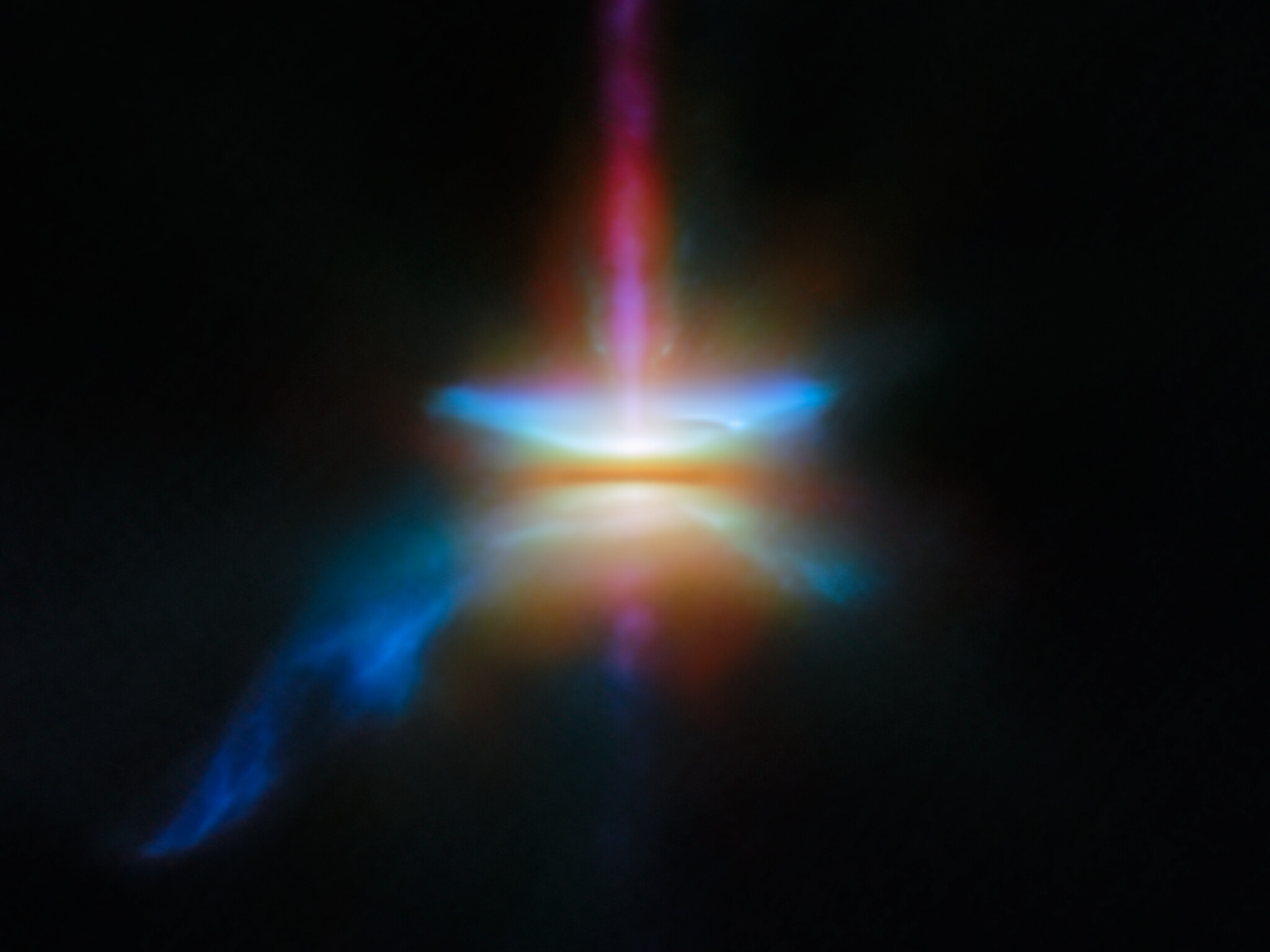
A close-in image of a protoplanetary disc around a newly formed star. Many different wavelengths of light are combined and represented by separate and various colours. A dark line across the centre is the disc, corresponding to the densest parts of the disc, made of opaque dust: the star is hidden in here and creates a strong glow in the centre. A band going straight up is a jet, while other outflows above and below the disc, and a tail coming off to one side. Credit: ESA/Webb, NASA & CSA, Tazaki et al.


This new NASA/ESA/CSA James Webb Space Telescope Picture of the Month presents HH 30 in unprecedented resolution. This target is an edge-on protoplanetary disc that is surrounded by jets and a disc wind, and is located in the dark cloud LDN 1551 in the Taurus Molecular Cloud.

Herbig-Haro objects are small nebulae found in star formation regions, marking the locations where gas outflowing from young stars is heated into luminescence by shockwaves. HH 30 is an example of where this outflowing gas takes the form of a narrow jet. The source star is located on one end of the jet, hidden behind an edge-on protoplanetary disc that the star is illuminating.

HH 30 is of particular interest to astronomers. In fact, the HH 30 disc is considered the prototype of an edge-on disc, thanks to its early discovery with the NASA/ESA Hubble Space Telescope. Discs seen from this view are a unique laboratory to study the settling and drift of dust grains.

An international team of astronomers have used Webb to investigate the target in unprecedented detail. By combining Webb’s observations with those from the Hubble Space Telescope and the Atacama Large Millimeter/submillimeter Array (ALMA), the team was able to study the multiwavelength disc appearance of the system.

The long-wavelength data from ALMA trace the location of millimetre-sized dust grains, which are found in a narrow region in the central plane of the disc. The shorter-wavelength infrared data from Webb reveal the distribution of smaller dust grains. These grains are only one millionth of a metre across — about the size of a single bacterium. While the large dust grains are concentrated in the densest parts of the disc, the small grains are much more widespread.

These Webb observations were taken as part of the Webb GO programme #2562 (PI F. Ménard, K. Stapelfeldt), which aims to understand how dust evolves in edge-on discs like HH 30. Combined with the keen radio-wavelength eyes of ALMA, these observations show that large dust grains must migrate within the disc and settle in a thin layer. The creation of a narrow, dense layer of dust is an important stage in the process of planet formation. In this dense region, dust grains clump together to form pebbles and eventually planets themselves.

In addition to the behaviour of dust grains, the Webb, Hubble, and ALMA images reveal several distinct structures that are nested within one another. Emerging at a 90-degree angle from the narrow central disc is a high-velocity jet of gas. The narrow jet is surrounded by a wider, cone-shaped outflow. Enclosing the conical outflow is a wide nebula that reflects the light from the young star that is embedded within the disc. Together, these data reveal HH 30 to be a dynamic place, where tiny dust grains and massive jets alike play a role in the formation of new planets.

The annotated verision of this image can be seen here.


Links


Thursday, April 28, 2022

Molecules are stored in ice just before star and planet formation


Herschel’s infrared view of part of the Taurus Molecular Cloud, with the bright, cold pre-stellar cloud L1544 at the lower left. The Taurus Molecular Cloud is about 450 light years from Earth and it is one of the nearest large regions of star formation. © ESA/Herschel/SPIRE


This shows the morphology of the NH2D emission, clearly revealing the flattened envelope (also called a pseudo-disk), precursor to the future protoplanetary disk. The ALMA resolution is the small black circle in the bottom left corner and the bar in the bottom right shows the linear scale. In the central 2000 astronomical units, NH2D and all other species heavier than helium reside on the surface of dust grains, the building blocks of future planets. © MPE/ALMA


Astronomers at the Max Planck Institute for Extraterrestrial Physics have found evidence that just before star formation, in the central region of a pre-stellar cloud, practically all heavy molecules freeze out on top of dust grains. The ALMA observations of the L1544 cloud in the constellation Taurus showed not only a central concentration of dust grains, but also revealed that molecules containing nitrogen as well those containing carbon, oxygen and all elements heavier than helium, are stored in thick icy mantles around the dust grains. These icy mantles are rich in water and organic molecules, precursors of pre-biotic molecules. The abundances are similar to those observed in leftover objects from the formation of our Solar System.

How do planets and stars form? This is one of the central questions in modern astrophysics. While the broad strokes are clear – a cold molecular cloud collapses under its own gravity, an accretion disk forms, and at its centre a proto-star – the devil is in the detail. One crucial step is the so-called pre-stellar core phase, when the interstellar gas cloud is contracting while flattening (on its way toward the formation of a protoplanetary disk), but before the gravitational pull produces a central proto-star.

Astronomers at the Max Planck Institute for Extraterrestrial Physics have now observed such a pre-stellar core, called L1544 in the constellation Taurus, in unprecedented resolution with the ALMA radio telescopes. “Studies of pre-stellar cores in nearby clouds have provided clues on their physical and chemical structure, but it was still unclear what happens at the very centre,” points out Paola Caselli, lead author of the paper now published in the Astrophysical Journal. “Now, we can study structures in the central 2000 Astronomical Units (AU), where a future stellar system will form.” For comparison: Neptune, the outermost known planet in our home Solar system, is at a distance of 30 AU from the Sun, while the Kuiper belt and the so-called scattered disk, where short term comets and other icy bodies reside, extend to about 200 AU.

The observations included both continuum emission of dust grains in this pre-stellar core and spectral line observations of deuterated ammonia, i.e., a molecule made up of nitrogen and hydrogen, where one hydrogen atom is substituted by a deuterium atom (NH2D). While the dust continuum emission revealed a compact central region with a mass of about 1/6 the mass of our Sun, the molecular line analysis was the real surprise. For the first time, the observations provided evidence of almost complete freeze-out: practically all (99.99%) molecules and atoms heavier that helium disappear from the gas and condense on top of dust grains in the central 2000 AU.

“This suggests a “complete-depletion zone” in agreement with astrochemical pre-stellar core model predictions,” explains Olli Sipilä, who carried out the theoretical modelling. The state-of-the-art chemical model actually predicts that the freeze-out starts already at 7000 AU and radiative transfer effects cause the emission of some molecules to appear centrally concentrated. “This has prevented the freeze-out to be detected in previous observations, where the centre could not be resolved,” he adds.

The dust grains in such a pre-stellar core thus become surrounded by thick icy mantles, rich in water and organic molecules, which form the building blocks for future planets. A recent study of the comet 67P/CG has indeed shown that it contains molecules with relative abundances similar to pre-stellar cores and young star forming regions.

“We were able to demonstrate that pre-stellar molecules are “stored in ice” before the formation of a stellar system similar to our own,” explains Jaime Pineda, second author of the paper. Some of this pre-stellar ice, especially icy pebbles in the outer part of the disk, may even survive to later stages of planet formation, preserving the chemical signature of these primordial phases just before the switch on of a new star. “Icy bodies now present in the outskirts of our Solar System may indeed contain the “frozen” chemical history of our pre-Solar core, the cloud out of which all we see today in our Solar System (including us) originated”, concludes Paola Caselli. “As some of the icy pebbles in the young Solar System are known to have drifted toward the Terrestrial planet formation zone, the icy grains in the centre of our pre-Solar core may have even contributed to volatile molecules, including water and organics, in our Earth, i.e., they may have provided precious ingredients for the origin of life on our planet.”


Contacts:

Caselli, Paola
acting director
 
+49 (0)89 30000-3400
+49 (0)89 30000-3399
caselli@mpe.mpg.de

Pineda Fornerod, Jaime
scientist

+49 (0)89 30000-3610
+49 173 3517084
+49 (0)89 30000-3950
jpineda@mpe.mpg.de

Sipilä, Olli
postdoc

+49 (0)89 30000-3646
+49 (0)89 30000-3950
osipila@mpe.mpg.de

Original publication

1. The Central 1000 au of a Pre-stellar Core Revealed with ALMA. II. Almost Complete Freeze-out
Paola Caselli, Jaime E. Pineda, Olli Sipilä et al.
ApJ 929 13, 2022


DOI


Monday, August 10, 2020

Stellar Egg Hunt with ALMA—Tracing Evolution from Embryo to Baby Star

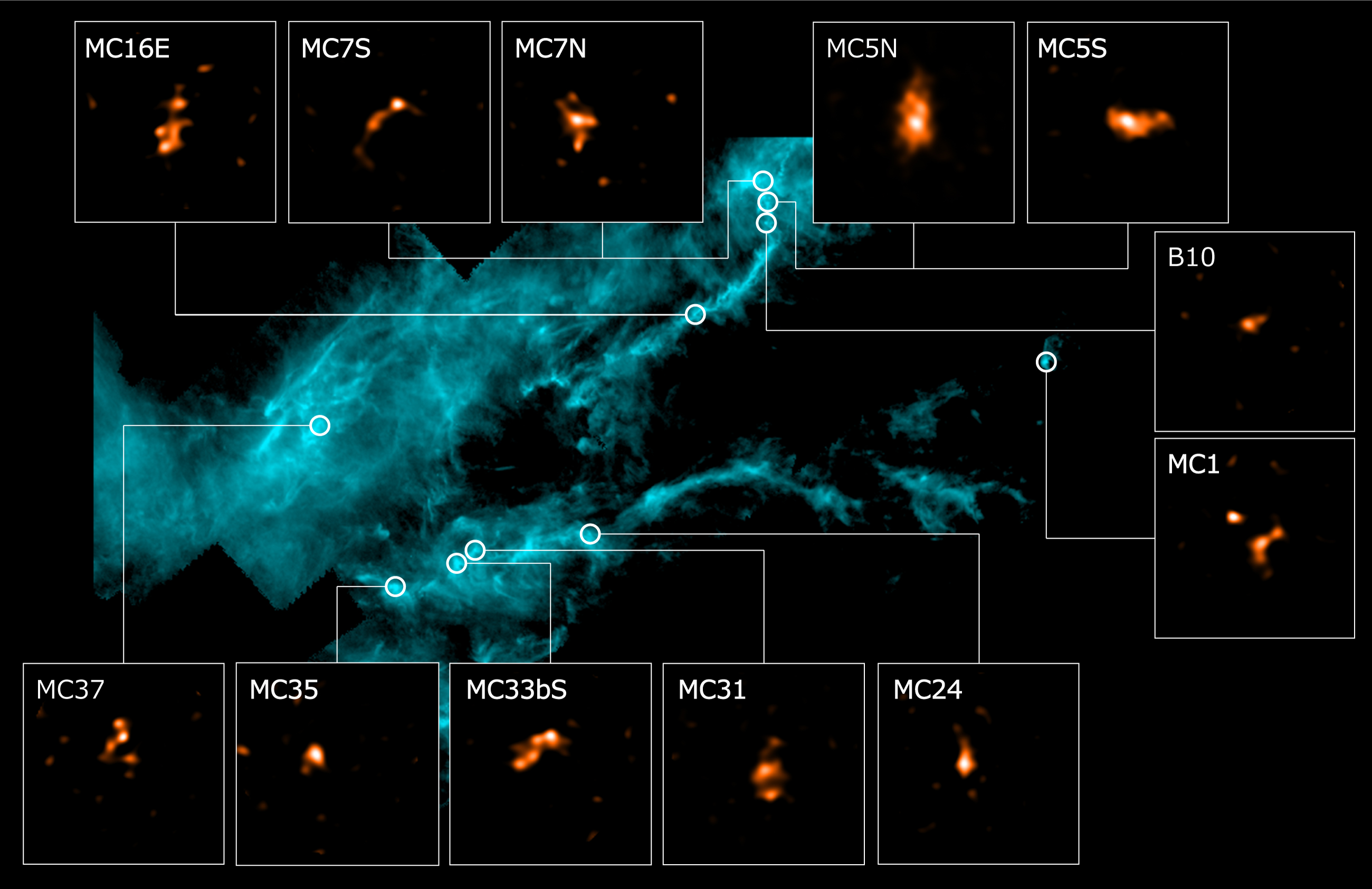
Wide-field far-infrared image of the Taurus Molecular Cloud obtained by the Herschel Space Observatory and stellar eggs observed with ALMA (insets). (Credit: ALMA (ESO/NAOJ/NRAO), Tokuda et al., ESA/Herschel)Original size (754KB)

Astronomers using the Atacama Large Millimeter/submillimeter Array (ALMA) took a census of stellar eggs in the constellation Taurus and revealed their evolution state. This census helps researchers understand how and when a stellar embryo transforms to a baby star deep inside a gaseous egg. In addition, the team found a bipolar outflow, a pair of gas streams, that could be telltale evidence of a truly newborn star.

Stars are formed by gravitational contraction of gaseous clouds. The densest parts of the clouds, called molecular cloud cores, are the very sites of star formation and mainly located along the Milky Way. The Taurus Molecular Cloud is one of the active star-forming regions and many telescopes have been pointed at the cloud. Previous observations show that some cores are actually stellar eggs before the birth of stars, but others already have infant stars inside.

A research team led by Kazuki Tokuda, an astronomer at Osaka Prefecture University and the National Astronomical Observatory of Japan (NAOJ), utilized the power of ALMA to investigate the inner structure of the stellar eggs. They observed 32 starless cores and nine cores with baby protostars. They detected radio waves from all of the nine cores with stars, but only 12 out of 32 starless cores showed a signal. The team concluded that these 12 eggs have developed internal structures, which shows they are more evolved than the 20 quite cores.

“Generally speaking, radio interferometers using many antennas, like ALMA, are not good at observing featureless objects like stellar eggs,” says Tokuda. “But in our observations, we purposely used only the 7-m antennas of ALMA. This compact array enables us to see objects with smooth structure, and we got information about the internal structure of the stellar eggs, just as we intended.”

Increasing the spacing between the antennas improves the resolution of a radio interferometer, but makes it difficult to detect extended objects. On the other hand, a compact array has lower resolution but allows us to see extended objects. This is why the team used ALMA’s compact array of 7-m antennas, as known as the Morita Array, not the extended array of 12-m antennas.

They found that there is a difference between the two groups in the gas density at the center of the dense cores. Once the density of the center of a dense core exceeds a certain threshold, about one million hydrogen molecules per cubic centimeter, self-gravity leads the egg to transform into a star.

A census is also useful for finding a rare object. The team noticed that there is a weak but clear bipolar gas stream in one stellar egg. The size of the stream is rather small, and no infrared source has been identified in the dense core. These characteristics match well with the theoretical predictions of a “first hydrostatic core,” a short-lived object formed just before the birth of a baby star. “Several candidates for the first hydrostatic cores have been identified in other regions,” explains Kakeru Fujishiro, a member of the research team. “This is the first identification in the Taurus region. It is a good target for future extensive observation.”

Kengo Tachihara, an associate professor at Nagoya University mentions the role of Japanese researchers in this study. “Japanese astronomers have studied the baby stars and stellar eggs in Taurus using the Nagoya 4-m radio telescope and Nobeyama 45-m radio telescope since the 1990s. And, ALMA’s 7-m array was also developed by Japan. The present result is part of the culmination of these efforts.”

“We have succeeded in illustrating the growth history of stellar eggs up to their birth, and now we have established the method for the research,” summarizes Tokuda. “This is an important step to obtain a comprehensive understanding of star formation.”

These observation results were presented in the following two papers published on August 7, 2020.

Related Links


Source: National Astronomical Observatory of Japan (NAOJ)/ News/Science/


Thursday, December 06, 2018

Unknown Treasure Trove of Planets Found Hiding in Dust

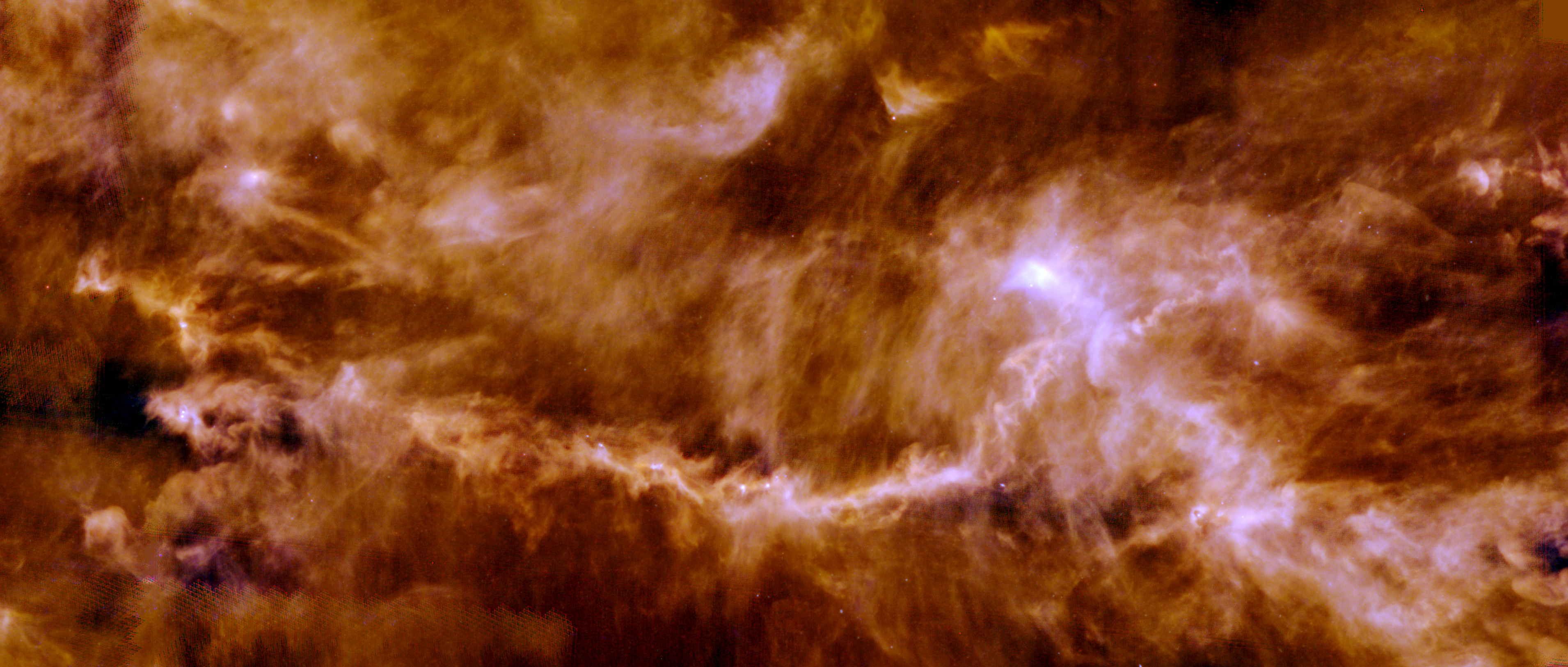
The Taurus Molecular Cloud, pictured here by ESA's Herschel Space Observatory, is a star-forming region about 450 light-years away. The image frame covers roughly 14 by 16 light-years and shows the glow of cosmic dust in the interstellar material that pervades the cloud, revealing an intricate pattern of filaments dotted with a few compact, bright cores — the seeds of future stars. (Image: ESA/Herschel/PACS, SPIRE/Gould Belt survey Key) Programme/Palmeirim et al. 2013

Until recently, protoplanetary disks were believed to be smooth, pancake-like objects. The results from this study show that some disks are more like doughnuts with holes, but even more often appear as a series of rings. The rings are likely carved by planets that are otherwise invisible to us. Image: Feng Long


The first unbiased survey of protoplanetary disks surrounding young stars in the Taurus star-forming region turned up a higher-than-expected number of disks with features suggesting nascent planets.

"Super-Earths" and Neptune-sized planets could be forming around young stars in much greater numbers than scientists thought, new research by an international team of astronomers suggests.

Observing a sampling of young stars in a star-forming region in the constellation Taurus, researchers found many of them to be surrounded by structures that can best be explained as traces created by invisible, young planets in the making. The research, published in the Astrophysical Journal, helps scientists better understand how our own solar system came to be.

Some 4.6 billion years ago, our solar system was a roiling, billowing swirl of gas and dust surrounding our newborn sun. At the early stages, this so-called protoplanetary disk had no discernable features, but soon, parts of it began to coalesce into clumps of matter – the future planets. As they picked up new material along their trip around the sun, they grew and started to plow patterns of gaps and rings into the disk from which they formed. Over time, the dusty disk gave way to the relatively orderly arrangement we know today, consisting of planets, moons, asteroids and the occasional comet.

Scientists base this scenario of how our solar system came to be on observations of protoplanetary disks around other stars that are young enough to currently be in the process of birthing planets. Using the Atacama Large Millimeter Array, or ALMA, comprising 45 radio antennas in Chile's Atacama Desert, the team performed a survey of young stars in the Taurus star-forming region, a vast cloud of gas and dust located a modest 450 light-years from Earth. When the researchers imaged 32 stars surrounded by protoplanetary disks, they found that 12 of them – 40 percent – have rings and gaps, structures that according to the team's measurements and calculations can be best explained by the presence of nascent planets.

"This is fascinating because it is the first time that exoplanet statistics, which suggest that super-Earths and Neptunes are the most common type of planets, coincide with observations of protoplanetary disks," said the paper's lead author, Feng Long, a doctoral student at the Kavli Institute for Astronomy and Astrophysics at Peking University in Bejing, China.

While some protoplanetary disks appear as uniform, pancake-like objects lacking any features or patterns, concentric bright rings separated by gaps have been observed, but since previous surveys have focused on the brightest of these objects because they are easier to find, it was unclear how common disks with ring and gap structures really are in the universe. This study presents the results of the first unbiased survey in that the target disks were selected independently of their brightness – in other words, the researchers did not know whether any of their targets had ring structures when they selected them for the survey.

"Most previous observations had been targeted to detect the presence of very massive planets, which we know are rare, that had carved out large inner holes or gaps in bright disks," said the paper's second author Paola Pinilla, a NASA Hubble Fellow at the University of Arizona's Steward Observatory. "While massive planets had been inferred in some of these bright disks, little had been known about the fainter disks."

The team, which also includes Nathan Hendler and Ilaria Pascucci at the UA's Lunar and Planetary Laboratory, measured the properties of rings and gaps observed with ALMA and analyzed the data to evaluate possible mechanisms that could cause the observed rings and gaps. While these structures may be carved by planets, previous research has suggested that they may also be created by other effects. In one commonly suggested scenario, so-called ice lines caused by changes in the chemistry of the dust particles across the disc in response to the distance to the host star and its magnetic field create pressure variations across the disk. These effects can create variations in the disk, manifesting as rings and gaps.

The researchers performed analyses to test these alternative explanations and could not establish any correlations between stellar properties and the patterns of gaps and rings they observed.

"We can therefore rule out the commonly proposed idea of ice lines causing the rings and gaps," Pinilla said. "Our findings leave nascent planets as the most likely cause of the patterns we observed, although some other processes may also be at work."

Since detecting the individual planets directly is impossible because of the overwhelming brightness of the host star, the team performed calculations to get an idea of the kinds of planets that might be forming in the Taurus star-forming region. According to the findings, Neptune-sized gas planets or so-called super-Earths – terrestrial planets of up to 20 Earth masses – should be the most common. Only two of the observed disks could potentially harbor behemoths rivaling Jupiter, the largest planet in the solar system.

"Since most of the current exoplanet surveys can't penetrate the thick dust of protoplanetary disks, all exoplanets, with one exception, have been detected in more evolved systems where a disk is no longer present," Pinilla said.

Going forward, the research group plans to move ALMA's antennas farther apart, which should increase the array's resolution to around five astronomical units (one AU equals the average distance between the Earth and the sun), and to make the antennas sensitive to other frequencies that are sensitive to other types of dust.

"Our results are an exciting step in understanding this key phase of planet formation," Long said, "and by making these adjustments, we are hoping to better understand the origins of the rings and gaps.”

This work was made possible through an international collaboration, including astronomers at UA's Steward Observatory and LPL. For a complete list of authors and funding information, please see the paper, "Gaps and Rings in an ALMA Survey of Disks in the Taurus Star-forming Region." A preprint of the article is available at https://arxiv.org/abs/1810.06044. Funding for this project was provided by Peking University, National Science Foundation of China, the Hubble Fellowship Program, the National Science Foundation, and the


Thursday, February 09, 2017

Protostar displays a strange geometry


Figure 1: Integrated intensity distribution of CCH, superposed on the 0.8 mm dust continuum map. The infalling rotating envelope traced by CCH is broadened inward of the radius of about 150 au.Credit: Sakai et al. (RIKEN) .  Click to enlarge


One of the big puzzles in astrophysics is how stars like the sun manage to form from collapsing molecular clouds in star-forming regions of the universe. The puzzle is known technically as the angular momentum problem in stellar formation. The problem essentially is that the gas in the star-forming cloud have some rotation, which gives each element of the gas an amount of angular momentum. As they collapse inward, eventually they reach a state where the gravitational pull of the nascent star is balanced by the centrifugal force, so that they will no longer collapse inward of a certain radius unless they can shed some of the angular momentum. This point is known as the centrifugal barrier.

Now, using measurements taken by radio antennas, a group led by Nami Sakai of the RIKEN Star and Planet Formation Laboratory has found clues as to how the gas in the cloud can find their way to the forming star. To gain a better understanding of the process, Sakai and her group turned to the ALMA observatory, a network of 66 radio dishes located high in the Atacama Desert of northern Chile. The dishes are connected together in a carefully choreographed configuration so that they can provide images on radio emissions from protostellar regions around the sky. 

The group chose to observe a protostar designated as L1527, located in a nearby star-forming region known as the Taurus Molecular Cloud. The protostar, located about 450 light years away, has a spinning protoplanetary disk, almost edge-on to our view, embedded in a large envelope of molecules and dust. 

Previously, Sakai had discovered, from observations of molecules around the same protostar, that unlike the commonly held hypothesis, the transition from envelope to the inner disk--which later forms into planets--was not smooth but very complex. "As we looked at the observational data," says Sakai, "we realized that the region near the centrifugal barrier--where particles can no longer infall--is quite complex, and we realized that analyzing the movements in this transition zone could be crucial for understanding how the envelope collapses. Our observations showed that there is a broadening of the envelope at that place, indicating something like a 'traffic jam' in the region just outside the centrifugal barrier, where the gas heats up as the result of a shock wave. It became clear from the observations that a significant part of the angular momentum is lost by gas being cast in the vertical direction from the flattened protoplanetary disk that formed around the protostar."

Figure 2: Artist's impression of L1527
Credit: RIKEN 

This behavior accorded well with calculations the group had done using a purely ballistic model, where the particles behave like simple projectiles that do not need to be influenced by magnetic or other forces. 

According to Sakai, "We plan to continue to use observations from the powerful ALMA array to further refine our understanding of the dynamics of stellar formation and fully explain how matter collapses onto the forming star. This work could also help us to better understand the evolution of our own solar system."


Paper and Research team

These observation results were published as Sakai et al. "Vertical Structure of the Transition Zone from Infalling Rotating Envelope to Disk in the Class 0 Protostar, IRAS04368+2557" in the Monthly Notices of the Royal Astronomical Society in February 2017.

The research team members are:

Nami Sakai (The Institute of Physical and Chemical Research (RIKEN)), Yoko Oya (The University of Tokyo), Aya E. Higuchi (RIKEN), Yuri Aikawa (University of Tsukuba), Tomoyuki Hanawa (Chiba University), Cecilia Ceccarelli (Laboratoire d'Astrophysique de Grenoble), B. Lefloch (Laboratoire d'Astrophysique de Grenoble), Ana López-Sepulcre (The University of Tokyo / Institut de Radioastronomie Millimétrique), Yoshimasa Watanabe (The University of Tokyo), Takeshi Sakai (The University of Electro-Communications), Tomoya Hirota (National Astronomical Observatory of Japan), Emmanuel Caux (Universite de Toulouse), Charlotte Vastel (Universite de Toulouse), Claudine Kahane (Laboratoire d'Astrophysique de Grenoble), Satoshi Yamamoto (The University of Tokyo)

This research was supported by a Grant-in-Aid from the Japan Society for the Promotion of Science and the Ministry of Education, Culture, Sports, Science and Technology, Japan (No. 25400223, 25108005, 16H03964).

ALMA array from the air
Credit: Clem & Adri Bacri-Normier (wingsforscience.com)/ESO


ALMA


The Atacama Large Millimeter/submillimeter Array (ALMA), an international astronomy facility, is a partnership of the European Organisation for Astronomical Research in the Southern Hemisphere (ESO), the U.S. National Science Foundation (NSF) and the National Institutes of Natural Sciences (NINS) of Japan in cooperation with the Republic of Chile. ALMA is funded by ESO on behalf of its Member States, by NSF in cooperation with the National Research Council of Canada (NRC) and the National Science Council of Taiwan (NSC) and by NINS in cooperation with the Academia Sinica (AS) in Taiwan and the Korea Astronomy and Space Science Institute (KASI).

ALMA construction and operations are led by ESO on behalf of its Member States; by the National Radio Astronomy Observatory (NRAO), managed by Associated Universities, Inc. (AUI), on behalf of North America; and by the National Astronomical Observatory of Japan (NAOJ) on behalf of East Asia. The Joint ALMA Observatory (JAO) provides the unified leadership and management of the construction, commissioning and operation of ALMA.


Tuesday, June 09, 2015

Stars forming in the Taurus Molecular Cloud

Stars forming in the Taurus Molecular Cloud
Copyright: ESA/Herschel/PACS, SPIRE/Gould Belt survey Key Programme/Palmeirim et al. 2013

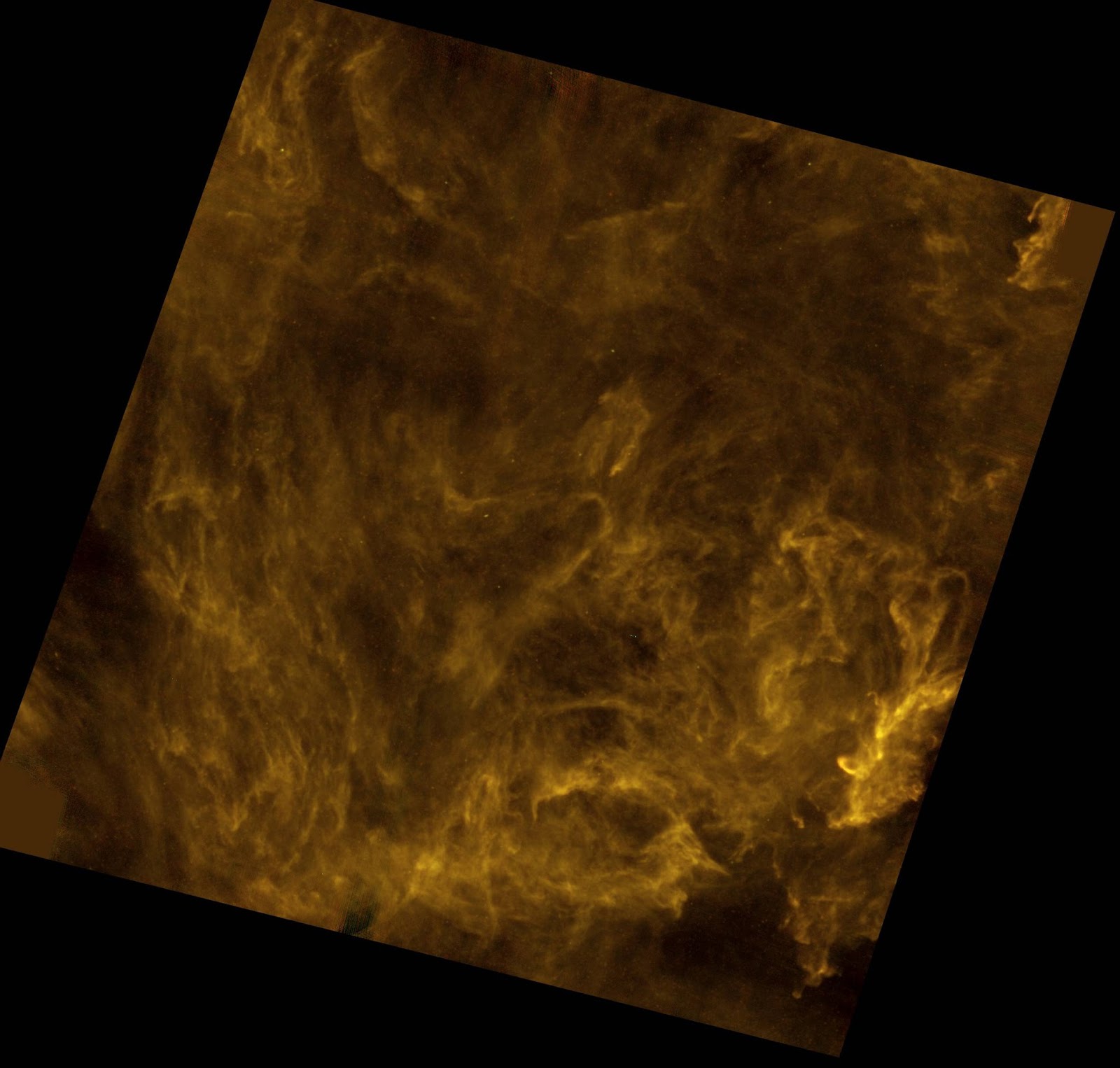
The intricate jumble depicted in this image from ESA’s Herschel space observatory shows the distribution of gas and dust in the Taurus Molecular Cloud, a giant stellar nursery about 450 light-years away in the constellation Taurus, the Bull.

Launched in 2009, Herschel studied the sky at far-infrared wavelengths for almost four years, detecting the glow of cosmic dust in the interstellar medium that pervades our Galaxy, the Milky Way. Dust is a minor but crucial ingredient in this diffuse mixture that provides the raw material for stars to form.

One of the observatory’s most striking discoveries was the detection of ubiquitous filaments – elongated and thin structures of gas and dust weaving their way across the Galaxy. Interstellar filaments were already known before Herschel, but the new data revealed them almost everywhere in the Milky Way and highlighted their role as preferred hubs for stellar birth.

Astronomers now believe that filaments precede the onset of most star formation, funnelling interstellar gas and dust into increasingly denser concentrations. Gravity later causes the densest filaments to contract and fragment, eventually leading to the formation of stars.

This image shows a tangle of filaments emerging from the cloud material, which are dotted with a few compact, bright cores: the seeds of future stars. The view also reveals a network of smaller threads, perpendicular to the most prominent filament.

This pattern is suggestive of accretion flows, indicating that the material along filaments is not at all static and that the most massive among them might be drawing matter from their surroundings. Some numerical simulations of star formation in molecular clouds also predict a similar arrangement of interstellar material, with gas and dust streaming towards the densest filaments along routes that are shaped by the local magnetic field.

This three-colour image combines Herschel bands at 160 microns (blue), 250 microns (green) and 500 microns (red), and spans about 5º on the long side. The data were acquired with Herschel as part of the Gould Belt survey Key Programme in 2010 and 2012, and a study of the filamentary structure is presented in a paper by P. Palmeirim et al. 2013. The image was first published on ESA’s Science and Technology website in May 2015.


Source: ESA

Sunday, May 31, 2015

Herschel's hunt for filaments in the Milky Way

Left: The Aquila Rift. Credit: ESA/Herschel/SPIRE/PACS/Ph. André for the 'Gould Belt survey' Key Programme Consortium. Right: The star-forming cloud IC 5146. Credit: ESA/Herschel/SPIRE/PACS/D. Arzoumanian for the "Gould Belt survey" Key Programme Consortium 

The Orion A Molecular Cloud.  
Credit: ESA/Herschel/Ph. André, D. Polychroni, A. Roy, V. Könyves, N. Schneider for the Gould Belt survey Key Programme
 
The Polaris Flare
Credit: ESA/Herschel/SPIRE/Ph. André for the "Gould Belt survey" Key Programme Consortium and A. Abergel for the "Evolution of Interstellar Dust" Key Programme Consortium
 

Observations with ESA's Herschel space observatory have revealed that our Galaxy is threaded with filamentary structures on every length scale. From nearby clouds hosting tangles of filaments a few light-years long to gigantic structures stretching hundreds of light-years across the Milky Way's spiral arms, they appear to be truly ubiquitous. The Herschel data have rekindled the interest of astronomers in studying filaments, emphasising the crucial role of these structures in the process of star formation. 

Stars are born in the densest pockets of the interstellar medium, a diffuse mixture of gas and dust that pervades galaxies, including our Milky Way. One of the most intriguing questions in astrophysics concerns understanding how this material, which is typically characterised by very low density, can come together, creating denser concentrations that later evolve into compact cores and, finally, give birth to stars.

In the search for answers, astronomers observe giant molecular clouds, the cosmic incubators where gas and dust are transformed into stars. While these studies are performed using a variety of techniques, one crucial approach is the observation of infrared light, since the interstellar material shines brightly at these long wavelengths.

In this context, ESA's Herschel space observatory has been a true game changer. Probing the portion of the electromagnetic spectrum that ranges from the far-infrared to sub-millimetre wavelengths, it has collected unprecedented data during its three and a half years of observing. One of the key aspects that emerged from these observations is the presence of a filamentary network nearly everywhere in our Galaxy's interstellar medium. The picture that is emerging is that these structures are closely linked to the formation of stars.

Prior to Herschel, astronomers had already identified several filaments in interstellar clouds and recognised their potential importance for star formation. However, only with the increased sensitivity and spatial resolution granted by this observatory, combined with its large-scale surveys, could they reveal the full extent of filamentary patterns in the Milky Way.

One of the surveys performed with Herschel – the Gould Belt Survey – focussed on a giant ring of star-forming regions, all located no more than 1500 light-years away from the Sun. The vicinity of these clouds allowed astronomers to obtain exceptionally detailed images using Herschel, unearthing intricate webs of filaments in each region that they examined.

The greatest surprise was the ubiquity of filaments in these nearby clouds and their intimate connection with star formation,” explains Philippe André from CEA/IRFU, France, Principal Investigator for the Herschel Gould Belt Survey.

But there is more: these observations revealed that filaments, which may extend to several light-years in length, appear to have a universal width of about one third of a light year. This suggests that something fundamental is lurking underneath.

The astronomers are still trying to understand the details of the star formation processes taking place in these clouds, aided by the abundance and variety of data collected with Herschel.

While most filaments are dotted with compact cores, suggesting that stars are readily taking shape in these dense 'fibres' of the interstellar medium, there are also regions that exhibit complex tangles of filaments but no signs of on-going star formation. A study of the most spectacular example of this phenomenon, the Polaris Flare, indicates that filaments must somehow precede the onset of star formation.

The scenario that has emerged from the new Herschel data suggests that star formation proceeds in two steps: first, turbulent motions of the interstellar gas and dust create an intricate web of filamentary structures; then, gravity takes over, causing only the densest filaments to contract and fragment, eventually leading to the formation of stars.

Indeed, the universal width of filaments seems to correspond, at least in the nearby clouds of the Gould Belt Survey, to the scale at which interstellar material undergoes the transition from supersonic to subsonic state.

In addition, the material along filaments is not at all static: astronomers have detected what appear to be accretion flows, with the most prominent filaments drawing matter from their surroundings through a network of smaller filaments. A striking example of such processes is seen in the Taurus Molecular Cloud, where the B211/B213 filament exhibits a series of so-called 'striations' perpendicular to the main filament.

This pattern is very similar to that predicted from numerical simulations that model the process of star formation in molecular clouds. According to these simulations, interstellar material flows towards dense filaments along routes that are parallel to the direction of the local magnetic field, as was observed, so the new data indicate the importance of interstellar magnetic fields in shaping these structures.

The B211/B213 filament in the Taurus Molecular Cloud.  
Credit: ESA/Herschel/PACS, SPIRE/Gould Belt survey Key Programme/Palmeirim et al. 2013

However, star formation does not appear to take place only in filaments. While these structures seem to be the preferred sites for stellar birth, the extraordinary data from Herschel confirmed that a small fraction of stars may also form far away from dense filaments.

In particular, a detailed study of the L1641 molecular clouds in the Orion A complex suggests that star formation along filaments is the preferential channel to produce typical solar-type stars, while stars that are born away from these dense, elongated structures tend to have lower masses. This dichotomy could be a result of the greater availability of raw material to protostars that are forming on a filament compared to those that take shape in less dense environments.

Another of Herschel's key findings is that the presence and abundance of filaments are not limited to our immediate neighbourhood. In fact, these structures appear everywhere also in the Herschel infrared Galactic Plane Survey (Hi-GAL), which scanned the distribution of the interstellar medium in the huge disc – about 100 000 light-years across – where most of the Milky Way's stars form and reside.

The filamentary structure of the Galactic Plane.  
Credit: ESA/PACS & SPIRE Consortium, S. Molinari, Hi-GAL Project

We detected a wealth of huge filaments, with lengths ranging from a few to a hundred light-years, revealing what seems to be the 'skeleton' of our Galaxy,” explains Sergio Molinari from IAPS/INAF, Italy, Principal Investigator for the Hi-GAL Project.

While it is possible that these structures arose from different physical processes than those giving rise to the small-scale filaments observed in the Sun's vicinity, the omnipresent aspect of filamentary structures in the Milky Way is beyond doubt.

In the post-Herschel era, one thing is certain: filaments play a leading role in the build-up of galactic material, creating favourable hubs for the formation of stars. This is likely a hierarchical process, starting on very large scales and propagating onwards, to smaller and smaller scales, funnelling interstellar gas and dust into increasingly denser concentrations and thus fostering stellar birth across the Galaxy.

Filaments in outer regions of the Galactic Plane
Credit: ESA/Herschel/PACS, SPIRE/Hi-GAL Project/Schisano et al. 2014

Large-scale filaments fragmenting into compact cores that later evolve into stars have been detected all across the Galactic Plane, even in its outermost, peripheral regions. As filaments grow more massive, the material within them contracts and forms smaller structures, preserving the filamentary pattern on all length scales.

Further investigation of the Hi-GAL survey has revealed new and even more prominent filaments, extending over hundreds of light-years and weaving their way through the spiral arms of the Milky Way. The study revealed nine filaments in some very dense, inner regions of the Galactic Plane, detecting these for the first time through the direct emission of dust within them, allowing an accurate determination of their mass, size and physical characteristics. Astronomers believe that almost a hundred similar, gigantic structures are still hiding in the data.

Some of the most prominent filaments detected in the Milky Way: G49 (top), G47 (bottom left) and G64 (bottom right). 
Credit: ESA/Herschel/PACS/SPIRE/Ke Wang et al. 2015

The intricate distribution of filaments in the interstellar medium revealed by Herschel has definitely revolutionised our view of how stars form in the Milky Way and, presumably, also in other similar galaxies,” comments Göran Pilbratt, ESA Herschel Project Scientist.

An increasingly coherent picture is now emerging from combining the analysis of these data with predictions from theory and numerical simulations, as astronomers continue to study the physical processes underlying the fascinating origin of stars and planets.


More information


Herschel is an ESA space observatory with science instruments provided by European-led Principal Investigator consortia and with important participation from NASA.

Herschel was launched on 14 May 2009 and completed science observations on 29 April 2013.


Related publications  

Ph. André et al. 2010, Astronomy & Astrophysics, 518, L102
S. Molinari et al. 2010, Astronomy & Astrophysics, 518, L100
D. Arzoumanian et al. 2011, Astronomy & Astrophysics, 529, L6
D. Polychroni et al. 2013, Astrophysical Journal Letters, 777, L33
P. Palmeirim et al. 2013, Astronomy & Astrophysics, 550, A38
D. Arzoumanian et al. 2013, Astronomy & Astrophysics, 553, A119
Ph. André et al. 2014, in Protostars and Planets VI, p. 27
D. Elia et al. 2013, Astrophysical Journal, 772, 45
E. Schisano et al. 2014, Astrophysical Journal, 791, 27
K. Wang et al. 2015, Monthly Notices of the Royal Astronomical Society, 450, 4043


Contacts  

Philippe André
CEA/DSM/IRFU Service d'Astrophysique
Centre d'Etudes de Saclay
Gif-sur-Yvette Cedex, France
E-mail:
pandre@cea.fr
Phone: +33-1-6908-9265

Sergio Molinari
IAPS/INAF
Roma, Italy
Email:
Sergio.molinari@iaps.inaf.it
Phone: +39-06-4993-4396

Göran Pilbratt
Herschel Project Scientist
Scientific Support Office
Science and Robotic Exploration Directorate
ESA, The Netherlands
Email:
gpilbratt@cosmos.esa.int
Phone: +31-71-565-3621

 Source: ESA/Herschel