Showing posts with label HD 135344B. Show all posts

Thursday, May 01, 2025

exoALMA Gives Astronomers A New Look At How Planets Are Formed

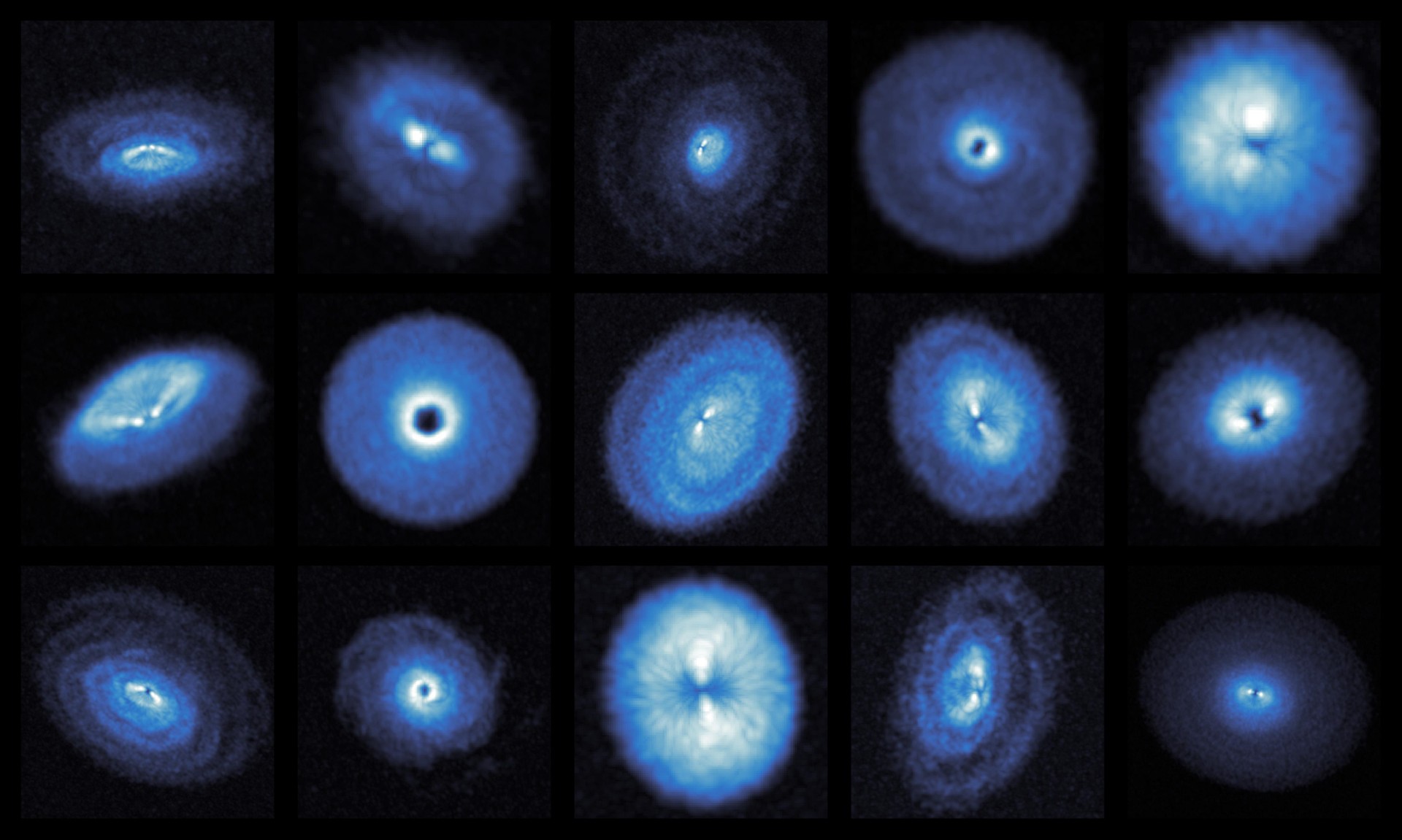
Deep ALMA observations of 12CO emission from fifteen protoplanetary disks reveal a stunning range of structures in the gas morphology including gaps, rings and spirals. Credit: Richard Teague and the exoALMA Collaboration.
Hi-Res File

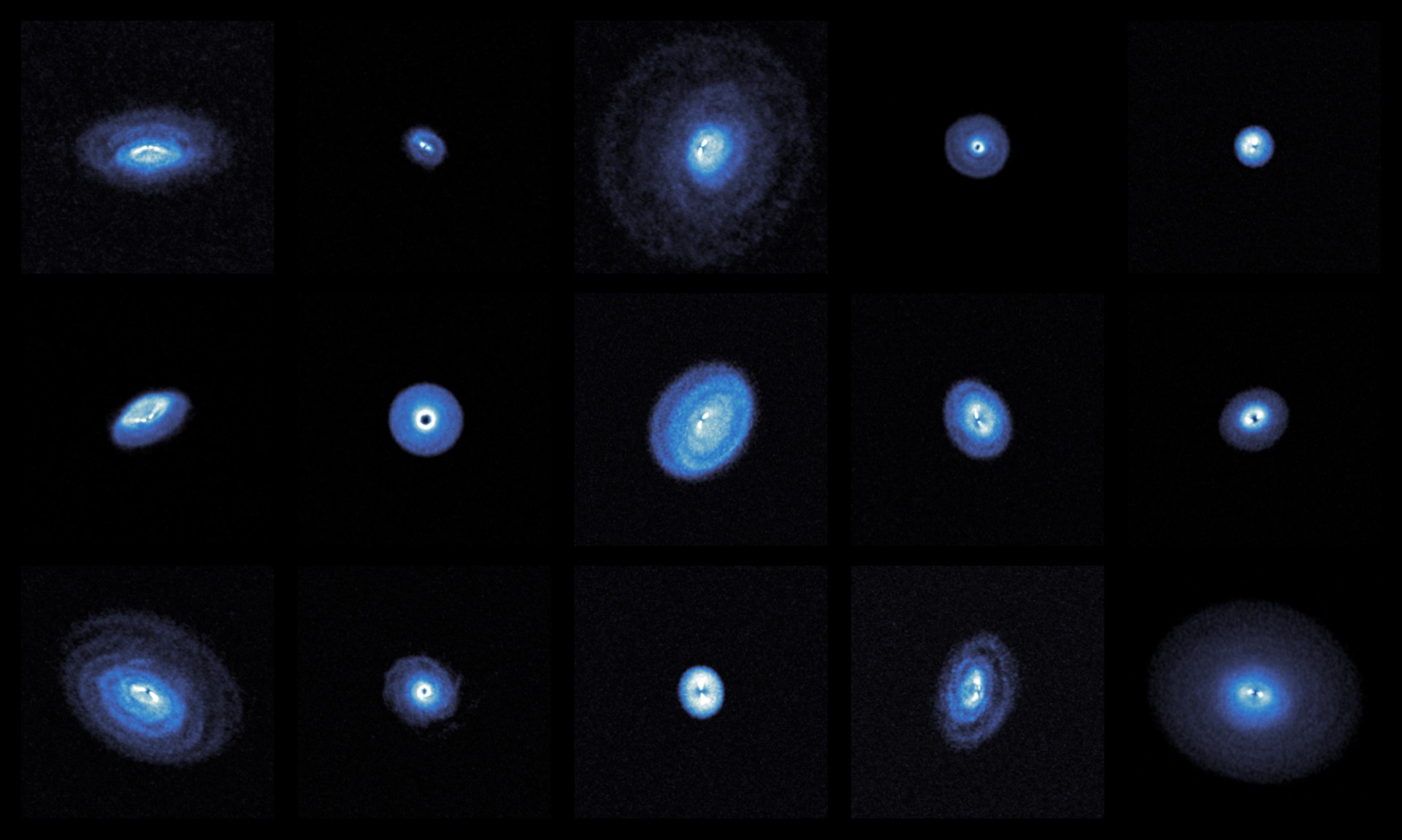
Deep ALMA observations of 12CO emission, (all sources are to scale to emphasize size differences) from fifteen protoplanetary disks reveal a stunning range of structures in the gas morphology including gaps, rings and spirals. Credit: Richard Teague and the exoALMA Collaboration.
Hi-Res File

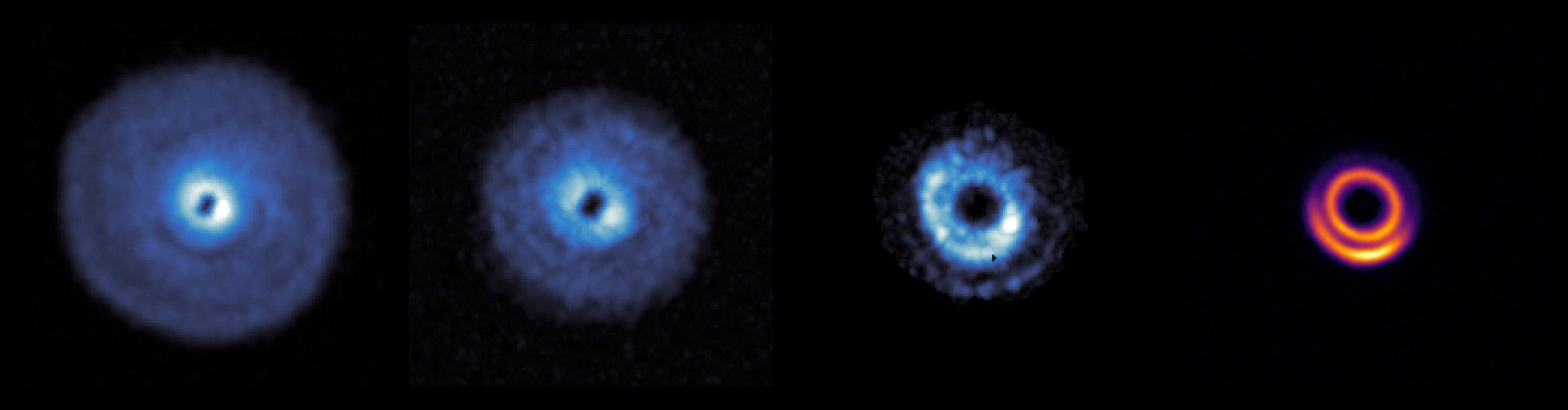
Four faces of HD 135344B: the 12CO, 13CO, CS and continuum emission form this protoplanetary disk all show a complex morphology suggestive of a vortex. Credit: Richard Teague and the exoALMA Collaboration.
Hi-Res File

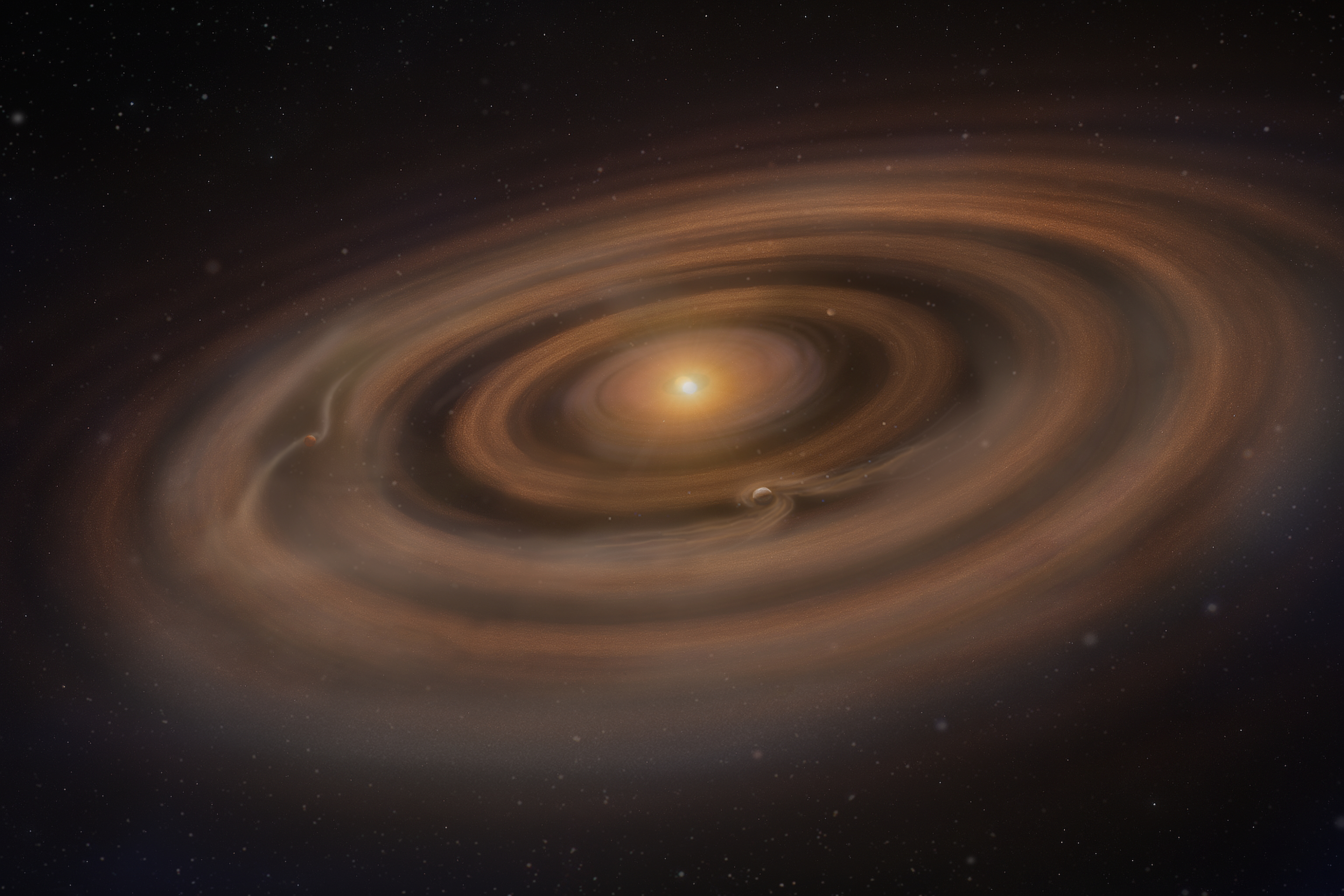
An artist's impression of new data collected by the exoALMA large program, which studied young star systems to map the motions of gas to uncover the processes that form planetary systems and identify signs of infant planets, including gaps and rings in the dust disks around stars, swirling motions in the gas caused by a planet's gravity, and physical changes in the disk that might signal a planet's presence. Credit: NSF/AUI/NSF NRAO/S.Dagnello.
Hi-Res File


Beyond planet hunting, this survey will reveal the mechanics behind planet forming discs

A team of international astronomers have embarked on an exciting new project to hunt for planets forming around young stars. The exoALMA project, using the powerful Atacama Large Millimeter/submillimeter Array (ALMA) in Chile, is peering into the dusty disks where planets are born. Thanks to newly developed advanced imaging techniques, exoALMA has revealed the most exquisite images of young solar systems, never before seen by astronomers. This research project involved 17 papers published in a special issue of the Astrophysical Journal of Letters, with several more coming this summer. ALMA is supported in part by the U.S. National Science Foundation through the NSF National Radio Astronomy Observatory (NSF NRAO).

“The new approaches we’ve developed to gather this data and images are like switching from reading glasses to high-powered binoculars—they reveal a whole new level of detail in these planet-forming systems,” said Richard Teague, PI of the exoALMA project. “We’re seeing evidence of hugely perturbed and dynamic disks, highly suggestive of young planets shaping the disks they’re born in.” The team targeted 15 young star systems to map the motions of the gas in detail in order to uncover the processes that form planetary systems, and, in certain cases, identify the telltale signs of infant planets, including gaps and rings in the dust disks around stars, swirling motions in the gas caused by a planet’s gravity, and physical changes in the disk that might signal a planet’s presence.

Unlike traditional planet-hunting methods that look for a young planet’s direct light, exoALMA is searching for the effects planets have on their surroundings. This approach allows astronomers to potentially detect much younger planets than ever before. “It’s like trying to spot a fish by looking for ripples in a pond, rather than trying to see the fish itself,” adds Christophe Pinte, an astrophysicist at the Institute of Astrophysics and Planetology of Grenoble, Monash University, and co-PI of the exoALMA team.

The team emphasized the technical challenges involved in processing the massive amounts of data to produce such sharp images. “We developed new techniques to precisely align observations taken at different times and remove unwanted noise and distortions,” explained Dr. Ryan Loomis, a scientist with the U.S. National Science Foundation National Radio Astronomy Observatory, who led the data processing publication, “We had to carefully combine and clean up the data to reveal all the subtle details.”

These new calibration approaches and the development of tailored data-processing and analysis techniques from the exoALMA project will improve astronomers’ ability to map out the planet formation process in several key ways.

  • Higher resolution and sensitivity: The observations provide an unprecedented combination of high angular (100 mas, or 14 au at the typical distances of the sources) and spectral (26 m/s) resolution data of gas emission from protoplanetary disks, allowing astronomers to detect subtle structures and motions that reveal key processes of planet formation.
  • Multiple molecular tracers: By observing 12CO, 13CO, and CS emission simultaneously, astronomers can probe different vertical layers and physical conditions within the disks.
  • Improved imaging and calibration techniques: The careful alignment, self-calibration, and imaging procedures developed allow for higher fidelity images with fewer artifacts, enabling more confident detection of real disk features.
  • Development and validation of numerical and analytical methods: The refinement of new analysis techniques alongside comprehensive benchmarking efforts ensure all information is accurately extracted from the data while simulations offer robust predictions to be tested.
 
“It is through this joint analysis of the gas and dust which is shedding light on the processes which are active within a protoplanetary disk and which may be responsible for exciting the structure so commonly observed,” comments Stefano Facchini, co-PI of exoALMA based at the University of Milan.

Looking ahead, the exoALMA project promises to revolutionize scientists’ understanding of how planets interact with their natal environments, and tackle the challenge of highly asymmetric sources, as revealed by the complex 2-dimensional kinematical pattern in these disks. The first exoALMA findings are published in a series of papers in The Astrophysical Journal Letters. All of the data and images will be made publicly available to support further scientific discoveries.


About NRAO

The National Radio Astronomy Observatory (NRAO) is a facility of the U.S. National Science Foundation, operated under cooperative agreement by Associated Universities, Inc.


About ALMA

The Atacama Large Millimeter/submillimeter Array (ALMA), an international astronomy facility, is a partnership of the European Southern Observatory (ESO), the U.S. National Science Foundation (NSF) and the National Institutes of Natural Sciences (NINS) of Japan in cooperation with the Republic of Chile. ALMA is funded by ESO on behalf of its Member States, by NSF in cooperation with the National Research Council of Canada (NRC) and the National Science and Technology Council (NSTC) in Taiwan and by NINS in cooperation with the Academia Sinica (AS) in Taiwan and the Korea Astronomy and Space Science Institute (KASI).

ALMA construction and operations are led by ESO on behalf of its Member States; by the National Radio Astronomy Observatory (NRAO), managed by Associated Universities, Inc. (AUI), on behalf of North America; and by the National Astronomical Observatory of Japan (NAOJ) on behalf of East Asia. The Joint ALMA Observatory (JAO) provides the unified leadership and management of the construction, commissioning and operation of ALMA.


Wednesday, November 09, 2016

Sculpting Solar Systems

Protoplanetary discs observed with SPHERE

Disc around the young star RX J1615

Disc around the star HD 97048

Disc around the star HD 135344B


ESO’s SPHERE instrument reveals protoplanetary discs being shaped by newborn planets

Sharp new observations have revealed striking features in planet-forming discs around young stars. The SPHERE instrument, mounted on ESO’s Very Large Telescope, has made it possible to observe the complex dynamics of young solar systems — including one seen developing in real-time. The recently published results from three teams of astronomers showcase SPHERE’s impressive capability to capture the way planets sculpt the discs that form them — exposing the complexities of the environment in which new worlds are formed.

Three teams of astronomers have made use of SPHERE, an advanced exoplanet-hunting instrument on the Very Large Telescope (VLT) at ESO’s Paranal Observatory, in order to shed light on the enigmatic evolution of fledgling planetary systems. The explosion in the number of known exoplanets in recent years has made the study of them one of the most dynamic fields in modern astronomy.

Today it is known that planets form from vast discs of gas and dust encircling newborn stars, known as protoplanetary discs. These can extend for thousands of millions of kilometres. Over time, the particles in these protoplanetary discs collide, combine and eventually build up into planet-sized bodies. However, the finer details of the evolution of these planet-forming discs remain mysterious.

SPHERE is a recent addition to the VLT’s array of instruments and with its combination of novel technologies, it provides a powerful method to directly image the fine details of protoplanetary discs [1]. The interaction between protoplanetary discs and growing planets can shape the discs into various forms: vast rings, spiral arms or shadowed voids. These are of special interest as an unambiguous link between these structures and the sculpting planets is yet to be found; a mystery astronomers are keen to solve. Fortunately, SPHERE’s specialised capabilities make it possible for research teams to observe these striking features of protoplanetary discs directly.

For example, RX J1615 is a young star, which lies in the constellation of Scorpius, 600 light-years from Earth. A team led by the Jos de Boer, of Leiden Observatory in the Netherlands, found a complex system of concentric rings surrounding the young star, forming a shape resembling a titanic version of the rings that encircle Saturn. Such an intricate sculpting of rings in a protoplanetary disc has only been imaged a handful of times before, and even more excitingly, the entire system seems to be only 1.8 million years old. The disc shows hints of being shaped by planets still in the process of formation.

The age of the newly detected protoplanetary disc makes RX J1615 an outstanding system, as most other examples of protoplanetary discs detected so far are relatively old or evolved. De Boer’s unexpected result was quickly echoed by the findings of a team led by Christian Ginski, also of Leiden Observatory. They observed the young star HD 97048, located in the constellation of Chamaeleon, about 500 light-years from Earth. Through painstaking analysis, they found that the juvenile disc around this star has also formed into concentric rings. The symmetry of these two systems is a surprising result, as most protoplanetary systems contain a multitude of asymmetrical spiral arms, voids and vortexes. These discoveries significantly raise the number of known systems with multiple highly symmetrical rings.

A particularly spectacular example of the more common asymmetric disc was captured by a group of astronomers led by Tomas Stolker of the Anton Pannekoek Institute for Astronomy, the Netherlands. This disc surrounds the star HD 135344B, about 450 light-years away. Although this star has been well-studied in the past, SPHERE allowed the team to see the star’s protoplanetary disc in more detail than ever before. The large central cavity and two prominent spiral arm-like structures are thought to have been created by one or multiple massive protoplanets, destined to become Jupiter-like worlds.

In addition, four dark streaks, apparently shadows thrown by the movement of material within HD 135344B's disc, were observed. Remarkably, one of the streaks noticeably changed in the months between observing periods: a rare example of observing planetary evolution occur in real time, hinting at changes occurring in the inner disc regions that can not be directly detected by SPHERE. As well as producing beautiful images, these flickering shadows provide a unique way of probing the  dynamics of innermost disc regions.

As with the concentric rings found by de Boer and Ginski, these observations by Stolker’s team prove that the complex and changing environment of the discs surrounding young stars are still capable of producing surprising new discoveries. By building an impressive body of knowledge about these protoplanetary discs, these teams are stepping closer to understanding how planets shape the discs that form them — and therefore understanding planet formation itself.


Notes

[1] SPHERE had first light in June 2014. The instrument uses advanced adaptive optics to remove atmospheric distortion, a coronagraph to block most of the light from the central star and a combination of differential imaging and polarimetry to isolate the light from features in the disc.


More Information

The research of de Boer, Ginski and Stolker and their colleagues in the SPHERE consortium is now accepted for publication in the journal Astronomy and Astrophysics. Their papers are entitled: "Direct detection of scattered light gaps in the transitional disk around HD 97048 with VLT/SPHERE"; "Shadows cast on the transition disk of HD 135344B: Multi-wavelength VLT/SPHERE polarimetric differential imaging", and "Multiple rings in the transition disk and companion candidates around RX J1615.3-3255: High contrast imaging with VLT/SPHERE". All three of papers have been created in the framework of the SPHERE GTO program, led by Carsten Dominik, University of Amsterdam.

ESO is the foremost intergovernmental astronomy organisation in Europe and the world’s most productive ground-based astronomical observatory by far. It is supported by 16 countries: Austria, Belgium, Brazil, the Czech Republic, Denmark, France, Finland, Germany, Italy, the Netherlands, Poland, Portugal, Spain, Sweden, Switzerland and the United Kingdom, along with the host state of Chile. ESO carries out an ambitious programme focused on the design, construction and operation of powerful ground-based observing facilities enabling astronomers to make important scientific discoveries. ESO also plays a leading role in promoting and organising cooperation in astronomical research. ESO operates three unique world-class observing sites in Chile: La Silla, Paranal and Chajnantor. At Paranal, ESO operates the Very Large Telescope, the world’s most advanced visible-light astronomical observatory and two survey telescopes. VISTA works in the infrared and is the world’s largest survey telescope and the VLT Survey Telescope is the largest telescope designed to exclusively survey the skies in visible light. ESO is a major partner in ALMA, the largest astronomical project in existence. And on Cerro Armazones, close to Paranal, ESO is building the 39-metre European Extremely Large Telescope, the E-ELT, which will become “the world’s biggest eye on the sky”.


Links


Contacts

Tomas Stolker
Anton Pannekoek Institute for Astronomy
Amsterdam, the Netherlands
Tel: +3120525 8152
Email:
T.Stolker@uva.nl

Jos de Boer
Leiden University
Leiden, the Netherlands
Tel: +31715278139
Email:
deboer@strw.leidenuniv.nl

Christian Ginski
Leiden University
Leiden, the Netherlands
Tel: +31715278139
Email:
ginski@strw.leidenuniv.nl

Richard Hook
ESO Public Information Officer
Garching bei München, Germany
Tel: +49 89 3200 6655
Cell: +49 151 1537 3591
Email:
rhook@eso.org


Source: ESO

Thursday, December 17, 2015

ALMA Reveals Planetary Construction Sites

Artist’s impression of a transitional disc around a young star

PR Image eso1549b
Schematic view of a transitional disc around a young star
 
ALMA imaging of the transitional disc HD 135344B

ALMA imaging of the transitional disc DoAr 44


Videos
 
Artist’s impression of a transitional disc around a young star

Artist’s impression of a transitional disc around a young star


New evidence for young planets in discs around young stars


Astronomers using the Atacama Large Millimeter/submillimeter Array (ALMA) have found the clearest indications yet that planets with masses several times that of Jupiter have recently formed in the discs of gas and dust around four young stars. Measurements of the gas around the stars also provide additional clues about the properties of those planets.

Planets are found around nearly every star, but astronomers still do not fully understand how — and under what conditions — they form. To answer such questions, they study the rotating discs of gas and dust present around young stars from which planets are built. But these discs are small and far from Earth, and the power of ALMA was needed for them to reveal their secrets.

A special class of discs, called transitional discs, have a surprising absence of dust in their centres, in the region around the star. Two main ideas have been put forward to explain these mysterious gaps. Firstly, the strong stellar winds and intense radiation could have blown away or destroyed the encircling material [1]. Alternatively, massive young planets in the process of formation could have cleared the material as they orbit the star [2].

The unparalleled sensitivity and image sharpness of ALMA have now allowed the team of astronomers, led by Nienke van der Marel from the Leiden Observatory in the Netherlands to map the distribution of gas and dust in four of these transitional discs better than ever before [3]. This in turn has allowed them to choose between the two options as the cause of the gaps for the first time.

The new images show that there are significant amounts of gas within the dust gaps [4]. But to the team’s surprise, the gas also possessed a gap, up to three times smaller than that of the dust.

This could only be explained by the scenario in which newly formed massive planets have cleared the gas as they travelled around their orbits, but trapped the dust particles further out [5].

“Previous observations already hinted at the presence of gas inside the dust gaps,” explains Nienke van der Marel. “But as ALMA can image the material in the entire disc in much greater detail than other facilities, we could rule out the alternative scenario. The deep gap points clearly to the presence of planets with several times the mass of Jupiter, creating these caverns as they sweep through the disc.”

Remarkably, these observations were conducted utilising just one tenth of the current resolving power of ALMA, as they were performed whilst half of the array was still under construction on the Chajnantor Plateau in northern Chile.

Further studies are now needed to determine whether more transitional discs also point towards this planet-clearing scenario, although ALMA’s observations have, in the meantime, provided astronomers with a valuable new insight into the complex process of planetary formation.

“All the transitional discs studied so far that have large dust cavities also have gas cavities. So, with ALMA, we can now find out where and when giant planets are being born in these discs, and compare these results with planet formation models,” says Ewine van Dishoeck, also of Leiden University and the Max Planck Institute for Extraterrestrial Physics in Garching [6]. “Direct planetary detection is just within reach of current instruments, and the next generation telescopes currently under construction, such as the European Extremely Large Telescope, will be able to go much further. ALMA is pointing out where they will need to look.”


Notes

[1] This process, which clears the dust and gas from the inside out, is known as photoevaporation. 

[2] Such planets are difficult to observe directly (eso1310) and previous studies at millimetre wavelengths (eso1325) have failed to achieve a sharp view of their inner, planet-forming zones where these different explanations could be put to the test. Other studies (eso0827) could not measure the bulk of the gas in these discs. 

[3] The four targets of these investigations were SR 21, HD 135344B (also known as SAO 206462), DoAr 44 and Oph IRS 48. 

[4] The gas present in transitional discs consists primarily of hydrogen, and is traced through observations of the carbon monoxide — or CO — molecule. 

[5] The process of dust trapping is explained in an earlier release (eso1325). 

[6] Other examples include the HD 142527 (eso1301 and here) and J1604-2130 transitional discs.


More Information

This research was presented in a paper entitled “Resolved gas cavities in transitional disks inferred from CO isotopologs with ALMA”, by N. van der Marel, et al., to appear in Astronomy & Astrophysics in December 2015.

The team is composed of N. van der Marel (Leiden University, Leiden, the Netherlands; Institute for Astronomy, University of Hawaii, Honolulu, USA), E. F. van Dishoeck (Leiden University, Leiden, the Netherlands; Max Planck Institute for Extraterrestrial Physics, Garching, Germany), S. Bruderer (Max-Planck Institute for Extraterrestrial Physics, Garching, Germany), S. M. Andrews (Harvard-Smithsonian Center for Astrophysics, Massachusetts, USA), K. M. Pontoppidan (Space Telescope Science Institute, Baltimore, Maryland, USA), G. J. Herczeg (Peking University, Beijing, China), T. van Kempen (Leiden University, Leiden, the Netherlands) and A. Miotello (Leiden University, Leiden, the Netherlands).

ESO is the foremost intergovernmental astronomy organisation in Europe and the world’s most productive ground-based astronomical observatory by far. It is supported by 16 countries: Austria, Belgium, Brazil, the Czech Republic, Denmark, France, Finland, Germany, Italy, the Netherlands, Poland, Portugal, Spain, Sweden, Switzerland and the United Kingdom, along with the host state of Chile. ESO carries out an ambitious programme focused on the design, construction and operation of powerful ground-based observing facilities enabling astronomers to make important scientific discoveries. ESO also plays a leading role in promoting and organising cooperation in astronomical research. ESO operates three unique world-class observing sites in Chile: La Silla, Paranal and Chajnantor. At Paranal, ESO operates the Very Large Telescope, the world’s most advanced visible-light astronomical observatory and two survey telescopes.

VISTA works in the infrared and is the world’s largest survey telescope and the VLT Survey Telescope is the largest telescope designed to exclusively survey the skies in visible light. ESO is a major partner in ALMA, the largest astronomical project in existence. And on Cerro Armazones, close to Paranal, ESO is building the 39-metre European Extremely Large Telescope, the E-ELT, which will become “the world’s biggest eye on the sky”.


Links


Contacts

Nienke van der Marel
Institute for Astronomy, University of Hawaii
Honolulu, USA
Email: nmarel@ifa.hawaii.edu

Ewine van Dishoeck
Leiden Observatory
Leiden, The Netherlands
Tel: +31 71 527 5814
Email: ewine@strw.leidenuniv.nl

Richard Hook
ESO Public Information Officer
Garching bei München, Germany
Tel: +49 89 3200 6655
Cell: +49 151 1537 3591
Email: rhook@eso.org

Source: ESO

Friday, December 21, 2012

Spiral Structure of Disk May Reveal Planets

An international team of astronomers has used HiCIAO (High Contrast Instrument for the Subaru Next Generation Optics) (Note 1) to observe a disk around the young star SAO 206462. They succeeded in capturing clear, detailed images of its disk, which they discovered has a spiral structure with two discernable arms. On the basis of their observations and modeling according to spiral density wave theory, the team suspects that dynamic processes, possibly resulting from planets in the disk, may be responsible for its spiral shape. This research may provide the basis for another indirect method of detecting planets.

Scientists have known that planets form in a broad disk of dust and gas surrounding a star, a so-called "protoplanetary disk." However, the composition of these special disks as well as the process by which they give rise to planets have remained a mystery. The bright light of a central star makes it difficult to detect fainter objects around it or to capture a detailed image of the composition of the disk itself. Recent research with HiCIAO, Subaru Telecope's "planet-hunter", has overcome some of those obstacles. By masking the bright light from the central star, the instrument can then detect more detailed features of the star's disk and the objects that it contains.

As part of the SEEDS project (Strategic Exploration of Exoplanets and Disks with the Subaru Telescope) (Note 2), the researchers in the current study used HiCIAO to conduct observations of the disk around the young star SAO 206462 (sometimes referred to as HD 135344B). This star is about 460 light years away from Earth in the constellation Lupus ("the wolf") and is some 9 million years old. The radius of the disk is 20 billion kilometers (12.4 billion miles), about five times greater than Neptune's distance from the Sun in our Solar System.

The researchers captured images of SAO 206462's disk (Figure 1) that clearly reveal its spiral structure and indicate some features of its composition. They then were able to analyze its spiral structure by using density wave theory to infer the properties of the disk. This process allows a productive interface between observational data and a theoretical model.

Figure 1: An image of the disk around SAO 206462 captured with HiCIAO. A coronagraph blocks the direct light of the central star, which appears as the black, circular area in the image. Arrows show the two arms of the spiral structure around the star. (Credit: NAOJ) 

Density wave theory has been applied to explain the spiral arm structure of spiral galaxies. It proposes that a rotating disk of matter would "naturally" develop regions of enhanced density, so-called "spiral density waves", due to differential rotation. The wave-like concentration of dense material grows and forms a spiral pattern. A similar process may be at work in SAO 206462's disk. When the team compared their model with the observational data, they found that it was useful in revealing the features of the disk. (Figure 2)

Figure 2: A comparison of the fit between the theoretical model and observational data. The red dashed line represents the shape of the disk based on modeling from density wave theory. The image shows that the data conform to the predictions of the theory and supports an explanation for the development of the structure in terms of this theory's model. (Credit: NAOJ)  
The team was able to use the model to estimate the temperature of the disk based on dynamic processes and predict the evolution of the spiral structures. The observational data conform to the model. Although they could not specifically identify the origin of the spirals, it is possible that planets embedded in the disk may be the catalysts for the development of its shape. If a planet has already been formed in a disk, its gravity can produce a density wave, which then may result in the creation of a spiral structure in the protoplanetary disk. (Figure 3).

 Figure 3: A representation of how interaction between a protoplanetary disk and planet makes a density wave and affects the disk's structure. A planet in the disk may be one explanation for the formation of the disk's spiral structure. The basis for the simulation is a code in computational fluid dynamics called FARGO that simulates the flow of gases in motion. Colors indicate the surface density of the disk; the darkest colors show the areas with the least density while the white shows those with the greatest density. (Credit: NAOJ)   

Although the observed image does not necessarily show the existence of a planet, the possibility remains that a planet in the disk causes the density wave. This is the first time that density wave theory has been applied to measuring the features of a protoplanetary disk. The research takes an important step in explaining how a spiral disk could form and may mark the development of another indirect means of discovering planets.


References


The research paper entitled "Discovery of Small-Scale Spiral Structures in the Disk of SAO 206462 (HD 135344B): Implications for the Physical State of the Disk from Spiral Density Wave Theory" by Muto et al. was published in Astrophysical Journal Letters, April 2012 (ApJ, 748, L22, 2012)


Note:
  1. HiCIAO (High Contrast Instrument for the Subaru Next Generation Adaptive Optics) is designed to block out the bright direct light from a central star so that it can image nearby faint objects such as planets and detect faint dust disks around the central star.

  2. SEEDS (Strategic Exploration of Exoplanets and Disks with Subaru Telescope) is a large-scale project led by Motohide Tamura at NAOJ (National Astronomical Observatory of Japan). Researchers conduct observations at the Subaru Telescope that focus on the direct imaging and examination of exoplanets and disks to better understand the formation of planetary systems. Over 100 scientists and 25 institutions belong to the international consortium supporting the project . Since 2009, the SEEDS project has yielded a set of impressive findings, including imaging of the detailed structure of disks in AB Aur, LkCa15, HR4796A, and HD 169142.

  1.