Wednesday, April 12, 2017

Earth-Sized 'Tatooine' Planets Could Be Habitable

This artist's concept shows a hypothetical planet covered in water around the binary star system of Kepler-35A and B. 
Image credit: NASA/JPL-Caltech.  › Full image and caption

 
With two suns in its sky, Luke Skywalker's home planet Tatooine in "Star Wars" looks like a parched, sandy desert world. In real life, thanks to observatories such as NASA's Kepler space telescope, we know that two-star systems can indeed support planets, although planets discovered so far around double-star systems are large and gaseous. Scientists wondered: If an Earth-size planet were orbiting two suns, could it support life? 

It turns out, such a planet could be quite hospitable if located at the right distance from its two stars, and wouldn't necessarily even have deserts. In a particular range of distances from two sun-like host stars, a planet covered in water would remain habitable and retain its water for a long time, according to a new study in the journal Nature Communications.

"This means that double-star systems of the type studied here are excellent candidates to host habitable planets, despite the large variations in the amount of starlight hypothetical planets in such a system would receive," said Max Popp, associate research scholar at Princeton University in New Jersey, and the Max Planck Institute of Meteorology in Hamburg, Germany.

Popp and Siegfried Eggl, a Caltech postdoctoral scholar at NASA's Jet Propulsion Laboratory, Pasadena, California, created a model for a planet in the Kepler 35 system. In reality, the stellar pair Kepler 35A and B host a planet called Kepler 35b, a giant planet about eight times the size of Earth, with an orbit of 131.5 Earth days. For their study, researchers neglected the gravitational influence of this planet and added a hypothetical water-covered, Earth-size planet around the Kepler 35 AB stars. They examined how this planet's climate would behave as it orbited the host stars with periods between 341 and 380 days.

"Our research is motivated by the fact that searching for potentially habitable planets requires a lot of effort, so it is good to know in advance where to look," Eggl said. "We show that it's worth targeting double-star systems."

In exoplanet research, scientists speak of a region called the "habitable zone," the range of distances around a star where a terrestrial planet is most likely to have liquid water on its surface. In this case, because two stars are orbiting each other, the habitable zone depends on the distance from the center of mass that both stars are orbiting. To make things even more complicated, a planet around two stars would not travel in a circle; instead, its orbit would wobble through the gravitational interaction with the two stars.

Popp and Eggl found that on the far edge of the habitable zone in the Kepler 35 double-star system, the hypothetical water-covered planet would have a lot of variation in its surface temperatures. Because such a cold planet would have only a small amount of water vapor in its atmosphere, global average surface temperatures would swing up and down by as much as 3.6 degrees Fahrenheit (2 degrees Celsius) in the course of a year.

"This is analogous to how, on Earth, in arid climates like deserts, we experience huge temperature variations from day to night," Eggl said. "The amount of water in the air makes a big difference."
But, closer to the stars, near the inner edge of the habitable zone, the global average surface temperatures on the same planet stay almost constant. That is because more water vapor would be able to persist in the atmosphere of the hypothetical planet and act as a buffer to keep surface conditions comfortable.

As with single-star systems, a planet beyond the outer edge of the habitable zone of its two suns would eventually end up in a so-called "snowball" state, completely covered with ice. Closer than the inner edge of the habitable zone, an atmosphere would insulate the planet too much, creating a runaway greenhouse effect and turning the planet into a Venus-like world inhospitable to life as we know it.

Another feature of the study's climate model is that, compared to Earth, a water-covered planet around two stars would have less cloud coverage. That would mean clearer skies for viewing double sunsets on these exotic worlds.

NASA's planet-hunting Kepler telescope is managed by NASA's Ames Research Center in Silicon Valley. JPL, a divison of Caltech, managed Kepler mission development.

For more information about exoplanets, visit:  https://exoplanets.nasa.gov


News Media Contact

Elizabeth Landau
Jet Propulsion Laboratory, Pasadena, CA
818-354-6425
elizabeth.landau@jpl.nasa.gov


Tuesday, April 11, 2017

Primordial Galaxy Discovered, First of Its Kind

Graphic illustration of how MACS1423-z7p64 was detected via gravitational lensing with NASA’s Hubble Space Telescope and confirmed by W. M. Keck Observatory’s MOSFIRE. Credit:  NASA/W.M. Keck Observatory/A. Hoag/M. Bradac

UC Davis Associate Physics Professor, Dr. Marusa Bradac, and UC Davis Physics Graduate Student, Austin Hoag, at the W. M. Keck Observatory. Credit: A. Hoag/M. Bradac


Maunakea, Hawaii– Seven years of meticulous observing have resulted in a cosmic discovery that comes from an era dating back 13.1 billion years, giving scientists a detailed glimpse of what may have happened just after the Big Bang.

Using the world-class W. M. Keck Observatory on Maunakea, Hawaii, an international team of astronomers from the United States, Australia, and Europe has confirmed the existence of one of the most distant galaxies in the universe.

To characterize the faint galaxy, the discovery team, led by Austin Hoag, a University of California, Davis physics graduate student, used MOSFIRE, the most in-demand instrument on the 10-meter Keck I telescope.

What makes this galaxy extraordinary is that it is ordinary. It is thought to be a common galaxy at that distance and age of the universe. However, such galaxies would normally be too faint to detect. The astronomers used a method called gravitational lensing to magnify the galaxy so they could study it.

“Most objects that we’ve seen at that distance are extremely bright, and probably rare compared to other galaxies,” said Hoag. “We think this galaxy is much more representative of other galaxies of its time.”

The results publish today in Nature Astronomy, with Hoag as the lead author on the paper.

“I’m like a proud academic mother,” said Marusa Bradac, associate physics professor at UC Davis. “It is a wonderful opportunity for graduate students to use the world’s best facilities to discover first galaxies and get their research published in Nature Astronomy.”

Named MACS1423-z7p64, the galaxy is at a redshift of 7.6, meaning its light came from when the universe was approximately 700 million years old.

“This is an awesome discovery in that it is the faintest galaxy at that redshift ever detected. It is very challenging to find an object at the very edges of the universe. In order to detect this galaxy, its light had to be lensed twice - once by a massive galaxy cluster, and a second time by the Keck Observatory telescope,” said Keck Observatory instrument program manager Marc Kassis who, along with fellow support astronomers Luca Rizzi and Carlos Alvarez, helped support Hoag and his team.

To find such faint, distant objects, the discovery team took advantage of a method called gravitational lensing. As light of the distant object passes by a massive object such as a galaxy cluster in the foreground, it gets bent by gravity, just as light gets bent passing through a lens. When the foreground object is massive enough, it will magnify the object behind it. MACS1423-z7p64 just happened to fall into the “sweet spot” behind a giant galaxy cluster that magnified its brightness tenfold and made it first visible to the team using the Hubble Space Telescope. They were then able to confirm its distance by analyzing its spectrum using Keck Observatory’s MOSFIRE.

Even though MACS1423-z7p64 is strongly magnified, the discovery has been extremely challenging and it required combining the initial data taken by UC Davis researchers in 2015 with those from a second night of Keck observations from Australian colleagues at the University of Melbourne in 2016.

“This detection of Lyman-α emission from the galaxy thus highlights the strength of collaborative research projects,” said Michele Trenti from the University of Melbourne, principal investigator of the Australian observations. “This is yet another discovery that puts UC Davis, UCLA, and University of Melbourne on the map as among the top astronomy centers in their nations, and the reason for that is due to our access to the Keck telescopes,” said Bradac. “For this kind of research, every meter of telescope aperture counts, and without the low humidity on Maunakea, we would not have been able to discover this.”

What’s Next

The discovery team plans to continue surveying candidate galaxies with the Hubble and Keck telescopes. Hoag says the upcoming launch of the James Webb Space Telescope (JWST), set for 2018, opens up new possibilities. The team is currently planning observations for the Webb telescope, which is bigger than Hubble and will allow astronomers to look at even more distant parts of the universe. As such, the very distant galaxies discovered by Keck Observatory in collaboration with the Hubble Space Telescope are precious candidates for further investigation by JWST.

“We will truly witness the birth of the first galaxies, which will allow us to answer the longstanding question of, ‘Where did we come from?’” Bradac said.

Ultradistant galaxies are of interest to scientists because they date back to a period known as the “Epoch of Reionization” – about a billion years after the Big Bang when the earliest stars and galaxies began to emit visible light into the universe for the very first time. Having the ability to study this light could give researchers the data they need to piece together the first chapters of our cosmic history and trace the origin of celestial objects we see today, including stars like our own Sun.


Media Contact:

Mari-Ela Chock, Communications Officer
W. M. Keck Observatory
(808) 554-0567
mchock@keck.hawaii.edu

Science Contact:

Andy Fell, Associate Director, Research Communications
University of California, Davis
(530) 752-4533
ahfell@ucdavis.edu


About MOSFIRE


W. M. Keck Observatory’s instrument, the Multi-Object Spectrograph for Infrared Exploration (MOSFIRE), gathers spectra from objects spanning a variety of distances, environments and physical conditions. What makes this large, vacuum-cryogenic instrument unique is its ability to select up to 46 individual objects in the field of view and then record the infrared spectrum of all 46 objects simultaneously. When a new field is selected, a robotic mechanism inside the vacuum chamber reconfigures the distribution of tiny slits in the focal plane in under six minutes. Eight years in the making with First Light in 2012, MOSFIRE's early performance results range from the discovery of ultra-cool, nearby substellar mass objects, to the detection of oxygen in young galaxies only two billion years after the Big Bang.

Other Authors


  • UC Davis: Kuang-Han Huang, Brian Lemaux, and Julie He
  • University of Melbourne, Australia: Michele Trenti and Stephanie Bernard
  • University of California, Los Angeles (UCLA): Tommaso Treu, Louis E. Abramson, Charlotte Mason, and Takahiro Morishita
  • Leibniz-Institut für Astrophysik Potsdam, Germany: Kasper Schmidt
  • INAF Osservatorio Astronomico di Roma, Italy: Laura Pentericci
  • Argelander-Institut für Astronomie, Bonn, Germany: Tim Schrabback

About W. M. Keck Observatory


The W. M. Keck Observatory operates the largest, most scientifically productive telescopes on Earth. The two, 10-meter optical/infrared telescopes on the summit of Maunakea on the Island of Hawaii feature a suite of advanced instruments including imagers, multi-object spectrographs, high-resolution spectrographs, an integral-field spectrometer and world-leading laser guide star adaptive optics systems. The Observatory is a private 501(c) 3 non-profit organization and a scientific partnership of the California Institute of Technology, the University of California, and NASA.

Monday, April 10, 2017

Ancient Dead Galaxy Sets New Record

Artist’s impression of galaxy ZF-COSMOS-20115. The galaxy has likely blown off all the gas that caused its rapid star formation and mass growth, and rapidly turned into a compact red galaxy. Credit: Leonard Doublet/Swinburne University of Technology


Maunakea, Hawaii – An international team of astronomers has, for the first time, spotted a massive, inactive galaxy from a time when the Universe was only 1.65 billion years old. This rare discovery, made using the world-class W. M. Keck Observatory on Maunakea, Hawaii, could change the way scientists think about the evolution of galaxies.

This research publishes today in the journal Nature, with Professor Karl Glazebrook, director of Swinburne’s Centre for Astrophysics and Supercomputing , as the lead author. To characterize the faint galaxy, the discovery team used MOSFIRE, the most in-demand instrument on the 10-meter Keck I telescope.

“This observation was only possible due to the extreme sensitivity of the new MOSFIRE spectrograph,” said Glazebrook. “It is the absolute best in the world for faint near-IR spectra by a wide margin. Our team is indebted to the accomplishment of Chuck Steidel, Ian McClean, and all the Keck Observatory staff for building and delivering this remarkable instrument.”

Astronomers expect most galaxies from this epoch to be low-mass minnows, busily forming stars. However, this galaxy is ‘a monster’ and inactive.

The researchers found that within a short time period this massive galaxy, known as ZF-COSMOS-20115, formed all of its stars (three to five times more than our Milky Way today) through an extreme star-burst event.

But it stopped forming stars only a billion years after the Big Bang to become a quiescent or ‘red and dead’ galaxy – common in our Universe today, but not expected to exist at this ancient epoch.

The galaxy is also small and extremely dense, it has 300 billion stars crammed into a region of space about the same size as the distance from the Sun to the nearby Orion Nebula.

Astrophysicists are still debating just how galaxies stop forming stars. Until recently, models suggested dead galaxies or ‘red nuggets’ such as this should only exist from around three billion years after the Big Bang.

“This discovery sets a new record for the earliest massive red galaxy. It is an incredibly rare find that poses a new challenge to galaxy evolution models to accommodate the existence of such galaxies much earlier in the Universe,” said Glazebrook.


Media Contact: 

Mari-Ela Chock, W. M. Keck Observatory
(808) 554-0567
mchock@keck.hawaii.edu

Science Contact:

Liv Kivivali, Swinburne University of Technology
+61 3 9214 5428
lkivivali@swin.edu.au


This research builds on an earlier Swinburne study that suggested such dead galaxies could exist based on finding dim red objects in extremely deep near-infrared images.

MOSFIRE spectrograph studies the faintest, most distant galaxies

In this latest study, astronomers used the Keck Observatory telescopes to confirm the signatures of these galaxies, through the new and unique MOSFIRE spectrograph. They took deep spectra at near-infrared wavelengths to seek out the definitive features signifying the presence of old stars and a lack of active star formation.

“We used the most powerful telescope in the world, but we still needed to stare at this galaxy for more than two nights to reveal its remarkable nature,” said co-author Professor Vy Tran, from Texas A&M University.

Even with large telescopes such as Keck Observatory’s 10-meter mirror, a long viewing time is required to detect absorption lines which are very weak compared to the more prominent emission lines generated by star-forming active galaxies.

“By collecting enough light to measure this galaxy’s spectrum, we decipher the cosmic narrative of what stars and elements are present in these galaxies and construct a timeline of when they formed their stars,” Professor Tran says.

The observed star-formation rate of this galaxy produces less than one fifth the mass of the Sun a year in new stars, but at its peak 700 million years previously this galaxy formed 5000 times faster.

“This huge galaxy formed like a firecracker in less than 100 million years, right at the start of cosmic history,” Professor Glazebrook says. “It quickly made a monstrous object, then just as suddenly it quenched and turned itself off. As to how it did this, we can only speculate. This fast life and death so early in the Universe is not predicted by our modern galaxy formation theories.”

Co-author Dr. Corentin Schreiber of Leiden University, who first measured the spectrum, speculates that these early firecrackers are obscured behind a veil of dust and that future observations using sub-millimeter wave telescopes will spot these.

”Sub-millimeter waves are emitted by the hot dust which blocks other light and will tell us when these firecrackers exploded and how big a role they played in developing the primordial universe,” says Dr. Schreiber.

With the launch of the James Webb Space Telescope in 2018, astronomers will be able to build up large samples of these dead galaxies due to its high sensitivity, large mirror, and the advantage of no atmosphere in space.


About MOSFIRE

Keck Observatory’s instrument, Multi-Object Spectrograph for Infrared Exploration (MOSFIRE), gathers thousands of spectra from objects spanning a variety of distances, environments and physical conditions. What makes this huge, vacuum-cryogenic instrument unique is its ability to select up to 46 individual objects in the field of view and then record the infrared spectrum of all 46 objects simultaneously. When a new field is selected, a robotic mechanism inside the vacuum chamber reconfigures the distribution of tiny slits in the focal plane in under six minutes. Eight years in the making with First Light in 2012, MOSFIRE's early performance results range from the discovery of ultra-cool, nearby substellar mass objects, to the detection of oxygen in young galaxies only two billion years after the Big Bang. MOSFIRE was made possible by funding provided by the National Science Foundation and astronomy benefactors Gordon and Betty Moore.

Researchers on the Discovery Team

  • Swinburne University of Technology, Australia: Karl Glazebrook, Themiya Nanayakkara, Glenn G. Kacprzak
  • Leiden University, Netherlands: Corentin Schreiber, Ivo Labbe
  • University of Geneva, Switzerland: Pascal A. Oesch
  • Texas A & M University, USA: Casey Papovich, Kim-Vy H. Tran
  • Macquarie University, Australia: Lee R. Spitler
  • Australian Astronomical Observatory: Lee R. Spitler
  • Max Planck Institute for Astronomy, Germany: Caroline M. S. Straatman
  • The Australian National University: Tiantian Yuan

About W. M. Keck Observatory

The W. M. Keck Observatory operates the largest, most scientifically productive telescopes on Earth. The two, 10-meter optical/infrared telescopes on the summit of Maunakea on the Island of Hawaii feature a suite of advanced instruments including imagers, multi-object spectrographs, high-resolution spectrographs, an integral-field spectrometer and world-leading laser guide star adaptive optics systems. The Observatory is a private 501(c) 3 non-profit organization and a scientific partnership of the California Institute of Technology, the University of California, and NASA.


Sunday, April 09, 2017

Hubble takes close-up portrait of Jupiter

Jupiter's swirling colourful clouds 

Hubble observes Jupiter at oppositiom
Credits: Video: NASA, STScI, and Goddard Space Flight Center/K. Jackson; Music: "Triangulate" by Gianluigi Gallo [PRS]; El Murmullo Sarao SGAE, Universal Sarao SGAE; SaraoMusic; Killer Tracks Production Music


During April 2017 Jupiter is in opposition: it is at its closest to Earth and the hemisphere facing Earth is fully illuminated by the Sun. The NASA/ESA Hubble Space Telescope used this special configuration to capture an image of what is by far the largest planet in the Solar System. This image adds to many others made in the past, and together they allow astronomers to study changes in the atmosphere of the gas giant.

On 7 April Jupiter will come into opposition, the point at which the planet is located directly opposite the Sun in the sky. This means that the Sun, Earth and Jupiter line up, with Earth sitting in between the Sun and the gas giant.

Opposition also marks the planet’s closest approach to Earth — about 670 million kilometres — so that Jupiter appears brighter in the night sky than at any other time in the year. This event allows astronomers using telescopes in space and on the ground to see more detail in the atmosphere of Jupiter.

On 3 April Hubble took advantage of this favourable alignment and turned its sharp eye towards Jupiter to add to the collection of images of our massive neighbour. Hubble observed Jupiter using its Wide Field Camera 3 (WFC3), which allows observations in ultraviolet, visible and infrared light.

The final image shows a sharp view of Jupiter and reveals a wealth of features in its dense atmosphere. As it is so close, Hubble can resolve features as small as about 130 kilometres across.

The surface of Jupiter is divided into several distinct, colourful bands, running parallel to the equator. These bands are created by differences in the opacity of the clouds which have varying quantities of frozen ammonia in them; the lighter bands have higher concentrations than the darker bands. The differing concentrations are kept separate by fast winds which can reach speeds of up to 650 kilometres per hour.

The most recognisable feature on Jupiter is the huge anticyclonic storm, called the Great Red Spot — this storm is large enough to engulf a whole Earth-sized planet at once. However, as with the last images of Jupiter taken by Hubble and telescopes on the ground, this new image confirms that the huge storm which has raged on Jupiter’s surface for at least 150 years continues to shrink. The reason for this is still unknown. So Hubble will continue to observe Jupiter in the hope that scientists will solve this stormy riddle.

Next to the famous Great Red Spot a much smaller storm can be seen at farther southern latitudes. Because of its similar appearance but much smaller size it was dubbed “Red Spot Junior”.

The observations of Jupiter form part of the Outer Planet Atmospheres Legacy (OPAL) programme, which allows Hubble to dedicate time each year to observing the outer planets. This way scientists have access to a collection of maps, which helps them to understand not only the atmospheres of the giant planets in the Solar System, but also the atmospheres of our own planet and of the planets that are being discovered around other stars. The programme began in 2014 with Uranus, and has been studying Jupiter and Neptune since 2015. In 2018, it will begin viewing Saturn. 


More Information

The Hubble Space Telescope is a project of international cooperation between ESA and NASA.
Image credit: NASA, ESA, and A. Simon (GSFC) 

Links


Contacts:

Mathias JägerContacts:
ESA/Hubble, Public Information Officer
Garching bei München, Germany
Cell: +49 176 62397500
Email
: mjaeger@partner.eso.org


Source: HubbleSite

Saturday, April 08, 2017

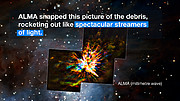
ALMA Captures Dramatic Stellar Fireworks

ALMA views a stellar explosion in Orion

PR Image eso1711b
ALMA view of an explosive event in Orion

PR Image eso1711c
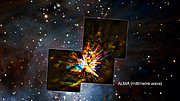
ALMA and VLT views of an explosion in Orion


Videos

ESOcast 102 Light: Dramatic Stellar Fireworks (4K UHD)

Zooming in on an explosive event in Orion

Comparison of the ALMA and VLT views of an explosive event in Orion


Stellar explosions are most often associated with supernovae, the spectacular deaths of stars. But new ALMA observations provide insights into explosions at the other end of the stellar life cycle, star birth. Astronomers captured these dramatic images as they explored the firework-like debris from the birth of a group of massive stars, demonstrating that star formation can be a violent and explosive process too.

1350 light years away, in the constellation of Orion (the Hunter), lies a dense and active star formation factory called the Orion Molecular Cloud 1 (OMC-1), part of the same complex as the famous Orion Nebula. Stars are born when a cloud of gas hundreds of times more massive than our Sun begins to collapse under its own gravity. In the densest regions, protostars ignite and begin to drift about randomly. Over time, some stars begin to fall toward a common centre of gravity, which is usually dominated by a particularly large protostar — and if the stars have a close encounter before they can escape their stellar nursery, violent interactions can occur.

About 100 000 years ago, several protostars started to form deep within the OMC-1. Gravity began to pull them together with ever-increasing speed, until 500 years ago two of them finally clashed.

Astronomers are not sure whether they merely grazed each other or collided head-on, but either way it triggered a powerful eruption that launched other nearby protostars and hundreds of colossal streamers of gas and dust out into interstellar space at over 150 kilometres per second. This cataclysmic interaction released as much energy as our Sun emits in 10 million years.

Fast forward 500 years, and a team of astronomers led by John Bally (University of Colorado, USA) has used the Atacama Large Millimeter/submillimeter Array (ALMA) to peer into the heart of this cloud. There they found the flung-out debris from the explosive birth of this clump of massive stars, looking like a cosmic version of fireworks with giant streamers rocketing off in all directions.

Such explosions are expected to be relatively short-lived, the remnants like those seen by ALMA lasting only centuries. But although they are fleeting, such protostellar explosions may be relatively common. By destroying their parent cloud, these events might also help to regulate the pace of star formation in such giant molecular clouds.

Hints of the explosive nature of the debris in OMC-1 were first revealed by the Submillimeter Array in Hawaii in 2009. Bally and his team also observed this object in the near-infrared with the Gemini South telescope in Chile, revealing the remarkable structure of the streamers, which extend nearly a light-year from end to end.

The new ALMA images, however, showcase the explosive nature in high resolution, unveiling important details about the distribution and high-velocity motion of the carbon monoxide (CO) gas inside the streamers. This will help astronomers understand the underlying force of the blast, and what impact such events could have on star formation across the galaxy.


More Information


ESO is the foremost intergovernmental astronomy organisation in Europe and the world’s most productive ground-based astronomical observatory by far. It is supported by 16 countries: Austria, Belgium, Brazil, the Czech Republic, Denmark, France, Finland, Germany, Italy, the Netherlands, Poland, Portugal, Spain, Sweden, Switzerland and the United Kingdom, along with the host state of Chile. ESO carries out an ambitious programme focused on the design, construction and operation of powerful ground-based observing facilities enabling astronomers to make important scientific discoveries. ESO also plays a leading role in promoting and organising cooperation in astronomical research. ESO operates three unique world-class observing sites in Chile: La Silla, Paranal and Chajnantor. At Paranal, ESO operates the Very Large Telescope, the world’s most advanced visible-light astronomical observatory and two survey telescopes. VISTA works in the infrared and is the world’s largest survey telescope and the VLT Survey Telescope is the largest telescope designed to exclusively survey the skies in visible light. ESO is a major partner in ALMA, the largest astronomical project in existence. And on Cerro Armazones, close to Paranal, ESO is building the 39-metre European Extremely Large Telescope, the E-ELT, which will become “the world’s biggest eye on the sky”.


Links


Contacts

John Bally
University of Colorado, USA

Richard Hook
ESO Public Information Officer
Garching bei München, Germany
Tel: +49 89 3200 6655
Cell: +49 151 1537 3591

 Source: ESO

Friday, April 07, 2017

VLA, ALMA Team Up to Give First Look at Birthplaces of Most Current Stars

Radio/Optical combination images of distant galaxies as seen with NSF's Very Large Array and NASA's Hubble Space Telescope. Their distances from Earth are indicated in the top set of images. Below, the same images, without labels. Credit: K. Trisupatsilp, NRAO/AUI/NSF, NASA.  Hi-res image

The combination of the Karl G. Jansky Very Large Array, Atacama Large Millimeter/submillimeter Array, and Hubble Space Telescope provides simultaneous insights into star-formation, cold dust, and the existing stellar populations in distant galaxies in the Hubble Ultra Deep Field. Credit: Wiphu Rujopakarn/Kavli IPMU

Wiphu Rujopakarn, Visiting Scientist


Astronomers have gotten their first look at exactly where most of today’s stars were born. To do so, they used the National Science Foundation’s Karl G. Jansky Very Large Array (VLA) and the Atacama Large Millimeter/submillimeter Array (ALMA) to look at distant galaxies seen as they were some 10 billion years ago.

At that time, the Universe was experiencing its peak rate of star formation. Most stars in the present Universe were born then.

“We knew that galaxies in that era were forming stars prolifically, but we didn’t know what those galaxies looked like, because they are shrouded in so much dust that almost no visible light escapes them,” said Wiphu Rujopakam, of the Kavli Institute for the Physics and Mathematics of the Universe at the University of Tokyo and Chulalongkorn University in Bangkok, who was lead author on the research paper.

Radio waves, unlike visible light, can get through the dust. However, in order to reveal the details of such distant — and faint — galaxies, the astronomers had to make the most sensitive images ever made with the VLA.

The new observations, using the VLA and ALMA, have answered longstanding questions about just what mechanisms were responsible for the bulk of star formation in those galaxies. They found that intense star formation in the galaxies they studied most frequently occured throughout the galaxies, as opposed to much smaller regions in present-day galaxies with similar high star-formation rates.

The astronomers used the VLA and ALMA to study galaxies in the Hubble Ultra Deep Field, a small area of sky observed since 2003 with NASA’s Hubble Space Telescope (HST). The HST made very long exposures of the area to detect galaxies in the far-distant Universe, and numerous observing programs with other telescopes have followed up on the HST work.

“We used the VLA and ALMA to see deeply into these galaxies, beyond the dust that obscured their innards from Hubble,” said Kristina Nyland, of the National Radio Astronomy Observatory (NRAO). “The VLA showed us where star formation was occurring, and ALMA revealed the cold gas that is the fuel for star formation,” she added.

“In this study, we made the most sensitive image ever made with the VLA,” said Preshanth Jagannathan, also of NRAO. “If you took your cellphone, which transmits a weak radio signal, and put it at more than twice the distance to Pluto, near the outer edge of the solar system, its signal would be roughly as strong as what we detected from these galaxies,” he added.

The study of the galaxies was done by an international team of astronomers. Others involved include James Dunlop of the University of Edinburgh and Rob Ivison of the University of Edinburgh and the European Southern Observatory. The researchers reported their findings in the Dec. 1 issue of the Astrophysical Journal.

ALMA is a partnership of ESO (representing its member states), NSF (USA) and NINS (Japan), together with NRC (Canada), NSC and ASIAA (Taiwan), and KASI (Republic of South Korea), in cooperation with the Republic of Chile. The Joint ALMA Observatory is operated by ESO, AUI/NRAO and NAOJ. 

The National Radio Astronomy Observatory is a facility of the National Science Foundation, operated under cooperative agreement by Associated Universities, Inc.


Paper details:

Journal:
The Astrophysical Journal 

Title: VLA AND ALMA IMAGING OF INTENSE GALAXY-WIDE STAR FORMATION IN z ~ 2 GALAXIES


DOI: 10.3847 / 0004 - 637 X / 833/1/12 (Published December 1, 2016) 

arXiv.org: arxiv.org/abs/1607.07710


Local research contact:

Wiphu Rujopakam
Visiting Scientist
Kavli Institute for the Physics and Mathematics of the Universe
E-mail: wiphu.rujopakarn@ipmu.jp

Media contact:

John Amari
Public Relations Office
Kavli Institute for the Physics and Mathematics of the Universe
E-mail: press@ipmu.jp
Tel: 04-7136-5977

Related links:

National Radio Astronomy Observatory (NROA) press release


Thursday, April 06, 2017

Planetary Nebula NGC 1514

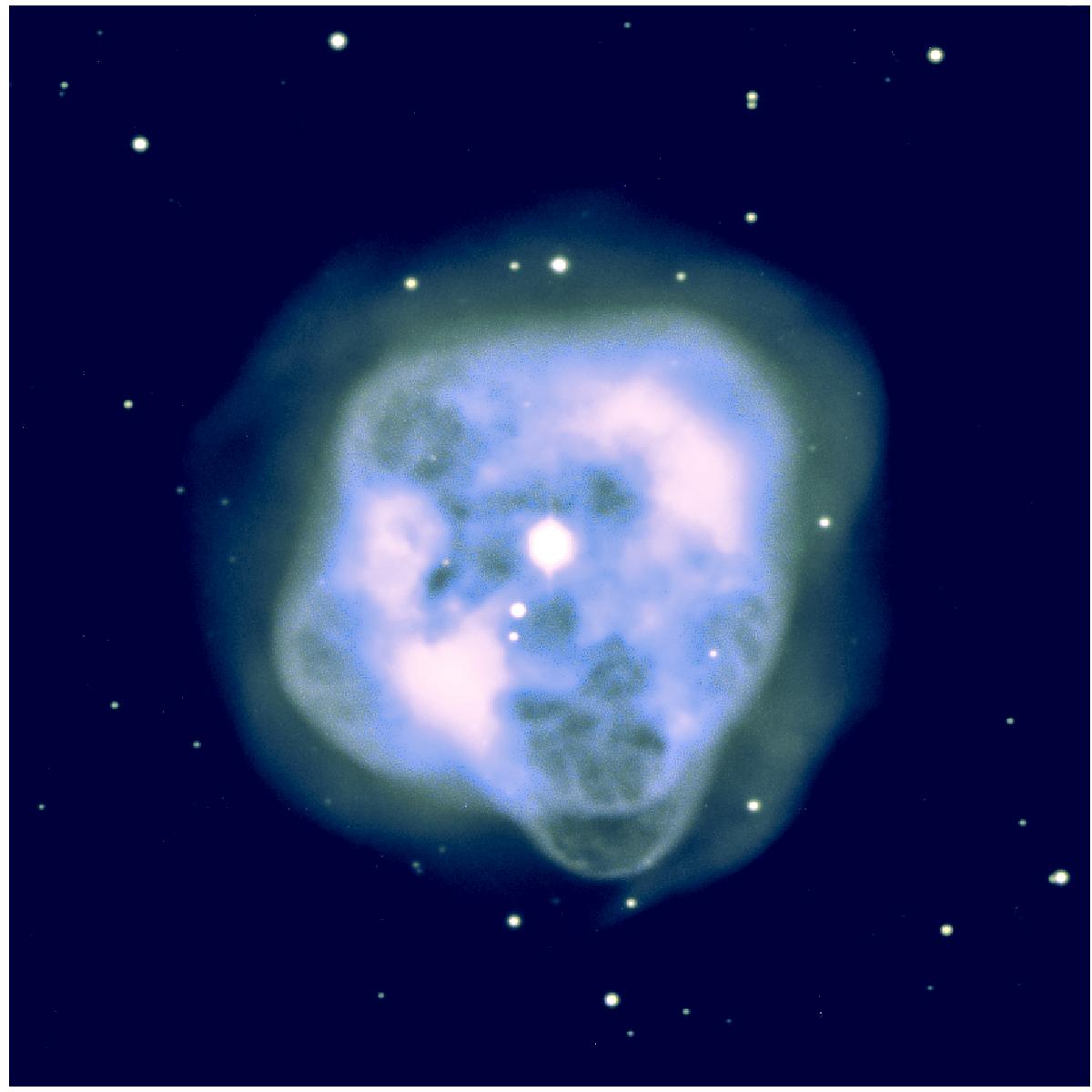
Colour-composite image of the planetary nebula NGC 1514 obtained from narrowband Halpha+[N II] and [OIII] images taken using the Wide Field Camera (WFC) on the Isaac Newton Telescope (INT). Credit: David Jones (Instituto de Astrofisica de Canarias) [ JPEG ].

Planetary nebulae are believed to represent the fate of all Sun-like stars; as the star evolves it sheds its outers layers in the form of a dense stellar wind which is then ionised to form the glowing shell of the planetary nebula. It has become apparent that the wide array of shapes found in planetary nebulae are difficult to understand in a single star scenario. The interaction between a dying star and a companion star in a very close orbit (generally with an orbital period as short as a few hours to a few days) is the preferred mechanism for forming strongly aspherical morphologies.

Researchers from the Instituto de Astrofísica de Canarias (IAC), Spain and KU Leuven, Belgium have demonstrated that the star at the centre of NGC1514 has a binary companion orbiting roughly once every nine years—the longest orbital period known in a planetary nebula—demonstrating that even binaries with very long periods can play an important role in the shaping of their planetary nebulae.


More information: 

D. Jones, H. Van Winckel, A. Aller, K. Exter and O. De Marco, 2017, "The long-period binary central stars of the planetary nebulae NGC 1514 and LoTr 5", A&A, 600, L9 [ Paper ].

The longest stellar "dance" in a planetary nebula. IAC press release, 04 April 2017.


Contact:  

Javier Méndez  (Public Relations Officer


Wednesday, April 05, 2017

Hunting the Original Star Stuff

X-ray light pulses out in rings from a neutron star in the Circinus X-1 star system. 
Credit: NASA's Chandra X-ray Observatory


SDSU astrophysicist Fridolin Weber will present his research on “Big Bang matter” at this year’s Albert W. Johnson lecture.

Every atom in every molecule of your body was born in a single spectacular, 2000-billion-degree Kelvin explosion some 13.8 billion years ago. But the Big Bang also produced exotic forms of matter that lasted only fleeting seconds before blinking out of existence. Fridolin Weber searches the universe for these elusive particles that can only exist in extreme astronomical conditions, such as inside the hearts of super-dense neutron stars. The San Diego State University theoretical astrophysicist will present findings from his galactic hunt on Friday, April 7, at the annual Albert W. Johnson Lecture.

“It’s kind of mind-boggling. If things had happened just a little differently in the early universe, we wouldn’t be here.” 

Weber’s quarry is the quark, an elementary particle that constitutes matter’s most fundamental building block. Quarks are bound up in composite particles like protons and neutrons and are generally not found in nature by themselves. The exception is inside neutron stars, which are incredibly dense remnants of massive stars blown apart by supernova explosions. Composed primarily of neutrons, they are only 24 kilometers (15 miles) or so in diameter, yet are twice as massive as our sun.

That amount of mass packed into a relatively miniscule area creates extraordinary density at the star’s core, squeezing atomic nuclei so tightly that fundamental particles like quarks can exist freely. It’s the closest parallel to conditions immediately after the Big Bang that we know of in our universe.

“We want to understand what happened in the moments and minutes after that gigantic explosion,” Weber said. “We turn to neutron stars to see if we can detect the astrophysical signature of this ‘Big Bang matter.’”

Weber and his colleagues trawl data from enormous radio telescopes scattered around the world. They’re looking for distortions in radio waves emitted by stars that are characteristic of neutron stars’ unusually high temperatures. Right now, astrophysicists know of about 2,000 neutron stars in the sky, but Weber expects that number to grow to more than 30,000 in the coming years as telescopes and computing technology improve.

Just because you’ve found a neutron star doesn’t mean you’ve found quarks, though. Once a good candidate is located, Weber looks for a secondary pattern.

A neutron star is a magnetically charged sphere that radiates energy over time, causing it to “spin down,” like a spinning figure skater with outstretched arms. At the same time, the star is becoming denser and denser. Finally, the theory goes, the density will become so great that the atomic nuclei within the star’s core will break apart, forming quarks. This briefly makes the star “spin up” again—the figure skater pulling in her arms—before the quarks dissipate and the star resumes spinning down. Astrophysicists like Weber can detect this “spin down, spin up, then spin down again” pattern, allowing them to indirectly rewind the universe to its very beginning.

“These quarks would exist as plasma, which would have existed in the first couple of minutes after the Big Bang,” he said.

It’s easy to get lost in the fine-grained data and details needed to study complex astrophysics, but when Weber steps back from all that and considers the connection every single molecule in the universe shares with that single celestial moment, he’s humbled.

“It’s kind of mind-boggling,” he said. “If things had happened just a little differently in the early universe, we wouldn’t be here."

Weber’s lecture, “Searching for Big Bang Matter in Stars,” will take place at 3 p.m. on Friday in Storm Hall West, Room 11. For more information, visit the Albert W. Johnson University Research Lectureship website.  


Tuesday, April 04, 2017

Planetoid Pairs Reveal "A Kinder, Gentler Neptune"

Artist’s conception of a loosely tethered binary planetoid pair like those studied by Fraser et al. in this work which led to the conclusion that Neptune’s shepherding of them to the Kuiper Belt as gradual and gentle in nature. Credit: Gemini Observatoryy/AURA, artwork by Joy Pollard.  Full resolution JPEG | TIFF

The Gemini North telescope (foreground, right) with the Canada-France-Hawaii Telescope in background (left). Image obtained during observations for Col-OSSOS and both telescopes are pointing at the same target.Credit: Gemini Observatory/AURA, photo by Joy Pollard.  Full resolution JPEG | TIFF


"It’s a kinder, gentler Neptune," says Gemini astronomer Meg Schwamb in describing a new result that leaves little doubt about how Neptune gently swept a class of planetoid pairs into the outer Solar System. 

The study focused on a type of loosely bound pairs of planetoids in the outer reaches of our Solar System that scientists say were likely shepherded by Neptune’s gravitational nudges into their current orbits in the distant Kuiper Belt. The paper is published in the April 4th issue of the journal Nature Astronomy (subscription required). 

The research team, led by Wes Fraser of Queen’s University in Belfast, UK, used data collected from the Gemini North Frederick C. Gillett Telescope and Canada-France Hawaii Telescope (CFHT) both on Maunakea in Hawai‘i. The team measured the colors of peculiar new Cold Classical Kuiper Belt Object (CCKBO) pairs as part of the Colours of the Outer Solar System Origins Survey (Col-OSSOS). 

The objects are among a category of bodies known as "blue binaries" which are oddball pairs in the Kuiper Belt because they don’t share the very red color that distinguishes most of the other CCKBO’s surfaces. The Kuiper Belt is a huge swarm of icy small planetoids well beyond the orbit of Neptune, and left-over from the formation of our Solar System. 

It is believed that the blue binaries migrated from more inward parts of the Solar System out to the present-day Kuiper Belt. It is thought that this migration occurred several billion years ago during profound changes to the orbits of the outer planets Jupiter, Saturn, Uranus and Neptune. 

"The red CCKBOs are thought to have formed at the location in the outer Solar System where they currently reside. The blue binaries, on the other hand, are interlopers from closer in hiding out in the Kuiper belt today," says Schwamb, who is also a coauthor on the study. 

Fraser and his team compared the observed properties of the blue binaries to models of Neptune’s migration. Fraser found that although these blue binaries have such a tenuous gravitational embrace, these pairs can survive Neptune’s smoothly pushing them over a distance of at least four AU (four times the distance between the Earth and Sun) as the giant planet migrated outward. "The blue binaries are fossils from the long gone planetary disk that our planets formed from. These objects give us a unique new window into the history of the our Solar System," Schwamb adds.
"This research has opened the window to new aspects of understanding the early stages of planet growth,” concludes Fraser. “We now have a solid handle on how and where these blue binaries originated." 

Chris Davis, Program Officer at the U.S. National Science Foundation, one of the five partner organizations which support Gemini operations, notes that "This is another great example of the successful use of one of Gemini’s many versatile observing modes. The observatory’s Large and Long Program has allowed the team to find and study these enigmatic objects in amongst a sea of millions of other Kuiper Belt Objects." 

The Gemini/CFHT observations help address ongoing questions and debates among scientists about Neptune’s migration from its primordial formation orbital location to its current locale. The team found and characterized the peculiar blue binary objects thanks to CFHT MEGACAM data and confirmed by follow-up observations with the Gemini Multi-Object Spectrograph (GMOS) which was part of an ongoing Large and Long Program at Gemini to study the outer reaches of our Solar System. 

The observations required significant coordination between Gemini and CFHT. "Like synchronized swimming, Gemini North and the Canada-France-Hawaii telescopes aligned their movements to observe the Col-OSSOS Kuiper Belt objects at nearly the same time," said Schwamb. "This choreographed ballet on Maunakea allowed us to measure the light from the same side of the Kuiper Belt object, removing one of the main challenges in studying Solar System bodies that rotate." 

"Facilitating the simultaneous observations with the Col-OSSOS team and Gemini Observatory was challenging, but paved the way for a greater understanding of the origins of these blue binaries," said Todd Burdullis, Queued Service Operations Specialist at CFHT who helped to coordinate the observations. "In tandem, the two facilities observed all the colors of the outer solar system for the Col-OSSOS team." 

Queen's University Belfast's press release can be found here

Science Contacts:

  • Wesley Fraser
    Col-OSSOS Principal Investigator
    Queen's University, Belfast, UK
    Email:
    wes.fraser@qub.ac.uk
    Office: +44 (0) 74 02 46 21 34
    Cell: +44 074 024 621 34

  • Meg Schwamb
    Gemini Observatory
    Hilo, Hawai‘i
    Email:
    mschwamb@gemini.edu
    Office: 808 074-2593
    Cell: 808 315-8014

  • Michele Bannister
    Col-OSSOS collaborator
    OSSOS Core member
    Queen's University Belfast
    Email:
    m.bannister@qub.ac.uk
    Phone: +44 074 555 471 79

  • JJ Kavelaars
    Col-OSSOS collaborator
    OSSOS Co-PI
    Herzberg Institute, Victoria, BC, Canada
    Email:
    jjk@uvic.ca
    Phone: +1 778 677 3131

Media Contact:

  •  
    • Peter Michaud
      Public Information and Outreach Manager
      Gemini Observatory
      Hilo, Hawai‘i
      Email:
      pmichaud@gemini.edu
      Desk: 808 974-2510
      Cell: 808 936-6643

    • Mary Beth Laychak
      Outreach Manager
      Canada-France-Hawaii Telescope
      Email:
      mary@cfht.hawaii.edu
      Phone: 808 885-3121

    • Emma Gallagher
      Communications Officer
      Queen's University, Belfast, UK
      Email:
      emma.gallagher@qub.ac.uk
      Phone: 028 9097 5384


Monday, April 03, 2017

Simulating separate universes to study the clustering of dark matter

Figure 1: Schematic representation of the separate universe idea. The red line represents a long wavelength matter density perturbation. The two panels show results of separate universe simulations in initially overdense (left) and underdense regions (right). The colour indicates the matter density with lighter regions being denser. © MPA  


In the standard cosmological model, dark matter makes up roughly 25 % of the total energy budget of the Universe. However it cannot be observed directly, since it does not emit light. Understanding the way dark matter clusters together and forms structures is of crucial importance since it would help our understanding of the observed spatial distribution of galaxies (which should closely follow the dark matter distribution) and link this with early-Universe physics and the origin of initial perturbations. In this context, researchers at MPA and in other institutions worldwide came up with a new way of simulating the impact of large-scale primordial perturbations on the abundance of structures observed at late times, the so-called separate universe simulations. Using this technique, the MPA researchers recently obtained some of the most precise measurements of the local bias, confirming the known trend that more massive halos are more biased than smaller halos.

The clustering of dark matter

Dark matter groups itself in various structures to create what is called the cosmic web (see Figure 1). One of the most important components are the so-called halos, which simply represent regions where dark matter has accumulated. The abundance and distribution of these halos is strongly dependent on the distribution of dark matter: one could also say that the halo distribution is biased with respect to the dark matter distribution. Understanding this bias and what physical effects affect it is of crucial importance for the statistical description of the halo distribution. This, in turn, is very important as the current paradigm states that cosmological tracers (such as galaxies or galaxy clusters) reside preferentially in dark matter halos.

To study dark matter clustering, physicists traditionally run so-called “N-body” numerical simulations. In their simplest form, these simulations follow a set of particles in a box from an initial distribution to some later time, using Newtonian physics to describe the evolution and our knowledge of dark matter properties. Here the term "particle" is a substitute for "mass element", which are normally on the order of a few million or even billion solar masses, as we are not able to achieve infinite mass resolution. In order to cover a wide range of scales, these simulations must both have a large number of particles (billions) and be of largest possible volume (up to a few Gpc on a side) which means that they quickly become costly computationally.

Separate universe simulations

The main idea behind the separate universe simulations is that a patch of the Universe, which has a different matter density, is treated as a separate universe. Indeed, it can be shown that applying an overall uniform change to the matter density in the simulation (i.e. adding a perturbation with an infinite wavelength) is equivalent to running the simulation with different cosmological parameters (for example going from flat to curved geometry). Hence, it is possible to divide a costly big simulation into smaller ones, where each has a different matter density and correctly adjusted other cosmological parameters. Thus, the dependence of e.g. the density of halos on the matter density can be studied in a clean way.

This technique does not only make the running of simulations easier, it makes it also possible to measure the impact of large-scale perturbations on smaller scales where halo and galaxy formation takes place. Since the overall matter density is now a parameter that can be chosen independently, it is possible to measure the dependence of structure formation on this parameter solely - unlike in traditional N-body simulations where a mixing of scales is unavoidable. Hence it is a fast and easy way to make precise measurements of quantities depending on the matter density.

Figure 2: The dependence of halo density (δh) on the matter density (δm) in separate universes. Red points show results from simulations and the black line presents the fit of a polynomial to extract the local bias parameters. © MPA

A measure of clustering: halo bias

One of these quantities is the density of dark matter halos found in a simulation. As mentioned above, the bias is the statistical quantity linking the halo density to the matter density. While there are many different bias parameters reflecting the various physical effects entering structure formation, the most well-studied bias parameter on large scales is the so-called local bias. This local bias simply relates the halo density to the matter density at each location in the simulation.

Separate universe simulations provide a perfect framework to obtain precise measurements of this quantity, as one simply needs to run several simulations with various values for the matter density and to measure the final density of dark matter halos in each of them. The obtained relation between matter and halo density then gives the local bias parameter as the proportionality constant between these two quantities, as is shown in Figure 2.

Clearly, simulations with higher initial matter density lead to higher halo density at later times, as can also be seen in Figure 1. Using this technique, researchers at MPA recently obtained some of the most precise measurements of the local bias, confirming the known trend that more massive halos (which are also less common) are more biased than smaller halos.


Authors


Lazeyras, Titouan
PhD student
Phone: 2275


Schmidt, Fabian
Scientific Staff
Phone: 2274


Original Publications


Christian Wagner, Fabian Schmidt, Chi-Ting Chiang, Eiichiro Komatsu

Separate Universe Simulations

Titouan Lazeyras, Christian Wagner, Tobias Baldauf, Fabian Schmidt

Precision measurement of the local bias of dark matter halos

Source  /  DOI
 

Saturday, April 01, 2017

Milky Way-like Galaxies in Early Universe Embedded in 'Super Halos'

Artist impression of a progenitor of Milky Way-like galaxy in the early universe with a background quasar shinning through a 'super halo' of hydrogen gas surrounding the galaxy. New ALMA observations of two such galaxies reveal that these vast halos extend well beyond the galaxies' dusty, star-forming disks. The galaxies were initially found by the absorption of background quasar light passing through the galaxies. ALMA was able to image the ionized carbon in the galaxies' disks, revealing crucial details about their structures. Credit: A. Angelich (NRAO/AUI/NSF)

Composite ALMA and optical image of a young Milky Way-like galaxy 12 billion light-years away and a background quasar 12.5 billion light-years away. Light from the quasar passed through the galaxy's gas on its way to Earth, revealing the presence of the galaxy to astronomers. New ALMA observations of the galaxy's ionized carbon (green) and dust continuum (blue) emission show that the dusty, star-forming disk of the galaxy is vastly offset from the gas detected by quasar absorption at optical wavelengths (red). This indicates that a massive halo of gas surrounds the galaxy. The optical data are from the Keck I Telescope at the W.M. Keck Observatory. Credit: ALMA (ESO/NAOJ/NRAO), M. Neeleman & J. Xavier Prochaska; Keck Observatory

Credit: Produced by Alexandra Angelich (NRAO/AUI/NSF); Written and narrated by Charles Blue (NRAO/AUI/NSF); Animations and footage courtesy of Alexandra Angelich (NRAO/AUI/NSF); NASA/Goddard Space Flight Center/Cruz deWilde and the Advanced Visualization Laboratory at the National Center for Supercomputing and B. O'Shea, M. Norman; ESO/C.Malin; Science images courtesy of M. Neeleman & J. Xavier Prochaska; Keck Observatory; Music by Geodesium. Vimeo


By harnessing the extreme sensitivity of the Atacama Large Millimeter/submillimeter Array (ALMA), astronomers have directly observed a pair of Milky Way-like galaxies seen when the universe was only eight percent of its current age. These progenitors of today’s giant spiral galaxies are surrounded by "super halos" of hydrogen gas that extend many tens of thousands of light-years beyond their dusty, star-filled disks.

Astronomers initially detected these galaxies by studying the intense light from even-more-distant quasars. As this light travels through an intervening galaxy on its way to Earth, it can pick up the unique spectral signature from the galaxy’s gas. This technique, however, normally prevents astronomers from seeing the actual light emitted by the galaxy, which is overwhelmed by the much brighter emission from the background quasar.

"Imagine a tiny firefly next to a high-power search light. That’s what astronomers are up against when it comes to observing these youthful versions of our home galaxy," said Marcel Neeleman a postdoctoral fellow at the University of California, Santa Cruz, and lead author on a paper appearing in the journal Science. "We can now see the galaxies themselves, which gives us an amazing opportunity to learn about the earliest history of our own galaxy and others like it."

With ALMA, the astronomers were finally able to observe the natural millimeter-wavelength "glow" emitted by ionized carbon in the dense and dusty star-forming regions of the galaxies. This carbon signature, however, is considerably offset from the gas first detected by quasar absorption. This extreme separation indicates that the galaxies’ gas content extends well beyond their star-filled disks, suggesting that each galaxy is embedded in a monstrous halo of hydrogen gas.

"We had expected we would see faint emission right on top of the quasar, and instead we saw bright galaxies at large separations from the quasar," said J. Xavier Prochaska, professor of astronomy and astrophysics at UC Santa Cruz and coauthor of the paper. The separation from the quasar to the observed galaxy is about 137,000 light-years for one galaxy and about 59,000 light-years for the other.

According to the researchers, the neutral hydrogen gas revealed by its absorption of quasar light is most likely part of a large halo or perhaps an extended disk of gas around the galaxy. "It's not where the star formation is, and to see so much gas that far from the star-forming region means there is a large amount of neutral hydrogen around the galaxy," Neeleman said.

The new ALMA data show that these young galaxies are already rotating, which is one of the hallmarks of the massive spiral galaxies we see in the universe today. The ALMA observations further reveal that both galaxies are forming stars at moderately high rates: more than 100 solar masses per year in one galaxy and about 25 solar masses per year in the other.

"These galaxies appear to be massive, dusty, and rapidly star-forming systems, with large, extended layers of gas," Prochaska said.

"ALMA has solved a decades-old question on galaxy formation," said Chris Carilli, an astronomer with the National Radio Astronomy Observatory in Socorro, N.M., and co-author on the paper. "We now know that at least some very early galaxies have halos that are much more extended that previously considered, which may represent the future material for galaxy growth."

The galaxies, which are officially designated ALMA J081740.86+135138.2 and ALMA J120110.26+211756.2, are each about 12 billion light-years from Earth. The background quasars are each roughly 12.5 billion light-years from Earth.

The National Radio Astronomy Observatory is a facility of the National Science Foundation, operated under cooperative agreement by Associated Universities, Inc.

# # #


The Atacama Large Millimeter/submillimeter Array (ALMA), an international astronomy facility, is a partnership of ESO, the U.S. National Science Foundation (NSF) and the National Institutes of Natural Sciences (NINS) of Japan in cooperation with the Republic of Chile. ALMA is funded by ESO on behalf of its Member States, by NSF in cooperation with the National Research Council of Canada (NRC) and the National Science Council of Taiwan (NSC) and by NINS in cooperation with the Academia Sinica (AS) in Taiwan and the Korea Astronomy and Space Science Institute (KASI).

ALMA construction and operations are led by ESO on behalf of its Member States; by the National Radio Astronomy Observatory (NRAO), managed by Associated Universities, Inc. (AUI), on behalf of North America; and by the National Astronomical Observatory of Japan (NAOJ) on behalf of East Asia. The Joint ALMA Observatory (JAO) provides the unified leadership and management of the construction, commissioning and operation of ALMA.

This research is presented in a paper titled "[C II] 158-μm emission from the host galaxies of damped Lyman alpha systems," by M. Neeleman et al., scheduled for publication in the journal Science on 24 March 2017.

Contact: 

Charles Blue
434-296-0314;

Email: cblue@nrao.edu