Thursday, March 09, 2017

Ancient Stardust Sheds Light on the First Stars

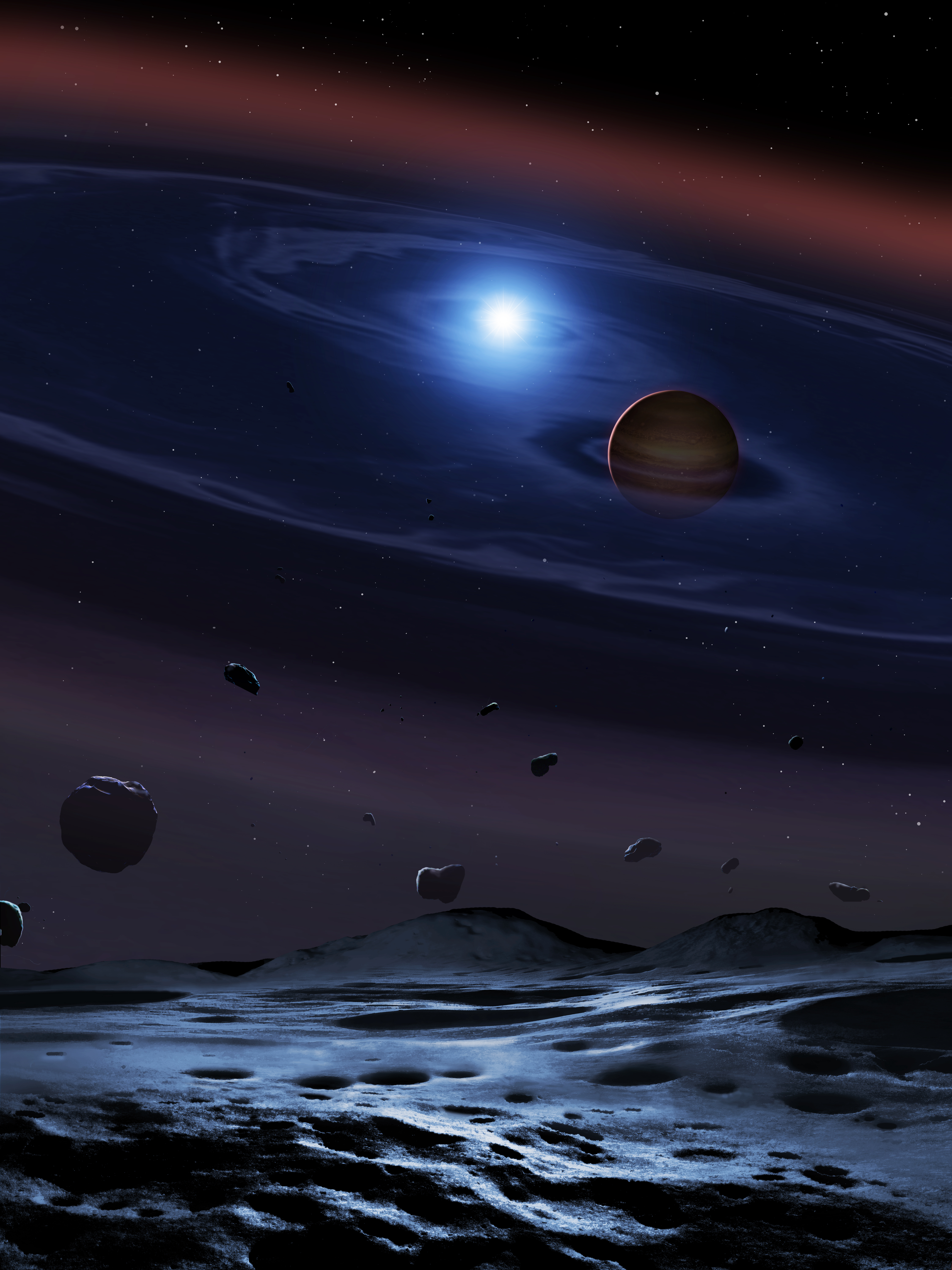
Artist’s impression of the remote dusty galaxy A2744_YD4

PR Image eso1708b
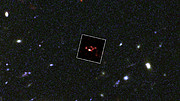
ALMA and Hubble Space Telescope views of the distant dusty galaxy A2744_YD4


Videos

ESOcast 99 Light: ALMA Sheds Light on the First Stars (4K UHD)
Artist’s impression of dust formation by supernovae in A2744_YD4

Zooming in on the young dusty galaxy A2744_YD4


Most distant object ever observed by ALMA

Astronomers have used ALMA to detect a huge mass of glowing stardust in a galaxy seen when the Universe was only four percent of its present age. This galaxy was observed shortly after its formation and is the most distant galaxy in which dust has been detected. This observation is also the most distant detection of oxygen in the Universe. These new results provide brand-new insights into the birth and explosive deaths of the very first stars.

An international team of astronomers, led by Nicolas Laporte of University College London, have used the Atacama Large Millimeter/submillimeter Array (ALMA) to observe A2744_YD4, the youngest and most remote galaxy ever seen by ALMA. They were surprised to find that this youthful galaxy contained an abundance of interstellar dust — dust formed by the deaths of an earlier generation of stars.

Follow-up observations using the X-shooter instrument on ESO’s Very Large Telescope confirmed the enormous distance to A2744_YD4. The galaxy appears to us as it was when the Universe was only 600 million years old, during the period when the first stars and galaxies were forming [1].

Not only is A2744_YD4 the most distant galaxy yet observed by ALMA,” comments Nicolas Laporte, “but the detection of so much dust indicates early supernovae must have already polluted this galaxy.”

Cosmic dust is mainly composed of silicon, carbon and aluminium, in grains as small as a millionth of a centimetre across. The chemical elements in these grains are forged inside stars and are scattered across the cosmos when the stars die, most spectacularly in supernova explosions, the final fate of short-lived, massive stars. Today, this dust is plentiful and is a key building block in the formation of stars, planets and complex molecules; but in the early Universe — before the first generations of stars died out — it was scarce.

The observations of the dusty galaxy A2744_YD4 were made possible because this galaxy lies behind a massive galaxy cluster called Abell 2744 [2]. Because of a phenomenon called gravitational lensing, the cluster acted like a giant cosmic “telescope” to magnify the more distant A2744_YD4 by about 1.8 times, allowing the team to peer far back into the early Universe.

The ALMA observations also detected the glowing emission of ionised oxygen from A2744_YD4. This is the most distant, and hence earliest, detection of oxygen in the Universe, surpassing another ALMA result from 2016.

The detection of dust in the early Universe provides new information on when the first supernovae exploded and hence the time when the first hot stars bathed the Universe in light. Determining the timing of this “cosmic dawn” is one of the holy grails of modern astronomy, and it can be indirectly probed through the study of early interstellar dust.

The team estimates that A2744_YD4 contained an amount of dust equivalent to 6 million times the mass of our Sun, while the galaxy’s total stellar mass — the mass of all its stars — was 2 billion times the mass of our Sun. The team also measured the rate of star formation in A2744_YD4 and found that stars are forming at a rate of 20 solar masses per year — compared to just one solar mass per year in the Milky Way [3].

This rate is not unusual for such a distant galaxy, but it does shed light on how quickly the dust in A2744_YD4 formed,” explains Richard Ellis (ESO and University College London), a co-author of the study. “Remarkably, the required time is only about 200 million years — so we are witnessing this galaxy shortly after its formation.”

This means that significant star formation began approximately 200 million years before the epoch at which the galaxy is being observed. This provides a great opportunity for ALMA to help study the era when the first stars and galaxies “switched on” — the earliest epoch yet probed. Our Sun, our planet and our existence are the products — 13 billion years later — of this first generation of stars. By studying their formation, lives and deaths, we are exploring our origins.

With ALMA, the prospects for performing deeper and more extensive observations of similar galaxies at these early times are very promising,” says Ellis.

And Laporte concludes: “Further measurements of this kind offer the exciting prospect of tracing early star formation and the creation of the heavier chemical elements even further back into the early Universe.


Notes

[1] This time corresponds to a redshift of z=8.38, during the epoch of reionisation.

[2] Abell 2744 is a massive object, lying 3.5 billion light-years away (redshift 0.308), that is thought to be the result of four smaller galaxy clusters colliding. It has been nicknamed Pandora’s Cluster because of the many strange and different phenomena that were unleashed by the huge collision that occurred over a period of about 350 million years. The galaxies only make up five percent of the cluster’s mass, while dark matter makes up seventy-five percent, providing the massive gravitational influence necessary to bend and magnify the light of background galaxies. The remaining twenty percent of the total mass is thought to be in the form of hot gas.

[3] This rate means that the total mass of the stars formed every year is equivalent to 20 times the mass of the Sun.


More information

This research was presented in a paper entitled “Dust in the Reionization Era: ALMA Observations of a z =8.38 Gravitationally-Lensed Galaxy” by Laporte et al., to appear in The Astrophysical Journal Letters.

The team is composed of N. Laporte (University College London, UK), R. S. Ellis (University College London, UK; ESO, Garching, Germany), F. Boone (Institut de Recherche en Astrophysique et Planétologie (IRAP), Toulouse, France), F. E. Bauer (Pontificia Universidad Católica de Chile, Instituto de Astrofísica, Santiago, Chile), D. Quénard (Queen Mary University of London, London, UK), G. Roberts-Borsani (University College London, UK), R. Pelló (Institut de Recherche en Astrophysique et Planétologie (IRAP), Toulouse, France), I. Pérez-Fournon (Instituto de Astrofísica de Canarias, Tenerife, Spain; Universidad de La Laguna, Tenerife, Spain), and A. Streblyanska (Instituto de Astrofísica de Canarias, Tenerife, Spain; Universidad de La Laguna, Tenerife, Spain).

The Atacama Large Millimeter/submillimeter Array (ALMA), an international astronomy facility, is a partnership of ESO, the U.S. National Science Foundation (NSF) and the National Institutes of Natural Sciences (NINS) of Japan in cooperation with the Republic of Chile. ALMA is funded by ESO on behalf of its Member States, by NSF in cooperation with the National Research Council of Canada (NRC) and the National Science Council of Taiwan (NSC) and by NINS in cooperation with the Academia Sinica (AS) in Taiwan and the Korea Astronomy and Space Science Institute (KASI).
ALMA construction and operations are led by ESO on behalf of its Member States; by the National Radio Astronomy Observatory (NRAO), managed by Associated Universities, Inc. (AUI), on behalf of North America; and by the National Astronomical Observatory of Japan (NAOJ) on behalf of East Asia. The Joint ALMA Observatory (JAO) provides the unified leadership and management of the construction, commissioning and operation of ALMA.

ESO is the foremost intergovernmental astronomy organisation in Europe and the world’s most productive ground-based astronomical observatory by far. It is supported by 16 countries: Austria, Belgium, Brazil, the Czech Republic, Denmark, France, Finland, Germany, Italy, the Netherlands, Poland, Portugal, Spain, Sweden, Switzerland and the United Kingdom, along with the host state of Chile. ESO carries out an ambitious programme focused on the design, construction and operation of powerful ground-based observing facilities enabling astronomers to make important scientific discoveries. ESO also plays a leading role in promoting and organising cooperation in astronomical research. ESO operates three unique world-class observing sites in Chile: La Silla, Paranal and Chajnantor. At Paranal, ESO operates the Very Large Telescope, the world’s most advanced visible-light astronomical observatory and two survey telescopes. VISTA works in the infrared and is the world’s largest survey telescope and the VLT Survey Telescope is the largest telescope designed to exclusively survey the skies in visible light. ESO is a major partner in ALMA, the largest astronomical project in existence. And on Cerro Armazones, close to Paranal, ESO is building the 39-metre European Extremely Large Telescope, the E-ELT, which will become “the world’s biggest eye on the sky”.


Links
 .


Contacts

Nicolas Laporte
University College London
United Kingdom
Tel: +44 2 035 495 802
Cell: +44 7452 807 591

Richard Ellis
ESO
Garching bei München, Germany
Tel: +44 7885 403334
Cell: +49 151 629 56829

Richard Hook
ESO Public Information Officer
Garching bei München, Germany
Tel: +49 89 3200 6655
Cell: +49 151 1537 3591

Source: ESO

Wednesday, March 08, 2017

Star clusters discovery could upset the astronomical applecart

The Large Magellanic Cloud
This vibrant image from NASA’s Spitzer Space Telescope shows the Large Magellanic Cloud, a satellite galaxy to our own Milky Way galaxy. Credit: NASA/JPL-Caltech/M. Meixner (STScI) & the SAGE Legacy Team.


Large Magellanic Cloud and Cluster Locations
This image from NASA’s Spitzer Space Telescope features the Large Magellanic Cloud, a satellite galaxy to our own Milky Way galaxy. Overlaying the image are circles showing the locations of 15 star clusters where multiple generations of stars have been discovered. Credit: Karl Gordon and Margaret Meixner – Space Telescope Science Institute/AURA/NASA. Compilation by Bi-Qing For and Kenji Bekki (ICRAR/UWA).

LMC Composite and Clusters Pullout
Left: This image from NASA’s Spitzer Space Telescope shows the Large Magellanic Cloud, a satellite galaxy to our own Milky Way galaxy. Overlaying the image are the locations of 15 star clusters where multiple generations of stars have been discovered. Right: A closer view of four of the star clusters where young stellar objects have been detected. The crosses mark the locations of young stars and the squares in the main image show the locations of these four clusters. Credit: Karl Gordon and Margaret Meixner – Space Telescope Science Institute/AURA/NASA. Compilation by Bi-Qing For and Kenji Bekki (ICRAR/UWA).


The discovery of young stars in old star clusters could send scientists back to the drawing board for one of the Universe’s most common objects.

Dr Bi-Qing For, from the International Centre for Radio Astronomy Research in Perth, said our understanding of how stars evolve is a cornerstone of astronomical science.

“There are a billion trillion stars in the Universe and we’ve been observing and classifying those we can see for more than a century,” she said.

“Our models of stellar evolution are based on the assumption that stars within star clusters formed from the same material at roughly the same time.”

A star cluster is a group of stars that share a common origin and are held together by gravity for some length of time.

Because star clusters are assumed to contain stars of similar age and composition researchers have used them as an “astronomical laboratory” to understand how mass affects the evolution of stars.

“If this assumption turns out to be incorrect, as our findings suggest, then these important models will need to be revisited and revised,” Dr For said.

The discovery, published today in the Monthly Notices of the Royal Astronomical Society, involves a study of star clusters located in the Large Magellanic Cloud, a neighbouring galaxy to the Milky Way.

By cross-matching the locations of several thousand young stars with the locations of stellar clusters, the researchers found 15 stellar candidates that were much younger than other stars within the same cluster.

“The formation of these younger stars could have been fuelled by gas entering the clusters from interstellar space,” said co-author Dr Kenji Bekki, also from the International Centre for Radio Astronomy Research.

“But we eliminated this possibility using observations made by radio telescopes to show that there was no correlation between interstellar hydrogen gas and the location of the clusters we were studying.

“We believe the younger stars have actually been created out of the matter ejected from older stars as they die, which would mean we have discovered multiple generations of stars belonging to the same cluster.”

Dr Bekki said the stars were currently too faint to see using optical telescopes because of the dust that surrounds them.

“They have been observed using infrared wavelengths by orbiting space telescopes Spitzer and Herschel, operated by NASA and the European Space Agency,” he said.

“An envelope of gas and dust surrounds these young stars but as they become more massive and this shroud blows away, they will become visible at optical wavelengths for powerful instruments like the Hubble Space Telescope.”

“If we point Hubble at the clusters we’ve been studying, we should be able to see both young and old stars and confirm once and for all that star clusters can contain several generations of stars.”


Publication Details


‘A discovery of young stellar objects in older clusters of the Large Magellanic Cloud’, in the Monthly Notices of the Royal Astronomical Society published by Oxford University Press on 7 March 2017.

Click here for the research paper


More Information

ICRAR

The International Centre for Radio Astronomy Research (ICRAR) is a joint venture between Curtin University and The University of Western Australia with support and funding from the State Government of Western Australia.


Contact Information

Dr Bi-Qing For (ICRAR-UWA)
Email: biqing.for@icrar.org
M: +61 8 6488 7729

Dr Kenji Bekki (ICRAR-UWA)
Email: kenji.bekki@icrar.org
Tel: +61 8 6488 7730

Pete Wheeler—Media Contact, ICRAR
Email: pete.wheeler@icrar.org
M: +61 423 982 018


Tuesday, March 07, 2017

First evidence of rocky planet formation in Tatooine system

A disc of rocky debris from a disrupted planetesimal surrounds white dwarf plus brown dwarf binary star. The white dwarf is the burn-out core of a star that was probably similar to the Sun, the brown dwarf is only ~60 times heavier than Jupiter, and the two stars go around each other in only a bit over two hours. Credit: Mark Garlick, UCL, University of Warwick and University of Sheffield. Full resolution JPEG

 
Using the Gemini Multi-Object Spectrograph (GMOS) on Gemini South, a team led by Jay Farihi (University College London) found, for the first time, a dust and debris disk surrounding a binary star with a white dwarf as a substellar companion. To date, almost all of the known planetary systems which include a white dwarf are single stars. Using GMOS spectra Farihi et al. identified critical metal features in the spectrum as well as the higher Balmer lines. From the Gemini data the team estimated a surface temperature of 21,800 Kelvin (about 3.5 times hotter than the Sun) and a mass of ~0.4 solar masses for the white dwarf star and a mass of ~0.063 solar masses for the companion. 

The research is published in the February 27th online issue of Nature Astronomy

The following text is provided verbatim from the University College London press release:


Evidence of planetary debris surrounding a double sun, ‘Tatooine-like’ system has been found for the first time by a UCL-led team of researchers.

Published today in Nature Astronomy and funded by the Science and Technology Facilities Council and the European Research Council, the study finds the remains of shattered asteroids orbiting a double sun consisting of a white dwarf and a brown dwarf roughly 1000 light-years away in a system called SDSS 1557.

The discovery is remarkable because the debris appears to be rocky and suggests that terrestrial planets like Tatooine – Luke Skywalker’s home world in Star Wars – might exist in the system. To date, all exoplanets discovered in orbit around double stars are gas giants, similar to Jupiter, and are thought to form in the icy regions of their systems.

In contrast to the carbon-rich icy material found in other double star systems, the planetary material identified in the SDSS 1557 system has a high metal content, including silicon and magnesium. These elements were identified as the debris flowed from its orbit onto the surface of the star, polluting it temporarily with at least 1017 g (or 1.1 trillion US tons) of matter, equating it to an asteroid at least 4 km in size.

Lead author, Dr Jay Farihi (UCL Physics & Astronomy), said: “Building rocky planets around two suns is a challenge because the gravity of both stars can push and pull tremendously, preventing bits of rock and dust from sticking together and growing into full-fledged planets. With the discovery of asteroid debris in the SDSS 1557 system, we see clear signatures of rocky planet assembly via large asteroids that formed, helping us understand how rocky exoplanets are made in double star systems."
In the Solar System, the asteroid belt contains the leftover building blocks for the terrestrial planets Mercury, Venus, Earth, and Mars, so planetary scientists study the asteroids to gain a better understanding of how rocky, and potentially habitable planets are formed. The same approach was used by the team to study the SDSS 1557 system as any planets within it cannot yet be detected directly but the debris is spread in a large belt around the double stars, which is a much larger target for analysis.

The discovery came as a complete surprise, as the team assumed the dusty white dwarf was a single star but co-author Dr Steven Parsons (University of Valparaíso and University of Sheffield), an expert in double star (or binary) systems noticed the tell-tale signs. "We know of thousands of binaries similar to SDSS 1557 but this is the first time we've seen asteroid debris and pollution. The brown dwarf was effectively hidden by the dust until we looked with the right instrument", added Parsons, "but when we observed SDSS 1557 in detail we recognised the brown dwarf's subtle gravitational pull on the white dwarf."

The team studied the binary system and the chemical composition of the debris by measuring the absorption of different wavelengths of light or ‘spectra’, using the Gemini Observatory South telescope and the European Southern Observatory Very Large Telescope, both located in Chile. 

Co-author Professor Boris Gänsicke (University of Warwick) analysed these data and found they all told a consistent and compelling story. "Any metals we see in the white dwarf will disappear within a few weeks, and sink down into the interior, unless the debris is continuously flowing onto the star. We'll be looking at SDSS 1557 next with Hubble, to conclusively show the dust is made of rock rather than ice."

Notes to Editors
 
For more information or to speak to the researchers involved, please contact Dr Rebecca Caygill, UCL press office. T: +44 (0)20 3108 3846 / +44 (0)7733 307 596, E: r.caygill@ucl.ac.uk
J. Farihi, S. G. Parsons, B. T. Gansicke, ‘A circumbinary debris disk in a polluted white dwarf system’ will be published by Nature Astronomy at 1600 London time / 1100 US Eastern Time on 27 February 2017 and is under a strict embargo until then. DOI: 10.1038/s41550-016-0032.

About UCL (University College London)
 
UCL was founded in 1826. We were the first English university established after Oxford and Cambridge, the first to open up university education to those previously excluded from it, and the first to provide systematic teaching of law, architecture and medicine. We are among the world's top universities, as reflected by performance in a range of international rankings and tables. UCL currently has over 38,000 students from 150 countries and over 12,000 staff. Our annual income is more than £1 billion.

www.ucl.ac.uk | Follow us on Twitter @uclnews | Watch our YouTube channel YouTube.com/UCLTV
 
About the University of Warwick
 
The University of Warwick is consistently ranked in the top 10 universities in the UK and top 100 in the world. It is one of the UK's leading universities, with an acknowledged reputation for excellence in research, teaching and innovation, alongside pioneering links with business and industry.

About the University of Sheffield
 
With almost 27,000 of the brightest students from over 140 countries, learning alongside over 1,200 of the best academics from across the globe, the University of Sheffield is one of the world’s leading universities.

A member of the UK’s prestigious Russell Group of leading research-led institutions, Sheffield offers world-class teaching and research excellence across a wide range of disciplines.

Unified by the power of discovery and understanding, staff and students at the university are committed to finding new ways to transform the world we live in.

Sheffield is the only university to feature in The Sunday Times 100 Best Not-For-Profit Organisations to Work For 2016 and was voted number one university in the UK for Student Satisfaction by Times Higher Education in 2014. In the last decade it has won four Queen’s Anniversary Prizes in recognition of the outstanding contribution to the United Kingdom’s intellectual, economic, cultural and social life.

Sheffield has six Nobel Prize winners among former staff and students and its alumni go on to hold positions of great responsibility and influence all over the world, making significant contributions in their chosen fields.

Global research partners and clients include Boeing, Rolls-Royce, Unilever, AstraZeneca, Glaxo SmithKline, Siemens and Airbus, as well as many UK and overseas government agencies and charitable foundations.

About the Science and Technology Facilities Council (STFC)
 
The Science and Technology Facilities Council is keeping the UK at the forefront of international science and tackling some of the most significant challenges facing society such as meeting our future energy needs, monitoring and understanding climate change, and global security. The Council has a broad science portfolio including supporting UK work in space and ground-based astronomy technologies and research.   http://www.stfc.ac.uk/


Monday, March 06, 2017

The Circum-galactic Medium of Galaxies as Probe of Gas Accretion


In collaboration with researchers from the USA, MPA scientists have mounted a series of ambitious experiments that use a combination of quasar absorption-line spectra, neutral hydrogen line data, and state-of-the-art cosmological hydrodynamical simulations to probe the interface between galaxies and their surrounding gaseous environment. The researchers found that galaxies with gas-rich disks are embedded within gas-rich halos and that the gas in these halos is distributed smoothly and relatively isotropically.

Galaxies need gas to fuel star formation; how galaxies acquire gas is therefore central to our understanding of galaxy evolution. In the standard paradigm, galaxies grow primarily through the accretion of gas that flows from the Inter-Galactic Medium (IGM), through the dark matter halo, and eventually settling onto the disk of the galaxy. Galaxies like or own Milky Way need a continuous supply of gas to fuel star formation, but little is known about the way in which gas cools and condenses into the disk due to difficulties in observationally mapping the disk/halo interface.

Bright quasars at large distances from the observer act as cosmic light beacons. As the light from distant quasars travels through the Universe, it encounters gas clouds containing mainly hydrogen. These clouds absorb and scatter ultraviolet photons, leading to characteristic dips (or absorption lines) in the spectrum of the quasar, the so-called "Lyman α forest". By choosing quasars that happen to be positioned in such a way that their light will pass within a short distance (a few hundred kiloparsec) of a foreground galaxy, we are able to probe the gas in the so-called "circum-galactic medium" surrounding these systems.

Two large programmes to investigate the circum-galactic medium around nearby galaxies have now received a total allocation of 200 orbits of observation time with the Hubble Space Telescope (HST). The first of these, COS-GASS, used the Cosmic Origins Spectrograph (COS) on board HST to probe neutral hydrogen around nearby galaxies out to the outer radius of their surrounding dark matter halos.

Distribution of sight lines as a function of impact parameter and orientation of the target galaxy. The red and blue areas correspond to the HI and the optical disk. The yellow region corresponds to the extended disk region. The quasar sightlines included as part of the COS-GASS programme are shown in purple and the sightlines from the COS-DISK programme in green.© MPA


The COS-GASS programme found a highly significant correlation (at 99.5% confidence) between the strength of the Lyman α absorption lines, which are tracing neutral hydrogen in the surrounding halo, with the ratio of gas mass to stellar mass within the disk. This means that galaxies with gas-rich disks are embedded within gas-rich halos.

The Lyman α signature was detected in nearly every quasar spectrum and the average strength of the Lyman α lines decreased gradually as a function of distance from the galaxy. Finally, the strength of the Lyman α lines seems to be independent of the orientation of the disk. This means that the gas in the surrounding gas halos is distributed smoothly and relatively isotropically.

The quasar spectra obtained as part of the COS-GASS programme mainly probed sightlines well outside the disk of the galaxy. In 2015, the follow-on, large programme COS-DISK was approved to probe gas at the interface between disk and circum-galactic medium. While reduction, processing and analysis of the HST data is being carried out at Johns Hopkins University in Baltimore, MPA scientists are closely involved in using state-of-the-art cosmological hydro-dynamical simulations to interpret the observational data.

Most of the work so far has focused on the Illustris simulations. The simulation includes thousands of galaxies with masses in the range of the galaxies in the COS-GASS and COS-DISK samples, making it ideal for studying how the disk, circum-galactic medium and disk/halo interface properties vary as a function of the stellar mass of the galaxy, morphological type, star formation rate, and gas mass fraction.

An example from the Illustris simulations: the predicted distribution and kinematics of neutral hydrogen surrounding a simulated galaxy (with the same mass as the Milky Way). The image on the left shows the HI column density at the scale of the virial radius (white circle), the middle and right columns show edge on and face on projections of the HI column density (top) and the line of sight velocity (bottom). © MPA 

A first comparison with the observational data shows that the observed correlation between the gas content of the halo and the gas content of the disk is well reproduced, as is the isotropic geometry of the neutral gas at large radii. However, the simulations do not match very well the observational result that almost all sightlines intercept a neutral gas cloud. The simulations incorporate various kinds of gas heating processes and these are clearly too effective at heating and destroying large pockets of neutral hydrogen far out into the halo.

Future work, motivated by new data from COS-DISK, will examine gas closer to the disk in more detail. The simulations predict that the gas in the inner circum-galactic medium should be co-rotating with the galaxy and our new observations will allow us to test this hypothesis. In addition, several large Illustris follow-up simulations will significantly improve upon the physical models used in the original Illustris simulations. Ongoing comparisons between new data and improved models will significantly improve our understanding of how galaxies grow by gas accretion.


Authors :

Guinevere Kauffmann  
Director

Phone: 2013


Dylan Nelson
Postdoc

Phone: 2251

Fax: 2235


Original Publications

1. Borthakur et al.

Connection between the Circumgalactic Medium and the Interstellar Medium of Galaxies: Results from the COS-GASS Survey
ApJ, 813, 46B, 2015
Source , DOI

2. Nelson et al.
The illustris simulation: Public data release
A&C, 13, 12N, 2015
Source , DOI 

3. Kauffmann, Borthakur & Nelson
The morphology and kinematics of neutral hydrogen in the vicinity of z = 0 galaxies with Milky Way masses - a study with the Illustris simulation
MNRAS, 462, 3751K, 2016
Source ,  DOI  


Sunday, March 05, 2017

NuSTAR Helps Find Universe's Brightest Pulsars

NGC 5907 ULX is the brightest pulsar ever observed. This image comprises X-ray emission data (blue/white) from ESA's XMM-Newton space telescope and NASA's Chandra X-ray Observatory, and optical data from the Sloan Digital Sky Survey (galaxy and foreground stars). The inset shows the X-ray pulsation of the spinning neutron star.Credit: ESA/XMM-Newton; NASA/Chandra and SDSS 

There's a new record holder for brightest pulsar ever found -- and astronomers are still trying to figure out how it can shine so brightly. It's now part of a small group of mysterious bright pulsars that are challenging astronomers to rethink how pulsars accumulate, or accrete, material.

A pulsar is a spinning, magnetized neutron star that sweeps regular pulses of radiation in two symmetrical beams across the cosmos. If aligned well enough with Earth, these beams act like a lighthouse beacon -- appearing to flash on and off as the pulsar rotates. Pulsars were previously massive stars that exploded in powerful supernovae, leaving behind these small, dense stellar corpses.

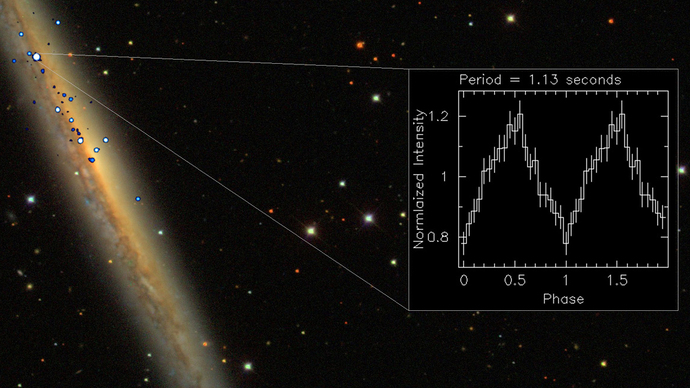
The brightest pulsar, as reported in the journal Science, is called NGC 5907 ULX. In one second, it emits the same amount of energy as our sun does in three-and-a-half years. The European Space Agency's XMM-Newton satellite found the pulsar and, independently, NASA's NuSTAR (Nuclear Spectroscopic Telescope Array) mission also detected the signal. This pulsar is 50 million light years away, which means its light dates back to a time before humans roamed Earth. It is also the farthest known neutron star.

"This object is really challenging our current understanding of the accretion process for high-luminosity pulsars," said Gian Luca Israel, from INAF-Osservatorio Astronomica di Roma, Italy, lead author of the Science paper. "It is 1,000 times more luminous than the maximum thought possible for an accreting neutron star, so something else is needed in our models in order to account for the enormous amount of energy released by the object."

The previous record holder for brightest pulsar was reported in October 2014. NuSTAR had identified M82 X-2, located about 12 million light-years away in the "Cigar Galaxy" galaxy Messier 82 (M82), as a pulsar rather than a black hole. The pulsar reported in Science, NGC 5907 ULX, is 10 times brighter.

Another extremely bright pulsar, the third brightest known, is called NGC 7793 P13. Using a combination of XMM-Newton and NuSTAR, one group of scientists reported the discovery in the Astrophysical Journal Letters, while another used XMM-Newton to report it in the Monthly Notices of the Royal Astronomical Society. Both studies were published in October 2016. Scientists call three extremely bright pulsars "ultraluminous X-ray sources" (ULXs). Before the 2014 discovery, many scientists thought that the brightest ULXs were black holes.

"They are brighter than what you would expect from an accreting black hole of 10 solar masses," said Felix Fuerst, lead author of the Astrophysical Journal Letters study based at the European Space Astronomy Center in Madrid. Fuerst did this work while at Caltech in Pasadena, California.

How these objects are able to shine so brightly is a mystery. The leading theory is that these pulsars have strong, complex magnetic fields closer to their surfaces. A magnetic field would distort the flow of incoming material close to the neutron star. This would allow the neutron star to continue accreting material while still generating high levels of brightness.

It could be that many more ULXs are neutron stars, scientists say.

"These discoveries of 'light,' compact objects that shine so brightly, is revolutionizing the field," Israel said.

NuSTAR is a Small Explorer mission led by Caltech and managed by NASA's Jet Propulsion Laboratory, Pasadena, California, for NASA's Science Mission Directorate in Washington. NuSTAR was developed in partnership with the Danish Technical University and the Italian Space Agency (ASI). The spacecraft was built by Orbital Sciences Corp., Dulles, Virginia. NuSTAR's mission operations center is at UC Berkeley, and the official data archive is at NASA's High Energy Astrophysics Science Archive Research Center. ASI provides the mission's ground station and a mirror archive. JPL is managed by Caltech for NASA.


Saturday, March 04, 2017

Milky Way-like Galaxies in Early Universe Embedded in 'Super Halos'

Artist impression of a progenitor of Milky Way-like galaxy in the early universe with a background quasar shinning through a 'super halo' of hydrogen gas surrounding the galaxy. New ALMA observations of two such galaxies reveal that these vast halos extend well beyond the galaxies' dusty, star-forming disks. The galaxies were initially found by the absorption of background quasar light passing through the galaxies. ALMA was able to image the ionized carbon in the galaxies' disks, revealing crucial details about their structures. Credit: A. Angelich (NRAO/AUI/NSF)

Composite ALMA and optical image of a young Milky Way-like galaxy 12 billion light-years away and a background quasar 12.5 billion light-years away. Light from the quasar passed through the galaxy's gas on its way to Earth, revealing the presence of the galaxy to astronomers. New ALMA observations of the galaxy's ionized carbon (green) and dust continuum (blue) emission show that the dusty, star-forming disk of the galaxy is vastly offset from the gas detected by quasar absorption at optical wavelengths (red). This indicates that a massive halo of gas surrounds the galaxy. The optical data are from the Keck I Telescope at the W.M. Keck Observatory. Credit: ALMA (ESO/NAOJ/NRAO), M. Neeleman & J. Xavier Prochaska; Keck Observatory

Credit: Produced by Alexandra Angelich (NRAO/AUI/NSF); Written and narrated by Charles Blue (NRAO/AUI/NSF); Animations and footage courtesy of Alexandra Angelich (NRAO/AUI/NSF); NASA/Goddard Space Flight Center/Cruz deWilde and the Advanced Visualization Laboratory at the National Center for Supercomputing and B. O'Shea, M. Norman; ESO/C.Malin; Science images courtesy of M. Neeleman & J. Xavier Prochaska; Keck Observatory; Music by Geodesium. Vimeo


By harnessing the extreme sensitivity of the Atacama Large Millimeter/submillimeter Array (ALMA), astronomers have directly observed a pair of Milky Way-like galaxies seen when the universe was only eight percent of its current age. These progenitors of today’s giant spiral galaxies are surrounded by "super halos" of hydrogen gas that extend many tens of thousands of light-years beyond their dusty, star-filled disks.

Astronomers initially detected these galaxies by studying the intense light from even-more-distant quasars. As this light travels through an intervening galaxy on its way to Earth, it can pick up the unique spectral signature from the galaxy’s gas. This technique, however, normally prevents astronomers from seeing the actual light emitted by the galaxy, which is overwhelmed by the much brighter emission from the background quasar.

"Imagine a tiny firefly next to a high-power search light. That’s what astronomers are up against when it comes to observing these youthful versions of our home galaxy," said Marcel Neeleman a postdoctoral fellow at the University of California, Santa Cruz, and lead author on a paper appearing in the journal Science. "We can now see the galaxies themselves, which gives us an amazing opportunity to learn about the earliest history of our own galaxy and others like it."

With ALMA, the astronomers were finally able to observe the natural millimeter-wavelength "glow" emitted by ionized carbon in the dense and dusty star-forming regions of the galaxies. This carbon signature, however, is considerably offset from the gas first detected by quasar absorption. This extreme separation indicates that the galaxies’ gas content extends well beyond their star-filled disks, suggesting that each galaxy is embedded in a monstrous halo of hydrogen gas.

"We had expected we would see faint emission right on top of the quasar, and instead we saw bright galaxies at large separations from the quasar," said J. Xavier Prochaska, professor of astronomy and astrophysics at UC Santa Cruz and coauthor of the paper. The separation from the quasar to the observed galaxy is about 137,000 light-years for one galaxy and about 59,000 light-years for the other.

According to the researchers, the neutral hydrogen gas revealed by its absorption of quasar light is most likely part of a large halo or perhaps an extended disk of gas around the galaxy. "It's not where the star formation is, and to see so much gas that far from the star-forming region means there is a large amount of neutral hydrogen around the galaxy," Neeleman said.

The new ALMA data show that these young galaxies are already rotating, which is one of the hallmarks of the massive spiral galaxies we see in the universe today. The ALMA observations further reveal that both galaxies are forming stars at moderately high rates: more than 100 solar masses per year in one galaxy and about 25 solar masses per year in the other.

"These galaxies appear to be massive, dusty, and rapidly star-forming systems, with large, extended layers of gas," Prochaska said.

"ALMA has solved a decades-old question on galaxy formation," said Chris Carilli, an astronomer with the National Radio Astronomy Observatory in Socorro, N.M., and co-author on the paper. "We now know that at least some very early galaxies have halos that are much more extended that previously considered, which may represent the future material for galaxy growth."

The galaxies, which are officially designated ALMA J081740.86+135138.2 and ALMA J120110.26+211756.2, are each about 12 billion light-years from Earth. The background quasars are each roughly 12.5 billion light-years from Earth.

The National Radio Astronomy Observatory is a facility of the National Science Foundation, operated under cooperative agreement by Associated Universities, Inc.

# # #

The Atacama Large Millimeter/submillimeter Array (ALMA), an international astronomy facility, is a partnership of ESO, the U.S. National Science Foundation (NSF) and the National Institutes of Natural Sciences (NINS) of Japan in cooperation with the Republic of Chile. ALMA is funded by ESO on behalf of its Member States, by NSF in cooperation with the National Research Council of Canada (NRC) and the National Science Council of Taiwan (NSC) and by NINS in cooperation with the Academia Sinica (AS) in Taiwan and the Korea Astronomy and Space Science Institute (KASI).

ALMA construction and operations are led by ESO on behalf of its Member States; by the National Radio Astronomy Observatory (NRAO), managed by Associated Universities, Inc. (AUI), on behalf of North America; and by the National Astronomical Observatory of Japan (NAOJ) on behalf of East Asia. The Joint ALMA Observatory (JAO) provides the unified leadership and management of the construction, commissioning and operation of ALMA.

This research is presented in a paper titled "[C II] 158-μm emission from the host galaxies of damped Lyman alpha systems," by M. Neeleman et al., scheduled for publication in the journal Science on 24 March 2017.

Contact: 

Charles Blue
434-296-0314;

Email: cblue@nrao.edu


A remarkable galactic hybrid

LEDA 71392, UGC 12591 
Credit: ESA/Hubble & NASA


This NASA/ESA Hubble Space Telescope image showcases the remarkable galaxy UGC 12591. Classified as an S0/Sa galaxy, UGC 12591 sits somewhere between a lenticular and a spiral. It lies just under 400 million light-years away from us in the westernmost region of the Pisces–Perseus Supercluster, a long chain of galaxy clusters that stretches out for 250 million light-years — one of the largest known structures in the cosmos.

The galaxy itself is also extraordinary: it is incredibly massive. The galaxy and its halo together contain several hundred billion times the mass of the Sun; four times the mass of the Milky Way. It also whirls round extremely quickly, rotating at speeds of up to 1.8 million kilometres per hour!

Observations with Hubble are helping astronomers to understand the mass of UGC 1259, and to determine whether the galaxy simply formed and grew slowly over time, or whether it might have grown unusually massive by colliding and merging with another large galaxy at some point in its past.


Friday, March 03, 2017

An Extraordinary Celestial Spiral with a Twist

Image 1. The composite image of molecular gas around an old star LL Pegasi.
Credit: ALMA(ESO/NAOJ/NRAO), Hyosun Kim et al.

Image 2. (Left) HST image of LL Pegasi publicized in 2010. 
Credit: ESA/NASA & R. Sahai
(Right) ALMA image of LL Pegasi. Credit: ALMA (ESO/NAOJ/NRAO) / Hyosun Kim et al. 


"It's really exciting to see such a beautiful spiral-shell pattern in the sky. Our observations of LL Pegasi binary system have revealed the delicately ordered three-dimensional geometry of this spiral-shell pattern, and we have produced a very satisfying theory to account for its details," says Hyosun Kim.

The new ALMA images reveal the detailed features of spiral-shell pattern imprinted in the gas material continuously ejected from LL Pegasi. A comparison of this observation with computer simulations led the team, for the first time, to the conclusion that a highly elliptical orbit is responsible for the morphology of gas distribution surrounding this binary system. In particular, the bifurcation of the spiral-shell pattern that is clearly visible in the ALMA images, is a unique characteristic of elliptical binaries. This quintessential object opens a new window on the nature of central binaries through the recurrent patterns that reside far from the star at distances of a few thousand the stellar radii.

"Because LL Pegasi is 3,400 light years away from us, the exquisite sensitivity and ability of ALMA to image with high precision such complex spiral patterns were essential for this study. We are delighted to see the crisp images translated into rich results and their implications in binary studies," says Alfonso Trejo (ASIAA, Taiwan), a co-author of the study.

Binaries in elliptical orbits for stars in late stellar evolutionary phases may be ubiquitous over a large period range. Many planetary nebulae—stars being in the next stage of stellar evolution—consist of nearly-spherical structures in the outer part and highly-asymmetric structures in the inner part. Near-spherical patterns include those appearing like spirals, shells, and arcs, while highly non-spherical features are bipolar- or multipolar-like. The coexistence of such geometrically distinct structures is enigmatic because it hints at the simultaneous presence of both wide and close binary interactions.
This phenomenon has been attributed to the binary stars with elliptical orbits. As indicated by the current research, the orbital parameters of central binaries can be obtained by a careful inspection of the outer recurrent patterns, which hint at the origin of the transition from the near-spherical to asymmetric structures.

LL Pegasi is a mass-losing giant star with a size of 200 times or more that of the Sun. Among the stellar evolutionary phases, it is currently on the asymptotic giant branch, which reflects the future of the Sun a few billion years from now. This star was spotlighted about 10 years ago due to a picture of an almost-perfect spiral taken with the NASA/ESA Hubble Space Telescope (HST). The presence of a spiral surrounding an old star had never been reported before the discovery of this object.

"This unusually ordered system opens the door to understanding how the orbits of such systems evolve with time, since each winding of the spiral samples a different orbit in a different time frame," says Mark Morris (UCLA, USA), a co-author of the study.

The regularity of the pattern was quite surprising, leading to its being considered as a binary system in a circular orbit. It is now equally striking that this best-characterized, unambiguous, and complete spiral is actually influenced by an elliptical-orbit binary.

"While the HST image shows us the beautiful spiral structure, it is a 2D projection of a 3D shape, which becomes fully revealed in the ALMA data," says Raghvendra Sahai (JPL, USA), a co-author of the study. The new ALMA images reveal the spatio-kinematic information of dense molecular gas in the spiral-shell pattern, unveiling the dynamics of the mass loss from the giant star modulated by its orbital motion.


Movie. Visualizing the ALMA image cube of LL Pegasi. Each frame of the video shows the molecular gas material surrounding LL Pegasi for a different line-of-sight velocity. This velocity, advancing 1 km/s per frame, is given at the top-right corner. The field size is 20,000 times the distance between the Sun and the Earth. Credit: ALMA (ESO/NAOJ/NRAO) / Hyosun Kim et al.


This research was presented in a paper "The Large-Scale Nebular Pattern of a Superwind Binary in an Eccentric Orbit", by Kim et al. to appear in the journal Nature Astronomy. The team is composed of Hyosun Kim (ASIAA, Taiwan; East Asian Core Observatories Association Fellow), Alfonso Trejo (ASIAA, Taiwan), Sheng-Yuan Liu (ASIAA, Taiwan), Raghvendra Sahai (Jet Propulsion Laboratory, USA), Ronald E. Taam (ASIAA, Taiwan; Northwestern University, USA), Mark R. Morris (University of California, Los Angeles, USA), Naomi Hirano (ASIAA, Taiwan), and I-Ta Hsieh (ASIAA, Taiwan).


Thursday, March 02, 2017

First Public Data Release by the Hyper Suprime-Cam Subaru Strategic Program

Figure 1: A color composite image in the g, r and i bands of a small piece of the COSMOS field, as imaged by the Hyper Suprime-Cam. This image contains thousands of galaxies as faint as 27th magnitude. The galaxies are seen at such large distances that the light from them has taken billions of years to reach us. The light from the faintest galaxies was emitted when the universe was less than 10 % of its present age. (Credit: Princeton University/HSC Project)

Figure 2: A HSC-SSP image of a massive cluster of galaxies in the Virgo constellation showing numerous strong gravitational lenses. The distance to the central galaxy is 5.3 billion light years, while the lensed galaxies, apparent as the arcs around the cluster, are much more distant. This is a composite image in the g, r, and i band, and has a spatial resolution of about 0.6 arcsecond. (Credit: NAOJ/HSC Project)

Figure 3: A color composite image in the g, r and i bands of UGC 10214 known as Tadpole Galaxy in the ELAIS-N1 region. The distance to this galaxy is about 400 million light years. The long tail of stars made by gravitational interaction due to the galactic encounter is characteristic. (Credit: NAOJ/HSC Project)


Figuring out the fate of the Universe is one step closer. The first massive dataset of a "cosmic census" is released using the largest digital camera on the Subaru Telescope. Beautiful images are available for public at large.

The first dataset from the Hyper Suprime-Cam Subaru Strategic Program (HSC-SSP) was released to the public on February 27th, 2017. HSC-SSP is a large survey being done using HSC, which is an optical imaging camera mounted at the prime focus of the Subaru Telescope. HSC has 104 scientific CCDs (for a total of 870 million pixels) and a 1.77 square-degree field of view.

The National Astronomical Observatory of Japan (NAOJ) has embarked on the HSC-SSP survey in collaboration with the Kavli Institute for the Physics and Mathematics of the Universe (Kavli IPMU) in Japan, the Academia Sinica Institute of Astronomy and Astrophysics (ASIAA) in Taiwan, and Princeton University in the United States. The project will take 300 nights over 5-6 years. This survey consists of three layers; Wide, Deep, and UltraDeep, using optical and near infrared wavelengths in five broad bands (g, r, i, z, y) and four narrow-band filters.

This release includes data from the first 1.7 years (61.5 nights of observations beginning in 2014). The observed areas covered by the Wide, Deep, and UltraDeep layers are 108, 26, and 4 square degrees, respectively. The limiting magnitudes, which refer to the depth (Note) of the observations, are 26.4, 26.6 and 27.3 mag in r-band (about 620 nm wavelength), respectively, allowing observations of some of the most distant galaxies in the universe. In the multi-band images, images are extremely sharp, with star images only 0.6 to 0.8 arcseconds across. 1 arcsecond equals 3600th part of a degree. These high-quality data will allow a unprecedented view into the nature and evolution of galaxies and dark matter. This first public dataset already contains 70 million galaxies and stars. It demonstrates that HSC-SSP is making the most of the performance of the Subaru Telescope and HSC. In 2015, using HSC observations over 2.3 square degrees of sky, nine clumps of dark matter, each weighing as much a galaxy cluster were discovered from their weak lensing signature (Miyazaki et al. 2015, ApJ 807, 22, "Properties of Weak Lensing Clusters Detected on Hyper Suprime-Cam 2.3 Square Degree Field"). The HSC-SSP data release covers about 50 times more sky than was used in this study, showing the potential of these data to reveal the statistical properties of dark matter.


Figure 4: Survey area of HSC-SSP. Blue color shows the area of the Wide layer data included in the data release, green Deep, and red UltraDeep, respectively. (Credit: NAOJ/HSC Project)


The total amount of data taken so far comprises 80 terabytes, which is comparable to the size of about 10 million images by a general digital camera. Since it is difficult to search such a huge dataset with standard tools, NAOJ has developed a dedicated database and interface for ease of access and use of the data.

"Since 2014, we have been observing the sky with HSC, which can capture a wide-field image with high resolution," said Dr. Satoshi Miyazaki, the leader of the HSC-SSP. "We believe the data release will lead to many exciting astronomical results, from exploring the nature of dark matter and dark energy, as well as asteroids in our own solar system objects and galaxies in the early universe. SSP team members are now preparing a number of scientific papers based on these data. We plan to publish them in a special issue of the Publications of Astronomical Society of Japan. Moreover, we hope that interested members of the public will also access the data and enjoy the real universe imaged by the Subaru telescope, one of the largest the world."

Funding for the HSC Project was provided in part by the following grants: Grant-in-Aid for Scientific Research (B) JP15340065; Grant-in-Aid for Scientific Research on Priority Areas JP18072003; and the Funding Program for World-Leading Innovative R&D on Science and Technology (FIRST) entitled, "Uncovering the Origin and Future of the Universe: ultra-wide-field imaging and spectroscopy reveal the nature of dark matter and dark energy."


Note:

"Depth" of an observation refers to how dim objects can be studied. The light collection power of large aperture mirror (8.2 m for the Subaru Telescope) is the crucial factor, as well as the exposure time. For astronomical objects of the same intrinsic brightness, depth is literally how far one can look.


Link

 Source: Subaru Telescope

Wednesday, March 01, 2017

A Galaxy on the Edge

The edge-on galaxy NGC 1055

PR Image eso1707b
The surroundings of the edge-on galaxy NGC 1055

PR Image eso1707c
The edge-on spiral galaxy NGC 1055 in the constellation of Cetus (The Sea Monster)


Videos

ESOcast 98 Light: A Galaxy On Edge (4K UHD)

Zooming in on the edge-on galaxy NGC 1055

Panning across a new image of NGC 1055


This colourful stripe of stars, gas, and dust is actually a spiral galaxy named NGC 1055. Captured here by ESO’s Very Large Telescope (VLT), this big galaxy is thought to be up to 15 percent larger in diameter than the Milky Way. NGC 1055 appears to lack the whirling arms characteristic of a spiral, as it is seen edge-on. However, it displays odd twists in its structure that were probably caused by an interaction with a large neighbouring galaxy.

Spiral galaxies throughout the Universe take on all manner of orientations with respect to Earth. We see some from above (as it were) or “face-on” — a good example of this being the whirlpool-shaped galaxy NGC 1232. Such orientations reveal a galaxy’s flowing arms and bright core in beautiful detail, but make it difficult to get any sense of a three-dimensional shape.

We see other galaxies, such as NGC 3521, at angles. While these tilted objects begin to reveal the three-dimensional structure within their spiral arms, fully understanding the overall shape of a spiral galaxy requires an edge-on view — such as this one of NGC 1055.

When seen edge-on, it is possible to get an overall view of how stars — both new patches of starbirth and older populations — are distributed throughout a galaxy, and the “heights” of the relatively flat disc and the star-loaded core become easier to measure. Material stretches away from the blinding brightness of the galactic plane itself, becoming more clearly observable against the darker background of the cosmos.

Such a perspective also allows astronomers to study the overall shape of a galaxy’s extended disc, and to study its properties. One example of this is warping, which is something we see in NGC 1055. The galaxy has regions of peculiar twisting and disarray in its disc, likely caused by interactions with the nearby galaxy Messier 77 (eso0319) [1]. This warping is visible here; NGC 1055’s disc is slightly bent and appears to wave across the core.

NGC 1055 is located approximately 55 million light-years away in the constellation of Cetus (The Sea Monster). This image was obtained using the FOcal Reducer and low dispersion Spectrograph 2 (FORS2) instrument mounted on Unit Telescope 1 (Antu) of the VLT, located at ESO’s Paranal Observatory in Chile. It hails from ESO’s Cosmic Gems programme, an outreach initiative that produces images of interesting, intriguing or visually attractive objects using ESO telescopes for the purposes of education and outreach.


Notes

[1] Messier 77, also known as NGC 1068, has a very brilliant central region powered by a supermassive black hole. It is one of the nearest examples of what astronomers call active galaxies.


More Information

ESO is the foremost intergovernmental astronomy organisation in Europe and the world’s most productive ground-based astronomical observatory by far. It is supported by 16 countries: Austria, Belgium, Brazil, the Czech Republic, Denmark, France, Finland, Germany, Italy, the Netherlands, Poland, Portugal, Spain, Sweden, Switzerland and the United Kingdom, along with the host state of Chile. ESO carries out an ambitious programme focused on the design, construction and operation of powerful ground-based observing facilities enabling astronomers to make important scientific discoveries. ESO also plays a leading role in promoting and organising cooperation in astronomical research. ESO operates three unique world-class observing sites in Chile: La Silla, Paranal and Chajnantor. At Paranal, ESO operates the Very Large Telescope, the world’s most advanced visible-light astronomical observatory and two survey telescopes. VISTA works in the infrared and is the world’s largest survey telescope and the VLT Survey Telescope is the largest telescope designed to exclusively survey the skies in visible light. ESO is a major partner in ALMA, the largest astronomical project in existence. And on Cerro Armazones, close to Paranal, ESO is building the 39-metre European Extremely Large Telescope, the E-ELT, which will become “the world’s biggest eye on the sky”.


Links


Contacts

Richard Hook
ESO Public Information Officer
Garching bei München, Germany
Tel: +49 89 3200 6655
Cell: +49 151 1537 3591
Email: rhook@eso.org


Source: ESO

Probing the nature of the most luminous explosions

These two images show observations of a superluminous supernova detected by the Palomar Transient Factory project in 2009 (PTF09cnd, z= 0.258). The pre-explosion image is from Sloan Digital Sky archive data, the post-explosion images are composed from observations made with the Palomar Observatory’s 1.5-m telescope, the Wise Observatory’s 1.0-m telescope and the Ultraviolet/Optical Telescope on board NASA’s Swift satellite. Credit: Quimby et al., Nature 474, 487–489 (23 June 2011)


Supernovae are extremely bright stellar explosions – superluminous supernovae are even brighter. However, the nature of these most luminous explosions has remained a mystery. In a new study, MPA researchers now present their simulations of superluminous supernova spectra months and even years after the outbreak and show that they are very similar to gamma-ray bursts, another type of highly energetic explosions. In addition, the results point to very high masses of oxygen and magnesium, suggesting very massive progenitor stars that will use an exotic explosion mechanism rather than the standard neutrino-driven explosion believed to power most supernovae.

Superluminous supernovae are a new and exotic class of stellar explosions, radiating up to 100 times more energy than normal supernovae. Despite being so bright, they were discovered only about 10 years ago, as they occur at large distances and are quite rare (one per every thousand normal supernovae).

The origin of the enormous luminosity and the properties of the progenitor stars have been shrouded in mystery. They may be powered by rapidly spinning and highly magnetized neutron stars (so called magnetars), accretion onto a newly formed black hole, huge amounts of radioactivity, or violent collisions with dense circumstellar matter. What type of progenitor stars give rise to them? Why do they occur exclusively in unusual dwarf galaxies?

In a new study led by Dr Anders Jerkstrand, a Marie Curie Fellow at MPA, several important new advances are presented, which are based on calculating spectral models of supernovae. “Several months and years after the supernova has exploded, when the ejected material expands and cools, the spectra reveal signatures of the elements that have been produced inside the star,” Jerkstrand explains. “By comparing observed to modelled spectra in this phase, we can get an insight into the inner layers of the progenitor, which in turn provides strong constraints on the origin and nature of these explosions.”


Interpretation of the spectra requires sophisticated models of how radiation passes through the expanding gas and requires the latest atomic physics to be included in the detailed models. What made this study unique was the combination of state-of-the-art new models applied to the highest-quality data ever collected on these supernovae at such late times by the PESSTO survey with the European Southern Observatory's facilities.

The study reveals the first clear picture of the chemical composition of these explosions. The new spectra are demonstrated to have strong similarities with gamma-ray burst supernovae, the first time this link has been established. Gamma-ray burst supernovae are thought to arise by the formation of a black hole that punches a relativistic jet through the infalling star, or by the formation of a highly magnetic neutron star. Gamma ray bursts are similarly rare as superluminous supernovae, and also occur in irregular dwarf galaxies at low metallicity. Some of them are actually accompanied with supernovae, but until now always at much lower luminosities, and not lasting as long as superluminous supernovae.

Interpretation of the spectra requires sophisticated models of how radiation passes through the expanding gas and requires the latest atomic physics to be included in the detailed models. What made this study unique was the combination of state-of-the-art new models applied to the highest-quality data ever collected on these supernovae at such late times by the PESSTO survey with the European Southern Observatory's facilities.

The study reveals the first clear picture of the chemical composition of these explosions. The new spectra are demonstrated to have strong similarities with gamma-ray burst supernovae, the first time this link has been established. Gamma-ray burst supernovae are thought to arise by the formation of a black hole that punches a relativistic jet through the infalling star, or by the formation of a highly magnetic neutron star. Gamma ray bursts are similarly rare as superluminous supernovae, and also occur in irregular dwarf galaxies at low metallicity. Some of them are actually accompanied with supernovae, but until now always at much lower luminosities, and not lasting as long as superluminous supernovae.

This figure shows the observed oxygen line luminosities (gray band) compared to models with different oxygen-zone masses (3,10 and 30 solar masses). This illustrates that the oxygen mass has to be fairly high to match the observations over a broad range of energy inputs. © MPA


In a second important discovery, the spectral synthesis models revealed that these superluminous supernovae contain among the highest oxygen masses inferred for any supernova so far. The spectra show very strong emission lines requiring more than about 10 solar masses of oxygen and 1 solar mass of magnesium. These explosions must therefore come from extremely massive stars, with over 40 solar masses on the main sequence. Stars in this mass range are unlikely to explode with the large inferred kinetic energies by the standard neutrino-driven mechanism, and a more exotic mechanism such as a magneto-rotational driven jets or black hole accretion is needed.

Detailed multi-dimensional models involving the collapse, explosion, and late-time energy input of the massive stellar core are currently being pursued by several groups around the world. Together with the new constraints derived in this study, this promises to expand our knowledge of stellar evolution and supernova explosions into new and unexplored regimes.


Contact:


Jerkstrand, Anders
Jerkstrand, Anders
Postdoc
Phone: 2282