Tuesday, June 12, 2012

Black Hole Growth Found to be Out of Synch

New results based on the two objects shown here are challenging the prevailing ideas as to how supermassive black holes grow in the centers of galaxies. NGC 4342 and NGC 4291, the two galaxies in the study, are nearby in cosmic terms at distances of 75 million and 85 million light years respectively. In these composite images, X-rays from NASA's Chandra X-ray Observatory are colored blue, while infrared data from the 2MASS project are seen in red.Credit: NASA/CXC/SAO/A.Bogdan et al; Infrared: 2MASS/UMass/IPAC-Caltech/NASA/NSF. Low Resolution Image (jpg)

Cambridge, MA - New evidence from NASA's Chandra X-ray Observatory challenges prevailing ideas about how supermassive black holes grow in the centers of galaxies. Astronomers long have thought that a supermassive black hole and the bulge of stars at the center of its host galaxy grow at the same rate -- the bigger the bulge, the bigger the black hole. A new study of Chandra data has revealed two nearby galaxies whose supermassive black holes are growing faster than the galaxies themselves.

The mass of a giant black hole at the center of a galaxy typically is a tiny fraction (about 0.2 percent) of the mass contained in the bulge, or region of densely packed stars, surrounding it. The targets of the latest Chandra study, galaxies NGC 4342 and NGC 4291, have black holes that are 10 times to 35 times more massive than they should be compared to their bulges. The new observations with Chandra show that the halos, or massive envelopes of dark matter in which these galaxies reside, also are overweight.

The new study suggests the two supermassive black holes and their evolution are tied to their dark matter halos and they did not grow in tandem with the galactic bulges. In this view, the black holes and dark matter halos are not overweight, but the total mass in the galaxies is too low.

"This gives us more evidence of a link between two of the most mysterious and darkest phenomena in astrophysics -- black holes and dark matter -- in these galaxies," said Akos Bogdan of the Harvard-Smithsonian Center for Astrophysics (CfA) in Cambridge, Mass, who led the new study.

NGC 4342 and NGC 4291 are close to Earth in cosmic terms, at distances of 75 million and 85 million light years, respectively. Astronomers had known from previous observations that these galaxies host black holes with relatively large masses, but astronomers are not certain what is responsible for the disparity. Based on the new Chandra observations, however, they are able to rule out a phenomenon known as tidal stripping.

Tidal stripping occurs when some of a galaxy's stars are stripped away by gravity during a close encounter with another galaxy. If such tidal stripping had taken place, the halos also mostly would have been missing. Because dark matter extends farther away from the galaxies, it is more loosely tied to them than the stars and is more likely to be pulled away.

To rule out tidal stripping, astronomers used Chandra to look for evidence of hot, X-ray emitting gas around the two galaxies. Because the pressure of hot gas – estimated from X-ray images -- balances the gravitational pull of all the matter in the galaxy, the new Chandra data can provide information about the dark matter halos. The hot gas was found to be widely distributed around both NGC 4342 and NGC 4291, implying that each galaxy has an unusually massive dark matter halo, and therefore that that tidal stripping is unlikely.

"This is the clearest evidence we have, in the nearby universe, for black holes growing faster than their host galaxy," said co-author Bill Forman, also of CfA. "It's not that the galaxies have been compromised by close encounters, but instead they had some sort of arrested development."

How can the mass of a black hole grow faster than the stellar mass of its host galaxy? The study's authors suggest that a large concentration of gas spinning slowly in the galactic center is what the black hole consumes very early in its history. It grows quickly, and as it grows, the amount of gas it can accrete, or swallow, increases along with the energy output from the accretion. Once the black hole reaches a critical mass, outbursts powered by the continued consumption of gas prevent cooling and limits the production of new stars.

"It's possible that the supermassive black hole reached a hefty size before there were many stars at all in the galaxy," said Bogdan. "That is a significant change in our way of thinking about how galaxies and black holes evolve together."

These results were presented June 11 at the 220th meeting of the American Astronomical Society in Anchorage, Alaska. The study also has been accepted for publication in The Astrophysical Journal.

NASA's Marshall Space Flight Center in Huntsville, Ala., manages the Chandra program for the agency's NASA's Science Mission Directorate in Washington. The Smithsonian Astrophysical Observatory in Cambridge, Mass., controls Chandra's science and flight operations.

For Chandra images, multimedia and related materials, visit: http://www.nasa.gov/chandra

For an additional interactive image, podcast, and video on the finding, visit: http://chandra.si.edu.

Headquartered in Cambridge, Mass., the Harvard-Smithsonian Center for Astrophysics (CfA) is a joint collaboration between the Smithsonian Astrophysical Observatory and the Harvard College Observatory. CfA scientists, organized into six research divisions, study the origin, evolution and ultimate fate of the universe.

For more information, contact:

Megan Watzke
Public Affairs Specialist
Harvard-Smithsonian Center for Astrophysics
617-496-7998
mwatzke@cfa.harvard.edu

David A. Aguilar
Director of Public Affairs
Harvard-Smithsonian Center for Astrophysics
617-495-7462
daguilar@cfa.harvard.edu

Christine Pulliam
Public Affairs Specialist
Harvard-Smithsonian Center for Astrophysics
617-495-7463
cpulliam@cfa.harvard.edu

Neighbor Galaxies May Have Brushed Closely, Astronomers Find

Graphic shows gas "bridge" between M31, right, and M33.
CREDIT: Bill Saxton, NRAO/AUI/NSF

Two of our Milky Way's neighbor galaxies may have had a close encounter billions of years ago, recent studies with the National Science Foundation's Green Bank Telescope (GBT) indicate. The new observations confirm a disputed 2004 discovery of hydrogen gas streaming between the giant Andromeda Galaxy, also known as M31, and the Triangulum Galaxy, or M33.

"The properties of this gas indicate that these two galaxies may have passed close together in the distant past," said Jay Lockman, of the National Radio Astronomy Observatory (NRAO). "Studying what may be a gaseous link between the two can give us a new key to understanding the evolution of both galaxies," he added.

The two galaxies, about 2.6 and 3 million light-years, respectively, from Earth, are members of the Local Group of galaxies that includes our own Milky Way and about 30 others.

The hydrogen "bridge" between the galaxies was discovered in 2004 by astronomers using the Westerbork Synthesis Radio Telescope in the Netherlands, but other scientists questioned the discovery on technical grounds. Detailed studies with the highly-sensitive GBT confirmed the existence of the bridge, and showed six dense clumps of gas in the stream.

Observations of these clumps showed that they share roughly the same relative velocity with respect to Earth as the two galaxies, strengthening the argument that they are part of a bridge between the two.

When galaxies pass close to each other, one result is "tidal tails" of gas pulled into intergalactic space from the galaxies as lengthy streams. "We think it's very likely that the hydrogen gas we see between M31 and M33 is the remnant of a tidal tail that originated during a close encounter, probably billions of years ago," said Spencer Wolfe, of West Virginia University. "The encounter had to be long ago, because neither galaxy shows evidence of disruption today," he added.

"The gas we studied is very tenuous and its radio emission is extremely faint -- so faint that it is beyond the reach of most radio telescopes," Lockman said. "We plan to use the advanced capabilities of the GBT to continue this work and learn more about both the gas and, hopefully, the orbital histories of the two galaxies," he added.

Lockman and Wolfe worked with D.J. Pisano, of West Virginia University, and Stacy McGaigh and Edward Shaya of the University of Maryland. The scientists presented their findings at the American Astronomical Society's meeting in Anchorage, Alaska.

The National Radio Astronomy Observatory is a facility of the National Science Foundation, operated under cooperative agreement by Associated Universities, Inc.

Contact:

Dave Finley, Public Information Officer
Socorro, NM
(575) 835-7302
dfinley@nrao.edu
NASA's Fermi Detects the Highest-Energy Light From a Solar Flare

During a powerful solar blast on March 7, NASA's Fermi Gamma-ray Space Telescope detected the highest-energy light ever associated with an eruption on the sun. The discovery heralds Fermi's new role as a solar observatory, a powerful new tool for understanding solar outbursts during the sun's maximum period of activity.

NASA's Solar Dynamics Observatory (SDO) captured dramatic views of the March 7 X5.4 solar flare in extreme ultraviolet light. The gold images show the sun at a wavelength of 171 Angstroms, which corresponds to a temperature of 1 million degrees F (600,000 C). Teal images (131 Angstroms) show features 18 times hotter. The blast triggers waves that traverse the sun at 1 million mph. (Credit: NASA/SDO; NASA's Goddard Space Flight Center)

A solar flare is an explosive blast of light and charged particles. The powerful March 7 flare, which earned a classification of X5.4 based on the peak intensity of its X-rays, is the strongest eruption so far observed by Fermi's Large Area Telescope (LAT). The flare produced such an outpouring of gamma rays -- a form of light with even greater energy than X-rays -- that the sun briefly became the brightest object in the gamma-ray sky.

"For most of Fermi's four years in orbit, its LAT saw the sun as a faint, steady gamma-ray source thanks to the impacts of high-speed particles called cosmic rays," said Nicola Omodei, an astrophysicist at Stanford University in California. "Now we're beginning to see what the sun itself can do."

Omodei described Fermi's solar studies to journalists today at the 220th meeting of the American Astronomical Society in Anchorage, Alaska.

At the flare's peak, the LAT detected gamma rays with two billion times the energy of visible light, or about four billion electron volts (GeV), easily setting a record for the highest-energy light ever detected during or immediately after a solar flare. The flux of high-energy gamma rays, defined as those with energies beyond 100 million electron volts (MeV), was 1,000 times greater than the sun's steady output.

The March flare also is notable for the persistence of its gamma-ray emission. Fermi's LAT detected high-energy gamma rays for about 20 hours, two and a half times longer than any event on record.

Additionally, the event marks the first time a greater-than-100-MeV gamma-ray source has been localized to the sun's disk, thanks to the LAT's keen angular resolution.

This image from Fermi's Large Area Telescope (LAT) shows how the entire sky looked on March 7 in the light of gamma rays with energies beyond 100 MeV. Although the Vela pulsar is the brightest continuous LAT source, it was outmatched this day by the X5.4 solar flare, which brightened the gamma-ray sun by 1,000 times. (Credit: NASA/DOE/Fermi LAT Collaboration)

Flares and other eruptive solar events produce gamma rays by accelerating charged particles, which then collide with matter in the sun's atmosphere and visible surface. For instance, interactions among protons result in short-lived subatomic particles called pions, which produce high-energy gamma rays when they decay. Nuclei excited by collisions with lower-energy ions give off characteristic gamma rays as they settle down. Accelerated electrons emit gamma rays as they collide with protons and atomic nuclei.

Solar flares produce gamma rays by several processes, one of which is illustrated here. The energy released in a solar flare rapidly accelerates charged particles. When a high-energy proton strikes matter in the sun's atmosphere and visible surface, the result may be a short-lived particle -- a pion -- that emits gamma rays when it decays. (Credit: NASA's Goddard Space Flight Center)

Fermi's LAT scans the entire sky every 3 hours, looking for gamma rays with energies ranging from 20 MeV to more than 300 GeV. Its high sensitivity and wide field of view make the LAT an excellent tool for solar monitoring.

Another Fermi instrument, the Gamma-ray Burst Monitor (GBM), observes the entire sky not blocked by the Earth at any given moment. Designed to detect light at energies from 8,000 eV to 40 MeV, the GBM's complementary capabilities give scientists access to a lower, but overlapping energy range where solar phenomena produce interesting features.

Both instruments observed a strong, but less powerful solar flare on June 12, 2010.

"Seeing the rise and fall of this brief flare in both instruments allowed us to determine that some of these particles were accelerated to two-thirds of the speed of light in as little as 3 seconds," said Michael Briggs, a member of GBM team at the University of Alabama in Huntsville.

Solar eruptions are on the rise as the sun progresses toward the peak of its roughly 11-year-long activity cycle, now expected in mid-2013.

"Merged with available theoretical models, Fermi observations will give us the ability to reconstruct the energies and types of particles that interact with the sun during flares, an understanding that will open up whole new avenues in solar research," said Gerald Share, an astrophysicist at the University of Maryland in College Park.

NASA's Fermi Gamma-ray Space Telescope is an astrophysics and particle physics partnership. Fermi is managed by NASA's Goddard Space Flight Center, Greenbelt, Md. It was developed in collaboration with the U.S. Department of Energy, with contributions from academic institutions and partners in France, Germany, Italy, Japan, Sweden and the United States.

Related Links

› NASA's SDO website | SDO project website
› Guide to Solar Flare Classification (video)
› Scientists Answer Space Weather Questions (video)


Text issued as NASA Headquarters release No. 12-193

Francis Reddy
NASA's Goddard Space Flight Center, Greenbelt, Md.

Monday, June 11, 2012

Compact Blue Dwarf Can’t Hide

Credit: ESA/Hubble & NASA

The NASA/ESA Hubble Space Telescope has captured this view of the dwarf galaxy UGC 5497, which looks a bit like salt dashed on black velvet in this image.

The object is a compact blue dwarf galaxy that is infused with newly formed clusters of stars. The bright, blue stars that arise in these clusters help to give the galaxy an overall bluish appearance that lasts for several million years until these fast-burning stars explode as supernovae.

UGC 5497 is considered part of the M 81 group of galaxies, which is located about 12 million light-years away in the constellation Ursa Major (The Great Bear). UGC 5497 turned up in a ground-based telescope survey back in 2008 looking for new dwarf galaxy candidates associated with Messier 81.

According to the leading cosmological theory of galaxy formation, called Lambda Cold Dark Matter, there should be far more satellite dwarf galaxies associated with big galaxies like the Milky Way and Messier 81 than are currently known. Finding previously overlooked objects such as this one has helped cut into the expected tally — but only by a small amount.

Astrophysicists therefore remain puzzled over the so-called "missing satellite" problem.

The field of view in this image, which is a combination of visible and infrared exposures from Hubble’s Advanced Camera for Surveys, is approximately 3.4 by 3.4 arcminutes.

Source: ESA/Hubble - Space telescope

Saturday, June 09, 2012

WISE Finds Few Brown Dwarfs Close to Home

This image shows our own back yard, astronomically speaking, from a vantage point about 30 light-years away from the sun. It highlights the population of tiny brown dwarfs recently discovered by NASA's Wide-field Infrared Survey Explorer, or WISE (red circles). The image simulates actual positions of stars. Image credit: NASA/JPL-Caltech. Full image and caption

Astronomers are getting to know the neighbors better. Our sun resides within a spiral arm of our Milky Way galaxy about two-thirds of the way out from the center. It lives in a fairly calm, suburb-like area with an average number of stellar residents. Recently, NASA's Wide-field Infrared Survey Explorer, or WISE, has been turning up a new crowd of stars close to home: the coldest of the brown dwarf family of "failed" stars.

Now, just as scientists are "meeting and greeting" the new neighbors, WISE has a surprise in store: there are far fewer brown dwarfs around us than predicted.

"This is a really illuminating result," said Davy Kirkpatrick of the WISE science team at NASA's Infrared Processing and Analysis Center at the California Institute of Technology in Pasadena. "Now that we're finally seeing the solar neighborhood with keener, infrared vision, the little guys aren't as prevalent as we once thought."

Previous estimates had predicted as many brown dwarfs as typical stars, but the new initial tally from WISE shows just one brown dwarf for every six stars. It's the cosmic equivalent to finally being able to see down a mysterious, gated block and finding only a few homes.

Nonetheless, the observations are providing crucial information about how these exotic worlds form, and hinting at what their population densities might be like in our galaxy and beyond.

"WISE is finding new, cold worlds that are ripe for exploration in their own right," said Kirkpatrick. "We think they can form by several different mechanisms, including having their growth stunted by a variety of factors that prevent them from becoming full-blown stars. Still, we don't know exactly how this process works."

WISE was launched in 2009 and surveyed the entire sky in infrared light in 2010. One of the mission's main science goals was to survey the sky for the elusive brown dwarfs. These small bodies start their lives like stars, but lack the bulk required to burn nuclear fuel. With time, they cool and fade, making them difficult to find.

Improvements in WISE's infrared vision over past missions have allowed it to pick up the faint glow of many of these hidden objects. In August 2011, the mission announced the discovery of the coolest brown dwarfs spotted yet, a new class of stars called Y dwarfs. One of the Y dwarfs is less than 80 degrees Fahrenheit (25 degrees Celsius), or about room temperature, making it the coldest star-like body known. Since then, the WISE science team has surveyed the entire landscape around our sun and discovered 200 brown dwarfs, including 13 Y dwarfs.

Determining the distances to these objects is a key factor in knowing their population density in our solar neighborhood. After carefully measuring the distance to several of the coldest brown dwarfs via a method called parallax, the scientists were able to estimate the distances to all the newfound brown dwarfs. They concluded that about 33 brown dwarfs reside within 26 light-years of sun. There are 211 stars within this same volume of space, so that means there are about six stars for every brown dwarf.

"Having fewer brown dwarfs than expected in our celestial backyard just means that each new one we discover plays a critical role in our overall understanding of these cold objects," said Chris Gelino, a co-author of the new research who is also at the Infrared Processing and Analysis Center. "These brown dwarfs are fascinating objects that are bridging the gap between the coldest stars and Jupiter."

Kirkpatrick emphasized that the results are still preliminary: it is highly likely that WISE will discover additional Y dwarfs, but not in vast numbers, and probably not closer than the closest known star, Proxima Centauri. Those discoveries could bring the ratio of brown dwarfs to stars up a bit, to about 1:5 or 1:4, but not to the 1:1 level previously anticipated.

"This is how science progresses as we obtain better and better data," said Kirkpatrick. "With WISE, we were able to test our predictions and show they were wrong. We had made extrapolations based on discoveries from projects like the Two-Micron All-Sky Survey, but WISE is giving us our first look at the coldest brown dwarfs we're only now able to detect."

The new observations still allow the possibility of free-floating planets up to a few times the mass of Jupiter beyond a few light-years from the sun, which other surveys have predicted might exist. Those bodies would be too faint for WISE to see in the processed data in hand.

The new results are due to appear in the July 10 issue of The Astrophysical Journal. Other authors are: Michael Cushing of the University of Toledo, Ohio; Gregory Mace, Ian McLean and Ned Wright from UCLA; Roger Griffith and Kenneth Marsh of the Infrared Processing and Analysis Center at Caltech; Michael Skrutskie of the University of Virginia, Charlottesville; Peter Eisenhardt and Amy Mainzer of NASA's Jet Propulsion Laboratory, Pasadena, Calif.; Adam Burgasser of the University of California, San Diego; and Christopher Tinney, Stephen Parker, and Graeme Salter of the University of New South Wales, Australia.

JPL manages, and operated, WISE for NASA's Science Mission Directorate. The spacecraft was put into hibernation mode after it scanned the entire sky twice, completing its main objectives. Edward Wright is the principal investigator and is at UCLA. The mission was selected competitively under NASA's Explorers Program managed by the agency's Goddard Space Flight Center in Greenbelt, Md. The science instrument was built by the Space Dynamics Laboratory in Logan, Utah. The spacecraft was built by Ball Aerospace & Technologies Corp. in Boulder, Colo. Science operations and data processing take place at the Infrared Processing and Analysis Center at the California Institute of Technology in Pasadena. Caltech manages JPL for NASA.


The Two-Micron All-Sky Survey (2MASS) mission was a joint effort between Caltech, the University of Massachusetts and NASA/JPL. Data are archived at the Infrared Processing and Analysis Center at Caltech.

Whitney Clavin 818-354-4673
atory, Pasadena, Calif.
whitney.clavin@jpl.nasa.gov

Friday, June 08, 2012

How black holes change gear

Artist's impression of a black hole in one gear
Credit: P. Jonker / Rob Hynes

Artist's impression of a black hole in its other gear
Credit: P. Jonker / Rob Hynes

Black holes are extremely powerful and efficient engines that not only swallow up matter, but also return a lot of energy to the Universe in exchange for the mass they eat. When black holes attract mass they also trigger the release of intense X-ray radiation and power strong jets. But not all black holes do this the same way. This has long baffled astronomers. By studying two active black holes researchers at the SRON Netherlands Institute for Space Research have now gathered evidence that suggests that each black hole can change between two different regimes, like changing the gears of an engine. The team's findings will be published in two papers in the journal Monthly Notices of the Royal Astronomical Society.

Black hole jets - lighthouse-like beams of material that race outwards at close to the speed of light - can have a major impact on the evolution of their environment. For example, jets from the super-massive black holes found at the centre of galaxies can blow huge bubbles in and heat the gas found in clusters of galaxies.

Another stunning example of what black hole jets can do is known as Hanny's Voorwerp, a cloud of gas where stars started forming after it was hit by the jet-beam of a black hole in a neighbouring galaxy. These phenomena demonstrate the importance of research into the way black holes produce and distribute energy, but until recently, much of this has remained uncertain.

In 2003 it became clear from astronomical observations that there is a connection between the X-ray emission from a black hole and its jet outflow. This connection needs to be explained if we want to understand how the black hole engine works. In the first years after this connection was discovered, it seemed that it was the same for all feeding black holes, but soon oddballs were found. These unusual examples still have a clear connection between the energy released in the X-ray emission and that put in the jet ejection. But the proportion differs from that in the "standard" black holes. As the number of oddballs grew, it started to appear that there were two groups of black hole engines working in a slightly different way, as if one were running on petrol and the other on diesel.

For years astronomers struggled to justify this difference based on the properties of the two groups of black holes, but to no avail. Recently a step forward was made: a team of astronomers led by Michael Coriat (now at University of Southampton) found a black hole that seemed to switch between the two flavours of X-ray/jet connection, depending on its brightness changed. This suggested that black holes do not necessarily come with two different engines, but that each black hole can run in two different regimes, like two gears of the same engine.

Now Peter Jonker and PhD-student Eva Ratti, two researchers from the SRON Netherlands Institute for Space Research - have taken an important step forward in the attempts to solve this puzzle. Using X-ray observations from the Chandra X-ray Observatory and radio observations from the Expanded Very Large Array in New Mexico they watched two black hole systems until their feeding frenzies ended.

Eva Ratti comments: "We found that these two black holes could also 'change gear', demonstrating that this is not an exceptional property of one peculiar black hole. Our work suggests that changing gear might be common among black holes. We also found that the switch between gears happens at a similar X-ray luminosity for all the three black holes."

These discoveries provide a new and important input to theoretical models that aim to explain both the functioning of the black hole engine itself and its impact on the surrounding environment.


Science contacts

Peter Jonker
SRON Netherlands
Tel: +31 (0)88 777 5877 / 06 48 417 487
Email: p.jonkers@sron.nl

Eva Ratti
SRON Netherlands
Tel: +31 (0)88 777 5892
Email: e.m.ratti@sron.nl


Media contacts

Frans Stravers
Tel: +31 (0)88 777 5892
Email: f.stravers@sron.nl

Robert Massey
Royal Astronomical Society
Tel: +44 (0)794 124 8035
Email: rm@ras.org.uk


Image

An artist's impression of the two different "gears/modes" in the black hole accretion (Credit: P. Jonker/Rob Hynes) can be downloaded from:
http://www.sron.nl/news-news-2410/8-news/news/3416-how-black-holes-change-gear.html


Further information

The results appear in the following two papers in the journal Monthly Notices of the Royal Astronomical Society:

The black hole candidate MAXI J1659–152 in and towards quiescence in X-ray and radio : http://onlinelibrary.wiley.com/doi/10.1111/j.1365-2966.2012.21116.x/abstract
A preprint of the paper can be seen at
http://arxiv.org/abs/1204.4832

The black hole candidate XTE J1752−223 towards and in quiescence: optical and simultaneous X-ray–radio observations http://onlinelibrary.wiley.com/doi/10.1111/j.1365-2966.2012.21071.x/full. A preprint of the paper can be seen at http://arxiv.org/abs/1204.2735

Notes for editors

The Royal Astronomical Society

The Royal Astronomical Society (RAS, www.ras.org.uk), founded in 1820, encourages and promotes the study of astronomy, solar-system science, geophysics and closely related branches of science. The RAS organizes scientific meetings, publishes international research and review journals, recognizes outstanding achievements by the award of medals and prizes, maintains an extensive library, supports education through grants and outreach activities and represents UK astronomy nationally and internationally. Its more than 3500 members (Fellows), a third based overseas, include scientific researchers in universities, observatories and laboratories as well as historians of astronomy and others.

Follow the RAS on Twitter via @royalastrosoc

Thursday, June 07, 2012

NASA's Spitzer Finds First Objects Burned Furiously

Astronomers have uncovered patterns of light that appear to be from the first stars and galaxies that formed in the universe. The light patterns were hidden within a strip of sky observed by NASA's Spitzer Space Telescope. Image credit: NASA/JPL-Caltech/GSFC . Full image and caption

PASADENA, Calif. -- The faint, lumpy glow given off by the very first objects in the universe may have been detected with the best precision yet, using NASA's Spitzer Space Telescope. These faint objects might be wildly massive stars or voracious black holes. They are too far away to be seen individually, but Spitzer has captured new, convincing evidence of what appears to be the collective pattern of their infrared light.

The observations help confirm the first objects were numerous in quantity and furiously burned cosmic fuel.

"These objects would have been tremendously bright," said Alexander "Sasha" Kashlinsky of NASA's Goddard Space Flight Center in Greenbelt, Md., lead author of a new paper appearing in The Astrophysical Journal. "We can't yet directly rule out mysterious sources for this light that could be coming from our nearby universe, but it is now becoming increasingly likely that we are catching a glimpse of an ancient epoch. Spitzer is laying down a roadmap for NASA's upcoming James Webb Telescope, which will tell us exactly what and where these first objects were."

Spitzer first caught hints of this remote pattern of light, known as the cosmic infrared background, in 2005, and again with more precision in 2007. Now, Spitzer is in the extended phase of its mission, during which it performs more in-depth studies on specific patches of the sky. Kashlinsky and his colleagues used Spitzer to look at two patches of sky for more than 400 hours each.

The team then carefully subtracted all the known stars and galaxies in the images. Rather than being left with a black, empty patch of sky, they found faint patterns of light with several telltale characteristics of the cosmic infrared background. The lumps in the pattern observed are consistent with the way the very distant objects are thought to be clustered together.

Kashlinsky likens the observations to looking for Fourth of July fireworks in New York City from Los Angeles. First, you would have to remove all the foreground lights between the two cities, as well as the blazing lights of New York City itself. You ultimately would be left with a fuzzy map of how the fireworks are distributed, but they would still be too distant to make out individually.

"We can gather clues from the light of the universe's first fireworks," said Kashlinsky. "This is teaching us that the sources, or the "sparks," are intensely burning their nuclear fuel."

The universe formed roughly 13.7 billion years ago in a fiery, explosive Big Bang. With time, it cooled and, by around 500 million years later, the first stars, galaxies and black holes began to take shape. Astronomers say some of that "first light" might have traveled billions of years to reach the Spitzer Space Telescope. The light would have originated at visible or even ultraviolet wavelengths and then, because of the expansion of the universe, stretched out to the longer, infrared wavelengths observed by Spitzer.

The new study improves on previous observations by measuring this cosmic infrared background out to scales equivalent to two full moons -- significantly larger than what was detected before. Imagine trying to find a pattern in the noise in an old-fashioned television set by looking at just a small piece of the screen. It would be hard to know for certain if a suspected pattern was real. By observing a larger section of the screen, you would be able to resolve both small- and large-scale patterns, further confirming your initial suspicion.

Likewise, astronomers using Spitzer have increased the amount of sky examined to obtain more definitive evidence of the cosmic infrared background. The researchers plan to explore more patches of sky in the future to gather more clues hidden in the light of this ancient era.

"This is one of the reasons we are building the James Webb Space Telescope," said Glenn Wahlgren, Spitzer program scientist at NASA Headquarters in Washington. "Spitzer is giving us tantalizing clues, but James Webb will tell us what really lies at the era where stars first ignited."

Other authors are Richard Arendt of Goddard and the University of Maryland in Baltimore County; Matt Ashby and Giovanni Fazio of the Harvard-Smithsonian Center for Astrophysics in Cambridge, Mass.; and John Mather and Harvey Moseley of Goddard. Fazio led the initial observations of these sky fields.

NASA's Jet Propulsion Laboratory, Pasadena, Calif., manages the Spitzer Space Telescope mission for the agency's Science Mission Directorate in Washington. Science operations are conducted at the Spitzer Science Center at the California Institute of Technology in Pasadena. Data are archived at the Infrared Science Archive housed at the Infrared Processing and Analysis Center at Caltech. Caltech manages JPL for NASA.

For more information about Spitzer, visit: http://www.nasa.gov/spitzer

Whitney Clavin 818-354-4673
Jet Propulsion Laboratory, Pasadena, Calif.
whitney.clavin@jpl.nasa.gov

J.D. Harrington 202-358-5241
Headquarters, Washington
j.d.harrington@nasa.gov

A Bright Spark in a Nearby Spiral Galaxy

M99
Credit: ESA/Hubble & NASA
Acknowledgement: Matej Novak

This image, taken by the NASA/ESA Hubble Space Telescope, shows a detailed view of the spiral arms on one side of the galaxy Messier 99. Messier 99 is a so-called grand design spiral, with long, large and clearly defined spiral arms — giving it a structure somewhat similar to the Milky Way.

Lying around 50 million light-years away, Messier 99 is one of over a thousand galaxies that make up the Virgo Cluster, the closest cluster of galaxies to us. Messier 99 itself is relatively bright and large, meaning it was one of the first galaxies to be discovered, way back in the 18th century. This earned it a place in Charles Messier’s famous catalogue of astronomical objects.

In recent years, a number of unexplained phenomena in Messier 99 have been studied by astronomers. Among these is the nature of one of the brighter stars visible in this image. Catalogued as PTF 10fqs, and visible as a yellow-orange star in the top-left corner of this image, it was first spotted by the Palomar Transient Facility, which scans the skies for sudden changes in brightness (or transient phenomena, to use astronomers’ jargon). These can be caused by different kinds of event, including variable stars and supernova explosions.

What is unusual about PTF 10fqs is that it has so far defied classification: it is brighter than a nova (a bright eruption on a star’s surface), but fainter than a supernova (the explosion that marks the end of life for a large star). Scientists have offered a number of possible explanations, including the intriguing suggestion that it could have been caused by a giant planet plunging into its parent star.

This Hubble image was made in June 2010, during the period when the outburst was fading, so PTF 10fqs’s location could be pinpointed with great precision. These measurements will allow other telescopes to home in on the star in future, even when the afterglow of the outburst has faded to nothing.

A version of this image of M 99 was entered into the Hubble’s Hidden Treasures Competition by contestant Matej Novak. Hidden Treasures is an initiative to invite astronomy enthusiasts to search the Hubble archive for stunning images that have never been seen by the general public. The competition is now closed and the winners will be announced soon.

Wednesday, June 06, 2012

Dawn Mission Video Shows Vesta's Coat of Many Colors

This animation of Vesta is made from images taken with Dawn's framing camera. Many of the images were taken at different viewing angles to provide stereo for use in determining the topography. Image credit: NASA/JPL-Caltech/UCLA/MPS/DLR/IDA/PSI. Full image and caption

PASADENA, Calif. - A new video from NASA's Dawn mission reveals the dappled, variegated surface of the giant asteroid Vesta. The animation drapes high-resolution false color images over a 3-D model of the Vesta terrain constructed from Dawn's observations. This visualization enables a detailed view of the variation in the material properties of Vesta in the context of its topography.

The video is available online at: http://www.jpl.nasa.gov/video/index.cfm?id=1085 .

The colors were chosen to highlight differences in surface composition that are too subtle for the human eye to see. Scientists are still analyzing what some of the colors mean for the composition of the surface. But it is clear that the orange material thrown out from some impact craters is different from the surrounding surface material. Green shows the relative abundance of iron. Parts of the huge impact basin known as Rheasilvia in Vesta's southern hemisphere, for instance, have areas with less iron than nearby areas.

Dawn has imaged the majority of the surface of Vesta with the framing camera to provide this 3-D map. While some areas in the north were in shadow at the time the images were obtained by the camera, Dawn expects to improve its coverage of Vesta's northern hemisphere with additional observations. Dawn's viewing geometry also prevented mapping of a portion of the mountain of the south pole.

The spacecraft is currently spiraling up from its lowest-altitude orbit into its final science orbit, where its average altitude will be about 420 miles (680 kilometers). Dawn is scheduled to leave Vesta around Aug. 26.

The Dawn mission is managed by NASA's Jet Propulsion Laboratory in Pasadena, Calif., for the agency's Science Mission Directorate in Washington. Dawn is a project of the directorate's Discovery Program, managed by NASA's Marshall Space Flight Center in Huntsville, Ala. UCLA is responsible for overall Dawn mission science. Orbital Sciences Corp. of Dulles, Va., designed and built the Dawn spacecraft. The framing cameras were developed and built under the leadership of the Max Planck Institute for Solar System Research in Katlenburg-Lindau, Germany. The German Aerospace Center (DLR) Institute of Planetary Research in Berlin made significant contributions in coordination with the Institute of Computer and Communication Network Engineering in Braunschweig. The framing camera project is funded by the Max Planck Society, DLR and NASA. JPL is a division of the California Institute of Technology in Pasadena.

For more information about Dawn, visit: http://www.nasa.gov/dawn and http://dawn.jpl.nasa.gov .

Priscilla Vega / Jia-Rui Cook 818-354-1357/0850
Jet Propulsion Laboratory, Pasadena, Calif.
Priscilla.r.vega@jpl.nasa.gov / jccook@jpl.nasa.gov

Tuesday, June 05, 2012

Discovery of the Most Distant Galaxy in the Cosmic Dawn

A team of astronomers led by Takatoshi Shibuya (The Graduate University for Advanced Studies, Japan), Dr. Nobunari Kashikawa (National Astronomical Observatory of Japan), Dr. Kazuaki Ota (Kyoto University), and Dr. Masanori Iye (National Astronomical Observatory of Japan) has used the Subaru and Keck Telescopes to discover the most distant galaxy ever found, SXDF-NB1006-2, at a distance of 12.91 billion light years from the Earth. This galaxy is slightly farther away than GN-108036, which Subaru Telescope discovered last year and was the most distant galaxy discovered at the time (Note 1). In addition, the team's research verified that the proportion of neutral hydrogen gas in the 750-million-year-old early Universe was higher than it is today. These findings help us to understand the nature of the early Universe during the "cosmic dawn", when the light of ancient celestial objects and structures appeared from obscurity.

Astronomers think that the our Universe began 13.7 billion years ago at the Big Bang. The exteme temperature and density of this fireball decreased rapidly as its volume increased. Hot cosmic plasma composed mainly of protons and electrons recombined to form neutral hydrogen atoms within 380,000 years after the Big Bang; this was the beginning of the cosmic "dark age." From then on, the gas continued to cool and fluctuated in density. About 200 to 500 million years after the Big Bang, the dense parts of neutral hydrogen clouds contracted under their own gravity, and the first stars and galaxies formed. The radiation from this first generation of stars started to heat and reionize the hydrogen in nearby space, eventually leading to the reionization of the entire Universe. This was the era of "cosmic reionization" (Figure 1) or the "cosmic dawn". The current team focused their research on identifying the exact epoch of the cosmic dawn in an effort to answer major astronomical questions about the history of our Universe.

Figure 1: Cosmic history from the Big Bang to the present
Credit: NAOJ

How did the team design research to explore such an ancient, extremely distant time? Their first steps were to conduct a survey of distant galaxies and measure their number and brightness. Because light from the distant Universe takes time to reach the Earth, identification of more distant galaxies allows astronomers to trace farther back in time and locate the epoch of the cosmic dawn. However, neutral hydrogen in intergalactic space dimmed the light from galaxies before the cosmic dawn and made them more difficult to observe. Because the team needed to search a vast area for objects in the far distant Universe (Note 2), they used the prime focus camera mounted on the Subaru Telescope (Suprime-Cam) for their initial surveys. Suprime-Cam captures images of objects in a wide field of view from the large, 8.2 m primary mirror of the Subaru Telescope and is well-known for discovering faint, far distant galaxies and then measuring the amount of neutral hydrogen in the early Universe (Note 3). The use of Suprime-Cam was even more compelling with the 2008 installation of new detectors with a sensitivity about twice as high as their predecessors, particularly in the red wavelengths (Note 4).

Armed with the most sensitive eyes in the world, the researchers could carry out surveys for extremely distant galaxies (beyond redshift 7, where the majority of energy output from galaxies is detected in red wavelengths). To fine-tune their survey even more, a team led by Dr. Iye constructed a new special filter named NB1006 through which they could selectively identify the light of distant galaxies at a redshift of nearly 7.3.

The team used Suprime-Cam, complete with its new, highly sensitive detectors, attached the NB1006 filter to observe two specifically designated regions of the sky for detailed study: the Subaru Deep Field and the Subaru XMM-Newton Deep Survey Field. After a total of 37 hours in 7 nights of observations in these wide fields, the team carefully processed the images they had obtained. Shibuya measured the color of 58,733 objects in the images and identified four galaxy candidates at a redshift of 7.3. A careful investigation of the brightness variation of the objects allowed the team to narrow down the number of candidates to two.

Then it was necessary for the team to make spectroscopic observations to confirm the nature of these candidates. They observed the two galaxy candidates with two spectrographs, the Faint Object Camera and Spectrograph (FOCAS) on the Subaru Telescope and the Deep Imaging Multi-Object Spectrograph (DEIMOS) on the Keck Telescope, and identified one candidate for which a characteristic emission line of distant galaxies could be detected.

The current team found that the proportion of neutral hydrogen was increasing in the far distant Universe. They concluded that about 80 percent of the hydrogen gas in the ancient Universe, 12.91 billion years ago at a redshift of 7.2, was neutral.

In sum, this careful research plan and procedures, including the appropriate removal of contaminations that could lead to false results, resulted in the successful discovery and confirmation of the most distant galaxy ever discovered: SXDF-NB1006-2 (Figures 2 and 3). In addition, the findings gave the team confidence that they were observing an object during the last phase of the cosmic dawn.

Figure 2: Color composite image of the Subaru XMM-Newton Deep Survey Field. Right panel: The red galaxy at the center of the image is the most distant galaxy, SXDF-NB1006-2. Left panels: Close-ups of the most distant galaxy. Credit: NAOJ)


Figure 3: One- and two- dimensional spectra of SXDF-NB1006-2 obtained with the spectrograph DEIMOS on the Keck Telescope. The red arrow points to a spectral line (the asymmetric Lyman-alpha line) that strongly supports the identification of the the galaxy in the ancient Universe. The grey shaded area covers the wavelength range heavily contaminated by night-sky emission lines of hydroxyl (OH). (Credit: NAOJ)


Although finding just one galaxy at a critical epoch is exciting by itself, it is not a sufficient sample to characterize the entire epoch. Precise measurement of the number of galaxies during the cosmic dawn requires surveys of even wider fields. The scheduled 2012 installation of Subaru's new instrument, Hyper Suprime-Cam (HSC) will allow researchers to observe a field of view seven times greater than that of Suprime-Cam and opens the door to a huge galaxy sample beyond redshift 7. Observations with HSC are steps in the direction of uncovering the dark periods of the Universe and understanding the physical properties and formation of the first stars and galaxies. Shibuya summarized the team's future intent and hopes: "By conducting an extremely wide HSC survey for distant galaxies beyond redshift seven, we will find the mechanisms of the cosmic reionization in a variety of ways, not just by investigating their number and brightness." Dr. Iye, the leader of the Thirty Meter Telescope (TMT) project at the National Astronomical Observatory of Japan (NAOJ), added, "We have been pushing the limits of 8-10 m class telescopes to detect distant galaxies. The 30 m mirror of the TMT will be able to gather up to ten times more light than current large telescopes and detect faint light from galaxies up to a redshift of 14. The day is not so far off when the mysteries of the dark ages of the Universe and the physical properties of the first galaxies will be revealed."

Table 1: Distance ranking of galaxies that were confirmed by precise calculations from spectra in spectroscopic observations. (Credit: NAOJ)


Notes:


1. GN-108036 is the galaxy at redshift 7.213 discovered in an observation described in "Discovery of a Vigorous Star-Forming Galaxy at the Cosmic Dawn"

2. The galaxy populations that emit Lyman Alpha emission lines are those that enable investigations of the proportion of neutral hydrogen in the early Universe.

3. For more information on the discovery of objects in the ancient Universe, go to descriptions in "Cosmic Archeology Uncovers the Universe's Dark Ages"

4. A more detailed explanation of the new CCDs is in a press release labeled "Suprime-Cam Upgraded with Ultra-Sensitive CCDs"


Reference:
These results will be published in the June 20, 2012, edition of the Astrophysical Journal. This research was supported by The Japan Society for the Promotion of Science through Grant-in-Aid for Scientific Research 23340050 and 19104004. The authors of the paper are:

Takatoshi Shibuya, The Graduate University for Advanced Studies, Japan
Nobunari Kashikawa, National Astronomical Observatory of Japan
Kazuaki Ota, Kyoto University
Masanori Iye, National Astronomical Observatory of Japan
Masami Ouchi, University of Tokyo
Hisanori Furusawa, National Astronomical Observatory of Japan
Kazuhiro Shimasaku, University of Tokyo
Takashi Hattori, Subaru Telescope

The Mysterious Arc of Venus

Three photos from the Arc of Venus observed during the planet's 2004 transit by amateur astronomer near Toulouse, France. Image Courtesy of André Rondi. View more from the photo series


The arc of Venus photographed in 2004 by Riccardo Robitschek and Giovanni Maria Caglieris of Milan, Italy. View larger

The arc of Venus as seen by NASA's TRACE spacecraft in 2004. Credit: NASA/Trace/LMSAL. View larger

When Venus transits the sun on June 5th and 6th, an armada of spacecraft and ground-based telescopes will be on the lookout for something elusive and, until recently, unexpected: The Arc of Venus.

"I was flabbergasted when I first saw it during the 2004 transit," recalls astronomy professor Jay Pasachoff of Williams College. "A bright, glowing rim appeared around the edge of Venus soon after it began to move into the sun."

For a brief instant, the planet had turned into a "ring of fire."

Researchers now understand what happened. Backlit by the sun, Venus's atmosphere refracted sunlight passing through layers of air above the planet's cloudtops, creating an arc of light that was visible in backyard telescopes and spacecraft alike.

It turns out, researchers can learn a lot about Venus by observing the arc. Indeed, it touches on some of the deepest mysteries of the second planet.

"We do not understand why our sister planet's atmosphere evolved to be so different than Earth's," explains planetary scientist Thomas Widemann of the Observatoire de Paris.

Earth and Venus are similar distances from the sun, are made of the same basic materials, and are almost perfect twins in terms of size. Yet the two planets are wrapped in stunningly dissimilar blankets of air. Venus's atmosphere is almost 100 times more massive than Earth's and consists mainly of CO2, a greenhouse gas that raises the surface temperature to almost 900°F. Clouds of sulfuric acid tower 14 miles high and whip around the planet as fast as 220 mph. A human being transported to this hellish environment would be crushed, suffocate, desiccate, and possibly ignite.

For the most part, planetary scientists have no idea how Venus turned out this way.

"Our models and tools cannot fully explain Venus, which means we lack the tools for understanding our own planet," points out Widemann. "Caring about Venus is caring about ourselves."

One of the biggest mysteries of Venus is super-rotation. The whole atmosphere circles the planet in just four Earth days, much faster than the planet's spin period of 243 days. "The dynamics of super-rotation are still a puzzle despite a wealth of data from landmark missions such as NASA's Pioneer Venus, Russia's Venera and VEGA missions, NASA's Magellan and more recently ESA's Venus Express."

This is where the Arc of Venus comes in. The brightness of the arc reveals the temperature and density structure of Venus's middle atmosphere, or "mesosphere," where the sunlight is refracted. According to some models, the mesosphere is key to the physics of super-rotation. By analyzing the lightcurve of the arc, researchers can figure out the temperature and density of this critical layer from pole to pole.

When the arc appeared in 2004, the apparition took astronomers by surprise; as a result, their observations were not optimized to capture and analyze the fast-changing ring of light.

This time, however, they are ready. Together, Pasachoff and Widemann have organized a worldwide effort to monitor the phenomenon on June 5th, 2012. "We're going to observe the arc using 9 coronagraphs spaced around the world," says Pasachoff. "Observing sites include Haleakala, Big Bear, and Sacramento Peak. Japan's Hinode spacecraft and NASA's Solar Dynamics Observatory will also be gathering data."

Pasachoff has some advice for amateur astronomers who wish to observe the arc. "The best times to look are ingress and egress--that is, when the disk of Venus is entering and exiting the sun. Ingress is between 22:09 and 22:27 UT on June 5th; egress occurs between 04:32 and 04:50 UT. Be sure your telescope is safely filtered. Both white light and H-alpha filters might possibly show the arc."

Related Links

NASA 2012 Venus Transit site

Dr. Tony Phillips
Science at NASA

Monday, June 04, 2012

CID 42: Giant Black Hole Kicked Out of Home Galaxy

CID-42
Credit: X-ray: NASA/CXC/SAO/F.Civano et al;
Optical: NASA/STScI;
Optical (wide field): CFHT, NASA/STScI


JPEG (297.2 kb) - Tiff (37.1 MB) - More Images

Download Desktop - Press Room: CID 42

View on the Sky (WWT)


The galaxy at the center of this image contains an X-ray source, CID-42, with exceptional properties. After combining data from several telescopes - including NASA's Chandra X-ray Observatory - researchers think that CID-42 contains a massive black hole being ejected from its host galaxy at several million miles per hour.

The main panel is a wide-field image of CID-42 and its surroundings taken by the Canada-French-Hawaii Telescope and the Hubble Space Telescope in optical light. The galaxy is located nearly 4 billion light years from Earth. The outlined box on the main panel represents the more localized view of CID-42 that is shown in the three separate boxes on the right-hand side of the graphic. At the top is an image from the Chandra X-ray Observatory. The X-ray emission is concentrated in a single source, corresponding to one of the two sources seen in deep observations by Hubble, which is shown in the middle inset box. The bottom inset shows how the X-rays align with the optical data in the two insets above.

The precise location of this source was recently obtained using Chandra's High Resolution Camera, giving an important clue in telling astronomers what is happening within this galaxy. Previous Chandra observations had detected a bright X-ray source likely caused by super-heated material around one or more supermassive black holes. However, they could not distinguish if the X-rays came from one or both of the optical sources because Chandra was not pointed directly at CID-42, giving an X-ray source that was less sharp than usual.


Simulation of Black Hole Ejection
The new data help to clarify the situation. Researchers think that CID-42 is the byproduct of two galaxies that have collided, producing the distinctive tail seen in the upper part of the optical image inset. A simulation by co-author Laura Blecha shows more details of how this spectacular event was thought to unfold.

When this galaxy collision occurred, the supermassive black holes in the center of each galaxy also collided. The two black holes then merged to form a single black hole, that recoiled from gravitational waves produced by the collision, giving the newly merged black hole a sufficiently large kick for it to eventually escape from the galaxy. In this scenario, the source with the X-rays is the black hole being ejected from the galaxy. The other optical source is thought to be the bright star cluster that was left behind at the center of the galaxy.

With the higher resolution Chandra data a new feature was discovered in CID-42, a small extension to the lower right of the source. This could be a jet from the black hole or stars forming near it.

There are two other possible, but less likely, explanations for the optical data detected in CID-42. Both would involve the presence of a second supermassive black hole in CID-42, requiring X-ray emission from a second source to be heavily obscured.

Fast Facts for CID 42:

Credit: X-ray: NASA/CXC/SAO/F.Civano et al; Optical: NASA/STScI; Optical (wide field): CFHT, NASA/STScI

Scale: Wide field image is 1 arcmin (1 million light years), Zoom image is 3.7 arcsec across (70,000 light years)
Category: Quasars & Active Galaxies, Black Holes
Coordinates: (J2000) RA 10h 00m 29.06s | Dec +02° 05' 31.33"
Constellation: Sextans
Observation Dates: 2011 Jan 26
Observation Time: 22 hours 2 min
Obs. IDs: 12810
Instrument: ACIS
References: Civano, F. et al, 2012 ApJ 752:49; arXiv:1205.0815
Distance Estimate: About 3.92 billion light years

Blowing bubbles in the Carina Nebula

The Carina Nebula, by ESA’s Herschel space observatory. The image shows the effects of massive star formation – powerful stellar winds and radiation have carved pillars and bubbles in dense clouds of gas and dust.

The image covers approximately 2.3 x 2.3 degrees of the Carina Nebula complex and was mapped using Herschel instruments PACS and SPIRE at wavelengths of 70, 160, and 250 microns, corresponding to the blue, green, and red channels, respectively. North is to the upper left and east is to the lower left.

Credits: ESA/PACS/SPIRE/Thomas Preibisch, Universitäts-Sternwarte München, Ludwig-Maximilians-Universität München, Germany. HI-RES JPEG (Size: 1429 kb)

Giant bubbles, towering pillars and cascading clouds of dust and gas fill the star-forming nursery of the Carina Nebula seen here in a stunning new view from Herschel to launch ESA Space Science’s image of the week feature.

The Carina Nebula is some 7500 lightyears from Earth and hosts some of the most massive and luminous stars in our Galaxy, including double-star system eta Carinae, which boasts over 100 times the mass of our Sun.

The total amount of gas and dust traced by ESA’s Herschel space observatory in this image is equivalent to some 650 000 Suns. Including warmer gas not well traced by Herschel, the total mass may be as high as 900 000 Suns.

Surrounding pillars of gas and dust point towards the bright central region of nebulosity – home to eta Carinae and numerous other massive stars.

The pillars are carved by intense stellar winds and radiation blasted out by these stars, eating away at the surrounding material.

Above and to the left is a chaotic web of bubbles and broken bubble arcs molded by individual regions of star formation that have swept up shells of dense clouds around them.

At top right is the Gum 31 nebula, which has blown a giant bubble out of the surrounding dense clouds thanks to winds and radiation emitted by the young stellar cluster NGC 3324 that sits at its heart.

This latest Herschel image launches ESA Space Science’s new image of the week series, which will present a variety of images and animations capturing all aspects of space science from the Sun, planets, stars, and galaxies to the edge of the Universe, along with the spacecraft that provide us with these spectacular views.

Every week, look to the top right of the Space Science homepage and prepare to be amazed!

For further information, please contact:

Markus Bauer
ESA Science and Robotic Exploration Communication Officer
Tel: +31 71 565 6799
Mob: +31 61 594 3 954
Email: markus.bauer@esa.int

Göran Pilbratt
ESA Herschel Project Scientist
Research and Scientific Support Department
Science and Robotic Exploration Directorate
ESA, The Netherlands
Tel: +31 71 565 3621
Email: gpilbratt@rssd.esa.int

Saturday, June 02, 2012

Enceladus Plume is a New Kind of Plasma Laboratory

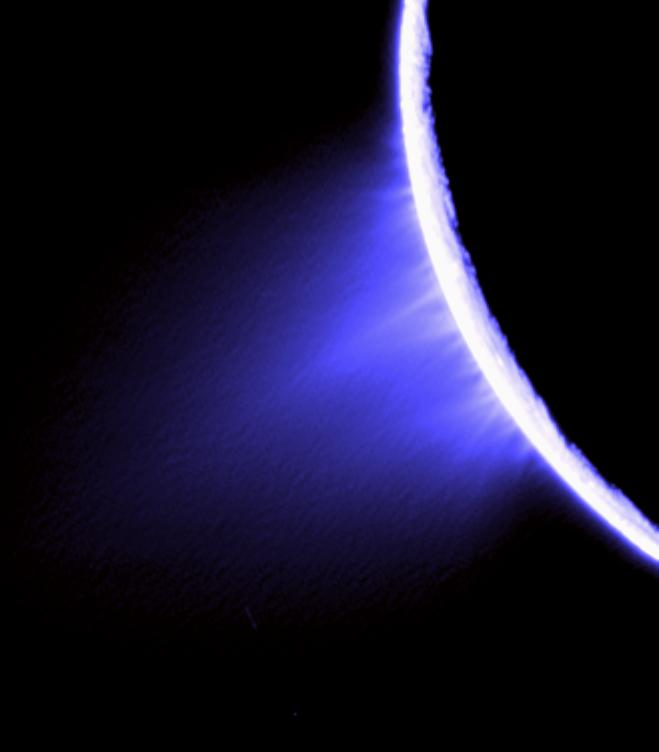
Cassini imaging scientists used views like this one to help them identify the source locations for individual jets spurting ice particles, water vapor and trace organic compounds from the surface of Saturn's moon Enceladus. Image credit: NASA/JPL/Space Science Institute . Full image and caption

PASADENA, Calif. - Recent findings from NASA's Cassini mission reveal that Saturn's geyser moon Enceladus provides a special laboratory for watching unusual behavior of plasma, or hot ionized gas. In these recent findings, some Cassini scientists think they have observed "dusty plasma," a condition theorized but not previously observed on site, near Enceladus.

Data from Cassini's fields and particles instruments also show that the usual "heavy" and "light" species of charged particles in normal plasma are actually reversed near the plume spraying from the moon's south polar region. The findings are discussed in two recent papers in the Journal of Geophysical Research.

"These are truly exciting discoveries for plasma science," said Tamas Gombosi, Cassini fields and particles interdisciplinary scientist based at the University of Michigan, Ann Arbor. "Cassini is providing us with a new plasma physics laboratory."

Ninety-nine percent of the matter in the universe is thought to be in the form of plasma, so scientists have been using Saturn as a site other than Earth to observe the behavior of this cloud of ions and electrons directly. Scientists want to study the way the sun sends energy into Saturn's plasma environment, since that jolt of energy drives processes such as weather and the behavior of magnetic field lines. They can use these data to understand how Saturn's plasma environment is similar to and different from that of Earth and other planets.

The small, icy moon Enceladus is a major source of ionized material filling the huge magnetic bubble around Saturn. About 200 pounds (about 100 kilograms) of water vapor per second - about as much as an active comet - spray out from long cracks in the south polar region known as "tiger stripes." The ejected matter forms the Enceladus plume - a complex structure of icy grains and neutral gas that is mainly water vapor. The plume gets converted into charged particles interacting with the plasma that fills Saturn's magnetosphere.

The nature of this unique gas-dust-plasma mixture has been revealed over the course of the mission with data from multiple instruments, including the Cassini plasma spectrometer, magnetometer, magnetospheric imaging instrument, and the radio and plasma wave science instrument. What scientists found most interesting is that the grains range continuously in size from small water clusters (a few water molecules) to thousandths of an inch (100 micrometers). They also saw that a large fraction of these grains trap electrons on their surface. Up to 90 percent of the electrons from the plume appear to be stuck on large, heavy grains.

In this environment, Cassini has now seen positively charged ions become the small, "light" plasma species and the negatively charged grains become the "heavy" component. This is just the opposite of "normal" plasmas, where the negative electrons are thousands of times lighter than the positive ions.

In a paper published in the December issue of the journal, a team of Swedish and U.S. scientists on the Cassini mission examined radio and plasma wave science instrument observations from four flybys of Enceladus during 2008. They found a high plasma density (both ions and electrons) within the Enceladus plume region, although the electron densities are usually much lower than the ion densities in the plumes and in the E ring. The team concluded that dust particles a hundred millionth to a hundred thousandth of an inch (a nanometer to micrometer) in size are sweeping up the negatively charged electrons. The mass of the observed "nanograins" ranges from a few hundred to a few tens of thousands of atomic mass units (proton masses), and must therefore contain tens to thousands of water molecules bound together. At least half of the negatively charged electrons are attached to the dust, and their interaction with the positively charged particles causes the ions to be decelerated. Because the dust is charged and behaves as part of the plasma cloud, this paper distinguishes this state of matter from dust that just happens to be in plasma.

"Such strong coupling indicates the possible presence of so-called 'dusty plasma', rather than the 'dust in a plasma' conditions which are common in interplanetary space," said Michiko Morooka from the Swedish Institute of Space Physics, lead author of the paper and a Cassini radio and plasma wave science co-investigator. "Except for measurements in Earth's upper atmosphere, there have previously been no in-situ observations of dusty plasma in space."

In a dusty plasma, conditions are just right for the dust to also participate in the plasma's collective behavior. This increases the complexity of the plasma, changes its properties and produces totally new collective behavior. Dusty plasma are thought to exist in comet tails and dust rings around the sun, but scientists rarely have the opportunity to fly through the dusty plasma and directly measure its characteristics in place.

A separate analysis, based on data obtained by the Cassini plasma spectrometer, revealed the presence of nanograins having an electric charge corresponding to a single excess electron. "The Cassini plasma spectrometer has enabled us to discover and analyze new classes of charged particles that were wholly unanticipated when the instrument was designed and built in the 1980s and 90s," said Tom Hill, the study's lead author and a co-investigator based at Rice University in Houston.

The nature of the Enceladus plume has been revealed over time due to the synergistic nature of the fields and particles instruments on Cassini, which has been in residence in Saturn's magnetosphere since 2004. Following the original detection of the plume based on magnetometer measurements, Sven Simon from the University of Cologne, Germany, and Hendrik Kriegel from the University of Braunschweig, Germany, found that the observed perturbation of Saturn's magnetic field required the presence of negatively charged dust grains in the plume. These findings were reported in the April and October 2011 issues of Journal of Geophysical Research Space Physics. Previous data obtained by the ion and neutral mass spectrometer revealed the complex composition of the plume gas, and the cosmic dust analyzer revealed that the plume grains were rich in sodium salts. Because this scenario can only arise if the plume originated from liquid water, it provides compelling evidence for a subsurface ocean.

Cassini will continue to study the complex nature of the plume region in the three planned additional flybys of Enceladus. The Cassini-Huygens mission is a cooperative project of NASA, the European Space Agency and the Italian Space Agency. The Jet Propulsion Laboratory, a division of the California Institute of Technology in Pasadena, manages the mission for NASA's Science Mission Directorate, Washington. More Cassini information is at http://www.nasa.gov/cassini and http://saturn.jpl.nasa.gov .

Jia-Rui C. Cook 818-354-0850
Jet Propulsion Laboratory, Pasadena, Calif.
jccook@jpl.nasa.gov