Thursday, May 10, 2012

Hubble Observes a Dwarf Galaxy with a Bright Nebula

PR Image heic1207a
Hubble view of NGC 2366

PR Image heic1207b
Ground-based, wide-field view of NGC 2366


Videos

PR Video heic1207a
Zoom into NGC 2366

PR Video heic1207b
Pan across NGC 2366

The NASA/ESA Hubble Space Telescope has made detailed observations of the dwarf galaxy NGC 2366. While it lacks the elegant spiral arms of many larger galaxies, NGC 2366 is home to a bright, star-forming nebula and is close enough for astronomers to discern its individual stars.

The starry mist streaking across this image obtained by the NASA/ESA Hubble Space Telescope is the central part of the dwarf galaxy known as NGC 2366. The most obvious feature in this galaxy is a large nebula visible in the upper-right part of the image, an object listed just a few entries prior in the New General Catalogue as NGC 2363.

A nearby yellowish swirl is not in fact part of the nebula. It is a spiral galaxy much further away, whose light is shining right through NGC 2366. This is possible because galaxies are not solid objects. While we see the stars because they shine brightly, galaxies are overwhelmingly made up of the empty space between them. Hubble’s high-resolution image illustrates this perfectly: the stars are small points of light surrounded by the darkness of space.

The splendid interconnected objects of NGC 2366 and NGC 2363 are located about 10 million light-years away in the constellation of Camelopardalis (the Giraffe). As a dwarf galaxy, NGC 2366’s size is in the same ballpark as the two main satellite galaxies of our Milky Way, named the Large and Small Magellanic Clouds. Like the Magellanic clouds, NGC 2366's lack of well-defined structure leads astronomers to further classify it as an irregular galaxy.

Although NGC 2366 might be small by the standards of galaxies, many of its stars are not, and the galaxy is home to numerous gigantic blue stars. The blue dots scattered throughout the galaxy speak to the burst of star formation that the galaxy has undergone in recent cosmic time. A new generation of these stellar titans has lit up the nebula NGC 2363.

In gas-rich star-forming regions, the ultraviolet radiation from young, big, blue stars excites the hydrogen gas, making it glow. NGC 2363, as well as other, smaller patches seen throughout Hubble’s image, serve as the latest formation sites for stellar giants.

Imaged through green and infrared filters, these nebulae take on a blueish tinge in this image, though the actual colour is a shade of red.

This image was produced from two adjacent fields observed by Hubble’s Advanced Camera for Surveys. The field of view is approximately 5.5 arcminutes across, which is equivalent to a little over a fifth of the diameter of the full Moon. Although this is comparatively large by the standard of Hubble’s images, NGC 2366 is much too faint to observe with the naked eye.


Notes

The Hubble Space Telescope is a project of international cooperation between ESA and NASA.

Image credit: NASA & ESA

Links

Contacts

Oli Usher
Hubble/ESA
Garching, Germany
Tel: +49-89-3200-6855
Email: ousher@eso.org

Wednesday, May 09, 2012

Overfed Black Holes Shut Down Galactic Star-Making

This artistically modified image of the local galaxy Arp 220, captured by the Hubble Space Telescope, helps illustrate the Herschel results. The bright core of the galaxy, paired with an overlaid artist's impression of jets emanating from it, indicate that the central black hole's activity is intensifying. As the active black hole continues to rev up, the rate of star formation will, in turn, be tamped down in the galaxy. Astronomers want to further study how star formation and black hole activity are intertwined. Image credit: NASA/JPL-Caltech. Full image and caption

PASADENA, Calif. -- The Herschel Space Observatory has shown galaxies with the most powerful, active black holes at their cores produce fewer stars than galaxies with less active black holes. The results are the first to demonstrate black holes suppressed galactic star formation when the universe was less than half its current age.

Herschel is a European Space Agency-led mission with important NASA contributions.

"We want to know how star formation and black hole activity are linked," said Mathew Page of University College London's Mullard Space Science Laboratory in the United Kingdom and lead author of a paper describing these findings in this week's journal Nature. "The two processes increase together up to a point, but the most energetic black holes appear to turn off star formation."

Supermassive black holes, weighing as much as millions of suns, are believed to reside in the hearts of all large galaxies. When gas falls upon these monsters, the material is accelerated and heated around the black hole, releasing great torrents of energy. Earlier in the history of the universe, these giant, luminous black holes, called active galactic nuclei, were often much brighter and more energetic. Star formation was also livelier back then.

Studies of nearby galaxies suggest active black holes can squash star formation. The revved-up, central black holes likely heat up and disperse the galactic reservoirs of cold gas needed to create new stars. These studies have only provided "snapshots" in time, however, leaving the overall relationship of active galactic nuclei and star formation unclear, especially over the cosmic history of galaxy formation.

"To understand how active galactic nuclei affect star formation over the history of the universe, we investigated a time when star formation was most vigorous, between eight and 12 billion years ago," said co-author James Bock, a senior research scientist at NASA's Jet Propulsion Laboratory in Pasadena, Calif., and co-coordinator of the Herschel Multi-tiered Extragalactic Survey. "At that epoch, galaxies were forming stars 10 times more rapidly than they are today on average. Many of these galaxies are incredibly luminous, more than 1,000 times brighter than our Milky Way."

For the new study, Page and colleagues used Herschel data that probed 65 galaxies at wavelengths equivalent to the thickness of several sheets of office paper, a region of the light spectrum known as far-infrared. These wavelengths reveal the rate of star formation, because most of the energy released by developing stars heats surrounding dust, which then re-radiates starlight out in far-infrared wavelengths.

The researchers compared their infrared readings with X-rays streaming from the active central black holes in the survey's galaxies, measured by NASA's Chandra X-ray Observatory. At lower intensities, the black holes' brightness and star formation increased in sync. However, star formation dropped off in galaxies with the most energetic central black holes. Astronomers think inflows of gas fuel new stars and supermassive black holes. Feed a black hole too much, however, and it starts spewing radiation into the galaxy that prevents raw material from coalescing into new stars.

"Now that we see the relationship between active supermassive black holes and star formation, we want to know more about how this process works," said Bill Danchi, Herschel program scientist at NASA Headquarters in Washington. "Does star formation get disrupted from the beginning with the formation of the brightest galaxies of this type, or do all active black holes eventually shut off star formation, and energetic ones do this more quickly than less active ones?"

Herschel is a European Space Agency cornerstone mission, with science instruments provided by consortia of European institutes and important participation by NASA. NASA's Herschel Project Office is based at JPL. JPL contributed mission-enabling technology for two of Herschel's three science instruments. The NASA Herschel Science Center, part of the Infrared Processing and Analysis Center at Caltech, supports the United States astronomical community. Caltech manages JPL for NASA.

For NASA's Herschel website, visit http://www.nasa.gov/herschel/ . For ESA's Herschel website, visit http://www.esa.int/SPECIALS/Herschel/index.html .

Whitney Clavin 818-354-4673
Jet Propulsion Laboratory, Pasadena, Calif.
whitney.clavin@jpl.nasa.gov

J.D. Harrington 202-358-5241
Headquarters, Washington
j.d.harrington@nasa.gov

VISTA Views a Vast Ball of Stars

PR Image eso1220a
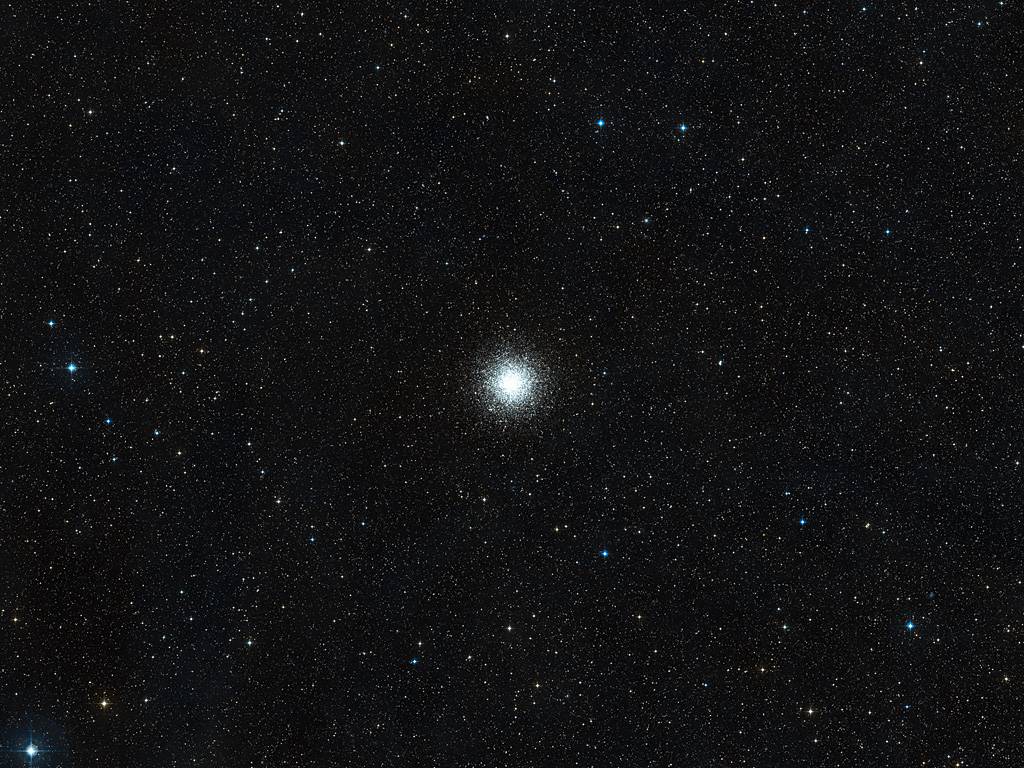
VISTA infrared image of the globular star cluster Messier 55

PR Image eso1220b
The globular star cluster Messier 55 in the constellation of Sagittarius

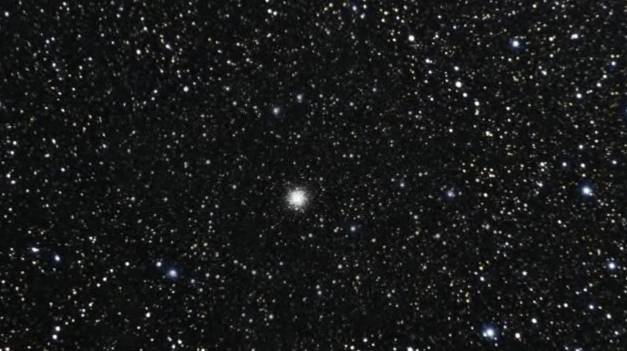
Wide-field view of the sky around the globular star cluster Messier 55

Videos

PR Video eso1220a
Zooming in on the globular star cluster Messier 55

PR Video eso1220b
Panning across VISTA’s infrared image of the globular star cluster Messier 55

A new image of Messier 55 from ESO's VISTA infrared survey telescope shows tens of thousands of stars crowded together like a swarm of bees. Besides being packed into a relatively small space, these stars are also among the oldest in the Universe. Astronomers study Messier 55 and other ancient objects like it, called globular clusters, to learn how galaxies evolve and stars age.

Globular clusters are held together in a tight spherical shape by gravity. In Messier 55, the stars certainly do keep close company: approximately one hundred thousand stars are packed within a sphere with a diameter of only about 25 times the distance between the Sun and the nearest star system, Alpha Centauri.

About 160 globular clusters have been spotted encircling our galaxy, the Milky Way, mostly toward its bulging centre. The two latest discoveries, made using VISTA, were recently announced (eso1141). The largest galaxies can have thousands of these rich collections of stars in orbit around them.

Observations of globular clusters' stars reveal that they originated around the same time — more than 10 billion years ago — and from the same cloud of gas. As this formative period was just a few billion years after the Big Bang, nearly all of the gas on hand was the simplest, lightest and most common in the cosmos: hydrogen, along with some helium and much smaller amounts of heavier chemical elements such as oxygen and nitrogen.

Being made mostly from hydrogen distinguishes globular cluster residents from stars born in later eras, like our Sun, that are infused with heavier elements created in earlier generations of stars. The Sun lit up some 4.6 billion years ago, making it only about half as old as the elderly stars in most globular clusters. The chemical makeup of the cloud from which the Sun formed is reflected in the abundances of elements found throughout the Solar System — in asteroids, in the planets and in our own bodies.

Sky watchers can find Messier 55 in the constellation of Sagittarius (The Archer). The notably large cluster appears nearly two-thirds the width of the full Moon, and is not at all difficult to see in a small telescope, even though it is located at a distance of about 17 000 light-years from Earth.

The French astronomer Nicolas Louis de Lacaille first documented the stellar grouping around 1752, and some 26 years later another French astronomer, Charles Messier, included the cluster as the 55th entry in his famous astronomical catalogue. The object is also cross-listed as NGC 6809 in the New General Catalogue, an often-cited and more extensive astronomical catalogue created in the late nineteenth century.

The new image was obtained in infrared light by the 4.1-metre Visible and Infrared Survey Telescope for Astronomy (VISTA, eso0949) at ESO's Paranal Observatory in northern Chile.

As well as the stars of Messier 55, this VISTA image also records many galaxies lying far beyond the cluster. A particularly prominent edge-on spiral galaxy appears to the upper right of the centre of the picture.

More information

The year 2012 marks the 50th anniversary of the founding of the European Southern Observatory (ESO). ESO is the foremost intergovernmental astronomy organisation in Europe and the world’s most productive astronomical observatory. It is supported by 15 countries: Austria, Belgium, Brazil, the Czech Republic, Denmark, France, Finland, Germany, Italy, the Netherlands, Portugal, Spain, Sweden, Switzerland and the United Kingdom. ESO carries out an ambitious programme focused on the design, construction and operation of powerful ground-based observing facilities enabling astronomers to make important scientific discoveries. ESO also plays a leading role in promoting and organising cooperation in astronomical research. ESO operates three unique world-class observing sites in Chile: La Silla, Paranal and Chajnantor. At Paranal, ESO operates the Very Large Telescope, the world’s most advanced visible-light astronomical observatory and two survey telescopes. VISTA works in the infrared and is the world’s largest survey telescope and the VLT Survey Telescope is the largest telescope designed to exclusively survey the skies in visible light. ESO is the European partner of a revolutionary astronomical telescope ALMA, the largest astronomical project in existence. ESO is currently planning a 40-metre-class European Extremely Large optical/near-infrared Telescope, the E-ELT, which will become “the world’s biggest eye on the sky”.

Links

Contacts

Richard Hook
ESO, La Silla, Paranal, E-ELT and Survey Telescopes Public Information Officer
Garching bei München, Germany
Tel: +49 89 3200 6655
Cell: +49 151 1537 3591
Email: rhook@eso.org

Tuesday, May 08, 2012

NASA's Spitzer Sees the Light of Alien 'Super Earth'

NASA's Spitzer Space Telescope was able to detect a super Earth's direct light for the first time using its sensitive heat-seeking infrared vision. Super Earth's are more massive than Earth but lighter than gas giants like Neptune. As this artist's concept shows, in visible light, a planet is lost in the glare of its star (top view). When viewed in infrared, the planet becomes brighter relative to its star. This is largely due to the fact that the planet's scorching heat blazes with infrared light. Even on our own bodies emanate more infrared light than visible due to our heat. Image credit: NASA/JPL-Caltech. Full image and caption

This plot of data from NASA's Spitzer Space Telescope reveals the light from a "super Earth" called 55 Cancri e. The planet is the smallest yet, beyond our solar system, to reveal its direct light. Super Earth's are more massive than Earth but lighter than gas giants like Neptune. While this planet is not habitable, the observations are an important milestone toward being able to eventually perform a similar technique on even smaller, potentially Earth-like planets. Image credit: NASA/JPL-Caltech/MIT. Full image and caption - enlarge image

Super Earth Reveals Itself to Spitzer

PASADENA, Calif. - NASA's Spitzer Space Telescope has detected light emanating from a "super-Earth" planet beyond our solar system for the first time. While the planet is not habitable, the detection is a historic step toward the eventual search for signs of life on other planets.

"Spitzer has amazed us yet again," said Bill Danchi, Spitzer program scientist at NASA Headquarters in Washington. "The spacecraft is pioneering the study of atmospheres of distant planets and paving the way for NASA's upcoming James Webb Space Telescope to apply a similar technique on potentially habitable planets."

The planet, called 55 Cancri e, falls into a class of planets termed super Earths, which are more massive than our home world but lighter than giant planets like Neptune. The planet is about twice as big and eight times as massive as Earth. It orbits a bright star, called 55 Cancri, in a mere 18 hours.

Previously, Spitzer and other telescopes were able to study the planet by analyzing how the light from 55 Cancri changed as the planet passed in front of the star. In the new study, Spitzer measured how much infrared light comes from the planet itself. The results reveal the planet is likely dark, and its sun-facing side is more than 2,000 Kelvin (3,140 degrees Fahrenheit), hot enough to melt metal.

The new information is consistent with a prior theory that 55 Cancri e is a water world: a rocky core surrounded by a layer of water in a "supercritical" state where it is both liquid and gas, and topped by a blanket of steam.

"It could be very similar to Neptune, if you pulled Neptune in toward our sun and watched its atmosphere boil away," said Michaël Gillon of Université de Liège in Belgium, principal investigator of the research, which appears in the Astrophysical Journal. The lead author is Brice-Olivier Demory of the Massachusetts Institute of Technology in Cambridge.

The 55 Cancri system is relatively close to Earth, at 41 light-years away. It has five planets, with 55 Cancri e the closest to the star and tidally locked, so one side always faces the star. Spitzer discovered the sun-facing side is extremely hot, indicating the planet probably does not have a substantial atmosphere to carry the sun's heat to the unlit side.

NASA's James Webb Space Telescope, scheduled to launch in 2018, likely will be able to learn even more about the planet's composition. The telescope might be able to use a similar infrared method to Spitzer to search other potentially habitable planets for signs of molecules possibly related to life.

"When we conceived of Spitzer more than 40 years ago, exoplanets hadn't even been discovered," said Michael Werner, Spitzer project scientist at NASA's Jet Propulsion Laboratory in Pasadena, Calif. "Because Spitzer was built very well, it's been able to adapt to this new field and make historic advances such as this."

In 2005, Spitzer became the first telescope to detect light from a planet beyond our solar system. To the surprise of many, the observatory saw the infrared light of a "hot Jupiter," a gaseous planet much larger than the solid 55 Cancri e. Since then, other telescopes, including NASA's Hubble and Kepler space telescopes, have performed similar feats with gas giants using the same method.

In this method, a telescope gazes at a star as a planet circles behind it. When the planet disappears from view, the light from the star system dips ever so slightly, but enough that astronomers can determine how much light came from the planet itself. This information reveals the temperature of a planet, and, in some cases, its atmospheric components. Most other current planet-hunting methods obtain indirect measurements of a planet by observing its effects on the star.

During Spitzer's ongoing extended mission, steps were taken to enhance its unique ability to see exoplanets, including 55 Cancri e. Those steps, which included changing the cycling of a heater and using an instrument in a new way, led to improvements in how precisely the telescope points at targets.

JPL manages the Spitzer Space Telescope mission for NASA's Science Mission Directorate in Washington. Science operations are conducted at the Spitzer Science Center at the California Institute of Technology (Caltech) in Pasadena. Data are archived at the Infrared Science Archive housed at the Infrared Processing and Analysis Center at Caltech. Caltech manages JPL for NASA.

For more information about Spitzer, visit: http://www.nasa.gov/spitzer and http://spitzer.caltech.edu .

Whitney Clavin 818-354-4673
Jet Propulsion Laboratory, Pasadena, Calif.
Whitney.clavin@jpl.nasa.gov

J. D. Harrington 202-358-5241
NASA Headquarters, Washington
j.d.harrington@nasa.gov

NGC 2359 Nebula

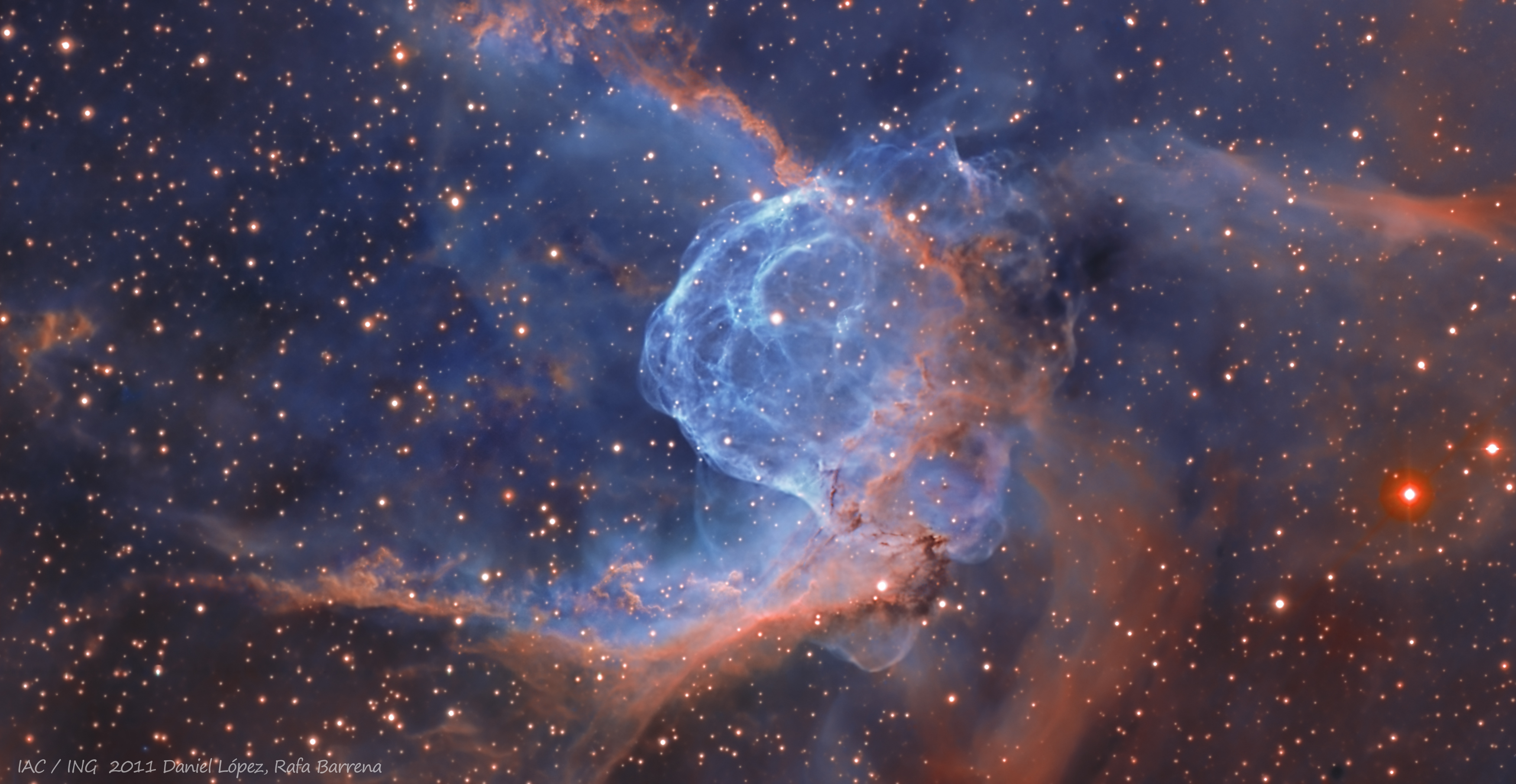
Isaac Newton Telescope (INT). It is a three-colour composite made from data collected using filters to isolate the light emitted by hydrogen alpha (H-alpha), doubly-ionised oxygen (OIII) and single-ionised sulfur (SII) atoms, and coded in the image as red, green and blue respectively. Credit: R. Barrena (IAC) and D. López. [ JPEG | TIFF ]

NGC 2359, better known as the Thor's Helmet nebula, is actually more like an interstellar bubble, blown as a fast wind from the bright, massive star near the bubble's center sweeps through a surrounding molecular cloud. The central star is an extremely hot giant Wolf-Rayet star, thought to be in a brief, pre-supernova stage of evolution. It lies about 15,000 light years from Earth in the constellation Canis Major, measuring about 30 light years.

It is one of the best known Wolf-Rayet nebular structures, along with NGC 6888, and the name Thor's Helmet is due to its remarkable resemblance to depictions of the headwear donned by the famed Norse god of thunder. This INT image captures striking details of the nebula's filamentary structures. The bluish colour remarks the strong emission due to oxygen atoms in the glowing gas. In fact, it can be visually seen with telescopes of moderate aperture using an [OIII] narrow-band filter.

More information:

Contact:

Javier Méndez (Public Relations Officer)
The Isaac Newton Group of Telescopes

Monday, May 07, 2012

One Supernova Type, Two Different Sources

The Tycho supernova remnant is the result of a Type Ia supernova explosion. The explosion was observed by Danish astronomer Tycho Brahe in 1572. More than 400 years later, the ejecta from that explosion has expanded to fill a bubble 55 light-years across. In this image, low-energy X-rays (red) show expanding debris from the supernova explosion and high energy X-rays (blue) show the blast wave - a shell of extremely energetic electrons. Credit: X-ray: NASA/CXC/Rutgers/K.Eriksen et al.; Optical: DSS. Low Resolution Image (jpg)

Cambridge, MA - The exploding stars known as Type Ia supernovae serve an important role in measuring the universe, and were used to discover the existence of dark energy. They're bright enough to see across large distances, and similar enough to act as a "standard candle" - an object of known luminosity. The 2011 Nobel Prize in Physics was awarded for the discovery of the accelerating universe using Type Ia supernovae. However, an embarrassing fact is that astronomers still don't know what star systems make Type Ia supernovae.

Two very different models explain the possible origin of Type Ia supernovae, and different studies support each model. New evidence shows that both models are correct - some of these supernovae are created one way and some the other.

"Previous studies have produced conflicting results. The conflict disappears if both types of explosion are happening," explained Smithsonian astronomer and Clay Fellow Ryan Foley (Harvard-Smithsonian Center for Astrophysics).

Type Ia supernovae are known to originate from white dwarfs - the dense cores of dead stars. White dwarfs are also called degenerate stars because they're supported by quantum degeneracy pressure.

In the single-degenerate model for a supernova, a white dwarf gathers material from a companion star until it reaches a tipping point where a runaway nuclear reaction begins and the star explodes. In the double-degenerate model, two white dwarfs merge and explode. Single-degenerate systems should have gas from the companion star around the supernova, while the double-degenerate systems will lack that gas.

"Just like mineral water can be with or without gas, so can supernovae," said Robert Kirshner, Clowes Professor of Astronomy at Harvard University and a co-author on the study.

Foley and his colleagues studied 23 Type Ia supernovae to look for signatures of gas around the supernovae, which should be present only in single-degenerate systems. They found that the more powerful explosions tended to come from "gassy" systems, or systems with outflows of gas. However, only a fraction of supernovae show evidence for outflows. The remainder seem to come from double-degenerate systems.

"There are definitely two kinds of environments - with and without outflows of gas. Both are found around Type Ia supernovae," Foley said.

This finding has important implications for measurements of dark energy and the expanding universe. If two different mechanisms are at work in Type Ia supernovae, then the two types must be considered separately when calculating cosmic distances and expansion rates.

"It's like measuring the universe with a mix of yardsticks and meter sticks - you'll get about the same answer, but not quite. To get an accurate answer, you need to separate the yardsticks from the meter sticks," Foley explained.

This study raises an interesting question - if two different mechanisms create Type Ia supernovae, why are they homogeneous enough to serve as standard candles?

"How can supernovae coming from different systems look so similar? I don't have the answer for that," said Foley.

The paper describing this research will appear in the Astrophysical Journal and is available online.

Headquartered in Cambridge, Mass., the Harvard-Smithsonian Center for Astrophysics (CfA) is a joint collaboration between the Smithsonian Astrophysical Observatory and the Harvard College Observatory. CfA scientists, organized into six research divisions, study the origin, evolution and ultimate fate of the universe.

For more information, contact:

David A. Aguilar
Director of Public Affairs
Harvard-Smithsonian Center for Astrophysics
617-495-7462
daguilar@cfa.harvard.edu

Christine Pulliam
Public Affairs Specialist
Harvard-Smithsonian Center for Astrophysics
617-495-7463
cpulliam@cfa.harvard.edu

Sunday, May 06, 2012

Hubble Sees the Eye of the Storm in Galaxy Cluster

Abell 1185
Credit: ESA/Hubble & NASA
Larger image

This image from the NASA/ESA Hubble Space Telescope could seem like a quiet patch of sky at first glance. But zooming into the central part of a galaxy cluster — one of the largest structures of the Universe — is rather like looking at the eye of the storm.

Clusters of galaxies are large groups consisting of dozens to hundreds of galaxies, which are bound together by gravity. The galaxies sometimes stray too close to one another and the huge gravitational forces at play can distort them or even rip matter off when they collide with one another.

This particular cluster, called Abell 1185, is a chaotic one. Galaxies of various shapes and sizes are drifting dangerously close to one another. Some have already been ripped apart in this cosmic maelstrom, shedding trails of matter into the void following their close encounter. They have formed a familiar shape called The Guitar, located just outside the frame of this image.

Abell 1185 is located approximately 400 million light-years away from Earth and spans one million light-years across. A few of the elliptical galaxies that form the cluster are visible in the corners of this image, but mostly, the small elliptical shapes seen are faraway galaxies in the background, located much further away, in a quieter area of the Universe.

Saturday, May 05, 2012

Subaru Telescope Discovers the Most Distant Protocluster of Galaxies

Using the Subaru Telescope, a team of astronomers led by Jun Toshikawa (The Graduate University for Advanced Studies, Japan), Dr. Nobunari Kashikawa (National Astronomical Observatory of Japan), and Dr. Kazuaki Ota (Kyoto University) has discovered the most distant protocluster of galaxies ever found--one that existed less than one billion years after the Big Bang. Since protoclusters are ancestors of today's massive clusters of galaxies, this discovery of a protocluster in the early Universe advances our understanding of how large-scale structures form and how galaxies evolve.

The nearby or "local" universe, an area that extends about 380 million light-years away from Earth, contains many galaxy clusters, i.e., gravitationally bound groups of about 100 to more than 1000 galaxies. These clusters are connected with each other and make up a huge network of galaxies called the "large-scale structure" of the Universe. Such configurations raise fundamental questions: When and how did these structures form in the history of the Universe?

Astronomers think that the Universe started out as an almost homogeneous mass that spread uniformly. Small fluctuations in the initial mass distribution increased by gravity over the 13.7 billion years of the Universe's age and produced the recent array of clusters. Because clusters contain a larger number of old and massive galaxies than those found in isolated galaxies, astronomers speculate that developing clusters may significantly affect the evolution of their member galaxies. Therefore, understanding the details of cluster formation (Note 1) is an essential step in addressing key issues of structure formation and galaxy evolution. A necessary part of this process is an investigation of all stages of cluster formation from beginning to end, which is why the current team gave particular emphasis to studying the birth of clusters.

The team focused on this phase of cluster formation by searching very distant galaxies that existed in the early Universe. Such observations present challenges for a couple of reasons. First, the light from more distant galaxies is faint and difficult to detect. Second, protoclusters in the early Universe are rare. The use of the Subaru Telescope allowed the team to overcome these difficulties. The telescope not only has an 8.2 m primary mirror with large light-gathering power but also offers the advantage of the Subaru Prime Focus Camera (Suprime-Cam) with a wide-field imaging capability. These features are particularly beneficial for discovering faint and rare objects in the distant Universe.

The team chose to observe the Subaru Deep Field, a 0.25 square-degree-wide field in the northern sky near the constellation Coma Barenices. The Subaru Deep Field is one of the most suitable regions for finding protoclusters in the early Universe; the area is not only deep and wide but has been intensively observed with the Subaru Telescope, which has detected very faint galaxies. When the team searched for distant galaxies in the Subaru Deep Field and investigated their distribution, they found a region with a surface number density five times greater than the average (Fig. 1).

Figure 1: Left panel: The distribution of galaxies 12.7 billion years ago. White circles represent the galaxies, and their size represents the luminosity of the galaxies. The color contour represents the density; the redder the color, the higher the density. The reddest region appears in the lower part of the figure. (Credit: NAOJ). Right panel: An enlargement from the map that shows the area around the cluster. (Credit: NAOJ)

The astronomers then used Subaru's Faint Object Camera and Spectrograph (FOCAS) to conduct a spectroscopic observation, which confirmed that most of the galaxies located in the highly dense region lay in a narrow area in the line-of-sight. This concentration of galaxies could not be explained by chance. On the basis of their observations with the Subaru Telescope, the team confirmed the existence of a protocluster 12.72 billion years ago (Fig. 2)--the most distant protocluster found with its distance established by spectroscopic observations (Note 2). The astronomers were able to directly observe this cluster of galaxies at an early stage in galaxy evolution, when structures were beginning to form in the early Universe. This discovery will be an important step on the way to understanding structure formation and galaxy evolution.

Figure 2: A close-up of the central region of the protocluster. Objects circled in red are galaxies 12.7 billion light-years away. (Credit: NAOJ) .

Although the team also investigated the properties of the galaxies in the protocluster (Note 3), they did not find a significant difference between the protocluster galaxies and other galaxies in the field. The astronomers speculate that the characteristic features of cluster galaxies in the nearby Universe occurred in later stages of cluster development, not during their birth (Note 4). Close examination of the internal structure of the protocluster showed that it could consist of subgroups of galaxies, merging together to form a more massive cluster (Note 5).

The team will continue their research with the Subaru Telescope's forthcoming Hyper-Suprime Camera (HSC), which has an imaging capability with a field of view seven times wider than Suprime-Cam. The astronomers expect to use HSC to reveal how many protoclusters existed in the early Universe and to provide a better picture of protoclusters in general. Toshikawa summarized the team's intent: "By continually working to find such distant protoclusters, we can understand cluster formation more clearly."


Reference:

These results were published in the May 1, 2012, edition of the Astrophysical Journal. This research was supported by The Japan Society for the Promotion of Science through Grant-in-Aid for Scientific Research 23340050. The authors of the paper are:
Jun Toshikawa, The Graduate University for Advanced Studies, Japan
Nobunari Kashikawa, National Astronomical Observatory of Japan
Kazuaki Ota, Kyoto University
Tomoki Morokuma, University of Tokyo
Takatoshi Shibuya, The Graduate University for Advanced Studies, Japan
Masao Hayashi, National Astronomical Observatory of Japan
Tohru Nagao, associate professor, Kyoto University
Linhua Jiang, University of Arizona
Matthew A. Malkan, University of California
Eiichi Egami, University of Arizona
Kazuhiro Shimasaku, University of Tokyo
Kentaro Motohara, University of Tokyo
Yoshifumi Ishizaki, The Graduate University for Advanced Studies, Japan


Notes:

1. Protoclusters more than 12.7 billion light-years away also closely relate to issues of cosmic reionization.

2. Prior to this research, Ouchi et al. used the Subaru Telescope and discovered the most distant protocluster ever found in 2005. In 2012 Trenti et al. found a protocluster candidate beyond 12.7 billion light-years ago, but spectroscopic observations have not confirmed their distances.

3. This research investigated luminosities and star formation rates.

4. Investigation of other properties such as mass, age and color is necessary to conclude whether the properties of protoclusters are different from those of field galaxies.

5. The interesting structure in Fig.1 is elongated toward the upper left of the protocluster. A large-scale structure may begin to form in this early Universe. Only the Subaru Telescope could find this large feature.

Thursday, May 03, 2012

Four white dwarf stars caught in the act of consuming 'earth-like' exoplanets

Rocky material in orbit around a white dwarf star (centre). Collisions turn larger material into dust, some of which then rains down on to the white dwarf. Credit: © Mark A. Garlick / space-art.co.uk / University of Warwick

University of Warwick astrophysicists have pinpointed four white dwarf stars surrounded by dust from shattered planetary bodies which once bore striking similarities to the composition of the Earth. The scientists publish their results in a paper in the journal Monthly Notices of the Royal Astronomical Society.

White dwarfs are the final stage of life of stars like our Sun, the residual cores of material left behind after their available fuel for nuclear reactions has been exhausted. Using the Hubble Space Telescope to carry out the biggest survey to date of the chemical composition of the atmospheres of white dwarf stars, the researchers found that the most frequently occurring elements in the dust around these four white dwarfs were oxygen, magnesium, iron and silicon – the four elements that make up roughly 93 per cent of the Earth.

However an even more significant observation was that this material also contained an extremely low proportion of carbon, which matched very closely that of the Earth and the other rocky planets orbiting closest to our own Sun.

This is the first time that such low proportions of carbon have been measured in the atmospheres of white dwarf stars polluted by debris. Not only is this clear evidence that these stars once had at least one rocky exoplanet which they have now destroyed, the observations must also pinpoint the last phase of the death of these worlds.

The atmosphere of a white dwarf is made up of hydrogen and/or helium, so any heavy elements that come into their atmosphere are dragged downwards to their core and out of sight within a matter of days by the dwarf’s high gravity. Given this, the astronomers must literally be observing the final phase of the death of these worlds as the material rains down on the stars at rates of up to 1 million kilograms every second.

Not only is this clear evidence that these stars once had rocky exoplanetary bodies which have now been destroyed, the observations of one particular white dwarf, PG0843+516, may also tell the story of the destruction of these worlds.

This star stood out from the rest owing to the relative overabundance of the elements iron, nickel and sulphur in the dust found in its atmosphere. Iron and nickel are found in the cores of terrestrial planets, as they sink to the centre owing to the pull of gravity during planetary formation, and so does sulphur thanks to its chemical affinity to iron.

Therefore, researchers believe they are observing White Dwarf PG0843+516 in the very act of swallowing up material from the core of a rocky planet that was large enough to undergo differentiation, similar to the process that separated the core and the mantle of the Earth.

Professor Boris Gänsicke of the Department of Physics at the University of Warwick, who led the study, said the destructive process which caused the discs of dust around these distant white dwarfs is likely to one day play out in our own solar system.

“What we are seeing today in these white dwarfs several hundred light years away could well be a snapshot of the very distant future of the Earth. As stars like our Sun reach the end of their life, they expand to become red giants when the nuclear fuel in their cores is depleted.

‘When this happens in our own solar system, billions of years from now, the Sun will engulf the inner planets Mercury and Venus. It’s unclear whether the Earth will also be swallowed up by the Sun in its red giant phase - but even if it survives, its surface will be roasted.

‘During the transformation of the Sun into a white dwarf, it will lose a large amount of mass, and all the planets will move further out. This may destabilise the orbits and lead to collisions between planetary bodies as happened in the unstable early days of our solar systems.

‘This may even shatter entire terrestrial planets, forming large amounts of asteroids, some of which will have chemical compositions similar to those of the planetary core. In our solar system, Jupiter will survive the late evolution of the Sun unscathed, and scatter asteroids, new or old, towards the white dwarf.

‘It is entirely feasible that in PG0843+516 we see the accretion of such fragments made from the core material of what was once a terrestrial exoplanet.”

The University of Warwick led team surveyed more than 80 white dwarfs within a few hundred light years of the Sun, using the Cosmic Origin Spectrograph onboard the Hubble Space Telescope.


Images and captions

The following high resolution artist impressions are available. They were all created for the University of Warwick by the space artist Mark A. Garlick and are free for use by media or the University but are otherwise copyright as follows: “© Mark A. Garlick / space-art.co.uk / University of Warwick”

First Artist’s impression by Mark A. Garlick

http://bit.ly/KornIK The inner region of an exo-planetary system where four terrestrial planets orbit a solar-like star.

Second artist’s impression by Mark A. Garlick

http://bit.ly/ItlgIP The host star is running out of hydrogen in the core, swells up, and its surface becomes cooler. It is also losing mass, which causes the planets to move further out. The perturbation of the orbits may lead to collisions that will generate large amounts of rocky debris.

Third artist’s impression by Mark A. Garlick

http://bit.ly/IEhrxJ This depicts what the researchers are now observing. A white dwarf sits in the centre of the remnant of a planetary system. Asteroid sized debris is scattered inwards by interaction with the remaining planets and is tidally disrupted as it approaches the white dwarf forming a disc of dust some of which is raining down onto the star. The researchers have found that the composition of the debris that has just fallen onto the four white dwarfs matches the composition of Earth-like rocky worlds.

Image that brings together all three artist’s impressions by Mark A. Garlick together in one sequence http://bit.ly/K02jev


Science contact

Professor Boris Gänsicke, Department of Physics University of Warwick
Tel: +44 (0)2476 574741
Email: boris.gaensicke@warwick.ac.uk


Media contacts

Anna Blackaby
University of Warwick Science Press Officer
Tel: +44 (0)2476 575910
Mob: +44 (0) 7785 433155
Email: a.blackaby@warwick.ac.uk

Robert Massey
Royal Astronomical Society
Tel: +44 (0)20 7734 3307 x214
Mob: +44 (0)794 124 8035
Email: rm@ras.org.uk


Further information

The new work is published in “The chemical diversity of exo-terrestrial planetary debris around white dwarfs”, B. T. Gänsicke, D. Koester, J. Farihi, J. Girven, S.G.Parsons, E. Breedt, Monthly Notices of the Royal Astronomical Society, in press. A preprint of the paper is available at http://arxiv.org/abs/1205.0167


Notes for editors


The Royal Astronomical Society

The Royal Astronomical Society (RAS, www.ras.org.uk), founded in 1820, encourages and promotes the study of astronomy, solar-system science, geophysics and closely related branches of science. The RAS organizes scientific meetings, publishes international research and review journals, recognizes outstanding achievements by the award of medals and prizes, maintains an extensive library, supports education through grants and outreach activities and represents UK astronomy nationally and internationally. Its more than 3500 members (Fellows), a third based overseas, include scientific researchers in universities, observatories and laboratories as well as historians of astronomy and others.

Follow the RAS on Twitter via @royalastrosoc

Subaru-Led Team Discovers a Rare Stellar Disk of Quartz Dust

A research team of Japanese astronomers led by Dr. Hideaki Fujiwara (Subaru Telescope) has discovered a main-sequence star that is surrounded by a rare disk of quartz dust. Collisions of planetesimals, building blocks for planets, may have produced the dusty quartz ring during planet formation around the star. Based on observations with the AKARI and Spitzer infrared space telescopes, this recently discovered, intriguing feature of a stellar system may open new doors for research on the mineralogical nature of extrasolar planetary systems.

Since the 1995 discovery of the first extrasolar planet, 51 Pegasi b, about 700 planets orbiting around stars other than our Sun have been discovered so far. Understanding the origins and evolution of extrasolar planets has become one of the hottest and the most fundamental themes in modern astronomy. The team of scientists led by Dr. Fujiwara conducted research exploring this new frontier and concentrated their efforts on finding debris disks that could indicate planet formation.

According to a widely accepted recent scenario of planet formation, rocky planets like the Earth begin as an aggregation of cosmic dust and then continued their development as an accumulation of planetesimals, rocky planetary building blocks, around young stars. A substantial amount of dust would be generated from the collisions of planetesimals around main-sequence stars in the later phase of the planet formation process. Light absorbed from the central star would heat the grains of debris dust and re-emit its energy in infrared wavelengths. In light of this information, the team decided to focus their initial research on finding stars that have disks around them. They used the brand-new infrared map of the entire sky based on observations with AKARI, the Japanese infrared satellite to conduct their search.

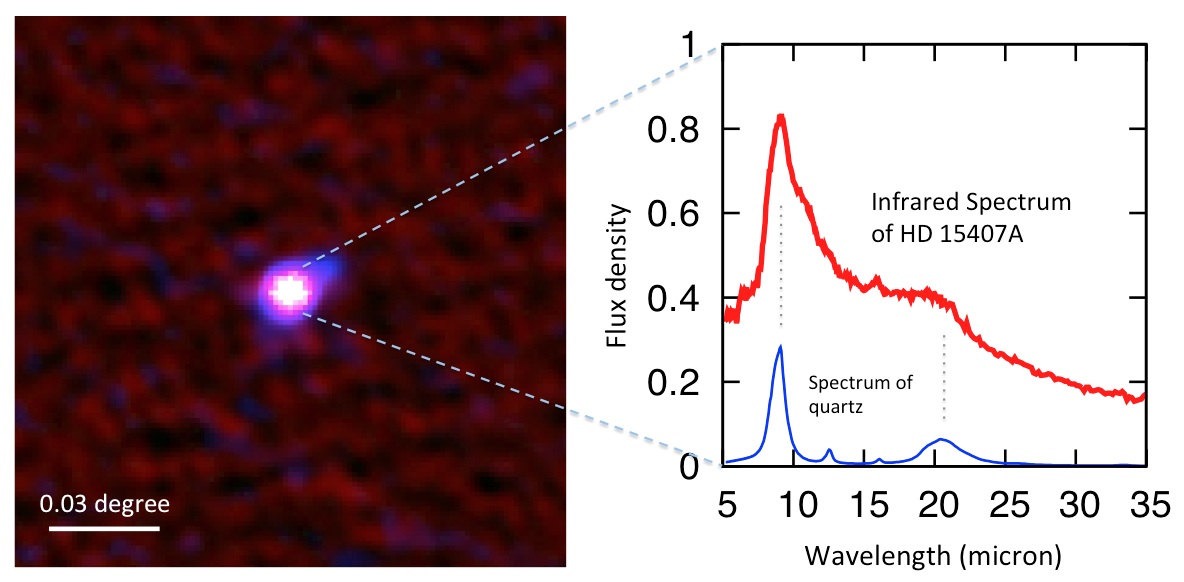
The team discovered that the sun-like star HD 15407A, located in the Constellation Perseus 180 light years away from Earth, emits very bright infrared light relative to its visible light (Figure 1). Since HD 15407A is a main-sequence star, active collisions of planetesimals around it could produce a large amount of dust and emit infrared light.

Figure 1: (Left) Infrared image of HD 15407A obtained by the observations of AKARI (Field of View: 0.15 degree x 0.15 degree). (Right) Infrared spectrum of HD 15407A obtained by the observations from Spitzer. Two bumps seen around 9 and 21 microns indicate the presence of micron-sized quartz dust. (Credit: Univ. of Tokyo and NAOJ.)

The team conducted follow-up observations of the star using Spitzer, the infrared space telescope operated by Caltech and NASA. Spitzer's high sensitivity and sharp spatial resolution in the infrared allowed the researchers to identify the amount and mineralogical nature of the debris dust. Their examination of the Spitzer spectrum of HD 15407A revealed that at least 100 trillion tons of tiny particles of quartz dust orbit the star. They also found that the dust is located about 1 AU (astronomical unit) from the central star in the so-called "terrestrial planet region." This is the first study that not only reveals the presence of a quartz disk of dust around a sun-like main-sequence star but also precisely determines its amount and spatial distribution.

Figure 2: Illustration of the HD 15407A System Based on Observations from AKARI and Spitzer, showing the dusty quartz disk orbiting the star. (Credit: Univ. of Tokyo and NAOJ.)

Quartz dust seems to be a rather rare kind of dust in the Universe, and it is not yet clear how the quartz dust observed around HD 15407A formed. Since the Earth's crust contains a large amount of quartz-like minerals, this suggests that the quartz dust around HD 15407A might come from the surface layers of large rocky bodies colliding with other planetesimals orbiting the star. Team leader Fujiwara commented, "We have used two infrared space telescopes to discover a precious star with a rare disk of quartz dust that may contribute to revealing the secrets of planetary materials. We would like to examine this star more thoroughly by combining theory with laboratory studies to further our understanding of the planet formation process."

This research was published in the April 20, 2012 issue of The Astrophysical Journal Letters and was supported by a Grant-in-Aid for Scientific Research on Innovative Areas (23103002) from MEXT, Japan.


Reference:

Fujiwara et al. 2012, "Silica-Rich Bright Debris Disk around HD 15407A", The Astrophysical Journal Letters, 749, L29 (2012).

Wednesday, May 02, 2012

Black Hole Caught Red-handed in a Stellar Homicide

This computer-simulated image shows gas from a tidally shredded star falling into a black hole. Some of the gas also is being ejected at high speeds into space. Astronomers observed a flare in ultraviolet and optical light from the gas falling into the black hole and glowing helium from the stars's helium-rich gas expelled from the system. Credit: NASA, S. Gezari (The Johns Hopkins University), and J. Guillochon (University of California, Santa Cruz). Release Images

Before/after Flare (GALEX/Pan-STARRS1)
Credit:NASA, S. Gezari (The Johns Hopkins University),
A. Rest (STScI), and R. Chornock (Harvard-Smithsonian Center for Astrophysics)

Black Hole Flare Simulation: Wide View with Inset & Time
Credit: NASA, S. Gezari (The Johns Hopkins University),
and J. Guillochon (University of California, Santa Cruz)
Release Videos

Astronomers have gathered the most direct evidence yet of a supermassive black hole shredding a star that wandered too close.

Supermassive black holes, weighing millions to billions times more than the Sun, lurk in the centers of most galaxies. These hefty monsters lay quietly until an unsuspecting victim, such as a star, wanders close enough to get ripped apart by their powerful gravitational clutches.

Astronomers have spotted these stellar homicides before, but this is the first time they can identify the victim. Using a slew of ground- and space-based telescopes, a team of astronomers led by Suvi Gezari of The Johns Hopkins University in Baltimore, Md., has identified the victim as a star rich in helium gas. The star resides in a galaxy 2.7 billion light-years away.

Her team's results will appear May 2 in the online edition of the journal Nature.

"When the star is ripped apart by the gravitational forces of the black hole, some part of the star's remains falls into the black hole, while the rest is ejected at high speeds. We are seeing the glow from the stellar gas falling into the black hole over time. We're also witnessing the spectral signature of the ejected gas, which we find to be mostly helium. It is like we are gathering evidence from a crime scene. Because there is very little hydrogen and mostly helium in the gas we detect from the carnage, we know that the slaughtered star had to have been the helium-rich core of a stripped star," Gezari explained.

This observation yields insights about the harsh environment around black holes and the types of stars swirling around them.

This is not the first time the unlucky star had a brush with the behemoth black hole. Gezari and her team think the star's hydrogen-filled envelope surrounding its core was lifted off a long time ago by the same black hole. In their scenario, the star may have been near the end of its life. After consuming most of its hydrogen fuel, it had probably ballooned in size, becoming a red giant. The astronomers think the bloated star was looping around the black hole in a highly elliptical orbit, similar to a comet's elongated orbit around the Sun. On one of its close approaches, the star was stripped of its puffed-up atmosphere by the black hole's powerful gravity. Only its core remained intact. The stellar remnant continued its journey around the black hole, until it ventured even closer to the behemoth monster and faced its ultimate demise.

Astronomers have predicted that stripped stars circle the central black hole of our Milky Way galaxy, Gezari pointed out. These close encounters, however, are rare, occurring roughly every 100,000 years. To find this one event, Gezari's team monitored hundreds of thousands of galaxies in ultraviolet light with the NASA's Galaxy Evolution Explorer (GALEX), a space-based observatory, and in visible light with the Pan-STARRS1 telescope on the summit of Haleakala in Hawaii. Pan-STARRS, short for Panoramic Survey Telescope and Rapid Response System, scans the entire night sky for all kinds of transient phenomena, including supernovae.

The team was looking for a bright flare in ultraviolet light from the nucleus of a galaxy with a previously dormant black hole. They found one in June 2010, which was spotted with both telescopes. Both telescopes continued to monitor the flare as it reached peak brightness a month later and then slowly began to fade over the next 12 months. The brightening event was similar to that of a supernova, but the rise to the peak was much slower, taking nearly one and a half months.

"The longer the event lasted, the more excited we got, since we realized that this is either a very unusual supernova or an entirely different type of event, such as a star being ripped apart by a black hole," said team member Armin Rest of the Space Telescope Science Institute in Baltimore, Md.

By measuring the increase in brightness, the astronomers calculated the black hole's mass to be several million suns, which is comparable to the size of our Milky Way's black hole.

Spectroscopic observations with the MMT (Multiple Mirror Telescope) Observatory on Mount Hopkins in Arizona showed that the black hole was swallowing lots of helium. Spectroscopy divides light into its rainbow colors, which yields an object's characteristics, such as its temperature and gaseous makeup.

"The glowing helium was a tracer for an extraordinarily hot accretion event," Gezari said. "So that set off an alarm for us. And, the fact that no hydrogen was found set off a big alarm that this was not typical gas. You can't find gas like that lying around near the center of a galaxy. It's processed gas that has to have come from a stellar core. There's nothing about this event that could be easily explained by any other phenomenon."

The observed speed of the gas also linked the material to a black hole's gravitational pull. MMT measurements revealed that the gas was moving at more than 20 million miles an hour (over 32 million kilometers an hour). However, measurements of the speed of gas in the interstellar medium reveal velocities of only about 224,000 miles an hour (360,000 kilometers an hour).

"The place we also see these kinds of velocities are in supernova explosions," Rest said. "But the fact that it is still shining in ultraviolet light is incompatible with any supernova we know."

To completely rule out the possibility of an active nucleus flaring up in the galaxy, the team used NASA's Chandra X-ray Observatory to study the hot gas. Chandra showed that the characteristics of the gas didn't match those from an active galactic nucleus.

"This is the first time where we have so many pieces of evidence, and now we can put them all together to weigh the perpetrator (the black hole) and determine the identity of the unlucky star that fell victim to it," Gezari said. "These observations also give us clues to what evidence to look for in the future to find this type of event."

The Space Telescope Science Institute (STScI) in Baltimore, Md., is operated for NASA by the Association of Universities for Research in Astronomy, Inc., in Washington, D.C. STScI conducts science operations for the Hubble Space Telescope and is the science and mission operations center for the James Webb Space Telescope.

The California Institute of Technology in Pasadena, Calif., leads the Galaxy Evolution Explorer mission and is responsible for science operations and data analysis. NASA's Jet Propulsion Laboratory, also in Pasadena, manages the mission and built the science instrument. The mission was developed under NASA's Explorers Program managed by the Goddard Space Flight Center, Greenbelt, Md. Researchers sponsored by Yonsei University in South Korea and the Centre National d'Etudes Spatiales (CNES) in France collaborated on this mission.

Graphics and additional information about the Galaxy Evolution Explorer are online at http://www.nasa.gov/galex and http://www.galex.caltech.edu

The Pan-STARRS Project is being led by the University of Hawaii Institute for Astronomy, and exploits the unique combination of superb observing sites and technical and scientific expertise available in Hawaii. Funding for the development of the observing system has been provided by the United States Air Force Research Laboratory. The PS1 Surveys have been made possible through contributions by the Institute for Astronomy, the University of Hawaii, the Pan-STARRS Project Office, the Max-Planck Society and its participating institutes, the Max Planck Institute for Astronomy, Heidelberg and the Max Planck Institute for Extraterrestrial Physics, Garching, The Johns Hopkins University, Durham University, the University of Edinburgh, the Queen's University Belfast, the Harvard-Smithsonian Center for Astrophysics, the Las Cumbres Observatory Global Telescope Network, Incorporated, the National Central University of Taiwan, and the National Aeronautics and Space Administration under Grant No. NNX08AR22G issued through the Planetary Science Division of the NASA Science Mission Directorate.

CONTACT

Donna Weaver
Space Telescope Science Institute, Baltimore, Md.
410-338-4493
dweaver@stsci.edu

Suvi Gezari
The Johns Hopkins University, Baltimore, Md.
410-516-3462
suvi@pha.jhu.edu

Armin Rest
Space Telescope Science Institute, Baltimore, Md.
410-338-4358
arest@stsci.edu

Sifting through Dust near Orion's Belt

PR Image eso1219a
Cosmic dust clouds in Messier 78

Messier 78: a reflection nebula in Orion

Sifting through Dust near Orion’s Belt (data coverage)

Videos

PR Video eso1219a
Sifting through Dust near Orion’s Belt (zoom)

Sifting through Dust near Orion’s Belt (pan)

Image Comparisons

Image Comparison eso1219a
Sifting through Dust near Orion’s Belt (mouseover comparison)

A new image of the region surrounding the reflection nebula Messier 78, just to the north of Orion’s Belt, shows clouds of cosmic dust threaded through the nebula like a string of pearls. The observations, made with the Atacama Pathfinder Experiment (APEX) telescope[1], use the heat glow of interstellar dust grains to show astronomers where new stars are being formed.

Dust may sound boring and uninteresting — the surface grime that hides the beauty of an object. But this new image of Messier 78 and surroundings, which reveals the submillimetre-wavelength radiation from dust grains in space, shows that dust can be dazzling. Dust is important to astronomers as dense clouds of gas and dust are the birthplaces of new stars.

In the centre of the image is Messier 78, also known as NGC 2068. When seen in visible light, this region is a reflection nebula, meaning that we see the pale blue glow of starlight reflected from clouds of dust. The APEX observations are overlaid on the visible-light image in orange. Sensitive to longer wavelengths, they reveal the gentle glow of dense cold clumps of dust, some of which are even colder than -250ºC. In visible light, this dust is dark and obscuring, which is why telescopes such as APEX are so important for studying the dusty clouds in which stars are born.

One filament seen by APEX appears in visible light as a dark lane of dust cutting across Messier 78. This tells us that the dense dust lies in front of the reflection nebula, blocking its bluish light. Another prominent region of glowing dust seen by APEX overlaps with the visible light from Messier 78 at its lower edge. The lack of a corresponding dark dust lane in the visible light image tells us that this dense region of dust must lie behind the reflection nebula.

Observations of the gas in these clouds reveal gas flowing at high velocity out of some of the dense clumps. These outflows are ejected from young stars while the star is still forming from the surrounding cloud. Their presence is therefore evidence that these clumps are actively forming stars.

At the top of the image is another reflection nebula, NGC 2071. While the lower regions in this image contain only low-mass young stars, NGC 2071 contains a more massive young star with an estimated mass five times that of the Sun, located in the brightest peak seen in the APEX observations.

The APEX observations used in this image were led by Thomas Stanke (ESO), Tom Megeath (University of Toledo, USA), and Amy Stutz (Max Planck Institute for Astronomy, Heidelberg, Germany). For more information about this region as seen in visible light, including the recently discovered — and highly variable — McNeil’s Nebula, see eso1105.

Notes

[1] APEX is a collaboration between the Max Planck Institute for Radio Astronomy (MPIfR), the Onsala Space Observatory (OSO) and ESO. Operation of APEX at Chajnantor is entrusted to ESO. APEX is a pathfinder for the next-generation submillimetre telescope, the Atacama Large Millimeter/submillimeter Array (ALMA), which is being built and operated on the same plateau.

More information

The year 2012 marks the 50th anniversary of the founding of the European Southern Observatory (ESO). ESO is the foremost intergovernmental astronomy organisation in Europe and the world’s most productive astronomical observatory. It is supported by 15 countries: Austria, Belgium, Brazil, the Czech Republic, Denmark, France, Finland, Germany, Italy, the Netherlands, Portugal, Spain, Sweden, Switzerland and the United Kingdom. ESO carries out an ambitious programme focused on the design, construction and operation of powerful ground-based observing facilities enabling astronomers to make important scientific discoveries. ESO also plays a leading role in promoting and organising cooperation in astronomical research. ESO operates three unique world-class observing sites in Chile: La Silla, Paranal and Chajnantor. At Paranal, ESO operates the Very Large Telescope, the world’s most advanced visible-light astronomical observatory and two survey telescopes. VISTA works in the i>nfrared and is the world’s largest survey telescope and the VLT Survey Telescope is the largest telescope designed to exclusively survey the skies in visible light. ESO is the European partner of a revolutionary astronomical telescope ALMA, the largest astronomical project in existence. ESO is currently planning a 40-metre-class European Extremely Large optical/near-infrared Telescope, the E-ELT, which will become “the world’s biggest eye on the sky”.

Links

Contacts

Thomas Stanke
ESO
Garching, Germany
Tel: +49 89 3200 6116
Email: tstanke@eso.org

Douglas Pierce-Price
ESO ALMA/APEX Public Information Officer
Garching, Germany
Tel: +49 89 3200 6759
Email: dpiercep@eso.org