Wednesday, January 06, 2010

Nature's Most Precise Clocks May Make "Galactic GPS" Possible

Radio searches netted 17 new millisecond pulsars by examining the Fermi Gamma-ray Space Telescope's list of unidentified sources. Colored circles indicate the positions of the new pulsars on the Fermi one-year all-sky map. Credit: NASA/DOE/Fermi LAT Collaboration. Larger image

Pulsars slow down their rotation as they age and eventually cease their characteristic emissions. That can change if an aging pulsar is a member of a binary system containing a normal star. Gas flowing from the star can spin the pulsar up to hundreds of revolutions a second and allow it to resume its lighthouse-like beams of radiation. Credit: NASA. Watch animation

Radio astronomers have uncovered 17 millisecond pulsars in our galaxy by studying unknown high-energy sources detected by NASA's Fermi Gamma-ray Space Telescope. The astronomers made the discovery in less than three months. Such a jump in the pace of locating these hard-to-find objects holds the promise of using them as a kind of "galactic GPS" to detect gravitational waves passing near Earth.

A pulsar is the rapidly spinning and highly magnetized core left behind when a massive star explodes. Because only rotation powers their intense gamma-ray, radio and particle emissions, pulsars gradually slow as they age. But the oldest pulsars spin hundreds of times per second -- faster than a kitchen blender. These millisecond pulsars have been spun up and rejuvenated by accreting matter from a companion star.

"Radio astronomers discovered the first millisecond pulsar 28 years ago," said Paul Ray at the Naval Research Laboratory in Washington. "Locating them with all-sky radio surveys requires immense time and effort, and we've only found a total of about 60 in the disk of our galaxy since then. Fermi points us to specific targets. It's like having a treasure map."

Millisecond pulsars are nature's most precise clocks, with long-term, sub-microsecond stability that rivals human-made atomic clocks. Precise monitoring of timing changes in an all-sky array of millisecond pulsars may allow the first direct detection of gravitational waves -- a long-sought consequence of Einstein's relativity theory.

"The Global Positioning System uses time-delay measurements among satellite clocks to determine where you are on Earth," explained Scott Ransom of the National Radio Astronomy Observatory in Charlottesville, Va. "Similarly, by monitoring timing changes in a constellation of suitable millisecond pulsars spread all over the sky, we may be able to detect the cumulative background of passing gravitational waves."

The sources Fermi detected are not associated with any known gamma-ray emitting objects and did not show evidence of pulsing behavior. However, scientists considered it likely that many of the unidentified sources would turn out to be pulsars.

For a more detailed look at radio wavelengths, Ray organized the Fermi Pulsar Search Consortium and recruited a handful of radio astronomers with expertise in using five of the world's largest radio telescopes -- the National Radio Astronomy Observatory, Robert C. Byrd Green Bank Telescope in W.Va., the Parkes Observatory in Australia, the Nancay Radio Telescope in France, the Effelsberg Radio Telescope in Germany and the Arecibo Telescope in Puerto Rico.

After studying approximately 100 targets, and with a computationally intensive data analysis still under way, the discoveries have started to pour in.

"Other surveys took a decade to find as many of these pulsars as we have," said Ransom, who led one of the discovery groups. "Having Fermi tell us where to look is a huge advantage."

Four of the new objects are "black widow" pulsars, so called because radiation from the recycled pulsar is destroying the companion star that helped spin it up.

"Some of these stars are whittled down to masses equivalent to tens of Jupiters," said Ray. "We've doubled the known number of these systems in the galaxy's disk, and that will help us better understand how they evolve."

NASA's Fermi Gamma-ray Space Telescope is an astrophysics and particle physics partnership, developed in collaboration with the Department of Energy, along with important contributions from academic institutions and partners in France, Germany, Italy, Japan, Sweden, and the U.S. The National Radio Astronomy Observatory is a facility of the National Science Foundation operated under cooperative agreement by Associated Universities, Inc.

Francis Reddy
Goddard Space Flight Center

First Earth-like planet spotted outside solar system likely a volcanic wasteland


Exoplanet CoRoT-7b is five times heavier than the Earth.
Credit: ESO/L. Calçada

When scientists confirmed in October that they had detected the first rocky planet outside our solar system, it advanced the longtime quest to find an Earth-like planet hospitable to life.

Rocky planets -- Earth, Mercury, Venus and Mars -- make up half the planets in our solar system. Rocky planets are considered better environments to support life than planets that are mainly gaseous, like the other half of the planets in our system: Jupiter, Saturn, Uranus and Neptune.

The rocky planet CoRoT-7 b was discovered circling a star some 480 light years from Earth. It is, however, a forbidding place and unlikely to harbor life. That's because it is so close to its star that temperatures might be above 4,000 degrees F (2,200 C) on the surface lit by its star and as low as minus 350 F (minus 210 C) on its dark side.

Now scientists led by a University of Washington astronomer say that if CoRoT-7 b's orbit is not almost perfectly circular, then the planet might also be undergoing fierce volcanic eruptions. It could be even more volcanically active than Jupiter's moon Io, which has more than 400 volcanoes and is the most geologically active object in our solar system.

"If conditions are what we speculate, then CoRoT-7 b could have multiple volcanoes going off continuously and magma flowing all over the surface," says Rory Barnes, a UW postdoctoral researcher of astronomy and astrobiology. Any planet where the surface is being remade at such a rate is a place nearly impossible for life to get a foothold, he says.

Calculations about CoRoT-7 b's orbit and probable volcanism were presented at the American Astronomical Society meeting in Washington, D.C., during a session Jan. 5 and as part of a press briefing Jan. 6. CoRoT-7 b was discovered by a French-led team using the CoRoT -- Convection, Rotation and Planetary Transits -- satellite.

The next step to finding a planet that harbors life may have to wait until astronomers are better able to detect rocky planets that are farther from their stars, Barnes says. "Because it is easier to detect planets that orbit close to their host stars, a significant fraction of the first wave of rocky planets being found outside our solar system may be more Io-like than Earth-like."

Barnes and his colleagues suspect CoRoT-7 b is subject to extreme volcanism partly because it is so close to its sun, the distance between the two being about 1.6 million miles (2.5 million kilometers). That's about 60 times closer than the Earth is to the sun.

Volcanism is then triggered by even a tiny deviation from a circular orbit. How tiny of a deviation? About 155 miles (250 kilometers), according to calculations done by Barnes based on how bodies in our solar system influence each other's orbits. That's about the distance from Washington, D.C., to Philadelphia. That amount of deviation, or more, could be caused by the gravitational pull of the next planet out from CoRoT-7 b.

Deviations in its orbit would set tidal forces in motion that flex and distort the whole shape of CoRoT-7 b. This is different from what happens on Earth, where oceans absorb the energy of tidal forces.

"CoRoT-7 b most certainly has no oceans. A planet on a non-circular orbit experiences different amounts of gravitational force at different points along the orbit, feeling the strongest gravitational pull when it is closest to the star and the weakest when it is most distant. As the planet moves between these two points, it stretches and relaxes. This flexing produces friction that heats the interior of the planet resulting in volcanism on the surface," Barnes says.

"This scenario is exactly what is occurring on Jupiter's moon Io. For planets like CoRoT-7 b, however, the heating may be much, much stronger than on Io."

The work was funded by NASA's Virtual Planetary Laboratory. Co-presenters at the American Astronomical Society are Sean Raymond, University of Colorado, Boulder; Richard Greenberg, University of Arizona; Nathan Kaib, a NASA postdoctoral program fellow at the UW; and Brian Jackson, NASA's Goddard Space Flight Center, Greenbelt, Maryland.


###

For more information:
Barnes, cell 206-250-9488,

Tuesday, January 05, 2010

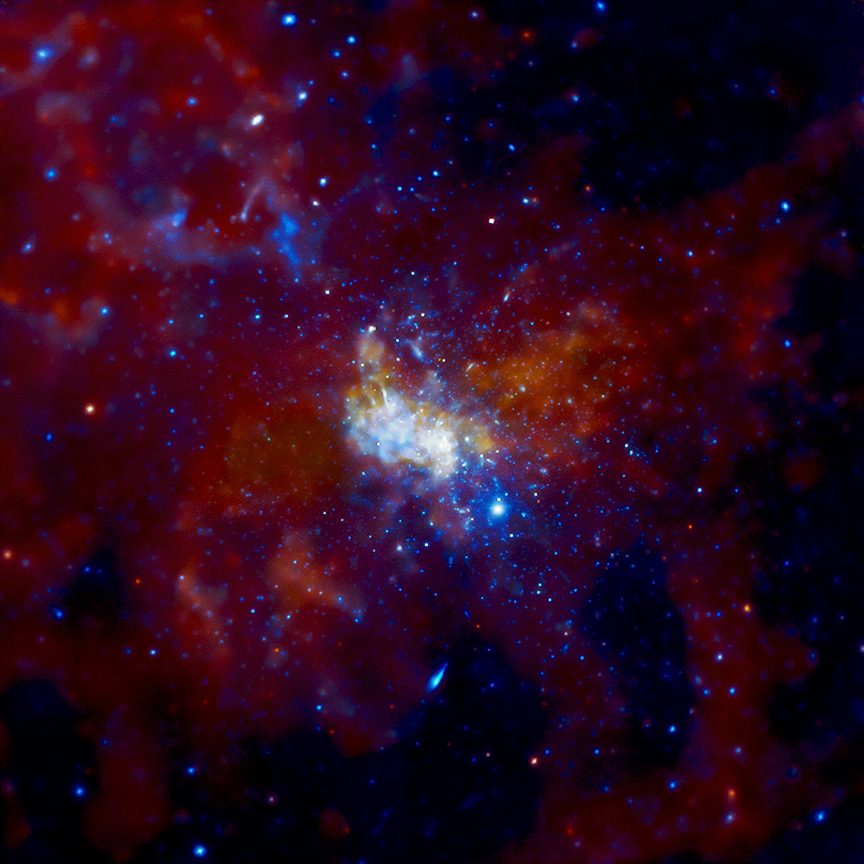
Sagittarius A*: Peering Into The Heart of Darkness

Credit NASA/CXC/MIT/F.K. Baganoff et al.


Astronomers have long known that the supermassive black hole at the center of the Milky Way Galaxy, known as Sagittarius A* (or Sgr A* for short), is a particularly poor eater. The fuel for this black hole comes from powerful winds blown off dozens of massive young stars that are concentrated nearby. These stars are located a relatively large distance away from Sgr A*, where the gravity of the black hole is weak, and so their high-velocity winds are difficult for the black hole to capture and swallow. Scientists have previously calculated that Sgr A* should consume only about 1% of the fuel carried in the winds.

However, it now appears that Sgr A* consumes even less than expected - ingesting only about one percent of that one percent. Why does it consume so little? The answer may be found in a new theoretical model developed using data from a very deep exposure made by NASA's Chandra X-ray Observatory. This model considers the flow of energy between two regions around the black hole: an inner region that is close to the so-called event horizon (the boundary beyond which even light cannot escape), and an outer region that includes the black hole's fuel source - the young stars - extending up to a million times farther out. Collisions between particles in the hot inner region transfer energy to particles in the cooler outer region via a process called conduction. This, in turn, provides additional outward pressure that makes nearly all of the gas in the outer region flow away from the black hole. The model appears to explain well the extended shape of hot gas detected around Sgr A* in X-rays as well as features seen in other wavelengths.

This Chandra image of Sgr A* and the surrounding region is based on data from a series of observations lasting a total of about one million seconds, or almost two weeks. Such a deep observation has given scientists an unprecedented view of the supernova remnant near Sgr A* - known as Sgr A East - and the lobes of hot gas extending for a dozen light years on either side of the black hole. These lobes provide evidence for powerful eruptions occurring several times over the last ten thousand years.

The image also contains several mysterious X-ray filaments, some of which may be huge magnetic structures interacting with streams of energetic electrons produced by rapidly spinning neutron stars. Such features are known as pulsar wind nebulas.

The new model of Sgr A* was presented at the 215th meeting of the American Astronomical Society in January 2009 by Roman Shcherbakov and Robert Penna of Harvard University and Frederick K. Baganoff of the Massachusetts Institute of Technology.

Fast Facts for Sagittarius A*:

Scale: Image is 15 arcmin across
Coordinates: (J2000) RA 17h 45m 40s | Dec -29° 00' 28.00"
Constellation: Sagittarius
Observation Dates: 43 pointings from September 21, 1999 to May 18, 2009
Observation Time: 11 days, 14 hours
Obs. IDs: 242, 1561, 2943, 2951, 2952, 2953, 2954, 3392, 3393, 3549, 3663, 3665, 4683, 4684, 5360, 5950, 5951, 5952, 5953, 5954, 6113, 6363, 6639, 6640, 6641, 6642, 6643, 6644, 6645, 6646, 7554, 7555, 7556, 7557, 7558, 7559, 9169, 9170, 9171, 9172, 9173, 9174, 10556
Color Code: Energy: Red (2-3.3 keV), Green (3.3-4.7 keV), Blue (4.7-8 keV)
Instrument: ACIS
Also Known As: Galactic Center
Distance Estimate: About 26,000 light years

Galaxy History Revealed in This Colorful Hubble View

Credit: NASA, ESA, R. Windhorst, S. Cohen, M. Mechtley, and M. Rutkowski (Arizona State University, Tempe), R. O'Connell (University of Virginia), P. McCarthy (Carnegie Observatories), N. Hathi (University of California, Riverside), R. Ryan (University of California, Davis), H. Yan (Ohio State University), and A. Koekemoer (Space Telescope Science Institute)

More than 12 billion years of cosmic history are shown in this unprecedented, panoramic, full-color view of thousands of galaxies in various stages of assembly.

This image, taken by NASA's Hubble Space Telescope, was made from mosaics taken in September and October 2009 with the newly installed Wide Field Camera 3 (WFC3) and in 2004 with the Advanced Camera for Surveys (ACS). The view covers a portion of the southern field of a large galaxy census called the Great Observatories Origins Deep Survey (GOODS), a deep-sky study by several observatories to trace the formation and evolution of galaxies.

The final image combines a broad range of colors, from the ultraviolet, through visible light, and into the near-infrared. Such a detailed multi-color view of the universe has never before been assembled in such a combination of color, clarity, accuracy, and depth.

Hubble's sharp resolution and new color versatility, produced by combining data from the two cameras, are allowing astronomers to sort out the various stages of galaxy formation. The image reveals galaxy shapes that appear increasingly chaotic at each earlier epoch, as galaxies grew through accretion, collisions, and mergers. The galaxies range from the mature spirals and ellipticals in the foreground, to smaller, fainter, irregularly shaped galaxies, most of which are farther away, and therefore existed farther back in time. These smaller galaxies are considered the building blocks of the larger galaxies we see today.

Astronomers are using this multi-color panorama to trace many details of galaxy assembly over cosmic time, including the star-formation rate in galaxies, the rate of mergers among galaxies, and the abundance of weak active galactic nuclei.

The image shows a rich tapestry of 7,500 galaxies stretching back through most of the universe's history. The closest galaxies seen in the foreground emitted their observed light about a billion years ago. The farthest galaxies, a few of the very faint red specks, are seen as they appeared more than 13 billion years ago, or roughly 650 million years after the Big Bang. This mosaic spans a slice of space that is equal to about a third of the diameter of the full Moon (10 arcminutes).

The new Hubble view highlights a wide variety of stages in the galaxy assembly process. Ultraviolet light taken by WFC3 shows the blue glow of hot, young stars in galaxies teeming with star birth. The orange light reveals the final buildup of massive galaxies about 8 billion to 10 billion years ago. The near-infrared light displays the red glow of very distant galaxies — in a few cases as far as 12 billion to 13 billion light-years away — whose light has been stretched, like a toy Slinky, from ultraviolet light to longer-wavelength infrared light due to the expansion of the universe.

In this ambitious use of Hubble's observing time, astronomers used 96 Hubble orbits to make the ACS optical observations of this slice of the GOODS field and 104 orbits to make the WFC3 ultraviolet and near-infrared exposures. WFC3 peered deeper into the universe in this study than comparable near-infrared observations from ground-based telescopes. This set of unique new Hubble observations reveals galaxies to about 27th magnitude in brightness over a factor of 10 in wavelength. That's over 250 million times fainter than the unaided eye can see in visual light from a dark ground-based site.

For additional information, contact:

Ray Villard
Space Telescope Science Institute, Baltimore, Md.
410-338-4514

villard@stsci.edu

Rogier Windhorst
Arizona State University, Tempe, Ariz.
480-965-7143 (office) or 480-540-0816 (cell)

rogier.windhorst@asu.edu

Hubble Reaches the "Undiscovered Country" of Primeval Galaxies

Credit: NASA, ESA, G. Illingworth and R. Bouwens (University of California, Santa Cruz), and the HUDF09 Team

NASA's Hubble Space Telescope has broken the distance limit for galaxies and uncovered a primordial population of compact and ultra-blue galaxies that have never been seen before.

The deeper Hubble looks into space, the farther back in time it looks, because light takes billions of years to cross the observable universe. This makes Hubble a powerful "time machine" that allows astronomers to see galaxies as they were 13 billion years ago, just 600 million to 800 million years after the Big Bang.

The data from Hubble's new infrared camera, the Wide Field Camera 3 (WFC3), on the Ultra Deep Field (taken in August 2009) have been analyzed by no less than five international teams of astronomers. A total of 15 papers have been submitted to date by astronomers worldwide. Some of these early results are being presented by various team members on Jan. 6, 2010, at the 215th meeting of the American Astronomical Society in Washington, D.C.

"With the rejuvenated Hubble and its new instruments, we are now entering unchartered territory that is ripe for new discoveries," says Garth Illingworth of the University of California, Santa Cruz, leader of the survey team that was awarded the time to take the new WFC3 infrared data on the Hubble Ultra Deep Field (imaged in visible light by the Advanced Camera for Surveys in 2004). "The deepest-ever near-infrared view of the universe — the HUDF09 image — has now been combined with the deepest-ever optical image — the original HUDF (taken in 2004) — to push back the frontiers of the searches for the first galaxies and to explore their nature," Illingworth says.

Rychard Bouwens of the University of California, Santa Cruz, a member of Illingworth's team and leader of a paper on the striking properties of these galaxies, says that, "the faintest galaxies are now showing signs of linkage to their origins from the first stars. They are so blue that they must be extremely deficient in heavy elements, thus representing a population that has nearly primordial characteristics."

James Dunlop of the University of Edinburgh, agrees. "These galaxies could have roots stretching into an earlier population of stars. There must be a substantial component of galaxies beyond Hubble's detection limit."

Three teams worked hard to find these new galaxies and did so in a burst of papers immediately after the data were released in September, soon followed by a fourth team, and later a fifth team. The existence of these newly found galaxies pushes back the time when galaxies began to form to before 500-600 million years after the Big Bang. This is good news for astronomers building the much more powerful James Webb Space Telescope (planned for launch in 2014), which will allow astronomers to study the detailed nature of primordial galaxies and discover many more even farther away. There should be a lot for Webb to hunt for.

The deep observations also demonstrate the progressive buildup of galaxies and provide further support for the hierarchical model of galaxy assembly where small objects accrete mass, or merge, to form bigger objects over a smooth and steady but dramatic process of collision and agglomeration. It's like streams merging into tributaries and then into a bay.

These galaxies are as small as 1/20th the Milky Way's diameter," reports Pascal Oesch of the Swiss Federal Institute of Technology in Zurich. "Yet they are the very building blocks from which the great galaxies of today, like our own Milky Way, ultimately formed," explains Marcella Carollo, also of the Swiss Federal Institute of Technology in Zurich. Oesch and Carollo are members of Illingworth's team.

These newly found objects are crucial to understanding the evolutionary link between the birth of the first stars, the formation of the first galaxies, and the sequence of evolutionary events that resulted in the assembly of our Milky Way and the other "mature" elliptical and majestic spiral galaxies in today's universe.

The HUDF09 team also combined the new Hubble data with observations from NASA's Spitzer Space Telescope to estimate the ages and masses of these primordial galaxies. "The masses are just 1 percent of those of the Milky Way," explains team member Ivo Labbe of the Carnegie Institute of Washington, leader of two papers on the data from the combined NASA Great Observatories. He further noted that "to our surprise, the results show that these galaxies at 700 million years after the Big Bang must have started forming stars hundreds of millions of years earlier, pushing back the time of the earliest star formation in the universe."

The results are gleaned from the HUDF09 observations, which are deep enough at near-infrared wavelengths to reveal galaxies at redshifts from z=7 to beyond redshift z=8. (The redshift value z is a measure of the stretching of the wavelength or "reddening" of starlight due to the expansion of space.) The clear detection of galaxies between z=7 and z=8.5 corresponds to "look-back times" of approximately 12.9 billion years to 13.1 billion years ago.

"This is about as far as we can go to do detailed science with the new HUDF09 image. This shows just how much the James Webb Space Telescope (JWST) is needed to unearth the secrets of the first galaxies," says Illingworth. The challenge is that spectroscopy is needed to provide definitive redshift values, but the objects are too faint for spectroscopic observations (until JWST is launched). Therefore, the redshifts are inferred by the galaxies' apparent colors through a now very well-established technique.

The teams are finding that the number of galaxies per unit of volume of space drops off smoothly with increasing distance, and the HUDF09 team has also found that the galaxies become surprisingly blue intrinsically. The ultra-blue galaxies are extreme examples of objects that appear so blue because they may be deficient in heavier elements, and as a result, quite free of the dust that reddens light through scattering.

A longstanding problem with these findings is that it still appears that these early galaxies did not put out enough radiation to "reionize" the early universe by stripping electrons off the neutral hydrogen that cooled after the Big Bang. This "reionization" event occurred between about 400 million and 900 million years after the Big Bang, but astronomers still don't know which sources of light caused it to happen. These new galaxies are being seen right in this important epoch in the evolution of the universe.

Perhaps the density of very faint galaxies below the current detection limit is so high that there may be enough of them to support reionization. Or there was an earlier wave of galaxy formation that decayed and then was "rebooted" by a second wave of galaxy formation. Or, possibly the early galaxies were extraordinarily efficient at reionizing the universe.

Due to these uncertainties it is not clear what type of object or evolutionary process did the "heavy lifting" by ionizing the young universe. The calculations remain rather uncertain, and so galaxies may do more than currently expected, or astronomers may need to invoke other phenomena such as mini-quasars (active supermassive black holes in the cores of galaxies) — current estimates suggest however that quasars are even less likely than galaxies to be the cause of reionization. This is an enigma that still challenges astronomers and the very best telescopes.

"As we look back into the epoch of the first galaxies in the universe, from a redshift of 6 to a redshift of 8 and possibly beyond, these new observations indicate that we are likely seeing the end of reionization, and perhaps even into the reionization era, which is the last major phase transition of the gas in the universe," says Rogier Windhorst of Arizona State University, leader of one of the other teams that analyzed the WFC3 data. "Though the exact interpretation of these new results remains under debate, these new WFC3 data may provide an exciting new view of how galaxy formation proceeded during and at the end of the reionization era."

Hubble's WFC3/IR camera was able to make deep exposures to uncover new galaxies at roughly 40 times greater efficiency than its earlier infrared camera that was installed in 1997. The WFC3/IR brought new infrared technology to Hubble and accomplished in four days of observing what would have previously taken almost half a year for Hubble to do.

Contact

Ray Villard
Space Telescope Science Institute, Baltimore, Md.
410-338-4514

villard@stsci.edu

Dusty, Little Galaxy

Little Galaxy with a Tail
Image credit: NASA/JPL-Caltech/STScI

The infrared portrait of the Small Magellanic Cloud, taken by NASA's Spitzer Space Telescope, reveals the stars and dust in this galaxy as never seen before. The Small Magellanic Cloud is a nearby satellite galaxy to our Milky Way galaxy, approximately 200,000 light-years away.

The image shows the main body of the Small Magellanic Cloud, which is comprised of the "bar" and "wing" on the left and the "tail" extending to the right. The bar contains both old stars (in blue) and young stars lighting up their natal dust (green/red). The wing mainly contains young stars. The tail contains only gas, dust and newly formed stars. Spitzer data has confirmed that the tail region was recently torn off the main body of the galaxy. Two of the tail clusters, which are still embedded in their birth clouds, can be seen as red dots.

In addition, the image contains a galactic globular cluster in the lower left (blue cluster of stars) and emission from dust in our own galaxy (green in the upper right and lower right corners).

The data in this image are being used by astronomers to study the lifecycle of dust in the entire galaxy: from the formation in stellar atmospheres, to the reservoir containing the present day interstellar medium, and the dust consumed in forming new stars. The dust being formed in old, evolved stars (blue stars with a red tinge) is measured using mid-infrared wavelengths. The present day interstellar dust is weighed by measuring the intensity and color of emission at longer infrared wavelengths. The rate at which the raw material is being consumed is determined by studying ionized gas regions and the younger stars (yellow/red extended regions). The Small Magellanic Cloud, and its companion galaxy the Large Magellanic Cloud, are the two galaxies where this type of study is possible, and the research could not be done without Spitzer.

This image was captured by Spitzer's multiband imaging photometer, with 24-micron light colored blue; 70-micron light colored green and 160-micron light colored red. The blue, green, and red colors trace hot, warm and cool dust emission, respectively.

The image was taken as part of the Spitzer Legacy program known as SAGE-SMC: Surveying the Agents of Galaxy Evolution in the Tidally-Stripped, Low Metallicity Small Magellanic Cloud.

Centuries-Old Star Mystery Coming to a Close

This graph of data from multiple telescopes shows the distribution of light from a pair of stars known as Epsilon Aurigae. For centuries, astronomers had not been able to figure out the nature of this "eclipsing binary system," in which a bright naked-eye star is eclipsed by a companion object every 27 years.

Data from NASA's Spitzer Space Telescope are pointing to a solution to this age-old riddle. The Spitzer data, shown in bright yellow and orange, provide the missing puzzle pieces need to fit all the data on the star together into a neat model. The blue data show ultraviolet observations, and the light yellow/green data are from visible-light telescopes. The blue data show light from the companion object, a so-called B star, while the light yellow data show light from the main bright star, called an F star. The orange and bright yellow data from Spitzer show light from the F star and a dusty disk that is surrounding the B-star.

The new model indicates that the F star is not a supergiant as a favored theory had proposed but a dying star with a lot less mass.

Mystery of the Fading Star

For almost two centuries, humans have looked up at a bright star called Epsilon Aurigae and watched with their own eyes as it seemed to disappear into the night sky, slowly fading before coming back to life again. Today, as another dimming of the system is underway, mysteries about the star persist. Though astronomers know that Epsilon Aurigae is eclipsed by a dark companion object every 27 years, the nature of both the star and object has remained unclear.

Now, new observations from NASA's Spitzer Space Telescope -- in combination with archived ultraviolet, visible and other infrared data -- point to one of two competing theories, and a likely solution to this age-old puzzle. One theory holds that the bright star is a massive supergiant, periodically eclipsed by two tight-knit stars inside a swirling, dusty disk. The second theory holds that the bright star is in fact a dying star with a lot less mass, periodically eclipsed by just a single star inside a disk. The Spitzer data strongly support the latter scenario.

"We've really shifted the balance of the two competing theories," said Donald Hoard of NASA's Spitzer Science Center at the California Institute of Technology in Pasadena. "Now we can get busy working out all the details." Hoard presented the results today at the 215th meeting of the American Astronomical Meeting in Washington.

Epsilon Aurigae can be seen at night from the northern hemisphere with the naked eye, even in some urban areas. Last August, it began its roughly two-year dimming, an event that happens like clockwork every 27.1 years and results in the star fading in brightness by one-half. Professional and amateur astronomers around the globe are watching, and the International Year of Astronomy 2009 marked the eclipse as a flagship "citizen science" event. More information is at http://www.citizensky.org .

Astronomers study these eclipsing binary events to learn more about the evolution of stars. Because one star passes in front of another, additional information can be gleaned about the nature of the stars. In the case of Epsilon Aurigae, what could have been a simple calculation has instead left astronomers endlessly scratching their heads. Certain aspects of the event, for example the duration of the eclipse, and the presence of "wiggles" in the brightness of the system during the eclipse, have not fit nicely into models. Theories have been put forth to explain what's going on, some quite elaborate, but none with a perfect fit.

The main stumper is the nature of the naked-eye star -- the one that dims and brightens. Its spectral features indicate that it's a monstrous star, called an F supergiant, with 20 times the mass, and up to 300 times the diameter, of our sun. But, in order for this theory to be true, astronomers had to come up with elaborate scenarios to make sense of the eclipse observations. They said that the eclipsing, companion star must actually be two so-called B stars surrounded by an orbiting disk of dusty debris. And some scenarios were even more exotic, calling for black holes and massive planets.

A competing theory proposed that the bright star was actually a less massive, dying star. But this model had holes too. There was no simple solution.

Hoard became interested in the problem from a technological standpoint. He wanted to see if Spitzer, whose delicate infrared arrays are too sensitive to observe the bright star directly, could be coaxed to observe it using a clever trick. "We pointed the star at the corner of four of Spitzer's pixels, instead of directly at one, to effectively reduce its sensitivity." What's more, the observation used exposures lasting only one-hundredth of a second -- the fastest that images can be obtained by Spitzer.

The resulting information, in combination with past Spitzer observations, represents the most complete infrared data set for the star to date. They confirm the presence of the companion star's disk, without a doubt, and establish the particle sizes as being relatively large like gravel rather than like fine dust.

But Hoard and his colleagues were most excited about nailing down the radius of the disk to approximately four times the distance between Earth and the sun. This enabled the team to create a multi-wavelength model that explained all the features of the system. If they assumed the F star was actually a much less massive, dying star, and they also assumed that the eclipsing object was a single B star embedded in the dusty disk, everything snapped together.

"It was amazing how everything fell into place so neatly," said Steve Howell of the National Optical Astronomy Observatory in Tucson, Ariz. "All the features of this system are interlinked, so if you tinker with one, you have to change another. It's been hard to get everything to fall together perfectly until now."

According to the astronomers, there are still many more details to figure out. The ongoing observations of the current eclipse should provide the final clues needed to put this mystery of the night sky to rest.

Whitney Clavin 818-354-4673
Jet Propulsion Laboratory, Pasadena, Calif.

whitney.clavin@jpl.nasa.gov

ssc2010-01
jpl2010-002

Explosive Nearby Star Could Threaten Earth


Images from ground telescopes and Hubble show that the white dwarf T Pyxidis is not disrupted by its violent eruptions and soon begins to accumulate more matter from its companion, and repeats the cataclysm some years later. Credit: M.Shara and R.Willians (ST Scl), R.Gilmozzi (ESO) and NASA

WASHINGTON — A massive, eruptive white dwarf star in the Milky Way — long overdue for its next periodic eruption — is closer to our solar system than previously thought and could threaten the Earth if it fully explodes millions of years from now.

New observations of the white dwarf and its sun-like stellar companion are giving scientists a better understanding of the star's precarious position as a possible supernova, astronomers said here today at the 215th meeting of the American Astronomical Society.

The two stars are in a close binary system called T Pyxidis, located in the Southern Hemisphere constellation Pyxis ("The Compass Box"). Researchers found that the system is only 3,260 light-years from our solar system – far closer than anyone previously thought. (A light-year is the distance that light travels in one Earth year, or about 6 trillion miles.)

The new findings suggest the white dwarf, considered close to us by cosmic standards, could eventually go supernova. Gamma radiation emitted by the supernova could threaten the Earth with an energy equivalent to 1,000 simultaneous solar flares.

The production of nitrous oxides in Earth's atmosphere by the gamma rays could completely destroy the ozone layer, astronomers said.

Demise, if it comes, won't be anytime soon, however: Scientists' calculations suggest that the star will explode in about 10 million years, said Edward Sion, a member of the research team from Villanova University in Villanova, Pa.

"While we can relax, that is very short on astronomical and geological timescales," Sion told SPACE.com in an e-mail.

The T Pyxidis system is known as a recurrent nova because the massive white dwarf has suffered thermonuclear (nova) explosions about every 20 years, with previous recorded nova explosions occurring in 1890, 1902, 1920, 1944 and 1967. None of these sorts of explosions threaten Earth. But the system is long overdue for its next one. Astronomers don't know why the star's explosiveness has been tamped down of late.

The relatively modest nova explosions are triggered by hydrogen-rich gas siphoned off the sun-like companion and onto the white dwarf. One important question is whether the mass being added to the white dwarf increases despite the nova explosions or if the explosions cause more mass to be ejected from the dwarf than it takes on from its partner.

If the mass does continue to build up, the white dwarf could eventually reach the so-called Chandrasekhar Limit and undergo an instantaneous gravitational collapse resulting in a thermonuclear detonation that completely destroys the star. This catastrophic event, known as a Type 1a supernova, releases 10 million times more energy than a nova explosion, or the equivalent of 20 billion, billion, billion megatons of TNT.

Astronomers have previously said that any supernova explosion within 100 light-years of Earth would likely be devastating, but beyond 100 light-years, it's not known for sure what the effects might be. However, astronomers have also been keeping an eye on Eta Carinae, a potential supernova about 7,500 light-years away. One factor, astronomers say, is how powerful a given supernova is.

Sion and his colleagues analyzed the far ultraviolet spectrum of the T Pyxidis system and put the observation in computer models of white dwarfs to better pin down the star's potential to go supernova.

The observations suggest that the white dwarf is very close to reaching the Chandrasekhar Limit in mass. And observations of the shells of material ejected by the star during its previous smaller nova eruptions also suggest that the star's mass is increasing with time, suggesting that in about 10 million years, it could have accreted enough mass from its partner to go supernova. However, if the star is bigger and taking on mass faster than scientists think, it could explode sooner.

By Andrea Thompson
Senior Writer

Monday, January 04, 2010

Giant Intergalactic Gas Stream Longer than Thought

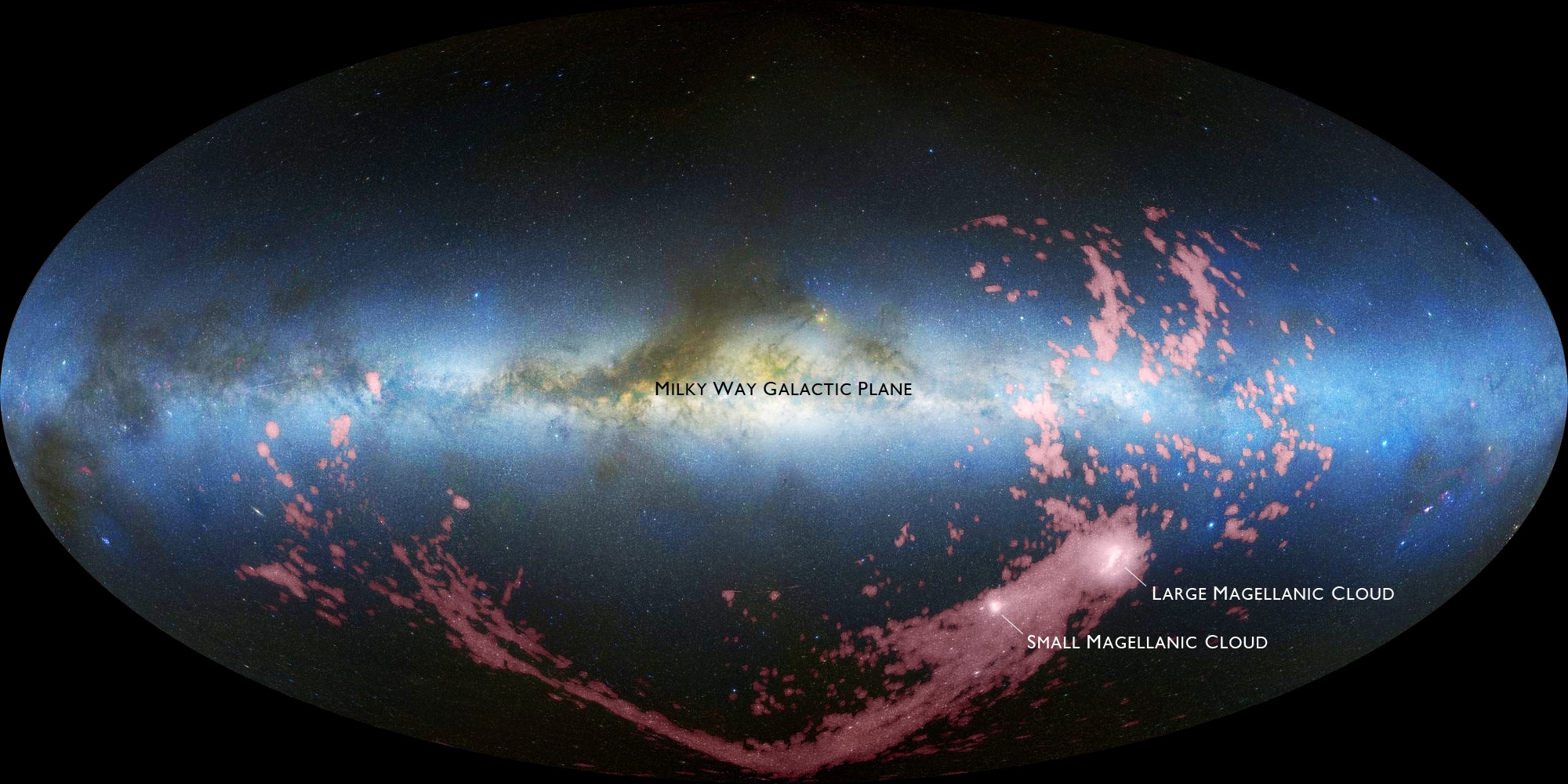
Combined radio/optical image shows Milky Way, Magellanic Clouds, and the new radio image of the Magellanic Stream. Blue and white are the Milky Way and Magellanic Clouds. Red is the hydrogen gas in the Magellanic Stream, in the disks of the Magellanic Clouds, and in the stream's Leading Arm. The Milky Way is horizontal in the middle of the image; the Magellanic Clouds are the light spots at the center-right portion of the image, from which the gas stream originates. Brown is dust clouds in the Milky Way. CREDIT: Nidever, et al., NRAO/AUI/NSF and Meilinger, Leiden-Argentine-Bonn Survey, Parkes Observatory, Westerbork Observatory, Arecibo Observatory. Large image with labels

The astronomers used the National Science Foundation's Robert C. Byrd Green Bank Telescope (GBT) to fill important gaps in the picture of gas streaming outward from the Magellanic Clouds. The first evidence of such a flow, named the Magellanic Stream, was discovered more than 30 years ago, and subsequent observations added tantalizing suggestions that there was more. However, the earlier picture showed gaps that left unanswered whether this other gas was part of the same system.

"We now have answered that question. The stream is continuous," said David Nidever, of the University of Virginia. "We now have a much more complete map of the Magellanic Stream," he added. The astronomers presented their findings to the American Astronomical Society's meeting in Washington, DC.

The Magellanic Clouds are the Milky Way's two nearest neighbor galaxies, about 150,000 to 200,000 light-years distant from the Milky Way. Visible in the Southern Hemisphere, they are much smaller than our Galaxy and may have been distorted by its gravity.

Nidever and his colleagues observed the Magellanic Stream for more than 100 hours with the GBT. They then combined their GBT data with that from earlier studies with other radio telescopes, including the Arecibo telescope in Puerto Rico, the Parkes telescope in Australia, and the Westerbork telescope in the Netherlands. The result shows that the stream is more than 40 percent longer than previously known with certainty.

One consequence of the added length of the gas stream is that it must be older, the astronomers say. They now estimate the age of the stream at 2.5 billion years.

The revised size and age of the Magellanic Stream also provides a new potential explanation for how the flow got started.

"The new age of the stream puts its beginning at about the time when the two Magellanic Clouds may have passed close to each other, triggering massive bursts of star formation," Nidever explained. "The strong stellar winds and supernova explosions from that burst of star formation could have blown out the gas and started it flowing toward the Milky Way," he said.

"This fits nicely with some of our earlier work that showed evidence for just such blowouts in the Magellanic Clouds," said Steven Majewski, of the University of Virginia.

Earlier explanations for the stream's cause required the Magellanic Clouds to pass much closer to the Milky Way, but recent orbital simulations have cast doubt on such mechanisms.

Nidever and Majewski worked with Butler Burton of the Leiden Observatory and the National Radio Astronomy Observatory, and Lou Nigra of the University of Wisconsin. In addition to presenting the results to the American Astronomical Society, the scientists have submitted a paper to the Astrophysical Journal.

The National Radio Astronomy Observatory is a facility of the National Science Foundation, operated under cooperative agreement by Associated Universities, Inc.

Contact:

Dave Finley, Public Information Officer
Socorro, NM
(575) 835-7302

dfinley@nrao.edu

ASTRONOMERS DISCOVER WALTZING BLACK HOLES

Caption: An image of the galaxy COSMOS J100043.15+020637.2 taken with the Advanced Camera for Surveys on the Hubble Space Telescope. The tidal tail of stars, gas, and dust shows that this galaxy recently merged with another galaxy, which brought two supermassive black holes into this galaxy. A team of astronomers confirmed that the two bright nuclei near the center of the galaxy correspond to the two black holes, which are waltzing under the effects of gravity towards the galaxy center.

Astronomers are announcing today that they have discovered 33 pairs of waltzing black holes in distant galaxies.
This result is being presented by Dr. Julia Comerford of the University of California, Berkeley in Berkeley, California to the American Astronomical Society meeting in Washington, DC. This result is particularly important because it shows that supermassive black hole pairs are more common than previously known from observations, and because the black hole pairs can be used to estimate how often galaxies merge with each other.

Astronomical observations have shown that 1) nearly every galaxy has a central supermassive black hole (with a mass of a million to a billion times the mass of the Sun), and 2) galaxies commonly collide and merge to form new, more massive galaxies. As a consequence of these two observations, a merger between two galaxies should bring two supermassive black holes to the new, more massive galaxy formed from the merger. The two black holes gradually inspiral toward the center of this galaxy, engaging in a gravitational tug-of-war with the surrounding stars. The result is a black hole dance, choreographed by Newton himself. Such a dance is expected to occur in our own Milky Way Galaxy in about 3 billion years, when it collides with the Andromeda Galaxy.

Astronomers expect there to be many such waltzing supermassive black holes in the Universe, but until recently only a handful had been found. Dr. Comerford and her colleagues announce the discoveries of 33 new pairs of waltzing supermassive black holes, which help alleviate the discrepancy between the expected and observed numbers of black hole pairs.

Dr. Comerford and her colleagues observed the waltzing black holes that have gas collapsing onto them, and this gas releases energy and powers each black hole as an active galactic nucleus (AGN). This lights up the black hole like a Christmas tree.

The team of astronomers used two new techniques to discover the waltzing black holes. First, they identified waltzing black holes by the velocities of their dances in the host galaxy. The host galaxy is the ballroom floor, and the astronomers measured redshifted light from a black hole dancer if it danced away from the telescope and blueshifted light if it danced towards the telescope.

By searching for the redshifted and blueshifted light that is a signature of black hole dances, Dr. Comerford and her colleagues discovered 32 waltzing supermassive black hole pairs in the DEEP2 Galaxy Redshift Survey, a survey of 50,000 galaxies observed with the Deep Imaging Multi-Object Spectrograph (DEIMOS) on the 10-meter (400-inch) Keck II Telescope on Mauna Kea, Hawaii. The team clocked each black hole dance at a velocity of a few hundred kilometers per second (500,000 miles per hour, or 800 times the cruising speed of a jet airliner) and in each case measured the distance between the two black hole dancers to be 3000 lightyears (1/8 the distance from the Sun to the center of the Milky Way Galaxy). The waltzing black holes are located in galaxies at distances 4 to 7 billion light-years away from Earth (corresponding to redshifts z=0.3 to z=0.8; look-back times of 4 to 7 billion years; when the Universe was 7 to 10 billion years old).

The team developed their second technique for identifying waltzing black holes through a chance discovery of a curiouslooking galaxy. While visually inspecting images of galaxies taken with the Advanced Camera for Surveys on the Hubble Space Telescope, the team noticed a galaxy with a tidal tail of stars, gas, and dust, an unmistakable sign that the galaxy had recently merged with another galaxy, and the galaxy also featured two bright nuclei near its center (Figure 1). The team recognized that the two bright nuclei might be the AGNs of two waltzing black holes, a hypothesis seemingly supported by the recent galaxy merger activity evinced by the tidal tail. To test this hypothesis, the very next night the team obtained a spectrum of the galaxy with the DEIMOS spectrograph on the 10-meter (400-inch) Keck II Telescope on Mauna Kea, Hawaii.

The spectrum showed that the two central nuclei in the galaxy were indeed both AGNs, supporting the team’s hypothesis that the galaxy has two supermassive black holes. The black holes may be waltzing within the host galaxy, or the galaxy may have a recoiling black hole kicked out of the galaxy by gravity wave emission; additional observations are necessary to distinguish between these explanations.

The galaxy, called COSMOS J100043.15+020637.2, is part of the Cosmological Evolution Survey (COSMOS) and is located at a distance 4 billion light-years away from Earth (corresponding to redshift z=0.36; look-back time of 4 billion years; when the Universe was 10 billion years old). The team measured that the distance between the two black holes is 8000 light-years (1/3 the distance from the Sun to the center of the Milky Way Galaxy).

Using the techniques of searching for waltzing supermassive black holes by their velocities and obtaining spectra of galaxies that show two bright central nuclei and evidence of recent galaxy mergers, Dr. Comerford and her colleagues discovered a total of 33 pairs of supermassive black holes in distant galaxies. These discoveries are significant because “they show that dual supermassive black hole systems are much more common than previously known from observations,” says Dr. Comerford, who is a postdoctoral researcher in astrophysics at the University of California, Berkeley. The dual supermassive black hole pairs can in turn be used to estimate how often galaxies merge, and the team concludes that red galaxies from between 4 and 7 billions years ago underwent 3 mergers every billion years.

This work was supported by the National Science Foundation. Authors of this work are Julia Comerford (University of California, Berkeley), Brian Gerke (Kavli Institute for Particle Astrophysics and Cosmology, Stanford Linear Accelerator Center), Roger Griffith (Jet Propulsion Laboratory), Jeffrey Newman (University of Pittsburgh), Marc Davis (University of California, Berkeley), Michael Cooper (University of Arizona), Renbin Yan (University of Toronto), S.M. Faber (University of California, Santa Cruz), Daniel Stern (Jet Propulsion Laboratory), David Koo (University of California, Santa Cruz), Alison Coil (University of California, San Diego), D.J. Rosario (University of California, Santa Cruz), and Aaron Dutton
(University of California, Santa Cruz).

Editors: The Hubble Space Telescope image of the newly-discovered galaxy with two supermassive black holes can be obtained at http://astro.berkeley.edu/~julie/press/ as soon as the embargo expires.

Science Contact:

Dr. Julia Comerford
University of California, Berkeley
Cell phone: 510 292-0632
Email:
julie@astro.berkeley.edu

Revealing the Explosive Heart of Eta Carinae

Image Credit:J.C. Martin et. al., Gemini Observatory/AURA

Eta Carinae as imaged by the Gemini South telescope in Chile with the Near Infrared Coronagraphic Imager (NICI) using adaptive optics to reduce blurring by turbulence in the Earth’s atmosphere. In this image the bipolar lobes of the Homunculus Nebula are visible with the never-before imaged “Little Homunculus Nebula” visible as a faint blue glow, mostly in the lower lobe. The Butterfly Nebula is visible (region circled) as the yellowish glow with dark filamentary structure close to, and mostly below/left, of the central star system (the central star system appears as a dark spot due to the coronagraphic blocking (occulting) disk used to eliminate the star’s bright glare). This image is a color composite using three infrared filters:
  • [Fe II] (1.644 micron) – blue layer;
  • H2 2-1 S(1) (2.2465 micron) – green layer;
  • Br(gamma) (2.1686 micron) – red layer.
The field of view for the image is 16.0 x 15.4 arcseconds and is oriented with north up and east to the left.


Using adaptive optics to remove atmospheric blurring, Gemini Observatory released an image today showing previously hidden forensic secrets at the ballistic core of the Homunculus Nebula, part of the explosive Eta Carinae star system.

The infrared image, revealed at the 215th American Astronomical Society meeting in Washington DC, is a high-resolution view of the complex tendrils and puffs of glowing gas and dust surrounding the violent and convulsive death of an exceptionally massive, short-lived star.

The compelling modern history of Eta Carinae began in April 1843 when the system underwent a huge 20-year outburst that, throughout some of that period, made it the sky’s second brightest stellar object. During the “Great Eruption” astronomers estimate that about 20 times the mass of our Sun was ejected into interstellar space. Today, astronomers study this relatively nearby stellar oddity to help understand the late evolution of massive stars – a messy process involving outflows, eruptions, strong magnetic fields and powerful jets. The result of this activity is reflected in the new Gemini image presented by John Martin of the University of Illinois Springfield who, along with an international team of researchers, obtained their data using the Near-Infrared Coronagraphic Imager (NICI) at the Gemini South telescope in Chile.

Martin’s team used NICI to study gas and dust features surrounding the central star where the complex structure includes an intricate network of wispy clouds, inspiring the “Butterfly Nebula” moniker. The data also uncover a feature never directly imaged before called the Little Homunculus Nebula. “The Homunculus is an evolving corpse of a dying star and most of what we see is the visible outer layer, like a skin, from the Great Eruption. The Little Homunculus is under that skin,” said Martin. “The Gemini images have allowed us to perform something akin to an autopsy by peeling away the obscuring, outer dusty skin and giving us a glimpse of what’s inside. In the process we're finding things we have never imaged before and didn't expect. It’s like finding your murder victim has a third lung, an extra liver, or something more exotic hidden away under their skin!” Martin and his team hope that these observations will soon trace the uncertain history of a minor eruption in the Eta Carinae system in the late 1890s. The research team also includes Etienne Artigau (University of Montréal, Canada, lead author on subsequent paper and previously at Gemini South), Kris Davidson (University of Minnesota), Roberta Humphreys (University of Minnesota), Olivier Chesneau (FIZEAU, France), and Nathan Smith (University of California).

Eta Carinae, located only about 7,500-8,000 light years away, consists of at least two stars at its core, the largest of which is among the most luminous and massive stars in our galaxy having a mass of at least 100 times that of our sun. The stellar component is visible to the naked eye from the southern hemisphere and very low northern latitudes. Because of the complexity and advanced age of this stellar system, Eta Carinae has displayed consistently odd behavior and its brightness has varied greatly over the centuries. During its massive explosion (that lasted from 1843 through the 1850’s) it gave off as much light energy as a typical supernova but somehow survived the normally annihilating event. What we see as the Homunculus Nebula are the remains of that explosion–sometimes called the supernova imposter event. The gasses expelled from this explosion are hurtling outward at up to 2 million kilometers per hour and are comprised of a mixture of diverse elements (from nitrogen to iron) formed by the massive star.

NICI, the Gemini South instrument used to obtain the data for this result, incorporates a built-in curvature-sensing adaptive optics system and is optimized for the detection of faint, sub-stellar companions. It images over a field of about 18 arcseconds from 1 – 5 microns. In addition to images like the one featured in this release, NICI is currently being utilized in an aggressive planet-finding campaign targeting about 300 nearby stars for possible planetary companions.

Contacts:

Peter Michaud
Gemini Observatory, Hilo, HI
Email:
pmichaud@gemini.edu
Cell: (808) 936-6643

John Martin
University of Illinois Springfield
Email:
jmart5@uis.edu
Cell: (612) 834-8940

NASA's Kepler Space Telescope Discovers Five Exoplanets


PASADENA, Calif. -- NASA's Kepler space telescope, designed to find Earth-size planets in the habitable zone of sun-like stars, has discovered its first five new exoplanets, or planets beyond our solar system.

Kepler's high sensitivity to both small and large planets enabled the discovery of the exoplanets, named Kepler 4b, 5b, 6b, 7b and 8b. The discoveries were announced Monday, Jan. 4, by members of the Kepler science team during a news briefing at the American Astronomical Society meeting in Washington.

"These observations contribute to our understanding of how planetary systems form and evolve from the gas and dust disks that give rise to both the stars and their planets," said William Borucki of NASA's Ames Research Center in Moffett Field, Calif. Borucki is the mission's science principal investigator. "The discoveries also show that our science instrument is working well. Indications are that Kepler will meet all its science goals."

Known as "hot Jupiters" because of their high masses and extreme temperatures, the new exoplanets range in size from similar to Neptune to larger than Jupiter. They have orbits ranging from 3.3 to 4.9 days. Estimated temperatures of the planets range from 2,200 to 3,000 degrees Fahrenheit, hotter than molten lava and much too hot for life as we know it. All five of the exoplanets orbit stars hotter and larger than Earth's sun.

"It's gratifying to see the first Kepler discoveries rolling off the assembly line," said Jon Morse, director of the Astrophysics Division at NASA Headquarters in Washington. "We expected Jupiter-size planets in short orbits to be the first planets Kepler could detect. It's only a matter of time before more Kepler observations lead to smaller planets with longer-period orbits, coming closer and closer to the discovery of the first Earth analog."

Launched on March 6, 2009, from Cape Canaveral Air Force Station in Florida, the Kepler mission continuously and simultaneously observes more than 150,000 stars. Kepler's science instrument, or photometer, already has measured hundreds of possible planet signatures that are being analyzed.

While many of these signatures are likely to be something other than a planet, such as small stars orbiting larger stars, ground-based observatories have confirmed the existence of the five exoplanets. The discoveries are based on approximately six weeks' worth of data collected since science operations began on May 12, 2009.

Kepler looks for the signatures of planets by measuring dips in the brightness of stars. When planets cross in front of, or transit, their stars as seen from Earth, they periodically block the starlight. The size of the planet can be derived from the size of the dip. The temperature can be estimated from the characteristics of the star it orbits and the planet's orbital period.

Kepler will continue science operations until at least November 2012. It will search for planets as small as Earth, including those that orbit stars in a warm, habitable zone where liquid water could exist on the surface of the planet. Since transits of planets in the habitable zone of solar-like stars occur about once a year and require three transits for verification, it is expected to take at least three years to locate and verify an Earth-size planet.

According to Borucki, Kepler's continuous and long-duration search should greatly improve scientists' ability to determine the distributions of planet size and orbital period in the future. "Today's discoveries are a significant contribution to that goal," Borucki said. "The Kepler observations will tell us whether there are many stars with planets that could harbor life, or whether we might be alone in our galaxy."

Kepler is NASA's 10th Discovery mission. NASA Ames is responsible for the ground system development, mission operations and science data analysis. NASA's Jet Propulsion Laboratory in Pasadena, Calif., managed the Kepler mission development. Ball Aerospace & Technologies Corp. of Boulder, Colo., was responsible for developing the Kepler flight system. Ball and the Laboratory for Atmospheric and Space Physics at the University of Colorado in Boulder are supporting mission operations. The California Institute of Technology in Pasadena manages JPL for NASA.

Ground observations necessary to confirm the discoveries were conducted with ground-based telescopes: the Keck I in Hawaii; Hobby-Ebberly and Harlan J. Smith 2.7m in Texas; Hale and Shane in California; WIYN, MMT and Tillinghast in Arizona; and Nordic Optical in the Canary Islands, Spain. For more information about the Kepler mission, visit http://www.nasa.gov/kepler .

Whitney Clavin 818-354-4673
Jet Propulsion Laboratory, Pasadena, Calif.

whitney.clavin@jpl.nasa.gov

J.D. Harrington 202-358-5241
Headquarters, Washington

j.d.harrington@nasa.gov

Michael Mewhinney 650-604-3937
Ames Research Center

michael.s.mewhinney@nasa.gov

NGC 1399: Massive Black Hole Implicated in Stellar Destruction

Credit : X-ray: NASA/CXC/UA/J. Irwin;
Optical: NASA/STScI


Evidence from NASA's Chandra X-ray Observatory and the Magellan telescopes suggest a star has been torn apart by an intermediate-mass black hole in a globular cluster. In this image, X-rays from Chandra are shown in blue and are overlaid on an optical image from the Hubble Space Telescope. The Chandra observations show that this object is a so-called ultraluminous X-ray source (ULX). An unusual class of objects, ULXs emit more X-rays than any known stellar X-ray source, but less than the bright X-ray sources associated with supermassive black holes in the centers of galaxies. Their exact nature has remained a mystery, but one suggestion is that some ULXs are black holes with masses between about a hundred and a thousands times that of the Sun.

Data obtained in optical light with the Magellan I and II telescopes in Las Campanas, Chile, also provides intriguing information about this object, which is found in the elliptical galaxy NGC 1399 in the Fornax galaxy cluster. The spectrum reveals emission from oxygen and nitrogen but no hydrogen, a rare set of signals from within globular clusters. The physical conditions deduced from the spectra suggest that the gas is orbiting a black hole of at least 1,000 solar masses.

To explain these observations, researchers suggest that a white dwarf star strayed too close to an intermediate-mass black hole and was ripped apart by tidal forces. In this scenario the X-ray emission is produced by debris from the disrupted white dwarf star that is heated as it falls towards the black hole and the optical emission comes from debris further out that is illuminated by these X-rays.

Another interesting aspect of this object is that it is found within a globular cluster, a very old, very tight grouping of stars. Astronomers have long suspected globular clusters contained intermediate-mass black holes, but there has been no conclusive evidence of their existence there to date. If confirmed, this finding would represent the first such substantiation.

Fast Facts for NGC 1399:

Scale: Image is 3 arcmin across
Coordinates (J2000) RA 03h 38m 29.00s | Dec -35º 27' 01.40
Constellation: Fornax
Observation Date: 6/8/2008
Observation Time: 18 hours
Obs. ID: 9530
Color Code: Energy (X-ray: Blue; Optical: Yellow)
Instrument: ACIS
Distance Estimate: About 65 million light years

Sunday, January 03, 2010

Flaring Young Stars

A false-color infrared image of the star forming complex in Vela. Two new studies have measured for the first time the dust emission at very long infrared wavelengths, and found a set of young stars that are accreting material and flaring. Credit: NASA and the Spitzer Space Telescope

The constellation of Vela (visible only from the southern hemisphere) contains a set of giant clouds of gas and dust known collectively as the Vela Molecular complex. The Vela clouds contain millions of solar-masses of gas and dust that are gradually coalescing to produce stars. Over the past few decades, astronomers have learned about many of the processes associated with star formation by studying clouds like these. They have been hampered in this research, however, by the fact that most of the luminosity from star forming regions is emitted by warm dust at far-infrared wavelengths that are absorbed by the earth's atmosphere and so cannot be seen from the ground. One of the questions still to be answered is how a developing young star grows or evolves in time. It is thought that material from a surrounding disk accretes onto the stellar surface, but when or how this happens is not known, and the process often takes place in regions with enough warm dust to block the visible light.

This winter's Astrophysical Journal includes two papers on Vela that help to clarify these questions. SAO astronomers Massimo Marengo, Giovanni Fazio, and Howard Smith, together with an international team of scientists, used the BLAST (Balloon-borne Large Aperture Submillimeter Telescope) facility to map the Vela Molecular Cloud in far infrared wavelengths where studies had never before been possible. The BLAST instrument is a prototype of the one used in Herschel, a new orbiting infrared space telescope just beginning its operations. In the first paper, the team used their new far infrared maps to identify and classify the young stars in Vela, and in particular to begin the process of modeling the far infrared light from both the ambient dust and from the disks and envelopes around the embedded young stars.

The issue of stellar embryonic growth is the focus of a second paper by the same team. It is known from optical studies that young stars sometimes flare, and objects showing these bright events are known as "EXors" (named after the prototype object, EX Lupi) or "FUors" (named after the much brighter prototype, FU Ori). One suggestion for the flaring is that it results when the star accretes new material. The astronomers used the Infrared Array Camera on the Spitzer Space Telescope to look at young protostars in the Vela Cloud in two epochs separated by six months. They found that of the over 170,000 stars in this giant nursery, forty seven were detected with significant brightness changes (consistent with flaring) during this period. Closer analysis of these stars found that nineteen had properties (mass, age, environment) common to known EXors, and eight have properties that clearly identify them as being very young, perhaps only a few hundred thousand years old, with disks of gas and dust around each of them. Although follow-up studies are now warranted to refine the conclusions, the new papers mark a series of breakthroughs in unraveling the detailed mechanisms that shape a star's early life, and hence the lives of any potential planetary companions.