Showing posts with label dwarf star. Show all posts

Wednesday, July 19, 2023

Does this exoplanet have a sibling sharing the same orbit?

PR Image eso2311a
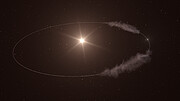
A planet and its Trojan orbiting a star in the PDS 70 system (annotated)

PR Image eso2311b
A planet and its Trojan orbiting a star in the PDS 70 system

PR Image eso2311c
The dwarf star PDS 70 in the constellation Centaurus

PR Image eso2311d
Widefield image of the sky around PDS 70


Videos

Does this planet have a “sibling” sharing the same orbit? (ESOcast 263 Light)
Does this planet have a “sibling” sharing the same orbit? (ESOcast 263 Light) 
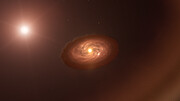
Zooming in on the PDS 70 system, host to planet PDS 70b and a possible Trojan
Zooming in on the PDS 70 system, host to planet PDS 70b and a possible Trojan 
Artist’s animation of Trojan debris clouds


Using the Atacama Large Millimeter/submillimeter Array (ALMA), astronomers have found the possible ‘sibling’ of a planet orbiting a distant star. The team has detected a cloud of debris that might be sharing this planet’s orbit and which, they believe, could be the building blocks of a new planet or the remnants of one already formed. If confirmed, this discovery would be the strongest evidence yet that two exoplanets can share one orbit.

“Two decades ago it was predicted in theory that pairs of planets of similar mass may share the same orbit around their star, the so-called Trojan or co-orbital planets. For the first time, we have found evidence in favour of that idea,” says Olga Balsalobre-Ruza, a student at the Centre for Astrobiology in Madrid, Spain who led the paper published today in Astronomy & Astrophysics.

Trojans, rocky bodies in the same orbit as a planet, are common in our own Solar System [1], the most famous example being the Trojan asteroids of Jupiter — more than 12 000 rocky bodies that are in the same orbit around the Sun as the gas giant. Astronomers have predicted that Trojans, in particular Trojan planets, could also exist around a star other than our Sun, but evidence for them is scant. “Exotrojans [Trojan planets outside the Solar System] have so far been like unicorns: they are allowed to exist by theory but no one has ever detected them,” says co-author Jorge Lillo-Box, a senior researcher at the Centre for Astrobiology.

Now, an international team of scientists have used ALMA, in which ESO is a partner, to find the strongest observational evidence yet that Trojan planets could exist — in the PDS 70 system. This young star is known to host two giant, Jupiter-like planets, PDS 70b and PDS 70c. By analysing archival ALMA observations of this system, the team spotted a cloud of debris at the location in PDS 70b’s orbit where Trojans are expected to exist.

Trojans occupy the so-called Lagrangian zones, two extended regions in a planet's orbit where the combined gravitational pull of the star and the planet can trap material. Studying these two regions of PDS 70b’s orbit, astronomers detected a faint signal from one of them, indicating that a cloud of debris with a mass up to roughly two times that of our Moon might reside there.

The team believes this cloud of debris could point to an existing Trojan world in this system, or a planet in the process of forming. “Who could imagine two worlds that share the duration of the year and the habitability conditions? Our work is the first evidence that this kind of world could exist,” says Balsalobre-Ruza. “We can imagine that a planet can share its orbit with thousands of asteroids as in the case of Jupiter, but it is mind blowing to me that planets could share the same orbit.”

“Our research is a first step to look for co-orbital planets very early in their formation,” says co-author Nuria Huélamo, a senior researcher at the Centre for Astrobiology. "It opens up new questions on the formation of Trojans, how they evolve and how frequent they are in different planetary systems,” adds Itziar De Gregorio-Monsalvo, ESO Head of the Office for Science in Chile, who also contributed to this research.

To fully confirm their detection, the team will need to wait until after 2026, when they will aim to use ALMA to see if both PDS 70b and its sibling cloud of debris move significantly along their orbit together around the star. “This would be a breakthrough in the exoplanetary field,” says Balsalobre-Ruza.

"The future of this topic is very exciting and we look forward to the extended ALMA capabilities, planned for 2030, which will dramatically improve the array’s ability to characterise Trojans in many other stars," concludes De Gregorio-Monsalvo.


Notes

[1] When asteroids in Jupiter’s orbit were first discovered, they were named after heroes of the Trojan war, giving rise to the name Trojans to refer to these objects.


More information

This research was presented in a paper to appear in Astronomy & Astrophysics (doi:10.1051/0004-6361/202346493).

The team is composed of O. Balsalobre-Ruza (Centro de Astrobiología [CAB], CSIC-INTA, Spain), I. De Gregorio-Monsalvo (European Southern Observatory [ESO], Chile), J. Lillo-Box (CAB), N. Huélamo (CAB), Á. Ribas (Institute of Astronomy, University of Cambridge, UK), M. Benisty (Laboratoire Lagrange, Université Côte d’Azur, CNRS, Observatoire de la Côte d’Azur, France and Univ. Grenoble Alpes, CNRS, IPAG, France), J. Bae (Department of Astronomy, University of Florida, USA), S. Facchini (Dipartimento di Fisica, Università degli Studi di Milano, Italy), and R. Teague (Department of Earth, Atmospheric, and Planetary Sciences, Massachusetts Institute of Technology, USA).

The European Southern Observatory (ESO) enables scientists worldwide to discover the secrets of the Universe for the benefit of all. We design, build and operate world-class observatories on the ground — which astronomers use to tackle exciting questions and spread the fascination of astronomy — and promote international collaboration for astronomy. Established as an intergovernmental organisation in 1962, today ESO is supported by 16 Member States (Austria, Belgium, the Czech Republic, Denmark, France, Finland, Germany, Ireland, Italy, the Netherlands, Poland, Portugal, Spain, Sweden, Switzerland and the United Kingdom), along with the host state of Chile and with Australia as a Strategic Partner. ESO’s headquarters and its visitor centre and planetarium, the ESO Supernova, are located close to Munich in Germany, while the Chilean Atacama Desert, a marvellous place with unique conditions to observe the sky, hosts our telescopes. ESO operates three observing sites: La Silla, Paranal and Chajnantor. At Paranal, ESO operates the Very Large Telescope and its Very Large Telescope Interferometer, as well as survey telescopes such as VISTA. Also at Paranal ESO will host and operate the Cherenkov Telescope Array South, the world’s largest and most sensitive gamma-ray observatory. Together with international partners, ESO operates ALMA on Chajnantor, a facility that observes the skies in the millimetre and submillimetre range. At Cerro Armazones, near Paranal, we are building “the world’s biggest eye on the sky” — ESO’s Extremely Large Telescope. From our offices in Santiago, Chile we support our operations in the country and engage with Chilean partners and society.

The Atacama Large Millimeter/submillimeter Array (ALMA), an international astronomy facility, is a partnership of ESO, the U.S. National Science Foundation (NSF) and the National Institutes of Natural Sciences (NINS) of Japan in cooperation with the Republic of Chile. ALMA is funded by ESO on behalf of its Member States, by NSF in cooperation with the National Research Council of Canada (NRC) and the National Science and Technology Council (NSTC) in Taiwan and by NINS in cooperation with the Academia Sinica (AS) in Taiwan and the Korea Astronomy and Space Science Institute (KASI). ALMA construction and operations are led by ESO on behalf of its Member States; by the National Radio Astronomy Observatory (NRAO), managed by Associated Universities, Inc. (AUI), on behalf of North America; and by the National Astronomical Observatory of Japan (NAOJ) on behalf of East Asia. The Joint ALMA Observatory (JAO) provides the unified leadership and management of the construction, commissioning and operation of ALMA.


Links


Contacts:

Olga Balsalobre-Ruza
PhD student at Centre for Astrobiology (CAB, CSIC-INTA)
Madrid, Spain
Tel: +34 918131531
Email:
obalsalobre@cab.inta-csic.es

Itziar De Gregorio-Monsalvo
ESO Head of the Office for Science Chile
Santiago, Chile
Tel: +56 (2) 2463 3000
Email:
idegrego@eso.org

Jorge Lillo-Box
Researcher at Centre for Astrobiology (CAB, CSIC-INTA)
Madrid, Spain
Tel: + 34 918131309
Email:
jorge.lillo@cab.inta-csic.es

Nuria Huélamo Bautista
Researcher at Centre for Astrobiology (CAB, CSIC-INTA)
Madrid, Spain
Tel: +34 918131530
Email:
nhuelamo@cab.inta-csic.es

Bárbara Ferreira
ESO Media Manager
Garching bei München, Germany
Tel: +49 89 3200 6670
Cell: +49 151 241 664 00
Email:
press@eso.org

Source: ESO/News


Thursday, July 22, 2021

Astronomers make first clear detection of a moon-forming disc around an exoplanet

Wide and close-up views of a moon-forming disc as seen with ALMA
 
The PDS 70 system as seen with ALMA 
 
Moon-forming disc around the PDS 70c exoplanet as seen with ALMA 
 
The dwarf star PDS 70 in the constellation Centaurus 
 
Widefield image of the sky around PDS 70


Videos

Peeking at a Distant Moon-Forming Disc (ESOcast Light 240)
Peeking at a Distant Moon-Forming Disc (ESOcast Light 240) 
 
Artist’s animation of the PDS70 system
Artist’s animation of the PDS70 system 
 
Zooming in on the PDS 70 system


Using the Atacama Large Millimetre/submillimeter Array (ALMA), in which the European Southern Observatory (ESO) is a partner, astronomers have unambiguously detected the presence of a disc around a planet outside our Solar System for the first time. The observations will shed new light on how moons and planets form in young stellar systems.

“Our work presents a clear detection of a disc in which satellites could be forming,” says Myriam Benisty, a researcher at the University of Grenoble, France, and at the University of Chile, who led the new research published today in The Astrophysical Journal Letters. “Our ALMA observations were obtained at such exquisite resolution that we could clearly identify that the disc is associated with the planet and we are able to constrain its size for the first time,” she adds.

The disc in question, called a circumplanetary disc, surrounds the exoplanet PDS 70c, one of two giant, Jupiter-like planets orbiting a star nearly 400 light-years away. Astronomers had found hints of a “moon-forming” disc around this exoplanet before but, since they could not clearly tell the disc apart from its surrounding environment, they could not confirm its detection — until now.

In addition, with the help of ALMA, Benisty and her team found that the disc has about the same diameter as the distance from our Sun to the Earth and enough mass to form up to three satellites the size of the Moon.

But the results are not only key to finding out how moons arise. “These new observations are also extremely important to prove theories of planet formation that could not be tested until now,” says Jaehan Bae, a researcher from the Earth and Planets Laboratory of the Carnegie Institution for Science, USA, and author on the study.

Planets form in dusty discs around young stars, carving out cavities as they gobble up material from this circumstellar disc to grow. In this process, a planet can acquire its own circumplanetary disc, which contributes to the growth of the planet by regulating the amount of material falling onto it. At the same time, the gas and dust in the circumplanetary disc can come together into progressively larger bodies through multiple collisions, ultimately leading to the birth of moons.

But astronomers do not yet fully understand the details of these processes. “In short, it is still unclear when, where, and how planets and moons form,” explains ESO Research Fellow Stefano Facchini, also involved in the research. 

“More than 4000 exoplanets have been found until now, but all of them were detected in mature systems. PDS 70b and PDS 70c, which form a system reminiscent of the Jupiter-Saturn pair, are the only two exoplanets detected so far that are still in the process of being formed,” explains Miriam Keppler, researcher at the Max Planck Institute for Astronomy in Germany and one of the co-authors of the study [1].

“This system therefore offers us a unique opportunity to observe and study the processes of planet and satellite formation,” Facchini adds. 

PDS 70b and PDS 70c, the two planets making up the system, were first discovered using ESO’s Very Large Telescope (VLT) in 2018 and 2019 respectively, and their unique nature means they have been observed with other telescopes and instruments many times since [2].

The latest high resolution ALMA observations have now allowed astronomers to gain further insights into the system. In addition to confirming the detection of the circumplanetary disc around PDS 70c and studying its size and mass, they found that PDS 70b does not show clear evidence of such a disc, indicating that it was starved of dust material from its birth environment by PDS 70c.

An even deeper understanding of the planetary system will be achieved with ESO’s Extremely Large Telescope (ELT), currently under construction on Cerro Armazones in the Chilean Atacama desert. “The ELT will be key for this research since, with its much higher resolution, we will be able to map the system in great detail,” says co-author Richard Teague, a researcher at the Center for Astrophysics | Harvard & Smithsonian, USA. In particular, by using the ELT’s Mid-infrared ELT Imager and Spectrograph (METIS), the team will be able to look at the gas motions surrounding PDS 70c to get a full 3D picture of the system.       .


Notes

[1] Despite the similarity with the Jupiter-Saturn pair, note that the disc around PDS 70c is about 500 times larger than Saturn's rings.

[2] PDS 70b was discovered using the Spectro-Polarimetric High-contrast Exoplanet REsearch (SPHERE) instrument, while PDS 70c was found using the VLT’s Multi Unit Spectroscopic Explorer (MUSE). The two-planet system has been investigated using the X-shooter instrument too, also installed on ESO’s VLT.


More Information

This research was presented in the paper “A Circumplanetary Disk Around PDS 70c” to appear in The Astrophysical Journal Letters.

The team is composed of Myriam Benisty (Unidad Mixta Internacional Franco-Chilena de Astronomía, CNRS, Departamento de Astronomía, Universidad de Chile, Santiago de Chile, Chile and Université Grenoble Alpes, CNRS, Grenoble, France [UGA]), Jaehan Bae (Earth and Planets Laboratory, Carnegie Institution for Science, Washington DC, USA), Stefano Facchini (European Southern Observatory, Garching bei München, Germany), Miriam Keppler (Max Planck Institute for Astronomy, Heidelberg, Germany [MPIA]), Richard Teague (Center for Astrophysics | Harvard & Smithsonian, Cambridge, MA, USA [CfA]), Andrea Isella (Department of Physics and Astronomy, Rice University, Houston, TX, USA), Nicolas T. Kurtovic (MPIA), Laura M. Perez (Departamento de Astronomía, Universidad de Chile, Santiago de Chile, Chile [UCHILE]), Anibal Sierra (UCHILE), Sean M. Andrews (CfA), John Carpenter (Joint ALMA Observatory, Santiago de Chile, Chile), Ian Czekala (Department of Astronomy and Astrophysics, Pennsylvania State University, PA, USA, Center for Exoplanets and Habitable Worlds, Davey Laboratory, Pennsylvania State University, PA, USA, Center for Astrostatistics, Davey Laboratory, Pennsylvania State University, PA, USA and Institute for Computational & Data Sciences, Pennsylvania State University, PA, USA), Carsten Dominik (Anton Pannekoek Institute for Astronomy, University of Amsterdam, The Netherlands), Thomas Henning (MPIA), Francois Menard (UGA), Paola Pinilla (MPIA and Mullard Space Science Laboratory, University College London, Holmbury St Mary, Dorking, UK) and Alice Zurlo (Núcleo de Astronomía, Facultad de Ingeniería y Ciencias, Universidad Diego Portales, Santiago de Chile, Chile and Escuela de Ingeniería Industrial, Facultad de Ingeniería y Ciencias, Universidad Diego Portales, Santiago de Chile, Chile).

ESO is the foremost intergovernmental astronomy organisation in Europe and the world’s most productive ground-based astronomical observatory by far. It has 16 Member States: Austria, Belgium, the Czech Republic, Denmark, France, Finland, Germany, Ireland, Italy, the Netherlands, Poland, Portugal, Spain, Sweden, Switzerland and the United Kingdom, along with the host state of Chile and with Australia as a Strategic Partner. ESO carries out an ambitious programme focused on the design, construction and operation of powerful ground-based observing facilities enabling astronomers to make important scientific discoveries. ESO also plays a leading role in promoting and organising cooperation in astronomical research. ESO operates three unique world-class observing sites in Chile: La Silla, Paranal and Chajnantor. At Paranal, ESO operates the Very Large Telescope and its world-leading Very Large Telescope Interferometer as well as two survey telescopes, VISTA working in the infrared and the visible-light VLT Survey Telescope. Also at Paranal ESO will host and operate the Cherenkov Telescope Array South, the world’s largest and most sensitive gamma-ray observatory. ESO is also a major partner in two facilities on Chajnantor, APEX and ALMA, the largest astronomical project in existence. And on Cerro Armazones, close to Paranal, ESO is building the 39-metre Extremely Large Telescope, the ELT, which will become “the world’s biggest eye on the sky”. The Atacama Large Millimeter/submillimeter Array (ALMA), an international astronomy facility, is a partnership of ESO, the U.S. National Science Foundation (NSF) and the National Institutes of Natural Sciences (NINS) of Japan in cooperation with the Republic of Chile. ALMA is funded by ESO on behalf of its Member States, by NSF in cooperation with the National Research Council of Canada (NRC) and the Ministry of Science and Technology (MOST) and by NINS in cooperation with the Academia Sinica (AS) in Taiwan and the Korea Astronomy and Space Science Institute (KASI). ALMA construction and operations are led by ESO on behalf of its Member States; by the National Radio Astronomy Observatory (NRAO), managed by Associated Universities, Inc. (AUI), on behalf of North America; and by the National Astronomical Observatory of Japan (NAOJ) on behalf of East Asia. The Joint ALMA Observatory (JAO) provides the unified leadership and management of the construction, commissioning and operation of ALMA.


Links 

Myriam Benisty
Universidad de Chile and Université Grenoble Alpes
Santiago de Chile, Chile
Email:
myriam.benisty@univ-grenoble-alpes.fr

Jaehan Bae
Earth and Planets Laboratory, Carnegie Institution for Science
Washington DC, USA
Email:
jbae@carnegiescience.edu

Stefano Facchini
European Southern Observatory
Garching bei München, Germany
Email:
stefano.facchini@eso.org

Miriam Keppler
Max Planck Institute for Astronomy
Heidelberg, Germany
Email:
keppler@mpia.de

Richard Teague
Center for Astrophysics | Harvard & Smithsonian
Cambridge, MA, USA
Email:
richard.d.teague@cfa.harvard.edu

Bárbara Ferreira
ESO Media Manager
Garching bei München, Germany
Cell: +49 151 241 664 00
Email:
press@eso.org

Source:ESO/News


Thursday, September 12, 2019

Hubble Finds Water Vapor on Habitable-Zone Exoplanet for the First Time

Exoplanet K2-18b (Artist’s Impression)


Videos

Hubblecast Light: Exoplanet K2-18b

Animation of Exoplanet K2-18b (Artist’s Impression)


With data from the NASA/ESA Hubble Space Telescope, water vapour has been detected in the atmosphere of a super-Earth within the habitable zone by University College London (UCL) researchers in a world first. K2-18b, which is eight times the mass of Earth, is now the only planet orbiting a star outside the Solar System, or exoplanet, known to have both water and temperatures that could support life.

The discovery, published today in Nature Astronomy, is the first successful atmospheric detection of an exoplanet orbiting in its star’s habitable zone, at a distance where water can exist in liquid form.

First author, Dr Angelos Tsiaras (UCL Centre for Space Exochemistry Data,CSED), said: “Finding water on a potentially habitable world other than Earth is incredibly exciting. K2-18b is not ‘Earth 2.0’ as it is significantly heavier and has a different atmospheric composition. However, it brings us closer to answering the fundamental question: Is the Earth unique?”

The team used archive data from 2016 and 2017 captured by the NASA/ESA Hubble Space Telescope and developed open-source algorithms to analyse the starlight filtered through K2-18b’s atmosphere [1]. The results revealed the molecular signature of water vapour, also indicating the presence of hydrogen and helium in the planet’s atmosphere.

The authors believe that other molecules, including nitrogen and methane, may be present but they remain undetectable with current observations. Further studies are required to estimate cloud coverage and the percentage of atmospheric water present.

The planet orbits the cool dwarf star K2-18, which is 110 light years from Earth in the constellation of Leo. Given the high level of activity of its red dwarf star, K2-18b may be more hostile than Earth and is likely to be exposed to more radiation.

K2-18b was discovered in 2015 and is one of hundreds of super-Earths — planets with masses between those of Earth and Neptune — found by NASA’s Kepler spacecraft. NASA’s TESS mission is expected to detect hundreds more super-Earths in the coming years.

Co-author Dr Ingo Waldmann (UCL CSED), said: “With so many new super-Earths expected to be found over the next couple of decades, it is likely that this is the first discovery of many potentially habitable planets. This is not only because super-Earths like K2-18b are the most common planets in our Milky Way, but also because red dwarfs — stars smaller than our Sun — are the most common stars.”

The next generation of space telescopes, including the NASA/ESA/CSA James Webb Space Telescope and ESA’s ARIEL mission, will be able to characterise atmospheres in more detail as they will carry more advanced instruments. ARIEL is expected to launch in 2028 and will observe 1,000 planets in detail to get a truly representative picture of what they are like.

Professor Giovanna Tinetti (UCL CSED), co-author and Principal Investigator for ARIEL, said: “Our discovery makes K2-18b one of the most interesting targets for future study. Over 4000 exoplanets have been detected but we don’t know much about their composition and nature. By observing a large sample of planets, we hope to reveal secrets about their chemistry, formation and evolution.”

“This study contributes to our understanding of habitable worlds beyond our Solar System and marks a new era in exoplanet research, crucial to ultimately placing the Earth, our only home, into the greater picture of the Cosmos,” said Dr Tsiaras.


Notes

[1] The observations were achieved from 9 transits of K2-18b with the NASA/ESA Hubble Space Telescope’s Wide Field Camera 3 (WFC3), as part of the HST proposals 13665 and 14682 (PI: Björn Benneke).


More information

The Hubble Space Telescope is a project of international cooperation between ESA and NASA.


Angelos Tsiaras, Ingo P. Waldmann, Giovanna Tinetti, Jonathan Tennyson & Sergey N. Yurchenko, ‘Water vapour in the atmosphere of the habitable-zone eight Earth-mass planet K2-18 b’ has been published in Nature Astronomy.


The research was funded by European Research Council and the UK Science and Technology Facilities Council which is part of UKRI. Image credit: ESA/Hubble, M. Kornmesser


Links


Contacts

Dr. Angelos Tsiaras
UCL CSED
Cell: +44 (0)7477834386
Email: atsiaras@star.ucl.ac.uk

Dr. Ingo Waldmann
UCL CSED
Cell: +44 (0)7896320454
Email: ingo.waldmann@ucl.ac.uk

Dr. Rebecca Caygill
UCL Media Relations
Tel: +44 (0)20 3108 3846
Cell: +44 (0)7733307596
Email: r.caygill@ucl.ac.uk

Bethany Downer
ESA/Hubble, Public Information Officer
Garching, Germany
Email: bethany.downer@partner.eso.org


Friday, January 25, 2019

A Fleeting Moment in Time

A Fleeting Moment in Time

Digitized Sky Survey image around the planetary nebula ESO 577-24
 
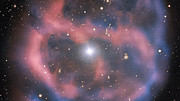
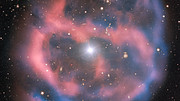
The planetary nebula ESO 577-24 in the constellation Virgo


Videos

ESOcast 191 Light: A Fleeting Moment in Time

Panning across the evanescent planetary nebula ESO 577-24

Zooming in on ESO 577-24


The faint, ephemeral glow emanating from the planetary nebula ESO 577-24 persists for only a short time — around 10,000 years, a blink of an eye in astronomical terms. ESO’s Very Large Telescope captured this shell of glowing ionised gas — the last breath of the dying star whose simmering remains are visible at the heart of this image. As the gaseous shell of this planetary nebula expands and grows dimmer, it will slowly disappear from sight.

An evanescent shell of glowing gas spreading into space — the planetary nebula ESO 577-24 —  dominates this image [1]. This planetary nebula is the remains of a dead giant star that has thrown off its outer layers, leaving behind a small, intensely hot dwarf star. This diminished remnant will gradually cool and fade, living out its days as the mere ghost of a once-vast red giant star.

Red giants are stars at the end of their lives that have exhausted the hydrogen fuel in their cores and begun to contract under the crushing grip of gravity. As a red giant shrinks, the immense pressure reignites the core of the star, causing it to throw its outer layers into the void as a powerful stellar wind. The dying star’s incandescent core emits ultraviolet radiation intense enough to ionise these ejected layers and cause them to shine. The result is what we see as a planetary nebula — a final, fleeting testament to an ancient star at the end of its life [2].

This dazzling planetary nebula was discovered as part of the National Geographic Society  — Palomar Observatory Sky Survey in the 1950s, and was recorded in the Abell Catalogue of Planetary Nebulae in 1966 [3]. At around 1400 light years from Earth, the ghostly glow of ESO 577-24 is only visible through a powerful telescope. As the dwarf star cools, the nebula will continue to expand into space, slowly fading from view.

This image of ESO 577-24 was created as part of the ESO Cosmic Gems Programme, an initiative that produces images of interesting, intriguing, or visually attractive objects using ESO telescopes for the purposes of education and public outreach. The programme makes use of telescope time that cannot be used for scientific observations; nevertheless, the data collected are made available to astronomers through the ESO Science Archive.


Notes

[1] Planetary nebulae were first observed by astronomers in the 18th century — to them, their dim glow and crisp outlines resembled planets of the Solar System.

[2] By the time our Sun evolves into a red giant, it will have reached the venerable age of 10 billion years. There is no immediate need to panic, however — the Sun is currently only 5 billion years old.

[3] Astronomical objects often have a variety of official names, with different catalogues providing different designations. The formal name of this object in the Abell Catalogue of Planetary Nebulae is PN A66 36.


More Information

ESO is the foremost intergovernmental astronomy organisation in Europe and the world’s most productive ground-based astronomical observatory by far. It has 16 Member States: Austria, Belgium, the Czech Republic, Denmark, France, Finland, Germany, Ireland, Italy, the Netherlands, Poland, Portugal, Spain, Sweden, Switzerland and the United Kingdom, along with the host state of Chile and with Australia as a Strategic Partner. ESO carries out an ambitious programme focused on the design, construction and operation of powerful ground-based observing facilities enabling astronomers to make important scientific discoveries. ESO also plays a leading role in promoting and organising cooperation in astronomical research. ESO operates three unique world-class observing sites in Chile: La Silla, Paranal and Chajnantor. At Paranal, ESO operates the Very Large Telescope and its world-leading Very Large Telescope Interferometer as well as two survey telescopes, VISTA working in the infrared and the visible-light VLT Survey Telescope. ESO is also a major partner in two facilities on Chajnantor, APEX and ALMA, the largest astronomical project in existence. And on Cerro Armazones, close to Paranal, ESO is building the 39-metre Extremely Large Telescope, the ELT, which will become “the world’s biggest eye on the sky”.


Links


Contacts

Calum Turner
ESO Public Information Officer
Garching bei München, Germany
Tel: +49 89 3200 6655
Email: pio@eso.org

Source: ESO/News


Monday, July 02, 2018

First Confirmed Image of Newborn Planet Caught with ESO’s VLT

SPHERE image of the newborn planet PDS 70b


PR Image eso1821b
Widefield image of the sky around PDS 70
 
The dwarf star PDS 70 in the constellation Centaurus


Videos

ESOcast 169 Light: First Confirmed Image of Newborn Planet (4K UHD)
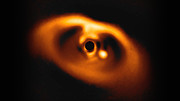

Zooming in on the orange dwarf star PDS 70 and its newly discovered planet


Spectrum reveals cloudy atmosphere 

SPHERE, a planet-hunting instrument on ESO’s Very Large Telescope, has captured the first confirmed image of a planet caught in the act of forming in the dusty disc surrounding a young star. The young planet is carving a path through the primordial disc of gas and dust around the very young star PDS 70. The data suggest that the planet’s atmosphere is cloudy.

Astronomers led by a group at the Max Planck Institute for Astronomy in Heidelberg, Germany have captured a spectacular snapshot of planetary formation around the young dwarf star PDS 70. By using the SPHERE instrument on ESO’s Very Large Telescope (VLT) — one of the most powerful planet-hunting instruments in existence — the international team has made the first robust detection of a young planet, named PDS 70b, cleaving a path through the planet-forming material surrounding the young star [1].

The SPHERE instrument also enabled the team to measure the brightness of the planet at different wavelengths, which allowed properties of its atmosphere to be deduced.
The planet stands out very clearly in the new observations, visible as a bright point to the right of the blackened centre of the image. It is located roughly three billion kilometres from the central star, roughly equivalent to the distance between Uranus and the Sun. The analysis shows that PDS 70b is a giant gas planet with a mass a few times that of Jupiter. The planet's surface has a temperature of around 1000°C, making it much hotter than any planet in our own Solar System.

The dark region at the centre of the image is due to a coronagraph, a mask which blocks the blinding light of the central star and allows astronomers to detect its much fainter disc and planetary companion. Without this mask, the faint light from the planet would be utterly overwhelmed by the intense brightness of PDS 70.

“These discs around young stars are the birthplaces of planets, but so far only a handful of observations have detected hints of baby planets in them,” explains Miriam Keppler, who lead the team behind the discovery of PDS 70’s still-forming planet. “The problem is that until now, most of these planet candidates could just have been features in the disc.”

The discovery of PDS 70’s young companion is an exciting scientific result that has already merited further investigation. A second team, involving many of the same astronomers as the discovery team, including Keppler, has in the past months followed up the initial observations to investigate PDS 70’s fledgling planetary companion in more detail. They not only made the spectacularly clear image of the planet shown here, but were even able to obtain a spectrum of the planet. Analysis of this spectrum indicated that its atmosphere is cloudy.

PDS 70’s planetary companion has sculpted a transition disc — a protoplanetary disc with a giant “hole” in the centre. These inner gaps have been known about for decades and it has been speculated that they were produced by disc-planet interaction. Now we can see the planet for the first time.

Keppler’s results give us a new window onto the complex and poorly-understood early stages of planetary evolution,” comments André Müller, leader of the second team to investigate the young planet. “We needed to observe a planet in a young star’s disc to really understand the processes behind planet formation.” By determining the planet’s atmospheric and physical properties, the astronomers are able to test theoretical models of planet formation.

This glimpse of the dust-shrouded birth of a planet was only possible thanks to the impressive technological capabilities of ESO’s SPHERE instrument, which studies exoplanets and discs around nearby stars using a technique known as high-contrast imaging — a challenging feat. Even when blocking the light from a star with a coronagraph, SPHERE still has to use cleverly devised observing strategies and data processing techniques to filter out the signal of the faint planetary companions around bright young stars [2] at multiple wavelengths and epochs.

Thomas Henning, director at the Max Planck Institute for Astronomy and leader of the teams, summarises the scientific adventure: “After more than a decade of enormous efforts to build this high-tech machine, now SPHERE enables us to reap the harvest with the discovery of baby planets!


Notes
[1] The disc and planet images and the planet’s spectrum have been captured in the course of the two survey programmes called SHINE (SpHere INfrared survey for Exoplanets) and DISK (sphere survey for circumstellar DISK). SHINE aims to image 600 young nearby stars in the near-infrared using SPHERE’s high contrast and high angular resolution to discover and characterise new exoplanets and planetary systems. DISK explores known, young planetary systems and their circumstellar discs to study the initial conditions of planetary formation and the evolution of planetary architectures.

[2] In order to tease out the weak signal of the planet next to the bright star, astronomers use a sophisticated method that benefits from the Earth's rotation. In this observing mode, SPHERE continuously takes images of the star over a period of several hours, while keeping the instrument as stable as possible. As a consequence, the planet appears to slowly rotate, changing its location on the image with respect to the stellar halo. Using elaborate numerical algorithms, the individual images are then combined in such a way that all parts of the image that appear not to move during the observation, such as the signal from the star itself, are filtered. This leaves only those that do apparently move — making the planet visible.


More Information
The team behind the discovery paper is composed of  M. Keppler (Max Planck Institute for Astronomy, Heidelberg, Germany), M. Benisty (Univ. Grenoble, France and Unidad Mixta Internacional Franco-Chilena de Astronomía, Chile),  A. Müller (Max Planck Institute for Astronomy, Heidelberg, Germany), Th. Henning (Max Planck Institute for Astronomy, Heidelberg, Germany), R. van Boekel (Max Planck Institute for Astronomy, Heidelberg, Germany), F. Cantalloube (Max Planck Institute for Astronomy, Heidelberg, Germany), C. Ginski (Leiden Observatory, The Netherlands), R.G. van Holstein (Leiden Observatory, The Netherlands), A.-L. Maire (Max Planck Institute for Astronomy, Heidelberg, Germany),  A. Pohl (Max Planck Institute for Astronomy, Heidelberg, Germany), M. Samland (Max Planck Institute for Astronomy, Heidelberg, Germany), H. Avenhaus (Max Planck Institute for Astronomy, Heidelberg, Germany), J.-L. Baudino (Department of Physics, University of Oxford, Oxford, UK), A. Boccaletti (LESIA, Observatoire de Paris, France), J. de Boer (Leiden Observatory, The Netherlands), M. Bonnefoy (Univ. Grenoble, France), S. Desidera (INAF - Osservatorio Astronomico di Padova, Italy),  M. Langlois (Aix Marseille Univ, CNRS, LAM, Marseille, France and CRAL, UMR 5574, CNRS, Université de Lyon, Ecole Normale Supérieure de Lyon, France), C. Lazzoni (INAF - Osservatorio Astronomico di Padova, Italy), N. Pawellek (Max Planck Institute for Astronomy, Heidelberg, Germany), T. Stolker (Institute for Particle Physics and Astrophysics, ETH Zurich, Switzerland), A. Vigan (Aix Marseille Univ, CNRS, LAM, Marseille, France), T. Birnstiel (University Observatory, Faculty of Physics, Ludwig-Maximilians- Universität München, Germany), W. Brandner(Max Planck Institute for Astronomy, Heidelberg, Germany), G. Chauvin (Univ. Grenoble, France and Unidad Mixta Internacional Franco-Chilena de Astronomía, Chile), M. Feldt (Max Planck Institute for Astronomy, Heidelberg, Germany), M. Flock (Jet Propulsion Laboratory, California Institute of Technology, USA and Kavli Institute For Theoretical Physics, University of California, USA), J. Girard(Univ. Grenoble, France and ESO, Chile), R. Gratton (INAF - Osservatorio Astronomico di Padova, Italy), J. Hagelberg (Univ. Grenoble, France), A. Isella (Rice University, Department of Physics and Astronomy, USA), M. Janson (Max Planck Institute for Astronomy, Heidelberg, Germany and  Department of Astronomy, Stockholm University, Sweden), A. Juhasz (Institute of Astronomy, Cambridge, UK), J. Kemmer (Max Planck Institute for Astronomy, Heidelberg, Germany), Q. Kral (LESIA, Observatoire de Paris, PSL Research University, CNRS, Sorbonne Universités, UPMC, Univ. Paris 06, Univ. Paris Diderot, Sorbonne Paris Cité, France and Institute of Astronomy, Cambridge, UK), A.-M. Lagrange (Univ. Grenoble, France), R. Launhardt (Max Planck Institute for Astronomy, Heidelberg, Germany), G. Marleau (Institut für Astronomie und Astrophysik, Eberhard Karls Universität Tübingen, Germany and Max Planck Institute for Astronomy, Heidelberg, Germany) A. Matter (Université Côte d’Azur, OCA, CNRS, France), F. Ménard (Univ. Grenoble, France), J. Milli (ESO, Chile), P. Mollière (Leiden Observatory, The Netherlands), C. Mordasini (Physikalisches Institut, Universität Bern, Switzerland), J. Olofsson (Max Planck Institute for Astronomy, Heidelberg, Germany, Instituto de Física y Astronomía, Facultad de Ciencias, Universidad de Valparaíso, Chile, and Núcleo Milenio Formación Planetaria - NPF, Universidad de Valparaíso, Chile), L. Pérez (Max-Planck-Institute for Astronomy, Bonn, Germany and Universidad de Chile, Departamento de Astronomia, Chile), P. Pinilla (Department of Astronomy/Steward Observatory, University of Arizona, USA), C. Pinte (Univ. Grenoble, France, UMI-FCA, CNRS/INSU, France (UMI 3386), and Dept. de Astronomía, Universidad de Chile, Chile, and  Monash Centre for Astrophysics (MoCA) and School of Physics and Astronomy, Monash University, Australia), S. Quanz (Institute for Particle Physics and Astrophysics, ETH Zurich, Switzerland), T. Schmidt (LESIA, Observatoire de Paris, PSL Research University, CNRS, Sorbonne Universités, UPMC, Univ. Paris 06, Univ. Paris Diderot, France), S. Udry (Geneva Observatory, University of Geneva, Switzerland), Z. Wahhaj (ESO, Chile), J. Williams (Institute for Astronomy, University of Hawaii at Manoa, Honolulu, USA), A. Zurlo (Aix Marseille Univ, CNRS, LAM, Laboratoire d’Astrophysique de Marseille, France, Núcleo de Astronomía, Facultad de Ingeniería y Ciencias, Universidad Diego Portales, Chile, Escuela de Ingeniería Industrial, Facultad de Ingeniería y Ciencias, Universidad Diego Portales, Chile), E. Buenzli (Institute for Particle Physics and Astrophysics, ETH Zurich, Switzerland), M. Cudel (Univ. Grenoble, France), R. Galicher (LESIA, Observatoire de Paris, PSL Research University, CNRS, Sorbonne Universités, UPMC, Univ. Paris 06, Univ. Paris Diderot, France), M. Kasper (ESO, Germany), J. Lannier (Univ. Grenoble, France), D. Mesa (INAF - Osservatorio Astronomico di Padova, Italy and INCT, Universidad De Atacama, Copiapó, Chile), D. Mouillet (Univ. Grenoble, France), S. Peretti (Geneva Observatory, University of Geneva, Switzerland), C. Perrot (LESIA, Observatoire de Paris, PSL Research University, CNRS, Sorbonne Universités, UPMC, Univ. Paris 06, Univ. Paris Diderot, Sorbonne Paris Cité, France), G. Salter (Aix Marseille Univ, CNRS, LAM, Laboratoire d’Astrophysique de Marseille, France), E. Sissa (INAF - Osservatorio Astronomico di Padova, Italy), F. Wildi (Geneva Observatory, University of Geneva, Switzerland), L. Abe (Université Côte d’Azur, OCA, CNRS, Lagrange, France), J. Antichi (INAF - Osservatorio Astrofisico di Arcetri, Italy), J.-C. Augereau (Univ. Grenoble, France), P. Baudoz (LESIA, Observatoire de Paris, PSL Research University, CNRS, Sorbonne Universités, UPMC, Univ. Paris 06, Univ. Paris Diderot, Sorbonne Paris Cité, France), J.-L. Beuzit (Univ. Grenoble, France), P. Blanchard (Aix Marseille Univ, CNRS, LAM, Laboratoire d’Astrophysique de Marseille, France), S. S. Brems (Landessternwarte Königstuhl, Zentrum für Astronomie der Universität Heidelberg, Germany),  M. Carle (Aix Marseille Univ, CNRS, LAM, Laboratoire d’Astrophysique de Marseille, France), A. Cheetham (Geneva Observatory, University of Geneva, Switzerland), A. Costille (Aix Marseille Univ, CNRS, LAM, Laboratoire d’Astrophysique de Marseille, France), A. Delboulbé (Univ. Grenoble, France), C. Dominik (Anton Pannekoek Institute for Astronomy, The Netherlands), P. Feautrier (Univ. Grenoble, France), L. Gluck (Univ. Grenoble, France), D. Gisler (Institute for Particle Physics and Astrophysics, ETH Zurich, Switzerland), Y. Magnard (Univ. Grenoble, France), D. Maurel (Univ. Grenoble, France), M. Meyer (Institute for Particle Physics and Astrophysics, ETH Zurich, Switzerland), T. Moulin (Univ. Grenoble, France), T. Buey (LESIA, Observatoire de Paris, PSL Research University, CNRS, Sorbonne Universités, UPMC, Univ. Paris 06, Univ. Paris Diderot, France), A. Baruffolo (INAF - Osservatorio Astronomico di Padova, Italy), A. Bazzon (Institute for Particle Physics and Astrophysics, ETH Zurich, Switzerland), V. De Caprio (INAF - Osservatorio Astronomico di Capodimonte, Italy), M. Carbillet (Université Côte d’Azur, OCA, CNRS, Lagrange, France), E. Cascone (INAF - Osservatorio Astronomico di Capodimonte, Italy), R. Claudi (INAF - Osservatorio Astronomico di Padova, Italy), K. Dohlen (Aix Marseille Univ, CNRS, LAM, Laboratoire d’Astrophysique de Marseille, France), D. Fantinel (INAF - Osservatorio Astronomico di Padova, Italy), T. Fusco (ONERA (Office National d’Etudes et de Recherches Aérospatiales), France), E. Giro (INAF - Osservatorio Astronomico di Padova, Italy), C. Gry (Aix Marseille Univ, CNRS, LAM, Laboratoire d’Astrophysique de Marseille, France), N. Hubin (ESO, Germany), E. Hugot (Aix Marseille Univ, CNRS, LAM, Laboratoire d’Astrophysique de Marseille, France), M. Jaquet (Aix Marseille Univ, CNRS, LAM, Laboratoire d’Astrophysique de Marseille, France), D. Le Mignant (Aix Marseille Univ, CNRS, LAM, Laboratoire d’Astrophysique de Marseille, France), M. Llored (Aix Marseille Univ, CNRS, LAM, Laboratoire d’Astrophysique de Marseille, France), O. Möller-Nilsson (Max Planck Institute for Astronomy, Heidelberg, Germany), F. Madec (Aix Marseille Univ, CNRS, LAM, Laboratoire d’Astrophysique de Marseille, France), P. Martinez (Université Côte d’Azur, OCA, CNRS, Lagrange, France), L. Mugnier (ONERA (Office National d’Etudes et de Recherches Aérospatiales), France), A. Origné (Aix Marseille Univ, CNRS, LAM, Laboratoire d’Astrophysique de Marseille, France), P. Puget (Univ. Grenoble, France), D. Perret (LESIA, Observatoire de Paris, PSL Research University, CNRS, Sorbonne Universités, UPMC, Univ. Paris 06, Univ. Paris Diderot, France), J. Pragt (NOVA Optical Infrared Instrumentation Group, Dwingeloo, The Netherlands), F. Rigal (Anton Pannekoek Institute for Astronomy, The Netherlands), R. Roelfsema (NOVA Optical Infrared Instrumentation Group, Dwingeloo, The Netherlands), A. Pavlov (Max Planck Institute for Astronomy, Heidelberg, Germany), C. Petit (ONERA (Office National d’Etudes et de Recherches Aérospatiales), France), G. Rousset (LESIA, Observatoire de Paris, PSL Research University, CNRS, Sorbonne Universités, UPMC, Univ. Paris 06, Univ. Paris Diderot, France), J. Ramos (Max Planck Institute for Astronomy, Heidelberg, Germany), P. Rabou (Univ. Grenoble, France), S. Rochat (Univ. Grenoble, France), A. Roux (Univ. Grenoble, France), B. Salasnich (INAF - Osservatorio Astronomico di Padova, Italy),C. Soenke (ESO, Germany), E. Stadler (Univ. Grenoble, France), J.-F. Sauvage (ONERA (Office National d’Etudes et de Recherches Aérospatiales), France), M. Suarez ( INAF - Osservatorio Astrofisico di Arcetri, Italy), A. Sevin (LESIA, Observatoire de Paris, PSL Research University, CNRS, Sorbonne Universités, UPMC, Univ. Paris 06, Univ. Paris Diderot, France), M. Turatto (INAF - Osservatorio Astronomico di Padova, Italy), L. Weber (Geneva Observatory, University of Geneva, Switzerland).

The team behind the characterisation paper consisted of A. Müller (Max Planck Institute for Astronomy, Heidelberg, Germany), M. Keppler (Max Planck Institute for Astronomy, Heidelberg, Germany), Th. Henning (Max Planck Institute for Astronomy, Heidelberg, Germany), M. Samland (Max Planck Institute for Astronomy, Heidelberg, Germany), G. Chauvin (Univ. Grenoble Alpes, France and Unidad Mixta Internacional Franco-Chilena de Astronomía, CNRS/INSU Universidad de Chile, Chile), H. Beust (Univ. Grenoble Alpes, France), A.-L. Maire (Max Planck Institute for Astronomy, Heidelberg, Germany), K. Molaverdikhani (Max Planck Institute for Astronomy, Heidelberg, Germany), R. van Boekel (Max Planck Institute for Astronomy, Heidelberg, Germany),  M. Benisty (Univ. Grenoble Alpes, France and Unidad Mixta Internacional Franco-Chilena de Astronomía, CNRS/INSU Universidad de Chile, Chile), A. Boccaletti (LESIA, Observatoire de Paris, PSL Research University, CNRS, Sorbonne Universités, UPMC, Univ. Paris 06, Univ. Paris Diderot, France), M. Bonnefoy (Univ. Grenoble Alpes, France), F. Cantalloube (Max Planck Institute for Astronomy, Heidelberg, Germany), B. Charnay (LESIA, Observatoire de Paris, PSL Research University, CNRS, Sorbonne Universités, UPMC, Univ. Paris 06, Univ. Paris Diderot, France), J.-L. Baudino (Department of Physics, University of Oxford, UK), M. Gennaro (Space Telescope Science Institute, USA), Z. C. Long (Space Telescope Science Institute, USA), A. Cheetham (Geneva Observatory, University of Geneva, Switzerland), S. Desidera (INAF - Osservatorio Astronomico di Padova, Italy), M. Feldt (Max Planck Institute for Astronomy, Heidelberg, Germany), T. Fusco (DOTA, ONERA, Université Paris Saclay, and Aix Marseille Université, CNRS, LAM Marseille, France), J. Girard (Univ. Grenoble Alpes, France and Space Telescope Science Institute, USA), R. Gratton (INAF - Osservatorio Astronomico di Padova, Italy), J. Hagelberg (Institute for Particle Physics and Astrophysics, ETH Zurich, Switzerland), M. Janson (Max Planck Institute for Astronomy, Heidelberg, Germany and Department of Astronomy, Stockholm University, Sweden),  A.-M. Lagrange (Univ. Grenoble Alpes, France), M. Langlois (Aix Marseille Univ, CNRS, LAM, Marseille, France and CRAL, UMR 5574, CNRS, Université de Lyon, Ecole Normale Supérieure de Lyon, France), C. Lazzoni (INAF - Osservatorio Astronomico di Padova, Italy), R. Ligi (INAF-Osservatorio Astronomico di Brera, Italy), F. Ménard (Univ. Grenoble Alpes, France), D. Mesa (INAF - Osservatorio Astronomico di Padova, Italy and INCT, Universidad De Atacama, Copiapó, Atacama, Chile), M. Meyer (Institute for Particle Physics and Astrophysics, ETH Zurich, Switzerland and Department of Astronomy, University of Michigan, USA), P. Mollière (Leiden Observatory, Leiden University, the Netherlands), C. Mordasini (Physikalisches Institut, Universität Bern, Switzerland), T. Moulin (Univ. Grenoble Alpes, France), A. Pavlov (Max Planck Institute for Astronomy, Heidelberg, Germany), N. Pawellek (Max Planck Institute for Astronomy, Heidelberg, Germany and Konkoly Observatory, Research Centre for Astronomy and Earth Sciences, Hungarian Academy of Sciences, Hungary), S. Quanz (Institute for Particle Physics and Astrophysics, ETH Zurich, Switzerland), J. Ramos (Max Planck Institute for Astronomy, Heidelberg, Germany), D. Rouan (LESIA, Observatoire de Paris, PSL Research University, CNRS, Sorbonne Universités, UPMC, Univ. Paris 06, Univ. Paris Diderot, France), E. Sissa (INAF - Osservatorio Astronomico di Padova, Italy),  E. Stadler (Univ. Grenoble Alpes, France), A. Vigan (Aix Marseille Univ, CNRS, LAM, Laboratoire d’Astrophysique de Marseille, France), Z. Wahhaj (ESO, Chile), L. Weber (Geneva Observatory, University of Geneva, Switzerland), A. Zurlo (Núcleo de Astronomía, Facultad de Ingeniería y Ciencias, Universidad Diego Portales, Chile, Escuela de Ingeniería Industrial, Facultad de Ingeniería y Ciencias, Universidad Diego Portales, Chile).
ESO is the foremost intergovernmental astronomy organisation in Europe and the world’s most productive ground-based astronomical observatory by far. It has 15 Member States: Austria, Belgium, the Czech Republic, Denmark, France, Finland, Germany, Italy, the Netherlands, Poland, Portugal, Spain, Sweden, Switzerland and the United Kingdom, along with the host state of Chile and with Australia as a strategic partner. ESO carries out an ambitious programme focused on the design, construction and operation of powerful ground-based observing facilities enabling astronomers to make important scientific discoveries. ESO also plays a leading role in promoting and organising cooperation in astronomical research. ESO operates three unique world-class observing sites in Chile: La Silla, Paranal and Chajnantor. At Paranal, ESO operates the Very Large Telescope and its world-leading Very Large Telescope Interferometer as well as two survey telescopes, VISTA working in the infrared and the visible-light VLT Survey Telescope. ESO is also a major partner in two facilities on Chajnantor, APEX and ALMA, the largest astronomical project in existence. And on Cerro Armazones, close to Paranal, ESO is building the 39-metre Extremely Large Telescope, the ELT, which will become “the world’s biggest eye on the sky”.


Links


Contacts:

Miriam Keppler
Max Planck Institute for Astronomy
Heidelberg, Germany
Tel: +49 6221 528 203
Email:
keppler@mpia.de

André Müller
Max Planck Institute for Astronomy
Heidelberg, Germany
Tel: +49 6221 528 227
Email:
amueller@mpia.de

Thomas Henning
Max Planck Institute for Astronomy
Heidelberg, Germany
Tel: +49 6221 528 200
Email:
henning@mpia.de

Mariya Lyubenova
ESO Outreach Astronomer
Garching bei München, Germany
Tel: +49 89 3200 6188
Email:
mlyubeno@eso.org


Source: ESO/News


Friday, September 01, 2017

Hubble delivers first hints of possible water content of TRAPPIST-1 planets

Artist’s impression of the TRAPPIST-1 planetary system

PR Image heic1713b
Comparison between the Sun and the ultracool dwarf star TRAPPIST-1 

PR Image heic1713c
Comparing the TRAPPIST-1 planets 

PR Image heic1713d
Seven planets orbiting the ultracool dwarf star TRAPPIST-1 


Videos

Animation of the planets orbiting TRAPPIST-1


An international team of astronomers used the NASA/ESA Hubble Space Telescope to estimate whether there might be water on the seven earth-sized planets orbiting the nearby dwarf star TRAPPIST-1. The results suggest that the outer planets of the system might still harbour substantial amounts of water. This includes the three planets within the habitable zone of the star, lending further weight to the possibility that they may indeed be habitable.

On 22 February 2017 astronomers announced the discovery of seven Earth-sized planets orbiting the ultracool dwarf star TRAPPIST-1, 40 light-years away [1].

This makes TRAPPIST-1 the planetary system with the largest number of Earth-sized planets discovered so far.

Following up on the discovery, an international team of scientists led by the Swiss astronomer Vincent Bourrier from the Observatoire de l’Université de Genève, used the Space Telescope Imaging Spectrograph (STIS) on the NASA/ESA Hubble Space Telescope to study the amount of ultraviolet radiation received by the individual planets of the system. “Ultraviolet radiation is an important factor in the atmospheric evolution of planets,” explains Bourrier. “As in our own atmosphere, where ultraviolet sunlight breaks molecules apart, ultraviolet starlight can break water vapour in the atmospheres of exoplanets into hydrogen and oxygen.”

While lower-energy ultraviolet radiation breaks up water molecules — a process called photodissociation — ultraviolet rays with more energy (XUV radiation) and X-rays heat the upper atmosphere of a planet, which allows the products of photodissociation, hydrogen and oxygen, to escape.

As it is very light, hydrogen gas can escape the exoplanets’ atmospheres and be detected around the exoplanets with Hubble, acting as a possible indicator of atmospheric water vapour [2]. The observed amount of ultraviolet radiation emitted by TRAPPIST-1 indeed suggests that the planets could have lost gigantic amounts of water over the course of their history.

This is especially true for the innermost two planets of the system, TRAPPIST-1b and TRAPPIST-1c, which receive the largest amount of ultraviolet energy. “Our results indicate that atmospheric escape may play an important role in the evolution of these planets,” summarises Julien de Wit, from MIT, USA, co-author of the study.

The inner planets could have lost more than 20 Earth-oceans-worth of water during the last eight billion years. However, the outer planets of the system — including the planets e, f and g which are in the habitable zone — should have lost much less water, suggesting that they could have retained some on their surfaces [3]. The calculated water loss rates as well as geophysical water release rates also favour the idea that the outermost, more massive planets retain their water. However, with the currently available data and telescopes no final conclusion can be drawn on the water content of the planets orbiting TRAPPIST-1.

“While our results suggest that the outer planets are the best candidates to search for water with the upcoming James Webb Space Telescope, they also highlight the need for theoretical studies and complementary observations at all wavelengths to determine the nature of the TRAPPIST-1 planets and their potential habitability,” concludes Bourrier.


Notes

[1] The planets were discovered using: the ground-based TRAPPIST-South at ESO’s La Silla Observatory in Chile; the orbiting NASA Spitzer Space Telescope; TRAPPIST-North in Morocco; ESO’s HAWK-I instrument on the Very Large Telescope at the Paranal Observatory in Chile; the 3.8-metre UKIRT in Hawaii; the 2-metre Liverpool and 4-metre William Herschel telescopes at La Palma in the Canary Islands; and the 1-metre SAAO telescope in South Africa.

[2] This part of an atmosphere is called the exosphere. Earth’s exosphere consists mainly of hydrogen with traces of helium, carbon dioxide and atomic oxygen.

[3] Results show that each of these planets have may have lost less than three Earth-oceans of water.


More Information

The Hubble Space Telescope is a project of international cooperation between ESA and NASA.

The team of the study is composed of V. Bourrier (Observatoire de l’Université de Genève, Switzerland), J. de Witt (Massachusetts Institute of Technology, USA), E. Bolmont (Laboratoire AIM Paris-Saclay), V. Stamenkovic (Jet Propulsion Laboratory, USA; California Institute of Technology, USA), P. J. Wheatley (University of Warwick, UK), A. J. Burgasser (University of California San Diego, USA), L. Delrez (Cavendish Laboratory, UK), B.-O. Demory (University of Bern, Switzerland), D. Ehrenreich (Observatoire de l’Université de Genève, Switzerland), M. Gillon (Université de Liège, Belgium), E. Jehin (Université de Liège, Belgium), J. Leconte (Université Bordeaux, France), S. M. Lederer (NASA Johnson Space Center, USA), N. Lewis (Space Telescope Science Institute, USA), A. H. M. J. Triaud A. H. M. J. Triaud (Institute of Astronomy, Cambridge, UK, now at University of Birmingham, UK) and V. van Grootel (Université de Liege, Belgium)
Image credit: NASA, ESA, ESO


Links


Contacts

Vincent Bourrier
Observatoire de l’Université de Genève
Sauverny, Switzerland
Tel: +41 22 379 24 49
Email: vincent.bourrier@unige.ch

Julien de Wit
Massachusetts Institute of Technology
Cambridge, USA
Tel: +1 617 258 0209
Email: jdewit@mit.edu

Mathias Jäger
ESA/Hubble, Public Information Officer
Garching bei Múnchen, Germany
Tel: +49 176 62397500
Email: mjaeger@partner.eso.org


Source: ESA/Huble/News