Tuesday, June 19, 2012

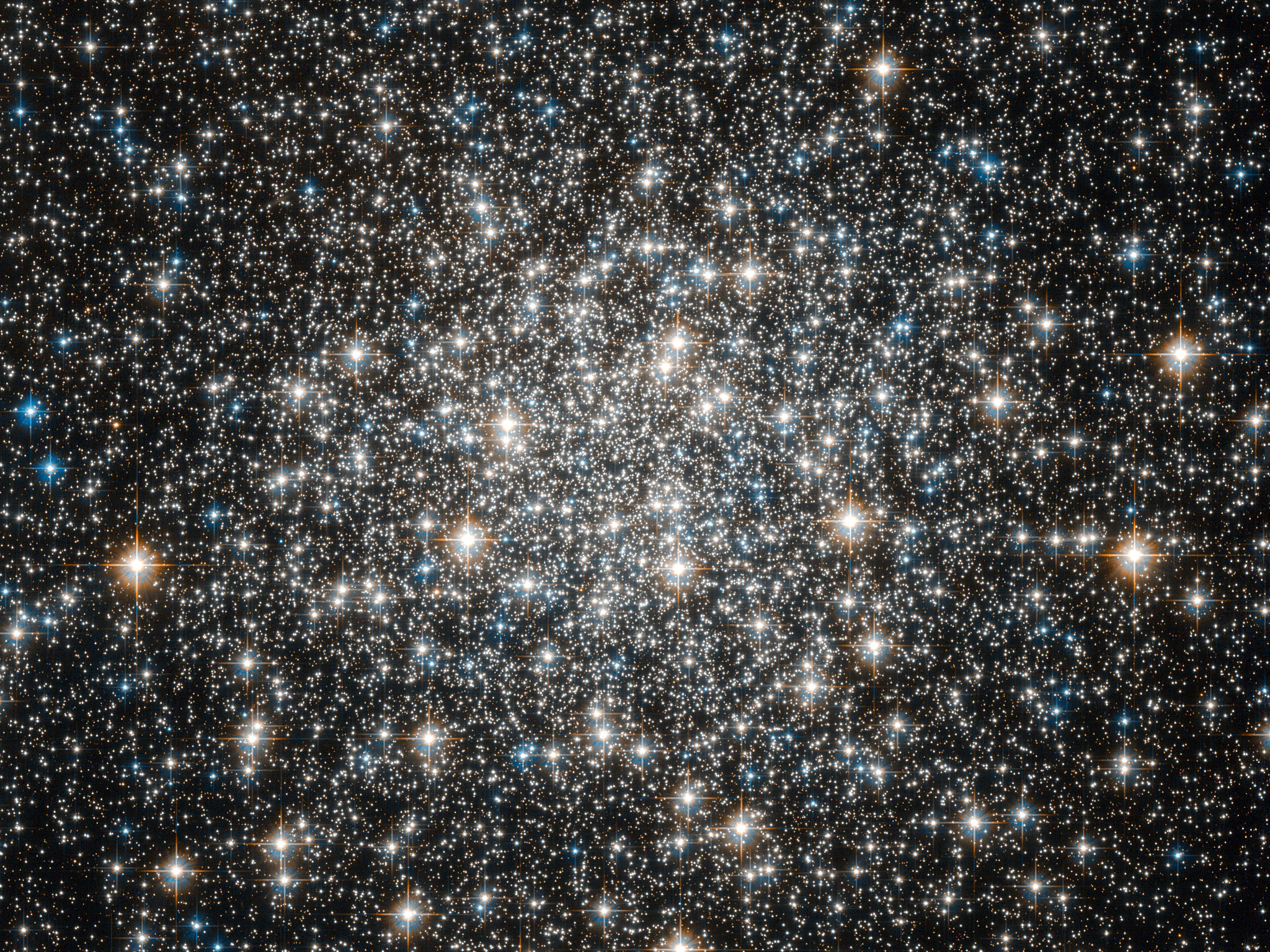
Globular Cluster M10


Credit: ESA/Hubble & NASA


Like many of the most famous objects in the sky, globular cluster Messier 10 was of little interest to its discoverer: Charles Messier, the 18th century French astronomer, catalogued over 100 galaxies and clusters, but was primarily interested in comets. Through the telescopes available at the time, comets, nebulae, globular clusters and galaxies appeared just as faint, diffuse blobs and could easily be confused for one another.


Only by carefully observing their motion — or lack of it — were astronomers able to distinguish them: comets move slowly relative to the stars in the background, while other more distant astronomical objects do not move at all.


Messier’s decision to catalogue all the objects that he could find and that were not comets, was a pragmatic solution which would have a huge impact on astronomy. His catalogue of just over 100 objects includes many of the most famous objects in the night sky. Messier 10, seen here in an image from the NASA/ESA Hubble Space Telescope, is one of them. Messier described it in the very first edition of his catalogue, which was published in 1774 and included the first 45 objects he identified.


Messier 10 is a ball of stars that lies about 15 000 light-years from Earth, in the constellation of Ophiuchus (The Serpent Bearer). Approximately 80 light-years across, it should therefore appear about two thirds the size of the Moon in the night sky. However, its outer regions are extremely diffuse, and even the comparatively bright core is too dim to see with the naked eye.


Hubble, which has no problems seeing faint objects, has observed the brightest part of the centre of the cluster in this image, a region which is about 13 light-years across.


This image is made up of observations made in visible and infrared light using Hubble’s Advanced Camera for Surveys. The observations were carried out as part of a major Hubble survey of globular clusters in the Milky Way.


A version of this image was entered into the Hubble’s Hidden Treasures Image Processing Competition by contestant flashenthunder. Hidden Treasures is an initiative to invite astronomy enthusiasts to search the Hubble archive for stunning images that have never been seen by the general public. The competition has now closed and the results will be published soon.

Source: ESA/Hubble  - Space Telescope

Friday, June 15, 2012

Astronomers pinpoint elusive galaxy after decade-long hunt – and find it's not alone

An international team of astronomers led by Fabian Walter of the Max Planck Institute for Astronomy has managed for the first time to determine the distance of the galaxy HDF850.1, well-known among astronomers as being one of the most productive star-forming galaxies in the observable universe. The galaxy is at a distance of 12.5 billion light years. Hence, we see it as it was 12.5 billion years ago, when the universe was less than 10% of its current age. Even more of a surprise, HDF850.1 turns out to be part of a group of around a dozen protogalaxies that formed within the first billion years of cosmic history – only one of two such primordial clusters known to date. The work is being published in the journal Nature.

Figure 1: The region of the Hubble Deep Field where HDF850.1 is located. The cross indicates the submillimeter galaxy's position. For observations with ordinary, visible light telescopes such as the Hubble Space Telescope, the galaxy is completely invisible. Image credit: STScI / NASA, F. Walter (MPIA)

Figure 2: View of the Northern target area for the "Great Observatories Origins Deep Survey" (GOODS-N). The position of the Hubble Deep Field and, within that field, the position of the submillimeter galaxy HDF850.1, are shown separately. HDF850.1 is invisible for observations using ordinary, visible light. Image credit: GOODS-N, STScI / NASA, F. Walter (MPIA)

Figure 3: The Hubble Deep Field, with the position of the submillimeter galaxy HDF850.1 marked with contour lines. The lines represent the date of submillimeter observations of the galaxy; in visible light, it cannot be observed at all. Image credit: STScI / NASA, F. Walter

The galaxy HDF850.1 was discovered in 1998. It is famous for producing new stars at a rate that is near-incredible even on astronomical scales: a combined mass of a thousand Suns per year. For comparison: an ordinary galaxy such as our own produces no more than one solar mass's worth of new stars per year. Yet for the past fourteen years, HDF850.1 has remained strangely elusive – its location in space, specifically: its distance from Earth the subject of many studies, but ultimately unknown. How was that possible?

The "Hubble Deep Field", where HDF850.1 is located, is a region in the sky that affords an almost unparalleled view into the deepest reaches of space. It was first studied extensively using the Hubble Space Telescope. Yet observations using visible light only reveal part of the cosmic picture, and astronomers were quick to follow-up at different wavelengths. In the late 1990s, astronomers using the James Clerk Maxwell Telescope on Hawai'i surveyed the region using submillimeter radiation. This type of radiation, with wavelengths between a few tenths of a millimeter and a millimeter, is particularly suitable for detecting cool clouds of gas and dust.

The researchers were taken by surprise when they realized that HDF850.1 was the brightest source of submillimeter emission in the field by far, a galaxy that was evidently forming as many stars as all the other galaxies in the Hubble Deep Field combined – and which was completely invisible in the observations of the Hubble Space Telescope!

"The galaxy's invisibility is no great mystery. Stars form in dense clouds of gas and dust. These dense clouds are opaque to visible light, hiding the galaxy from sight. Submillimeter radiation passes through the dense dust clouds unhindered, showing what is inside. But the lack of data from all but a very narrow range of the spectrum made it very difficult to determine the galaxy's redshift, and thus its place in cosmic history," explains MPIA's Fabian Walter.

Now, an international group of researchers led by Fabian Walter of the Max Planck Institute for Astronomy has managed to solve the mystery. Taking advantage of recent upgrades to the IRAM interferometer on the Plateau de Bure in the French Alps, which combines six radio antennas that then act as a gigantic millimeter telescope, they identified the characteristic features ("spectral lines") necessary for an accurate distance determination. "It is the availability of more powerful and sensitive instruments recently installed on the IRAM interferometer that allowed us to detect these weak lines in HDF850.1, and finally find what we had been unsuccessfully looking for, during the past 14 years," explains Pierre Cox, Director of IRAM.

The result is a surprise: The galaxy is at a distance of 12.5 billion light-years from Earth (z ~ 5.2). We see it as it was 12.5 billion years ago, at a time when the universe itself was only 1.1 billion years old! HDF850.1's intense star-forming activity thus belongs to a very early period of cosmic history, when the universe was less than 10% of its current age.

A combination with observations obtained at the National Science Foundation's Karl Jansky Very Large Array (VLA) then revealed that a large fraction of the galaxy's mass is in the form of molecules – the raw material for future stars. The fraction is much higher than what is found in galaxies in the local universe.

Once the distance was known, the researchers were also able to put the galaxy into context. Using additional data from published and unpublished surveys, they were able to show that the galaxy is part of what appears to be an early form of galaxy cluster – one of only two such clusters known to date.

The new work highlights the importance of future, more powerful interferometers operating at millimeter and submillimeter wavelengths. Both NOEMA, the future extension of the Plateau de Bure interferometer, and ALMA, a new interferometer array currently being built by an international consortium in the Atacama desert in Chile, will cover these wavelengths in unprecedented detail. They should allow for distance determinations and more detailed study of many more galaxies, invisible at optical wavelengths, that were actively forming stars in the early universe.


Contact information

Fabian Walter (lead author)
Max Planck Institute for Astronomy
Phone: (+49|0) 6221 – 528 225
Email: walter@mpia.de

Markus Pössel (Public relations)
Max Planck Institute for Astronomy
Heidelberg, Germany
Phone: (+49|0) 6221 – 528 261
Email: pr@mpia.de

Background information

The work described here will be published as F. Walter et al., "The Intense Starburst HDF850.1 in a Galaxy Overdensity at z = 5.2 in the Hubble Deep Field" in the June 14th, 2012, issue of the journal Nature.

The authors are Fabian Walter (Max Planck Institute for Astronomy [MPIA] and National Radio Astronomy Observatory [NRAO], Socorro), Roberto Decarli (MPIA), Chris Carilli (NRAO and Cambridge University), Frank Bertoldi (University of Bonn), Pierre Cox (IRAM), Elisabete Da Cunha (MPIA), Emanuele Daddi (CEA Saclay), Mark Dickinson (NOAO, Tucson), Dennis Downes (IRAM), David Elbaz (CEA Saclay), Richard Ellis (Caltech), Jacqueline Hodge (MPIA), Roberto Neri (IRAM), Dominik Riechers (Caltech), Axel Weiss (Max Planck Institute for Radio Astronomy [MPIfR]), Eric Bell (University of Michigan, Ann Arbor), Helmut Dannerbauer (University od Vienna), Melanie Krips (IRAM), Mark Krumholz (UCSC), Lindley Lentati (Cambridge University), Roberto Maiolino (INAF-Osservatorio Astronomico di Roma and Cambridge University), Karl Menten (MPIfR), Hans-Walter Rix (MPIA), Brant Robertson (University of Arizona), Hyron Spinrad (UC Berkeley), Dan Stark (University of Arizona), and Daniel Stern (Jet Propulsion Laboratory).

Thursday, June 14, 2012

A Trick of Perspective — Chance Alignment Mimics a Cosmic Collision

PR Image heic1208a
Hubble view of NGC 3314

The area around NGC 3314 (ground-based view)

Videos

PR Video heic1208a
Zoom into NGC 3314

Pan across NGC 3314

The NASA/ESA Hubble Space Telescope has produced a highly detailed image of a pair of overlapping galaxies called NGC 3314. While the two galaxies look as if they are in the midst of a collision, this is in fact a trick of perspective: the two just happen to appear in the same direction from our vantage point.


NGC 3314A and B might look like they are in the midst of a galactic pile-up, but they are in fact separated by tens of millions of light years of void. Their apparent proximity is simply a trick of perspective.

How do we know this? The biggest hint as to whether galaxies are interacting is usually their shapes. The immense gravitational forces involved in galactic mergers are enough to pull a galaxy out of shape long before it actually collides. Deforming a galaxy like this does not just warp its structure, but it can trigger new episodes of star formation, usually visible as bright blue stars and glowing nebulae.

In the case of NGC 3314, we do indeed see deformation in the foreground galaxy (called NGC 3314A, NGC 3314B lies in the background), but this is almost certainly misleading. NGC 3314A’s deformed shape, particularly visible below and to the right of the core, where streams of hot blue-white stars extend out from the spiral arms, is not due to interaction with the galaxy in the background.

Studies of the motion of the two galaxies indicate that they are both relatively undisturbed, and that they are moving independently of each other. This indicates in turn that they are not, and indeed have never been, on any collision course. NGC 3314A’s warped shape is likely due instead to an encounter with another galaxy, perhaps nearby NGC 3312 (visible to the north in wide-field images) or another nearby galaxy.

The chance alignment of the two galaxies is more than just a curiosity, though. It greatly affects the way the two galaxies appear to us.

NGC 3314B’s dust lanes, for example, appear far lighter than those of NGC 3314A. This is not because that galaxy lacks dust, but rather because they are lightened by the bright fog of stars in the foreground. NGC 3314A’s dust, in contrast, is backlit by the stars of NGC 3314B, silhouetting them against the bright background.

Such an alignment of galaxies is also helpful to astronomers studying gravitational microlensing, a phenomenon that occurs when stars in one galaxy cause small perturbations in the light coming from a more distant one. Indeed, the observations of NGC 3314 that led to this image were carried out in order to investigate this phenomenon.

This mosaic image covers a large field of view (several times the size of an individual exposure from Hubble’s Advanced Camera for Surveys). Thanks to a long exposure time of more than an hour in total exposure time for every frame, the image shows not only NGC 3314, but also many other more distant galaxies in the background.

The colour composite was produced from exposures taken in blue and red light.

Credit: NASA, ESA, the Hubble Heritage (STScI/AURA)-ESA/Hubble Collaboration, and W. Keel (University of Alabama)

Notes

The Hubble Space Telescope is a project of international cooperation between ESA and NASA.

Image credit: NASA, ESA, the Hubble Heritage (STScI/AURA)-ESA/Hubble Collaboration, and W. Keel (University of Alabama)

Data in this image of NGC 3314 were entered into the Hubble’s Hidden Treasures Image Processing Competition by contestants Andre vd Hoeven and nmoushon. Hidden Treasures is an initiative to invite astronomy enthusiasts to search the Hubble archive for stunning images that have never been seen by the general public. The competition is now closed and the winners will be announced soon.

Links

Contacts

Oli Usher
Hubble/ESA
Garching bei München, Germany
Tel: +49-89-3200-6855
Email: ousher@eso.org

Cassini Sees Tropical Lakes on Saturn Moon

Saturn's rings lie in the distance as the Cassini spacecraft looks toward Titan and its dark region called Shangri-La, east of the landing site of the Huygens Probe. Image Credit: NASA/JPL-Caltech/Space Science Institute . Full image and caption

PASADENA, Calif. - NASA's Cassini spacecraft has spied long-standing methane lakes, or puddles, in the "tropics" of Saturn's moon Titan. One of the tropical lakes appears to be about half the size of Utah's Great Salt Lake, with a depth of at least 3 feet (1 meter).

The result, which is a new analysis of Cassini data, is unexpected because models had assumed the long-standing bodies of liquid would only exist at the poles. The findings appear in this week's issue of the journal Nature.

Where could the liquid for these lakes come from? "A likely supplier is an underground aquifer," said Caitlin Griffith, the paper's lead author and a Cassini team associate at the University of Arizona, Tucson. "In essence, Titan may have oases."

Understanding how lakes or wetlands form on Titan helps scientists learn about the moon's weather. Like Earth's hydrological cycle, Titan has a "methane" cycle, with methane rather than water circulating. In Titan's atmosphere, ultraviolet light breaks apart methane, initiating a chain of complicated organic chemical reactions. But existing models haven't been able to account for the abundant supply of methane.

"An aquifer could explain one of the puzzling questions about the existence of methane, which is continually depleted," Griffith said. "Methane is a progenitor of Titan's organic chemistry, which likely produces interesting molecules like amino acids, the building blocks of life."

Global circulation models of Titan have theorized that liquid methane in the moon's equatorial region evaporates and is carried by wind to the north and south poles, where cooler temperatures cause methane to condense. When it falls to the surface, it forms the polar lakes. On Earth, water is similarly transported by the circulation, yet the oceans also transport water, thereby countering the atmospheric effects.

The latest results come from Cassini's visual and infrared mapping spectrometer, which detected the dark areas in the tropical region known as Shangri-La, near the spot where the European Space Agency's Huygens probe landed in 2005. When Huygens landed, the heat of the probe's lamp vaporized some methane from the ground, indicating it had landed in a damp area.

Areas appear dark to the visual and infrared mapping spectrometer when liquid ethane or methane are present. Some regions could be shallow, ankle-deep puddles. Cassini's radar mapper has seen lakes in the polar region, but hasn't detected any lakes at low latitudes.

The tropical lakes detected by the visual and infrared mapping spectrometer have remained since 2004. Only once has rain been detected falling and evaporating in the equatorial regions, and only during the recent expected rainy season. Scientists therefore deduce the lakes could not be substantively replenished by rain.

"We had thought that Titan simply had extensive dunes at the equator and lakes at the poles, but now we know that Titan is more complex than we previously thought," said Linda Spilker, the Cassini project scientist based at NASA's Jet Propulsion Laboratory, Pasadena, Calif. "Cassini still has multiple opportunities to fly by this moon going forward, so we can't wait to see how the details of this story fill out."

The Cassini-Huygens mission is a cooperative project of NASA, the European Space Agency and the Italian Space Agency. NASA's Jet Propulsion Laboratory manages the mission for NASA's Science Mission Directorate, Washington. The visual and infrared mapping spectrometer team is based at the University of Arizona, Tucson.


Jia-Rui C. Cook 818-354-0850
Jet Propulsion Laboratory, Pasadena, Calif.
jccook@jpl.nasa.gov

Dwayne Brown 202-358-1726
NASA Headquarters
dwayne.c.brown@nasa.gov

Wednesday, June 13, 2012

Small Planets Don't Need Stars with Heavy Metal Content to Form

The artist conception shows a newly formed star surrounded by a swirling protoplanetary disk of dust and gas. Debris coalesces to create rocky 'planetesimals' that collide and grow to eventually form planets. The results of this study show that small planets form around stars with a wide range of heavy element content suggesting that their existence might be widespread in the galaxy. Credit: University of Copenhagen/Lars Buchhave. Download Video

MOFFETT FIELD, Calif. -- The formation of small worlds like Earth previously was thought to occur mostly around stars rich in heavy elements such as iron and silicon. However, new ground-based observations, combined with data collected by NASA's Kepler space telescope, shows small planets form around stars with a wide range of heavy element content and suggests they may be widespread in our galaxy.

A research team led by Lars A. Buchhave, an astrophysicist at the Niels Bohr Institute and the Centre for Star and Planet Formation at the University of Copenhagen, studied the elemental composition of more than 150 stars harboring 226 planet candidates smaller than Neptune.

"I wanted to investigate whether small planets needed a special environment in order to form, like the giant gas planets, which we know preferentially develop in environments with a high content of heavy elements," said Buchhave. "This study shows that small planets do not discriminate and form around stars with a wide range of heavy metal content, including stars with only 25 percent of the sun's metallicity."

Astronomers refer to all chemical elements heavier than hydrogen and helium as metals. They define metallicity as the metal content of heavier elements in a star. Stars with a higher fraction of heavy elements than the sun are considered metal-rich. Stars with a lower fraction of heavy elements are considered metal-poor.

Planets are created in disks of gas and dust around new stars. Planets like Earth are composed almost entirely of elements such as iron, oxygen, silicon and magnesium. The metallicity of a star mirrors the metal content of the planet-forming disk. Astronomers have hypothesized that large quantities of heavy elements in the disk would lead to more efficient planet formation. It has long been noted that giant planets with short orbital periods tend to be associated with metal-rich stars.

Unlike gas giants, the occurrence of smaller planets is not strongly dependent on the heavy element content of their host stars. Planets up to four times the size of Earth can form around stars with a wide range of heavy element content, including stars with a lower metallicity than the sun. The findings are described in a new study published in the journal Nature.

"Kepler has identified thousands of planet candidates, making it possible to study big-picture questions like the one posed by Lars. Does nature require special environments to form Earth-size planets?" said Natalie Batalha, Kepler mission scientist at NASA's Ames Research Center at Moffett Field, Calif. "The data suggest that small planets may form around stars with a wide range of metallicities -- that nature is opportunistic and prolific, finding pathways we might otherwise have thought difficult."

The ground-based spectroscopic observations for this study were made at the Nordic Optical Telescope on La Palma in the Canary Islands; Fred Lawrence Whipple Observatory on Mt. Hopkins in Ariz.; McDonald Observatory at the University of Texas at Austin; and W.M. Keck Observatory atop Mauna Kea in Hawaii.

Launched in March 2009, Kepler searches for planets by continuously monitoring more than 150,000 stars, looking for telltale dips in their brightness caused by passing, or transiting, planets. At least three transits are required to verify a signal as a planet. Follow-up observations from ground-based telescopes are also needed to confirm a candidate as a planet.

Ames manages Kepler's ground system development, mission operations and science data analysis. NASA's Jet Propulsion Laboratory in Pasadena, Calif., managed the Kepler mission development.
The artist conception shows a newly formed star surrounded by a swirling protoplanetary disk of dust and gas. Debris coalesces to create rocky 'planetesimals' that collide and grow to eventually form planets. The results of this study show that small planets form around stars with a wide range of heavy element content suggesting that their existence might be widespread in the galaxy. Credit: University of Copenhagen/Lars Buchhave

Ball Aerospace & Technologies Corp. in Boulder, Colo., developed the Kepler flight system and supports mission operations with the Laboratory for Atmospheric and Space Physics at the University of Colorado in Boulder.

The Space Telescope Science Institute in Baltimore archives hosts and distributes Kepler science data. Kepler is NASA's 10th Discovery Mission and is funded by NASA's Science Mission Directorate at the agency's headquarters in Washington.

For more information about the Kepler mission, visit: http://www.nasa.gov/kepler

Michele Johnson
Ames Research Center, Moffett Field, Calif.
650-604-4789
michele.johnson@nasa.gov

How the Universe Escaped its "Dark Ages"

The following release was received from Swinburne University and is reprinted here in its entirety for the convenience of our readers:

An international team of astronomers have uncovered an important clue about how the Universe emerged from its "dark ages" some 13 billion years ago. By looking at nearby galaxies, they can infer what may have happened to the first galaxies of our Universe.

For some time astronomers have known that following the big bang, a dense hydrogen "fog" settled over the Universe. During this time, the light produced by the first stars could only travel short distances before it was absorbed by the fog. They call this period the "dark ages" of the Universe, but little is known about what was happening at this time.

Figure: The Subaru Telescope captured this image of the Sombrero Galaxy (M104), which is a spiral galaxy located in a small galaxy group. According to Dr. Spitler's research, this galaxy may have emerged from the hydrogen fog of the dark ages early in the Universe's history. (Credit: NAOJ)

"During the dark ages, the hydrogen fog condensed in certain places, which allowed the formation of stars, black holes and the first galaxies," said Swinburne University of Technology astrophysicist Dr Lee Spitler.

"These objects were the first significant sources of ultraviolet radiation, which eventually started to burn off the hydrogen fog much like the Sun burns off a morning fog on Earth. We call this process reionisation, because the hydrogen atoms are ionised by the ultraviolet light.

"But what was happening during the Universe's dark ages is somewhat of a mystery because we can't directly see what was going on through the opaque hydrogen fog.

"Obtaining information about reionisation is quite challenging as it occurred so long ago. Since light takes time to reach us, astronomers can observe what was happening at that time, but it is very difficult and pushes modern telescopes to their limits."

To address this problem, an international research team, led by Dr Spitler, tried a different approach: they looked for signs of reionisation in nearby galaxies, which are easier to observe.

"We used nearby galaxies to understand something that happened long ago, in much the same way fossils are used to understand Earth's history," said Swinburne Professor Duncan Forbes.

"We can see regions around galaxies where reionisation has just finished and use that information to understand important questions about the dark ages: What were the first stars like; how were the first galaxies formed; and were there many supermassive black holes?"

When reionisation occurs in a galaxy and clears out the hydrogen fog, it also disrupts the condensation of the fog into locations of new star formation.

The research team looked for signs of this stalled star formation in ancient star clusters and were able to measure when reionisation passed through the region around a galaxy.

By measuring when reionisation took place around three galaxies, including the Milky Way, the researchers found evidence that the hydrogen fog burned off first in isolated, low-density regions of the Universe. A few hundred million years later, reionisation took place in the dense, crowded regions of the Universe.

This suggests that galaxies in crowded regions of the Universe were more likely to be shrouded in very dense pockets of hydrogen fog. Such dense regions would therefore require larger numbers of light sources and more time to burn off the fog compared to regions with relatively light fog.

"Understanding how reionisation moved through the Universe is very challenging, but of enormous importance in astronomy. Our technique provides a novel way to tackle this problem," Dr Spitler said.

The researchers used the Keck and Subaru telescopes in Hawaii for this work, which has been published in the Monthly Notices of the Royal Astronomical Society. In addition to Dr Spitler and Professor Forbes at Swinburne, the research team included: Dr Aaron Romanowsky and Professor Jean Brodie at the University of California at Santa Cruz and Professor Jürg Diemand and Professor Ben Moore at the University of Zurich, Switzerland.

Tuesday, June 12, 2012

Black Hole Growth Found to be Out of Synch

New results based on the two objects shown here are challenging the prevailing ideas as to how supermassive black holes grow in the centers of galaxies. NGC 4342 and NGC 4291, the two galaxies in the study, are nearby in cosmic terms at distances of 75 million and 85 million light years respectively. In these composite images, X-rays from NASA's Chandra X-ray Observatory are colored blue, while infrared data from the 2MASS project are seen in red.Credit: NASA/CXC/SAO/A.Bogdan et al; Infrared: 2MASS/UMass/IPAC-Caltech/NASA/NSF. Low Resolution Image (jpg)

Cambridge, MA - New evidence from NASA's Chandra X-ray Observatory challenges prevailing ideas about how supermassive black holes grow in the centers of galaxies. Astronomers long have thought that a supermassive black hole and the bulge of stars at the center of its host galaxy grow at the same rate -- the bigger the bulge, the bigger the black hole. A new study of Chandra data has revealed two nearby galaxies whose supermassive black holes are growing faster than the galaxies themselves.

The mass of a giant black hole at the center of a galaxy typically is a tiny fraction (about 0.2 percent) of the mass contained in the bulge, or region of densely packed stars, surrounding it. The targets of the latest Chandra study, galaxies NGC 4342 and NGC 4291, have black holes that are 10 times to 35 times more massive than they should be compared to their bulges. The new observations with Chandra show that the halos, or massive envelopes of dark matter in which these galaxies reside, also are overweight.

The new study suggests the two supermassive black holes and their evolution are tied to their dark matter halos and they did not grow in tandem with the galactic bulges. In this view, the black holes and dark matter halos are not overweight, but the total mass in the galaxies is too low.

"This gives us more evidence of a link between two of the most mysterious and darkest phenomena in astrophysics -- black holes and dark matter -- in these galaxies," said Akos Bogdan of the Harvard-Smithsonian Center for Astrophysics (CfA) in Cambridge, Mass, who led the new study.

NGC 4342 and NGC 4291 are close to Earth in cosmic terms, at distances of 75 million and 85 million light years, respectively. Astronomers had known from previous observations that these galaxies host black holes with relatively large masses, but astronomers are not certain what is responsible for the disparity. Based on the new Chandra observations, however, they are able to rule out a phenomenon known as tidal stripping.

Tidal stripping occurs when some of a galaxy's stars are stripped away by gravity during a close encounter with another galaxy. If such tidal stripping had taken place, the halos also mostly would have been missing. Because dark matter extends farther away from the galaxies, it is more loosely tied to them than the stars and is more likely to be pulled away.

To rule out tidal stripping, astronomers used Chandra to look for evidence of hot, X-ray emitting gas around the two galaxies. Because the pressure of hot gas – estimated from X-ray images -- balances the gravitational pull of all the matter in the galaxy, the new Chandra data can provide information about the dark matter halos. The hot gas was found to be widely distributed around both NGC 4342 and NGC 4291, implying that each galaxy has an unusually massive dark matter halo, and therefore that that tidal stripping is unlikely.

"This is the clearest evidence we have, in the nearby universe, for black holes growing faster than their host galaxy," said co-author Bill Forman, also of CfA. "It's not that the galaxies have been compromised by close encounters, but instead they had some sort of arrested development."

How can the mass of a black hole grow faster than the stellar mass of its host galaxy? The study's authors suggest that a large concentration of gas spinning slowly in the galactic center is what the black hole consumes very early in its history. It grows quickly, and as it grows, the amount of gas it can accrete, or swallow, increases along with the energy output from the accretion. Once the black hole reaches a critical mass, outbursts powered by the continued consumption of gas prevent cooling and limits the production of new stars.

"It's possible that the supermassive black hole reached a hefty size before there were many stars at all in the galaxy," said Bogdan. "That is a significant change in our way of thinking about how galaxies and black holes evolve together."

These results were presented June 11 at the 220th meeting of the American Astronomical Society in Anchorage, Alaska. The study also has been accepted for publication in The Astrophysical Journal.

NASA's Marshall Space Flight Center in Huntsville, Ala., manages the Chandra program for the agency's NASA's Science Mission Directorate in Washington. The Smithsonian Astrophysical Observatory in Cambridge, Mass., controls Chandra's science and flight operations.

For Chandra images, multimedia and related materials, visit: http://www.nasa.gov/chandra

For an additional interactive image, podcast, and video on the finding, visit: http://chandra.si.edu.

Headquartered in Cambridge, Mass., the Harvard-Smithsonian Center for Astrophysics (CfA) is a joint collaboration between the Smithsonian Astrophysical Observatory and the Harvard College Observatory. CfA scientists, organized into six research divisions, study the origin, evolution and ultimate fate of the universe.

For more information, contact:

Megan Watzke
Public Affairs Specialist
Harvard-Smithsonian Center for Astrophysics
617-496-7998
mwatzke@cfa.harvard.edu

David A. Aguilar
Director of Public Affairs
Harvard-Smithsonian Center for Astrophysics
617-495-7462
daguilar@cfa.harvard.edu

Christine Pulliam
Public Affairs Specialist
Harvard-Smithsonian Center for Astrophysics
617-495-7463
cpulliam@cfa.harvard.edu

Neighbor Galaxies May Have Brushed Closely, Astronomers Find

Graphic shows gas "bridge" between M31, right, and M33.
CREDIT: Bill Saxton, NRAO/AUI/NSF

Two of our Milky Way's neighbor galaxies may have had a close encounter billions of years ago, recent studies with the National Science Foundation's Green Bank Telescope (GBT) indicate. The new observations confirm a disputed 2004 discovery of hydrogen gas streaming between the giant Andromeda Galaxy, also known as M31, and the Triangulum Galaxy, or M33.

"The properties of this gas indicate that these two galaxies may have passed close together in the distant past," said Jay Lockman, of the National Radio Astronomy Observatory (NRAO). "Studying what may be a gaseous link between the two can give us a new key to understanding the evolution of both galaxies," he added.

The two galaxies, about 2.6 and 3 million light-years, respectively, from Earth, are members of the Local Group of galaxies that includes our own Milky Way and about 30 others.

The hydrogen "bridge" between the galaxies was discovered in 2004 by astronomers using the Westerbork Synthesis Radio Telescope in the Netherlands, but other scientists questioned the discovery on technical grounds. Detailed studies with the highly-sensitive GBT confirmed the existence of the bridge, and showed six dense clumps of gas in the stream.

Observations of these clumps showed that they share roughly the same relative velocity with respect to Earth as the two galaxies, strengthening the argument that they are part of a bridge between the two.

When galaxies pass close to each other, one result is "tidal tails" of gas pulled into intergalactic space from the galaxies as lengthy streams. "We think it's very likely that the hydrogen gas we see between M31 and M33 is the remnant of a tidal tail that originated during a close encounter, probably billions of years ago," said Spencer Wolfe, of West Virginia University. "The encounter had to be long ago, because neither galaxy shows evidence of disruption today," he added.

"The gas we studied is very tenuous and its radio emission is extremely faint -- so faint that it is beyond the reach of most radio telescopes," Lockman said. "We plan to use the advanced capabilities of the GBT to continue this work and learn more about both the gas and, hopefully, the orbital histories of the two galaxies," he added.

Lockman and Wolfe worked with D.J. Pisano, of West Virginia University, and Stacy McGaigh and Edward Shaya of the University of Maryland. The scientists presented their findings at the American Astronomical Society's meeting in Anchorage, Alaska.

The National Radio Astronomy Observatory is a facility of the National Science Foundation, operated under cooperative agreement by Associated Universities, Inc.

Contact:

Dave Finley, Public Information Officer
Socorro, NM
(575) 835-7302
dfinley@nrao.edu

NASA's Fermi Detects the Highest-Energy Light From a Solar Flare

During a powerful solar blast on March 7, NASA's Fermi Gamma-ray Space Telescope detected the highest-energy light ever associated with an eruption on the sun. The discovery heralds Fermi's new role as a solar observatory, a powerful new tool for understanding solar outbursts during the sun's maximum period of activity.

NASA's Solar Dynamics Observatory (SDO) captured dramatic views of the March 7 X5.4 solar flare in extreme ultraviolet light. The gold images show the sun at a wavelength of 171 Angstroms, which corresponds to a temperature of 1 million degrees F (600,000 C). Teal images (131 Angstroms) show features 18 times hotter. The blast triggers waves that traverse the sun at 1 million mph. (Credit: NASA/SDO; NASA's Goddard Space Flight Center)

A solar flare is an explosive blast of light and charged particles. The powerful March 7 flare, which earned a classification of X5.4 based on the peak intensity of its X-rays, is the strongest eruption so far observed by Fermi's Large Area Telescope (LAT). The flare produced such an outpouring of gamma rays -- a form of light with even greater energy than X-rays -- that the sun briefly became the brightest object in the gamma-ray sky.

"For most of Fermi's four years in orbit, its LAT saw the sun as a faint, steady gamma-ray source thanks to the impacts of high-speed particles called cosmic rays," said Nicola Omodei, an astrophysicist at Stanford University in California. "Now we're beginning to see what the sun itself can do."

Omodei described Fermi's solar studies to journalists today at the 220th meeting of the American Astronomical Society in Anchorage, Alaska.

At the flare's peak, the LAT detected gamma rays with two billion times the energy of visible light, or about four billion electron volts (GeV), easily setting a record for the highest-energy light ever detected during or immediately after a solar flare. The flux of high-energy gamma rays, defined as those with energies beyond 100 million electron volts (MeV), was 1,000 times greater than the sun's steady output.

The March flare also is notable for the persistence of its gamma-ray emission. Fermi's LAT detected high-energy gamma rays for about 20 hours, two and a half times longer than any event on record.

Additionally, the event marks the first time a greater-than-100-MeV gamma-ray source has been localized to the sun's disk, thanks to the LAT's keen angular resolution.

This image from Fermi's Large Area Telescope (LAT) shows how the entire sky looked on March 7 in the light of gamma rays with energies beyond 100 MeV. Although the Vela pulsar is the brightest continuous LAT source, it was outmatched this day by the X5.4 solar flare, which brightened the gamma-ray sun by 1,000 times. (Credit: NASA/DOE/Fermi LAT Collaboration)

Flares and other eruptive solar events produce gamma rays by accelerating charged particles, which then collide with matter in the sun's atmosphere and visible surface. For instance, interactions among protons result in short-lived subatomic particles called pions, which produce high-energy gamma rays when they decay. Nuclei excited by collisions with lower-energy ions give off characteristic gamma rays as they settle down. Accelerated electrons emit gamma rays as they collide with protons and atomic nuclei.

Solar flares produce gamma rays by several processes, one of which is illustrated here. The energy released in a solar flare rapidly accelerates charged particles. When a high-energy proton strikes matter in the sun's atmosphere and visible surface, the result may be a short-lived particle -- a pion -- that emits gamma rays when it decays. (Credit: NASA's Goddard Space Flight Center)

Fermi's LAT scans the entire sky every 3 hours, looking for gamma rays with energies ranging from 20 MeV to more than 300 GeV. Its high sensitivity and wide field of view make the LAT an excellent tool for solar monitoring.

Another Fermi instrument, the Gamma-ray Burst Monitor (GBM), observes the entire sky not blocked by the Earth at any given moment. Designed to detect light at energies from 8,000 eV to 40 MeV, the GBM's complementary capabilities give scientists access to a lower, but overlapping energy range where solar phenomena produce interesting features.

Both instruments observed a strong, but less powerful solar flare on June 12, 2010.

"Seeing the rise and fall of this brief flare in both instruments allowed us to determine that some of these particles were accelerated to two-thirds of the speed of light in as little as 3 seconds," said Michael Briggs, a member of GBM team at the University of Alabama in Huntsville.

Solar eruptions are on the rise as the sun progresses toward the peak of its roughly 11-year-long activity cycle, now expected in mid-2013.

"Merged with available theoretical models, Fermi observations will give us the ability to reconstruct the energies and types of particles that interact with the sun during flares, an understanding that will open up whole new avenues in solar research," said Gerald Share, an astrophysicist at the University of Maryland in College Park.

NASA's Fermi Gamma-ray Space Telescope is an astrophysics and particle physics partnership. Fermi is managed by NASA's Goddard Space Flight Center, Greenbelt, Md. It was developed in collaboration with the U.S. Department of Energy, with contributions from academic institutions and partners in France, Germany, Italy, Japan, Sweden and the United States.

Related Links

› NASA's SDO website | SDO project website
› Guide to Solar Flare Classification (video)
› Scientists Answer Space Weather Questions (video)


Text issued as NASA Headquarters release No. 12-193

Francis Reddy
NASA's Goddard Space Flight Center, Greenbelt, Md.

Monday, June 11, 2012

Compact Blue Dwarf Can’t Hide

Credit: ESA/Hubble & NASA

The NASA/ESA Hubble Space Telescope has captured this view of the dwarf galaxy UGC 5497, which looks a bit like salt dashed on black velvet in this image.

The object is a compact blue dwarf galaxy that is infused with newly formed clusters of stars. The bright, blue stars that arise in these clusters help to give the galaxy an overall bluish appearance that lasts for several million years until these fast-burning stars explode as supernovae.

UGC 5497 is considered part of the M 81 group of galaxies, which is located about 12 million light-years away in the constellation Ursa Major (The Great Bear). UGC 5497 turned up in a ground-based telescope survey back in 2008 looking for new dwarf galaxy candidates associated with Messier 81.

According to the leading cosmological theory of galaxy formation, called Lambda Cold Dark Matter, there should be far more satellite dwarf galaxies associated with big galaxies like the Milky Way and Messier 81 than are currently known. Finding previously overlooked objects such as this one has helped cut into the expected tally — but only by a small amount.

Astrophysicists therefore remain puzzled over the so-called "missing satellite" problem.

The field of view in this image, which is a combination of visible and infrared exposures from Hubble’s Advanced Camera for Surveys, is approximately 3.4 by 3.4 arcminutes.

Source: ESA/Hubble - Space telescope

Saturday, June 09, 2012

WISE Finds Few Brown Dwarfs Close to Home

This image shows our own back yard, astronomically speaking, from a vantage point about 30 light-years away from the sun. It highlights the population of tiny brown dwarfs recently discovered by NASA's Wide-field Infrared Survey Explorer, or WISE (red circles). The image simulates actual positions of stars. Image credit: NASA/JPL-Caltech. Full image and caption

Astronomers are getting to know the neighbors better. Our sun resides within a spiral arm of our Milky Way galaxy about two-thirds of the way out from the center. It lives in a fairly calm, suburb-like area with an average number of stellar residents. Recently, NASA's Wide-field Infrared Survey Explorer, or WISE, has been turning up a new crowd of stars close to home: the coldest of the brown dwarf family of "failed" stars.

Now, just as scientists are "meeting and greeting" the new neighbors, WISE has a surprise in store: there are far fewer brown dwarfs around us than predicted.

"This is a really illuminating result," said Davy Kirkpatrick of the WISE science team at NASA's Infrared Processing and Analysis Center at the California Institute of Technology in Pasadena. "Now that we're finally seeing the solar neighborhood with keener, infrared vision, the little guys aren't as prevalent as we once thought."

Previous estimates had predicted as many brown dwarfs as typical stars, but the new initial tally from WISE shows just one brown dwarf for every six stars. It's the cosmic equivalent to finally being able to see down a mysterious, gated block and finding only a few homes.

Nonetheless, the observations are providing crucial information about how these exotic worlds form, and hinting at what their population densities might be like in our galaxy and beyond.

"WISE is finding new, cold worlds that are ripe for exploration in their own right," said Kirkpatrick. "We think they can form by several different mechanisms, including having their growth stunted by a variety of factors that prevent them from becoming full-blown stars. Still, we don't know exactly how this process works."

WISE was launched in 2009 and surveyed the entire sky in infrared light in 2010. One of the mission's main science goals was to survey the sky for the elusive brown dwarfs. These small bodies start their lives like stars, but lack the bulk required to burn nuclear fuel. With time, they cool and fade, making them difficult to find.

Improvements in WISE's infrared vision over past missions have allowed it to pick up the faint glow of many of these hidden objects. In August 2011, the mission announced the discovery of the coolest brown dwarfs spotted yet, a new class of stars called Y dwarfs. One of the Y dwarfs is less than 80 degrees Fahrenheit (25 degrees Celsius), or about room temperature, making it the coldest star-like body known. Since then, the WISE science team has surveyed the entire landscape around our sun and discovered 200 brown dwarfs, including 13 Y dwarfs.

Determining the distances to these objects is a key factor in knowing their population density in our solar neighborhood. After carefully measuring the distance to several of the coldest brown dwarfs via a method called parallax, the scientists were able to estimate the distances to all the newfound brown dwarfs. They concluded that about 33 brown dwarfs reside within 26 light-years of sun. There are 211 stars within this same volume of space, so that means there are about six stars for every brown dwarf.

"Having fewer brown dwarfs than expected in our celestial backyard just means that each new one we discover plays a critical role in our overall understanding of these cold objects," said Chris Gelino, a co-author of the new research who is also at the Infrared Processing and Analysis Center. "These brown dwarfs are fascinating objects that are bridging the gap between the coldest stars and Jupiter."

Kirkpatrick emphasized that the results are still preliminary: it is highly likely that WISE will discover additional Y dwarfs, but not in vast numbers, and probably not closer than the closest known star, Proxima Centauri. Those discoveries could bring the ratio of brown dwarfs to stars up a bit, to about 1:5 or 1:4, but not to the 1:1 level previously anticipated.

"This is how science progresses as we obtain better and better data," said Kirkpatrick. "With WISE, we were able to test our predictions and show they were wrong. We had made extrapolations based on discoveries from projects like the Two-Micron All-Sky Survey, but WISE is giving us our first look at the coldest brown dwarfs we're only now able to detect."

The new observations still allow the possibility of free-floating planets up to a few times the mass of Jupiter beyond a few light-years from the sun, which other surveys have predicted might exist. Those bodies would be too faint for WISE to see in the processed data in hand.

The new results are due to appear in the July 10 issue of The Astrophysical Journal. Other authors are: Michael Cushing of the University of Toledo, Ohio; Gregory Mace, Ian McLean and Ned Wright from UCLA; Roger Griffith and Kenneth Marsh of the Infrared Processing and Analysis Center at Caltech; Michael Skrutskie of the University of Virginia, Charlottesville; Peter Eisenhardt and Amy Mainzer of NASA's Jet Propulsion Laboratory, Pasadena, Calif.; Adam Burgasser of the University of California, San Diego; and Christopher Tinney, Stephen Parker, and Graeme Salter of the University of New South Wales, Australia.

JPL manages, and operated, WISE for NASA's Science Mission Directorate. The spacecraft was put into hibernation mode after it scanned the entire sky twice, completing its main objectives. Edward Wright is the principal investigator and is at UCLA. The mission was selected competitively under NASA's Explorers Program managed by the agency's Goddard Space Flight Center in Greenbelt, Md. The science instrument was built by the Space Dynamics Laboratory in Logan, Utah. The spacecraft was built by Ball Aerospace & Technologies Corp. in Boulder, Colo. Science operations and data processing take place at the Infrared Processing and Analysis Center at the California Institute of Technology in Pasadena. Caltech manages JPL for NASA.


The Two-Micron All-Sky Survey (2MASS) mission was a joint effort between Caltech, the University of Massachusetts and NASA/JPL. Data are archived at the Infrared Processing and Analysis Center at Caltech.

Whitney Clavin 818-354-4673
atory, Pasadena, Calif.
whitney.clavin@jpl.nasa.gov

Friday, June 08, 2012

How black holes change gear

Artist's impression of a black hole in one gear
Credit: P. Jonker / Rob Hynes

Artist's impression of a black hole in its other gear
Credit: P. Jonker / Rob Hynes

Black holes are extremely powerful and efficient engines that not only swallow up matter, but also return a lot of energy to the Universe in exchange for the mass they eat. When black holes attract mass they also trigger the release of intense X-ray radiation and power strong jets. But not all black holes do this the same way. This has long baffled astronomers. By studying two active black holes researchers at the SRON Netherlands Institute for Space Research have now gathered evidence that suggests that each black hole can change between two different regimes, like changing the gears of an engine. The team's findings will be published in two papers in the journal Monthly Notices of the Royal Astronomical Society.

Black hole jets - lighthouse-like beams of material that race outwards at close to the speed of light - can have a major impact on the evolution of their environment. For example, jets from the super-massive black holes found at the centre of galaxies can blow huge bubbles in and heat the gas found in clusters of galaxies.

Another stunning example of what black hole jets can do is known as Hanny's Voorwerp, a cloud of gas where stars started forming after it was hit by the jet-beam of a black hole in a neighbouring galaxy. These phenomena demonstrate the importance of research into the way black holes produce and distribute energy, but until recently, much of this has remained uncertain.

In 2003 it became clear from astronomical observations that there is a connection between the X-ray emission from a black hole and its jet outflow. This connection needs to be explained if we want to understand how the black hole engine works. In the first years after this connection was discovered, it seemed that it was the same for all feeding black holes, but soon oddballs were found. These unusual examples still have a clear connection between the energy released in the X-ray emission and that put in the jet ejection. But the proportion differs from that in the "standard" black holes. As the number of oddballs grew, it started to appear that there were two groups of black hole engines working in a slightly different way, as if one were running on petrol and the other on diesel.

For years astronomers struggled to justify this difference based on the properties of the two groups of black holes, but to no avail. Recently a step forward was made: a team of astronomers led by Michael Coriat (now at University of Southampton) found a black hole that seemed to switch between the two flavours of X-ray/jet connection, depending on its brightness changed. This suggested that black holes do not necessarily come with two different engines, but that each black hole can run in two different regimes, like two gears of the same engine.

Now Peter Jonker and PhD-student Eva Ratti, two researchers from the SRON Netherlands Institute for Space Research - have taken an important step forward in the attempts to solve this puzzle. Using X-ray observations from the Chandra X-ray Observatory and radio observations from the Expanded Very Large Array in New Mexico they watched two black hole systems until their feeding frenzies ended.

Eva Ratti comments: "We found that these two black holes could also 'change gear', demonstrating that this is not an exceptional property of one peculiar black hole. Our work suggests that changing gear might be common among black holes. We also found that the switch between gears happens at a similar X-ray luminosity for all the three black holes."

These discoveries provide a new and important input to theoretical models that aim to explain both the functioning of the black hole engine itself and its impact on the surrounding environment.


Science contacts

Peter Jonker
SRON Netherlands
Tel: +31 (0)88 777 5877 / 06 48 417 487
Email: p.jonkers@sron.nl

Eva Ratti
SRON Netherlands
Tel: +31 (0)88 777 5892
Email: e.m.ratti@sron.nl


Media contacts

Frans Stravers
Tel: +31 (0)88 777 5892
Email: f.stravers@sron.nl

Robert Massey
Royal Astronomical Society
Tel: +44 (0)794 124 8035
Email: rm@ras.org.uk


Image

An artist's impression of the two different "gears/modes" in the black hole accretion (Credit: P. Jonker/Rob Hynes) can be downloaded from:
http://www.sron.nl/news-news-2410/8-news/news/3416-how-black-holes-change-gear.html


Further information

The results appear in the following two papers in the journal Monthly Notices of the Royal Astronomical Society:

The black hole candidate MAXI J1659–152 in and towards quiescence in X-ray and radio : http://onlinelibrary.wiley.com/doi/10.1111/j.1365-2966.2012.21116.x/abstract
A preprint of the paper can be seen at
http://arxiv.org/abs/1204.4832

The black hole candidate XTE J1752−223 towards and in quiescence: optical and simultaneous X-ray–radio observations http://onlinelibrary.wiley.com/doi/10.1111/j.1365-2966.2012.21071.x/full. A preprint of the paper can be seen at http://arxiv.org/abs/1204.2735

Notes for editors

The Royal Astronomical Society

The Royal Astronomical Society (RAS, www.ras.org.uk), founded in 1820, encourages and promotes the study of astronomy, solar-system science, geophysics and closely related branches of science. The RAS organizes scientific meetings, publishes international research and review journals, recognizes outstanding achievements by the award of medals and prizes, maintains an extensive library, supports education through grants and outreach activities and represents UK astronomy nationally and internationally. Its more than 3500 members (Fellows), a third based overseas, include scientific researchers in universities, observatories and laboratories as well as historians of astronomy and others.

Follow the RAS on Twitter via @royalastrosoc

Thursday, June 07, 2012

NASA's Spitzer Finds First Objects Burned Furiously

Astronomers have uncovered patterns of light that appear to be from the first stars and galaxies that formed in the universe. The light patterns were hidden within a strip of sky observed by NASA's Spitzer Space Telescope. Image credit: NASA/JPL-Caltech/GSFC . Full image and caption

PASADENA, Calif. -- The faint, lumpy glow given off by the very first objects in the universe may have been detected with the best precision yet, using NASA's Spitzer Space Telescope. These faint objects might be wildly massive stars or voracious black holes. They are too far away to be seen individually, but Spitzer has captured new, convincing evidence of what appears to be the collective pattern of their infrared light.

The observations help confirm the first objects were numerous in quantity and furiously burned cosmic fuel.

"These objects would have been tremendously bright," said Alexander "Sasha" Kashlinsky of NASA's Goddard Space Flight Center in Greenbelt, Md., lead author of a new paper appearing in The Astrophysical Journal. "We can't yet directly rule out mysterious sources for this light that could be coming from our nearby universe, but it is now becoming increasingly likely that we are catching a glimpse of an ancient epoch. Spitzer is laying down a roadmap for NASA's upcoming James Webb Telescope, which will tell us exactly what and where these first objects were."

Spitzer first caught hints of this remote pattern of light, known as the cosmic infrared background, in 2005, and again with more precision in 2007. Now, Spitzer is in the extended phase of its mission, during which it performs more in-depth studies on specific patches of the sky. Kashlinsky and his colleagues used Spitzer to look at two patches of sky for more than 400 hours each.

The team then carefully subtracted all the known stars and galaxies in the images. Rather than being left with a black, empty patch of sky, they found faint patterns of light with several telltale characteristics of the cosmic infrared background. The lumps in the pattern observed are consistent with the way the very distant objects are thought to be clustered together.

Kashlinsky likens the observations to looking for Fourth of July fireworks in New York City from Los Angeles. First, you would have to remove all the foreground lights between the two cities, as well as the blazing lights of New York City itself. You ultimately would be left with a fuzzy map of how the fireworks are distributed, but they would still be too distant to make out individually.

"We can gather clues from the light of the universe's first fireworks," said Kashlinsky. "This is teaching us that the sources, or the "sparks," are intensely burning their nuclear fuel."

The universe formed roughly 13.7 billion years ago in a fiery, explosive Big Bang. With time, it cooled and, by around 500 million years later, the first stars, galaxies and black holes began to take shape. Astronomers say some of that "first light" might have traveled billions of years to reach the Spitzer Space Telescope. The light would have originated at visible or even ultraviolet wavelengths and then, because of the expansion of the universe, stretched out to the longer, infrared wavelengths observed by Spitzer.

The new study improves on previous observations by measuring this cosmic infrared background out to scales equivalent to two full moons -- significantly larger than what was detected before. Imagine trying to find a pattern in the noise in an old-fashioned television set by looking at just a small piece of the screen. It would be hard to know for certain if a suspected pattern was real. By observing a larger section of the screen, you would be able to resolve both small- and large-scale patterns, further confirming your initial suspicion.

Likewise, astronomers using Spitzer have increased the amount of sky examined to obtain more definitive evidence of the cosmic infrared background. The researchers plan to explore more patches of sky in the future to gather more clues hidden in the light of this ancient era.

"This is one of the reasons we are building the James Webb Space Telescope," said Glenn Wahlgren, Spitzer program scientist at NASA Headquarters in Washington. "Spitzer is giving us tantalizing clues, but James Webb will tell us what really lies at the era where stars first ignited."

Other authors are Richard Arendt of Goddard and the University of Maryland in Baltimore County; Matt Ashby and Giovanni Fazio of the Harvard-Smithsonian Center for Astrophysics in Cambridge, Mass.; and John Mather and Harvey Moseley of Goddard. Fazio led the initial observations of these sky fields.

NASA's Jet Propulsion Laboratory, Pasadena, Calif., manages the Spitzer Space Telescope mission for the agency's Science Mission Directorate in Washington. Science operations are conducted at the Spitzer Science Center at the California Institute of Technology in Pasadena. Data are archived at the Infrared Science Archive housed at the Infrared Processing and Analysis Center at Caltech. Caltech manages JPL for NASA.

For more information about Spitzer, visit: http://www.nasa.gov/spitzer

Whitney Clavin 818-354-4673
Jet Propulsion Laboratory, Pasadena, Calif.
whitney.clavin@jpl.nasa.gov

J.D. Harrington 202-358-5241
Headquarters, Washington
j.d.harrington@nasa.gov

A Bright Spark in a Nearby Spiral Galaxy

M99
Credit: ESA/Hubble & NASA
Acknowledgement: Matej Novak

This image, taken by the NASA/ESA Hubble Space Telescope, shows a detailed view of the spiral arms on one side of the galaxy Messier 99. Messier 99 is a so-called grand design spiral, with long, large and clearly defined spiral arms — giving it a structure somewhat similar to the Milky Way.

Lying around 50 million light-years away, Messier 99 is one of over a thousand galaxies that make up the Virgo Cluster, the closest cluster of galaxies to us. Messier 99 itself is relatively bright and large, meaning it was one of the first galaxies to be discovered, way back in the 18th century. This earned it a place in Charles Messier’s famous catalogue of astronomical objects.

In recent years, a number of unexplained phenomena in Messier 99 have been studied by astronomers. Among these is the nature of one of the brighter stars visible in this image. Catalogued as PTF 10fqs, and visible as a yellow-orange star in the top-left corner of this image, it was first spotted by the Palomar Transient Facility, which scans the skies for sudden changes in brightness (or transient phenomena, to use astronomers’ jargon). These can be caused by different kinds of event, including variable stars and supernova explosions.

What is unusual about PTF 10fqs is that it has so far defied classification: it is brighter than a nova (a bright eruption on a star’s surface), but fainter than a supernova (the explosion that marks the end of life for a large star). Scientists have offered a number of possible explanations, including the intriguing suggestion that it could have been caused by a giant planet plunging into its parent star.

This Hubble image was made in June 2010, during the period when the outburst was fading, so PTF 10fqs’s location could be pinpointed with great precision. These measurements will allow other telescopes to home in on the star in future, even when the afterglow of the outburst has faded to nothing.

A version of this image of M 99 was entered into the Hubble’s Hidden Treasures Competition by contestant Matej Novak. Hidden Treasures is an initiative to invite astronomy enthusiasts to search the Hubble archive for stunning images that have never been seen by the general public. The competition is now closed and the winners will be announced soon.

Wednesday, June 06, 2012

Dawn Mission Video Shows Vesta's Coat of Many Colors

This animation of Vesta is made from images taken with Dawn's framing camera. Many of the images were taken at different viewing angles to provide stereo for use in determining the topography. Image credit: NASA/JPL-Caltech/UCLA/MPS/DLR/IDA/PSI. Full image and caption

PASADENA, Calif. - A new video from NASA's Dawn mission reveals the dappled, variegated surface of the giant asteroid Vesta. The animation drapes high-resolution false color images over a 3-D model of the Vesta terrain constructed from Dawn's observations. This visualization enables a detailed view of the variation in the material properties of Vesta in the context of its topography.

The video is available online at: http://www.jpl.nasa.gov/video/index.cfm?id=1085 .

The colors were chosen to highlight differences in surface composition that are too subtle for the human eye to see. Scientists are still analyzing what some of the colors mean for the composition of the surface. But it is clear that the orange material thrown out from some impact craters is different from the surrounding surface material. Green shows the relative abundance of iron. Parts of the huge impact basin known as Rheasilvia in Vesta's southern hemisphere, for instance, have areas with less iron than nearby areas.

Dawn has imaged the majority of the surface of Vesta with the framing camera to provide this 3-D map. While some areas in the north were in shadow at the time the images were obtained by the camera, Dawn expects to improve its coverage of Vesta's northern hemisphere with additional observations. Dawn's viewing geometry also prevented mapping of a portion of the mountain of the south pole.

The spacecraft is currently spiraling up from its lowest-altitude orbit into its final science orbit, where its average altitude will be about 420 miles (680 kilometers). Dawn is scheduled to leave Vesta around Aug. 26.

The Dawn mission is managed by NASA's Jet Propulsion Laboratory in Pasadena, Calif., for the agency's Science Mission Directorate in Washington. Dawn is a project of the directorate's Discovery Program, managed by NASA's Marshall Space Flight Center in Huntsville, Ala. UCLA is responsible for overall Dawn mission science. Orbital Sciences Corp. of Dulles, Va., designed and built the Dawn spacecraft. The framing cameras were developed and built under the leadership of the Max Planck Institute for Solar System Research in Katlenburg-Lindau, Germany. The German Aerospace Center (DLR) Institute of Planetary Research in Berlin made significant contributions in coordination with the Institute of Computer and Communication Network Engineering in Braunschweig. The framing camera project is funded by the Max Planck Society, DLR and NASA. JPL is a division of the California Institute of Technology in Pasadena.

For more information about Dawn, visit: http://www.nasa.gov/dawn and http://dawn.jpl.nasa.gov .

Priscilla Vega / Jia-Rui Cook 818-354-1357/0850
Jet Propulsion Laboratory, Pasadena, Calif.
Priscilla.r.vega@jpl.nasa.gov / jccook@jpl.nasa.gov