Showing posts with label globular star cluster. Show all posts

Wednesday, June 17, 2026

NASA Webb, Hubble Reveal History of Relic of Milky Way’s Formation

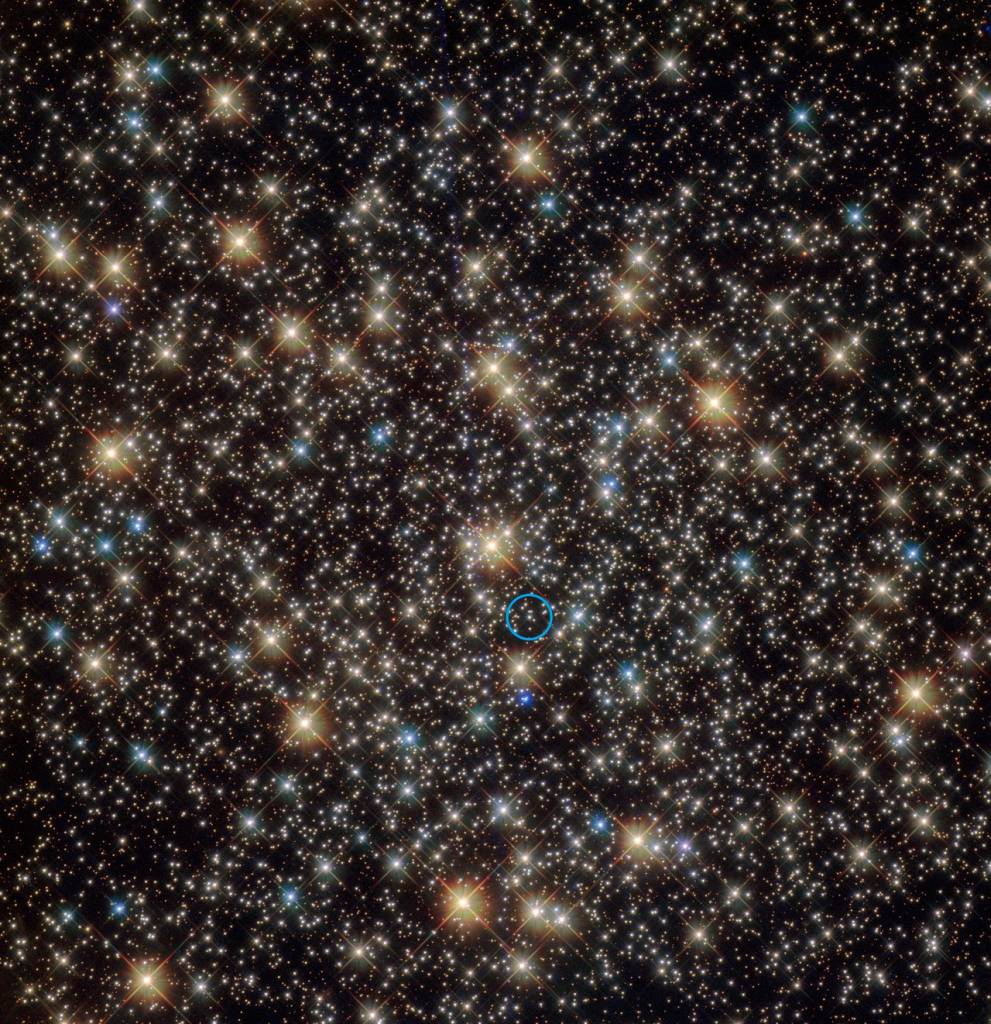
New observations from Webb combined with multiple observations from Hubble prove that Terzan 5 is a self-contained, self-enriching stellar system that contains up to four distinct star populations. It orbits within our Milky Way galaxy’s central bulge.Credit Image: NASA, ESA, CSA, STScI, Giorgia Zullo (University of Bologna), Francesco Ferraro (University of Bologna); Image Processing: Alyssa Pagan (STScI)

Yhis image of bulge fossil fragment Terzan 5 was captured by the James Webb and Hubble space telescopes. Webb’s data are from its NIRCam (Near-Infrared Camera) and Hubble’s from its Advanced Camera for Surveys (ACS). The image shows a scale bar, compass arrows, and color key for reference. The scale bar is labeled in light-years along the bottom, which is the distance that light travels in one Earth-year. (It takes two years for light to travel a distance equal to the length of the scale bar.) One light-year is equal to about 5.88 trillion miles or 9.46 trillion kilometers. The north and east compass arrows show the orientation of the image on the sky. Note that the relations hip between north and east on the sky (as seen from below) is flipped relative to direction arrows on a map of the ground (as seen from above). This image shows visible and near-infrared wavelengths of light that have been translated into visible-light colors. The color key shows which NIRCam and ACS filters were used when collecting the light. The color of each filter name is the visible-light color used to represent the infrared light that passes through that filter. Credit Image: NASA, ESA, CSA, STScI, Giorgia Zullo (University of Bologna), Francesco Ferraro (University of Bologna); Image Processing: Alyssa Pagan (STScI)

Zoom in to Terzan 5, a star cluster that lies within the crowded central region of our Milky Way galaxy known as the bulge. The scene starts with a ground-based image of our Milky Way bulge and zooms in on and circles Terzan 5, ending with the composite image of the star system from the James Webb and Hubble Space Telescopes. The Milky Way is shaped like a giant fried egg. The yolk in the middle is the galactic bulge, a crowded region packed with ancient stars of various masses and brightnesses. It’s also home to a number of globular star clusters that formed early in our galaxy’s history, which typically have only one ancient star population. In contrast, Terzan 5 was recently reclassified as a bulge fossil fragment because it has four generations of stars and has maintained its separate identity. Credit Video: NASA, ESA, CSA, Alyssa Pagan (STScI); Acknowledgment: ESO, Pan-STARRS, DSS2, Akira Fujii


Researchers using two of humanity’s most powerful observatories — NASA’s James Webb and Hubble Space Telescopes — have definitively shown that Terzan 5 is not a globular star cluster as it was once classified, offering new insight into how galaxies like our own form and evolve over time. A globular star cluster typically has only one ancient star population. New data not only confirms the existence of two distinct populations of stars in Terzan 5, but also provides evidence for two more recent rounds of star formation. Although located within the crowded bulge of our Milky Way, our galaxy’s central, spherical region of older stars, Terzan 5 was massive enough to maintain its separate identity while lighter weight systems spread out and mixed to form the bulge billions of years ago. It’s like a lump in an otherwise well-mixed cake batter.

“Webb’s new near-infrared observations, cross-referenced with Hubble’s archival observations, have given us a much clearer picture of the history of Terzan 5,” said Giorgia Zullo, who led the research and is a PhD student at the University of Bologna in Italy.

These results were presented at a press conference Tuesday at the 248th meeting of the American Astronomical Society in Pasadena, and were published in Astronomy & Astrophysics.

Four generations of stars

Discovered in 1968 by astronomer Azop Terzan, Terzan 5 resembles a globular cluster in many ways. However, in 2009 this system was discovered to harbor two distinct populations of stars. In 2016 Hubble provided the first estimate of their ages, showing that one formed roughly 12 billion years ago — as the Milky Way itself was assembling — and the other about 5 billion years ago, just before Earth started forming. This pointed to a more complex history than a typical globular cluster.

Studying Terzan 5 is complicated by its location in a region of our galaxy crowded with stars and heavily obscured by dust. This is where Webb stepped in. Its infrared view allowed the research team to peer through the dust and catalog many more stars, and fainter stars, than previous work. By measuring star colors and brightnesses, astronomers can classify them into populations of different ages and chemistries.

Webb was able to measure these key properties for every star within the field of view in the sky — both stars within Terzan 5 and unrelated foreground stars. To isolate the stars of Terzan 5, the team relied on the power and longevity of Hubble. The 12-year separation allowed the team to measure very small movements of individual stars, known as proper motions, to determine which stars belong to Terzan 5 and which are part of the Milky Way bulge.

By combining data from both Webb and Hubble, the researchers found strong evidence for two more stellar populations, one that formed 3.8 billion years ago and another only 2.5 billion years ago. They also were able to determine the ages of the previously known stellar populations with unprecedented precision, finding that they formed 12.5 billion and 4.7 billion years ago.

With the previously known two generations of stars, astronomers could not rule out the possibility that Terzan 5 interacted with another object, like a globular cluster or a giant molecular cloud, becoming enriched with new gas and dust that set off a second round of star formation. With four stellar generations, those explanations are ruled out.

Measurements of the stellar composition of Terzan 5 populations made at the W. M. Keck Observatory and European Southern Observatory’s Very Large Telescope also point toward very distinct populations. “Along with the ages of these populations, the cluster preserves a fossil record of progressive enrichment of heavy elements by supernovae,” said co-author R. Michael Rich, a research astronomer at the University of California, Los Angeles. Terzan 5 formed multiple generations of stars because it was able to retain the necessary raw materials. There is evidence of powerful supernova explosions in Terzan 5 that forged heavier elements that were swept up by subsequent generations of stars. In lighter weight systems, the force of the explosions themselves could have ejected the resulting elements as well as sweeping out leftover gas and dust. The progenitor of Terzan 5 had enough mass to retain those stars’ ejections, allowing new generations of stars to form over billions of years.

‘Bulge fossil fragment’

The results show that Terzan 5 is most likely the remnant of a much more massive stellar system that initially formed 12.5 billion years ago. Terzan 5 is extraordinary because it survived — and never merged or fully “mixed in” with the Milky Way’s bulge. “For some reason, this peculiar clump of stars formed separately from the bulge and was not destroyed as the bulge itself formed,” said Francesco R. Ferraro, a professor at the University of Bologna and principal investigator of the Webb observations. “Terzan 5 is what we now call a bulge fossil fragment because it resembles the primordial clumps that contributed to the formation of the bulge.”

To date, there’s one other known cosmic object like Terzan 5. Liller 1 was the second to be reclassified from a globular star cluster to a bulge fossil fragment. It also contains multiple generations of stars. There may be more objects like it. Between 40 to 50 additional globular clusters that orbit within the bulge will be examined by Ferraro’s team to determine if their stellar populations are all the same, like globular clusters, or have several generations, like bulge fossil fragments.


Details:

Last Updated: Jun 16, 2026
Location:
NASA Goddard Space Flight Center

Contact Media:

Laura Betz
NASA’s Goddard Space Flight Center
Greenbelt, Maryland

laura.e.betz@nasa.gov

Christine Pulliam
Space Telescope Science Institute
Baltimore, Maryland


Claire Blome
Space Telescope Science Institute
Baltimore, Maryland


Monday, July 01, 2024

Gemini North Captures Starburst Galaxy Blazing Bright With Newly Forming Stars

PR Image noirlab2416a
Starburst Galaxy NGC 4449

PR Image noirlab2416b
The Milky Way Over Gemini North

PR Image noirlab2416c
Gemini North Dedication Ceremony


Videos

Cosmoview Episode 83: Gemini North Captures Starburst Galaxy Blazing Bright With Newly Forming Stars
PR Video noirlab2416a
Cosmoview Episode 83: Gemini North Captures Starburst Galaxy Blazing Bright With Newly Forming Stars

Pan on NGC 4449
PR Video noirlab2416b
Pan on NGC 4449

Cosmoview Episodio 83: Telescopio de Gemini Norte celebra nuevo aniversario con el confeti cósmico de una devoradora galáctica


Irregular galaxy NGC 4449 exhibits explosive rate of star formation activity due in part to ongoing mergers with nearby dwarf galaxies

A festive array of bright pinks and blues makes for a remarkable sight in this image captured with the Gemini North telescope, one half of the International Gemini Observatory. Resembling a cloud of cosmic confetti, this image is being released in celebration of Gemini North’s 25th anniversary. NGC 4449 is a prime example of starburst activity caused by the interacting and mingling of galaxies as it slowly absorbs its smaller galactic neighbors.

Much of the visible matter in the Universe, the matter that makes up stars, planets — and us — is made inside stars as they complete their cycle of birth, life, and death. They are born from clouds of gas and dust, and when they die their remains are recycled back into the interstellar medium to be used as fuel for the next generation of stars. And in a not-so-distant corner of the Universe, 13 million light-years away in the constellation Canes Venatici, the beginning of this cycle is unfolding at an exceptional rate.

NGC 4449, also known as Caldwell 21, appears to be putting on a cosmic fireworks show in this image, captured with the Gemini North telescope, one half of the International Gemini Observatory, which is supported in part by the U.S. National Science Foundation and operated by NSF NOIRLab. The galaxy’s billowing red clouds and sparkling blue veil are lighting up the sky with the colors of newly forming stars. It’s classified as an irregular Magellanic-type galaxy, reflecting its loose spiral structure and close resemblance to the Large Magellanic Cloud — the prototype of Magellanic galaxies.

Stars have been actively forming within NGC 4449 for several billion years, but currently it is pumping out new stars at a much higher rate than in the past. This unusually explosive and intense star formation activity qualifies it as a starburst galaxy. While starbursts usually occur in the central regions of galaxies, NGC 4449’s star formation is more widespread, evidenced by the fact that the youngest stars are both in the nucleus and in streams surrounding the galaxy.

This ‘global’ starburst activity resembles the Universe’s earliest star-forming galaxies, which grew by merging with and accreting smaller stellar systems. And like its galactic predecessors, NGC 4449’s rapid star formation was likely ignited by interactions with neighboring galaxies. As a member of the M94 Group of galaxies — one of the closest galaxy groups to the Local Group, which hosts the Milky Way — NGC 4449 lies in close proximity to a handful of surrounding smaller galaxies. Astronomers have found evidence of interactions between NGC 4449 and at least two of these satellite galaxies.

One is a very dim dwarf galaxy that is actively being absorbed, as evidenced by a diffuse stream of stars extending to one side of NGC 4449. This ‘stealth’ merger is nearly undetectable by visual inspection owing to its diffuse nature and low stellar mass. However, it possesses a large amount of dark matter, meaning its presence can be detected by the substantial gravitational influence it has on NGC 4449. The other object that provides hints of a past merger is a massive globular star cluster embedded within the outer halo of NGC 4449. This cluster is thought by astronomers to be the surviving nucleus of a former gas-rich satellite galaxy now in the process of being absorbed by NGC 4449.

As NGC 4449 interacts with and absorbs its smaller galactic companions, the tidal interactions between the galaxies compress and shock the gas. The glowing red regions scattered across this image showcase this process, indicating an abundance of ionized hydrogen — a telltale sign of ongoing star formation. A plethora of hot, young blue star clusters are emerging from the galactic ovens, fueled by the dark filaments of cosmic dust lacing throughout the galaxy. At the current rate, the gas supply that feeds NGC 4449’s production of stars will only last for another billion years or so.

This image is being released today in celebration of the Gemini North telescope’s 25th anniversary. On 25 June 1999 a dedication ceremony was held on Maunakea, Hawai‘i, to unveil the new world-class 8.1-meter telescope and reveal its first-light images, which at the time were some of the sharpest infrared images ever obtained by a ground-based telescope. Over the past two and a half decades Gemini North’s large mirror, powerful suite of instruments and advanced adaptive optics have allowed astronomers to peer further and further into the cosmos. From capturing the first direct image of a multi-planet system to testing Einstein’s general theory of relativity — which helped astronomers earn the 2020 Nobel Prize — Gemini North has contributed greatly to humanity’s understanding of the Universe.


More information

NSF NOIRLab (U.S. National Science Foundation National Optical-Infrared Astronomy Research Laboratory), the U.S. center for ground-based optical-infrared astronomy, operates the International Gemini Observatory (a facility of NSF, NRC–Canada, ANID–Chile, MCTIC–Brazil, MINCyT–Argentina, and KASI–Republic of Korea), Kitt Peak National Observatory (KPNO), Cerro Tololo Inter-American Observatory (CTIO), the Community Science and Data Center (CSDC), and Vera C. Rubin Observatory (operated in cooperation with the Department of Energy’s SLAC National Accelerator Laboratory). It is managed by the Association of Universities for Research in Astronomy (AURA) under a cooperative agreement with NSF and is headquartered in Tucson, Arizona. The astronomical community is honored to have the opportunity to conduct astronomical research on I’oligam Du’ag (Kitt Peak) in Arizona, on Maunakea in Hawai‘i, and on Cerro Tololo and Cerro Pachón in Chile. We recognize and acknowledge the very significant cultural role and reverence that these sites have to the Tohono O’odham Nation, to the Native Hawaiian community, and to the local communities in Chile, respectively.


Links


Contacts:

Josie Fenske
NSF NOIRLab
Email:
josie.fenske@noirlab.edu


Monday, October 19, 2020

Anemic Star Cluster Breaks Metal-poor Record

The discovery of rbc ext8 challenges theories that massive globular star clusters could not have formed at such low metallicities. Credit: ESASky/CFHT 

Maunakea, Hawaii – In a surprising discovery, astronomers using two Maunakea Observatories – W. M. Keck Observatory and Canada-France-Hawaii Telescope (CFHT) – have found a globular star cluster in the Andromeda Galaxy that contains a record-breaking low amount of metals.

The stars in the cluster, called RBC EXT8, have on average 800 times less iron than our Sun and are three times more iron-poor than the previous globular cluster record-holder. RBC EXT8 is also extremely deficient in magnesium.

The study, led by Søren Larsen of Radboud University in the Netherlands, is published in today’s issue of the journal Science.

“I’m amazed that this remarkable star cluster was just sitting under our noses. It is one of the brightest clusters in the Andromeda galaxy and known for decades, yet no one had checked it out in detail,” said Aaron Romanowsky, a University of California Observatories (UCO) astronomer and professor at San José State University’s Physics and Astronomy Department who co-authored the study. “It shows how the universe still has many surprises for us to discover. It also reminds us to check our assumptions – in this case, it was assumed enough clusters had been investigated to know how anemic they can be.”

A globular cluster is a large, dense collection of thousands to millions of ancient stars that move together as a tight-knit group through a galaxy. Until now, astronomers thought large globular clusters had to contain a considerable amount of heavy elements.

Hydrogen and helium are the two main elements created after the Big Bang. Heavier elements such as iron and magnesium formed later. Finding a massive globular cluster like RBC EXT8 that is extremely impoverished in metals defies current formation models, calling into question some of our ideas about the birth of stars and galaxies in the young universe.

The RBC EXT8 globular cluster orbits the outskirts of the Andromeda Galaxy, a close companion to our Milky Way Galaxy, located 2.5 million light-years from Earth. Credit: ESASky/CFHT

“Our finding shows that massive globular clusters could form in the early universe out of gas with only a small ‘sprinkling’ of elements other than hydrogen and helium. This is surprising because such pristine gas was thought to be in building blocks too small to form such massive star clusters,” said Larsen.

“This discovery is exciting because the idea of a ‘metallicity floor’ for globular clusters, that must contain some minimum amount of heavy metals, underpinned so much of our thinking about how these very old star clusters formed in the early universe,” said co-author Jean Brodie, Director, Centre for Astrophysics and Supercomputing at Swinburne University and Professor Emerita of Astronomy and Astrophysics at UCO. “Our finding contradicts the standard picture and that is always fun!”

The researchers observed RBC EXT8 using Keck Observatory’s High-Resolution Echelle Spectrometer (HIRES) in October of 2019. The globular cluster was not originally on the program, but Larsen’s team had a couple of hours of observing time left and decided to aim the Keck I telescope at the cluster, whose stellar content had not yet been studied in detail. The team made spectroscopic observations to determine RBC EXT8’s metal content and used three archive images from CFHT to determine its size and estimate its mass. Their remarkable result came as quite a surprise.

“It is observationally challenging to obtain a detailed analysis of the chemical composition of globular clusters in the Andromeda Galaxy, which is in the Northern Hemisphere of the sky,” said Brodie. “The HIRES capability at Keck is uniquely well-suited to meet this challenge.”

In the future, the researchers hope to find more “metal-lite” globular clusters and solve the mystery about their origin.


About HIRES

The High-Resolution Echelle Spectrometer (HIRES) produces spectra of single objects at very high spectral resolution yet covers a wide wavelength range. It does this by separating the light into many “stripes” of spectra stacked across a mosaic of three large CCD detectors. HIRES is famous for finding exoplanets. Astronomers also use HIRES to study important astrophysical phenomena like distant galaxies and quasars, as well as find cosmological clues about the structure of the early universe, just after the Big Bang.


About W. M. Keck Observatory

The W. M. Keck Observatory telescopes are among the most scientifically productive on Earth. The two 10-meter optical/infrared telescopes on the summit of Maunakea on the Island of Hawaii feature a suite of advanced instruments including imagers, multi-object spectrographs, high-resolution spectrographs, integral-field spectrometers, and world-leading laser guide star adaptive optics systems. Some of the data presented herein were obtained at Keck Observatory, which is a private 501(c) 3 non-profit organization operated as a scientific partnership among the California Institute of Technology, the University of California, and the National Aeronautics and Space Administration. The Observatory was made possible by the generous financial support of the W. M. Keck Foundation. The authors wish to recognize and acknowledge the very significant cultural role and reverence that the summit of Maunakea has always had within the Native Hawaiian community. We are most fortunate to have the opportunity to conduct observations from this mountain.


Tuesday, September 29, 2020

Encounter of generations in the heart of the Galaxy

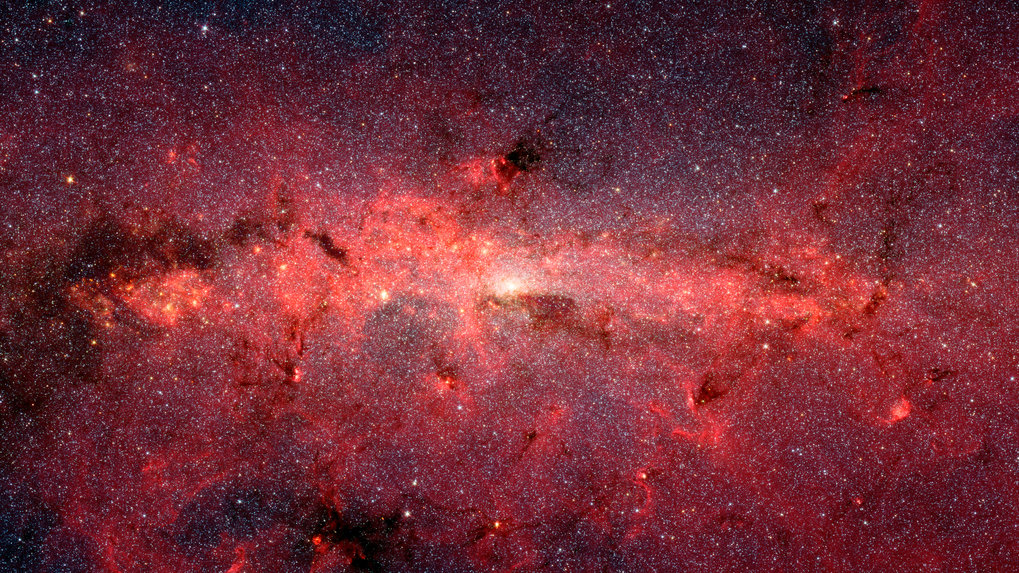
Central region of the Milky Way in infrared light. With this image, NASA's Spitzer Space Telescope has photographed the inner 890 x 640 light years of the Milky Way. The nuclear star cluster is located in a small area near the central massive black hole. The extended structures in the image are mostly clouds of gas and dust from the spiral arms of the Milky Way, which lie in the line of sight between Earth and the Galactic Centre. Image: NASA/JPL-Caltech/S. Solovy (Spitzer Science Center/Caltech).
Hi-res image

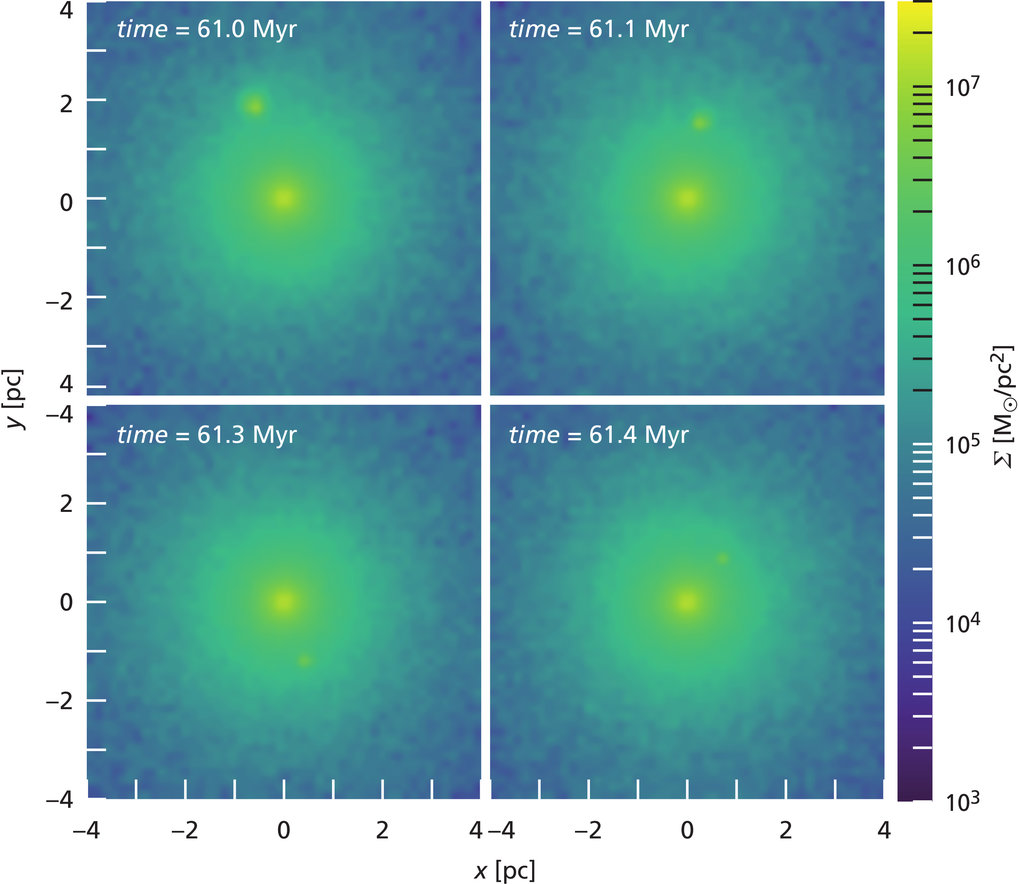
Visualisation of a simulation showing the infall of a globular star cluster into the nuclear star cluster of the Milky Way. The colour scale shows the distribution of star densities along the lines of sight within the Galactic Centre. The globular cluster can be recognised as an isolated point that increasingly merges with the nuclear star cluster over the course of 400 million years and dissolves in the process. Despite the resulting mixing of the two star populations, certain properties of the stars of the globular cluster remain. Image: Manuel Arca Sedda et al. (ARI/ZAH)/MPIA.
Hi-res image

Astronomers discover a previously unknown population of stars near the centre of the Milky Way

The centre of our home galaxy is one of the regions richest in stars in the known Universe. Within this region, scientists have now identified a previously unknown, ancient stellar population with surprising properties. An international team of astronomers, with significant participation from the Max Planck Institute for Astronomy, has identified the origin of these stars to be a globular cluster within our galaxy, which moved to the centre of the Milky Way long ago.

On clear and dark nights it is still visible – the milky white, diffuse band of the Milky Way across the night sky. Since the invention of the telescope, scientists have known that this band consists of countless stars. Today, we understand that our home galaxy is mainly a large flat disc of hundreds of billions of stars, surrounded by dust and gas, and it is rotating around its centre.

The nuclear star cluster is one of the regions richest in stars in the known Universe

About 25,000 light years away from Earth, located in the constellation of Sagittarius, lies the centre of the Milky Way. This so-called Galactic Centre was only discovered in the last century and has been the subject of astronomical research ever since.

In the innermost centre of the Milky Way rests an extremely massive black hole. It is surrounded by one of the densest agglomerations of stars in the known Universe – a so-called "Nuclear Star Cluster" (NSC). Astronomers today assume that there are around 20 million stars in the innermost 26 light years of the Galaxy.

However, it is not visible at all without special equipment, because there are numerous dust clouds between us and the Galactic Centre that obscure the visible light. It therefore appears darker than other parts of the Milky Way. Only observations at much shorter or longer wavelengths such as infrared light reveal the structure of this region of the sky, which is actually much more massive than other regions of the galaxy.

The Milky Way is by no means unique, and astronomers now believe that most spiral galaxies could contain both a central black hole and a nuclear star cluster. However, the nuclear star cluster within the Milky Way is the only place where astronomers can resolve individual stars because of its relatively close distance, making it an ideal laboratory for studying the properties of these huge stellar clusters.

A study of the nuclear star cluster as a basis for further insights

This is why astronomers led by Anja Feldmeier-Krause from the European Southern Observatory (ESO) and Nadine Neumayer from the Max Planck Institute for Astronomy (MPIA) in Heidelberg used special instruments at the Very Large Telescope (VLT) in Chile to observe this unique region. In a recently published study, they analysed about 700 stars and not only examined their brightness and colour, but were also able to draw conclusions about their motions and speeds, but also about their chemical structure. These observations form the basis for a number of important discoveries about this so far unexplored part of the galaxy.

The chemical composition of a star is an important indicator in astronomy, as it tells us something about its age. Metallicity – the abundance of heavier elements than hydrogen and helium – is an important quantity. This is because all other elements can only form in those very stars. Therefore, if a star contains a large number of heavy elements such as oxygen, carbon or iron, this means that it must have formed from the remains of a precursor star and is therefore relatively young. Conversely, a low metallicity indicates a very old star, which formed in the early days of the Universe, when there were hardly any heavy elements present in the Cosmos. The metallicity is therefore a direct indication of the age of the respective star and therefore of great importance for astronomers.

A hitherto unknown population of stars hides in the very heart of the Galaxy

In analysing these observations, an international team of researchers led by Tuan Do from the University of California, Los Angeles, and including Nadine Neumayer and Manuel Arca Sedda, both working in the Collaborative Research Centre SFB 881 at the Centre for Astronomy at the University of Heidelberg, has now discovered a previously unknown population of stars within the nuclear star cluster. While the majority of stars in the central region of the Milky Way have higher metallicities than the Sun, the scientists identified a group of stars that contained significantly less heavy elements. In addition, these stars are characterised by a common, higher velocity than that of the surrounding stars, and their direction of motion may be slightly tilted in relation to the galactic plane. The properties of these stars, which account for about 7% of all stars in the nuclear star cluster, are surprisingly similar. It is therefore obvious that these stars have a common origin. But how did they reach the innermost part of the galaxy?

An answer to this question may lie in the formation of a nuclear star cluster: according to a commonly accepted theory, they could at least partly have formed by collisions of several clusters, i.e. spatially denser collections of stars of similar ages, within a galaxy. Held together by the mutual gravitational pull, they move jointly through a bath of surrounding field stars. Stellar clusters exist in all known galaxies. Due to the phenomenon of dynamic friction, a gravitational effect of the surrounding matter, the clusters lose speed on their orbits and thus drift towards the Galactic Centre. At this point, they merge with other clusters and form the much larger nuclear star clusters. It is possible that the newly discovered population is a remnant of such an older group of stars.

Sophisticated simulations help to clarify the history of the nuclear star cluster

To test this theory, the scientists used powerful computer simulations. They calculated a virtual system consisting of many individual objects, mapping the innermost 300 light years of the Milky Way. It includes the nuclear star cluster and the central black hole, as well as a massive star cluster with about 1 million solar masses, which at the beginning of the simulation was about 160 light years from the centre of the galaxy. “Among other things, our goal was to find out how long ago such a stellar cluster could have entered the region around the Galactic Centre and where it originally came from,” explains Arca Sedda.

When a stellar cluster falls towards the Galactic Centre, the gravitational interactions with its environment cause stars to be ejected from the cluster. Once it reaches the innermost part of the Galaxy, it dissolves within a relatively short timescale and its stars become largely indistinguishable from the rest of the stars in its new environment.

Since the members of the newly discovered stellar population still have some very characteristic similarities despite their dispersal, astronomers suspect a common origin of these stars outside the nuclear star cluster. The simulations now suggest that they have entered the central area within the recent 3 to a maximum of 5 billion years.

The origin of the newly discovered stars

But where does the stellar cluster originally come from? There are several possibilities. The scientists have investigated the two most probable ones in their publication: firstly, the stars in a cluster may have come from regions further out in the Milky Way itself, from where they migrated to the centre of the galaxy. Another possibility is also the entry of a dwarf galaxy from around the Milky Way. The remaining galactic core or a large star cluster of this dwarf galaxy could have made it to the Galactic Centre. The scientists investigated both scenarios in their simulation.

“Our results indicate that an infall of a rather nearby stellar cluster from the Milky Way itself is more likely,” explains Neumayer. It was probably originally formed about 10,000 to 16,000 light years away.

To support this hypothesis, the astronomers also compared the observed properties of the newly discovered stellar population with the ones of old globular clusters in the Milky Way and those that entered our Milky Way together with dwarf galaxies. They found that the properties of the newly discovered central stars matched those of globular clusters in the Milky Way much better. The calculated distances of the preceding stellar clusters also correspond well with the distances of those that have been known for a while already. “Although an extragalactic origin of the stars cannot be completely ruled out, it is rather unlikely,” Arca Sedda concludes. “This is an additional sign that the central nuclear star cluster in the galaxy is at least partly the result of the impact of smaller clusters.”

Background information

This work was carried out within the framework of subprojects Z2 and B8 of the Collaborative Research Centre SFB 881 “The Milky Way System” at the University of Heidelberg. Collaborative Research Centres are long-term projects for fundamental research, which are funded by the German Research Foundation (DFG) up to a duration of 12 years.

The SFB 881 is located at the Zentrum für Astronomie der Universität Heidelberg (ZAH) and includes scientists from the Astronomisches Rechen-Institut (ARI), the Institut für Theoretische Astrophysik (ITA) and the Landessternwarte Königstuhl (LSW). The participating non-university research institutions are the Max Planck Institute for Astronomy (MPIA) and the Heidelberg Institute for Theoretical Studies (HITS). In addition, the Haus der Astronomie (HdA) participates by making the SFB's research results available to the public.


Contacts

Nadine Neumayer
Leader Lise Meitner Group “Galactic Nuclei”
Phone:+49 6221 528-446

Max Planck Institute for Astronomy, Heidelberg

Renate Hubele
Public outreach SFB881/ZAH
Phone:+49 6221 528-291

Haus der Astronomie, Heideberg

Markus Nielbock
Press and public relations officer
Phone:+49 6221 528-134

Max Planck Institute for Astronomy, Heidelbe


Original publications

1. Manuel Arca Sedda et al.
On the origin of a rotating metal-poor stellar population in the Milky Way Nuclear Cluster
The Astrophysical Journal Letters, 901, L29 (2020)

Source / DOI

2.Tuan Do et al.
Revealing the Formation of the Milky Way Nuclear Star Cluster via Chemo-Dynamical Modeling
The Astrophysical Journal Letters, 901, L28 (2020)

Source / DOI

3. Anja Feldmeier-Krause et al.
Asymmetric spatial distribution of subsolar metallicity stars in the Milky Way nuclear star cluster
Monthly Notices of the Royal Astronomical Society, 494, 396 (2020)

Source / DOI

Wednesday, March 27, 2019

Ultra-sharp Images Make Old Stars Look Absolutely Marvelous!

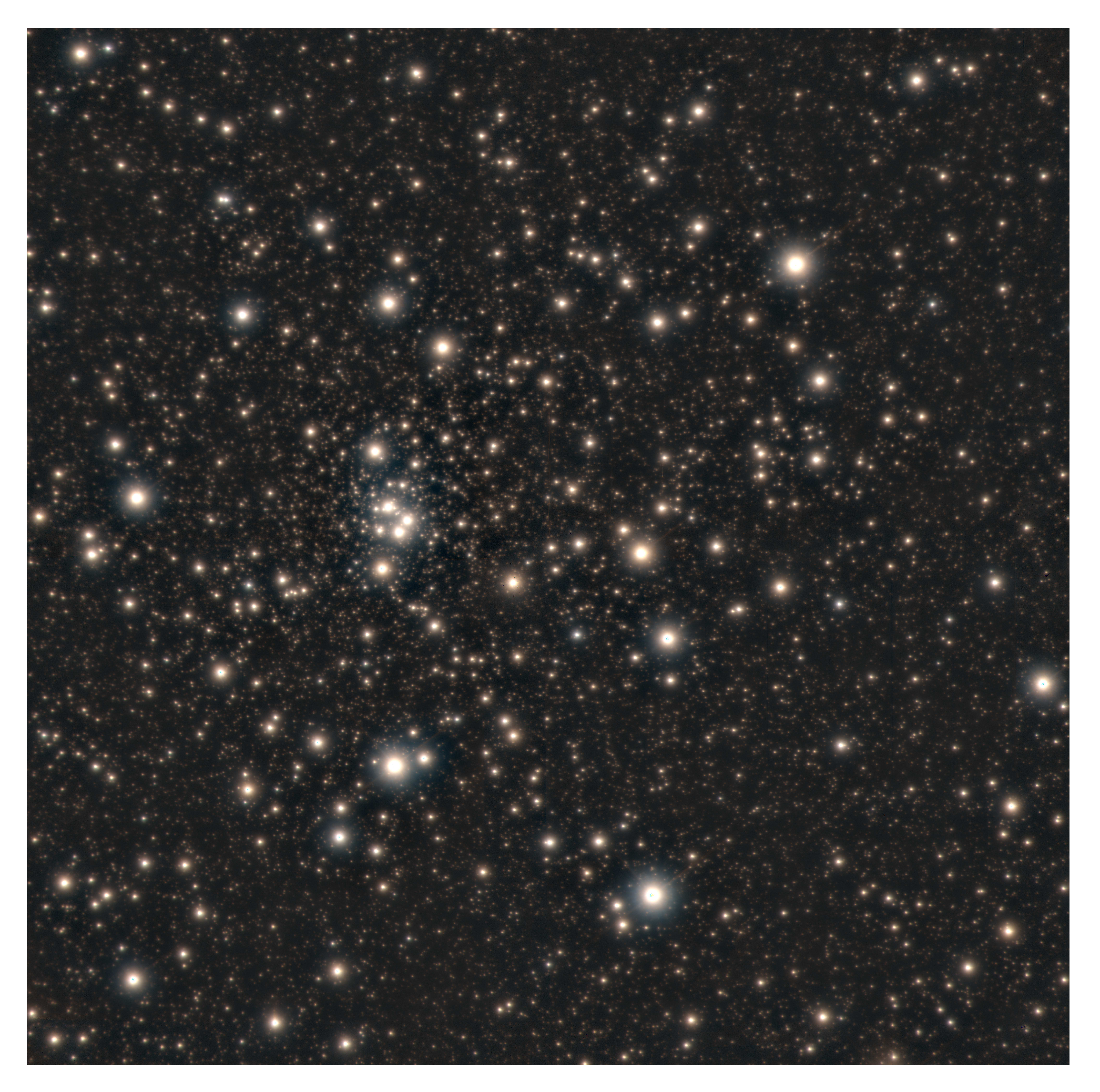
Figure 1. Color composite GSAOI+GeMS image of HP 1 obtained using the Gemini South telescope in Chile. North is up and East to the left. Composite image produced by Mattia Libralato of the Space Telescope Science Institute. Credit: Gemini Observatory/AURA/NSF; composite image produced by Mattia Libralato of Space Telescope Science Institute.  Full resolution PNG

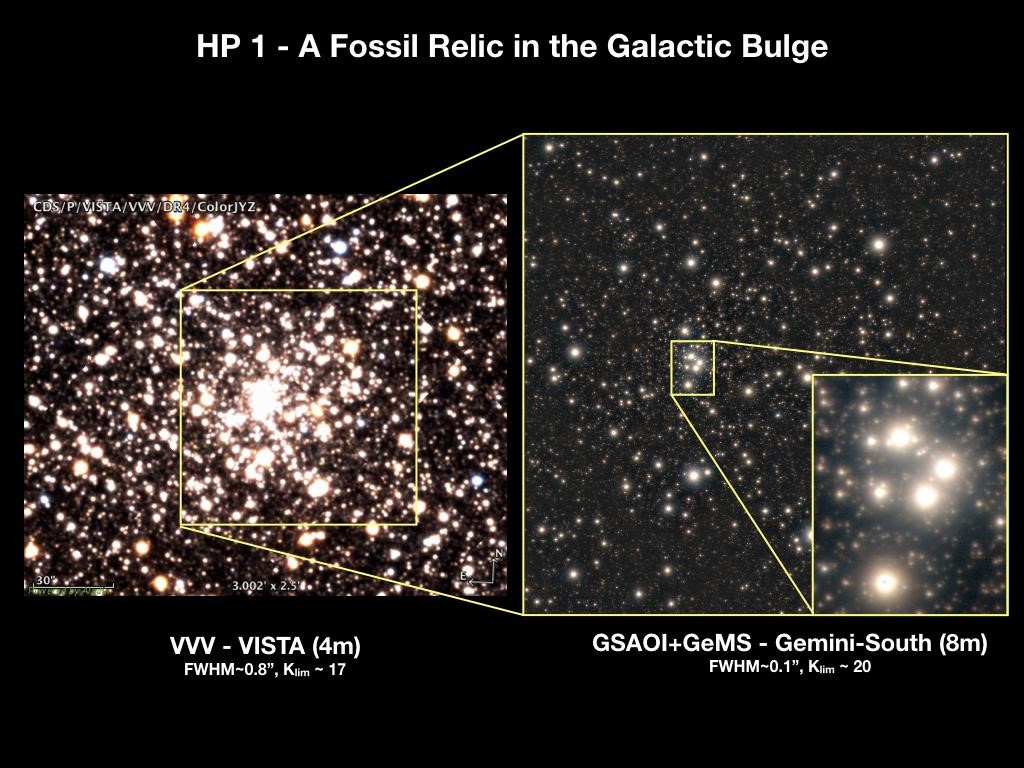
Figure 2. . GSAOI+GeMS color composite image of HP 1 (right image) shown relative to the full field of the cluster obtained by the Visible and Infrared Survey Telescope for Astronomy (left). Credit: Gemini Observatory/NSF/AURA/VISTA/Aladin/CDS.  Full resolution JPG


Using high-resolution adaptive optics imaging from the Gemini Observatory, astronomers have uncovered one of the oldest star clusters in the Milky Way Galaxy. The remarkably sharp image looks back into the early history of our Universe and sheds new insights on how our Galaxy formed.

Just as high-definition imaging is transforming home entertainment, it is also advancing the way astronomers study the Universe.

“Ultra-sharp adaptive optics images from the Gemini Observatory allowed us to determine the ages of some of the oldest stars in our Galaxy,” said Leandro Kerber of the Universidade de São Paulo and Universidade Estadual de Santa Cruz, Brazil. Kerber led a large international research team that published their results in the April 2019 issue of the Monthly Notices of the Royal Astronomical Society.

Using advanced adaptive optics technology at the Gemini South telescope in Chile, the researchers zoomed in on a cluster of stars known as HP 1. “Removing our atmosphere’s distortions to starlight with adaptive optics reveals tremendous details in the objects we study,” added Kerber. “Because we captured these stars in such great detail, we were able to determine their advanced age and piece together a very compelling story.”

That story begins just as the Universe was reaching its one-billionth birthday.

"This star cluster is like an ancient fossil buried deep in our Galaxy's bulge, and now we've been able to date it to a far-off time when the Universe was very young,” said Stefano Souza, a PhD student at the Universidade de São Paulo, Brazil, who worked with Kerber as part of the research team. The team’s results date the cluster at about 12.8 billion years, making these stars among the oldest ever found in our Galaxy. “These are also some of the oldest stars we’ve seen anywhere,” added Souza.

“HP 1 is one of the surviving members of the fundamental building blocks that assembled our Galaxy’s inner bulge,” said Kerber. Until a few years ago, astronomers believed that the oldest globular star clusters — spherical swarms of up to a million stars — were only located in the outer parts of the Milky Way, while the younger ones resided in the innermost Galactic regions. However, Kerber’s study, as well as other recent work based on data from the Gemini Observatory and the Hubble Space Telescope (HST), have revealed that ancient star clusters are also found within the Galactic bulge and relatively close to the Galactic center.

Globular clusters tell us much about the formation and evolution of the Milky Way. Most of these ancient and massive stellar systems are thought to have coalesced out of the primordial gas cloud that later collapsed to form the spiral disk of our Galaxy, while others appear to be the cores of dwarf galaxies consumed by our Milky Way. Of the roughly 160 globular clusters known in our Galaxy, about a quarter are located within the greatly obscured and tightly packed central bulge region of the Milky Way. This spherical mass of stars some 10,000 light years across forms the central hub of the Milky Way (the yolk if you will) which is made primarily of old stars, gas, and dust. Among the clusters within the bulge, those that are the most metal-poor (lacking in heavier elements) – which includes HP 1 – have long been suspected of being the oldest. HP 1 then is pivotal, as it serves as an excellent tracer of our Galaxy’s early chemical evolution.

“HP 1 is playing a critical role in our understanding of how the Milky Way formed,” Kerber said. “It is helping us to bridge the gap in our understanding between our Galaxy's past and its present.”

Kerber and his international team used the exquisitely deep high-resolution adaptive optics images from Gemini Observatory as well as archival optical images from the HST to identify faint cluster members, which are essential for age determination. With this rich data set they confirmed that HP 1 is a fossil relic born less than a billion years after the Big Bang, when the Universe was in its infancy.

"These results crown an effort of more than two decades with some of the world's premier telescopes aimed at determining accurate chemical abundances with high-resolution spectroscopy," said Beatriz Barbuy of the Universidade de São Paulo, coauthor of this paper and a world-renowned expert in this field. "These Gemini images are the best ground-based photometric data we have. They are at the same level of HST data, allowing us to recover a missing piece in our puzzle: the age of HP 1. From the existence of such old objects, we can attest to the short star formation timescale in the Galactic bulge, as well as its fast chemical enrichment."

To determine the cluster’s distance, the team used archival ground-based data to identify 11 RR Lyrae variable stars (a type of “standard candle” used to measure cosmic distances) within HP 1. The observed brightness of these RR Lyrae stars indicate that HP 1 is at a distance of about 21,500 light years, placing it approximately 6,000 light years from the Galactic center, well within the Galaxy’s central bulge region.

Kerber and his team also used the Gemini data, as well HST, Very Large Telescope, and Gaia mission data, to refine the orbit of HP 1 within our Galaxy. This analysis shows that during HP 1’s history, the cluster came as close as about 400 light years from the Galactic center – less than one-tenth of its current distance.

“The combination of high angular resolution and near-infrared sensitivity makes GeMS/GSAOI an extremely powerful tool for studying these compact, highly dust-enshrouded stellar clusters,” added Mattia Libralato of the Space Telescope Science Institute, a coauthor on the study. “Careful characterization of these ancient systems, as we’ve done here, is paramount to refine our knowledge of our Galaxy’s formation.”

Chris Davis, Program Officer at the National Science Foundation (NSF) for Gemini, commented, “These fabulous results demonstrate why the development of wide-field, high-resolution imaging at Gemini is key to the Observatory’s future. The recent NSF award to support the development of a similar system at Gemini North will make routine super-sharp imaging from both hemispheres a reality. These are certainly exciting times for the Observatory.”

The Gemini observations resolve stars to about 0.1 arcsecond which is one 36 thousandths of a degree and comparable to separating two automobile headlamps from approximately 1,500 miles, or 2,500 kilometers, away (the distance from Manaus to Sao Paulo in Brazil, or from San Francisco to Dallas in the USA). This resolution was obtained using the Gemini South Adaptive Optics Imager (GSAOI) – a near-infrared adaptive optics camera used with the Gemini Multi-conjugate adaptive optics System (GeMS). GeMS is an advanced adaptive optics system utilizing three deformable mirrors to correct for distortions imparted on starlight by turbulence in layers of our atmosphere.


Media Contact:

Peter Michaud
Public Information and Outreach manager
Gemini Observatory
Email: pmichaud@gemini.edu
Desk: 808-974-2510
Cell: 808-936-6643

Science Contacts:

Leandro Kerber
Universidade Estadual de Santa Cruz, Brazil
Email: lokerber@uesc.br
Cell: +55 11 94724-6073
Desk: +55 73 3680-5167 


Friday, November 30, 2018

Hubble Uncovers Thousands of Globular Star Clusters Scattered Among Galaxies

Coma Cluster Full Mosaic
This is a Hubble Space Telescope mosaic of the immense Coma cluster of over 1,000 galaxies, located 300 million light-years from Earth. Hubble's incredible sharpness was used to do a comprehensive census of the cluster's most diminutive members: a whopping 22,426 globular star clusters. Among the earliest homesteaders of the universe, globular star clusters are snow-globe-shaped islands of several hundred thousand ancient stars. The survey found the globular clusters scattered in the space between the galaxies. They have been orphaned from their home galaxies through galaxy tidal interactions within the bustling cluster. Astronomers will use the globular cluster field for mapping the distribution of matter and dark matter in the Coma galaxy cluster.


Gazing across 300 million light-years into a monstrous city of galaxies, astronomers have used NASA's Hubble Space Telescope to do a comprehensive census of some of its most diminutive members: a whopping 22,426 globular star clusters found to date.

The survey, published in the November 9, 2018, issue of The Astrophysical Journal, will allow for astronomers to use the globular cluster field to map the distribution of matter and dark matter in the Coma galaxy cluster, which holds over 1,000 galaxies that are packed together.

Because globular clusters are much smaller than entire galaxies – and much more abundant – they are a much better tracer of how the fabric of space is distorted by the Coma cluster's gravity. In fact, the Coma cluster is one of the first places where observe

d gravitational anomalies were considered to be indicative of a lot of unseen mass in the universe – later to be called “dark matter.”

Among the earliest homesteaders of the universe, globular star clusters are snow-globe-shaped islands of several hundred thousand ancient stars. They are integral to the birth and growth of a galaxy. About 150 globular clusters zip around our Milky Way galaxy, and, because they contain the oldest known stars in the universe, were present in the early formative years of our galaxy.

Some of the Milky Way's globular clusters are visible to the naked eye as fuzzy-looking "stars." But at the distance of the Coma cluster, its globulars appear as dots of light even to Hubble's super-sharp vision. The survey found the globular clusters scattered in the space between the galaxies. They have been orphaned from their home galaxy due to galaxy near-collisions inside the traffic-jammed cluster. Hubble revealed that some globular clusters line up along bridge-like patterns. This is telltale evidence for interactions between galaxies where they gravitationally tug on each other like pulling taffy.

Astronomer Juan Madrid of the Australian Telescope National Facility in Sydney, Australia first thought about the distribution of globular clusters in Coma when he was examining Hubble images that show the globular clusters extending all the way to the edge of any given photograph of galaxies in the Coma cluster.

He was looking forward to more data from one of the legacy surveys of Hubble that was designed to obtain data of the entire Coma cluster, called the Coma Cluster Treasury Survey. However, halfway through the program, in 2006, Hubble's powerful Advanced Camera for Surveys (ACS) had an electronics failure. (The ACS was later repaired by astronauts during a 2009 Hubble servicing mission.)

To fill in the survey gaps, Madrid and his team painstakingly pulled numerous Hubble images of the galaxy cluster taken from different Hubble observing programs. These are stored in the Space Telescope Science Institute's Mikulski Archive for Space Telescopes in Baltimore, Maryland. He assembled a mosaic of the central region of the cluster, working with students from the National Science Foundation's Research Experience for Undergraduates program. "This program gives an opportunity to students enrolled in universities with little or no astronomy to gain experience in the field," Madrid said.

The team developed algorithms to sift through the Coma mosaic images that contain at least 100,000 potential sources. The program used globular clusters' color (dominated by the glow of aging red stars) and spherical shape to eliminate extraneous objects – mostly background galaxies unassociated with the Coma cluster.

Though Hubble has superb detectors with unmatched sensitivity and resolution, their main drawback is that they have tiny fields of view. "One of the cool aspects of our research is that it showcases the amazing science that will be possible with NASA's planned Wide Field Infrared Survey Telescope (WFIRST) that will have a much larger field of view than Hubble," said Madrid. "We will be able to image entire galaxy clusters at once."

The Hubble Space Telescope is a project of international cooperation between NASA and ESA (European Space Agency). NASA's Goddard Space Flight Center in Greenbelt, Maryland, manages the telescope. The Space Telescope Science Institute (STScI) in Baltimore, Maryland, conducts Hubble science operations. STScI is operated for NASA by the Association of Universities for Research in Astronomy, in Washington, D.C.


Credits:

Image: NASA, ESA, J. Mack (STScI), and J. Madrid (Australian Telescope National Facility)

Science: NASA, ESA, and J. Madrid (Australian Telescope National Facility)


Related Links


Contact

Ray Villard
Space Telescope Science Institute, Baltimore, Maryland
410-338-4514
villard@stsci.edu

Juan Madrid
Australian Telescope National Facility, Sydney, Australia
jmadrid@astro.swin.edu.au


Thursday, January 18, 2018

Odd Behaviour of Star Reveals Lonely Black Hole Hiding in Giant Star Cluster

Hubble image of the globular star cluster NGC 3201 (annotated)

Hubble image of the globular star cluster NGC 3201 (annotated)

Wide-field image of the sky around the globular star cluster NGC 3201 

The globular cluster NGC 3201

Hubble image of the globular star cluster NGC 3201 (unannotated)

The globular cluster NGC 3201 in the constellation of Vela (The Sails)


Video

ESOcast 146 Light: Odd Behaviour of Star Reveals Black Hole in Giant Star Cluster (4K UHD)

Zooming in on the globular star cluster NGC 3201

Artist’s impression video of the black hole binary system in NGC 3201

Artist’s impression video of the black hole binary system in NGC 3201

Artist’s impression video of the black hole binary system in NGC 3201


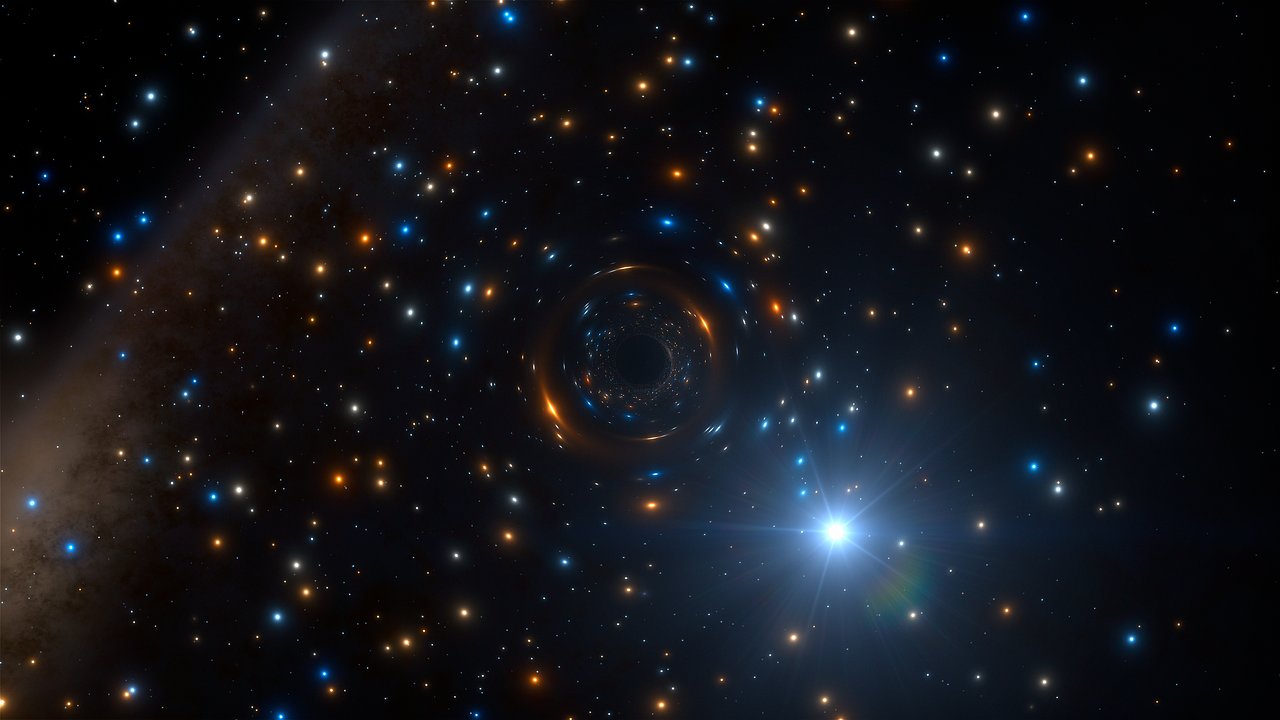
Astronomers using ESO’s MUSE instrument on the Very Large Telescope in Chile have discovered a star in the cluster NGC 3201 that is behaving very strangely. It appears to be orbiting an invisible black hole with about four times the mass of the Sun — the first such inactive stellar-mass black hole found in a globular cluster and the first found by directly detecting its gravitational pull. This important discovery impacts on our understanding of the formation of these star clusters, black holes, and the origins of gravitational wave events.

Globular star clusters are huge spheres of tens of thousands of stars that orbit most galaxies. They are among the oldest known stellar systems in the Universe and date back to near the beginning of galaxy growth and evolution. More than 150 are currently known to belong to the Milky Way.

One particular cluster, called NGC 3201 and situated in the southern constellation of Vela (The Sails), has now been studied using the MUSE instrument on ESO’s Very Large Telescope in Chile. An international team of astronomers has found that one of the stars [1] in NGC 3201 is behaving very oddly — it is being flung backwards and forwards at speeds of several hundred thousand kilometres per hour, with the pattern repeating every 167 days [2].

Lead author Benjamin Giesers (Georg-August-Universität Göttingen, Germany) was intrigued by the star’s behaviour: “It was orbiting something that was completely invisible, which had a mass more than four times the Sun — this could only be a black hole! The first one found in a globular cluster by directly observing its gravitational pull.

The relationship between black holes and globular clusters is an important but mysterious one. Because of their large masses and great ages, these clusters are thought to have produced a large number of stellar-mass black holes — created as massive stars within them exploded and collapsed over the long lifetime of the cluster [3][4].

ESO’s MUSE instrument provides astronomers with a unique ability to measure the motions of thousands of far away stars at the same time. With this new finding, the team have for the first time been able to detect an inactive black hole at the heart of a globular cluster — one that is not currently swallowing matter and is not surrounded by a glowing disc of gas. They could estimate the black hole’s mass through the movements of a star caught up in its enormous gravitational pull [5].

From its observed properties the star was determined to be about 0.8 times the mass of our Sun, and the mass of its mysterious counterpart was calculated at around 4.36 times the Sun’s mass — almost certainly a black hole [6].
Recent detections of radio and X-ray sources in globular clusters, as well as the 2016 detection of gravitational-wave signals produced by the merging of two stellar-mass black holes, suggest that these relatively small black holes may be more common in globular clusters than previously thought.

Giesers concludes: “Until recently, it was assumed that almost all black holes would disappear from globular clusters after a short time and that systems like this should not even exist! But clearly this is not the case — our discovery is the first direct detection of the gravitational effects of a stellar-mass black hole in a globular cluster. This finding helps in understanding the formation of globular clusters and the evolution of black holes and binary systems — vital in the context of understanding gravitational wave sources.”


Notes

[1] The star found is a main sequence turn-off star, meaning it is at the end of the main sequence phase of its life. Having exhausted its primary hydrogen fuel supply it is now on the way to becoming a red giant.

[2] A large survey of 25 globular clusters around the Milky Way is currently being conducted using ESO’s MUSE instrument with the support of the MUSE consortium. It will provide astronomers with the spectra of 600 to 27 000 stars in each cluster. The study includes analysis of the “radial velocity” of individual stars — the speed at which they move away from and toward the Earth, along the line of sight of the observer. With radial velocity measurements the orbits of stars can be determined, as well as the properties of any massive object they may be orbiting.

[3] In the absence of continuous star formation, as is the case for globular clusters, stellar-mass black holes soon become the most massive objects present. Generally, stellar-mass black holes in globular clusters are about four times as massive as the surrounding low-mass stars. Recent theories have concluded that black holes form a dense nucleus within the cluster, which then becomes detached from the rest of the globular material. Movements at the centre of the cluster are then thought to eject the majority of black holes, meaning only a few would survive after a billion years.

[4] Stellar-mass black holes — or collapsars — are formed when massive stars die, collapsing under their own gravity and exploding as powerful hypernovae. Left behind is a black hole with most of the mass of the former star, which can range from a few times the mass of our Sun to several tens of times as massive.

[5] As no light is able to escape black holes because of their tremendous gravity, the primary method of detecting them is through observations of radio or X-ray emissions coming from hot material around them. But when a black hole is not interacting with hot matter and so not accumulating mass or emitting radiation, as in this case, the black hole is “inactive” and invisible, so another method of detection is required.

[6] Because the non-luminous object in this binary system cannot be directly observed there are alternative, although much less persuasive, explanations for what it could be. It is perhaps a triple star system made up of two tightly bound neutron stars, with the observed star orbiting around them. This scenario would require each tightly bound star to be at least twice the mass of our Sun, a binary system that has never been observed before.


More Information

This research was presented in a paper entitled “A detached stellar-mass black hole candidate in the globular cluster NGC 3201”, by B. Giesers et al., to appear in the journal Monthly Notices of the Royal Astronomical Society.

The team is composed of Benjamin Giesers (Georg-August-Universität Göttingen, Germany), Stefan Dreizler (Georg-August-Universität Göttingen, Germany), Tim-Oliver Husser (Georg-August-Universität Göttingen, Germany), Sebastian Kamann (Georg-August-Universität Göttingen, Germany; Liverpool John Moores University, Liverpool, United Kingdom), Guillem Anglada Escudé (Queen Mary University of London, United Kingdom), Jarle Brinchmann (Leiden Observatory, Leiden University, Leiden, The Netherlands; Universidade do Porto, CAUP, Porto, Portugal), C. Marcella Carollo (Swiss Federal Institute of Technology, ETH, Zurich, Switzerland) Martin M. Roth (Leibniz-Institut für Astrophysik Potsdam, Potsdam, Germany), Peter M. Weilbacher (Leibniz-Institut für Astrophysik Potsdam, Potsdam, Germany) and Lutz Wisotzki (Leibniz-Institut für Astrophysik Potsdam, Potsdam, Germany).

ESO is the foremost intergovernmental astronomy organisation in Europe and the world’s most productive ground-based astronomical observatory by far. It is supported by 16 countries: Austria, Belgium, Brazil, the Czech Republic, Denmark, France, Finland, Germany, Italy, the Netherlands, Poland, Portugal, Spain, Sweden, Switzerland and the United Kingdom, along with the host state of Chile and by Australia as a strategic partner. ESO carries out an ambitious programme focused on the design, construction and operation of powerful ground-based observing facilities enabling astronomers to make important scientific discoveries. ESO also plays a leading role in promoting and organising cooperation in astronomical research. ESO operates three unique world-class observing sites in Chile: La Silla, Paranal and Chajnantor. At Paranal, ESO operates the Very Large Telescope and its world-leading Very Large Telescope Interferometer as well as two survey telescopes, VISTA working in the infrared and the visible-light VLT Survey Telescope. ESO is also a major partner in two facilities on Chajnantor, APEX and ALMA, the largest astronomical project in existence. And on Cerro Armazones, close to Paranal, ESO is building the 39-metre Extremely Large Telescope, the ELT, which will become “the world’s biggest eye on the sky”.


Links


Contacts

Benjamin Giesers
Georg-August-Universität Göttingen
Göttigen, Germany
Email:
giesers@astro.physik.uni-goettingen.de

Stefan Dreizler
Georg-August-Universität Göttingen
Göttigen, Germany
Email:
dreizler@astro.physik.uni-goettingen.de

Richard Hook
ESO Public Information Officer
Garching bei München, Germany
Tel: +49 89 3200 6655
Cell: +49 151 1537 3591
Email:
rhook@eso.org

 Source: ESO

Wednesday, October 12, 2016

The Milky Way’s Ancient Heart


Variable stars close to the galactic centre

RR Lyrae stars in the constellation of Sagittarius

Wide-field view of the Centre of the Milky Way


Videos
 
Variable RR Lyrae stars
PR Video eso1636a
Variable RR Lyrae stars 

Zoom on the galactic centre
PR Video eso1636b
Zoom on the galactic centre 

Pan across the galactic centre


VISTA finds remains of archaic globular star cluster


Ancient stars, of a type known as RR Lyrae, have been discovered in the centre of the Milky Way for the first time, using ESO’s infrared VISTA telescope. RR Lyrae stars typically reside in ancient stellar populations over 10 billion years old. Their discovery suggests that the bulging centre of the Milky Way likely grew through the merging of primordial star clusters. These stars may even be the remains of the most massive and oldest surviving star cluster of the entire Milky Way.

A team led by Dante Minniti (Universidad Andrés Bello, Santiago, Chile) and Rodrigo Contreras Ramos (Instituto Milenio de Astrofísica, Santiago, Chile) used observations from the VISTA infrared survey telescope, as part of the Variables in the Via Lactea (VVV) ESO public survey, to carefully search the central part of the Milky Way. By observing infrared light, which is less affected by cosmic dust than visible light, and exploiting the excellent conditions at ESO’s Paranal Observatory, the team was able to get a clearer view of this region than ever before. They found a dozen ancient RR Lyrae stars at the heart of the Milky Way that were previously unknown.

Our Milky Way has a densely populated centre — a feature common to many galaxies, but unique in that it is close enough to study in depth. This discovery of RR Lyrae stars provides compelling evidence that helps astronomers decide between two main competing theories for how nuclear bulges form [1].

RR Lyrae stars are typically found in dense globular clusters. They are variable stars, and the brightness of each RR Lyrae star fluctuates regularly. By observing the length of each cycle of brightening and dimming in an RR Lyrae, and also measuring the star’s brightness, astronomers can calculate its distance [2].

Unfortunately, these excellent distance-indicator stars are frequently outshone by younger, brighter stars and in some regions they are hidden by dust. Therefore, locating RR Lyrae stars right in the extremely crowded heart of the Milky Way was not possible until the public VVV survey was carried out using infrared light. Even so, the team described the task of locating the RR Lyrae stars in amongst the crowded throng of brighter stars as “daunting”.

Their hard work was rewarded, however, with the identification of a dozen RR Lyrae stars. Their discovery indicate that remnants of ancient globular clusters are scattered within the centre of the Milky Way’s bulge.

Rodrigo Contreras Ramos elaborates: “This discovery of RR Lyrae Stars in the centre of the Milky Way has important implications for the formation of galactic nuclei. The evidence supports the scenario in which the nuclear bulge was originally made out of a few globular clusters that merged.”

The theory that galactic nuclear bulges form through the merging of globular clusters is contested by the competing hypothesis that these bulges are actually due to the rapid accretion of gas. The unearthing of these RR Lyrae stars — almost always found in globular clusters — is very strong evidence that part of the Milky Way's nuclear bulge did in fact form through merging. By extension, all other similar galactic bulges may have formed the same way.

Not only are these stars powerful evidence for an important theory of galactic evolution, they are also likely to be over 10 billion years old — the dim, but dogged survivors of perhaps the oldest and most massive star cluster within the Milky Way.


Notes


[1] The nuclear stellar bulge is the compact component in the innermost regions of the Milky Way (and other galaxies) extending to a size of about 400 light-years.

[2] RR Lyrae stars, like some other regular variables such as Cepheids, show a simple relationship between how quickly they change in brightness and how luminous they are. Longer periods mean brighter stars. This period-luminosity relationship can be used to deduce the distance of a star from its period of variation and its apparent brightness.


More Information

This research was presented in a paper to appear in The Astrophysical Journal Letters.

The team is composed of D. Minniti (Instituto Milenio de Astrofísica, Santiago, Chile; Departamento de Física, Universidad Andrés Bello, Santiago, Chile; Vatican Observatory, Vatican City State; Centro de Astrofisica y Tecnologias Afines - CATA), R. Contreras Ramos (Instituto Milenio de Astrofísica, Santiago, Chile;  Pontificia Universidad Católica de Chile, Instituto de Astrofísica, Santiago, Chile), M. Zoccali (Instituto Milenio de Astrofísica, Santiago, Chile; Pontificia Universidad Católica de Chile, Instituto de Astrofísica, Santiago, Chile), M. Rejkuba (European Southern Observatory, Garching bei München, Germany; Excellence Cluster Universe, Garching, Germany), O.A. Gonzalez (UK Astronomy Technology Centre, Royal Observatory, Edinburgh, UK), E. Valenti (European Southern Observatory, Garching bei München, Germany), F. Gran (Instituto Milenio de Astrofísica, Santiago, Chile;  Pontificia Universidad Católica de Chile, Instituto de Astrofísica, Santiago, Chile)

ESO is the foremost intergovernmental astronomy organisation in Europe and the world’s most productive ground-based astronomical observatory by far. It is supported by 16 countries: Austria, Belgium, Brazil, the Czech Republic, Denmark, France, Finland, Germany, Italy, the Netherlands, Poland, Portugal, Spain, Sweden, Switzerland and the United Kingdom, along with the host state of Chile. ESO carries out an ambitious programme focused on the design, construction and operation of powerful ground-based observing facilities enabling astronomers to make important scientific discoveries. ESO also plays a leading role in promoting and organising cooperation in astronomical research. ESO operates three unique world-class observing sites in Chile: La Silla, Paranal and Chajnantor. At Paranal, ESO operates the Very Large Telescope, the world’s most advanced visible-light astronomical observatory and two survey telescopes. VISTA works in the infrared and is the world’s largest survey telescope and the VLT Survey Telescope is the largest telescope designed to exclusively survey the skies in visible light. ESO is a major partner in ALMA, the largest astronomical project in existence. And on Cerro Armazones, close to Paranal, ESO is building the 39-metre European Extremely Large Telescope, the E-ELT, which will become “the world’s biggest eye on the sky”.


Links


Contacts 

Dante Minniti
Universidad Andrés Bello
Santiago, Chile
Email:
dante@astrofisica.cl

Rodrigo Contreras Ramos
Instituto Milenio de Astrofísica
Santiago, Chile
Email:
rcontrer@astro.puc.cl

Mathias Jäger
Public Information Officer
Garching bei München, Germany
Cell: +49 176 62397500


Source: ESO