Showing posts with label NGC 6744. Show all posts

Thursday, January 31, 2019

Hubble fortuitously discovers a new galaxy in the cosmic neighbourhood

The accidentally discovered galaxy Bedin I

Bedin 1 in NGC 6752

Globular cluster NGC 6752

Wide-field view of NGC 6752 (ground-based view)


Videos 
Zooming in on NGC 6752 and Bedin 1

Flight to Bedin 1
Flight to Bedin 1


Astronomers using the NASA/ESA Hubble Space Telescope to study some of the oldest and faintest stars in the globular cluster NGC 6752 have made an unexpected finding. They discovered a dwarf galaxy in our cosmic backyard, only 30 million light-years away. The finding is reported in the journal Monthly Notices of the Royal Astronomical Society: Letters.

An international team of astronomers recently used the NASA/ESA Hubble Space Telescope to study white dwarf stars within the globular cluster NGC 6752. The aim of their observations was to use these stars to measure the age of the globular cluster, but in the process they made an unexpected discovery.
In the outer fringes of the area observed with Hubble’s Advanced Camera for Surveys a compact collection of stars was visible. After a careful analysis of their brightnesses and temperatures, the astronomers concluded that these stars did not belong to the cluster — which is part of the Milky Way — but rather they are millions of light-years more distant.

Our newly discovered cosmic neighbour, nicknamed Bedin 1 by the astronomers, is a modestly sized, elongated galaxy. It measures only around 3000 light-years at its greatest extent — a fraction of the size of the Milky Way. Not only is it tiny, but it is also incredibly faint. These properties led astronomers to classify it as a dwarf spheroidal galaxy.

Dwarf spheroidal galaxies are defined by their small size, low-luminosity, lack of dust and old stellar populations [1]. 36 galaxies of this type are already known to exist in the Local Group of Galaxies, 22 of which are satellite galaxies of the Milky Way.

While dwarf spheroidal galaxies are not uncommon, Bedin 1 has some notable features. Not only is it one of just a few dwarf spheroidals that have a well established distance but it is also extremely isolated. It lies about 30 million light-years from the Milky Way and 2 million light-years from the nearest plausible large galaxy host, NGC 6744. This makes it possibly the most isolated small dwarf galaxy discovered to date.

From the properties of its stars, astronomers were able to infer that the galaxy is around 13 billion years old — nearly as old as the Universe itself. Because of its isolation — which resulted in hardly any interaction with other galaxies — and its age, Bedin 1 is the astronomical equivalent of a living fossil from the early Universe.

The discovery of Bedin 1 was a truly serendipitous find. Very few Hubble images allow such faint objects to be seen, and they cover only a small area of the sky. Future telescopes with a large field of view, such as the WFIRST telescope, will have cameras covering a much larger area of the sky and may find many more of these galactic neighbours.


Notes

[1] While similar to dwarf elliptical galaxies in appearance and properties, dwarf spheroidal galaxies are in general approximately spherical in shape and have a lower luminosity.


More Information

The Hubble Space Telescope is a project of international cooperation between ESA and NASA.

The results were presented in the letter The HST Large Programme on NGC 6752. I. Serendipitous discovery of a dwarf galaxy in background, published in the journal Monthly Notices of the Royal Astronomical Society: Letters.

The international team of astronomers that carried out this study consists of L. R. Bedin (INAF-Osservatorio Astronomico di Padova, Italy), M. Salaris (Liverpool John Moores University, UK), R. M. Rich (University of California Los Angeles, USA), H. Richer (University of British Columbia), J. Anderson (Space Telescope Science Institute, USA), B. Bettoni (INAF-Osservatorio Astronomico di Padova, Italy), D. Nardiello (Università di Padova, Italy), A. P. Milone (Università di Padova, Italy), A. F. Marino (Università di Padova, Italy), M. Libralato (Space Telescope Science Institute, USA), A. Bellini (Space Telescope Science Institute, USA), A. Dieball (University of Bonn, Germany), P. Bergeron (Université de Montréal, Canada), A. J. Burgasser (University of California San Diego, USA), D. Apai (University of Arizona, USA).

Image credit: NASA, ESA, Bedin et al.


Links


Contact

L. R. Bedin
INAF-Osservatorio Astronomico di Padova
Padua, Italy
Tel: +49 8293 413

Email: luigi.bedin@oapd.inaf.it

Mathias Jäger
ESA/Hubble, Public Information Officer
Garching, Germany
Tel: +49 176 62397500
Email:
mjaeger@partner.eso.org


Thursday, May 17, 2018

Hubble shows the local Universe in ultraviolet

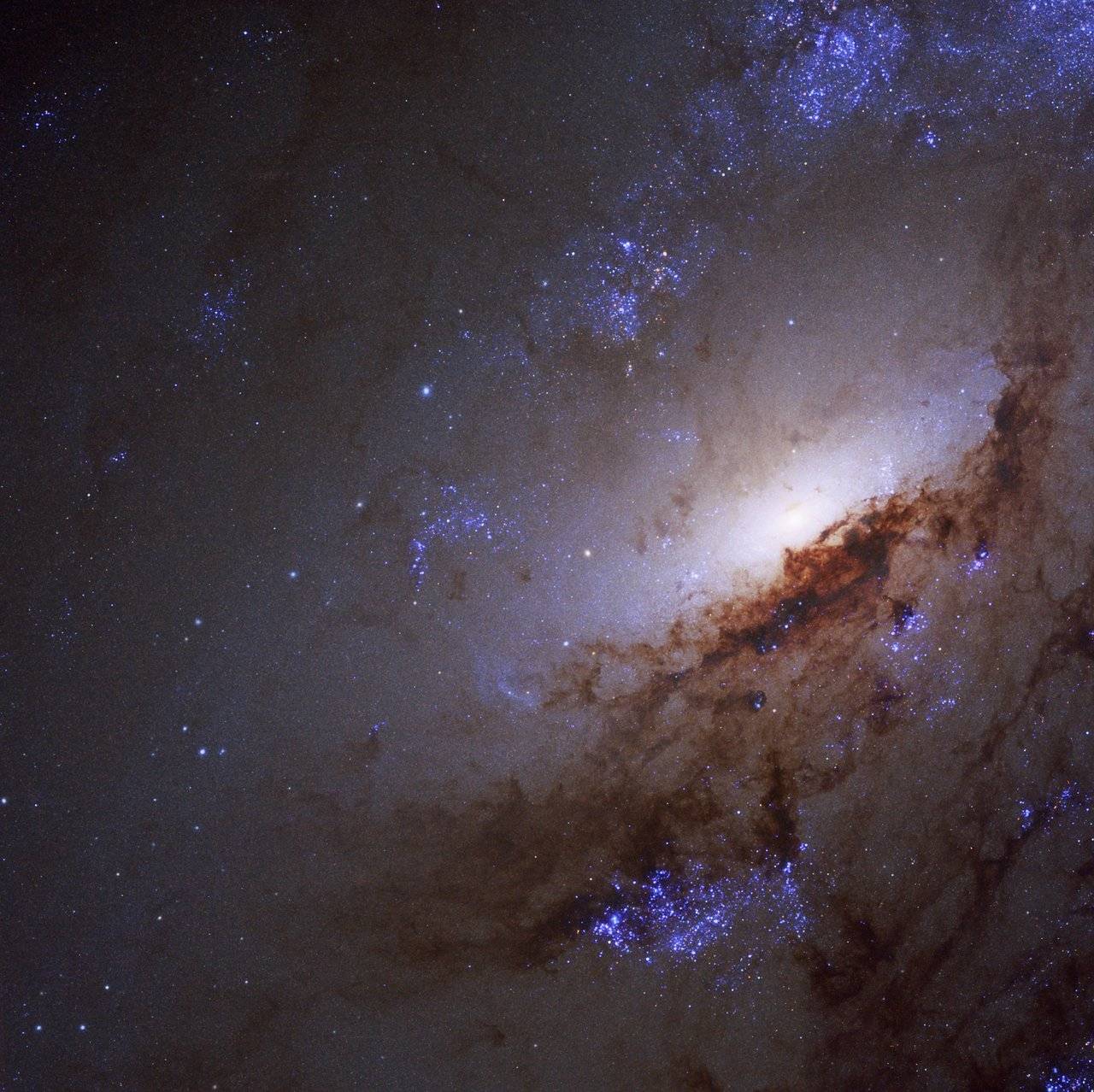
The glowing spiral arms of NGC 6744

Dwarf galaxy UGCA 281

Messier 66 — member of the Leo Triplet
Pockets of star formation in DDO 68

PR Image heic1810e
Wave of star formation in Messier 96

Parts of Messier 106


Using the unparalleled sharpness and ultraviolet observational capabilities of the NASA/ESA Hubble Space Telescope, an international team of astronomers has created the most comprehensive high-resolution ultraviolet-light survey of star-forming galaxies in the local Universe. The catalogue contains about 8000 clusters and 39 million hot blue stars.

Ultraviolet light is a major tracer of the youngest and hottest stars. These stars are short-lived and intensely bright. Astronomers have now finished a survey called LEGUS (Legacy ExtraGalactic UV Survey) that captured the details of 50 local galaxies within 60 million light-years of Earth in both visible and ultraviolet light.

The LEGUS team carefully selected its targets from among 500 candidate galaxies compiled from ground-based surveys. They chose the galaxies based on their mass, star-formation rate, and their abundances of elements heavier than hydrogen and helium. Because of the proximity of the selected galaxies, Hubble was able to resolve them into their main components: stars and star clusters. With the LEGUS data, the team created a catalogue with about 8000 young clusters and it also created a star catalogue comprising about 39 million stars that are at least five times more massive than our Sun.

The data, gathered with Hubble’s Wide Field Camera 3 and Advanced Camera for Surveys, provide detailed information on young, massive stars and star clusters, and how their environment affects their development. As such, the catalogue offers an extensive resource for understanding the complexities of star formation and galaxy evolution.

One of the key questions the survey may help astronomers answer is the connection between star formation and the major structures, such as spiral arms, that make up a galaxy. These structured distributions are particularly visible in the youngest stellar populations.

By resolving the fine details of the studied galaxies, while also studying the connection to larger galactic structures, the team aims to identify the physical mechanisms behind the observed distribution of stellar populations within galaxies.

Figuring out the final link between gas and star formation is key to fully understanding galaxy evolution. Astronomers are studying this link by looking at the effects of the environment on star clusters, and how their survival is linked to their surroundings.

LEGUS will not only allow astronomers to understand the local Universe. It will also help interpret views of distant galaxies, where the ultraviolet light from young stars is stretched to infrared wavelengths due to the expansion of space. The NASA/ESA/CSA James Webb Space Telescope and its ability to observe in the far infrared will complement the LEGUS views.


More Information

The Hubble Space Telescope is a project of international cooperation between ESA and NASA.
Image credit: NASA, ESA, LEGUS team


Links


Contacts

Linda Smith
European Space Agency
Baltimore, Maryland, USA
Tel: 001 4103384926
Email:
lsmith@stsci.edu

Mathias Jäger
ESA/Hubble, Public Information Officer
Garching bei München, Germany
Cell: +49 176 62397500
Email:
mjaeger@partner.eso.org


Saturday, June 29, 2013

NASA Decommissions Its Galaxy Hunter Spacecraft

Big Brother to the Milky Way
Credit: NASA/JPL-Caltech

Ultraviolet Ring of Stars
Credit: NASA/JPL-Caltech

Galaxy's Pencil-Thin Profile
Credit: NASA/JPL-Caltech

PASADENA, Calif. — NASA has turned off its Galaxy Evolution Explorer (GALEX) after a decade of operations in which the venerable space telescope used its ultraviolet vision to study hundreds of millions of galaxies across 10 billion years of cosmic time.

"GALEX is a remarkable accomplishment," said Jeff Hayes, NASA's GALEX program executive in Washington. "This small Explorer mission has mapped and studied galaxies in the ultraviolet, light we cannot see with our own eyes, across most of the sky."

Operators at Orbital Sciences Corporation in Dulles, Va., sent the signal to decommission GALEX at 12:09 p.m. PDT (3:09 p.m. EDT) Friday, June 28. The spacecraft will remain in orbit for at least 65 years, then fall to Earth and burn up upon re-entering the atmosphere. GALEX met its prime objectives and the mission was extended three times before being cancelled.

Highlights from the mission's decade of sky scans include:
  • Discovering a gargantuan, comet-like tail behind a speeding star called Mira.
  • Catching a black hole "red-handed" as it munched on a star.
  • Finding giant rings of new stars around old, dead galaxies.
  • Independently confirming the nature of dark energy.
  • Discovering a missing link in galaxy evolution -- the teenage galaxies transitioning from young to old.
The mission also captured a dazzling collection of snapshots, showing everything from ghostly nebulas to a spiral galaxy with huge, spidery arms.

In a first-of-a-kind move for NASA, the agency in May 2012 loaned GALEX to the California Institute of Technology in Pasadena, which used private funds to continue operating the satellite while NASA retained ownership. Since then, investigators from around the world have used GALEX to study everything from stars in our own Milky Way galaxy to hundreds of thousands of galaxies 5 billion light-years away.

In the space telescope's last year, it scanned across large patches of sky, including the bustling, bright center of our Milky Way. The telescope spent time staring at certain areas of the sky, finding exploded stars, called supernovae, and monitoring how objects, such as the centers of active galaxies, change over time. GALEX also scanned the sky for massive, feeding black holes and shock waves from early supernova explosions.

"In the last few years, GALEX studied objects we never thought we'd be able to observe, from the Magellanic Clouds to bright nebulae and supernova remnants in the galactic plane," said David Schiminovich of Columbia University, N.Y., N.Y, a longtime GALEX team member who led science operations over the past year. "Some of its most beautiful and scientifically compelling images are part of this last observation cycle."

Data from the last year of the mission will be made public in the coming year.

"GALEX, the mission, may be over, but its science discoveries will keep on going," said Kerry Erickson, the mission's project manager at NASA's Jet Propulsion Laboratory in Pasadena, Calif.

A slideshow showing some of the popular GALEX images is online at: http://go.nasa.gov/17xAVDd
JPL managed the GALEX mission and built the science instrument. The mission's principal investigator, Chris Martin, is at Caltech. NASA's Goddard Space Flight Center in Greenbelt, Md., developed the mission under the Explorers Program it manages. Researchers sponsored by Yonsei University in South Korea and the Centre National d'Etudes Spatiales (CNES) in France collaborated on the mission. Caltech manages JPL for NASA.

Wednesday, June 01, 2011

A Postcard from Extragalactic Space?

PR Image eso1118a
Wide Field Imager view of a Milky Way look-alike, NGC 6744

PR Image eso1118b
The spiral galaxy NGC 6744 in the constellation of Pavo

PR Image eso1118c
Wide-field view of the sky around NGC 6744

Zooming in on the spiral galaxy NGC 6744

ESO astronomers have used the Wide Field Imager on the MPG/ESO 2.2-metre telescope to capture an image of NGC 6744. This impressive spiral galaxy lies about 30 million light-years away in the southern constellation of Pavo (The Peacock). But this view could almost be a picture postcard of our own Milky Way, taken and sent by an extragalactic friend, as this galaxy closely resembles our own.

We see NGC 6744 almost face on, meaning we get a dramatic bird’s eye view of the galaxy’s structure. If we had the technology to escape the Milky Way and could look down on it from intergalactic space, this view is close to the one we would see — striking spiral arms wrapping around a dense, elongated nucleus and a dusty disc. There is even a distorted companion galaxy — NGC 6744A, seen here as a smudge to the lower right of NGC 6744, which is reminiscent of one of the Milky Way’s neighbouring Magellanic Clouds.

One difference between NGC 6744 and the Milky Way is their size. While our galaxy is roughly 100 000 light-years across, the galaxy pictured here extends to almost twice this diameter. Nevertheless, NGC 6744 gives us a tantalising sense of how a distant observer might see our own galactic home.

This dramatic object is one of the largest and nearest spiral galaxies. Although it has a brightness of about 60 billion Suns, its light spreads across a large area in the sky — about two thirds the width of the full Moon, making the galaxy appear as a hazy glow with a bright centre through a small telescope. Still, it is one of the most beautiful objects in the southern sky, and it can be identified by amateur astronomers as an oval shape contrasting with a rich background of stars.

With professional telescopes such as the MPG/ESO 2.2-metre telescope at La Silla, which captured this image, NGC 6744 can be seen in all its glory. The dusty spiral arms are home to many glowing star-forming regions (seen in red) and give this Milky Way look-alike its striking spiral form.

This picture was taken by the Wide Field Imager attached to the MPG/ESO 2.2-metre telescope at ESO’s La Silla Observatory in Chile. The picture was created from exposures taken through four different filters that passed blue, yellow-green and red light and the glow coming from hydrogen gas. These are shown in this picture as blue, green, orange and red, respectively.

More information

ESO, the European Southern Observatory, is the foremost intergovernmental astronomy organisation in Europe and the world’s most productive astronomical observatory. It is supported by 15 countries: Austria, Belgium, Brazil, the Czech Republic, Denmark, France, Finland, Germany, Italy, the Netherlands, Portugal, Spain, Sweden, Switzerland and the United Kingdom. ESO carries out an ambitious programme focused on the design, construction and operation of powerful ground-based observing facilities enabling astronomers to make important scientific discoveries. ESO also plays a leading role in promoting and organising cooperation in astronomical research. ESO operates three unique world-class observing sites in Chile: La Silla, Paranal and Chajnantor. At Paranal, ESO operates the Very Large Telescope, the world’s most advanced visible-light astronomical observatory and VISTA, the world’s largest survey telescope. ESO is the European partner of a revolutionary astronomical telescope ALMA, the largest astronomical project in existence. ESO is currently planning a 42-metre European Extremely Large optical/near-infrared Telescope, the E-ELT, which will become “the world’s biggest eye on the sky”.

Links
Photos of La Silla Observatory
The MPG/ESO 2.2-metre telescope

Contacts

Richard Hook
ESO, La Silla, Paranal, E-ELT and Survey Telescopes Public Information Officer
Garching bei München, Germany
Tel: +49 89 3200 6655
Email: rhook@eso.org