Showing posts with label GRAVITY. Show all posts

Wednesday, October 31, 2018

Most Detailed Observations of Material Orbiting close to a Black Hole

 PR Image eso1835a
Simulation of Material Orbiting close to a Black Hole

PR Image eso1835b
Sagittarius A* in the constellation of Sagittarius

PR Image eso1835c
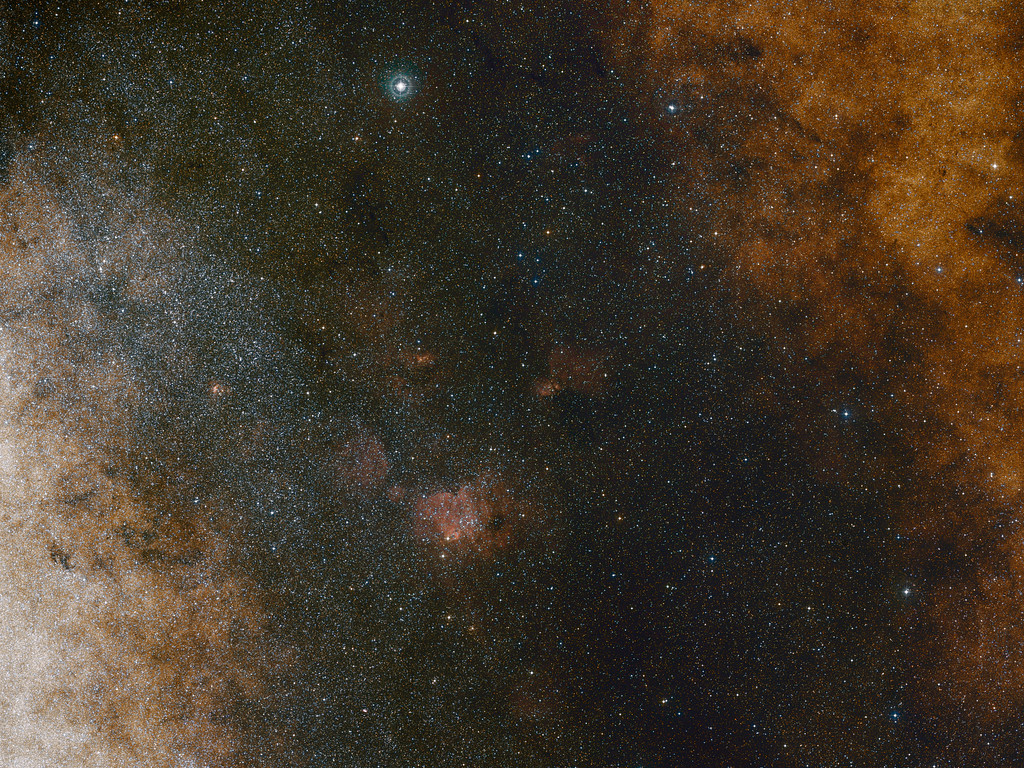
Wide-field view of the centre of the Milky Way

PR Image eso1835d
The centre of the Milky Way*


Videos
 
ESOcast 181 Light: Most Detailed Observations of Material Orbiting close to a Black Hole (4K UHD)

Simulation of Material Orbiting close to a Black Hole

Zooming into Sagittarius A*

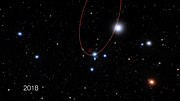
Simulation of the orbits of stars around the black hole at the centre of the Milky Way


ESO’s GRAVITY instrument confirms black hole status of the Milky Way centre

ESO’s exquisitely sensitive GRAVITY instrument has added further evidence to the long-standing assumption that a supermassive black hole lurks in the centre of the Milky Way. New observations show clumps of gas swirling around at about 30% of the speed of light on a circular orbit just outside its event horizon — the first time material has been observed orbiting close to the point of no return, and the most detailed observations yet of material orbiting this close to a black hole.

ESO’s GRAVITY instrument on the Very Large Telescope (VLT) Interferometer has been used by scientists from a consortium of European institutions, including ESO [1], to observe flares of infrared radiation coming from the accretion disc around Sagittarius A*, the massive object at the heart of the Milky Way. The observed flares provide long-awaited confirmation that the object in the centre of our galaxy is, as has long been assumed, a supermassive black hole. The flares originate from material orbiting very close to the black hole’s event horizon — making these the most detailed observations yet of material orbiting this close to a black hole.

While some matter in the accretion disc — the belt of gas orbiting Sagittarius A* at relativistic speeds [2] — can orbit the black hole safely, anything that gets too close is doomed to be pulled beyond the event horizon. The closest point to a black hole that material can orbit without being irresistibly drawn inwards by the immense mass is known as the innermost stable orbit, and it is from here that the observed flares originate.

"It’s mind-boggling to actually witness material orbiting a massive black hole at 30% of the speed of light," marvelled Oliver Pfuhl, a scientist at the MPE. "GRAVITY’s tremendous sensitivity has allowed us to observe the accretion processes in real time in unprecedented detail."

These measurements were only possible thanks to international collaboration and state-of-the-art instrumentation [3]. The GRAVITY instrument which made this work possible combines the light from four telescopes of ESO’s VLT to create a virtual super-telescope 130 metres in diameter, and has already been used to probe the nature of Sagittarius A*.

Earlier this year, GRAVITY and SINFONI, another instrument on the VLT, allowed the same team to accurately measure the close fly-by of the star S2 as it passed through the extreme gravitational field near Sagittarius A*, and for the first time revealed the effects predicted by Einstein’s general relativity in such an extreme environment. During S2’s close fly-by, strong infrared emission was also observed.

"We were closely monitoring S2, and of course we always keep an eye on Sagittarius A*,"  explained Pfuhl. "During our observations, we were lucky enough to notice three bright flares from around the black hole — it was a lucky coincidence!"

This emission, from highly energetic electrons very close to the black hole, was visible as three prominent bright flares, and exactly matches theoretical predictions for hot spots orbiting close to a black hole of four million solar masses [4]. The flares are thought to originate from magnetic interactions in the very hot gas orbiting very close to Sagittarius A*.

Reinhard Genzel, of the Max Planck Institute for Extraterrestrial Physics (MPE) in Garching, Germany, who led the study, explained: "This always was one of our dream projects but we did not dare to hope that it would become possible so soon." Referring to the long-standing assumption that Sagittarius A* is a supermassive black hole, Genzel concluded that "the result is a resounding confirmation of the massive black hole paradigm."


Notes


[2] Relativistic speeds are those which are so great that the effects of Einstein’s Theory of Relativity become significant. In the case of the accretion disc around Sagittarius A*, the gas is moving at roughly 30% of the speed of light.

[3] GRAVITY was developed by a collaboration consisting of the Max Planck Institute for Extraterrestrial Physics (Germany), LESIA of Paris Observatory–PSL/CNRS/Sorbonne Université/Univ. Paris Diderot and IPAG of Université Grenoble Alpes/CNRS (France), the Max Planck Institute for Astronomy (Germany), the University of Cologne (Germany), the CENTRA–Centro de Astrofísica e Gravitação (Portugal) and ESO.

[4] The solar mass is a unit used in astronomy. It is equal to the mass of our closest star, the Sun, and has a value of 1.989 × 1030 kg. This means that Sgr A* has a mass 1.3 trillion times greater than the Earth.


More Information

This research was presented in a paper entitled "Detection of Orbital Motions Near the Last Stable Circular Orbit of the Massive Black Hole SgrA*", by the GRAVITY Collaboration, published in the journal Astronomy & Astrophysics on 31 October 2018.

The GRAVITY Collaboration team is composed of: R. Abuter (ESO, Garching, Germany), A. Amorim (Universidade de Lisboa, Lisbon, Portugal), M. Bauböck (Max Planck Institute for Extraterrestrial Physics, Garching, Germany [MPE]), J.P. Berger (Univ. Grenoble Alpes, CNRS, IPAG, Grenoble, France [IPAG]; ESO, Garching, Germany), H. Bonnet (ESO, Garching, Germany), W. Brandner (Max Planck Institute for Astronomy, Heidelberg, Germany [MPIA]), Y. Clénet (LESIA, Observatoire de Paris, PSL Research University, CNRS, Sorbonne Universités, UPMC Univ. Paris 06, Univ. Paris Diderot, Meudon, France [LESIA])), V. Coudé du Foresto (LESIA), P. T. de Zeeuw (Sterrewacht Leiden, Leiden University, Leiden, The Netherlands; MPE), C. Deen (MPE), J. Dexter (MPE), G. Duvert (IPAG), A. Eckart (University of Cologne, Cologne, Germany; Max Planck Institute for Radio Astronomy, Bonn, Germany), F. Eisenhauer (MPE), N.M. Förster Schreiber (MPE), P. Garcia (Universidade do Porto, Porto, Portugal; Universidade de Lisboa Lisboa, Portugal), F. Gao (MPE), E. Gendron (LESIA), R. Genzel (MPE; University of California, Berkeley, California, USA), S. Gillessen (MPE), P. Guajardo (ESO, Santiago, Chile), M. Habibi (MPE), X. Haubois (ESO, Santiago, Chile), Th. Henning (MPIA), S. Hippler (MPIA), M. Horrobin (University of Cologne, Cologne, Germany), A. Huber (MPIA), A. Jimenez Rosales (MPE), L. Jocou (IPAG), P. Kervella (LESIA; MPIA), S. Lacour (LESIA), V. Lapeyrère (LESIA), B. Lazareff (IPAG), J.-B. Le Bouquin (IPAG), P. Léna (LESIA), M. Lippa (MPE), T. Ott (MPE), J. Panduro (MPIA), T. Paumard (LESIA), K. Perraut (IPAG), G. Perrin (LESIA), O. Pfuhl (MPE), P.M. Plewa (MPE), S. Rabien (MPE), G. Rodríguez-Coira (LESIA), G. Rousset (LESIA), A. Sternberg (School of Physics and Astronomy, Tel Aviv University, Tel Aviv, Israel, Center for Computational Astrophysics, Flatiron Institute, New York, USA), O. Straub (LESIA), C. Straubmeier (University of Cologne, Cologne, Germany), E. Sturm (MPE), L.J. Tacconi (MPE), F. Vincent (LESIA), S. von Fellenberg (MPE), I. Waisberg (MPE), F. Widmann (MPE), E. Wieprecht (MPE), E. Wiezorrek (MPE), J. Woillez (ESO, Garching, Germany), S. Yazici (MPE; University of Cologne, Cologne, Germany).

ESO is the foremost intergovernmental astronomy organisation in Europe and the world’s most productive ground-based astronomical observatory by far. It has 16 Member States: Austria, Belgium, the Czech Republic, Denmark, France, Finland, Germany, Ireland, Italy, the Netherlands, Poland, Portugal, Spain, Sweden, Switzerland and the United Kingdom, along with the host state of Chile and with Australia as a Strategic Partner. ESO carries out an ambitious programme focused on the design, construction and operation of powerful ground-based observing facilities enabling astronomers to make important scientific discoveries. ESO also plays a leading role in promoting and organising cooperation in astronomical research. ESO operates three unique world-class observing sites in Chile: La Silla, Paranal and Chajnantor. At Paranal, ESO operates the Very Large Telescope and its world-leading Very Large Telescope Interferometer as well as two survey telescopes, VISTA working in the infrared and the visible-light VLT Survey Telescope. ESO is also a major partner in two facilities on Chajnantor, APEX and ALMA, the largest astronomical project in existence. And on Cerro Armazones, close to Paranal, ESO is building the 39-metre Extremely Large Telescope, the ELT, which will become "the world’s biggest eye on the sky".


Links


Contacts

Oliver Pfuhl
Max Planck Institute for Extraterrestrial Physics
Garching bei München, Germany
Tel: +49 89 30 000 3295

Jason Dexter
Max Planck Institute for Extraterrestrial Physics
Garching bei München, Germany
Tel: +49 89 30 000 3324

Thibaut Paumard
CNRS Researcher
Observatoire de Paris, France
Tel: +33 145 077 5451

Xavier Haubois
ESO Astronomer
Santiago, Chile
Tel: +56 2 2463 3055

IR Group Secretariat
Max Planck Institute for Extraterrestrial Physics
Garching bei München, Germany
Tel: +49 89 30000 3880


Source: ESO/News


Wednesday, October 19, 2016

Highest Resolution Image of Eta Carinae

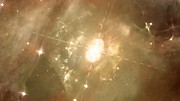
Detailed look on Eta Carinae

Highest resolution image of Eta Carinae

Digitized Sky Survey Image of Eta Carinae Nebula

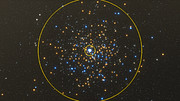
The Carina Nebula in the constellation of Carina 

Panoramic view of the WR 22 and Eta Carinae regions of the Carina Nebula*

One Picture, Many Stories

The Carina Nebula imaged by the VLT Survey Telescope 

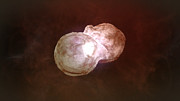
Eta Carinae 


Videos

Zoom on Eta Carinae
Zoom on Eta Carinae

Animation of Eta Carinae and its surrounding


VLT Interferometer captures raging winds in famous massive stellar system


An international team of astronomers have used the Very Large Telescope Interferometer to image the Eta Carinae star system in the greatest detail ever achieved. They found new and unexpected structures within the binary system, including in the area between the two stars where extremely high velocity stellar winds are colliding. These new insights into this enigmatic star system could lead to a better understanding of the evolution of very massive stars.

Led by Gerd Weigelt from the Max Planck Institute for Radio Astronomy (MPIfR) in Bonn, a team of astronomers have used the Very Large Telescope Interferometer (VLTI) at ESO’s Paranal Observatory to take a unique image of the Eta Carinae star system in the Carina Nebula.

This colossal binary system consists of two massive stars orbiting each other and is very active, producing stellar winds which travel at velocities of up to ten million kilometres per hour [1]. The zone between the two stars where the winds from each collide is very turbulent, but until now it could not be studied.

The power of the Eta Carinae binary pair creates dramatic phenomena. A “Great Eruption” in the system was observed by astronomers in the 1830s. We now know that this was caused by the larger star of the pair expelling huge amounts of gas and dust in a short amount of time, which led to the distinctive lobes, known as the Homunculus Nebula, that we see in the system today. The combined effect of the two stellar winds as they smash into each other at extreme speeds is to create temperatures of millions of degrees and intense deluges of X-ray radiation.

The central area where the winds collide is so comparatively tiny — a thousand times smaller than the Homunculus Nebula — that telescopes in space and on the ground so far have not been able to image them in detail. The team has now utilised the powerful resolving ability of the VLTI instrument AMBER to peer into this violent realm for the first time. A clever combination — an interferometer — of three of the four Auxiliary Telescopes at the VLT lead to a tenfold increase in resolving power in comparison to a single VLT Unit Telescope. This delivered the sharpest ever image of the system and yielded unexpected results about its internal structures.

The new VLTI image clearly depict the structure which exists between the two Eta Carinae-stars. An unexpected fan-shaped structure was observed where the raging wind from the smaller, hotter star crashes into the denser wind from the larger of the pair.

“Our dreams came true, because we can now get extremely sharp images in the infrared. The VLTI provides us with a unique opportunity to improve our physical understanding of Eta Carinae and many other key objects”, says Gerd Weigelt.

In addition to the imaging, the spectral observations of the collision zone made it possible to measure the velocities of the intense stellar winds [2]. Using these velocities, the team of astronomers were able to produce more accurate computer models of the internal structure of this fascinating stellar system, which will help increase our understanding of how these kind of extremely high mass stars lose mass as they evolve.

Team member Dieter Schertl (MPIfR) looks forward: “The new VLTI instruments GRAVITY and MATISSE will allow us to get interferometric images with even higher precision and over a wider wavelength range. This wide wavelength range is needed to derive the physical properties of many astronomical objects.”


Notes

[1] The two stars are so massive and bright that the radiation they produce rips off their surfaces and spews them into space. This expulsion of stellar material is referred to as stellar “wind”, and it can travel at millions of kilometres per hour.

[2] Measurements were done through the Doppler effect. Astronomers use the Doppler effect (or shifts) to calculate precisely how fast stars and other astronomical objects move toward or away from Earth. The movement of an object towards or away from us causes a slight shift in its spectral lines. The velocity of the motion can be calculated from this shift.


 More Information


This research was presented in a paper to appear in Astronomy and Astrophysics.

The team is composed of G. Weigelt (Max Planck Institute for Radio Astronomy, Germany), K.-H. Hofmann (Max Planck Institute for Radio Astronomy, Germany), D. Schertl (Max Planck Institute for Radio Astronomy, Germany), N. Clementel (South African Astronomical Observatory, South Africa) , M.F. Corcoran (Goddard Space Flight Center, USA; Universities Space Research Association, USA), A. Damineli (Universidade de São Paulo, Brazil ), W.-J. de Wit (European Southern Observatory, Chile), R. Grellmann (Universität zu Köln, Germany), J. Groh (The University of Dublin, Ireland ), S. Guieu (European Southern Observatory, Chile), T. Gull (Goddard Space Flight Center, USA), M. Heininger (Max Planck Institute for Radio Astronomy, Germany) , D.J. Hillier (University of Pittsburgh, USA), C.A. Hummel (European Southern Observatory, Germany), S. Kraus (University of Exeter, UK), T. Madura (Goddard Space Flight Center, USA), A. Mehner (European Southern Observatory, Chile), A. Mérand ( European Southern Observatory, Chile), F. Millour (Université de Nice Sophia Antipolis, France), A.F.J. Moffat (Université de Montréal, Canada), K. Ohnaka (Universidad Católica del Norte, Chile), F. Patru (Osservatorio Astrofisico di Arcetri, Italy), R.G. Petrov (Université de Nice Sophia Antipolis, France), S. Rengaswamy (Indian Institute of Astrophysics, India) , N.D. Richardson (The University of Toledo, USA), T. Rivinius (European Southern Observatory, Chile), M. Schöller (European Southern Observatory, Germany), M. Teodoro (Goddard Space Flight Center, USA) , and M. Wittkowski (European Southern Observatory, Germany)

ESO is the foremost intergovernmental astronomy organisation in Europe and the world’s most productive ground-based astronomical observatory by far. It is supported by 16 countries: Austria, Belgium, Brazil, the Czech Republic, Denmark, France, Finland, Germany, Italy, the Netherlands, Poland, Portugal, Spain, Sweden, Switzerland and the United Kingdom, along with the host state of Chile. ESO carries out an ambitious programme focused on the design, construction and operation of powerful ground-based observing facilities enabling astronomers to make important scientific discoveries. ESO also plays a leading role in promoting and organising cooperation in astronomical research. ESO operates three unique world-class observing sites in Chile: La Silla, Paranal and Chajnantor. At Paranal, ESO operates the Very Large Telescope, the world’s most advanced visible-light astronomical observatory and two survey telescopes. VISTA works in the infrared and is the world’s largest survey telescope and the VLT Survey Telescope is the largest telescope designed to exclusively survey the skies in visible light. ESO is a major partner in ALMA, the largest astronomical project in existence. And on Cerro Armazones, close to Paranal, ESO is building the 39-metre European Extremely Large Telescope, the E-ELT, which will become “the world’s biggest eye on the sky”.


Links


Contacts

Gerd Weigelt
Max-Planck-Institut für Radioastronomie
Bonn, Germany
Tel: +49 228 525 243
Email: weigelt@mpifr-bonn.mpg.de

Dieter Schertl
Max-Planck-Institut für Radioastronomie
Bonn, Germany
Tel: +49 228 525 301
Email: ds@mpifr-bonn.mpg.de

Norbert Junkes
Public Information Officer, Max-Planck-Institut für Radioastronomie
Bonn, Germany
Tel: +49 228 525 399
Email: njunkes@mpifr-bonn.mpg.de

Mathias Jäger
Public Information Officer
Garching bei München, Germany
Tel: +49 176 62397500
Email: mjaeger@partner.eso.org

Source: ESO

Thursday, June 23, 2016

Successful First Observations of Galactic Centre with GRAVITY

Artist’s impression of the star S2 passing very close to the supermassive black hole at the centre of the Milky Way

PR Image eso1622b
The centre of the Milky Way


Videos
 
Artist’s impression of the star S2 passing very close to the supermassive black hole at the centre of the Milky Way

Animation of the path of a light ray through GRAVITY


Black hole probe now working with the four VLT Unit Telescopes

A European team of astronomers have used the new GRAVITY instrument at ESO’s Very Large Telescope to obtain exciting observations of the centre of the Milky Way by combining light from all four of the 8.2-metre Unit Telescopes for the first time. These results provide a taste of the groundbreaking science that GRAVITY will produce as it probes the extremely strong gravitational fields close to the central supermassive black hole and tests Einstein’s general relativity.

The GRAVITY instrument is now operating with the four 8.2-metre Unit Telescopes of ESO’s Very Large Telescope (VLT), and even from early test results it is already clear that it will soon be producing world-class science.

GRAVITY is part of the VLT Interferometer. By combining light from the four telescopes it can achieve the same spatial resolution and precision in measuring positions as a telescope of up to 130 metres in diameter. 

The corresponding gains in resolving power and positional accuracy — a factor of 15 over the individual 8.2-metre VLT Unit Telescopes — will enable GRAVITY to make amazingly accurate measurements of astronomical objects.

One of GRAVITY’s primary goals is to make detailed observations of the surroundings of the 4 million solar mass black hole at the very centre of the Milky Way [1]. Although the position and mass of the black hole have been known since 2002, by making precision measurements of the motions of stars orbiting it, GRAVITY will allow astronomers to probe the gravitational field around the black hole in unprecedented detail, providing a unique test of Einstein’s general theory of relativity.

In this regard, the first observations with GRAVITY are already very exciting. The GRAVITY team [2] has used the instrument to observe a star known as S2 as it orbits the black hole at the centre of our galaxy with a period of only 16 years. These tests have impressively demonstrated GRAVITY’s sensitivity as it was able to see this faint star in just a few minutes of observation.

The team will soon be able to obtain ultra-precise positions of the orbiting star, equivalent to measuring the position of an object on the Moon with centimetre precision. That will enable them to determine whether the motion around the black hole follows the predictions of Einstein’s general relativity — or not. The new observations show that the Galactic Centre is as ideal a laboratory as one can hope for.

"It was a fantastic moment for the whole team when the light from the star interfered for the first time — after eight years of hard work," says GRAVITY’s lead scientist Frank Eisenhauer from the Max Planck Institute for Extraterrestrial Physics in Garching, Germany. "First we actively stabilised the interference on a bright nearby star, and then only a few minutes later we could really see the interference from the faint star — to a lot of high-fives.” At first glance neither the reference star nor the orbiting star have massive companions that would complicate the observations and analysis. "They are ideal probes," explains Eisenhauer.

This early indication of success does not come a moment too soon. In 2018 the S2 star will be at its closest to the black hole, just 17 light-hours away from it and travelling at almost 30 million kilometres per hour, or 2.5% of the speed of light. At this distance the effects due to general relativity will be most pronounced and GRAVITY observations will yield their most important results [3]. This opportunity will not be repeated for another 16 years.


Notes

[1] The centre of the Milky Way, our home galaxy, lies on the sky in the constellation of Sagittarius (The Archer) and is some 25 000 light-years distant from Earth.

[2] The GRAVITY consortium consists of: the Max Planck Institutes for Extraterrestrial Physics (MPE) and Astronomy (MPIA), LESIA of Paris Observatory and IPAG of Université Grenoble Alpes/CNRS, the University of Cologne, the Centro Multidisciplinar de Astrofísica Lisbon and Porto (SIM), and ESO.

[3] The team will, for the first time, be able to measure two relativistic effects for a star orbiting a massive black hole — the gravitational redshift and the precession of the pericentre. The redshift arises because light from the star has to move against the strong gravitational field of the massive black hole in order to escape into the Universe. As it does so it loses energy, which manifests as a redshift of the light. The second effect applies to the star’s orbit and leads to a deviation from a perfect ellipse. The orientation of the ellipse rotates by around half a degree in the orbital plane when the star passes close to the black hole. The same effect has been observed for Mercury's orbit around the Sun, where it is about 6500 times weaker per orbit than in the extreme vicinity of the black hole. But the larger distance makes it much harder to observe in the Galactic Centre than in the Solar System.


More Information 


ESO is the foremost intergovernmental astronomy organisation in Europe and the world’s most productive ground-based astronomical observatory by far. It is supported by 16 countries: Austria, Belgium, Brazil, the Czech Republic, Denmark, France, Finland, Germany, Italy, the Netherlands, Poland, Portugal, Spain, Sweden, Switzerland and the United Kingdom, along with the host state of Chile. ESO carries out an ambitious programme focused on the design, construction and operation of powerful ground-based observing facilities enabling astronomers to make important scientific discoveries. ESO also plays a leading role in promoting and organising cooperation in astronomical research. ESO operates three unique world-class observing sites in Chile: La Silla, Paranal and Chajnantor. At Paranal, ESO operates the Very Large Telescope, the world’s most advanced visible-light astronomical observatory and two survey telescopes. VISTA works in the infrared and is the world’s largest survey telescope and the VLT Survey Telescope is the largest telescope designed to exclusively survey the skies in visible light. ESO is a major partner in ALMA, the largest astronomical project in existence. And on Cerro Armazones, close to Paranal, ESO is building the 39-metre European Extremely Large Telescope, the E-ELT, which will become “the world’s biggest eye on the sky”.


Links


Contacts

Frank Eisenhauer
GRAVITY Principal Investigator, Max Planck Institute for Extraterrestrial Physics
Garching, Germany
Tel: +49 (89) 30 000 3563
Email:
eisenhau@mpe.mpg.de

Richard Hook
ESO Public Information Officer
Garching bei München, Germany
Tel: +49 89 3200 6655
Cell: +49 151 1537 3591
Email:
rhook@eso.org

Hannelore Hämmerle
Public Information Officer, Max Planck Institute for Extraterrestrial Physics
Garching, Germany
Tel: +49 (89) 30 000 3980
Email:
hannelore.haemmerle@mpe.mpg.de

Source: ESO

Wednesday, January 13, 2016

First Light For Future Black Hole Probe

GRAVITY discovers new double star in Orion Trapezium Cluster

GRAVITY — future probe of black holes

 
GRAVITY — the instrument team during the first observations at Paranal

GRAVITY discovers new double star in the Orion Trapezium Cluster (annotated)


Videos
 
GRAVITY discovers new double star in Orion Trapezium Cluster


Successful commissioning of GRAVITY at the VLTI

Zooming in on black holes is the main mission for the newly installed instrument GRAVITY at ESO’s Very Large Telescope in Chile. During its first observations, GRAVITY successfully combined starlight using all four Auxiliary Telescopes. The large team of European astronomers and engineers, led by the Max Planck Institute for Extraterrestrial Physics in Garching, who designed and built GRAVITY, are thrilled with the performance. During these initial tests, the instrument has already achieved a number of notable firsts. This is the most powerful VLT Interferometer instrument yet installed.

The GRAVITY instrument combines the light from multiple telescopes to form a virtual telescope up to 200 metres across, using a technique called interferometry. This enables the astronomers to detect much finer detail in astronomical objects than is possible with a single telescope.

Since the summer of 2015, an international team of astronomers and engineers led by Frank Eisenhauer (MPE, Garching, Germany) has been installing the instrument in specially adapted tunnels under the Very Large Telescope at ESO’s Paranal Observatory in northern Chile [1]. This is the first stage of commissioning GRAVITY within the Very Large Telescope Interferometer (VLTI). A crucial milestone has now been reached: for the first time, the instrument successfully combined starlight from the four VLT Auxiliary Telescopes [2].

“During its first light, and for the first time in the history of long baseline interferometry in optical astronomy, GRAVITY could make exposures of several minutes, more than a hundred times longer than previously possible,” commented Frank Eisenhauer. “GRAVITY will open optical interferometry to observations of much fainter objects, and push the sensitivity and accuracy of high angular resolution astronomy to new limits, far beyond what is currently possible.”

As part of the first observations the team looked closely at the bright, young stars known as the Trapezium Cluster, located in the heart of the Orion star-forming region. Already, from these first commissioning data, GRAVITY made a small discovery: one of the components of the cluster was found to be a double star [3].

The key to this success was to stabilise the virtual telescope for long enough, using the light of a reference star, so that a deep exposure on a second, much fainter object becomes feasible. Furthermore, the astronomers also succeeded in stabilising the light from four telescopes simultaneously — a feat not achieved before.

GRAVITY can measure the positions of astronomical objects on the finest scales and can also perform interferometric imaging and spectroscopy [4]. If there were buildings on the moon, GRAVITY would be able to spot them. Such extremely high resolution imaging has many applications, but the main focus in the future will be studying the environments around black holes.

In particular, GRAVITY will probe what happens in the extremely strong gravitational field close to the event horizon of the supermassive black hole at the centre of the Milky Way — which explains the choice of the name of the instrument. This is a region where behaviour is dominated by Einstein's theory of general relativity. In addition, it will uncover the details of mass accretion and jets — processes that occur both around newborn stars (young stellar objects) and in the regions around the supermassive black holes at the centres of other galaxies. It will also excel at probing the motions of binary stars, exoplanets and young stellar discs, and in imaging the surfaces of stars.

So far, GRAVITY has been tested with the four 1.8-metre Auxiliary Telescopes. The first observations using GRAVITY with the four 8-metre VLT Unit Telescopes are planned for later in 2016.

The GRAVITY consortium is led by the Max Planck Institute for Extraterrestrial Physics, in Garching, Germany. The other partner institutes are:

  • LESIA, Observatoire de Paris, PSL Research University, CNRS, Sorbonne Universités, UPMC Univ. Paris 06, Univ. Paris Diderot, Sorbonne Paris Cité, Meudon, France
  • Max Planck Institute for Astronomy, Heidelberg, Germany
  • 1. Physikalisches Institut, University of Cologne, Cologne, Germany
  • IPAG, Université Grenoble Alpes/CNRS, Grenoble, France
  • Centro Multidisciplinar de Astrofísica, CENTRA (SIM), Lisbon and Oporto, Portugal
  • ESO, Garching, Germany


Notes


[1] The VLTI tunnels and beam-combining room have recently undergone significant construction work to accommodate GRAVITY as well as to prepare for other future instruments. 

[2] It would be more accurate to call this step “first fringes” as the milestone was the first successful combination of light from the different telescopes so that the beams interfered and fringes were formed and recorded.

[3] The newly discovered double star is Theta1 Orionis F, and the observations were made using the nearby brighter star Theta1 Orionis C as the reference.

[4] GRAVITY aims to measure the positions of objects on scales of order ten microarcseconds, and perform imaging with four milliarcsecond resolution.


Links


Contacts

Markus Schoeller
ESO
Garching bei München, Germany
Email:
mschoell@eso.org

Frank Eisenhauer
Max Planck Institute for Extraterrestrial Physics
Garching bei München, Germany
Email:
eisenhau@mpe.mpg.de

Richard Hook
ESO Public Information Officer
Garching bei München, Germany
Tel: +49 89 3200 6655
Cell: +49 151 1537 3591
Email:
rhook@eso.org

 Source: ESO