Showing posts with label Fomalhaut b. Show all posts

Monday, December 15, 2025

Michelangelo in Space: A Planet Carving the Fomalhaut Debris Disk?

This image combines observations from the Hubble Space Telescope and the Atacama Large Millimeter/submillimeter Array to show the dusty debris disk surrounding the star Fomalhaut. Credit:
ALMA (ESO/NAOJ/NRAO). Visible light image: the NASA/ESA Hubble Space Telescope A. Fujii/Digitized Sky Survey 2. Acknowledgment: Davide De Martin (ESA/Hubble); CC BY 4.0


Title:ALMA Reveals an Eccentricity Gradient in the Fomalhaut Debris Disk
Authors: Joshua B. Lovell et al.
First Author’s Institution: Center for Astrophysics | Harvard & Smithsonian
Status: Published in ApJ

Step 1: Understanding How to Carve Your Debris Disk

Let’s start with our solar system: the Kuiper belt, a large ring of icy asteroids, is believed to have been sculpted into its current shape by Neptune. Neptune may have previously scattered objects in the Kuiper Belt through gravitational interactions, but some of them (like Pluto) remain in an orbital resonance with Neptune. In the same way that Neptune shapes the Kuiper Belt, today’s authors believe a planet could be shaping an exo-Kuiper Belt around the star Fomalhaut.
.
What on Neptune is an orbital resonance, though? A planet orbiting a star has an orbital period, and the gravitational forces between nearby (astronomically speaking) objects can push these objects into a state where their orbital periods are multiples of each other. For example, Pluto and Neptune have a 2:3 orbital resonance, meaning Pluto completes two orbits for every three that Neptune does. The same can happen for the asteroids and planetesimals in the Kuiper Belt, so the same should happen in other star systems!
.
Step 2: Make Your Observations

If we understand how debris disks carved by exoplanets look — and we think we do — then we should be able to infer the existence of exoplanets! Today’s authors have used observations from the Atacama Large Millimeter/submillimeter Array (ALMA) of the debris disk around Fomalhaut and made some very clever calculations. We’ve known about this disk for a while, which is why today’s authors have studied it with a new analysis technique they developed.

Planeteismals — basically big rocks from a few to hundreds of kilometers across — that orbit in this disk do so with a certain eccentricity, and typically things in the same orbit would have the same eccentricity. But today’s authors were clever — they checked if there was an eccentricity gradient, meaning the planetesimals’ eccentricities depend on their semi-major axis (i.e., the mean orbit radius); we would typically not expect any eccentricity gradient for bodies orbiting a star unperturbed. The authors discovered that the gradient for planetesimals around Fomalhaut is negative, which implies the presence of a planet when you look at the maths behind gravitational interactions between planets and planetesimals.

A negative eccentricity gradient means the planetesimals gather up at the point on the orbit farthest from the star (the apocenter), and since there are more planetesimals in that region, they appear brighter in the ALMA data (see Fig. 1 left); the ring also appears slightly wider. If the eccentricity gradient were positive, the same thing would happen at the point on the orbit closest to the star (the pericenter). The authors term this phenomenon the “eccentric velocity divergence.”


Figure 1: Left: The observed intensity of the Fomalhaut debris disk with ALMA. Middle: the authors’ model that fits the ALMA data the best. Right: The residual (data – model) between model and data. White means there is a close match to the data (which is better). Credit: Lovell et al. 2025


When the authors ran their eccentric velocity divergence calculations for the Fomalhaut disk model, they compared it to observations using a Markov Chain Monte Carlo algorithm.

Figure 1 shows their best-fitting model, which fits remarkably well, based on the residual (i.e., the difference between model and data) you can see on the right — including the slightly wider ring at the apocenter!

The authors tested other scenarios with different gradients and allowed for the planetesimals to oscillate their eccentricity around their orbit, but they didn’t find a better-fitting scenario.

Step 3: Find a Carving Planet

Okay, so those were the details. The authors investigated a few scenarios to see what could be causing the observed debris disk and its negative eccentricity gradient, as well as an intermediate ring sitting between the main disk and the star that recently was seen with JWST. The authors tested two scenarios: one where a planet sits between the rings and evacuates the nearby region, and another where a planet is interior to the inner ring and clears the gap through orbital resonances (kind of like Neptune!). An illustration can be seen in Figure 2.

Figure 2: Illustration of possible planet-based scenarios that could create the observed debris disk around Fomalhaut. One features a planet between the observed debris disk rings, and another is where the planet is interior to both and carves the gap with orbital resonances. Credit: J. Williams


A planet was previously thought to exist around Fomalhaut, but it is now accepted there is not one we can currently observe. The authors point out that the possible planet sculpting this debris disk could be the same planet we thought existed previously, but at a lower mass (1–16 Earth masses; almost a Neptune mass). We can’t observe a planet with these parameters yet, but maybe with future observing facilities!

Finally, the authors stress, however, that it might not be a planet causing the observed structure — it could instead be the gravity of the planetesimals in the disk. Unfortunately, existing models are not equipped to explore this scenario, which is why the authors are planning to develop tools to investigate this next.

Original astrobite edited by Sandy Chiu.


About the author, Joe Williams:

I’m a third-year PhD student at the University of Exeter in the UK, and I study protoplanetary discs — mainly the tiny dust grains and their ices! In my spare time, I’m a climber, crocheter, and reader of sci-fi and fantasy books. My favourite sci-fi series is The Expanse!


Editor’s Note: Astrobites is a graduate-student-run organization that digests astrophysical literature for undergraduate students. As part of the partnership between the AAS and astrobites, we occasionally repost astrobites content here at AAS Nova. We hope you enjoy this post from astrobites; the original can be viewed at astrobites.org.


Monday, March 07, 2022

Hubble's Advanced Camera for Surveys Celebrates 20 Years of Discovery


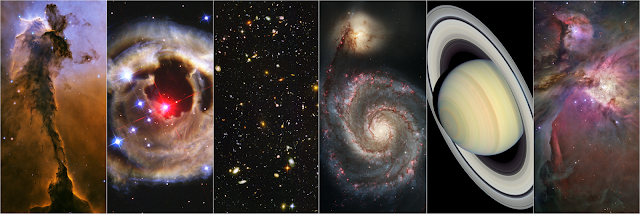
Hubble's Advanced Camera for Surveys (ACS) forever changed our view of the universe. Two decades into its epic mission, ACS continues to deliver ground-breaking science and stunning images. ACS has taken over 125,000 pictures and spawned numerous discoveries. Here is a portfolio of some of the ACS's most striking images. In this six-panel collage, the photos are (left to right): the Spire in the Eagle Nebula, V838 Monocerotis, the Hubble Ultra Deep Field (HUDF), the Whirlpool Galaxy (M51), Saturn, and the Orion Nebula (M42).Credits: Image: NASA, ESA, STScI 


For 20 years, the Advanced Camera for Surveys (ACS) has unveiled intriguing new secrets of the universe, looking deep into space with unprecedented clarity from onboard NASA's Hubble Space Telescope. Astronauts installed ACS during Hubble Servicing Mission 3B, also known as STS-109, on March 7, 2002. With its wide field of view, sharp image quality, and high sensitivity, ACS has delivered many of Hubble's most impressive images of deep space.

Former astronaut Mike Massimino, one of the two spacewalking astronauts who installed ACS, remembers, "We knew ACS would add so much discovery potential to the telescope, but I don't think anybody really understood everything it could do. It was going to unlock the secrets of the universe."

ACS has lived up to that promise. Following its installation, ACS became Hubble's most frequently used instrument. Among its many accomplishments, the camera has helped map the distribution of dark matter, detected the most distant objects in the universe, searched for massive planets and studied the evolution of clusters of galaxies.

"When ACS was installed on Hubble, the telescope was already famous for taking deep images of the distant universe, like the Hubble Deep Field," explained Tom Brown, Head of the Hubble Space Telescope Mission Office at the Space Telescope Science Institute (STScI) in Baltimore, Maryland. "However, because ACS was so powerful relative to the earlier cameras, it became routine to see very distant galaxies in the background of Hubble images, even when we were looking at nearby objects."

One example of this is a spectacular disrupted galaxy called the Tadpole (UGC 10214). Astronomers photographed the Tadpole shortly after ACS's installation to demonstrate the camera's capabilities. With its long tail of stars, the Tadpole looked like a runaway pinwheel firework. But what was really stunning was the backdrop — a rich tapestry of 6,000 galaxies captured by ACS.

"The Advanced Camera for Surveys represented a new paradigm for Hubble Space Telescope instruments when it was designed. It has lived up to expectations, proving to be one of Hubble's most scientifically productive instruments," said Mark Clampin, Director of the Sciences and Exploration Directorate at NASA's Goddard Space Flight Center in Greenbelt, Maryland. Prior to joining Goddard, Clampin was the ACS Group Lead at STScI, where he worked on three Hubble Servicing Missions. 

In January 2007, an electronics malfunction rendered the two most-used science channels on ACS inoperable. Thanks to engineering ingenuity, spacewalking astronauts on Hubble Servicing Mission 4 (STS-125) repaired the Wide Field Channel, the workhorse responsible for 70 percent of the pre-2007 ACS science. The High Resolution Channel, however, could not be repaired. Still, two decades into its mission, ACS continues to deliver ground-breaking science.

"The Advanced Camera for Surveys has opened our eyes to a deep and active universe for two decades," said Jennifer Wiseman, NASA's Hubble Senior Project Scientist. "We are anticipating still more discoveries with this camera, in conjunction with Hubble's other science instruments, for many years to come."

To date, ACS has taken over 125,000 pictures. These observations have spawned numerous discoveries, some of which are highlighted below.

The Hubble Ultra Deep Field 

In undoubtedly its most important observations, ACS revealed a series of the deepest portraits of the universe ever achieved by humankind. In the original Hubble Ultra Deep Field (HUDF), unveiled in 2004, ACS teamed up with Hubble's Near Infrared Camera and Multi-object Spectrometer (NICMOS) to capture light from galaxies that existed about 13 billion years ago, some 400 to 800 million years after the Big Bang. This million-second-long exposure revealed new insights into some of the first galaxies to emerge from the so-called "dark ages," the time shortly after the Big Bang when the first stars reheated the cold, dark universe. 

In later versions, ACS teamed with other Hubble instruments to refine the depth and reach of the original Hubble Ultra Deep Field. These portraits pushed humanity's view of the universe back to within 435 million years of the Big Bang, capturing images of the earliest objects in the cosmos. They forever changed our view of the universe and spawned innumerable collaborations.

 The Frontier Fields

Following in the spirit of the Hubble Ultra Deep Field, the Frontier Fields extended Hubble's reach even farther with the help of giant cosmic lenses in space. The immense gravity of massive clusters of galaxies warps the light from even-more-distant galaxies beyond, distorting and magnifying the light until those galaxies — too faint to be seen by Hubble directly — become visible. Frontier Fields combined the power of Hubble with the power of these "natural telescopes" to reveal galaxies 10 to 100 times fainter than could be seen by Hubble alone. Astronomers simultaneously used ACS for visible-light imaging and Hubble's Wide Field Camera 3 for its infrared vision.

Over the course of three years, Hubble devoted 840 orbits around the Earth — that's more than 1,330 hours — to six clusters of galaxies and six "parallel fields" — regions near the galaxy clusters. While these parallel fields could not be used for gravitational lensing, Hubble performed "deep field" observations on them — long looks far into the depths of space. Through the power of gravitational lensing, Hubble peered more deeply into space than ever before, while the parallel field observations expanded our knowledge of the early universe that began with the Hubble Deep Fields and Hubble Ultra Deep Field.

Helping the New Horizons Mission by Photographing Pluto

ACS captured the most detailed images ever taken of the dwarf planet Pluto years before the New Horizons flyby. The images reveal an icy, mottled, dark molasses-colored world undergoing seasonal surface and brightness changes. The ACS images were invaluable to planning the details of the New Horizons flyby in 2015 by showing which hemisphere looked more interesting for the spacecraft to take close-up snapshots during its brief encounter.

The Mysterious Fomalhaut b  

In 2008, ACS made the first visible-light snapshot of what was initially thought to be a planet, dubbed Fomalhaut b, orbiting the nearby, bright southern star Fomalhaut. The diminutive-looking object appeared as a dot next to a vast ring of icy debris that ACS observed to be encircling Fomalhaut. In following years, researchers tracked the object along its trajectory. But over time the dot expanded and became fainter as it moved out of sight. Instead of a planet, it is now thought to be an expanding cloud of very fine dust particles from two icy bodies that smashed into each other, according to some researchers. The nature of the object is still being debated, and follow-up studies may unravel this mystery.

The Light Echo of V838 Monocerotis  

The ACS captured an unusual phenomenon in space called a light echo, where light from an erupting star reflects or "echoes" off the dust and then travels to Earth. The echo came from the variable star V838 Monocerotis (V838 Mon). In early 2002, V838 Mon increased in brightness temporarily to become 600,000 times brighter than our Sun. The reason for the eruption is still unclear.

Light from V838 Mon propagated outward through a cloud of dust surrounding the star. Because of the extra distance the scattered light traveled, it reached the Earth years after the light from the stellar outburst itself. ACS monitored the light from the stellar outburst for several years as it continued to reflect off shells of dust surrounding the star. The phenomenon is an analog of a sound produced when an Alpine yodeler's voice echoes off the surrounding mountainsides. The spectacular light echo allowed astronomers to view continuously changing cross-sections of dust surrounding the star. This is a dramatic illustration of the power of ACS and Hubble to monitor phenomena over time. The longevity and consistency of ACS is critical for this type of research. 

Collision of the Milky Way and Andromeda Galaxies

By measuring the tiny, sideways motion of a group of stars in our neighboring Andromeda galaxy, ACS allowed astronomers to calculate that Andromeda and our Milky Way will collide head-on in about 4 billion years from now. Andromeda, also known as M31, is now 2.5 million light-years away, but it is falling toward the Milky Way under the mutual pull of gravity between the two galaxies. The prediction is that they will merge into a single elliptical galaxy similar to the kind commonly seen throughout the universe.

Galaxy Cluster Abell 1689's Gravitational Lens

In 2002, ACS delivered an unprecedented and dramatic new view of the cosmos when it demonstrated the power of gravitational lensing. The ACS peered straight through the center of one of the most massive galaxy clusters known, called Abell 1689. The gravity of the cluster's trillion stars – plus dark matter – acts as a 2-million-light-year-wide "lens" in space. This gravitational lens bends and magnifies the light of galaxies located far behind it, distorting their shapes and creating multiple images of individual galaxies.  

ACS's sharpness, combined with this behemoth natural lens, revealed remote galaxies previously beyond even Hubble's reach. The results shed light on galaxy evolution and dark matter in space.

Mature and "Toddler" Galaxies Far Back in Time

Using ACS to look back in time nearly 9 billion years, an international team of astronomers found mature galaxies in a young universe. The galaxies are members of a cluster of galaxies that existed when the universe was only 5 billion years old. This compelling evidence that galaxies must have started forming just after the Big Bang was bolstered by observations made by the same team of astronomers when they peered even farther back in time. The team found galaxies a mere 1.5 billion years after the birth of the cosmos. The early galaxies reside in a still-developing cluster, the most distant proto-cluster ever found. 

The ACS was built especially for studies of such distant objects. These findings further support observations and theories that galaxies formed relatively early in the history of the cosmos. The existence of such massive clusters in the early universe agrees with a cosmological model wherein clusters form from the merger of many sub-clusters in a universe dominated by cold dark matter. The precise nature of cold dark matter, however, is still not known.

Clues about the Accelerating Universe and Dark Energy

Astronomers using ACS found supernovas that exploded so long ago they provide new clues about the accelerating universe and its mysterious "dark energy." ACS can pick out the faint glow of these very distant supernovas. The ACS can then dissect their light to measure their distances, study how they fade, and confirm that they are a special type of exploding star, called a Type Ia supernova, that are reliable distance indicators. Type Ia supernovas glow at a predictable peak brightness, which makes them reliable objects for calibrating vast intergalactic distances.

In 1998, Hubble astronomers found such a far-off supernova that provided the unexpected revelation that galaxies appeared to be moving away from each other at an ever-increasing speed. They've attributed this accelerating expansion to a mysterious factor known as dark energy that is believed to permeate the universe. Since its installation, ACS has been hunting Type Ia supernovas in the early universe to provide supporting evidence.

The Hubble Space Telescope is a project of international cooperation between NASA and ESA (European Space Agency). NASA's Goddard Space Flight Center in Greenbelt, Maryland, manages the telescope. The Space Telescope Science Institute (STScI) in Baltimore, Maryland, conducts Hubble science operations. STScI is operated for NASA by the Association of Universities for Research in Astronomy, in Washington, D.C.


Credits: Release: NASA, ESA 

Media Contact: 

Ann Jenkins
Space Telescope Science Institute, Baltimore, Maryland

Ray Villard
Space Telescope Science Institute, Baltimore, Maryland


Contact Us: Direct inquiries to the News Team.

Related Links and Documents:  


Source: HubbleSite/News


Wednesday, April 22, 2020

Hubble Observes Aftermath of Massive Collision

Visualisation of Fomalhaut and Fomalhaut b (Artist’s Impression)

Illustration of Hubble’s Observation of Fomalhaut b’s Expanding Dust Cloud

DSS image of Fomalhaut (ground-based image)

Fomalhaut and Piscis Austrinus (ground-based image)


Videos

Hubblecast 127 Light: The Mysteries of Fomalhaut b


The Hubble Space Telescope offers insight into the nature of exoplanet Fomalhaut b

What astronomers thought was a planet beyond our solar system, has now seemingly vanished from sight. Astronomers now suggest that a full-grown planet never existed in the first place. The NASA/ESA Hubble Space Telescope had instead observed an expanding cloud of very fine dust particles caused by a titanic collision between two icy asteroid-sized bodies orbiting the bright star Fomalhaut, about 25 light-years from Earth.

“The Fomalhaut system is the ultimate test lab for all of our ideas about how exoplanets and star systems evolve,” said George Rieke of the University of Arizona’s Steward Observatory. “We do have evidence of such collisions in other systems, but none of this magnitude has ever been observed. This is a blueprint for how planets destroy each other.”

The object was previously believed to be a planet, called Fomalhaut b, and was first announced in 2008 based on data taken in 2004 and 2006. It was clearly visible in several years of Hubble observations that revealed it as a moving dot. Unlike other directly imaged exoplanets, nagging puzzles with Fomalhaut b arose early on. The object was unusually bright in visible light, but did not have any detectable infrared heat signature. Astronomers proposed that the added brightness came from a huge shell or ring of dust encircling the object that may have been collision-related. Also, early Hubble observations suggested the object might not be following an elliptical orbit, as planets usually do.

“These collisions are exceedingly rare and so this is a big deal that we actually get to see one,” said András Gáspár of the University of Arizona. “We believe that we were at the right place at the right time to have witnessed such an unlikely event with the Hubble Space Telescope.”

“Our study, which analysed all available archival Hubble data on Fomalhaut b, including the most recent images taken by Hubble, revealed several characteristics that together paint a picture that the planet-sized object may never have existed in the first place,” [1] said Gáspár.

Hubble images from 2014 showed the object had vanished, to the disbelief of the astronomers. Adding to the mystery, earlier images showed the object to continuously fade over time. “Clearly, Fomalhaut b was doing things a bona fide planet should not be doing,” said Gáspár.

The resulting interpretation is that Fomalhaut b is not a planet, but a slowly expanding cloud blasted into space as a result of a collision between two large bodies. Researchers believe the collision occurred not too long prior to the first observations taken in 2004. By now the debris cloud, consisting of dust particles around 1 micron (1/50th the diameter of a human hair), is below Hubble’s detection limit. The dust cloud is estimated to have expanded by now to a size larger than the orbit of Earth around our Sun.

Equally confounding is that the object is not on an elliptical orbit, as expected for planets, but on an escape trajectory, or hyperbolic path. “A recently created massive dust cloud, experiencing considerable radiative forces from the central star Fomalhaut, would be placed on such a trajectory” Gáspár said, “Our model is naturally able to explain all independant observable paramters of the system: its expansion rate, its fading and its trajectory.”

Because Fomalhaut b is presently inside a vast ring of icy debris encircling the star, the colliding bodies were likely a mixture of ice and dust, like the cometary bodies that exist in the Kuiper belt on the outer fringe of our solar system. Gáspár and Rieke estimate that each of these comet-like bodies measured about 200 kilometers across. The also suggest that the Fomalhaut system may experience one of these collision events only every 200 000 years.

Gáspár, Rieke, and other astronomers will also be observing the Fomalhaut system with the upcoming NASA/ESA/CSA James Webb Space Telescope, which is scheduled to launch in 2021.


Notes

[1] The team’s paper “New HST data and modeling reveal a massive planetesimal collision around Fomalhaut” is being published in the Proceedings of the National Academy of Sciences on 20 April 2020.


More information

The Hubble Space Telescope is a project of international cooperation between ESA and NASA.

The team of astronomers in this study consists of A. Gáspár and G. Rieke of the University of Arizona, USA.

Image credit: ESA/NASA, M. Kornmesser


Links


Contact

András Gáspár
University of Arizona
Tucson, Arizona, USA

Bethany Downer
ESA/Hubble, Public Information Officer
Garching, Germany

Source: ESA/Hubble/News