Showing posts with label Abell 1689. Show all posts

Monday, March 07, 2022

Hubble's Advanced Camera for Surveys Celebrates 20 Years of Discovery


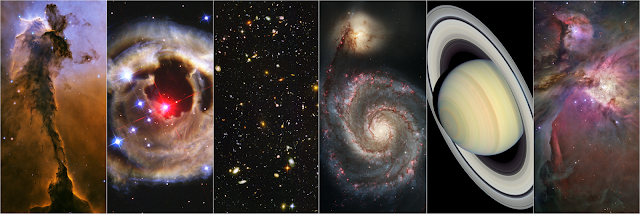
Hubble's Advanced Camera for Surveys (ACS) forever changed our view of the universe. Two decades into its epic mission, ACS continues to deliver ground-breaking science and stunning images. ACS has taken over 125,000 pictures and spawned numerous discoveries. Here is a portfolio of some of the ACS's most striking images. In this six-panel collage, the photos are (left to right): the Spire in the Eagle Nebula, V838 Monocerotis, the Hubble Ultra Deep Field (HUDF), the Whirlpool Galaxy (M51), Saturn, and the Orion Nebula (M42).Credits: Image: NASA, ESA, STScI 


For 20 years, the Advanced Camera for Surveys (ACS) has unveiled intriguing new secrets of the universe, looking deep into space with unprecedented clarity from onboard NASA's Hubble Space Telescope. Astronauts installed ACS during Hubble Servicing Mission 3B, also known as STS-109, on March 7, 2002. With its wide field of view, sharp image quality, and high sensitivity, ACS has delivered many of Hubble's most impressive images of deep space.

Former astronaut Mike Massimino, one of the two spacewalking astronauts who installed ACS, remembers, "We knew ACS would add so much discovery potential to the telescope, but I don't think anybody really understood everything it could do. It was going to unlock the secrets of the universe."

ACS has lived up to that promise. Following its installation, ACS became Hubble's most frequently used instrument. Among its many accomplishments, the camera has helped map the distribution of dark matter, detected the most distant objects in the universe, searched for massive planets and studied the evolution of clusters of galaxies.

"When ACS was installed on Hubble, the telescope was already famous for taking deep images of the distant universe, like the Hubble Deep Field," explained Tom Brown, Head of the Hubble Space Telescope Mission Office at the Space Telescope Science Institute (STScI) in Baltimore, Maryland. "However, because ACS was so powerful relative to the earlier cameras, it became routine to see very distant galaxies in the background of Hubble images, even when we were looking at nearby objects."

One example of this is a spectacular disrupted galaxy called the Tadpole (UGC 10214). Astronomers photographed the Tadpole shortly after ACS's installation to demonstrate the camera's capabilities. With its long tail of stars, the Tadpole looked like a runaway pinwheel firework. But what was really stunning was the backdrop — a rich tapestry of 6,000 galaxies captured by ACS.

"The Advanced Camera for Surveys represented a new paradigm for Hubble Space Telescope instruments when it was designed. It has lived up to expectations, proving to be one of Hubble's most scientifically productive instruments," said Mark Clampin, Director of the Sciences and Exploration Directorate at NASA's Goddard Space Flight Center in Greenbelt, Maryland. Prior to joining Goddard, Clampin was the ACS Group Lead at STScI, where he worked on three Hubble Servicing Missions. 

In January 2007, an electronics malfunction rendered the two most-used science channels on ACS inoperable. Thanks to engineering ingenuity, spacewalking astronauts on Hubble Servicing Mission 4 (STS-125) repaired the Wide Field Channel, the workhorse responsible for 70 percent of the pre-2007 ACS science. The High Resolution Channel, however, could not be repaired. Still, two decades into its mission, ACS continues to deliver ground-breaking science.

"The Advanced Camera for Surveys has opened our eyes to a deep and active universe for two decades," said Jennifer Wiseman, NASA's Hubble Senior Project Scientist. "We are anticipating still more discoveries with this camera, in conjunction with Hubble's other science instruments, for many years to come."

To date, ACS has taken over 125,000 pictures. These observations have spawned numerous discoveries, some of which are highlighted below.

The Hubble Ultra Deep Field 

In undoubtedly its most important observations, ACS revealed a series of the deepest portraits of the universe ever achieved by humankind. In the original Hubble Ultra Deep Field (HUDF), unveiled in 2004, ACS teamed up with Hubble's Near Infrared Camera and Multi-object Spectrometer (NICMOS) to capture light from galaxies that existed about 13 billion years ago, some 400 to 800 million years after the Big Bang. This million-second-long exposure revealed new insights into some of the first galaxies to emerge from the so-called "dark ages," the time shortly after the Big Bang when the first stars reheated the cold, dark universe. 

In later versions, ACS teamed with other Hubble instruments to refine the depth and reach of the original Hubble Ultra Deep Field. These portraits pushed humanity's view of the universe back to within 435 million years of the Big Bang, capturing images of the earliest objects in the cosmos. They forever changed our view of the universe and spawned innumerable collaborations.

 The Frontier Fields

Following in the spirit of the Hubble Ultra Deep Field, the Frontier Fields extended Hubble's reach even farther with the help of giant cosmic lenses in space. The immense gravity of massive clusters of galaxies warps the light from even-more-distant galaxies beyond, distorting and magnifying the light until those galaxies — too faint to be seen by Hubble directly — become visible. Frontier Fields combined the power of Hubble with the power of these "natural telescopes" to reveal galaxies 10 to 100 times fainter than could be seen by Hubble alone. Astronomers simultaneously used ACS for visible-light imaging and Hubble's Wide Field Camera 3 for its infrared vision.

Over the course of three years, Hubble devoted 840 orbits around the Earth — that's more than 1,330 hours — to six clusters of galaxies and six "parallel fields" — regions near the galaxy clusters. While these parallel fields could not be used for gravitational lensing, Hubble performed "deep field" observations on them — long looks far into the depths of space. Through the power of gravitational lensing, Hubble peered more deeply into space than ever before, while the parallel field observations expanded our knowledge of the early universe that began with the Hubble Deep Fields and Hubble Ultra Deep Field.

Helping the New Horizons Mission by Photographing Pluto

ACS captured the most detailed images ever taken of the dwarf planet Pluto years before the New Horizons flyby. The images reveal an icy, mottled, dark molasses-colored world undergoing seasonal surface and brightness changes. The ACS images were invaluable to planning the details of the New Horizons flyby in 2015 by showing which hemisphere looked more interesting for the spacecraft to take close-up snapshots during its brief encounter.

The Mysterious Fomalhaut b  

In 2008, ACS made the first visible-light snapshot of what was initially thought to be a planet, dubbed Fomalhaut b, orbiting the nearby, bright southern star Fomalhaut. The diminutive-looking object appeared as a dot next to a vast ring of icy debris that ACS observed to be encircling Fomalhaut. In following years, researchers tracked the object along its trajectory. But over time the dot expanded and became fainter as it moved out of sight. Instead of a planet, it is now thought to be an expanding cloud of very fine dust particles from two icy bodies that smashed into each other, according to some researchers. The nature of the object is still being debated, and follow-up studies may unravel this mystery.

The Light Echo of V838 Monocerotis  

The ACS captured an unusual phenomenon in space called a light echo, where light from an erupting star reflects or "echoes" off the dust and then travels to Earth. The echo came from the variable star V838 Monocerotis (V838 Mon). In early 2002, V838 Mon increased in brightness temporarily to become 600,000 times brighter than our Sun. The reason for the eruption is still unclear.

Light from V838 Mon propagated outward through a cloud of dust surrounding the star. Because of the extra distance the scattered light traveled, it reached the Earth years after the light from the stellar outburst itself. ACS monitored the light from the stellar outburst for several years as it continued to reflect off shells of dust surrounding the star. The phenomenon is an analog of a sound produced when an Alpine yodeler's voice echoes off the surrounding mountainsides. The spectacular light echo allowed astronomers to view continuously changing cross-sections of dust surrounding the star. This is a dramatic illustration of the power of ACS and Hubble to monitor phenomena over time. The longevity and consistency of ACS is critical for this type of research. 

Collision of the Milky Way and Andromeda Galaxies

By measuring the tiny, sideways motion of a group of stars in our neighboring Andromeda galaxy, ACS allowed astronomers to calculate that Andromeda and our Milky Way will collide head-on in about 4 billion years from now. Andromeda, also known as M31, is now 2.5 million light-years away, but it is falling toward the Milky Way under the mutual pull of gravity between the two galaxies. The prediction is that they will merge into a single elliptical galaxy similar to the kind commonly seen throughout the universe.

Galaxy Cluster Abell 1689's Gravitational Lens

In 2002, ACS delivered an unprecedented and dramatic new view of the cosmos when it demonstrated the power of gravitational lensing. The ACS peered straight through the center of one of the most massive galaxy clusters known, called Abell 1689. The gravity of the cluster's trillion stars – plus dark matter – acts as a 2-million-light-year-wide "lens" in space. This gravitational lens bends and magnifies the light of galaxies located far behind it, distorting their shapes and creating multiple images of individual galaxies.  

ACS's sharpness, combined with this behemoth natural lens, revealed remote galaxies previously beyond even Hubble's reach. The results shed light on galaxy evolution and dark matter in space.

Mature and "Toddler" Galaxies Far Back in Time

Using ACS to look back in time nearly 9 billion years, an international team of astronomers found mature galaxies in a young universe. The galaxies are members of a cluster of galaxies that existed when the universe was only 5 billion years old. This compelling evidence that galaxies must have started forming just after the Big Bang was bolstered by observations made by the same team of astronomers when they peered even farther back in time. The team found galaxies a mere 1.5 billion years after the birth of the cosmos. The early galaxies reside in a still-developing cluster, the most distant proto-cluster ever found. 

The ACS was built especially for studies of such distant objects. These findings further support observations and theories that galaxies formed relatively early in the history of the cosmos. The existence of such massive clusters in the early universe agrees with a cosmological model wherein clusters form from the merger of many sub-clusters in a universe dominated by cold dark matter. The precise nature of cold dark matter, however, is still not known.

Clues about the Accelerating Universe and Dark Energy

Astronomers using ACS found supernovas that exploded so long ago they provide new clues about the accelerating universe and its mysterious "dark energy." ACS can pick out the faint glow of these very distant supernovas. The ACS can then dissect their light to measure their distances, study how they fade, and confirm that they are a special type of exploding star, called a Type Ia supernova, that are reliable distance indicators. Type Ia supernovas glow at a predictable peak brightness, which makes them reliable objects for calibrating vast intergalactic distances.

In 1998, Hubble astronomers found such a far-off supernova that provided the unexpected revelation that galaxies appeared to be moving away from each other at an ever-increasing speed. They've attributed this accelerating expansion to a mysterious factor known as dark energy that is believed to permeate the universe. Since its installation, ACS has been hunting Type Ia supernovas in the early universe to provide supporting evidence.

The Hubble Space Telescope is a project of international cooperation between NASA and ESA (European Space Agency). NASA's Goddard Space Flight Center in Greenbelt, Maryland, manages the telescope. The Space Telescope Science Institute (STScI) in Baltimore, Maryland, conducts Hubble science operations. STScI is operated for NASA by the Association of Universities for Research in Astronomy, in Washington, D.C.


Credits: Release: NASA, ESA 

Media Contact: 

Ann Jenkins
Space Telescope Science Institute, Baltimore, Maryland

Ray Villard
Space Telescope Science Institute, Baltimore, Maryland


Contact Us: Direct inquiries to the News Team.

Related Links and Documents:  


Source: HubbleSite/News


Monday, May 04, 2015

Understanding X-ray emission from galaxies and galaxy clusters

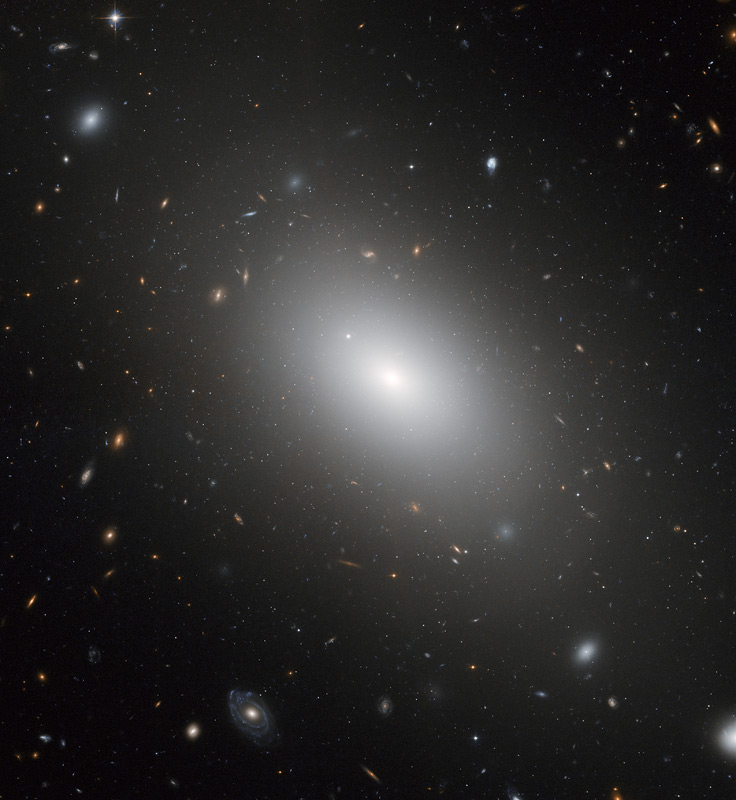
Fig. 0: Images of a galaxy (NGC 1132, left) and a galaxy cluster (Abell 1689, right) taken with the ESA/NASA Hubble Space Telescope. Observed in optical light, these systems look very different, as a galaxy cluster may contain hundreds or even thousands of galaxies. On the other hand, the X-ray emission from these systems looks remarkably similar.  Credit: NASA, ESA, and the Hubble Heritage (STScI/AURA)-ESA/Hubble Collaboration.  Credit: NASA, ESA, L. Bradley (JHU), R. Bouwens (UCSC), H. Ford (JHU), and G. Illingworth (UCSC)

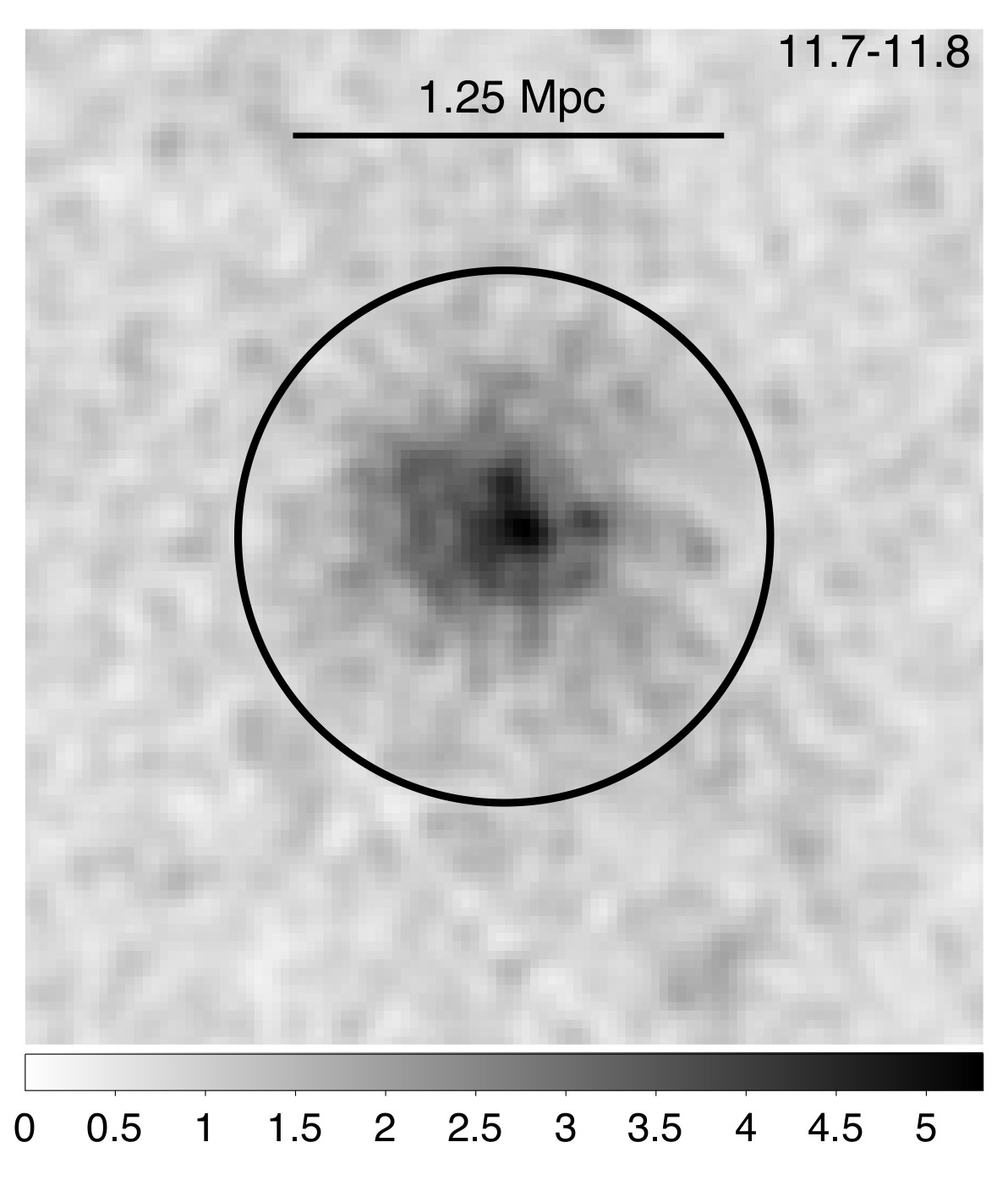
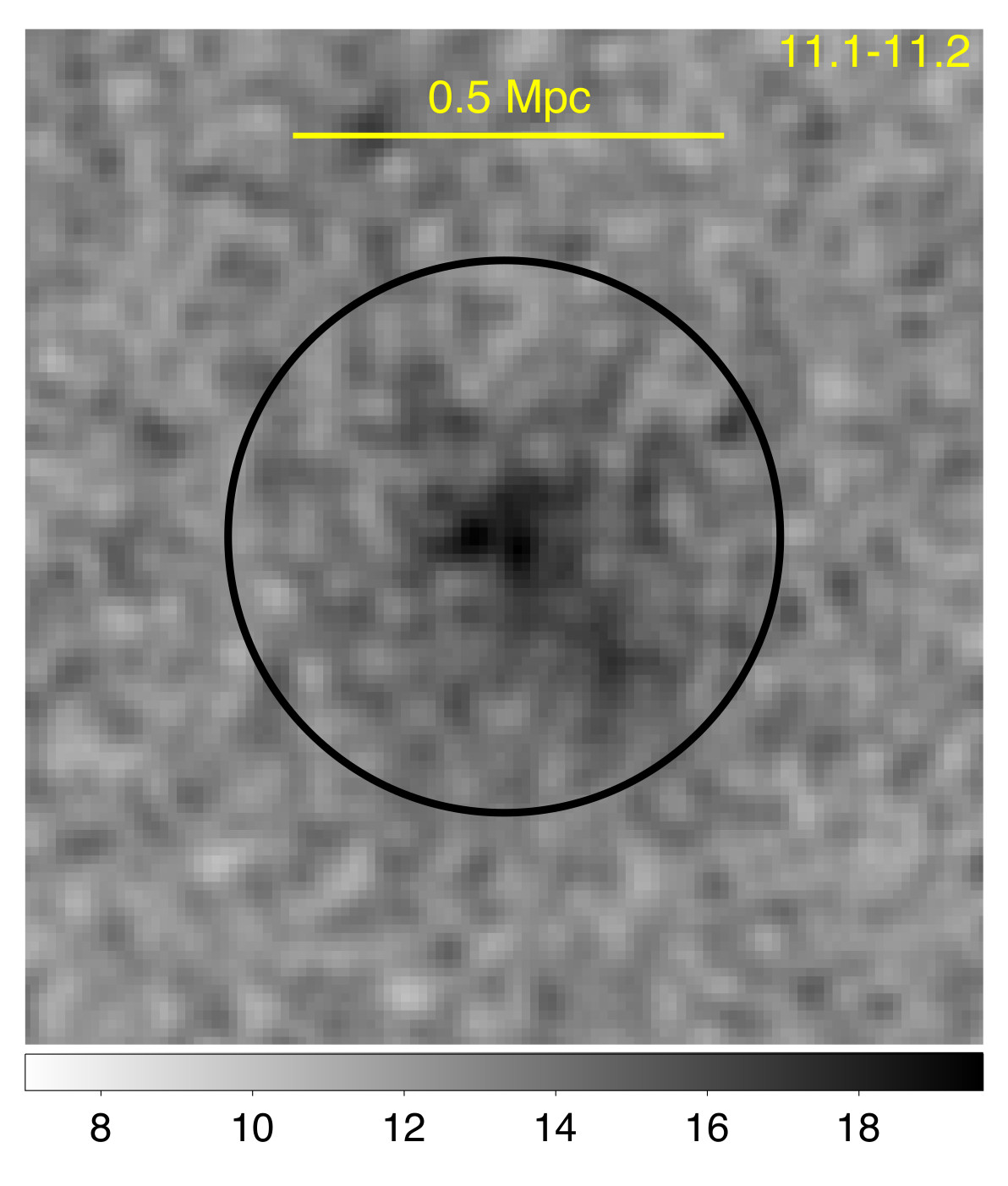
Fig. 1: Stacked X-ray images of the emission around the central galaxies of rich galaxy clusters (left) and lower mass galaxy groups (right). These are two of the twenty produced in this study. In both images, the black circle indicates the radius "R500", which roughly matches the size of the dark matter halo. The X-ray emission is centrally concentrated but clearly extends out to a significant fraction of this radius. The numbers in the top right of each image denote the stellar mass of the central galaxies (log M_star; see Fig.2) which were stacked. As the rulers show, R500 is about 2.5 times larger (and the mass about 15 times larger) for the clusters than for the groups. However the radial distribution of emission is similar in the two images.

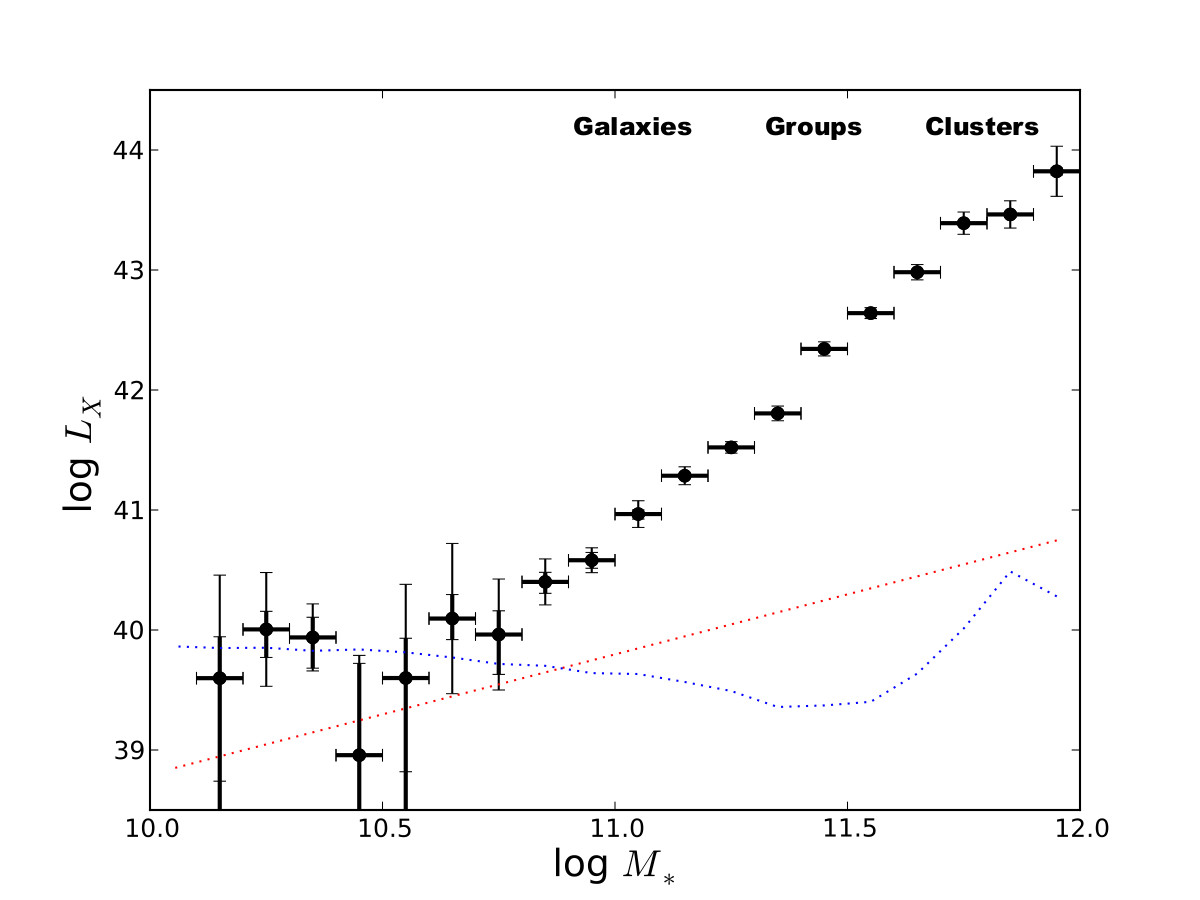
Fig. 2: Average X-ray luminosity for each of the 20 stacked images as a function of the stellar mass of the central galaxy. At higher masses the relation between the two is a power law (a straight line in this plot). For the seven data points at lowest mass, the X-ray emission from the hot gas is too faint to measure reliably, and the X-ray signal is also contaminated by emission from X-ray binaries in these galaxies - their estimated luminosity is shown with the blue and red dotted lines, corresponding to high-mass X-ray binaries and low-mass X-ray binaries respectively. 


By combining data for more than 250,000 individual objects, an MPA-based team has for the first time been able to measure X-ray emission in a uniform manner for objects with masses ranging from that of the Milky Way up to that of rich galaxy clusters. The results are surprisingly simple and give insight into how ordinary matter is distributed in today's universe, and how this distribution has been affected by energy input from galactic nuclei. 

While galaxies, with their billions of stars, may seem unfathomably large, the Universe contains even bigger objects. Clusters of galaxies are the largest known equilibrium structures. They can contain many hundreds of galaxies and a total mass thousands of times that of the Milky Way system. Galaxies and clusters appear very different when viewed in optical light (see Fig. 0), but computer simulations such as the Millennium Simulation suggest that their dark matter distributions should look very similar. The technical term for this is 'self-similarity', which in this context means that the dark matter halos of galaxy clusters are more or less just scaled-up versions of those which surround galaxies. 

Both galaxies and galaxy clusters (and their dark matter halos) are expected to be suffused with hot gas as well. This gas, which is heated to temperatures of millions of Kelvin, emits high-energy radiation and can be studied with X-ray telescopes like ROSAT and XMM-Newton. Studies of dozens of galaxy clusters show that the X-ray luminosity of the hot gas increases with the total mass of the cluster. Independently, studies of dozens of elliptical galaxies have shown that the X-ray luminosity of their hot gas increases with the stellar mass of the galaxy. These two correlations connect X-ray luminosity to two different quantities (total mass for clusters, stellar mass for galaxies), and have typically been measured in different ways for the different types of object. 

A team at MPA has now combined these two relations using an archived X-ray map of the whole sky. They analysed emission around a sample of 250,000 galaxies in the ROSAT All-Sky Survey - more than a thousand times the number used in any previous galaxy study - and carefully combined the X-ray emission from several thousand similar mass galaxies into a set of average images in a process known as "stacking". Example stacked images are shown in Figure 1 for two different stellar masses. By eye, the distribution of the hot gas in galaxy clusters looks just like a scaled-up version of that around much smaller galaxies. The full results are shown in Figure 2, which shows the relation between mean X-ray luminosity and stellar mass. This relation follows a straight line all the way from the individual galaxy regime (small masses) up to the rich cluster regime. 

However, a more detailed analysis shows that the slope of this line is steeper than would be expected if the hot gas were perfectly self-similar. This is probably due to a combination of effects, with a major contribution coming from heating by supermassive black holes at the centres of galaxies. As gas falls into a supermassive black hole, it loses large amounts of energy which are pumped into the hot gas atmosphere surrounding the galaxy. This is known "active galactic nucleus (AGN) feedback" and is thought to be important in the formation of both galaxies and galaxy clusters. AGN feedback has a bigger effect on less massive systems, lowering the X-ray luminosity of galaxies much more than that of clusters. 

This effect makes the relation in Figure 2 steeper than it would be if the hot gas were perfectly self-similar. The new measurements of X-ray luminosity over a broad range of masses gives a powerful clue to help understand AGN feedback. Comparing these measurements against predictions from numerical simulations, the MPA team showed that gentle, 'self-regulated' AGN feedback is preferred over more violent input of energy. 

Detailed comparison with previous measurements show that the new results are perfectly consistent with previously measured scaling relations for galaxies, as well as with scaling relations measured for optically selected samples of galaxy clusters. This suggests that a single relation can indeed describe both types of object. Studies of scaling relations for galaxy clusters selected by their X-ray properties have typically shown a similar slope but a systematically higher mean brightness at given total mass. This is most likely a reflection of the diversity of X-ray properties among clusters of a given total mass, which may have been underestimated in earlier work. 

Finally, this work complements a similar analysis performed for the same galaxies and galaxy clusters using data from the Planck satellite. That analysis used the shadows which hot gas atmospheres cast on the cosmic microwave background to measure the total thermal energy of the hot gas, as opposed to its X-ray luminosity, finding this to scale with mass self-similarly. Combining these two results implies that a large reservoir of hot gas surrounds galaxies, but is too rarefied as a result of AGN feedback to emit strongly in X-rays. This would resolve the long-standing problem of the location of the baryons which "should" be associated with the galaxies but had not previously been detected directly.

Mike Anderson, Massimo Gaspari, Simon White (MPA), Wenting Wang (Institute for Computational Cosmology, University of Durham), Xinyu Dai (Department of Physics and Astronomy, University of Oklahoma)


Publications:

Anderson, Michael E.; Gaspari, Massimo; White, Simon D. M.; Wang, Wenting; Dai, Xinyu Unifying X-ray scaling relations from galaxies to clusters, MNRAS Volume 449, Issue 4, p.3806-3826 (2015)
 
Planck Collaboration Planck intermediate results. XI. The gas content of dark matter halos: the Sunyaev-Zeldovich-stellar mass relation for locally brightest galaxies, Astronomy & Astrophysics, Volume 557, id.A52, 17 pp. (2013)


Monday, March 16, 2015

Cosmic Bumps on Cosmic Ripples

Abell 1689, one of the most massive galaxy clusters known. The hot gas in this and other galaxy clusters distort the shape of the cosmic microwave background radiation (the "SZ Effect"), and sensitive new results on these distortions from the South Pole Telescope confirm and refine previous conclusions while identifying some puzzling discrepancies. Credit: NASA, Benitez, Broadhurst, Ford, Clampin, Hartig, Illingworth, and the ACS Science Team and ESA

In 1969, the astrophysicists Rashid Sunyaev and Yakov Zel'dovich realized that the then recently discovered cosmic microwave background radiation (CMBR) would be distorted by hot cosmic gas. Hot electrons in the intergalactic medium preferentially scatter the light in one direction, causing a change in the brightness of the CMBR towards clusters of galaxies where electrons should be abundant. They showed that the effect would reveal the large-scale structure of the universe, the nature of the CMBR, cosmological parameters like the Hubble constant, and physical conditions in galaxy clusters.

The effect, now known as the effect (SZSunyaev-Zel'dovich E), was first spotted in 1978 after much searching. Both space- and ground-based instruments, including the Planck satellite, the South Pole Telescope (SPT), and others have released new catalogs of galaxy clusters selected using the SZE. CfA astronomers Matt Ashby, Matt Bayliss, Richard Foley, Christine Jones, Steve Murray, Brian Stalder, Tony Stark, and Alexey Vikhlinin were part of a large team that used the SPT to examine the SZE signatures of forty-six X-ray selected groups and clusters of galaxies. The X-ray observations are some of the most sensitive ever used to search for clusters; the most distant of the galaxy clusters detected to date from a cosmic epoch six billion years after the big bang.

The team reports generally very good agreement between the cosmological parameters they measure and those reported by other means, in particular the latest results from the Planck satellite study of the CMBR. However the agreement is not perfect: the team reports an unexpectedly weak SZE signal for less massive galaxy clusters. Although they did identify and measure several potential sources of contamination, the discrepancy is not easily explained away. They suggest one possibility: dust within the clusters is reducing the SZE signal. For now, the reason remains unknown; this mystery will be addressed in subsequent, deeper, more sensitive SZE observations planned for the SPT.

Reference(s):

"Analysis of Sunyaev–Zel'dovich Effect Mass–Observable Relations Using South Pole Telescope Observations of an X-ray Selected Sample of Low-Mass Galaxy Clusters and Groups," J. Liu et al., MNRAS, 448, 2085, 2015


Monday, March 02, 2015

An Old-looking Galaxy in a Young Universe

Location of the distant dusty galaxy A1689-zD1 behind the galaxy cluster Abell 1689 (annotated)

Infrared/visible-light view of the distant dusty galaxy A1689-zD1 behind the galaxy cluster Abell 1689

The distant dusty galaxy A1689-zD1 behind the galaxy cluster Abell 1689

Wide-field view of the sky around the rich galaxy cluster Abell 1689


# # # # # # # # # # # # # # # # # # # # # # # # # # # # # # # # # # # # # #

Video

A zoom into Abell 1689 and a very remote dusty galaxy


ALMA and VLT probe surprisingly dusty and evolved galaxy

One of the most distant galaxies ever observed has provided astronomers with the first detection of dust in such a remote star-forming system and tantalising evidence for the rapid evolution of galaxies after the Big Bang. The new observations have used ALMA to pick up the faint glow from cold dust in the galaxy A1689-zD1 and used ESO’s Very Large Telescope to measure its distance.

A team of astronomers, led by Darach Watson from the University of Copenhagen, used the Very Large Telescope’s X-shooter instrument along with the Atacama Large Millimeter/submillimeter Array (ALMA) to observe one of the youngest and most remote galaxies ever found. They were surprised to discover a far more evolved system than expected. It had a fraction of dust similar to a very mature galaxy, such as the Milky Way. Such dust is vital to life, because it helps form planets, complex molecules and normal stars.

The target of their observations is called A1689-zD1 [1]. It is observable only by virtue of its brightness being amplified more than nine times by a gravitational lens in the form of the spectacular galaxy cluster, Abell 1689, which lies between the young galaxy and the Earth. Without the gravitational boost, the glow from this very faint galaxy would have been too weak to detect.

We are seeing A1689-zD1 when the Universe was only about 700 million years old — five percent of its present age [2]. It is a relatively modest system — much less massive and luminous than many other objects that have been studied before at this stage in the early Universe and hence a more typical example of a galaxy at that time.

A1689-zD1 is being observed as it was during the period of reionisation, when the earliest stars brought with them a cosmic dawn, illuminating for the first time an immense and transparent Universe and ending the extended stagnation of the Dark Ages. Expected to look like a newly formed system, the galaxy surprised the observers with its rich chemical complexity and abundance of interstellar dust.

After confirming the galaxy’s distance using the VLT,” said Darach Watson, “we realised it had previously been observed with ALMA. We didn’t expect to find much, but I can tell you we were all quite excited when we realised that not only had ALMA observed it, but that there was a clear detection. One of the main goals of the ALMA Observatory was to find galaxies in the early Universe from their cold gas and dust emissions — and here we had it!

This galaxy was a cosmic infant — but it proved to be precocious. At this age it would be expected to display a lack of heavier chemical elements — anything heavier than hydrogen and helium, defined in astronomy as metals. These are produced in the bellies of stars and scattered far and wide once the stars explode or otherwise perish. This process needs to be repeated for many stellar generations to produce a significant abundance of the heavier elements such as carbon, oxygen and nitrogen.

Surprisingly, the galaxy A1689-zD1 seemed to be emitting a lot of radiation in the far infrared [3], indicating that it had already produced many of its stars and significant quantities of metals, and revealed that it not only contained dust, but had a dust-to-gas ratio that was similar to that of  much more mature galaxies.

Although the exact origin of galactic dust remains obscure,” explains Darach Watson, “our findings indicate that its production occurs very rapidly, within only 500 million years of the beginning of star formation in the Universe — a very short cosmological time frame, given that most stars live for billions of years.”

The findings suggest A1689-zD1 to have been consistently forming stars at a moderate rate since 560 million years after the Big Bang, or else to have passed through its period of extreme starburst very rapidly before entering a declining state of star formation.

Prior to this result, there had been concerns among astronomers that such distant galaxies would not be detectable in this way, but A1689-zD1 was detected using only brief observations with ALMA.

Kirsten Knudsen (Chalmers University of Technology, Sweden), co-author of the paper, added, “This amazingly dusty galaxy seems to have been in a rush to make its first generations of stars. In the future, ALMA will be able to help us to find more galaxies like this, and learn just what makes them so keen to grow up.”


Notes

[1] This galaxy was noticed earlier in the Hubble images, and suspected to be very distant, but the distance could not be confirmed at that time.

[2] This corresponds to a redshift of 7.5.

[3] This radiation is stretched by the expansion of the Universe into the millimetre wavelength range by the time it gets to Earth and hence can be detected with ALMA.  


More Information


This research was presented in a paper entitled “A dusty, normal galaxy in the epoch of reionization” by D. Watson et al., to appear online in the journal Nature on 2 March 2015.

The team is composed of D. Watson (Niels Bohr Institute, University of Copenhagen, Denmark), L. Christensen (University of Copenhagen), K. K. Knudsen (Chalmers University of Technology, Sweden), J. Richard (CRAL, Observatoire de Lyon, Saint Genis Laval, France), A. Gallazzi (INAF-Osservatorio Astrofisico di Arcetri, Firenze, Italy) and M. J. Michalowski (SUPA, Institute for Astronomy, University of Edinburgh, Royal Observatory, Edinburgh, UK).

ESO is the foremost intergovernmental astronomy organisation in Europe and the world’s most productive ground-based astronomical observatory by far. It is supported by 16 countries: Austria, Belgium, Brazil, the Czech Republic, Denmark, France, Finland, Germany, Italy, the Netherlands, Poland, Portugal, Spain, Sweden, Switzerland and the United Kingdom, along with the host state of Chile. ESO carries out an ambitious programme focused on the design, construction and operation of powerful ground-based observing facilities enabling astronomers to make important scientific discoveries. ESO also plays a leading role in promoting and organising cooperation in astronomical research. ESO operates three unique world-class observing sites in Chile: La Silla, Paranal and Chajnantor. At Paranal, ESO operates the Very Large Telescope, the world’s most advanced visible-light astronomical observatory and two survey telescopes. VISTA works in the infrared and is the world’s largest survey telescope and the VLT Survey Telescope is the largest telescope designed to exclusively survey the skies in visible light. ESO is a major partner in ALMA, the largest astronomical project in existence. And on Cerro Armazones, close to Paranal, ESO is building the 39-metre European Extremely Large Telescope, the E-ELT, which will become “the world’s biggest eye on the sky”.  


Links

Contacts

Darach Watson
Niels Bohr Institute
University of Copenhagen, Denmark
Tel: +45 2480 3825
Email: darach@dark-cosmology.dk

Kirsten K. Knudsen
Chalmers University of Technology
Onsala, Sweden
Tel: +46 31 772 5526
Cell: +46 709 750 956
Email: kirsten.knudsen@chalmers.se

Richard Hook
ESO education and Public Outreach Department
Garching bei München, Germany
Tel: +49 89 3200 6655
Cell: +49 151 1537 3591
Email: rhook@eso.org

Source: ESO


Tuesday, April 01, 2014

New analytical model for turbulence pressure in galaxy clusters

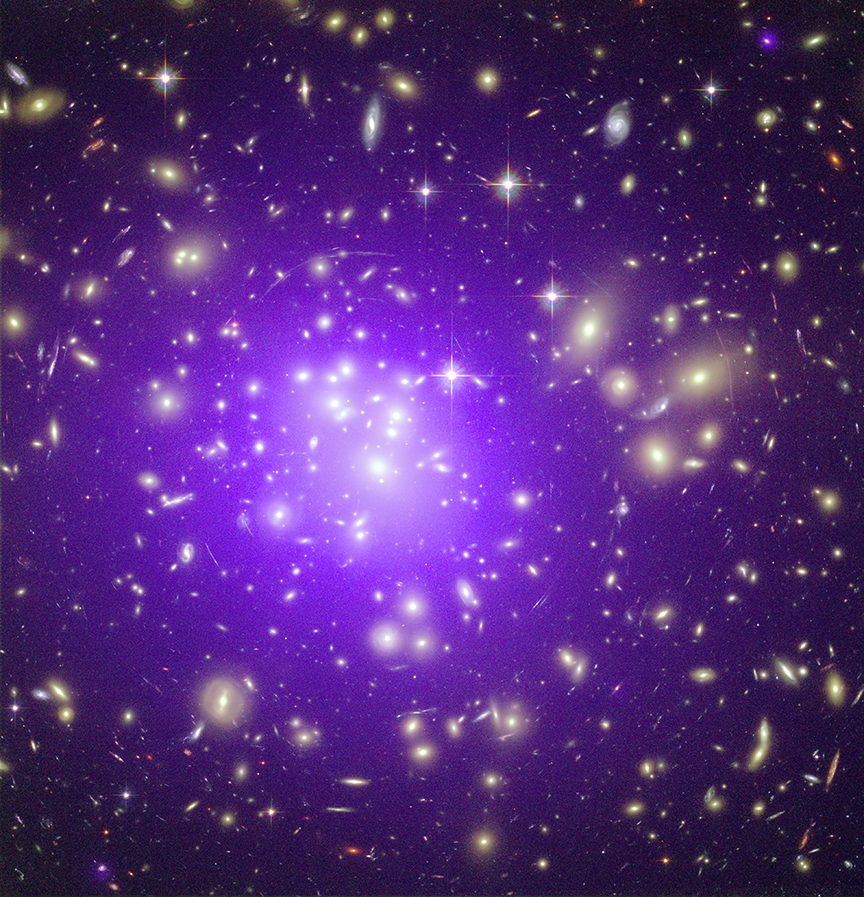
Fig. 1: The galaxy cluster Abell 1689, one of the biggest and most massive galaxy clusters known. Most of the mass is in the form of dark matter, so astronomers need to use indirect methods such as gravitational lensing, the SZ-effect or X-ray observations of the hot intracluster gas to determine the mass of a galaxy cluster.  Credit: X-ray: NASA/CXC/MIT/E.-H Peng et al; Optical: NASA/STScI 

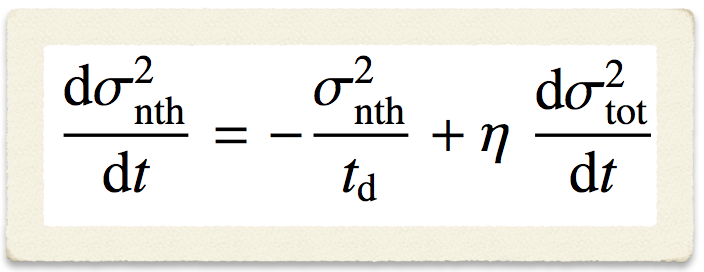
Fig. 2: This analytical equation is at the heart of the new method: it describes the evolution of pressure due to turbulence in galaxy clusters. 

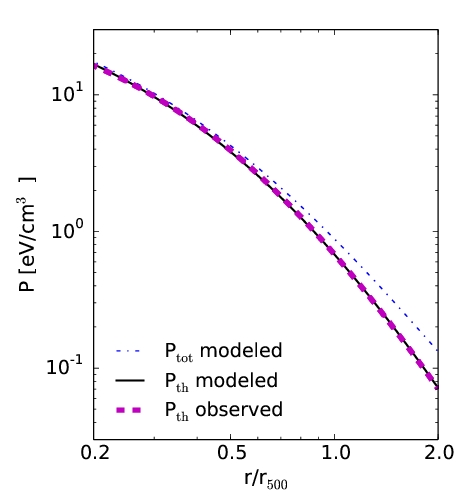
Fig. 3: The predicted total (dash-dotted) and thermal (solid) pressure profiles calculated with the new model. The calculations were performed for a group of clusters at a mean redshift z=0.1 with a average mass of 300 trillion solar masses. The thick dashed line shows the profile derived from X-ray and SZ observations. 

Mass determinations of galaxy clusters based on observations of the hot intracluster gas often neglect non-thermal processes, most importantly intracluster turbulence. This introduces a systematic error in the estimate. A group of scientists at MPA has therefore developed an analytical, one-dimensional model for the non-thermal pressure contribution, which combines the growth of galaxy clusters in a cosmological context and the physics of turbulence. If further tests against both observations and simulations confirm the initial positive results, this new model could improve the determination of cluster masses and thus make galaxy clusters a more accurate cosmological tool.  

The expansion of the present-day Universe is accelerating, and the origin of this acceleration is unknown. It indicates either the presence of “Dark Energy” - a mysterious energy component in the Universe with negative pressure, or a breakdown of Einstein’s General Relativity - how gravity works on cosmological scales. In order to distinguish between these two explanations, we must measure how structures in the Universe evolve over time. 

Galaxy clusters (see Fig. 1) grow in mass by accreting material from their surroundings over cosmic history. They are the largest known gravitationally bound objects in the Universe and therefore are an excellent probe of the growth of large-scale structures – and thus of the origin of the cosmic acceleration. If we want to use galaxy clusters as a probe of the acceleration, we need to accurately determine their masses. Although these giants are dominated by invisible “dark matter”, we can infer their total mass from observations of the intracluster gas under the assumption of a hydrostatic equilibrium between the gravitational pull and the gas pressure, or more accurately the gradient of the gas pressure. 

Observations of the intracluster gas, however, typically measure only the thermal pressure of the gas. Non-thermal pressure, especially from turbulent gas motion, has been recognized to provide an additional pressure gradient and therefore has to be taken into account as well. Neglecting this contribution would result in a deviation of the inferred cluster mass from the true mass and in consequence this would influence the study of cosmic acceleration. 

So far, the amplitude of the turbulence pressure has mainly been estimated with large-scale hydrodynamical numerical simulations. These state-of-the-art simulations, however, yield quantitatively different results when using different numerical methods. Moreover, they are computationally expensive and do not lead to a direct physical understanding of what is happening in the galaxy clusters. 

Therefore, we took a different approach to this problem by gathering physical insights about how turbulence arises and dissipates in the intracluster gas. From this input, we formed a one-dimensional analytical model of the non-thermal pressure contribution, which describes the velocity dispersion due to turbulence at each radius as the galaxy cluster grows in mass (Fig.2). 

This new analytical model predicts that the non-thermal fraction of the gas pressure increases towards cluster outskirts as it takes significantly longer for turbulence to dissipate at larger distances from the cluster centre. Another prediction is that the non-thermal fraction is larger in clusters with higher masses and in clusters observed at higher redshift (i.e. at earlier cosmic times), since they grow faster which triggers more turbulence. 

With the help of an existing model of the total pressure, the new model also gives the thermal pressure as well as the biased mass estimate derived from this thermal pressure gradient. If we compare our results with observations of a population of galaxy clusters, the predicted thermal pressure profile is in excellent agreement with the data (Fig.3). 

Thus, our model has passed an important observational test; in addition we found qualitative agreement with simulation data. More specific tests on the predicted mass and redshift dependence will be performed both against observations and numerical simulations. If all the tests are passed successfully, the physical understanding provided by the new model will lead to a better determination of the cluster masses. We can then use galaxy clusters as a competitive probe of the origin of cosmic acceleration.

Xun Shi and Eiichiro Komatsu


Original publication:

Xun Shi, Eiichiro Komatsu, "Analytical model for non-thermal pressure in galaxy clusters", submitted to MNRAS linkPfeilExtern.gifarXiv:1401.7657


Tuesday, January 07, 2014

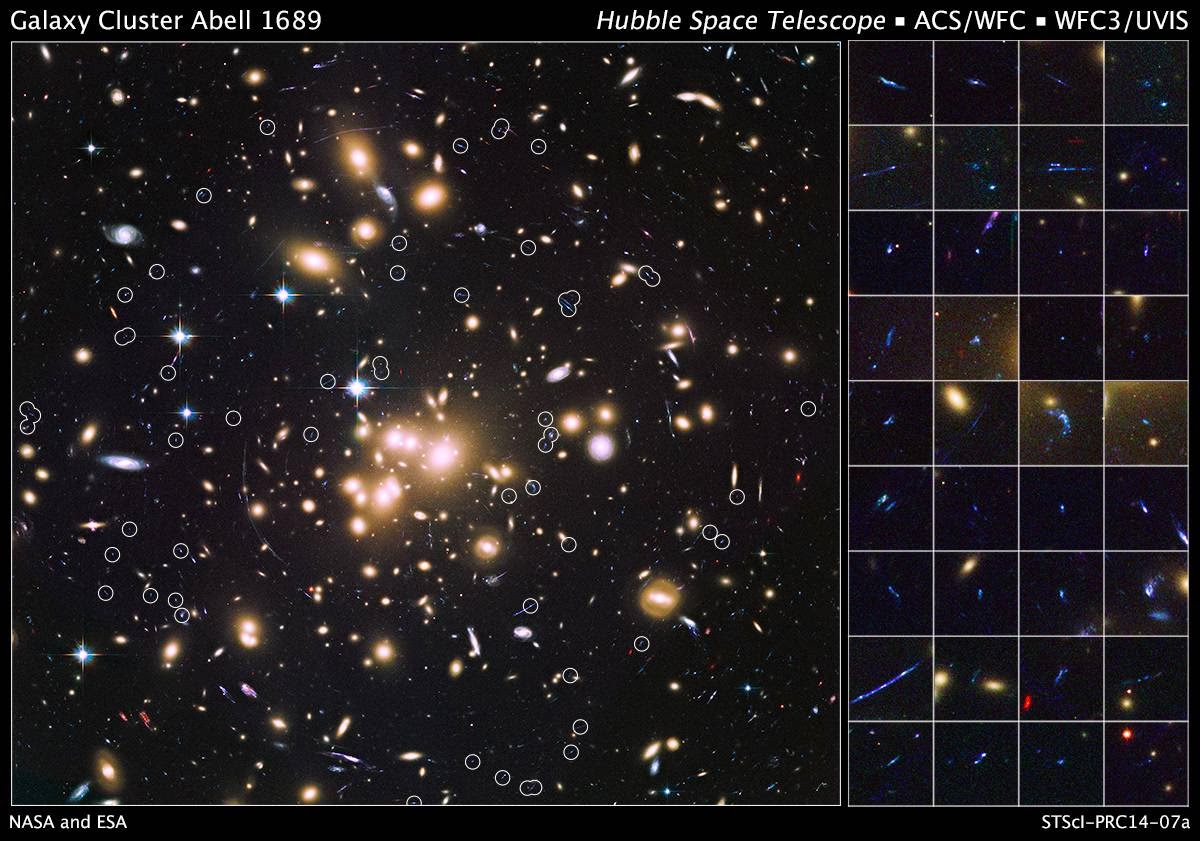
Hubble Unveils a Deep Sea of Small and Faint Early Galaxies

Credit: NASA, ESA, and B. Siana and A. Alavi (University of California, Riverside)


NASA's Hubble Space Telescope has uncovered the long-suspected underlying population of galaxies that produced the bulk of new stars during the universe's early years. They are the smallest, faintest, and most numerous galaxies ever seen in the remote universe, captured by Hubble deep exposures taken in ultraviolet light.

The 58 young, diminutive galaxies spied by Hubble were photographed as they appeared more than 10 billion years ago, during the heyday of star birth. The newly discovered galaxies are 100 times more numerous than their more massive cousins. But they are 100 times fainter than galaxies typically detected in previous deep-field surveys of the early universe.

The results are being presented at the 223rd meeting of the American Astronomical Society in Washington, D.C.

These galaxies would normally be too faint for Hubble to see. To detect them, astronomers teamed Hubble with a natural zoom lens in space, produced by the gravity of a giant foreground galaxy cluster, Abell 1689. The cluster is so massive that it magnifies the light from faraway galaxies behind it due to a phenomenon called gravitational lensing, where the curvature of space acts like a giant funhouse mirror to stretch and brighten distant objects.

"There's always been a concern that we've only found the brightest of the distant galaxies," said study leader Brian Siana of the University of California, Riverside. "The bright galaxies, however, represent the tip of the iceberg. We believe most of the stars forming in the early universe are occurring in galaxies we normally can't see at all. Now we have found those 'unseen' galaxies, and we're really confident that we're seeing the rest of the iceberg."

Siana's team believes it has completed the census of galaxies at an epoch when the universe was roughly 3.4 billion years old. If this sample of galaxies is representative of the entire population at this early time, then the majority of new stars formed in these small galaxies. "Though these galaxies are very faint, their increased numbers mean that they account for the majority of star formation during this epoch," said team member Anahita Alavi, also of the University of California, Riverside, and first author on the science paper describing the results.

Uncovering these galaxies also helps bolster claims that hot stars in small galaxies pumped out enough radiation to ionize hydrogen by stripping off electrons. This process, called "reionization," occurred about 13 billion years ago, within the first billion years after the big bang. Reionization made the universe transparent to light, allowing astronomers to look far back into time. "Although the galaxies in our sample existed a few billion years after reionization, it's presumed that galaxies like these, or possibly some of these galaxies, did play a big role in reionization," Siana said.

These objects do not look like the majestic spiral and elliptical galaxies seen in our galactic neighborhood. "The gravitational lensing stretches out the apparent shape of the distant galaxies, resolving them. Without the lensing, some of the galaxies would be just point sources to Hubble. We now have an idea about their sizes that previously were impossible to measure because the galaxies were unresolved," said Alavi. The Hubble analysis shows they are small, irregularly shaped objects measuring just a few thousand light-years across. Even when fully mature, these galaxies will be about one-tenth to one one-hundredth the mass the Milky Way. Because they are undergoing a firestorm of star birth, their light is dominated by the ultraviolet glow of fledgling stars.

The research team used Hubble's Wide Field Camera 3 to search for faint, star-forming galaxies in ultraviolet light, a reliable tracer of star birth. The galaxies existed when the universe was undergoing a "baby boom" of star formation, estimated to have peaked between 9 billion and 12 billion years ago.

"Our goal with these observations was not to find a large number of galaxies, but to find much fainter galaxies," Alavi explained.

This strategy of surveying large numbers of background galaxies with deep observations of lensing clusters is being used in a new three-year Hubble survey, called the Frontier Fields. Hubble astronomers are using Hubble to exploit the magnification powers of six massive galaxy clusters in a hunt for small galaxies that existed more than 12 billion to 13 billion years ago.

The galaxies discovered in these lensing surveys will be prime targets for NASA's James Webb Space Telescope, an infrared observatory scheduled to launch in 2018. Through spectroscopy, Webb will be able to divide the light from each galaxy into its constituent colors. This analysis yields information on the star birth and chemical content of each galaxy.

CONTACT

Donna Weaver / Ray Villard
Space Telescope Science Institute, Baltimore, Md.
410-338-4493 / 410-338-4514

dweaver@stsci.edu / villard@stsci.edu

Friday, September 13, 2013

Hubble Uncovers Largest Known Population of Star Clusters

Globular Star Cluster in Galaxy Cluster Abell 1689
Credit: NASA, ESA, J. Blakeslee (NRC Herzberg Astrophysics Program, Dominion Astrophysical Observatory), and K. Alamo-Martinez (National Autonomous University of Mexico)

NASA's Hubble Space Telescope has uncovered the largest known population of globular star clusters, an estimated 160,000, swarming like bees inside the crowded core of the giant grouping of galaxies Abell 1689. By comparison, our Milky Way galaxy hosts about 150 such clusters.

Studying globular clusters is critical to understanding the early, intense star-forming episodes that marked galaxy formation. The Hubble observations also confirm that these compact stellar groupings can be used as reliable tracers of the amount of dark matter locked away in immense galaxy clusters.

Globular clusters, dense bunches of hundreds of thousands of stars, are the homesteaders of galaxies, containing some of the oldest surviving stars in the universe. Almost 95 percent of globular cluster formation occurred within the first 1 billion or 2 billion years after our universe was born in the big bang 13.8 billion years ago.

A team of astronomers, led by John Blakeslee of the NRC Herzberg Astrophysics Program at the Dominion Astrophysical Observatory in Victoria, B.C., used Hubble's sensitivity and sharpness to discover a bounty of these stellar fossils, which is roughly twice as large as any other population found in previous globular cluster surveys. The Hubble observations also win the distance record for the farthest such systems ever studied, at 2.25 billion light-years away.

The research team found that the globular clusters are intimately intertwined with dark matter. "In our study of Abell 1689, we show how the relationship between globular clusters and dark matter depends on the distance from the galaxy cluster's center," explained team member Karla Alamo-Martinez of the Center for Radio Astronomy and Astrophysics of the National Autonomous University of Mexico in Morelia. "In other words, if you know how many globular clusters are within a certain distance, we can give you an estimate of the amount of dark matter."

Alamo-Martinez is also the lead author on the team's science paper describing the results. The paper appears in the Sept. 20 issue of The Astrophysical Journal.

Although dark matter is invisible, it is considered the underlying gravitational scaffolding upon which stars and galaxies are built. Understanding dark matter can yield clues on how large structures such as galaxies and galaxy clusters were assembled billions of years ago.

The Hubble study shows that most of the globular clusters in Abell 1689 formed near the center of the galaxy cluster, which contains a deep well of dark matter. Their number decreases the farther away Hubble looked from the core, corresponding with a comparable drop in the amount of dark matter.

"The globular clusters are fossils of the earliest star formation in Abell 1689, and our work shows they were very efficient in forming in the denser regions of dark matter near the center of the galaxy cluster," Blakeslee said. "Our findings are consistent with studies of globular clusters in other galaxy clusters, but extend our knowledge to regions of higher dark matter density."

The astronomers used Hubble's Advanced Camera for Surveys to peer deep inside the heart of Abell 1689, detecting the visible-light glow of 10,000 globular clusters, some as dim as 29th magnitude. Based on that number, Blakeslee's team estimated that more than 160,000 globular clusters are huddled within a diameter of 2.4 million light-years. "Even though we are looking deep into the cluster, we're only seeing the brightest globular clusters, and only near the center of Abell 1689 where Hubble was pointed," he said.

The brightness of most of the globular clusters is estimated to be 31st magnitude. This is out of reach for Hubble, but not for NASA's James Webb Space Telescope, an infrared observatory scheduled to launch later this decade. By going fainter, Webb should be able to see many more of the globular clusters.

Blakeslee's quest to use Hubble to conduct a globular cluster census in Abell 1689 began 10 years ago after astronauts added the Advanced Camera for Surveys to Hubble's arsenal of science instruments. While analyzing some gravitational lensing data of Abell 1689 obtained with the newly installed camera, Blakeslee spotted dots of light peppered throughout the images. The dots turned out to be the brightest members of a teeming population of globular clusters.

CONTACT

Donna Weaver / Ray Villard
Space Telescope Science Institute, Baltimore, Md.
410-338-4493 / 410-338-4514

dweaver@stsci.edu / villard@stsci.edu

John Blakeslee
National Research Council, Herzberg Institute of Astrophysics,
Dominion Astrophysical Observatory
Victoria, B.C., Canada
250-363-8103

john.blakeslee@nrc-cnrc.gc.ca

Thursday, November 11, 2010

Detailed Dark Matter Map Yields Clues to Galaxy Cluster Growth

Galaxy Cluster Abell 1689
Credit: NASA, ESA, D. Coe (NASA Jet Propulsion Laboratory/California Institute of Technology, and Space Telescope Science Institute), N. Benitez (Institute of Astrophysics of Andalusia, Spain), T. Broadhurst (University of the Basque Country, Spain), and H. Ford (Johns Hopkins University). Compass and Scale Image for Abell 1689 Dark Matter Map

Astronomers using NASA's Hubble Space Telescope took advantage of a giant cosmic magnifying glass to create one of the sharpest and most detailed maps of dark matter in the universe. Dark matter is an invisible and unknown substance that makes up the bulk of the universe's mass.

The new dark matter observations may yield new insights into the role of dark energy in the universe's early formative years. The result suggests that galaxy clusters may have formed earlier than expected, before the push of dark energy inhibited their growth. A mysterious property of space, dark energy fights against the gravitational pull of dark matter. Dark energy pushes galaxies apart from one another by stretching the space between them, thereby suppressing the formation of giant structures called galaxy clusters. One way astronomers can probe this primeval tug-of-war is through mapping the distribution of dark matter in clusters.

A team led by Dan Coe at NASA's Jet Propulsion Laboratory in Pasadena, Calif., used Hubble's Advanced Camera for Surveys to chart the invisible matter in the massive galaxy cluster Abell 1689, located 2.2 billion light-years away. The cluster's gravity, the majority of which comes from dark matter, acts like a cosmic magnifying glass, bending and amplifying the light from distant galaxies behind it. This effect, called gravitational lensing, produces multiple, warped, and greatly magnified images of those galaxies, like the view in a funhouse mirror. By studying the distorted images, astronomers estimated the amount of dark matter within the cluster. If the cluster's gravity only came from the visible galaxies, the lensing distortions would be much weaker.

Based on their higher-resolution mass map, Coe and his collaborators confirm previous results showing that the core of Abell 1689 is much denser in dark matter than expected for a cluster of its size, based on computer simulations of structure growth. Abell 1689 joins a handful of other well-studied clusters found to have similarly dense cores. The finding is surprising, because the push of dark energy early in the universe's history would have stunted the growth of all galaxy clusters.

"Galaxy clusters, therefore, would had to have started forming billions of years earlier in order to build up to the numbers we see today," Coe explains. "At earlier times, the universe was smaller and more densely packed with dark matter. Abell 1689 appears to have been well fed at birth by the dense matter surrounding it in the early universe. The cluster has carried this bulk with it through its adult life to appear as we observe it today."

Mapping the Invisible

Abell 1689 is among the most powerful gravitational lensing clusters ever observed. Coe's observations, combined with previous studies, yielded 135 multiple images of 42 background galaxies.

"The lensed images are like a big puzzle," Coe says. "Here we have figured out, for the first time, a way to arrange the mass of Abell 1689 such that it lenses all of these background galaxies to their observed positions." Coe used this information to produce a higher-resolution map of the cluster's dark matter distribution than was possible before.

Coe teamed with mathematician Edward Fuselier, who, at the time, was at the United States Military Academy at West Point, to devise a new technique to calculate the new map. "Thanks, in large part, to Eddie's contributions, we have finally `cracked the code' of gravitational lensing. Other methods are based on making a series of guesses as to what the mass map is, and then astronomers find the one that best fits the data. Using our method, we can obtain, directly from the data, a mass map that gives a perfect fit."

Astronomers are planning to study more clusters to confirm the possible influence of dark energy. A major Hubble program that will analyze dark matter in gigantic galaxy clusters is the Cluster Lensing and Supernova survey with Hubble (CLASH). In this survey, the telescope will study 25 clusters for a total of one month over the next three years. The CLASH clusters were selected because of their strong X-ray emission, indicating they contain large quantities of hot gas. This abundance means the clusters are extremely massive. By observing these clusters, astronomers will map the dark matter distributions and look for more conclusive evidence of early cluster formation, and possibly early dark energy.

CONTACT

Donna Weaver
Space Telescope Science Institute, Baltimore, Md.
410-338-4493

dweaver@stsci.edu

Dan Coe
NASA Jet Propulsion Laboratory, California Institute of Technology,
Pasadena, Calif., and Space Telescope Science Institute, Baltimore, Md.
410-338-4312

dcoe@stsci.edu

Thursday, August 19, 2010

First Use of Cosmic Lens to Probe Dark Energy

Dark Matter Map in Galaxy Cluster Abell 1689
Credit: NASA, ESA, E. Jullo (Jet Propulsion Laboratory),
P. Natarajan (Yale University),
and J.-P. Kneib (Laboratoire d'Astrophysique de Marseille, CNRS, France)

Astronomers have devised a new method for measuring perhaps the greatest puzzle of our universe — dark energy. This mysterious force, discovered in 1998, is pushing our universe apart at ever-increasing speeds.

For the first time, astronomers using NASA's Hubble Space Telescope were able to take advantage of a giant magnifying lens in space — a massive cluster of galaxies — to narrow in on the nature of dark energy. Their calculations, when combined with data from other methods, significantly increase the accuracy of dark energy measurements. This may eventually lead to an explanation of what the elusive phenomenon really is.

"We have to tackle the dark energy problem from all sides," said Eric Jullo, an astronomer at NASA's Jet Propulsion Laboratory, Pasadena, Calif. "It's important to have several methods, and now we've got a new, very powerful one." Jullo is lead author of a paper on the findings appearing in the Aug. 20 issue of the journal Science.

Scientists aren't clear about what dark energy is, but they do know that it makes up a large chunk of our universe, about 72 percent. Another chunk, about 24 percent, is thought to be dark matter, also mysterious in nature but easier to study than dark energy because of its gravitational influence on matter that we can see. The rest of the universe, a mere 4 percent, is the stuff that makes up people, planets, stars, and everything made up of atoms.

In their new study, the science team used images from Hubble to examine a massive cluster of galaxies, named Abell 1689, which acts as a magnifying, or gravitational, lens. The gravity of the cluster causes galaxies behind it to be imaged multiple times into distorted shapes, sort of like a fun-house mirror reflection that warps your face.

Using these distorted images, the scientists were able to figure out how light from the more distant, background galaxies had been bent by the cluster — a characteristic that depends on the nature of dark energy. Their method also depends on precise ground-based measurements of the distance and speed at which the background galaxies are traveling away from us. The team used these data to quantify the strength of the dark energy that is causing our universe to accelerate.

"What I like about our new method is that it's very visual," said Jullo, "You can literally see gravitation and dark energy bend the images of the background galaxies into arcs."

According to the scientists, their method required multiple, meticulous steps. They spent the last several years developing specialized mathematical models and precise maps of the matter — both dark and "normal" — constituting the Abell 1689 cluster.

"We can now apply our technique to other gravitational lenses," said co-author Priya Natarajan, a cosmologist at Yale University, New Haven, Conn. "We're exploiting a beautiful phenomenon in nature to learn more about the role that dark energy plays in our universe."

Other authors of the paper include Jean-Paul Kneib and Carlo Schimd of the Laboratoire d'Astrophysique de Marseille, France; Anson D'Aloisio of Yale University; Marceau Limousin of Laboratoire d'Astrophysique de Marseille, France, and University of Copenhagen, Denmark; and Johan Richard of Durham University, United Kingdom.

CONTACT

Ray Villard
Space Telescope Science Institute, Baltimore, Md.
410-338-4514

villard@stsci.edu

Whitney Clavin
Jet Propulsion Laboratory, Pasadena, Calif.
818-354-4673

whitney.clavin@jpl.nasa.gov

Oli Usher
ESO, Hubble-Europe Information Center, Garching, Germany
011-49-89-3200-6855

ousher@eso.org

Eric Jullo
Jet Propulsion Laboratory, Pasadena, Calif.
818-354-5511

eric.jullo@jpl.nasa.gov

Priyamvada Natarajan
Yale University, New Haven, Conn.
617-945-0542

priyamvada.natarajan@yale.edu

Jean-Paul Kneib
Laboratoire d'Astrophysique de Marseille, CNRS, France
011-33-685-988-265

jean-paul.kneib@oamp.fr