Friday, November 11, 2011

Found: Pristine Gas From The Big Bang

The two pristine gas clouds found by astronomers could sit in one of the filamentary regions visible around galaxies in this and the below image, which are from computer simulations. Credit: Simulation by Ceverino, Dekel & Primack


Kamuela, HI – Two clumps of primordial gas from the dawn of time have been detected in deep space by astronomers using the 10-meter telescopes at the W. M. Keck Observatory.

The gas clouds are too diffuse to form stars and show virtually no signs of containing any “metals,” which is astronomer-speak for all elements heavier than hydrogen and helium – the two simplest and lightest elements in the universe. In fact the only elements astronomers have detected in the clouds are hydrogen and its heavier isotope, deuterium.

The lack of metals strongly suggests that the gases are reservoirs of the pristine material left over from the Big Bang. Because stars fuse atoms to make heavier elements, these gases have never been involved in any star making in the 2 billion years between the Big Bang and their discovery. In other words, they are the remnant gases that are unchanged since they were created in the first few minutes after the Big Bang.

“Despite decades of effort to find anything metal-free in the universe, Nature has previously set a limit to enrichment at no less than one-thousandth that found in the Sun,” said astronomer J. Xavier Prochaska of the University of California Observatories-Lick Observatory, U.C. Santa Cruz. “These clouds are at least 10 times lower than that limit and are the most pristine gas discovered in our universe.”

Prochaska has coauthored a paper reporting on the discovery with Michele Fumagalli of the U.C. Santa Cruz and John O’Meara of Saint Michael’s College in Vermont. The paper is scheduled to be published by the journal Science, on the Science Express website (http://www.sciencexpress.org) on Nov. 10.

“We’ve searched carefully for oxygen, carbon, nitrogen and silicon – the things that are found on Earth and the Sun in abundance,” Fumagalli said. “We don’t find a trace of anything other than hydrogen and deuterium.”

Exactly how they can detect dark, cold, diffuse gas about 12 billion light-years away is a story in itself.

“In this case we actually have to do a bit of a trick,” Prochaska explained. “We study the gas in silhouette.” A more distant quasar provides the light for this. The quasar light shines though the gas and the elements in the gas absorb very specific wavelengths of light, which can only be found by splitting the light into very detailed spectra to reveal the dark lines of missing light.

In other words, said Fumagalli, “All of the analysis is on the light we didn’t get.” The clouds absorb only a small fraction of the quasar light that makes it to Earth. “But the signatures of hydrogen absorption are obvious, so there’s no doubt there’s a lot of gas there.”

The blobs of pristine gas are good news to astronomers because they are confirmation of the theory of what the first elements were and how they were created in the Big Bang. Hydrogen, helium, lithium and boron are the lightest elements on the periodic table of elements and they were all created for the first time in what’s called the Big Bang nucleosynthesis (BBN).

“That theory has been very well tested at Keck as regards to hydrogen and its isotope deuterium,” said O’Meara. “One of the conundrums of that previous work, however, is that the gas also showed at least trace amounts of oxygen and carbon. The clouds that we have discovered are the first to match the full predictions of BBN.”

The discovery also reveals how different the early universe was from today – where it’s very hard to find any place without some “metals” caused by generations of element-building fusion reactors, a.k.a. stars.

“What excites me about this discovery is that there is an almost a range of 1,000,000 in the metallicity in gases at that time in the universe,” said Fumagalli. In other words, there were places like our Solar system – where metals are very abundant – and there were also places very unlike today, where metals were still virtually non-existent and the gases were unchanged since almost the beginning of time.

The W. M. Keck Observatory operates two 10-meter optical/infrared telescopes on the summit of Mauna Kea on the Big Island of Hawaii. The twin telescopes feature a suite of advanced instruments including imagers, multi-object spectrographs, high-resolution spectrographs, integral-field spectroscopy and a world-leading laser guide star adaptive optics system which cancels out much of the interference caused by Earth’s turbulent atmosphere. The Observatory is a private 501(c) 3 non-profit organization and a scientific partnership of the California Institute of Technology, the University of California and NASA.

Thursday, November 10, 2011

New Study Shows Very First Stars Not Monstrous

Scientists are simulating how the very first stars in our universe were born. This diagram shows a still from one such simulation. The cube on the right is a blown up region at the center of the box on the left. Image credit: NASA/JPL-Caltech/Kyoto Univ. Full image and caption

PASADENA, Calif. -- The very first stars in our universe were not the behemoths scientists had once thought, according to new simulations performed at NASA's Jet Propulsion Laboratory, Pasadena, Calif.

Astronomers "grew" stars in their computers, mimicking the conditions of our primordial universe. The simulations took weeks. When the scientists' concoctions were finally done, they were shocked by the results -- the full-grown stars were much smaller than expected.

Until now, it was widely believed that the first stars were the biggest of all, with masses hundreds of times that of our sun. The new research shows they are only tens of times the mass of sun; for example, the simulations produced one star that was as little as 43 solar masses.

"The first stars were definitely massive, but not to the extreme we thought before," said Takashi Hosokawa, an astronomer at JPL and lead author of the new study, appearing online Friday, Nov. 11 in the journal Science. "Our simulations reveal that the growth of these stars is stunted earlier than expected, resulting in smaller final sizes."

The early universe consisted of nothing more than thin clouds of hydrogen and helium atoms. A few hundred million years after its birth, the first stars began to ignite. How these first stars formed is still a mystery.

Astronomers know that all stars form out of collapsing clouds of gas. Gravity from a growing "seed" at the center of the cloud attracts more and more matter. For so-called normal stars like our sun, this process is aided by heavier elements such as carbon, which help to keep the gas falling onto the budding star cool enough to collapse. If the cloud gets too hot, the gas expands and escapes.

But, in the early universe, stars hadn't yet produced heavy elements. The very first stars had to form out of nothing but hydrogen and helium. Scientists had theorized that such stars would require even more mass to form, to compensate for the lack of heavy elements and their cooling power. At first, it was thought the stars might be as big as one thousand times the mass of our sun. Later, the models were refined and the first stars were estimated to be hundreds of solar masses.

"These stars keep getting smaller and smaller over time," said Takashi. "Now we think they are even less massive, only tens of solar masses."

The team's simulations reveal that matter in the vicinity of the forming stars heats up to higher temperatures than previously believed, as high as 50,000 Kelvin (90,000 degrees Fahrenheit), or 8.5 times the surface temperature of the sun. Gas this hot expands and escapes the gravity of the developing star, instead of falling back down onto it. This means the stars stop growing earlier than predicted, reaching smaller final sizes.

"This is definitely going to surprise some folks," said Harold Yorke, an astronomer at JPL and co-author of the study. "It was standard knowledge until now that the first stars had to be extremely massive."

The results also answer an enigma regarding the first stellar explosions, called supernovae. When massive stars blow up at the end of their lives, they spew ashes made of heavier elements into space. If the very first stars were the monsters once thought, they should have left a specific pattern of these elements imprinted on the material of the following generation of stars. But, as much as astronomers searched the oldest stars for this signature, they couldn't find it. The answer, it seems, is that it simply is not there. Because the first stars weren't as massive as previously thought, they would have blown up in a manner akin to the types of stellar explosions that we see today.

"I am sure there are more surprises in store for us regarding this exciting period of the universe," said Yorke. "NASA's upcoming James Webb Space Telescope will be a valuable tool to observe this epoch of early star and galaxy formation."

The California Institute of Technology manages JPL for NASA. More information about JPL is online at www.jpl.nasa.gov .

Whitney Clavin 818-354-4673
Jet Propulsion Laboratory, Pasadena, Calif.
whitney.clavin@jpl.nasa.gov

Tarantula Nebula (30 Doradus): 30 Doradus and The Growing Tarantula Within

Tarantula Nebula (30 Doradus)
Credit: X-ray: NASA/CXC/PSU/L.Townsley et al.;
Infrared: NASA/JPL


The star-forming region, 30 Doradus, is one of the largest located close to the Milky Way and is found in the neighboring galaxy Large Magellanic Cloud. About 2,400 massive stars in the center of 30 Doradus, also known as the Tarantula Nebula, are producing intense radiation and powerful winds as they blow off material.

Multimillion-degree gas detected in X-rays (blue) by the Chandra X-ray Observatory comes from shock fronts -- similar to sonic booms --formed by these stellar winds and by supernova explosions. This hot gas carves out gigantic bubbles in the surrounding cooler gas and dust shown here in infrared emission from the Spitzer Space Telescope (orange).

30 Doradus is also known as an HII (pronounced "H-two") region, created when the radiation from hot, young stars strips away the electrons from neutral hydrogen atoms (HI) to form clouds of ionized hydrogen (HII). It is the most massive and largest HII region in the Local Group of galaxies, which contains the Milky Way, Andromeda and about 30 other smaller galaxies including the two Magellanic Clouds. Because of its proximity and size, 30 Doradus is an excellent target for studying the effects of massive stars on the evolution of an HII region.

The Tarantula Nebula is expanding, and researchers have recently published two studies that attempt to determine what drives this growth. The most recent study concluded that the evolution and the large-scale structure of 30 Doradus is determined by the bubbles of hot, X-ray bright gas confined by surrounding gas, and that pressure from radiation generated by massive stars does not currently play an important role in shaping the overall structure. A study published earlier in 2011 came to the opposite conclusion and argued that radiation pressure is more important than pressure from hot gas in driving the evolution of 30 Doradus, especially in the central regions near the massive stars. More detailed analysis and deeper Chandra observations of 30 Doradus may help decide between these different ideas.

Fast Facts for Tarantula Nebula:

Scale: 24 arcmin across (about 1100 light years across)
Category: Normal Stars & Star Clusters
Coordinates: (J2000) RA 05h 38m 42.9s | Dec -69° 06' 3"
Constellation: Dorado
Observation Date: 09/21/1999 - 01/30/2006
Observation Time: 31 hours 40 min.
Obs. ID: 22, 5906, 7263, 7264, 62520
Color Code: X-ray (Blue); Infrared (Red, Green, Blue)
Instrument: ACIS
Also Known As: 30 Doradus
Distance Estimate: About 160,000 light years

Hubble Uncovers Tiny Galaxies Bursting with Star Birth in Early Universe

GOODS South Deep (GSD)
Credit: NASA, ESA, A. van der Wel (Max Planck Institute for Astronomy, Heidelberg, Germany), H. Ferguson and A. Koekemoer (Space Telescope Science Institute, Baltimore, Md.), and the CANDELS team. More Images

Using its near-infrared vision to peer 9 billion years back in time, NASA's Hubble Space Telescope has uncovered an extraordinary population of tiny, young galaxies that are brimming with star formation. The galaxies are typically a hundred times less massive than the Milky Way galaxy, yet they churn out stars at such a furious pace that their stellar content would double in just 10 million years. By comparison, the Milky Way would take a thousand times longer to double its population.

These newly discovered dwarf galaxies are extreme even for the young universe, when most galaxies were forming stars at higher rates than they are today. The universe is 13.7 billion years old. Hubble spotted the galaxies because the radiation from young, hot stars has caused the oxygen in the gas surrounding them to light up like a bright neon sign. The rapid star birth likely represents an important phase in the formation of dwarf galaxies, the most common galaxy type in the cosmos.

"The galaxies have been there all along, but up until recently astronomers have been able only to survey tiny patches of sky at the sensitivities necessary to detect them," said Arjen van der Wel of the Max Planck Institute for Astronomy in Heidelberg, Germany. Van der Wel is the lead author of a paper that will be published online Nov. 14 in The Astrophysical Journal. "We weren't looking specifically for these galaxies, but they stood out because of their unusual colors."

The observations were part of the Cosmic Assembly Near-infrared Deep Extragalactic Legacy Survey (CANDELS), an ambitious three-year survey to analyze the most distant galaxies in the universe. CANDELS is the census of dwarf galaxies at such an early epoch in the universe's history.

"In addition to the images, Hubble has captured spectra that show us the oxygen in a handful of galaxies and confirm their extreme star-forming nature," said co-author Amber Straughn at NASA's Goddard Space Flight Center in Greenbelt, Md. "Spectra are like fingerprints — they tell us the galaxies' chemical composition."

The observations are somewhat at odds with recent detailed studies of the dwarf galaxies that are orbiting as satellites of the Milky Way.

"Those studies suggest that star formation was a relatively slow process, stretching out over billions of years," explained Harry Ferguson of the Space Telescope Science Institute (STScI) in Baltimore, Md., co-leader of the CANDELS survey. "The CANDELS finding that there were galaxies of roughly the same size forming stars at very rapid rates at early times is forcing us to re-examine what we thought we knew about dwarf galaxy evolution."

Added team member Anton Koekemoer, also of STScI, who is producing all the Hubble imaging data for the survey: "As our observations continue, we should find many more of these young galaxies and gather more details on their star-forming histories."

The CANDELS team uncovered the 69 young dwarf galaxies in near-infrared images taken with Hubble's Wide Field Camera 3 and Advanced Camera for Surveys. The galaxies were found in two regions of the sky called the Great Observatories Origins Deep Survey South and the UKIDSS Ultra Deep Survey (part of the UKIRT Infrared Deep Sky Survey).

The observations suggest that the newly discovered galaxies were very common 9 billion years ago. It is a mystery, however, why the newly found dwarf galaxies were making batches of stars at such a high rate. Computer simulations show that star formation in small galaxies may be episodic. Gas cools and collapses to form stars. The stars then reheat the gas through, for example, supernova explosions, which blow the gas away. After some time, the gas cools and collapses again, producing a new burst of star formation, continuing the cycle.

"While these theoretical predictions may provide hints to explain the star formation in these newly discovered galaxies, the observed 'bursts' are much more intense than what the simulations can reproduce," van der Wel said.

The James Webb Space Telescope, an infrared observatory scheduled to launch later this decade, will be able to probe these faint galaxies at an even earlier era to see the glow of the first generation of stars, providing detailed information of the galaxies' chemical composition.

"With Webb, we'll probably see even more of these galaxies, perhaps even pristine galaxies that are experiencing their first episode of star formation," Ferguson said. "Being able to probe down to dwarf galaxies in the early universe will help us understand the formation of the first stars and galaxies."

CONTACT

Donna Weaver / Ray Villard
Space Telescope Science Institute, Baltimore, Md.
410-338-4493 / 410-338-4514
dweaver@stsci.edu / villard@stsci.edu

Henry Ferguson
Space Telescope Science Institute, Baltimore, Md.
410-338-5098
ferguson@stsci.edu

Wednesday, November 09, 2011

Was the Real Discovery of the Expanding Universe Lost in Translation?

This illustration shows American astronomer Edwin Hubble (1889-1953) on the right and Belgian priest and cosmologist Georges Lemaître (1894-1966) on the left. Based on new evidence, both scientists should share credit for independently uncovering evidence for the expanding universe in the late 1920s. Lemaître is also credited with proposing a theory for the origin of the universe that would later be called the "big bang." The telescope on the left is the 100-inch Hooker Telescope on Mt. Wilson in California. The Hubble Space Telescope is on the right. Credit: NASA, ESA, and A. Feild (STScI)

The greatest astronomical discovery of the 20th century may have been credited to the wrong person. But it turns out to have been nobody's fault except for that of the actual original discoverer himself.

Writing in the November 10th issue of the journal Nature, astrophysicist Mario Livio of the Space Telescope Science Institute has put to bed a growing conspiracy theory about who was fairly credited for discovering the expanding universe.

For nearly a century, American astronomer Edwin P. Hubble has held the fame for this landmark discovery, which would recast all of 20th century astronomy. Hubble reported that the universe is uniformly expanding in all directions. It solved Einstein's dilemma of explaining why the universe didn't already collapse under its own gravity.

Ironically, Hubble never got a Nobel Prize for this discovery, though astronomers from two teams who independently uncovered evidence for an accelerating universe won the 2011 Noble Prize in Physics. But Hubble did get the most celebrated telescope of modern history named after him.

Hubble published his landmark paper in which he determined the rate of expansion of the universe in 1929. This was based on the apparent recessional velocities (deduced from redshifts) of galaxies, as previously measured by astronomer Vesto Slipher, coupled to distances to the same galaxies, as determined by Hubble.

Hubble's analysis showed that the farther the galaxy was, the faster it appeared to be receding. The rate of cosmic expansion is now known as the Hubble Constant.

But two years earlier, a Belgian priest and cosmologist, Georges Lemaître, published very similar conclusions, and he calculated a rate of expansion similar to what Hubble would publish two years later.

Lemaître based his analysis on Slipher's same redshift data, which he combined with estimates of galaxy distances inferred from Hubble's 1926 published observations.

But Lemaître's discovery went unnoticed because it was published in French, in a rather obscure Belgian science journal called the Annales de la Société Scientifique de Bruxelles (Annals of the Brussels Scientific Society).

The story would have ended there, except that Lemaître's work was later translated and published in the Monthly Notices of the Royal Astronomical Society. When published in 1931, some of Lemaître's own calculations from 1927, of what would be later called the Hubble Constant, were omitted!

The fact that paragraphs were missing from the translated paper has been known (although not widely) since 1984. There has been persistent speculation among astronomers over "who dunnit?" Did the Monthly Notices editors cut the paragraphs out? Did Edwin Hubble himself have an influencing hand and censor the paper to eliminate any doubt that he was the original discoverer of the expanding universe?

After going through hundreds of pieces of correspondence of the Royal Astronomical Society, as well as minutes of the RAS meetings, and material from the Lemaître Archive, Livio has discovered that Lemaître omitted the passages himself when he translated the paper into English!

In one of two "smoking-gun letters" uncovered by Livio, Lemaître wrote to the editors: "I did not find advisable to reprint the provisional discussion of radial velocities which is clearly of no actual interest, and also the geometrical note, which could be replaced by a small bibliography of ancient and new papers on the subject."

The remaining question is why Lemaître essentially erased evidence for credit due to him, for first discovering (at least tentatively) the expanding universe.

Livio concludes, "Lemaître's letter also provides an interesting insight into the scientific psychology of some of the scientists of the 1920s. Lemaître was not at all obsessed with establishing priority for his original discovery. Given that Hubble's results had already been published in 1929, he saw no point in repeating his more tentative earlier findings again in 1931."

Perhaps in some alternative history parallel universe, people are marveling at the deep-space pictures from the Lemaître Space Telescope.


CONTACT

Ray Villard
Space Telescope Science Institute, Baltimore, Md.
410-338-4514
villard@stsci.edu

Mario Livio
Space Telescope Science Institute, Baltimore, Md.
443-928-4713 (cell)
410-338-4439 (office)
mlivio@stsci.edu

Potential New NASA Mission Would Reveal the Hearts of Undead Stars

This is an artist's concept of a pulsar (blue-white disk in center) pulling in matter from a nearby star (red disk at upper right). The stellar material forms a disk around the pulsar (multicolored ring) before falling on to the surface at the magnetic poles. The pulsar's intense magnetic field is represented by faint blue outlines surrounding the pulsar. Credit: NASA. Full-resolution copy

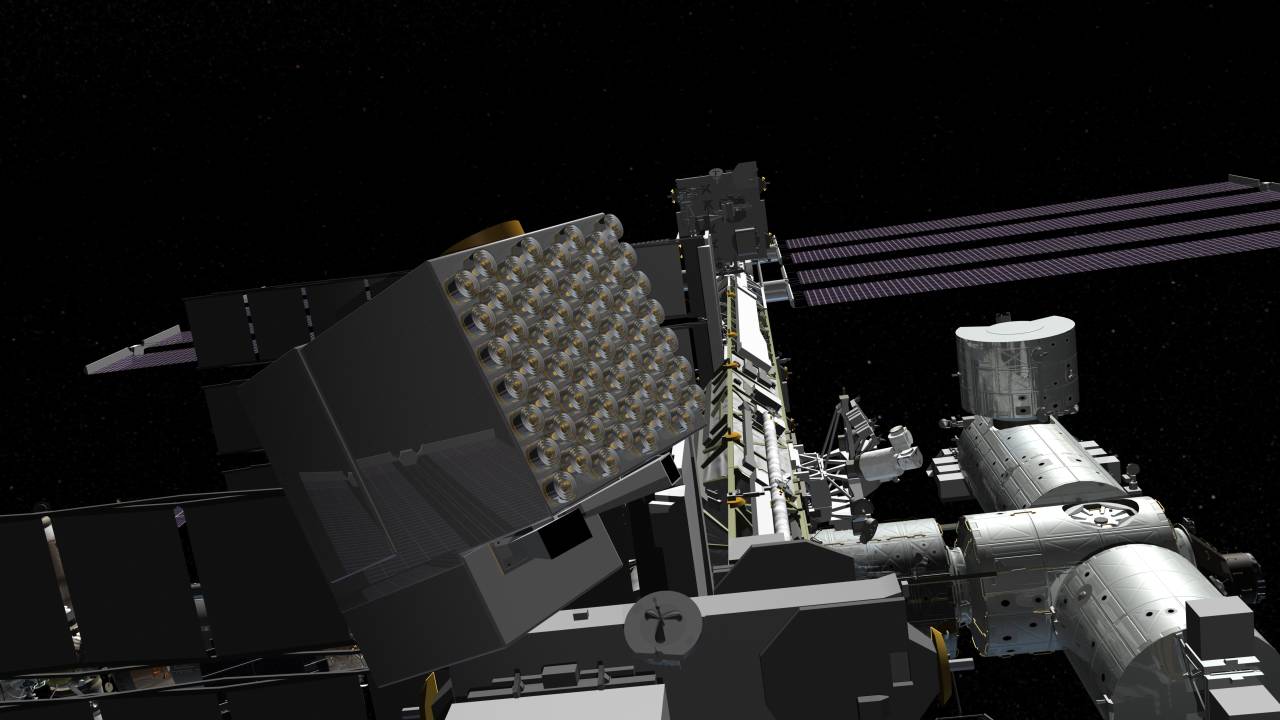
This is an artist's concept of the NICER instrument on board the International Space Station. NICER is the cube in the foreground on the left. The circular objects protruding from the cube are telescopes that focus X-rays from the pulsar on to the detector. Credit: NASA.Full-resolution copy

Neutron stars have been called the zombies of the cosmos, shining on even though they're technically dead, and occasionally feeding on a neighboring star if it gets too close.

They are born when a massive star runs out of fuel and collapses under its own gravity, crushing the matter in its core and blasting away its outer layers in a supernova explosion that can outshine a billion suns.

The core, compressed by gravity to inconceivable density – one teaspoon would weigh about a billion tons on Earth – lives on as a neutron star. Although the nuclear fusion fires that sustained its parent star are extinguished, it still shines with heat left over from its explosive formation, and from radiation generated by its magnetic field, which became intensely concentrated as the core collapsed, and can be over a trillion times stronger than Earth's.

Although its parent star could easily have been more than a million miles across, a neutron star is only about the size of a city. However, its intense gravity makes it the ultimate trash compactor, capable of packing in an astonishing amount of matter, more than 1.4 times the content of the Sun, or at least 460,000 Earths.

"A neutron star is right at the threshold of matter as it can exist – if it gets any denser, it becomes a black hole," says Dr. Zaven Arzoumanian of NASA's Goddard Space Flight Center in Greenbelt, Md.

Arzoumanian is Deputy Principal Investigator on a proposed mission called the Neutron Star Interior Composition Explorer (NICER) that would unveil the dark heart of a neutron star. "We have no way of creating neutron star interiors on Earth, so what happens to matter under such incredible pressure is a mystery – there are many theories about how it behaves. The closest we come to simulating these conditions is in particle accelerators that smash atoms together at almost the speed of light. However, these collisions are not an exact substitute – they only last a split second, and they generate temperatures that are much higher than what's inside neutron stars."

If NASA approves it for construction, the mission will be launched by the summer of 2016 and attached robotically to the International Space Station. In September 2011, NASA selected NICER for study as a potential Explorer Mission of Opportunity. The mission will receive $250,000 to conduct an 11-month implementation concept study. Five Mission of Opportunity proposals were selected from 20 submissions. Following the detailed studies, NASA plans to select for development one or more of the five Mission of Opportunity proposals in February 2013.

NICER's array of 56 telescopes will collect X-rays generated both from hotspots on a neutron star's surface and from its powerful magnetic field. There are two hotspots on a neutron star at opposite sides, one at each magnetic pole, the place where the star's intense magnetic field emerges from the surface. Here, particles trapped in the magnetic field rain down and generate X-rays when they strike the surface. X-rays are an energetic form of light invisible to human eyes but detectable by special instruments. As the hotspots rotate into our line of sight, they produce a pulse of light, like a lighthouse beam, giving rise to the stars' alternate name, pulsars.

Many pulsars flash several times per second, because of the rapid rotation they inherit as they are born. All stars rotate, and as the parent star's core shrinks, it spins faster, like a twirling ice skater pulling in her arms. A neutron star's powerful gravity can also pull in gas from a neighboring star if it orbits too closely. This infalling gas can spin up a neutron star to even higher speeds; some rotate hundreds of times per second.

The key to understanding how matter behaves inside a neutron star is pinning down the correct Equation Of State (EOS) that most accurately describes how matter responds to increasing pressure. Currently, there are many suggested EOSs, each proposing that matter can be compressed by different amounts inside neutron stars. Suppose you held two balls of the same size, but one was made of foam and the other was made of wood. You could squeeze the foam ball down to a smaller size than the wooden one. In the same way, an EOS that says matter is highly compressible will predict a smaller neutron star for a given mass than an EOS that says matter is less compressible.

So if researchers know a neutron star's mass, all they need to do is find out how big it is to get the correct EOS and unlock the secret of what matter does under extreme gravity. "The problem is that neutron stars are small, and much too far away to allow their sizes to be measured directly," says NICER Principal Investigator Dr. Keith Gendreau of NASA Goddard. "However, NICER will be the first mission that has enough sensitivity and time-resolution to figure out a neutron star's size indirectly. The key is to precisely measure how much the brightness of the X-rays changes as the neutron star rotates."

This change in brightness with time is called a star's light curve, and it appears as a wavy line on a graph.

Because neutron stars pack so much mass into such a tiny volume, they generate strong gravity that actually bends space (and distorts time) in accordance with Einstein's theory of General Relativity. This warping of space enables researchers to determine a neutron star's mass if it has a nearby companion, either another neutron star or a white dwarf, a lower-density object that is the core remnant of a less-massive star. Neutron stars with these companions are actually fairly common.

The warping of space produces effects like an orbital shift called precession, which makes the orbit move like a hula-hoop around a dancer. Also, as the neutron star and its companion move around each other, they create ripples in space called gravitational waves. These waves carry away orbital energy, so the neutron star and its companion gradually move closer together and their orbit shrinks. NICER will measure these effects over time, and the greater these effects, the more mass the neutron star has.

Warped space also will let the NICER team figure out a neutron star's size. Suppose we have a neutron star lined up so that you can only see one hotspot, the one on the near side that faces us. As it rotates into view, the brightness increases until the hotspot is pointed directly at us, then the brightness decreases as it rotates away.

This alignment makes the star's brightness highly variable – it's quite bright when the hotspot is pointed at us, and very dim when the hotspot is on the far side out of our view. The drastic change in brightness produces a light curve with large waves, with deep troughs when the star is dim.

However, since light must follow the contours of space, warped space bends light. The distorted space around the neutron star bends its light so much that you can see parts of the far side, including the other hotspot. With the second hotspot visible, at least part of the time, you have bright light more often, so the brightness doesn't change as much. This makes a light curve that appears smoother, with smaller waves.

If a woman wearing stiletto heels walks on a trampoline, she will warp the surface more than if she wears snowshoes. In the same way, the more compact a neutron star is, the more it will bend space and light. This will allow us to see the far-side hotspot more often, which will make its X-ray brightness less variable, and the star will produce a smoother light curve.

The team has models that produce unique light curves for the various sizes predicted by different EOSs. By choosing the light curve that best matches the observed one, they will get the correct EOS and solve the riddle of matter on the edge of oblivion.

Bill Steigerwald
NASA's Goddard Space Flight Center, Greenbelt, Md.

Tuesday, November 08, 2011

Physicists shed new light on supernova mystery

Detection of neutrinos from supernova 1987A strongly supports the gravitational core collapse theory of type II supernovae, but what re-energises the stalled shockwave to allow such an immense explosion to take place remains unknown. The emission of scalar gravitational waves from the neutron core of a collapsing heavy star may provide an explanation.
(Credit: NASA)

Physicists have a new theory on the mysterious mechanism that causes the explosion of massive, or core, stars. These Type II supernovae, the term given to exploding core stars, are huge and spectacular events; intriguing because for a short time they emit as much light as is normally produced by an entire galaxy. In fact, the enormous amount of energy they release is second only to the Big Bang itself. While there is general agreement on how the collapse of a core star begins, how the energy escapes from the star (the process that causes the explosion) is not fully understood. A paper published in Physics Letters B (3 November 2011) offers a new theoretical explanation.

A core star collapses when it runs out of the nuclear fuel it depends on and folds in on itself in less than a second under its own huge weight. This process releases enormous amounts of gravitational energy, causing an explosion. A small fraction of the total energy released during a supernova Type II (collapse of a lone massive star that burns energy through fusion), is emitted as light, the kinetic energy of the exploding stellar envelope is 10 times greater again, but by far the most energy is carried away by neutrinos. It is by studying these neutrinos (among the most difficult particles to detect) that physicists have come to general agreement that gravitational collapse does start the Type II supernova process.

Less understood is whether the outgoing pressure wave causing the explosion - that soon becomes a huge shock wave - travels all the way out and ejects the outer part of the star. Simulations have shown that the prompt shock stalls at distances of about 300 km from the centre because of the immense energy required to keep its momentum. Further simulations have found that the shock could re-start if the electrons could absorb a small amount of energy - about 1% of the neutrino energy available.

Physicists at the University of Aberdeen, STFC’s Rutherford Appleton Laboratory, the University of Strathclyde and the Instituto Superior Técnico in Lisbon suggest in Physics Letters B that the solution to the Type II supernovae mystery might lie in a fundamental field long proposed by physicists to answer many important questions. They claim that a component of gravity called the ‘scalar gravitational field’ may be the driving force behind the release of energy that causes the star to finally explode. The existence of scalar fields are predicted but have not yet been detected.

“Scalar fields, unlike electromagnetic fields do not have a direction. They are needed to explain inflation in the early universe and dark energy in cosmology. They are also being hunted at CERN’s Large Hadron Collider as the Higgs particle, giving rise to the origin of mass. In our case, we believe it is responsible for accelerating particles”, said Professor Bob Bingham from STFC and the University of Strathclyde.

“The theory is that emission of these scalar gravitational waves from the neutron core of a collapsing heavy star may re-energise the stalled shockwave”, added Dr Charles Wang from the University of Aberdeen.

Notes for editors

These scientists in the UK and Portugal have recently analysed the nonlinear coupling (a process by which energy is transferred from one system to another) to this scalar gravitational field. They found that under extreme conditions with strong time-varying gravity such as may be found in the interior of a newly-born neutron star, the scalar gravitational field may be stimulated by a parametric instability (a form of coupling between energy sources). Parametric instabilities were initially studied by Lord Rayleigh over a century ago.

The theory is that emission of these scalar gravitational waves from the neutron core of a collapsing heavy star may re-energise the stalled shockwave. This theoretical possibility for a new mechanism, - a potential solution to the type II supernova mystery is in Physics Letters B (link opens in a new window), Vol 705 (2011), Pages 148 – 151.

Contacts

Lucy Stone

STFC Press Officer
STFC Rutherford Appleton Laboratory
Tel: 01235 445627/07920 870125

Images

Please contact the Press Office for more details

Further information:

University of Aberdeen

Research and the expansion of knowledge is fundamental to the distinguished 500-year history of the University of Aberdeen in Scotland. Ideas that have taken root at the University have gone on to change the world - from pure thought to practical solutions for everyday problems. The study of Physics has a long and illustrious history at the University and former staff include great physicists such as James Clerk Maxwell. Today the team is involved in world-class research in both experimental and theoretical areas, with research topics covering classical areas such as general relativity, solid-state physics and dynamical systems and chaos. Physicists at the University are also involved in multi-disciplinary research topics, especially the application of physics to biology. More information can be found on the University of Aberdeen website. (link opens in a new window)


University of Strathclyde

Since its foundation in 1796, the University of Strathclyde’s vision as a ‘place of useful learning’ has led the way in connecting new ideas to the solution of problems facing society, and producing high quality graduates ready for leadership and the professions. Today, the University is recognised as one of the UK’s leading international technological universities, and prides itself on partnership with the public and private sectors. Its bold vision is to transform research, education and knowledge exchange to deliver useful learning for the technological age. More information can be found on the University of Strathclyde's website.

Instituto Superior Técnico (link opens in a new window)

STFC

The Science and Technology Facilities Council is keeping the UK at the forefront of international science and tackling some of the most significant challenges facing society such as meeting our future energy needs, monitoring and understanding climate change, and global security.

The Council has a broad science portfolio and works with the academic and industrial communities to share its expertise in materials science, space and ground-based astronomy technologies, laser science, microelectronics, wafer scale manufacturing, particle and nuclear physics, alternative energy production, radio communications and radar.

STFC operates or hosts world class experimental facilities including:
in the UK; ISIS pulsed neutron source, the Central Laser Facility, and LOFAR. STFC is also the majority shareholder in Diamond Light Source Ltd.
overseas; telescopes on La Palma and Hawaii

It enables UK researchers to access leading international science facilities by funding membership of international bodies including European Laboratory for Particle Physics (CERN), the Institut Laue Langevin (ILL), European Synchrotron Radiation Facility (ESRF) and the European Southern Observatory (ESO).

STFC is one of seven publicly-funded research councils. It is an independent, non-departmental public body of the Department for Business, Innovation and Skills (BIS).

About STFC

NASA Captures New Images of Large Asteroid Passing Earth

This radar image of asteroid 2005 YU55 was obtained on Nov. 7, 2011, at 11:45 a.m. PST (2:45 p.m. EST/1945 UTC), when the space rock was at 3.6 lunar distances, which is about 860,000 miles, or 1.38 million kilometers, from Earth. Credit: NASA/JPL-Caltech . Full image and caption

PASADENA, Calif. -- NASA's Deep Space Network antenna in Goldstone, Calif. has captured new radar images of Asteroid 2005 YU55 passing close to Earth.

The asteroid safely will safely fly past our planet slightly closer than the moon's orbit on Nov. 8. The last time a space rock this large came as close to Earth was in 1976, although astronomers did not know about the flyby at the time. The next known approach of an asteroid this size will be in 2028.

The image was taken on Nov. 7 at 11:45 a.m. PST (2:45 p.m. EST/1945 UTC), when the asteroid was approximately 860,000 miles (1.38 million kilometers) away from Earth. Tracking of the aircraft carrier-sized asteroid began at Goldstone at 9:30 a.m. PDT on Nov. 4 with the 230-foot-wide (70-meter) antenna and lasted about two hours, with an additional four hours of tracking planned each day from Nov. 6 - 10.

Radar observations from the Arecibo Planetary Radar Facility in Puerto Rico will begin Nov. 8, the same day the asteroid will make its closest approach to Earth at 3:28 p.m. PST (6:28 p.m. EST/1128 UTC).

The trajectory of asteroid 2005 YU55 is well understood. At the point of closest approach, it will be no closer than 201,700 miles (324,600 kilometers) as measured from the center of Earth, or about 0.85 times the distance from the moon to Earth. The gravitational influence of the asteroid will have no detectable effect on Earth, including tides and tectonic plates. Although the asteroid is in an orbit that regularly brings it to the vicinity of Earth, Venus and Mars, the 2011 encounter with Earth is the closest it has come for at least the last 200 years.

NASA detects, tracks and characterizes asteroids and comets passing close to Earth using both ground- and space-based telescopes. The Near-Earth Object Observations Program at NASA's Jet Propulsion Laboratory in Pasadena, Calif., commonly called "Spaceguard," discovers these objects, characterizes some of them, and plots their orbits to determine if any could be potentially hazardous to our planet. JPL manages the Near-Earth Object Program Office for NASA's Science Mission Directorate in Washington.

The new radar images are online at:
http://www.nasa.gov/mission_pages/asteroids/multimedia/yu55-20111107.html

For more information about asteroids and near-Earth objects, visit: http://www.jpl.nasa.gov/asteroidwatch

More information about asteroid radar research is available online at: http://echo.jpl.nasa.gov/

For more information about NASA's Deep Space Network, visit: http://deepspace.jpl.nasa.gov/dsn

DC Agle 818-393-9011
Jet Propulsion Laboratory, Pasadena, Calif.
agle@jpl.nasa.gov

Dwayne Brown 202-358-1726
NASA Headquarters, Washington
dwayne.c.brown@nasa.gov

Friday, November 04, 2011

Hubble Directly Observes the Disc Around a Black Hole

PR Image heic1116a
Gravitationally lensed quasar HE 1104-1805

PR Image heic1116b
Using gravitational lensing to observe the disc around a black hole

PR Video heic1116a
Observing a quasar accretion disc using gravitational lensing

A team of scientists has used the NASA/ESA Hubble Space Telescope to observe a quasar accretion disc — a brightly glowing disc of matter that is slowly being sucked into its galaxy’s central black hole. Their study makes use of a novel technique that uses gravitational lensing to give an immense boost to the power of the telescope. The incredible precision of the method has allowed astronomers to directly measure the disc’s size and plot the temperature across different parts of the disc.

An international team of astronomers has used a new technique to study the bright disc of matter surrounding a faraway black hole. Using the NASA/ESA Hubble Space Telescope, combined with the gravitational lensing effect of stars in a distant galaxy [1], the team measured the disc’s size and studied the colours (and hence the temperatures) of different parts of the disc. These observations show a level of precision equivalent to spotting individual grains of sand on the surface of the Moon.

While black holes themselves are invisible, the forces they unleash cause some of the brightest phenomena in the Universe. Quasars — short for quasi-stellar objects — are glowing discs of matter that orbit supermassive black holes, heating up and emitting extremely bright radiation as they do so.

“A quasar accretion disc has a typical size of a few light-days, or around 100 billion kilometres across, but they lie billions of light-years away. This means their apparent size when viewed from Earth is so small that we will probably never have a telescope powerful enough to see their structure directly,” explains Jose Muñoz, the lead scientist in this study.

Until now, the minute apparent size of quasars has meant that most of our knowledge of their inner structure has been based on theoretical extrapolations, rather than direct observations.

The team therefore used an innovative method to study the quasar: using the stars in an intervening galaxy as a scanning microscope to probe features in the quasar’s disc that would otherwise be far too small to see. As these stars move across the light from the quasar, gravitational effects amplify the light from different parts of the quasar, giving detailed colour information for a line that crosses through the accretion disc.

The team observed a group of distant quasars that are gravitationally lensed by the chance alignment of other galaxies in the foreground, producing several images of the quasar.

They spotted subtle differences in colour between the images, and changes in colour over the time the observations were carried out. Part of these colour differences are caused by the properties of dust in the intervening galaxies: the light coming from each one of the lensed images has followed a different path through the galaxy, so that the various colours encapsulate information about the material within the galaxy. Measuring the way and extent to which the dust within the galaxies blocks light (known to astronomers as the extinction law) at such distances is itself an important result in the study.

For one of the quasars they studied, though, there were clear signs that stars in the intervening galaxy were passing through the path of the light from the quasar [2]. Just as the gravitational effect due to the whole intervening galaxy can bend and amplify the quasar’s light, so can that of the stars within the intervening galaxy subtly bend and amplify the light from different parts of the accretion disc as they pass through the path of the quasar’s light.

By recording the variation in colour, the team were able to reconstruct the colour profile across the accretion disc. This is important because the temperature of an accretion disc increases the closer it is to the black hole, and the colours emitted by the hot matter get bluer the hotter they are. This allowed the team to measure the diameter of the disc of hot matter, and plot how hot it is at different distances from the centre.

They found that the disc is between four and eleven light-days across (approximately 100 to 300 billion kilometres). While this measurement shows large uncertainties, it is still a remarkably accurate measurement for a small object at such a great distance, and the method holds great potential for increased accuracy in the future.

“This result is very relevant because it implies we are now able to obtain observational data on the structure of these systems, rather than relying on theory alone,” says Muñoz. “Quasars’ physical properties are not yet well understood. This new ability to obtain observational measurements is therefore opening a new window to help understand the nature of these objects.”

Notes

The Hubble Space Telescope is a project of international cooperation between ESA and NASA.

The study, entitled “A study of gravitational lens chromaticity with the Hubble Space Telescope”, will appear in the December 1 issue of the Astrophysical Journal. The international team of astronomers consists of: J. A. Muñoz (University of Valencia, Spain), E. Mediavilla (Instituto de Astrofísica de Canarias, Spain), C. S. Kochanek (Ohio State University, USA), E. E. Falco (Harvard-Smithsonian Center for Astrophysics, USA) and A. M. Mosquera (University of Valencia and Ohio State University).

[1] Gravity bends the structure of spacetime, and hence deflects beams of light. When the alignment is right, with one object directly behind another, the foreground object’s gravity ‘bends’ the light like a lens, a process called gravitational lensing. Gravitational lenses typically produce multiple, distorted images of the distant object.

The most dramatic effects from gravitational lensing are the amplification and distortion of light from distant galaxies as it passes through massive galaxy clusters.

This effect also takes place on smaller scales, with galaxies at an intermediate distance lensing the light of distant quasars, producing multiple images of them that are visible through the lens galaxy.

Individual stars can also lens light, although this effect, called gravitational microlensing, is much more subtle and can only be detected by measuring how the lensing effect increases the source’s brightness.

This study makes use of gravitational microlensing by stars in a foreground galaxy to study the accretion disc of a quasar in the background. It also uses the interplay of quasar light and gravitational lensing to probe the gas and dust content of intermediate galaxies.

[2] The lens galaxy in which this phenomenon was observed is called [WKK93] G; the lensed quasar is called HE 1104-1805.

Image credit: NASA, ESA, J.A. Muñoz (University of Valencia)

Links
Science paper
Images of Hubble
University of Valencia press release (in Catalan)
University of Valencia press release (in Spanish)

Contacts Jose A. Muñoz Department of Astronomy and Astrophysics, University of Valencia Burjassot (Valencia), Spain Tel: +34-9-354-33-60 Email: jmunoz@uv.es

Oli Usher Hubble/ESA Garching, Germany Tel: +49-89-3200-6855 Email: ousher@eso.org

NASA's Fermi Finds Youngest Millisecond Pulsar, 100 Pulsars To-Date


In three years, NASA's Fermi has detected more than 100 gamma-ray pulsars, but something new has appeared. Among a type of pulsar with ages typically numbering a billion years or more, Fermi has found one that appears to have been born only millions of years ago. (Credit: NASA's Goddard Space Flight Center). Download this video and related content from NASA Goddard's Scientific Visualization Studio

A pulsar is a type of neutron star that emits electromagnetic energy at periodic intervals. A neutron star is the closest thing to a black hole that astronomers can observe directly, crushing half a million times more mass than Earth into a sphere no larger than a city. This matter is so compressed that even a teaspoonful weighs as much as Mount Everest.

This plot shows the positions of nine new pulsars (magenta) discovered by Fermi and of an unusual millisecond pulsar (green) that Fermi data reveal to be the youngest such object known. With this new batch of discoveries, Fermi has detected more than 100 pulsars in gamma rays. Credit: NASA/DOE/Fermi LAT Collaboration. Larger image

This image shows the on and off state of gamma rays from pulsar J1823-3021A as seen by Fermi's Large Area Telescope (LAT). The object pulses 183.8 times a second and has a spin period of 5.44 milliseconds, which translates to 11,000 rpm. Credit: NASA/DOE/Fermi LAT Collaboration. Larger image

"With this new batch of pulsars, Fermi now has detected more than 100, which is an exciting milestone when you consider that, before Fermi's launch in 2008, only seven of them were known to emit gamma rays," said Pablo Saz Parkinson, an astrophysicist at the Santa Cruz Institute for Particle Physics at the University of California Santa Cruz, and a co-author on two papers detailing the findings.

One group of pulsars combines incredible density with extreme rotation. The fastest of these so-called millisecond pulsars whirls at 43,000 revolutions per minute.

Millisecond pulsars are thought to achieve such speeds because they are gravitationally bound in binary systems with normal stars. During part of their stellar lives, gas flows from the normal star to the pulsar. Over time, the impact of this falling gas gradually spins up the pulsar's rotation.

The strong magnetic fields and rapid rotation of pulsars cause them to emit powerful beams of energy, from radio waves to gamma rays. Because the star is transferring rotational energy to the pulsar, the pulsar's spin eventually slows as the star loses matter.

Typically, millisecond pulsars are around a billion years old. However, in the Nov. 3 issue of Science, the Fermi team reveals a bright, energetic millisecond pulsar only 25 million years old.

The object, named PSR J1823−3021A, lies within NGC 6624, a spherical collection of ancient stars called a globular cluster, one of about 160 similar objects that orbit our galaxy. The cluster is about 10 billion years old and lies about 27,000 light-years away toward the constellation Sagittarius.

Fermi's Large Area Telescope (LAT) showed that eleven globular clusters emit gamma rays, the cumulative emission of dozens of millisecond pulsars too faint for even Fermi to detect individually. But that's not the case for NGC 6624.

"It's amazing that all of the gamma rays we see from this cluster are coming from a single object. It must have formed recently based on how rapidly it's emitting energy. It's a bit like finding a screaming baby in a quiet retirement home," said Paulo Freire, the study's lead author, at the Max Planck Institute for Radio Astronomy in Bonn, Germany.

J1823−3021A was previously identified as a pulsar by its radio emission, yet of the nine new pulsars, none are millisecond pulsars, and only one was later found to emit radio waves.


Fermi's LAT records the precise time and position of the gamma rays it detects, but to identify a pulsar requires additional information -- its position in the sky, its pulse period, and the way the pulse changes over time. Additionally, even Fermi's sensitive LAT detects few gamma rays from these objects -- as few as one photon per 100,000 rotations. New analysis methods allow computers to check many different combinations of position and period against 8,000 photons Fermi's LAT has collected during its three years in orbit. When photons from the pulses align in time, a new gamma-ray pulsar has been discovered. (Credit: AEI/NASA's Goddard Space Flight Center). Download this video and related content from NASA Goddard's Scientific Visualization Studio

Despite its sensitivity, Fermi's LAT may detect only one gamma ray for every 100,000 rotations of some of these faint pulsars. Yet new analysis techniques applied to the precise position and arrival time of photons collected by the LAT since 2008 were able to identify them.

"We adapted methods originally devised for studying gravitational waves to the problem of finding gamma-ray pulsars, and we were quickly rewarded," said Bruce Allen, director of the Max Planck Institute for Gravitational Physics in Hannover, Germany. Allen co-authored a paper on the discoveries that was published online today in The Astrophysical Journal.

Allen also directs the Einstein@Home project, a distributed computing effort that uses downtime on computers of volunteers to process astronomical data. In July, the project extended the search for gamma-ray pulsars to the general public by including Femi LAT data in the work processed by Einstein@Home users.

To celebrate these achievements, the Fermi team has created an interactive feature on pulsars. Called the Fermi Pulsar Explorer, the interactive includes an all-sky map that links to information about each of the 101 Fermi pulsars known so far, as well as video and background information on Fermi and gamma-ray astronomy. View interactive

NASA's Fermi Gamma-ray Space Telescope is an astrophysics and particle physics partnership. It is managed by NASA's Goddard Space Flight Center in Greenbelt, Md. It was developed in collaboration with the U.S. Department of Energy, with important contributions from academic institutions and partners in France, Germany, Italy, Japan, Sweden and the United States.

Related Link

Albert Einstein Institute release

Thursday, November 03, 2011

City Lights Could Reveal E.T. Civilization

If an alien civilization builds brightly-lit cities like those shown in this artist's conception, future generations of telescopes might allow us to detect them. This would offer a new method of searching for extraterrestrial intelligence elsewhere in our Galaxy. Credit: David A. Aguilar (CfA)

Cambridge, MA - In the search for extraterrestrial intelligence, astronomers have hunted for radio signals and ultra-short laser pulses. In a new paper, Avi Loeb (Harvard-Smithsonian Center for Astrophysics) and Edwin Turner (Princeton University) suggest a new technique for finding aliens: look for their city lights. "Looking for alien cities would be a long shot, but wouldn't require extra resources. And if we succeed, it would change our perception of our place in the universe," said Loeb.

As with other SETI methods, they rely on the assumption that aliens would use Earth-like technologies. This is reasonable because any intelligent life that evolved in the light from its nearest star is likely to have artificial illumination that switches on during the hours of darkness.

How easy would it be to spot a city on a distant planet? Clearly, this light will have to be distinguished from the glare from the parent star. Loeb and Turner suggest looking at the change in light from an exoplanet as it moves around its star.

As the planet orbits, it goes through phases similar to those of the Moon. When it's in a dark phase, more artificial light from the night side would be visible from Earth than reflected light from the day side. So the total flux from a planet with city lighting will vary in a way that is measurably different from a planet that has no artificial lights.

Spotting this tiny signal would require future generations of telescopes. However, the technique could be tested closer to home, using objects at the edge of our solar system.

Loeb and Turner calculate that today's best telescopes ought to be able to see the light generated by a Tokyo-sized metropolis at the distance of the Kuiper Belt - the region occupied by Pluto, Eris, and thousands of smaller icy bodies. So if there are any cities out there, we ought to be able to see them now. By looking, astronomers can hone the technique and be ready to apply it when the first Earth-sized worlds are found around distant stars in our galaxy.

"It's very unlikely that there are alien cities on the edge of our solar system, but the principle of science is to find a method to check," Turner said. "Before Galileo, it was conventional wisdom that heavier objects fall faster than light objects, but he tested the belief and found they actually fall at the same rate."

As our technology has moved from radio and TV broadcasts to cable and fiber optics, we have become less detectable to aliens. If the same is true of extraterrestrial civilizations, then artificial lights might be the best way to spot them from afar.

Loeb and Turner's work has been submitted to the journal Astrobiology and is available online.

Headquartered in Cambridge, Mass., the Harvard-Smithsonian Center for Astrophysics (CfA) is a joint collaboration between the Smithsonian Astrophysical Observatory and the Harvard College Observatory. CfA scientists, organized into six research divisions, study the origin, evolution and ultimate fate of the universe.

For more information, contact:

David A. Aguilar
Director of Public Affairs
Harvard-Smithsonian Center for Astrophysics
617-495-7462
daguilar@cfa.harvard.edu

Christine Pulliam
Public Affairs Specialist
Harvard-Smithsonian Center for Astrophysics
617-495-7463
cpulliam@cfa.harvard.edu

Wednesday, November 02, 2011

VLT Observations of Gamma-ray Burst Reveal Surprising Ingredients of Early Galaxies

This artist’s impression shows two galaxies in the early Universe. The brilliant explosion on the left is a gamma-ray burst. The light from the burst travels through both galaxies on its way to Earth (outside the frame to the right). Analysis of observations of the light from this gamma-ray burst made using ESO’s Very Large Telescope have shown that these two galaxies are remarkably rich in heavier chemical elements.

This artist’s impression shows two galaxies in the early Universe. The brilliant explosion on the left is a gamma-ray burst. As the light from the burst passes through the two galaxies on the way to Earth (outside the frame to the right) some colours are absorbed by the cool gas in the galaxies, leaving characteristic dark lines in the spectrum. Careful study of these spectra has allowed astronomers to discover that these two galaxies are remarkably rich in heavier chemical elements.

An international team of astronomers has used the brief but brilliant light of a distant gamma-ray burst as a probe to study the make-up of very distant galaxies. Surprisingly the new observations, made with ESO’s Very Large Telescope, have revealed two galaxies in the young Universe that are richer in the heavier chemical elements than the Sun. The two galaxies may be in the process of merging. Such events in the early Universe will drive the formation of many new stars and may be the trigger for gamma-ray bursts.

Gamma-ray bursts are the brightest explosions in the Universe [1]. They are first spotted by orbiting observatories that detect the initial short burst of gamma rays. After their positions have been pinned down, they are then immediately studied using large ground-based telescopes that can detect the visible-light and infrared afterglows that the bursts emit over the succeeding hours and days. One such burst, called GRB 090323 [2], was first spotted by the NASA Fermi Gamma-ray Space Telescope. Very soon afterwards it was picked up by the X-ray detector on NASA’s Swift satellite and with the GROND system at the MPG/ESO 2.2-metre telescope in Chile (eso1049) and then studied in great detail using ESO’s Very Large Telescope (VLT) just one day after it exploded.

The VLT observations show that the brilliant light from the gamma-ray burst had passed through its own host galaxy and another galaxy nearby. These galaxies are being seen as they were about 12 billion years ago [3]. Such distant galaxies are very rarely caught in the glare of a gamma-ray burst.

“When we studied the light from this gamma-ray burst we didn’t know what we might find. It was a surprise that the cool gas in these two galaxies in the early Universe proved to have such an unexpected chemical make-up,” explains Sandra Savaglio (Max-Planck Institute for Extraterrestrial Physics, Garching, Germany), lead author of the paper describing the new results. “These galaxies have more heavy elements than have ever been seen in a galaxy so early in the evolution of the Universe. We didn't expect the Universe to be so mature, so chemically evolved, so early on.”

As light from the gamma-ray burst passed through the galaxies, the gas there acted like a filter, and absorbed some of the light from the gamma-ray burst at certain wavelengths. Without the gamma-ray burst these faint galaxies would be invisible. By carefully analysing the tell-tale fingerprints from different chemical elements the team was able to work out the composition of the cool gas in these very distant galaxies, and in particular how rich they were in heavy elements.

It is expected that galaxies in the young Universe will be found to contain smaller amounts of heavier elements than galaxies at the present day, such as the Milky Way. The heavier elements are produced during the lives and deaths of generations of stars, gradually enriching the gas in the galaxies [4]. Astronomers can use the chemical enrichment in galaxies to indicate how far they are through their lives. But the new observations, surprisingly, revealed that some galaxies were already very rich in heavy elements less than two billion years after the Big Bang. Something unthinkable until recently.

The newly discovered pair of young galaxies must be forming new stars at a tremendous rate, to enrich the cool gas so strongly and quickly. As the two galaxies are close to each other they may be in the process of merging, which would also provoke star formation when the gas clouds collide. The new results also support the idea that gamma-ray bursts may be associated with vigorous massive star formation.

Energetic star formation in galaxies like these might have ceased early on in the history of the Universe. Twelve billion years later, at the present time, the remains of such galaxies would contain a large number of stellar remnants such as black holes and cool dwarf stars, forming a hard to detect population of “dead galaxies”, just faint shadows of how they were in their brilliant youths. Finding such corpses in the present day would be a challenge.

“We were very lucky to observe GRB 090323 when it was still sufficiently bright, so that it was possible to obtain spectacularly detailed observations with the VLT. Gamma-ray bursts only stay bright for a very short time and getting good quality data is very hard. We hope to observe these galaxies again in the future when we have much more sensitive instruments, they would make perfect targets for the E-ELT,” concludes Savaglio.

Notes

[1] Gamma-ray bursts lasting longer than two seconds are referred to as long bursts and those with a shorter duration are known as short bursts. Long bursts, including the one in this study, are associated with supernova explosions of massive young stars in star-forming galaxies. Short bursts are not well understood, but are thought to originate from the merger of two compact objects such as neutron stars.

[2] The name refers to the date on which the burst was discovered, in this case it was spotted on 23 March 2009.

[3] The galaxies were seen at a redshift of 3.57, meaning that they are seen as they were 1.8 billion years after the Big Bang.

[4] The material produced by the Big Bang, 13.7 billion years ago, was almost entirely hydrogen and helium. Most heavier elements, such as oxygen, nitrogen and carbon, were produced later by thermonuclear reactions inside stars and fed back into the reserves of gas within galaxies as these stars die. So, it is expected that the amount of heavier elements in most galaxies gradually increases as the Universe ages.
More information

This research was presented in a paper "Super-solar Metal Abundances in Two Galaxies at z ~ 3.57 revealed by the GRB 090323 Afterglow Spectrum" to appear in Monthly Notices of the Royal Astronomical Society.

The team is composed of S. Savaglio (Max Planck Institute for Extraterrestrial Physics, Garching bei München, Germany [MPE]), A. Rau (MPE), J. Greiner (MPE), T. Krühler (MPE; Technische Universität München, Garching, Germany [TUM]; Dark Cosmology Centre, University of Copenhagen, Denmark), S. McBreen (University College Dublin, Ireland; MPE), D. H. Hartmann (Clemson University, Clemson, USA), A. C. Updike (Clemson; Dickinson College, Carlisle, USA), R. Filgas (MPE), S. Klose (Thüringer Landessternwarte Tautenburg, Germany), P. Afonso (MPE), C. Clemens (MPE), A. Küpcü Yoldas (ESO, Garching, Germany), F. Olivares E. (MPE), V. Sudilovsky (MPE; TUM) and G. Szokoly (Eötvös University, Budapest, Hungary).

ESO, the European Southern Observatory, is the foremost intergovernmental astronomy organisation in Europe and the world’s most productive astronomical observatory. It is supported by 15 countries: Austria, Belgium, Brazil, the Czech Republic, Denmark, France, Finland, Germany, Italy, the Netherlands, Portugal, Spain, Sweden, Switzerland and the United Kingdom. ESO carries out an ambitious programme focused on the design, construction and operation of powerful ground-based observing facilities enabling astronomers to make important scientific discoveries. ESO also plays a leading role in promoting and organising cooperation in astronomical research. ESO operates three unique world-class observing sites in Chile: La Silla, Paranal and Chajnantor. At Paranal, ESO operates the Very Large Telescope, the world’s most advanced visible-light astronomical observatory and two survey telescopes. VISTA works in the infrared and is the world’s largest survey telescope and the VLT Survey Telescope is the largest telescope designed to exclusively survey the skies in visible light. ESO is the European partner of a revolutionary astronomical telescope ALMA, the largest astronomical project in existence. ESO is currently planning a 40-metre-class European Extremely Large optical/near-infrared Telescope, the E-ELT, which will become “the world’s biggest eye on the sky”.

Links
Research paper
Photos of the VLT

Contacts

Sandra Savaglio
Astronomer, Max Planck Institute for Extraterrestrial Physics
Garching bei München, Germany
Tel: +49 89 30000 3358
Cell: +49 151 5194 4223
Email: savaglio@mpe.mpg.de

Richard Hook
ESO, La Silla, Paranal, E-ELT and Survey Telescopes Public Information Officer
Garching bei München, Germany
Cell: +49 151 1537 3591
Email: rhook@eso.org

Tuesday, November 01, 2011

Planets smashed into dust near supermassive black holes

"Light echo" of dust illuminated by a nearby star V838 Monocerotis as it became 600,000 times more luminous than our Sun in January 2002. Credit: NASA/ESA

Fat doughnut-shaped dust shrouds that obscure about half of supermassive black holes could be the result of high speed crashes between planets and asteroids, according to a new theory from an international team of astronomers. The scientists, led by Dr. Sergei Nayakshin of the University of Leicester, publish their results in the journal Monthly Notices of the Royal Astronomical Society.

Supermassive black holes reside in the central parts of most galaxies. Observations indicate that about 50% of them are hidden from view by mysterious clouds of dust, the origin of which is not completely understood. The new theory is inspired by our own Solar System, where the so-called zodiacal dust is known to originate from collisions between solid bodies such as asteroids and comets. The scientists propose that the central regions of galaxies contain not only black holes and stars but also planets and asteroids.

Collisions between these rocky objects would occur at colossal speeds as large as 1000 km per second, continuously shattering and fragmenting the objects, until eventually they end up as microscopic dust. Dr. Nayakshin points out that this harsh environment - radiation and frequent collisions - would make the planets orbiting supermassive black holes sterile, even before they are destroyed. “Too bad for life on these planets”, he says, “but on the other hand the dust created in this way blocks much of the harmful radiation from reaching the rest of the host galaxy. This in turn may make it easier for life to prosper elsewhere in the rest of the central region of the galaxy.”

He also believes that understanding the origin of the dust near black holes is important in our models of how these monsters grow and how exactly they affect their host galaxies. “We suspect that the supermassive black hole in our own Galaxy, the Milky Way, expelled most of the gas that would otherwise turn into more stars and planets”, he continues, “Understanding the origin of the dust in the inner regions of galaxies would take us one step closer to solving the mystery of the supermassive black holes”.


SCIENCE CONTACT

Dr Sergei Nayakshin

Department of Physics and Astronomy

University of Leicester

Leicester LE1 7RH

United Kingdom

Tel: +44 (0)116 252 2454

Email: sn85@leicester.ac.uk


PRESS CONTACTS

Peter Thorley

Press Office

University of Leicester

Tel: +44 (0)116 252 2415

Email: pt91@leicester.ac.uk


Robert Massey

Royal Astronomical Society

Tel: +44 (0)20 7734 3307 / 4582 x214

Mob: +44 (0)794 124 8035

Email: rm@ras.org.uk


IMAGE AND CAPTION

A related image is available from http://www.spacetelescope.org/news/heic0617/

Caption: ""Light echo" of dust illuminated by a nearby star V838 Monocerotis as it became 600,000 times more luminous than our Sun in January 2002. The flash is believed to have been caused by a giant collision of some kind, e.g., between two stars or a star and a planet. Credit: NASA/ESA. Collsions of smaller objects, such as asteroids or minor planets near a supermassive black hole could also be dramatic due to the huge collision velocities and would release a lot of dust."

FURTHER INFORMATION

The new work is published in “Are SMBHs shrouded by “Super-Oort” clouds of comets and asteroids?”, Nayakshin S., Sazonov S., Sunayev R., Monthly Notices of the Royal Astronomical Society, in press. A preprint can be seen at http://arxiv.org/abs/1109.1217


NOTES FOR EDITORS

The Royal Astronomical Society

The Royal Astronomical Society (RAS, www.ras.org.uk), founded in 1820, encourages and promotes the study of astronomy, solar-system science, geophysics and closely related branches of science. The RAS organizes scientific meetings, publishes international research and review journals, recognizes outstanding achievements by the award of medals and prizes, maintains an extensive library, supports education through grants and outreach activities and represents UK astronomy nationally and internationally. Its more than 3500 members (Fellows), a third based overseas, include scientific researchers in universities, observatories and laboratories as well as historians of astronomy and others.

Follow the RAS on Twitter via @royalastrosoc