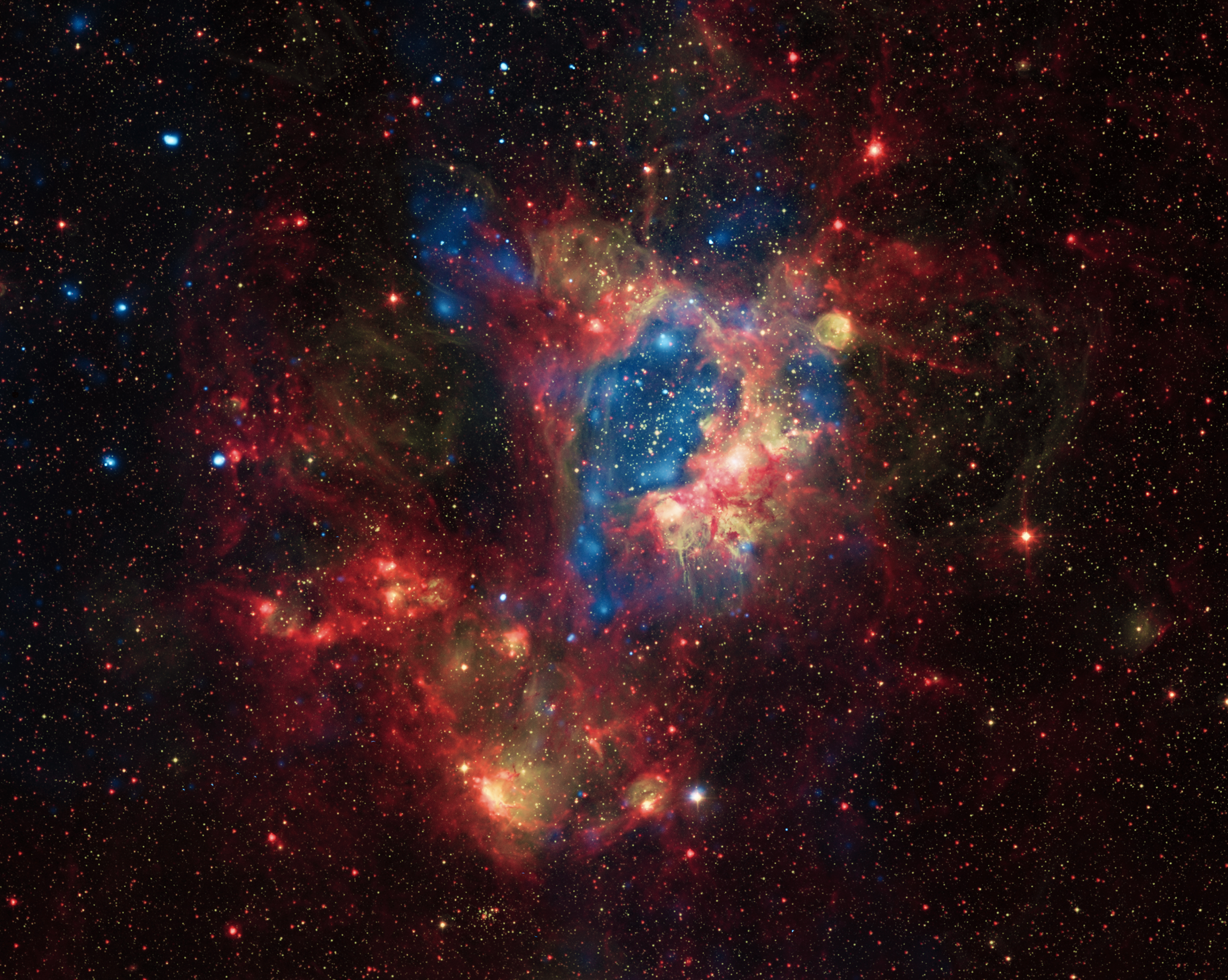
Image credit: NASA, ESA, V. Ksoll and D. Gouliermis (Universität Heidelberg), et al.;
Processing: Gladys Kober (NASA/Catholic University of America)
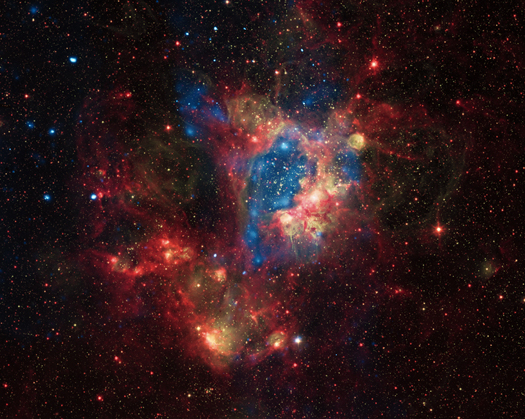
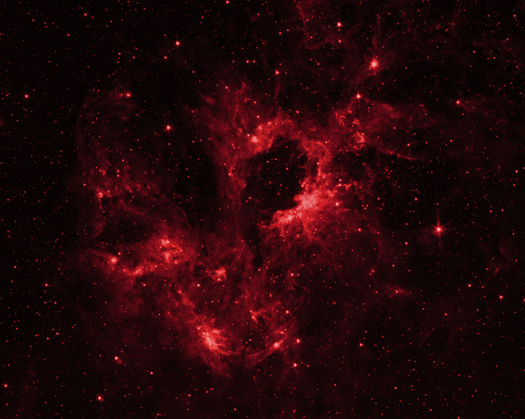
N44 is a complex nebula filled with glowing hydrogen gas, dark lanes of dust, massive stars, and many populations of stars of different ages. One of its most distinctive features, however, is the dark, starry gap called a “superbubble,” visible in this Hubble Space Telescope image in the upper central region.
The hole is about 250 light-years wide and its presence is still something of a mystery. Stellar winds expelled by massive stars in the bubble's interior may have driven away the gas, but this is inconsistent with measured wind velocities in the bubble. Another possibility, since the nebula is filled with massive stars that would expire in titanic explosions, is that the expanding shells of old supernovae sculpted the cosmic cavern..
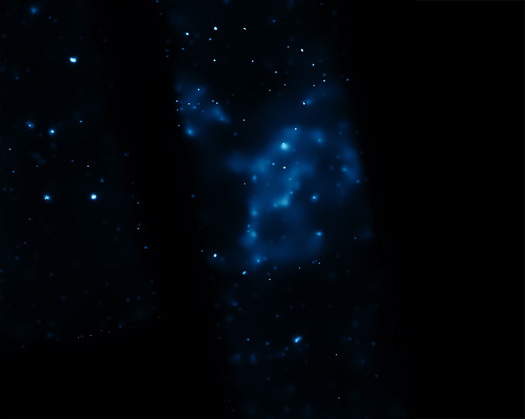
Astronomers have found one supernova remnant in the vicinity of the superbubble and identified an approximately 5 million year difference in age between stars within and at the rim of the superbubble, indicating multiple, chain-reaction star-forming events. The deep blue area at about 5 o’clock around the superbubble is one of the hottest regions of the nebula and the area of the most intense star formation..
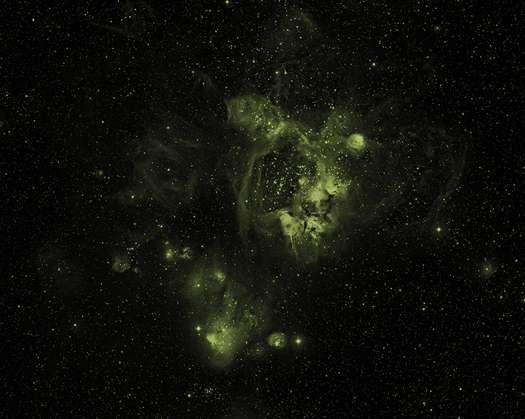
N44 is an emission nebula, which means its gas has been energized, or ionized, by the radiation of nearby stars. As the ionized gas begins to cool from its higher-energy state to a lower-energy state, it emits energy in the form of light, causing the nebula to glow. Located in the Large Magellanic Cloud, N44 spans about 1,000 light-years and is about 170,000 light-years away from Earth..
The hole is about 250 light-years wide and its presence is still something of a mystery. Stellar winds expelled by massive stars in the bubble's interior may have driven away the gas, but this is inconsistent with measured wind velocities in the bubble. Another possibility, since the nebula is filled with massive stars that would expire in titanic explosions, is that the expanding shells of old supernovae sculpted the cosmic cavern..
Astronomers have found one supernova remnant in the vicinity of the superbubble and identified an approximately 5 million year difference in age between stars within and at the rim of the superbubble, indicating multiple, chain-reaction star-forming events. The deep blue area at about 5 o’clock around the superbubble is one of the hottest regions of the nebula and the area of the most intense star formation..
N44 is an emission nebula, which means its gas has been energized, or ionized, by the radiation of nearby stars. As the ionized gas begins to cool from its higher-energy state to a lower-energy state, it emits energy in the form of light, causing the nebula to glow. Located in the Large Magellanic Cloud, N44 spans about 1,000 light-years and is about 170,000 light-years away from Earth..
Media Contact:
Claire Andreoli
NASA's Goddard Space Flight Center
301-286-1940