


Videos
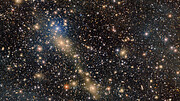
PR Video noirlab2524a
Pan on Abell 3667
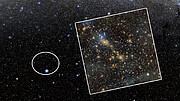
PR Video noirlab2524b
Zooming into Abell 3667
PR Video noirlab2524c
Cosmoview Episode 102: DECam’s Deep View of Abell 3667 (horizontal)
PR Video noirlab2524d
Cosmoview Episode 102: DECam’s Deep View of Abell 3667 (vertical)
v PR Video noirlab2524e
Episodio 102 de Cosmoview: La imagen pas profunda de Abell 3667 lograda por DECam (horizontal) in English only
PR Video noirlab2524f
Episodio 102 de Cosmoview: La imagen pas profunda de Abell 3667 lograda por DECam (vertical)
PR Video noirlab2524a
Pan on Abell 3667
PR Video noirlab2524b
Zooming into Abell 3667
PR Video noirlab2524c
Cosmoview Episode 102: DECam’s Deep View of Abell 3667 (horizontal)
PR Video noirlab2524d
Cosmoview Episode 102: DECam’s Deep View of Abell 3667 (vertical)
v PR Video noirlab2524e
Episodio 102 de Cosmoview: La imagen pas profunda de Abell 3667 lograda por DECam (horizontal) in English only
PR Video noirlab2524f
Episodio 102 de Cosmoview: La imagen pas profunda de Abell 3667 lograda por DECam (vertical)
Dark Energy Camera captures elusive intracluster light in Abell 3667, providing a glimpse into its history as a merging galaxy cluster and a preview of what NSF–DOE Vera C. Rubin Observatory will deliver
An actively merging galaxy cluster is featured in this image assembled from a total of 28 hours of observations with the 570-megapixel Department of Energy-fabricated Dark Energy Camera, mounted on the U.S. National Science Foundation Víctor M. Blanco 4-meter Telescope at Cerro Tololo Inter-American Observatory, a Program of NSF NOIRLab. The image gives a tantalizing hint of how intracluster light will be revealed by NSF–DOE Vera C. Rubin Observatory’s Legacy Survey of Space and Time.
Galaxy clusters are among the largest structures in our Universe, consisting of hundreds or thousands of galaxies that have become gravitationally bound together over billions of years. Astrophysicists have long been eager to understand the formation of these imposing structures. The histories of galaxy clusters not only help us understand how the Universe formed, but they also provide constraints on the properties of dark matter — an invisible material that doesn’t emit or reflect light and is found in high concentrations around clusters of galaxies.
One clue astronomers look for to understand the history of a galaxy cluster is intracluster light — the faint glow emitted by stars that have been stripped from their original galaxies by the immense gravity of a forming galaxy cluster. These stars serve as whispering evidence of past galactic interactions, though most existing telescopes and cameras struggle to capture them.
The delicate intracluster light of galaxy cluster Abell 3667 shines prominently in this elusive image captured by the 570-megapixel Department of Energy-fabricated Dark Energy Camera (DECam), mounted on the U.S. National Science Foundation Víctor M. Blanco 4-meter Telescope at Cerro Tololo Inter-American Observatory (CTIO), a Program of NSF NOIRLab. Abell 3667 is more than 700 million light-years away from us. The great majority of faint sources of light in this image are very distant galaxies, and not foreground stars in our own galaxy.
Within Abell 3667, two smaller galaxy clusters are actively merging together, evidenced by the glowing bridge (yellow) of stars stretching across the center of this image. This bridge connects the hearts of the two galaxy clusters, known as their brightest cluster galaxies, and forms out of material stripped from the galaxies as they merge to form one massive conglomerate.
Not only is this sequined sky full of faraway galaxies, but faint foreground features are also illuminated from its long exposure time. Milky Way cirrus, or integrated flux nebulae, are faint, wispy clouds of interstellar dust that can be seen as faint bluish strands criss-crossing the image. These cirrus are patches of dust illuminated by the combined light of stars within our own galaxy. They appear as diffuse, filamentary structures that can cover large areas of the sky.
Created from a total of 28 hours of observations, this is the deepest image of Abell 3667 ever assembled. Such a long exposure is necessary to detect the faint, diffuse brightness of the cirrus, which is typically only a small percent of the brightness of the night sky, as well as the even fainter intracluster light.
The way that scientists study intracluster light will soon be revolutionized with the NSF–DOE Vera C. Rubin Observatory, a major new scientific facility jointly funded by the U.S. National Science Foundation and the U.S. Department of Energy's Office of Science that is scheduled to begin the Legacy Survey of Space and Time (LSST) later this year.
Using the largest camera ever made, Rubin will image the entire southern hemisphere sky every few nights for ten years. Within the treasure trove of data that the LSST produces will be millions of high-resolution images of distant galaxy clusters. These images can then be stacked to create ultra-long-exposure masterpieces like the one above that reveal a galaxy cluster’s intracluster light.
DECam’s image of Abell 3667 serves as a preview of what Rubin will capture by year eight of the LSST. But rather than a snapshot of a single galaxy cluster, Rubin will capture this level of depth across the entire southern hemisphere sky. Scientists expect that future studies of intracluster light with Rubin data will reveal new features and enable detailed studies of the stellar populations of these features.
More information
The data used to create this image appears
in the paper titled “The Intracluster Light of Abell 3667: Unveiling an
Optical Bridge in LSST Precursor Data,” published in The Astrophysical Journal Letters. DOI: 10.3847/2041-8213/ade8f1
This research draws upon DECam data as distributed by the Astro Data Archive at NSF NOIRLab.
NSF NOIRLab, the U.S. National Science Foundation center for ground-based optical-infrared astronomy, operates the International Gemini Observatory (a facility of NSF, NRC–Canada, ANID–Chile, MCTIC–Brazil, MINCyT–Argentina, and KASI–Republic of Korea), NSF Kitt Peak National Observatory (KPNO), NSF Cerro Tololo Inter-American Observatory (CTIO), the Community Science and Data Center (CSDC), and NSF–DOE Vera C. Rubin Observatory (in cooperation with DOE’s SLAC National Accelerator Laboratory). It is managed by the Association of Universities for Research in Astronomy (AURA) under a cooperative agreement with NSF and is headquartered in Tucson, Arizona.
The scientific community is honored to have the opportunity to conduct astronomical research on I’oligam Du’ag (Kitt Peak) in Arizona, on Maunakea in Hawai‘i, and on Cerro Tololo and Cerro Pachón in Chile. We recognize and acknowledge the very significant cultural role and reverence of I’oligam Du’ag to the Tohono O’odham Nation, and Maunakea to the Kanaka Maoli (Native Hawaiians) community.
The Dark Energy Camera was designed specifically for DES. It was funded by the Department of Energy (DOE) and was built and tested at DOE's Fermilab.
Links
- Explore Abell 3667 in more detail
- The Intracluster Light of Abell 3667: Unveiling an Optical Bridge in LSST Precursor Data
- Photos of the Víctor M. Blanco 4-meter Telescope
- Videos of the Víctor M. Blanco 4-meter Telescope
- Photos of DECam
- Vera C. Rubin Observatory website
- Vera C. Rubin Observatory images
- Check out other NOIRLab Photo Releases
Contacts
Josie Fenske
Public Information Officer
NSF NOIRLab
Email: josie.fenske@noirlab.edu


