X-ray Images of Sagittarius A*
Credit: X-ray: NASA/CXC/SAO; Image Processing: NASA/CXC/SAO/N. Wolk
Credit: X-ray: NASA/CXC/SAO; Image Processing: NASA/CXC/SAO/N. Wolk
JPEG (289.9 kb) - Large JPEG (3.4 MB) - Tiff (74.4 MB) - More Images
A Tour of the Chandra Source Catalog - More Videos
A Tour of the Chandra Source Catalog - More Videos
- The Chandra Source Catalog (CSC) is a free-to-all resource that compiles the detections made by NASA’s X-ray Observatory.
- Scientists use the CSC to combine Chandra’s X-rays with data from other missions like NASA’s James Webb and Hubble Space Telescopes.
- The latest version of the CSC was released in fall 2025 and contains over 1.3 million individual X-ray detections across the sky.
- A new image of the Galactic Center illustrates that, showing 3,300 Chandra sources in this field of view that spans just 60 light-years across.
Like a recording artist who has had a long career, NASA’s Chandra X-ray Observatory has a “back catalog” of cosmic recordings that is impossible to replic,ate. To access these X-ray tracks, or observations, the mission has developed the ultimate compendium: the Chandra Source Catalog.
The Chandra Source Catalog contains the X-ray data detected by Chandra, the world’s premier X-ray telescope and one of NASA’s “Great Observatories,” from its launch in 1999 up to the end of 2021. [AF2.1]The latest version of the Chandra Source Catalog, known as CSC 2.1, contains over 400,000 unique compact and extended sources and over 1.3 million individual detections in X-ray light.
Within the Chandra Source Catalog, there is a wealth of information gleaned from the Chandra observations — from precise positions on the sky to diagnostic tools of the X-ray output and much more. This allows scientists using other telescopes — both on the ground and in space, including NASA’s James Webb and Hubble space telescopes — to combine this exclusive X-ray data with information from other types of light.
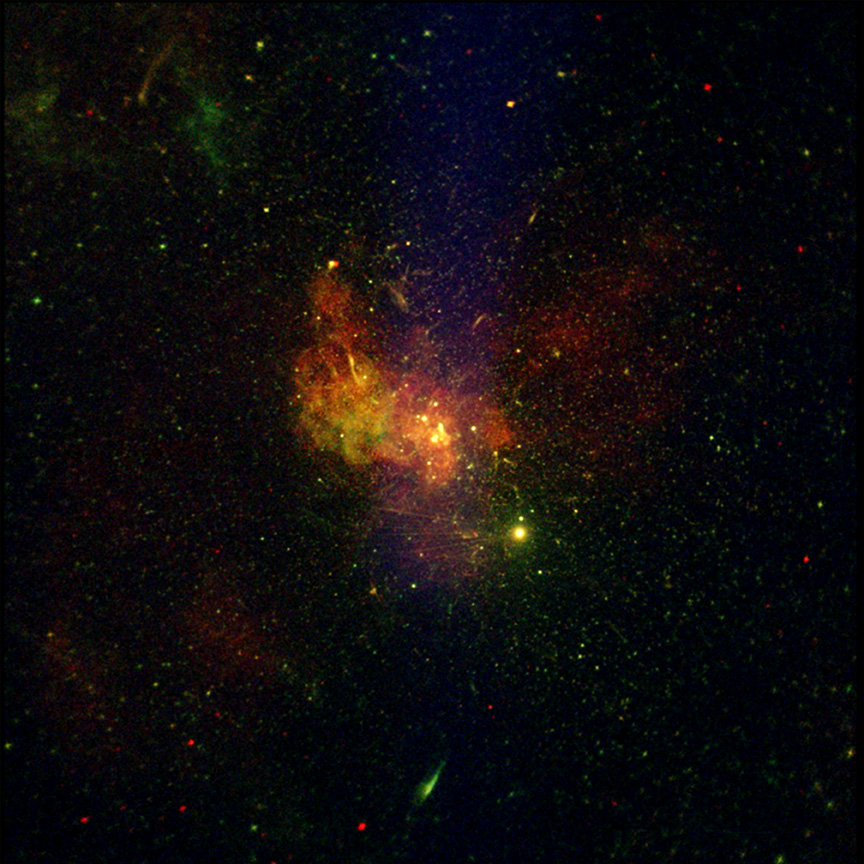
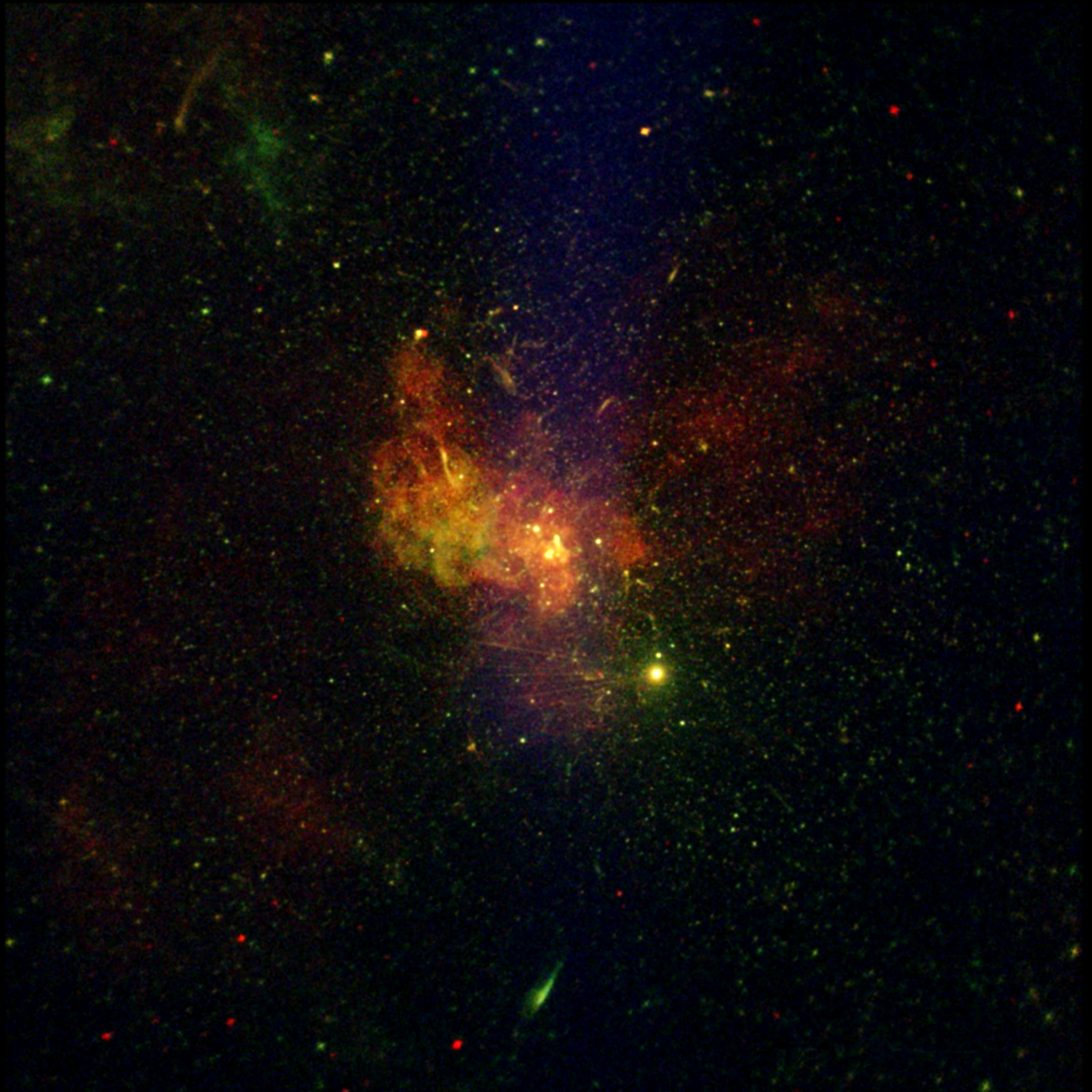
The richness of the Chandra Source Catalog is illustrated in a new image of the Galactic Center, the region around the supermassive black hole at the center of the Milky Way galaxy. In this image that spans just about 60 light-years across, a veritable pinprick on the entire sky, Chandra has detected over 3,300 individual sources that emit X-rays. This image is the sum of 86 observations added together, representing over three million seconds of Chandra observing time.
Another new representation of the vast scope of the Chanda Source Catalog is found in a just-released sonification, the translation of astronomical data into sound. This sonification encompasses a new map that includes 22 years of Chandra observations across the sky. Because many X-ray sources have been observed multiple times over the life of the Chandra mission, this sonification represents those repeat X-ray sightings over time through different notes.
The Chandra Source Catalog contains the X-ray data detected by Chandra, the world’s premier X-ray telescope and one of NASA’s “Great Observatories,” from its launch in 1999 up to the end of 2021. [AF2.1]The latest version of the Chandra Source Catalog, known as CSC 2.1, contains over 400,000 unique compact and extended sources and over 1.3 million individual detections in X-ray light.
Within the Chandra Source Catalog, there is a wealth of information gleaned from the Chandra observations — from precise positions on the sky to diagnostic tools of the X-ray output and much more. This allows scientists using other telescopes — both on the ground and in space, including NASA’s James Webb and Hubble space telescopes — to combine this exclusive X-ray data with information from other types of light.
The richness of the Chandra Source Catalog is illustrated in a new image of the Galactic Center, the region around the supermassive black hole at the center of the Milky Way galaxy. In this image that spans just about 60 light-years across, a veritable pinprick on the entire sky, Chandra has detected over 3,300 individual sources that emit X-rays. This image is the sum of 86 observations added together, representing over three million seconds of Chandra observing time.
Another new representation of the vast scope of the Chanda Source Catalog is found in a just-released sonification, the translation of astronomical data into sound. This sonification encompasses a new map that includes 22 years of Chandra observations across the sky. Because many X-ray sources have been observed multiple times over the life of the Chandra mission, this sonification represents those repeat X-ray sightings over time through different notes.

Chandra Source Catalog Sonification. Sonification (video)
Credit: NASA/CXC/SAO/K.Arcand, SYSTEM Sounds (M. Russo, A. Santaguida)
[Larger Version Available Here]
Credit: NASA/CXC/SAO/K.Arcand, SYSTEM Sounds (M. Russo, A. Santaguida)
[Larger Version Available Here]
In the view of the sky, projected similarly to how Earth is often depicted in world maps, the core of the Milky Way is in the center and the Galactic plane is horizontal across the middle of the image. A circle appears at the position of each detection, with the size of the circle determined by the number of detections in that location over time. A year counter appears at the top of the frame, with the text changing to “… and beyond” after 2021 as the telescope continues to collect observations. During the video, a collage of images produced by Chandra fades in as a background. In the final frames of the video, thumbnail images representing the thousands of Chandra observations taken over the lifetime of the mission appear behind the sky map.
NASA's Marshall Space Flight Center in Huntsville, Alabama, manages the Chandra program. The Smithsonian Astrophysical Observatory's Chandra X-ray Center controls science operations from Cambridge, Massachusetts, and flight operations from Burlington, Massachusetts.
NASA's Marshall Space Flight Center in Huntsville, Alabama, manages the Chandra program. The Smithsonian Astrophysical Observatory's Chandra X-ray Center controls science operations from Cambridge, Massachusetts, and flight operations from Burlington, Massachusetts.
Source: NASA’s Chandra X-ray Observatory
Visual Description:
A very deep Chandra X-ray Observatory image around the Sagittarius A* supermassive black hole, located in the center of the Milky Way galaxy, is shown. The image is dominated by burnt orange, deep gold and blue hues, with a sprinkling of rich green. The area looks both intricate and full, with a dense population of tiny dots, along with larger clumps and diffuse areas and nebulous areas peeking through.
At the center of the image, there is a bright, lumpy area in pale gold showing the intense X-ray radiation emanating from the Sagittarius A* black hole. In the surrounding area, there are more smaller lumps layered throughout, feathering out to a large almost butterfly shape filling much of the screen. The image appears textured, like dozens of blue and orange glow worms are paused in their wriggling.
The image offers an unprecedented view of lobes of hot gas extending for a dozen light years on either side of the black hole. These lobes provide evidence for powerful eruptions occurring several times over the last ten thousand years. The image also contains several mysterious X-ray filaments, some of which may be huge magnetic structures interacting with streams of energetic electrons produced by rapidly spinning neutron stars. Such features are known as pulsar wind nebulas. Chandra has detected over 3,300 individual sources that emit X-rays in this field of view. This image is the sum of 86 observations added together, representing over three million seconds of Chandra observing time.
At the center of the image, there is a bright, lumpy area in pale gold showing the intense X-ray radiation emanating from the Sagittarius A* black hole. In the surrounding area, there are more smaller lumps layered throughout, feathering out to a large almost butterfly shape filling much of the screen. The image appears textured, like dozens of blue and orange glow worms are paused in their wriggling.
The image offers an unprecedented view of lobes of hot gas extending for a dozen light years on either side of the black hole. These lobes provide evidence for powerful eruptions occurring several times over the last ten thousand years. The image also contains several mysterious X-ray filaments, some of which may be huge magnetic structures interacting with streams of energetic electrons produced by rapidly spinning neutron stars. Such features are known as pulsar wind nebulas. Chandra has detected over 3,300 individual sources that emit X-rays in this field of view. This image is the sum of 86 observations added together, representing over three million seconds of Chandra observing time.
Fast Facts for Sagittarius A*:
Credit: NASA/CXC/SAO; Image Processing: NASA/CXC/SAO/N. Wolk
Release Date: January 23, 2026
Scale: Image is about 8.4 arcmin (63.5 light-years) across.
Category: Black Holes
Coordinates (J2000): RA 17h 45m 41.1s | Dec -29° 01´ 14.7"
Constellation: Sagittarius
Observation Dates: 86 Observations from Oct, 2000 to Jul 2020
Observation Time: 825 hours 30 minutes (2 days 7 hours 30 minutes)
Obs. ID: 1560, 1561, 2943, 2951, 2952, 2953, 2954, 3392, 3393, 3549, 3663, 3665, 4683, 4684, 5360, 5950, 5951-5954, 6113, 6363, 6639-6646, 7554-7559, 9169-9174, 10556, 11843, 13016, 13017, 14702-14704, 14941-14946, 15041-15045, 16210-16218, 16508, 16597, 16964, 16965, 18057, 18058, 18731, 18732, 19703, 19704, 20446, 20447, 20750, 20751, 22230, 22288, 23295
Instrument: ACIS/HRCAlso Known As: Galactic Center
Color Code: X-ray: red, green, and blue
Distance Estimate: About 26,000 light-years from Earth