


Videos
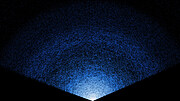
PR Video noirlab2610a
Moving through DESI’s map
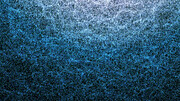
PR Video noirlab2610b
DESI map rotation
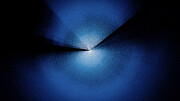
PR Video noirlab2610c
DESI five-year map rotation

PR Video noirlab2610d
DESI map flythrough
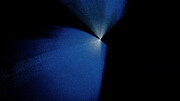
PR Video noirlab2610e
DESI observations over five years (with constellations)
PR Video noirlab2610f
DESI observations over five years
PR Video noirlab2610g
Spacewatch all-sky with DESI pointings

PR Video noirlab2610h
Nicholas U. Mayall Telescope Movement B-Roll
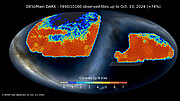
PR Video noirlab2610i
DESI Observing Tiles

PR Video noirlab2610j
A small patch of DESI’s 5000 fiber-optic “eyes” at work
PR Video noirlab2610k
DESI five-year map rotation (fulldome)
PR Video noirlab2610a
Moving through DESI’s map
PR Video noirlab2610b
DESI map rotation
PR Video noirlab2610c
DESI five-year map rotation
PR Video noirlab2610d
DESI map flythrough
PR Video noirlab2610e
DESI observations over five years (with constellations)
PR Video noirlab2610f
DESI observations over five years
PR Video noirlab2610g
Spacewatch all-sky with DESI pointings
PR Video noirlab2610h
Nicholas U. Mayall Telescope Movement B-Roll
PR Video noirlab2610i
DESI Observing Tiles
PR Video noirlab2610j
A small patch of DESI’s 5000 fiber-optic “eyes” at work
PR Video noirlab2610k
DESI five-year map rotation (fulldome)
The Dark Energy Spectroscopic Instrument, one of the most extensive surveys of the cosmos ever conducted, finished all observations for its originally planned 3D map of the Universe
DESI has mapped more than 47 million galaxies and quasars, creating the largest high-resolution 3D map of our Universe to date. Because of the instrument’s excellent performance and hints that dark energy might evolve, DESI will continue observations into 2028 and further expand the map. DESI was constructed with funding from the U.S. Department of Energy Office of Science and is mounted on the U.S. National Science Foundation Nicholas U. Mayall 4-meter telescope.
Last night, the 5000 fiber-optic eyes of the Dark Energy Spectroscopic Instrument (DESI) swiveled onto a patch of sky near the Little Dipper. Roughly every 20 minutes, they locked onto distant pinpricks of light, gathering photons that had traveled toward Earth for billions of years. When the Sun rose, DESI collaborators marked the completion of a major milestone: successfully surveying all of the area in DESI’s planned map of the Universe.
The five-year survey, finished ahead of schedule and with vastly more data than expected, has produced the largest high-resolution 3D map of the Universe ever made. Researchers use that map to explore dark energy, the fundamental ingredient that makes up about 70% of our Universe and is driving its accelerating expansion.
DESI’s quest to understand dark energy is a global endeavor. The international experiment brings together the expertise of more than 900 researchers (including 300 PhD students) from over 70 institutions. The project is managed by the U.S. Department of Energy’s Lawrence Berkeley National Laboratory (Berkeley Lab), and the instrument was constructed and is operated with funding from the DOE Office of Science. DESI is mounted on the U.S. National Science Foundation Nicholas U. Mayall 4-meter Telescope at NSF Kitt Peak National Observatory (KPNO) in Arizona, a Program of NSF NOIRLab.
By comparing how galaxies clustered in the past with their distribution today, researchers can trace dark energy’s influence over 11 billion years of cosmic history. Surprising results using DESI’s first three years of data hinted that dark energy, once thought to be a “cosmological constant,” might be evolving over time. With the full set of five years of data, researchers will have significantly more information to test whether that hint disappears or grows. If confirmed, it would mark a major shift in how we think about our Universe and its potential fate, which hinges on the balance between matter and dark energy.
“It’s impossible to capture everything that went into making DESI such a successful experiment. From instrument builders and software engineers to technicians, observatory staff, and scientists — including many early-career researchers — it truly took a village,” says Stephanie Juneau, associate astronomer and NSF NOIRLab representative for DESI. “Ultimately, we are doing this for all humanity, to better understand our Universe and its eventual fate. After finding hints that dark energy might deviate from a constant, potentially altering that fate, this moment feels like sitting on the edge of my seat as we analyze the new map to see whether those hints will be confirmed. I’m also very intrigued by the many other discoveries that await in this new dataset.”
This visualization shows how DESI’s map of the Universe accumulated over five years. It begins with DESI’s tiles on the night sky and transitions to the 3D map. Earth is at the center of the wedges, and every dot is a galaxy. Credit: DESI collaboration and KPNO/NOIRLab/NSF/AURA/R. Proctor
“The Dark Energy Spectroscopic Instrument has truly exceeded all expectations, delivering an unprecedented 3D map of the Universe that will revolutionize our understanding of dark energy,” says Kathy Turner, Program Manager for the Cosmic Frontier in the Office of High Energy Physics at the Department of Energy. “From its inception, we envisioned a project that would push the boundaries of cosmology, and to see it come to such a spectacularly successful completion for its initial survey, ahead of schedule and with such rich data, is incredibly rewarding. The dedication and ingenuity of the entire DESI collaboration have made this world-leading science a reality, and I am immensely proud of the groundbreaking results we are already seeing and the discoveries yet to come as we continue to explore the mysteries of our cosmos.”
“DESI’s five-year survey has been spectacularly successful,” says Michael Levi, DESI director and a scientist at Berkeley Lab. “The instrument performed better than anticipated. The results have been incredibly exciting. And the size and scope of the map, and how quickly we’ve been able to execute, is phenomenal. We’re going to celebrate completion of the original survey and then get started on the work of churning through the data, because we’re all curious about what new surprises are waiting for us.”
DESI has now measured cosmological data for six times as many galaxies and quasars as all previous measurements combined. The collaboration will immediately begin processing the completed dataset, with the first dark energy results from the full five-year survey expected in 2027. In the meantime, DESI collaborators continue to analyze the survey’s first three years of data, refining dark energy measurements and producing additional results on the structure and evolution of the Universe, with several papers planned later this year.
DESI began collecting data in May 2021. Since then, the instrument has far surpassed the collaboration’s original goals. The plan was to capture light from 34 million galaxies and quasars (extremely distant yet bright objects with black holes at their cores) over the five-year sky survey. DESI instead observed more than 47 million galaxies and quasars, as well as 20 million stars.
The project’s success is even more impressive in light of several challenges. DESI is a complicated machine with thousands of parts to maintain. In 2020, final tests of the instrument were interrupted by the COVID-19 pandemic. In 2022, the Contreras Fire swept over Kitt Peak but, through the efforts of firefighters and staff, did not damage the telescope. Recovery efforts were slowed by monsoons and mudslides.
ESI will continue observations through 2028 and grow its map by about 20%, from 14,000 square degrees to 17,000 square degrees. (For comparison, the Moon covers approximately 0.2 square degrees, and the full sky has over 41,000 square degrees). The extended map will cover parts of the sky that are more challenging to observe: areas that are closer to the plane of the Milky Way, where bright nearby stars can make it harder to see more distant objects, or further to the south, where the telescope must account for peering through more of Earth’s atmosphere.
The experiment will also revisit the existing area of the map to collect data from a new set of galaxies: more distant, fainter “luminous red galaxies.” These will provide an even denser, more detailed map of the regions DESI has already covered, giving researchers a clearer picture of the Universe’s history.
Researchers will also study nearby dwarf galaxies and stellar streams, bands of stars torn from smaller galaxies by the Milky Way’s gravity. The hope is to better understand dark matter, the invisible form of matter that accounts for most of the mass in the Universe but has never been directly detected.
More information
DESI is supported by the DOE Office of Science and by the National Energy Research Scientific Computing Center, a DOE Office of Science national user facility. Additional support for DESI is provided by the U.S. National Science Foundation; the Science and Technology Facilities Council of the United Kingdom; the Gordon and Betty Moore Foundation; the Heising-Simons Foundation; the French Alternative Energies and Atomic Energy Commission (CEA); the Secretariat of Science, Humanities, Technology and Innovation (SECIHTI) of Mexico; the Ministry of Science and Innovation of Spain; and by the DESI member institutions.
Lawrence Berkeley National Laboratory (Berkeley Lab) is committed to groundbreaking research focused on discovery science and solutions for abundant and reliable energy supplies. The lab’s expertise spans materials, chemistry, physics, biology, earth and environmental science, mathematics, and computing. Researchers from around the world rely on the lab’s world-class scientific facilities for their own pioneering research. Founded in 1931 on the belief that the biggest problems are best addressed by teams, Berkeley Lab and its scientists have been recognized with 17 Nobel Prizes. Berkeley Lab is a multiprogram national laboratory managed by the University of California for the U.S. Department of Energy’s Office of Science.
DOE’s Office of Science is the single largest supporter of basic research in the physical sciences in the United States, and is working to address some of the most pressing challenges of our time. For more information, please visit energy.gov/science.
NSF NOIRLab, the U.S. National Science Foundation center for ground-based optical-infrared astronomy, operates the International Gemini Observatory (a facility of NSF, NRC–Canada, ANID–Chile, MCTIC–Brazil, MINCyT–Argentina, and KASI–Republic of Korea), NSF Kitt Peak National Observatory (KPNO), NSF Cerro Tololo Inter-American Observatory (CTIO), the Community Science and Data Center (CSDC), and NSF–DOE Vera C. Rubin Observatory (in cooperation with DOE’s SLAC National Accelerator Laboratory). It is managed by the Association of Universities for Research in Astronomy (AURA) under a cooperative agreement with NSF and is headquartered in Tucson, Arizona.
The scientific community is honored to have the opportunity to conduct astronomical research on I’oligam Du’ag (Kitt Peak) in Arizona, on Maunakea in Hawai‘i, and on Cerro Tololo and Cerro Pachón in Chile. We recognize and acknowledge the very significant cultural role and reverence of I’oligam Du’ag to the Tohono O’odham Nation, and Maunakea to the Kanaka Maoli (Native Hawaiians) community.
Links
- Berkeley Lab’s press release
- Visit the Dark Energy Spectroscopic Instrument webpage
- Images of DESI
- Videos of DESI
- Images of Nicholas U. Mayall 4-meter telescope
- Videos of Nicholas U. Mayall 4-meter telescope
- Check out other NOIRLab Organization Releases
Contacts:
Stephanie Juneau
Associate Astronomer
NSF NOIRLab
Email: stephanie.juneau@noirlab.edu
Will Percival
DESI Collaboration spokesperson
University of Waterloo
Email: will.percival@uwaterloo.ca
Josie Fenske
Public Information Officer
NSF NOIRLab
Email: josie.fenske@noirlab.edu
Lauren Biron
Lawrence Berkeley National Laboratory
Science Communication and Media Relations Specialist
Email: LBiron@lbl.gov


