Sunday, February 12, 2006

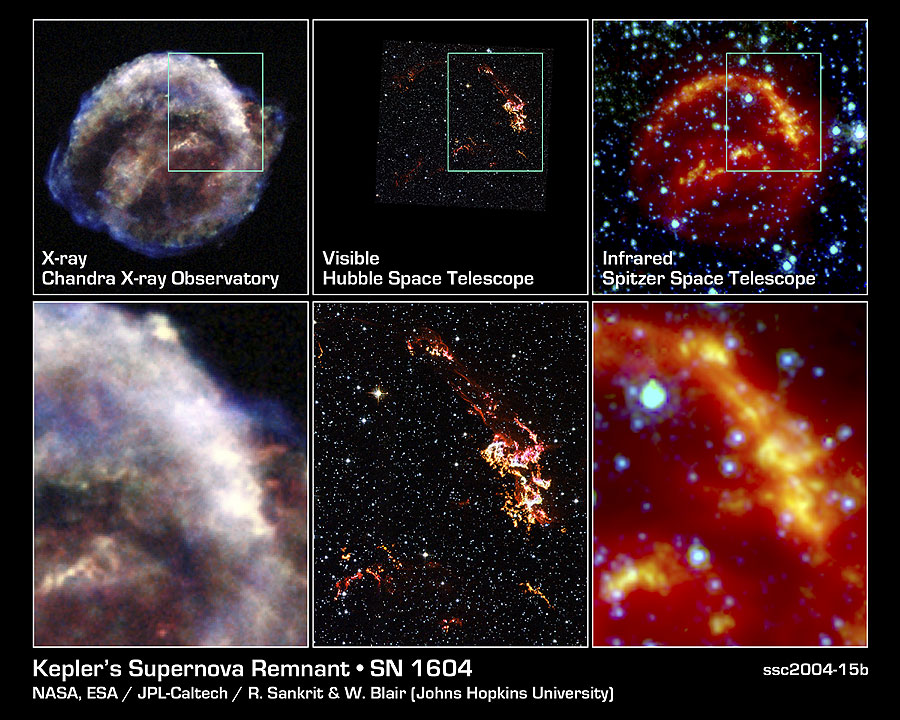
Kepler's Supernova Remnant - Credit Nasa/JPL-Caltech

Views from Chandra, Hubble and Spitzer

These images represent views of Kepler's supernova remnant taken in X-rays, visible light, and infrared radiation.

Each top panel shows the entire remnant. Each color in this image represents a different region of the electromagnetic spectrum, from X-rays to infrared light. The X-ray and infrared data cannot be seen with the human eye. Astronomers have color-coded those data so they can be seen in these images.

The bottom panels are close-up views of the remnant. In the bottom, center image, Hubble sees fine details in the brightest, densest areas of gas. The region seen in these images is outlined in the top, center panel.

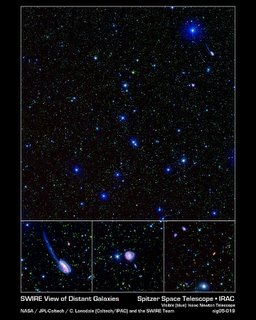
View of Distant Galaxies - Courtesy Nasa/JPL-Caltech

The larger picture (top) depicts one-tenth of the Spitzer Wide-area Infrarede Extragalatic (SWIRE) survey field called ELAIS-N1. In this image, the bright blue sources are hot stars in our own Milky Way, which range anywhere from 3 to 60 times the mass of our Sun. The fainter green spots are cooler stars and galaxies beyond the Milky Way whose light is dominated by older stellar populations. The red dots are dusty galaxies that are undergoing intense star formation. The faintest specks of red-orange are galaxies billions of light-years away in the distant universe.

The three lower panels highlight several regions of interest within the ELAIS-N1 field.

The Tadpole galaxy (bottom left) is the result of a recent galactic interaction in the local universe. Although these galactic mergers are rare in the universe's recent history, astronomers believe that they were much more common in the early universe. Thus, SWIRE team members will use this detailed image of the Tadpole galaxy to help understand the nature of the "faint red-orange specks" of the early universe.

The middle panel features an unusual ring-like galaxy called CGCG 275-022. The red spiral arms indicate that this galaxy is very dusty and perhaps undergoing intense star formation. The star-forming activity could have been initiated by a near head-on collision with another galaxy.

The most distant galaxies that SWIRE is able to detect are revealed in a zoom of deep space (bottom right). The colors in this feature represent the same objects as those in the larger field image of ELAIS-N1.
Saturday, February 11, 2006

Fire Within the Antennae Galaxies - Courtesy Nasa/JPL - Caltech/Z

Interacting Antennae Galaxies
Credit: NASA/JPL-Caltech/Z.Wang (Harvard-Smithsonian CfA)


This false-color image from NASA's Spitzer Space Telescope reveals hidden populations of newborn stars at the heart of the colliding "Antennae" galaxies. These two galaxies, known individually as NGC 4038 and 4039, are located around 68 million light-years away and have been merging together for about the last 800 million years. The latest Spitzer observations provide a snapshot of the tremendous burst of star formation triggered in the process of this collision, particularly at the site where the two galaxies overlap.

Stellar Snowflake Cluster - Courtesy Nasa/JPL

Newborn stars, hidden behind thick dust, are revealed in this image of a section of the Christmas Tree Cluster from NASA's Spitzer Space Telescope, created in joint effort between Spitzer's Infrared Array Camera (IRAC) and Multiband Imaging Photometer (MIPS) instruments.
The newly revealed infant stars appear as pink and red specks toward the center of the combined IRAC-MIPS image (left panel). The stars appear to have formed in regularly spaced intervals along linear structures in a configuration that resembles the spokes of a wheel or the pattern of a snowflake. Hence, astronomers have nicknamed this the "Snowflake Cluster."
Star-forming clouds like this one are dynamic and evolving structures. Since the stars trace the straight line pattern of spokes of a wheel, scientists believe that these are newborn stars, or "protostars." At a mere 100,000 years old, these infant structures have yet to "crawl" away from their location of birth. Over time, the natural drifting motions of each star will break this order, and the snowflake design will be no more.

Cosmic Tornado - HH49/50 - Courtesy Nasa/JPL-Caltech


This "tornado," designated Herbig-Haro 49/50, is shaped by a cosmic jet packing a powerful punch as it plows through clouds of interstellar gas and dust.

The tornado-like feature is actually a shock front created by a jet of material flowing downward through the field of view. A still-forming star located off the upper edge of the image generates this outflow. The jet slams into neighboring dust clouds at a speed of more than 100 miles per second, heating the dust to incandescence and causing it to glow with infrared light detectable by Spitzer. The triangular shape results from the wake created by the jet's motion, similar to the wake behind a speeding boat.

HH 49/50 is located in the Chamaeleon I star-forming complex, a region containing more than 100 young stars. Most of the new stars are smaller than the sun, although some are more massive. Visible-light observations have found a number of outflows in the region, however most of those outflows have no infrared counterpart.

Andromeda Galaxy Nucleus - M31 - Courtesy Nasa/ESA

Eta Carinae Starforming Region - Courtesy Nasa/JPL-Caltech

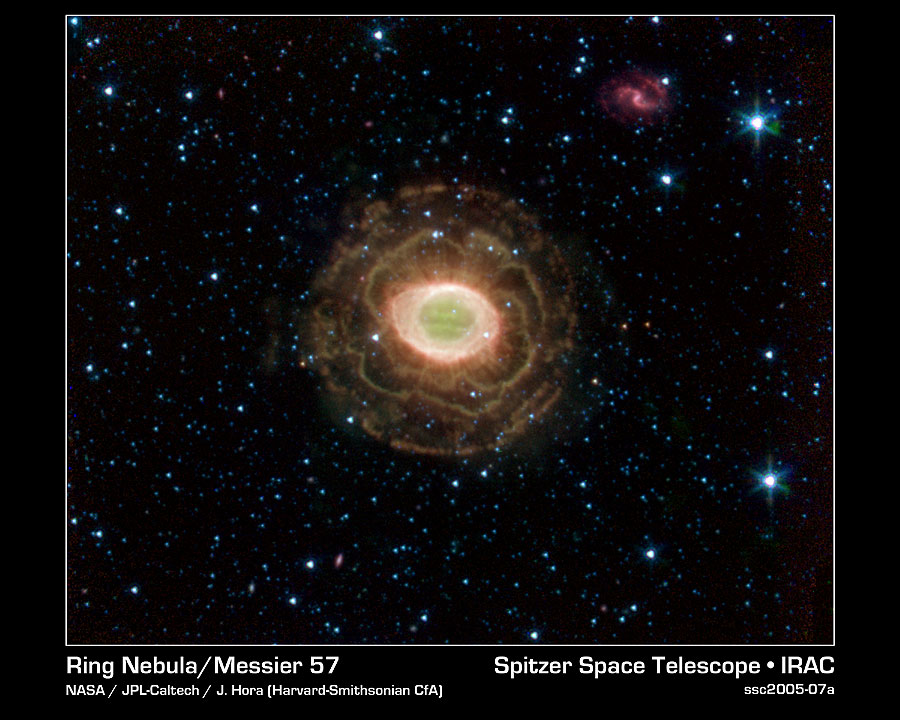
Ring Nebula - Messier 57 - Courtesy Nasa/JPL-Caltech

Infra Red - Milky Way - Courtesy JPL/NASA

Thursday, January 19, 2006

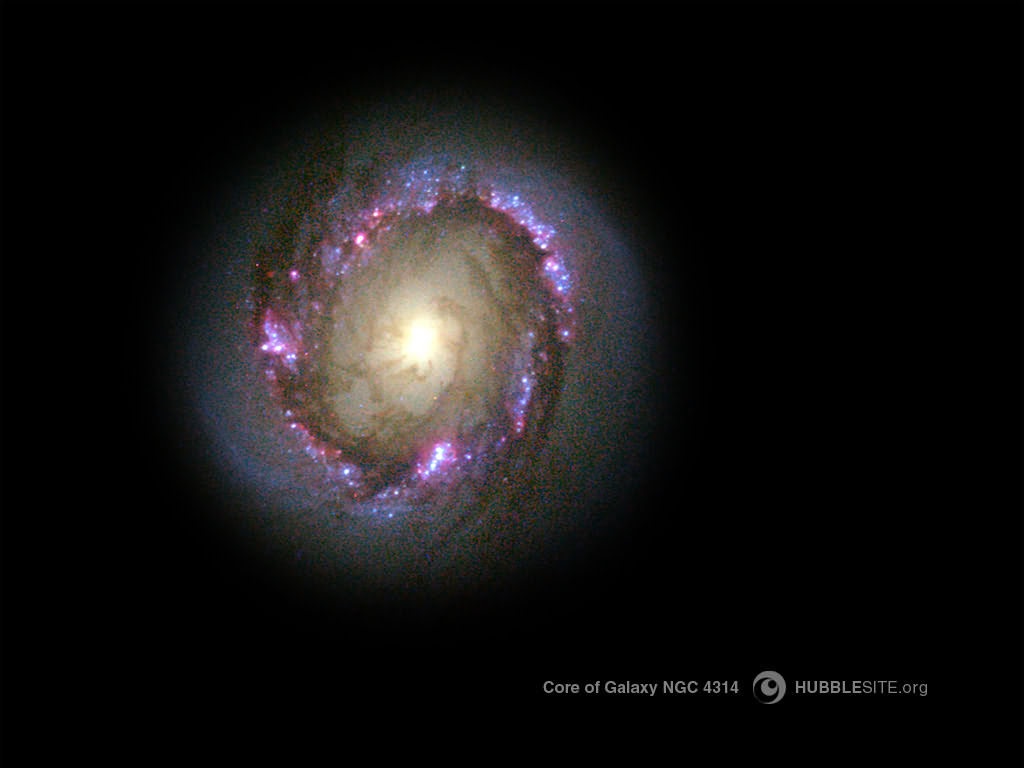
Core of Galaxy NGC 4314 - Courtesy Nasa/Hubblesite

Bluish-purple clumps of infant stars form a ring around the core of galaxy NGC 4314. It's unusual to find a galaxy with spiral arms full of young stars close to the core. Just outside the star-forming ring are two dark, wispy lanes of dust and an extra pair of blue spiral arms.

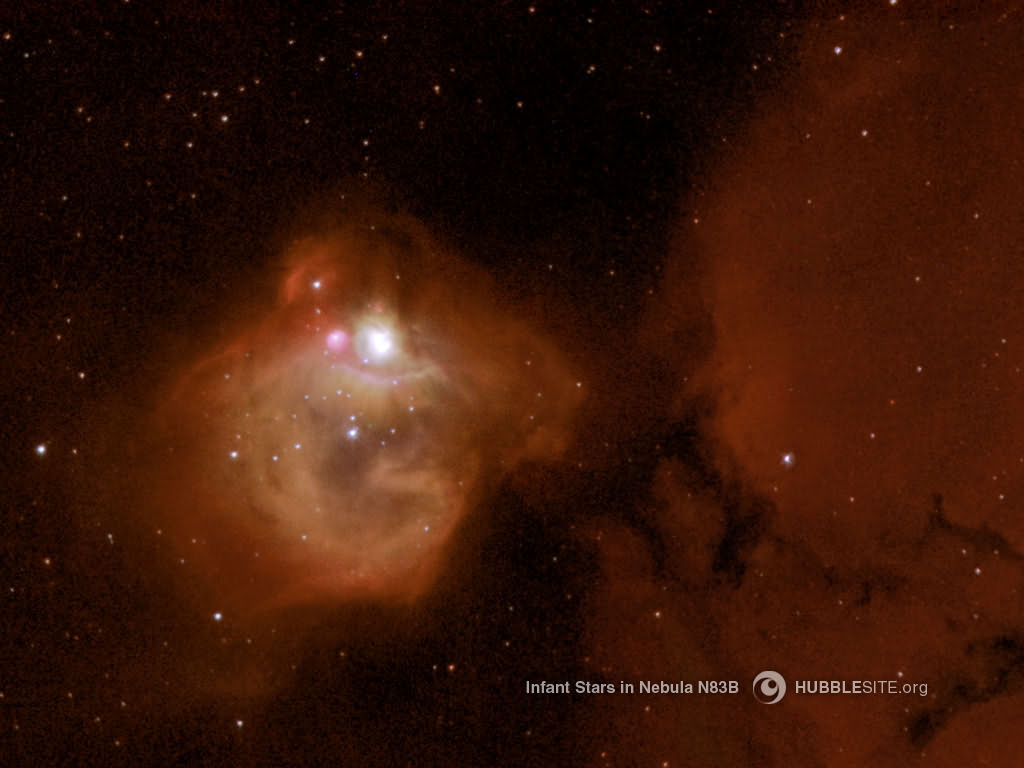
Nebula N83B - Courtesy Nasa/Esa

Intense radiation from newly born, ultra-bright stars in nebula N83B, also known as NGC 1748, carve out a large cavity in the gas surrounding them. The "bubble" of vanished gas is 25 light years in diameter.

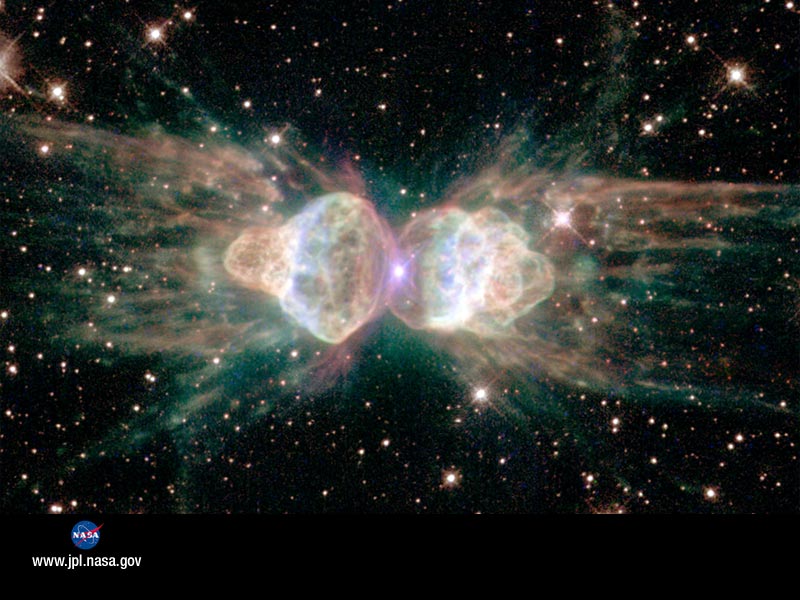
The Southern Ring Nebula (NGC 3132) - Courtesy Nasa/Hubble Heritage

This planetary nebula, also known as the "Eight-Burst" Nebula because of its figure-8 appearance through amateur astronomer telescopes, is visible in the southern hemisphere. NGC 3132 is nearly half a light year in diameter and 2,000 light years away. Gases are moving away from the dying star at its center at a speed of nine miles per second (14.4 km/s).

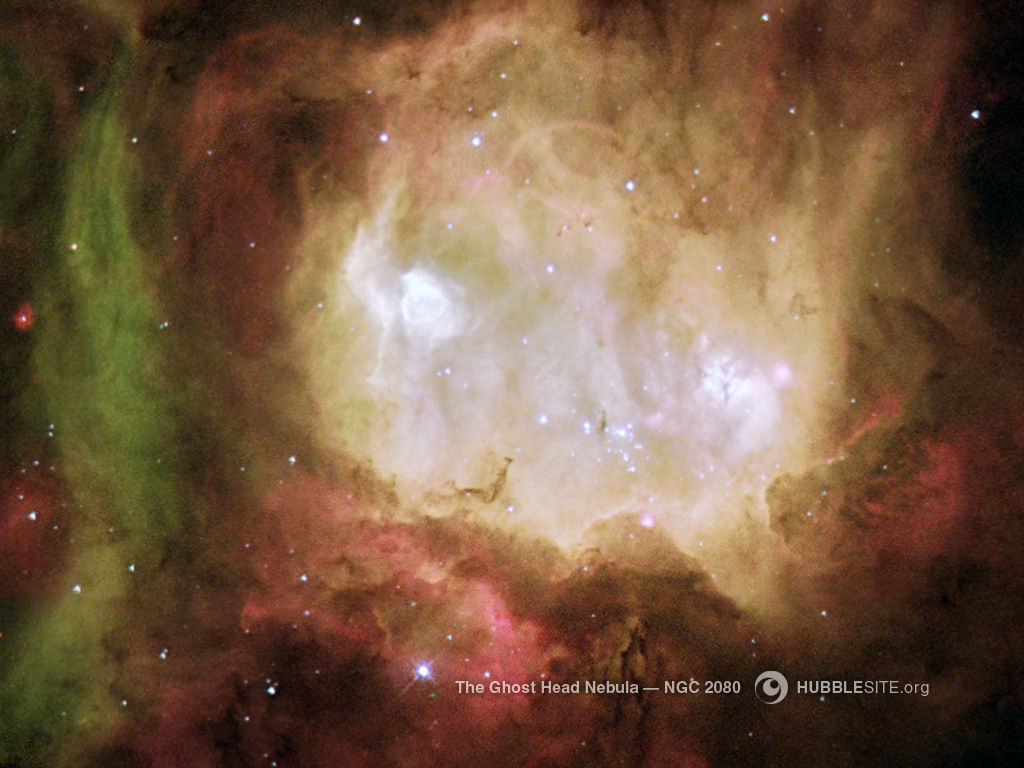
The Ghost Head Nebula - NGC 2028 - Courtesy Nasa/Esa

This nebula is one of a chain of star-forming regions lying south of the 30 Doradus nebula in the Large Magellanic Cloud. The red and blue light comes from regions of hydrogen gas heated by nearby stars. The green light comes from glowing oxygen, illuminated by the energy of a stellar wind. The white center shows a core of hot, massive stars.

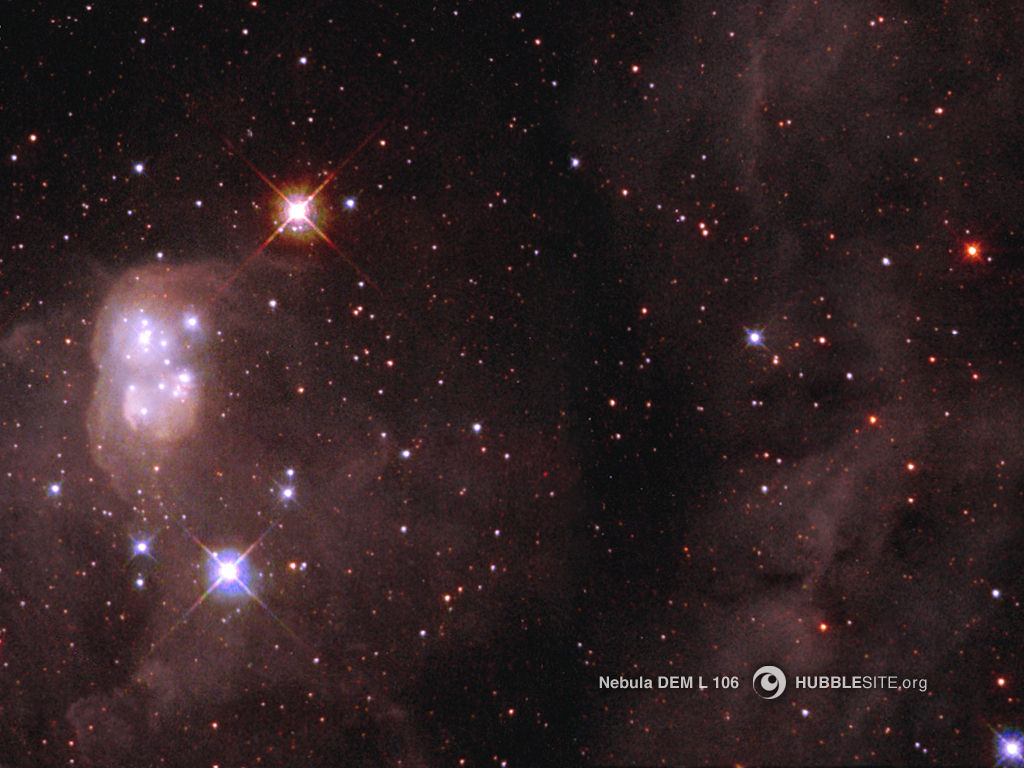
Nebula DEM L 106 - Courtesy Nasa/Hubble Heritage

Within nebula DEM L 106 is a second nebula, N30B. The peanut-shaped cocoon of dust, called a reflection nebula, surrounds a cluster of young, hot stars. The bright, supergiant star at the top of the picture illuminates the dusty cocoon. Wispy filaments from DEM L 106 fill the rest of the image.

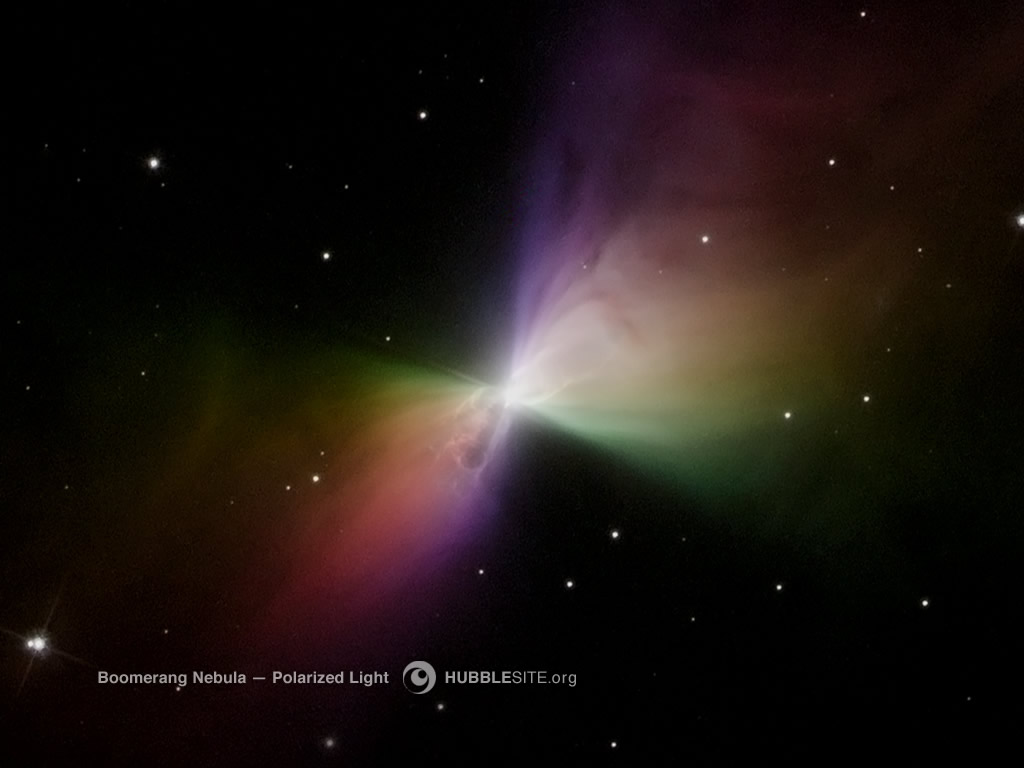
Boomerang Nebula

The Hubble Space Telescope has "caught" the Boomerang Nebula in these new images taken with the Advanced Camera for Surveys. This reflecting cloud of dust and gas has two nearly symmetric lobes (or cones) of matter that are being ejected from a central star. Over the last 1,500 years, nearly one and a half times the mass of our Sun has been lost by the central star of the Boomerang Nebula in an ejection process known as a bipolar outflow. The nebula's name is derived from its symmetric structure as seen from ground-based telescopes. Hubble's sharp view is able to resolve patterns and ripples in the nebula very close to the central star that are not visible from the ground.

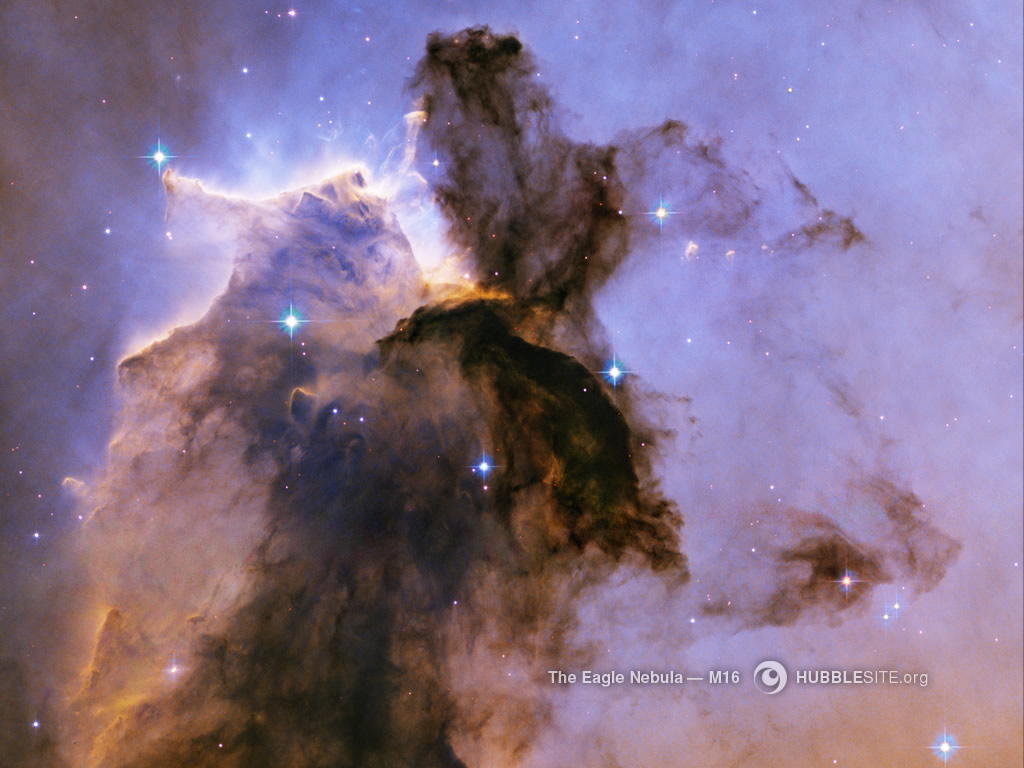
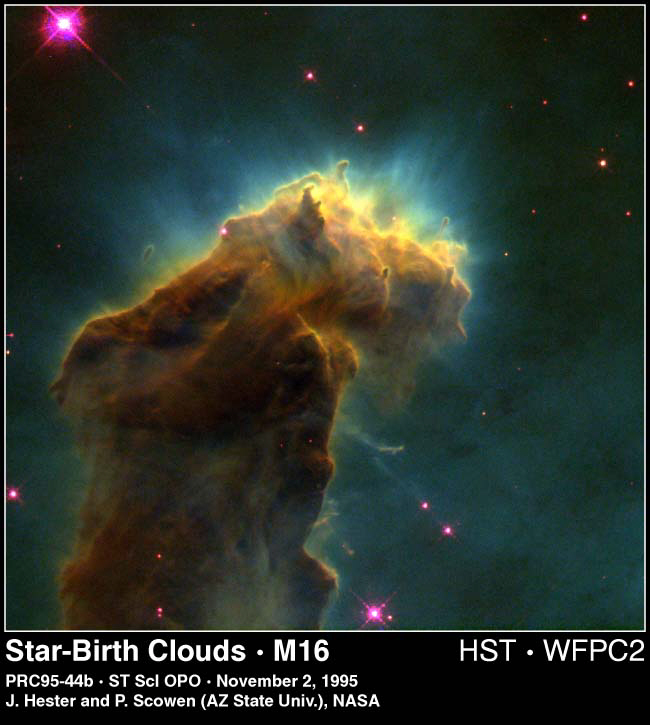
The Eagle Has Risen: Stellar Spire in the Eagle Nebula

A billowing tower of gas and dust rises from the stellar nursery known as the Eagle Nebula. This small piece of the Eagle Nebula is 57 trillion miles long (91.7 trillion km).

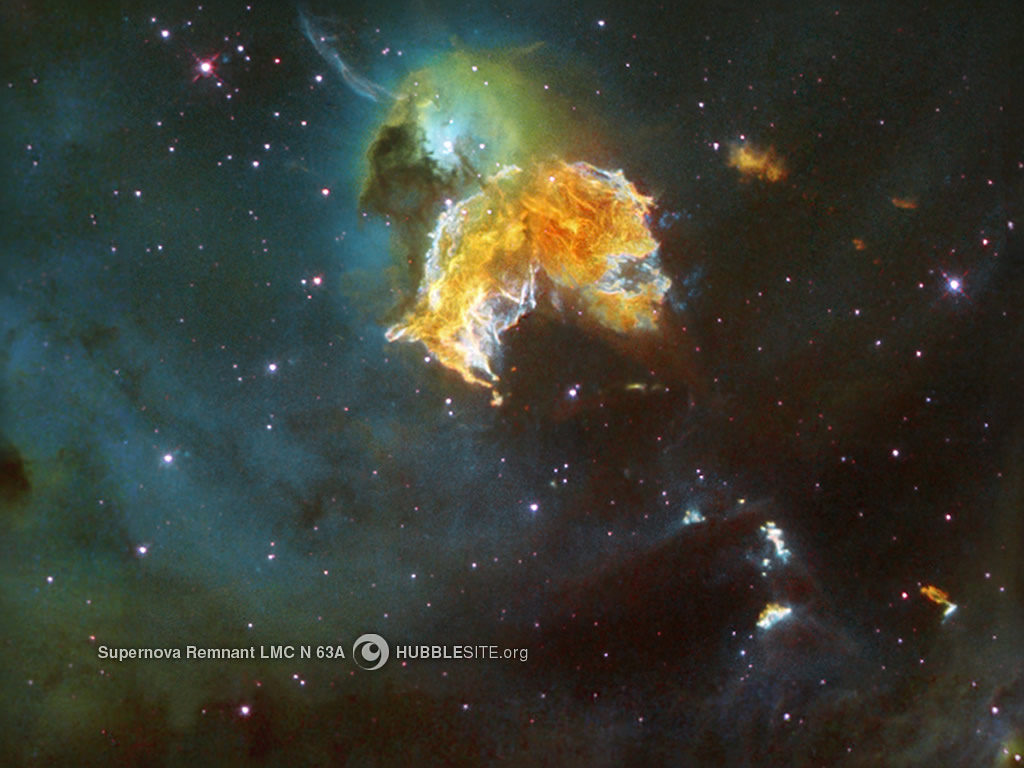
Supernova Remnant N 63A Menagerie

When a massive star exploded, spewing out its gaseous layers into a turbulent, star-forming region of the Large Magellanic Cloud, it left behind this chaotic cloud of gas and dust. The star that produced this supernova remnant was probably 50 times the mass of our Sun.

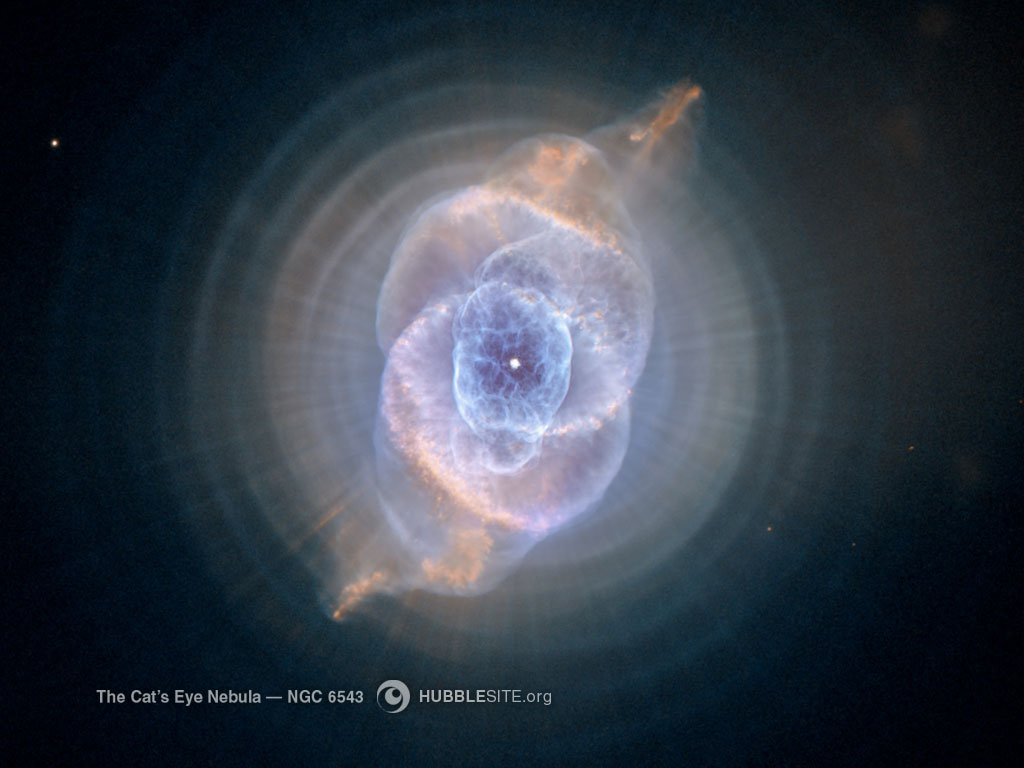
Cat's Eye Nebula - NGC 6543

The Cat's Eye Nebula, one of the first planetary nebulae discovered, also has one of the most complex forms known to this kind of nebula. Eleven rings, or shells, of gas make up the Cat's Eye.

Orion Nebula - Courtesy Nasa/Hubble Heritage

January 12, 2006—If beauty is in the details, this is one of the most beautiful pictures ever made.

NASA's Hubble Space Telescope has captured one of the most detailed astronomical images in history. Released yesterday, the original of this Orion Nebula image is a mosaic of a billion pixels—nearly 5,000 times sharper than the 212,521-pixel version on this page.

Despite their stunning depiction of stars still forming in wombs of gas and dust (as well as thousands of heretofore unseen stars), these details aren't simply in the service of beauty.

Wednesday, January 11, 2006

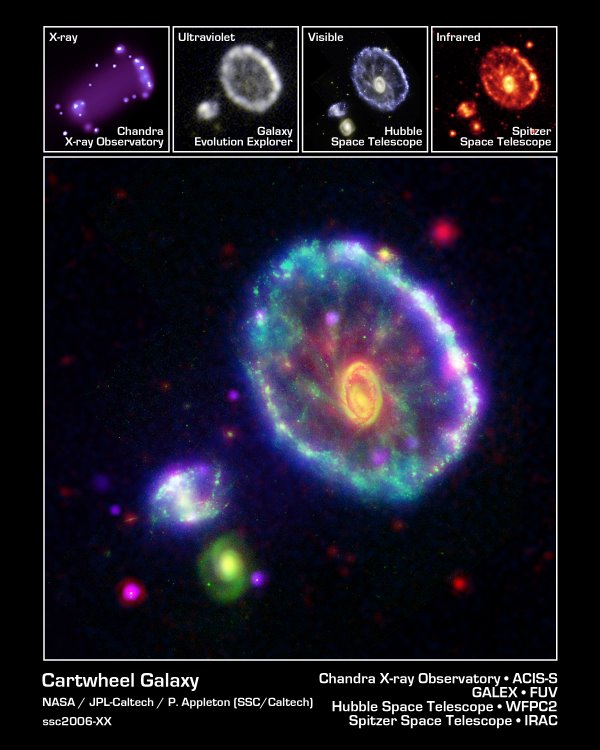
Cartwheel Galaxy

Image Left:
This false-color composite image shows the Cartwheel galaxy. Although astronomers have not identified exactly which galaxy collided with the Cartwheel, two of three candidate galaxies can be seen in this image to the bottom left of the ring, one as a neon blob and the other as a green spiral. Image credit: NASA/JPL-Caltech

Tuesday, January 03, 2006

Planetary Nebula NGC 7293 - Courtesy Nasa/JPL

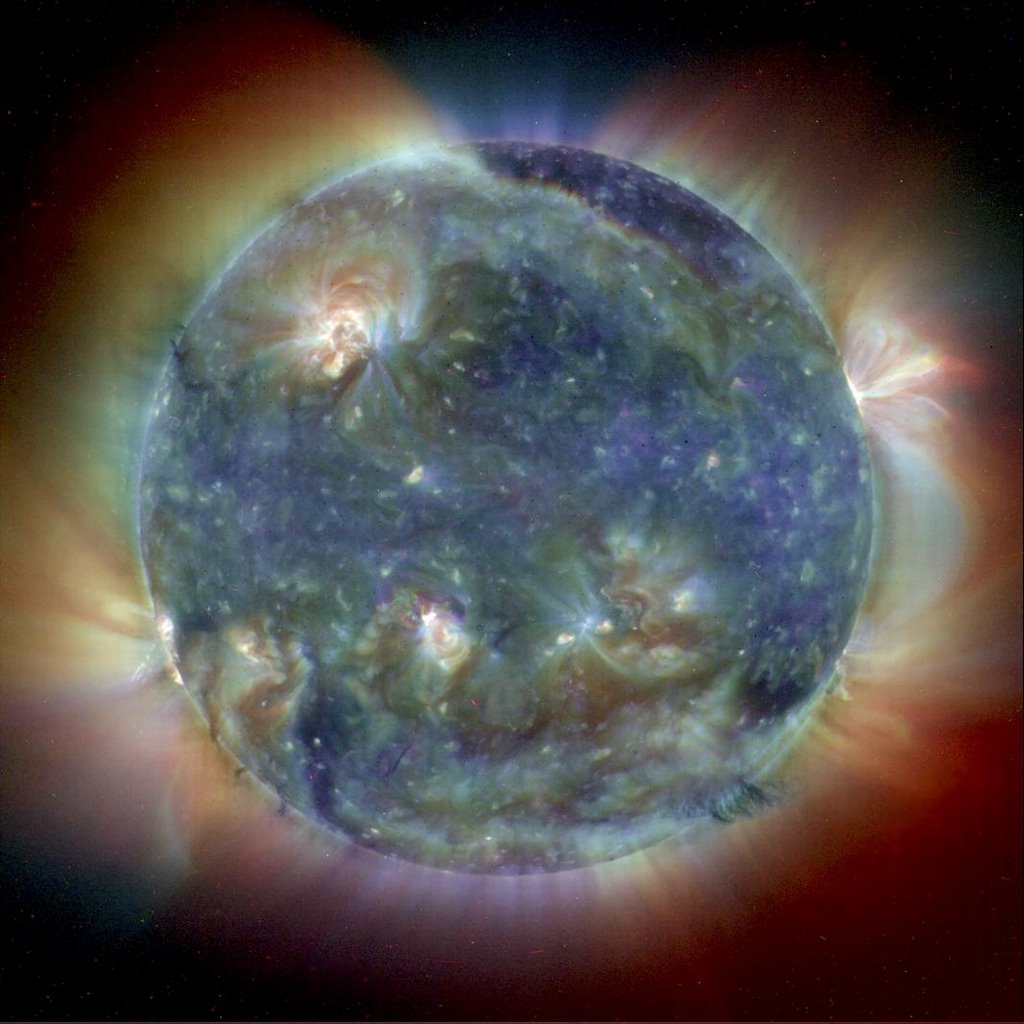
Color Composite of Solar Features - Courtesy Nasa/JPL

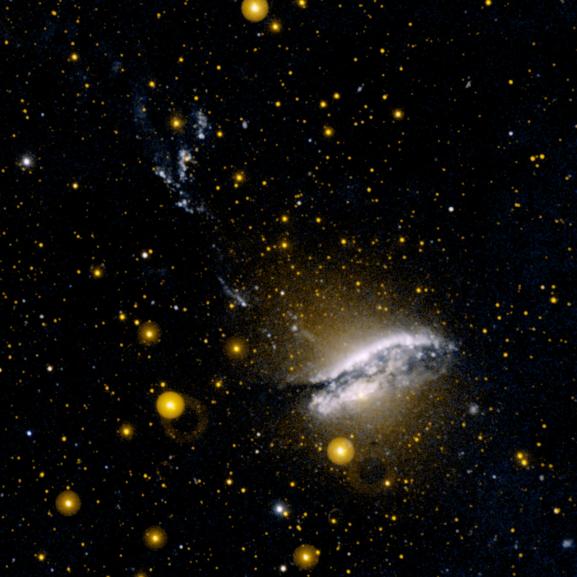
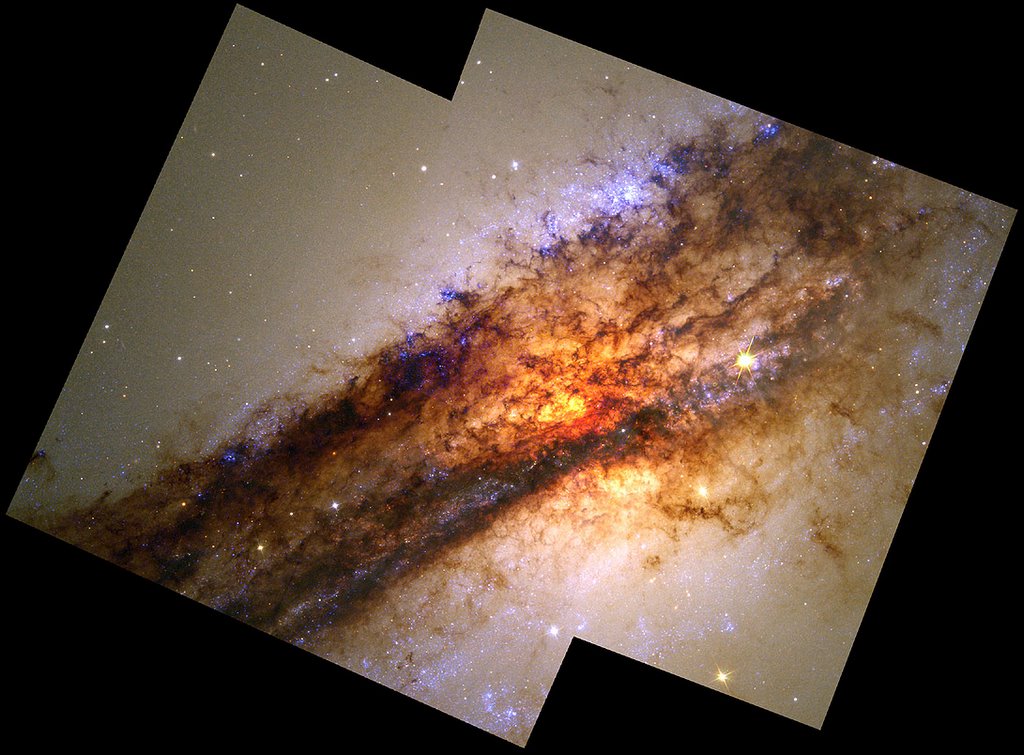
NGC 5128 (Centaurus-A) - Courtesy Nasa/JPL

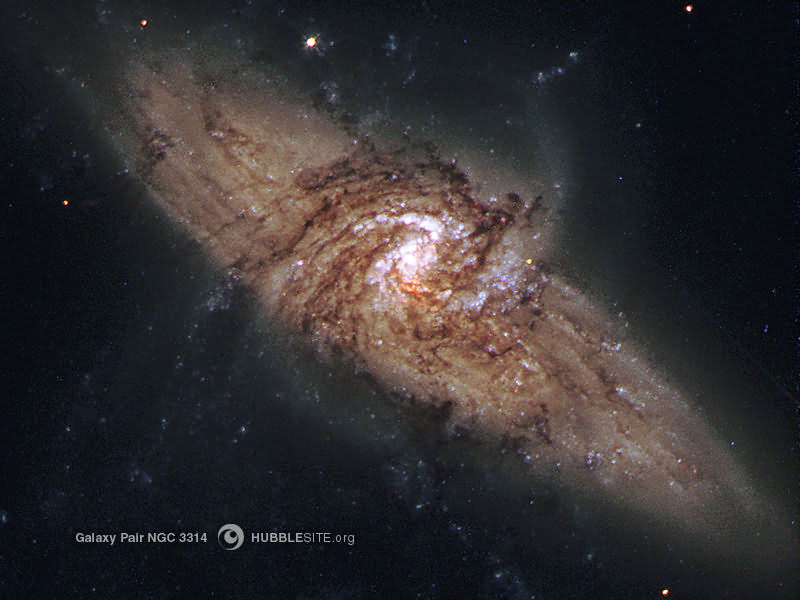
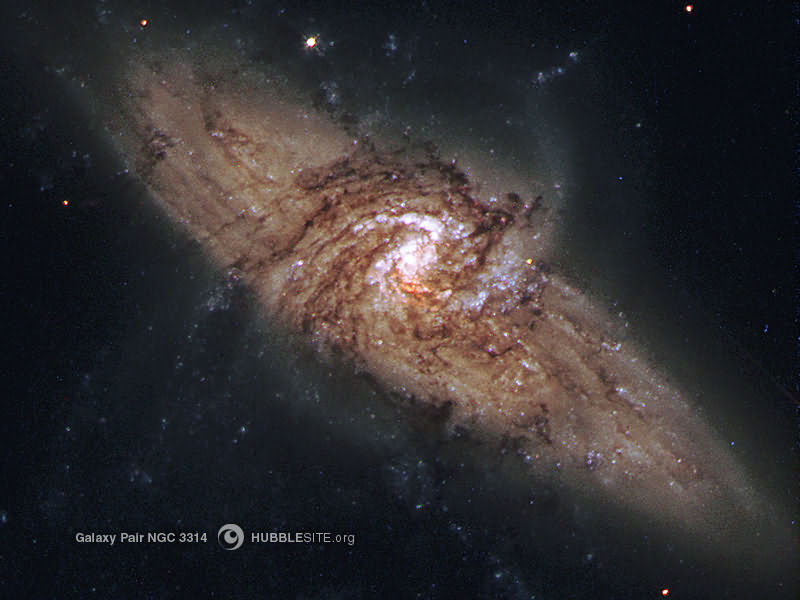
Galaxy Pair NGC 3314

This image from NASA's Hubble Space Telescope and its Wide Field Planetary Camera 2
(WFPC2) shows the unique galaxy pair called NGC 3314. Through an extraordinary chance alignment, a face-0n spiral galaxy lies precisely
in front of another larger spiral. This line-up provides us with rare chance to visualize dark material within the front galaxy, seen only because it is silhouetted against the object behind it.

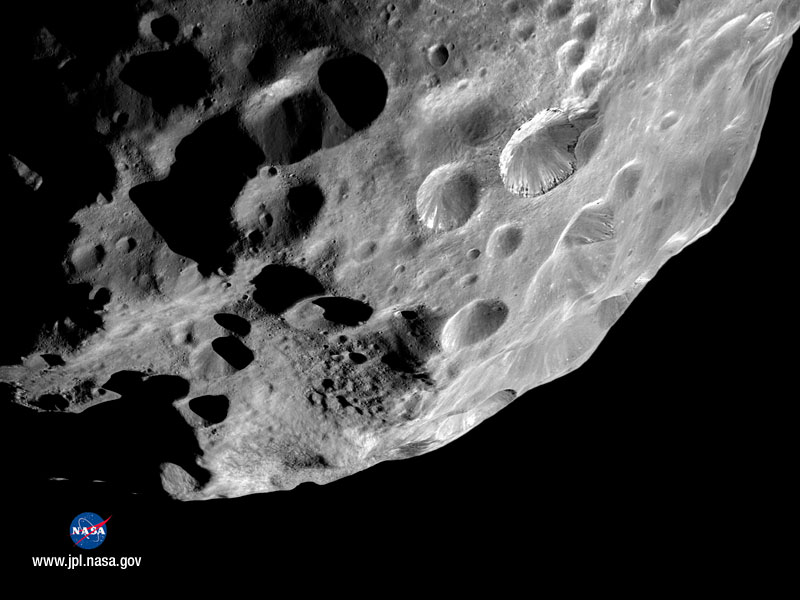
Phoebe - Courtesy Nasa/JPL

Friday, December 30, 2005

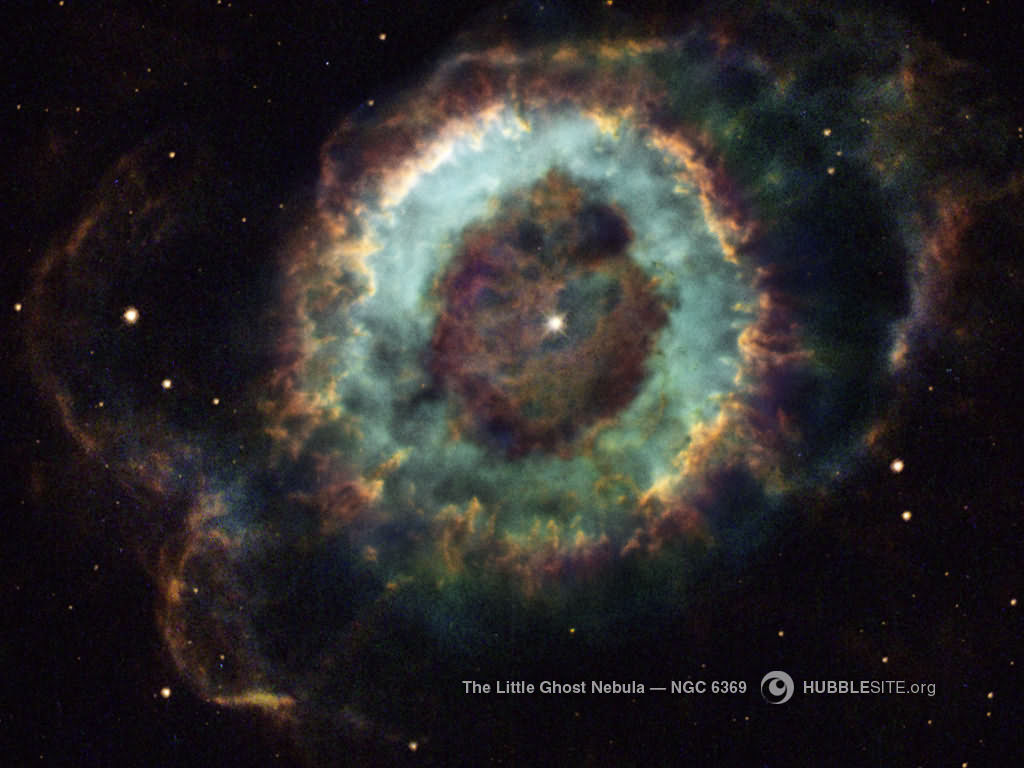
The Little Ghost Nebula - Courtesy Nasa/Hubble Heritage

A dying star expels its outer layers, creating a planetary nebula . so called because it resembles a planet when seen with a small telescope. NGC 6369's blue-green ring marks the location where energetic ultraviolet light has stripped electrons from oxygen atoms in the gas.

Asteroid Ida - Courtesy Nasa/JPL

Black Widow Nebula - Courtesy Nasa/JPL

Tuesday, December 20, 2005

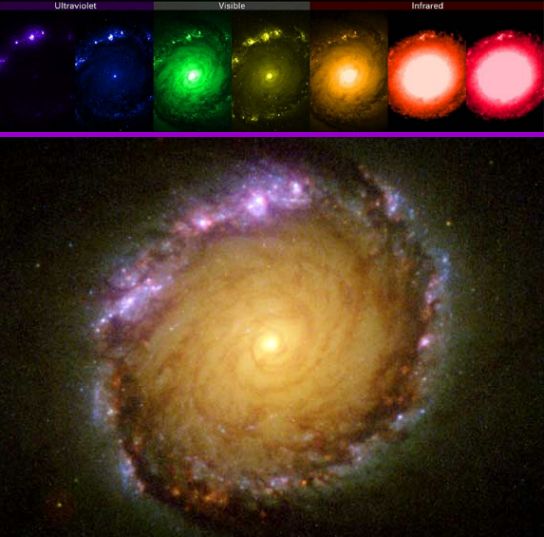
NGC 1512 - Courtesy Nasa/JPL

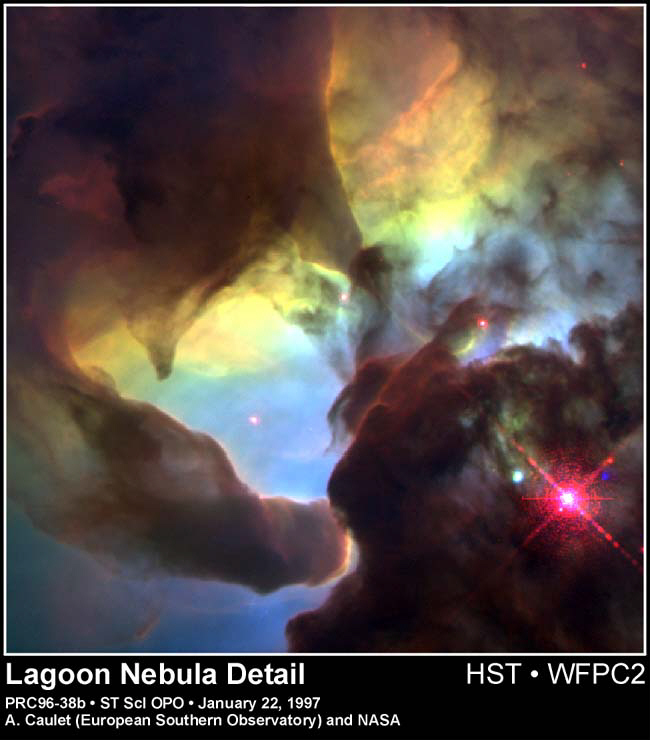
Lagoon Nebula

Vela Pulsar X Ray - Courtesy Nasa/JPL

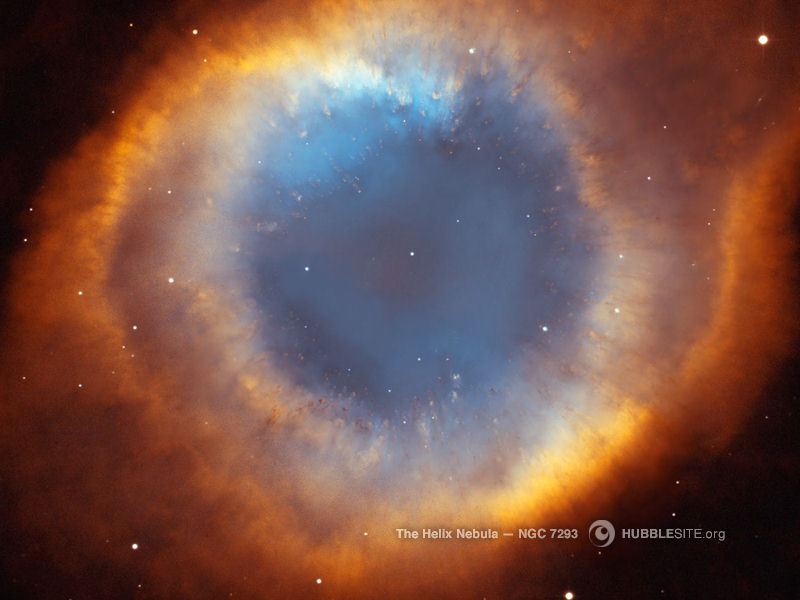
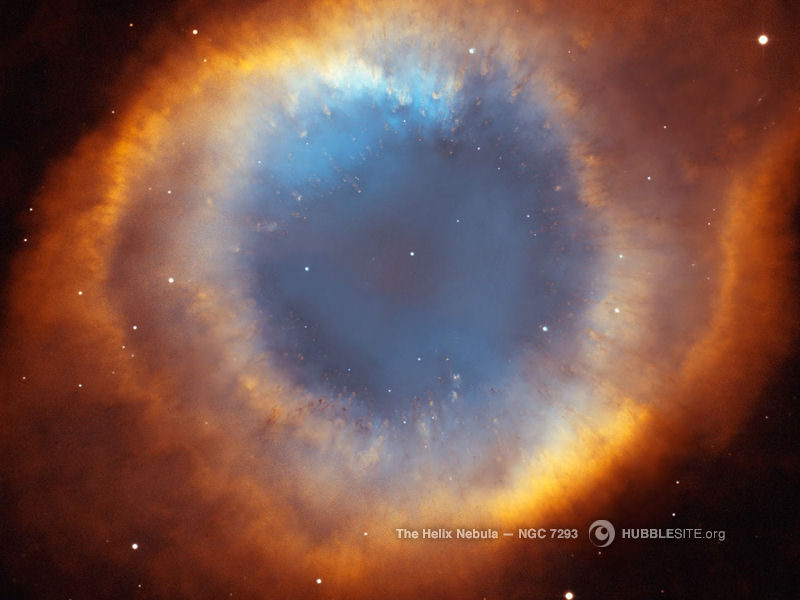
The Helix Nebula NGC 7293 - Courtesy Nasa/Esa

This detailed picture of the Helix Nebula shows a fine web of filaments, like the spokes of a bicycle, embedded in the colorful red and blue gas ring around this dying star. The Helix Nebula is one of the nearest planetary nebulae to Earth, only 650 light years away.

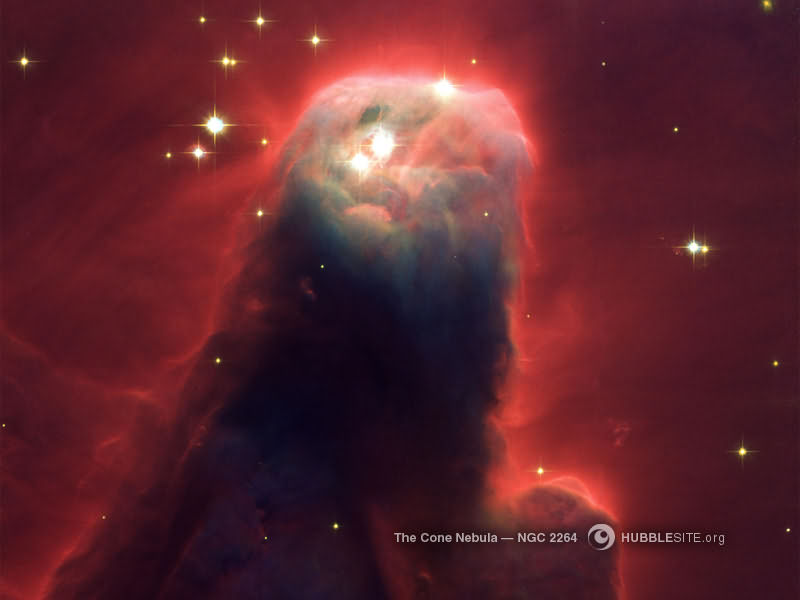
Cone Nebula - NGC 2264

Alfa Centaurus - Courtesy Nasa/JPL

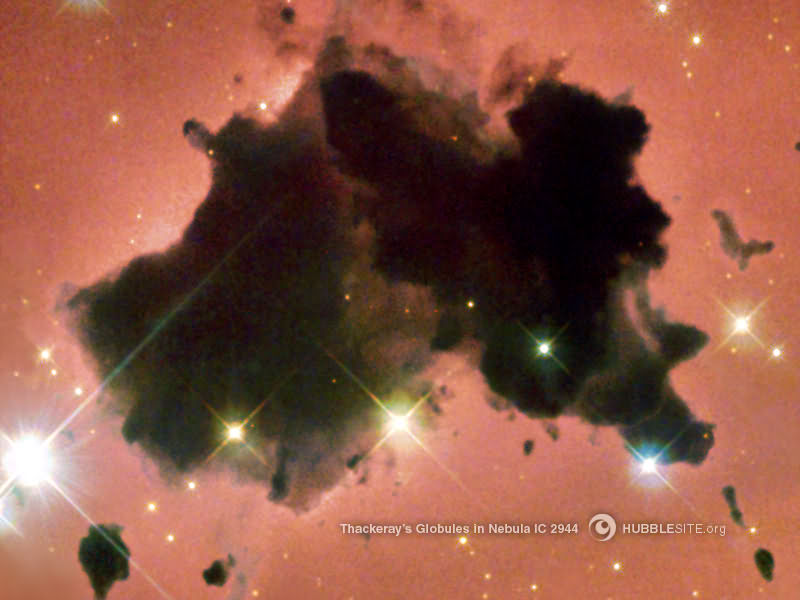
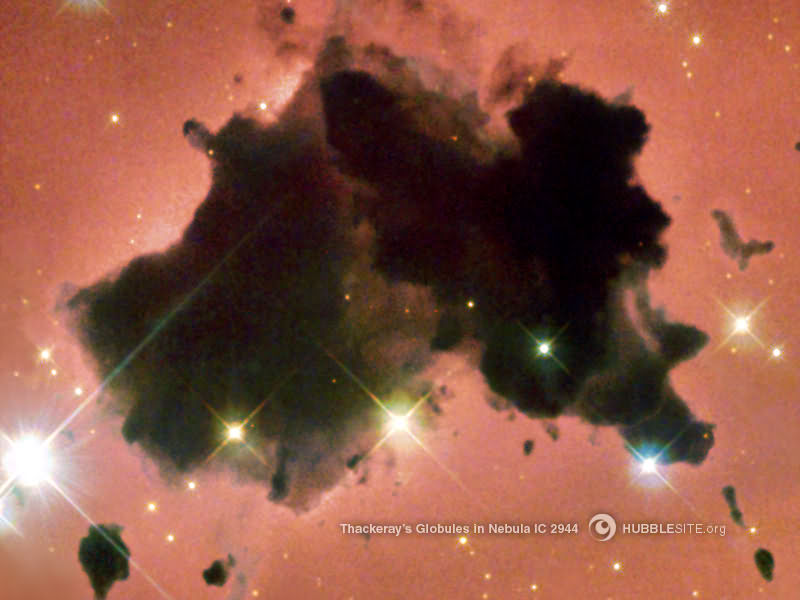
Nebula IC 2944

Dark clouds of dust, called globules, are silhouetted against nearby, bright stars. Little is known about the globules, except that they are generlly associated with areas of star formation.